Tag: freelancing

  • Freelancer Asks: Is It OK to Pitch a Piece to Several Publications at Once?

    Freelancer Asks: Is It OK to Pitch a Piece to Several Publications at Once?

    This is one of the most common questions freelancers ask, so it’s a good one for us to address:

    I have a piece I’ve pitched to one outlet, but I know that outlet can be slow in getting back, and the piece is time-sensitive. Is it kosher to pitch it to several places, then to let the others know if one picked it up? Or is etiquette to just do them one by one?

    Our managing editor Alexis Grant, who has experience both as a freelancer and an editor, weighs in:

    Whenever an editor is slow to respond to a pitch, it puts the writer in a tough position. If you pitched that publication, you’re likely hoping, perhaps even desperately, that the editor will say “yes.” But freelancers also can’t wait forever for a reply, and sometimes busy editors don’t respond at all.

    So how long should you wait before pitching a different publication? And when you do, what’s your responsibility to the first editor?

    Here’s the key to handling this situation: communication. (Click to tweet this.) So long as you keep the first editor in the loop about the status of your story, you’re good.

    One of the most frustrating ways to get burned as an editor is to reply to a writer a few days after she has pitched you saying you want the piece, only to be informed the writer has sold it to someone else. So when you decide you’ve waited long enough and it’s time to move onto publication #2, shoot the editor a quick note — preferably in the same email string as your original pitch so she is easily reminded of which story you’re talking about — and let her know you’ve pitched it elsewhere.

    Not only is this courteous; it might work in your favor, too. This is an opportunity for you to give the editor one last chance to claim the story. If it’s time-sensitive, remind the editor about that, too.

    So how long should you wait before you take a stab at publication #2?

    While there’s no hard-and-fast rule, I’d give an editor at least a week to get back to you, unless the story will be old and stale by then.

    Before you move on though, be sure to send the editor a gentle follow-up — I’d send one four or five days after the initial note. Editors often suffer from full-inbox syndrome, and sometimes that means missing pitches that are a good fit for their publication.

    Let’s recap your timeline

    Again, there’s no ONE right answer here, but your timeline might look like this:

    Day 1: Send your personalized pitch

    Day 4-7: Email your follow-up

    Day 8-14 (unless your story is time-sensitive): Pitch another publication, and email the original editor to let him know

    Sound like a plan?

    Do you have a loose timeline you use for pitching editors? Share it in the comments!

  • Ali Luke’s The Blogger’s Guide to Freelancing: Review

    Ali Luke’s The Blogger’s Guide to Freelancing: Review

    We review ebooks, courses and tools for writers, so you can make good decisions about how to invest in your writing career. Thanks to Ali Luke for sharing a review copy of this ebook.

    Product: The Blogger’s Guide to Freelancing

    About the Creator: Ali Luke is a professional freelance blogger who writes at her own site, Aliventures, as well as for sites like Problogger, Copyblogger, Men with Pens and Write to Done. She’s written several books on blogging and runs the teaching and community group Writer’s Huddle.

    Price: $29

    Who It’s For: Writers interested in finding steady, fun, well-paid jobs blogging for other people — specifically, by working as a staff blogger (writing regular posts for someone else’s blog). But also useful for freelance bloggers looking for projects here and there.

    What It Will Help You Do:

    Learn how to find (and then get) jobs. Learn what staff blogging is and whether it’s right for you. Discover the various ways to find staff writing jobs and how to apply for them, including: 1) how to leverage guest posts to create a paid blogging relationship; 2) how to maximize your chances when applying “on spec”; 3) which job boards are actually worth your time and how to make sure your application stands out from the crowd; 4) how to network with existing contacts to find job leads; and 5) how to market yourself through your web presence.

    Learn how to nail those jobs once you get them. There’s a great rundown on basic guidelines for writing for the web: post structure, style, selecting images, etc, as well as tips on how to come up with post ideas, how to keep yourself organized, and how to follow up on posts once they’re published.

    Tricky issues you’ll face along the way. How to navigate the waters of negotiating terms for a new gig, how to invoice for your work and (every blogger’s nightmare) how to collect on invoices that aren’t being paid. How to juggle writing for multiple blogs (including when working a day job!). How to stay inspired and motivated and deal with blogger’s block. How to (fairly and legitimately) rework a post idea for several blogs.

    What’s Included: Worksheets (how to determine your freelancing goals, how to come up with headline ideas, templates for various post types, etc.). In-chapter advice from web pros like Glenn Allsopp of ViperChill. An appendix of posts for further reading around each chapter’s topic. And a $10 discount code on Ali’s The Blogger’s Guide to Effective Writing.

    The Best Part: You emerge from the book feeling like you’ve just gotten a comprehensive 101 course on staff blogging from day one to day-infinity. With easy to understand, actionable steps and smart, real-world tips from someone who’s been there and learned from that, this book is highly digestible and full of things you can do today to grow your blogging career, no matter what stage it’s at.

    What Would Make It Even Better: Honestly? I can’t really think of anything it’s missing. It’s a thorough review of all the need-to-knows and packs in a lot of info for an affordable price.

    Our Recommendation: While aimed at aspiring staff bloggers in particular, most of the knowledge and tips in this book could easily be parlayed into freelance blogging in general. Topics like finding and applying for jobs, networking, negotiating your rate and handling your workload are things all professional bloggers need to know. If you’re looking to break into the world of paid blogging (or grow your current presence), this book is a great resource.

    This post contains affiliate links. That means if you purchase through our links, you’re supporting The Write Life — and we thank you for that!

  • What You Must Do If You Truly Want to Make a Living as a Writer

    What You Must Do If You Truly Want to Make a Living as a Writer

    As editor of FundsforWriters, hardly a day goes by that someone doesn’t ask: “Where do I find money to fund my writing habit?” It’s an innocent enough question, especially to an editor who professes to making a living at this craft and aids other writers with her weekly missives on the how-tos of earning an income.

    My mind reels with snarky responses, silly, sarcastic, school-marmish, and third-grade-level replies because I’ve answered the question so many times. I ultimately answer in a positive, mother-hen manner, wanting to motivate the emailer, not chastise him. After all, writers run into enough negative responses already! The business is crazy complicated, and new people often spin in place hunting for the best advice, needing some sort of direction to get started.

    But my answer to this question is always the same.

    You find funding for your writing by writing for people who pay.

    That answer induces laughter when I speak at conferences, but it’s the gosh-honest truth. The best way to make money writing is to write only for markets that pay. (Click to tweet this idea.) And the more they pay, the more you make. The more you pitch paying markets, the better the chance you’ll land a paying gig. The more you pitch higher-paying markets, ultimately the higher your income.

    For some reason, we fear presenting ourselves as writers to professionals in our business, and that often interferes with the boldness needed to pitch. We take our work seriously, but we fear others will see us as frauds. I’ve had those thoughts, just like every other writer who’s ever penned a paragraph. But query we must, and if we must query, it might as well be to a good publication.

    I dare you to “Keep 13 in Play.” That’s been my mantra for a decade. Keep thirteen pitches outstanding, whether they are contests entries, magazine features, paying blogs, or freelance copywriting gigs. Choose another number if you like, but I enjoy the in-your-face of number thirteen, daring bad luck to take me on. It takes some time to initially place that many queries, but once you’ve reached your magic number, you buckle down and write. Not because you’ve wasted a lot of time querying, but because you probably have a positive response by the time you reach your number. (And no, thirteen is not too many for even the part-time writer.)

    That’s the fun part of “Keeping 13 in Play”. You’re so busy shooting queries out into the world that you don’t see the acceptances coming — and then they pop up and slap you in the face. I’ve even forgotten about submissions before, all because I was so preoccupied pitching stories.

    And it gets more fun…

    When you receive that acceptance, your thirteen has dropped to twelve, right? So you stop what you’re doing — stop in your tracks. And you pitch to another market to maintain that thirteen. When you receive a rejection, you’re in luck! Take that rejected query and slingshot it to another market. Then pitch another story to that person who just rejected you, while you’re fresh on his mind. Sure, he remembers you as a rejection, but truth is that he remembers you. Study his publication harder and throw another letter under his nose. Not only will he pay you more attention as you repetitively remind him that you are still interested (and prove you’re quite prolific), but you’ll probably improve your writing, your pitching, and your knowledge of the publication. And you’ve just added two more pitches to your “Keep 13 in Play” spreadsheet.

    The reality of being a writer is that you aren’t easily discovered. You have to climb your way up this tall, rickety ladder, sharing the space with other climbers all around you. You seek paying markets and pursue them. They don’t come looking for you.

    No paying market “discovers” you when you write for content mills or SEO sites.

    No paying market “discovers” you when you write on your blog.

    No paying market “discovers” you for having ten thousand Twitter followers or Facebook fans.

    As a writer, you need to help people discover you

    Writers must be proactive, and that means setting their sites on markets that pay and chasing them. Get your hands on market guides like these and use them:

    Now, go out there and fund your writing.

  • Red Flags That Your New Freelance Client Will Be Trouble

    Red Flags That Your New Freelance Client Will Be Trouble

    As freelancers, we’re always thrilled to bring on a new client. It means an extra revenue stream, potentially greater exposure and (if all goes well) more work down the line.

    But sometimes, it can be clear from the get-go that all will not go well. When you’re just starting out and eager to get work, it can be easy to ignore some of the red flags that tell you a client may not be the best person to work with. But you only need one or two horror story experiences to learn to pay attention to those red flags, and quickly.

    In the hopes of saving you from learning the lessons I learned the hard way, here’s a quick cheat sheet of warning signs that should have you politely saying, “Thank you, but I don’t think this business relationship will work.”

    They’re as cagey as a CIA covert op

    Minimal project descriptions, unclear guidelines and disappearing from the grid for days at a time are all signs that a client will be more trouble than they’re worth.

    If they take forever to get back to your emails but always have really good, emergency-level reasons for it, ditch them.

    If it takes more than one or two email exchanges to get clear on any detail about the project, ditch them.

    If they try to slip in additional work that wasn’t included in the original project scope, ditch them.

    Oh, and if they refuse to sign a formal agreement as to what that project scope is? Ditch them, twice.

    Shady and unreliable clients are a dime a dozen. Your billable time is not. Only dedicate it to clients who appreciate that. (Do you agree? Click to tweet this idea.)

    Only dedicate your time to clients who appreciate your worth

    They tell you their entire life story

    On the opposite end of the spectrum is the client who won’t stop talking (or typing). You ask, “How many blog posts will you want on a monthly basis?” They come back with a three-page stream-of-consciousness rant about how tough it is to be a business owner, the five other fantastic ideas they have to talk to you about once you’ve started working for them, how their daughter’s name is also Kelly and isn’t that fate…blah…blah…blah. Blech.

    Or, you ask for an outline of what they want on their product page, and they send you back the virtual equivalent of their mind spewed on paper—random excerpts from sites they like, stick figure drawings you’re supposed to be able to decode, the occasional commentary like “I want something like this, but more WOW!” (Don’t laugh; I’ve seen it all. Okay, maybe not the stick figures — yet. It’s only a matter of time.)

    Run, don’t walk, from clients like this. They either a) don’t know what they want (and you will kill yourself trying to figure it out), b) are way too busy to give you coherent directions, which makes project completion kinda impossible, or c) are simply flakes hoping you can jump into their brains and create something coherent through sheer mental magic. Sometimes, it’s all of the above.

    Either way, run.

    They want stuff for free

    With very few exceptions, no legitimate client will ask you send them a free “sample” of your work. The only samples they should need are already-published examples of work you’ve done in the past. If they want you to write a free post for them “to see your style,” it’s most likely a scam.

    My only exception for this red flag would be if, by some chance, it’s a seriously big company you want to have a shot at working for. If Forbes ever asked me for a free sample, you better bet I’d be on it! But even in this case, make sure to protect yourself by getting it in writing that you’ll be compensated should they choose to use your work — or, if not, that you’ll retain full rights to submit it elsewhere.

    They won’t let you do your job

    It’s one thing to get an occasional “Hey, how’s it going?” check-in. But if your client is constantly shooting you “one more thought!” emails, that, my friend, is “scope creep.” Either they start paying you an extra hourly fee for fielding all their communications, or they stop bombarding you with phone calls and emails and trust that you know how to get the job done.

    Even if they do agree to the hourly fee, it might not be worth it. Chances are you became a freelancer to escape the constant interruptions, shoulder-peering, and hand-holding of the 9-5 world. So you don’t need to put up with it now.

    What other warning signs have you received from potential “problem clients”?

  • 4 Key Lessons from an Awesome Freelance Writing Success Story

    4 Key Lessons from an Awesome Freelance Writing Success Story

    If you had told me two years ago that I would be making a full-time living from freelance blogging, earning in excess of ten times per hour what I earned in my job, I would have laughed you out of town.

    And yet that is what has happened: in less than two short years, I have built a successful freelance blogging business that affords me all of the autonomy and flexibility I have craved in the past. I landed my first job in September 2011 and haven’t looked back since; in that time my equivalent hourly rate has increased from $15 to $150.

    What I find most surprising about my journey to date is that I haven’t done anything particularly special. I wouldn’t consider myself anything more than a “good” writer and I have no professional writing qualifications, nor did I have any freelancing experience prior to landing my first client.

    As I look back over the past two short years, I can spot key elements that acted as enablers and catalysts for my success, and those are the things I want to discuss today.

    Lesson No. 1: freelance blogging is lucrative

    The first job I landed was a blogging role for WPMU.org. Although the rate wasn’t great from a freelancer’s perspective, it was as much as I earned per hour in my job. That in itself was reason enough to encourage me to quit–I figured if I worked six to eight hours per day at this rate, I could remain afloat.

    That point of view was colored by my understanding that freelance blogging just wasn’t that lucrative. I was subscribed to a few freelance writing blogs at the time and all I read was that in order to make real money I would have to move into writing for trade publications, “real” businesses and so on.

    I am thankful for remaining ignorant of that advice. I once looked up in awe at these writers earning in excess of $100 per hour, all the time being told that it just wouldn’t be possible as a freelance writer. But as my rate steadily crept up, I began to realize that blogging offers as much as many other forms of writing. (Click to tweet this idea.In March 2013 I broke through the $100 per hour barrier and I haven’t looked back since.

    Here’s the reality: you can earn a lot more per word through other mediums of freelance writing when compared to blogging. But how much you earn per word does not necessarily dictate how much you earn per hour (which is the real measure of your earning potential). What would you rather do: get paid 15 cents per word to write on a topic you know everything about and have no need to research, or get paid $1 per word writing a complex technical document involving interviews and case studies? You may find that the first option actually makes you more money.

    So when it comes to freelance blogging, keep an open mind. You can make good money.

    Lesson No. 2: you must have a blog

    My foray into the world of freelance blogging was an act of desperation.

    I had been failing consistently in my efforts to make money online for about six months and I was willing to try anything. I submitted a handful of pitches via the Pro Blogger Job Board with little hope of achieve anything. I didn’t even have any samples — I supplied links to my own blog posts in lieu of a “true” demonstration of my blogging abilities.

    And yet that did the trick. If I had to guess as to why, my assumption would be that my first client could see that I was a capable writer running a small yet moderately successful blog. The logical conclusion from those two factors is that I might be a worthwhile freelance blogger.

    Let’s be honest — I wasn’t applying for a position at The Times. It was modest pay for modest work; the client wasn’t expecting to land someone with journalistic qualifications and masses of experience. My point is this: the mere act of me having a blog was enough for me to land the job. That may be all you need to get you on your way.

    Furthermore, as your freelance business develops, having a blog becomes no less important. It will act as the hub from which prospective clients will arrive (either organically or from your bylines across the web). The quality of your blog and the makeup of your Hire Me / Services page will go a long way in determining whether prospective clients take that next step of reaching out to you.

    If you want to become a successful freelance blogger then you should create a successful blog. It doesn’t have to be the next Mashable (when I landed my first job my blog was attracting just forty visitors per day), but a successful blog is practical evidence of your abilities.

    Lesson No. 3: successful pitching comes down to just two things

    Ultimately, if you want to land a role, you need to do two things right:

    1. Your pitch

    2. Your samples

    If you nail your pitch and supply awesome samples, you’ll get the job. If you don’t get the job then you got one of those elements wrong. That’s the simple equation.

    Of course, it is not quite that simple. For example, the effectiveness of your pitch can be limited by a lack of experience and you may not have the kind of samples that best showcase your abilities yet.

    Having said that, there is nothing truly complicated about landing freelance blogging work. If you are willing to assess your pitches and samples objectively then you will probably be able to spot where you went wrong. Your job then is to figure out how to rectify that issue for next time.

    If you’d like to learn more about developing great pitches then check this post from my blog: Get Paid to Write (in 3 Steps).

    Lesson No. 4: you must offer the complete package

    I believe that my success as a freelance blogger is as much down to my “professional skills” as it is due to my ability as a writer. By “professional skills,” I mean everything else that accounts for your value to a client:

    1. Complementary skills such as social media marketing, SEO, etc.

    2. The ability to think creatively

    3. Organizational skills such as working to deadlines and replying to emails promptly

    4. The ability to negotiate effectively with clients

    5. General professionalism

    These days I hire freelance writers myself, and I would much rather have a good writer with excellent professional skills than a great writer with good professional skills. A great writer who doesn’t submit their work on deadline or takes three days to reply to an email is going to a pain in my backside.

    So if you feel that your writing skills are not yet up to scratch, ensure that you make up for your perceived shortcomings by offering much more than just your writing chops. Offer the complete package.

    What lessons have you learned?

    Above are the most important lessons I have learned in nearly two years of freelance blogging. It’s been quite a journey so far and I have no doubt that there will be plenty more bumps and surprises in the future.

    With that in mind, if you have been freelancing for a while then I’d love to know what lessons you have learned from your experiences to date. Alternatively, if you have any questions about the lessons I have covered, please do not hesitate to share them with us.

    Leave your thoughts in the comments section below!

  • A Low Risk, 3-Step Plan for Raising Your Freelancing Rates

    A Low Risk, 3-Step Plan for Raising Your Freelancing Rates

    Working with long-term clients can be a lucrative approach to freelancing. Amongst other benefits, it means you spend less time and marketing and more time working billable hours.

    There is, however, one popularly perceived downside of working with long-term clients: difficulty raising rates. If you have high client turnover, you can simply increase rates as the new clients come along, but when you have an established relationship with a long-term client, asking them to pay you more can seem like a rather daunting prospect.

    But it shouldn’t be. Here’s how you can increase your overall hourly rate for long-term clients with minimum risk.

    Key assumptions and understandings

    This article is written on the assumption that you have several long-term clients (say four or more). Put simply, the fewer clients you have, the more risk you are exposed to with this strategy. You can certainly still carry out this strategy with only one or two clients, but it would be remiss of me not to point out that the risk is relatively high.

    And that leads me to a more general point that is vital to understand when it comes to rates negotiation: the entire process is a question of risk and nothing else. It should not be subject to emotional thinking or subjective analysis. As much as possible, you should view your approach to rates negotiations as mathematical or scientific — i.e. how can you quantify a positive outcome, and what is the likelihood of that outcome being achieved?

    Step 1: Get to know your clients

    To negotiate rates, you need to carefully analyze the worth of each of your clients. (Click to tweet this idea!) I am not only talking about how much they pay you, but also how easy they are to work with, whether they refer additional clients to you, and if there are any other benefits (direct or indirect) of working with them. Before you even begin to think about negotiations, you should be able to “rank” your clients in terms of their worth to you.

    There are many ways in which you can do this, but it ultimately comes down to money — that is typically the most important factor. So let’s start there.

    For each of your clients, you need to know how much you earn in terms of an equivalent hourly rate. If you charge per hour (which I do not recommend as it limits your earning potential) then your hourly rate should already be apparent. But if you charge per job, you need to calculate exactly how much time you spend on each client’s work and calculate your equivalent hourly rate from that. If you do not currently track your time then this is a good reason to start — it’s really a necessity.

    Once you have created a “ranking table” of sorts, listing your clients by how much you earn from them per hour, it is time to add all of those less quantifiable considerations to your list (as mentioned above). When you are finished, you should have a well-formed opinion of each of your clients in terms of their worth to you.

    Step 2: Calculate rate increases

    Take into account these three things when it comes to calculating an increased rate for an existing client:

    1. How much you want to be paid

    2. How much you should be paid

    3. How much you think the client will pay

    How much you want to be paid will be the easiest question to answer, but the other two are more complicated.

    The question of how much you should be paid can be answered by (a) comparing your existing rate for that client against other clients and (b) comparing your existing rate against what you consider to be a fair market rate. This is not a particularly scientific process; I wouldn’t beat yourself up too much about it. However, I will say this: in my experience, most freelance writers undervalue themselves.

    undervalue, Tom Ewer, TWL

    The question of how much you think the client will pay is down to nothing more than your intuition. But consider this: as far as I am concerned, there are two broad “types” of clients:

    1. Those who want a job doing and are not going to bicker about an extra few bucks per article

    2. Those who do not value quality written content highley and may argue over the slightest increase

    Let me be frank: in the long run, you do not want to work with that second type of client. Furthermore, there are plenty of the first type around. So, if your intuition tells you that a client is likely to argue over any kind of increase, that may be a sign for you to move on anyway.

    If you are happy with the rate paid by your most “generous” client then this process is relatively straightforward — that is the benchmark by which all other clients should be measured. If on the other hand you feel that all of your clients are underpaying you, that requires a little more thought.

    Once you are finished with the decision-making process you should have a new rate for each client (where appropriate) that you intend to propose. That rate will be a result of the calculation you made based upon the want, should and will considerations.

    Step 3: Propose your rate increases

    The key to this process in terms of reducing risk is diversification. It is quite simple: the more clients you have and the more proposals you make, the greater chance you have of increasing your rate overall.

    Let me give you an example. Say you have five clients with a relatively diverse range of rates and hours worked per week:
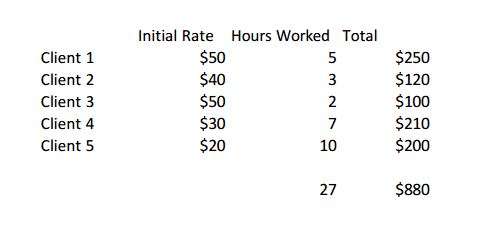
    Image: Tom Ewer's freelance guide

    You propose new rates to each of these clients. Clients 1 and 3 agree to the new rate ($60), Clients 2 and 4 negotiate with you, and Client 5 considers your rate too high and moves on. With the new rates in place and one less client, how do your earnings look now?
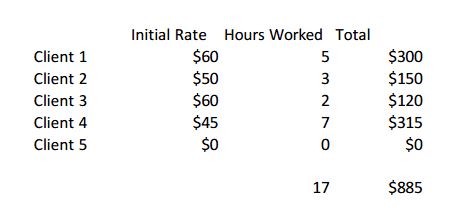
    Image: Tom Ewer on Freelancing

    Although you’ve lost one client, you are now earning $5 more per week and are working ten less hours! That’s the power of spreading your risk by proposing multiple rate increases at the same time.

    In terms of actually making the proposal, experience is the best teacher and you will soon find that each client is ideally approached in a personalized way, one that best suits their attitude and behavior. If you’re interested in learning more about client negotiation, check out this great article from Copyblogger.

    Don’t fret too much about the particulars — it is not as frightening a process as you may think. Just stick to the basics: you have reevaluated your business and are proposing new rates accordingly. You appreciate their business and look forward to taking your working relationship forward.

    Act in a professional and courteous manner then let the client do the rest. It’s only business.

    Assessing the risk

    There is, of course, a risk inherent in any kind of rate increase, but in reality the risk is probably far smaller than you think. For starters, if a client is happy with your work then they are unlikely to walk away just because you propose a rate increase. They will typically do one of three things:

    1. Accept it

    2. Negotiate with you

    3. State that they are not willing to pay you more

    Any of those outcomes puts you in a better (or no worse) situation than before. As for those clients who do walk away — they were likely to walk away before long anyway. They certainly weren’t going to grow with you, that’s for sure. So although you may incur a short-term financial loss in losing them, it will be better for your business in the long run.

    Earn more, work less

    You may think this a dream scenario, but I can tell you from personal experience that it works. I employed this strategy at the end of last year and lost one client but ended up making more money in fewer hours. I would recommend that any freelancer working with more than a handful of long-term clients pursue this strategy and reap the rewards.

    Have you ever tried to raise your client rates? If not, what’s stopping you?