Tag: publishing tips

  • How the “Ideal Reader” Myth Hurts Your Writing Process

    How the “Ideal Reader” Myth Hurts Your Writing Process

    A lot of writing advice encourages you to market to your audience by defining your ideal reader.

    It says to think of your reader as one person, create a profile and write for that person.

    You’ll even find templates for defining your ideal reader — fake head shots and all. They’ll ask you to name the reader and list their demographics, interests and job. They’ll ask you to explain why this reader is totally in love with what you write.

    The problem? This exercise does nothing to help you understand what actual readers want from you.

    The “ideal reader” myth

    When you set out to define your “ideal reader,” you’ve probably already decided what you want to write — maybe even written it.

    You’re sitting on that romance novel, self-help book or blog about what cats have taught you about love, and now you’re ready to market it. So you dream up a reader who fits the bill. They’re male or female, between ages 18 and 54, probably own cats and are single. So, obviously, they’ll love your blog.

    Voila. You’ve got your ideal reader.

    Except that’s useless. All you’ve done is reverse engineer an audience for yourself, and you can’t do that with real people.

    If you want to attract actual readers, you’re going to have to do it the other way around: Learn what real readers want, and write it for them.

    How to write what your audience wants to read

    To understand who your audience (actually) is and how to write for them, I’ve come up with a simple exercise.

    Borrowing from the way software developers plan projects by first working to understand their end users through a user story, I define readers with what I call a “reader story.”

    The reader story is a simple way to understand who you write for, what they need from you and why.

    The exercise might feel similar to fantasizing about your ideal reader, but it’s goal is different. Instead of inventing a reader for something you’re determined to write, the reader story helps you plan your writing around helping the audience achieve some goal.

    To create your reader story, fill in this statement about the typical person you expect to read your work:

    As a [type of person], they want [some goal] so that [some reason].

    For example:

    As a millennial mother of young kids,

    They want advice on raising children, self-care and relationships,

    So that they can balance being a parent with a full-time job while still enjoying me-time and a relationship with their partner.

    That reader story might drive content for a parenting and lifestyle site like Scary Mommy.

    If you don’t know anything about the typical person who might read your work, do your research before creating a reader story. Don’t invent a reader you hope exists.

    How to use your reader story to plan writing projects

    Once you create a reader story, it should drive all the decisions you make about your writing.

    Does that blog topic help the reader achieve some goal? Does that book cover appeal to their some reason? Are those marketing platforms frequented by this type of person?

    Write down your reader story, and stick it somewhere you’ll see every time you write.

    Keeping your reader’s needs top of mind can help you make decisions about:

    • Which topics to tackle to get your story across.
    • Your goals for what you write.
    • Which products make sense for disseminating your story or ideas.
    • Which platforms are best for distributing your work.
    • The tone and voice you’ll use to speak to your readers.
    • When and how to release your work to have the greatest impact.

    Developers rely on the user story to focus on features customers actually want — and leave behind the stuff that’s super cool technologically but totally unnecessary in real life.

    Use the reader story the same way in your writing. You might love the anecdote you’ve found to open that article about your grandmother’s butternut squash soup recipe… but does it serve the reader’s goal of, you know, making a good butternut squash soup?

    Yeah, the reader story will make you get real honest with yourself about the value of what you’re writing.

    For more guidance on using your reader story to plan writing projects and answer those big questions for everything you write, I invite you to download my free guide: “How to Write Anything (Well).”
    links
    no
    1
    links
    no
    1

  • 10 Ways to Stay Sane During the Book Editing Process

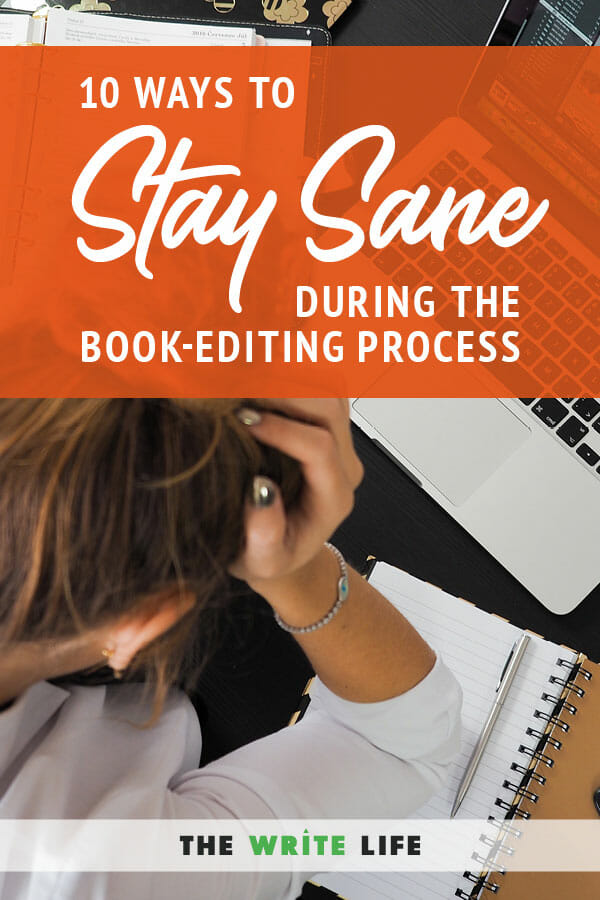
    10 Ways to Stay Sane During the Book Editing Process

    Congratulations!

    You’ve completed your best draft of your book. You’ve found, vetted and hired a qualified editor. You’ve sent them your masterpiece-in-the-making, and you were told that you’d see your edits in a month.

    Now what?

    The editorial waiting period can be — how can I put this delicately? — brutal.

    In some instances, your editor may be the first set of professional eyes that will read your manuscript. For new writers, this can be a trying experience.

    Heck, it’s excruciating for experienced writers. Just read Steinbeck’s Journal of a Novel.

    You’ve spent months or even years getting your book ready for your readers, then you ship it off to an editor. It’s like sending your child to a college preview weekend (that lasts for a month). Can they make it by themselves?

    It’s difficult not to be nervous during this editorial waiting period.

    So take that nervous energy and transform it into something that will benefit yourself and your book. Here are ten suggestions for what to do during your editorial waiting period.

    1. Don’t edit your book

    Whatever you do, don’t work on your book.

    Few things are more aggravating to an editor than a client who emails “small changes” to the manuscript after the editor has already begun working on the client’s manuscript. (This is “The Blob” from my last article, “The 10 Monsters Your Book Editor Fears Most.”)

    When you send your book to your editor, it’s out of your hands. Refuse the urge to edit, amend, delete or otherwise change anything while your book is being edited. You’ll get the chance to revise once you’ve received your edits.

    2. Start writing your next book

    If you’re not burnt out on writing, begin writing your next book. Or, at least start planning your next book.

    This may be a great way to continue your momentum without thinking about your current book. Unless, of course, you’re writing a sequel.

    If you’re in this writing game for the long haul, you should always have a next book.

    3. Plan your book launch

    If you’ve never looked at a book launch plan, you don’t know how many steps can be involved.

    Proper book launches take months of preparation. There are so many things to do and so many things that can be done.

    And it doesn’t matter if you’re traditionally published or self-published. Both routes need author-led book launch strategies to ensure your book is discoverable and desirable when it’s released.

    4. Seek guest posting opportunities.

    Book launch strategies often include writing for online outlets. Begin your research into the websites, online magazine and blogs that your target audience reads.

    If you already know what sites to pitch, visit that site and look for a “Write for us” link, which is usually in the footer. Alternatively, you can Google “how to write for [name of website].”

    Be smart about whom you pitch. Make sure the site is relevant to your book’s topic.

    5. Conduct a social media audit

    When you release your book, you’ll want the world to know.

    You’ll also want to update all of your online channels — your website, social media accounts and even your email signature — to let people know you’ve written a book.

    Plan how you can coordinate all of your online outlets to reflect you as an author, e.g., color palettes, short bio and long bio, etc. To truly show your professionalism, have a pro headshot taken, then use that photo everywhere.

    Without a finished book or cover, you won’t be able to update your look completely, but by thinking about how you want to represent yourself when your book launches, you will save yourself that time during your launch.

    Pass the time without losing your mind while waiting for editor feedback.

    6. Invest time into another writer

    Without a doubt, if you’ve accomplished the goal of a finished manuscript, you have learned something as a writer.

    Take that hard-won knowledge and invest it into another writer.

    Join a local critique group. Find a cadre of similar genre buddies online. Mentor a younger writer one-on-one.

    7. Take that online course you’ve been meaning to take

    Maybe it’s a writing course. Maybe it’s learning to use Scrivener. Maybe it’s mastering MailChimp.

    Multiple online courses likely flew by your email inbox while you were writing your book. Now that you have a few weeks to a few months, dive into one course.

    I’d recommend any proven course that can help you become a better book marketer, like those covering topics such as blogging, SEO, list-building, public speaking, paid advertising and selling books on Amazon.  

    8. Read

    I’m willing to bet that, during your writing, a stack of books has piled up on your to-read shelf.

    Grab the one that’s been calling your name the longest.

    Spend the hours you used to spend writing by taking in the fuel of every great writer.

    9. Communicate with your editor when appropriate

    While most of my suggestions are aimed at making you forget about your book during the editorial phase, you can’t totally forget about it.

    Stay on top of your email. Respond to your editor within an agreed-upon time frame. While same-day responses are much appreciated, editors understand that you have a life too. But the later you reply to a question from your editor, the longer the process may take.

    Conversely, don’t email your editor unless necessary. Checking in on their progress once or twice during a monthlong edit is OK, but anything more than that is paranoia or insecurity. If you’ve done your homework in hiring them, trust that they’re getting the job done.

    10. Take a break

    Writing a book is hard. You know this. Everyone knows this. So there’s no shame in not taking my advice.

    In fact, if you feel that writing your book has completely drained you, then don’t do anything related to your book. Just believe that your book is on a lovely vacation with your editor and you get to do the same: take a break. Maybe actually go on a vacation!

    Just do something that enlivens you. Your physical, mental and emotional health is essential to making it as a writer.

    Now, the next time your book is living with your editor, what will you do? Or, what have you done in the past that isn’t listed here? Let me know in the comments.

    This post contains affiliate links. That means if you purchase through our links, you’re supporting The Write Life — and we thank you for that!
    nolinks