Freedom. Flexibility. A yoga-pants-exclusive work wardrobe. Completely unrestricted coffee pot access.
To the average office-dweller, the freelance life can sound like one long vacation. But if you’ve actually worked it, you know all too well the inaccuracy of that perception.
When your home is your office and your laptop is both money-maker and Netflix machine, setting work/life boundaries is difficult. And that’s just within the context of a single day.
Scheduling a three-day weekend, or even a week-long break from reality? Now you’re talking borderline impossibility.
But taking a vacation as a freelancer isn’t just possible; it’s critical. Human beings need to take breaks, despite the pride we take in logging long hours.
And as a solopreneur, you’re doubly in need of a respite. After all, you’re likely wearing all kinds of hats, responsible for every aspect of running your business.
So here’s how to recharge your batteries — which, unlike those devices you’re so tethered to, you do by disconnecting.
1. Do not take any new assignments during your scheduled vacation time. (No, seriously.)
I know, I know. I said this would be easy. And here we are, facing pretty scary stuff from the very beginning.
As a freelancer, turning down work is hard. Really hard. When you’re not working, you’re not making money; you don’t have the security of next week’s paycheck to fall back on. That much is pretty obvious.
But it can also feel like an opportunity cost, or sound like a death knell tolled for future prospects. If you say “no” today, who’s to say you won’t wind up on that editor’s blacklist tomorrow?
As it turns out, open communication is actually a boon to your business, not a detriment.
Maintaining a clear line of communication helps editors plan ahead while still ensuring you get the break you need to be the best contributor possible — and your willingness to be honest is just another feather in your cap.
2. Work ahead and file everything before you leave
Not taking new assignments is one thing. But to orchestrate a truly successful vacation, you also need to be able to get away from the work you already have on the docket.
And that means being super diligent about working ahead and filing your pieces — yes, every single one of them — before it’s time to hit the road. No oh, it just needs a few final touches or last-minute Skype interviews in the airport. (I might be speaking from experience.)
Take a look at the assignments that are coming due around the time you’re leaving and aim to have them done at least two days ahead of time. It’s all too easy to underestimate the number of hours you’ll need to finish a project, particularly if that project includes interviews or other collaborative, participatory, not-entirely-under-your-control efforts, like editor feedback.
It’s also way too easy to convince yourself that you’ve only got a few minutes of work to do, which you can easily sneak in while sipping your beach bar margarita. Trust me: those few minutes have a way of spiraling into hours of screen time, which is exactly what you’re trying to get away from. Just say no.
3. Warn clients ahead of time that you’ll be incommunicado
Notice I didn’t say “if you’ll be incommunicado.”
Taking real-deal time away from your inbox is super hard, especially in today’s all-online-all-the-time culture. But it’s also imperative to your continued success and sanity. Burnout is a real thing, and if you never give yourself a break, you may soon find you don’t have a choice in the matter.
As discussed above, being open about your vacation plans with your editors is one of the best ways to head off miscommunications and missed opportunities. And it also means you can sign out for good without feeling guilt or anxiety — at least in theory. (Actually getting to that guilt-free headspace might take some practice. But you’ve got to start somewhere!)
Which brings us to the nuts-and-bolts portion of this project.
4. Set an email auto-responder
Even if you reach out to all your regular contacts ahead of time, there’s always the chance you’ll miss an important message you weren’t expecting. What will that person think if you don’t respond for a day — or even, perish the thought, a week?
Honestly, they probably won’t think anything. But when you set an email auto-response, you can bring clarity to the situation — and also hold yourself accountable — by stating the specific date at which you’ll be back in your digital office.
Exact instructions for setting up your auto-responder will vary depending on your email client, but it’s usually not too difficult. In Gmail, for example, you’ll find the option under the general settings tab toward the bottom. It’s called “vacation responder,” and looks like this:
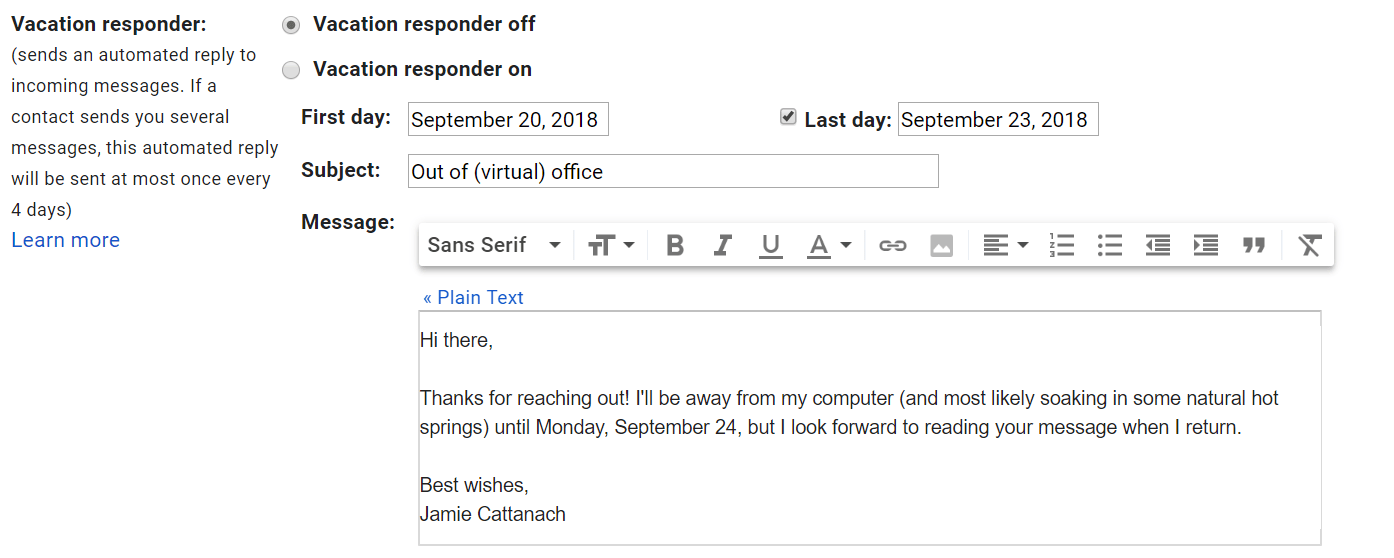
As you can see, it’s easy to set a first and last day, and you can create a custom subject line and message. You can also turn the auto-responder off with a simple toggle… but you’re not going to do that until you’re home, right? Right?
5. Actually leave your laptop at home
Gulp. I know.
But for Type A personalities — a trait so many of us freelancers carry — if the option is there, we’ll find ourselves at work despite all our best intentions.
If you’ve done your due diligence by following the steps above, your bases are pretty well covered. Whatever comes up can wait. You have no reason not to leave your laptop at home… and every reason in the world to give yourself the unmitigated break you deserve.
6. Disconnect your work email from your smartphone
That’s right: we’re not gonna let you cheat with that mini-computer in your pocket!
If you’ve got your work account set up on your mobile device — which, of course you do — finalize your commitment to yourself by disconnecting it. Scary, yes, but temporary; it’s just for the length of your vacation! Though for a real challenge (and a less-insane headspace), you might consider leaving it disconnected for good.
Flexibility and autonomy are probably high on the list of reasons you pursued freelance work to begin with, so don’t cheat yourself out of benefiting from this lifestyle’s best perks.
Oh, and enjoy your vacation. Goodness knows you’ve earned it!