Tag: increase your rates

  • Tracking Freelance Earnings: A New Monthly Column From Nicole Dieker

    Tracking Freelance Earnings: A New Monthly Column From Nicole Dieker

    Hi, writers! My name is Nicole and I’m a full-time blogger and copywriter. This year, we’re going to take a monthly look at how much money I earn as a freelancer.

    I first began full-time freelancing in May 2012, as an independent musician and singer-songwriter. In July 2012, I started posting my weekly freelance earnings to my Tumblr. I started publicly sharing my income because I wanted to start a conversation about how much musicians actually make. That first week I posted my income, for example, I played two shows but only earned $141. Not great, right?

    By the end of 2012, I was pretty certain I couldn’t make a livable wage just as a singer-songwriter. I decided to see if I could pick up a few writing jobs to earn extra cash between gigs. Like the great Carol Tice, who was also a songwriter in Los Angeles before she transitioned into writing, I quickly learned that I loved the freelance writing life — and that I could earn a lot more money as a writer than I ever could as a musician.

    Tracking my freelance writing income

    So I kept tracking my income, week by week, and watching the numbers get bigger and bigger. I wrote for content mills, then entry-level copy agencies, and then I started to build my own portfolio of writing clients.

    Now I have regular bylines on sites like The Penny Hoarder, The Billfold, Boing Boing and The Freelancer, and make most of my income as a professional blogger with the occasional copywriting job. (I still play about one gig a month as a musician, too — can’t give it up!)

    Every month, I’m going to check in with all of you at The Write Life with a report of my previous month’s freelance earnings. I’ll write about how much work I was able to bill for the month, how many pieces I wrote, and share a little bit about how the month went for me, finance-wise. Let me know what you’re interested in discussing, and I can write specific columns about sending and tracking invoices, making budgets on a variable income, and other financial aspects of the freelance life.

    I love writing about money, and I promise I will share all the important details with you — down to the penny.

    2014 Earnings and 2015 Goals

    Here’s what you need to know to start out: I just finished totaling up my 2014 numbers, as I recorded on The Billfold. In 2014, I earned $40,966.48 as a freelance writer and $2,492.54 as a musician, for a grand total of $43,059.02.

    At the beginning of 2014, I was making most of my money through 3-cents-a-word content sites. I really wanted to expand my portfolio (and my income), so I set myself the goal of pitching one new blog, publication or copywriting client every week. A lot of my pitches were successful, and I began building my portfolio and adding new clients to my roster.

    I also learned that this type of success starts to snowball: once you get a byline in a high-profile publication, other editors start contacting you to ask if you’re interested in working for them, too.

    By the end of 2014, I was earning most of my income writing articles for various publications and blogs. Instead of 3 cents a word, I often get between $150 and $300 a piece. I still do some copywriting work, too — as I wrote in one of my recent Ask A Freelancer columns, it’s important to diversify your income with different types of writing. I don’t know what the blog landscape will look like in 10 years, but I do know businesses will probably still need copywriters, so I want to make sure I stay active in both fields.

    This year, I want to see how far I can take my monthly earnings. I’m earning around $4,500 a month now, and I’d like to push it to at least $5,000 a month by summer 2015. If I average $5,000 per month over 2015, I’ll earn $60,000 for the year, which would be incredible.

    To get that extra $500 every month, I’ll need at least one more really solid client. Or, I could increase my income by re-negotiating rates with my current clients. I’ll also need to figure out how to re-allocate my time, since I already have a pretty heavy writing load: each week, I turn in around 20 individual articles to various publications.

    Will I earn that $60,000? Will I get that new client? Stick with this column, and we’ll find out what happens together. See you back here in early February!

    What subjects would you like to see Nicole cover in her monthly freelance earnings column? What are your biggest questions about freelancing and finance? Let us know!


  • John Soares’ Find Your Freelance Writing Niches: Review

    John Soares’ Find Your Freelance Writing Niches: Review

    We review ebooks, courses and tools for writers, so you can make good decisions about how to invest in your writing career.

    Course: Find Your Freelance Writing Niches: Make More Money for Less Work

    About the creator: John Soares has been a full-time freelance writer since 1994. He is most known for ProductiveWriters.com, his main website for freelance writers, and his main niche is writing for higher education companies.

    Price: $20

    Who It’s For: New and seasoned freelance writers alike.

    What It Will Help You Do: The course explains why you should specialize, then guides you through the process of choosing niches that offer you the best chance of success.

    What’s Included: A three-part ebook and six exercises to help you implement what you learn.

    Part One (10 pages): Why You Should Specialize. This section examines all the advantages of being a specialist, plus looks at why most generalists don’t get paid as well as specialists do.

    Part Two (6 pages): How to Choose Your Niches. You get detailed guidance on how to mine your own experience and interests to find the niches likely to make you the most money.

    Part Three (9 pages): What to Do Now. This section helps you to develop a game plan to move forward once you’ve determined your niches.

    The Best Part: Doing the exercises forced me to go deeper and brainstorm some niche areas that I hadn’t considered before, like writing about parenting. I’ve got two toddlers and I’m not sure whom I consider an expert in parenting (therapists, pediatricians, etc.?), but I felt like I had to be one in order to write about it.

    I think it’s easy for writers to feel that way about subjects we’re interested in, but it doesn’t have to hold us back. I’ve started by writing (for free) for Liberating Working Moms and have some paid projects coming up talking about pregnancy, birth, infancy, etc. I think I limit myself more than anything!

    What Would Make It Even Better: There were a few instances where John said to “Google something” or go somewhere else for more information, but didn’t provide a link. A link as a starting point would be helpful, but I don’t like when I’m reading a book about how to do something and the author tells me to do more research; that’s why I’m here!

    He also refers to his “success resources page” quite a bit and tells the reader to go there for more information. Again, that’s why I bought this book.

    How It Changed My Life: As I alluded to above, I think the biggest growth I’ve had is in reevaluating my niches and the self-imposed limitations I’ve put on my writing subjects. Some of my niches were givens — for instance, my background is in personal finance, so it’s a natural fit.

    I also solidified several other niche options I hadn’t previously considered. Going forward, I plan to focus on finance, health and fitness, parenting and freelancing. Even though these are my “primary niches,” I’m not going to limit myself to only seeking out jobs in these areas. It is important to specialize, but it’s also important to stay open to learning new things and using different writing muscles.

    Our Recommendation: Overall, the course was a good read, priced right and would be great for a writer who feels lost when it comes to the niches he should focus on or which potential niches he should consider trying.

    This post contains affiliate links. That means if you purchase through our links, you’re supporting The Write Life — and we thank you for that!

  • Make a Living as a Writer: A Simple Strategy That Works

    Make a Living as a Writer: A Simple Strategy That Works

    There is no one way to be a writer, you know. And there is no wrong way that will handicap you forever.

    Writers are usually thrilled at the beginning, eager to dive in and earn a living from their writing skills. Two weeks later, a niggling worry creeps in: how does someone earn a living doing this?

    How to earn money as a writer

    My career began with visions of a novel, a mystery I spent two years writing at night after work. When I could not land an agent, I tossed it on the shelf. However, the writing bug had bit me hard. I set out to write, come hell or high water, using whatever talents I had, for whoever would hire me.

    This mentality helped me develop a formula I use to organize and prioritize my writing work, making sure I maximize my earnings and challenge myself to connect with new markets and clients. Here’s how to put this formula to work for you.

    The 25/50/25 rule

    To make a decent living from your writing and make the most of your time, look at your clients and projects from a new angle. Break your work up into these categories: 25, 50 and another 25 percent blocks of your writing time. (Like this idea? Click to tweet it.)Here’s what that looks like:

    The first 25

    What can you write easily and earn a few dollars doing? The first 25 percent of the formula comprises these projects: the small magazine that loves local writers, the paid blog post, the filler piece, even the writing mill stuff.

    This sort of material isn’t great, but hey, it brings in a check, income you can bank on, as tiny as it may be. It validates you — you are indeed earning a living writing. We all like to succeed, and this is where you feel safe.

    However, you don’t want to get stuck in this rut. Limit this kind of work to 25 percent of your writing time to encourage yourself to stretch further.

    The 50

    These markets challenge your skills and experience. Whether you’re writing newsletters for area businesses, magazine articles, resumes, grants, white papers, or a company’s blog, you’ll figure out your sweet spot after a few months.

    Spend half your writing time seeking and performing for these markets, and expect to land about half the clients you pitch. These venues keep you on your writing game, they pay and many of them become returning clients and markets.

    The second 25

    These markets fall into the “almost impossible” category. You dream of breaking into these babies. You drool over those dollar per word pieces in glossy magazines. You’d love to be a regular blog contributor for a national site or the go-to person for a local business’ copywriting work. These markets scare you to pieces, and you feel you’ll never reach that bar.

    Keep seeking them: the more you study these opportunities, and the more you pitch them, the more you understand them. If you stick around long enough in this business, you’ll reach one. Then two.

    How to put the formula to work for you

    Make sure not to distort these percentages by second-guessing your abilities. There’s a reason for the 25/50/25 rule. It requires you to continually reach up, and as a result, your writing matures.

    Soon your markets in the 50 category are paying more than when you started. Your lower 25 consists of a higher-caliber stable of gigs. And that upper 25, your dream jobs, assumes an even higher status because what you used to put in that category is now in your 50.

    Apply the 25/50/25 rule to more than your markets. Use it for your advertising. Use it for time spent on social media. Use it for your speaking engagements, as I did, growing from online chats, to coffeehouse book clubs to conference keynotes.

    Or let your upper 25 consist of time on your novel, your highest level income dream. After four years of freelancing, I pulled my book off the shelf and dedicated my upper 25 to its future since I’d grown my lower 25 and my 50 to support myself. Lowcountry Bribe was ultimately published, the first in the Carolina Slade Mystery Series.

    Creating a writing business that supports you full time and earns a decent income will not happen overnight. It might take several years.

    But between the 25/50/25 rule and keeping 13 pitches in play at all times, you’ll find yourself earning a living at this craft. Be diligent, and you’re on your way to realizing your writing dreams.

    How do you divide your writing time? 

  • How to Confidently Set and Raise Your Freelance Writing Rates

    How to Confidently Set and Raise Your Freelance Writing Rates

    You fought the battle to work for yourself and won — yes! But when you turn around, you find yourself still in the trenches. Because whether you work for someone else or you work for yourself, you still need to get paid.

    But why is it so hard to get started? Why do you find yourself letting the client set the rate or giving into negotiations and settling for whatever they’ll pay?

    There’s just something about setting your freelance rate and eventually raising your freelance rate that leaves you feeling like you’re in over your head. I know, I’ve been there. But the good news is that you don’t have to stay there for long.

    Setting your freelance rate for the first time

    Pricing is hard, whether you’re negotiating a salary or deciding what to charge new clients. But there are two numbers you need to know that will help you set your freelance rate for the first time. Brace yourself, there’s a little math involved:

    Figure out your bottom line

    While you never want to price yourself based on how low you can go, you do need to know your bottom line. What is truly the lowest you can go and stay in business? Start with two important numbers: the minimum you need to bring in to keep freelancing each month, and the billable hours you’ll work each day.

    Let’s say you’re married, have the luxury of an employed spouse, and the minimum amount you can bring in each month while staying solvent is $2,300 (including taxes, expenses, healthcare, business apps, etc.). After hours invested in marketing, invoicing and other unpaid time investments, you expect to work five hours per day on billable projects, five days per week, giving you a total of 100 billable hours per month.

    Divide the second number by the first number (the amount you need divided by the number of billable hours per month you would like to work). This is your ideal hourly rate, the minimum that you should propose as you share your rates with clients.

    In this example, the writer would need to make $23 per hour to be able to work that schedule. If that’s not accurate or doable for your experience or your industry, you’ll need to adjust your numbers by planning to work more each day or more days per week.

    Figure out what you’re worth

    The second piece of this puzzle is the market you’re looking to break into. How much value do you bring to the table? What is the range your clients budget for the work? You might find that certain industries earmark a lot more of their budgets for writing than others, and those are the ones you want to zero in on.

    Figure out how much your services are worth by researching your niche among writers who publish their rates. Do your research on popular blogs and freelance writer websites, and map out the territory with their hard-won information. Rate your experience and talents against theirs, compare with your bottom line, and price accordingly.

    Other great resources include the Editorial Freelancers Association’s list of rates for various writing-related projects, the Professional Writers Association of Canada’s post What to Pay a Writer and the NJ Creatives Network’s post How Much Should I Charge?.

    Increasing your freelance rate

    One of the many reasons so many writers flock to freelancing is the idea of giving yourself a raise when you deserve one. But if you were careful as an employee, it’s time to be extra careful as a freelancer. Every move you make and every word you say reflects directly on your business and your brand — including the rate you can command. Choose to act genuinely, generously and professionally with the following two moves:

    Give truthful, timely notice to avoid surprise rate hikes

    When it’s time to increase your rates, price-gouging and ransom aren’t the way to do business. Whether you’re worth the cost or not, suddenly dropping a larger rate on your next project or (heaven forbid!) surprising a client in an invoice won’t work out for you in the long run.

    Take your time and give notice — which not only saves your relationship with the client, but earns you respect. Announce price increases at least two months in advance to allow your clients to budget for them. If you’re in a particularly strict industry, you may even accommodate a longer wait (for clients that get budgets approved quarterly or yearly, for example).

    And when you do it, don’t use weak language. Clients see right through whimsical statements like I’m sorry, but… and If it’s all right, I’ll… Simply state the facts: you’re more experienced, you’re working harder and faster, and you’re getting more attention from prospective clients. If none of these statements are true, you shouldn’t be raising your rates. (Click to tweet this idea.)

    Be generous to clients you enjoy working with

    Show your clients you enjoy working with them (because that’s why you’re still working with them, right?) by being generous when you raise your rates. No, that doesn’t mean you charge less. It means you give them a special coupon or a one-time deal to show them you appreciate their time (think Book before the end of the quarter and receive 20% off the entire project-type offers).

    Because here’s the real secret to setting your rates and raising them as your business grows: when someone aims to hire a freelancer, they’ll know what they want when they see it — the right experience for the niche, the right working relationship for the company, and the attention to detail and deadlines that will keep them in business. If you mesh with a client over these three details, they’ll be more than willing to pay you.

    If you raise your rate and they no longer want to work with you, you’re still in good shape; having a client drop you is not the worst thing the world.

    The worst thing would be bending your needs (and rates) to the will of a client who doesn’t appreciate what you do or want to pay you for it. Avoid those kinds of clients by setting your freelance rate right the first time, and raising it confidently ever after.

    How did you set your initial freelance rate? What strategies have you used to raise it?

  • A Low Risk, 3-Step Plan for Raising Your Freelancing Rates

    A Low Risk, 3-Step Plan for Raising Your Freelancing Rates

    Working with long-term clients can be a lucrative approach to freelancing. Amongst other benefits, it means you spend less time and marketing and more time working billable hours.

    There is, however, one popularly perceived downside of working with long-term clients: difficulty raising rates. If you have high client turnover, you can simply increase rates as the new clients come along, but when you have an established relationship with a long-term client, asking them to pay you more can seem like a rather daunting prospect.

    But it shouldn’t be. Here’s how you can increase your overall hourly rate for long-term clients with minimum risk.

    Key assumptions and understandings

    This article is written on the assumption that you have several long-term clients (say four or more). Put simply, the fewer clients you have, the more risk you are exposed to with this strategy. You can certainly still carry out this strategy with only one or two clients, but it would be remiss of me not to point out that the risk is relatively high.

    And that leads me to a more general point that is vital to understand when it comes to rates negotiation: the entire process is a question of risk and nothing else. It should not be subject to emotional thinking or subjective analysis. As much as possible, you should view your approach to rates negotiations as mathematical or scientific — i.e. how can you quantify a positive outcome, and what is the likelihood of that outcome being achieved?

    Step 1: Get to know your clients

    To negotiate rates, you need to carefully analyze the worth of each of your clients. (Click to tweet this idea!) I am not only talking about how much they pay you, but also how easy they are to work with, whether they refer additional clients to you, and if there are any other benefits (direct or indirect) of working with them. Before you even begin to think about negotiations, you should be able to “rank” your clients in terms of their worth to you.

    There are many ways in which you can do this, but it ultimately comes down to money — that is typically the most important factor. So let’s start there.

    For each of your clients, you need to know how much you earn in terms of an equivalent hourly rate. If you charge per hour (which I do not recommend as it limits your earning potential) then your hourly rate should already be apparent. But if you charge per job, you need to calculate exactly how much time you spend on each client’s work and calculate your equivalent hourly rate from that. If you do not currently track your time then this is a good reason to start — it’s really a necessity.

    Once you have created a “ranking table” of sorts, listing your clients by how much you earn from them per hour, it is time to add all of those less quantifiable considerations to your list (as mentioned above). When you are finished, you should have a well-formed opinion of each of your clients in terms of their worth to you.

    Step 2: Calculate rate increases

    Take into account these three things when it comes to calculating an increased rate for an existing client:

    1. How much you want to be paid

    2. How much you should be paid

    3. How much you think the client will pay

    How much you want to be paid will be the easiest question to answer, but the other two are more complicated.

    The question of how much you should be paid can be answered by (a) comparing your existing rate for that client against other clients and (b) comparing your existing rate against what you consider to be a fair market rate. This is not a particularly scientific process; I wouldn’t beat yourself up too much about it. However, I will say this: in my experience, most freelance writers undervalue themselves.

    undervalue, Tom Ewer, TWL

    The question of how much you think the client will pay is down to nothing more than your intuition. But consider this: as far as I am concerned, there are two broad “types” of clients:

    1. Those who want a job doing and are not going to bicker about an extra few bucks per article

    2. Those who do not value quality written content highley and may argue over the slightest increase

    Let me be frank: in the long run, you do not want to work with that second type of client. Furthermore, there are plenty of the first type around. So, if your intuition tells you that a client is likely to argue over any kind of increase, that may be a sign for you to move on anyway.

    If you are happy with the rate paid by your most “generous” client then this process is relatively straightforward — that is the benchmark by which all other clients should be measured. If on the other hand you feel that all of your clients are underpaying you, that requires a little more thought.

    Once you are finished with the decision-making process you should have a new rate for each client (where appropriate) that you intend to propose. That rate will be a result of the calculation you made based upon the want, should and will considerations.

    Step 3: Propose your rate increases

    The key to this process in terms of reducing risk is diversification. It is quite simple: the more clients you have and the more proposals you make, the greater chance you have of increasing your rate overall.

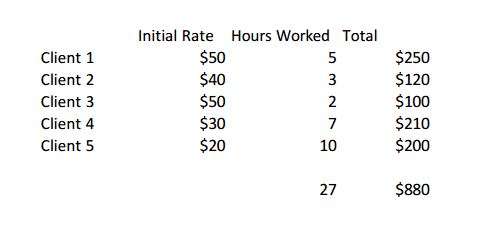
    Let me give you an example. Say you have five clients with a relatively diverse range of rates and hours worked per week:

    Image: Tom Ewer's freelance guide

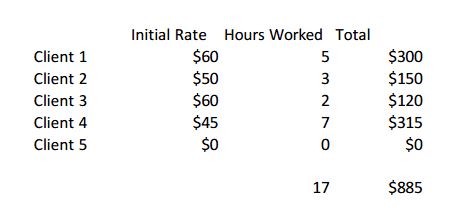
    You propose new rates to each of these clients. Clients 1 and 3 agree to the new rate ($60), Clients 2 and 4 negotiate with you, and Client 5 considers your rate too high and moves on. With the new rates in place and one less client, how do your earnings look now?

    Image: Tom Ewer on Freelancing

    Although you’ve lost one client, you are now earning $5 more per week and are working ten less hours! That’s the power of spreading your risk by proposing multiple rate increases at the same time.

    In terms of actually making the proposal, experience is the best teacher and you will soon find that each client is ideally approached in a personalized way, one that best suits their attitude and behavior. If you’re interested in learning more about client negotiation, check out this great article from Copyblogger.

    Don’t fret too much about the particulars — it is not as frightening a process as you may think. Just stick to the basics: you have reevaluated your business and are proposing new rates accordingly. You appreciate their business and look forward to taking your working relationship forward.

    Act in a professional and courteous manner then let the client do the rest. It’s only business.

    Assessing the risk

    There is, of course, a risk inherent in any kind of rate increase, but in reality the risk is probably far smaller than you think. For starters, if a client is happy with your work then they are unlikely to walk away just because you propose a rate increase. They will typically do one of three things:

    1. Accept it

    2. Negotiate with you

    3. State that they are not willing to pay you more

    Any of those outcomes puts you in a better (or no worse) situation than before. As for those clients who do walk away — they were likely to walk away before long anyway. They certainly weren’t going to grow with you, that’s for sure. So although you may incur a short-term financial loss in losing them, it will be better for your business in the long run.

    Earn more, work less

    You may think this a dream scenario, but I can tell you from personal experience that it works. I employed this strategy at the end of last year and lost one client but ended up making more money in fewer hours. I would recommend that any freelancer working with more than a handful of long-term clients pursue this strategy and reap the rewards.

    Have you ever tried to raise your client rates? If not, what’s stopping you?