
Tag: magazine writing

  • Pitching Long-Form Journalism? Here’s our Best Tip for Getting the Gig

    Pitching Long-Form Journalism? Here’s our Best Tip for Getting the Gig

    Have a long-form journalism idea? Here are some pitching tips from Nicole Dieker.

    When you’re pitching a complicated story, it’s important to provide enough background information to help an editor understand why this story needs to be told.

    But too much background can bog down your pitch, or bury the story you really want to tell.

    In this pitch fix, we’re looking at long-form journalism

    This time, we’re going to look at a pitch where the author is clearly an expert on a complicated subject—but she needs a little help pulling the story she wants to write out of her background information.


    Colleen Mondor’s aviation-industry pitch

    Colleen Mondor is an author, blogger, and journalist. She’s written a nonfiction memoir, The Map of My Dead Pilots: The Dangerous Game of Flying in Alaska, and wants to build her long-form journalism portfolio.

    Mondor submitted the following pitch to
    Outside, Men’s Journal, and Air and Space Magazine but hasn’t been able to place her story.

    What do you think is holding this pitch back?

    Dear XX:

    In the 90 years since aircraft first flew in Alaska, the bush pilot myth has become synonymous with Alaskan life. Tourists are drawn to stories of mercy pilots and pictures of aircraft loaded with everything from sled dogs to outboard motors are as much a part of the state’s image as the northern lights and Denali. But the harsh truth about aviation here is that while it is consistently one of the most dangerous places to fly in the world, almost all of the accidents are preventable.

    Alaska averages about 100 aircraft accidents a year which, over the past decade, have resulted in 194 fatalities. In 2013 there was a particularly devastating crash in the small town of Soldotna. That accident made national news as two South Carolina families were killed after their charter aircraft stalled on takeoff. The recently released probable cause report found the longtime Alaska pilot made multiple errors prior to departure including failing to weigh the additional cargo onboard, loading it behind the aircraft’s center-of-gravity and exceeding the aircraft’s weight limits. He was also killed in the crash.

    The investigators with the Alaska regional office of the NTSB are determined to reach beyond pilot actions to find aspects of company culture, flight training or lax federal oversight that might contribute to poor decision-making. They have also joined with representatives of the Alaskan Aviation Safety Foundation and Aircraft Owners & Pilots Association to target specific aspects of the state’s aviation environment and community to affect positive change in pilot attitudes and actions. These are the people who are not willing to dismiss Alaska simply as an inherently dangerous place to fly and I think their story needs to be told.

    I first worked in the aviation industry in Alaska over 20 years ago, as a dispatcher for a Fairbanks-based commuter. I also studied aviation in college and graduate school, both in Alaska and Outside, and learned to fly when I was 18. I wrote about my years as a dispatcher in a 2011 memoir, The Map of My Dead Pilots. I have worked as a journalist and essayist on this subject for years including the past three for the Bush Pilot section of Alaska Dispatch News (the Anchorage daily newspaper), and recently in Narratively magazine. Alaska aviation is a topic I am deeply involved with, and I look forward to writing about the people who are trying to change the way it operates.

    Pitch Fix for long-form journalism: State your story

    When I read Mondor’s pitch, I kept waiting for the sentence that began “My story will be about” or “I’d like to write about.” I was impressed by the background information and detail, but I had a hard time figuring out what story Mondor was actually pitching to these magazines and how she planned to tell it.

    Mondor has one sentence that alludes to what she intends to write: “These are the people who are not willing to dismiss Alaska simply as an inherently dangerous place to fly and I think their story needs to be told.”

    It’s a great start, but I want to know more

    Does Mondor have a specific person’s story in mind? Is she planning to conduct interviews for the bulk of her research, or is she thinking about going more in-depth, perhaps embedding herself with Alaska’s NSTB investigators to observe their work—and their challenges—in person?

    If you thought “Wait, NSTB investigators? Isn’t this a piece about bush pilots?” I wouldn’t blame you. Mondor begins her pitch with “The bush pilot myth has become synonymous with Alaskan life,” leading the reader to expect that she plans to write about pilots. When you read carefully, you learn she really wants to write about the investigators who look into why pilots crash.

    This information should be at the center of Mondor’s pitch, and the entire pitch should focus on the story she wants to tell and the methodology by which she will tell it. Otherwise, she runs the risk of confusing her editors and losing the opportunity to report on an important aspect of Alaskan aviation.
    Pitch tips for long-term journalism. Vertical image with 70s style graphic swirls and font

    Here’s how I’d rewrite Mondor’s pitch:

    In the 90 years since aircraft first flew in Alaska, the bush pilot myth has become synonymous with Alaskan life. However, many people aren’t aware of the other side of the myth: the numerous preventable aircraft accidents. Alaska averages about 100 aircraft accidents a year which, over the past decade, have resulted in 194 fatalities.

    When these tragedies take place, the investigators with the Alaska regional office of the National Transport Safety Board (NTSB) look beyond pilot actions to find aspects of company culture, flight training or lax federal oversight that might contribute to poor decision-making. They have also joined with representatives of the Alaskan Aviation Safety Foundation and Aircraft Owners & Pilots Association to target specific aspects of the state’s aviation environment and community to affect positive change in pilot attitudes and actions. These are the people who are not willing to dismiss Alaska simply as an inherently dangerous place to fly and I think their story needs to be told.

    I’m developing a long-form article in which I embed myself in the Alaska regional NSTB office for one month to give readers a clearer picture of the daily challenges and struggles these investigators face. I’ll follow the investigators as they visit crash sites, document accidents, and work to understand the bigger questions: What went wrong? Was it simple pilot error, or were there larger forces at work here? Why does Alaska have so many aircraft accidents, and how can these accidents be prevented?

    This article will be written in a nonfiction narrative style, viewing the investigators and the pilots through a human lens. Readers will finish the piece feeling as if they were there in the NTSB office with me, watching coworkers make jokes and talk about their families before they’re called out to investigate yet another accident. They’ll also learn how this type of work affects family and personal life, and what a career based on analyzing tragedy does to a person over time.

    If you are interested in learning more about this topic or discussing how this story might fit into your publication, please let me know.

    A bit about my background: I first worked in the aviation industry in Alaska over 20 years ago, as a dispatcher for a Fairbanks-based commuter. I also studied aviation in college and graduate school, both in Alaska and Outside, and learned to fly when I was 18. I wrote about my years as a dispatcher in a 2011 memoir, The Map of My Dead Pilots. I have worked as a journalist and essayist on this subject for years including the past three for the Bush Pilot section of Alaska Dispatch News (the Anchorage daily newspaper), and recently in Narratively magazine. Alaska aviation is a topic I am deeply involved with, and I look forward to writing about the people who are trying to change the way it operates.

    Mondor’s response

    I asked Mondor if she was planning to rework her pitch based on my fix, and here’s her response:

    This is really really funny. I was reading over some pitches at Open Notebook a few days ago and I started thinking about how I buried the fact that there were very real people involved in my story—the NTSB investigators (and others) who are so committed to changing the statistics. I have been so worried about getting the facts straight and making clear that this would not be another “death-defying Alaska bush pilot” article, that I left out the significant human element. (Who are the point!)

    And bam—you saw it too and more importantly, you made it work.

    I’ll likely tinker with this just a bit to fit exactly what I want to write about but honestly, I won’t change much. Reading over it again, I’m realizing how much I needed a second pair of eyes on it. Sometimes, no surprise, writers just can’t see the forest for the trees.

    I’ll be sending this out by the end of the week—thanks so much.

    Do you agree with this month’s Pitch Fix for long-form journalism? When you’re pitching a long-form journalism story, how much background information do you include? What other advice do you have for Colleen Mondor?


  • Get Paid to Write Articles: 15 Excellent Publications to Pitch Today

    Get Paid to Write Articles: 15 Excellent Publications to Pitch Today

    As a freelance writer, it can be a struggle to find high-quality paying work. But it’s possible, and we’ll introduce you to 15 publications to pitch so you can get paid to write articles.

    When searching for opportunities, it can feel like the only options available are $5-per-article scams and work from content mills, which can seem like good opportunities—until you check your bank account balance and realize it’ll take ages before your hard work adds up into real earnings.

    Making a living as a freelance writer means you’ll need to master how to get paid to write articles. The good news? There are publications that will pay you a premium to write for them.

    The publications below pay $500 US and up, which may seem like a dream to you (especially if you’re new to the field).

    It isn’t necessarily easy to get into these publications, and it may take time and experience to build up your writing to a level that will help you get paid these rates. But you can take solace in the fact that writing work exists beyond content mills and low-paying gigs.

    While there are probably tens of thousands of magazines that pay writers, a much smaller number compensate writers really well. We’re here to make a living writing rather than fall victim to the old adage of starving artist.

    Ready to get paid to write articles?

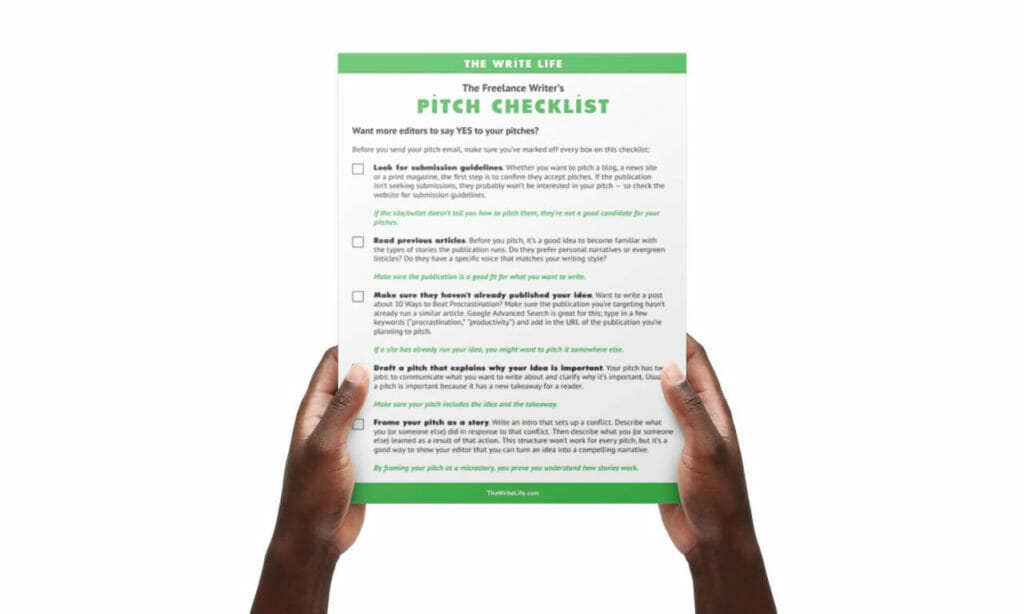
    Freelance Writer’s Pitch Checklist
    Grab it for free 👇

    Convince more editors to say YES to your pitches!

      We’ll also send you our weekly newsletter, which offers helpful advice for freelancing and publishing. You can unsubscribe at any time.

      Get Paid to Write Articles from These 15 Platforms

      1. Early American Life

      History buffs, take heed. Early American Life is a print mag focusing on early American style, decorating, and traditions publishes seven times yearly and welcomes the fresh voices of new writers.

      You can submit both shorter stories and features, which run about 2,500 words. The editors estimate a $500 payment for “a first feature from a new writer,” with the opportunity for higher earnings as your skills develop.

      2. Earth Island Journal

      Earth Island Journal wants “compelling and distinctive stories that anticipate environmental concerns before they become pressing problems.” It covers a wide variety of environmental issues including wildlife and land conservation, environmental public policy, climate and energy, animal rights, and environmental justice.

      If you’re an international traveler, it’s a great opportunity. Earth Island is especially hungry for, “on-the-ground reports from outside North America.” The magazine pays 25 cents per word for its print stories, which equates to about $750 to $1,000 for in-depth features (between 2,800 and 4,000 words).

      You can also pitch a shorter online report, especially if you’re a newer writer. While they only pay $200 apiece for stories published online, the journal publishes five days per week and is “always looking for fresh ideas.”

      3. VQR

      VQR is a journal of literature and discussion with a focus on publishing the best writing they can find, from award-winning authors to emerging writers.

      For poetry, it pays $200 per poem (up to four). If they accept a group of five or more poems, you’ll earn $1,000. Prose pays around 25 cents per word, and an accepted short story receives $1,000 or more. Book reviews earn $500 for 2,000 to 2,400 words. VQR has limited reading periods, so check the schedule online before you submit.

      4. The Sun Magazine

      The Sun Magazine is looking for essays, interviews, fiction and poetry. They prefer personal writing but they also accept pieces about political and cultural issues.

      The Sun pays $300 to $2,000 for fiction, essays and interviews, and $100 to $250 for poetry. If your work is accepted, you’ll also get a complimentary one-year subscription.

      5. Boys’ Life

      Boys’ Life is a general-interest monthly magazine has been published by the Boy Scouts of America since 1911. It pays its writers between $500 to $1,200 for nonfiction articles up to 1,200 words. Writing for one of its departments is also an option, where you’d make $100 to $600 for a 600-word article.

      As far as what to write about, there aren’t too many limits. “We cover everything from professional sports to American history to how to pack a canoe,” read the submission guidelines. Most of all, it should be entertaining to the scouts it’s aimed at.

      “Write for a boy you know who is 12,” the editors suggest.

      6. The American Gardener

      The American Gardener is the official publication of the American Horticultural Society, and it caters to “experienced amateur gardeners.”

      It seeks writers for horticulturalist profiles, and articles about innovative approaches to garden design, plant conservation, horticultural therapy, and biodiversity, among others.

      It pays $300 to $600 for feature articles, which usually run 1,500 to 2,500 words. The magazine sometimes offers travel and expense reimbursement.

      7. One Story

      One Story is a literary magazine that features one story per issue, and it is mailed to subscribers every three to four weeks.

      One Story looks for literary fiction in the range of 3,000 to 8,000 words, and stories can be on any subject “as long as they are good.” It offers $500 and 25 copies of the magazine for every accepted contribution, but submissions are not always open.

      As a freelance writer, it can be a struggle to find high-quality paying work. But it's possible, and we'll introduce you to 15 publications to pitch so you can get paid to write articles.

      8. The American Scholar

      Quarterly magazine The American Scholar publishes everything from essays to fiction to poetry on public affairs, literature, science, history, and culture. 

      It will pay up to $500 for accepted pieces of no more than 6,000 words, and if you want to go the digital route, it will pay up to $250 for web-only pieces. Note, however, that The American Scholar does not accept pitches through email—only through online submissions manager system Submittable.

      9. Longreads

      Want to write a 2,000- to 6,000-word long-form article for Longreads? Before you think “yes,” know this: These stories can involve multiple reporting trips, sources, and in-depth research. And while they don’t necessarily need to deal with current events, “they should have an excellent sense of story and purpose and be able to hold a reader’s attention with a compelling premise.”

      Base payment begins at $500, and they’ll even work with you to pay you a solid fee and also cover expenses. 

      10. National Geographic Traveler

      You know it. You’ve read it. And now, you can write for it. As the world’s leading brand in consumer travel, National Geographic Traveler states their publishing goals are to, “find the new, to showcase fresh travel opportunities, to be an advocate for travelers.” No hotel or product reviews here, folks.

      Nat Geo Traveler pays, but their website doesn’t confirm how much. But according to Who Pays Writers, they offer 50 cents per word for 1,000-word features.

      11. NationSwell

      Based in NYC, NationSwell is looking for freelance writers to tell impactful meaningful solutions narrative and feature stories between 800 to 1,500 words about people or organizations solving for America’s issues—like “the woman who took on gun violence by confronting gangs and her local mayor in street rallies, or the group that helps families of murder victims fight back against a system that unfairly punishes them.”

      Pay is 50 to 65 cents per word depending on experience and subject matter.

      12. Alaska Beyond Magazine

      Alaska Beyond Magazine is the monthly in-flight magazine for Alaska Airlines, and it’s looking for writing with vivid visual images, anecdotes and a strong narrative flow. If you can write with a sense of humor, cover business with insight and style, and lend inside perspective to the destination and travel columns, you’re good as gold. 

      Rates begin at $150 to $250 for short articles in the Journal section (200 to 600 words); $150 for business shorts (500 words); $500 for columns (1,600 words); and $700 for features (2,000 to 2,500 words). At this time, they’re not interested in fiction, poetry, or book reviews.

      13. Curbed

      Curbed’s focus is home: architecture, design, real estate, and urban planning. It’s seeking pitches for long-form and narrative stories from freelance writers, and these pitches should dig deep on their preferred topics, whether they are analyses of popular trends, reported pieces, personal essays, or a combination of all of the above. 

      The submission guidelines confirm (but don’t specify) competitive rates for features between 3,000 and 6,000 words—Who Pays Writers reports 20 and 54 cents per word payments, which means, at the very least, you stand to make $600.

      14. JSTOR Daily

      JSTOR Daily is excited by stories that tease out the details or that look at the obvious in a non-obvious way; “subjects that are newsworthy, entertaining, quirky, surprising, and enlightening are right up our alley.” For publication in summer and fall 2020, they’re interested in a reading list or annotated bibliography about structural racism, or work that highlights scholarship by BIPOC.

      Feature stories typically range from 1,800 to 2,000 words. The submission guidelines confirm (but don’t specify) that contributors are paid, so Who Pays Writers reports the average pay is 31 cents per word.

      15. Sierra

      Ever heard of Sierra? It’s the United States’ oldest, largest, and most influential grassroots environmental group. It welcomes ideas from writing pros who can “write smart, fun, incisive, and well-researched stories for a diverse and politically informed national readership.” When you pitch, make sure it reflects an understanding of the Sierra Club’s motto—“Explore, enjoy, and protect the planet”—as well as knowledge of recent issues and topics. 

      Feature articles range from 2,000 words to (rarely) 4,000 words or more with payment starting at $1 per word, rising to $1.50 word for more well-known writers with “crackerjack credentials.”  In some cases, expenses will be paid.

      You can also write for one of their departments, which they say is open to freelancers. Articles are 250 to 1,000 words in length; payment is $250 to $1,000 unless otherwise noted.

      Freelance Writer’s Pitch Checklist
      Grab it for free 👇

      Convince more editors to say YES to your pitches!

        We’ll also send you our weekly newsletter, which offers helpful advice for freelancing and publishing. You can unsubscribe at any time.

        The original version of this story was written by Bamidele Onibalusi. We updated the post so it’s more useful for our readers.

        Photo via Federico Rostagno/ Shutterstock 

      • Want to See Your Byline All Over Town? Make Your Name in This Magazine Niche

        Want to See Your Byline All Over Town? Make Your Name in This Magazine Niche

        Everyone always says to write about what you know.

        What could you know better than your own backyard? Regional magazines are a great way to break into magazine writing.

        They’re also a great way to break into a writing niche. If you can write about local dining, why not send those clips to break into a larger market? I used regional magazines to bulk up my portfolio to break into national magazines, but I also still write for some regional publications.

        Regional magazines can range from tiny booklets focused on a small local niche to magazines that cover entire states or regions. What they have in common is their focus on a particular area. Some of these are travel magazines focusing on tourism in a region, while others are local dining and foodie guides, and others are focused on outdoor activities or family activities nearby.

        Next time you go out to eat or out to the grocery store, take a look at the free magazines on the racks nearby. These magazines need writers. Specifically, writers who are familiar with the local area or the topic of the magazine.

        For the last three years, I’ve edited a regional lifestyle magazine, and I’ve also written for a variety of other regional publications. Even in a small mountain town, I have been able to find plenty of publications to write for.

        Read on for tips on how to break into the regional magazine market.

        Why regional magazines?

        If you’re fairly new to freelancing, regional magazines are a good place to get a feel for magazine writing.

        These publications generally have fewer writers competing to work for them than most of the big-name newsstand publications you’ll see around town.

        If you live in the region, you’ll typically already have the basic familiarity needed to write for these magazines. If you’re a parent, music lover, or foodie, you may have the qualifications to write for the specialized magazines you’ll see targeting local families, music fans, and diners.

        Let’s talk about money

        Pay can vary widely from publication to publication. Some of these magazines will pay very little while others will pay decent magazine rates. If you’re just breaking into the world of freelancing, writing for local magazines is a great way to get some clips to use as a steppingstone for other publications.

        Even experienced writers can make good money working for regional publications. If you know the local area well and are asked to write about, say, the local music scene, an experienced and knowledgeable local writer may be able to crank out a well-researched piece in just an hour or so. If you earn $100 for that article, you’ve just made $100 an hour. Not a bad rate at all.

        Check out the typical rates for a few regional parenting and regional travel magazines:

        • Chicago Parent Magazine pays $25 to $100 per article
        • Metro Parent (focused on Southeast Michigan parents) pays $35-350
        • Raising Arizona Kids pays $50-300
        • Western New York Family Magazine pays $40-150
        • Hana Hou! Magazine pays $50-175 for most Hawaii-related travel pieces
        • Oregon Coast Magazine pays $100-650

        Where can you find regional magazines?

        Look for free magazines out on the street and by the entrances to local restaurants and businesses. Many of these are looking to hire freelance writers. If your town has a free weekly paper, check it out and see if they’re looking for writers. These publications are typically funded by advertising dollars, so they’ll generally be able to pay freelancers at least a little bit.

        Freelancewriting.com also offers a pretty good roundup of some of the larger regional magazines. Many of the publications on this list are subscription-based and sold on newsstands, and they’re often a little more difficult to break into than free publications. But they’re definitely worth a try.

        How should you approach and contact regional magazines?

        Regional magazines generally don’t have bustling editorial rooms staffed with full-time writers and editors. More likely, they’re run by a team of freelancers who work for the same publisher.

        Sometimes, publishers put out multiple publications with the same theme or region. Once you write for a publisher and build a good rapport, you may find it easier to break into some of its sister publications.

        Some regional magazines offer detailed freelancer guidelines online. If you’re able to find submission guidelines, be sure to follow those closely.

        But many regional magazines don’t have submission guidelines available. Many times, you’ll just find a single email address in a publication. Oftentimes, it’s for a publisher or advertising salesperson — not even the editor you were hoping to reach! It can be a bit tricky to find out who to contact, but it’s worth taking a bit of time to find out.

        If there’s an email address or phone number, drop a note or give a call and inquire about freelancing. Once you track down the right email address, send a letter of inquiry along with three or so relevant clips.

        And be sure to follow up if you don’t hear back. You might be inquiring when the publication is in the final throes of production. If you don’t hear back, send a polite follow-up two to four weeks later.

        What If you don’t have relevant clips?

        So, what if you found a regional publication that looks like it’s right up your alley, but you don’t have any relevant clips to send?

        As an editor, I want to see that people can write in the style of the publication. The magazine I edit consists mainly of personality and business profiles, so I need to make sure people can conduct interviews and put together a solid profile.

        If you don’t have any clips remotely related to what the magazine publishes, you may want to consider writing a sample piece. Most writers don’t like to write on spec and the sample piece may or may not be published, so keep that in mind. But it’s a great way to show an editor your writing chops as well as your dedication to writing for the publication.

        I’ve had several writers approach me and offer to write a sample piece. It’s a much better technique than sending in a paper you wrote in college or a blog you write on a completely unrelated topic. While editors like to see that you can write for diverse markets, the one most editors want to see is one that proves you can write for their specific style of publication.

        And, even if one regional magazine doesn’t end up being the right match, don’t give up. You’ll likely find many other options in your area. Keep reaching out to your local writing community and you’ll likely find traction before too long.

        Have you ever written for regional magazines? What did you like about it?