Blog

  • Querying Literary Agents: Your Top 9 Questions Answered

    Querying Literary Agents: Your Top 9 Questions Answered

    This column is excerpted from Guide to Literary Agents, from Writer’s Digest Books.

    When contacting agents, the query process isn’t as simple as “Just keep emailing until something good happens.”

    There are ins, outs, strange situations, unclear scenarios, and plenty of what-have-you that block the road to signing with a rep. It’s with that in mind that I have collected nine of the more interesting questions submitted to me by readers regarding protocol during the query process.

    (By the way, there is a Part II to this post you can read here: “Secrets to Querying Literary Agents: 10 More Questions Answered.”)

    1. Can you query multiple agents at the same agency?

    Generally, no. A rejection from one literary agent usually means a rejection from the entire agency. If you query one agent and she thinks the work isn’t right for her but still has promise, she will pass it on to fellow agents in the office who can review it themselves. Agents work together like that.

    2. Can you re-query an agent after she rejects you?

    You can, though I’d say you have about a 50/50 shot of getting your work read. Some agents seem to be more than open to reviewing a query letter if it’s undergone serious editing. Other agents, meanwhile, believe that a no is a no — period. So, in other words, you really don’t know, so you might as well just query away and hope for the best.

    3. Do you need to query a conservative agent for a conservative book? A liberal agent for a liberal book?

    I asked a few agents this question and some said they were willing to take on any political slant if the book was well written and the author had a great writer platform. A few agents, on the other hand, said they needed to be on the same page politically with the author for a political/religious book, and would only take on books they agreed with.

    Bottom line: Some will be open-minded; some won’t. Look for reps who have taken on books similar to yours, and feel free to query other agents, too. The worst any agent can say is no.

    4. Should you mention your age in a query? Do agents have a bias against older writers and teenagers?

    I’m not sure any good can come from mentioning your age in a query. Usually the people who ask this question are younger than 20 or older than 70. Concerning an age bias, I would say some literary agents may be hesitant to sign older writers because reps are looking for career clients, not simply individuals with one memoir/book to sell. If you’re older, write multiple books to convince an agent that you have several projects in you … and don’t mention your age in the query to be safe.

    5. Can you query an agent for a short story collection?

    I’d say 95 percent of agents do not accept short story collection queries. The reason? Collections just don’t sell well.

    If you have a collection of short stories, you can do one of three things: 1) Repurpose some or all of the stories into a novel, which is much easier to sell. 2) Write a new book — a novel — and sell that first to establish a reader base. That way, you can have a base that will purchase your next project — the collection — ensuring the publisher makes money on your short stories. 3) Query the few agents who do take collections and hope for the best. If you choose this third route, I suggest you get some of the stories published to help the project gain some momentum. A platform and/or media contacts would help your case, as well.

    6. When should you query? When is your project ready?

    There is no definitive answer, but here’s what I suggest. You want to get other eyes on the material — what are called “beta readers” — people who can give you feedback that is both honest and helpful. These beta readers (usually critique group buddies) will give you feedback and you can take what you want, then ditch the rest. What you’re aiming for is no more major concerns. So let’s say you give the book to three friends and they come back with some major concerns, such as “It starts too slowly” or “This character is not likeable.” Through revisions, you can address these problems. After rewrites, give it to more beta readers. If they come back with no major concerns, the book is ready, or at least very close.

    [twl_reusable_block post_id=41455]

    7. Should you mention in the query that your work is copyrighted and/or has had book editing?

    No. All work is copyrighted the moment you write it down in any medium, so saying something that’s obvious only comes off as amateurish. On the same note, all work should be edited, so saying that the work is edited (even by a professional editor) also comes off as amateurish.

    8. How should you start your query? Should you begin with a paragraph from the book?

    I would not include a paragraph from the book nor would I write the letter in the “voice” of one your characters — those are gimmicks. If you choose, you can just jump right into the pitch — there’s nothing wrong with that. But what I recommend is laying out the details of your book in one easy sentence: “I have a completed 78,000-word thriller titled Dead Cat Bounce.”

    I suggest this because jumping into a pitch can be jarring and confusing. Think about it. If you started reading an email and the first sentence was simply “Billy has a problem,” you don’t know if Billy is an adult or a child, or if he is being held captive by terrorists vs. being nervous because his turtle is missing. In other words, the agent doesn’t know whether to laugh or be worried. They’re confused. And when an agent gets confused, they may just stop reading.

    9. Should you mention that the query is a simultaneous submission?

    You can, but you don’t have to. If you say it’s exclusive, they understand no other eyes are on the material — but if you say nothing, they will assume multiple agents must be considering it. Keep in mind to always check each agent’s submission guidelines; a few rare agents will specifically request to be informed if it’s a simultaneous submission.

    Other TWL Guest Posts by Chuck Sambuchino:

    1. What Does a Literary Agent Want to See When They Google You?

    2. Tips for Pitching a Literary Agent at a Writers’ Conference

    3. 8 Lucrative Tips for Writing and Selling Articles to Magazines and Websites
  • 7 Popular Blogs About Writing That Want Your Guest Posts

    7 Popular Blogs About Writing That Want Your Guest Posts

    It can be hard to be a writer these days.

    Sure, the web has democratized attention — but when everyone has a chance to make their voice heard — everybody tries and it can be tough to get anyone to notice.

    But what if I told you that there were dozens and dozens of websites that are read by thousands and thousands of people looking for authors like you to write for them?

    Would writing for an audience of tens of thousands make a difference to the sales of your book, perhaps?

    Maybe it would help you get enough attention on your blog that you catch the eye of an agent or publisher?

    Or maybe it will just help you share your story with more people?

    Whatever your reasons are, the fact is you probably want and need to get your words and ideas in front of people who are really interested in what you’re doing.

    Well, there’s a way to do all of that and more, without taking all of your time or any of your money.

    It’s called guest posting, and it’s something that serious bloggers have been doing for years…

    The Power of Guest Posting

    You may already be familiar with guest posting, but in case you aren’t, I’ll run through a quick explanation of how it works.

    You start the process by creating a list of blogs that your ideal reader is likely to frequent — preferably big, powerful authority blogs in your niche. Spend time commenting on different posts, making sure to leave interesting and valuable insights.

    While you’re doing this, pay attention to what types of posts perform really well on each blog. How-tos? Exposés? List posts? Keep notes on the preferences of each blog as you comment and engage.

    After you’ve left a good number of comments on a blog, reach out to the blog owner with a clear and concise email proposing a post, including your suggested headline, and a little information about what you’d like to write for them, who you are, and why their audience will appreciate it if they give you a chance.

    If and when they accept, draft up the post, including a brief bio, and make sure to schedule some time on the day that the post goes live to answer your comments.

    There are plenty more details, of course, but at the end of the day, that’s the guest blogging process — and if you want to learn more, feel free to check out the Write Like Freddy training program — almost a thousand bloggers have benefited from it so far.

    Okay, enough about the theory. Where can an author or writer go to guest post?

    Read on for seven of the best places to start your search.

    1. Write to Done

    Mary Jaksch is the chief editor of Write to Done, a space for new and experienced writers to share their experiences, knowledge and advice with each other. Write to Done is one of the industry leaders in this area, and so having a post appear there is a great shot in the arm for your credibility and exposure.

    Some of the posts that have done exceptionally well on Write to Done are:

    • How to Write Funny
    • 31 Ways to Find Inspiration for Your Writing

    Write to Done accepts guest posts frequently, but they have to be top notch! We’re talking about incredibly, unbelievably useful content — so peruse the guidelines and send your very best. Make sure to pay attention to the details!

    2. Make a Living Writing

    Carol Tice started Make a Living Writing to share her experience making a living as a freelancer. Using her extensive knowledge and experience in the field, she helps writers graduate from content mills and other low-paying markets. Make a Living Writing was named one of the Top 10 Blogs for Writers in both 2010 and 2012.

    Some of the most popular posts on Make a Living Writing are:

    • How I Make $5,000 a Month as a Paid Blogger
    • Answers to 100 Freelance Writing Questions – Including Yours
    • 113 Things You Can Do to Grow Your Freelance Writing Income – Now

    To guest post on Make a Living Writing, brush up on writing strong headlines, and don’t send any finished articles — Carol only wants a proposed headline and an outline of the points that you want to cover. Keep in mind that her most successful guest posters are blog subscribers and regular readers, so sign up!

    Oh, did we mention she pays $50 per guest post? Email Carol directly to submit your pitch. (Update: While Carol is no longer accepting guest posts from all writers, you may still be eligible if you’re a current or former member of the Freelance Writers Den or a student or graduate of Jon Morrow’s Guest Blogging course.)

    3. Men With Pens

    James Chartrand is the pen name of the founder/owner of Men with Pens; she’s a leading copywriter and professional blogger from Montreal, Canada. She has been featured in Forbes, Intuit, Newsweek, New York Times and the Huffington Post, and regularly contributes to top blogs, like Copyblogger.

    Men with Pens focuses on the writing side of commercial marketing, customer perception, online businesses, problogging, and consumer psychology. It has been voted one of the Top Ten Blogs for Writers for four years running.

    Here’s a sampling of the stuff that does particularly well on her site:

    Your post should be geared toward seasoned writing professionals and should specifically address the subject of succeeding online with your writing, whether about copywriting, freelancing, entrepreneurship, or online marketing. The content should be useful — and although this should probably go without saying, it should be well-written. Affiliate links not permitted. You can read all of the guidelines right here.

    4. Jeff Goins

    Jeff Goins is the author of Wrecked and leader of a thriving blog community. Jeff explores why writers write, how they can improve, and how to get eyes on their work. Definitely not a blog you want to miss if you’re serious about writing.

    Some of Jeff’s best posts are:

    Jeff talks about the importance of guest posting himself — so why don’t you send him a well-thought out pitch! Remember to include not just a headline, but also a few solid points you intend to cover, and a good reason why he should pay attention to you!

    5. The Creative Penn

    On the Creative Penn, Joanna Penn integrates her experience as an author, speaker, and online entrepreneur into her posts, creating a vast resource for people interested in writing, publishing (online and in print), and internet marketing and promotion for their books. Her blog features regular blog posts and interviews with authors and people in the publishing or marketing sphere.

    Check out some top posts:

    Joanna welcomes guest posts about writing, publishing, marketing or creativity, and favors articles which are useful or thought provoking. She typically accepts posts that are 500-1500 words in length, and an appropriate image must be included with your post submission.

    Plan this guest post in advance; the current waiting time for guest posting on Creative Penn is three months! They say that good things come to those who wait, so get your pitch in now(Update: The Creative Penn is not currently accepting guest posts.)

    6. The Write Practice

    The Write Practice is composed by Joe Bunting and Liz Bureman, and they are all about improving your writing skills and getting you published!

    How do they do that?

    They’ll make you practice, and practice and practice — because nothing else will improve your skills! With tutorials on common necessary skills, and inspiration for everyday writing — the Write Practice is a wonderful place to “see and be seen.”

    Here are some of the most interesting posts from the Write Practice. Use them as examples, and try them yourself!

    The Write Practice likes guest posts about how to write various genres, from poetry to journalism. Make sure to follow all of the guidelines, and be patient if it takes a little time to get a response!

    7. The Renegade Writer

    Linda Formichelli and Diana Burrell are the dynamic duo behind The Renegade Writer, and they practice what they preach: their philosophy is that to be a successful freelancer, you must do what works for you, rather than blindly following pre-established “rules” of the trade. Linda’s blog strives to encourage people to figure out their individual system of what works, and get them motivated to reach their writing dreams.

    Some of their best performing posts are:

    Guest posting on The Renegade Writer will also net you $50 in addition to access to their wonderful and engaged audience. If your post is published, you must be ready to promote it via social media and be actively engaged with readers in the comments. They prefer posts about productivity, motivation, query writing, tips on how to diversity your income, amongst others — and the higher the word count, the better! (Update: The Renegade Writer is not currently accepting guest posts.)

    So there you have it — seven popular writing blogs that you should be writing for to gain exposure, credibility and excellent experience. Having relationships with these bloggers and their readers will have long term benefits for your writing career. So don’t hesitate!

    Get out there and pitch!

  • A Low Risk, 3-Step Plan for Raising Your Freelancing Rates

    A Low Risk, 3-Step Plan for Raising Your Freelancing Rates

    Working with long-term clients can be a lucrative approach to freelancing. Amongst other benefits, it means you spend less time and marketing and more time working billable hours.

    There is, however, one popularly perceived downside of working with long-term clients: difficulty raising rates. If you have high client turnover, you can simply increase rates as the new clients come along, but when you have an established relationship with a long-term client, asking them to pay you more can seem like a rather daunting prospect.

    But it shouldn’t be. Here’s how you can increase your overall hourly rate for long-term clients with minimum risk.

    Key assumptions and understandings

    This article is written on the assumption that you have several long-term clients (say four or more). Put simply, the fewer clients you have, the more risk you are exposed to with this strategy. You can certainly still carry out this strategy with only one or two clients, but it would be remiss of me not to point out that the risk is relatively high.

    And that leads me to a more general point that is vital to understand when it comes to rates negotiation: the entire process is a question of risk and nothing else. It should not be subject to emotional thinking or subjective analysis. As much as possible, you should view your approach to rates negotiations as mathematical or scientific — i.e. how can you quantify a positive outcome, and what is the likelihood of that outcome being achieved?

    Step 1: Get to know your clients

    To negotiate rates, you need to carefully analyze the worth of each of your clients. (Click to tweet this idea!) I am not only talking about how much they pay you, but also how easy they are to work with, whether they refer additional clients to you, and if there are any other benefits (direct or indirect) of working with them. Before you even begin to think about negotiations, you should be able to “rank” your clients in terms of their worth to you.

    There are many ways in which you can do this, but it ultimately comes down to money — that is typically the most important factor. So let’s start there.

    For each of your clients, you need to know how much you earn in terms of an equivalent hourly rate. If you charge per hour (which I do not recommend as it limits your earning potential) then your hourly rate should already be apparent. But if you charge per job, you need to calculate exactly how much time you spend on each client’s work and calculate your equivalent hourly rate from that. If you do not currently track your time then this is a good reason to start — it’s really a necessity.

    Once you have created a “ranking table” of sorts, listing your clients by how much you earn from them per hour, it is time to add all of those less quantifiable considerations to your list (as mentioned above). When you are finished, you should have a well-formed opinion of each of your clients in terms of their worth to you.

    Step 2: Calculate rate increases

    Take into account these three things when it comes to calculating an increased rate for an existing client:

    1. How much you want to be paid

    2. How much you should be paid

    3. How much you think the client will pay

    How much you want to be paid will be the easiest question to answer, but the other two are more complicated.

    The question of how much you should be paid can be answered by (a) comparing your existing rate for that client against other clients and (b) comparing your existing rate against what you consider to be a fair market rate. This is not a particularly scientific process; I wouldn’t beat yourself up too much about it. However, I will say this: in my experience, most freelance writers undervalue themselves.

    undervalue, Tom Ewer, TWL

    The question of how much you think the client will pay is down to nothing more than your intuition. But consider this: as far as I am concerned, there are two broad “types” of clients:

    1. Those who want a job doing and are not going to bicker about an extra few bucks per article

    2. Those who do not value quality written content highley and may argue over the slightest increase

    Let me be frank: in the long run, you do not want to work with that second type of client. Furthermore, there are plenty of the first type around. So, if your intuition tells you that a client is likely to argue over any kind of increase, that may be a sign for you to move on anyway.

    If you are happy with the rate paid by your most “generous” client then this process is relatively straightforward — that is the benchmark by which all other clients should be measured. If on the other hand you feel that all of your clients are underpaying you, that requires a little more thought.

    Once you are finished with the decision-making process you should have a new rate for each client (where appropriate) that you intend to propose. That rate will be a result of the calculation you made based upon the want, should and will considerations.

    Step 3: Propose your rate increases

    The key to this process in terms of reducing risk is diversification. It is quite simple: the more clients you have and the more proposals you make, the greater chance you have of increasing your rate overall.

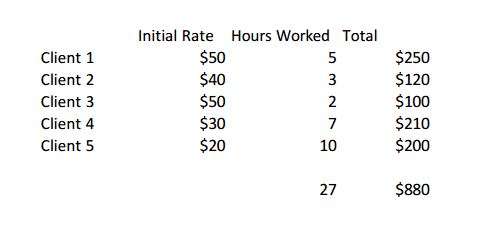
    Let me give you an example. Say you have five clients with a relatively diverse range of rates and hours worked per week:

    Image: Tom Ewer's freelance guide

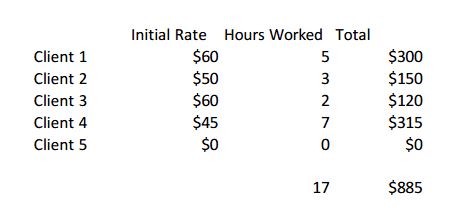
    You propose new rates to each of these clients. Clients 1 and 3 agree to the new rate ($60), Clients 2 and 4 negotiate with you, and Client 5 considers your rate too high and moves on. With the new rates in place and one less client, how do your earnings look now?

    Image: Tom Ewer on Freelancing

    Although you’ve lost one client, you are now earning $5 more per week and are working ten less hours! That’s the power of spreading your risk by proposing multiple rate increases at the same time.

    In terms of actually making the proposal, experience is the best teacher and you will soon find that each client is ideally approached in a personalized way, one that best suits their attitude and behavior. If you’re interested in learning more about client negotiation, check out this great article from Copyblogger.

    Don’t fret too much about the particulars — it is not as frightening a process as you may think. Just stick to the basics: you have reevaluated your business and are proposing new rates accordingly. You appreciate their business and look forward to taking your working relationship forward.

    Act in a professional and courteous manner then let the client do the rest. It’s only business.

    Assessing the risk

    There is, of course, a risk inherent in any kind of rate increase, but in reality the risk is probably far smaller than you think. For starters, if a client is happy with your work then they are unlikely to walk away just because you propose a rate increase. They will typically do one of three things:

    1. Accept it

    2. Negotiate with you

    3. State that they are not willing to pay you more

    Any of those outcomes puts you in a better (or no worse) situation than before. As for those clients who do walk away — they were likely to walk away before long anyway. They certainly weren’t going to grow with you, that’s for sure. So although you may incur a short-term financial loss in losing them, it will be better for your business in the long run.

    Earn more, work less

    You may think this a dream scenario, but I can tell you from personal experience that it works. I employed this strategy at the end of last year and lost one client but ended up making more money in fewer hours. I would recommend that any freelancer working with more than a handful of long-term clients pursue this strategy and reap the rewards.

    Have you ever tried to raise your client rates? If not, what’s stopping you?

  • Introducing Our Amazing Launch Team

    Introducing Our Amazing Launch Team

    [et_pb_section fb_built=”1″ admin_label=”section” _builder_version=”4.16″ global_colors_info=”{}” theme_builder_area=”post_content”][et_pb_row admin_label=”row” _builder_version=”4.16″ background_size=”initial” background_position=”top_left” background_repeat=”repeat” global_colors_info=”{}” theme_builder_area=”post_content”][et_pb_column type=”4_4″ _builder_version=”4.16″ custom_padding=”|||” global_colors_info=”{}” custom_padding__hover=”|||” theme_builder_area=”post_content”][et_pb_text admin_label=”Text” _builder_version=”4.17.3″ background_size=”initial” background_position=”top_left” background_repeat=”repeat” hover_enabled=”0″ global_colors_info=”{}” theme_builder_area=”post_content” sticky_enabled=”0″]

    How does a site like this come together?

    With the help of a LOT of people. And in today’s post, we’re featuring some of those talented folks: our Launch Team.

    Over the next two months, most of the content you’ll see on this site will come from these awesome bloggers. Why? Because we want to set a high standard from the get-go, providing relevant, helpful and exciting posts you’ll want to read — so you know from the beginning exactly how much GREATNESS to expect from The Write Life.

    After our first two months, we’ll slowly transition into offering content from other awesome contributors. (If you want to be a guest contributor, check out our guidelines for information on how to submit.)

    So who’s on the Launch Team?

    Tom Ewer

    Tom Ewer

    Tom quit his job in 2011 to become a full-time blogger, freelancer and Internet marketer. He shares his journey and the lessons he’s learned along the way on his blog Leaving Work Behind. His posts for The Write Life will focus on freelancing and making money from writing. Twitter: @tomewer

    Chuck SambuchinoChuck Sambuchino

    Chuck is an editor and author who runs the wildly popular Guide to Literary Agents Blog, one of the biggest blogs on publishing. He’ll teach us about finding a literary agent and overcoming other obstacles as you pursue traditional publishing. Twitter: @WritersDigest

    Danny InyDanny Iny

    The creator of Firepole Marketing, Danny is a business and marketing strategist, consultant, coach, entrepreneur and self-proclaimed “super-friendly guy.” (It’s true!) His posts here at The Write Life will center around about blogging and growing your online community. Twitter: @DannyIny

    Hope ClarkHope Clark

    Hope is an author, blogger and editor of the site Funds for Writers, an online resource that compiles funding streams like competitions and grants, as well as guidance on how to write queries, format manuscript and more. She’s here to teach us the best ways to fund our writing, so we can keep on chugging. Twitter: @hopeclark

    Carol TiceCarol Tice

    Carol is the force behind the popular Make a Living Writing, where she gives tough-love advice on how to make real money from your writing — as in, $100/hour money. We’re excited to have Carol here to teach us just that: how to make a smart living off your craft. Twitter: @TiceWrites

    Dana SitarDana Sitar

    Dana is a freelance blogger, “authorpreneur” and founder of the site A Writer’s Bucket List (formerly DIY Writing), where she discusses the challenges and successes of being a writer. Her mission, she says, is to guide you in the pursuit of happiness through writing. Her specialty here is the writing life. Twitter: @danasitar

    James ChartrandJames Chartrand

    James Chartrand is the pen name of the founder of the site Men With Pens and the writing course Damn Fine Words. She’s a leading copywriter, business expert, published author and online entrepreneur. We’re psyched to have James here to share knowledge on copywriting. Twitter: @MenwithPens

    Rachelle GardnerRachelle Gardner

    Rachelle is a literary agent and book lover who shares her insights on publishing with her (extremely active) community of readers. She’s here to enlighten us about the tough world of traditional publishing: how to find a literary agent and land a book deal. Twitter: @rachellegardner

    Ali LukeAli Luke

    Ali is a writer and blogger who offers insight on the writing life on her personal site, wrote the book Publishing E-Books For Dummies and runs Writers’ Huddle, a community where writers to share inspiration and experiences. Her area of expertise for The Write Life is publishing ebooks. Twitter: @aliventures

    Dana BateDana Bate

    Dana is a writer, award-winning journalist and food enthusiast who just published her first book, The Girls’ Guide to Love and Supper Clubs. She also has another exciting book deal in the works. Dana is the fiction arm of our awesome Launch Team. Twitter: @danabate

    Exciting group, right?!

    A big THANK YOU to all of these Launch Team members. We can’t wait to read your posts over the coming months!

    [/et_pb_text][/et_pb_column][/et_pb_row][/et_pb_section]

  • Without This, You’ll Never Succeed as a Writer

    Without This, You’ll Never Succeed as a Writer

    This column is excerpted from Create Your Writer Platform, from Writer’s Digest Books.

    I always tell people that my biggest challenge of my job in helping people find literary agents is correcting bad information on the Internet. This is no doubt my biggest challenge on a day-to-day basis in helping people get published.

    But if I had to pick a second frustration — one that drives me absolutely bonkers more often than I’d like to explain — it’s the fact that so many writers make themselves difficult to contact and hurt their writer platform. I cannot tell you how many times I’ve wanted to help someone or promote a book or interview an author only to find no email address anywhere online.

    Why you want to make yourself easy to find

    For example, at least a dozen times, I’ve found a great debut author online whose book I wanted to include in my recurring Writer’s Digest magazine column (“Breaking In”) only to find … no email. No Twitter. No contact information. Plenty of times no website at all. Other times I’ve wanted to interview up-and-coming writers for one reason or another, and I face the same problem. They don’t make themselves available, and I find someone else instead. (Makes you wonder … perhaps someone reading this column right now missed out on some easy promo because they kept their email hidden.)

    I have no idea why people make themselves difficult to contact. I think it comes from some sort of old-school fear that if their email is online, all hell will break loose and their identity will get stolen by someone in Chechnya or they’ll be deluged with spam and messages from hundreds of people asking to borrow money.

    Take it from me: this will not happen. I make myself very available through all channels and am in a position to help people, but the number of cold-contact emails I get each month is small and manageable.

    The point I’m trying to make is this: in this day and age, book publicity is very valuable and very hard to come by. The last thing writers want to do is make it more difficult for editors to publicize their books. In order to give yourself the best chance at success, here are my suggestions for all up-and-coming writers in terms of making yourself available and easy to contact:

    1. Create a website, even a simple free WordPress blog with just one page

    The important thing is just to have something come up when I Google your name or the name of your book. Heck, your website can be one landing page — that’s all I need. Just put some information about yourself and your book (so I know I’m contacting the correct person), and include some relevant contact info — especially an email address you check regularly. Twitter’s also fine, as long as you’re on it often and respond quickly. If you want to see an example of a simple site that I set up for free, check out my writing website on WordPress.

    2. On that note, try to check your email every day

    Note how I just said “check,” not necessarily “respond to every waiting email.”

    You just must make sure there are no pressing matters. Here’s the thing writers must, must understand: editors and literary agents have schedules and deadlines. We also procrastinate more often than we should. This means that, plenty of times, we are contacting people at the last minute and need an expeditious reply.

    3. If you want to protect yourself from spam, take simple steps

    An easy thing many people do when posting an email address online is adjust the formatting and write it out like this: literaryagent (at) fwmedia.com (dot) com. Spam be gone! If you’re an established author with a communicative fan base — perhaps you write for children — then include a note by your email saying that “While I do read every email promptly and personally, due to the sheer number of them, I cannot respond personally to all messages. Sorry.”

    4. Know that only listing your publicist’s contact info on your site is, in my opinion, not good enough

    I know I will catch some hell for this one. The good thing about publicists is they understand deadlines and are usually very quick to return emails and touch base. But publicists get sick, too. They get buried in work just like everyone else. They may be so busy that they can’t consider media requests from non-top-tier outlets. And plus, they don’t always work on weekends (but plenty of journalists do!). That’s why you should include your own information — just in case it’s an urgent matter. And I know the subject of publicists gets kind of tricky.

    Plenty of publishing house publicists don’t really want writers doing their own publicity without supervision from them. If that’s the case, just use your judgment. When my humor book, How to Survive a Garden Gnome Attack, came out in Fall 2010, we got publicity/review requests from media outlets big and small. If the media outlet was very sizeable (e.g., USA Today), or was requesting copyrighted book images to go with the story (e.g., The Huffington Post), then I knew it was something my publicist would have to approve. But everything else was fair game for me to do on my own. (She didn’t have time to get involved with everything anyway.)

    I solicited blog coverage. I responded to lots of interview requests. I answered people’s questions. And I did it all as fast as I could — because you never know when someone has a publicity window that’s closing fast. Just keep in mind that if it’s an emergency, your publicist will understand. I remember one time I was on a docked cruise ship in Miami an hour from when we left and would lose phone reception. That’s when I got an email from a Boston Herald reporter, who wanted to ask me interview questions about how book deals worked. (Guess where she found my contact info? Who knows! It was everywhere online, because I make myself easy to contact.)

    Since this was not just some random blogger calling, but rather a large metropolitan newspaper, protocol said I should send the request formally through my HR division. But the reporter’s deadline was hours away. So I called the Herald back immediately and did the interview. I was careful to pay attention for any “dangerous” questions that had answers that would get me in trouble. But these concerns never materialized, and my quote appeared in the paper. And when you’re quoted in the media, your title also appears: “Editor of Guide to Literary Agents.” My bosses at work couldn’t be mad that I answered some innocuous questions while getting our product out in a big media outlet. In fact, they were quite happy.

    [twl_reusable_block post_id=41455]

    On a side note, I should mention that if you have a specific reason for keeping your info offline — such as safety concerns — that is something relevant and totally understandable. I’ve run into a few authors at writing conferences with crazy ex-boyfriends who have this issue.

    But if you’re keeping your info locked up for no reason, please realize your name and your reach is your author platform. You WANT people to contact you. You WANT other writers to reach out from the blue. I love it when a member of the media finds my info online and writes me. I don’t even mind it when a writer sends me an email with a random question. I’ve made long-term friends that way — friends who have bought my book and sung my praises to others.

    It’s called networking — and writer networking starts by simply making yourself available. (Like this idea? Click to tweet it).

    Other TWL Guest Posts by Chuck Sambuchino:

    1. What Does a Literary Agent Want to See When They Google You?

    2. Tips for Pitching a Literary Agent at a Writers’ Conference

    3. 8 Lucrative Tips for Writing and Selling Articles to Magazines and Websites
  • 15 Blogs That Will Help You Make Money Off Your Writing

    15 Blogs That Will Help You Make Money Off Your Writing

    “Writing is the only profession where no one considers you ridiculous if you earn no money.” ~ Jules Renard

    True writers write because they enjoy creating art, connecting with the community of writers and sharing their perspective. But the reality is, every writer still has to pay the bills. And the only way you can afford to keep creating is to charge enough to not only survive but to thrive.

    Here are 15 awesome blogs that will help you make money off your writing, plus one of our favorite posts from each site:

    1. Make a Living Writing

    Want to start freelancing but not sure you can make a living at it? Carol writes about how to make money doing what you love, and this site is her own personal contribution to an industry that has given her so much.

    For inspiration, check out How I Make $5,000 a Month as a Paid Blogger.

    2. Writers In Charge

    One of the hardest parts of blogging is getting noticed. Onibalusi wants to help you generate more traffic, which in turn will help you generate more income from your writing. And who doesn’t want more income?

    Start with 30 Websites that Pay You to Contribute an Article, Instantly so you can get recognized (and earn some cash!) for your awesome writing skills.

    3. Write to Done

    One of the best parts of blogging is being part of a community. It’s about learning from each experience and teaching the newbies what you’ve learned. At Write to Done, you can share that knowledge with a community of writers and discuss the art of the written word.

    Get a headstart at improving your writing skills with Learn from the Greats: 7 Writing Habits of Amazing Writers.

    4. Be A Freelance Blogger

    Sophie was broke, jobless, homeless and pregnant when she started freelancing, and now she supports her family by freelancing part time. She knows what she’s talking about! (And she’s awesome, too.)

    Sign up for Sophie’s free newsletter and you’ll get access to her free resource, The Ultimate List of Better-Paid Blogging Gigs.

    5. A Writer’s Bucket List

    “I wish I could do what you’re doing.” Dana heard this phrase a lot as she started making a living as a writer, and at A Writer’s Bucket List, she wants everyone to know that YOU CAN! She writes to give aspiring writers the nudge to make their dreams come true.

    Are You Writing, or Are You Dreaming of Writing? is a great first nudge in the right direction.

    6. Leaving Work Behind

    Do you stare out your cubicle and long to leave it all behind and pursue your dreams? Tom did that, and now he makes his living working as a freelance writer. Check out his story and get inspired to quit that job you hate and replace it with work you’re passionate about.

    One of our favorite posts on Tom’s site is How to Set Goals and Motivate Yourself to Actually Achieve Them.

    7. Blogcast FM

    How do we learn to be successful? We study those who already are! Blogcast FM is a great resource for interviews with successful entrepreneurs, business owners and published authors.

    As a starting point, check out The 10 Best Blogging Tips I’ve Learned.

    8. Mindy Writes

    What if you want to run your own business but have a household to run at the same time? Mindy writes about being a write-at-home mom, balancing entrepreneurship and family.

    Mindy’s Six Tips for Freelance Success are a must-read for any upcoming freelancer.

    9. Funds for Writers

    Want to know your options for funding a writing career? Funds for Writers provides useful information on grants, markets, and awards (sprinkled with motivation) for serious writers of all skill and experience levels.

    Jump right in with the Grants and Markets pages to get your funds rolling!

    10. The Creative Penn

    Learn how to promote and market your writing from someone who’s been there. Joanna is a fiction writer and marketing maven who shares her journey to help others get their work out into the world.

    A post from Joanna we like: Help! My Book Isn’t Selling. 10 Questions You Need to Answer Honestly If You Want to Sell More Books.

    11. Goins, Writer

    “Why do writers write?” Jeff started his blog in search of answers to questions like this one. He found a community of inquisitive and creative aspiring writers who pondered the same questions. If you want to join a community of people who change the world through their words, this is the place to go.

    Head on over to Stop Waiting to Be Picked and start creating.

    12. Alexis Grant

    Alexis inspires writers to make their own luck through writing, entrepreneurship and social media. She preaches (and practices) using technology to your advantage in both your career and in your life.

    Here’s some tough love from Alexis: Why You’re Failing to Make a Living as a Writer.

    13. FreelanceSwitch

    This is the ultimate resource for new and experienced freelancers. FreelanceSwitch provides helpful information on determining rates, finding work and the transition from full-time work to freelance.

    For a crash course in the art of freelancing, read A Comprehensive Guide to Starting Your Freelance Career.

    14. The Renegade Writer

    You are a writer because you’re creative, and you’re creative because you’re unconventional. So why would you follow rules on how to be a freelance writer? Linda and Diana write about how to figure out freelancing on your own terms while using your strengths to advance your career.

    Don’t miss this post from Linda and Diana: 3 Excuses That Are Keeping You from a Successful Freelance Writing Career.

    15. Freelance.Blogging.Life.

    How do you figure out what works and what doesn’t when it comes to freelancing? Ruan writes about his experience as a full-time blogger on topics like negotiating with clients, creating a distinct online presence and, of course, blogging!

    A good place to start on this site: Freelance Blogging Strategy: Getting Freelance Blogging Gigs.

  • Hello world!

    Welcome to WordPress. This is your first post. Edit or delete it, then start writing!

  • The Best Ways to Land Freelancing Clients

    The Best Ways to Land Freelancing Clients

    Tired of scanning Craigslist for writing gigs? Feel like you could knock this freelance thing out of the park if you could just figure out how to get started?

    We checked in with 10 of our favorite creatives to learn how they landed their first clients. These are real-life examples of writers and bloggers, most of whom now make a living working with clients.

    To learn how they did it — and how you could, too — add your email below to grab your free copy of How to Land Your First Paying Client. It’s the first freebie from The Write Life, and it’s a good one!

    [minisignupform]