Blog

  • Write About Your Furry Friends: 21 Pet Publications That Want Your Stories

    Write About Your Furry Friends: 21 Pet Publications That Want Your Stories

    Your dog is the smartest and cat is the cuddliest. Surely, you have a tale or two about the time Charlie ate the couch cushions, or Daisy unboxed the UPS delivery.

    Pets can be a wonderful inspiration, and there are many outlets looking for your stories.

    Study the magazine or website to get a feel for the tone and content. If you’re writing an expository feature, be sure to research fully and use accurate citations. If you are working on a personal story, write from the heart. Good hi-res photos are usually welcome.

    [sps_reusable_block post_id=43045]

    21 publications that want your pet stories

    Why not combine your love of animals with your talent in writing? Here are 21 outlets to pitch. 

    To help you find the right fit, we’ve compiled a list of publications that will consider your pet articles, as well as tips on how to pitch the editor, how to contact and, whenever possible, how much the outlet pays. The details of payment often depend on each editor, the amount of work involved and your experience.

    Here are 21 opportunities for pet writers.

    1. All Creatures

    This national magazine features heartwarming stories about the animals who share our lives. They publish true first person accounts, interviews and inspiring articles. One way to break in is by submitting much-needed material to these columns: Is This for Real? Their Mysterious Ways, Creature Comforts and Should I Be Worried? (Study the magazine for examples.)

    Payment: Varies with pitch, length of article, research involved, etc.

    How to pitch: Pitch allcreatures@guideposts.org. Include as many specifics in the subject line as possible. (i.e. “Submission: Mysterious Horse Sighting Confirmed Mom Was Watching Over Us”).

    2. Simply Pets

    Simply Pets is a lifestyle magazine for the whole family, available digitally or in print and sold in Barnes & Noble stores. The website describes the magazine as “one that represents you as a pet parent, as well as your petkids, your values and your interests as a pet-loving person.”

    Payment: No monetary compensation, but author bio and links will promote you to their audience.   

    How to pitch: Check out their submission guidelines and email info@simplypetsmagazine.com with “Great story to be told” in the subject line.   

    3. Chicken Soup for the Soul

    The brand’s popularity and the high volume of stories in each book make Chicken Soup for the Soul an exciting market for authors. Each volume features 101 true stories submitted by writers just like you. For animal lovers, there are opportunities to contribute to a new dog book and a new cat book each year. All stories should be true and written in first person.

    Payment: $200, plus 10 free copies of the book where your story appears.

    How to pitch: Submissions are accepted only through the website form. 

    4. The Bark

    Well-researched, journalistic articles are most likely to find a home in this magazine, seeking to publish “literate and entertaining” dog-centric articles and stories. They also accept shorter web articles (less than 600 words).

    Payment: Print magazine payment varies according to complexity and length of article, and is individually negotiated. Articles published on the website offer writers a one-year complimentary subscription to The Bark.

    How to pitch: Submit magazine article or queries to submissions@thebark.com, submit website articles to editor@thebark.com with “YOUR LAST NAME and WEB ORIGINALS SUBMISSION” in the subject line.

    5. The Dodo

    This website posts entertaining, highly shareable animal videos and stories. Writers have an opportunity to tell stories that go along with their videos and slide shows. Think popular, trendy, and amazing!

    Payment: This information is not disclosed on the website.

    How to pitch: Send your pitch here.  

    6. Dogster

    Dogster is a popular magazine and website where dog lovers come together for expert advice on everything from dog breeds, to barking, to training issue, to dog cancer treatments.

    Payment: Varies.

    How to pitch: Submit queries only (no fully written articles) here.

    7. Catster

    Cat lovers will find informative articles in this magazine and website, on topics such as cat breeds, vocalizations, feeding and health and wellness.

    Payment: Varies

    How to pitch: Submit queries only (no fully written articles) here.

     8. Animal Wellness

    Articles in this magazine focus on holistic healing and provide readers with information to help them make health care choices for their dogs and cats. They’re looking for articles on topics including physical, emotional and spiritual wellbeing. To break in, consider writing short features such as Animal Passages, Warm & Fuzzy, and Tail End. (See magazine for examples.)

    Payment: Varies with pitch, length of article, research involved, etc.

    How to pitch: Send complete articles or story outlines to ann@redstonemediagroup.com

    9. Guideposts

    This inspirational magazine is always looking for great animal stories. Guideposts publishes true, first person stories about people who have attained a goal, surmounted an obstacle or learned a helpful lesson through their faith. When writing about your pet, be sure to write about how that pet has helped you heal, physically or emotionally.  

    Payment: Varies with pitch, length of article, research involved, etc.

    How to pitch: Submit your query here. 

    10. Pets in the City Magazine

    You’ll find multiple opportunities for submitting to this print and digital pet magazine. They’re looking for informative articles, profiles of local rescue organizations, articles on breed profiles, training how-to’s, seasonal tips and informational guides on exotic pets. 

    Payment: This information is not disclosed on the website.

    How to pitch: Query with a short synopsis of your article to Editor@PetsInTheCityMagazine.com with “Submission: article/store title xx word count” in subject line.

    You can also submit these short features:

    • Rescue Stories: Submit your short (300 words) story about a pet you got from a shelter or rescue group. (Include a high resolution JPEG image of your pet) to info@petsinthecitymagazine.com with “PIC Rescue story” in the subject line.
    • Goodbye Tribute: Submit your short (250 words) tribute to your late pet. (Include a high resolution JPEG of your pet) to: info@petsinthecitymagazine.com: with “PIC Saying Goodbye” in the subject line.  

    11. Love of a Cat

    Do you have an uplifting, true story about you and your cat? Or an expert post about natural cat health and wellbeing? This site is looking for helpful posts including DIY eco cat toys, green cat care options, and helpful or inspiring content about cat healing, behavior, and healthy and holistic feeding. Articles that are 500-1,300 words is the ideal range.

    Payment: No monetary compensation.

    How to pitch: Use the contact form found here – https://loveofacat.com/contact/

    [sps_reusable_block post_id=43045]

    12. Your Pet Space

    This website offers a wide range of perspectives on a variety of pets and pet subjects. They’re looking for helpful articles, as well as posts from nonprofit organizations and pet vendors about their work and products.

    Payment: $20/article

    How to pitch: Query managing editor Jessica Smith at managerjessica@yourpetspace.info

    13. The Chronicle of the Horse

     The Chronicle of the Horse is a national bi-weekly magazine focused on dressage, jumping, foxhunt, steeplechase racing and other sport horse news. In addition, they publish articles on horse care and profiles of prominent horse people. They occasionally accept humor, human interest and historical articles.

    The Chronicle of the Horse Untacked, a sister publication, is looking for articles on fashion, travel, product reviews and other elements of the equestrian lifestyle.

    Payment: News stories (approximately 1,500 words) offer payment of $165-$220. Feature articles offer payment of (approximately 1,500-2,500 words) $150-$400.

    How to pitch: Submit stories to brasin@coth.com

    14. Horse Network

    It’s hard to imagine an aspect of equestrian life and horsemanship that isn’t covered on this website. Subjects include horse sports, trends, training, health, cowboy culture, fashion, art, literature and more. They are currently seeking articles on horse health, profiles, interviews, and human interest stories.

    Payment: $50 and up for an article. In addition, you’ll receive extra compensation ($100) if your post becomes popular on social media.

    How to pitch: Submit your work here.

    15. Reptiles Magazine

    Reptiles is a bimonthly magazine catering to reptile and amphibian hobbyists at all levels of experience, from beginner to veteran. They are seeking articles on pet reptile husbandry, breeding “herps” in captivity, field herping/travel, conservation and health.

    Payment: $300 on average, for a 2,000 to 2,500 word piece with photos.

    How to pitch: Email your query to reptileseditorial@gmail.com

    16. Tropical Fish Hobbyist

    If your hobby involves aquariums and fishkeeping, you may find just the right outlet for your writing in Tropical Fish Hobbyist. They’re seeking articles about freshwater fish, saltwater fish, aquatic plants, aquarium basics, food and feeding. Articles should be between 10,000 and 20,000 characters-with-spaces.

    Payment: This information is not disclosed on the website.

    How to pitch: Submit manuscripts as email attachments to associateeditor@tfh.com 

    17. Continental Kennel Club

    The CKC audience includes dog breeders, dog owners, canine professionals, puppy buyers, affiliate clubs and event participants. According to their website, “If you’re as passionate about dogs as we are, we would love to feature your work on our site.” They are looking for articles on responsible breeding, training, health, nutrition, grooming, lifestyle, travel, DIY projects, recipes, and opinion pieces.

    Payment: No monetary compensation.

    How to pitch: Submit your work to editor@ckcusa.com

    18. I Heart Pets

    This website is devoted to “finned, feathered and furry fun.” The site is full of sharable photos and videos, and you can also submit your true stories.

    Payment: This information is not disclosed on the website.

    How to pitch: Send your story to IHeartPetsOnline@gmail.com

    19. The Wildest

    The Wildest is a site for all things pets. Everything from what it’s like to be a pet owner, practical tips and advice and interesting stories can be found on their site.

    Payment: Not specified

    How to pitch: Send a message online with a brief 1-2 paragraph pitch

    20. PetSci

    PetSci is a site that aims to remove any confusion when it comes to looking after a pet. They provide articles and advice on how best to take care of your pet’s health.

    Payment: Not specified

    How to pitch: Follow the guidelines as per their site and the article will be confirmed as to be published or rejected shortly after submission

    21. Bird Watching

    As the name suggests, this website and in print magazine is dedicated to all things bird watching. With features including interviews, bird watching advice and much more.

    Payment: Not specified

    How to pitch: The ‘contact us’ page on their site lists numerous emails for the editorial team, so pitch your idea directly to one of them

    Have you pitched any of these pet publications? Do you have other favorites you’d add to the list?

    Photo via 4 PM production / Shutterstock 

    [sps_reusable_block post_id=43045]

  • Unveiling 26 of the Greatest Hemingway Quotes

    Unveiling 26 of the Greatest Hemingway Quotes

    Regarded as one of the greatest writers of all time, it is no wonder that Ernest Hemingway has not only a catalogue of great books he has written, but also individual quotes that are considered great too.

    Today, we’ll be sharing 26 of the greatest Ernest Hemingway quotes, ranging from his takes on writing and literature to life death.

    On Writing and Literature

    “There is nothing to writing. All you do is sit down at a typewriter and bleed.” 

    Writing is a raw and cathartic process that demands emotional investment.

    “The first draft of anything is shit”

    The initial version of any creative work is often imperfect and requires refinement.

    “All good books are alike in that they are truer than if they had really happened and after you finish reading one you will feel that all that happened to you and afterwards it all belongs to you; the good and the bad, the ecstasy, the remorse, and sorrow, the people and the places and how the weather was.” 

    Great literature captures universal truths, resonating with readers as authentic experiences.

    On Life and Experience

    “The world breaks everyone, and afterward, some are strong at the broken places.”

    Adversity is a common experience, but resilience and strength can emerge from hardships.

    “Courage is grace under pressure.” 

    True bravery is displayed in maintaining composure and dignity during challenging moments.

    “But life isn’t hard to manage when you’ve nothing to lose.”

    When faced with minimal stakes, life becomes more manageable.

    “The only thing that could spoil a day was people. People were always the limiters of happiness except for the very few that were as good as spring itself.”

    Human interactions can be both a source of happiness and a potential hindrance to it.

    On Love and Relationships

    “The most painful thing is losing yourself in the process of loving someone too much, and forgetting that you are special too.”

    Overcommitment in love can lead to self-neglect and personal loss.

    “When people talk, listen completely. Most people never listen.”

    True understanding requires active and thorough listening.

    On War and Conflict

    “Never think that war, no matter how necessary, nor how justified, is not a crime.”

    War, even when deemed necessary, is inherently destructive and carries moral implications.

    “In modern war you will die like a dog for no good reason.”

    The harsh realities of modern warfare often involve senseless and unjustifiable deaths.

    “War is not won by victory.”

    The consequences of war extend beyond the immediate triumphs or defeats.

    On Death and Existence

    “Every man’s life ends the same way. It is only the details of how he lived and how he died that distinguish one man from another.” 

    Death is inevitable, and one’s legacy is shaped by how they lived..

    “The world is a fine place and worth fighting for and I hate very much to leave it.”

    Despite the hardships, life is precious and worth preserving.

    On Truth and Honesty

    “All you have to do is write one true sentence. Write the truest sentence that you know.”

    The essence of good writing lies in capturing a single, authentic thought.

    “Never go on trips with anyone you do not love.”

    Traveling with loved ones enhances the experience and creates lasting memories.

    On Nature and the Outdoors

    “He was an old man who fished alone in a skiff in the Gulf Stream and he had gone eighty four days now without taking a fish.”

    The loneliness and determination of the old man in “The Old Man and the Sea” reflect the human spirit.

    “I never knew of a morning in Africa when I woke up that I was not happy.”

    Africa holds a special place in Hemingway’s heart, evoking consistent joy.

    On Art and Creativity

    “An artist is a creature driven by demons. He doesn’t know why they chose him and he’s usually too busy to wonder why.”

    Creativity often stems from a relentless inner drive or passion.

    On Friendship

    “There is nothing noble in being superior to your fellow man, true nobility is being superior to your former self.”

    True nobility lies in personal growth and self-improvement, not in comparison with others.

    “The best way to find out if you can trust somebody, is to trust them.”

    Building trust involves taking the initial step of trusting others.

    On Time and Simplicity

    “Time is the least thing we have of.”

    Time is a limited and precious resource.

    “Simplicity is the most difficult thing to secure in this world; it is the last limit of experience and the last effort of genius.”

    Achieving simplicity in expression or lifestyle is a challenging but worthwhile endeavor.

    “My aim is to put down on paper what I see and what I feel in the best and simplest way.”

    Writing should aim to convey genuine thoughts and emotions in the simplest manner.

    On Discipline

    “There is no rule on how to write. Sometimes it comes easily and perfectly; sometimes it’s like drilling a rock and then blasting it out with charges.”

    Writing has no fixed rules; it can be a diverse and individualized process.

    “I learned never to empty the well of my writing, but always to stop when there was still something there in the deep part of the well, and let it refill at night from the springs that fed it.”

    Preserve creativity by stopping before exhaustion and allowing inspiration to replenish.

  • 2024: The Ultimate Guide to Finding a Short Story Contest

    2024: The Ultimate Guide to Finding a Short Story Contest

    It is hard to believe that 2023 is over. If you never managed to submit to a short story contest, or did so and weren’t accepted, then fear not. A brand new year is upon us, and with it comes a whole raft of brand new opportunities to entering short story competitions and contests.

    This roundup of short stories contests for 2024 is for writers of all genres, stages, and ages with various categories.

    So whether you’re an aspiring or experienced writer looking to showcase your talent and get recognized for your work, why not give one of these opportunities a try?

    [sps_reusable_block post_id=43052]

    Short Stories Contest 2024: Fiction and Nonfiction  

    L. Ron Hubbard Writer of the Future Contest 

    The L. Ron Hubbard Writer of the Future Contest is a free, quarterly contest for emerging authors in the science fiction and fantasy genres. Entering the contest provides an opportunity for new writers to have their work evaluated by a panel of professional writers and to reach wider audiences with their voice.

    Prize: $1,000, $750, $500 for quarterly contests plus one grand prize of $5,000. 

    Deadline: The 1st quarter deadline is March 21 2024.

    ServiceScape Short Story Award

    The ServiceScape Short Story Award contest accepts unpublished short story submissions—up to 5,000 words—from all genres and themes. Open to authors of all nationalities, backgrounds and experience levels, the contest is a great opportunity for new writers to have their work viewed by ServiceScape readers. 

    Prize: $1,000

    Deadline: November 30, 2024

    Prose.

    With a similar look and feel to a writer’s version of Twitter, Prose. offers unique weekly writing challenges covering various themes and genres.

    Check regularly for fun prompts to spark your creativity. There are paid and unpaid opportunities and chances to review the work of your fellow writers. 

    Prize: Varying

    Deadline: Varying

    Black Voices in Children’s Literature Writing Contest

    The Black Voices in Children’s Literature Writing Contest invites Black authors from across the Midwestern United States to submit their unpublished works to elevate, promote and celebrate African-American voices and representation in children’s literature. Hosted jointly by Strive Publishing and Free Spirit Publishing, each submission is considered for publishing. 

    Prize: $250 – $1, 000 for top three entries

    Deadline: July 24, 2023

    PEN/Robert J. Dau Short Story Prize for Emerging Writers

    PEN/Robert J. Dau Short Story Prize for Emerging Writers seeks to promote and support the careers of talented new fiction writers. This contest recognizes the 12 top debut short stories of up to 12, 000 words published that year in a literary magazine, journal or cultural website. Winning entries are selected by three experts in their field for a cash prize and publication in the PEN America annual anthology. 

    Prize: $2,000

    Deadline: Sign up via the website to receive notifications of when submissions will be accepted for 2024

    Photo of a young man writing with a pen in a notebook. He is concentrating on what he is writing. Maybe it's a submission planned to enter in a short stories contest or something similar

    Prestigious Prizes

    PEN/Faulkner Award for Fiction

    Highly regarded, the PEN/Faulkner Award for Fiction is considered one of the most prestigious peer-juried writing contests in America. This prize recognizes the top published works of fiction by American authors in a given year. Annually, a celebration is held in honor of the distinguished top ten and top five finalists and the “first among equals” grand prize winner. 

    Prize: $15, 000

    Submission period: July 1-September 30, 2024

    Anisfield-Wolf Book Awards

    The Anisfield-Wolf Book Awards celebrates outstanding, recently published works of nonfiction, fiction and poetry, tackling topics of racism, diversity, and social justice. Prizes for this contest will be handed out at an award ceremony held in the fall during Book Week in Cleveland, Ohio. 

    Prize: $10,000

    Submission period: September 1-December 31, 2024

    Marfield Prize (National Award for Arts Writing)

    The annual Marfield Prize, also known as the National Award for Arts in Writing awards, a prize for excellence in nonfiction writing, presented by the Arts Club of Washington, for books about the performing, visual or literary arts. Books published in the United States in the previous year are eligible for submission.

    Prize: $10, 000

    Deadline: October 15, 2024 

    Young Lions Fiction Awards

    The Young Lions Fiction Awards is an annual competition hosted by the New York Public Library highlighting young authors under 35 of exceptional talent in novel and short story writing. Each year, judges select one winner from a group of five finalists chosen by a committee of Young Lions members. 

    Prize: $10,000 

    Submission period: The contest opens in 2024 for the 2025 season

    Ernest J. Gaines Award for Literary Excellence

    The Ernest J. Gaines Award for Literary Excellence is an annual contest recognizing up-in-coming African-American fiction writers. Submitted works are judged by Anthony Grooms, Edward P. Jones, Elizabeth Nunez, Francene Prose and Patricia Towers who have all made significant contributions to literature. 

    Prize: $15,000

    Deadline: 2024 – Final Dates TBD

    Poetry  

    Sillerman First Book Prize for African Poetry

    African poets can submit their debut book-length collection of poetry to the Sillerman First Book Prize for African Poetry contest. Not-yet-published or self-published works of outstanding poetry written by authors born in Africa, whose parents are African or those who are nationals or residents of an African country are eligible for the annual contest. 

    Prize: $1,000 and publication contract

    Submission period: September 15-December 1, 2024

    Luschei Prize for African Poetry 

    The Luschei Prize for African Poetry, established in 2015 after name-sake Glenna Luschei, recognizes African poetry of 48 pages or less written by African authors, written in or translated into English. This one-of-a-kind annual contest is judged by a renowned African author and aims to promote and honor African poets and their outstanding work.  

    Prize: $1,000 

    Deadline: October 1, 2024

    Evaristo Prize for African Poetry

    Annually, a collection of 10 poems by an African poet is awarded the Evaristo Prize for African Poetry. Celebrating the rich and diverse peoples, places and stories of Africa, this contest looks to encourage a new generation of African poets to perfect their craft and recognize their accomplishments. 

    Prize: $1,500 

    Submission period: October 1-November 1, 2024

    Academy of American Poets First Book Award

    The Academy of American Poets First Book Award winning first-book manuscript is selected annually by a critically acclaimed poet and published by Graywolf Press.  Also known as the Graywolf Press Walt Whitman Award, this prestigious contest seeks to discover and promote exemplary contemporary American poetry. 

    Prize: $5,000, publication contract and six-week residency in a 15th-century Italian castle

    Submission period: July 1-September 1, 2024

    Young Authors | Short Stories Contest & More

    St. Martin’s Minotaur / Mystery Writers of America First Crime Novel Competition

    Youth authors of unpublished debut thriller or crime novels up to 60,000 words may enter in St. Martin’s Minotaur / Mystery Writers of America First Crime Novel Competition. The contest aims to discover new crime and thriller authors under 18 of all nationalities, support their endeavors and bring their best works to center stage. 

    Prize: Publishing contract with Minotaur Books and $10, 000 advance 

    Deadline: December 17, 2024

    Write the World: Creative Nonfiction Competition

    Write the World organizes competitions for young writers aged 13-19. This year’s Creative Nonfiction Competition theme is transitions. Teen writers can share their experiences in this transitioning time in their life as a nonfiction personal narrative and gain valuable experience and feedback opportunities. 

    Prize: Varying 

    Deadline: July 18, 2024

    Write the World: Flash Fiction Competition 

    The Flash Fiction Competition by Write the World invites writers 13-19 to submit their pint-sized stories that pack a punch. For this contest, writers are challenged with the task of producing a concise, well-crafted story of only 99 words or less.  

    Prize: Varying

    Submission period: August 7-22, 2024

    Be sure to carefully review each contest’s website for full information about rules, eligibility, and submission fees before applying. Good luck entering a short stories contest this year!

    [sps_reusable_block post_id=43052]

    Want More Short Stories Contest and Other Writing Contests?

  • ProWritingAid Review: How to Improve Your Writing With This Editing Tool

    ProWritingAid Review: How to Improve Your Writing With This Editing Tool

    Your writing could always be better.

    It’s an unfortunate reality of this job: No matter how long you do it or how much you learn, everything you write has room for tweaking to get a little closer to elusive perfection.

    You could go cross-eyed re-reading a piece before submitting it. Eventually most of us get used to biting the bullet and sending something that’s — ugh — good enough.

    In search of a way to submit articles and manuscripts with a little more confidence than that, I enlisted a virtual writing coach.

    ProWritingAid is a web editor and plugin for Google Docs, MS Word and other writing tools (excluding Mac’s Pages) that will help you spot errors in grammar, spelling, style and word choice in your writing. They let me try out the tool and write this ProWritingAid review for The Write Life.

    You can think of it like a preliminary writing coach or editor. The tool won’t replace a human editor (I can’t not say that, as an editor myself…), but it can help you polish your writing and strengthen your writing habits.

    ProWritingAid will analyze your document and point out grammar and spelling errors — but it goes way beyond that. It’ll also root out passive verbs, lengthy sentences, hidden verbs, unnecessary adverbs, repeated words and phrases and more common enemies of clear, concise writing.

    [twl_reusable_block post_id=41455]

    Founder Chris Banks originally created ProWritingAid to help his own writing after making the transition from financial analyst to fiction writer. He taught himself to code and wrote a simple program to identify common pitfalls new writers face.

    At first, the tool focused on fiction writing, but now it lets you note whether you’re analyzing academic, business, technical, creative, casual or web writing — because what makes one kind of writing good doesn’t always apply to another!

    How ProWritingAid works

    ProWritingAid has three price points, each of which come with their own set of features and functions. Full details of which can be found below.

    Free

    • $0 per month
    • Basic writing suggestions, everywhere you write
    • 500 word count limit
    • 10 rephrases per day
    • 3 AI Sparks per day
    • Grammar, spelling, punctuation
    • Word explorer and thesaurus
    • Document type setting
    • 100% data security and privacy

    Premium

    • $10 per month
    • Write and edit like an expert. No word limits
    • Everything in Free
    • Unlimited word count
    • Unlimited rephrases
    • 5 AI Sparks per day
    • Advanced style improvements
    • Custom style guide
    • Snippets
    • 25+ writing analysis reports
    • Customisable suggestions
    • Terminology management
    • Author comparison
    • Citations
    • Collaboration
    • Unlimited document storage
    • 1 Critique per day

    Premium Pro

    • $12 per month
    • Unlock extended AI features to spark ideas
    • Everything in Premium
    • 50 AI Sparks per day
    • 3 Critiques per day

    Once you’re in, you can work in your own word processor, or upload or copy and paste your document into the ProWritingAid web editor. It’ll read your writing and use color-coded underlining to call out suggestions.

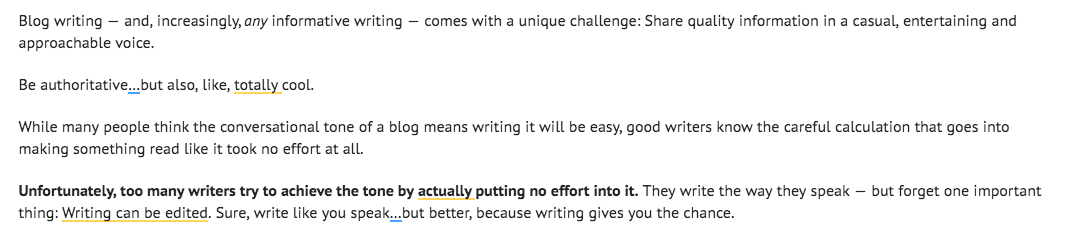
    Here’s how that looks on one of my recent posts for The Write Life:

    Hover over a phrase to see the suggestion. For example, for my passive phrase above, “writing can be edited,” ProWritingAid suggested I rewrite to use an active verb, such as “We can edit writing.”

    It also catches potential filler or hedging words, including “totally” and “actually” in my selection above. 

    You’ll probably get some suggestions you don’t want to follow or that don’t fit the style of the publication you’re writing for, so read them carefully before clicking to accept suggested changes. You can choose to disable a “rule” if you don’t want to see that kind of suggestion — for example, I disabled suggestions to rewrite split infinitives, because I’m a rebel like that.

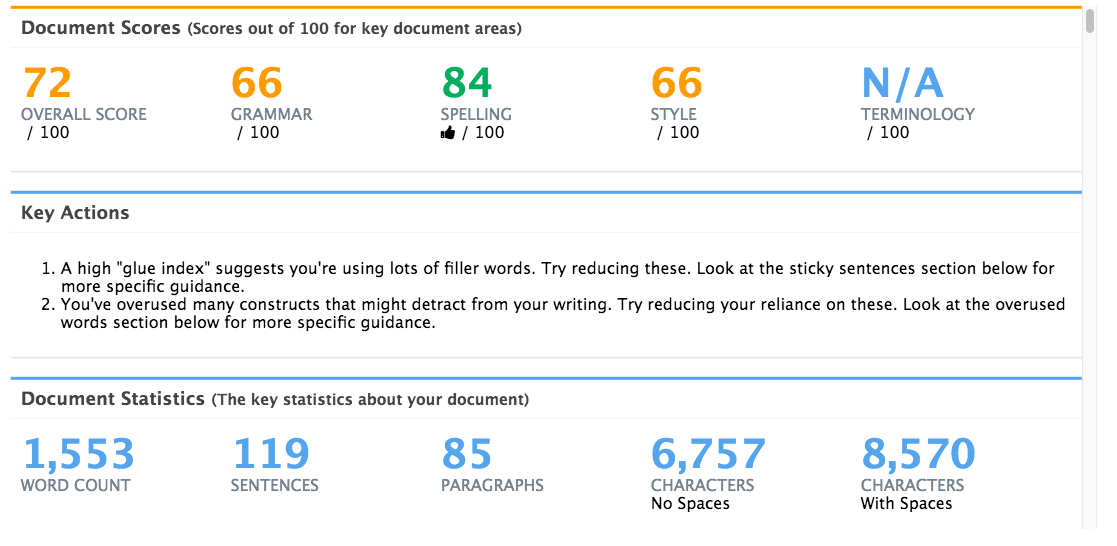
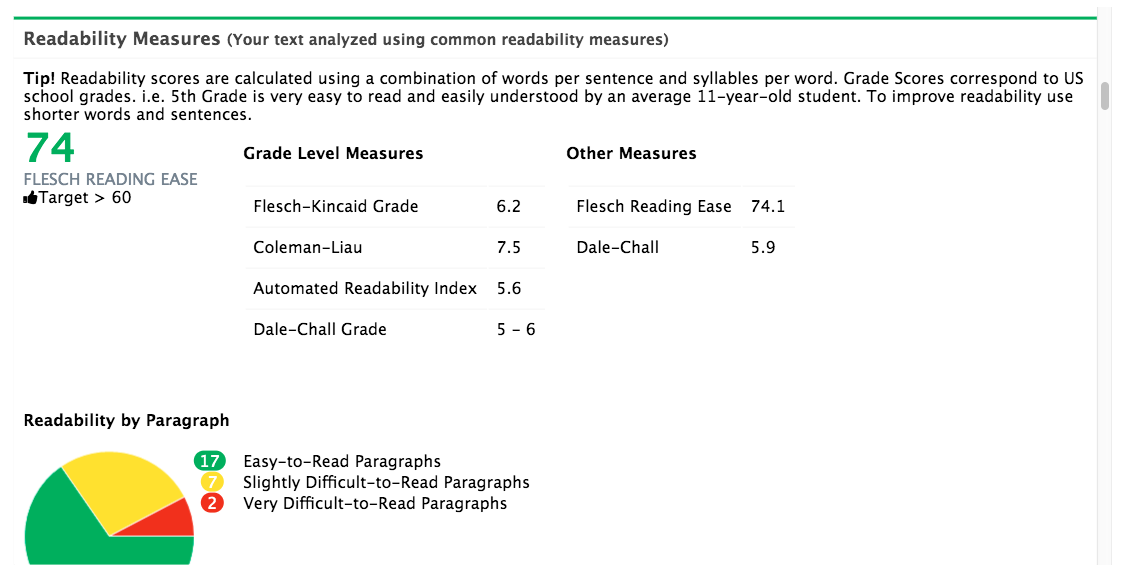
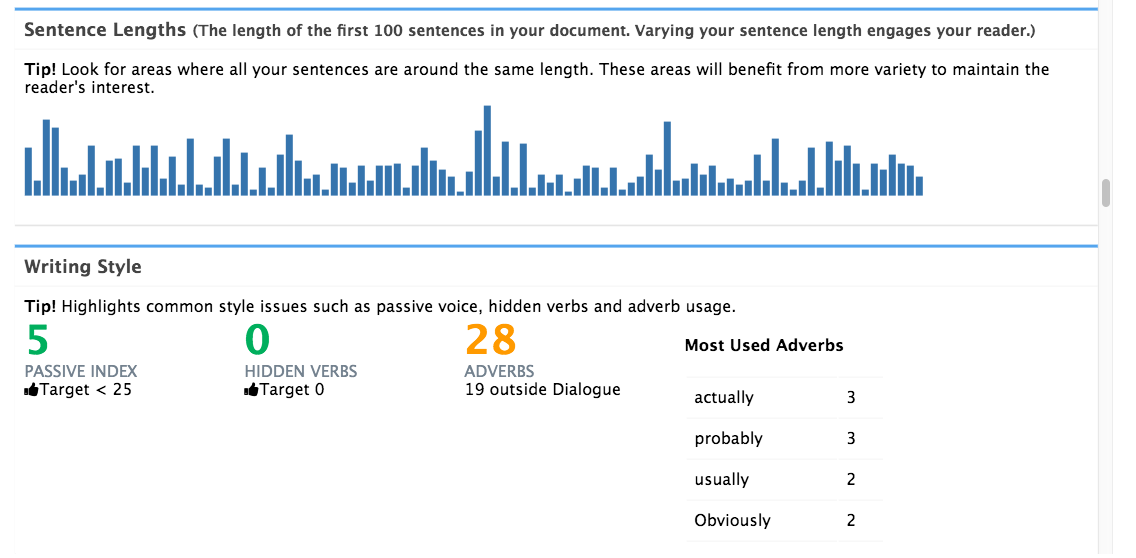
    You can also pull up a summary that takes a higher level view of your writing. This includes a ton of information about your writing, from word count to reading level to variety of sentence length.

    Pay attention to this report to learn about — and improve — your writing habits. My reports consistently show I’m a little generous with adjectives…like “consistently” earlier in this sentence. I’ll need to work on that if I want to write something to Stephen King–esque standards.

    See a sample report from ProWritingAid


    Who is ProWritingAid for?

    We all have access to grammar and spelling checkers for free with word processors. And our writing will often go through an editor before publication. So why should you pay for editing software?

    ProWritingAid is best for cleaning up a draft before sending it to the next step. Instead of trusting your aunt or a generous friend to read your writing and tell you “it’s fine,” use this tool to give it an x-ray look and spot clunky wording before an editor does.

    It’s worth the investment for:

    • Authors: Polish your manuscript before self-publishing or submitting to agents.
    • Freelance writers: Tighten your copy before submitting articles (editors will love you!).
    • Students: Get a virtual second eye on your papers before turning them in.
    • ESL writers: Use the tool to improve diction and discover filler words and awkward wording.
    • New editors: Use it to train your eye to hone writing.

    If you regularly work with an editor, for example, as a staff writer in a newsroom or other organization, the tool probably isn’t worth your money. It’ll largely do the job your editor is already being paid to do.

    Things you should know about ProWritingAid

    The free version of ProWritingAid is nice if you just want to check out an occasional bit of your writing. 

    If you want to use it regularly, though, I recommend the Premium version so you can use the tool with your existing word processor. ProWritingAid’s web editor doesn’t offer the kind of tracking changes or collaboration you’ll get with Google Docs or MS Word. Without the integration, you’ll probably duplicate work.

    Also note, you need to connect to the internet for the tool to work, so you can’t do any checks while you’re offline. Kind of a bummer if you like those undisturbed writing hours on a flight or in your own Walden Pond. You might have to leave revisions until you return to civilization.

    Bottom line of our ProWritingAid review: ProWritingAid can’t replace a human editor’s touch, but it’s one of the best grammar checker tools, ideal for polishing your writing while you self-edit.

    It’s a simple and affordable way to uncover your writing habits and ensure you make the best possible impression on every editor or agent when you’re ready to submit your work.

    This post contains affiliate links. That means if you purchase through our links, you’re supporting The Write Life — and we thank you for that!

    Photo via Zofot/ Shutterstock 

  • Scrivener Review: Why Writers Love This Book-Writing Software

    Scrivener Review: Why Writers Love This Book-Writing Software

    As a writer, you’re creative. You have notebooks full of scribblings in every room. You have sticky notes you can’t even read. Your computer? It’s a mess of bookmarks and files stored in a random collection of folders. 

    It doesn’t matter if you’re a freelance writer or a novelist working on the next epic masterpiece, chances are you could use a little help keeping your magic organized. 

    This is a common problem; lots of writers are creative but struggle to stay organized! 

    That’s why, if you spend time in the online writing community, you’ll hear writers raving about Scrivener.

    In The Write Life Facebook group, for example, we saw this comment from Brooklin Devine: 

    “If there were Scrivener gods, I would pay tribute to them (JK…but mostly serious). It has transformed the amount of writing I do. It is hands down the best thing I have ever purchased for my writing. I think the first day I bought it, I was sold because almost instantly, I was able to import all my work over (which I thought was going to be an incredible hassle). Amazing.”

    So what exactly is this magical tool Scrivener, and how are writers using it?

    What is Scrivener?

    Scrivener is a book-writing software program developed by a British teacher and aspiring writer, Keith Blount, who was frustrated by trying to keep all of his notes together. 

    In fact, he was so frustrated that he learned how to code and create a software dedicated to helping writers get and stay organized. That was Scrivener 1.0 in 2007. In the intervening years, Scrivener has become a major player in the writing software market published by Blount’s company, Literature and Latte. 

    Scrivener is a software program that you pay for once and download. Then, you simply have it on your computer forever. No annual subscription needed. 

    Scrivener is available for Windows, Scrivener for Mac, and is also compatible on both iPhones and iPads. 

    Who uses Scrivener?

    There isn’t a genre that Scrivener can’t handle, so don’t worry about that. 

    If you write novels, short fiction, essays, memoir, or even obituaries, you could make great use of Scrivener. However, if you like things simple, just a screen on a page, it may not be for you. 

    When you put your money down for Scrivener, you’re paying for all of the organizational bells and whistles. You’ll either love them or you won’t. If you’re not sure where you stand, try the Scrivener free trial first.

    Scrivener review: What I like about this book-writing software

    On first impression, you’ll notice that Scrivener is a program stacked with options. You can do a lot with it to help your writing. 

    This is a word processor, file cabinet and editor all rolled into one. About the only thing it doesn’t do is make coffee. 

    Here are some of the most popular Scrivener features.

    Write offline

    Once you’ve downloaded Scrivener, you don’t need to be online to write with it. I find this keeps my distractions to a minimum.

    Never lose your writing

    Scrivener autosaves constantly. Not every ten minutes or even five. When you stop writing, you can stop worrying. It’ll be there the next time you open up.

    Oh yeah, when you open your document up, you’ll start out exactly where you left off. Nice.

    Organize your notes

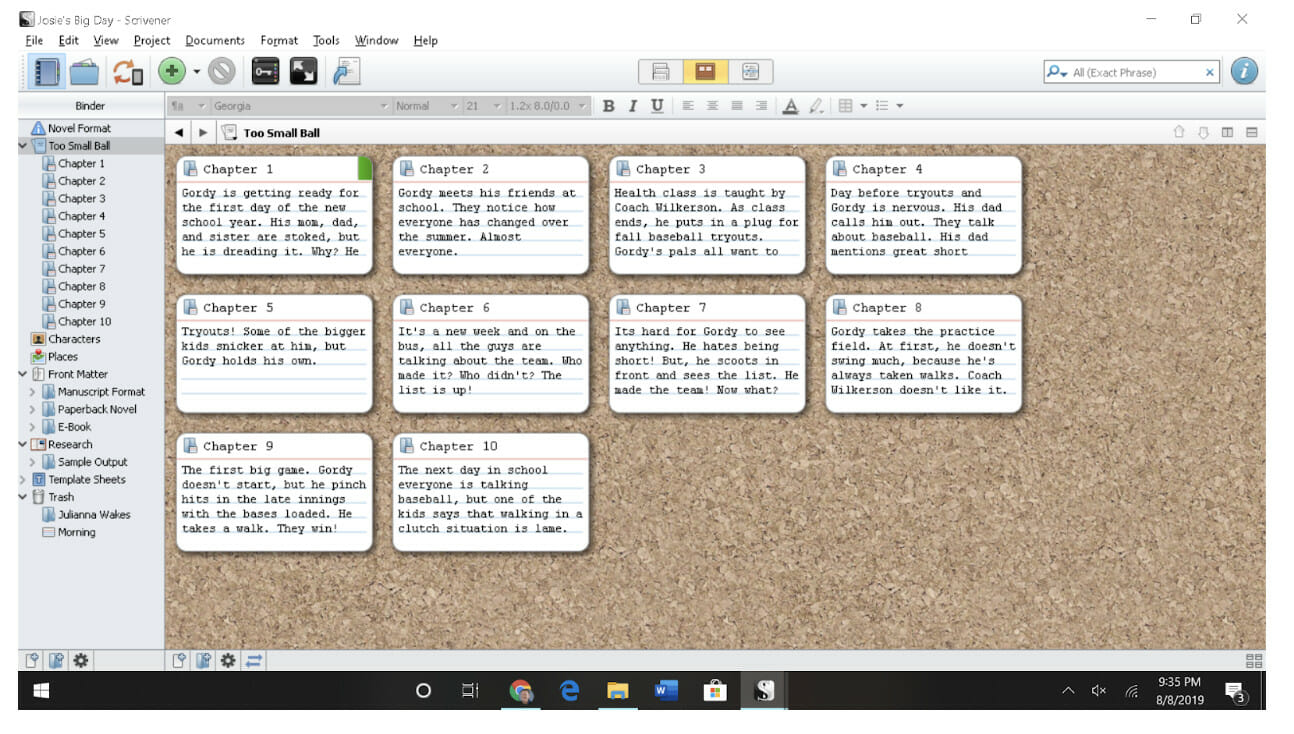
    The corkboard is where you can compile your notes on digital note cards and put them in order. Chapters, subheads, whatever they may be. Move them around. Do whatever you need to, it’s easy. 

    This feature makes Scrivener amazing as novel writing software. You can see your whole plan laid out in front of you.

    Here’s what that looks like:

    Writers rave about this feature for making progress on big projects, as you can see in this tweet:

    https://twitter.com/jemifraser/status/1166865695268855808?ref_src=twsrc%5Etfw

    Templates for every kind of writing

    Scrivener templates galore. If there is a type of project you want to write, there is a template for it. In Scrivener itself, when you start a new project, you can choose from a variety of options, including:

    Fiction

    • Novel
    • Novel (with parts)
    • Short Story

    Non-Fiction

    • Non-fiction with subheads
    • Research proposal
    • Undergraduate humanities essay

    Scriptwriting

    • BBC radio scene style
    • BBC taped drama
    • Comic script
    • Screenplay
    • Stage play (UK)
    • Stage play (US)

    Miscellaneous

    • Persuasive lecture
    • Recipe collection

    Don’t see what you need? Just Google it and someone has made a Scrivener template for it. 

    Writer and host of the “Helping Writers Become Authors” website and podcast, K.M. Weiland created her own fiction template. “There are many reasons I love Scrivener, but ultimately the reason I use it is that it puts all my documents for a single story in one place,” she says.

    Export to nearly any file type

    You can export from Scrivener to PDF, DOCX, RTF, TXT, directly to your printer, and other formats. You can even export to Amazon’s EPUB or MOBI for quick publishing.

    With one click your piece of work with all of its various parts is compiled into one file. 

    The downsides of using Scrivener

    I mentioned that Scrivener comes with a lot of really cool bells and whistles, right? 

    The downside to getting all of those features is that it can be a little difficult to sift through everything to find what you need. This tool can be overwhelming when you open it up for the first time! 

    To help yourself nail this steep learning curve, make good use of Scrivener’s tutorials. Or cut right to the chase and invest in a course like Learn Scrivener Fast, which will teach you everything you need to know to become a master of the tool. 

    Don’t try to wing it. You’ll waste a lot of time that could be better served by writing.

    How much does Scrivener cost?

    Scrivener isn’t free, but honestly, it’s not expensive either. 

    Here’s the company’s pricing:

    Standard License for Windows: $49.99

    Educational License for Windows: $42.49

    Standard License for Mac: $49.99

    Educational License for Mac: $42.49

    IOS Products: $23.99 

    Don’t use the same computer all of the time? No problem. When you buy your Scrivener subscription, you can download it to any computer in your household that runs on the same platform. If you need it for a Mac and for Windows, you’ll have to buy those programs separately. 

    If you want to try this book-writing software before you buy, Scrivener offers a 30-day free trial

    The bottom line on this book-writing software

    Scrivener has become one of the most used — and most copied! — writing programs on the market for good reason. It has a plethora of tools for helping you stay organized and improving your writing efficiency. 

    The only hitch is you need to commit a little time to learn what the tool has to offer before jumping in head-first. If you are serious about writing, taking the time to learn how to use Scrivener should pay off.

    If you’re a Scrivener lover (or hater!), we’re keen to hear from you in the comments! What’s your experience with the tool?

    This post contains affiliate links. That means if you purchase through our links, you’re supporting The Write Life — and we thank you for that!

    Photo via Peshkova / Shutterstock 

  • How to Use BookBub to Sell Books — And Get on Amazon’s Bestsellers List

    How to Use BookBub to Sell Books — And Get on Amazon’s Bestsellers List

    In January, 2023, I gave away 60,301 books on Amazon, Apple, Barnes & Noble and Kobo combined. And that’s just for one title.

    I nearly died of excitement. Not only did it mean 60,000 people were willing to take a chance on my book, but it meant exposure, sales and several other big wins for a tiny little author like me.

    How’d I do it? It took blood, sweat, tears and a little luck.

    A look into my book marketing strategy

    To understand my marketing strategy, we have to rewind about a year.

    Around March 2022, I decided to make the first book in my series, Fire in Frost, permafree.

    Permafree is a term that simply means the book is always free or “permanently free.”

    Though I don’t make any money on downloads of this book, the idea is to capture readers’ attention so they’ll hopefully buy the next books in my series. When I made this decision, I had already self-published the first and second books, and the third was almost ready.

    Fast-forward to December 2022. I submitted my free book to BookBub for consideration — for the tenth time. You can only apply once per month, and I was determined to keep trying.

    I couldn’t believe it when I got the email saying they’d accepted my book for a feature and were planning to run my ad on January 4, 2023.

    What is BookBub? And how does BookBub work?

    If you’re not familiar with BookBub, it’s the holy grail of book marketing for fiction authors.

    BookBub is what made all the difference in this promotion. If you hang out with other writers long enough, you’ll discover that BookBub is THE place to advertise your books if you can.

    But you can read tons of BookBub reviews on the web, and I’d rather go a step further and help you use the tool.

    So here’s how BookBub works. The company sends out newsletters to thousands of readers each day. You pay to get your book featured in their newsletters. The price varies depending on the price point of your book and which newsletter you want to be featured in.

    They’re willing to consider permanently free books, but in general, they’re looking for book deals that are deeply discounted.

    BookBub for authors: How to get a BookBub feature

    While BookBub is incredibly effective for authors, it is extremely hard to get your book accepted.

    I tried 10 times with my free book before finally getting accepted. I recently had another author friend say she tried 18 times before getting accepted.

    With that in mind, there are a couple of things you can do to increase your odds that BookBub will feature your book.

    Here are my suggestions for getting your book featured in BookBub:

    1. Make it the best deal you can.

    BookBub wants to give their readers the best deals, so try to offer your book free (if it’s the first in the series) or for $0.99. They usually won’t feature anything above $2.99, and they’re unlikely to feature your book at that price point if it’s always priced there.

    2. Try with the first book in a series.

    BookBub seems to like first in the series because (as I understand it) they will make money off affiliate sales of your other books if their readers buy the rest of the series.

    3. Make your book available on all platforms and in all territories.

    BookBub wants deals that appeal to all their readers. Although they sometimes feature books that are exclusive to Amazon, you typically have a better chance if your book is available on all platforms (Amazon, Apple, Barnes & Noble, Kobo, and Google Play) and if the deal is available in all territories (US, UK, Australia, India, and Canada).

    4. Have an amazing cover.

    Believe it or not, readers really do judge books by their covers, and so do the people over at BookBub. If you have a cover that’s not eye-catching, it’s worth considering a redesign, not just for BookBub but because it will help in all your book promotions.

    5. Finish your series.

    BookBub finally accepted my deal once the entire series was available for sale on all platforms. This isn’t a guarantee that they’ll accept your book, but it helps because readers don’t want to wait around for the next one. Offering a complete series makes your deal more appealing.

    6. Gather reviews.

    BookBub doesn’t require a minimum amount of reviews, but more reviews give the impression that your book is more popular. It also gives BookBub’s editors an idea of how readers will respond to your book. You can gather reviews by including a call to action at the end of your book, giving away free copies, or encouraging reviews from people who’ve already read the book.

    7. Talk up your book.

    BookBub features a comment section when you submit your deal. Use it to talk up your book. Mention if it’s won any awards or what editorial reviewers or big-name authors have said about it. I mentioned that my series had over 200 5-star reviews on Goodreads (at the time), and I think that helped me land a feature on BookBub.

    8. Be flexible.

    BookBub is in such high demand that if you need a certain date, it might already be full.

    Instead, consider planning your promotion around them. They’ll ask you if your date is flexible or not. Be open to anything, and it will increase your chances of getting a feature.

    9. Keep submitting.

    Submit as often as you can (once a month), and don’t give up!

    How to leverage a BookBub ad

    After paying for the ad (see cost details below), I knew I needed to devise a game plan.

    I wanted to make the most out of this feature. I applied to multiple other ad sites and newsletter services and got accepted to most of them. I planned to run ads that whole week to boost my Amazon rankings.

    Most of the ads ended up running on Monday or Tuesday, and the BookBub feature ran on Wednesday. Here’s how my investment broke down:

    • BookBub: $115*
    • EBook Soda: $15
    • Book Goodies: $17.50
    • The Fussy Librarian: $5
    • Reading Deals: Free
    • ReadFree.ly: Free
    • EReader News Today: $35
    • Many Books: $25

    *BookBub ad prices vary depending on your category and price point. I ran my ad for a free book in the Teen & Young Adult category.

    I also increased my Amazon ad spending to $10 per day and ended up spending $39.68 during the week of the promo. Plus, I ran Facebook ads for $10 per day and spent $43.69 during the week of the promo. For other free promos, some friends agreed to share the book in their newsletters, and I also shared the freebie with mine.

    My goal was to reach as many people as possible with my book promotion. When all was said and done, I spent $295.87 to promote my freebie.

    The result? These promos catapulted my free book from around #2,000 in the free Amazon Kindle store to #7 in the entire store. I hit #1 of all free teen books on Kindle.

    Here’s what that looked like (see #7):

    That high Amazon ranking further increased my exposure and kept the series selling well the entire month, and for months afterward.

    Overall in January, I had 33,485 downloads on the Amazon U.S. site, 8,491 downloads on Amazon’s international sites, and 18,325 downloads between Apple, Barnes & Noble, and Kobo.

    What did I get out of my BookBub promotion?

    Here’s how I benefited from this book promotion:

    I made a profit off my books

    You might be wondering why I would do all this just for a free book. After all, I’m not making any money off it, right?

    Well, that’d be the case if I only had the one book. By reaching readers with the first book, sales of the second, third, and fourth books also spiked.

    By the end of the promo week, I’d already made my money back and more from sales of my other books.

    I got lots of positive reviews

    After running the promo, my reviews spiked. I’ve received well over 50 more reviews on book one on Amazon, and I’ve now exceeded over 1,000 reviews of the series on Goodreads. All this translates into even more exposure.

    I achieved bestseller status on Amazon

    Toward the end of the month, I decided to run a quick $0.99 sale on books two, three, and four.

    Since the sales boost from this promo had already increased my ranking, this extra sale helped push my books to #1 in their Amazon categories. I also made the top 100 author list for teens.

    Granted, it’s no New York Times bestseller, and I won’t be bragging about being an Amazon bestseller on my book covers or anything, but it was a personal goal of mine that I was happy to hit.

    [twl_reusable_block post_id=41455]

  • Freelance Writing Types – 17 Options To Consider

    Freelance Writing Types – 17 Options To Consider

    Freelance writing involves providing written content or services on a contractual basis to clients, covering diverse subjects, genres and formats.

    And the world of freelance writing is a vast one, covering an almost infinite number of these subject matters and topics.

    In this article, we will be taking a closer look at 17 of the most common, to inform you of exactly what it entails and who it would be suitable for.

    By the end, you will be not just in an educated position with knowledge of each, but have the insight to ascertain which may be suitable for you to consider with regards to your own writing.

    1 – Content Writing 

    Content writing involves creating engaging and informative written material for various platforms, such as websites, blogs and social media. 

    Suitable for individuals with a flair for language and a passion for research, content writing caters to those who enjoy expressing ideas clearly. 

    Ideal for writers who can adapt their style to different subjects, content writing offers a diverse range of opportunities, from crafting compelling articles to enhancing online presence through well crafted web content.

    2 – Copywriting

    Copywriting is the art of crafting persuasive and compelling text to promote products, services or ideas. 

    Tailored for individuals with a knack for creativity and a strategic mindset, copywriting is suitable for those who enjoy using words to influence and motivate. 

    It has great potential for writers with marketing insight as copywriting involves creating content that drives action, whether it’s attracting customers, boosting brand awareness, or increasing sales through impactful and strategic messaging.

    3 – Technical Writing

    Technical writing is the practice of conveying complex information in a clear and concise manner, typically for technical or specialized fields. 

    It will suit individuals with a strong grasp of technical concepts, attention to detail and excellent communication skills. 

    Technical writing caters to those who enjoy translating intricate ideas into accessible content, such as engineers, scientists, or anyone skilled in simplifying technical jargon.

    It plays a crucial role in making complex information understandable to a wider audience.

    4 – Ghostwriting

    Ghostwriting involves writing content on behalf of someone else, where the ghostwriter’s name usually doesn’t appear on the final work. 

    It is a good option for individuals who excel at capturing someone else’s voice, often working with busy professionals, celebrities, or experts who lack the time or writing skills. 

    Ghostwriters need versatility, discretion, and the ability to adapt to different styles, making it an ideal avenue for skilled writers who enjoy collaborative projects and diverse subject matter.

    5 – Creative Writing

    Creative writing is the expression of thoughts and ideas through imaginative and original storytelling. 

    It’s likely to be applicable for individuals with a passion for crafting narratives, exploring unique perspectives and playing with language. 

    Creative writing appeals to those who enjoy inventing characters, building worlds and conveying emotions through prose or poetry. 

    Aspiring authors, poets, and anyone with a love for storytelling find creative writing to be a fulfilling and expressive endeavor.

    6 – Grant Writing

    Grant writing involves preparing proposals to secure funding for projects or initiatives from organizations, foundations, or government agencies. 

    It’s suitable for individuals with strong communication skills, attention to detail, and a passion for advancing social causes. 

    Grant writers often work in nonprofit organizations, educational institutions, or as freelancers, contributing to securing essential resources for community development, research, and various programs.

    7 – Social Media Content Creation

    Social media content creation involves developing engaging and shareable content for platforms like Facebook, Instagram, and Twitter. 

    It’s common for those with a creative flair, a good understanding of social media trends, and strong communication skills to work in this area. 

    Social media content creators often work for brands, influencers, or as freelancers, crafting posts, images, and videos that resonate with target audiences and enhance online visibility.

    8 – Resume Writing

    Resume writing is the art of creating compelling and professionally formatted resumes to help individuals secure job opportunities. 

    A viable pathway for those with strong language and formatting skills, resume writers tailor documents to highlight an individual’s qualifications and experiences. 

    They often work independently or for career services firms, assisting clients in presenting their skills effectively to potential employers.

    9 – Academic Writing

    Academic writing involves creating scholarly content, such as research papers, essays, and articles, often for educational purposes. 

    Suited to those with a strong grasp of academic conventions, this type of writing is commonly undertaken by students, researchers, and educators. 

    Academic writers must convey complex ideas coherently, adhere to citation styles, and contribute valuable insights to their respective fields. 

    It requires precision and adherence to rigorous standards, making it suitable for those with a solid academic background.

    10 – Email Copywriting

    Email copywriting is the art of creating persuasive and engaging content for email marketing campaigns. 

    Tailored to a specific audience, it aims to captivate readers and prompt desired actions, such as making a purchase or subscribing. 

    Usually done by marketing professionals, business owners, or anyone involved in online communication, email copywriting demands a knack for storytelling, understanding target audiences, and employing persuasive language to drive conversions through email channels.

    11 – Scriptwriting 

    Scriptwriting involves creating written content for various visual mediums, including film, television, and theater. 

    It has potential for creative storytellers, aspiring filmmakers, and those with a passion for visual storytelling, scriptwriting requires a keen understanding of narrative structure, dialogue, and character development. 

    It’s a great pursuit for individuals interested in bringing stories to life through the collaborative and dynamic medium of film and other visual productions.

    12 – White Paper Writing 

    White paper writing involves the creation of authoritative documents that address complex issues, providing in depth insights, solutions, or recommendations. 

    Done by people who are subject matter experts, researchers, or professionals in specific industries, white papers aim to inform and influence decision makers. 

    This type of writing requires a deep understanding of the subject matter, analytical skills, and the ability to present information in a clear, concise, and persuasive manner.

    13 – Travel Writing

    Travel writing involves writing narratives about journeys, destinations and experiences, appealing to readers’ wanderlust. 

    Great for adventurers, globetrotters, or those with a passion for storytelling, travel writing captures the essence of different cultures and places. 

    Writers in this genre often have a keen eye for detail, descriptive skills, and a love for exploration, sharing their encounters in a way that transports readers to far flung destinations around the globe.

    14 – Product Description Writing

    Product description writing entails creating compelling and informative content about products, aiming to entice potential buyers. 

    A viable avenue for marketers, e-commerce professionals, or freelance writers, this skill involves succinctly showcasing product features, benefits, and unique selling points.

    Effective product description writers enhance consumer understanding and influence purchasing decisions through engaging, persuasive language.

    15 – Business Plan Writing

    Business plan writing involves creating comprehensive documents outlining a business’s goals, strategies, and financial projections. 

    Suitable for entrepreneurs, business consultants, or professional writers, it requires a keen understanding of industry dynamics and financial forecasting. 

    Business plan writers articulate a company’s vision, mission, and operational plans, crucial for attracting investors or guiding internal decision-making. 

    Accurate, strategic, and well-written business plans contribute to the success and sustainability of enterprises.

    16 – Review Writing

    Review writing involves evaluating and expressing opinions about various products, services, or works, helping consumers make informed choices. 

    Likely to suit  those with a critical eye, it caters to freelance writers, bloggers, and individuals passionate about sharing their insights. 

    Review writers need to communicate clearly, providing valuable information and assessments that guide readers. 

    This form of writing contributes to informed decision-making in diverse fields, including literature, technology, and consumer goods.

    17 – SEO Writing

    SEO (Search Engine Optimization) writing focuses on creating content that aligns with search engine algorithms, improving online visibility. 

    An excellent option for writers who grasp SEO principles, it suits digital marketers, content creators, and bloggers. 

    SEO writers integrate relevant keywords seamlessly into content, enhancing its search engine ranking. 

    This skill is crucial for online businesses, blogs, and websites aiming to attract organic traffic. 

    Effective SEO writing demands staying updated on search engine trends and delivering valuable, readable content.

    Which type of freelance writing appeals to you the most?

  • How to Write About Art as a Freelance Writer

    How to Write About Art as a Freelance Writer

    Writing about art at first glance may seem a particularly difficult task. Is it possible to truly capture the medium through words alone when it is a visual artform?

    On top of that, what are the topics a writer should consider and how best to go about them?

    In this article, we will aim to address these questions and more as we break down the best ideas for creative content and how to do so sufficiently well.

    By the end, you will not only be equipped with a number of different ideas for your next article on the world of art, but also have the insight and knowledge to excel.

    Artist Profiles

    An artist profile is a piece that aims to capture the essence of a creative individual, providing readers with a deeper understanding of the artist and their work. 

    To write a standout profile, start with a captivating introduction that hooks the audience. Dive into the artist’s background, influences, and unique artistic journey. 

    Include anecdotes, quotes, and insights that reveal the personality behind the art. Incorporate visuals like photographs or artwork to enhance the storytelling. 

    Conclude with a reflection on the artist’s impact and future endeavors. 

    Gallery Reviews

    Gallery reviews are critical analyses of art exhibitions, offering insights into the showcased works, the curator’s intent, and the overall impact of the collection. 

    To write an effective gallery review, attend the exhibition with a keen eye and an open mind. Begin with a concise introduction, providing context for the exhibition. Discuss key themes, artistic techniques, and standout pieces. 

    Incorporate your personal response, exploring emotional or intellectual reactions. Support your observations with concrete examples and maintain an unbiased tone. Conclude with a thoughtful summary, evaluating the exhibition’s significance. 

    Art World News

    Art world news encompasses current events, trends, and developments within the art community. 

    Writing compelling art world news pieces involves staying updated on industry happenings through reputable sources. Craft concise and engaging articles, emphasizing the significance of events or changes. 

    Provide context and background information, connecting the news to broader themes or implications. Include quotes from relevant figures, offering diverse perspectives. Maintain a neutral tone and adhere to journalistic standards. 

    Timeliness, accuracy, and a clear narrative contribute to effective art world news coverage.

    Art Historical Explorations

    Art historical explorations explore the vast array of artistic movements, styles, and periods, offering in-depth analyses and insights. 

    To excel in this, meticulously research the chosen era or artist, citing credible sources. Uncover connections between artworks and historical contexts, providing context and nuance. 

    Incorporate visual analysis, dissecting techniques and symbolism. Develop a clear narrative, guiding readers through the artistic journey. Utilize academic language appropriately, catering to both art enthusiasts and scholars. 

    Art historical explorations should illuminate the significance of chosen subjects, creating a deeper appreciation for the cultural and historical influences shaping artistic expression.

    Interviews with Curators

    Conducting interviews with curators offers a unique perspective on artworks and exhibitions. Prioritize thorough research on the curator’s background and the showcased collection. 

    Think of insightful questions that dive into curatorial decisions, thematic choices, and the curator’s vision. Allow the curator’s narrative to shine, providing context to the artistic selections. 

    Balance technical queries with engaging anecdotes, creating an accessible yet informative dialogue. 

    Art Education Initiatives

    Exploring art education initiatives involves spotlighting programs, workshops, or institutions designed to promote artistic development. 

    Research extensively to understand the initiative’s goals, impact, and featured artists. Discuss the educational approach, innovative methods, and outcomes. Blend statistical data with personal narratives, showcasing success stories and participant testimonials. 

    Emphasize the initiative’s contribution to the broader art community and its role in nurturing talent. Provide relevant contact information for those interested in joining or supporting the initiative, creating a comprehensive and informative exploration of art education efforts.

    Art Criticism

    Art criticism involves a thoughtful evaluation of visual artworks, analyzing their aesthetics, symbolism, and cultural context. 

    To do well, one needs to grasp the artwork’s intent, considering historical influences and artist background. Communicate insights using clear, descriptive language, balancing subjective impressions with objective observations. 

    Discuss formal elements like composition and color, offering a comprehensive understanding. Back opinions with examples, comparing the artwork to others when relevant. 

    Constructive criticism enhances your perspective, encouraging a nuanced, informed review. 

    Art Events Calendar 

    An art events calendar provides a curated overview of upcoming art-related activities, exhibitions, and cultural happenings. 

    To create one effectively, stay informed about local and international art events. Include details such as dates, venues, and participating artists, fostering anticipation and community engagement. 

    Regular updates maintain relevance, and categorizing events ensures user-friendly navigation. Incorporate a diverse range of art forms and ensure accuracy in event information. 

    Digital Art Showcases

    Writing about and showcasing digital art content involves presenting and describing digital artworks effectively. 

    Begin by providing context for the showcase, including the theme or purpose. Describe each artwork thoughtfully, delving into the artist’s inspiration, techniques, and intended messages. Use vivid language to evoke the visual elements, which should result in a connection between the audience and the digital art. Incorporate artist interviews or statements to offer deeper insights. 

    Consider the overall narrative or story conveyed by the showcased pieces. Maintain a balance between technical details and emotional resonance.

    Art Therapy Features

    Writing about art therapy involves exploring the profound impact of visual expression on mental health and well-being. 

    Begin by exploring the principles and history of art therapy, emphasizing its therapeutic benefits. Share real-life examples or case studies that illustrate transformative experiences through artistic engagement. 

    Highlight the role of creativity in promoting healing and self-discovery. Use empathetic language and provide insights into specific art therapy techniques. 

    Consider interviewing art therapists or individuals who have benefited from art therapy, adding a human touch to your writing. Ultimately, aim to convey the profound healing potential of art therapy through insightful and compassionate narratives.

    Art in Unexpected Places

    Writing content on “Art in Unexpected Places” involves uncovering and celebrating artistic expressions in unconventional settings. 

    Showcase the intersection of creativity and everyday life, highlighting instances where art surprises and delights. Share stories of public art installations, street art discoveries, or unexpected artistic interventions. 

    Capture the essence of these moments with vivid descriptions, emphasizing the impact of art on diverse environments. Encourage readers to explore and appreciate the unexpected beauty around them. 

    Blend storytelling with informative elements, ensuring your audience sees art as a dynamic force capable of transforming ordinary spaces into extraordinary canvases.

    Art and Technology 

    Exploring the intersection of Art and Technology requires diving into the symbiotic relationship between these two worlds. 

    Unearth innovative collaborations, where artists leverage technology to push creative boundaries. Detail how technology shapes artistic processes, from virtual reality installations to AI-generated masterpieces. 

    Provide insights into how digital advancements redefine art’s presentation and consumption. Blend a keen understanding of both fields, offering readers a glimpse into the dynamic fusion of artistry and technological progress. 

    Art Education Initiatives 

    Writing great content on Art Education Initiatives involves spotlighting programs, institutions, and projects dedicated to creating artistic learning. 

    Explore diverse initiatives, ranging from community workshops to formal educational partnerships, that promote creativity. Detail the impact of these initiatives on students, communities, and the broader art ecosystem. 

    Emphasize success stories, innovation in teaching methods, and the societal importance of nurturing artistic education. Align your narrative with the broader goals of these initiatives, emphasizing accessibility, inclusivity, and the transformative potential of art education.

    Which type of art writing will you focus on first?

  • Freelance Writing Skills – 12 Skills Worth Mastering

    Freelance Writing Skills – 12 Skills Worth Mastering

    To be a freelance writer is to have a specific skill set. Mastering these skills will not only maximize your chances of success as a freelance writer, but will enhance your skill set as a writer overall.

    The first step in doing this is to break down exactly what some of these skills are. By identifying them, you can pinpoint how to improve and ultimately master them.

    That is exactly what we will be doing in this article, as we take a close look at 12 of the most vital skills required to be a freelance writer and how you can improve at them.

    1 – Writing Proficiency

    Writing proficiency is the mastery of language, grammar, and style essential for effective communication. 

    For freelance writers, it is the cornerstone of delivering high quality content that engages and informs. Proficient writing enhances credibility, readability and audience appeal. 

    Improving writing proficiency involves consistent practice, seeking feedback, and expanding vocabulary. Reading widely, studying various writing styles, and honing editing skills contribute to growth. 

    In the competitive freelance landscape, writing proficiency not only attracts clients but ensures longevity and success in the field, making it a pivotal skill for writers aiming to deliver impactful and polished content.

    2 – Research Skills

    Research skills are the foundation of a freelance writer’s ability to produce accurate, well-informed, and compelling content. Crucial for diving into diverse topics, research skills empower writers to gather reliable information, validate facts, and provide depth to their work. 

    Proficient research ensures content credibility, strengthens arguments, and meets client expectations. Improving research skills involves refining search strategies, utilizing reliable sources, and staying updated on research methodologies. 

    As freelancers navigate a multitude of subjects, honing research skills not only elevates the quality of their work but also builds trust with clients, establishing a reputation for delivering thoroughly researched and insightful content.

    3 – Adaptability

    Adaptability is a key skill for freelance writers, enabling them to navigate the ever evolving landscape of assignments and client needs. 

    Essential for success in a dynamic market, adaptability allows writers to seamlessly switch between topics, tones, and formats. Embracing new challenges and adjusting to diverse client expectations are key aspects of this skill. 

    To improve adaptability, writers can engage in continuous learning, stay abreast of industry trends, and actively seek feedback. 

    By cultivating an open mindset and honing the ability to pivot swiftly, freelance writers position themselves as versatile professionals capable of meeting a wide range of client demands.

    4 – Time Management 

    Time management is the linchpin of a freelance writer’s productivity and success. With the multifaceted nature of assignments, effective time management ensures deadlines are met without compromising quality. 

    Freelancers must juggle various projects, research, and revisions, making time a precious resource. 

    To enhance time management skills, writers can adopt tools like calendars or project management apps, prioritize tasks, set realistic deadlines, and establish a structured work routine. 

    Consistent evaluation and adjustment of time allocation contribute to optimizing productivity, allowing freelance writers to balance efficiency and creativity in their work.

    5 – SEO Knowledge

    SEO knowledge is a vital asset for freelance writers navigating the digital landscape. Understanding Search Engine Optimization is crucial as it directly influences a piece’s visibility and reach online. 

    Writers with SEO proficiency can strategically incorporate keywords, optimize meta tags, and enhance content structure to improve search engine rankings. 

    Continuous learning about evolving SEO algorithms, staying updated on industry trends, and utilizing SEO tools are key steps in mastering this skill. 

    By honing SEO knowledge, freelance writers empower their work to attract a broader audience, ultimately increasing the impact and effectiveness of their content in the digital world.

    6 – Communication

    Effective communication is of the utmost importance to ensure success for freelance writers. Clear and concise communication is crucial in understanding client needs, project requirements, and feedback. 

    Writers must articulate ideas, convey expectations, and negotiate terms professionally. Improving communication skills involves active listening, asking clarifying questions, and providing transparent updates. 

    Utilizing collaboration tools, such as project management platforms and video conferencing, enhances communication efficiency. Embracing constructive feedback and being receptive to client input fosters strong working relationships. 

    As freelancers often work remotely, mastering communication ensures seamless collaboration, reduces misunderstandings, and establishes trust, contributing to a thriving freelance writing career.

    7 – Editing and Proofreading

    Editing and proofreading are essential skills for freelance writers, ensuring polished and error-free content. The ability to review and refine one’s work enhances professionalism and client satisfaction. 

    Attention to detail, grammar proficiency, and a critical eye are crucial in identifying and rectifying errors. 

    Writers can improve by incorporating self-editing techniques, utilizing editing software, and seeking peer feedback. Developing a systematic approach to proofreading, such as checking for consistency and clarity, refines the final product. 

    Investing time in honing these skills enhances the overall quality of writing, establishing a reputation for excellence.

    8 – Creativity

    Creativity is the lifeblood of freelance writing, offering fresh perspectives and unique solutions. It matters profoundly as it distinguishes writers and captivates audiences. 

    To enhance creativity, writers can engage in regular brainstorming sessions, explore diverse genres, and draw inspiration from various sources. Embracing curiosity and being open to unconventional ideas fosters imaginative thinking. 

    Additionally, establishing a creative routine, incorporating prompts, and taking breaks to recharge the mind can fuel innovative approaches. 

    Ultimately, a creative mindset empowers freelance writers to produce compelling and original content, helping to set them apart from their competition.

    9 – Self-Motivation

    Self-motivation is the driving force behind successful freelance writing, fueling consistency and resilience. Its significance lies in maintaining productivity and overcoming challenges. 

    To enhance self-motivation, writers can set clear goals, establish a routine, and celebrate achievements. Embracing a positive mindset and breaking tasks into manageable steps prevents overwhelm. 

    Staying connected to the broader purpose of writing and acknowledging personal growth sustains motivation. 

    Plus, maintaining a supportive environment, seeking inspiration, and periodically reassessing goals contribute to sustained self-motivation. 

    10 – Attention to Detail

    Attention to detail is paramount for freelance writers as it ensures accuracy and professionalism in their work. Its significance lies in producing high-quality content, building credibility, and meeting client expectations. 

    Writers can improve this skill by proofreading meticulously, double-checking facts, and adhering to style guides. Developing a systematic approach, creating checklists, and taking breaks between revisions can enhance attention to detail. 

    Staying organized, investing time in research, and honing observational skills contribute to a keen eye for nuances. 

    Ultimately, writers who prioritize attention to detail elevate the overall quality of their writing, resulting in client satisfaction and long term success.

    11 – Marketing Skills

    Marketing skills are vital for freelance writers, empowering them to promote their services effectively and attract clients. Understanding target audiences, creating compelling portfolios, and developing a strong online presence enhance visibility.

    Writers can improve marketing skills by networking, utilizing social media, and showcasing diverse writing samples. Crafting a professional website, engaging in self-promotion, and participating in industry forums contribute to building a reputable brand. 

    Keeping abreast of marketing trends, seeking client testimonials, and refining pitches contribute to successful self-marketing. 

    Freelance writers equipped with strong marketing skills position themselves for increased opportunities and sustainable growth in the competitive freelance landscape.

    12 – Client Collaboration 

    Client collaboration is vital for freelance writing success, emphasizing effective communication, understanding client needs, and fostering positive relationships. 

    It matters as it ensures client satisfaction, repeat business, and positive referrals. Improving at client collaboration involves active listening, clarifying expectations, and maintaining transparent communication throughout projects. 

    Adapting to client feedback, being open to revisions, and aligning work with their vision contribute to successful collaborations. Building trust, meeting deadlines, and demonstrating reliability enhance client relationships. 

    Freelance writers can excel in client collaboration by consistently delivering high-quality work, demonstrating flexibility, and showcasing a client-centric approach, fostering long-term partnerships.

    Which of the freelance writing skills will you work on first?

  • Self-Publishing School Review: The Pros, Cons, and 3 Things It Will Help You Do

    Self-Publishing School Review: The Pros, Cons, and 3 Things It Will Help You Do

    A Note To Our Readers: Here at The Write Life, our reviews are meant to be unbiased. In full transparency, we used to be part of the Self-Publishing School platform, a company dedicated to changing lives through books. That said, this review was written before that acquisition, and has only been updated in terms of pricing and deliverables. The author’s original opinions have not been changed. 

    [sps_reusable_block post_id=43052]

    Product Name

    Self-Publishing School

    About the Founder of Self-Publishing School

    Chandler Bolt is an entrepreneur who has dabbled in running his own businesses since he was young. Since he released his first book, The Productive Person, his self-publishing success kicked off, culminating in the release of Published and the creation of his company, Self-Publishing School and selfpublishing.com.

    Cost for Self-Publishing School’s Programs

    Most products, which include 1:1 coaching, group coaching, done-for-you services, and online curriculum, retail for $8,000. Bundling products reduces the price. You can learn more about their products here.

    Who It’s For

    Self-Publishing School is for anyone who wants to write and publish their own books and learn how to launch a book to be an Amazon Kindle bestseller. The entry-level program has three writing streams, one for non-fiction writers, one for fiction writers, and one for children’s book writers. This works for business builders or career authors.

    What It Will Help You Accomplish

    This comprehensive program will take you through each step of self-publishing your book.

    First, it will teach you a replicable process for writing and publishing books.

    The program is broken up into three main phases so you can follow the entire process from start to finish: writing, book production, and launching. Rinse and repeat for as many books as you want to write.

    The team and curriculum will show you how to turn an idea into outline and then into a written book, right through to working with an editor, having your cover designed and converting your book to a Kindle-ready (and paperback) format. You’ll also learn how to build authority in your niche or connect with your readers.

    Second, it will help you build a network of fellow authors and supporters.

    The Self-Publishing School Mastermind Community is active and full of good vibes and encouragement. Many authors have claimed this is the best author community on the internet, and when you join, you have access to 2,500+ members with multiple opportunities to connect, network, and collaborate via Author Connects, Group Coaching Calls, and community events like Author Advantage Live. 

    Third, the team will help you navigate the toughest parts of book production by taking care of certain author services for you.

    This including cover design, formatting, and more. (You can see the full list of services here.) This will make the process easier on you and take a lot of the stress off your shoulders. 

    What’s Included in Self-Publishing School

    • Community: Inside Self-Publishing School, you’ll be connected with like-minded writers and develop your new built-in network of people who will support you every step of the way. While you might be alone in your writing, you won’t be alone in the self-publishing process
    • Coaching: One of the first things you’ll do when joining Self-Publishing School is get a personal coach. You also have access to group coaching calls multiple days each week for your specific program
    • Online Curriculum: You’ll have access to the online training which includes videos, transcripts, PDF checklists, templates, and more
    • Done-For-You Services: Their team will handle book production services for you, like cover design, formatting, and more
    • Weekly Community Calls: Chandler Bolt and other Self-Publishing School team members host a community call one day each week

    The Best Part about Self-Publishing School

    When you enroll at the top level, which I did, you’ll be assigned a coach, someone to chat with throughout the process and get direct feedback from about your book project. This includes a one-hour clarity call, multiple 30-minute coaching calls, and unlimited email support with the team.

    I was lucky enough to work with Chandler Bolt directly. He suggested ways to improve my book, helped refine my title and connect me with the right outsourcers for my project. While he doesn’t do 1:1 coaching any more, all of his coaches are highly trained and bestselling authors themselves, so you’ll be working with someone you can trust that knows what they’re doing.

    Within two months of joining Self-Publishing School, I was able to publish my book and I credit a lot of this to the fact I had direct access to someone who could answer my questions when needed.

    The other great part about Self-Publishing School is the community. But I’ve already told you enough about that.

    What Would Make It Even Better

    There are a lot of technical aspects involved in self-publishing a book and some of that is glossed over inside the curriculum, leaving each student to figure out those aspects. If you’re not technically minded, it can be quite overwhelming, particularly once you get to the publishing and marketing side of things. But they do have tech support calls for their customers and if you know how to Google to find your answers, then this challenge can easily be overcome.

    How Self-Publishing School Changed My Life

    When I joined Self-Publishing School in July 2014, I was a full-time freelance writer with a solid base of clients. I had only recently just started looking to diversify and felt that writing and publishing a book would be a nice segue to earning passive income.

    Fast forward two months into the program: I had written and launched my first book, No Gym Needed: Quick and Simple Workouts for Gals on the Go. It became a number-one bestseller on Amazon within three days of launching.

    After this success, I knew that I could scale and decided to release the next book two weeks later, which was the men’s version of the first title. That first book earned $800+ in royalties in the first month and now earns me over $1000+ per month (just one book!). Since July 2014, I have written and published 26 books and am now a full-time author and author coach.

    I “fired” my last full-time freelance client in early 2015 and haven’t looked back. I earn between $3,000 and $4,000 per month just from my books and have more than 30 books mapped out for the next few years.

    Our Recommendation

    Self-Publishing School is one of the most comprehensive programs available on how to write, publish, and launch a book to bestseller status on Amazon. I would recommend it to anyone looking to write a book.

    Be prepared to put in extra time to learn about the technical aspects of self-publishing and you’ll find the process goes a lot smoother.

    You can grab a free copy of Chandler’s book below.

    [sps_reusable_block post_id=43052]