Category: Craft

  • How to Write a Novel: A Simple Process for Beating Writer’s Block

    How to Write a Novel: A Simple Process for Beating Writer’s Block

    It’s not easy to write a fiction book, especially if you’re trying for the first or second time.

    When I first started writing fiction, even with years of blogging, copywriting and more under my belt, I still struggled to get the story that was in my head to look good in words on the screen. There were so many moving parts — plot, setting, story, theme, character, description, grammar — it was hard to keep track of everything needed to create a solid, readable story.

    Sometimes I could read something I’d written and tell it wasn’t communicating what I needed it to, but I had no idea what was wrong. Other times, I read it and knew what was wrong, but didn’t know how to fix it.

    This led to frustration, which led to procrastination, which led to writer’s block. It was a vicious cycle that often resulted in months of zero fiction writing. Not good!

    Over the years, I’ve honed on a simple process that has helped me combat all those fears, worries and blocks while writing the first draft: Start with something very, very easy (a sentence or two about your chapter) and build on that little by little.

    I originally wrote about this process as a side note in my article about writing 3,500+ words per hour on a consistent basis, but some writers wanted to dig deeper into the concept. So here it is: my foolproof way to get rid of writer’s block forever (and have a ton of fun writing your novel in the process!).

    [twl_reusable_block post_id=41455]

    Step 1: Outline your chapters

    Most authors outline already in some way or another. Everyone has their own process and any process will work well with these steps.

    The way I outline is simple: I make a list of my chapters and their basic conflicts. It looks like this:

    Chapter 1: Harry Potter (sort of) defeats He-Who-Must-Not-Be-Named as a baby. In order to protect him, Dumbledore must take him to his muggle relatives, where he’ll be raised outside the magical world.

    Chapter 2: Harry’s muggle relatives treat him terribly and he is an outcast in the non-magical world. He accidentally sends a boa constrictor after them. They think he’s a freak!

    … and so on.

    I tend to have a scene per chapter, but I know many authors who write multiple scenes in a single chapter. In that case, I recommend writing a sentence or two about the conflict in each scene.

    That’s all you have to do to complete your outline!

    Step 2: Create your beats

    The beats step is the one I see most authors skip. This unfortunately often leads to major head-banging down the line. I do not recommend skipping beats.

    Your beats are essentially more detail about each chapter. You’re going to turn two sentences into a few paragraphs. This seems like a lot of work, but it is very, very worthwhile and saves you dozens of hours later.

    What do you write in your paragraphs? Basically, explain what happens in each scene, as if you’re describing your book to a friend. (You could actually describe each scene to your friend if it helps you complete this section.) As you describe your scene, your friend (or you, if you’re doing this alone) is going to ask questions.

    You: Harry Potter (sort of) defeats He-Who-Must-Not-Be-Named as a baby.

    Friend: Wait, who are these people?

    You: Harry Potter is a baby born to these two wizards, and HWMNBN is this all-powerful, but psycho wizard who wants all the other wizards to fear him.

    Friend: Sort of defeats him? Intriguing. How? How exactly does a baby defeat an all-powerful wizard? (Wait a minute…)

    You: Well, it’s a secret for now, but there’s this weird scar on his forehead as a result. MAJOR HINT. Also, “defeated” is a strong word. HWMNBN isn’t quite dead, I wouldn’t say…

    Friend: So how do we know he defeated him?

    You: Well, Dumbledore, this other amazing wizard, is telling several of his wizard friends, this huge one named Hagrid, and Professor Mcgonagall, who appears as a cat at first —

    Friend: Umm…

    You: It’s all explained in Book 4! Anyway…

    You get the picture. Each sentence in your outline can be expanded to 1-2 paragraphs of explanation. You need to decide what specific information/action is going to go in your scene and also how this information is dispensed, how much the reader knows, what the reader and/or the characters actually see and experience, and so on. Those are your beats.

    Your beats save you time in several ways. First, you’re going to tell a better story from the get-go. Your friend is going to give you feedback about what does and doesn’t make sense in real-time, which means that you can fix it before you even start your draft. This means fewer rewrites, less editing, not having to toss huge chunks of work and so on. I call this Nailing Your Outline.

    You’re also not going to suffer from blank page syndrome. Have you ever written a chapter outline that looks like:

    “Harry Potter and Voldemort battle each other and one of them wins.”

    ???

    Yes, that’s technically what happens, but it’s an extremely unhelpful sentence when you finally go to draft. You are going to spend many hours (and plenty of head-banging) trying to write that scene with just that information.

    When you beat this out, though, you’re going to come up with all the little details about why it happens, how it happens, what specifically happens to each character and more. Harry has X weapons and Y friends who help him in the following ways. Voldemort is weak from A, B and C, but he has secret weapon D in his back pocket.” And so on.

    The bad thing about beats is if you do them right, they will be completely unusable as text in your draft. You are writing narrative summary — the “tell” of “show vs. tell.”

    But the great thing about beats, and the reason I recommend them, is because you will create a useful blueprint for your novel that touches on characters, plot, theme, setting and more. This will help your drafting go smoothly, which will save you a ton of time in the long run. Power on!

    Step 3: Get to work on your sketches

    Surely it’s time to draft now, right? Hmm, not so much. Here’s what I’ve learned about aspiring writers, especially ones with day jobs — they don’t exactly have a ton of time to sit down and crank out those words.

    What they have instead is little pockets of time — 25 minutes here, an hour there — where they can write a small bit of their book, if only they could focus. Instead of tackling The Draft, I recommend trying sketches. A sketch is basically a bite-sized draft at half-mast.

    When I beat my scenes, I focus on three “types” of content:

    • Dialogue: a conversation between two or more people
    • Monologue: an internal conversation one is having with their thoughts
    • Action: something that is happening

    Each beat more or less ends up being one of these three types. During the sketch, I write the bare bones or the skeleton of each of these types.

    So if I had a section that was a conversation between two people, I would write:

    “Hi, Ginny,” Harry said.

    “Why are you talking to her?” Ron asked.

    Harry shrugged. “She looked like she wanted to talk to us. Do you want to play, Ginny?”

    Ginny stared at them blankly.

    “Ginny?” Hermione said. “Are you okay? Your cheeks are turning red!”

    Ron sighed. “Well, now you’ve done it. Ginny’s run off and all she left was this very odd looking notebook with the name ‘Ginny Potter’ scrawled about a hundred –” Ron looked up at Harry. “Hey, wait a minute!”

    “Give me that!” Hermione said, snatching the notebook from Ron. She put it behind her back. “This is private. You shouldn’t be touching your sister’s belongings.”

    Ron glared at Harry. “What are you doing in her diary? Are you snogging my sister?!”

    Harry grinned. “Your sister is just one of my groupies. Remember? I’m the boy who lived, which is the magical equivalent of being Harry Styles. She can’t help but fall for this hella-good hair.”

    Basic dialogue sketch, right? No information about where they are or what they’re doing. I’ll add in all of that later, if the sketch makes it into the scene to begin with (it might fit better in another scene, or not at all). But for now, I’m just sketching.

    Think of sketching as drawing a very light line on the page for where you think you might want to go with the scene. You aren’t writing in ink. You aren’t adding any color. Don’t over-think this part. Don’t second-guess yourself. Just have fun and let the words flow.

    The most important thing about a sketch is it’s flexible. I could add in details to this scene and put them at the Weasley bungalow, or I could put them in Potions class, or I could put them on the Hogwarts Express with just a few simple tweaks to the dialogue. This flexibility makes it easy for me to “see” my story being told, but still move it around, reorder it and make it work as needed.

    The other great thing? This little section of dialogue took me less than five minutes to create and jot down. I was lightning fast not because I’m a genius writer, but because I removed a ton of decisions from the sketch. The fewer decisions you have to make while writing, the better your flow will be. Simple!

    That is sketching. It may or may not work for you, depending on the type of writer you are, but if you are a big-picture type like me, this is a simple way to finish your draft quickly in the in-between moments of your daily life.

    Do a few sketches per day and soon you will have a ton of chapters ready to go into draft mode. Finally!

    Step 4: Start writing a draft

    At this point, I can’t imagine you will have much trouble writing your draft. You’ve done a lot of the work already!

    During the draft, I add in the following “types” of content:

    • Description: the scene setting, what the characters are wearing and even description of what they are doing within a conversation — Ginny is tilting her head, Ron is tapping his foot, etc.
    • Narrative Transitions: characters move around and sometimes you have to show that they were in the Great Hall eating dinner, and now they are in the Gryffindor Common room playing chess. Movement that doesn’t have a direct impact on the story is quite boring, so this usually only needs a sentence or two; however, leave it out and your readers will be seriously confused as their minds magically transport through time and space (though, to be fair, this is Harry Potter).
    • Color: I smooth out the wrinkles in the writing and add a bit of personality to styling  the sentences themselves. Mostly, this means making the draft funnier or more clever. Sometimes, it means describing different types of Bertie Bott’s Every Flavour jellybeans. You know that extra pizazz you need to add to your story to bring out its magic — now’s the time.

    When I was studying computer programming, my professors always had a rule that the first step of writing any program was to get it to compile. That meant that the computer could actually read the code it was receiving. It didn’t mean that the code did what it was supposed to do, or that it was efficient or stylish — it just meant that the computer could comprehend it.

    To me, the draft is the “compile” step. You want to take all the fragments of content you have and string them together into something that a human can actually read. It doesn’t mean the writing does what it’s supposed to do, or that it’s efficient or stylish — it just means that a human can understand it.

    Once you’re done with your first draft, you can go on to revising, editing, and so on — but I hope you’ll be pleased with how much faster these processes go. Using these four steps isn’t only going to make you a stronger storyteller and better writer in the long run; it’s also going to help you tell this story well the first time. Which means you’ll be able to write the first draft faster and spend less time editing (and head-banging) later on!

    Follow these four steps and I’m confident that you will not only finish your first draft quickly, but you will never have that awful, debilitating writer’s block on your novel again — and you might even learn a lot more about how you like to tell a story. Good luck!

    What’s your writing process like — do you use outlines, beats and sketches to help you draft?

    Don’t forget to comment to be in the running to win one of 10 copies of Write Better, Faster: How To Triple Your Writing Speed and Write More Every Day(Update: All winners have been contacted.)

  • Writing Advice: 5 Things I Wish I Could Tell My 20-Year-Old Self

    Writing Advice: 5 Things I Wish I Could Tell My 20-Year-Old Self

    I sometimes wish I could offer the 20-year-old version of me — the one just getting started — advice about writing based on what I’ve learned over the last two decades. Considering the mistakes I’ve made, and what I’ve learned from them, I could give myself a good head-start.

    While my mistakes were plentiful, five stand out as being particularly useful lessons to a writer just out of the gate. Here’s the writing advice I’d share with the younger, more energetic me. If you’re a new writer, perhaps it will be useful to you as well.

    1. Write as often as you can, every day if possible

    We all practice things to become better at them, even when we don’t feel like practicing. If you play an instrument, you try to practice as often as you can to become a better musician. Why is writing any different?

    For most of my writing career, however, I never wrote very much. I’d produce a story or two each year, maybe 25,000 words total. If I wrote 30 or 40 days in a given year, it was a lot. During the first 21 years I was writing, I sold a story, on average, once every three years.

    Two years ago, I set out to see if I could write every day. I wasn’t worried about how much I wrote, just that I would write every day, even if it was only for 10 minutes.

    The result? I have a nearly perfect track record. The last day on which I didn’t write was July 21, 2013. I’ve written for 714 out of the last 716 days. In that time, I have produced just over 500,000 words.

    Writing every day gives me the practice I need to become a better writer. I think it shows. During the last two years, I’ve sold a story or article once every 45 days on average. Practice helps. I shudder to think how much better I might be today if I had been writing every day for the last 23 years.

    2. Find a writing group that will read what you write and give critical feedback

    When I started writing, it never occurred to me to show what I wrote to someone else for critical feedback before sending it off to a magazine. For the most part, I was the only one making critical assessments of my work, and — as it turns out — I am not my best critic.

    In 2008, I attended an online science fiction writing workshop run by James Gunn at the University of Kansas at Lawrence. This was my first real exposure to workshopping stories, getting vital critical feedback (as well as giving it), and using that feedback to improve my stories. After completing the workshop, I saw a notable improvement in my stories, and began selling more of them.

    In 2010, I joined a local writing group in Arlington, Virginia, through Meetup. I’ve been a member of that group ever since, and the critical feedback I’ve received from the group members has been among the best lessons I’ve received as a writer.

    Plus, it’s nice to occasionally hang out with people who get what it’s like to be a writer.

    3. Don’t bother your favorite writer by asking him to read and comment on your latest masterpiece

    Yes, I did this. I didn’t know any better. I know that’s not a good excuse, but it’s the truth. Sometime in 1992 or 1993, I sent one of my stories to my favorite writer at the time — Piers Anthony — asking for feedback. Looking back on it, I am horribly embarrassed that I did this.

    I was fortunate. Mr. Anthony not only wrote me a pleasant reply, but he included a critique of my story. I imagine there are other writers who would not have been so genial.

    These days, I am occasionally the recipient of such requests. For several years, I did my best to give what feedback I could; I saw it as my penance for the sin I’d committed. But if I could have a do-over, I would grab the younger version of myself by the lapels and scream, “DON’T DO IT!”

    4. Don’t be afraid of rejection

    When I started out, I was a little afraid of rejection. I got used to it pretty quickly as my pile of rejection slips grew.

    I also learned that (at least in my case) they were never personal. No one ever wrote, “This story is terrible. Don’t give up your day job.” For a long time, the rejections were just form letters.

    What surprised me — what I didn’t expect — was my fear of acceptance. The first time I sold a story, I was thrilled. As it got closer to the publication date, however, I grew nervous. After all, when a story is rejected, only the editor or slush reader sees it. When a story is published, an entire audience can see it — and judge it. That was nerve-wracking the first couple of times. But I got over that fear, too.

    This judgment also comes in the form of reviews and criticism, both formal and informal. An informal criticism, for example, is when a coworker reads a story of yours in a magazine and says, “Even I could have written something better than that!”

    Looking back, the real value of rejection was building a thick enough skin to survive the slings and arrows of acceptance.

    5. Embrace your editor’s wisdom

    I’ll admit it: when I started out writing (and for quite a long time after that) I thought an editor’s role was to reject stories. Or maybe correct a spelling mistake. Or poor grammar.

    When I began to sell stories and actually work with editors, I learned the truth: An editor is like a coach standing on the sidelines, helping your writing look and feel as good as it can be.

    The first editor I worked with, Edmund Schubert, editor of InterGalactic Medicine Show (and a very good writer in his own right) worked patiently with me on the story he eventually bought. I tried to learn from that experience.

    Dr. Stan Schmidt at Analog Science Fiction would send me page-long rejection slips describing what was wrong with the stories I sent him. I tried to learn from those, and not make the same mistake twice. After three such rejection slips, he bought a story from me.

    Every editor I have worked with, whether fiction or nonfiction, has been a great help, and made my story or article better than what it was when I submitted it. These days, I try to learn something from every interaction I have with editors.

    What I’ve learned most of all is that editors are not there to reject stories. They are there to find the best stories, and work with the writer make them even better.

    Writers, what do you wish you could tell your younger selves? What advice would you share with a writer who’s just getting started?

  • 5 Ways to Start Living an Awesome Life Worth Writing About

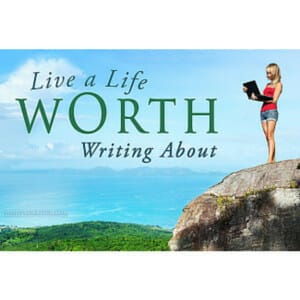
    5 Ways to Start Living an Awesome Life Worth Writing About

    The best writing usually comes from personal experience. Doesn’t it? So then, how do you live an AWESOME life worth writing about?

    As a travel blogger, I constantly ask myself this question. And no matter what type of writing you do, I bet you’ve asked yourself the same thing.

    Here are five ways to live a life worth writing about.

    Read the rest of this post over at Positive Writer.


  • How to Write a Novel, 15 Minutes at a Time

    How to Write a Novel, 15 Minutes at a Time

    “What do you mean, you wrote this in 15 minutes?”

    The woman seated across from me at a writer’s group was waving my novel around like a flag. I’d just been discussing the 15-Minute Writing Method to the group who’d invited me to speak about my second novel, Dark Circle, and what my writing process was like.

    “Just that. I write in 15-minute chunks, most days of the week. And then,” I waved my own hand toward the book she was holding, “voila!”

    Of course, as I explained, it’s not quite that simple.

    What’s the 15-Minute Writing Method?

    The 15-Minute Writing Method is something I came up with while working on my first novel. I’d tried (and failed) quite a few times to complete a manuscript for a full-length work.

    I would start out all shimmery and starburst, trying to replicate the writing process of famous, bestselling authors who write thousands of words or many hours a day. Hugh Howey, for instance, writes for four to five hours every day. Charles Hamilton, an English author, was said to have written 20 full-length pages each day.

    However, an hour or two into my writing time, the glitter would fade. I’d get bored and set the novel aside. I always intended to pull it back out at some point, but I never did. Instead, weeks or months later, I’d dream up a new idea for a new novel. And then I’d start the process all over again.

    Frustrated with myself after yet another failed attempt, I decided to try something new.

    Writers with short attention spans — or those struggling to fit writing around a full-time job, a family or other commitments  — this is for you.

    Here’s the plan: Write for 15 minutes, most days of the week.

    That’s it?

    While there is obviously a bit more involved, the basic premise is this: break down what can look like a huge, overwhelming task into tiny, bite-sized pieces.

    Look at marathon runners: they don’t begin their training by trying to run 26.2 miles. Instead, they run many shorter distances to build stamina, and slowly increase the mileage as they get stronger. Why would you start writing a book by trying to write the entire book?

    Here are five tips that will help you make the most of the 15-Minute Rule:

    1. Look at writing a novel as simply forming a new habit

    This perspective makes the task so much less intimidating! Have you ever trained yourself to floss your teeth? Eat healthier foods? Stop swearing? These are all habits, just like writing.

    I highly recommend reading The Compound Effect by Darren Hardy, which describes how small, seemingly inconsequential changes add up over time. It’s up to us to decide if these little tweaks are positive or negative in nature.

    Try to work with your natural tendencies, not against them. If you are most creative in the morning, squeeze in your 15 minutes of writing as soon as you wake up or before you leave for your day job. More of a night owl? Make your daily writing a before-bed habit, right after you brush your teeth.

    2. Remember, it’s only 15 minutes

    When I first started exercising as a teenager, I never dreamed I’d be able to run three miles (or even one). I was an overweight kid and adolescent, and the thought of doing really big things athletically was outside of my thought process.

    But I could walk for five minutes, so that’s where I started.

    You can do just about anything for just 15 minutes (or 10, or five), so start there. Think you don’t have even a few minutes to focus on your writing? Try giving up something that you don’t need, like watching TV (even the news), or setting strict limits on social media time.

    3. Set a big goal and break it into pieces

    Set a date to complete your first draft and mark it on your calendar. Make sure it’s reasonable, given that you’ll be writing in shorter chunks rather than marathon sessions. While writing my first novel, Epidemic, I was working full time. I wrote in 15-minute chunks before leaving in the morning, and completed a first draft (ugly, yes, but complete) in approximately five months.

    Next, look at your calendar and work backwards, setting up mini-goals like “get to 15,000 words”  or “complete chapter nine.” Add in some fun rewards for these smaller goals. Nothing says “yay” to me like a bouquet of fresh flowers or some pretty new office supplies.

    4. Avoid editing

    While of course you want to produce a polished, well-edited final draft, there is a time and place for editing — and it’s not while you’re in the process of getting that icky first draft out.

    Minimize the urge to edit by not re-reading what you’ve written. If you need to reorient yourself in the story at the start of a writing session, go back and read the last paragraph or two of yesterday’s work, but don’t allow yourself to look at any more than that.

    5. Don’t beat yourself up

    If you miss a day, or several, it’s ok — just jump right back into your process. Allowing that critical inner voice free rein here does no good and a lot of harm. Start fresh the next day, and keep going. Over time, it will feel strange not to have your 15-minute writing session!

    Let the process of writing your novel be as messy and ugly as it needs to be. But don’t make it harder than it is by setting huge and overwhelming goals for your writing time or word count. Ease yourself into your new habit by working on your manuscript for just 15 minutes a day. You’ll be amazed at what you can accomplish.

    Have you tried breaking your writing sessions into short, daily chunks? How did it work for you?

  • Will Moyer’s Writing for the Web: Review

    Will Moyer’s Writing for the Web: Review

    We review ebooks, courses and tools for writers, so you can make good decisions about how to invest in your writing career.

    Ebook: Writing For The Web

    About the creator: Will Moyer is a web designer and front-end developer who loves writing and clean design.

    Price: $4.99

    Who It’s For: Writers, bloggers and editors who want to streamline their content-creation and collaboration processes.

    If you’re already tech-savvy (e.g., you’ve explored a variety of writing tools and are comfortable with HTML), this book won’t add much to what you already know.

    However, if you’re frustrated with your existing writing tools and want to learn about your collaboration options beyond emailing Word docs back and forth, you’ll want to check it out.

    What It Will Help You Do: This is a logical, practical, no-nonsense look at a writer’s workflow and toolbox. The book helps you analyze your current tools and process and identify opportunities to make it easier, more comfortable, and more efficient.

    Will’s list of suggested plain text editors and collaboration tools for different writing preferences gives you the chance to find one that works for you, whatever your needs. (Want to switch back and forth between your Windows laptop and your iPad? Need to share your work with a client who only accepts Word docs? There’s an option for that.)

    The book also includes a gentle intro to HTML and CSS; while Will acknowledges that writers don’t need to know a lot about programming, they do need to understand enough to see how it affects their digital content’s presentation.

    The Best Part: Will’s conversational style makes the book easy to read; he clearly explains technical concepts and addresses concerns for the non-technical writer. His list of tools and explanation of how to link them together into a workflow is helpful to those interested in overhauling their writing processes. The resource links at the end are great as well.

    The book outlines a variety of options and leaves the choice in the reader’s hands — how will you create your own toolbox?

    What Would Make It Even Better: As Will freely admits, the book is just one guy’s opinion on writing workflow options. Having said that, it’s a pretty well-thought-out one.

    Our Recommendation: If you’re considering making a change to your workflow, this book will help you find and understand tools that can make you more efficient.

    This post contains affiliate links. That means if you purchase through our links, you’re supporting The Write Life — and we thank you for that!

  • Flexible Jobs for Writers: Find a Remote Position

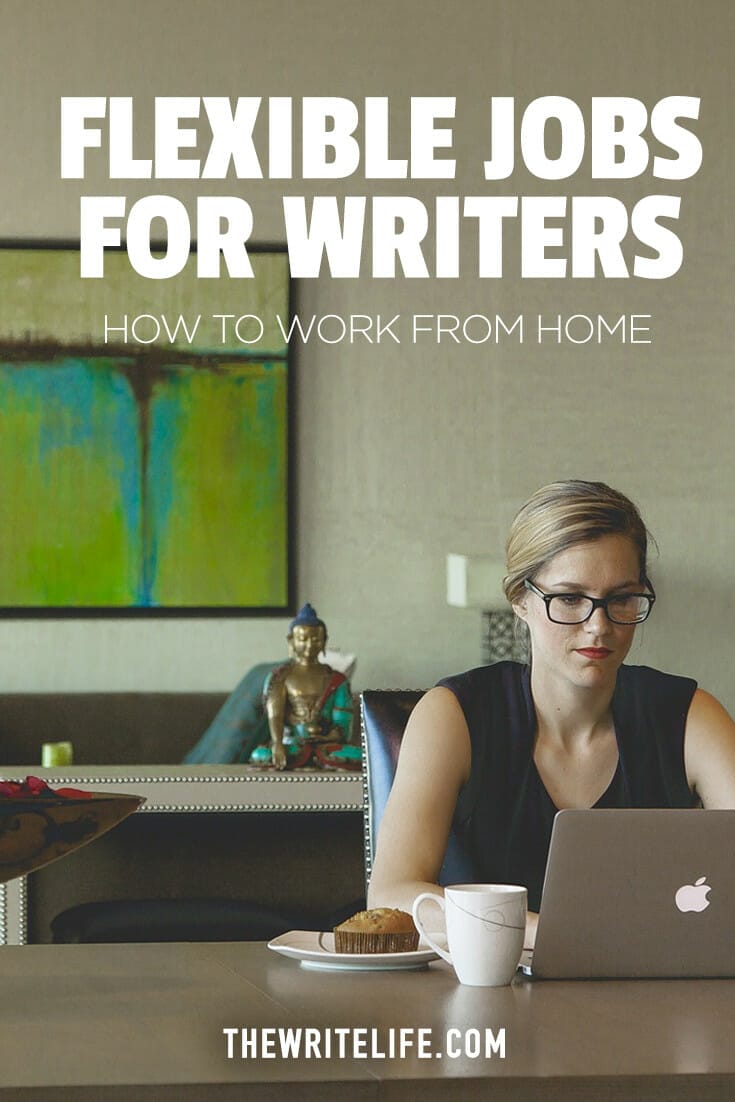
    Flexible Jobs for Writers: Find a Remote Position

    Working from home — it’s the ultimate dream for many of us.

    For writers especially, working from home can be an ideal arrangement. It allows for a freedom and focus you’ll never find in a crowded office, where your phone keeps ringing and bosses and coworkers stop by your desk every five minutes. As Virginia Woolf once said, there’s great value in having a “room of one’s own” when your work is of a creative nature.

    More flexible work options than ever before

    The good news for those of us who long for that room of our own is remote jobs are on the rise. The number of remote jobs posted over the last year alone has risen 27 percent, according to FlexJobs, an online service for professionals seeking telecommuting, flexible schedule, part-time and freelance jobs.

    FlexJobs just released their second annual list of 100 Top Companies with Remote Jobs in 2015, a must-read if you’re in the market for flexible work. They analyzed job-post histories on their site in 2014 from more than 30,000 companies and identified 100 companies that offered the largest number of remote work options: telecommuting, work-from-home, virtual, etc.

    The companies that made the list are all sizes and from a wide variety of industries, with the most remote-friendly positions in the fields of Medical and Health, Customer Service, Sales, Computer and IT, Administrative, Education and Training, and Marketing. And here’s where you, as a writer, come in: Many of these fields — and others that didn’t make the top seven — have a need for top-quality writers and editors.

    flexiblejobs

    What kind of writing jobs are we talking about?

    So, of the 100 companies that made FlexJobs’ list, which are most likely to fit your particular skill set? Here’s a list of the some of the companies that offer writing jobs, as well as past and present job titles they’ve hired for.

    • Thomson Reuters: Specializes in business information services. Job titles include Editor, Assistant Editor, Cases Editor (temporary) and Senior Editor (temporary)
    • GEISWriters.com: Focuses on technical, medical and educational content. Job titles include Insurance Certification Exam Instructional Content Writer, Hyperbaric Technology Instructional Writer and Online Encyclopedia Content Writer
    • K12 Inc.: Great for writers with an interest in teaching or education. Job titles include Writing Interventionist Teacher, Teacher — English/Language Arts — High School, English Language Learners Teacher and Middle School English Teacher
    • About.com: For freelance writers with particular expertise areas, About.com hires “guides” to write content in that subject area. Job titles include Guide — Gluten-Free Cooking, Guide — Downton Abbey, Guide — Young Adult Books, Guide — US Foreign Policy, and Guide — Audio Books
    • Edmentum: Educational organization that hires virtual teachers and curriculum writers. Job titles include Curriculum Writer — ELA, and Virtual Teacher — English

    Is working remotely as a writer right for you?

    Like any job, remote work has its upsides and downsides, and it’s important to know what you’re getting into before you make the switch.

    Dana Sitar, an author, blogger and writing coach, has done the work-from-home-thing and also worked more traditional jobs like food service, retail and office work. (She’s also a contributor to The Write Life!) Her favorite parts about working from home?

    I love that I have control over my schedule, because I’m not expected to show up anywhere at anytime to work. That works well for me, because I prefer to work at night, when offices would never be open. I also love that I can live anywhere I want and move whenever and as often as I want. The thought of a location-dependent job drives me nuts.

    But, she warns, working from home isn’t always easy:

    Think about the things you have in traditional employment: coworkers, a dedicated workspace, free supplies, someone enforcing a schedule and deadlines, a job description and to-do list, etc. Can you work effectively without these, or find some way to mirror them working from home?

    Staying focused, on-task and on-schedule are the biggest challenges when you don’t have to punch a clock for work. A lot of little things about working in an office or other workplace help with those, and we don’t notice them until we’re working from home and don’t have them.

    Stephanie Halligan, a cartoonist and money expert, agrees that remote work has its benefits and its drawbacks:

    Working from home has given me so much independence and control over my day. Small things like working out in the middle of the day or cooking myself lunch are so rewarding. But I have to admit that I miss human interaction and “live” coworkers; it’s a lonely feeling to have all of my personal connections over Skype or on the phone!

    If these things sound doable to you, you may have what it takes to be a successful remote worker. Sitar adds:

    Creative people are good for remote jobs, because they tend to go stir-crazy in an office setting with a monotonous schedule. Same for people with wanderlust. To succeed, you have to be a smart planner, organized, self-motivated and a self-starter — and care about the work you’re doing and the people you’re doing it for.

    Does this sound like you? Then what are you waiting for? Visit the full list of companies on FlexJobs’ blog and you may find your next perfect gig! You could also consider working from a variety of countries to keep things interesting!

    Do you work from home? What do you like about it, and what do you find challenging?

  • Jobs That Leave You Time to Write

    Jobs That Leave You Time to Write

    You drag yourself out of bed, get ready, deal with traffic, work hard for eight hours, drive home, eat something and then . . . start writing? It’s doubtful.

    What about weekends? Sure, right after you catch up on the household chores you put off all week.

    It’s tough enough to build your writing career part-time around other commitments, but it’s especially difficult if you have a day job.

    Fortunately, not all jobs are equal. In fact, some types of work leave you ample time to write: jobs where you can write while on the clock, positions with limited days or hours, and gigs where you control when and how much you work.

    Jobs that let you write at work

    I used to drive an electric tram for residents of a wealthy community in Florida, and my employer encouraged me to bring books or even a laptop if I wanted to read or write during slow times. And sure enough, during the off-season, I often waited for an hour or more between passengers.

    Few employers may allow you to write while on the job, but if you’re serious about your writing and need a day job, try one of these positions:

    Security guard
    “I wrote Enjoy the Decline in 45 days while pulling 16 hour shifts sitting at a warehouse as a security guard,” says author Aaron Clarey. He also wrote his 324-page book, Behind the Housing Crash, while working at that same job.

    Clarey suggests writers ask to be assigned night shifts, when they’ll likely have fewer administrative than they would during the day. However, day shifts can be productive as well; author Mark Allan Gunnells says:

    I’m a security guard, and have pockets of downtime throughout the day. I have trained myself to write in those pockets. It isn’t ideal for some, the constant stop-and-start method, but I’ve managed to make it work.

    When I wrote while working as a security guard, the biggest problem I faced was the number of interruptions. Gunnells may have adapted to that stop-and-start environment, but my own solution was to do the preparatory work instead of the actual writing.

    For example, I researched my topic online, found sources and took notes. When I later wrote my articles, they came quickly and easily since I already had information, sources and a general outline ready.

    Pet sitter or House sitter
    While they may not be full-time gigs, these jobs leave you lots of time to write.

    When I was younger, I wrote while getting paid to watch dogs for family and friends. When my wife and I travel, we pay our pet sitter $60 per night to stay with our two cats. Apart from a few minutes of play time and feeding, the rest of her eight-hour stay is open for whatever she wants to do — including writing.

    Other possibilities
    Consider alternative positions that offer lots of downtime during your working hours, and don’t be afraid to get creative. For example:

    • A late-shift hotel clerk can write while waiting for the phone to ring or a guest to check in
    • An elder-care driver can write while waiting for passengers at appointments
    • A campground host can write when he’s not welcoming guests or accepting bookings
    • A baby sitter can write after the kids are in bed

    It may not be easy to fit in writing time at work, but it’s possible. Rodrigo Ribera D’Ebre says he wrote a novel during breaks while working in an office cubicle at an auto insurance company. Short story author Lisa Proctor says her boss let her write on the job when she was a clerk at a bookshop.

    Some employers are happy to let writers write, as long as they get their work done. Why not ask?

    Part-time work that pays well

    A miserable day job can be good motivation for launching your writing career, and you might even use lunch breaks to plan how you’ll quit your job and start freelancing.

    But if you need the extra income, consider a part-time job to support your writing. To maximize your writing time, look for a position that pays well for your time, so you can afford to work fewer hours.

    If you only want to work a couple of days each week, one of the best opportunities may be bartending. If you have previous experience serving drinks or waiting tables, you might convince a bar or club owner to let you work only Friday and Saturday nights — the busiest times for most bars.

    The tips can be surprisingly good. “Tending bar at a busy nightclub, I regularly pulled in upwards of three hundred dollars a night, and on many Fridays I took in more than $600,” says Rob Dohearty. On his best night, he earned $1,600, and that was at a rural tavern where he normally made only about $100 per night. However, he warns that without experience you’ll probably get the slow shifts to start, and you’ll make much less.

    Also consider jobs that require you to work five days or more each week, but for a limited number of hours. For example, many people who deliver newspapers to the coin-operated boxes on street corners (a job I used to have), work just two to four hours each morning. Just be prepared to get up at three or four in the morning each day!

    Here are some other part-time possibilities with the potential for decent hourly incomes:

    • Waiting tables in an expensive restaurant
    • Cutting hair
    • Substitute teaching
    • Doing morning janitorial work for offices or schools
    • Driving a school bus

    As a school bus driver, you can use the time between morning and afternoon runs to write, and you get summers off.

    Flexible, writing-friendly jobs

    The best gig for writers would allow you to work when you want and as much or as little as you want. That way, when you have paid writing projects you can slack off on the other work, and when writing income falls you have a backup. But is there such a job?

    Yes. As a search engine evaluator — a job I started nine months ago — I work when I want, day or night, for $13.50 per hour. The most I’ve worked is 53 hours in a month, and although the company says you have to work at least 20 hours, I have recently dropped to fewer than five hours monthly, which is apparently just enough to keep from getting fired.

    As a search engine evaluator, you rate search results based on various factors. The employers provide the minimal training necessary. Companies that hire for these positions include Leapforce, Lionbridge and Appen Butler Hill, and may also offer other at-home part-time positions.

    Jobs that let you work as many hours as you like, whenever you like, are rare. Get creative to brainstorm opportunities based on your skills. Perhaps a family member with a business can hire you to work the days and hours that fit best with your writing schedule — another way I’ve been able to work while having time to write.

    Do you have a job that leaves you time to write? How do you fit writing around a day job?

  • Don’t Wait for Inspiration: 3 Surefire Ways to Beat Writer’s Block

    Don’t Wait for Inspiration: 3 Surefire Ways to Beat Writer’s Block

    Inspiration. It’s an attractive concept for writers, but there’s a big problem with waiting for the muse.

    What would happen if a professional sprinter stopped training for a competition because she was tired of her sport? If she made a habit of it, she’d lose her next event.

    What would happen if an engineer stopped working on a construction project because he didn’t feel excited about plans for the project? He’d lose his job.

    What happens to the writer who waits for inspiration to arrive? She might not write today, or tomorrow, or the day after that.

    Professional writers can’t afford to skip several days because they don’t have a good idea. They know writing is a demanding craft, and they go to great lengths to prevent having nothing to write about.

    Here are three ways you can avoid having to wait on inspiration and trick yourself into making major writing progress.

    1. Build a swipe file

    A swipe file is a great tool for writers. It’s a place for recording facts, figures, sentences and ideas about your work. If this information isn’t relevant to your current writing project, it will help you the next time you’re devoid of ideas. All you have to do is review your swipe file, pull out your notes and use them as a jumping off point into the unknown.

    If you’re a copywriter, clip the headlines, words and sales hooks of other, more talented copywriters into your file.

    If you’re a nonfiction writer, store articles and notes about your research in your file.

    If you’re a blogger, clip the most popular articles by bloggers in your niche and review these before you write your next post.

    If you’re a fiction writer, keep reflections about stories you read and ideas for future work in your swipe file.

    I use Evernote for my swipe file. Other digital options include OneNote and Simplenote, both of which are multi-platform tools. However, you don’t need a digital tool to keep a swipe file. Author Ryan Holiday, for example, uses a paper-based system for his research. In the end, the tool is less important than the process.

    2. Practice writing by keeping a journal

    Writing a journal will foster your creativity and give you space to develop ideas that you don’t have room for elsewhere. Journaling can help you turn thoughts and feelings into words and ideas.

    Because it’s private, you’re less likely to censor yourself. This brutal honesty will expand the boundaries of your writing and if you keep a journal for several years, older journal entries serve as markers for your progress.

    Virginia Woolf was fastidious about keeping a journal or diary. In an entry from 1924 in A Writer’s Diary, she describes how journal writing gave her more ideas for fiction and nonfiction.

    Why not write about it? Truthfully? As I think, the diary writing has greatly helped my style; loosened the ligatures.

    My life isn’t much like Woolf’s, but I learned a lot about the art of journal writing from her. Keeping a journal doesn’t mean recording a daily summary of one’s life. Rather, it’s a way to expose your thoughts and feelings. This self-reflective writing will help you dig deeper into your thought processes.

    At the very least, journal writing is another form of practice, and disciplined practice is essential if you want to become a better writer.

    3. Record your experiences in a sense diary

    Keeping a sense diary is a useful practice for creative writers. In it, record one sensual experience per day, like how a meal tasted or what a person’s voice sounded like. Take notice of the stickiness of sweet tea, the coarseness of an unvarnished floor and the pain behind your eyes when you’re tired.

    The world is your source material.

    Now, see if you can remix your sense diary to describe how a smell tastes or what a sound looks like. No matter what type of writer you are, invoking at least one of the five senses will add character and authenticity to your work.

    It’s common practice for creative writers to remix and play on our perceptions of the five senses. In 1962, Vladimir Nabokov, author of Lolita, told the BBC he could hear colors in different languages. He explained how he used this ability to great effect in his writing:

    The long ‘a’ of the English alphabet has for me the tint of weathered wood, but a French ‘a’ evokes polished ebony.

    Keep a sense diary in a paper notebook, in a password-protected file on your computer or by using one of the many journal apps available for smartphones. Day One for iOS is particularly popular, and it supports multimedia content, which is useful for adding context to your descriptions.

    Creative writers who get into the habit of keeping a sense diary will find it’s more natural to describe the clack of an old keyboard or the spot of blue ink on the inside of their index fingers if they’re in the habit of recording these observations anyway.

    Nonfiction writers can use a sense diary too. Legendary copywriter and ad-man David Ogilvy regularly drew on the five senses, and he famously wrote about the Rolls-Royce: “At 60 miles an hour, the loudest noise in this new Rolls-Royce comes from the electric clock.”

    Still feeling stuck?

    The American short story writer and author John Updike wasn’t one for waiting around for inspiration. Updike published his first work, a collection of poetry called The Carpentered Hen, in 1958. Throughout his life, he wrote for several hours day, and he published a book almost every year. He said:

    I’ve never believed that one should wait until one is inspired, because I think that the pleasures of not writing are so great that if you ever start indulging them, you’ll never write again.

    The pleasures of not writing are great; don’t succumb to them. Force yourself into the chair and update your swipe file, your journal or your sense diary. On difficult days, these methods will serve as prompts that help you write. And on good days, they will support your best work.

    [bctt tweet=”The pleasures of not writing are great; don’t succumb to them, says @BryanJCollins”]

    Somedays I consider it enough to simply write in a journal or make observations in my swipe file, while on other days I concentrate on reaching a target word count or finishing a project. If you’re unsure, remember this simple rule:

    Do the work.

    The first few sentences may not make much sense but, several sentences in, you’ll realize you’re not as tired or devoid of ideas as you thought; you were just procrastinating.

    Do you rely on moments of inspiration? What tricks do you use to overcome writer’s block?

  • Write Better and Faster: 6 Smart Ways to Increase Productivity and Creativity

    Write Better and Faster: 6 Smart Ways to Increase Productivity and Creativity

    We all get the same number of hours in the day, but some people seem to accomplish a superhuman number of goals in that time. What’s their secret?

    About a year and a half ago, I became obsessed with productivity. What made some people so productive and successful — especially in creative fields — and what was the actual science behind it?

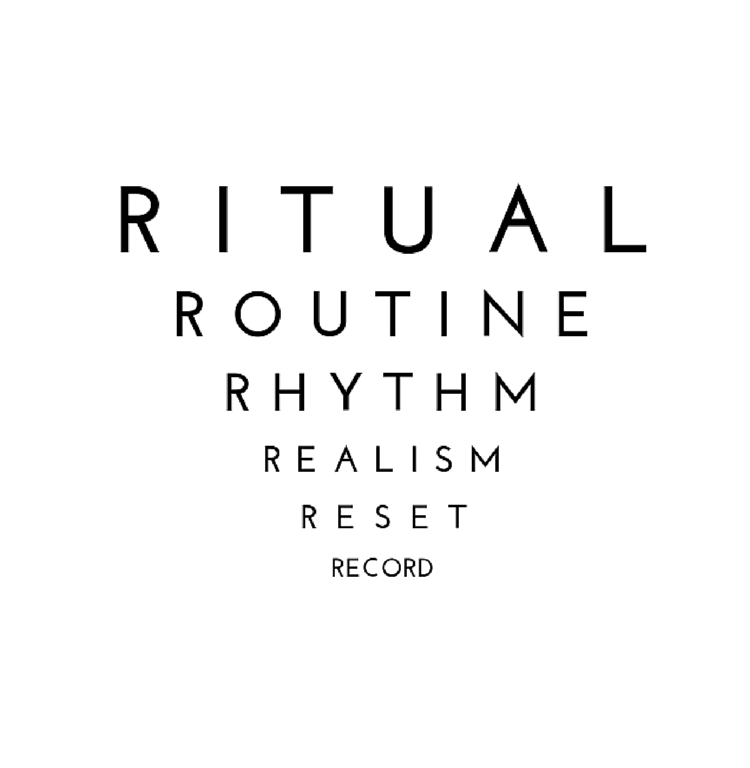
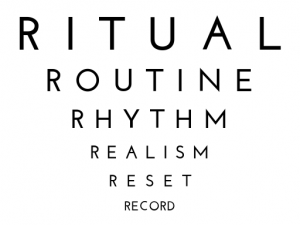
    After reading books on habit, willpower, rituals, routines and anything else that might increase my writing output, I set up what I like to call the Productivity Pyramid (though yes, I realize it’s really a triangle). It’s made up of six crucial elements.

    Increase productivity as a writer

    1. Ritual

    The top of our Pyramid is the most important. Rituals are habits that begin with a behavioral cue — a sort of trigger that tells the brain “Now it’s time to work!” Some authors have quite elaborate cues (such as reading the same poem before writing) and others have more simple ones (such as making a cup of tea). Either way, having a ritual helps the brain slip into its creative flow automatically.

    I cultivated my ritual years ago as a student who didn’t want to pay attention in class: writing in a spiral-bound notebook. Just sitting down with the lined paper and a pen tells my brain, “Oh! We’re writing stories now!” and I can use this ritual whenever I need to!

    Stuck in line at the DMV? No problem — out comes the notebook. Waiting for my order to finish at the coffee shop? Awesome — I can pull out my notebook and instantly get to work. Figure out what triggers you to prepare for creative work, and create your own ritual.

    2. Routine

    Routine is almost as important as ritual because, like ritual, it trains your brain to create on autopilot. This doesn’t mean your creative times are boring or redundant. Rather your brain gets used to drafting at X-hour everyday, and when that hour arrives, your imagination is ready to go!

    The other powerful component of routine is that it reduces the number of decisions you make in a day. You see, willpower is finite; the more we use, the less we have. Decisions deplete willpower, so if we can reduce the number of decisions we have to make in a day — if we can routinize certain aspects of our life — then we can save our decision-making for our writing.

    3. Rhythm

    Our creative energy shifts and changes throughout the day, just like our circadian rhythms. Figuring out at what point in the day you’re the most productive creatively — when your brain is really “on” — can dramatically improve your creative output.

    My whole life, I’ve thought of myself as an afternoon worker, since that was when I seemed to sit in the chair with my hands on the keyboard. I thought my creative energy was best a few hours after lunch.

    However, after using a productivity heat map, I discovered that I was actually a morning person! I sink into creative flow the deepest and for the longest time immediately after I roll out of bed in the morning. To make the most of my natural rhythm, I’ve set up a routine that starts with me awakening at 5 AM and writing for a few hours straight.

    Do you know your most productive times of day? Check out your own rhythm with these strategies.

    4. Realism

    This is a pretty straightforward step on the Pyramid, but if you really tap into it, it can be transformative. Why? Because many people set unrealistic goals, get frustrated when they don’t meet them, and then give up. (I am SO guilty of this!)

    One good day of writing doesn’t mean we’ll have that same amazing word count every day! However, if you set a truly achievable goal — especially a daily one — hitting it will help your confidence grow.

    I set a daily goal of 1000 words when I’m drafting a new novel. This goal is not only attainable, but it’s easily attainable. It doesn’t intimidate me or set me up for immediate failure. Yet, 1000 words a day leaves me an entire novel in just a few months. What’s your achievable, realistic daily goal?

    5. Reset

    It’s unavoidable: Our bodies need regular rest periods. Creatively speaking, our brains can only produce at peak performance for a certain amount of time — and then we have to reset.

    Both on a daily scale and on a more long-term weekly or monthly scale, breaks can be your new creative best friend. Have you ever noticed that some of the best aha! moments come when you’re not working?

    For example, I have my biggest creative breakthroughs while I’m driving on the highway or cooking dinner or walking my dogs — when I’m not actively thinking about my story, yet the ideas are still knocking around in my subconscious. I know other people who use meditation or binge read or take long hikes.

    Find a reset strategy that works for you, and enjoy your renewed energy and creativity when you return to your work.

    6. Record

    Creative endeavors (like novels) can be HUGE. “Write a book” is a daunting undertaking (and such a vague goal), so seeing daily progress can help keep you motivated to continue.

    To keep myself on track, I use a spreadsheet to note how many words I’ve written each day as well as record any other work I’ve done (e.g. revised two scenes or wrote a blog post). Then I tally up the total word count each day so that I can see how much my project is growing! The visual interpretation of my progress helps keep me motivated.

    Your tracking method can be as simple and private as an Excel spreadsheet, or you can make it a group endeavor by sharing a Google spreadsheet with a few fellow writers.

    The Productivity Pyramid has helped me write and revise to the maximum of my creative abilities while also traveling for author events, promoting my books and maintaining my writing blog and newsletter. I hope it can help you do the same!

    How do you increase your creative productivity?

  • Horror Authors: How to Scare the Heck Out of Your Readers

    Horror Authors: How to Scare the Heck Out of Your Readers

    If you’re writing horror, dark fantasy, thrillers or anything else that requires suspense, a good jump-scare or anything that might terrorize your readers, you’ve probably already know that the written word can fill you with dread, and even startle you. Those feelings aren’t reserved for the movies.

    But how much study have you put into how your favorite horror authors have gone about scaring you with the written word?

    Movies rely on editing, music cues, performance, special visual and makeup effects . . . a whole parade of cinematic tools. But in prose all we have to work with are words, and our readers’ imaginations. The good news is that those are powerful tools.

    Though you may not have much control over any individual reader’s imagination, or his interpretation of your work, the ways you arrange words into sentences and sentences into paragraphs can activate your readers’ psyches in ways you may not have thought possible.

    It all comes down to breathing

    Even when reading silently, we tend to breathe along with what we’re reading as if we were reading it aloud. It’s impossible for us to turn certain parts of our brain off and when something causes us to start breathing differently, that forces us into different states. When you’re in a blind panic you tend to hyperventilate, breathing in quick, shallow gasps. When you’re nervous or anxious about something (the feeling of suspense), you tend to hold your breath, and breathe more slowly.

    The good news for horror and thriller authors is that these processes also work in reverse. If you can force that breathing state (or, more accurately, some smaller, less physically traumatic version of that state) in your readers, you’ll bring on the requisite psychological response.

    Evoking suspense and anxiety

    When you’re building suspense, evoking a feeling of impending doom or the terrifying fear of the unknown, get your reader to hold her breath. Stop her from taking her next breath for longer than normal. And though it may seem impossible to do this with words on a page, remember what I said about how we unconsciously breathe as though we’re reading aloud even when we aren’t.

    One of the reasons that sentences are finite is that the period at the end allows us a breath. Paragraphs give us a chance to take a deeper breath. So if you want your reader to slow her breathing and start feeling nervous, anxious or fearful, keep your sentences long, and your paragraphs even longer.

    Very near the beginning of Shirley Jackson’s classic The Haunting of Hill House, the protagonist, Eleanor, is on her way to meet her fellow paranormal investigators at a house that’s known to be haunted. Though excited about being a part of something potentially important, and getting away from her dreary life in the city, Eleanor is terrified of what she’ll find there, not just from ghosts but as a result of what we’d now refer to as social anxiety. The closer she gets to the house, the more anxious she is.

    Jackson conveys this anxiety with a single paragraph wherein Eleanor makes a stop in a small town along the way and has a cup of coffee. It’s an innocuous scene, but told in a tight POV, it’s incredibly nerve-wracking. This single paragraph consists of ten sentences. The first of those sentences is the shortest at 28 words. The last is the longest at 52 words.

    Think about the last time you read, much less wrote, a sentence that’s 52 words long.

    By the end of that monster paragraph, Shirley Jackson left her readers gasping for air, and helped solidify The Haunting of Hill House as one of the undisputed classics of the genre.

    Eliciting horror and panic

    On the flip side, eventually the monster, serial killer or villain finally reveals himself and the terror (a generalized, creepy dread) turns to horror (the visceral reaction to a traumatic event in progress).

    Now you want to do just the opposite: Force your readers to breathe too often. Get them hyperventilating. Do this with short sentences. Even shorter paragraphs.

    One-sentence paragraphs.

    In another classic haunted house tale, Hell House, author Richard Matheson evokes this feeling of panic in one scene of nine paragraphs, each with no more than two short sentences. Readers have been trained to take a full breath after each paragraph, so breaths are coming fast and furious through:

    She stopped with a gasp and looked at the Spanish table.

    The telephone was ringing.

    It can’t, she thought. It hasn’t worked in more than thirty years.

    She wouldn’t answer it. She knew who it was.

    It kept on ringing, the shrill sounds stabbing at her eardrums, at her brain.

    She mustn’t answer it. She wouldn’t.

    The telephone kept ringing.

    “No,” she said.

    Ringing. Ringing. Ringing. Ringing.

    I know — technically, that last paragraph has four sentences, but let’s consider that staccato stacking of “Ringing”s as one sentence with partial breaths between each word.

    Instead of a single ten-sentence-long paragraph, we have paragraphs of one or two sentences, with the longest sentence/paragraph clocking in at 14 words, or precisely half the length of Shirley Jackson’s shortest sentence.

    Following this scene, there are a couple of slightly longer paragraphs as the protagonist tries to take charge of the situation, but this is quickly dismissed by more staccato attacks on the senses. And, like The Haunting of Hill House, the ongoing success of Hell House is proof of its effectiveness.

    Putting this technique into practice

    This idea of controlling your readers’ breathing is not the be-all-end-all of “writing scary,” but with some practice it will work for you.

    And being aware of when to best use this strategy will also prevent you from overusing it, and move the majority of your prose somewhere into the readable, accessible, and comfortable center — until you want things to start getting scary again.

    Do you “write scary”? Have you tried this technique to control your reader’s breathing?