Tag: writing a book

  • Cliches to Avoid: 4 Story Endings Your Readers Will Hate

    Cliches to Avoid: 4 Story Endings Your Readers Will Hate

    Writing a book is difficult, but crafting an ending that is both impactful and wraps the plot up beautifully is even more so.

    You worked hard to create a beginning that grabbed your readers, so make sure to write an ending that lives up to the rest of your story. Relying on clichés will only leave your readers feeling disappointed and dissatisfied.

    Stay away from these four cliché endings:

    1. The happily ever after

    What it is: All of the characters in your book live happily ever, with no hardships to bear. The hero defeats his foes and all of the plot twists are nicely tied up – perhaps a little unrealistically.

    Why to avoid it: Life doesn’t necessarily end happily ever after, which makes this type of ending feel disingenuous. You want your readers to feel enthralled with your book so that they’ll want to share it with friends, read more of your work or even re-read your story. Real life isn’t perfect, so make sure that your book stays in the realm of realism.

    2. The drawn-out dream

    What it is: The drawn-out dream ending involves the main character waking up safe and sound in their bed, realizing that the entire plot has just been a dream.

    Why to avoid it: This type of ending typically annoys readers, who feel that the author has copped out. A book should be emotional to everyone involved, and an author who uses this ending seems to betray readers’ trust and cheapen the emotions they’ve felt throughout the book.

    3. The guilty hero’s monologue

    What it is: When the hero finally defeats the bad guy or force, the reader is privy to her internal thoughts of regret or remorse. The monologue is supposed to show the character’s guilt at what she’s had to do and how it’s eating away at her. Even though the ending is happy, our hero must now live with the blood on her hands.

    Why to avoid it: In general, writers should strive to show, not tell, readers what is happening in the book. By strongarming readers into feeling specific, manufactured emotions, you are taking away their freedom to experience the story in a way that is reflective of their background and experiences. Readers may feel they are being led to specific conclusions, and few enjoy the feeling of an author holding their hand throughout a book — especially the ending.

    4. The lover’s life

    What it is: This is a special twist on the happily ever after ending, in which the main character falls in love, sometimes for an unexplained or random reason. It shows that true love makes the world go ‘round and that all that happened in the course of the story was worth it.

    Why to avoid it: Unrealistic endings tend to annoy readers. If a love interest is too sudden, it isn’t all that real. If it is unexplained, it leaves your characters lacking depth. The truth is that not everyone falls in love and lives happily ever after. The best endings are unique, somewhat realistic, and really make your readers think.

    Set the text aside, brainstorm some unique possibilities, and pick up your manuscript again when you have a more interesting picture of what could be.

    If you want to learn how to finish a story the right way, check out our guide here.

    What other cliché endings did we miss? What frustrates you at the end of a great story?    

  • Point of View: How Writers Can Master This Crucial Story Element

    Point of View: How Writers Can Master This Crucial Story Element

    Once you decide on the point of view for your book — whether first person or third, omniscient or limited — the hard part follows: staying consistent.

    Falling out of the selected point of view (POV) can abruptly interrupt the story. Readers no longer connect with the main character, and they have a hard time following the plot.

    Avoid these fatal flaws by maintaining a steady point of view.

    It’s best to be mindful of POV as you write, because fixing errors requires combing through each and every scene! It’s doable, just not very fun. And most literary agents won’t want to do it for you.

    Here are six tips to ensure you keep a steady POV in your story:

    1. Only include setting elements your POV character would notice

    When your POV character first walks into a room, they’re not going to notice every detail — the color of the curtains, the shape of the table, the type of tile on the floor. While you want to describe the setting accurately, you have to keep POV in mind. Maybe all your character will notice is the delicious aroma of food cooking in the kitchen.

    One of literary agents’ pet peeves is when writers go beyond what is necessary in setting the scene. Be natural in introducing pertinent details, or even have another character who has been in the room awhile point it out.

    2. Don’t let characters describe themselves

    Your character likely isn’t going to realize what facial expressions they’re making as another character relays the day’s gossip. And they’re probably not going to notice the food in their teeth unless someone else comments on it or looks at them funny. Be mindful of how you describe characters: What would they really have noticed?

    3. Don’t include anything your POV character wouldn’t have known at that time

    Unless they’re a fortune teller.

    But this rule applies to your POV character’s knowledge of facts, not just future events. Would they really know the specific brand of clothing a friend was wearing? If so, how they knew that should be apparent to the reader as well.

    4. Make sure the characters’ judgments are based on signs noticeable to the reader

    If one character believes another is a two-faced liar, this judgment should also be apparent to the reader. All the signs the character saw to reach that decision, the reader should have seen, too.

    5. Don’t jump from head to head

    Each chapter or section should be in a single character’s point of view. When the POV switches, make sure it’s obvious in the first sentence.

    6. Eliminate every “he thought” and “she saw”

    These attributions are jarring when readers already feel that they’re in the POV character’s thoughts. People don’t think using phrases like “I’m seeing this” or “I’m thinking that.” Those are phrases we use to express to someone outside of our mind what we’ve thought or experienced. In using these phrases, you ban readers from your character’s head.

    A major red flag pops up when these attributions refer to other characters, since your POV character wouldn’t be able to know what another character was looking at or thinking about.

    Readers want to get lost in a story. They want to think and feel right along with the main character. When you tell a story from a character’s point of view you have the privilege of writing from inside that character’s head. The bottom line is for you to get inside your main character — to think like him, to see like her — and to tell the story as if you were living it.

    If point of view still seems an overwhelming skill to master, get help from other writers by putting together a writing group or even hiring an editor. The more aware of point of view you are, the easier it will be to catch yourself from falling out of it.

    How do you ensure a consistent POV in your writing?

  • Why You Should Publish Your Book Before It’s Finished

    Why You Should Publish Your Book Before It’s Finished

    Here’s how a lot of people think you write and publish a book:

    1. You have an idea for a book

    2. You spend a year — or longer — working on it without showing it to anyone

    3. When you feel ready, you might show it to some friends or even a professional editor, though many people skip this step

    4. When you’re done-done, you submit your work to some Big Publishers (somehow… this part is fuzzy)

    5. Either you get a deal and you become a Published Author on your way to fame and fortune, or you don’t — and your manuscript collects dust, or whatever electronic files collect when you don’t ever look at them again

    These mistaken beliefs about the writing and publishing process are some of many damaging artifacts of twentieth-century publishing industry romanticism; together, these could be called “The Myth of the Doorstopper.”

    According to this myth, all good books are written by people who hide away for years in isolated cabins or bohemian apartments, then emerge with giant tomes which are perfectly complete at the very moment they are first made public (that is, published).

    The early days of in-progress publishing

    Nowadays, it is true that many novels are written and published that way, but historically, novels were often written and published in-progress — ever heard of Dostoyevsky, Dickens, or Tolstoy? Indeed, writers of in-progress books would often change their planned plots (if they had any fully worked-out plans to begin with) in response to the public’s reception of their work, as the chapters were published periodically.

    (Ever wondered why some nineteenth-century novels are so big? When you’re publishing serially and being paid chapter by chapter, it’s pretty tempting to embiggen the scope of your book if it becomes popular. Your publisher would certainly suggest that you do so.)

    Fortunately, new technologies have made it possible for writers to re-establish the conditions for in-progress publishing without waiting for Big Publishers to change their corporate strategies back to traditional serial publishing models. The combination of computers, the Internet, electronic reading devices and in-progress ebook publishing platforms means that authors and small publishers can start writing and publishing this way, again.

    In-progress publishing: a scenario

    Serial publishing is just one form of in-progress publishing, mostly suited to writing longer works of fiction.

    Imagine, instead, that you’re thinking of writing a nonfiction book; let’s say you’re passionate about model trains and you want to write “The Advanced Guide to Model Trains.” If you went the traditional “Myth of the Doorstopper” route, you’d write the whole thing and then try to find a publisher. If you couldn’t find one, you’d publish it yourself, or else just give up.

    Now, how would you feel if, after finally publishing your book, you discovered no one wanted an advanced guide, but that there was a huge demand from eager readers for a beginner’s guide? What if you found people objected to your overly technical approach to what they considered to be a fun topic? What if you discovered that, actually, you’re not a good enough writer yet to merit anyone’s attention? You’d have spent all that time writing a book no one wanted to read.

    Now, imagine that you chose the in-progress ebook publishing model instead. You start writing your technical “advanced” guide and publish the first version after you’ve only finished a draft of the first three chapters — after, say, just a couple of months of work (knowing, of course, that anyone who buys an early copy of your ebook will get all subsequent versions free and automatically.)

    What you’ll get is the same response described above, but without having wasted years of work and worry, and without the dashed dreams and belated realizations.

    Instead, you could change tack and start writing (and in-progress publishing!) a beginner’s guide, in a lighter tone, selling it to the readers you’ve already discovered from your first attempt, and building your readership as you write the book. You could be constantly evolving your book in response to meaningful reader feedback, and looking for new ways to find new readers over a longer period of time, rather than just at or after your book’s launch.

    Then, once you finished the beginner’s guide, you could write an intermediate guide for all your happy beginner readers. And eventually, you could even write that advanced guide you were so determined to write in the first place — but with an already established and growing following of readers.

    In-progress or “lean” publishing is both the past and the future of publishing. There will always be room for the authors of conventional twentieth-century Doorstoppers, but there will also be more room for people willing to write in more radical ways, and to engage with the kind of reader so eager, they’re willing to buy an unfinished book.

    Have you tried in-progress publishing? What do you think of the idea?

  • How to Make a Book Trailer: 3 Free Apps for Creating an Impressive Video

    How to Make a Book Trailer: 3 Free Apps for Creating an Impressive Video

    As any author can tell you, promoting your book is a challenge. In addition to standard marketing techniques, you must find new and innovative ways to engage with your readers. One way to do that is to create an animated book trailer.

    But not many people know how to make a book trailer. While it’s difficult to create animation from scratch, it can actually be quite simple to create a simple book trailer by yourself. And there are a number of free and easy-to-use applications that will help you do just that.

    To start, you’ll want some photos for your trailer; typically, these would be of you, your book cover, and your interior art. You don’t need high-res photos; 72 dpi is fine (640 px wide by 480 px high).

    If you’re a Windows user, you can download Photo Story or Movie Maker from Microsoft. Mac computers come pre-loaded with iMovie software. If you have PowerPoint, you can add soundtracks, slide animations and slide transitions to presentations, and then export to video. All of these options produce a video file that must be hosted somewhere (eg. your website or YouTube).

    Several newer apps combine trailer creation and hosting, including Animoto, Prezi, and PhotoShow. Let’s take a look at how they work.

    Animoto

    The Lite version of Animoto is free and enables you to create 30-second animated trailers. (Ed. note: Reader Susan let us know the free version of Animoto is no longer available, and pricing starts at $8 per month. However, Animoto does offer a free trial period.)

     Step 1. Select the animation style and soundtrack that best matches your book.

     Step 2. Outline the slides you’ll use in your animation. Each slide can either have text or an image. However, if you know how to use PhotoShop or another image editor, you can get the best of both worlds by adding text to your image files. If you’re technically savvy, you can substitute your own soundtrack too.

    Step 3. Animoto assigns a length of time to each slide. When your total runtime reaches 30 seconds, you won’t be able to add any more slides. You can edit the slide contents and rearrange the slide order. Click the “Preview Video” button to see your trailer!

    Step 4. Once you’re happy with your video, click the “Produce” button. Voila!

    If you want to add to your trailer, you can also pay for additional options like a longer video, more animation choices and more customization of your animation. Here’s the trailer I made with Animoto.

    Prezi

    The Public version of Prezi is free. It enables you to create trailer-like presentations with richly animated slide transitions that your audience must click through manually.

    Step 1. Sign up on Prezi.com. It will encourage you to download the desktop application, but you can also create your trailer completely online.

    Step 2. Click on “New Prezi” and choose a template. Prezi is similar to PowerPoint and offers some snazzy animated slide transitions.

    Step 3. Build your trailer “slides” one at a time by adding text and other content. Use the Insert button at the top center of the screen to add images, video and background music.

    Step 4. To preview the trailer, click the blue “Present” button in the upper left of the screen. Hit “Escape” to leave presentation viewing. Click on the “Edit Path” button in the upper left to reorder or delete individual slides.

    Step 5. Once you’re happy with the trailer, click the “Share” button in the upper right corner and select “Share Prezi”.

    Prezi will reserve you a web address, and when you go to that address, click the “Embed” button. Click the radio button labelled “Constrain to simple back and forward steps” and you will see HTML. Copy and paste that HTML into your web page wherever you want to embed your trailer.

    Here is my modest Twignibble trailer made with Prezi.

    PhotoShow

    The Free version of PhotoShow is easy to use and the features are pretty nice. Unfortunately, the trailers only persist for 30 days.

    Step 1. Click “Make a PhotoShow.”

    Step 2. Click “Add Photos” to import images to your trailer.

    Step 3. Click “Personalize” to enter the trailer title and author. Then use the different tabs to select a style, insert captions, text bubbles and other features.

    Step 4. The “Music & Photos” tab lets you reorder or delete images and control the audio. Click Done when you’re ready to see your video.

    Step 5. Click on “Post to your web page or blog”. Copy and paste the HTML into your website to embed your trailer.

    Since I don’t have a PhotoShow subscription, my trailer for How the Rhino Got His Skin is no longer publicly visible. However, if you enjoy using PhotoShow, an annual subscription for additional features and ongoing public access to trailers is only $39.

    Having a book trailer can be a fun way to share your work with your audience. However, remember that it’s just one small part of your larger campaign to build an online platform for your book. Good luck!

    Have you created an animated trailer for any of your work?

  • Write Better Stories By Asking These Questions

    Write Better Stories By Asking These Questions

    Novel writing is tricky; there are countless essential components that all need to mesh cohesively to produce a great result. The key to reaching that goal is to ask a lot of questions.

    Starting a novel is asking a question. What if …? What would someone do if …? What if the world was like this and this happened …? Those initial questions lead to more questions, which shape and bring life to characters and story. Questions are the key to story.

    Over thousands of hours critiquing and editing manuscripts, I’ve noticed that there are some questions I seem to ask a lot, which tells me there are some general gaps that many writers have in common in their novel-constructing processes. As you work on your next fiction project, keep these questions in mind.

    Where is this scene taking place?

    A reader shouldn’t have to ask this question, right? The writer is thinking, Isn’t it obvious? I know where this scene is taking place.

    Unfortunately, readers can’t read your mind. The biggest problem I see in novel scenes is the lack of sufficient information to help the reader “get” where a scene is taking place. Just a hint of setting, shown from the character’s point of view, can do wonders. And what’s usually missing is not just the locale but the smells and sounds, a sense of the time of day and year, and exactly where in the world it is.

    How much time has passed?

    So many scenes dive into dialogue or action without letting the reader know how much time has passed since the last scene. Scenes needs to flow and string together in cohesive time. It’s important to know if five minutes or five months have passed, and it only takes a few words to make that clear. Don’t leave your reader confused.

    What is your character feeling right now?

    This is a biggie. It alternates with “How does your character react to this?” I often read bits of action or dialogue that should produce a reaction from the POV character, but the scene just zooms ahead without an indication of what the character is feeling or thinking.

    For every important moment, your character needs to react. First viscerally, then emotionally, physically and finally intellectually. If you get hit by a car, you aren’t going to first think logically about what happened and what you need to do next. First, you scream or your body slams against the sidewalk or you feel pain streaking through your back.

    Keep this adage in mind: for every action, there should be an appropriate, immediate reaction. That’s how you reveal character. (Click to tweet this idea.)

    What is the point of this scene?

    This is a scary question. Not for the editor — for the author. Because if there’s no point to a scene, it shouldn’t be in your novel. Really.

    Every scene has to have a point: to reveal character or plot. And it should have a “high moment” that the scene builds to.

    What is your protagonist’s goal?

    If she doesn’t have a goal, you don’t really have a story. The reader wants to know your premise as soon as possible, and that involves your main character having a need to get something, go somewhere, do something or find something.

    That goal should drive the story and be the underlayment for all your scenes. That goal is the glue that holds a novel together. It may not be a huge goal, and in the end, your character may fail to reach that goal — you’re the writer; you decide. But have a goal.

    There are, of course, a whole lot more questions than these, and many are just as important to crafting a powerful novel. If you can get in the habit of continually asking questions as you delve into your novel, you may find they will lead you to the heart of your story.

    What questions help you develop your stories?

  • Use Hemingway’s Advice to Rewrite Like a Pro

    Use Hemingway’s Advice to Rewrite Like a Pro

    It’s common knowledge that almost every published book or article emerges from many drafts. However, it remains mysterious how any writer rewrites what probably seemed just right only a short time before. And then does it again. And again.

    How did Ernest Hemingway, for instance, turn that “shitty first draft” into the short story “Big Two-Hearted River or the novel The Old Man and The Sea?

    Hemingway’s archives hold an answer: a concrete record of the specific changes he made in each project from one draft to the next. You’d learn something from studying them, of course, but you might also miss a simpler and more useful lesson:

    Hemingway, like all experienced writers, showed a willingness to sacrifice each fresh layer of words in order to stay true to his overarching story.

    How can you separate a story from its words?

    In order to answer this question, it helps to first consider translations and retellings of myths, epics, and fairy tales — same story, different words.

    And then there’s an even more informative correlation between watching a movie on the screen and the film that unspools in your mind when you’re reading an absorbing novel or narrative nonfiction work.

    It’s that second movie, what author John Gardner calls a “vivid and continuous dream” that writers actively seek to create. The words of any piece, like a screenplay, are a vehicle for doing so.

    You’ll make a conceptual leap forward when you recognize that each draft you produce represents only your latest attempt to capture the ideas that fired your imagination in those words that will have a comparable effect on your readers.

    Don’t be preoccupied with choosing the perfect words in your first draft

    The quality of any sentence matters to the extent that it delivers your message. It may take you several drafts to first discover that message, and only then can you cut away those sentences and paragraphs that fail to convey it.

    It’s this kind of vision that development requires. And development is the missing link between drafting and refining (or polishing).

    Much that sounds good may not actually contribute to advancing a story’s plot, deepening character, amplifying theme, or enhancing the rigor and direction of your argument.

    After you’ve confirmed that your copy holds the key ideas you want to express and presents them in the most effective way, then you’ll be truly ready to tighten that copy, devoting timely energy to shaping sentences, correcting errors, and clarifying awkwardness in grammar and vocabulary.

    But how do you develop this kind of vision? How do you know when it’s finally time to refine? And up to that point, how do you figure out what to develop?

    Let’s conclude with a few simple tips to help you open your eyes and write on:

    Give yourself some distance

    Don’t confuse taking time away from a project with slacking off or quitting. A little distance may give you a new vantage point from which to look again. The word revise comes from the Latin revisere, “to look at again.”

    Tell your story aloud

    Share your story over coffee (or on the phone) with a friend or acquaintance. If you can, record yourself doing so, using free conference calling or pairing Skype with Audio Hijack or another program. Then listen back.

    When telling stories aloud we tend to make more automatic decisions. What’s your opening sentence? What information do you share first? What gets cut? How does your listener respond?

    If the story you’re telling differs substantially from the one you’ve drafted, then you’ll want to ask yourself why.

    Outline

    Even if you don’t outline on the front end, you can do so on the back end with good results. Try to distill each paragraph of your draft to one sentence that clearly captures its purpose.

    If you can do so, then you’ll know it’s earned the space in your final draft — and yes, you’ll get there.

    What other strategies help you move from one draft to the next?

  • What to Consider Before Agreeing to Co-Author a Book

    What to Consider Before Agreeing to Co-Author a Book

    Telling other writers that you co-author tends to elicit expressions of both admiration and horror. It’s a reaction that makes me smile, because it’s something I love: the teamwork, conversations, and shared achievements make the co-authoring work I do such an exciting journey.

    People often wonder, “How do you do it?”, which is likely a polite way of asking, “Don’t you argue like hell about the plot/dialogue/character development?”

    Fair enough question; co-authoring can be challenging, but it’s a refreshing and interesting way to write. Here are a few strategies to help you create a successful and enjoyable co-authoring experience.

    Pick someone whose writing you know and like

    Natalie Dae and I became friends through writing and progressed to beta reading for each other, which calls for mutual respect and honesty.

    Actually writing together came about by accident: Natalie was having trouble after the first chapter of That Filthy Book and asked me to take a look. I loved the story and suggested that I try writing the next chapter to see what would happen. She adored where I took the characters and how they came alive, and got right to work on the next section. She emailed it back for me to write more and that was it, we were off!

    Be warts and all friends

    Make a pact at the beginning of the whole experience not to fall out over writing, whether it’s where to take the plot, what the characters say, or even how it’s going to end.

    Be relaxed, be easy-going, be nice and let the story take you on a journey. You’ll be utterly amazed at how the characters can unfold themselves and go in wonderful directions.

    The story is the priority, not ego

    If something isn’t right, it should go, no matter who wrote it.

    If you aren’t prepared to hear constructive criticism on your writing, then co-authoring isn’t for you. Natalie and I go with the idea that “there are plenty more words where those came from,” so we write and write and write, and then each later go in and chop things to bits. Sulking because Natalie took out a couple of “my” paragraphs that were too repetitive would make the book suffer: after a while, she’d likely start leaving them in to save the hassle of my bad mood.

    The reader has no idea which sections were written by you or your co-author, and if they can tell, then it’s not a successful co-authorship. Be prepared to hit delete on each other as much as you are on yourself.

    Be flexible about timing

    Establish guidelines rather than deadlines of when you’ll get your chapter or word count done, and be understanding if daily life causes delays.

    Sometimes, though, it’s fun to hammer out a story quickly and be completely in the flow. Natalie and I once wound up sending chapters back and forth at the rate of one a day! This isn’t always going to happen; it’s good to go in with a relaxed mindset of “let’s make this enjoyable” rather than a firm plan.

    Let the characters speak to you

    Relationship-led plots work really well in co-authoring, as there often aren’t complex, critical plot twists; they’re more focused on emotions. Once you both get to know the characters, they really become the third, fourth, and fifth people involved in the writing process.

    Natalie and I have just written a trilogy together and the hero has stolen both of our hearts; if you heard us talking about Victor Partridge you’d think he was a real man we were both obsessed with! Writing solo, it is of course possible to fall in love with your characters, but it’s a wonderful to be able to share that feeling.

    Be brave

    When you’re writing with someone else, you can be braver when it comes to pushing your boundaries. (Like this idea? Click to tweet it!)

    Try writing scenes, plots and dialogue that test you as a writer and as a person. Don’t be afraid to go down a darker or more comedic route than you normally would, or try sci-fi if you usually write historical fiction.

    Ride the rollercoaster

    The writing, publishing, and promoting process is one big crazy rollercoaster. Working through each step with someone else means you get to share the highs and support one another during the lows. Hold hands and hang on!

    Have you tried co-authoring? Would you consider telling a story with another writer? Share your thoughts in the comments!

  • Why You Shouldn’t Worry About Copyright — And Focus on Craft Instead

    Why You Shouldn’t Worry About Copyright — And Focus on Craft Instead

    You’ve been working hard on your book, crafting your characters, creating the plot arc, developing scenes and providing structure for your story.

    It’s all coming together. The story flows, your beta readers love it, the editor has clarified your prose and the book cover is spectacular. You are thrilled to hit publish.

    As if in a dream, sales begin to grow.

    Then, the dream becomes a nightmare: someone else takes your story. At least they seem to have taken your story. Scene after scene appear in someone else’s work as though lifted from your own. It’s not exactly the same, but nearly.

    Surely, they can’t do this, you think. This must be illegal, at least unethical. Amazon should be told, you think. The other author’s work should be taken down.

    But Amazon won’t take down the work because there is no plagiarism. There is no infringement. Your work is not protected.

    Confused? Here’s why your work may not be protected and what you can do to make sure it is.

    There are only so many ways to depict common themes

    Perhaps you’ve written a gritty coming-of-age story about a young man whose tumultuous upbringing exposes him to a life of crime and violence which he is able to overcome. It’s about life in a hardened inner-city neighborhood, complete with drug corners, intimidating dealers, crack houses, prostitutes and chases with the “five-oh.”

    The fact is, any story about life in America’s decaying inner cities will have these scenes and characters. It’s nearly impossible to tell a story in that setting without those elements.

    Standard depictions of common themes are in the public domain. Scenes which are expected in the treatment of any given topic are not protected by copyright law. They are considered scènes à faire, or scenes that must be done.

    If someone else writes a book with a theme similar to yours, there are going to be characters and scenes that will be common to both. Your use of those common elements will not be protected by copyright law.

    Develop complexity

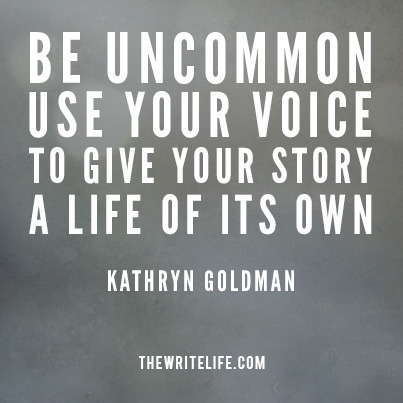
    If you want your work to be protected, do not write in clichés. Be uncommon. Use your voice to give your story a life of its own.

    Be Uncommon

    Focus on developing feel, character, plot, mood, pace, setting and the sequence of events in your story. These are the things that make your work unique and give it protection under the law — and in the eyes of your readers, who often respect originality and disdain copyists.

    The prostitute with a heart of gold is a character found in so many stories that she has become trite. But if she is written thoughtfully, as a complex character with specific conflicting attributes, the prostitute is no longer a cliché. She will have added richness for your readers. The richness will provide greater protection under copyright law because you have wrapped a standard character in unique expression.

    It is the expression you want to protect, not the idea of the prostitute with a heart of gold.

    Engage the senses

    Although a scene may be common, a fully expressed mood that permeates a reader’s senses while reading the scene is unique.  Marianne Richmond has a great post demonstrating how to add further depth to your writing with respect to the senses.

    In our story of the inner-city youth overcoming the odds, reach beyond the standard sketch of the drug dealers on the corner. Provide an enhanced description of the smell of the unwashed junkie buying his hit, the sodden feel of the dollar bills, and the oppressive heat radiating off the concrete shimmering with broken vials.

    Tell your story uniquely

    An inevitable scene in a city-is-tough story is the fight scene when the protagonist either gets beaten into submission by the street lord or acquits himself in combat well enough to earn respect and some measure of peace. Think of The Karate Kid.

    Dig into that fight scene in a way that makes it unlike others to develop a scene with unique description and pace.

    Avoiding clichés in your writing will help you produce a better, stronger and more engaging book. Then, if someone does copy your work, you will have a greater claim of protection and Amazon may remove the offender’s book and perhaps even ban that writer from KDP — potentially faster justice than a lawsuit.

    How have you kept your work protected from copycats?

  • The Worst Ways to Begin Your Novel: Advice from Literary Agents

    The Worst Ways to Begin Your Novel: Advice from Literary Agents

    No one reads more novel beginnings than literary agents.

    They’re the ones on the front lines, sifting through inboxes and slush piles. And they can tell us which Chapter One approaches are overused and cliché, as well as which writing techniques just plain don’t work when you’re writing a book.

    Below, find a smattering of feedback from experienced literary agents on what they hate to see in the first pages of a writer’s submission. Consider this a guide on how to start a novel. Avoid these problems and tighten your submission!

    Here are some of the worst ways to start a novel.

    False beginnings

    “I don’t like it when the main character dies at the end of Chapter One. Why did I just spend all this time with this character? I feel cheated.”
    Cricket Freeman, The August Agency

    “I dislike opening scenes that you think are real, then the protagonist wakes up. It makes me feel cheated.”
    Laurie McLean, Foreword Literary

    In science fiction

    “A sci-fi novel that spends the first two pages describing the strange landscape.”
    Chip MacGregor, MacGregor Literary

    Prologues

    “I’m not a fan of prologues, preferring to find myself in the midst of a moving plot on page one rather than being kept outside of it, or eased into it.”
    Michelle Andelman, Regal Literary

    “Most agents hate prologues. Just make the first chapter relevant and well written.”
    Andrea Brown, Andrea Brown Literary Agency

    “Prologues are usually a lazy way to give back-story chunks to the reader and can be handled with more finesse throughout the story. Damn the prologue, full speed ahead!”
    Laurie McLean, Foreword Literary

    Exposition and description

    “Perhaps my biggest pet peeve with an opening chapter is when an author features too much exposition – when they go beyond what is necessary for simply ‘setting the scene.’ I want to feel as if I’m in the hands of a master storyteller, and starting a story with long, flowery, overly-descriptive sentences (kind of like this one) makes the writer seem amateurish and the story contrived. Of course, an equally jarring beginning can be nearly as off-putting, and I hesitate to read on if I’m feeling disoriented by the fifth page. I enjoy when writers can find a good balance between exposition and mystery. Too much accounting always ruins the mystery of a novel, and the unknown is what propels us to read further.”
    Peter Miller, PMA Literary and Film Management

    “The [adjective] [adjective] sun rose in the [adjective] [adjective] sky, shedding its [adjective] light across the [adjective] [adjective] [adjective] land.”
    Chip MacGregor, MacGregor Literary

    “I dislike endless ‘laundry list’ character descriptions. For example: ‘She had eyes the color of a summer sky and long blonde hair that fell in ringlets past her shoulders. Her petite nose was the perfect size for her heart-shaped face. Her azure dress — with the empire waist and long, tight sleeves — sported tiny pearl buttons down the bodice. Ivory lace peeked out of the hem in front, blah, blah.’ Who cares! Work it into the story.”
    Laurie McLean, Foreword Literary

    [twl_reusable_block post_id=41455]

    Starting too slowly

    “Characters that are moving around doing little things, but essentially nothing. Washing dishes & thinking, staring out the window & thinking, tying shoes, thinking.”
    Dan Lazar, Writers House

    “I don’t really like ‘first day of school’ beginnings, ‘from the beginning of time,’ or ‘once upon a time.’ Specifically, I dislike a Chapter One in which nothing happens.”
    Jessica Regel, Foundry Literary + Media

    In crime fiction

    “Someone squinting into the sunlight with a hangover in a crime novel. Good grief — been done a million times.”
    Chip MacGregor, MacGregor Literary

    In fantasy

    “Cliché openings in fantasy can include an opening scene set in a battle (and my peeve is that I don’t know any of the characters yet so why should I care about this battle) or with a pastoral scene where the protagonist is gathering herbs (I didn’t realize how common this is).”
    Kristin Nelson, Nelson Literary

    Voice

    “I know this may sound obvious, but too much ‘telling’ vs. ‘showing’ in the first chapter is a definite warning sign for me. The first chapter should present a compelling scene, not a road map for the rest of the book. The goal is to make the reader curious about your characters, fill their heads with questions that must be answered, not fill them in on exactly where, when, who and how.”
    Emily Sylvan Kim, Prospect Agency

    “I hate reading purple prose – describing something so beautifully that has nothing to do with the actual story.”
    Cherry Weiner, Cherry Weiner Literary

    “A cheesy hook drives me nuts. They say ‘Open with a hook!’ to grab the reader. That’s true, but there’s a fine line between an intriguing hook and one that’s just silly. An example of a silly hook would be opening with a line of overtly sexual dialogue.”
    Daniel Lazar, Writers House

    “I don’t like an opening line that’s ‘My name is…,’ introducing the narrator to the reader so blatantly. There are far better ways in Chapter One to establish an instant connection between narrator and reader.”
    Michelle Andelman, Regal Literary

    “Sometimes a reasonably good writer will create an interesting character and describe him in a compelling way, but then he’ll turn out to be some unimportant bit player.”
    Ellen Pepus, Signature Literary Agency

    In romance

    “In romance, I can’t stand this scenario: A woman is awakened to find a strange man in her bedroom — and then automatically finds him attractive. I’m sorry, but if I awoke to a strange man in my bedroom, I’d be reaching for a weapon — not admiring the view.”
    Kristin Nelson, Nelson Literary Agency

    In a Christian novel

    “A rape scene in a Christian novel in the first chapter.”
    Chip MacGregor, MacGregor Literary

    Characters and backstory

    “I don’t like descriptions of the characters where writers make them too perfect. Heroines (and heroes) who are described physically as being virtually unflawed come across as unrelatable and boring. No ‘flowing, wind-swept golden locks’; no ‘eyes as blue as the sky’; no ‘willowy, perfect figures.’ ”
    Laura Bradford, Bradford Literary Agency

    “Many writers express the character’s backstory before they get to the plot. Good writers will go back and cut that stuff out and get right to the plot. The character’s backstory stays with them — it’s in their DNA.”
    Adam Chromy, Movable Type Management

    “I’m turned off when a writer feels the need to fill in all the backstory before starting the story; a story that opens on the protagonist’s mental reflection of their situation is a red flag.”
    Stephany Evans, FinePrint Literary Management

    “One of the biggest problems is the ‘information dump’ in the first few pages, where the author is trying to tell us everything we supposedly need to know to understand the story. Getting to know characters in a story is like getting to know people in real life. You find out their personality and details of their life over time.”
    Rachelle Gardner, Books & Such Literary

    This column is excerpted from Guide to Literary Agents, from Writer’s Digest Books. We updated this post in August 2019 so it’s more useful and relevant for our readers!

    Photo via  Farknot Architect/ Shutterstock 
    links
    no
    1