Tag: writing goals

  • How to Set Writing Goals the SMART Way

    How to Set Writing Goals the SMART Way

    If you want to make serious progress as a writer, you need to treat your craft like any other serious area of your life. It’s not enough to treat writing as a haphazard hobby that you dip into and out of whenever the urge takes you. Instead, if you want to grow and evolve both your skillset and your level of output, you need to set clear writing goals to move you forward.

    For some writers, the idea of setting goals is antithetical to their romanticized notion of what a writing life looks like. These are the same kind of writers who lie to themselves that one day they’ll get a book done when the stars align and they are free of distraction during a magical writer’s retreat in a woodland cabin. Newsflash – that is never going to happen.

    Instead, if you’re a serious, realistic writer who wants to make tangible progress with your writing, we have just the article for you. Using this framework will allow you to set meaningful and manageable writing goals to drive your career forward. Ready? OK, let’s go. 

    What are writing goals?

    A writing goal is any clearly defined objective related to your writing career. It can be a large, long-term goal, such as releasing over 20 novels within your lifetime, or a shorter, more short-term goal, like spending at least half an hour each morning on writing prompts over the next month.

    To better understand what writing goals are, it’s good to have a solid understanding of what they are not.

    A vague aspiration is not a writing goal. So, for example, thinking to yourself ‘one day I’d like to be a better writer ’ is not a goal. It’s an aspiration or dream but is not specific or clear enough to be considered a goal. 

    Within this article, we’ll provide you with a complete, proven framework to set writing goals that stick and make a meaningful difference in your career. First, let’s get clear on why this process is worth your time and how it will benefit you.

    How do writers benefit from setting writing goals?

    Perhaps you’re feeling a little bit of resistance or discomfort at the idea of setting writing goals. If so, that’s understandable.

    You might be thinking something along the lines of ‘well, I barely have enough time to write as it is. Shouldn’t I spend the very limited time I have outside of work and family on actually writing? Isn’t setting a writing goal just another form of procrastination that will distract me from my projects?”. 

    Setting the wrong type of goals might be a form of procrastination, but that’s not what we will be doing here. Truthfully, if you feel resistance to the thought of setting meaningful and effective writing goals, it’s actually due to a desire to stay inside your comfort zone.

    When you write without clearly defined aims and objectives, you allow yourself the freedom to never fail. There’s no challenge and nothing at stake. That allows you to protect your ego from being hurt, but it also stunts your growth.

    The benefit of setting intentional goals for your writing is it allows you to not only grow and improve as a writer but to do so in a way that is aligned with your wider aims and objectives. If you’re not making the progress you’d like, your writing goals will flag that up and allow you to reconsider what you’re doing and correct course if needed.

    Ultimately, the choice to either set or not set writing goals is what separates professionals from amateurs. Which type of writer do you want to be?

    When you’ve decided you’re ready to step up, read on! We’ll be using the SMART framework for the next section. This will allow you to set writing goals that are specific, measurable, attainable, relevant, and time-limited.

    Step 1 – Make your goals specific

    One of the major mistakes people often make when setting goals of any type, including writing goals, is making them too vague or general to be useful.

    Some examples of vague writing goals include ‘becoming a better writer’ or ‘taking writing more seriously ’. These might be worthy objectives, but they aren’t specific enough to be useful as a goal. 

    If you have a vague aim initially, such as those described above, you can try and narrow it down into a more specific writing goal. For example, ‘becoming a better writer’ might be narrowed down into ‘improving my first draft score on Grammarly by 10 points on average ’. Or ‘taking writing more seriously might translate into ‘spending 5 out of 7 evenings on writing instead of watching Netflix’. 

    The exact goal you set is entirely down to you. Only you know what will be most useful in driving your career forward. If you aren’t sure what to choose, you have a few options open to you. The first is to think of the major roadblock or challenge you have in your current writing life and set a goal that specifically addresses it. The second is to set as many goals as possible, and then eliminate some and prioritize others based on comparisons. Finally, if you have a writing coach or mentor, or other trusted ally, you could get their take on what they see as being the most impactful writing goal for you.

    Setting a specific objective is just the first step! There’s a lot more to meaningful writing goals than being specific, but without that starting point, it’s impossible to move on. 

    Step 2 – Set a measurable goal

    Now that you have a specific idea of what you most want to achieve as a writer, it’s time to make it measurable. 

    Just as being specific is needed to ensure your writing goal is something worthwhile, making it measurable is needed to be able to say if you are on track or not. Don’t fall into the trap of thinking that being behind on your writing goal is ‘bad’ or a reflection on you. It isn’t. It’s merely an indicator that something needs to be adjusted – whether that’s your approach to the goal, or perhaps the goal itself might need to be scaled back.

    All of that is to say that there’s nothing to fear by making your goal measurable. It’s not intended to make you harsh on yourself or negative in any way at all. Instead, it’s just a way of helping you stay on track.

    An example of a measurable goal would be taking the specific goal of ‘make progress on the word count of my novel’s first draft’ and changing that to ‘write 750-1000 words of my novel at least five times a week’. See the difference? Both goals are specific but the second one allows you to say whether you are on pace or off the pace at any given time. 

    Making a writing goal measurable also allows you to set deadlines and plan. For example, if you know you are capable of writing 1000 words at least five times a week, can anticipate a realistic deadline for finishing your draft, and schedule editing, cover design, formatting, and everything else accordingly. Without a measurable goal, none of that is possible.

    Step 3 – Ensure your writing goals are attainable 

    It might sound obvious to ensure your writing goals are attainable, but a lot of people don’t! 

    Just as with fitness and health goals, people often overestimate what they are capable of. This can be down to several factors. First, if you don’t have a clear schedule of when you write and how much you are capable of writing within that time, you won’t have a realistic idea of what’s attainable for you. Second, people often underestimate the impact of motivation and other psychological factors. For example, you might have a strong drive to get up before dawn and smash out 2000 words for the first couple of weeks, but that might lessen after some time. Life happens.

    If you’ve been writing a long time, you might well have a solid idea of which goals are and aren’t attainable for you. If you’re newer and less sure, you have a couple of options open to you. First, you can ask around. Question your fellow writers as to whether they think your intended goal is or isn’t realistic. Second, you can try for a certain goal, but schedule a period of assessment and possible adjustment once you’ve determined whether it is or isn’t something you’re capable of achieving.

    At this point in the process, you should have specific, measurable, and attainable goals in mind. Next, let’s make sure they’re best suited to serving the aims of your writing career.

    Step 4 – Choose relevant writing goals

    One easily overlooked part of the goal-setting process is ensuring your chosen aims are the ones most relevant to your writing career.

    There are two major ways in which writers tend to either set irrelevant or less relevant goals. 

    First, you might be tempted to set a goal that you genuinely believe will move your career forward the most, but in truth wouldn’t be the biggest needle mover. For example, you might want to add five words per minute to your typing speed, when in fact, focusing on learning the fundamentals of book marketing might be far more beneficial.

    Second, you might set a writing goal that is unrelated to where you are as a writer. For example, you might decide to focus on learning worldbuilding for a series of epic fantasy novels that span tens of books, when in fact, you should focus on the fundamentals of writing dialogue. 

    This should be caveated by the understanding that you are free to set whichever goals you want. However, do so with the knowledge that you can only focus on so many things at any given time. Therefore, setting the most relevant writing goals to your career aims and objectives is the best way to move forward fastest. 

    Step 5 – Set a time limit on achieving your goals 

    The final stage of the process is setting a time limit on when your goals will be achieved. Without this, you run the risk of endless procrastination and delay. A deadline helps you hold yourself accountable and keep your progress on track.

    One way of thinking about a time-limited goal is simply seeing it as a dream with a deadline!

    Some examples of time-limited goals include ‘writing x words on my project by x date’, and ‘completing such and such writing course by the end of x month’. Or ‘finishing my new author website and sending it live by x time’. 

    If you follow this fifth and final step, you now have everything you need to set SMART writing goals that will move your career forward.

    If you’ve made it this far in the article, congratulations! Don’t let the momentum slip. Instead, before you do anything else, take a moment to draft out at least one or several writing goals most pertinent to your aims and objectives.

    The Write Life team would like to wish you every success and we hope this framework makes a real difference to your career!


  • Practice Good Writing Habits With Help From Habitica

    Practice Good Writing Habits With Help From Habitica

    Most writers don’t crank out 10,000 words a day.

    Most writers struggle to find the time, energy and discipline to write.

    This productivity tool will catapult you toward your writing goals in the best way possible: By gamifying your life.

    Meet Habitica.

    Habitica, formerly HabitRPG, is a free online game that revolves around you and your productivity in life.

    It rewards you for achieving the goals you set.

    It punishes you for skipping daily chores or tasks you entered.

    And it has built-in community features that help you stay accountable.

    How Habitica works

    When you sign up for the game, you  create an avatar. You can choose skin color, hair style, glasses, background and even a wheelchair if you’re so inclined.

    Now, armed with your avatar, you begin to define your goals.

    There are three types of goals: habits, dailies, and to-dos.

    1. Habits: Create a habit when you’re trying to encourage yourself to do an activity on a loose schedule. You can hit the habit’s plus button to give yourself a reward.
    1. Dailies: These tasks must be completed every day. If you miss a daily, you will be penalized by losing health points (HP). Don’t worry, though — there are ways to heal, especially by leveling up.
    1. To-Dos: This is the home of your non-daily tasks, which may or may not have a deadline.

    When you complete your habit, check off a daily or complete a task, you will be rewarded with experience points (XP). The more XP you have, the closer you are to leveling up. The higher your level, the more you get when you complete a task or daily, and so on.

    There are more features, which unlock when you reach level 10, but the basics remain the same: You get rewarded for doing what you consider worthy, and penalized when you shirk your duties.

    Habitica’s armor, weapons and other rewards

    When you complete a task, you receive some in-game money. That money can be spent on getting better armor and weapons, which enhance your in-game abilities.

    But.

    If rewards like armor and weapons don’t make you drool, you can define your own awards and set their prices.

    For example:

    • 10 gold coins for taking a 10-minute break.
    • 25 gold coins for writing at a cafe instead of at home.
    • 50 gold coins for half an hour of reading whatever you want.
    • 100 gold coins for buying a book off your Amazon Wishlist.

    Guilds and groups

    Form an accountability group with your friends, and fight monsters together! Each task you complete will harm the monster, and any incomplete dailies will hurt not only you, but the rest of your team as well.

    Talk about peer pressure!

    Join the Wordsmiths or Writers guild, and pick up some accountability and inspiration challenges! The Wordsmiths guild has an “Accountability Club”, where you declare your weekly goal before the entire group, and a week later report back on how well you did. Follow through the challenge for an entire month (even if you don’t achieve your set goals), and you might win some in-game gems, as well, for those extra-special prizes!

    Socializing on Habitica adds a whole new aspect to the game, and it’s much more fun than playing alone. (Though the latter is definitely an option, if you’re so inclined.)

    Recommended settings

    Include “Writing” as a habit you want to encourage. Click the plus button whenever you manage to write, and click the minus button if you haven’t written all day. Habitica will track for you how many times you’ve clicked each button.

    Include “Procrastination” as a habit you wish to root out. Every day you procrastinate, hit the minus button to (moderately) punish yourself.

    Set yourself a daily writing task of X words, but keep it sane and doable.See how long you can keep a positive streak — Habitica tracks that, too!

    Join the Wordsmiths or Writers guild, and browse their challenges.

    Create tasks for special writing milestones: completing 10k words of your novel, 20k words, and so on. There are challenges such as the Wordsmiths’ “Writing Across Middle Earth” that help you set such goals in a creative, fun way.

    Back from a long break? Try the “Write, Kid!” challenge to get you back into the habit of writing.

    Here’s the caveat

    It’s tempting to start managing your entire life on Habitica. It helps to keep your head clear about your goals and dailies.

    But.

    Many people report that when they track everything in Habitica, writing becomes a secondary goal and suffers for it. Because playing Habitica upgrades the priority of whatever it is you have to do — for example, cleaning the kitchen — you will find yourself doing all the cleaning dailies in time, but writing less.

    Keep Habitica dedicated to the things that really matter: writing, editing, and getting published.

    Just don’t forget to eat simply because there’s no daily for it!

    Habitica has turned my life into one big game, one in which I’m definitely the winner.

    I thought I was productive before I tried it. Now I know what true productivity means. With a writing habit, a daily word count, and some overall writing goals, I’m working on my novel more than I had in the last three months put together.

    May it help you write more, write better and write true. See you there!

  • Determined to Meet Your Writing Goals? Set Up a Production Schedule

    Determined to Meet Your Writing Goals? Set Up a Production Schedule

    The following is an excerpt from Shut Up and Write: The No-Nonsense, No B.S. Guide to Getting Words on the Page, available February 18. Mridu is giving away three free copies of her new book! Comment on this post for your chance to win — after two weeks, we’ll randomly choose a winner to receive a copy. Update: Congratulations to Katherine K., Robyn C. and Jay L.! 

    Here’s a truth that changed my life: Those 30 unfinished projects I have lying on the backburner? I’m not going to be able to finish them all this year.

    Shocking, I know. But if you’re anything like me, you secretly hope you’re going to make tiny bits of progress on each of them and then, magically, they’ll get finished in one go. It doesn’t work like that. Ever.

    Even if you’re prolific writer with no life (guilty— I wrote 240,000 words in the last six months in personal projects alone), you’re still only going to be able to tackle between two and 10 projects a year. There are people who write a book a year and others, like novelist Dean Wesley Smith, who can write a novel a month.

    You decide where you fall on this productivity scale.

    Even if you were superhuman like Smith and wrote a quality novel a month, that still means that you have to pick 10 ideas from your long list (I’m hoping you will take a few weeks off here and there to recharge your batteries).

    Which brings us to the difficult task of picking projects that are the most important, the most beneficial to our careers, or the most potentially profitable. Then we must run with them.

    At the beginning of this year, I undertook the maddening exercise of selecting ideas. It drove me nuts. Of all the dozens of ideas I wanted to be working on, how on earth was I going to pick six or fewer? This is where the whole “being realistic” thing comes into play. Sure, you could pretend you’re going to write two novels and three nonfiction books in a year while blogging three times a week and bringing in freelancing work to pay the bills. All on top of raising your three children.

    But deep inside, you know the truth. It’s not going to happen. Aren’t you better off picking a project and sticking with it? Isn’t it better to finish it, send it out into the world and hopefully make money with it? Or perhaps you learn from your mistakes and move on to the next. Isn’t that a saner way to do things?

    I have a gazillion ideas that beg for my attention every single day. When that happens, I throw them into an idea file. I have projects selected for the year and I will focus on them. Next year, I will make another list, pick again, and every idea will get its chance.

    Once you’re done with the step involving picking your projects for the year, you should think about how long each will take. Do you need a whole year to finish your novel, or can you get it done sooner? Perhaps it will take even longer. How are you to know?

    One of the best ways I know to estimate how long a project will take is this:

    1. Figure out how many new words you can write in an hour. We’re talking new words and not rewriting. For me and most writers I know, this number is around 1,000.
    1.  Think about how many hours a week you have available that you can devote to writing new words. Again, we’re talking first draft, new words only. If you need to revise work, set a different time in your week to do that. You don’t want to mix the writing part of your brain with the revising part, because that’s what leads to five-year novels. Trust me, I know. Let’s say that this number is five hours. That is, you can devote one hour a day to writing new words while taking weekends off. This means you can write a minimum of 5,000 new words a week.
    1. What’s going to be the total length of this work? Sometimes this is hard to predict. Almost always, however, you’ll have a rough idea. If you’re writing a nonfiction book such as this one, you know it’s more likely to be in the 30,000-word range rather than the 100,000-word range. Similarly, mainstream fiction will be 80,000 words and romance novels will run a lot lower. Based on the scope and market of your project, how many words do you think your project is likely to run? For the purpose of this discussion, let’s say that number is 60,000.
    1. Let’s do some math now, shall we? If your manuscript is 60,000 words and you’re writing at a pace of 5,000 words a week, you can easily deduce that if you work diligently, show up at the page each day, and write your 5,000 words for the week regularly, you will have a completed first draft in 12 weeks, or three months. If all your manuscripts are similar in length, you could easily finish four manuscripts by the end of the year, working only an hour a day. Not bad.
    1. Finally, pick a daily target and put aside everything else and focus on hitting that day after day, consistently. This target could be project-based, such as “one short story a week,” or process-based, such as “1,000 words a day.” It could even be time-oriented, such as “one hour a day.” Choose what works for you, but make sure it helps you feel positive and optimistic about coming to work every day. By focusing on the daily target and not the project as a whole, you make progress every day. Before you know it, you’re typing the words “The End.”

    This is why production schedules help. They allow you to see, in black and white, how staying on track can get you to your goals. When you’re feeling unmotivated and discouraged, look at your production schedule and see the date on the calendar for when you’ll be finished, if you stay on track.

    Once you know what your deadlines look like for each project that you’ve picked out for the year, mark those big deadlines in your calendar. Break those big deadlines into smaller chunks if you can.

    For instance, with this book, my goal was to write a chapter a day, regardless of the word count. Some days I wrote much more than that, but one chapter was my bare minimum. That was my daily deadline. If you’re working on a larger project, such as a novel, you could have deadlines for the 10,000-word mark, the halfway mark, and so on. Mark each of those milestones on your calendar so that you know how on- or off-track you are as you move through the work.

    If data and spreadsheets inspire you, as they do me, create some of those as well. Personally, I have a notebook that I use in which I’ve written down dates and word counts like this:

    November 1 (Sunday): 1,000 words

    November 2 (Monday): 1,000 words

    November 3 (Tuesday): 1,000 words

    Then, I cross out the word counts as I move forward. Sometimes, I’ll work ahead. When that happens, I allow myself the flexibility of taking time off or giving myself leeway for when, undoubtedly, life gets in the way in the form of a sick child, a fried brain or a car breakdown.

    Moreover, if you’re a freelancer or work in an industry that already drowns you in deadlines, you need to juggle so you don’t end up with four work deadlines and a novel deadline in the same week. The week you’re traveling abroad for work is not the week to schedule the start of a new book project. Having a production calendar helps you keep daily word counts in sync with the rest of your life.

    No matter how you eventually publish your work, you’ll have to create room in your day for dealing with pesky publication issues as well: Edits, back cover copy, design, blogging, promotion, events and so on. While you may be able to continue your writing during those times — and you should! — sometimes it’s impossible to fit everything into a single day. Allowing for that helps keep self-loathing at bay.  

    My favorite reason for having a production schedule is that it keeps me from getting hung up on or too attached to one single book or project. The day after I finished my first novel — a feat that took five full years — I began work on this book.

    It was bad enough that my first one had taken that long, but I didn’t want to spend the next three months obsessing about agents, publishers, and advances. While those things were important and got their time, I also wanted to move on to newer work so my self-esteem and career goals weren’t tied up in a single book.

    This is fairly common among writers, as you might already have noticed. They’ll finish writing a book and then spend weeks, months, or years trying to get it published while writing nothing else in the meantime. A production schedule or calendar allows you to have more work in the pipeline so that there’s something else to focus on when you’re finished with the current project.

    Let me add, right away, that to the creative writer, “production schedule” seems like a very business-like, no-nonsense term that grates like fingernails on a chalkboard. Calling a book a “product” is like someone calling an article “content.” I don’t like it.

    Yet, I’m a firm believer in looking at your work as art when you’re in the process of creation and a business when you’re looking at it from a career standpoint. In that sense, think of yourself as a publisher who has books to ship. By doing so, you have the best of both worlds: The creativity that comes from the art, and the money, sales and motivation that comes from a business.

    Just because it’s numbers doesn’t mean it has to be dry. Find beautiful and artistic calendars for your walls that you can color in when you meet your goal for the day. Or, if you’re like me and you enjoy crossing things out, buy a moleskine and cross out word targets as you go along. The more fun and entertaining you make it, the more likely you are to stick with it. Just remember to make it simple and not overly complicated.

    Now you have a road map, a production schedule for a year, six months, or however long you’ve planned ahead. A road map can tell you exactly what to work on and what lies ahead. It shows you that if you commit to the work every single day, you will have a finished project in your hands — or three — by the end of the year.

    All you have to do is show up.

    Have you used a production schedule? How did it help you meet your writing goals?

  • 5 Steps for Setting Writing Goals You’ll Actually Keep

    5 Steps for Setting Writing Goals You’ll Actually Keep

    We know the weeks right at the top of a new year are prime time for goal-setting. But you can set new goals any time of year.

    Why not take some time this week to refresh your mindset and set yourself up for success?

    Whether you want to crank out 1,000 words a day or get three great new clients, why not take some time to get on the track to meet those goals?

    Setting goals and conducting regular self-reviews are great ways to see how you’re doing. These strategies can help you take concrete steps to attain your goals and help you revise and adapt as needed along the way.

    I don’t have time to set goals and review them.”

    Have you ever said this? Why would you take time you could be spending to craft pitches and crank out articles to instead set goals and conduct self-review?

    Because it’s easy to go too long without thinking about your higher-level goals.

    You might spend hour upon hour cranking out $20 articles about pigeons when you really want to be writing $2,000 articles about new, cutting-edge dental procedures.

    Taking the time to step back from your immediate deadlines and projects allows you to think about where you’d like to be — and chart a path to get there.

    Ready to recharge with a goals check-in? Here’s what to do:

    Step 1: Decide the types of goals you’d like to set

    The first step in goal setting is to identify what categories of goals you’d like to set. Be as specific as possible.

    Instead of setting a goal like“writing,” break your goal categories down into “non-fiction magazine writing,” “corporate clients,” “personal projects,” “career development,” and more.

    Step 2: Choose your goals

    Now that you know what types of goals you’d like to set, it’s time to come up with the goals themselves. Look at each category and decide what you’d like to achieve.

    It’s helpful to set a time frame, since your one-month goals will likely be very different from your 10-year goals. I find setting goals for three to four months at a time works well. You might also consider adding a target income goal for each quarter or the entire year.

    When setting goals, it helps to set “SMART” goals: “specific, measurable, assignable, realistic, and time-bound.” By matching your plans with these criteria, you have a better chance of achieving what you set out to do.

    For example, if you want to publish articles in women’s magazines, setting a goal of “publishing articles in women’s magazines” isn’t as helpful as planning to send five pitches per week to certain publications (specific, measurable, and realistic) by Wednesday of each week (time-bound). Assign yourself the task (assignable) and write it in your calendar to make sure you remember.

    Step 3: Conduct a self-review

    After you’ve set your goals, it’s easy to set them aside and forget about them. The antidote to this is to conduct regular self-reviews.

    First, decide how often you’d like to perform a self-review. I like to aim for quarterly reviews with some flexibility, but others prefer monthly or bi-annual reviews. Whatever schedule you pick, be sure to write it on your calendar and make your review a priority.

    When you sit down with your goals, take a few minutes and write about how you are doing in each category. If you planned to send five pitches each week, see how often you’re actually doing it.

    The point isn’t to feel bad if you’re not meeting your goals. Instead, use this knowledge to adapt your goals as necessary.

    If you find yourself too busy with client work to send out five pitches a week, consider revising the goal to three pitches a week. It’s much better to send three pitches a week than to feel overwhelmed at falling short of your goal and give up entirely.

    Alternately, if you’re not getting much traction and find more time in your schedule, consider upping your goal to a higher number of pitches per week.

    Step 4: Review your clients

    While you’re doing your self-review, it’s also helpful to do a client review. Take an inventory of your clients to see which relationships you’d like to develop further and which ones it might make sense to put on the back burner.

    This review is for your eyes only, so feel free to be brutally honest.

    First, go through and make a list of all the clients you’ve worked with over the past month, quarter, or year. If your clients change from month to month, it’s often most helpful to evaluate clients over a broader period of time (such as quarterly or once per year), especially when you have a number of occasional or one-off clients.

    Consider each client and calculate how much money you’ve earned from them during that period. Did they pay you on time and in full? Did you like working with them? Were the projects interesting?

    Identify the top clients you’re most excited about developing or continuing your relationship with. Keep in mind these “top clients” are not always your best-paying clients. They could be new clients you’re looking to cultivate relationships with, or people you just enjoy working with.

    You’ll also likely notice a few clients you’d prefer to avoid in the future. What adjustments can you make so you don’t feel pressured to work with them?

    Step 5: Schedule your next self-review and goal-setting session

    While you’re finishing up your goal-setting and self-review session, be sure to mark your next session on your calendar. Having a review every two or three months is a good place to start and you can always adjust the timing according to your needs — just don’t forget to keep a date on the calendar!

    What tips would you add for setting and reviewing your writing goals?

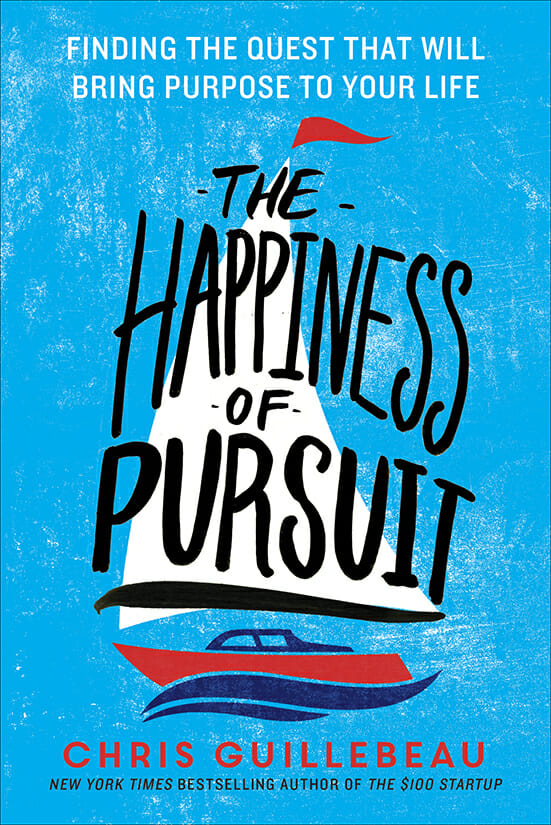
  • What’s Your Writing Quest? Enter to Win a Copy of The Happiness of Pursuit

    What’s Your Writing Quest? Enter to Win a Copy of The Happiness of Pursuit

    What’s your big writing goal?

    We’re not talking about small, easily achievable, “write-a-blog-post”-type tasks from your to-do list. We mean a big goal — the one that exhilarates, energizes and even scares you a little bit. It’s the goal that seems almost unreachable,

    Working toward a big goal like this is a kind of quest. And undertaking a quest, explained Chris Guillebeau in a recent blog post, tends to challenge, change and benefit you:

    By the time I came to the end, I was a very different person. As I learned, this is a common feature of quests. You set out to accomplish something, and hopefully you do — but something else usually happens along the way, too.

    Whether it’s building your freelance business to the point where you can quit your job, or finally finishing and self-publishing your novel, you likely have one of these big goals on your radar, and we want to hear about it.

    What’s your writing quest? What big project are you pursuing?

    We asked a few writing friends about their quests. Here’s what they’re working on.

    Image: Jessica LawlorJessica Lawlor, founder of the Get Gutsy Blog

    I’m on a quest to help others get gutsy … and to step outside my own comfort zone in the process! I recently published an ebook about getting gutsy, and the next step in my quest is to launch a 30-day email course with tips, tools and inspiration for stepping outside your comfort zone to reach your goals and live a life that makes you truly happy.

    I’ve got the bare bones for the course developed, but now need to buckle down, get organized and begin the scary part — actually writing the content. After the course is complete, I plan to turn it into a book.

    This quest terrifies me, but I’ve always loved and lived by the saying, “If your dreams don’t scare you, they’re not big enough.” Here’s to the quest!

    Image: Peggy Frezon and KellyPeggy Frezon, author of dog books, including Heart to Heart, Hand in Paw

    wI’m on a quest to talk to people about their amazing and heartwarming animal tales, and share them, whether it’s on my new blog for Guideposts magazine, Pawprints on my Heart, or in my forthcoming book for Paraclete Press, Greetings at the Front Door (fall 2015).

    It’s easy for me to get inspired about pets, as my dogs Kelly and Ike are right here by my feet (or in my lap!) as I’m working. What’s sometimes more difficult is finding others who are willing to share how their pets have changed their lives. I’m constantly on the lookout for pet lovers who might open up to me with their stories! Each time I discover a new human-pet connection, I’m reminded of why I go to such great lengths to find them.

    Image: Alexis GrantAlexis Grant, founder of The Write Life

    I’m on a quest to rewrite my travel memoir and get it out to the world, whether that’s through traditional publishing or self-publishing.

    I’ve been working on this story — about backpacking through Africa on my own — since 2008, and I’m itching to get it done. I’ve just got to push through this last round of rewriting to get there!