Blog

  • Web Copywriting: 3 Steps to Write Successfully for the Web

    Web Copywriting: 3 Steps to Write Successfully for the Web

    Firstly – let’s crack the code of what web copywriting is…

    Web copywriting is any text that is written with the purpose of advertising and marketing on the internet. You are trying to sell something with your words, and sometimes this is referred to as “sales copy.”

    Can anyone be a copywriter? 

    Absolutely. It’s a great way of making an extra income, and it’s super easy to get the hang of (once you understand the art of it). 

    You may be thinking, “Yeah, I love to write, but I’ve never thought of building a career out of it!”

    I thought the same. 

    I had no confidence in my writing and didn’t know how to take it to the next level – let alone make money from it!

    But after implementing these three tips for successful copywriting, I saw my writing transform from being stale and lifeless, to totally binge-worthy. 

    In this guide, we’ll break down the game-changing tips to help you become a better web copywriter: Let’s have a quick look at them: 

    👀 Grab Your Audience’s Attention Instantly

    Every great piece of copy I’ve ever read, I knew it was great because I simply kept reading it!

    The average attention span is about 8 seconds. 

    Literally, that’s it. 

    So you have 8 seconds to hook your reader in which means you need a killer introduction, which gets straight to the point and answers the reader’s question. 

    Let’s take a look at an example:

    Say your article title is, How to Choose Between Etsy and Shopify When Wanting to Sell Products Online

    Your intro straight away should say something like,

    “Let’s get straight to the point, Shopify is slightly better than Etsy because it’s a lot more personal, flexible, and lets you easily scale up your store.”

    A common mistake writers can make is that they include unnecessary introductions of Shopify and Etsy, and by the time you know it, the reader has bounced off the page. 

    Your audience is already aware of how great both of these platforms are, hence why they’re now at the stage of just choosing between them to start selling products. 

    Try not to overload your audience with information they’re likely to have – keep it concise and to the point.

    🤝 Benefits Over Features

    The second rule is a MUST in any writing that is trying to convert sales. 

    Always write about benefits over features. 

    Another common mistake that most writers make is they will list all the factual pieces of information, rather than talking about how the product or service can serve them. 

    Truth be told, there’s one question on your reader’s mind when making a purchase decision, which is:

    “What’s in it for me?”

    The purchasing process is driven by emotions so talk about the experiences a customer will gain from it instead of stating technical points that hold little meaning for the reader. 

    Let’s take a real-life example:

    If someone’s looking to buy a vlogging camera, writing about the ‘’large sensor and optical image stabilisation’ might not cut it on its own – especially if the customer only cares about how good their YouTube vlogs will look!

    Always highlight the benefit of this large sensor by adding:

    “The large sensor makes this camera the best option on the market for vlogging in natural daylight – so you don’t have to worry about changing the settings before heading out!”

    Shine the light back on your reader, and explain why the camera is going to make their life a whole lot easier. 

    Listing endless features of the camera might not make sense to someone who’s not tech-savvy either.

    📞 Include Constant Call-To-Actions

    What is a call-to-action?

    A call-to-action (CTA) is anything on the page that prompts an immediate response from your reader. 

    It’s a way of pointing them in the right direction to finalise a purchase of a product of service.

    Call-to-action buttons are not always for monetary purposes – they’re also great at prompting your reader to share the article with others for more site traffic.

    They’re often seen in the form of buttons like these:

    Web copywriting is important and you need to keep the reader moving through the article, but it’s not that useful if your reader has no idea where to go next. That’s where a CTA comes in.

    You’ll rope in the reader with your majestic words, but you’ll have to tell them explicitly how to get their hands on this product or service with call-to-action buttons.

    Even if it’s just a number to ring, make it really obvious to the reader how they can go ahead with a purchase, or just learn more.

    There are also definitely things such as bad CTA writing! Make sure the CTA is obvious, direct, and ambiguous. 

    Writing for the Web: Summary

    And that’s a wrap!

    We’ve broken down the three steps for successful web copywriting. If I may add a bonus tip: don’t be afraid to bring your character through the copy because, when it feels like you’re speaking to a friend, it’s a lot more engaging for the audience!

    Let’s have a quick recap at what these tips are:

    • Grab Your Audience’s Attention Instantly – Keep your intro concise and to the point!
    • Write About Benefits Over Features – Avoid including a list of product features, instead discuss the value of it.
    • Include Constant Call-To-Actions – Let your reader know where to go next!

    Becoming an awesome copywriter doesn’t require you to be a pro, it’s all about implementing a good strategy and sticking to it. 

    Now that you have these top tips to refer back to, it’s time to take action! (See what I did there?)

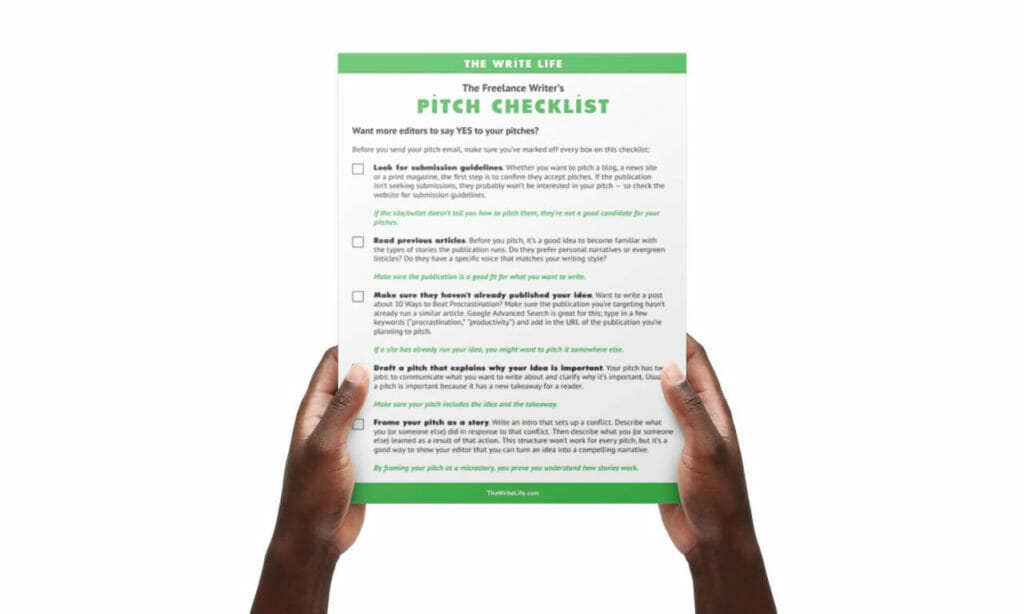
    Grab your pitch checklist, so you can land more web copywriting gigs.
    Now, all there’s left to say…Happy Writing! 😎

    Written by Zara Choudhry, Founder of AnonymouslyZara – a platform inspiring women through articles about faith, lifestyle, career tips and healthy relationships. 
  • 17 of the Best Horror Authors to Inspire Your Writing

    17 of the Best Horror Authors to Inspire Your Writing

    There’s nothing quite like the feeling of reading an author whose writing is so good you can’t help but feel a little envious. The writers capable of making us fall in love with a genre as a reader are often the very same ones we look to for inspiration when we wish to try our hand at writing in that style. 

    From my perspective, one which I imagine many people reading this will share, Stephen King is the perfect example of an inspirational author who not only made me fall in love with reading the horror genre but made me want to write like him as well. Of course, the role Stephen King has played in my writing journey has been fulfilled by different authors for other writers.

    If you’re interested in writing horror fiction of your own, read on. We’ve rounded up a list of the best horror authors out there to inspire your work. Are you ready to discover your next favorite spooky scribe?

    [sps_reusable_block post_id=43056]

    Stephen King

    Maybe his name meant being the king of horror was always his destiny, but it’s impossible to talk about scary authors without mentioning my personal favorite, Stephen King. Readers of different generations fall in love with King’s work, whether it happens to be his classic works of fiction such as The Shining, or more contemporary, fantasy, and sci-fi-influenced offerings such as Under The Dome

    Dean Koontz

    Along with King, Dean Koontz is one of the major names you’ll encounter should you check out the horror section in your local library or bookstore. Although he doesn’t label himself as a horror author, there’s no denying his skill at writing spine-chilling stories. If you’re new to Koontz and looking for some inspiration, check out The Eyes of Darkness for a creepy tale that many say predicted the Coronavirus pandemic. 

    Edgar Allen Poe

    As you’ll see, this list of horror authors is a mixture of contemporary favorites and all-time legends, and Edgar Allen Poe very much falls into the latter category. Considered by many the father of horror fiction, Poe’s ability to conjure up terrifying scenarios is almost unparalleled. Tributes as diverse as The Simpsons and the Insane Clown Posse have been paid to Poe’s mastery of horror fiction. Don’t miss out. If you’re new to Poe, pick up an anthology and dive right in to see how he can inspire your tales of terror.

    Anne Rice 

    Some authors are almost synonymous with an entire genre. For Anne Rice, that’s the case with vampire fiction. Before Twilight caught the attention of a younger generation of readers, Anne Rice was the only real show in town for epic stories of vampire horror and romance. Her books have been adapted into major Hollywood films as well as beloved roleplaying games. If you want to make your contribution to the vampire fiction genre, be sure to study the work of its true master, Anne Rice. 

    R.L Stine

    It would be a huge oversight to ignore the contributions of authors writing horror for a younger audience. After all, our schooldays are often the time of our lives we fall in love with horror fiction for life. For many of us, R.L Stine is the reason we love horror to this day. His prolific output and endless imagination mean many newcomers are still discovering the spooky brilliance of his Goosebumps books for the first time today. 

    Ray Bradbury

    Although Ray Bradbury is perhaps usually categorized as a writer of sci-fi or speculative fiction, there’s no denying his ability to conjure up a chilling tale. Something Wicked This Way Comes and the concept of the Dark Carnival lives on in the minds of horror lovers far after the final page has finished. If you want to learn how to generate terror and unease from the most mundane of regular situations, you could do a lot worse than looking at Bradbury. 

    Clive Barker

    Clive Barker is another true heavyweight of the horror world. While a lot of people will know him for the adaptions of his work, such as Candyman and Hellraiser, you’d be amiss to overlook the source material. Barker not only got respect and admiration from the top horror authors of the era, but he’s also a true creative powerhouse, also producing visual art that sends chills up the spine. Check out Barker’s books for inspiration on how to create immersive, conceptual works of horror. 

    William Peter Blatty

    Although William Petter Blatty’s books don’t always fall under the horror genre, the ones which do are so significant they can’t be overlooked. The Exorcist is, of course, the most prominent of these. The horror genre as a whole has been immeasurably influenced by The Exorcist. It’s hard to imagine the current crop of possession movies would ever have taken place without Blatty’s work. If you’re a fan of that style of supernatural horror, take the time to check out sequels such as Legion which are lesser known. 

    Bram Stoker

    We promised we’d pay tribute to the classics in this article, so you just know we had to give Bram Stoker his due recognition. Without Stoker’s Dracula, there would never have been Anne Rice or any of the more contemporary works of vampire fiction. Although Stoker wrote far more than just gothic and supernatural fiction, it’s impossible to write well in those genres without a solid appreciation of Dracula and other eerie tales like The Mystery of the Sea

    Peter Straub

    At the time of writing, Peter Straub recently passed away. However, there’s no doubt that his work will outlast him for generations to come. While many know Straub for his collaborations with Stephen King, his solo output is more than worthy of recognition. Straub’s strength was crafting works of chilling supernatural fiction, reflected by his large haul of Bram Stoker awards. Newcomers to Straub could check out one of his classic novels like Mr. X or start with a short story collection such as 5 Stories

    Shirley Jackson

    Shirley Jackson not only impacted the world of horror fiction during the time she was active but has continued to influence today’s authors as well as the media landscape in general through adaptations of her work. Her mystery fiction was just as well-received as her horror, and the influence of one on the other can be seen in the chilling atmosphere of surprise present in her work. Check out The Haunting of Hill House or We Have Always Lived in The Castle for classic fiction from Jackson. 

    Jonathan Maberry

    Fans of contemporary horror shows on Netflix might be familiar with V Wars, but perhaps less show with the man behind the source material, Jonathan Maberry. If you want to learn how to create rich series of books full of worldbuilding and detail, you could do a lot worse than checking out Maberry. He’s also capable of crafting superb standalone stories, such as Ghostwalkers

    Mylo Carbia 

    As promised, we want to celebrate contemporary powerhouses of the horror genre as well as their classic forefathers. When it comes to major names that might still be under the radar for a lot of readers, there are few better than Mylo Carbia. Carbia was originally a screenwriter and her fiction reflects that ability to create gripping storylines that loom vividly in the mind of the reader. Check out Violets are Red for a fantastic blurring of the horror and thriller genres. 

    Ramsey Campbell 

    You might have noticed by now that the UK tends to punch above its weight when producing incredible horror authors relative to its population size. For one of the best of recent years, check out Ramsey Campbell. Campbell is quite prolific, having produced well over 30 books. However, he’s somewhat lesser known due to only having a few adapted for the screen. Ancient Images is a great starting point for his work, or try The Wise Friend for something newer. 

    Ania Ahlborn 

    If you’re looking for proof that self-published horror authors can go toe to toe with traditionally published authors, look no further than Ania Ahlborn. Ahlborn self-published her earliest novels and became the bestselling horror author on Amazon in the process. She’s since been adapted for the screen and has gone on to achieve bestseller status countless times. Check out her career for a blueprint of how to achieve horror success as a self-published writer. 

    Mary Shelley 

    Although we’re coming to the end of our list of the best horror authors to inspire your work, we’d be amiss to finish without taking a look at Mary Shelley. Shelley will always be associated with Frankenstein, but her influence on what later became science fiction shouldn’t be overlooked. Although you probably wouldn’t write in the same style as Shelley these days, you’d be a fool not to look at her mastery of mood, character, and scary storytelling. 

    Robert Bloch

    Robert Bloch is a name that a lot of people may not be familiar with, even if they know some of his most famous works. The movie Psycho is inexorably tied in with Hitchcock, but it was Bloch who provided the source material that would later be adapted. Bloch was a master at crafting psychologically disturbing tales that lingered for a long time in the mind of the reader. Study his work for clues on how to craft your disturbing works of fiction. 

    Are you ready to write your own horror?

    Now that you have plenty of inspiration for crafting your own spooky story, it’s time to take action!

    By all means, choose a few authors or books to read as research, but set yourself a deadline for getting started with the process of creating something for yourself. You might start with an outline or jump into working on a full first draft.

    Whichever route you choose, we wish you every success in your horror genre. Who knows, maybe one day you’ll be the inspiration for the next generation of horror authors!

    [sps_reusable_block post_id=43056]

  • Editorial Freelancers Association Review — Is It Worth Joining?

    Editorial Freelancers Association Review — Is It Worth Joining?

    In this Editorial Freelancers Association review, you’ll learn the basics of what the association is, how it works, how much it costs, and if it’s worth the fee to join.

    The Editorial Freelancers Association, also called the EFA, is a well-known and respected group that helps people within the writing and editing industry umbrella come together to help freelancers grow their careers.

    From how to manage clients, get book deals, grow your career, set your rates, or anything else, the EFA has guides and assistance to help you.

    Let’s dive into why you might want to join an association in the first place and then go through the pros and cons of the EFA.

    Why join freelancer associations?

    Freelancing organizations in general can help you network, meet fellow editors, and potentially find work.

    When you find one that is professionally managed and with a ton of people, it can be exciting to join and build those connections. When you join a great group, you immediately get access to people you would otherwise have to find and network with on your own.

    You also are able to receive feedback and talk to other freelancers about any questions or concerns you have. Freelancing can be a lonely journey since you don’t usually have coworkers or a team so being able to connect with other people on a similar path can help a ton.

    If you’re new to the freelance world, it can be great to get feedback on your plans, your work, how to deal with clients and build your business in general.

    editorial freelancers association review

    What is the Editorial Freelancers Association?

    The EFA is joined by editors, indexers, proofreaders, researchers, translators, writers, authors, and other people in the writing and editing industry.

    From their website:

    The EFA Member Directory and Job List put you in touch with more than 3,000 editorial professionals with a broad array of skills and training—the people you need for self-publishing projects; fiction and nonfiction trade books; website copy; magazine articles; advertising, public relations, and training and education materials; corporate communications; and more. Through the EFA you will find writers, editors, copyeditors, proofreaders, indexers, researchers, translators, and other editorial specialists. There is no charge to use the Directory or the Job List.

    – EFA website

    One great thing about the EFA is that they offer a ton of information on their website for freelancers. Even their resources page is full of informative articles, editorial rates, sample contracts, and more. It shows you that these are professionals who know what they’re talking about.

    If you just choose to use the directory or job list, anyone is welcome to access it at any time without having to pay to join. Many groups hide their job board behind a big paywall, so it’s great they have theirs open.

    How much does EFA cost?

    At the time of writing this article, one year costs $180 and two years costs $295.

    The technical fee is $145 for the first year and $260 for the two year plan, but there’s a $35 processing fee.

    If you’re reading this in the future, check here for the current membership rates to the Editorial Freelancers Association.

    Editorial Freelancers Association Review

    For the most part, the reviews for the EFA membership are positive.

    Joining a professional organization and being able to join a directory can help you improve your reputation online. If you don’t have a big reputation in this industry yet, this can help give your work some legitimacy.

    The fee to join is a little expensive and keep in mind you’ll have to pay for some of the courses and the events with your own money on top of that membership fee. You will receive 20% off on courses due to being a current member, but this is something you should keep in mind if you’re thinking you’ll be able to just join and get access to all the courses.

    People report that most of the job postings are reported to be professional gigs more than anything else and not as many postings for absolute beginners. A large percentage of them also fall under the editing umbrella instead of just pure freelance writing.

    That’s not to say that freelance writing jobs never appear. A few comments just mention that they are less abundant than the editing jobs.

    It seems to be a group where you’ll get as much out of it as you put into it. Meaning, if you want to put the effort in to connect with other people, buy the courses, and apply to the jobs, it should pay off after time.

    Other reviews on EFA

    While the EFA doesn’t have any rating with the Better Business Bureau, it also doesn’t have any negative complaints, either. That’s pretty impressive considering they have been in business for 50 years.

    In this Reddit thread, you can find this comment: “I love the Editorial Freelancers Association! I am a medical writer and whenever I need an editor, I look there, first. For anyone wanting to secure higher pay and more editing work, you may want to align with the organization and others.”

    On another Reddit thread, “I’ve been a member for about six months. I recently landed a project that pays $2,500, so it’s obviously going to be worth it for me. Yeah, it’s a job board, but most of the offerings are professional-level gigs that pay well—not the kind of fluff you see on most freelancing websites. They also offer about a dozen classes on various aspects of editing (professional development), access to an active email listserv, various contract templates, networking opportunities, and a bimonthly newsletter.”

    Lower in that thread, another comment mentions how many inbound links and referrals they receive from having their portfolio in the EFA directory.

    Related articles and testimonials about EFA:

    Pros and cons of joining EFA

    Before you choose to join, let’s go through some of the pros and cons of paying the membership fee:

    Pros of joining EFA:

    • You’ll be connected with other professionals regularly
    • EFA hosts annual meetings you’ll be able to join
    • Members-only discussions to discuss monthly topics and get support
    • Discounted rates on healthcare (including dental) are offered if you’re a member of EFA (certain restrictions apply and only available in certain states)
    • Workshops to improve your craft
    • Job postings from publishers and authors
    • Tons of networking events, both online and in person

    Cons of joining EFA:

    • This yearly fee is higher than some of the other associations and networking groups out there
    • You’ll have to buy some of the other courses on top of the yearly fee
    • If you live outside of the United States you might have a hard time attending the in-person events
    • Not as many job opportunities as other job boards
    • There are a lot of professionals in the group, so you’re in competition on the job boards with people who have been freelancing for a while

    Summary of the Editorial Freelancers Association

    If you’re looking for great networking opportunities and learning experiences, the EFA is a good place to go and is worth the price. However, if you’re looking strictly for jobs and job postings, it might not be the first choice to pick from.

    TWL. CTA. Book Outline Template
  • NaNoWriMo Rules You Need to Know

    NaNoWriMo Rules You Need to Know

    As soon as the seasons start to shift from summer to fall, it seems like every writerly corner of the Internet becomes consumed with one question and one question only:

    Are you going to do NaNoWriMo this year?

    If you’re asking yourself that question, you’ve come to the right place. In this article, we’ll talk about what NaNoWriMo is, the NaNoWriMo rules (official and unofficial), and some tips I’ve personally compiled to help you make the most of your NaNoWriMo experience.

    What is NaNoWriMo?

    Let’s consult the 2009 vlogbrothers video titled “NaNoWriMo!!!” In it, John Green defines NaNoWriMo like this: “In case you don’t know what NaNoWriMo is, it’s National Novel Writing Month, an annual event in which people try to write a fifty-thousand word novel in a single month.”

    That sums it up nicely! NaNoWriMo takes place during the month of November, and its goal is to get its participants to write a novel of fifty-thousand words by the end of the month. Participants make accounts on the contest’s site and enter their daily word counts there. The site also uses daily word counts to project how long it will take the participant to finish their novel (even if they don’t win NaNoWriMo), how a participant’s word count compares to others in the area, and, of course, how close they are to completing their goal.

    Often, online communities sort of drop everything to focus on NaNoWriMo. It’s nearly inescapable, and it’s not hard to understand why. Writing is often an intensely solitary activity, and while some writers might have in-person writer friends, a lot don’t. Events like NaNoWriMo give writers a real sense of community as they work towards their common goal, and this is the real magic of NaNoWriMo.

    The First Three Rules for NaNoWriMo

    We’ve talked about how to formally enter NaNoWriMo (setting up an account on the site linked above), but what are the rules? Surely it can’t be as simple as ‘write fifty-thousand words in a month.’

    When NaNoWriMo was first founded, there was a set of rules governing how the contest would play out and what participation counted towards the end goal. Kelsey McKinney, writing for Vox, outlines these foundational rules, which were put in place by Chris Baty in 2000:

    1. The writing project must be new
    2. It must be written by a single person
    3. It has to be finished by midnight on November 30th

    This is all straightforward, and the rules for NaNo haven’t changed much in the years since. Now, if you look on the Wikipedia page for current rules, they’re mostly just an expansion on the existing criteria. The contest begins at the start of the month and ends at the end of the month, the goal is fifty-thousand words, et cetera.

    Do I have to follow these rules to participate?

    What if you’re working with another writer or with a group of writers on a novel, or what if you’re working on a novel that’s going to exceed fifty-thousand words (almost all of them do)? What if you’ve got a project you’ve started, and you want to use NaNoWriMo to really focus on it?

    That’s fine!

    As the Wikipedia page points out, NaNoWriMo is a “self-challenge,” which means it’s mostly set up for participants to push themselves toward the goal. There’s not someone from the NaNoWriMo organization standing over your shoulder and going “uh, that’s not a brand-new idea. You already had that file on your computer. Pack up your pens and go!”

    As long as you have put fifty-thousand words in, you’ve won the contest.

    Does this cheapen the deal? Not really. The biggest reward participants get for completing NaNo is the achievement itself: writing fifty-thousand words in a month. Sometimes NaNo will offer to print a copy of the participant’s draft or something like that, but usually, you get a certificate and a pat on the back. Most of the reward is in the work itself.

    So if you want to follow the rules, follow them! If not, cool! It’s your life.

    My (very unofficial) NaNoWriMo Rules: Tips for Having a Good Time

    The existing rules for NaNoWriMo are just fine, but as someone who’s been a participant every year for a while, here are a few tips to making the most of your NaNoWriMo experience.

    1. Don’t set out to write a novel

    I know, I know, this is kind of the whole point of NaNoWriMo, but hear me out.

    You’re almost definitely not going to write a great novel in a month. First drafts are rarely any good, and the first draft of something you manically typed over the course of a month is probably also not going to be very good.

    John Green points this out in “NaNoWriMo!!!,” saying “as a rule, no great book can be written in a month.”

    This isn’t to say you shouldn’t try to do your best or you shouldn’t try to write a book. It’s just to say that you should keep your expectations reasonable. What you’re going to end up with is fifty-thousand words—that’s all you can be sure of. It probably will not be a complete draft, since most novels are much more than fifty thousand words, and it will definitely be rough.

    I like to approach NaNoWriMo as a giant word sprint. For anyone who doesn’t know: a word sprint is where you set a timer for a short amount of time, usually five to twenty minutes, and write as much as you can without stopping until the timer goes off. The objective of a word sprint is just to get something on the page—you can work with something, but not with nothing.

    And as someone who has a really difficult time getting an imperfect something on the page (preferring the always-perfect-but-not-actually-real-and-therefore-unsellable-nothing), this makes NaNoWriMo a great opportunity for some actual trying. You’re going to have to revise your first draft no matter what you do.

    As John Green goes on to say in the video, “No great book can be written in a first draft no matter how long it takes you to write it…NaNoWriMo gives us discipline and it gives us permission to suck, which are the two things you most need if you’re going to be a novelist.”

    2. Use NaNoWriMo for stuck projects

    Speaking of getting an imperfect something on the page: I like to use NaNoWriMo strategically as a way to work on existing projects. This is in direct violation of the rules, but it works out nicely for me.

    Like I said before, NaNoWriMo is a self-challenge. There’s not a NaNoWriMo police and there’s not a NaNoWriMo judge coming to live with you for the next month to keep you in line. You can pretty much use this contest for whatever project you’ve got that needs to be worked on. I personally like to use it to get lots of words written—sometimes these words go towards one draft, but sometimes they go towards work, short stories, poems, or whatever I need to do that month.

    This might sound kind of antithetical to the spirit of the challenge. Couldn’t I do that any other month? Why use NaNoWriMo just to knock out my to-do list?

    Glad you asked!

    3. Get involved with the NaNoWriMo community

    Again, in my opinion, the biggest appeal to NaNoWriMo is in the community that comes up around it. People post their word count goals and share their works-in-progress (#wip) on Twitter, Instagram, Tumblr, probably also TikTok (somehow, I’m not on WriterTok, but I assume it exists since BookTok does), probably also everywhere else. It’s free to join and it invites writers to try and do an impossible task, which is something that just kind of appeals to most writers.

    NaNoWriMo also offers the ability to add friends on their website. This allows you to check on your friends’ progress, take a look at their projects, and generally connect with other people participating in the contest.

    When I look back on the years that I’ve done NaNoWriMo, I remember a little of the projects I worked on—the Pinterest boards, the character templates, PrepTober events, stuff like that.

    But mostly I remember the glow of my computer screen at one o’clock in the morning, my heavy eyelids and tired retinas, my hands steadily developing a cramp which would go on to haunt my mid-twenties with a passion (seriously, take care of your wrists, fellow typists). I remember telling my friends the moment I hit my word count goal and the moments my friends hit theirs.

    Like I said before, writing is often lonely. There aren’t a ton of opportunities to connect with other authors working on their own projects with a ferocity like people bring to NaNoWriMo. Take advantage of the community, and some of the friendships you find might last well past NaNoWriMo.

    Now, to my last unofficial rule…

    4. Use NaNoWriMo to develop some writerly discipline

    Before you get mad at me: I definitely am not saying that you should be writing fifty-thousand words every month. In fact, I would argue that you definitely shouldn’t be. Drafting is only one small part of the writing process, and not every day is going to be a drafting day. Fifty-thousand words is, respectfully, a crap-ton of words, and if you’re writing that many that often, they’re probably not great words (and I say this as a once-ghostwriter who used to crank out thirty-thousand words a week on the regular).

    That being said, writing does require a ton of work, mostly in revision. Being a capital N Novelist is going to involve writing when you do not feel like it and making writing a regular, structured part of your life. It might not be every day, but it’s going to have to be regular.

    So, use NaNoWriMo to develop habits that work for you. Take note of what time of day you prefer to write, or what sorts of drinks you like to sip while you work, or whether you like to write outdoors or inside.

    Does freewriting suit you best? What about typing? Maybe you love Microsoft Word, or maybe you’re really into Scrivener. Keep track of these kinds of things and make an effort to form some kind of schedule or regiment—this can be edited or changed as your needs fluctuate, but just as you can’t write a perfect first draft, you can’t become a disciplined author without at least a little effort.

    Bottom Line

    Use NaNoWriMo to ask yourself what it takes to get you to sit down and work on your novel regularly. Set monthly writing goals. Then, take these habits you built during NaNoWriMo into your future writing projects, and you’ll be well on your way to success.

    New call-to-action
  • Hello Bonsai Review: A Task-Management Tool Keeping Freelance Writers Organized

    Hello Bonsai Review: A Task-Management Tool Keeping Freelance Writers Organized

    I fancy myself a pretty organized person. But when it comes to freelance writing, it’s easy for me to lose track of things.

    Did I save that contract in Microsoft Word or Google Docs? Am I on invoice number 1038 or 1039? I thought I was happy with the rate my client is paying me, but I’ve been working on this project for who knows how long — is it even worth it?

    When we’re our own boss, we have a lot of balls to juggle. If you were working in a traditional office, you might have a system for categorizing files or an accounting team to track work-related expenses. But since you’re on your own, how are you supposed to track everything?

    In swoops Bonsai. In this Bonsai Review post, we’ll break down what it is, how to use it, how much it costs, and more. Ready?

    What is Bonsai?

    Bonsai is an online platform that aims to help freelancers streamline their numerous daily tasks. 

    When you create an account, go to the dashboard to access things like your contracts, invoices, proposals and client information. By keeping everything in one place, you can stay organized and hopefully accomplish tasks more efficiently.

    Bonsai’s goal is to provide you with everything you need for a freelance project, from start to finish (or proposal to payment). You’ll receive a 14-day free trial when you sign up, which should give you time to get a feel for how Bonsai can influence your daily life.

    What can you do with Bonsai?

    Here’s what you can do with Bonsai.

    Keep track of clients, projects and tasks

    From your dashboard, you have a section for clients, where you can store information like clients’ contact information and social media profiles, and even how much money they owe you. 

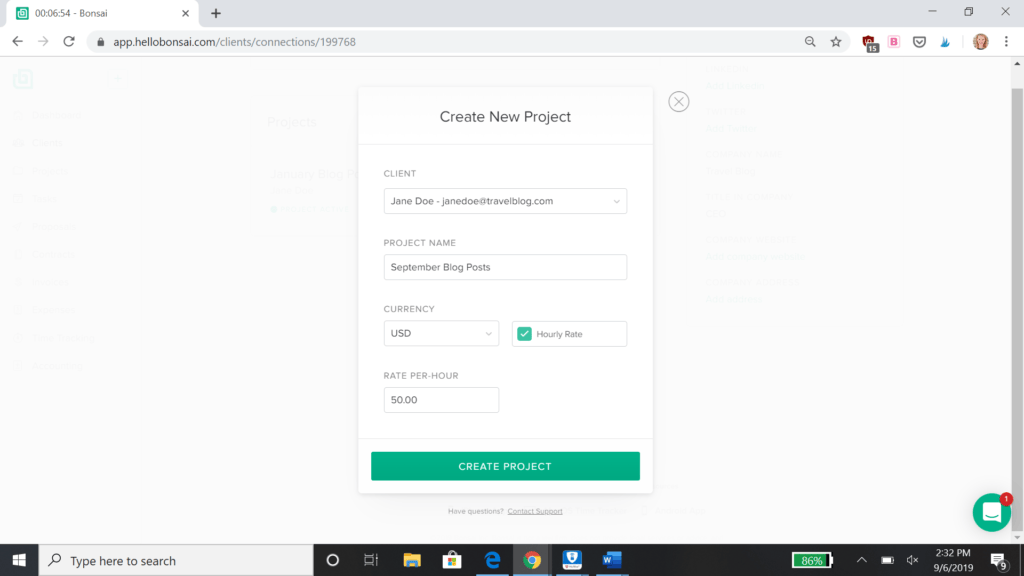
    For example, let’s say I enter information for my three main clients, Finance Company, Travel Blog and Beverage Website.

    Then you can create projects for each client. Under Finance Company, I may add projects for credit card pieces, student loan pieces and equity pieces. For Travel Blog, the projects could be January blog posts, February blog posts, etc.

    Finally, you can create specific tasks under each project. For instance, under January blog posts, I might add each individual blog post as a task, assuming I write more than one blog post per month.

    This is essentially a digital version of a binder filled with folders and color-coded tabs. Monica Geller from Friends and Amy Santiago from Brooklyn Nine-Nine would have a field day with Bonsai if they were freelance writers.

    Time yourself

    In the top right corner, you’ll see “Start Timer.” When you click this, you can choose a specific project and even a task to time. You can also add notes, like “research” so you know you spent that time researching, not writing.

    The timer is especially helpful if you charge clients by the hour. I don’t charge hourly, but I still prefer to use the timer. If I charge $100 for a piece but realize it required 10 hours of work, I might think twice before taking on a similar assignment.

    Before signing up for Bonsai, I used a time tracker called Time Doctor. The program experienced several glitches over the months I used it, which was annoying because I was charging by the hour back then. So far, Bonsai’s timer has been more reliable and accurate.

    Create invoices

    Kim T., a writer who has been using Bonsai for two years, says the invoicing software might be her favorite part of the platform. “Bonsai is great for effortless invoicing and payment,” she explains.

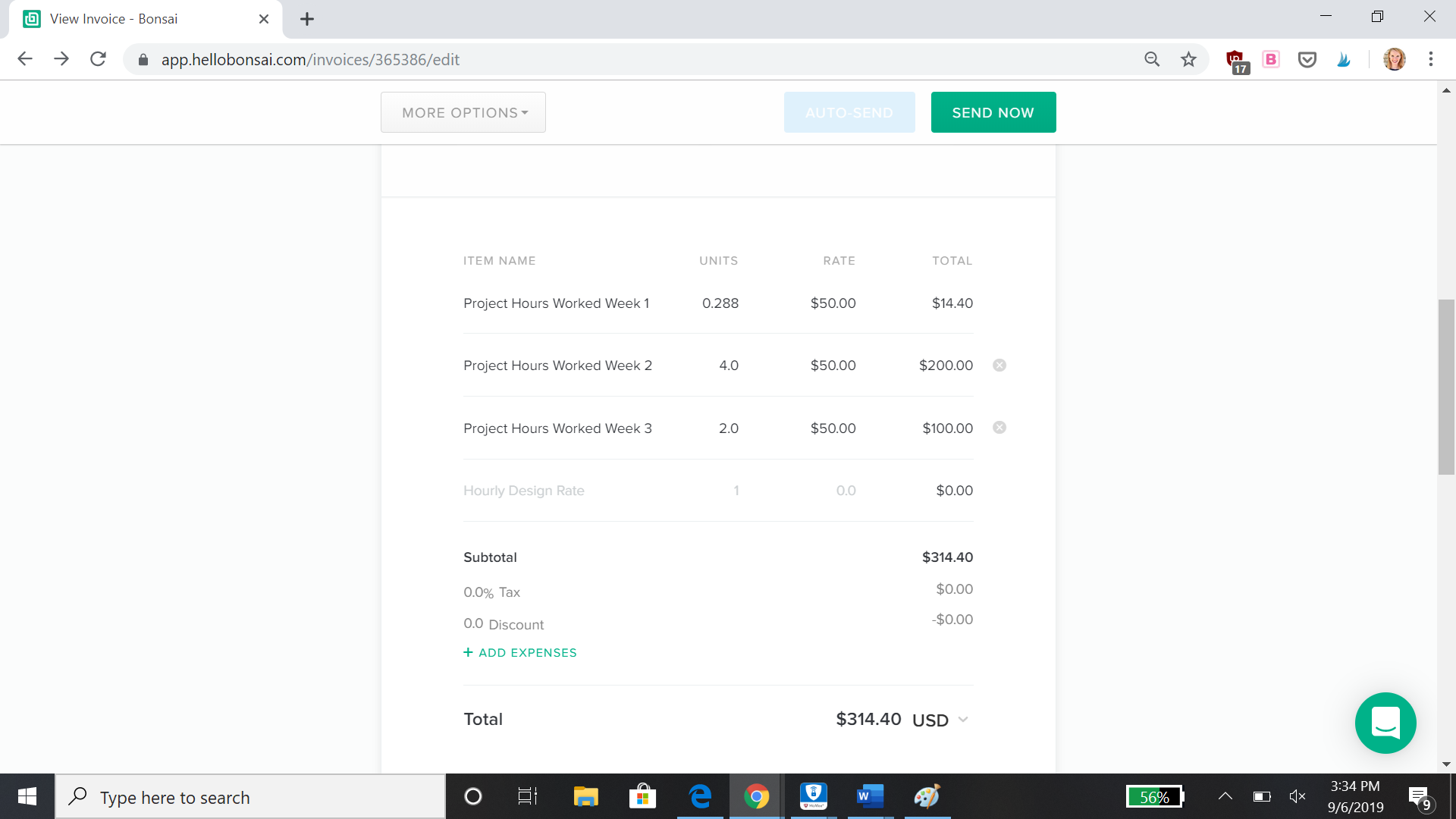
    “Effortless” really is the appropriate word. You can create an invoice, then link it to the timer so that the amount of time you spend on a project automatically shows up in the invoice. This can save you time plugging in numbers if you charge hourly.

    Or you may choose to create invoices manually. Bonsai provides you with invoice templates, so you don’t have to start from scratch.

    I despise creating invoices in Microsoft Word, even with Word’s templates, so I have to agree with Kim — Bonsai’s invoices are a huge plus.

    Write proposals and contracts

    Time to pitch a big project? You might need to write a proposal.

    Bonsai provides several proposal templates depending on what type of work you’re proposing. There’s one for writing projects that divides the proposal into Context & Objectives, Timeline and Why Me. 

    There are also templates for other types of work, like Design or Consulting. (Because we all know at least one writer who has expertise in more than one field!)

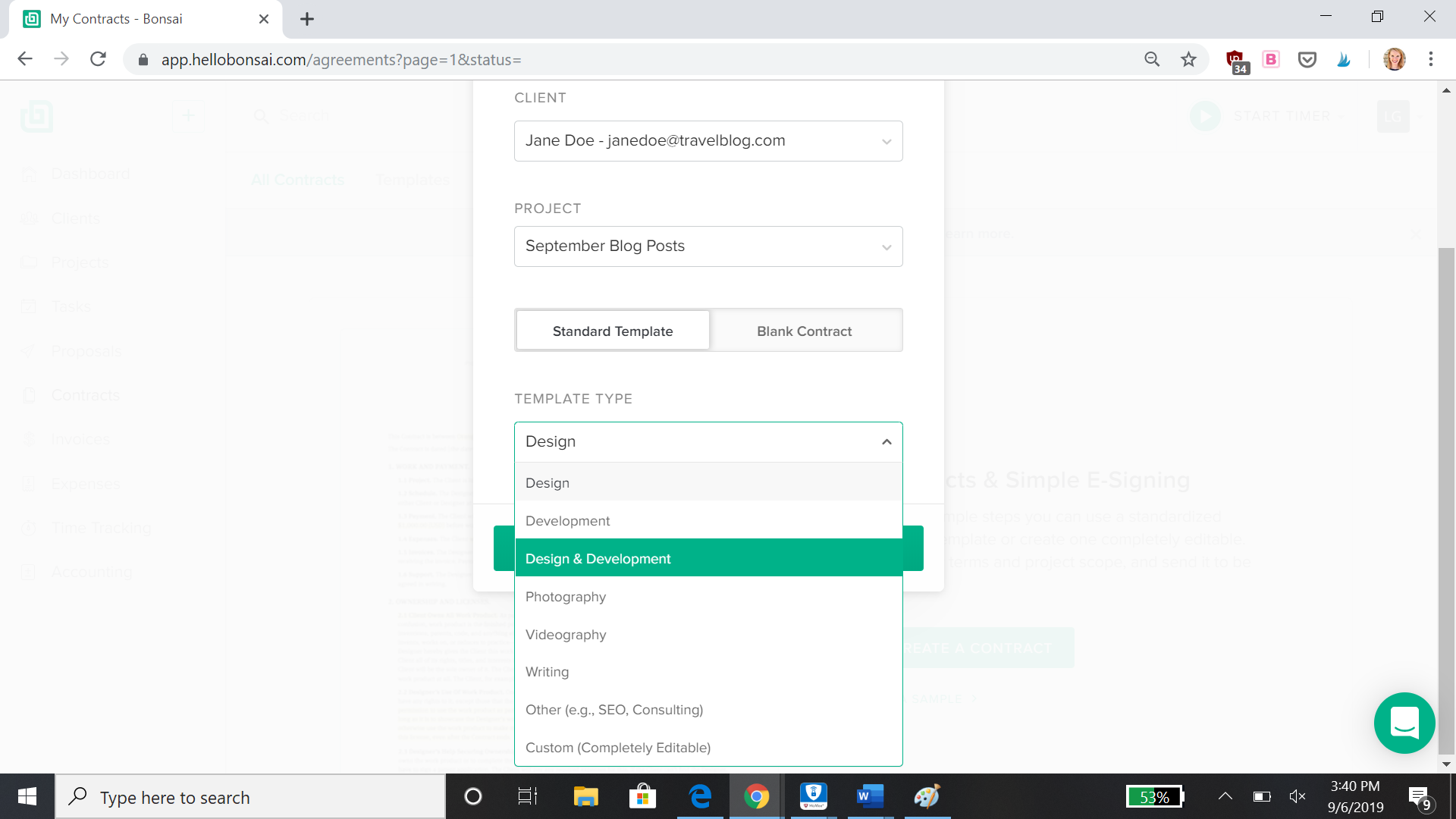
    Once a client accepts your proposal, you can write up a contract. Bonsai’s contracts are even more customizable than its proposals, and it’s the customizability that Kim says makes Bonsai stand out from other platforms. There are numerous contract template options, including a “custom” option that helps you create a contract from scratch.

    Record business expenses

    The Expenses section is where you’ll keep track of items like Uber and Lyft rides, airplane flights, business meals — anything a client might reimburse you for. You can subdivide expenses into categories like Advertising, Office Expenses and Supplies. Bonsai will track which billable expenses you have been reimbursed for and which ones you’re waiting to be reimbursed for.

    You can also track non-billable expenses, which can be useful when tax season rolls around and you’re thinking, “Oh, what business expenses can I write off?”

    Be your own accountant

    The more clients you have and the more diverse your freelancing work is, the more likely you are to benefit from an accountant. But if you’re already paying for a subscription to Bonsai, why bother hiring an accountant? Use the platform to act as your own accountant!

    You can link the Accounting section to your Expenses and Invoicing sections to track your business budget. The layout is useful for tracking both billable and non-billable expenses so you can see how much you’re spending on your writing career versus how much you’re bringing in. 

    What could improve about Bonsai?

    The invoicing may be convenient, but the system isn’t flawless. 

    You can only customize invoices to a point. The sections are “Item name,” “units,” “rate” and “total.” But for one of my clients, I need to have a separate section for “item code,” and I don’t need a “units” column. 

    It would be great if I could just replace “units” with “item code,” but unfortunately this isn’t an option.

    When you set up an invoice, you choose a payment method, and a few of these methods involve fees. I always request direct deposit when I can, but Bonsai charges a $5 fee for direct deposit. I’d rather just create an invoice through Microsoft Word and pocket the $5. They do offer instant payouts as a type of alternative though, and the fee is 1.5% of the total invoice to have it deposited into your account immediately.

    Kim has been using Bonsai for much longer than I have, and although she’s a fan overall, she finds herself wishing she could use the platform for more complex tasks. 

    “It’d be wonderful if I could take a client/project and run a report that tells me the total amount billed as it relates to the total hours spent,” she says.

    We can only hope Bonsai continues to develop each section so that freelancers can do even more with the program.

    Bottom line: Should you give Bonsai a try?

    If you’re a freelance writer with multiple clients and/or projects, it’s certainly worth setting up a Bonsai account. Storing all my information in one place has made me feel less frazzled.

    Your ability to access certain features depends on which plan you select. Here are your options:

    • Bonsai Starter ($24 per month): Ability to create invoices, proposals and contracts, track expenses, access a basic CRM, and use chat support.
    • Bonsai Professional ($39 per month): All the features you can access with a Starter membership, as well as the ability to subcontract through Bonsai and white-label (or legally replace a brand’s logo with your own). You can also add multiple users to your account and integrate with Zapier, Calendly, and Quickbooks.

    If you’re looking for a more affordable deal and are open to long-term commitment, you can sign up for annual billing. You’ll receive the equivalent of two months free, which comes to only $17 per month for Bonsai Starter and $32 per month for Professional.

    You might give the two-week trial a go and see if you want to sign up for Bonsai Plus. However, I don’t see much use for Premium unless you either have some very specific, advanced needs, or you employ other people and want to add them to your account.

    This post contains affiliate links. That means if you purchase through our links, you’re supporting The Write Life — and we thank you for that!

    Photo via JKstock/ Shutterstock 

  • Business Plans For Freelance Writers

    Business Plans For Freelance Writers

    Whether your dream is for full-time writing to replace your day job, you already reached this goal and are building your business, or you’re well into freelance writing and need guidance, today we discuss business plans.

    Writing is, by nature, a creative process. Storytelling relies on great stories (surprise), told in an engaging manner and with quality writing. If writing is a hobby, you can stick to the creative side without thinking about business, taxes, or an elaborate plan for your writing hustle.

    However, if you want to make money writing, work as a freelance, and want to succeed, it’s essential to discuss business plans. In this article, we elaborate on the business side of writing via business plans:

    Yes, you are a creative, and that part of your personality is extremely important to your career. For sake of longevity and a career that can take over your day job, let’s dive into what business plans are.

    What is a Business Plan

    Business plans for freelance writers are simply documents of your goals for the upcoming years (usually 3-5). These goals should encompass your financial goals, and projections, and include practical business dreams.

    Because your business plan is a roadmap for how you will achieve your goals, specifics are crucial. Business plans help take you from ideation to execution and provide the necessary steps in between.

    Just because your plan focuses on long-term goals and practical projections, don’t forget the importance of pushing expectations and working toward lofty goals. Failure is part of the growth process—fail responsibly, grow steadily.

    How To Write One

    The quickest way to write your business plans as a freelance writer is to use a business plan template or software. You can also start from scratch, but it’s important to follow several steps when creating your plan. You will want to include:

    An Executive Summary:

    Think of this as your business elevator pitch and include: What your business is, your business name, your products or services, how you are the solution to clients’ pain points, projected expenses, and income, etc.

    Your Description Of Your Business:

    Think of this as your business synopsis and include your qualifications, what type of business you are (sole proprietorship, LLC, S Corp, corporation), target client (think of this as your book’s target audience), etc.

    Organizational Structure:

    Do you work alone or hire work out? Do you only have subcontractors or do you have full-time employees?

    Market Analysis:

    Dive deeper into your ideal client, research competitors, including pricing, etc.

    Marketing:

    Determine your marketing budget and list ways you plan to market, such as social media advertising, newsletter, referral system, etc.

    Financial Details:

    Will you need to budget for startup costs such as a computer, office materials, or certifications? What are your estimated profits and losses, and how do you plan to break even and grow revenue over the next several years? Project the monthly profit and loss for the first 12 months.

    Benefits Of Doing So

    There are many benefits to creating a business plan, one of which is increased clarity. When you can see your three to five year plan on paper in front of you, it’s much easier to follow the steps to a successful, thriving business.

    Start-up businesses take so much time and investment upfront that it’s easy to slack with marketing as you handle all the other aspects of your business. Creating a business plan includes brainstorming and articulating a marketing plan.

    When you find yourself in the trenches of your business, responding to emails, sending follow-up invoices, and documenting tax write-offs, it will help you to have a previously established plan of action.

    Your business plan also creates a structure that is difficult to find without a hard copy of what you are doing and plan to accomplish. Structure reinforces credibility and will help you track your progress. If you need to make hires further down the road, you will have a plan to refer to and know exactly what spots you need to fill.

    Pitfalls Of Not Doing One

    The pitfalls of not creating a viable business plan can be summed up as the negative side of the above list. However, not building a business plan can also contribute to Imposter Syndrome.

    Creatives often struggle with the business side of writing because they are trained so much in the creative side. If writers already experience feelings of inadequacy in their lane of talent, how much more will they as they make their creative talent a business venture?

    It may seem like several sheets of paper, but giving yourself the opportunity to reference a hard (or digital) copy of what you are accomplishing and working toward helps fight doubts.

    Not everyone has the persistence to dream up a business, let alone start one and carry it through to full-time execution. Reference your plan to make sure you stay on track and don’t let discouragement creep in.

    How To Think Like A Business Owner

    You know how to think like a writer, and actually, thinking like a business owner is quite similar.

    When you think like a writer, you likely follow similar steps to this list:

    • Get your idea
    • Flesh out your idea
    • Plan your idea
    • If you are a pantser, you will spend much less time on this point
    • Create a schedule and way to execute writing your book
    • Build time into your schedule to write
    • Stick to your daily word count or page count goals
    • Use weekends to make up lost time

    When it’s time to think like a business owner, you should:

    • Decide you want to start a freelance writing business
    • Flesh out your business plan
    • Plan the scaffolding of your business
    • What are the specific steps you need to take?
    • Create a working schedule
    • Build time into your schedule to hit your goals
    • Stick to your daily tasks
    • Use weekends to make up lost time

    Educating yourself with books on business, freelance writing, and how to maintain daily habits can go a long way in providing structure and resources. You do not need a business degree to start a business (although it can be helpful).

    Start Your Freelance Career Today

    So many freelancers got their start without a degree in various fields. You can too—just remember it takes a lot of work. The magic word to becoming a freelance writer is consistency. Don’t forget that every step takes you closer to your goals.

    You will likely fail, but fail with intention and fail toward growth.

    To help get you started, here is a list of resources:

    (*Self-Publishing School is not paid to endorse these resources, nor does SPS benefit if you engage with these resources.)

    Books:

    • Atomic Habits, James Clear
    • Marketing Made Simple, Donald Miller
    • The 7 Habits of Highly Effective People, Stephen Covey

    Podcasts:

    • Powered, Abu Fofanah
    • Business Made Simple, Donald Miller

    You now have the tools, the resources, and the steps to build your business plan. All that’s left is to execute what you learned. We wish you the best as you progress in your freelance writing career!

    Start today, and you’ll likely be surprised where you find yourself a month, a year, and even five years from now. We can’t wait to see it!

    freelance writers den open
  • How to Become a Transcriptionist: Transcribe Anywhere Review

    How to Become a Transcriptionist: Transcribe Anywhere Review

    If you’re able to type quickly and accurately, a career in transcription might be a smart choice.

    But don’t make the mistake of applying to transcription jobs without proper training. There’s a lot more to becoming a transcriptionist than just typing fast! 

    If you’re keen to land some of the better-paying transcription gigs and truly turn this into a successful money-maker for your family, there’s a course you can take that will teach you everything you need to know to become a great transcriptionist in as little as 2-4 months.

    It’s called Transcribe Anywhere. And it works. I’ll break down my experience of their course in this Transcribe Anywhere review.

    I completed Transcribe Anywhere a couple years ago, and since finishing the course, I’ve developed a successful home business as a transcriptionist. In fact, I earned back the cost of the course within two months of starting my first transcription job, and I’ve been able to find work with ease thanks to the skills I developed through the course.  

    When you apply for transcription jobs, most companies require you to take a test of your ability to accurately type a short audio file. It’s unlikely you’ll pass — and certainly makes it more challenging to move up to higher paying jobs — without training.

    Transcribe Anywhere. Affiliate CTA

    How to become a transcriptionist with Transcribe Anywhere

    Transcribe Anywhere helps aspiring transcriptionists build successful businesses with affordable, all-inclusive education and lifetime support.

    The company offers two different courses: General Transcription and Legal Transcription. Before you enroll, I recommend participating in a free introduction course to learn more about whether transcription is right for you, and what both courses provide. 

    The Course creator, Janet Shaughnessy, knows her stuff. She’s run a transcription business for more than 10 years and is familiar with all the ins and outs of the business. In addition to the online course, she’s readily available via email or the student Facebook group to answer questions and give feedback.

    Transcribe Anywhere: Course details 

    The training you’ll get in the Transcribe Anywhere course is comprehensive! It includes:

    • Foundational lessons, including punctuation practice and review of equipment and software required for transcription. 
    • Over 60 practice files to transcribe as well as answer keys to check your work. You’ll get to practice the full gamut of what a transcriptionist experiences in the real world, including challenging audio quality, accented speakers, and multi-speaker focus groups. The legal course includes templates of legal forms and documents, a guide to legal terminology, and ten levels of practice dictations.
    • A transcription style guide, downloadable templates and printable cheat sheets.
    • Business-building modules to help you jumpstart your career, including information on networking online, setting up a website, and where to look for work as a subcontractor. There’s also a lot of helpful information about how to set your rates and how taxes work when you’re self-employed.
    • Lifetime support, including full access to the course, helpful Facebook groups both for students and graduates, and email availability from the course administrators.

    Transcribe Anywhere also offers a “100% thorough” guarantee. They’re confident you’ll have everything you need to succeed, but if you feel there’s anything missing, they’ll add it into the course so you have it as part of your lifetime access. Pretty cool!

    How much do transcriptionists make? 

    Although the Transcribe Anywhere courses provide you with all the skills you need to become an independent transcriptionist, they do not provide you with work afterward. 

    It’s up to you to do the work of finding clients or companies to work with. 

    To set you on the right path, the course provides a lot of helpful information to find work successfully. They also make it clear up front that this is not a get-rich-quick scheme or an employment-matching service. 

    Transcribe Anywhere reports that the average median annual income for $45,000 for a general transcriptionist and $60,000 for a legal transcriptionist. 

    Your income will depend on whether you’re doing this full-time or as a side hustle, and whether you subcontract for a company or find your own clients. My own part-time income started at about $500 a month and has grown to around $2,000 a month. 

    As with most classes or courses, its aim is to provide you with skills so that you can go out and find the work you’ve trained for. After completing the course, I’ve been able to pass the transcription tests companies require for employment without much difficulty because the practice dictations in the course really do prepare you for real-life work.

    How much does Transcribe Anywhere cost?

    So what’s the cost for the course? The entry course is free. The General Transcription course is $597, and the Legal Transcription course is $697. 

    Both options have payment plans available, so you can pay for the first couple of modules and complete them before paying for the entire course.

    Although the course is advertised as self-paced, it’s a little bit more complicated than that. 

    Once you purchase the full course, you do have lifetime access to it and can take as long as you want to do each module. However, if you opt for the pay-as-you-go option, you only have 30 days to complete the first section and 60 days to complete the second section. That’s one place I noticed room for improvement; since the second section contains all of the practice dictations, it would be nice to have more time to truly do it at your own pace.

    Is Transcribe Anywhere legit?

    Some writers might ask, wait, is Transcribe Anywhere legit?

    My answer: Yes, definitely.

    And the course stays up-to-date! I completed the course two years ago, and the creator has updated it since then to make sure all the information is current and relevant. 

    Bottom line of this Transcribe Anywhere review: In the time since I’ve taken the course, I’ve been able to grow a successful business as a freelance transcriptionist, using the knowledge, tools and skills I developed in the Transcribe Anywhere course. 

    If you want to become a transcriptionist, Transcribe Anywhere is an excellent place to start. Check out their free mini-course first!

     This post contains affiliate links. That means if you purchase through our links, you’re supporting The Write Life — and we thank you for that!

    Photo via BONNINSTUDIO / Shutterstock 

  • How to Prepare for NaNoWriMo: 7 Ways to Make Sure You Crush Your Goals

    How to Prepare for NaNoWriMo: 7 Ways to Make Sure You Crush Your Goals

    Every November, writers from around the world get together and work on cranking out an entire novel in a month. Originally founded in 1999 by Chris Baty, the goal of NaNoWriMo (National Novel Writing Month) is to write 50,000 words over the course of the month since that is roughly the length of an average novel. Over 400,000 (and growing) people buckle down every year to attempt the challenge.

    While it’s hard to write a fully polished novel in that amount of time, most of the focus is on simply sitting down and putting words to paper as fast as possible. For people with writer’s block, it can help them smash through the internal barriers that prevent them from getting their story on paper.

    A ton of writers also enjoy the camaraderie and the community that comes with joining NaNoWriMo, since everyone is in the same boat of working on hitting their word and page goals every day.

    Writing a novel is a serious undertaking, let alone trying to do it in a single month, so let’s break down everything you can do to prepare for what’s ahead. Here’s your guide on how to prepare for NaNoWriMo.

    1. Set your writing schedule

    If you want to hit your 50,000 word goal, that comes out to about 1,667 words per day. It can be hard to say how long that will take since everyone has a different writing pace, but the average is about 2 to 3 hours per day.

    Keeping all of this in mind, you need to take a hard look at your calendar and figure out how you can fit in the required time to get your writing done.

    Some people say it’s much easier to start with a higher goal, such as 2,000 words per day. That way, you’re ahead so when you have a bad day you don’t have to catch up with hundreds or thousands of words.

    You might be able to get up earlier or stay up later and fit in a whole chunk of uninterrupted writing time. However, if you have kids or other responsibilities on your plate, you might want to break your writing up throughout the day into 30-minute or hourly chunks.

    On top of that, you should schedule your writing sessions at your peak writing times. Some people have much more clarity when they first wake up or they love to burn the midnight oil and write while everyone else is sleeping.

    Planning your writing blocks during a time you know you’re always tired is just setting yourself up for a losing battle.

    2. Let the people around you know about NaNoWriMo

    No, this doesn’t mean you need to recruit people to join you (although you can), this simply means you should let people know that you’re going to be taking your writing seriously.

    This can mean they shouldn’t interrupt you during certain hours or maybe you set up a babysitter for your kids. What you don’t want to happen is to take on this huge writing commitment and then get mad at everyone around you when they interrupt you but you never let them know about your new writing journey in the first place.

    Make sure all of the people in your life know what you’re doing and why you need certain quiet, focused hours.

    3. Account for off days

    No matter how motivated you are, there will be days when the words refuse to pour out of your fingers and no amount of coffee helps.

    On the days you feel good, sometimes it’s worth it to go the extra mile and crank out a few extra words here and there to get ahead and account for the off days. While it would be nice to imagine that we’re all robots and can crank out pages of work every single day without a problem. Instead, you should plan for a few bad days throughout the month and plan accordingly.

    4. Have your writing easily accessible

    One key to succeeding at NaNoWriMo is to have your writing easily accessible. Whether you carry a notebook around or have a writing app, you’ll want it nearby and easy to write in.

    That way, when you have things such as missed appointments, are stuck in a long train commute, or have some spare time while your kids nap, you can crank out a few hundred words.

    You’d be surprised at how many small pockets you can find in a day to put in a little writing here and there. It might not seem like much at first, but you would be surprised at how fast it can add up.

    Ideally, you want it to also be quickly accessible because you don’t want to spend half that time just trying to open your app or find the notebook you’re using. Ideas will also come to you throughout your days so you will need somewhere to quickly capture them on the go.

    5. Track your progress

    Whether you choose to use software with built-in word counters or you choose to make something like a NaNoWriMo bullet journal spread, it’s a good idea to know where you are in your overall progress. Seeing the word counter continuing to grow can help keep your motivation going, even on your bad days.

    6. Outline your story

    If you want to go the extra mile, having a thorough outline and your ideas all in one place can help you write faster when the month begins. Unless you have a free and open schedule all month, you’re going to be writing in focused chunks of time and need all of your ideas ready to go, even if they change as you write during the month.

    You don’t want to sit down and forget your storyline or what you wanted to happen next in your novel. Then, you’re wasting 20 or more minutes searching for that note somewhere in one of your notebooks and poof, there goes time that could have been used for writing.

    If you prefer visuals, some people put storyboards on a whiteboard or other physical sheet in front of them so they can see where they are in their plot. Janice Hardy, a fiction writer and teacher, has suggested using Preptober in this way:

    Week 1: Focus on the novel’s setup

    Beginnings introduce the characters, story problem, and story world or setting to readers, and they set the stage for the rest of the novel.

    A strong start will provide you with solid scene goals, giving you something to write about every day.

    Things to determine:

    • How the protagonist is introduced

    What traits do you want readers to know right away? How might you show those traits in action? What likable qualities does your protagonist have? How can you show those qualities in your opening scene or first chapter?

    • The problem the opening scene deals with

    An opening with an interesting problem to solve gives the story drive and the characters reasons to act. What problem might your protagonist face when the novel opens?

    Remember, the goal of an opening is to a.) hook readers and b.) lead the plot to the core conflict of the novel.

    • The inciting event

    If this event did not happen, there would be no novel. It either drives your opening, or is the bridge between your opening scene and the beginning of the middle (act two).

    Week 2: Focus on how problems get solved in the middle

    This middle is where the bulk of the novel unfolds as your characters work to resolve their problems and fail a lot. The number of attempts and failures will vary by the type of story, as thrillers have different expectations than romances.

    Things to consider:

    • How the setup transitions to the middle

    Everything in your beginning will lead to the middle, where the protagonist will make that all-important choice to accept responsibility for resolving the plot, and move into act two. The opening scene leads to the inciting event, which leads to this decision.

    • The major problem or event revealed in the middle

    Adding a big shake-up, problem, or reveal at the novel’s center can prevent the all-too-common boggy middle. The mid-point event creates the goal and problem the second half of the middle will have to resolve, and set up what will happen in the ending.

    • How the middle transitions to the ending

    The protagonist has failed, feels utterly lost and hopeless, and things are at their worst. What the protagonist does here will launch the ending and lead to the climax of the novel.

    Week 3: Focus on how the novel ends

    The ending is how the novel’s core conflict problem is resolved. It starts with the protagonist at her lowest point and drives her to the ultimate showdown with the antagonist.

    Things to determine:

    • How the protagonist plans to defeat the antagonist

    Although the plan may (and often does) fail, this is the goal that launches the ending and propels the protagonist to the climax. What are some of the steps that will take the protagonist from hopeless to victorious (or hopeless to defeated, if that’s how it ends)?

    • How the novel ends

    You might not know the details at this stage, but it helps to have at least a general idea of how the core conflict of the novel is resolved.

    • How the protagonist is changed by the experience

    In most novels, the protagonist grows and becomes a better person by the end of the novel. What changes for your protagonist? How is she better off? How is she worse off? What did she learn?

    Week 4: Focus on major turning points of the story

    Flesh out whatever you need to write your novel.

    If your story is character-driven, you might plan the character arc and focus more on the internal journey of your protagonist and discover the plot as you write.

    If you’re a plot-driven writer, you might prefer to map out the major plot points and figure out who your characters are by how they solve those plot problems.

    Whatever your process, look at the key turning points and elements you need to keep your story moving forward. I suggest aiming for three major points per act (beginning, middle and ending), but develop as many as you like to keep your plot on target.

    Final Days: Write a book proposal

    It might sound crazy, but I recommend writing a rough query pitch to make sure you have enough figured out to write your novel.

    The book proposal is a fantastic way to verify the necessary elements of your plot and characters, and find holes before you fall into them.

    7. Prepare your space and tools

    If you love to write in the same place so you can build the habit, setting up a dedicated space can help. Put your favorite plant on your desk, a good notebook nearby, and keep it clean so you’re ready to dive in and work.

    You want your space locked and loaded to dive in completely on November 1st so you can get right to writing without anything getting in your way.

    This might be the time you need to invest in some better tools to support your writing. If your keyboard is missing some keys or your pens always leak, you’ll want the best tools so writing is as easy as possible.

    Set up rewards for yourself

    Don’t forget to reward yourself along the way. Whether or not you hit your goal of 50,000 words, you should set benchmarks along the way to celebrate. Any words you can get on the page is a celebration, even if it’s not a full novel.

    As writers, it’s easy to overlook progress. When it comes to something like writing and publishing a novel, you have to understand how long it can take to make it happen. Novels are marathons, not sprints. That’s why it’s essential to celebrate every little benchmark.

    New call-to-action
  • How to Set Writing Goals the SMART Way

    How to Set Writing Goals the SMART Way

    If you want to make serious progress as a writer, you need to treat your craft like any other serious area of your life. It’s not enough to treat writing as a haphazard hobby that you dip into and out of whenever the urge takes you. Instead, if you want to grow and evolve both your skillset and your level of output, you need to set clear writing goals to move you forward.

    For some writers, the idea of setting goals is antithetical to their romanticized notion of what a writing life looks like. These are the same kind of writers who lie to themselves that one day they’ll get a book done when the stars align and they are free of distraction during a magical writer’s retreat in a woodland cabin. Newsflash – that is never going to happen.

    Instead, if you’re a serious, realistic writer who wants to make tangible progress with your writing, we have just the article for you. Using this framework will allow you to set meaningful and manageable writing goals to drive your career forward. Ready? OK, let’s go. 

    What are writing goals?

    A writing goal is any clearly defined objective related to your writing career. It can be a large, long-term goal, such as releasing over 20 novels within your lifetime, or a shorter, more short-term goal, like spending at least half an hour each morning on writing prompts over the next month.

    To better understand what writing goals are, it’s good to have a solid understanding of what they are not.

    A vague aspiration is not a writing goal. So, for example, thinking to yourself ‘one day I’d like to be a better writer ’ is not a goal. It’s an aspiration or dream but is not specific or clear enough to be considered a goal. 

    Within this article, we’ll provide you with a complete, proven framework to set writing goals that stick and make a meaningful difference in your career. First, let’s get clear on why this process is worth your time and how it will benefit you.

    How do writers benefit from setting writing goals?

    Perhaps you’re feeling a little bit of resistance or discomfort at the idea of setting writing goals. If so, that’s understandable.

    You might be thinking something along the lines of ‘well, I barely have enough time to write as it is. Shouldn’t I spend the very limited time I have outside of work and family on actually writing? Isn’t setting a writing goal just another form of procrastination that will distract me from my projects?”. 

    Setting the wrong type of goals might be a form of procrastination, but that’s not what we will be doing here. Truthfully, if you feel resistance to the thought of setting meaningful and effective writing goals, it’s actually due to a desire to stay inside your comfort zone.

    When you write without clearly defined aims and objectives, you allow yourself the freedom to never fail. There’s no challenge and nothing at stake. That allows you to protect your ego from being hurt, but it also stunts your growth.

    The benefit of setting intentional goals for your writing is it allows you to not only grow and improve as a writer but to do so in a way that is aligned with your wider aims and objectives. If you’re not making the progress you’d like, your writing goals will flag that up and allow you to reconsider what you’re doing and correct course if needed.

    Ultimately, the choice to either set or not set writing goals is what separates professionals from amateurs. Which type of writer do you want to be?

    When you’ve decided you’re ready to step up, read on! We’ll be using the SMART framework for the next section. This will allow you to set writing goals that are specific, measurable, attainable, relevant, and time-limited.

    Step 1 – Make your goals specific

    One of the major mistakes people often make when setting goals of any type, including writing goals, is making them too vague or general to be useful.

    Some examples of vague writing goals include ‘becoming a better writer’ or ‘taking writing more seriously ’. These might be worthy objectives, but they aren’t specific enough to be useful as a goal. 

    If you have a vague aim initially, such as those described above, you can try and narrow it down into a more specific writing goal. For example, ‘becoming a better writer’ might be narrowed down into ‘improving my first draft score on Grammarly by 10 points on average ’. Or ‘taking writing more seriously might translate into ‘spending 5 out of 7 evenings on writing instead of watching Netflix’. 

    The exact goal you set is entirely down to you. Only you know what will be most useful in driving your career forward. If you aren’t sure what to choose, you have a few options open to you. The first is to think of the major roadblock or challenge you have in your current writing life and set a goal that specifically addresses it. The second is to set as many goals as possible, and then eliminate some and prioritize others based on comparisons. Finally, if you have a writing coach or mentor, or other trusted ally, you could get their take on what they see as being the most impactful writing goal for you.

    Setting a specific objective is just the first step! There’s a lot more to meaningful writing goals than being specific, but without that starting point, it’s impossible to move on. 

    Step 2 – Set a measurable goal

    Now that you have a specific idea of what you most want to achieve as a writer, it’s time to make it measurable. 

    Just as being specific is needed to ensure your writing goal is something worthwhile, making it measurable is needed to be able to say if you are on track or not. Don’t fall into the trap of thinking that being behind on your writing goal is ‘bad’ or a reflection on you. It isn’t. It’s merely an indicator that something needs to be adjusted – whether that’s your approach to the goal, or perhaps the goal itself might need to be scaled back.

    All of that is to say that there’s nothing to fear by making your goal measurable. It’s not intended to make you harsh on yourself or negative in any way at all. Instead, it’s just a way of helping you stay on track.

    An example of a measurable goal would be taking the specific goal of ‘make progress on the word count of my novel’s first draft’ and changing that to ‘write 750-1000 words of my novel at least five times a week’. See the difference? Both goals are specific but the second one allows you to say whether you are on pace or off the pace at any given time. 

    Making a writing goal measurable also allows you to set deadlines and plan. For example, if you know you are capable of writing 1000 words at least five times a week, can anticipate a realistic deadline for finishing your draft, and schedule editing, cover design, formatting, and everything else accordingly. Without a measurable goal, none of that is possible.

    Step 3 – Ensure your writing goals are attainable 

    It might sound obvious to ensure your writing goals are attainable, but a lot of people don’t! 

    Just as with fitness and health goals, people often overestimate what they are capable of. This can be down to several factors. First, if you don’t have a clear schedule of when you write and how much you are capable of writing within that time, you won’t have a realistic idea of what’s attainable for you. Second, people often underestimate the impact of motivation and other psychological factors. For example, you might have a strong drive to get up before dawn and smash out 2000 words for the first couple of weeks, but that might lessen after some time. Life happens.

    If you’ve been writing a long time, you might well have a solid idea of which goals are and aren’t attainable for you. If you’re newer and less sure, you have a couple of options open to you. First, you can ask around. Question your fellow writers as to whether they think your intended goal is or isn’t realistic. Second, you can try for a certain goal, but schedule a period of assessment and possible adjustment once you’ve determined whether it is or isn’t something you’re capable of achieving.

    At this point in the process, you should have specific, measurable, and attainable goals in mind. Next, let’s make sure they’re best suited to serving the aims of your writing career.

    Step 4 – Choose relevant writing goals

    One easily overlooked part of the goal-setting process is ensuring your chosen aims are the ones most relevant to your writing career.

    There are two major ways in which writers tend to either set irrelevant or less relevant goals. 

    First, you might be tempted to set a goal that you genuinely believe will move your career forward the most, but in truth wouldn’t be the biggest needle mover. For example, you might want to add five words per minute to your typing speed, when in fact, focusing on learning the fundamentals of book marketing might be far more beneficial.

    Second, you might set a writing goal that is unrelated to where you are as a writer. For example, you might decide to focus on learning worldbuilding for a series of epic fantasy novels that span tens of books, when in fact, you should focus on the fundamentals of writing dialogue. 

    This should be caveated by the understanding that you are free to set whichever goals you want. However, do so with the knowledge that you can only focus on so many things at any given time. Therefore, setting the most relevant writing goals to your career aims and objectives is the best way to move forward fastest. 

    Step 5 – Set a time limit on achieving your goals 

    The final stage of the process is setting a time limit on when your goals will be achieved. Without this, you run the risk of endless procrastination and delay. A deadline helps you hold yourself accountable and keep your progress on track.

    One way of thinking about a time-limited goal is simply seeing it as a dream with a deadline!

    Some examples of time-limited goals include ‘writing x words on my project by x date’, and ‘completing such and such writing course by the end of x month’. Or ‘finishing my new author website and sending it live by x time’. 

    If you follow this fifth and final step, you now have everything you need to set SMART writing goals that will move your career forward.

    If you’ve made it this far in the article, congratulations! Don’t let the momentum slip. Instead, before you do anything else, take a moment to draft out at least one or several writing goals most pertinent to your aims and objectives.

    The Write Life team would like to wish you every success and we hope this framework makes a real difference to your career!

  • What Is a Ghostwriter? Info for Writers

    What Is a Ghostwriter? Info for Writers

    Of all the types of writing work out there, being a ghostwriter is easily the coolest-sounding job. 

    If you’ve been around the world of writing for some time, either from the perspective of an active writer or just that of a reader, you will almost certainly have heard of the term. But what exactly does it mean? What is a ghostwriter? What do they do? And could you become one yourself?

    This article will give you a solid understanding of what a ghostwriter is, what they do, and how you can explore whether this type of writing is something you want to incorporate into your writing career.

    What is a ghostwriter?

    A ghostwriter is someone who produces written content that is then published under the name of another party. The ghostwriter is the producer of the work but their name is not associated with the project and they are typically not publicly linked to it. 

    Let’s consider this further with a brief example. Imagine there is a man named John who wishes to be the author of a mystery novel. For whatever reason, whether lack of skill, time, or motivation, John does not wish to carry out the actual process of writing the book himself. Instead, he offers you a sum of money to do so.

    Although you would be the person who writes the book, John would be the named author associated with the book. This is how ghostwriting works in a nutshell.

    Why are ghostwriters needed?

    Ghostwriters are needed for a whole host of reasons that typically relate to either a lack of time, money, skill or a combination of several of these factors. 

    To better understand why ghostwriters are needed, let’s take a look at some practical examples.

    1. Someone has an idea for a book but doesn’t have the writing skill needed to produce it.
    2. Someone is releasing a book for a purpose, such as to promote their business, and has no interest in writing it.
    3. A book is being ghostwritten on behalf of a celebrity, whose time is booked up with their core work, such as acting or making music.
    4. A writer wishes to become an authorpreneur. Even though they have the skill and experience to write books on their own, they are limited by their time. Therefore, they hire ghostwriters to work for them according to their style and specification. This allows them to publish a greater quantity of books in a shorter space of time than would otherwise be possible. 

    Ghostwriting work has been around for a long time and isn’t going away anytime soon. In fact, due to how easy it is to publish a book in this day and age, the need for ghostwriters will only increase, as more people wake up to the benefits of a book for their bank balance, business, and potential to impact the world through information or entertainment.

    Are ghostwriters paid well?

    Like all forms of writing, ghostwriters are paid variably depending on their level of skill, experience, and the difficulty and prestige of a particular project.

    Let’s consider a few examples. At the lower end of the ghostwriting pay ladder, a small business might need a few articles for its blog. They don’t have a writer on the team so they are interested in contracting you to produce them on their behalf, even though they will be published under the name of their CEO. For this type of short nonfiction article, you might be paid something like $50 a time. 

    On the other end of the scale, imagine you are a talented writer with decades of experience under your belt writing in a specific and challenging field. Top leaders within the industry might seek you out specifically to ghostwrite their next book, expected to be a major work within that field and a top seller. You might make upwards of $50,000 for such a project.

    If the financial side of ghostwriting is important to you, reach out to ghostwriters within your area or niche and politely see if you can pick their brains as to your potential earnings. Compare how much you will make from ghostwriting with how much you might earn from other types of writing work.

    And, most of all, remember that the type of earnings available to you through ghostwriting will be a lot less when you’re just starting out. Building skills and experience both take time. So if the amount you can earn from ghostwriting seems a little low at first, make sure to see it as the floor rather than the ceiling. It’s just the first step on a path toward more lucrative ghostwriting opportunities further down the line. 

    What type of skills are needed to be a ghostwriter?

    At this point, you probably have a good idea of whether the idea of being a ghostwriter is or isn’t appealing to you. If it is, the next step is to consider whether you already possess the skills needed to successfully work as a ghostwriter, or whether they are something you will have to develop. 

    Broadly speaking, skills needed to successfully ghostwrite fall into two main categories. First, skills related to writing itself. Second, skills related to client management and everything else surrounding the process of finding ghostwriting work and getting paid for it.

    Let’s look at each in turn.

    Perhaps the most important ghostwriting skill that sets it apart from other forms of writing work is the ability to not only convey someone else’s ideas but to do so in their voice. Say, for example, you are writing a book for a person who comes across as lighthearted, fun, and positive. If you were to write a book for them in a serious and formal tone, it wouldn’t sound like their work at all.

    As well as being able to write in someone else’s voice, it’s essential to be able to write to a deadline and to respond rapidly to client feedback. You need to always keep in mind that this isn’t your project, it’s theirs. Therefore, you have to be able to march to the beat of their drum and prioritize what they need over any opinions you may have.

    Aside from the writing work itself, a key component of being a successful ghostwriter is the ability to seek out clients and manage the financial side of the work. This involves invoicing, getting testimonials, managing your workload, and other similar skills. 

    Where can I find ghostwriting work?

    There are many different routes to becoming a ghostwriter.

    Major freelance sites such as Upwork usually have a wide variety of different ghostwriting jobs available. These typically cover the whole spectrum of complexity, ranging from a few short articles, all the way through to entire books, However, the competition for this work is often fierce and the pay is less than you mind find elsewhere.

    You can also find ghostwriting opportunities through social media. Making it known you’re a ghostwriter on LinkedIn is a great way to find opportunities, either through potential clients reaching out to you or vice versa. There are also ghostwriting groups on Facebook you could consider joining.

    Finally, one of the best ways to find ghostwriting work is to keep your ear to the ground through your network and outreach. Make it known that you’re looking for ghostwriting opportunities and encourage people to pass on that info through word-of-mouth referrals to their network.

    Hopefully, you now have a thorough understanding of what a ghostwriter is, what they do, and if it’s the type of writing work you would like to try. We wish you every success.