Blog

  • Featured Writer’s Residency: The Hambidge Center, a Secluded Getaway in the Georgia Mountains

    Featured Writer’s Residency: The Hambidge Center, a Secluded Getaway in the Georgia Mountains

    This is part of our series on writer’s residencies. We feature residencies around the world, so you can learn about opportunities that might be a good fit for you!

    The Hambidge Center is a creative oasis in the woods of north Georgia. Artists of all types take refuge in cottages scattered around the 600-acre property, working in solitude for weeks at a time. Residents rave about vegetarian dinners cooked by the on-site chef and nature trails that zigzag around the property. Only nine creatives are in residence at any given time, which fosters an intimate and productive experience.

    Details

    Where: Rabun Gap, Georgia; in the Blue Ridge Mountains about two hours north of Atlanta.

    Who: All artists are welcome at Hambidge, including writers of fiction, poetry, journalism, literary nonfiction, cookbooks, playwriting, screenwriting and storytelling.

    Size: Maximum of nine residents at any given time.

    Facilities: Each resident enjoys a private cottage for both sleeping and working. There’s also a communal kitchen, dining and lounging area known as the Rock House.

    Image: The Rock House at Hambidge

    Time frame: From two to eight weeks, depending on the time of year. Applicants can specify how many weeks they’d like to stay.

    Cost: $200/week. More than 25 scholarships are available for first-time residents.

    Food: Partly included. A chef prepares dinner for all residents several times each week. Residents are welcome to enjoy the chef’s many leftovers throughout the week but are otherwise responsible for the rest of their meals.

    Application deadlines: Jan 15 (for May-August residencies); April 15 (for Sept.-Dec.); Sept. 15 (for Feb.-April)

    Application requirements: Applicant statement, bio, resume and work samples, plus a $30 application fee. Here’s where to apply.

    Plus: The cottages do not have the distraction of Internet access, but residents can use wifi in the Rock House.

    Image: Mellinger Studio at Hambidge

    Alexis Grant is managing editor of The Write Life. She has completed three residencies at The Hambidge Center and took all photos in this post.

  • A Freelancer’s Dilemma: Solving the Identity Crisis

    A Freelancer’s Dilemma: Solving the Identity Crisis

    It’s been just over a year since I left my job as the education reporter at U.S. News & World Report in Washington, D.C., to move with my wife to Chicago for her job. For the first time, I was a full-time freelancer, having given up the stability that came along with covering an important beat at a storied publication for the chaos and flexibility that accompanies self-employment.

    I have long freelanced on the side, cramming in an art review here and a religion story there during nights, weekends, and holidays when my full-time jobs had allowed me the time to breathe. But suddenly freelance writing was my only gig, which heaped on the pressure and stress that had previously eluded me.

    And even early on, I realized there was a grave danger of developing an identity crisis, particularly because sources and publicists don’t often know what to do with a freelancer. It wasn’t just that I wasn’t sure whether I was a “freelancer” or an “independent writer” — I’ve haphazardly settled on “freelance writer,” but I’m open to arguments in favor of “independent writer” from those who care to make it —  but identifying myself as a solopreneur invited more questions than it answered.

    My experience is in journalism, but I have a hunch that other freelancers have experienced the same thing; that this conversation, therefore, will be useful to a broader audience than just those of us trying to cut our teeth in a field whose obituaries are being written by the minute.

    The challenges of independence

    Here’s an instructive example. I monitor many alerts for search terms related to my beats (higher education, religion, art), and I recently noticed a conference that I wanted to cover. I emailed the press contact and requested media credentials. I was asked, invariably, what outlet I write for; I said I’m a freelancer. I could predict the follow-up questions almost verbatim: What publications do you write for? Whom do you have an assignment from? Can you send a letter on the publication’s stationary?

    I’m not suggesting, of course, that those aren’t totally valid questions, but the reason for my whining is that I rarely know the answers to them myself.

    Part of being a freelancer means that I can’t walk over to the next cubicle and ask my editor a question. It means that I’m often not sure what the story is or if there’s a story until I’ve reported on it, and I’m not paid for my time while I investigate dead ends. I can’t disclose my assignment, of course, if I’m trying to get into an event to identify whether there’s something worth pitching.

    Of course, I’m a much less sure bet than someone who has an assignment from her editor at her fancy, full-time job. But, as I try to tell myself enough times that I believe it, there’s a bit of magic in being a freelancer. There are plenty of unknowns — and I’d argue unknowables — inherent in my operation, but that means also there is immense potential precisely because nothing is yet set in any kind of stone. (Click to tweet this idea.)

    What to do with that freedom?

    This is applicable to all sorts of freelancers and solopreneurs: the unique potential this type of career creates and invites.

    Some of us may crave the perks and gravitas that are implied in being affiliated with an impressive brand or company, but in our comparably miniscule stature and lack of recognition, we can be nimbler and, when the stars align appropriately, soar higher.

    That’s not an easy thing to convey in communications environments, where the gold standard — and indeed the only recognized currency — is increasingly tied to visibility, which is measured in terms of clicks. But to the extent that freelancers can convey to others (clients, editors, project managers, etc.) that their value is not only tied up in the larger brands with which they have worked, but also in their own self worth, that will be a victory.

    Ancient history and epic poetry, I believe, is a great, if unusual, illustration of this principle. As Paul Veyne explained in his thoughtful book Did the Greeks Believe in Their Myths, history used to be written in a different sort of way before the emergence of copyright law and various sorts of attribution. When an ancient Greek poet sung of a hero’s or a monster’s exploits, that poet didn’t include footnotes or a bibliography, or much evidence at all. Listeners were encouraged to trust the reputation of the storyteller, rather than facts of the story.

    That’s an impossibility, it would seem, in this world of hyper-fact-checking, but the principle might be transferable. Of course we freelancers should pay careful attention to facts and be transparent about citing the sources to which we are indebted. And if we sing of cyclops and river gods, we might get laughed out of the boardroom. But if we are our own brands, we need to be able to make the argument that we are personally worth investing in, independently of other organizations we’ve collaborated with.

    If you’ve forged your own path as a freelancer, what has worked for you?

  • 8 Simple Ways to Market (and Actually Sell) Your Book

    8 Simple Ways to Market (and Actually Sell) Your Book

    No matter how good your book is, you need to consider your marketing strategy if you want it to actually sell. Even the best content in the world won’t sell if people don’t know it exists!

    When I wrote a book several years ago, I didn’t realize how significant a role my marketing strategy would play in its success.

    Through trial and error I learned which marketing strategies would work for my book. Some are fairly straightforward, and others require a little more effort. Hopefully they will help those of you contemplating a similar venture.

    [twl_reusable_block post_id=41455]

    The Basics

    1. Create a website

    We’re starting with the most basic element of all: your book needs a website. This can be anything from a landing page on your personal or business site to a full-scale website devoted to the book.

    If you’re working within a tight budget, go DIY or find a designer through outsourcing portals such as Elance or oDesk. Better yet, look for someone in your circle of professional contacts who has experience with web design and barter your services.

    In exchange for a few personal finance counseling sessions, a business colleague of mine created and launched a full-scale website for my book, including a home page, an “about us” section, an FAQ section, a blog, and a page where you could purchase the book.

    2. Make the process user-friendly

    Whether you offer direct sales for your book through your website or you include a link to where it can be purchased, make the process as user-friendly as possible for your customers.

    If you offer direct sales, accept all forms of payment, including American Express and PayPal. You never want to miss out on a sale just because a customer isn’t able to use a certain payment method! If you don’t offer direct sales, include a link on your website to where the book can be bought (for me, it was Amazon).

    Don’t make customers have to hunt.

    3. Start a blog

    Including a blog on your website can help add credibility to your book by further showcasing your talents as a writer and showing your audience that you are truly an expert in your field. Post well-written articles featuring advice that readers can’t find anywhere else.

    Go the extra mile by including a high quality video or two. Videos highlighting certain points in your book can drive interest, and can also boost your SEO ranking.

    4. Get involved with social media

    Your next flow of customers could come from anywhere, so you have to investigate a wide swath of outlets to try and reach them. While I got positive results from my efforts on Facebook and Twitter, I also got a very solid response from people on StumbleUpon — a largely unknown social media website at the time. These days you might look to Pinterest, Instagram, or Google+ to build a following and generate sales.

    Track your success with Google Analytics and use the data to adjust your strategy; if you’re seeing lots of traffic or purchases from a particular network, build on it. Be sure to follow and like other authors and industry leaders in your niche, and make sure you include social sharing buttons on your blog to encourage activity.

    5. Change your email signature

    This may seem like a minor point, but how many emails do you write or respond to every day?

    Pick the low-hanging fruit: simply adding a quick note with a link to your book’s website at the end of each message gives you one more way to get the word out about your book.

    Extra Credit

    6. Partner with local businesses

    Taking a physical copy of your book to local bookstores is the first step; see what it will take to get them to carry the book. However, with a little more imagination, you can connect with additional kinds of businesses.

    If you’ve written a book about home improvement, see if your local hardware store might allow you to set up a small display. A gift shop at a local nature center may be willing to feature your book if it’s about something pertaining to that niche. Get in touch with larger nearby businesses in related industries and inquire about bulk sales. They might be able to use your book as a promotional giveaway during a conference or even as a gift for staff members.

    Novel and innovative connections with community businesses may involve a bit of pavement pounding, but they just might boost your sales. (Click to tweet this idea.)

    7. Target media opportunities

    You could also contact local radio and TV stations and inquire about media appearances. Perhaps they’d be interested in interviewing you for a TV newscast segment on local authors, or maybe you could participate in a question-and-answer session on a radio talk show. Smaller media outlets are always looking for local stories, and that kind of exposure could be a boon to your business.

    8. Entertain outside advice with caution

    You’re likely to receive all kinds of advice when it comes to marketing your book. You’ll likely hear about all sorts of products and webinars “guaranteed” to make your book a best-seller.

    With so many opinions and options, it’s important to remember the key item in the equation: your instincts. If you want to go with an offbeat marketing strategy, give it a try. After conducting some research, if your gut feeling tells you that a particular idea can work, go for it.

    You may not be a marketing guru, but you are a human being, and you possess common sense insight as to what can and cannot attract a potential buyer to your book.

    The fact that I wrote a book — whether it sold a million copies or not — played a large role in what allowed me to eventually work for myself. Did I experience a bit of luck? Maybe, maybe not. However, I did put my marketing strategy into place with a good amount of research, common sense, and hard work.

    Pour all of your creative efforts into your writing, then go back to the well and stock up again when it comes time to market your book — you’re going to be glad you did.

    What other ways have you successfully marketed a book?

  • How to Invoice International Clients Without Paying Tons of Fees

    How to Invoice International Clients Without Paying Tons of Fees

    A lot of people now do freelance work for overseas clients, or they’re traveling entrepreneurs who don’t have a permanent home base. This luxury is one of the great things about working digitally because you can connect with clients and customers all over the world.

    However, there’s one huge downside to sending invoices from different countries and receiving payment in different currencies: the fees that eat into your profits.

    So how can you stop paying a ton of fees for international payments?

    The best payment methods for overseas transactions

    When you’re being paid online for international services, you have to understand that you’re going to pay extra fees, in comparison to working with a local client. With that being said, there are still ways to keep more of your hard-earned money.

    PayPal

    If you’re in the U.S. and being paid through an online service like PayPal, you’re likely to pay 3-4% of the total transaction. If you live outside the U.S. the fees vary according to your country, with a fee of 0.5-4% based on the type of payment method used. Invoices paid with a bank account or PayPal balance have a much smaller fee, versus payments made with credit or debit cards.

    There is an additional fee to withdraw any amount under $150, and you’ll still have to pay currency conversion charges. Even so, PayPal is also the most commonly known and accepted form of payment.

    If you’re dealing with North American clients, PayPal is usually the best way to go,” says Sarah Li Cain, who currently works as a freelancer in China. “Everyone has a PayPal account, and they are able to navigate it in English.”

    Wire Transfers

    Many overseas clients may prefer wire transfers. Send them an invoice as usual, then include your account number as well as your bank’s info in the “note to recipient” box at the bottom.

    Keep in mind that your client may have to pay fees to process a wire transfer. “You could take on the fee (instead of the client), and figure out your rate that includes this fee,” suggests Sarah.

    internationalclients

    Invoicing Services

    Invoicing services such as Freshbooks or Harvest are a great alternative. Many are free to domestic (and some international) users, and can connect with a variety of payment gateways for different countries.

    Additionally, you can easily track different currencies by changing the desired currency directly on your invoice. This allows you to create an invoice in a currency that’s different from your default.

    It gets a bit more complicated for overseas freelancers, as some invoicing services don’t cater to them, but there are some that are specific to a certain nation (like Alipay in China).

    International Bank Accounts

    If you’re processing a lot of payments, specifically as a Canadian or American freelancer, you could look into setting up an international bank account. (Important consideration: you may need a tax number or resident permit for the nation you’re living in).

    Using an international account circumvents many of the fees that come with wire transfers, allowing you to receive direct deposits quickly and easily. “This is helpful for both you and the client, especially if they aren’t comfortable using anything outside of PayPal,” suggests Sarah.

    Some international freelancers have multiple accounts in different currencies so they can transfer funds between their accounts for free, and have the ability to use local ATMs at no cost. Instead of paying a conversion fee immediately, keep the money in your international account, either for future expenditures in that currency or until there’s a more favorable exchange rate. (Click to tweet this idea.)

    For example, if you live in Canada and have an American client who pays you via Paypal in USD, try transferring those funds to a USD bank account without paying currency conversion charges — though it must be at a U.S.-based bank. Don’t want to cross the border? There are still some options.

    The best currency for your invoices

    The best currency to invoice your clients in is the one you discussed with them prior to starting work.

    That being said, the most widely accepted currency is U.S. dollars. Most, if not all businesses use U.S. dollars for international transactions, so it’s best to stick with invoicing clients in this currency.

    Escrow services and bidding sites

    If you want to guarantee payment, you could invite clients to a bidding site with escrow service. Sites like PeoplePerHour require payment upfront in an escrow account, and you won’t get charged a service fee, no matter what type of currency they use.

    Another option is a site like Upwork, where they knock $10 USD off payment fees. Of course with escrow services and bidding sites, you’ll pay a commission to find work through their services, but it might work out cheaper than paying a big transaction fee.

    Invoicing fees are tax-deductible

    As tough as it is to pay a fee to receive the funds you worked so hard for, at least these costs are tax-deductible.

    Any bank fees, PayPal charges or other invoicing expenses you pay on behalf of business transactions are considered qualified expenses. And since they are a part of running a business, you can write them off at the end of the year. At least there’s a silver lining!

    Your turn: how do you invoice your international clients? International freelancers, how do you manage working for American clients?

    This post contains affiliate links. That means if you purchase through our links, you’re supporting The Write Life — and we thank you for that!

  • Is Good Writing Worth More than Cat Photos? Beacon Says Yes

    Is Good Writing Worth More than Cat Photos? Beacon Says Yes

    As a writer, you must create and manage your personal brand. But how do you leverage that brand to earn a living?

    The team behind Beacon, a startup launched in September that’s been called “Netflix for Journalism,” thinks they’ve cracked the code. Co-founders Dan Fletcher, Adrian Sanders and Dmitri Cherniak created the platform to help writers capitalize on the direct connections they’ve built with their readership through social media.

    A monthly $5 fee gives subscribers site-wide access to content, which ranges from on-the-ground reporting of international affairs to satirical coverage of American news. The twist? Subscribers choose a favorite writer — and that writer gets 70 percent of each supporter’s subscription price.

    We’re always keen to explore new ways to earn a living through writing, so we asked Sanders about the team’s goals for Beacon and how writers can get involved.

    What are you hoping to accomplish with Beacon? Why should our readers visit the site?

    Beacon is about returning the value of stories back to the readers and writers. We think great stories are worth paying for, but we also think readers should feel that their money is directly impacting the work they want to support.

    The Write Life readers should be keen on Beacon because hopefully they’d be interested in applying to get started writing on Beacon. Anyone can apply and we’re adding new writers every week!

    Can you tell us the story behind why you started the site?

    We started Beacon because we were frustrated that the traditional model of making money on the published Web was nearly totally dependent on ad sales. It is mind-boggling that a writer can have 10,000 devoted readers, but an ad company gets to decide that’s not worth very much.

    As ad sales oscillate towards properties that can move millions of pageviews (think funny cat lists on Buzzfeed), they become increasingly less concerned with small niche high-value stuff. And the reality is, no matter how great a reporter you are, you’ll never be able to generate one million pageviews a month from Yemen. It’s just not the right fit for display ads. We think Beacon is the right fit!

    How are you monetizing Beacon? How’d you decide on your $5/month subscription price point?

    The way Beacon works is very simple:

    As a writer, you have a project page that helps you crowdfund a minimum number of readers who are willing to support your work. So you can launch a project and try to find 50 subscribers like Seth Robbins is doing now.

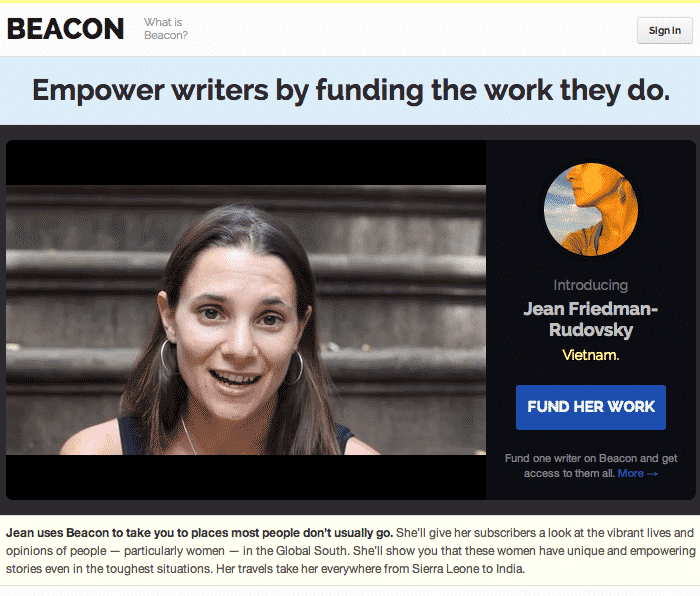
    Once the project is successfully complete, you’re given a profile page (like Jean Friedman-Rudovsky’s) and anytime someone signs up to Beacon via your page, they become your personal subscribers. You earn 70 percent of their monthly subscription as long as they keep paying.

    But your subscriber gets access to not just your work, but every story by every writer on Beacon — so they get to support you, and they get access to a lot of great stories.

    We picked $5 because it seemed significant enough to help writers build real income from, but also competitive enough to woo readers. So far we’ve been happy with the results — we’ve grown more than 4x since launch in September 2013.

    Image: Beacon: Jean Friedman-Rudovsky

    How do you add writers to your list, and what criteria do you look for? How do writers benefit from contributing?

    Most of our writers come by referral from writers already on the platform. Recently, we launched Projects as a way for writers to launch onto Beacon with a good group of starting subscribers. It’s been going fantastic. We also accept applications to write on Beacon — anyone can apply.

    Writers enjoy 70 percent of all subscription revenue from readers that subscribe via their project, and via their profile page after they launch. The other 30 percent gets put into a bonus pool that we divvy out to the most read stories each month. This month we’ll be distributing $5,000 in bonus money to the top 20 articles.

    What was your strategy in not including editorial support for your writers? Have you heard feedback from your writers about that decision?

    There’s two primary reasons for this — the first is that Beacon isn’t a publication, it’s a platform. We’re here to enable writers to write more of the stuff they want via the subscriptions from readers who love their work.

    Adding editors in the traditional sense creates a layer of complexity and cost that we just can’t justify. Now, that doesn’t mean we think editors aren’t worthwhile (far from it) but if you’re going to innovate the model you need to rethink how all the processes are handled. Could writers bring their favorite editors onto Beacon in the future? Maybe with a revenue share model for the work they edit? Things like that get me excited because I know there’s a way to figure it out — it’s just a matter of time.

    Have you learned anything about the writing community through this project that surprised you?

    It’s not surprising, but it’s certainly interesting how the current situation in the industry has made people very open to trying new things. I think it’s amazing to see writers exploring their options right now when it comes to making a living.

    What do you think of Beacon’s premise? Would you join Beacon as a subscriber or writer?

  • Get the Biggest Bang for Your Social Media Buck

    Get the Biggest Bang for Your Social Media Buck

    Facebook. Twitter. Instagram. Pinterest. G+. Your people don’t hang out on just one of these social media platforms, so you must infiltrate them all!

    But balancing a full-time job, writing for your blog, and pitching guest posts takes time. And now you have to update statuses, tweet to connect, take impressive pictures and come up with witty hashtags?

    Before you begin with the hair-pulling, consider this: you should focus your biz-building effort on whichever platform your audience prefers. (Click to tweet this idea.)

    Let’s take a look at a few online A-Listers to see how this works.

    [twl_reusable_block post_id=41455]

    Noah Kagan

    He has over 13,000 followers on Twitter. Let’s see what happened when he tweeted to sell his latest course:

    Pitiful.

    Lewis Howes

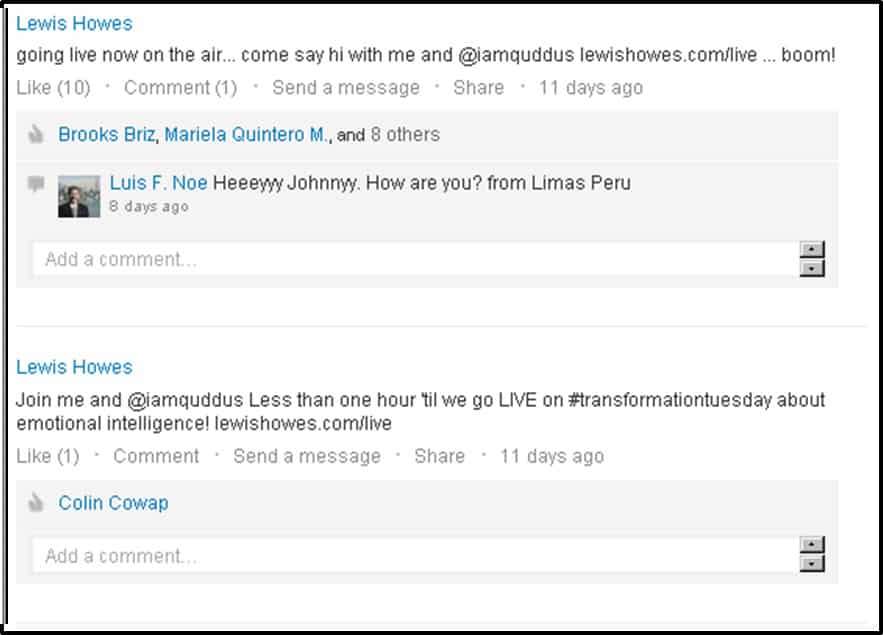
    He built his business on the art of connecting on LinkedIn. What kind of engagement does he get? He’s shown as having 500+ connections and is likely to have more than double that.

    Take a look:

    Yikes.

    Ramit Sethi

    Ramit is known for his fanatical testing. He asked the same question on Facebook and on Twitter. Let’s compare the engagement of his audience:

    Twitter:

     Facebook:

    Facebook is a winner for him, right? Perhaps that’s why he can be found liking and replying to comments there, and rarely on Twitter.

    He’s focusing on what gets results and using his social media platforms in a way that works for his business.

    Back to Noah Kagan

    Let’s see what happens when he sends the same Twitter blast out to his email list instead — a list that is a quarter the size of his Twitter following.

    Yeah, baby! There’s gold in that list (for Noah, at least).

    What can you learn from this?

    1.    Stats do the talking

    Take a look at your statistics from your social media efforts, email open/click through rates and discussion on your site. What works? What can you see that’s getting results?

    Focus more on this. Build this up before moving onto anything else.

    2.    Know your audience

    This one’s a given, right? And how exactly do you get to know them? You could ask them where they hang out. That’d be one way. The other way is to experiment. Get to at least 1000 followers and then start experimenting with one of the social media platforms.

    Start with the obvious choice for your audience. If your business is design-based or visual, Pinterest would work. If your audience enjoys industry news, then tweet those links.

    Over time, if the engagement doesn’t happen, tone it down on the first platform and start with another.

    3.    Social media is long term

    Overnight success takes time.

    First you announce the start of your new social media account to your existing audience, and they sign up. Then you make sure the links are all over your website. Next, you mention it in guest posts and add it to every online signature you have. And over time, it builds.

    Noah didn’t start his Twitter account with the followers he has today. It took years to build.

    Over to you. What industry are you in and what gets the most engagement from your audience?
    no
    1
    links
    no
    1
    links

  • Write Better Stories By Asking These Questions

    Write Better Stories By Asking These Questions

    Novel writing is tricky; there are countless essential components that all need to mesh cohesively to produce a great result. The key to reaching that goal is to ask a lot of questions.

    Starting a novel is asking a question. What if …? What would someone do if …? What if the world was like this and this happened …? Those initial questions lead to more questions, which shape and bring life to characters and story. Questions are the key to story.

    Over thousands of hours critiquing and editing manuscripts, I’ve noticed that there are some questions I seem to ask a lot, which tells me there are some general gaps that many writers have in common in their novel-constructing processes. As you work on your next fiction project, keep these questions in mind.

    Where is this scene taking place?

    A reader shouldn’t have to ask this question, right? The writer is thinking, Isn’t it obvious? I know where this scene is taking place.

    Unfortunately, readers can’t read your mind. The biggest problem I see in novel scenes is the lack of sufficient information to help the reader “get” where a scene is taking place. Just a hint of setting, shown from the character’s point of view, can do wonders. And what’s usually missing is not just the locale but the smells and sounds, a sense of the time of day and year, and exactly where in the world it is.

    How much time has passed?

    So many scenes dive into dialogue or action without letting the reader know how much time has passed since the last scene. Scenes needs to flow and string together in cohesive time. It’s important to know if five minutes or five months have passed, and it only takes a few words to make that clear. Don’t leave your reader confused.

    What is your character feeling right now?

    This is a biggie. It alternates with “How does your character react to this?” I often read bits of action or dialogue that should produce a reaction from the POV character, but the scene just zooms ahead without an indication of what the character is feeling or thinking.

    For every important moment, your character needs to react. First viscerally, then emotionally, physically and finally intellectually. If you get hit by a car, you aren’t going to first think logically about what happened and what you need to do next. First, you scream or your body slams against the sidewalk or you feel pain streaking through your back.

    Keep this adage in mind: for every action, there should be an appropriate, immediate reaction. That’s how you reveal character. (Click to tweet this idea.)

    What is the point of this scene?

    This is a scary question. Not for the editor — for the author. Because if there’s no point to a scene, it shouldn’t be in your novel. Really.

    Every scene has to have a point: to reveal character or plot. And it should have a “high moment” that the scene builds to.

    What is your protagonist’s goal?

    If she doesn’t have a goal, you don’t really have a story. The reader wants to know your premise as soon as possible, and that involves your main character having a need to get something, go somewhere, do something or find something.

    That goal should drive the story and be the underlayment for all your scenes. That goal is the glue that holds a novel together. It may not be a huge goal, and in the end, your character may fail to reach that goal — you’re the writer; you decide. But have a goal.

    There are, of course, a whole lot more questions than these, and many are just as important to crafting a powerful novel. If you can get in the habit of continually asking questions as you delve into your novel, you may find they will lead you to the heart of your story.

    What questions help you develop your stories?

  • 4 Ways to Become a Better Writer, Even If You’re Low on Time

    4 Ways to Become a Better Writer, Even If You’re Low on Time

    Freelancing takes many forms, and although you may consider yourself a writer, there’s a slew of related work that comes with it: researching, editing, conference calls, invoicing. Let’s face it, being a writer involves a lot of not-writing — and all that not-writing takes time.

    Even when you are writing, you might find that your daily gig of expressing a brand’s mission in 140 characters or less, or keeping a blog post to 300 words, can be stifling.

    When you have a million and one tasks to accomplish and work guidelines to respect, what’s a busy writer to do?

    Try these exercises to stay sharp and stretch your writer’s limbs — all while moving through your daily tasks.

    Challenge yourself with a “banned” words list

    You can improve your writing skills even if you’re just keeping up with emails. Keep a list of three to five “banned” words and hit that backspace key each time you see one crop up in your daily tasks.

    For example, I’m striving to ban “awesome” as a go-to adjective. If I spy a sentence in an email that starts with “so,” I revise immediately. Pat yourself on the back when you catch a correction before you hit “send.”

    Set a mental timer

    How quickly can you respond to those daily emails? Can your project update notes be more concise? Challenge yourself to complete emails and other updates in record time — while still excelling in grammar, clarity, and authenticity.

    Take note of when you feel comfortable breezing through these tasks, and consider working this strategy into your daily routine. Maybe you cruise through emails before breakfast but only after that first cup of coffee. Know thyself, writer.

    Go back to basics with a notebook

    Our tech tools have plenty of perks, but consider the simplicity of pen and paper. A notebook can thrive despite drained phone batteries, bad reception, and device sharing. I keep one next to my bed for capturing bits of dialogue or ideas that float to the surface during those pre-alarm moments.

    Read, even if you have no time to read

    When you’re busy, it’s hard to fit in any extracurricular activities, let alone “reading for pleasure.” Make it happen, though: squeeze in a newspaper article, short story, or even a blog post whenever you can. Use a tool like Pocket to save longer reads to your phone for when you’re eating lunch or waiting for a train.

    Writers notice others’ writing. The best way to stay sharp is to keep a steady stream of content flowing.

    What’s your favorite way to sneak writing practice into your day?

  • 6 Ways to Make Life as a Freelance Writer Less Lonely

    6 Ways to Make Life as a Freelance Writer Less Lonely

    Just launched your freelance biz but didn’t realize working from home all day meant also being alone all day?

    Raise your hand if you’re an extroverted entrepreneur who has found it difficult to transition from being in an office full of coworkers to being in an office full of plants.

    It’s true that working from home has its benefits, but for so many entrepreneurs, it’s the camaraderie and daily interaction with other people that fuel them creatively. And the one thing that no one tells you when put in your two weeks’ notice to go out on your own:

    It can be excruciatingly lonely.

    From one extrovert who spends most of her days alone to another, here are six tips to combat the solo business blues.

    1. Plan out your day

    By the minute, if you can. The loneliest days are days where no plan is in place because “the inspiration will just come, right?.” Nope. In fact, those days are usually spent refreshing social media or watching Netflix.

    Even if you don’t have client work, make a list of nagging projects that are kept on the backburner (like “Write down 10 ideas for a newsletter opt-in” or “Get car registered” or “Pitch one new client”) and then SCHEDULE them throughout the day.

    With a daily plan, you’ll feel more energized and productive, and less “I wonder what everyone else is doing today.”

    2. Join a gym

    Every foray to the gym (or yoga studio, or spin class, or…) will provide you with a) a good excuse to run into friends that belong to the same gym or b) the opportunity to make new friends (aka the web designer that attends your yoga class every Thursday).

    Plus, any opportunity to get out of the house will make you feel like you’ve done something with your day AND you’ll get your sweat on. 3 birds, 1 stone.

    3. Find a coworking space

    This seems like a no-brainer, but as a brand-new, solo entrepreneur who is trying to keep a lean budget, sometimes it’s hard to justify the cost of a work space when there’s plenty of space at home. However, aside from being around other people, you’ll meet a lot of other entrepreneurs, get your water cooler conversations in, and maybe even gain a few clients.

    To keep costs low, see if you can share a desk with another freelancer (and split the cost) or ask a marketing firm if you can command one of their conference rooms for a few hours every week for a smaller fee. Working around other creative, driven individuals can make you feel more inspired and productive. (Click to tweet this idea.)

    4. Fill out your social calendar

    Though most of your friends may work traditional nine-to-five jobs, they need breaks from their desks just as much as you need a break from…well, yourself.

    Coffee dates, lunch dates, and the occasional 4pm happy hour (hey, we can do that because we’re freelancers!) mean that you have some human interaction to look forward to. It also requires that you get all of your  “Must Dos” done earlier in the day, which cuts down on Facebook-refreshing time. Less work, more play.

    5. Reach out to other freelancers

    It’s not an accident that many freelancers hang out together. If you’ve just started working from home, make “daytime” friends by reaching out to other writers, designers, photographers, and bloggers that you know will likely be working from home.

    Under the guise of “I’d love to get to know more about the entrepreneurial community around here,” convince another freelancer or two to have coffee with you. I do this often, and it’s led to three new clients, an invitation to a “Freelance Ladies” networking group, and two very solid friendships.

    6. Create networking goals

    Networking doesn’t have to be sleazy and forced. If you give yourself two networking goals a month (like “Join a networking group” or “Hand out my business card 10 times” or “Sign up to give a presentation to the Local Entrepreneurs Group”), you’re not only giving your business a kick in the pants, but you’re creating a project for yourself that practically requires human engagement.

    Even if you spend your time giving out business cards to the baristas at the coffee shops you frequent, who knows when they’ll need a writer to re-do their menu or revamp their website?

    What other strategies can solopreneurs use to stay engaged with other people?

  • 3 Game-Changing Ideas for Transitioning from Employee to Entrepreneur

    3 Game-Changing Ideas for Transitioning from Employee to Entrepreneur

    The day I scheduled my first business meeting as a freelance writer, I showed up early like I would for any interview. I ordered my coffee, pulled out my laptop, and picked up my favorite pen.

    And then I blanked.

    Until now, every moment of my interviewing life had been as a subordinate. Please, dear HR director, see something special in me and offer me the position, or, Please, CEO, just take a look at these prospective deliverables and consider what a great asset I’d be to your company.

    But now?

    Now I wasn’t here to ask for a job. Now it was up to me to negotiate the terms of my business. And while I probably confused the kind woman who met with me for my first business meeting as CEO of Greesonbach Creative, I was taking notes in my head the entire time.

    When you make the transition from employee to entrepreneur, you’re gearing up for a whole new conversation. And if you go into that conversation unprepared, it’s going to cost you. Here are three game-changing ideas that will help you make the transition more smoothly:

    No more memorizing mission statements

    This is not to say that you shouldn’t research your prospective client or business partner; you always want to know who you’re heading into business with, so do your due diligence (this may or may not involve LinkedIn stalking).

    But whereas in a previous life you might have spent the morning memorizing some mysterious Board’s mission statement to show what a hireable go-getter you are, it’s more important to show up prepared with your own mission statement.

    Who are you? What do you want? Why do you do what you do? These are the things that matter, and these are the things that will help you make real connections and get the business. Block out time to brainstorm your own mission statement so there’s never any doubt about what you want or where you’re headed.

    Stop hiding

    There are two secret shames of the side-hustler who wants to go full-time freelance. The first, and the first one that has to go, is the nagging sense that you’re not good enough to go full time. The second, more dangerous shame is the sense that you’re doing something wrong that’s going to get you in trouble.

    When you work for someone else, you start to see your time as “purchased.” You start to feel owned, like your time is not yours to spend on what you like. If you’re developing your freelance services or starting a business on the side, it’s probably with a mixed feeling of guilt. In some cases, it can feel like you’re cheating on your employer or hiding something by being successful and hardworking in your off-time.

    When you take your first leap into self-employment, it can be hard to escape the sense of guilt and shame that you shouldn’t be freelancing full time. Fight it! And most importantly, own it! You’re the breadwinner for the business of you. You’re putting time into a profitable and meaningful venture. And that’s nothing to hide from. (Click to tweet this idea.)

    business of you

    Your self-respect upgrade is imminent

    When you meet with a business contact as a self-employed small business owner, the new conversation is no longer about what a hard worker you are, or how punctual you’ll be for all the 9-5 shifts you’ll be working. That stuff simply doesn’t matter anymore, because it’s a given when you run your own business.

    Once you have let yourself come out of the self-employment closet, get ready for an onslaught of self-respect. The conversation now is What will I do with the talents I have and How will I make the most out of every day I have? What partnerships will benefit me, and Do I want to put my name on this work or product?

    And do you know what that makes you? A badass.

    Because showing up on time and meeting deadlines are the lowest minimums you know. As an entrepreneur, it’s over-deliver or die. It’s exceed expectations or sign up for unemployment. And while the stress might lead to a few sleepless nights, the real result of day-in and day-out awesomeness is a life of meaning and self-respect for all you’ve accomplished.

    Have you made the leap from employee to self-employed? What was the most surprising thing you learned in the process?