Category: Marketing

  • A Step-by-Step Guide for Going After Clients You Really Want

    A Step-by-Step Guide for Going After Clients You Really Want

    To find clients, most freelance writers — especially new ones — need to get out there and approach them.

    But this strategy, known as direct marketing, can be intimidating if you haven’t tried it before. Most of us don’t like marketing ourselves because we’re afraid to appear sleazy. Who wants to come across like one of those pushy door-to-door salespeople?

    Here’s the truth: direct marketing is awesome.

    While you may already use blogging, referral programs and social media to strategically position yourself in the market and allow customers to come to you, you can’t rely solely on this inbound marketing to get new business. If you want more clients, you need to use direct marketing: reach out to them instead of waiting for them to come to you.

    Make sure that your direct marketing efforts make an impact by using the following strategies.

    Do your research

    Don’t just blindly send out emails or marketing messages. Look up every business or individual that you want approach. What’s their background? What are their goals? And more importantly, why would they need your services? Find out everything you can about your prospects.

    For instance, whenever I reach out to a business to offer my writing services, I make sure to check their website, read their blog, view their latest tweets, etc. This research ensures that I’m totally clear on how I can help them and whether they’re a good fit for my business, and leads into my next step.

    Direct your messages to a specific person instead of a general mailbox

    Make sure the right people — the decision-makers — see your message. When pitching your services to a larger company, it’s best to approach the marketing department instead of customer service or the general mailbox. If you’re dealing with a small business or startup, the company’s founder is usually a good bet.

    Go back to your research and figure out your ideal point-of-contact. Look them up on LinkedIn and Twitter, then figure out the best way to approach them.

    Personalize your approach

    Use the intel you uncover to customize your message. Show the prospect that you did your research by mentioning company-specific information or referencing recent blog posts or tweets. For example, if you read that the business recently won an award, include a note of congratulations in your message. Your thoughtfulness will impress the client and they’ll be more inclined to respond.

    Quick tip: To easily find information about your potential clients, check out Rapportive, a nifty browser plugin for Gmail that shows handy social information about your contacts right from your email interface. While you’re composing an email to Jane Doe, the plugin will display her social media accounts, blog, and recent tweets, so you can quickly find info that you can use to personalize your message.

    Be specific and sincere with your compliments

    Flattery will get you nowhere — true or false?

    Compliments can further personalize your pitch and help you get off on the right foot with your client — as long as you’re being genuine.

    A good way to demonstrate your sincerity is issuing specific compliments. Don’t just say “cool website!” or “I love your company.” Be more detailed. What exactly do you like about their company? Which particular website features do you love?

    Giving genuine and specific words of praise will help you make a stronger impression and increase the chances of hearing back from the potential client.

    Offer tailored recommendations

    Go beyond the compliments and tailored messages to show exactly what you can do for the client. Give them useful information that will help them improve their content — no strings attached. (Click to tweet this idea.)

    It’s a powerful client outreach technique because it’s incredibly effective. Personal finance and behavioral psychology author Ramit Sethi calls it the “Briefcase Technique,” because you’re pulling an incredible menu of ways you will help the client right out of your briefcase.

    Before pitching one prospective client, I studied their archived blog posts, then suggested headlines, topics and even some formatting tips.

    The result? The prospect got back to me after a few weeks and hired me to write eight blog posts per month.

    What are your best tips when it comes to approaching potential clients?

  • How to Make a Book Trailer: 3 Free Apps for Creating an Impressive Video

    How to Make a Book Trailer: 3 Free Apps for Creating an Impressive Video

    As any author can tell you, promoting your book is a challenge. In addition to standard marketing techniques, you must find new and innovative ways to engage with your readers. One way to do that is to create an animated book trailer.

    But not many people know how to make a book trailer. While it’s difficult to create animation from scratch, it can actually be quite simple to create a simple book trailer by yourself. And there are a number of free and easy-to-use applications that will help you do just that.

    To start, you’ll want some photos for your trailer; typically, these would be of you, your book cover, and your interior art. You don’t need high-res photos; 72 dpi is fine (640 px wide by 480 px high).

    If you’re a Windows user, you can download Photo Story or Movie Maker from Microsoft. Mac computers come pre-loaded with iMovie software. If you have PowerPoint, you can add soundtracks, slide animations and slide transitions to presentations, and then export to video. All of these options produce a video file that must be hosted somewhere (eg. your website or YouTube).

    Several newer apps combine trailer creation and hosting, including Animoto, Prezi, and PhotoShow. Let’s take a look at how they work.

    Animoto

    The Lite version of Animoto is free and enables you to create 30-second animated trailers. (Ed. note: Reader Susan let us know the free version of Animoto is no longer available, and pricing starts at $8 per month. However, Animoto does offer a free trial period.)

     Step 1. Select the animation style and soundtrack that best matches your book.

     Step 2. Outline the slides you’ll use in your animation. Each slide can either have text or an image. However, if you know how to use PhotoShop or another image editor, you can get the best of both worlds by adding text to your image files. If you’re technically savvy, you can substitute your own soundtrack too.

    Step 3. Animoto assigns a length of time to each slide. When your total runtime reaches 30 seconds, you won’t be able to add any more slides. You can edit the slide contents and rearrange the slide order. Click the “Preview Video” button to see your trailer!

    Step 4. Once you’re happy with your video, click the “Produce” button. Voila!

    If you want to add to your trailer, you can also pay for additional options like a longer video, more animation choices and more customization of your animation. Here’s the trailer I made with Animoto.

    Prezi

    The Public version of Prezi is free. It enables you to create trailer-like presentations with richly animated slide transitions that your audience must click through manually.

    Step 1. Sign up on Prezi.com. It will encourage you to download the desktop application, but you can also create your trailer completely online.

    Step 2. Click on “New Prezi” and choose a template. Prezi is similar to PowerPoint and offers some snazzy animated slide transitions.

    Step 3. Build your trailer “slides” one at a time by adding text and other content. Use the Insert button at the top center of the screen to add images, video and background music.

    Step 4. To preview the trailer, click the blue “Present” button in the upper left of the screen. Hit “Escape” to leave presentation viewing. Click on the “Edit Path” button in the upper left to reorder or delete individual slides.

    Step 5. Once you’re happy with the trailer, click the “Share” button in the upper right corner and select “Share Prezi”.

    Prezi will reserve you a web address, and when you go to that address, click the “Embed” button. Click the radio button labelled “Constrain to simple back and forward steps” and you will see HTML. Copy and paste that HTML into your web page wherever you want to embed your trailer.

    Here is my modest Twignibble trailer made with Prezi.

    PhotoShow

    The Free version of PhotoShow is easy to use and the features are pretty nice. Unfortunately, the trailers only persist for 30 days.

    Step 1. Click “Make a PhotoShow.”

    Step 2. Click “Add Photos” to import images to your trailer.

    Step 3. Click “Personalize” to enter the trailer title and author. Then use the different tabs to select a style, insert captions, text bubbles and other features.

    Step 4. The “Music & Photos” tab lets you reorder or delete images and control the audio. Click Done when you’re ready to see your video.

    Step 5. Click on “Post to your web page or blog”. Copy and paste the HTML into your website to embed your trailer.

    Since I don’t have a PhotoShow subscription, my trailer for How the Rhino Got His Skin is no longer publicly visible. However, if you enjoy using PhotoShow, an annual subscription for additional features and ongoing public access to trailers is only $39.

    Having a book trailer can be a fun way to share your work with your audience. However, remember that it’s just one small part of your larger campaign to build an online platform for your book. Good luck!

    Have you created an animated trailer for any of your work?

  • 8 Simple Ways to Market (and Actually Sell) Your Book

    8 Simple Ways to Market (and Actually Sell) Your Book

    No matter how good your book is, you need to consider your marketing strategy if you want it to actually sell. Even the best content in the world won’t sell if people don’t know it exists!

    When I wrote a book several years ago, I didn’t realize how significant a role my marketing strategy would play in its success.

    Through trial and error I learned which marketing strategies would work for my book. Some are fairly straightforward, and others require a little more effort. Hopefully they will help those of you contemplating a similar venture.

    [twl_reusable_block post_id=41455]

    The Basics

    1. Create a website

    We’re starting with the most basic element of all: your book needs a website. This can be anything from a landing page on your personal or business site to a full-scale website devoted to the book.

    If you’re working within a tight budget, go DIY or find a designer through outsourcing portals such as Elance or oDesk. Better yet, look for someone in your circle of professional contacts who has experience with web design and barter your services.

    In exchange for a few personal finance counseling sessions, a business colleague of mine created and launched a full-scale website for my book, including a home page, an “about us” section, an FAQ section, a blog, and a page where you could purchase the book.

    2. Make the process user-friendly

    Whether you offer direct sales for your book through your website or you include a link to where it can be purchased, make the process as user-friendly as possible for your customers.

    If you offer direct sales, accept all forms of payment, including American Express and PayPal. You never want to miss out on a sale just because a customer isn’t able to use a certain payment method! If you don’t offer direct sales, include a link on your website to where the book can be bought (for me, it was Amazon).

    Don’t make customers have to hunt.

    3. Start a blog

    Including a blog on your website can help add credibility to your book by further showcasing your talents as a writer and showing your audience that you are truly an expert in your field. Post well-written articles featuring advice that readers can’t find anywhere else.

    Go the extra mile by including a high quality video or two. Videos highlighting certain points in your book can drive interest, and can also boost your SEO ranking.

    4. Get involved with social media

    Your next flow of customers could come from anywhere, so you have to investigate a wide swath of outlets to try and reach them. While I got positive results from my efforts on Facebook and Twitter, I also got a very solid response from people on StumbleUpon — a largely unknown social media website at the time. These days you might look to Pinterest, Instagram, or Google+ to build a following and generate sales.

    Track your success with Google Analytics and use the data to adjust your strategy; if you’re seeing lots of traffic or purchases from a particular network, build on it. Be sure to follow and like other authors and industry leaders in your niche, and make sure you include social sharing buttons on your blog to encourage activity.

    5. Change your email signature

    This may seem like a minor point, but how many emails do you write or respond to every day?

    Pick the low-hanging fruit: simply adding a quick note with a link to your book’s website at the end of each message gives you one more way to get the word out about your book.

    Extra Credit

    6. Partner with local businesses

    Taking a physical copy of your book to local bookstores is the first step; see what it will take to get them to carry the book. However, with a little more imagination, you can connect with additional kinds of businesses.

    If you’ve written a book about home improvement, see if your local hardware store might allow you to set up a small display. A gift shop at a local nature center may be willing to feature your book if it’s about something pertaining to that niche. Get in touch with larger nearby businesses in related industries and inquire about bulk sales. They might be able to use your book as a promotional giveaway during a conference or even as a gift for staff members.

    Novel and innovative connections with community businesses may involve a bit of pavement pounding, but they just might boost your sales. (Click to tweet this idea.)

    7. Target media opportunities

    You could also contact local radio and TV stations and inquire about media appearances. Perhaps they’d be interested in interviewing you for a TV newscast segment on local authors, or maybe you could participate in a question-and-answer session on a radio talk show. Smaller media outlets are always looking for local stories, and that kind of exposure could be a boon to your business.

    8. Entertain outside advice with caution

    You’re likely to receive all kinds of advice when it comes to marketing your book. You’ll likely hear about all sorts of products and webinars “guaranteed” to make your book a best-seller.

    With so many opinions and options, it’s important to remember the key item in the equation: your instincts. If you want to go with an offbeat marketing strategy, give it a try. After conducting some research, if your gut feeling tells you that a particular idea can work, go for it.

    You may not be a marketing guru, but you are a human being, and you possess common sense insight as to what can and cannot attract a potential buyer to your book.

    The fact that I wrote a book — whether it sold a million copies or not — played a large role in what allowed me to eventually work for myself. Did I experience a bit of luck? Maybe, maybe not. However, I did put my marketing strategy into place with a good amount of research, common sense, and hard work.

    Pour all of your creative efforts into your writing, then go back to the well and stock up again when it comes time to market your book — you’re going to be glad you did.

    What other ways have you successfully marketed a book?

  • Get the Biggest Bang for Your Social Media Buck

    Get the Biggest Bang for Your Social Media Buck

    Facebook. Twitter. Instagram. Pinterest. G+. Your people don’t hang out on just one of these social media platforms, so you must infiltrate them all!

    But balancing a full-time job, writing for your blog, and pitching guest posts takes time. And now you have to update statuses, tweet to connect, take impressive pictures and come up with witty hashtags?

    Before you begin with the hair-pulling, consider this: you should focus your biz-building effort on whichever platform your audience prefers. (Click to tweet this idea.)

    Let’s take a look at a few online A-Listers to see how this works.

    [twl_reusable_block post_id=41455]

    Noah Kagan

    He has over 13,000 followers on Twitter. Let’s see what happened when he tweeted to sell his latest course:

    Pitiful.

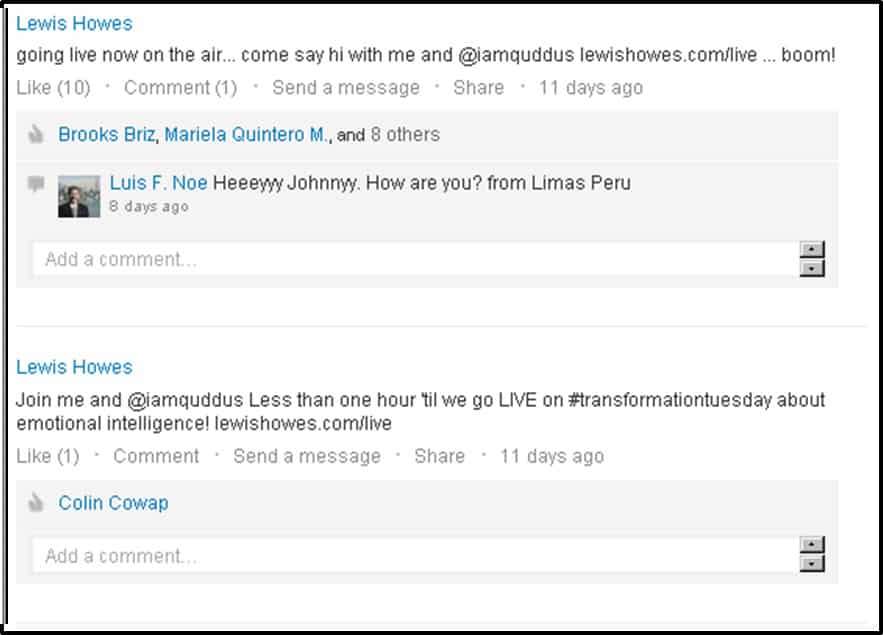
    Lewis Howes

    He built his business on the art of connecting on LinkedIn. What kind of engagement does he get? He’s shown as having 500+ connections and is likely to have more than double that.

    Take a look:

    Yikes.

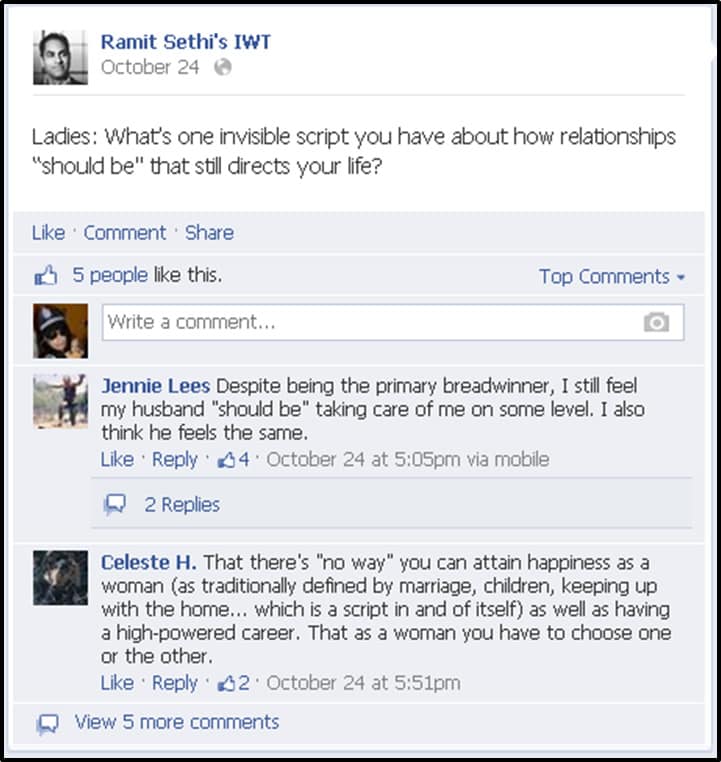
    Ramit Sethi

    Ramit is known for his fanatical testing. He asked the same question on Facebook and on Twitter. Let’s compare the engagement of his audience:

    Twitter:

     Facebook:

    Facebook is a winner for him, right? Perhaps that’s why he can be found liking and replying to comments there, and rarely on Twitter.

    He’s focusing on what gets results and using his social media platforms in a way that works for his business.

    Back to Noah Kagan

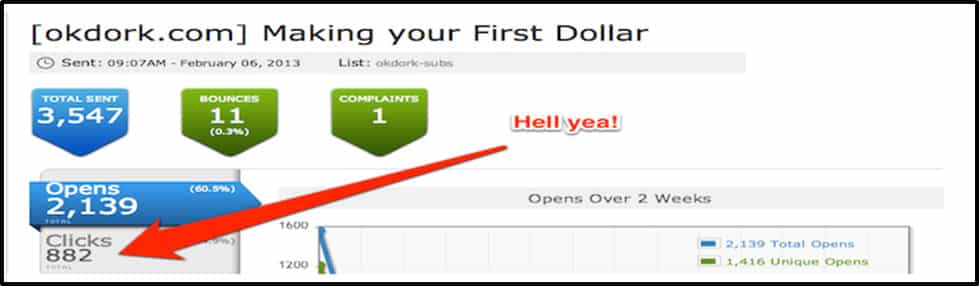
    Let’s see what happens when he sends the same Twitter blast out to his email list instead — a list that is a quarter the size of his Twitter following.

    Yeah, baby! There’s gold in that list (for Noah, at least).

    What can you learn from this?

    1.    Stats do the talking

    Take a look at your statistics from your social media efforts, email open/click through rates and discussion on your site. What works? What can you see that’s getting results?

    Focus more on this. Build this up before moving onto anything else.

    2.    Know your audience

    This one’s a given, right? And how exactly do you get to know them? You could ask them where they hang out. That’d be one way. The other way is to experiment. Get to at least 1000 followers and then start experimenting with one of the social media platforms.

    Start with the obvious choice for your audience. If your business is design-based or visual, Pinterest would work. If your audience enjoys industry news, then tweet those links.

    Over time, if the engagement doesn’t happen, tone it down on the first platform and start with another.

    3.    Social media is long term

    Overnight success takes time.

    First you announce the start of your new social media account to your existing audience, and they sign up. Then you make sure the links are all over your website. Next, you mention it in guest posts and add it to every online signature you have. And over time, it builds.

    Noah didn’t start his Twitter account with the followers he has today. It took years to build.

    Over to you. What industry are you in and what gets the most engagement from your audience?
    no
    1
    links
    no
    1
    links

  • The 15 Best Twitter Lists for Writers

    The 15 Best Twitter Lists for Writers

    Twitter is an awesome tool for sharing and promoting your work as well as connecting with your community of readers. However, it’s equally important to meet others in your industry and build a resource of contacts for support and encouragement.

    Thanks to the ease of using Twitter and the instant accessibility of its users, it’s one of the best places to turn to in order to accomplish this level of connection. But with up to 60,000 tweets shared everyday, it can be hard to cut through the chatter and find what you need. This is where Twitter lists come in.

    What’s a Twitter List?

    In case you don’t already know, a Twitter list is a great feature that allows you to group together certain types of people, authors or businesses you want to connect with. You can also subscribe to other people’s Twitter lists if you don’t want to create your own.

    Below are the best Twitter lists for writers looking to hone their craft, expand their knowledge of self-publishing or generally connect with like-minded creatives.

    1. Jane Friedman’s Best Tweets for Writers

    A focused list of people who tweet articles and information helpful to writers.

    2. John Kremer’s People Worth Following

    A Twitter list that not only includes influential people, but also authors and writers connected to the book world.

    3. Joel Friedlander’s Self-Publishing List

    A great list of self-publishing resources, tips and tricks from other self-published authors.

    4. Galley Cat’s Best Book Reviews

    Get access to book reviews by readers and authors from one of the best book review sites around.

    5. Gail Baugniet’s Bloggers of Book Topics

    A complete list of writers, bloggers and authors who share links to books they’ve read, written or published.

    6. Julie Isaac’s Writing Faves

    Find everything from writing inspiration, to the latest news and happenings in the writing world.

    7. Rachel Jameson’s Writing Tips

    Follow some of the best writers in the industry as they tweet their best tips and tricks on topics like self-publishing, fictional novels and more.

    8. Melissa Foster’s Book Promos List

    As author of multiple books, Melissa knows a thing or two about promoting a new book, as does everyone on this list.

    9. Mike Stelzner’s Copywriting Gurus

    An exclusive list of well-known freelance writers and business copywriters who’ve built successful businesses.

    10. Srinivas Rao’s Book of Publishers

    If you want to connect with a publisher, here’s a list of some of the best ones in the industry.

    11. Courtenay Bird’s Digital and Social Media List

    If you’re looking for ideas or inspiration, this list includes some fantastic content and opinions from Twitter influencers.

    12. Joanna Penn’s UK Bloggers and Writers

    Use this list to connect with editors, authors and publishers from all over the world.

    13. The Write Life’s Writing Associations

    If you’re looking for a writing association to connect with, check out our very own list of influential organizations.

    14. Kathryn Vercillo’s Writing, Writers List

    Reach some of the best writers, authors and bloggers in the online writing world.

    15. Nick Thacker’s Writers List

    A complete list of resources for self-publishing, marketing and building your writing platform.

    What are some of your favorite Twitter lists for writers? Share them with us in the comments!

  • How Successful Authors Use Social Media to Sell More Books

    How Successful Authors Use Social Media to Sell More Books

    [twl_reusable_block post_id=41455]

    This column is excerpted from Guide to Literary Agents, from Writer’s Digest Books.

    Increasing your author visibility through different online channels allows you to meet readers, cultivate an audience, and increase your discoverability to sell more books. But finding your ideal social media channels is not the easiest thing to figure out and implement.

    That’s why I’ve reached out to some experts for advice. I asked six different platform-heavy writers — three nonfiction, three fiction — for their best general advice in terms of using social media. Here’s what they had to say:

    Do you have any general advice for writers looking to market themselves and their work via social media, promotion and platform?

    Mignon Fogarty: Creator of Grammar Girl@GrammarGirl

    “I think you really have to enjoy interacting on social networks or you won’t do it well or stay with it. You can’t force yourself to do it; you have to find the things you like and do those even if they aren’t the most popular. For one person it might be Twitter, for another LinkedIn, for another YouTube, for another podcasting, and another blogging.

    Also, I think some authors are too afraid to ask people to buy their book. I spend hours (and hours and hours) of my time answering people’s questions without compensation, so when I have a new book out, I don’t hesitate to post about it. I believe I’ve earned the right to market my products.

    On the other extreme, I see a lot of authors jump into Twitter and immediately start doing nothing but push their book. They haven’t earned the right to market their products, and all they do is turn people off.”

    Mary Kole: Former literary agent and author of Writing Irresistible Kidlit@kid_lit

    “I have gotten flack for saying this before, but I am sticking to my guns: do it well or don’t do it at all. There are billions of blogs and websites out there. On the Internet, if you build it, they will not automatically come. You have to give people a good reason to spend their precious time on your real estate.

    Don’t blog or tweet or Facebook because you think you have to. Your reluctance will ooze from the screen. Don’t engage if you can’t keep it consistent, both in terms of timing and in terms of quality.

    Figure out what you’re best at, then do that well and forget the other stuff. You should have some online presence, but you don’t have to jump into everything all at once, especially if you’re going to do it badly or irregularly.” (Like this idea? Click to tweet it).

    Dr. Lissa Rankin: Author of Mind Over Medicine@Lissarankin

    “Stay true to your integrity. I can’t tell you how many times I have said no, even though it sounded like such a good platform-building opportunity.

    Listen to your gut (which I call your “inner pilot light” — that wise part of you that really knows what’s best for you, your body, your relationships, and your business). Don’t let fear rule the show.

    In the beginning, I said yes to everything because I was afraid I’d miss an opportunity, and I wound up quickly burned out, depleted. But you can’t lead or heal from a place of depletion. You must heal yourself first in order to change the world. That’s the one lesson I’d share with aspiring authors/visionaries/healers.

    Don’t let platform building spiral you downwards. Fill yourself first. Learn to say no. Create healthy boundaries. Raise your vibration. Attract others who share this vibration. Avoid the temptation to get sucked into doing everything for everybody. You are enough doing exactly what you’re doing. Resist the urge to continually do more.

    Billy Coffey: Author of Snow Day, @billycoffey

    “Whether fair or not, getting your good story into the hands of the public now depends in large part upon your reach, and your reach depends in large part upon your savvy with blogs and social media. That can be a scary thing.

    Writers are notoriously withdrawn and even shy. The idea of having to ‘put yourself out there’ can be tantamount to having to tap dance in front of a firing squad. But it can be done. I promise that, and I offer myself as proof.”

    Amy Julia Becker: Author of A Good and Perfect Gift@amyjuliabecker

    “My biggest warning is that you can’t do it all. I’ve tried to approach platform building like organic farming. I’m cultivating what grows (my audience, hopefully), but I’m trying to do so without gimmicks and with integrity and respect for the writing itself. I hope that this is a sustainable method that will also bear fruit, so to speak, with a faithful and steadily, if slowly, growing audience.

    I think a lot about limitations and possibilities. If I limit my time platform building, I open up time for family or exercise or working on a larger project. If I focus on the possibilities of platform building, I limit my time for those other things. I try to keep it all in balance rather than thinking that I can, or should, do it all.

    [twl_reusable_block post_id=41455]

    If you could go back in time and do it all over again, what would you tell your younger self in terms of platform?

    Mignon Fogarty: Creator of Grammar Girl@GrammarGirl

    “I knocked myself out for a year doing my email newsletter every day and for one quarter doing my podcast twice a week — and in retrospect, I don’t think it was worth the effort. Weekly is enough. The benefit from publishing daily and podcasting twice a week was minimal.”

    Mary Kole: Former literary agent and author of Writing Irresistible Kidlit@kid_lit

    “This may sound like bad advice but: Blog less! I was killing myself trying to blog three times a week at Kidlit, then I added two extra blogs and tried doing those twice a week, too.

    The result? I’d travel or freak out and let the blogs go to seed for a while, and that was altogether worse than blogging less frequently because dead blogs and silence are the ultimate online networking sins.

    It’s very possible to have a platform with the ‘less is more’ philosophy, as long as you focus on the absolute quality of your efforts.

    Gina Holmes: Author of Crossing Oceans and Dry as Rain

    “I would tell myself that helping others succeed would translate into the biggest personal success. I would tell myself to go ahead and build my wings on the way down, and not to stress over every little number, setback, or failure.”

    Dr. Lissa Rankin: Author of Mind Over Medicine@Lissarankin

    “Oh, if only someone had told me to put a free opt-in in the upper right corner of OwningPink.com three years ago! After two years of great traffic, we had only 1,200 people on our newsletter list. (The sign-up was buried way down on the page and there was no free gift to entice people to fill it out.)

    The minute someone told me to offer a free gift, we got 5,000 new sign-ups in a month! Free teleseminars and telesummits (I’m about to do my first) are another great way to grow your newsletter list quickly.”

    Billy Coffey: Author of Snow Day, @billycoffey

    “I would have definitely started building my platform earlier. My younger self was stubborn and ignorant. I was one of those people who thought I could buck the system. And yet everything I’ve been able to achieve to this point is the direct result of finally understanding the importance of platform.

    Amy Julia Becker: Author of A Good and Perfect Gift@amyjuliabecker

    “My greatest success has been my blog. I’ve wasted time speaking without pay, especially when there is travel involved. I’ve also wasted time (and money) creating a website. Don’t get me wrong, I needed a website, but I should have been far more realistic about how much time it would take and what that time is worth.

    In addition, I would have begun blogging and writing short essays from the start. Not only would I have gained readers (and perhaps a book contract) much earlier, but I also would have benefitted as a writer from blogging.

    Blogging has improved the quality of my writing, and it also gives me a place to try out ideas. Most days, I write something, and two or three people comment on it and a few dozen share it through social media. But every so often, I write something and it provokes dozens of comments and hundreds of shares. I pay attention to that type of reaction because it means I should possibly write more about the same topic.”

    Special thanks to those writers who chimed in with answers.

    Don’t forget to comment to be in the running for Chuck’s book giveaway! You could win a free copy of his latest book, Create Your Writer Platform. (UPDATE: Marjorie won!)

    Other TWL Guest Posts by Chuck Sambuchino:

    1. The Worst Ways to Begin Your Novel: Advice from Literary Agents

    2. When Can You Call Yourself a Writer?

    3. Querying Literary Agents: Your Top 9 Questions Answered

    This post contains affiliate links. That means if you purchase through our links, you’re supporting The Write Life — and we thank you for that!

  • 6 Effective Ways to Engage With Your Readers (So They Buy More Books)

    6 Effective Ways to Engage With Your Readers (So They Buy More Books)

    The image of the novelist as a slightly eccentric individual who likes writing alone in a dark room and avoids interacting with anyone else — even their literary agent — is an image of the past. Modern day fiction writers cannot afford to be like Harper Lee and stop communicating with their audience!

    Have you ever wondered how many authors get their books on the New York Times bestseller list? They do so by generating a buzz around their books and personas. People not only want to read their books but also know more about the author. For novelists, curiosity is the best way to keep readers coming back.

    So how can authors communicate and engage with their readers? Here are a few tips:

    1. Use social media

    Social media platforms like Twitter and Facebook are excellent tools that many writers use to interact with their audience.

    Some social networking platforms are geared specifically towards writers and book lovers, such as Goodreads. For example, Jeffrey Archer uses this platform very well to give his fans a peek into his life, inspirations, hobbies and upcoming novels. Fans can comment, read exclusive content and even participate in Q&A sessions.

    Social media can also be a great way for writers to get feedback on books that are in the pipeline. Authors can release rough excerpts from their books and receive immediate, honest feedback from readers.

    2. Conduct online Q&A sessions

    Social media platforms are excellent for talking to readers in real time. Writers can create events for their readers, such as Twitter chats or Google+ Hangouts, so that everyone shows up to the session at the same time and can ask questions spontaneously.

    3. Be active on fan fiction forums

    Many readers love reading and writing fan fiction. They come up with alternate endings, plotlines, and characters, and some fan fictions can even become as popular as the original book.

    These forums also play host to readers’ questions and comments. J.K. Rowling always makes it a point to engage with her readers on such forums. In fact, she actively answers questions online from readers and even reads the fan fiction herself. This is a great way for writers to get new ideas, understand what readers are looking for and interact with their audience.

    4. Blog

    Writers cannot spend every waking hour working on their next novel or story. Blogging is an excellent way to write about other topics, battle writer’s block, and communicate with readers.

    Neil Gaiman and Chuck Wendig are two of the many authors who blog as a way to interact directly with readers. They share writing tips and advice, describe current work, and update their audiences on new releases.

    5. Share additional content

    In addition to blog posts, writers can provide free and valuable content to readers in the form of videos, podcasts, audio clips, ebooks, images, and excerpts from upcoming books. The sky is the limit when it comes to brainstorming creative content that’s related to your work!

    6. Host book signing and reading sessions

    This is probably one of the most popular ways that writers engage with their readers, proving that not all connection is done online. There are tons of libraries, book shops, cafés, and other places to host readings in any city. Writers can meet their fans and readers face-to-face and engage with them in person. A great example of this is Chris Guillebeau’s DIY Book Tour to promote his two books.

    These are just a few ways that writers can keep in touch with their fan base and interact with readers. New and exciting platforms are coming up almost every day; what will the next great reader engagement tool be?

    What’s your favourite way to connect with your audience? As a reader, how do you most enjoy interacting with authors?

  • Twitter Tips for Writers That Will Help You Get the Most Out of the Network

    Twitter Tips for Writers That Will Help You Get the Most Out of the Network

    Twitter is a great tool for connecting with others and sharing your work, but how can writers make the most of it? How can you maximize your return from the time you take away from writing to devote to social media?

    We asked the TWL community to share their best tip to help writers use Twitter most effectively. Here are their answers:

    Use tools to maximize your impact

    Elizabeth S. CraigI like using the free version of Social Oomph to schedule tweets for different periods of the day. This helps me extend my reach, prevents me from flooding everyone’s feed, and keeps me from spending too much time on Twitter.

    Elizabeth S. Craig, author, blogs at Mystery Writing Is Murder and tweets @elizabethscraig

    Pay it forward

    Laura RossiBe generous — retweet, comment, favorite. You can’t expect support if you don’t give it. And make an effort for folks that include you on a #FF and other trending tags.

    Laura Rossi, PR & social media expert, blogs at Laura Rossi Public Relations and tweets @bookprgirl

    Be yourself

    Menachem WeckerTreat Twitter like a cocktail party or a bar; what works at the local watering hole will work on Twitter, and what doesn’t won’t.

    Many Twitter users pad their updates with a much healthier dose of exclamation points and shameless and uncreative self-promotion than they’d be bold enough to unleash in person. All conversations aren’t wonderful just because they are conversational; some are created more equal than others.

    Menachem Wecker, freelance reporter, blogs at Menachem Wecker and tweets @mwecker

    Practice brevity

    Steve ButtryUse Twitter to help you get to the point quickly. Paste a lead into Twitter and if it’s longer than 140, consider how to tighten it.

    Steve Buttry, Digital Transformation Editor at Digital First Media, blogs at The Buttry Diary and tweets @stevebuttry

    Be real

    Marianne ElliottMy best tip is to treat Twitter the way you would treat a real space, with real people in it, including — but not limited to — people who might want to buy (or publish) your books.

    Don’t be afraid to show your interest in other people, to engage in conversation and to share what you find useful, inspiring or entertaining. Have fun!

    Marianne Elliott, author, blogs at Marianne Elliott and tweets @zenpeacekeeper

    Make it a partyPeggy Frezon

    One way to promote your book is through a Twitter Party. Find a relevant topic, offer a few books for prizes, and have fun!

    Peggy Frezon, author, shares her work at Peggy Frezon and tweets @peggyfrezon

    Pursue genuine connections

    Andy HayesTwitter is about conversation & connection — if you use it to just syndicate links, you’ll get no return on your investment.

    Turn off anything automated. Look for people who are interesting to you: potential new clients, collaborators, like-minded souls. Say hello. Strike up a conversation. You might be surprised at who you find!

    Andy Hayes, Chief Creative Producer at Plum Deluxe, tweets @andrewghayes

    Find your voiceJanice Hardy

    Consider how you want to engage with people. What can you offer you followers? Are you funny, informative, chatty, or are you just spamming your book links?

    Janice Hardy, author, blogs at The Other Side of the Story and tweets @Janice_Hardy

    How do you use Twitter to contribute to your writing? Share your tips in the comments!

  • Why Writers Should Love Twitter (Hint: It’s Not Just About Selling Books)

    Why Writers Should Love Twitter (Hint: It’s Not Just About Selling Books)

    When I launched my ebook A Writer’s Bucket List in early 2013, I had a Twitter bonanza. The platform is my favorite way to connect with colleagues and readers, so I naturally lean on it for self-promotion. However, I knew not to expect much for direct sales, even from directly-promotional tweets.

    Many authors are struggling to figure out how to use Twitter to sell books. That’s because Twitter doesn’t sell books.

    Instead, the social medium is part of the long game of building your author platform so you can engage with readers elsewhere and, eventually, possibly sell books to some of them. (Like this idea? Click to tweet it.)

    It may seem counter-intuitive for a platform with a limited character count, but I’ve made some of my closest professional connections through Twitter. Users are open to meeting new people when they’re there. Compare that with networks like Facebook and LinkedIn, where people often restrict their connections and information to people they already know, and Twitter is your obvious launching point for building a community around your brand as an author.

    Here’s how you can use Twitter to grow your community and, indirectly, increase interest in your books and services:

    Make it easy to opt in

    Tweeting is an easy way for someone to support you. You can even provide pre-written tweetable messages and a Click to Tweet link, so that all they have to do is click.

    Even if they don’t expend much effort, once someone has supported you or your product, they feel more invested in you, more interested in seeing what you do next, and more likely to stick around.

    Send thank-you notes

    Whenever someone shares your book — or anything else you’ve written — on Twitter, they also probably @mention you. Since you’re directly notified of their support, you can easily follow up with a thank you.

    This isn’t always the case if they share via email, Facebook or another channel. This opportunity to say, “Thanks for sharing!” creates an extra point of contact, prompting conversations and deepening your connection with loyal readers.

    Boost your morale

    Tons of @mentions streaming in throughout the day can fuel you with the positive attention you need to keep active, especially during an exhausting book launch or major promotion. This is a little vain to admit, but I definitely appreciate (and sometimes desperately need!) those virtual pats on the back that remind me people are enjoying and supporting my work.

    Utilize lists

    Using Twitter lists is not just a neat way to organize your social and professional connections; it’s also a simple reminder to connect with certain people, and a way to showcase those you love. Most important for me are two private lists: a “Notice Me” list (prompted by Alexis Grant) to forge connections with leaders in my industry, and a “Helpful Besties” list to keep up with and support people who have been particularly supportive to me over the years.

    I also have public lists for “DIY Writers” and “About Writing” that serve to both keep me connected to my community and help show them off to my other followers.

    Hop into Twitter chats

    An awesome way to help members of your community connect with each other, plus regularly revive momentum around your author brand, Twitter chats are one of my favorite “promo” activities. Join existing chats for bloggers or authors in your genre, or host one of your own that gets people talking about your unique message. They’re the perfect way to connect with tweeps who already love what you love!

    Become a go-to resource

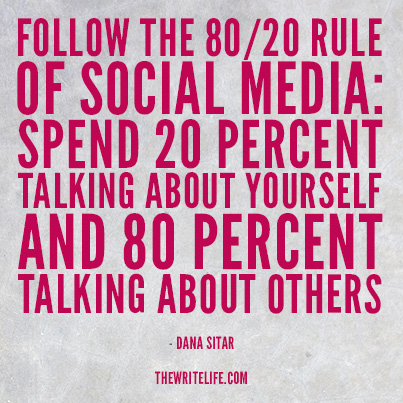
    You may already know the “80/20 Rule” of social media: spend 20 percent of the time talking about yourself, and 80 percent talking about others. Not only is it a good practice to promote the blog posts, books, and resources of others in your niche or genre, but it’s also a way for you to make your Twitter feed a must-read for your followers by ensuring they’ll always find something valuable there.

    80/20 rule of social media

    Ask questions

    Want to get people talking to you? Ask them something! Your Twitter followers might not speak up when you share your brilliant thoughts or latest articles because they’re intimidated or afraid to intrude. But if you reach out to them and welcome their comments, they’ll be happy to share — sparking a conversation and letting you get to know a little about what makes them tick!

    Share life and biz updates

    This one is pretty obvious, and it’s probably what you’re already doing on Twitter if you’re trying to sell books or grow your platform there. I’ll add that talking about yourself on social media doesn’t have to be all about you.

    Share updates and tidbits from your life as a burgeoning author as another way of connecting with followers, not promoting yourself. Show not only your victories but also your vulnerabilities, setbacks, even–gasp!–failures, so your followers understand they’re connecting with a real human, not a promo-bot.

    How do you use Twitter to connect with your community and grow your author platform?

  • What It Really Means to Market Your Writing

    What It Really Means to Market Your Writing

    There are a lot of misconceptions about what it means to market something.

    Not the least of these is that marketing somehow cheapens writing or other creative work. Many writers, artists and other creatives avoid marketing like the plague — as if it will infect all other aspects of their work.

    It’s understandable that so many writers think this way; a lot of the advertising that we see every day is far from appealing, and the industry has earned a bad reputation for brainwashing people, being sneaky, and generally causing trouble.

    But the truth is that all that stuff is NOT what marketing is really about!

    Without marketing — real marketing — no one would be able to make a living writing, share their story, or gain new fans and followers. (Click to tweet this idea.)

    Marketing is much, much more than running an ad or a television commercial, or selling yourself long and hard, and marketing isn’t sleazy! You can do it ethically, honorably and effectively, to tell people what they need to know for them to want to read your work.

    What marketing is NOT

    What is it that keeps so many writers from really getting out there and promoting themselves? Primarily, it stems from a huge misconception about what marketing is, and what it means to do it.

    The fear (and it’s an understandable one) is that when you “market” your work, you have to ruthlessly promote yourself, and sell out your ideals to make a buck.

    This couldn’t be further from the truth.

    Marketing isn’t sales or advertising; those can be elements of marketing, but they’re far from the whole story.

    After all, as an independent writer, you’re not going to promote your novel by taking out full-page ads filled with scantily clad women in the newspaper! You’re not going to have billboards on highways promising dire consequences for all who have not read your book.

    Nor will you rampage through bookstores holding people at knifepoint until they make it to the cash register with your work, or fool people into thinking that you’re something you’re not.

    Marketing isn’t about brainwashing or trickery; it’s about finding people who will be genuinely interested in what you do and what you have to say, and telling them what you’ve got for them.

    Now, people can misuse marketing, but that doesn’t mean you have to. Marketing is only sleazy or unethical when marketers are. It’s not the hammer’s fault when it’s used to harm another person–and it’s not marketing’s fault when advertisers lie.

    That same hammer, in the hands of a carpenter, can build wonderful things, just as marketing can help you build your audience, and readership.

    What marketing is, and how to do it right

    Okay, so now let’s take a look at how marketing can be used ethically and effectively to get your message to the people who need to hear it.

    Let’s start with this very important assumption: you can’t make anyone do something they don’t already want to do.

    Yes, it’s true, despite what some people think about marketing. Someone who hates yoghurt isn’t going to see an ad for it and immediately run out and buy a pint. It doesn’t work that way.

    Likewise, a blog post about science fiction isn’t going to induce a die-hard western fan to go out and pick up a mountain of Star Wars fan fiction. It’s just not going to happen.

    So what’s the point?

    The point is that there are people out there who are dying to read your work–there really are! But they don’t know who you are or that they should be looking for you. It’s your job to let them know that you exist, and that you have stuff that they’d love to read! Marketing is what you’ll use to make that connection.

    That doesn’t sound too bad, does it? Making connections with people who could be interested in what you do?

    Now, let’s get a little deeper into this whole marketing thing. It actually has three distinct and important stages: Alignment, Attraction and Engagement. Briefly, alignment is about making sure you’re trying to connect with the right people, attraction is about getting their attention, and engagement is about building a relationship with them.

    Now, these elements are necessary for all good marketing, but let’s look more closely at what they mean for you, as a writer.

    What ALIGNMENT means to a writer

    You’ve probably heard that you need to picture your ideal reader. This is absolutely true. No matter how brilliant a wordsmith you are, odds are that not everyone on the planet is going to be interested in your work. And if someone’s not interested, you don’t want to bother with them!

    A big mistake that a lot of authors make is failing to really identify their ideal reader at all. It can be challenging to admit that there are people who won’t find your writing appealing, but let’s be honest. A 20 year old surfer dude and a 65 year old grandma of two might love the same books (that’s the beauty of things!) but they probably won’t.

    You want to invest your precious time and money trying to make connections with people who are most likely going to be interested in your work.

     There is a specific type of person who is really going to “get” your writing–and you, as the author, have the best understanding of who that’s going to be. Spend time thinking about them, paint a mental picture of them, and imagine where they spend their time, what they do when they need something new to read, and who or what they consult for recommendations. That will be your way to them.

    If you need some help getting started, check out this post about finding your ONE person–just replace the word “customer” with “reader”, and you’re good to go.

    What ATTRACTION means to a writer

    This part of the marketing process is actually the least important of the three, but it’s the one that most people associate with the word “marketing.” This is probably because it includes all of the things that people do in order to get themselves noticed.

    Attraction is about getting out there and making yourself known: writing blog posts for popular blogs, sharing information on social media, taking out ads with Google or in print spaces (which I don’t usually recommend for writers, by the way), joining communities, or whatever. There are lots of ways you can get someone’s attention, and as long as it’s the right person, that is usually enough to start a relationship.

    Now here’s the thing: this is only difficult if you can’t identify your target reader. If you can, then you’ll find that this part isn’t very hard. So if you’re struggling with getting attention, go back to the part about alignment.

    Remember that you’re not trying to trick or fool anyone into buying your book. You’re alerting interested readers to the fact that you’ve got something amazing to share! This is information they want and will be happy to receive.

    What ENGAGEMENT means to a writer

    Engagement is what you do to help move a reader from knowing that you exist to buying and reading your work. Sometimes that’s as simple as, “Here is my book!” and they buy it, but sometimes it takes a little more, and that’s okay.

    After getting someone’s attention, you need to get them to do something about it. Knowing about you isn’t the end goal; you want them to be reading you!

    Invite people to join your mailing list so that you can offer them samples of your writing, talk to them about ideas, and keep them updated on your new projects. If your alignment is good, this will be appealing to a reader.

    Remember that for every action you ask them to take, whether it’s downloading a copy of your ebook or writing a review for you on Amazon, you want to thank and reward them for their support with more value, interest and content.

    It’s a cycle where you ask for something, provide something of greater value, and then ask again. Over time, a stranger you met through an advertisement or blog post becomes a loyal fan who tells all of their friends when you’ve got something new ready, and who buys anything you produce.

    Okay, so where to begin?

    Does all of this sound a little overwhelming?

    Don’t worry–that’s okay. Marketing is a big topic, and you’re a writer first and foremost.

    Some easy first steps are:

    1. Consider carefully who your ideal reader is. If possible, look at your current readers and try to figure out what they’ve got in common. Do they tend to be mothers? Self-employed? Living in cities? That’s a great place to start fleshing out your reader profile.

    1. Get involved in the communities on and offline where your readers hang out! If they’re on forums, join the forums! If they comment on blogs, comment on them too! If they go to the library, put up notices!

    1. Plan out your relationship-building process. Once someone knows who you are, what do you need them to do? Do you want them to buy your book immediately? Do you want to build a longer-term relationship? What, other than your book, can you offer them to make a relationship with you sound appealing?

    For a more detailed description of the stages of alignment, attraction, and engagement, check out my free Naked Marketing Manifesto.

    Remember: you’re not doing anyone any favors by sitting around twiddling your thumbs and hoping that people will find and enjoy your work. Writing is not enough; you need to let people know you have something wonderful to share.

    There’s no shame in giving someone all the information they need to make a decision. The only shame lies in never giving someone a chance to do so.

    What have you done so far to market your work? Have you had any successes? If you haven’t done any promotion of your work — why not?