Tag: freelance writing

  • How to Become a Transcriptionist: Transcribe Anywhere Review

    How to Become a Transcriptionist: Transcribe Anywhere Review

    If you’re able to type quickly and accurately, a career in transcription might be a smart choice.

    But don’t make the mistake of applying to transcription jobs without proper training. There’s a lot more to becoming a transcriptionist than just typing fast! 

    If you’re keen to land some of the better-paying transcription gigs and truly turn this into a successful money-maker for your family, there’s a course you can take that will teach you everything you need to know to become a great transcriptionist in as little as 2-4 months.

    It’s called Transcribe Anywhere. And it works. I’ll break down my experience of their course in this Transcribe Anywhere review.

    I completed Transcribe Anywhere a couple years ago, and since finishing the course, I’ve developed a successful home business as a transcriptionist. In fact, I earned back the cost of the course within two months of starting my first transcription job, and I’ve been able to find work with ease thanks to the skills I developed through the course.  

    When you apply for transcription jobs, most companies require you to take a test of your ability to accurately type a short audio file. It’s unlikely you’ll pass — and certainly makes it more challenging to move up to higher paying jobs — without training.

    Transcribe Anywhere. Affiliate CTA

    How to become a transcriptionist with Transcribe Anywhere

    Transcribe Anywhere helps aspiring transcriptionists build successful businesses with affordable, all-inclusive education and lifetime support.

    The company offers two different courses: General Transcription and Legal Transcription. Before you enroll, I recommend participating in a free introduction course to learn more about whether transcription is right for you, and what both courses provide. 

    The Course creator, Janet Shaughnessy, knows her stuff. She’s run a transcription business for more than 10 years and is familiar with all the ins and outs of the business. In addition to the online course, she’s readily available via email or the student Facebook group to answer questions and give feedback.

    Transcribe Anywhere: Course details 

    The training you’ll get in the Transcribe Anywhere course is comprehensive! It includes:

    • Foundational lessons, including punctuation practice and review of equipment and software required for transcription. 
    • Over 60 practice files to transcribe as well as answer keys to check your work. You’ll get to practice the full gamut of what a transcriptionist experiences in the real world, including challenging audio quality, accented speakers, and multi-speaker focus groups. The legal course includes templates of legal forms and documents, a guide to legal terminology, and ten levels of practice dictations.
    • A transcription style guide, downloadable templates and printable cheat sheets.
    • Business-building modules to help you jumpstart your career, including information on networking online, setting up a website, and where to look for work as a subcontractor. There’s also a lot of helpful information about how to set your rates and how taxes work when you’re self-employed.
    • Lifetime support, including full access to the course, helpful Facebook groups both for students and graduates, and email availability from the course administrators.

    Transcribe Anywhere also offers a “100% thorough” guarantee. They’re confident you’ll have everything you need to succeed, but if you feel there’s anything missing, they’ll add it into the course so you have it as part of your lifetime access. Pretty cool!

    How much do transcriptionists make? 

    Although the Transcribe Anywhere courses provide you with all the skills you need to become an independent transcriptionist, they do not provide you with work afterward. 

    It’s up to you to do the work of finding clients or companies to work with. 

    To set you on the right path, the course provides a lot of helpful information to find work successfully. They also make it clear up front that this is not a get-rich-quick scheme or an employment-matching service. 

    Transcribe Anywhere reports that the average median annual income for $45,000 for a general transcriptionist and $60,000 for a legal transcriptionist. 

    Your income will depend on whether you’re doing this full-time or as a side hustle, and whether you subcontract for a company or find your own clients. My own part-time income started at about $500 a month and has grown to around $2,000 a month. 

    As with most classes or courses, its aim is to provide you with skills so that you can go out and find the work you’ve trained for. After completing the course, I’ve been able to pass the transcription tests companies require for employment without much difficulty because the practice dictations in the course really do prepare you for real-life work.

    How much does Transcribe Anywhere cost?

    So what’s the cost for the course? The entry course is free. The General Transcription course is $597, and the Legal Transcription course is $697. 

    Both options have payment plans available, so you can pay for the first couple of modules and complete them before paying for the entire course.

    Although the course is advertised as self-paced, it’s a little bit more complicated than that. 

    Once you purchase the full course, you do have lifetime access to it and can take as long as you want to do each module. However, if you opt for the pay-as-you-go option, you only have 30 days to complete the first section and 60 days to complete the second section. That’s one place I noticed room for improvement; since the second section contains all of the practice dictations, it would be nice to have more time to truly do it at your own pace.

    Is Transcribe Anywhere legit?

    Some writers might ask, wait, is Transcribe Anywhere legit?

    My answer: Yes, definitely.

    And the course stays up-to-date! I completed the course two years ago, and the creator has updated it since then to make sure all the information is current and relevant. 

    Bottom line of this Transcribe Anywhere review: In the time since I’ve taken the course, I’ve been able to grow a successful business as a freelance transcriptionist, using the knowledge, tools and skills I developed in the Transcribe Anywhere course. 

    If you want to become a transcriptionist, Transcribe Anywhere is an excellent place to start. Check out their free mini-course first!

     This post contains affiliate links. That means if you purchase through our links, you’re supporting The Write Life — and we thank you for that!

    Photo via BONNINSTUDIO / Shutterstock 

  • Write to Market: What it Means for Authors and Freelance Writers

    Write to Market: What it Means for Authors and Freelance Writers

    When you see a trend or niche taking over an industry, it’s easy to think, “Did all of these just coincidentally get published at the same time?: More often than not, this is what is called to write to market.

    Instead of authors and writers taking a story that they want to tell, they look at what is already doing well in the overall marketplace and create stories and writing similar to what is already selling.

    As you can imagine, this can be a powerful tool for writers when used strategically. We’ll be going over what it is, how it works for both authors and freelance writers, and the pros and cons of such a publishing style.

    What Does it Mean to Write to Market?

    When most people imagine writing books or articles, they imagine a writer who comes up with a unique story and then brings it to life. They imagine some wild tale that the author has been dying to tell and they finally put it all together.

    Instead, people who write to market focus on the audience and growing trends first instead of a story they have already created. The audience and the trends dictate what the author writes instead of doing it the other way around. That is, unless, there is some magical overlap between the two.

    For writers who already create content online, this might not be a strange concept. Any blog writer knows how important it is to maximize trends and write directly to the audience.

    Write to Market: What it Means for Authors

    If you’re an author who wants to write to market, you’re going to pick a trending topic that readers are currently buying and create a story that fits into that market.

    One quick way to see what is hot and trending to write about is to go to your local bookstore and take a look at the new releases. You can also see some of the most popular books being sold on Amazon, updated hourly, as well. There are thousands of niches and topics to choose from.

    If you look long enough, you’ll start to see common themes, patterns, and types of stories. These are exactly the kinds of things you’d want to make notes about if you’re considering doing this.

    An example of this type of writing is to think of romance novels with the same types of covers and storylines that have been written over and over through the years. Some years they’re in greater demand than others, but overall it’s a popular style of book that continues to sell well. (50 Shades of Gray, ring a bell?)

    Related: Romance Tropes

    Let’s go through the pros and cons of choosing to write to market as an author.

    Pros to write to market for authors

    One pro of creating a book that’s written to market is that authors might get a chance to write about a topic that they’ve never written about before.

    If you’re an author who is looking for some much-needed inspiration and wanting to change it up, finding a completely new topic might be the creative spark you need.

    With a trending niche, keep in mind that time is of the essence. While this might be a pro or con for you, depending on how you view it, the good thing is that you’ll need to turn that draft around quickly to make sure you ride the wave of its popularity. The con is also that you’ll need to turn it around quickly.

    Following a trend can help you get out of your writing rut and write about something you never have before. If you’ve typically written historical novels, it might be a good change of pace to write a horror book.

    Cons for authors to write to market

    One big downfall of authors focusing on a write to market book is that the turnaround time can take a long time with traditional publishing.

    Authors who choose to self-publish have a better chance of riding the waves than authors who go the traditional route. This is because by the time a book goes through all the traditional editorial stages, often the trend is already over or at least nearing its end.

    Related: Self-Publishing vs. Traditional

    Another con for authors is that the book might not be a topic they want to write about. They’re going based on what is hot at the time instead of a story that they’re excited to write. That can sometimes make the projects drag on or feel tough to write and put in the hours to get it done.

    You might also see your book not do well over the long term. It might only ride the wave of success for a short time and quickly fall off the radar.

    Write to Market: What it Means for Freelancers

    Unlike authors, freelance writers have much more flexibility when it comes to choosing what to work on.

    Similar to picking a niche, when a freelancer chooses to write to market, they are taking a look around at what is popular or in demand for writing.

    If you’re in any freelance writing groups, you might also notice which trends more writers are talking about, which might give you some inspiration for topics and niches to write about.

    Let’s go through the pros and cons of choosing to write to market as a freelancer.

    Picking a niche as a freelance writer

    When it comes to picking niches and topics to write about as a freelance writer, often, the sky is the limit. There are more niches out there than you could spend your entire life writing about.

    While it might be hard to pick just a few, keep in mind that you can always change it down the line. If you write for an industry for a certain amount of time and then decide to change your mind, you always can.

    Generally, it’s a good idea to pick industries and niches you have some experience or knowledge in, only because it’s much easier to write about something you know than something you have to extensively research. Plus, it saves you a lot of time so you can get drafts out faster than you would with a topic you don’t know well.

    Looking to get into a hot market? Take a look at this monster list of 115 potential markets to write for.

    write to market

    Pros to writing to market for freelance writers

    One great benefit to this is a freelance writer is that you can quickly gain attention and popularity by riding the trending waves at a time.

    This is also a quick way to start to grow a following, as you can hop on and ride a trend for a while instead of waiting to put together a huge, labor-intensive project.

    As you can imagine, you might also be paid faster than you would with projects that take longer to create. It doesn’t necessarily mean you’ll be paid more over time, but if you need the cash sooner than later, this might be a smart strategy for you.

    Cons to writing to market for freelance writers

    On the flip side, if you choose to do this as a freelancer, you’ll end up chasing trends. That can be a good or bad thing, depending on how you choose to direct your freelance career.

    Having to chase trends means you will have to publish content at a quick rate to make sure you’re keeping up with the trends. This can prevent you from doing necessary deep work and deep dives into your specific niches.

    Conclusion

    Overall, riding a trend at the right moment can help catapult your writing career, but you’ll want to think deeply about if it’s a strategy that will work for you.

    If you’re planning to become a freelancer, check out this free resource.

    Freelance Writer’s Pitch Checklist
    Grab it for free 👇

    Convince more editors to say YES to your pitches!

      We’ll also send you our weekly newsletter, which offers helpful advice for freelancing and publishing. You can unsubscribe at any time.

    • How To Write About NFTs and Art: 4 Easy Ways to Start

      How To Write About NFTs and Art: 4 Easy Ways to Start

      If you’ve been on the internet in the past few years, you’ve most likely heard about NFT’s. You might be wondering how to write about NFTs and art and how to write about this growing industry.

      You have probably seen NFTs as icons on people’s Twitter profiles, since it’s a popular way to show off what NFTs someone owns. If you haven’t, you might have heard of them through the internet.

      If you’ve wanted to dip your toes into writing about NFTs, we’re going go cover everything you’ll need to know to get started.

      Introduction to NFTs

      NFTs stand for non-fungible tokens. They’re a part of the Ethereum blockchain, which falls under the umbrella of cryptocurrency.

      If that sounds complicated, to make it clearer, you’re essentially buying digital art.

      NFTs are digital collectibles, similar to buying art or trading cards in the real world. Once you own it, it’s your property. Most of the current conversation online around NFTs is through digital art, but people can also use it for other artistic endeavors as well, such as music and videos.

      According to The Verge, “NFTs are designed to give you something that can’t be copied: ownership of the work (though the artist can still retain the copyright and reproduction rights, just like with physical artwork). To put it in terms of physical art collecting: anyone can buy a Monet print. But only one person can own the original.”

      The main thing you need to know, in the shortest summary, is that it is a new way for artists to sell their work.

      When artists sell an NFT there is a digital footprint to prove the purchase. This helps both authors and buyers prove the purchase and keep track of the financial trail.

      Some businesses are using it as a new level of engagement with their company as well. Lately, big book and magazine publishers have been getting their foot in the door with NFTs, which is something writers should know about.

      Brands are just beginning to get comfortable with this new technology, so it will probably begin to grow even faster as time goes on and they learn it better.

      As they increase in popularity online, you might be interested in writing about this new industry or even start to sell some yourself. We’ll go over some of the basics you need to know if that’s what you want to do.

      how to write about nfts
      https://pixabay.com/illustrations/nft-nfts-cryptocurrency-6795915/

      How To Write About NFTs – Tips and Tricks

      NFTs and cryptocurrencies are only going to increase in popularity with time so if it is an industry you want to write about, there are a few things you’ll need to know.

      Let’s dive into how to write about NFTs and build your portfolio as a writer in this growing industry.

      Know the ins and outs of the NFT lingo

      When it comes to trends and new industries, it’s essential to master the language and lingo people in that community use.

      You will want to take the time to read some of the biggest NFT websites and follow experts on the matter so you know what you’re talking about.

      That way, people will take you seriously and won’t be turned off by your writing right away due to obvious errors in your writing. This will also help publications and people in the industry take you seriously as a writer.

      Make it easy to understand

      While you need to know the language of NFTs, at the same time, you need to make it easy to understand.

      Since it’s a new and slightly complicated industry, you need to make your writing accessible to the average person. You’ll get a lot more readers if you help people understand the basics, even if you’re writing to people deep in the NFT space.

      Know the newest trends

      One essential part to writing about NFTs is to know what trends are on the rise. For example, you’ll need to keep up with the newest NFT marketplaces and know what the options are.

      You’ll need to keep up daily to see which brands are jumping on NFTs and which industries are putting their foot in the game. Almost every day some new news comes out about NFTs since it is a hot industry that is constantly changing and evolving.

      Whether you choose to publish NFT articles and stories on your own website or write for websites, you’ll need to know the current trends to write about. If a huge celebrity or company joins the NFT space, you’ll want to be ahead of the story and publish it as soon as that news goes live.

      Keep up with the laws around NFTs

      Just as cryptocurrency laws and regulations are always changing, you’ll need to keep up with the newest laws around NFTs.

      It’s essential to fully inform your audience of what they need to know. Lots of people want to oversell and overhype NFTs but most people don’t know the basics so they can make correct and informed choices.

      For example, more people should be aware of NFT scams out there or know how to protect their assets. If someone breaks into your NFT account, they can steal the art you have purchased. You’ll want to make sure you cover the basics and keep your audience safe as they explore this new industry.

      Options and sites where you can make money writing about NFTs

      As a writer, if you want to start making money writing about NFTs, we’ll cover the basics of what you need to know to get started. There are a few options you can dive into to get your foot in the door of this exciting industry.

      Publish your own articles

      This is an option if you want to start publishing pieces and get a solid platform under your belt. You can also use this to build a portfolio and pitch bigger companies.

      If you grow it enough, you could also make money with affiliate marketing, advertising, or other income-generating options.

      Keep in mind, running your own site can take up a lot of time, so be clear on if you just want to use it to house your portfolio or you want to turn it into an income-producing website.

      Write for NFT and cryptocurrency sites

      There are two ways you can go about writing for NFT websites: market yourself as an NFT writer and try to get clients to come to you, or you can pitch to NFT sites to write for them.

      One way for writers to find news sites to write for, you’ll want to go to Google and search: NFT website “write for us”.

      Here are some that pop up for example when I do: Cryptofiles, Cryptopositives, and Cryptotimes.

      Depending on what you want to write, you could do articles, website copy, social media posts, emails, or more.

      Otherwise, you might want to use “NFT writer” in your bio on social media, on LinkedIn, your website, and so on, to attract potential clients who are looking for writers in this space.

      Sell your own NFTs

      If you didn’t know, writers also have the possibility of selling their own NFTs.

      Some authors are selling first editions of their digital books. They also have been selling their cover art as NFTs where they create unique or special ones specifically for this.

      This is most likely not the option you’re looking for, but we had to mention it just in case it was something that you didn’t even know was possible as a writer.

      Overall

      Writing about NFTs is a growing industry and it’s something that could be a great option for freelance writers to cover and add to their overall resume.

      TWL. CTA. Book Outline Template
    • What is A Writing Sample? 7 Simple Steps to Create Yours

      What is A Writing Sample? 7 Simple Steps to Create Yours

      There are a lot of reasons a writer will need to create a writing sample. You might be applying for a job, trying to land a freelance client, or simply creating a portfolio to showcase your skills.

      A good writing sample can help you stand out in a crowded marketplace and give you a real shot. It’s not something you want to treat lightly and you’ll want to make sure you put your best foot forward every time you put one together.

      No matter what kind of writing you choose to do with your career, you’ll always need to be able to showcase your work and show your talent.

      We’ll go over what writing samples are, why you might need to craft one, and the best ways to go about writing one.

      What is a writing sample?

      For the most part, you will see requests for writing samples for jobs where you will be writing often such as blog writing, journalism, internships, public relations, or research positions. It gives employers a good idea of your writing skills and overall tone.

      Writing samples can be anywhere from a few sentences to a few pages, depending on what is required. Sometimes writing samples are paid but often they’re not.

      While they can be time-consuming, a successful writing sample can make you stand out from other applicants.

      Freelance Writer’s Pitch Checklist
      Grab it for free 👇

      Convince more editors to say YES to your pitches!

        We’ll also send you our weekly newsletter, which offers helpful advice for freelancing and publishing. You can unsubscribe at any time.

        Why do you need a writing sample?

        You’ll often see writing samples with specific writing requirements, formatting, and topics for job applications. You will see them in both traditional jobs and also for freelance writing jobs.

        Sometimes, you’ll need to craft a writing sample from scratch with set guidelines or you might be able to send in previous things you’ve written.

        Writing samples can sometimes also be interchangeable with your writing portfolio as well. Not every job application will require a unique writing sample, sometimes they just simply want to see your past work.

        In that case, you’ll want to pick the most relevant samples from your portfolio to represent your writing.

        Once they see your writing style, they will be able to see if you’re a good fit for the position.

        However, they may choose to have you create a new writing sample from scratch, and let’s go over what you need to keep in mind before writing one.

        writing sample

        What others are looking for in your writing sample

        No matter what you’re using a writing sample for, you must make sure it is as error-free as possible.

        The top thing that will disqualify you as an applicant is having a writing sample with a ton of grammatical errors, typos, or ignoring the guidelines they gave you.

        Potential employers or clients want to see that you know what you’re doing and leaving in errors shows that you don’t pay attention to the small details. With any submission you make, you need to take the time to go through it and check all of your sentences to make sure there aren’t any issues.

        Not only do you need to make sure there aren’t errors in your writing, but you also need to make sure that you’re following every single instruction in the guidelines.

        Your writing sample will also show your overall writing style and if you can match the tone or voice they need.

        Clients or employers will often give you some information about their target audience, but if not, you can search their website or social media for a general idea on the tone they want from their publication.

        How to craft a writing sample

        If you’re putting together a unique writing sample for a specific job, or you’re putting together some general samples for your portfolio, this will guide you through the steps from start to finish.

        #1 – Know your guidelines

        If there are specific requirements for the sample, such as word count or formatting options, you’ll need to follow them exactly.

        However, if you’re just creating some general writing samples, you’ll want to make your own guidelines. Some examples could be a specific type of writing, such as blog writing, and in a certain industry. 

        Rarely will employers or anyone else want to see random writing samples from your personal journals, unless you’re trying to sell something such as a memoir. Keep your samples focused and relevant.

        #2 – Have a clear idea for success

        Once you know your guidelines, you need to know what the ultimate goal of your writing sample is. It might be to showcase your writing style, depth of research, or convince someone to pick you.

        For example, if you’re simply creating writing pieces for your portfolio, you should know what industry and type of writing you want to do. That way, you know that your pieces need to reflect those skills to the best of your current ability.

        If you’re creating a writing sample for a potential new position, you also need to know what success looks like in your sample. What would make you feel confident that you’re giving them everything they’re looking for?

        If you don’t know what success looks like with your writing samples, you can always look through content that the company already published. That will give you an idea of what they look for and approve of on their team.

        #3 – Know your intended audience

        When it comes to writing your writing sample, you’ll want to keep your audience in mind while you craft your submission.

        Knowing who you are writing to, whether it’s for blog posts or B2B marketing, you need to make sure you’re using language that is targeted toward that audience. The last thing you want to do is write to the wrong audience with your writing sample and disqualify yourself as a writer.

        You want to always make sure you’re using the same language as your intended audience. If they use technical language, you’ll want to include some. If it’s on the simple side, you’ll want to make sure your writing isn’t too complex.

        #4 – Look at other samples online

        If you get stuck during your writing process, it might help to do more research and see what other people are creating in the industry you’re writing about.

        This can help you understand what you need to publish and can help guide your tone or choice of words. You will be able to tell if your writing blends in with other work in this industry or not.

        #5 – Edit your work

        As mentioned above, you’ll want to make sure your writing sample doesn’t have any errors. You will want to check it for grammar issues, typos, or any parts that don’t flow well.

        We recommend ProWritingAid and Grammarly.

        If you submit a piece with tons of spelling errors, there is a good chance your application will be immediately discarded. Making sure your sample doesn’t have any errors is far more important than making it have the perfect tone.

        Tone and voice are things that can be refined with time, but basic grammar errors are often something they won’t take the time to teach you. They expect you to know those rules already.

        Editing your writing sample also means going through the guidelines one more time to make sure you didn’t miss any required parts.

        #6 – Stand out from the other applications

        One thing you might consider doing with your sample is to include a few sentences explaining why you wrote your sample the way you did.

        Instead of just a simple sample, you’re giving them a deeper understanding of how you approach writing. You can explain what you did for research and why you used the words you did.

        #7 – Submit your writing sample

        You will need to know the exact type of format you need to submit your writing sample. Some places are fine with newer options such as Google Docs, but more traditional places may want Microsoft Word or even printed versions of your writing samples.

        What to do next

        Download the Pitch Checklist and start submitting your writing samples.

        Freelance Writer’s Pitch Checklist
        Grab it for free 👇

        Convince more editors to say YES to your pitches!

          We’ll also send you our weekly newsletter, which offers helpful advice for freelancing and publishing. You can unsubscribe at any time.

        • 4 Ways to Manage Freelance Writing During the Holidays

          4 Ways to Manage Freelance Writing During the Holidays

          Who else takes freelance work home over the holidays? How do you manage freelance writing during the holidays?

          Since freelancers can work from anywhere, it often means that we have the luxury of spending more holiday time with family than our traditionally-employed peers who have to be back at work on Monday morning.

          Of course, we usually have to work on Monday morning too. Family members don’t always understand that just because you’re home for the holidays doesn’t mean you’re on vacation.

          How do you manage these expectations and ensure that your work gets done while keeping both clients and extended family happy?

          I’m coming up on my fourth year of holiday freelancing, so here’s my guide to getting it all done while also catching up with family and friends.

          4 ways to manage freelance writing during the holidays

          1. Start with communication

          The easiest way to manage expectations is to communicate them. Tell your family members that you’re excited to see them this holiday season, and that you’re going to be spending part of your time working.

          Present this as a positive: Because you’re a freelancer, you have the opportunity to earn money and maintain your client relationships while still getting to see family for the holidays. Other people in the workforce don’t have this luxury.

          Once you’ve established that you’re going to work during part of your holiday visit, it’s time to communicate the boundaries of your workday. I often say, “I need to check in with clients in the morning, and I need to answer emails and turn in a few pieces. I’ll be available for holiday and family stuff after lunch.” You might also say something like “I need to spend most of Thursday working on freelance stuff, but I’ll be available to visit Grandma with you on Thursday evening, and I’ll also be available all day Friday.”

          Make these boundaries known early. Let your family know as soon as possible when you plan to be focusing on work along with which periods of time you’ve reserved for them.

          By communicating early, everyone can prepare for temporary schedule changes.

          2. Batch your workload

          If your typical freelance workday includes a lot of puttering around and chatting on social networks between writing pieces, it’s time to hunker down and focus.

          Try to batch your workload into small, distinct time blocks: 8 a.m. to noon on weekdays, for example.

          You need to avoid as much procrastination as possible to get your work done in a pre-defined time block. If you like to take 20-minute breaks between writing sprints, for example, you may need to cut that down to five-minute breaks. You don’t want to hear a disappointed family member say “I thought you were working!” when they catch you watching YouTube.

          If you can’t get all of your work done during the time blocks you’ve set for yourself, consider working a few extra hours after everyone else has gone to bed or before they wake up. I’ve gotten a lot of work done on family trips by staying up late or setting my alarm a little early.

          Pay attention to your family’s schedule to find the optimum time to work.

          Is your family the kind that likes to spend an hour or two after lunch relaxing in front of the TV? That might be your ideal work time. Have a parent who likes to spend the hour before dinner cooking up an elaborate meal? Grab your laptop and answer emails from the kitchen island. It’s like you’re getting work done together!

          3. When you’re not working, be present

          We all know you’re not going to turn your phone off when your freelance work is done. You could, however, put it in your pocket — or at least turn off email notifications.

          When you tell your family that you’ll be available for certain activities, be present. I’ll be the first to admit it’s hard. I have definitely been the person sending emails during a family hike because something came up with one of my clients. But do your best to work when you’re supposed to work, and put work away when you’re not working.

          Consider it the other side of the “I thought you were working!” argument. Try to avoid the distractions of the Internet when you’re getting work done — and then avoid the distractions of the Internet when you’re with your family!

          4. You don’t have to do everything

          Family and clients often come with similar pressures: You have to do everything, or else you’re not part of the team.

          It’s OK to say no, to both your family members and to your clients. It’s OK to tell your family that you can’t play Monopoly after dinner because you have to finish a freelance assignment, or that you’d like to get some work done while they pick out the Christmas tree—but you’ll be ready to help them decorate it!

          It’s also OK to tell a client that you can’t take on a specific assignment because you’ll be visiting your family. Or, you can ask for a deadline that falls after the holidays. You are not required to be available at all times. Many freelancers forget this, including me.

          Setting boundaries with yourself, your family and your clients—and then taking the time to communicate those boundaries — is the key to having a happy holiday while also getting your freelance work done.

          Remember, you are an adult with a real job, and you have the right and the responsibility to manage that job effectively during the holiday season.

          Then enjoy that extra piece of pie, because you’ve earned it.

          How do you manage your freelance writing during the holidays? Do you have tips for setting expectations with both clients and family?

        • The Freelance Writer’s Guide to the Holidays: 5 Simple Ways to Stay Sane

          The Freelance Writer’s Guide to the Holidays: 5 Simple Ways to Stay Sane

          This time of year can be both an exciting and frustrating time for freelance writers, which is why this freelance writer’s guide to the holidays will help you stay sane!

          While many enjoy celebrating with family and friends, it can be difficult to keep the income flowing this time of year.

          Follow these tips to start planning  for a successful holiday season.

          The freelance writer’s guide to the holidays

          1. Check your finances

          The holidays can be expensive.

          Whether you’re buying presents, traveling to see family, or planning a holiday feast for 30, you’ll likely have some additional expenditures this time of year.

          You’ll also likely have higher day-to-day expenses with the shorter days and colder temperatures. Expenses such as electric and heating bills typically jump this time of year, so be sure to plan your finances accordingly.

          When calculating your expenses, don’t forget about things like Secret Santas, white elephant exchanges, gingerbread cookie ingredients, eggnog, holiday donations, decorations, holiday parties and gatherings with friends. All the little expenses add up.

          2. Plan your workload

          Once you have an idea about your end-of-year expenses, you can decide if it makes sense to take on extra work.

          Consider if you need to send out additional pitches or ask your regular clients if they have extra work available.

          It’s also a good time to do your end-of-year review and ask your regular clients for a pay bump in the new year.

          planning for the holidays3. Check your calendar

          Take a few minutes and look at your calendar through the second week of January or so. Look at your deadlines, see when you’ll be traveling, and be sure to mark down holiday parties and other events.

          Decide if you would like to take some time off for the holidays. Figure out what days you would like to take off and whether or not your plans will involve travel. Then you can plan your work schedule around these dates.

          4. Work ahead and count on delays

          If you have to reach out to anyone for your stories, start right away. During the holidays, you’ll find that many subjects are even harder to reach than usual.

          Try and conduct your interviews as early as possible to allow time to reach out again with any follow-up questions.

          Also realize that many editors will be out of the office or difficult to reach during the holidays. Take some extra time now to go through your assignment and reach out with any questions or concerns you might have.

          It’s also a good idea to work ahead on assignments so you can reach out early with any questions that come up along the way.

          5. Have a communication plan

          If you’re going to be incommunicado for any length of time, be sure to set up an auto-reply and voicemail message to let people know when you’ll be back in the office. It’s okay to take a vacation, but it’s also important to communicate your availability.

          It likely makes sense to bring important files with you and have a plan for addressing any last-minute edits or changes when you’re traveling. As much as you can plan ahead and do your best to get your stories in early, it’s not uncommon for something to come up that requires some last-minute attention.

          If you’re only taking a long weekend, say Thursday to Sunday off, you may not need an intensive “away” plan. But if you’re planning on taking two weeks off, you will likely want to make a plan.

          Some people like to leave an auto-reply with alternate contact information, such as a phone number for “emergencies.” Others prefer to check in with email once or twice a day, but it can be hard to truly disconnect while checking in all the time. Every writer will have to decide what works best for their particular situation and plan accordingly.

          An unexpected upside to the freelance writer’s guide to the holidays

          While you’re likely to encounter many delays during the holidays, it can also be a time of opportunity for freelancers.

          While many editors go on vacation, others use this slow time to get ahead on their work. Some editors may be especially receptive to pitches during this time since they may receive fewer queries.

          It is also a good time to be an editor’s go-to person for a last-minute story when their regular stable of writers is unavailable. If you will be available, it may be useful to reach out to your regular editors and let them know you’ll be available.

          Using this freelance writer’s guide to the holidays can help turn an often-slow season into a prosperous one. They can also help you plan a much-needed break to enjoy some time with family and friends.

          Your Turn: How do you prepare for the holidays as a freelancer?

        • 10 Must-Try Tools for Freelance Writers (Bonus: Most Are Free!)

          10 Must-Try Tools for Freelance Writers (Bonus: Most Are Free!)

          Freelance writers are always looking for ways to streamline the drudgery we often don’t get paid for — things like finding new gigs, doing background research, and keeping tabs on pitches.

          Of all the writing tools online, these 10 are the most useful to help you cut back on administrative work, so you can spend more time being creative.

          Grammar Checkers

          1. Grammarly

          Grammarly is an incredibly powerful grammar checker that identifies hundreds of types of writing mistakes.

          Unlike Microsoft Word, Grammarly finds correctly spelled words used in the wrong context, like “affect” vs. “effect.” It also highlights long, clunky sentences and suggests improvements.

          Grammarly is available as a free extension for Google Chrome, Firefox, and Safari. It works anywhere on the Web, so you can use it for your Gmail messages, social media posts, Web forms, and blog posts.

          A premium version of Grammarly with even more tools is also available.

          2. Copyscape

          It’s easy for a phrase you saw elsewhere to percolate into your brain. That’s where Copyscape comes in.

          Copyscape Premium lets you checks your content against what’s on the web before you submit it.

          If you’re a blogger or editor, you can also use Copyscape to scan the Web for duplications of your online content, and find out how to get them removed.

          3. WordCounter

          While there’s a built-in counter in your word processor, WordCounter.net does so much more.

          Simply paste your text into the box to see basic counts, estimated reading level, reading time, and speaking time – all for free.

          It will even keep your SEO on track by summarizing keyword density.

          Submission Tracking

          4. Sonar Database

          Sonar is a submission tracking tool for Windows. You can enter details about specific works and markets, including submission dates, status, notes and editorial contacts.

          Keep in mind that Sonar is very basic. There’s no reporting functionality, and it doesn’t display simultaneous submissions of the same work.

          Still, it gets the job done, and unlike other submission tracking tools, it’s completely free.

          Finding Writing Ideas

          5. HubSpot Blog Topic Generator

          Hubspot’s popular blog topic generator will come to your rescue when you’re short on post ideas.

          Enter up to three keywords (preferably nouns), and HubSpot will churn out five titles.

          The titles won’t always be a perfect fit, and you’ll need to revise for grammar. Think of them as a jumpstart for your brain.

          Finding Work

          6. Writer’s Market

          No list would be complete without the Writer’s Market, which lists details and writer’s guidelines for thousands of publishing outlets.

          While there are a few similar databases you can use for free, the Writer’s Market is by far the most comprehensive resource for identifying newspapers, magazines, book publishers, and online publications in your field.

          Going with a subscription instead of the print version means that you’ll always have the most current information.

          7. UpWork

          UpWork is the leading online job board for the gig economy.

          While it’s true that hoards of clients offer rock-bottom rates, there are enough serious companies to make UpWork a decent place to find new projects.

          Freelancers with expertise in technical writing, marketing and similar fields will have the easiest time scoring jobs that pay well. It’s also helpful to research what successful freelancers do and look at their profiles.

          Productivity

          8. ZonePDF

          ZonePDF offers tools for splitting and combining PDFs.

          You can convert JPG, PPT, Word, and Excel files to PDFs, for example, then merge them together.

          It’s useful for technical writers who need to integrate various screenshots, spreadsheets, and pages extracted from existing PDFs into a report. You can also split a client’s background document and repackage a single page in a new file.

          9. Evernote

          This online note-taking software is perfect for collecting and organizing your background research.

          Much like your desk drawer, you can basically throw anything into Evernote, including images, PDFs, text, audio recordings and more. Just forward your emails to a personalized Evernote address to add them to your account.

          All of these items are “notes,” which Evernote organizes into notebooks. You can also create new, text-based notes directly in Evernote, and upload file attachments to them. Tags and OCR search capability make it easy to find the note you need.

          Try creating a notebook for your next piece, and putting everything you need in it, including:

          • Images
          • Screen captures of your web research
          • Writer’s guidelines
          • Relevant emails
          • Your to-do list for that piece
          • A recorded interview

          It’s the easiest way to store many different types of information in a single, searchable location you can access from anywhere.

          Evernote is also the quickest way to snag and save copies of your work as it appears on the Web. That way you’ll always have a copy for your portfolio, even if a link goes dead a year or two down the road.

          Writing Platforms

          10. WordPress

          If you have a personal blog or website, there’s a good chance you’re using WordPress.

          Originally a blogging platform, WordPress has become a full-fledged web content management system in its own right.

          Countless businesses now use WordPress for their blogs and websites, so more writing gigs require familiarity with it. If you don’t know how to use WordPress, you may be losing out on jobs you’re a perfect fit for otherwise.

          Freelance writers are masters of multitasking, but we put a lot of time and effort into making it happen. Spending a few minutes to explore these tools will help you minimize the mundane going forward, so you can focus on your craft.

        • Break Into B2B Writing and Ditch the Content Mills

          Break Into B2B Writing and Ditch the Content Mills

          Want to learn more about breaking into B2B writing? Download the “B2B Writing in One Hour” exercise at www.B2BWritingInstitute.com.

          Are you tired of grinding your way to burnout writing $8 and $15 articles in content mills?

          There’s a better way to build a business as a freelance writer. Breaking into B2B writing allows you to tap into an incredibly valuable form of content development, one that marketing managers are spending as much as $5.2 billion every year

          If you’re a naturally talented writer with a healthy curiosity about how businesses operate, you could jump on stable, profitable assignments that run upwards of $1 per word.

          Here’s a bit of background information about B2B writing and what it takes to be successful in this lucrative writing field.

          What is B2B writing?

          B2B writing stands for business-to-business writing. It’s the other side of the coin with B2C writing, or business-to-community writing. In B2C writing, you’re helping a company sell products to consumers like you and me. In B2B writing, you’re helping a company sell products to other companies.

          Think of it this way: in B2C writing, you’re writing ad copy and emails to sell the cute holiday sweater in an e-commerce store, or the delicious pineapple in the grocery store. 

          In B2B marketing writing, you’re helping the e-commerce store choose the right platform for selling sweaters, and you’re helping the pineapple growers understand the best shipping and logistics software to get their pineapples to the right store at the right time.

          Your job as a B2B copywriter is to write the blog posts, white papers, case studies, infographics and more to help those companies make their value clear to their customers — which happen to be other companies. 

          Why it’s worth becoming a B2B copywriter

          According to the Content Marketing Institute’s 2021 Benchmarks, Budgets, and Trends survey, businesses need content.

          Ninety-three percent of organizations engage in content marketing for their businesses, but they often run into roadblocks keeping up with demand. That means there’s a huge built-in market for writers who know how to talk about business problems and sell products and services to other businesses.

          These clients already know they need your services and they already know your services are worth the cost. They just need to meet you and get sold on the fact that you’re the right writer for them.

          Skills you need to be successful in B2B copywriting

          You know the market is there, so how do you know you’ll enjoy the work? Here are three skills you’ll need to be successful or desirable as a B2B copywriter:

          1. Writing talent: You know how to put words together into convincing and well-received sentences. You know how to convey meaning clearly for readable, relatable online content.
          2. Business awareness: You understand that businesses invest in products and services to make more money and then re-invest that money in their products and services. You know how customer service, marketing, leadership and sales work together to keep a business afloat (and if you run your own business, you definitely know this!)

          3. Digital research savvy: You know how to perform research online to uncover interesting statistics and quickly understand the lingo businesses use for their products and services. You have a basic knowledge of SEO keywords and writing for search engines to help businesses get online traffic.

          If you aren’t strong in any of these three areas, that’s where you can hone in on your training to grow your B2B skills and become a great B2B copywriter.

          How B2B marketing writing is different

          Writing for a B2B audience is a topic that could be a whole course. But you can get started in this field by understanding a few simple principles.

          First, understand that the B2B audience is made up of people who represent a company. While for B2C writing you write to an individual who is making choices for himself, when you write for a B2B audience you’re writing for an individual who is making choices for his place of work. He’ll need to justify this purchase to his boss or his boss’s boss, and he’ll want to know all of the technical details up front.

          Second, know that the B2B audience values statistics and information about the return on investment (ROI) that comes from the products or services being advertised. Essentially, they want to know that spending $1,000 on the product you’re advertising will net the company $2,000 or $5,000 more revenue. Any investment needs to provide a return.

          Finally, B2B audiences take in information in the marketing age in many different ways. B2B marketing writing can take the form of blog posts and articles on a company’s website, or articles via a high-traffic publication like Forbes or Inc.

          B2B audiences also might need to receive content in the form of press releases, white papers and case studies, each of which have their own format, best practices, and price points.

          If it sounds like B2B writing could be a good fit for you, don’t waste another minute writing for low-paying content mills.

          Dig deeper into which businesses could benefit from your writing specialty and craft a few example pieces with these principles in mind.

          This is an updated version of a story that was previously published. We update our posts as often as possible to ensure they’re useful for our readers.

          Photo by Ekaterina Bolovtsova from Pexels

        • Here’s a Better Way to Set Your Freelance Writing Rates

          Here’s a Better Way to Set Your Freelance Writing Rates

          When you first set out to become a freelance writer, you charge whatever you think is “normal.”

          In the process of determining that rate, you consider the pay scale of jobs you’ve worked in the past, consult industry pricing sheets, and read every “How much should I charge?” resource you can get your hands on.

          And after reading all of those blogs and getting pep talks from the best writers out there… you still turn around and charge $15 or $20 an hour for all kinds of writing services.

          I know why you do it. I was there. I started my writing business charging $35 an hour and I felt pretty darn lucky to get the business that came in (and, truth be told, I was indeed lucky to get it because I was just getting started).

          Because no matter how many articles I read telling me to charge more, I never quite understood why I should charge more, or how I should go about it.

          Well, new writers, your day has come! Here’s a look at the real consequences of charging $20 an hour to write and how to make the switch to a more profitable rate you deserve.

          What’s a good hourly rate for a freelance writer?

          The truth of the matter is that a minimum writing rate is however low you’ll go when you need money.

          It’s important to know that number for business purposes, but using that number to guide your pricing is a huge mistake. It points the nose of your plane at the ground and limits your ability to earn from the get-go.

          For some, it’s thrilling to surpass the minimum wage at $15 per hour, and it beats unemployment. Many others, including myself, realize after a few months that charging this low rate is not the equivalent of a full-time writing job, and is simply not sustainable.

          Beyond the threat of going out of business because you aren’t making enough, charging too little makes freelancing stressful and hard. It makes you work overtime, and on projects (and with people) who don’t feed your love of writing.

          If you love freelancing and you are getting great feedback from your clients, the time has come to raise your rate. But trust me, if you go from $20 to $100 an hour, you’ll lose all your clients.

          So how do you do it without alienating the people you want to work with?

          What’s better than hourly freelance writing rates?

          Here’s the rub: Raising your prices when you work hourly is extremely difficult. Going from $20 an hour to $50 an hour will feel like an unwarranted hike for your clients and you’ll feel the need to justify every dollar of that increase.

          And worse yet? It still won’t help you achieve the freedom you want to achieve. Even charging $100 per hour (which few clients will pay for writing) won’t disengage you from the need to be active in your business 40 hours per week, because of all the unpaid time spent invoicing, marketing, paying taxes, and hunting down new work.

          All hourly pricing turns your time into a commodity. Instead, you need to shift to the most profitable way of charging for you and the most convenient form of billing for your clients: Project or value-based pricing.

          Transitioning to Project Pricing

          When switching your current clients from a low hourly rate to an equivalent project rate, you don’t have to make it a huge deal.

          Simply translate how much you’re billing your client hourly right now and match it with the tasks you’re performing. Then round up to get a “project rate” for the assignment.

          For example, let’s say you’ve been writing four blog posts for a company at $20 an hour and you’ve been invoicing four-to-six hours each month for the past few months for a total invoice of $120. Simply take the six-hour rate ($120) and turn it into a per-post rate of $40 for each of the four posts.

          Boom, you have a project rate.

          Here’s a simple email template you can use to switch your clients to a project rate in that scenario:

          Hello Client,

          Thank you so much for paying [most recent invoice]! I really enjoyed working on this project, and I can’t wait to get started on [next assignment].

          Regarding my future invoicing, I am shifting my business to a project rate model. This won’t affect our relationship very much — in fact, this will make it easier for you to predict your invoice each month and we won’t have to track pesky hours all the time.

          Instead of charging $20 per hour, I’ve analyzed the data from our invoices the past few months and set an equivalent project rate of $40 per post. Moving forward, I’ll bill at this itemized rate so you can know exactly what you’re getting into with each new project.

          Let me know if you have any questions — I’ll be happy to discuss this with you over the phone!

          Sincerely,

          [You]

          Now that you have this project rate established, you can start implementing the secrets all high-earning freelance writers use to maximize their income: Learn to write faster (thereby increasing your hourly income) and (over time, of course) raise your project rate so you make more with each project.

          You can also pitch new kinds of more valuable work (ghostwriting jobs, email copywriting, white papers, and website copywriting) at a higher project rate, thereby avoiding the discussion of hourly rates altogether as you grow your business.

          Why should people pay writers this much?

          One of the deepest issues writers have with charging a high rate is confidence in what you do. You naturally love to write, after all, so who are you to charge for something that comes easily to you?

          I cry baloney!

          Listen: Businesses make money selling ideas to their customers. Those ideas are expressed in words on their marketing material, websites, blogs, and product descriptions. Therefore, the only way any of these businesses ever makes money is…

          You got it. Through the words they use.

          If a business is successful or unsuccessful, it’s because it is communicating its value — with words — to clients who agree to buy. If you’re a part of that process, you’re a valuable business asset that is worth investing in — and paying more than $20 an hour.

          And if you can help a business understand this process by pricing your rates according to the value you bring, they will begin to understand why investing in the best writer for the job at a market project rate is in their best interest.

          Do you absolutely have to stop charging $20 per hour for your writing? Only if you want to stay in business.

          Take this post as an opportunity to sit down and think through your pricing strategy so you can get on track to succeed as a freelance writer today.

          What strategies have you used to determine or raise your freelance writing rates?

          This is an updated version of a story that was previously published. We update our posts as often as possible to ensure they’re useful for our readers.

          Photo via JKstock / Shutterstock 

          Freelance Writer’s Pitch Checklist
          Grab it for free 👇

          Convince more editors to say YES to your pitches!

            We’ll also send you our weekly newsletter, which offers helpful advice for freelancing and publishing. You can unsubscribe at any time.

          • This 30-Day Course Will Help You Earn a Living Online as a Freelance Writer

            This 30-Day Course Will Help You Earn a Living Online as a Freelance Writer

            Freelance writers come from all walks of life. Few of us knew as youngsters this is what we’d do for a living.

            That means many of us don’t study anything related to writing or business, or even follow a career path that would naturally lead to freelancing. We usually just have to sort of dive in and figure it out.

            Writer Gina Horkey pivoted from her work with a family-owned financial firm to freelance writing and virtual assistance in 2014.

            She had no formal training or professional experience, but she put up a website, wrote for Huffington Post in the early mornings to build clips and found her first paying client within two months by leaning into her experience in personal finance to quickly carve out a niche.

            She made more than $800 in her first month of paid work. She’s since written for big-name financial firms and publishers, including BMOHarris, Discover and GoBankingRates.

            Now she teaches others how to launch their own freelance writing or VA business through her well-known “30 Days or Less” courses and her blog, Horkey Handbook.

            Through her course 30 Days or Less to Freelance Writing Success (30DOL), Gina promises, “If you give me just 30 days, I’ll give you everything you need to build a high-paying freelance writing business.”

            I’ve been freelancing for nearly 10 years, and I wish I’d found this course at the beginning of my career. I recommend it to any writer who wants to quit their day job and quickly find paid writing work.

            How to find freelance writing success

            Without training or experience, Gina attributes her success to grit. She was unhappy in the job she’d had for 10 years and determined to develop a career she loved as a writer.
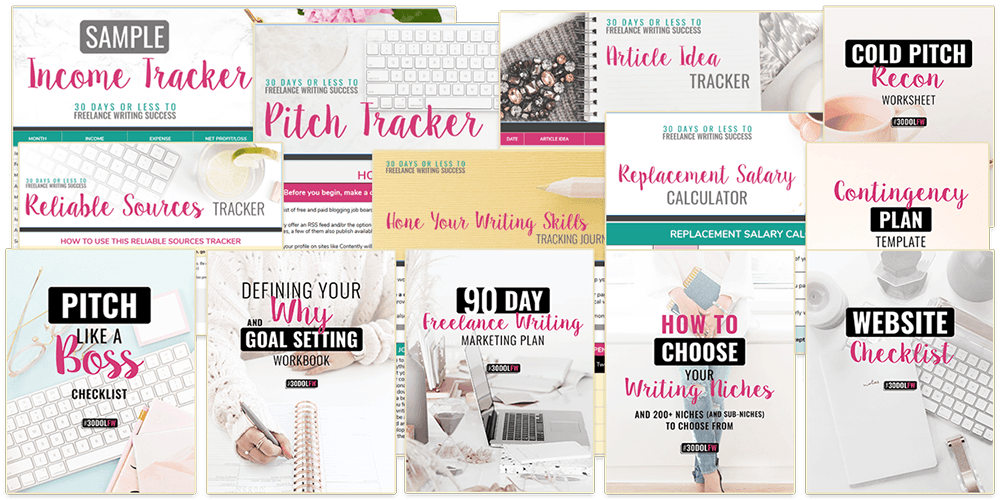
            Gina recommends goal setting and networking to set a foundation for your new career or side hustle as a freelance writer. But the real driver of your success will be how much work you put in.

            Gina got up to write at 4:30 a.m. until she left her day job at the end of 2014. She’s a mother of two, and her new income had to continue to support her kids and husband, who’s a stay-at-home dad.

            Your goals might be different — maybe you define success as a side hustle, extra income that pays off your debt or a hobby that lets you share your talent and explore your creativity.

            Whatever success means to you, you have to commit to doing the work to get there. 30DOL is a great introduction to how that work might look and where to start.

            Who should be a freelance writer?

            As Gina’s story illustrates, anyone can become a freelance writer. The work doesn’t require formal training, and you can start small to build experience that will help you get better clients and make more money.

            You should, at least, enjoy writing. There’s no sense in being self-employed at something you don’t enjoy — finding clients and managing your finances are unnecessary work if you’d be just as happy working for someone else.

            Freelancing is for people who want to carve their own path. Gina left behind her full-time job because she was unhappy there, and she chose freelance writing because she wanted flexibility and autonomy. She developed her writing skills along the way.

            As long as you enjoy it, writing is a learnable skill. Tons of writing websites, communities and courses exist to help you hone the craft, so don’t be intimidated if you’re not a star writer (yet). You can learn with practice and experience.

            30 Days or Less to Freelance Writing Success: Course details

            30DOL is an all-online course that covers the basics of becoming a freelance writer: what kind of writing you can do, how to find clients, how to pitch, business basics, building a website and self-promotion.

            It includes 12 text-based modules and a 90-day pitch challenge. Course participants can also purchase a membership to an exclusive Facebook group for leads and support.

            Text-based modules that cover the basics of freelance writing

            The text-based modules cover:

            • Laying the foundation: Set goals for your freelance business and build a support network of friends, family and colleagues.
            • Types of online writing: Learn the industries, mediums, formats and topics you can specialize in, plus what kind of writing pays best.
            • Where to find paid work: Research your target audience or clients, tap into your existing knowledge and find work through job boards and other sites.
            • Get your pitch on: Learn what makes a good pitch, how to keep track of your pitches and how to get started with a 90-day pitch challenge.
            • Establishing your business: Keep track of your finances, decide whether to create an official business, set your rates, create invoices and contracts, write your bio and polish your LinkedIn profile.
            • Building your writer’s website: Learn what your website needs (and why you need one).
            • Web hosting and WordPress tutorial: Learn the nitty gritty of creating a site, including registering a domain, setting up hosting and how to navigate WordPress. This module also includes video tutorials to show you how to set up pages and other functions in WordPress.
            • Promoting your new business: Build your brand on social media and email, and protect yourself as your profile grows online.
            • Honing your writing skills: Get tips for coming up with ideas, formatting for the web, using images, conducting research, interviewing sources; and writing for various markets, including content marketing, copywriting, SEO writing and B2B writing.
            • Helpful tools: Get an overview of the Google suite, tools and courses to help you write better, and tools to streamline your pitches.

            Each module includes several lessons, a checklist of action items to apply the lesson to your work and a quiz to help you evaluate what you’ve learned.

            Each lesson ends with an action step or several, which I love. They’re filled with useful resources, including Gina’s own worksheets, personalized tools (like the Pitch Tracker) and links to third-party resources.

            90-day pitch challenge

            The course doesn’t present the challenge as a separate component — it’s just part of the pitching module — but I think it’s a section worth pointing out for its unique value. The 90-Day Pitch Challenge encourages you to send 10 pitches per weekday — 600 total by the end of the challenge.

            It sounds like a lot — but that’s the point. Setting the goal to write and send tons of pitches forces you to get into the habit of brainstorming, researching publications and pitching. Plus, you’re bound to get at least a few yeses out of 600!

            The challenge includes a free Pitch Tracker spreadsheet so you can track where and what you’ve pitched, contact information and responses.

            This challenge is a good example of how 30DOL drives participants to action. You get a framework for action and the tools you need to succeed — you just have to commit to the work.

            Optional add-on: Facebook group for leads and support

            30DOL course participants have the option to purchase a $33-per-month membership subscription to the exclusive VA Leads Facebook group, where you can network with other freelancers, get support from Gina and her team and take advantage of shared client leads.

            The benefit of the additional price tag is the group is pretty small for an online community — fewer than 500 members when I checked. And you know everyone there is serious about making their freelance business work. That makes for focused and valuable discussion, and the intimate size gives you better access to career and course support.

            The membership also includes a free Flywheel WordPress hosting account, usually $15 to $30 per month.

            Pros and cons of 30 Days or Less to Freelance Writing Success

            My favorite aspect of 30 Days or Less to Freelance Writing Success is its focus on actionable advice. Every lesson includes explicit action steps, so you know how to apply what you’ve learned to building your freelance business.

            Most importantly, the advice in the course is sound. Gina shares action steps and exercises she used to find success as a writer, and I’ve had success with many of the same tactics throughout my career. It’s safe to say you’ll find freelance writing work by following the steps recommended in the course.

            I also like that the lessons are text-based, because it keeps the course simple and accessible. You can read them on any device. The course platform is easy to use on desktop or mobile, so it’s easy to bounce around among modules and mark them as completed when you want to.

            The biggest drawback to the course is it’s a lot of information to absorb as a new freelancer. It’s everything you need to know to run a freelance business and make it your main source of income. You could become overwhelmed if you try to tackle it all as you start freelancing, especially if you’re writing on the side of a full-time job.

            But the course is a trove of information and resources you’ll find valuable throughout your career. Once you sign up, you’ll have lifetime access to the course, so you could take it slow and revisit things like building your website and promoting your business when you’re further along.

            How much does 30 Days or Less to Freelance Writing Success cost?

            The course costs either a one-time payment of $297 or four monthly installments of $89 ($356 total). Registration gets you instant, lifetime access to all course modules and materials.

            Access to the VA Leads Facebook group (which includes free WordPress hosting) costs an additional $33 per month, and you can make your first payment when you register for the course.

            Is Gina Horkey legit?

            In a nutshell, yes! Gina Horkey is absolutely legit. She has shared her advice with The Write Life readers before, and we’re happy to recommend her course to anyone who wants to kickstart a freelance writing career.

            Gina has been working as a freelance writer, covering personal finance, freelancing and entrepreneurship, since 2014. Throughout the course, she’s transparent about her finances, sharing her early income wins and goals.

            She’s built a strong network around Horkey Handbook courses and resources, and her readers and students share glowing online reviews.

            If you’re not sure whether you’re ready to dive in, check out Gina’s article on becoming a freelance writer, including some worksheets to boost your writing business, to see what she has to offer.

            Bottom line of our 30 Days or Less to Freelance Writing Success review: Gina Horkey knows what it takes to launch a freelancing career from scratch, and she laid out the blueprint in 30DOL. 

            Following the action steps in the course will almost certainly get you freelance writing work. This online writing course might be a bit too comprehensive for side hustlers, but it’s well worth it if you’re ready to make writing your full-time job. It also makes a great gift for writers you might know who are serious about growing their careers.

            This post contains affiliate links. That means if you purchase through our links, you’re supporting The Write Life — and we thank you for that!

            The original version of this story was written by Cruz Santana. We updated the post so it’s more useful for our readers.

            Photo via GuadiLab / Shutterstock