Tag: getting published

  • What’s on Your Wish List for The Writer’s Bundle 2016?

    What’s on Your Wish List for The Writer’s Bundle 2016?

    For the past two years, we’ve offered The Writer’s Bundle, an amazing package of writing resources for a limited-time low price.

    It’s been a great opportunity not only for us to share top-notch courses, guides and expert knowledge; but also for you to make a major investment in your writing and business skills for a considerable bargain.

    As we enter the new year, the TWL team is kicking around ideas for partnering with experts and creating more content to help you succeed as a writer.

    But as we complete our own brainstorming exercises, we’d love to know:

    • Which resources would you love to see in a 2016 version of The Writer’s Bundle? Which guides, courses, or programs are on your professional-development wish list?(Check out The Writer’s Bundle 2015 and 2014 to see what we’ve included in the past.)
    • Is there a particular skill or concept you’d like to learn about, but can’t find a resource that covers it? Let us know what you’re searching for — perhaps we can serve as a continuing education concierge in the comments.

    Share your thoughts in the comments so we can help you continue to create, connect and earn in 2016!

  • Writing Your First Book: 5 Tasks to Focus on Besides Writing

    Writing Your First Book: 5 Tasks to Focus on Besides Writing

    Writing a book has always been at the top of my bucket list. On more than one occasion I’ve been known to say the words aloud: “I’m going to write a book someday.”

    I was a banker with a business degree, yet English had always been my thing. As a young student, I never grasped the point of solving for “x”, but I applauded subject verb agreement and diagrammed sentences with the ease most seventh grade girls turned cartwheels. How hard could it be?       

    Ha.       

    For those of us passionate about reworking a sentence until it melts in the mouth like hand-churned vanilla ice cream, the writing part is fun. But the publishing? The publishing part is throw-in-the towel and run-to-the-market-for-pints-of ice-cream tough.

    Publishing is an entirely different animal than writing.

    During my writing journey, the surprising thing I’ve learned is that writing is so much more than writing. Whether your goal is to self-publish, work with an independent press, or attract a large publishing house, to successfully publish, you must do all the things.

    All. The. Things.

    And you need to start well before you finish your manuscript — like last year, or three years ago.

    While you’re writing and researching and editing the next great American novel, work on these five things today to make publishing easier tomorrow.

    Plus, these five things will provide an often-needed break in routine, a way to keep ideas fresh and to stave off burnout. Let’s be honest, no one can write all the time.

    1. Network

    When I exited the banking arena, I thought my networking days were over. Bye-bye cold calls.

    I was so wrong.

    Networking is more important to me now than ever before. As a bank officer, customers came to me to request loans. With the exception of my mother, no one has knocked on my door begging me to publish a book or write an article.

    Sometimes it really is about the connections you make, who you know, and how hard you promote yourself.

    A common networking problem for writers is that many of us are introverts, including myself. I’d rather sit at my desk for three days rewriting a paragraph than chitchatting with people I don’t know, but putting myself out there is necessary.

    One thing to note — our world is social and immediate and networking is available in multiple formats. Find a local writer meetup to join, attend conferences, participate in virtual book launches via Instagram, join writing communities on Google+ and Twitter and become active.

    The good news? I’ve found networking to be enjoyable because writers, bloggers, editors, publishers, and readers all share a common passion for the written word. Passion makes all the difference.

    2. Build a platform

    Been in a bookstore lately? Millions of books are published each year, but sales are declining. Publishing is competitive business. Your platform is like networking on steroids.

    No matter how well-written your story, it’s about you. The whole package. A social media presence is essential. Unless you’re famous (or infamous), you need to build an audience through articles in magazines and newspapers, and guest blog posts.

    Although it isn’t necessary to be plastered across every social media outlet, choose two or three that best fit your story and consistently share posts that reflect your brand. Be choosy about what you share and always professional. If a publisher googles your name, what will the search reveal? Why should a publisher invest its limited resources in you?

    3. Be a voracious reader

    If we have to talk about reading, you probably aren’t a writer. This seems a given, yet I often hear wannabe writers say, “I don’t have time to read.” What!?

    Reading should be like breathing or blinking. Something automatic. Something you do with every spare sliver of time.

    I grew up surrounded by books, saving all my spare change for the school book fair and spending hot summer days at the public library. As an adult, no matter how busy my career or hectic my kids’ schedules, reading has always been part of my routine.

    Today, when I need to recharge from writing, disappearing into a good book replenishes me. Reading is also research. A writer must be familiar with the market and the competition. Of the famous protagonists, who is yours most like? What makes your story unique?

    4. Find your tribe

    Writing is solitary. We work from home or the local coffee shop. We read aloud to our faithful pets that desperately paw for attention. Social escape often takes place online. While the quiet, peaceful, flow of ideas from pen to paper is one of the beauties of writing, as English poet John Donne so eloquently said, “No man is an island, entire of itself.”

    Other writers provide encouragement and support and, yes, much needed critique. Synergic energy happens when you spend time with your tribe.

    I have several tribes, including a group of blogger friends and two small writing groups. We meet periodically for writing-related events as well as pure social fun. These are the folks who will never roll their eyes when I talk nonstop about my writing.

    My tribe helps keep me going when I feel like shredding my manuscript and using it to compost the flowerbed.

    5. Improve your craft

    There’s always room for improvement.

    Join classes, read articles, listen to podcasts, attend seminars at the library. Change your perspective. Find ways to keep fresh ideas churning. A few tricks that work for me: going for a walk, listening to music, reading, trying out a new recipe.

    Learn to write an excellent query letter. Work on your elevator pitch. Study how the great writers write — Anne Lamont, Stephen King, Robert Olen Butler — they’ve written engaging books on the craft of writing.

    You’ve heard the saying, “Practice makes perfect.” It’s true for writing, too. Choose a time and create a writing schedule. Treat it as your business, because it is. I’m an early morning person. My routine begins with a pot of coffee, a blank page in my journal and freewriting.

    Writing leads to better writing — publishable writing.

    Have you written a book? What must-do tips would you add to this list?

  • Which Writers’ Conferences are the Best to Attend?

    Which Writers’ Conferences are the Best to Attend?

    “What writers’ conference would you recommend? Which one is the best to attend?”

    I get this question all the time. I’m guessing that people decide they’re going to “do it right” and hit up a big event — and they are just trying to make sure that they get some serious bang for their buck.

    Now, to answer the question, let’s just acknowledge immediately that there is no definitive answer. It will be different for everyone, so we must examine three things: 1) the different kinds of writers’ conferences, 2) how money plays into a decision, and 3) what you want to get out of the event.

    Different types of events

    1. General writers’ conferences. These are just what you think they are — writers’ conferences that are general in nature and geared toward all categories and levels of writers. There are hundreds of these nationwide every year, and a lot of the biggest fall under this category.

    2. Writers’ conferences with a specialized focus. There are plenty of these, too. These gatherings have a unique focus to them — and that usually means they are all about romance writing, or Christian writing, or children’s/juvenile writing, or screenwriting (& TV), or mystery/thriller writing. Example: Author Advantage Live – for nonfiction and fiction authors.

    3. Writing retreats. A writing retreat is unique in that the focus is about craft and actually sitting down to write. There are usually no literary agents present, because that is not the purpose of the whole thing. You find a serene location somewhere and just try to focus and write. Lots of MFA profs, etc., teach these things, and there are even several overseas.

    Let’s talk money

    Yes, money can and should play into your decision. Obviously, it’s a lot easier to drive 20 miles to a conference and be able to come home each night to tuck the kids in than it is to fly to Alaska for four nights. And let’s face it: A lot of events are expensive — and not every up-and-coming scribe can manage the required dough.

    The first thing I recommend you do is look local. There are tons of events every year, so there’s a good chance a conference may be near you. Try simply using Google and search “writers conference” and “(city)” or “(state)” and see what comes up. Example: Perhaps you live in Virginia? There are sizeable events in Newport News, Hampton Roads, Richmond and Roanoke. Then there’s the regional SCBWI conference that varies locations between Virginia, DC and Maryland. That’s a lot of nearby opportunities!

    Check out the regional chapter sites for the SCBWI (kids’ writers), MWA (mystery writers) and RWA (romance writers). All three large organizations have many regional chapters, plenty of which put on an annual or biannual event.

    If money is an issue, consider just attending part of a conference. A lot of conferences have various options that affect your fee — attending dinners, participating in pitch slams, access to special sessions, etc. Pay attention to any and all pricing options.

    Lastly — and I don’t know why more people don’t take advantage of this — consider combining a conference and a vacation (or work trip). Two birds with one stone. Got a relative in San Diego or Atlanta? See them and hit a conference on the same trip to save travel costs. Plus, you can write off most of your expenses next April.

    [twl_reusable_block post_id=41455]

    What do you want to get out of the experience?

    This question, obviously, is key.

    Perhaps if you want to just sit down and write — maybe finally start that novel — then an intensive writing retreat is just what you need.

    If you’re not sure what you need (perhaps you’re creating a lot of different stories and writing projects), then a general conference sounds like a good bet.

    If you’re actively looking for writing critique partners and beta readers, then aim local, so you can meet other local writers and form a group that will pay off with valuable peer edits down the road.

    If your work is polished and the only thing on your mind is pitching, then you’re looking for an event that has not only a sizeable number of agents and editors attending — but more specifically, a good amount of professionals who seek the genre/category you’re writing. If you attend a large conference and pay $600 to schmooze with 20 agents, it won’t be of much help if only one or two will consider that travel memoir you’ve composed.

    If you want eyes on your work, look for a conference that offers editing of your novel or work. Some even offer a variety of critiques from pros, so you can hear different perspectives and opinions on your work.

    If you want to visit someplace beautiful, you can certainly do that. I will rarely turn down an invitation to instruct in Jackson Hole, WY (gorgeous! hiking!) or Las Vegas, NV (craps! more craps!). Certainly, a particular locale can be enticing for one reason or another.

    If you want to immerse yourself in your category, seek out a specialized conference. The national events for the SCBWI, MWA and RWA are absolutely huge, and are constructed all around the genre(s), so you won’t be short on relevant sessions or agents who will consider your story. Christian writing and screenwriting conferences can also be a good option, as well.

    If your whole goal is “The bigger the better,” I can throw out some of the biggest events in the country. Again, I stress that while big conferences grow large for a reason (they are often awesome), that does not mean they’re the absolute best option for you. Money, location and goals must all be factored in. Plenty of small events are great and have helped attendees have success.

    Choose wisely

    My best guess is that there are approximately 200 writing conferences a year in the United States alone. That’s a lot of options — so take your time, do some research and see what a conference has to offer. If possible, use Google to find testimonials from writers who have been there and done that — and pay attention to what they liked and disliked about an event.

    No matter what conference you choose, I simply urge you to go to conferences. Get out there! I am a huge proponent of events, as they are an incredible opportunity to learn, get critiques, meet professionals, and make writing friends for life. They are, without a doubt, worth the effort to attend. If you had personally had a good experience at an event (and you’re not on the organizing committee for the event), feel free to say so in the comments here and spread some objective praise about a great writers’ conference other people may enjoy, as well.

    I hope to see you at a conference this year!

    Other TWL Guest Posts by Chuck Sambuchino:

    This post originally ran in July 2013. We updated it so it’s more useful and relevant for our readers!

  • Writing Short Stories? Don’t Make These 4 Submission Mistakes

    Writing Short Stories? Don’t Make These 4 Submission Mistakes

    When you finish a short story, you likely feel a rush of excitement and an urge to share it with the entire world — or, barring that, any short fiction magazine that will take you.

    But in the rush to submit, don’t forget to give your short stories the attention and preparation that will help them succeed. In my three years on the submissions team of Flash Fiction Online, I’ve seen countless submissions with heart-breakingly minor mistakes that kept stories from being considered for publication.

    Make sure your story stands out in the slush pile in a good way. If you’re going to spend the time crafting an intricate, exciting story, make sure to give it the best chance of success.

    Before submitting your next short story to a magazine or online publication, make sure you’re not making these crucial mistakes

    [sps_reusable_block post_id=43047]

    1. Not following the guidelines

    Of all the writing advice not directly related to putting words on paper, “follow the guidelines” is probably the most common.

    And yet the number of stories FFO rejects each month for not following guidelines is distressingly high. Reasons include technical considerations like using non-standard fonts (Comic sans? Really?) or invalid file types (for example, FFO’s submissions software doesn’t accept .docx files).

    But we also see submissions whose writers have ignored basic requirements like word count and how to submit your work (for example, FFO doesn’t accept email submissions).

    Ignoring the guidelines set by the publication you’re pitching is the worst possible thing you can do for your story. It’s likely going to be rejected without even being read.

    If you want to give your story its fair chance at being selected and published, follow the submission guidelines.

    2. Not researching your market and genre

    Far too many stories in my slush queue play off the same modern-day fairytale or time traveller tropes that other stories have covered before — and done much better.

    Read lots of stories from your genre, especially if you’re writing in it for the first time. Expanding your reading list will help you identify common tropes to avoid — and even better, play with for a unique twist.

    Also, research the magazine you’d like to pitch. Most magazines and websites have their own list of favorite genres and pet peeves, and knowing these preferences will help you pitch the right stories to the appropriate publications, giving you the best chance of success. This information is usually listed in the submission guidelines — so again, read the guidelines.

    3. Not editing and proofreading thoroughly

    Submitting your short story is like going on a first date. You’ve only got one chance to make a good impression, so you’d better be at the top of your game.

    Only submit a story once it’s been spit-shined to perfection. FFO rarely gives writers the chance to revise a story once it’s submitted — and it’s extremely unlikely that a magazine will allow you to withdraw and re-submit the same story.

    To get your story in tip-top shape, do a thorough self-edit to iron out plot holes or character inconsistencies. Make multiple proofreading passes, or consider using an automatic editing tool to help squash typos and grammar errors.

    You might also want to consider running your story past a professional editor or a couple of beta readers for their feedback before submitting.

    4. Not proofreading your cover letter

    Imagine you’re going on a first date with a woman named Melissa. You greet each other, give her flowers, chat for a few moments, and then call her ”Sharon.” How do you think she’s going to respond?

    Yeah, that’s how editors react, too.

    It takes less than a minute to check if you’ve got the right name and publication on your cover letter. Yet FFO often receives submissions that were clearly not meant for us — or if they were, then we know we weren’t your first choice to publish this story.

    We get it — you’re shopping that story around. But we’d like to pretend that we’re just a little bit special to you. (Note that some publications refuse simultaneous submissions, so again — read the guidelines.)

    While you’re checking that you’ve addressed your cover letter to the correct editor and publication, give that letter’s body a thorough proofread as well.

    Where to submit short stories

    Got your story edited, proofread and ready to go? Here are a few markets for short story submissions:

    Want more? Check out this list of 44 places to submit your short story from Joe Bunting of The Write Practice.

    Is your short story ready to be published?

    Just remember that these tips are meant to help your story get into the slush pile. Once your story’s on an editor’s desk, it has to stand (or fall) on its own merits.

    And that, my friends, is an entirely different ball game.

    Do you write short stories? What’s your best tip for other short fiction writers?

    [sps_reusable_block post_id=43047]

  • Your Last Chance: The Writer’s Bundle Disappears Tonight

    Your Last Chance: The Writer’s Bundle Disappears Tonight

    Wow — We’ve been blown away by all the excitement around The Writer’s Bundle. It’s great to see so many of you taking advantage of this deal, and talking about it on Facebook and Twitter!

    Still on the fence? If you want to get your hands on this fabulous package of nine ebooks and courses, you’ll need to act quickly: The Writer’s Bundle disappears at 11:59 p.m. ET tonight.

    That’s right: This is your LAST CHANCE. Don’t say we didn’t warn you!

    These resources will help you write and self-publish a book, build a freelance writing business and supercharge your marketing efforts. If you bought them all separately, they’d cost nearly $1,100 — but you can get your hands on them today for $99 ONLY.

    Click here to get The Writer’s Bundle

    Questions? Check our FAQ. If your question isn’t answered there, feel free to get in touch at team@thewritelife.com.

    And if you’ve already downloaded The Writer’s Bundle, we can’t wait to hear what you learn through these resources!

  • An Unbelievable Offer for Writers: The Writer’s Bundle

    An Unbelievable Offer for Writers: The Writer’s Bundle

    Remember that amazing bundle sale we ran last year?

    Guess what… It’s BACK! And completely different from last year. We’ve packed it full of nine new resources that will help you make a living as a writer.

    Click here for more details on The Writer’s Bundle

    If you’ve been thinking about investing in a course or ebook to help you build your freelance business or self-publish your book, now’s your chance.

    We’ve bundled together nine ebooks and courses for writers into one impressive package. If you bought each of these tools separately, it would cost you nearly $1,100.

    But through The Writer’s Bundle, you can get them for only $99.

    Curious about making the most of Scrivener to write and format your book? Learn from the Scrivener Coach himself, Joseph Michael, in Learn Scrivener Fast.

    Want to give your ebook the best chance of success? Check out the step-by-step guidelines in Nick Loper’s Kindle Launch Plan.

    Querying agents and editors? You’ll definitely want Joel Friedlander’s Book Proposal and Manuscript Templates.

    The catch? The Writer’s Bundle 2015 is available for three days only.

    After 11:59 p.m. ET on Wednesday, March 11, 2015, it will be gone forever — so if you want to get your hands on this deal, you’d better act quickly!

    Click here for more details

    Resources for writers: The Writer's Bundle

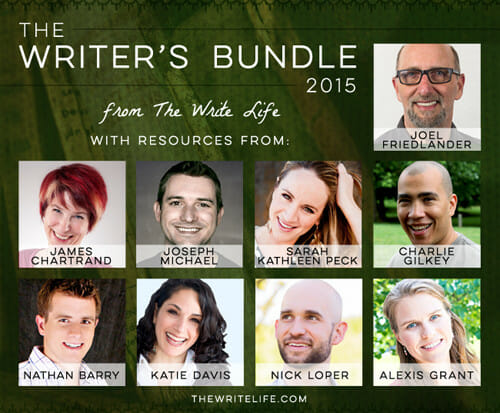
    Here’s what’s in The Writer’s Bundle:

    • Kindle Launch Plan: $1,400 in 30 Days & an Amazon Bestseller, from Nick Loper (Course; retails for $99)
    • Content Strategy for Thought Leaders, from Sarah Peck (Course; retails for $300)
    • Book Proposal & Manuscript Template, from Joel Friedlander (Tools and ebook; retails for $27)
    • Learn Scrivener Fast, from Joseph Michael (Course; retails for $197)
    • Video Idiot Boot Camp, from Katie Davis (Course; retails for $297)
    • The Momentum Kickstarter Kit, from Charlie Gilkey (Tools and ebooks; retails for $47)
    • Authority, from Nathan Barry (Ebook; retails for $39)
    • Write for the Web, from James Chartrand (Ebook; retails for $23)
    • Turn Your Side Hustle Into a Full-Time Business, from Alexis Grant (Ebook; retails for $47)

    Interested? Grab your bundle before it’s too late!

  • Twitter Marketing Strategy: How Much Book Promotion is Too Much?

    Twitter Marketing Strategy: How Much Book Promotion is Too Much?

    We’ve all felt it. The tightness in the chest. The feeling otherwise known as panic that sets in upon a book’s release. Will anyone buy it? Will people enjoy the stories we’ve poured our hearts into?

    We want to shout from the rooftops to celebrate releasing our work into the world, and we’ve heard that Twitter is a crucial part of a marketing strategy, and so we tweet, @mention and retweet. Yet how much should we say before all of our promotional efforts start to fall on deaf ears?

    Is there such a thing as too much Twitter promotion?

    Don’t start by selling

    Before you try to convince readers to buy your book, your goal as the author should be to build trust and a relationship with them. You can build trust with readers much like you build trust with anyone else. Start by finding a common bond, sharing information about yourself and letting others know what you like.

    Find topics to talk about apart from yourself and your books. Current events, fashion and food are often good choices. Talk about your favorite television shows, books or musicians.

    Show your personality. If you’re funny, don’t be afraid to show that side of yourself online. People respond to people they relate to, and being relatable is how you will attract your audience.

    Pay attention to your tweets, the @replies, the number of favorites or retweets. Note the ones that attracted a good response from your audience, and write more of that type of post.

    Learn the difference between hard selling and soft selling

    The truth is, if you know the difference between these two types of promotion, you can share information about your book daily without making your audience and readership feel “sold to.”

    A hard sell is a direct, “buy my book” type of message. It can be an aggressive strategy and is usually reserved for products that are hard to sell.

    Instead, you’ll want to master the art of the soft sell, a technique that relies on “suggestion or gentle persuasion rather than aggressive pressure.”

    Soft-sell marketing is subtle, persuasive and low pressure. The goal of soft-sell marketing is to build a relationship without aggressively pitching your book to readers.

    Once you’ve created a relationship with your audience, selling will feel less forced, more natural and conversational. Soft-sell marketing is effective because the author creates a lasting bond with her readership.

    If your audience connects with you, and they like you, they will buy from you. It’s that simple.

    Is there a magic formula for promotion?

    Some writers are always on the hunt for a magic formula. How many tweets should I post each day? What time of day should I focus on social media?

    Yes, there are ways to help grow your social media following, and there’s a lot of great advice for what to do (and not to do) on social media. However, if you build a rapport with your audience, you can tweet as much or as little as you like, and still be effective.

    [bctt tweet=”If you build a rapport with your audience, you can tweet as much as you like,” says @jenniferafusco”]

    Take a look at Laurell K. Hamilton (@LKHamilton), an author who tweets frequently. She’s both conversational and engaging with her audience. By looking at her posts, you can tell she’s having fun on Twitter.

    Romance author Molly Harper (@mollyharperauth) is also very effective on Twitter. She doesn’t tweet often, maybe once or twice a day, but her humorous personality shines through in her tweets, delighting her audience.

    How to soft sell on Twitter

    To illustrate the difference between hard selling and soft selling in tweets, let’s compare two sets of tweets from New York Times bestselling romance author Tawny Weber.

    The first three use a hard-sell approach:

    1. How’s Mission: Fake Engagement going to go? Find out in A SEAL’s Kiss [link] #SexySEALs
    2. Hot, sexy and brooding… Check out Brody Lane in A SEAL’s Salvation! #SexySEALs [link]
    3. #FREE A SEAL’s Surrender by @TawnyWeber: [link] #free #HarlequinBlaze #kindle #nook #ibooks

    Here are the same tweets, rewritten to incorporate a soft-sell message:

    1. OMG, A fake engagement. A SEAL’s Kiss [link] #SexySEALs Would you ever fake an engagement?
    2. Like hot, sexy and brooding heroes? I’d love to know what you think of Brody Lane. [link] A SEAL’s Salvation
    3. A free book? Yes, please. #FREE A SEAL’s Surrender [link] #HarlequinBlaze #kindle #nook #ibooks

    See the differences? The second set of messages use a friendly tone. The tweets are conversational in nature and the purchase of the book is implied without the use of hard selling.

    To write great soft-sell messages, read the tweet aloud. If you feel the message says, “buy my book”, rewrite it.

    Create soft-selling tweets with the goal of starting a dialog. Use hashtags to invite others to join the conversation. Your soft-sell messages don’t always have to include buy links or book related tags.

    Apply the same concepts to other social media channels

    Prefer pinning to tweeting? That’s OK.

    While I’ve focused on Twitter, you can easily apply the idea of building a rapport with your readership and using a soft-selling on Facebook, Pinterest, Google+ or wherever you prefer to promote your work.

    If you’re vigilant about keeping your social media conversations light, entertaining and engaging, and you in the effort in to build a bond with your readership, you won’t have to worry about how much promo is too much. Instead of being a burden or nerve-wracking endeavor, promotion will seem natural and effortless.

    How do you share your work on Twitter without being overly promotional?

  • Attending a Writers’ Conference? Here’s How to Prepare

    Attending a Writers’ Conference? Here’s How to Prepare

    (This column is excerpted from Chuck’s latest book, Get a Literary Agent.)

    GIVEAWAY: Chuck is giving away a copy of his book, Get a Literary Agent, to a random commenter. Comment within two weeks to enter! (Must live in the United States or Canada to win.) (Update: Lila won!)

    If you’re planning on attending a writers’ conference to learn more about writing as well as pitch your book to agents and editors, make sure you brush up on some etiquette and strategy basics before you go.

    Being prepared and knowing what agents and editors expect could make the difference between a great pitch and a mediocre one.

    I’ve put together this list of do’s and don’ts based on my own experience, but you don’t have to just take my word for it. Keep reading for advice from literary agents themselves on how to make sure you have the best and most productive event experience possible.

    Are you ready for your next writers’ conference?

    What to do at a writers’ conference

    1. Do practice your pitch in advance. You want to be able to converse with an agent without rambling.
    1. Do be able to explain what your book is about in one sentence. (This is called “a log line.”)
    1. Do go to as many educational sessions as possible to learn from authors, agents and editors — and take notes. You’ll get insights that help to perfect your book and your pitch, and you may learn which agents might be good fits for your book.
    1. Do bring business cards in case an agent asks for one.
    1. Do your best to be friendly and open. Smile!
    1. Do dress the part. You don’t need a fancy dress or a three-piece suit, but don’t come looking like you just woke up. Remember that an agent is looking for a business partner.
    1. Do bring some extra cash. In addition to buying some books at the event, you’ll also want to schmooze and make writer friends. Often, that means gathering at a hotel bar with other attendees and ordering something while you get to know one another. Occasionally these social events attract agents, but they’re also great places to meet writers who, over time, can give you referrals.
    1. Do read other writers’ blog posts describing their experiences at conferences before you go, so you can get a better sense of how to best spend your time. Especially seek out writers who’ve met with agents at the conference in previous years.

    What not to do at a writers’ conference

    1. Don’t pass agents or editors any pages during a pitch. Agents can’t carry around sample pages from all the writers they meet. They’d collapse from all that weight, and it would make their suitcases explode.
    1. Don’t come to a meeting with an agent with a long, rambling pitch. Aim to discuss your book and yourself in 90 seconds.
    1. Don’t skimp. Most conferences charge a base fee to attend, and then they charge for add-ons, including pitches to agents, critiques or the fancy dinner with the evening keynote speaker. If you can swing it money-wise, take advantage of all aspects that you believe can help you.
    1. Don’t be afraid to start conversations — whether with industry professionals or fellow scribes. Be bold, but use your best judgment. Don’t pitch an agent in the bathroom or interrupt someone’s conversation to step in and introduce yourself. Creating such an awkward moment will work against you.
    1. Don’t monopolize an agent’s time. If you sit down at a table and an agent joins you and others, know that most if not all of the people next to you will want to chat with the agent. Be respectful and don’t dominate her attention for long periods of time. Hogging an agent’s time doesn’t make a good impression.

    [twl_reusable_block post_id=41455]

    Pitching tips from literary agents

    Relax. We are people, too, and we are there because we want to meet you and find someone to represent.  Some conferences do a better job than others in preparing writers for these things, but just remember to be yourself. Act professionally and remember the more relaxed you can be about things, the better for both parties.”

    — Elisabeth Weed (Weed Literary)

    Make sure I represent your genre to make the best use of your money and time. If you encounter an agent [including me] that dismisses you because they don’t handle your genre, ask if you can practice your pitch or ask their general advice.

    “I suggest every writer take advantage of agents at conferences, even if your work isn’t ready; this is good practice, and an agent may ask to see your work when it’s ready. Many of the writers I have signed I have met at pitch sessions.

    “My best advice is to practice and hone your pitch well before you attend the conference. Practice out loud, in front of people, and practice a shortened version in case we meet in the elevator. A composed, professional-appearing author will live on in my mind. Focusing your pitch on plot, themes and premise will help you communicate it effectively.

    “Lastly, never pitch an agent in the bathroom.”

    — Elizabeth Kracht (Kimberley Cameron & Associates)

    Don’t read from a page in your notebook! If I ask you what your book is about and you can’t tell me the plot in a concise, compelling way without reading word for word from your notebook, then don’t bother.”

    — Jennifer De Chiara (Jennifer De Chiara Literary)

    “I love when someone meets me with a big smile. Always take a deep breath before you approach an agent — and smile. This makes me feel relaxed and in turn will make the author feel relaxed — and that is the only way you are able to really connect and share your story.

    “I’ve had authors sit down with something to prove or even with a bit of anger or defensiveness. This does not work. I spend most of my time trying to deflect this energy and it takes away from the purpose of the meeting. Keep in mind that we are here to meet you and we are hoping to find a match.”

    — J.L. Stermer (N.S. Bienstock)

    “Relax, make it conversational and not too plot-heavy. Try to condense your pitch into the equivalent of a pitch letter or jacket flap copy. Anything longer is unnecessary for the limited time. Leave time to discuss.”

    — Stacey Glick (Dystel & Goderich)

    By the way, if you’re looking for a conference, perhaps one of these below is in your neck of the woods. I’ll be presenting at the following events in 2019:

    What’s your best tip for a writer about to attend his or her first writers’ conference?

  • Amazon Earnings for Self-Published Authors are Growing, Report Says

    Amazon Earnings for Self-Published Authors are Growing, Report Says

    Over the past few years, some people have said the ebook market is taking a turn for the worse. A few major industry reports — like this one from BookStats — have even suggested ebook sales are flattening out or even declining.

    It’s not great news for aspiring ebook authors.

    But the January 2015 Author Earnings Report paints a different picture, suggesting self-published books are not only alive and well, but a smart choice for many writers. Some authors prefer the term “indie” to distinguish their professionally edited work from the stigma of low-quality self-published books, but the report uses the terms interchangeably.

    The team behind Author Earnings, writer Hugh Howey and his anonymous partner Data Guy, have collected a lot of raw information — and we sorted through it so you don’t have to. These two findings struck us as particularly relevant for today’s writers:

    1. Thirty percent of ebooks purchased in the U.S. do not use ISBN numbers

    Sounds like an innocuous statistic, right? In reality, this matters for ebook authors, and here’s why.

    When it comes to traditional industry information about books, International Standard Book Numbers (ISBNs for short) are key.

    That’s because large industry surveys — like those done by BookStats, StatShot and PubTrack — rely on ISBN numbers to track books. If a book doesn’t have an ISBN number, it’s not included.

    BookStats, StatShot and PubTrack all publically acknowledge that they don’t track books without ISBNs, which means independently published books may be underrepresented in their data. However, all three companies also seem pretty confident they aren’t missing substantial numbers of books by not including those without ISBNs.

    But the Author Earnings data challenges this assumption: if almost one-third of ebooks don’t have an ISBN, that’s a lot of books flying under the radar.

    So what does this all mean for authors?

    If you include the 30 percent of ebooks without ISBNs, ebook sales may very well be growing, rather than plateauing or plummeting.

    Author Earnings suggests “what [we] are actually observing is a progressive shift of ebook market share away from the traditionally-published ‘visible’ portion of the industry that uses ISBNs… and toward the invisible ‘shadow industry’ of ISBN-less self-published ebooks.”

    “A lot of indie authors thought there was some vast official conspiracy of silence in publishing to ignore the vast indie market share,” Data Guy writes in the report. “Turns out the answer was much simpler — and far more believable: bad data industry-wide, because of one bad assumption about ISBN usage.”

    2. Forty percent of all dollars earned by authors from ebooks on Amazon.com, with or without ISBNs, are from sales of independently published ebooks

    Under conventional wisdom, authors with the Big Five traditional publishing houses — that’s Penguin Random House, HarperCollins, Hachette, Macmillan, and Simon & Schuster — are bringing home the most earnings from their ebooks.

    But according to the AuthorEarnings report, sometime between May and July of last year:

    “Indie-published authors as a cohort began taking home the lion’s share of all ebook author earnings generated on Amazon.com, while authors published by all of the Big Five publishers combined slipped into second place.”

    … Making 2014 a landmark year for indie ebook authors.

    Based on this data, it looks like self-published ebook earnings are growing — a good sign for indie authors everywhere.

    Here’s the crucial distinction: We’re not talking about gross sales revenue from ebooks, but about the amount of money authors are earning. That’s why indie authors are coming out ahead: They earn a larger royalty from each self-published ebook they sell on Amazon (70%) than traditionally published authors earn from their Big Five-published books (25%, according to the report).

    It’s also important to note that while indie authors may be taking home a larger percentage of dollars earned than traditionally published ebook authors, that doesn’t mean indie ebook writers are individually making more money than traditionally published authors. There likely are a lot more indie authors sharing their pie.

    In fact, indie authors earn a median annual writing income of between $500 and $999, well below the $3,000 to $4,999 reported for traditionally published authors, according to a recent Digital Book World survey. (In an interesting twist, the survey also discovered that independent authors were most satisfied with their publishing experience, even when they earned less.)

    Regardless, the fact that 40 percent of author earnings from ebooks on Amazon.com come from indie ebooks does suggest that self-publishing is as viable or more so than it was a year ago.

    How reliable is this good news?

    Author Earning’s January 2015 report is just one of several studies released over the past year by Hugh Howey and Data Guy. The reports, which all share the same methodology, have garnered both praise and blowback in the publishing community.

    Many indie writers have welcomed the report — expressing that it lines up with their personal experiences and provides a sense of validation.

    “The data … gives me a sense of empowerment,” writer John Brown told Econtent magazine in response to a previous report. “It’s not the only source for this feeling, but the data helps me feel like I’m part of a group. I’m on the map. Indie isn’t just some back alley choice.

    “Seeing the numbers also gives me hope because it isn’t just a handful of indie authors doing well. I know the odds are still exceedingly long, but they’re not as long as I thought.”

    At the other end of the spectrum, some criticisms have been extreme — publishing veteran Mike Shatzkin wrote the first Author Earnings report was “toxic to consume.” However, most critiques are less harsh.

    For example, one issue with the Author Earnings data is it’s all from Amazon.com. Amazon was chosen because it’s the largest book retailer in the world, but it’s still only a piece of the ebook pie. AuthorEarnings recognizes that drawback, stating that their report is “limited in that it’s looking only at Amazon…but we acknowledge and state this limitation, and we plan on releasing broader reports in the future.”

    The potential biases of the reports’ authors have also been questioned.

    Hugh Howey is an independent publishing advocate and best-selling author behind the stratospherically successful sci-fi series Wool. Independent publishing has worked exceedingly well for him and it’s a central part of his brand.

    Data Guy is also a writer who does data analysis in the video game industry. Why remain anonymous? He says it’s because when he first began working on these reports, “one of the top mystery/thriller imprints was making unsolicited offers to re-publish my debut novel, so it made sense to be anonymous then.”

    Some critics have expressed concern that his anonymity makes him a less reliable source. Data Guy has a different take: “It keeps the discussion focused on the data itself, and encourages authors to think for themselves and fact check, instead of believing me because I’m a proven ‘expert,’” he explains. “Blindly believing what ‘publishing experts’ say is a big part of the reason authors have traditionally ended up with so little recompense for the fruit of their labors.”

    True to Data Guy’s word, Author Earnings has been 100 percent transparent around their information: all their raw data is available for free download, so you can crunch the numbers for yourself.

    What do you think? In light of this new data, would you consider self-publishing?

  • The 100 Best Websites for Writers in 2015

    The 100 Best Websites for Writers in 2015

    Editor’s note: Looking for our most updated list of best writing websites? Here’s our list for 2021.

    Ready to improve your writing — and maybe even make a living as a writer — this year? Our 100 Best Websites for Writers list is back and better than ever.

    Thanks to your suggestions, this year’s list of writing websites includes both well-established favorites and bold newcomers. We struggled to whittle it down to just 100 — there are so many fantastic resources out there for writers! — and could probably create a second list of 100 based on all your recommendations. Thank you for taking the time to share your thoughts!

    We’ve broken the list into eight categories: blogging, creativity and craft, entrepreneurship, freelancing, literary agents, marketing, publishing, and writing communities. The writing sites are listed in alphabetical order within each category, and the numbers are included for easy tracking rather than as a ranking.

    If you want to start your own website or blog, here’s our step-by-step guide.

    Whether you’re keen to find better-paying freelance writing jobs or self-publish your NaNoWriMo project, build your email list or strengthen your SEO skills, these sites will help you reach your goals.

    Best websites for bloggers

    1. All Indie Writers

    Developing a successful writing career is hard work, and Jennifer Mattern, founder of All Indie Writers, tells it like it is. AIW is a helpful resource for freelance writers, indie publishers and bloggers; it features a job board, community forums and podcast episodes.

    Post you’ll like: 71 Tools and Tactics for Your Book Marketing Plan

    2. Be a Freelance Blogger

    Sophie Lizard and other fantastic writers behind Be a Freelance Blogger are making their second consecutive appearance on this list. They share useful resources, valuable tips and guest posting opportunities for bloggers looking to earn a living from writing. If you need advice that’s tailored to your specific situation, or if you’d like to connect with like-minded bloggers, check out the BAFB community — it’s completely free.

    Post you’ll like: How to Survive the Business Side of Blogging

    3. Boost Blog Traffic

    Since appearing on our list last year, Boost Blog Traffic has become an even bigger powerhouse in the blogging space. Jon Morrow and his team publish fantastic, in-depth content that will help aspiring — or even expert — writers get more eyes on their work.

    Post you’ll like: 63 Blogging Tools That Will Make You Insanely Productive

    4. Copyblogger

    Founded by Brian Clark in 1998, this epic content marketing and blogging resource is a one-stop shop for bloggers looking to increase traffic, build a large community, sell products and gain exposure. Spend a few hours digging through their archives and you’ll be amazed at the number of takeaways you can immediately apply to your copy and business. Sign up for a free My Copyblogger membership to access 15 ebooks covering everything from keyword research to crafting headlines.

    Post you’ll like: The Ultimate Copy Checklist: 51 Questions to Optimize Every Element of Your Copy

    5. Problogger

    Problogger is the go-to resource for online entrepreneurs and bloggers who want to make a living from their craft. Darren Rowse’s site is a wealth of resources, from its popular job board to workbooks, ebooks and programs to help make your blog a success.

    Post you’ll like: Can You Really Make Money Blogging?

    6. Sark e-media

    With the help of Sarah Arrow’s 30-day blogging challenge (it’s free!), you’ll focus on creating and publishing without waiting for “perfect.” Her advice is motivational and inspirational — it’s the kick-in-the-pants we all need when procrastinating on our writing.

    7. Smart Passive Income

    In the year since we mentioned Smart Passive Income on our 2014 list, creator Pat Flynn has given it a beautiful makeover. Along with the valuable blog posts that help you create a successful blog and business, you’ll find an extensive podcast library and a new series called Ask Pat.

    Post you’ll like: How to Grow Your Blog Audience by Building Relationships With Other Bloggers

    Creativity and Craft for writers

    8. AdviceToWriters

    Curated by Jon Winokur, this site collects quotes from past and present writers, in the form of a Quote of the Day post and daily email. If you’re in need of inspiration, motivation or new ideas, these daily bursts of creativity can give you just that.

    9. Aliventures 

    Author Ali Luke’s site is all about writing, blogging and life as a writer, including behind-the-scenes details. While she’s on maternity leave until later this spring, her vast archives include tons of advice about blogging, freelancing, writing ebooks and creating a loyal reader base.

    Post you’ll like: Finding Time — or Making Time — to Write

    10. Almost Fearless 

    Christine Gilbert is a videographer, storyteller and photographer who teaches courses and workshops on story-driven blogging. She’s working on a book about exploring the world and learning languages with her husband and two young children, and her storytelling advice glows with personality and life.

    Post you’ll like: I Disappear When I Write, But for My Kids I Can’t

    11. Brain Pickings

    Maria Popova believes that multiple points of creativity drive our ideas and stories, and she created Brain Pickings to aggregate diverse, interesting information. When we look for many different sources of inspiration, we can create more complex worlds for our characters and readers. 

    Post you’ll like: Famous Writers’ Sleep Habits vs. Literary Productivity, Visualized

    12. Christina Katz

    Christina Katz teaches writers to become successful at their craft through training and classes. From freelancers looking for a nudge to pitch new markets to new authors preparing to self-publish, many types of writers find helpful advice on this site.

    Post you’ll like: What Writers Don’t Realize About Platform

    13. Daily Writing Tips 

    If you need daily inspiration and writing tips, look no further than this site, which features articles on everything writing-related, including grammar, punctuation, spelling, usage and vocabulary.

    Post you’ll like: 7 Grammatical Errors That Aren’t

    14. Dani Shapiro

    Dani Shapiro’s site is unlike any other. Her words captivate your attention through each post. She shares her personal stories and experiences as a writer, author and storyteller. You’ll find plenty of creative inspiration here, and no doubt relate to her stories about looking inward.

    Post you’ll like: On Getting to Work

    15. Elizabeth Spann Craig

    Mystery author Elizabeth Spann Craig shares advice on writing, character development, productivity and other details around the writing life. She also compiles a weekly list of writing articles that many writers find immensely helpful.

    Post you’ll like: Multiple Projects at Once

    16. Erika Napoletano

    If you need a kick in the butt to overcome writer’s block or get unstuck with your writing business, you need to read this blog. Erika Napoletano offers advice that’s anything but ordinary (and usually NSFW [not safe for work]). You’ll cringe at being called out on chickening out as a writer, but you’ll laugh at the way she does it and feel motivated to step up your game.

    17. Fantasy Author’s Handbook

    Fantasy and science fiction author and editor Philip Athans shares his experience through witty, informative, entertaining and inspiring posts. Whether he’s decoding the legal page of a print book or analyzing word choice, his posts will make you think about your work in a different way. 

    Post you’ll like: Thoughts on the Difference Between Science Fiction and Fantasy

    18. Fiction University

    Instead of sharing advice about what writers should be doing, author Janice Hardy explains how to apply the industry’s advice to your work, including tips on how to plan, write, edit and publish a novel. She also pulls back the curtain on how other successful authors and writers manage their creative processes.

    Post you’ll like: The Inner Struggle: Guides for Using Inner Conflict That Make Sense

    19. Grammar Girl

    With Grammar Girl by your side, you can boost your writing and grammar confidence. Each article and podcast episode is an adventure into the world of the English language, and you’ll likely be able to find any advice you need in the archives or most popular tips categories.

    Post you’ll like: When to Use a Comma Before ‘Because’

    20. Inky Girl

    Inky Girl is all about books for children and young adults. Author and illustrator Debbie Ridpath Ohi creates comics that many writers can relate to, as well as interviews with experts and industry professionals. With her passion for telling stories in unique and interesting ways, you’ll never run out of inspiration.

    Post you’ll like: What Agents, Editors, and Art Directors Look for Online

    21. It Starts With 

    Sarah Peck combines her passion for technology, storytelling and creative design with her background in psychology to share a unique perspective on writing. If you’re looking to successfully mesh your multiple passions, better communicate your story and connect with your readers, it’s time to check out this blog.

    Post you’ll like: 17 Tips, Tricks and Habits I Use for Writing, Creation and Business-Building

    22. Jami Gold

    Paranormal author Jami Gold breaks down the challenges of writing, plotting and character development until they’re easy to understand and overcome. She also offers great worksheets for plot planning, story development, scene strengthening and more.

    Post you’ll like: What Drives a Story: Plot or Characters?

    23. KidLit411

    Keen to write or illustrate books for children? Author Elaine Kiely Kearns and author and illustrator Sylvia Liu compile tons of great advice on planning, creating and publishing your work from around the web. Their Facebook group is a great place to connect with other kidlit writers and even find a critique partner or group.

    Post you’ll like: The Weekly 411

    24. Positive Writer 

    Many writers struggle to carve out time to work. Bryan Hutchinson tackles this challenge head-on in posts on Positive Writer. He believes you should stop seeking approval from others, and offers advice on overcoming doubt and fears as a writer.

    Post you’ll like: Why No One Is Paying Attention to You (And How to Change It)

    25. Procrastiwriter

    It’s time to stop procrastinating and start writing! Written by Shanan Haislip, The Procrastiwriter will help you find the motivation you need to write more, hone your craft, and most importantly, make room for consistent writing.

    Post you’ll like: You Might Be a Writer…

    26. Romance University

    This site offers inspiring advice from a variety of industry professionals and established authors to help you create a successful writing process. While romance writers will find plenty of inspiration in the archives, even writers focused on other fiction genres can learn a lot about craft, marketing and self-publishing.

    27. Sterling Editing

    The Sterling Editing team is comprised of experienced writers, editors and literary agents striving to help writers create their best work. Their weekly “Written on the internet” posts share interesting publishing trends, editing tips and other writing advice from around the web.

    Post you’ll like: Written on the internet

    28. Susan Dennard

    Susan Dennard covers a wide variety of writing-related topics on her blog, with practical solutions and tips for all writers. She offers more great advice in her newsletter, which several TWL readers say are a must-read.

    Post you’ll like: The Writing Is All That Really Matters

    29. The Kill Zone 

    The Kill Zone focuses on writing and publishing fiction, with 11 top mystery and thriller writers posting advice every day of the week. Tune in for thoughtful, informative and entertaining articles on writing craft, marketing and industry trends, as well as “first page critiques” of submitted manuscripts.

    Post you’ll like: Getting Started With Scrivener

    30. The Write Practice

    To become a good writer, you have to practice — it’s as simple as that. The Write Practice, founded by Joe Bunting, offers daily writing prompts, creative writing lessons and a wealth of articles to help you overcome writer’s block.

    Post you’ll like: 10 Questions to Find Your Unique Writing Voice

    31. The Writer and the Critic

    The Writer and the Critic is a bimonthly podcast that discusses all things fiction, book reviews and general industry gossip. You’ll find ideas for blog posts, novels, characters and random storiese. In other words, hosts Kirstyn McDermott and Ian Mond help you find a little bit of everything for your writing.

    Post you’ll like: Episode 40: ‘Dust Devil on a Quiet Street’ and ‘We Are All Completely Besides Ourselves’

    32. The Writing Whisperer

    Shannon Hernandez spent 15 years as a teacher and now empowers other writers to find their voice in a noisy world. Whether you need memoir coaching, copywriting help, publishing advice or all of the above, her site is a full of high-quality information.

    Post you’ll like: 10 Things I Wish I Had Known Before Becoming a Published Author

    33. Write to Done

    Everyone can become a great writer if they direct their practice properly and apply themselves, says Write to Done’s Chief Editor, Mary Jaksch. The site features inspiring articles and how-to posts that will help you become the best writer you can be.

    Post you’ll like: Learn From the Greats: 7 Writing Habits of Amazing Writers

    34. Writers Helping Writers

    Formerly known as The Bookshelf Muse, Writers Helping Writers serves fiction writers of all types and offers tools to help with plot planning, self-editing and promoting your book. You’ll be especially excited about the collection of thesauruses for emotions, talents, skills, physical attributes and other important character traits.

    Post you’ll like: 5 Steps To Find Your Book’s Ideal Audience

    35. YA Confidential

    Young adult fiction has never been so popular, and YA Confidential is one of the best resources out there for writers for teens. Although the site has been on a hiatus for several months, you’ll still find gold in the archives related to writing for young adults, interviews with real teens and more.

    Post you’ll like: In Praise of Rejection

    Entrepreneurship for writers

    36. Alexis Grant

    Writers are not just creatives; they’re also business owners who also have to pay the bills. Along with great advice for freelancers and writers, Alexis Grant also offers several guides, ebooks and courses that help you manage the business side of writing. (Full disclosure: Alexis is Founder and Managing Editor of The Write Life.)

    Post you’ll like: Why You’re Failing to Make a Living as a Writer

    37. Create as Folk

    In the past year, Laura Simms has given Create as Folk an awesome makeover. You’ll find resources for quitting your job, following your passion and making a living doing what you love. She has also taken on guest contributors who share their own perspectives and journeys to creating meaningful work.

    Post you’ll like: Can You Combine All Your Passions Into One Business?

    38. Men with Pens

    Since 2006, James Chartrand’s Men with Pens has helped writers, bloggers and businesses create engaging copy and market their writing to thousands of readers. If you want to achieve better results with your writing and earn more money as a freelance writer, check out the extensive archives.

    Post you’ll like: Why Some People Make Money Writing and Others Never Will

    39. Productive Flourishing

    Productive Flourishing is one of the top websites for creativity, organization and productivity for all types of creatives and entrepreneurs. Founder Charlie Gilkey, who also works as a business coach, offers valuable advice and free planners that are sure to help you get past any creative slump.

    Post you’ll like: 5 Ways to Get Through the Creative Red Zone

    40. Seth Godin

    Bestselling author Seth Godin never ceases to amaze the world with his ideas, advice and aha moments about business. Study his writing to learn how to build a loyal audience, market to your readers and hone your craft.

    Post you’ll like: The Stories We Tell Ourselves

    41. Side Hustle Nation

    Many freelance writers start their careers as side gigs, and Side Hustle Nation is all about empowering your side ventures to propel you to financial freedom. The popular podcast offers interviews with many of the creative entrepreneurs on this list and covers topics related to self-publishing, winning over clients, passive income, recurring revenue and more.

    Post you’ll like: The Self-Publishing Platform That Outsold Amazon

    42. The Art of Non-Conformity

    “You don’t have to live your life the way others expect” is the gist of founder Chris Guillebeau’s advice on his blog and in his books. His approach to business and creativity is unconventional, as he would say, and will have you questioning how you, too, can challenge the status quo.

    Post you’ll like: How to Write a Dozen Novels and Hundreds of Stories

    43. The Creative Penn 

    The Creative Penn is the place to find advice on writing, self-publishing and marketing your new book. In addition to her self-publishing and platform-building advice, Joanna Penn shares how she makes a living as a full-time author and entrepreneur. Her podcast is also popular, offering interviews with dozens of successful writers.

    Post you’ll like: How To Edit Your Book And The Different Kinds Of Professional Editors With Natasa Lekic

    44. Untamed Writing

    “Karen Marston’s no-BS approach is practical, funny and gutsy,” a TWL reader told us. Her blog helps writers develop their skills, pitch new clients with confidence and do great work. Whether she’s challenging common assumptions (“Do you need a blog to become a freelance writer?”) or explaining copywriting concepts, Marston’s advice is anything but generic.

    45. Warrior Writers

    Kristen Lamb is an author and coach who helps writers connect with their readers. She shares advice on topics like writing craft, building a following on social media, navigating the publishing process and making a living as a writer.

    Post you’ll like: 5 Mistakes Killing Self-Published Authors

    Freelance writing

    46. About Freelance Writing 

    If you’re serious about making a living as a writer, this site will give you the information and resources you need. You’ll find a wealth of original articles about being a writer, marketing your craft, and the business of writing archives. The site has been around for more than a decade, and writers keep going back.

    47. Envato Studio and Tuts+

    Previously known as Freelance Switch, the Envato Studio and Tuts+ websites offer the same excellent content and resources for freelance writers, designers and developers. Their in-depth archives are a gold mine for anything freelancing-related, so you’re sure to find the solution to any problem you face.

    Post you’ll like: 5 Secrets to Freelancing Around Your Day Job

    48. Funds for Writers 

    If you’re serious about making a living as a freelance writer, you’ll be excited about C. Hope Clark’s goldmine of resources. She offers information on upcoming contests, freelance writing jobs, connections to publishers, and everything else you need to make money as a writer. Her most popular offering is her newsletter.

    49. Freelancers Union

    Freelancers are also business owners who worry about things like contracts, health insurance, saving for retirement and following up with clients who owe us money. Founded by Sara Horowitz in 2003, the Freelancers Union gives you access to a highly active community, valuable blog articles and local resource connections to tackle each of these challenges. 

    50. Leaving Work Behind

    While Leaving Work Behind has evolved over the past year,Tom Ewer’s blog still aims to help anyone interested in quitting the day job to build an online business. His honest, I’ve-been-there advice is specifically helpful for freelance bloggers, and the site boasts a tight-knit community. LWB is the place to be if you want to  make money as a freelancer.

    Post you’ll like: 15 Actionable Tips for Revamping Your Freelancer Website and Attracting More Clients

    51. LittleZotz Writing

    Freelance writer Lauren Tharp offers an impressive spread of resources for anyone looking to build a writing business. Her blog’s weekly posts, newsletters and two free ebooks help writers hone their skills, find clients and earn money from their work.

    Post you’ll like: What to Do When Writing Keeps You From Writing

    52. Make a Living Writing 

    Carol Tice is a successful freelance writer, and she shares her breadth of experience and knowledge on her blog. She suggests smart changes that will help you move beyond low-paying gigs and actually make a living from freelance writing. Carol also oversees the popular Freelance Writers Den community.

    Post you’ll like: How I Made 6 Figures as a Freelance Writer

    53. My Freelance Life 

    Williesha Morris discusses her entrepreneurial journey on My Freelance Life, helping other freelancers manage their worries and achieve financial success. She approaches freelance writing from a unique and captivating angle, while offering practical ideas.

    Post you’ll like: 12 Business and Blogging Lessons from My First Year

    54. Productive Writers

    John Soares has been a full-time freelance writer since 1994. On Productive Writers, he shares ideas for freelance writers about working  smarter, not harder — and landed higher-paying gigs. He focuses on earning a living without working around the clock. 

    Post you’ll like: When and How a Freelance Writer Should Hire Help

    55. Scratch

    Created by Jane Friedman and Manjula Martin, Scratch is a digital magazine for writers that features in-depth interviews, personal stories from other writers and ways to make a living as a writer. While much of the content is behind a paywall, its “Who Pays Writers?” resource, which is crowd-sourced from freelancers, is incredibly helpful for figuring out what you might earn from various publications.

    Post you’ll like: Who Pays Writers?

    56. The Freelancer

    Contently’s goal with The Freelancer is to help freelancers navigate what can be a confusing business. While it’s not solely focused on writing — photographers, designers and other freelancers will also value this information — the advice on negotiating rates, managing contracts and pitching clients is practical and actionable. Check out the weekly “Ask a Freelancer” column for answers to common questions, and the new Freelance Rates Database for pay information from various publications.

    Post you’ll like: Ask a Freelancer: How Do I Negotiate Higher Rates?

    57. The International Freelancer

    Living outside the U.S. sometimes means managing your freelance career differently than a stateside writer. Mridu Khullar Relph shares tips and strategies learned from her years of experience as a full-time journalist based in London, U.K., and New Delhi, India, making her blog an attractive destination for international writers.

    Post you’ll like: 4 Things You Must Do When Your Ideas Don’t Sell

    58. The Middle Finger Project

    Whether you like it or not, you’ll eventually have to deal with the business side of writing, and The Middle Finger Project is hell-bent on helping you. While creator Ash Ambirge originally focused on creative copywriting and marketing, the site has branched out to include tips for dealing with tough clients and getting paid what you deserve. At times the advice is NSFW (not safe for work), but it’s also fresh, entertaining and motivating. 

    Post you’ll like: Dear Friends: I Work From Home (And Yes It’s a Real Job)

    59. The Renegade Writer

    Linda Formichelli is a freelance writer who earns a living on her own terms. She’s written for publications like Inc., Redbook and Writer’s Digest and makes “a full-time income working part-time hours.” Her blog focuses on building a writing business that works for you, breaking the rules and overcoming your freelancing fears.

    Post you’ll like: Are You Missing Out On This Vital Freelancing Skill?

    60. Writers in Charge

    If you’re ready to start a career as a freelance writer, Writers in Charge is the site for you. Creator Bamidele Onibalusi shares resources to help you take control of your income, make more money and successfully navigate the freelance world.

    Post you’ll like: 110 Websites that Pay You to Contribute an Article, Instantly

    61. Writing Thoughts

    Freelance writer Laura Spencer doesn’t update her blog often, but each post offers gems of inspiration and information. With more than 24 years of writing experience — 13 of them as a freelancer — she shares proven advice on running a freelance business, soliciting feedback and working with clients.

    Post you’ll like: 21 Hard Decisions Freelance Writers Face

    Literary Agents

    62. Bent on Books

    The Bent Agency looks to turn new and aspiring authors into bestsellers. If you’re interested in traditional publishing, Jenny Bent’s blog could help you launch your publishing career and turn your dream of being a published author into reality.

    Post you’ll like: The 7 “Be”-Attitudes of Finding Your Agent

    63. Guide to Literary Agents (Writer’s Digest)

    One of the biggest blogs on publishing, Chuck Sambuchino’s Guide to Literary Agents blog is a must-read if you’re looking to land a literary agent to represent your new book. The site features posts by guest authors, including industry professionals and literary agents. It also includes resources on queries, book marketing, creating an author platform and more.

    Post you’ll like: How I Got My Literary Agent (Series)

    64. Literary Rambles

    Created in 2008 by Casey McCormick and Natalie Aguirre, Literary Rambles covers topics related to children’s books, literary agents and publishing. The interviews and comprehensive profiles of industry experts give writers a behind-the-scenes look at what it takes to write a novel and become a published author.

    Post you’ll like: The Key to Building an Audience, Selling More Books and Finding Success as an Author

    65. Nathan Bransford, Author

    As a published author and former literary agent, Nathan Bransford gives readers an insider’s look into what literary agents do, how to go about finding one, and tips for writing a good query letter. Whether you’re a newbie author or an experienced veteran, you’re sure to learn something new about the publishing industry. 

    Post you’ll like: How to Write a Query Letter

    66. Rachelle Gardner

    Rachelle Gardner’s blog is one of the most popular literary agent resources for a reason: she’s passionate about working with writers and stays updated on what’s happening on both sides of the desk. You’ll find advice about partnering with an agent who’s a good fit for you, what to include in your book proposal, writing a query letter, how book royalties work and more.

    Post you’ll like: Book Covers and My Experience With 99 Designs

    Marketing for writers

    67. Mirasee

    Running a successful writing career means embracing the business and marketing side of being a writer. With the help of Danny Iny’s site, you’ll tackle both with ease. His fantastic resources for guest blogging, advertising, SEO, branding, marketing and more are sure to give you an edge up when it comes to making sales. 

    Post you’ll like: 5 Proven Strategies to Encourage Clients to Pay More for Your Services (and Love It)

    68. Jessica Lawlor 

    Public relations professional and freelance writer Jessica Lawlor is all about getting gutsy: stepping outside your comfort zone to reach your goals and live a life that makes you truly happy. As the founder of the Get Gutsy blog and community, Jessica’s website and newsletter are filled with inspiration, ideas and action items to help you #GetGutsy and step outside your comfort zone.

    Post you’ll like: The 5 Things I Know For Sure About What It Means To Get Gutsy

    69. Kikolani 

    Kristi Hines is a blogging powerhouse, and her site documents her marketing strategies, guest blogging methods and social media tips for writers and professional bloggers. She also discusses the best digital tools for publishing, productivity and content marketing. 

    70. Michael Hyatt

    Marketing expert Michael Hyatt shares advice on everything from blogging to publishing, and his goal is “to help leaders leverage their influence” by managing their platforms. Read his blog for advice on productivity, goal setting, social media and traditional publishing.

    Post you’ll enjoy: Do You Make These 10 Mistakes When You Blog?

    71. Social Triggers

    Derek Halpern mixes psychology and social behavior to develop marketing and pricing ideas that will knock your socks off. His no-nonsense attitude will go a long way toward helping you make more sales, price products based on value and become a profitable freelancer.

    Post you’ll like: Struggling to Make More Sales? Follow These Two Simple Steps

    72. The Story of Telling

    Marketing does not come easily for many writers, but selling your work is all part of making a living as a writer. Bernadette Jiwa is a bestselling business author who shares how to create meaningful work, embrace marketing and tell your best story.

    Post you’ll like: Value Creation and Stories to Believe In

    73. Writing Happiness

    To sell books, novels and products, you have to build a readership of loyal followers, and that’s where Marya comes in. She’s in her fourth year of business and shares her personal experiences, tips and ideas for gaining blog subscribers who become buyers. 

    Post you’ll like: Make These 7 Blog Tweaks and Attract Your Perfect Reader Almost Instantly

    Publishing

    74. A Newbie’s Guide to Publishing

    Author Joe Konrath has published 24 novels and sold millions of books, giving him the experience to create a must-read blog. If you write mysteries, thrillers, horror or sci-fi, you’ll find a ton of helpful advice for writing, editing and publishing your novel.

    Post you’ll like: Agents Behaving Badly

    75. Better Novel Project 

    Have you ever wanted to deconstruct a popular novel to learn how authors create bestsellers? Christine Frazier explores common elements in popular novels, draws conclusions from her findings and creates a master outline for a “better novel.” She offers insights on plot analysis, creating excitement in your novels, word counts and character development.

    Post you’ll like: 6 Writing Rules That Even Bestselling Authors Break

    76. Blots & Plots

    Jenny Bravo, founder of Blots & Plots, focuses on writers and their stories. Through her personal anecdotes and writing advice, you’ll find encouraging ways to bring your story to life and publish your work. Readers love her #TATM series (These Are The Moments), where she details the journey of writing her novel. 

    Post you’ll like: How to Write a Novel With a Dual Timeline

    77. Dean Wesley Smith 

    A professional writer for more than 40 years, Dean Wesley Smith has published independently and traditionally. In addition to the valuable editing, craft and productivity advice in his blog posts, make sure to read the comments — they often offer even more helpful information.

    Post you’ll like: New World of Publishing: Failure Must Be an Option

    78. Diversity in YA

    Authors Malinda Lo and Cindy Pon founded Diversity in YA to celebrate young adult books about diverse characters and subject matter and “to bring attention to books and authors that might fall outside the mainstream.” Read their posts for conversational, nuanced takes on diversity in the publishing industry.

    Post you’ll like: Representing Diversity on 2014 YA Book Covers

    79. Goins, Writer

    Author Jeff Goins has written and published multiple books, and he’s on a mission to help writers tell better stories. Along with building his career as a successful writer, he’s established a community that helps answer questions like “What does it really take to get published?” and “How do successful writers make a living?” His free 31-day writing challenge is also popular.

    Post you’ll like: How to Get People to Care About What You Create

    80. Helping Writers Become Authors

    K.M. Weiland’s site features hundreds of posts about writing, publishing, marketing and other fiction-related topics. If you need help crafting a captivating story, exploring the psychology behind the inspiration, and following through till publication, this site is for you.

    Post you’ll like: What’s the Difference Between Your Story’s Theme and Its Message?

    81. How to Plan, Write and Develop a Book

    Mary Carroll Moore shares weekly tips and techniques on how to structure, create, write and sell your first manuscript — whether it’s a novel, memoir or nonfiction book. She also offers writing classes to help writers hone their craft and navigate the publishing process. 

    Post you’ll like: A Letter to Your Inner Critic: How to Stop the Invisible Sabotage to Your Creativity

    82. Indies Unlimited

    Created to help independent authors write, publish and promote their work, Indies Unlimited is run by a team of writers and publishing industry professionals. With a nearly overwhelming number of posts, tutorials, lists of low-cost books and writing prompts, there’s lots for writers to explore.

    Post you’ll like: How Indies Unlimited Works

    83. Jane Friedman 

    With more than 15 years of experience in publishing, including work with Writer’s Digest, Jane Friedman focuses on moving from writing as a hobby into creating a full-fledged digital publishing career. She shares tips on storytelling, writing techniques and finding your creative inspiration.

    Post you’ll like: How to Get Your Book Published

    84. Lisa Romeo Writes 

    While many TWL readers highlighted the wonderful Friday Fridge Clean Out features, Lisa Romeo also shares posts, interviews and writerly opinion pieces. She writes candidly about what it means to be a writer, from submissions and editing to getting published and dealing with rejection.

    Post you’ll like: Acceptance After Multiple Rejections: It Only Takes One Yes

    85. Live Write Thrive

    Author and editor C.S. Lakin’s blog provides valuable writing tips and editing advice for fiction writers. In addition to focusing on the craft of writing, Live Write Thrive helps writers with their publishing and marketing strategy. If you’re writing a novel in 2015, be sure to check out this site.

    Post you’ll like: 15 Tips for Aspiring Writers from 5 Successful Authors

    86. Novel Publicity 

    Regardless of whether you choose traditional or self-publishing, the Novel Publicity team’s blog offers helpful advice on craft, marketing and publishing. With posts offering writing tips, social media strategy, publishing techniques and more, you’re sure to learn something new each time you visit.

    Post you’ll like: Hey Authors: You’re Doing Twitter Wrong!

    87. Pub(lishing) Crawl

    Run by a group of authors and publishing industry professionals, this site shares advice on writing craft, publishing and marketing, as well as interviews with authors, illustrators and literary agents. The popular “Question of the Month” series is fun to follow as well.

    Post you’ll like: Writing Out of Order

    88. Steve Scott’s Site

    If you want practical ideas on how to sell your books on Amazon and make a living from your writing, you need to read Steve Scott’s blog. The successful Amazon Kindle publisher offers proven strategies and case studies of his publishing experiments to help other writers learn from his efforts. You’ll appreciate his transparent analysis and income reporting for the real numbers and results he shares. 

    Post you’ll like: Amazon Associates: The Best Way to Diversify Your Online Income?

    89. Terribleminds

    Although NSFW (not safe for work), Chuck Wendig’s blog is spot-on and funny. He writes about what it really means to be a writer, author and storyteller, without bothering to be politically correct. Having published both traditionally and on his own, he offers interesting, nuanced comments on publishing industry trends and debates.

    Post you’ll like: What the Hell’s Happening With Kindle Unlimited?

    90. The Book Deal 

    Alan Rinzler has worked in traditional publishing for more than 40 years. His blog is an in-depth look at how to write an attention-getting book proposal, land a literary agent, market your book and otherwise succeed in traditional publishing.

    Post you’ll like: How Authors Support Their Writing Dreams

    91. The Book Designer

    With a background in book design, advertising and layout, Joel Friedlander shares guidance on how to make sure your book looks its best. He touches upon marketing and writing, but readers flock for his advice on cover design and self-publishing, which is detailed and authoritative. Check out his Ebook Cover Design Awards for inspiration for your next ebook cover.

    Post you’ll like: 7 Email Marketing Secrets Every Fiction Writer Should Know

    92. The Passive Voice

    Stay up-to-date on the latest happenings in self- and indie publishing from the perspective of a lawyer who specializes in these topics. Before diving into the world of being a published author, David Vandagriff (aka Passive Guy) will help you arm yourself with the information you’ll need to succeed. 

    93. The Review Review

    If you’re interested in literary magazines, check out The Review Review. It assists writers to better target their submissions to literary magazines by interviewing representatives and analyzing past issues of various publications. The site also offers a classifieds section of magazines looking for submissions. 

    94. Warner Coaching

    Brooke Warner, a publisher and author, is dedicated to demystifying the business of book publishing. She works to give writers the confidence and information they need to publish well and self-promote with confidence. 

    Post you’ll like: Writing When No One Is Listening

    Writing Communities

    95. A Writer’s Bucket List 

    A Writer’s Bucket List is a place for writers who think outside the box, have a sense of humor and enjoy connecting with quirky, like-minded peers. Created by author Dana Sitar, the site features articles from writers in the community, as well as experts who share topics on blogging, freelancing and storytelling. 

    Post you’ll like: Be Picky, Get Paid to Promote Yourself, and Build Your Dream Career

    96. Fantasy Faction

    Fantasy Faction’s discussion forums are invaluable for inspiration and discussion of every aspect of good fantasy writing. They also feature interviews and industry news for fantasy fans.

    Post you’ll like: Fantasy Makes History Cool

    97. Kboards

    Kboards is a site devoted to all things Kindle and has become a powerhouse community for Kindle authors and publishers. This all-inclusive site will keep you updated on the latest Amazon Kindle news, KDP changes and how you can make a living selling ebooks.

    98. She Writes

    Founded by author Kamy Wicoff, She Writes is a community for people who write — yes, men are welcome! With more than 20,000 active members from around the world, you’re bound to find interesting discussions of writing craft, marketing strategies, publishing advice and more.

    99. Wattpad 

    Wattpad is a community of more than 35 million users writing, reading and sharing stories — all for free. Want to share a short story that’s tangential to your novel? Or tempt readers with an excerpt from your upcoming book? This might be the platform for you.

    100. Writer’s Carnival

    Writer’s Carnival draws many novelists wanting to receive useful critiques through prompts and challenges. Explore poetry, flash fiction, short stories and writing contests in this community for writers.

    Which sites do you regularly read and find helpful as a writer? Are there any other sites you think should be on this list?