Tag: writing a book

  • Self-Editing Basics: 10 Simple Ways to Edit Your Own Book

    Self-Editing Basics: 10 Simple Ways to Edit Your Own Book

    Writers’ victories are short-lived indeed.

    For a brief moment after completing a first draft, writers sit back, breathe a sigh of relief, post a self-congratulatory humblebrag about finishing our manuscript, and then immediately think about that one character whose arc we forgot to complete, or that we’re pretty sure we overused the word “that,” or that those squiggly red lines scattered throughout our manuscript are surely incorrect.

    In other words, the joys of #amwriting give way to the trials of #amediting.

    As a strong (and biased) believer that every author needs an editor, your first line of literary defense shouldn’t be a professional editor. Rather, you need to learn how to edit —and really, how to self-edit — before sending your manuscript off to be edited by someone else.

    Book editing at its best

    As a full-time editor, I witness dozens of simple mistakes authors constantly make. If only they’d take the time to learn and incorporate better self-editing techniques, they would become better writers, endear themselves to their editors, and maybe even save money on a professional edit.

    Furthermore, beta readers and early reviewers will be grateful for the creation of a readable early draft.

    If you’re ready to self-edit your book, consider these 10 tips for book editing.

    [twl_reusable_block post_id=41455]

    1. Rest your manuscript

    “Not that the story need be long, but it will take a long while to make it short.” — Henry David Thoreau

    When you’ve finished typing the last word of your masterpiece, set it aside for a few days. If you can stand it, set it aside for a week or more. In On Writing, Stephen King relates that he places his finished drafts in a drawer for at least six weeks before looking at them again.

    Why rest your draft for so long? You want to try to forget everything you’ve written so that when you do come back to self-edit, the book almost seems as if someone else wrote it. You want fresh eyes, and the best way to do that is to rid your mind of what’s been filling it for so long.

    2. Listen to your manuscript

    “So the writer who breeds more words than he needs, is making a chore for the reader who reads.” — Dr. Seuss

    Hearing your words spoken makes mistakes glaringly obvious. You can enlist a (patient) friend to read it to you, or you can go the friendship-saving route, which has the benefit of being free: use your computer’s built-in speech synthesis function.

    If you’re a Mac user, click the Apple logo at the top left of your screen, select System Preferences, click Accessibility, then click Speech. Choose a System Voice and Speaking Rate you can tolerate, then select “Speak selected text when the key is pressed.” If you want to change the keyboard combination, click “Change Key” and follow the directions. I prefer Option+Esc.

    Once you’ve enabled your preferred shortcut key, simply highlight any text (within any program) that you want to hear read aloud. Then hit your shortcut keys and follow your words on-screen as your computer reads them aloud.

    For PC users, make use of Narrator, part of the system’s Ease of Access Center. Press “Windows+U” and click “Start Narrator.” Since the program is intended for blind users, it will automatically begin to read any text your mouse encounters. To turn this off, hit “Control.” To have Narrator read a paragraph, place your cursor at its beginning and type “Caps Lock + I.” To have Narrator read an entire page, press “Caps Lock + U.”

    3. Search for troubling words

    “Writing is easy. All you have to do is cross out the wrong words.” — Mark Twain

    All writers have specific words and phrases that (which?) always cause them to (too?) second-guess whether (weather?) they’re (their?) using them correctly. If you know what your (you’re?) troubling words are, use your word processor’s search function to locate every possible variant of that word or phrase.

    To help you consider what your troubling words might be, here’s a good starting list, excerpted from the first chapter of Grammar Girl’s Quick and Dirty Tips for Better Writing:

    • a lot/alot
    • affect/effect
    • can/may
    • further/farther
    • good/well
    • i.e./e.g.
    • into/in to
    • it’s/its
    • lay/lie
    • less/fewer
    • that/who
    • their/they’re/there
    • then/than
    • who/whom
    • your/you’re

    If you’re unsure of how to properly use these words, there’s no shame in looking them up. Grammar Girl likely has the answer, or check The Write Life’s post on how to edit for invaluable tips.
    edit books

    4. Remove or replace your crutch words

    “I can’t write five words but that I change seven.” – Dorothy Parker

    Do you know the top 10 words you use most frequently in your manuscript?

    Outside of necessary articles and prepositions, you may be surprised at what words you tend to use over and over. One client of mine used “suddenly” too often, making every action seem unnecessarily rushed. Personally, my crutch words tend to fly in the face of the age-old encouragement for all writers to “eschew obfuscation.”

    In other words, I tend to cash in ten-dollar words when five-cent words suffice.

    Scrivener makes it simple to discover your crutch words and is available for Mac, iOS, and Windows users. In Scrivener’s top menu, go to “Project > Text Statistics,” then click on the arrow next to “Word frequency.” If necessary, click the “Frequency” header twice to sort your words by frequency. You’ll then be presented with what could be a jarring list of the words you might be overusing. (To include your entire manuscript in the frequency count, be sure to have your entire manuscript selected in Scrivener’s Binder.)

    For Microsoft Word users, there’s a free Word Usage and Frequency add-in, but other, less technical online solutions may also help, like TextFixer.com’s Online Word Counter or WriteWords’ Word Frequency Counter.

    No matter how you determine your crutch words, go back through your manuscript and see where you can remove or replace them.

    5. Remove all double spaces at the end of sentences

    “I try to leave out the parts that people skip.” — Elmore Leonard

    If tapping two spaces following your sentences is an age-old habit ingrained into you since before the dawn of modern digital typography, may I suggest ingraining another practice?

    Conduct a find-and-replace search after you’re done writing. In Word, type two spaces in “find” and one space in “replace” and hit enter.

    Voila! You just time-traveled your manuscript into the 21st century. (If you’re interested in why you should only use one space, read Slate’s Space Invaders: Why you should never, ever use two spaces after a period.)

    6. Search for problematic punctuation

    “An exclamation point is like laughing at your own joke.” — F. Scott Fitzgerald

    Are you a comma chameleon, adapting that otherwise innocent punctuation mark to do work it was never meant to do? Or does your manuscript need a semicolonoscopy — a thorough check-up on proper semicolon and colon placement?

    If you know you have trouble with certain punctuation marks, conduct a search for that mark and figure out whether you’re using it correctly. If you’re still unsure, let your editor fix it, but make a note to ask him why.

    7. Run spell check or use an automated editing program

    “Be careful about reading health books. Some fine day you’ll die of a misprint.” — Markus Herz

    Writers sometimes become too accustomed to the colorful squiggles under words and sentences on their digital pages; I know I do. In an effort to get ideas on the page, we might run rampant over grammar and usage.

    Yet those squiggles mean something. At the very least, run spell check before sending your manuscript to an editor or beta reader. It’s a built-in editor that I’m not sure every writer uses to their advantage. You may not accept every recommendation, but at least you’ll save your editor some time correcting basic errors.

    You might also consider trying out automated editing programs; The Write Life provides an overview of the best grammar checkers. I have yet to try them all, but I’m a fan of Grammarly.

    8. Subscribe to The Chicago Manual of Style

    “To write is human, to edit is divine.” — Stephen King

    When an editor returns your manuscript, they may cite particular sections of The Chicago Manual of Style. If you’re unfamiliar with this Bible of the publishing industry, you may not be aware of precisely why the editor made a certain change.

    By subscribing to CMOS (it’s only $39 a year), you’ll be able to look up issues on your own before sending your manuscript off to an editor or beta reader. Sure, you shouldn’t get too hung up on some of the issues (editors have their jobs for a reason), but learning more about the mechanics of writing can only help you become a better writer.

    You can also buy the hardcopy version of The Chicago Manual of Style, but I recommend the online version for its ease of use.

    9. Format accordingly

    “The Real-World was a sprawling mess of a book in need of a good editor.” — Jasper Fforde

    While preferred styles may differ from one editor to the next, you can show your professionalism by formatting your manuscript to conform to industry standards.

    Such formatting makes it easier for beta readers to consume, and editors prefer industry-standard formatting, which allows them more time to edit your actual words instead of tweaking your formatting. Here are some basic formatting tips:

    • Send your manuscript as a Word document (.doc or .docx).
    • Use double-spaced line spacing. If you’ve already written your book with different line spacing, select all of your text in Word, click Format > Paragraph, then select “Double” in the drop down box under “Line spacing.”
    • Use a single space following periods.
    • Use black, 12-point, Times New Roman as the font.
    • Don’t hit tab to indent paragraphs. In Word, select all of your text, then set indentation using Format > Paragraph. Under “Indentation” and by “Left,” type .5. Under “Special,” choose “First line” from the drop down menu. [Note: Nonfiction authors may opt for no indention, but if they do so they must use full paragraph breaks between every paragraph.]
    • The first paragraph of any chapter, after a subheader, or following a bulleted or numbered list shouldn’t be indented.
    • Use page breaks between chapters. In Word, place the cursor at the end of a chapter, then click “Insert > Break > Page Break” in Word’s menu.

    10. Don’t over-edit

    “It is perfectly okay to write garbage — as long as you edit brilliantly.” — C. J. Cherryh

    Set aside an hour or two to go through this list with your manuscript, but be careful about over-editing. You may start seeing unnecessary trees within your forest of words, but you don’t want to raze to the ground what you’ve toiled so hard to grow.

    A middle path exists between exhausting yourself in a vain attempt for perfection and being too lazy to run spell check. Do yourself and your book a favor and self-edit, but be careful not to go overboard.

    If you’re creating a professional product, your self-edits shouldn’t be your last line of defense against grammatical errors. In other words, I don’t offer this post to write myself out of a job. Even in going through the self-editing steps above, you’ll still need an editor to ensure that your manuscript is as polished as possible.

    Plus, going through the editing process with a professional editor will help you become a better self-editor the next time you write a book.

    Do you self-edit? What tips and tricks work best for you?

    This is an updated version of a story that was previously published. We update our posts as often as possible to ensure they’re useful for our readers.

    Photo via GuadiLab / Shutterstock 

  • Working With a Literary Agent: 6 Things You Shouldn’t Expect Them To Do

    Working With a Literary Agent: 6 Things You Shouldn’t Expect Them To Do

    There’s a lot of things that agents do: sell books, edit, negotiate, offer advice and consultation. However, there are a lot of things that don’t fall within our purview. We hope to help guide you on your career path and offer suggestions when to consult other experts (lawyers, accountants etc).

    While most agents handle a wide range of support to their clients sometimes writers build up unrealistic expectations for an agent’s range of work. Literary agents aren’t magicians; we hate to admit it, but there are some limitations to what we can do.

    Since we’ve already reviewed what you can expect from your literary agent, here’s what not to expect.

    1. Constant contact

    Yes, in the age of smartphones, we’re never really unplugged. And as an agent, I’m connected in many ways: Twitter, Instagram, and email in the palm of my hand. However, all agents have personal rules about how we communicate with our clients and how often. Just because we tweet at 9 p.m. on a Friday, doesn’t mean we’re going to respond to your email at that time.

    For my clients that have day jobs or live in other time zones, I make myself available during “off” times. However, you can’t expect that treatment every time, from every agent. I do this on a triage system. Most things in publishing can wait until Monday at 9am.

    2. Editorial advice

    Not all agents are expert editors or choose to spend their time as an agent doing rounds of edits. It’s no secret that agents polish client manuscripts, but not all agents call themselves “editorial agents” and work through draft after draft.

    If that’s something you’re looking for, make sure to ask this question when an agent offers you representation.

    When I’m editing with a client I tell them: “My background is an agent, not an editor. I will edit this to the point where I think it is saleable and then we’ll need an editor to take over.” I want every project to be in the best shape possible and I will work through 1-3 rounds with a client to get it there, but I am agent first, always.

    3. That they’ll put up with being micromanaged

    There’s a high level of trust involved in an agent-author relationship — on both sides. Authors have to trust that their agent is doing their best, and agents have to let authors write. Don’t micromanage your agent by telling them how to do their job. Sign with an agent you trust and respect from the start.

    I’ll always consult with my authors on social media best practices, how to engage professionally with their editor, marketing goals, and what to expect from their relationships with their editor, publicist, and other partners in the process. Bring up any issues and we’ll work through them, but the minutia of the job is best left to the expert: the agent—that’s why you hired us.

    I’m always, always here to have conversations about your vision for your career; I want to hear your goals and dreams. However, remember that I will be doing lots of work behind the scenes at all times so just because you don’t hear from me doesn’t mean I’m not working hard for you.

    4. That they will love everything you write

    This is a hard one to swallow: writers can’t expect that agents will love everything they write. Sometimes it’s a concept that isn’t working. Sometimes it’s a whole draft.

    Be prepared that it will be a collaborative relationship. An agent’s job isn’t to pat you on the back and tell you you’re wonderful. An agent’s job is to manage your career to the best of their abilities. We’re on your side and we want what’s best for you in the moment and long term.

    So when we say that a concept or project isn’t working, it’s not to crush your dreams. It’s to help you get to the BIG idea that is going to take flight and make a splash in this crazy, competitive industry.

    5. That they will sell everything you write

    To some this might be a surprise: agents don’t sell everything they pitch to editors. Even the best of the best have to shelve projects sometimes.

    It’s our job to explore all options, share editors’ feedback and consult on what the next steps should be. We don’t always sell debut novels, and we might go back and ask our client to write another one. We’re not magicians and we can’t make every experience a perfect one, but we use our judgment based on years of experience to steer things in the right direction, whatever that direction is: to a deal, or back to the drawing board. We can’t control the industry. We can only control what we represent.

    6. That they’ll help you finish your book

    We can’t make something out of a partial concept — unless it’s a nonfiction project, but that’s a whole other story. Novels have to be complete, and they have to compel us to sign them and get editors excited about them too.

    Many writers think that once they get an agent, life will be easy. Unfortunately, signing with an agent is only one part of the puzzle. We aren’t going to save you, fix your writing or finish your book. We’re here to help professional writers get book deals. Once you get an agent, that’s when the work begins!

    Have you worked with an agent? Was it what you expected?

    This is an updated version of a story that was previously published. We update our posts as often as possible to ensure they’re useful for our readers.

    Photo via Roman Samborskyi / Shutterstock 

  • Get Paid to Write What You Want, Skip Boring Writing Jobs

    Get Paid to Write What You Want, Skip Boring Writing Jobs

    It’s been said that a good writer can write about anything.

    That might be true, but it’s usually mentioned as a subtle jab when you’re resisting an assignment. And it completely ignores whether you want to write about some tedious topic just to make a buck.

    I was once paid $25 per hour to ghostwrite articles on overt and covert pre-employment testing. I did hours of research on topics like how to use these tests to identify drug users or to screen out employees who are more likely to file worker’s compensation claims. It was interesting for a while, and then it wasn’t anymore. Despite having a satisfied client, I had to quit after writing a few articles.

    I’m not suggesting you never write about subjects that bore you. We all have to pay the bills, and good writers can write about most subjects with a little research. Hey, I spent a hundred hours writing for my website about carpet stains. It wasn’t fun, but I’ve earned more than $59,000 from the site, so I guess it was worth it.

    However, writing for my website about ultralight backpacking was much more interesting, and you know what? That site has generated $56,000 of income over the years.

    How to get paid to write what you want

    What can you learn from my story?

    Figure out ways to get paid to write what you want to write.

    Before you say it’s impossible, here are five options to try.

    1. Create a website or blog

    First, a warning: It’s tough to make money with a website or blog.

    For many years my wife and I wrote about anything that interested us, put it on our websites, and made money from Google AdSense ads. At one point we made more than $10,000 per month, but alas, that revenue is now down to about $900 per month and it continues to fall due to changes in the search engine algorithms.

    So it’s no longer that easy to make money from a website. In fact, to succeed now you need a decent niche based on keyword research, search engine optimization skills (if you don’t pay for help) and a solid marketing plan.

    On the plus side, there are many ways to make money from a blog besides Google AdSense. Create and sell ebooks, or dive into affiliate marketing. And for a freelance writer, the most obvious might be to use it as a way to connect with clients.

    Since you can start a blog for less than your weekly coffee budget and write about whatever you want, it might be worth a shot, right?

    2. Approach clients you want to work with

    Freelancing has some limitations, but subject matter isn’t necessarily one of them. Just choose the right clients.

    OK, if you get a particularly lucrative contract to write about the historical spread between short and long-term interest rates, go for it (remember those bills).

    But why not also seek out the owners and editors of businesses and websites you love and send out a few proposals and queries?

    Writing in a niche you enjoy makes the work go much quicker — plus, it’s fun to get paid to write about experiences or subjects you love.

    3. Write first, sell later

    In a previous post I suggested writing an article before pitching it, but I forgot to include what may be the biggest advantage of that strategy: You can write exactly what you want.

    Yes, an editor may want changes, but at least you get to write what you want about a subject you enjoy.

    I wrote this article because I wanted to. You’re reading it because I wrote it first, then proposed it to The Write Life. If they hadn’t wanted to run it, I would have tried selling it elsewhere, or maybe I would have put it on one of my websites to make something from ads on the page.

    When you write an article just because you love the topic, you can have a particular client in mind, or you can look for a buyer once the piece is finished. All sorts of websites pay for content — there are even websites that pay for personal essays — so why not write a few pieces you really want to write? You might sell some of them.

    4. Write a book and get it published

    It isn’t easy to publish a book traditionally, and even if you succeed and then use all the tricks for maximizing your book profits, you may not make much. While selling books can be a challenge, there are many major success stories. Consider the iconic example of J.K. Rowling becoming a billionaire from her Harry Potter series. You never know!

    Here’s my more modest example: I wrote 101 Weird Ways to Make Money because an editor at Wiley discovered my website and my 5,000-subscriber newsletter on that subject. (Keep that in mind; publishers love to see that you already have an author platform.) He called me and asked me to write the book.

    I had the website and newsletter because I’ve always been fascinated by ways to make money, and I love writing about them. So I spent six weeks writing a book on one of my favorite subjects. In four years, I’ve made only $19,000 in royalties because I’m a slouch when it comes to marketing my book. But I enjoyed writing the book and I got paid.

    So write the book you want to write, and then see if you can get it published. It’s worth trying at least once. If you don’t find a publisher, consider the next option…

    5. Self-publish your book

    When you self-publish, you can write whatever you want. You don’t need to send query letters, make unwanted changes or get approval from anyone for anything. I’m not saying you should ignore good advice or skip hiring an editor, but it is nice to have more control over your work.

    Of course, publishing in printed form can get expensive. Authors who share what it costs to self-publish their books report a wide variety of experiences, but I spent less than $900 each of the two times I’ve self-published print books. I may have lost $100 on one book — the one I most-enjoyed writing (sigh). I made about a $3,000 profit on the other, and it took me a month to write it.

    Rather than publish in print, I prefer to self-publish on ebook platforms like Amazon Kindle. I’ve made thousands of dollars from the books I’ve published there, and the most I have ever spent was $15 each for a few cover designs. With royalties of up to 70%, you don’t need huge sales number to make decent money with Kindle books, so write what you want and throw it out there to see if it will sell. Here are some more useful tips on how to self publish a book.

    Of course, spending time and money on marketing could have helped my sales, but I just wanted to write. I’m not suggesting you emulate my apathy toward marketing. It’s far more important to your success than your writing skills if you hope to make much money from your work. But I was content to take what should have been marketing time and spend it writing yet another ebook, hoping that too would sell a few copies.

    Just write what you want

    At some point, I’ll probably have to write again about employment tests or something equally boring (to me) just to pay the bills.

    But for now, I’m going to finish this article and work on a short story about a disease that stops people from killing each other. Who knows if I’ll ever get paid for that (not likely), but sometimes you just have to write what you want to write.

    How often are you able to make money from your most enjoyable and creative work — the stuff you want to write?

    This is an updated version of a story that was previously published. We update our posts as often as possible to ensure they’re useful for our readers.

    Photo via  Igisheva Maria/ Shutterstock 

  • Considering a Writing Retreat? Watch Out for These 6 Red Flags

    Considering a Writing Retreat? Watch Out for These 6 Red Flags

    Winter always sends me looking frantically for the next opportunity to run away and write, preferably in a steamy locale.

    My first-ever writing retreat included five hot hours on a highway, a tiny dorm room, a stolen laptop and 10 fantastic women. Though I’d never written anything but journal entries, I burned up the page that week and kicked off a 20-year (and counting) career with the written word.

    But how do you know if a retreat is going to inspire your muse, or silence her?

    When a writing retreat is too good to be true

    All writing retreats are not created equal.

    The magic ones are mind-blowing, shape-shifting, knock-your-socks-off fantastic. Others are less enjoyable and wind up deflating your creative urges.

    How do you know which is which?

    As someone who both goes on retreats and hosts them for other writers, I’ve spent 15 years interviewing retreat runners and attendees. Here’s what I’ve learned to watch out for when investigating a potential writing retreat.

    1. Impossible promises

    Four days to a bestseller! Write the next 50 Shades of Grey or Harry Potter!

    There’s something so shiny and appealing about these claims, and it’s easy to get excited and carried away.

    However, you want to see retreat materials temper their exuberance. Your retreat leader should be ready to provide the wisdom and skills to write your best possible book, but also to explain the challenges of publishing and marketing a book. You want a visionary, rather than fool’s gold.

    2. An untrained or barely published retreat leader

    Put up a shingle, find a house, gather a bunch of writers and…have no idea what you are doing.

    Retreat copy on a website page can look fabulous, but the reality doesn’t always live up to the hype. Great retreat leaders have dedicated themselves the craft of leading retreats. They have a well-defined methodology, can shift people beyond their self-imposed creative limits and can pass along tried and true craft tools.

    It’s OK to ask questions if a website doesn’t include a clear bio for the retreat leader. Here are a few I like to consider:

    • What has she published? If you want to write a thriller, you may not find as much success at a retreat led by a poet or romance author.
    • Has he focused on self-publishing, traditional publishing or a combination of the two? If you’re keen on a particular path, choose a leader who can share her experience and expertise.
    • Has she run more than one writing retreat, or collaborated with other leaders on previous events? If this is his first independent retreat, has he helped or apprenticed with more experienced retreat leaders to build experience?
    • What is her style of teaching? What kinds of teaching methods will she use?
    • What other skills does he bring to the table as your mentor? Offering additional support such as advice on developing a series or how to find an editor may be helpful.

    A retreat leader is a generous, skilled visionary who is able to help you develop your writing career and provide you with resources to move your writing in the direction of your dreams.

    3. A traditional workshop method

    Traditional workshop methods involve sitting around a table as a group, critiquing one writer’s work at a time. The whole group is free to throw out comments, and without a skilled facilitator, this feedback can easily veer from constructive to critical.

    While this prospect is intimidating, it can also be detrimental to your creativity. If you’re feeling anxious or stressed about the feedback you’ll receive, you won’t be able to do your best work. Conversely, feeling happy “enhances mental abilities such as ‘creative thinking, cognitive flexibility, and the processing of information,’” according to psychologist Daniel Goleman.

    Look for workshop methods that focus on positive and constructive feedback, and an experienced retreat leader who knows how to help you develop your work without facing too much criticism. Don’t be afraid to ask questions if the critique or workshop process isn’t clear from the retreat website.

    4. A leader on a pedestal

    Discovering while on retreat that your leader holds herself apart or works less closely with certain participants is a drag. You want to know how much contact you’ll have with your retreat leader and how approachable she’ll be.

    Find out beforehand whether you will be eating with the retreat leader and whether you’ll share leisure time or only structured teaching time with her. Also investigate whether there is a hierarchy in terms of published and unpublished writers — will certain participants receive more attention or coaching than others?

    Bowing down to a proverbial podium can harm your creativity as well as your overall retreat experience. Ideally, your teacher will be readily available at meals and will participate openly in sharing activities. Make sure you know what you want, and that your retreat will deliver.

    5. Work duties

    I know it’s very un-Zen monastery of me, but it’s difficult to “retreat” from real life when you are washing dishes and sweeping the dining hall. When I go on a retreat, all I want to work on is my writing.

    In my opinion, writers on retreat should be spoiled: a stocked fridge, a fantastic massage, time to write and read aloud and be supported in your craft. You want to be pampered and to nourish yourself in your dream of being a successful writer. Everything about the retreat, from the bed to the food to the bodywork (hopefully there’s bodywork!), should feel good.

    6. A retreat that doesn’t fit your needs

    This one is hard, but it will make the biggest difference: you need to know yourself before you sign up for a retreat.

    Do you crave a mentor to help you hit your goals and support you through the writing process? If you work best with a one-on-one dynamic, find a retreat with a great teacher who only accepts a small group of participants and focuses on individual feedback.

    Are you happiest having new friends to walk with on the beach, talk about books and explore craft? Go for a retreat that focuses on the group setting. If you get stuck, you can catch some crazy creative energy from the person sitting across from you.

    Are you an introvert? Do you get your best work done alone? You might want to try creating your own writing retreat. It’s also a cost-effective way to test out a writing retreat — though you may find you miss the feedback and guidance of a mentor or group to share your work.

    Pick a writing retreat that works for you

    Your writing time is precious. So is your money, and retreats are often pricey.

    Give yourself a true gift by watching out for these potential pitfalls, and then prepare for your writing retreat to make the most of it. Enjoy!

    Have you ever fallen for one of these pitfalls when considering a writing retreat? What else should writers watch out for?

    This is an updated version of a story that was previously published. We update our posts as often as possible to ensure they’re useful for our readers.

    Photo via  Patiwat Sariya / Shutterstock 

  • What Happened When a Yale Grad Found Herself Writing Chick Lit

    What Happened When a Yale Grad Found Herself Writing Chick Lit

    Many years ago, before I’d even opened a blank document on my laptop, I imagined the sort of novel I might write someday. It would be an Important Book, one that would unveil a deeper aspect of the human experience.

    Maybe, if I were lucky, the book would be reviewed by The New York Times and shortlisted for a few awards. My former classmates would read the book and tell me it brought them to tears, and my name would be mentioned in the same breath as Anne Tyler and Richard Russo. Perhaps Jeffrey Eugenides would invite me around for tea.

    I will be the first to admit these ambitions were both unrealistic and steeped in snobbery.

    But at the time — and even now — those were the types of books and authors praised by the literary establishment. If I wanted my fellow Yale grads to take me seriously as a writer, clearly that was the kind of book I needed to write.

    And then I sat down in front of my laptop, and what came out was — to steal from my book cover — “Bridget Jones with a killer cinnamon bun recipe.” Ahem.

    Here’s the thing: I loved Bridget Jones. No, make that present tense: I love Bridget Jones. I love books by Sophie Kinsella and Jennifer Weiner and lots of other authors who write so-called chick lit. So why is it any surprise that when I sat down, that’s what came out? And why, initially at least, did I try to resist it?

    I’ll tell you why: because I worried my friends and family — and the public more generally — wouldn’t respect me as a writer if I wrote those kinds of books.

    Ridiculous? Of course.

    Unfair? Entirely.

    But in a world where “chick lit” had become a pejorative term, and as a woman who had spent her life chasing intellectual pursuits, I had trouble reconciling the book I thought I should write with the book I was meant to write.

    When everything changed for me and my story

    Then one day, as I poked around Twitter for a few minutes, I came across a tweet from Jennifer Weiner.

    I can’t remember the exact wording of her tweet or what, specifically, she was referring to, but the gist was this: the book chooses the writer, not the other way around.

    At that moment, everything came into focus for me. I didn’t need to label the kind of book I was writing. Plenty of other people would do that for me. What I needed to do was write, to help the story that was bottle up inside of me escape. It didn’t matter if that story was chick lit or a gory thriller. What mattered was that I told my story, my way.

    Write the book within you

    When it comes to writing fiction, there is so much talk about craft and form that it’s easy to start thinking you’re somehow cheating if the writing comes easily.

    Believe me, even when the writing comes easily, crafting a novel is never easy. There will be hours and hours (and hours) of revisions. There will be scenes that don’t work and dialogue that falls flat. There will be times when you wonder if your story is, in fact, the worst novel ever written.

    Maybe it is, and maybe it isn’t. But I guarantee it isn’t nearly as bad as it would be if you tried to write something other than the book living inside you.

    So shut out all of the voices, real and imagined, telling you to write a certain type of book or not to write another.

    Write the book deep within you, and instead of trying to be the next Richard Russo or Anne Tyler or Jeffrey Eugenides, do something even better: Try to be the first you.

    This is an updated version of a story that was previously published. We update our posts as often as possible to ensure they’re useful for our readers.

    Photo via Vadim Georgiev / Shutterstock  

  • How to Write a Fight Scene: 5 Ways to Add More Punch to Your Novel

    How to Write a Fight Scene: 5 Ways to Add More Punch to Your Novel

    When I began writing my first crime novel, I knew it would be a challenge. But there was one aspect of writing that I was sure would be much easier than the rest: the action scenes.

    The plot was going to take a lot of work, the research would be arduous, the character development would drain me — but the action scenes were going to be a breeze.

    That was before I wrote one.

    How to write fight scenes that satisfy your reader

    The fight scene played out in my head and I wrote it happily, seeing each blow in my mind’s eye. I heard each hit as it landed, saw the blood and cracked bones, felt the impact of fists and feet and knees and elbows.

    The fight, in my mind, was glorious. The fight I’d committed to paper, however, was a literal blow-by-blow account, and it was boring.

    Discouraged, I trashed the first draft and did some further research. The second, third and fourth drafts have been much better.

    Since then, I’ve learned a few things. Here are five tips that will help you learn how to write fight scenes.

    1. Study how great authors do it

    Mario Puzo, Lee Child, Karin Slaughter, John Connolly, Deon Meyer, Patricia Cornwell, Elmore Leonard, Louis L’Amour, Larry McMurtry and Robert B. Parker have all written novels chock full of bad characters doing bad things.

    If you want to know how to write action, study these writers’ work. Some scenes feature intense, vivid descriptions; some have almost no description at all. Some action scenes are fast and deadly, some are longer and suspenseful.

    Reading a variety of work will help inspire you to try a few different ways of writing action scenes, and ultimately find the one that works best for you and your story.

    2. Use a style that fits with your novel’s tone and pacing

    This doesn’t mean your actions scenes have to fit exactly in with the rest of your prose, but you should use a style that complements the rest of your work.

    For example, in his Spenser novels, Robert B. Parker often goes into great detail about what his characters wear, but his actions scenes are short and deadly.

    I hit Shelley under the jaw, and he stepped back and swung at me. I shrugged my shoulder up and took the punch on it. I hit Shelley four times, three lefts and a right in the face. He stumbled back, blood rushing from his nose.

    — Robert B. Parker, Early Autumn

    Conversely, Lee Child’s hero Jack Reacher is a giant of a man, capable of great violence but also imbued with a great capacity to reason. Reacher is the thinking man’s action hero, so Child’s fight scenes tend to be less choppy and more descriptive, fitting in well both with the character and the overall tone of the books.

    Reacher half turned and half stepped back, toward his door, a fluid quarter circle, shoulders and all, and like he knew they would the two guys moved toward him, faster than he was moving, off-script and involuntary, ready to grab him. Reacher kept it going long enough to let their momentum establish, and then he whipped back through the reverse quarter circle toward them, by which time he was moving just as fast as they were, two hundred and fifty pounds about to collide head-on with four hundred, and he kept twisting and threw a long left hook at the left-hand guy.

    — Lee Child, Never Go Back

    The styles are different, but both are effective and entertaining.

    3. Keep the story moving

    Do you really need an action scene at that particular point in the story? We’ve all endured scenes where suddenly a fight occurs when there was no need for it: it didn’t advance the story in any way, and seemed as if it was included just for the fight’s sake.

    Good writers know how to use action effectively to advance their story.

    Pulitzer Prize winner Larry McMurtry includes the scene below in his novel Lonesome Dove. It’s a short and brutal scene, but it gives you great insight into the personality of his character, Woodrow Call. The scene also forces the reader to ask questions that enhance the enjoyment of the rest of the novel.

    The six soldiers, watching, were too astonished to move. The small-seeming cowman kicked Dixon so hard in the face that it seemed his head would fly off. Then the man stood over Dixon, who spat out blood and teeth. When Dixon struggled to his feet, the smaller man immediately knocked him down again and then ground his face into the dirt with a boot.

    “He’s gonna kill him,” one soldier said, his face going white. “He’s gonna kill Dixon.”

    — Larry McMurtry, Lonesome Dove

    Before you construct an action scene, ask yourself, does this scene belong here, or elsewhere? Does it belong in the story at all? Does it move the plot along? Will my readers learn anything about the character(s) because of it?

    If not, cut it out — or move it to another place in your story.

    Image: Use action effectively

    4. Make sure it rings true

    We’ve all read books and seen films where a bullet never comes close to the heroine or she recovers much too quickly from a terrible beating. If I made my hero too invincible, my audience would see right through me, but how to bring intense, bloody reality to the slings and arrows my hero was sure to endure?

    I used to work as a bouncer, so I’m familiar with what violence looks and feels like and I tried to bring that to my action scenes. However, I was concerned that I wasn’t bringing enough reality to events that I hadn’t ever seen in person.

    Here’s how to solve this conundrum: realize that most authors have not seen gunshot or stab wounds firsthand. I have never seen anyone get shot (thank goodness!), but there’s nothing stopping me from doing some research. South African novelist Deon Meyer shadows police officers and interviews forensics experts to help him create scenes like this one, from Dead Before Dying.

    The shot thundered across the beach, an echo of the waves. The lead bullet broke his bottom right incisor, tore through his palate, just above his upper teeth, punched through the lower bone of his eye socket, and broke through the skin just in front of his left ear. He staggered back, then dropped down into a sitting position. Pain shot through his head. The blood dripped warmly down his cheek. His left eye wouldn’t focus.

    But he was alive.

    — Deon Meyer, Dead Before Dying

    5. Consider the aftermath of the fight

    Things happen as a result of violence. A fight scene should change a character or give the reader a deeper understanding of the character’s motivations, emotions and possible future actions.

    Consider this passage from Mario Puzo’s Godfather saga, just after Sonny Corleone’s assassination:

    Don Corleone was staring at the table. “I want you to use all your powers, all your skill, as you love me,” he said. “I do not wish for his mother to see him as he is.” He went to the table and drew down the gray blanket. Amerigo Bonasera against all his will, against all his years of training and experience, let out a gasp of horror. On the embalming table was the bullet-smashed face of Sonny Corleone. The left eye drowned in blood had a star fracture in its lens. The bridge of his nose and left cheekbone were hammered into pulp.

    For one fraction of a second the Don put out his hand to support himself against Bonasera’s body.

    “See how they have massacred my son, he said.”

    — Mario Puzo, The Godfather

    Don Vito Corleone, a man used to violence, is visibly moved and irrevocably changed by his son’s brutal slaying. Shortly thereafter, the Don steps down and his youngest son, Michael, rises to power. This one scene initiates a series of calculated events that permanently alter (and end) the lives of almost every character in Puzo’s novel.

    Puzo makes his action scenes intense and exciting, but he also knows that the violence comes at a steep cost and isn’t shy about making his characters pay the price for their brutal ways. They deal with their physical and emotional pain in ways that are entertaining to read and help to advance the narrative.

    In the same way, as you create your exciting action scene, plan the aftermath of the violence. The action must propel your story forward and have consequences for your characters, whether immediately or down the road.

    For more information on how to write a fight scene, check out Joanna Penn’s free interview with martial artist and author Alan Baxter, or Baxter’s book Write the Fight Right.

    This is an updated version of a story that was previously published. We update our posts as often as possible to ensure they’re useful for our readers.

    Photo via Dusan Petkovic/ Shutterstock 

  • Patience and Persistence: The 2 Essential Skills You Need to Write a Book

    Patience and Persistence: The 2 Essential Skills You Need to Write a Book

    They say raising a child takes a village. The same can be said for publishing a book.

    Beyond the words you write on the page, there are designers, artists, publicists, editors, agents, sales reps, publishers and bookstore owners who help bring your stories to life.

    But before a book appears in your hands, you must write it.

    This sounds easy enough, but in practice it’s often a multiple-year endeavor fraught with moments of doubt, resistance and the ever-present feeling you’re traveling through a tunnel sans light at the end of it.

    I’m intimately familiar with these emotional roadblocks, because until recently, I was not yet a published author, but simply a writer who wanted to write a book…some day.

    From start to finish, it took almost five years for my first book to turn from wild idea into a printed, softcover title with my photo on the back flap and its very own ISBN number.

    In my many years of waiting and writing, I learned there are two essential skills you need if you want to write a book. And it’s not a tool like a piece of software or a specific type of computer. It’s also not an agent (although they can be useful).

    What you need is already inside of you.

    It’s a duo of traits, cultivated over time, that might make the difference in whether or not you write the book you’re dreaming of.

    1. The art of patience

    One of the most difficult lessons to accept about the publishing industry is we can’t always control the timeline.

    Publishers have schedules and budgets to consider, or it might take longer to sell your book than an agent originally thought.

    Editorial meetings might be rescheduled due to illness or inclement weather (this happened to me on multiple occasions!), or a deadline might push publication back several months or even a year.

    Since these details are largely outside your influence, the writer’s job is to try to ignore these external factors as much as possible and get on with the work.

    This isn’t easy to do, especially when you’re waiting eagerly to find out whether an agent is interested in reading your proposal, or if your first choice publisher will offer a contract.

    Perhaps you’re not yet thinking about these tasks, and you’re simply searching for the words, attempting to begin. Creativity has its own timeline, too.

    Although we must be diligent about caring for it and providing ample opportunities for it to show itself, creativity might taper off, or a difficult season forces you to pause before continuing your writing.

    Wherever you are, there will be something you cannot entirely control. This reality requires a letting go, completely releasing expectations and trusting wholeheartedly that everything will work out when it’s meant to.

    2. The practice of persistence

    Persistence, on the other hand, is one element in the writing journey you can control.

    At its most basic level, persistence only requires that you do not give up.

    First, you must believe you are a writer. You must believe writing is a calling, not a choice.

    You must believe you will write your book. You must believe your words are meant to encourage and inspire others.

    When you embrace these ideas, it will be much easier to persist, even on days when you doubt your ability to write another word.

    Practically speaking, there are certain requirements, of course. You must pitch agents or reach out to editors. You need to follow up on a query, or resubmit a guest post to a new publication. Questions will need to be asked or answered.

    You cannot simply sit on your hands and wait for the contract to fall into your lap.

    Always, there is a push and pull.

    Something doesn’t go the way you planned. A rejection. A snarky Twitter comment. A bad review. You might recoil for a few days, frustrated and maybe even a little bit sad. But then you release expectations and make the decision to keep writing, to do the work. Optimism returns. This process, most likely, will repeat several times.

    No matter what external elements are necessary for a book to finally reach publication, it always starts with you. One word after another, strung together, sentence after sentence, day after day.

    When combined, patience and persistence create a recipe for progress. A recipe for sanity, really.

    If you are patient when you need to be, and if you also persist in following your heart and where your pen might lead, one day, you will publish a book.

    I’m certain of it.

  • Writing Your First Book? How to Avoid Self-Publishing Regrets

    Writing Your First Book? How to Avoid Self-Publishing Regrets

    Have you written a story you’re eager for the world to see? If you just typed the words “The End” you’re probably anxious to see your book in print stat.

    Then you might consider self-publishing. It’s a simple and fast publishing route that can help you see your book in print.

    But slow down!

    I was once as eager as you are. I wrote my first novella, Where the Darkness Ends, in August of 2013. By September, I already had the book in hand.

    And now I completely regret it.

    Why I regret rushing into self-publishing

    I’m not afraid to admit the first book I ever published wasn’t very good. I hadn’t done much longform writing before, and I didn’t even let anyone read it before publishing it.

    Sure, people have told me they liked the book, but I could have done so much more with it if I took my time.

    The problem is even though you can make updates to a book, you can’t get rid of it once you publish it. Amazon and Goodreads will not remove books from your profile even if they’re out of print.

    So you have the choice to put out a book that will need future changes, or you can do it right the first time and stand proud of your accomplishments.

    I wish I had taken the time and money to produce a higher-quality book the first time.

    How to avoid the regret

    If you only want your best work out there for the public, I suggest following these tips to launch your book with confidence:

    1. Take a breather

    Between every self-edit, give yourself at least two weeks to clear your mind before going back to the story. This helps you spot grammatical errors and plot holes easier.

    By the way, if you haven’t edited your book, you’re not ready to publish it. Edit for story elements like plot and characters, not just grammar and spelling.

    2. Get feedback on your book

    Take your time and let other people read and critique your work before you publish. That way, you can fix major plot holes, inconsistencies, character arcs, and other issues paying customers might have a problem with.

    You might consider working with a professional editor, too.

    3. Hire a proofreader

    One thing I’ve learned that’s true of all authors is we simply are too close to our work to look at it objectively. It’s too easy to skim over errors like “your” vs. “you’re” because you’ll read your book the way you intended to write it.

    Someone else can easily catch those errors, but if you don’t ask someone to do it, you’ll end up with reviewers pointing out your mistakes for you.

    4. Pay for a professional cover

    You’ve probably heard this a million times, but it needs repeating. Your book cover is your #1 marketing tool. It’s the first thing people will see, and it will either push them away from your book or draw them into the blurb, reviews, and excerpts to decide whether it’s worth buying or not.

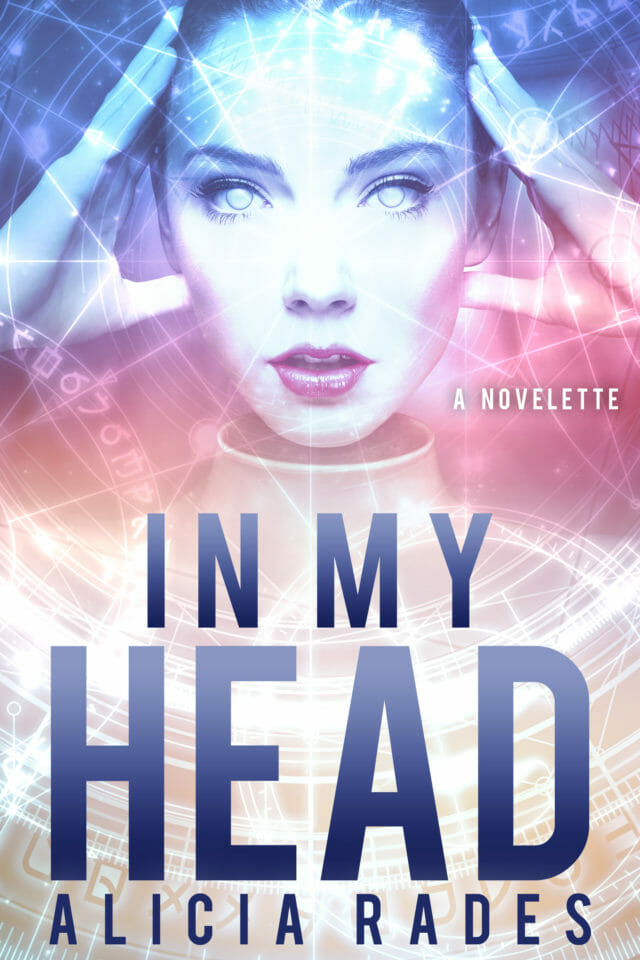
    This was the first cover for my novelette, In My Head. I created it myself using a stock image and Photoshop.

    Eventually, I purchased a professional cover from the designers at TheCoverCollection.com, and I have seen a lot more downloads after uploading the new cover to Amazon and other platforms.

    Do yourself a favor and don’t try to create your own cover unless you’re also a designer. Most authors aren’t very good at this. With the exception of my current Where the Darkness Ends cover, all of my covers were professionally designed, and all my future books will have professionally designed covers.

    WTDE EBook Cover

    I put this one together using a stock image and Photoshop, but that was only after taking several graphic design classes. I still wouldn’t recommend it and no longer try to make my own covers. There are plenty of professional designers out there who can do a much better job and create unique artwork at an affordable price.

    Designers are all over the place. Search on Facebook or Google, or ask around for recommendations from author friends, and you shouldn’t have a hard time finding a quality designer.

    5. Have your marketing plan ready

    With my first book, I thought if I put it out there, all my friends and family would be eager to buy it.

    They weren’t.

    Now when I publish books, I know which day it will go live, what types of promotions I’ll run and when, which promotional sites I’ll submit to, etc. I also set up blog tours and launch parties, and I design social media images before the book launches. Without a plan on how to get the word out, it’s unlikely you’ll get much exposure — if any — for your book.

    You can be successful

    None of this is to discount the credibility of self-publishing. I’m still an independent author. With my first full-length novel, Fire in Frost, I slowed down and put more time and money into the book. As a result, it’s earned several awards and dozens of favorable reviews.

    A friend of mine once pointed out there’s a difference in mindset between self-publishing and independent publishing. Self-publishing implies you’re doing everything on your own. Independent publishing is more about building your own team, and that’s the route I’ve taken with all my full-length novels.

    You can become a successful independent author, but it takes time, hard work, and sometimes a little bit of money.

    Or you can rush into things and regret it. The choice is yours.

    What have you learned about the challenges of self publishing? How have you adjusted your methods?

    This post contains affiliate links. That means if you purchase through our links, you’re supporting The Write Life — and we thank you for that!

  • The Powerful Case for Developing Your Fiction-Writing Platform

    The Powerful Case for Developing Your Fiction-Writing Platform

    There are tons of articles out there with tips to help authors build their platform.

    There are almost as many articles explaining why fiction authors don’t need a platform to get an agent or publisher.

    Most of this advice is completely accurate. So should fiction authors just cross “platforming” off their to-do lists?

    Heck no.

    As a marketing pro and a fiction author, articles declaring there’s no need to build a platform make me facepalm. Articles expounding on this point are built on the premise that your platform is intended to get you a publisher.

    But that’s not what a platform is for.

    Forget publishers. An author’s platform is for connecting with readers.

    It’s a crowded world out there

    Most books, traditionally or self-published, never sell any more than 2,000 copies in their lifetime. Not a month. Not a year. We’re talking entire shelf life.

    How’s that possible? It’s a crowded world out there for a book. About 750,000 new books are released every year, according to Tim Grahl’s research.

    So sure, an agent and maybe even a publisher might pick up your book without a platform, but what about when your book is squeezed onto the massive shelf along with all those others out there in the online abyss?

    Your fans are the key

    The average American adult reads 12 books every year. Compile all those different people and all those different book choices, and that’s a lot of opportunities for your book to get read.

    Every time a reader looks for their next book is an opportunity for you to be discovered.

    But different readers are looking for different types of stories. Not all of those readers will want to read your book.

    But others will adore it. There are readers out there right now, just waiting to love your book.

    So how do you find those readers? The answer to this fundamental author question is platforming.

    Benefits beyond readership

    As I began platforming online, I paid more attention to the online writing community because it was right there in my Twitter feed.

    I made invaluable friendships with other writers and bloggers, which have helped me learn and develop as author. It’s also given me awesome opportunities as I launch my first book.

    The result: Long before I had any books to promote, platforming was already well worth the effort.

    I also became part of a community of enthusiastic sci-fi and fantasy readers. Again, this happened naturally over time, simply because as a fantasy writer, I was sharing content that interested me and that I thought would be of interest to others in this community.  And it’s really a blast to have those people there to geek out with when something exciting happens, like a new season of Daredevil drops on Netflix.

    See how it works? Platforming is a win-win. But this isn’t even where the benefits of platforming end.

    Setting yourself up for long-tail success

    Your author ambitions don’t stop with one book deal, right?

    Most writers consider a book release a stepping stone, rather than an end goal. You want to keep growing your audience so your next book sells even better, and so on.

    This audience growth over time is called the long tail. A platform is key for this.

    First, it helps you maintain long-term relationships with the readers who love you most: The ones most likely to want to buy your next book because they loved your first book so darn much.

    This list inevitably grows over time as more people read your work and find you online, allowing each new book to be more successful. Each book launch, in turn, helps you gain more exposure, which helps more people find you. It’s a lovely cycle.

    Secondly, the sales success this cycle leads to helps you maintain agent and publisher relationships.

    Sales are your responsibility as much as your publisher’s. If your book flops, you’re not likely to get a second chance.

    [twl_reusable_block post_id=41455]

    Platforming can be pleasant

    With so much to gain from platforming, why would authors avoid it so adamantly? There’s a stigma to platforming it doesn’t deserve, though I understand where it comes from.

    Promoting your writing can make your feel icky, or even like you’ve sold out. But platforming isn’t about making sales pitches all day. It’s about making connections — sharing what you love with the people who love what you create.

    Another barrier is the idea that platforming takes a huge amount of time. But it doesn’t have to.

    If your time is limited, start with just one or two social media networks. Even if you post just a few times a week — an effort that should take just minutes — you’ll see more growth than if you do nothing. Free tools like Buffer and Hootsuite can help.

    And sometimes, writers get frustrated with the slow nature of the audience-cultivation process.

    I know, I’ve been there myself. It’s rough to see your followers inch up from 0, 10, 30 … but hey, we all start there. Stop putting so much pressure on yourself and have some fun with it.

    But please writers, I’m begging you, do something.  

    Consider it an investment in your writing career. Your future self will thank you.

    What advantages have you found to developing an author platform? Or, if you’ve procrastinated on this task, tell us why!

  • How to Write a Book Without Losing Your Mind: 10 Tips to Make It Easier

    How to Write a Book Without Losing Your Mind: 10 Tips to Make It Easier

    If you’re itching to write a book — or are stuck in the middle of one — join Jenny’s Book Ninja 101 course this month for just $97. Use code THEWRITELIFE at checkout.

    “Writing a book is hard.”

    In the last three years of working on Pivot — from the book proposal that my agent first rejected, to re-submitting one a year later, to the book deal with Penguin Random House in 2014, to turning in the final draft last month — that was the one phrase I wouldn’t let myself say.

    Writing a book is a privilege, and complaining about how hard it was throughout would not make the process any easier.

    Writing a book is complex, don’t get me wrong, but I adopted the motto, “Let it be easy, let it be fun” instead. Stress is a systems problem; an opportunity to get even more organized.

    These 10 tools helped keep me sane throughout the book outlining, writing, and editing process.

    1. Setup

    Create three collection buckets (notes) in Evernote: Articles, stories, and ideas. As you go, even before you have the book outline, you can save relevant notes to each category.

    I highly recommend the Evernote web clipper for saving content; you can also forward emails directly to your Evernote email address.

    2. Outlining

    I started my outline with Post-it Notes on the back of my front door. I first put a bunch of blank Post-its under the following categories: Inspiration books, core skills, process, personal stories, and quotes.

    Every time I had an idea I would add it to the wall, or sometimes when I was taking a break from other work I would stand by the door and just stare until ideas came up — and they always did!

    The Post-it app allows you to take pictures of Post-Its (or a whole wall), then move them around digitally in the app.

    [twl_reusable_block post_id=41455]

    3. Research

    Save all citations early as footnotes, including page numbers from the books you reference!

    This will save a ton of hassle down the road. Even if you don’t know (or don’t want to take the time to do) proper citations, at least save the book and page numbers — or article name and link — as a footnote as you go.

    Otherwise, it’s a huge pain to remember where you found everything. To make the research process easier, check-out Ask Wonder — they’ll do research for you with a quick turnaround and comprehensive list of links for any question you pose. 

    4. Structure

    Thanks to a tip from Shane Snow, author of Smartcuts, I created Google Drive folders for each of the book’s parts, then a Google doc for each chapter within each part.

    At one point I had seperate Google docs just for essays that would go in each chapter, but it started to get unwieldy. It was helpful in the beginning, though, for feeling like I could write in manageable chunks.

    5. Writing

    With all the tools available, one of the most enjoyable apps to write in was OmmWriter: peaceful music, blank background, and those glorious typewriter sounds!

    6. Editing

    I didn’t do this nearly as much as I could have, but after I wrote an essay in OmmWriter, I would sometimes do a quick grammar check in Hemingway Editor, a super-helpful automatic text editor. You’ll have to try it out to see what I mean!

    7. Curating

    I sent out a Google form for written story submissions to include as anecdotes throughout the book

    Once those responses were in, I combined all the results into a Google doc. From there, I printed the doc so I could highlight key quotes and mark potential chapters for where to insert them.

    You can also use TypeForm for this, which is really beautiful and easy for the respondent to use.

    8. Interviewing

    I asked for permission up front to record interviews, letting people know I might release them for a podcast near the time of the book launch.

    I’m so glad I did this! I record calls with Skype + eCam Call Recorder. For a conference-call service, I love Dialpad Meetings (no dial-in passcodes, and it texts you when a person is waiting on the line).

    9. Transcribing

    CastingWords provides audio transcription at $1 per minute. For long interviews, I printed these notes and highlighted by hand.

    When it was time to check the quotes for the final versions of the book, I copied and pasted their section into a Google doc with permissions set at “suggest edits only.”

    10. Clearing space in your schedule

    Copy and set-up this editorial calendar template.

    This is the format I use to plan posts and newsletters. Tt’s particularly helpful if you have multiple contributors, sites or guest posts. It helps keep things running smoothly while working on a project as complex as a book!

    You might also appreciate my systems and strategy for working with a virtual assistant: A detailed look at what to delegate, how to efficiently set up your systems, and what pitfalls to avoid as you clear up space to work on your big book project.

    These are the tips and tools that helped me most. What’s your approach?

    What bite-sized chunk of your book project can you commit to this week? Reply in the comments and let us know.