Tag: getting published

  • How to Make a Book Trailer: 3 Free Apps for Creating an Impressive Video

    How to Make a Book Trailer: 3 Free Apps for Creating an Impressive Video

    As any author can tell you, promoting your book is a challenge. In addition to standard marketing techniques, you must find new and innovative ways to engage with your readers. One way to do that is to create an animated book trailer.

    But not many people know how to make a book trailer. While it’s difficult to create animation from scratch, it can actually be quite simple to create a simple book trailer by yourself. And there are a number of free and easy-to-use applications that will help you do just that.

    To start, you’ll want some photos for your trailer; typically, these would be of you, your book cover, and your interior art. You don’t need high-res photos; 72 dpi is fine (640 px wide by 480 px high).

    If you’re a Windows user, you can download Photo Story or Movie Maker from Microsoft. Mac computers come pre-loaded with iMovie software. If you have PowerPoint, you can add soundtracks, slide animations and slide transitions to presentations, and then export to video. All of these options produce a video file that must be hosted somewhere (eg. your website or YouTube).

    Several newer apps combine trailer creation and hosting, including Animoto, Prezi, and PhotoShow. Let’s take a look at how they work.

    Animoto

    The Lite version of Animoto is free and enables you to create 30-second animated trailers. (Ed. note: Reader Susan let us know the free version of Animoto is no longer available, and pricing starts at $8 per month. However, Animoto does offer a free trial period.)

     Step 1. Select the animation style and soundtrack that best matches your book.

     Step 2. Outline the slides you’ll use in your animation. Each slide can either have text or an image. However, if you know how to use PhotoShop or another image editor, you can get the best of both worlds by adding text to your image files. If you’re technically savvy, you can substitute your own soundtrack too.

    Step 3. Animoto assigns a length of time to each slide. When your total runtime reaches 30 seconds, you won’t be able to add any more slides. You can edit the slide contents and rearrange the slide order. Click the “Preview Video” button to see your trailer!

    Step 4. Once you’re happy with your video, click the “Produce” button. Voila!

    If you want to add to your trailer, you can also pay for additional options like a longer video, more animation choices and more customization of your animation. Here’s the trailer I made with Animoto.

    Prezi

    The Public version of Prezi is free. It enables you to create trailer-like presentations with richly animated slide transitions that your audience must click through manually.

    Step 1. Sign up on Prezi.com. It will encourage you to download the desktop application, but you can also create your trailer completely online.

    Step 2. Click on “New Prezi” and choose a template. Prezi is similar to PowerPoint and offers some snazzy animated slide transitions.

    Step 3. Build your trailer “slides” one at a time by adding text and other content. Use the Insert button at the top center of the screen to add images, video and background music.

    Step 4. To preview the trailer, click the blue “Present” button in the upper left of the screen. Hit “Escape” to leave presentation viewing. Click on the “Edit Path” button in the upper left to reorder or delete individual slides.

    Step 5. Once you’re happy with the trailer, click the “Share” button in the upper right corner and select “Share Prezi”.

    Prezi will reserve you a web address, and when you go to that address, click the “Embed” button. Click the radio button labelled “Constrain to simple back and forward steps” and you will see HTML. Copy and paste that HTML into your web page wherever you want to embed your trailer.

    Here is my modest Twignibble trailer made with Prezi.

    PhotoShow

    The Free version of PhotoShow is easy to use and the features are pretty nice. Unfortunately, the trailers only persist for 30 days.

    Step 1. Click “Make a PhotoShow.”

    Step 2. Click “Add Photos” to import images to your trailer.

    Step 3. Click “Personalize” to enter the trailer title and author. Then use the different tabs to select a style, insert captions, text bubbles and other features.

    Step 4. The “Music & Photos” tab lets you reorder or delete images and control the audio. Click Done when you’re ready to see your video.

    Step 5. Click on “Post to your web page or blog”. Copy and paste the HTML into your website to embed your trailer.

    Since I don’t have a PhotoShow subscription, my trailer for How the Rhino Got His Skin is no longer publicly visible. However, if you enjoy using PhotoShow, an annual subscription for additional features and ongoing public access to trailers is only $39.

    Having a book trailer can be a fun way to share your work with your audience. However, remember that it’s just one small part of your larger campaign to build an online platform for your book. Good luck!

    Have you created an animated trailer for any of your work?

  • Is Good Writing Worth More than Cat Photos? Beacon Says Yes

    Is Good Writing Worth More than Cat Photos? Beacon Says Yes

    As a writer, you must create and manage your personal brand. But how do you leverage that brand to earn a living?

    The team behind Beacon, a startup launched in September that’s been called “Netflix for Journalism,” thinks they’ve cracked the code. Co-founders Dan Fletcher, Adrian Sanders and Dmitri Cherniak created the platform to help writers capitalize on the direct connections they’ve built with their readership through social media.

    A monthly $5 fee gives subscribers site-wide access to content, which ranges from on-the-ground reporting of international affairs to satirical coverage of American news. The twist? Subscribers choose a favorite writer — and that writer gets 70 percent of each supporter’s subscription price.

    We’re always keen to explore new ways to earn a living through writing, so we asked Sanders about the team’s goals for Beacon and how writers can get involved.

    What are you hoping to accomplish with Beacon? Why should our readers visit the site?

    Beacon is about returning the value of stories back to the readers and writers. We think great stories are worth paying for, but we also think readers should feel that their money is directly impacting the work they want to support.

    The Write Life readers should be keen on Beacon because hopefully they’d be interested in applying to get started writing on Beacon. Anyone can apply and we’re adding new writers every week!

    Can you tell us the story behind why you started the site?

    We started Beacon because we were frustrated that the traditional model of making money on the published Web was nearly totally dependent on ad sales. It is mind-boggling that a writer can have 10,000 devoted readers, but an ad company gets to decide that’s not worth very much.

    As ad sales oscillate towards properties that can move millions of pageviews (think funny cat lists on Buzzfeed), they become increasingly less concerned with small niche high-value stuff. And the reality is, no matter how great a reporter you are, you’ll never be able to generate one million pageviews a month from Yemen. It’s just not the right fit for display ads. We think Beacon is the right fit!

    How are you monetizing Beacon? How’d you decide on your $5/month subscription price point?

    The way Beacon works is very simple:

    As a writer, you have a project page that helps you crowdfund a minimum number of readers who are willing to support your work. So you can launch a project and try to find 50 subscribers like Seth Robbins is doing now.

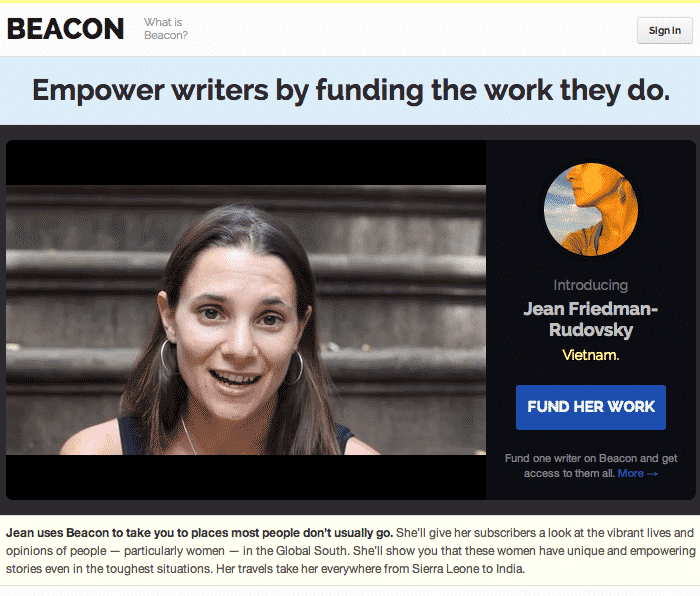
    Once the project is successfully complete, you’re given a profile page (like Jean Friedman-Rudovsky’s) and anytime someone signs up to Beacon via your page, they become your personal subscribers. You earn 70 percent of their monthly subscription as long as they keep paying.

    But your subscriber gets access to not just your work, but every story by every writer on Beacon — so they get to support you, and they get access to a lot of great stories.

    We picked $5 because it seemed significant enough to help writers build real income from, but also competitive enough to woo readers. So far we’ve been happy with the results — we’ve grown more than 4x since launch in September 2013.

    Image: Beacon: Jean Friedman-Rudovsky

    How do you add writers to your list, and what criteria do you look for? How do writers benefit from contributing?

    Most of our writers come by referral from writers already on the platform. Recently, we launched Projects as a way for writers to launch onto Beacon with a good group of starting subscribers. It’s been going fantastic. We also accept applications to write on Beacon — anyone can apply.

    Writers enjoy 70 percent of all subscription revenue from readers that subscribe via their project, and via their profile page after they launch. The other 30 percent gets put into a bonus pool that we divvy out to the most read stories each month. This month we’ll be distributing $5,000 in bonus money to the top 20 articles.

    What was your strategy in not including editorial support for your writers? Have you heard feedback from your writers about that decision?

    There’s two primary reasons for this — the first is that Beacon isn’t a publication, it’s a platform. We’re here to enable writers to write more of the stuff they want via the subscriptions from readers who love their work.

    Adding editors in the traditional sense creates a layer of complexity and cost that we just can’t justify. Now, that doesn’t mean we think editors aren’t worthwhile (far from it) but if you’re going to innovate the model you need to rethink how all the processes are handled. Could writers bring their favorite editors onto Beacon in the future? Maybe with a revenue share model for the work they edit? Things like that get me excited because I know there’s a way to figure it out — it’s just a matter of time.

    Have you learned anything about the writing community through this project that surprised you?

    It’s not surprising, but it’s certainly interesting how the current situation in the industry has made people very open to trying new things. I think it’s amazing to see writers exploring their options right now when it comes to making a living.

    What do you think of Beacon’s premise? Would you join Beacon as a subscriber or writer?

  • Literary Agent Tells All: 5 Things You Don’t Know About Book Publishing

    Literary Agent Tells All: 5 Things You Don’t Know About Book Publishing

    So you have a brilliant manuscript and you want to get published. Now what?

    If you want to be published the “traditional” way, savvy TWL readers probably know the next step is finding an agent, but things can get a little murky after that.

    What happens once your agent signs on? What do editors do with your manuscript? Once you have a book deal, what can you expect going forward?

    The publishing process can be mystifying, and sometimes writers are left feeling like they’re on the outside looking in. Creating a book ought to come with a handy user guide, but it doesn’t. And busy agents and editors don’t always remember to inform writers of the steps a project takes on the path from manuscript to finished book, and who the major players are along the way.

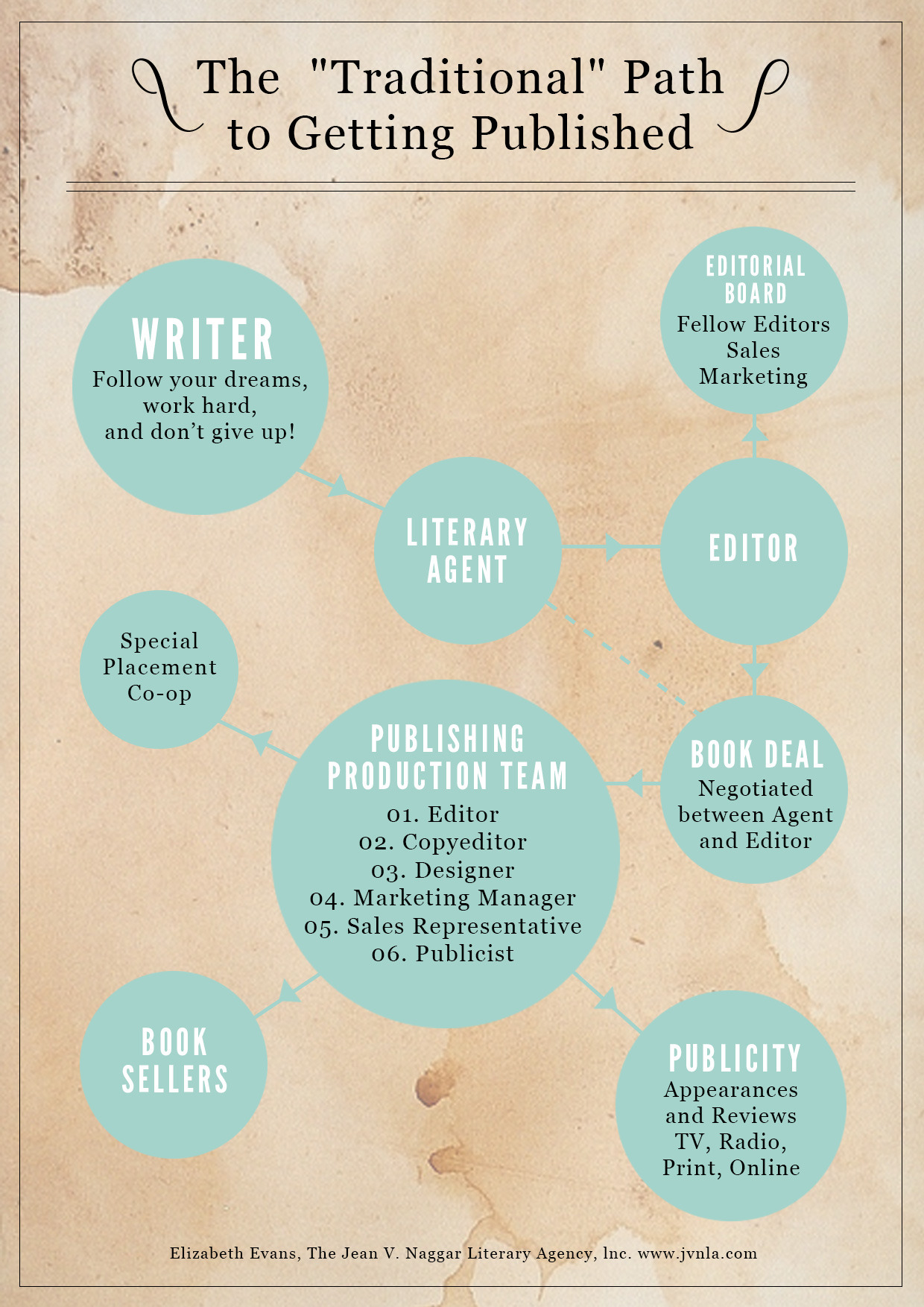
    A writer shouldn’t feel in the dark about what’s happening with her book — heck, you wrote the darn thing! Next time you’re feeling unsure about what’s going on, take a peek at this simple flow-chart and these five tips to understanding what’s going on behind the scenes.

    Traditional Publishing Flowchart

    How long will it take your agent to submit the project to editors?

    Once you sign with an agent, he will then work with you to ready the project for submission to editors. This could mean minor edits or something more involved. Before you agree to work together, ask the agent for an estimate of how much time and work it will take before the project is ready to go.

    Tip #1: Don’t hold your agent to exact dates; things come up. For example, an agent might plan to submit your project on a Monday, but if she suddenly has a lot of editor interest in another project, she may have to shift gears to sell the other book first. Be patient, but if weeks go by with no news, check in.

    [twl_reusable_block post_id=41455]

    How long does it take for an editor to make an offer?

    Depends on the editor, depends on the publisher. If an editor is really enthusiastic about your book, it could take just a couple of days (or even less!). Generally, however, editors need to present the book at their weekly editorial meeting and get their team onboard before they can make an offer. This can take time, sometimes a week or more.

    Editors may reach out to let the agent know they love a project and are “getting reads,” or sharing your project with a few trusted readers at their imprint. Then, when they bring the project up at their meeting, you’ll have a wider base of support in-house. This is a sure sign of interest, but no guarantee an offer is forthcoming.

    Tip #2: Understand the potential hurdles of the ed board meeting. Editors have to present a strong case for your book at ed board meetings, going beyond loving a voice, style or concept.  They need to present “comps,” or competitive and comparative titles that have strong sales figures — indicating that your book will too.

    They may also need to win over the Sales & Marketing Team, convincing them that there’s a strong audience and potential for stores to place large orders of the book. Try to anticipate and address these needs in advance through your proposal or your agent’s submission letter.

    When is it safe to get excited?  Probably not until that offer is on the table. I recommend my clients be “cautiously optimistic” until then.

    I’ve got a book deal! When can I expect to get paid?

    Once your agent and editor agree upon the “deal points,” or the major terms of your deal (these include advance, payout, territory, royalty rates, subrights), the agent waits for the publisher to generate the contract. Depending on the publisher, this can take a few weeks or even a few months. On average, I see a contract come in three weeks to one month after I strike a deal.

    Tip #3: Plan for an additional two months of negotiations after your agent receives the contract. You won’t get paid the first installment of your advance until the contract is fully executed, a back-and-forth process between your agency and the publisher to iron out specific language. This process can experience delays. Contract managers juggle several contracts at once, and it might take time for them to respond to the other party. I would expect an additional two months. Anything faster than this is gravy!

    Who is my point person at the publishing house?

    The editor not only works with you on revisions of your manuscript, he or she oversees the entire process of book production in house. This includes coordinating with different members of your publishing team, including the cover designer, publicist, marketing manager and sales team. Depending on how that publisher works, you may be encouraged to communicate directly with different members of your team, or you may find you only communicate with your editor, who passes your input along to the others.

    Tip #4: Don’t be afraid to ask your editor what to expect once you’ve reached the final manuscript stage. Your editor should be able to give you an overview of the steps your manuscript takes once it goes into production. Ask your editor how many opportunities you’ll have to read the manuscript after it goes through copyediting and page layout. Also ask when you might expect to see a cover design, or hear from your publicist to coordinate a publicity plan. Your agent can assist with this, but it’s best to hear it directly from the editor.

    The manuscript is done!  Now what do I do?

    Most authors experience a lull just after turning in their final manuscript. This is a great achievement, so enjoy a few days of relaxation, then turn your sights to the next steps: marketing and publicity.

    Authors can expect to have direct contact with their publicist, usually starting about six months out from pub date, but they might not have much communication with marketing. Unless you happen to be BFF with the Target Book Club Buyer or the CEO of Anthropologie, there’s usually not too much an author can do on her own to assist with marketing. However, there are two important things you can plan in advance that may directly affect book buy-ins.

    Tip #5: Use your downtime to cultivate a strong presence online and seek support from other authors. When I Google your name, I’d like to see a professional-looking website, either focused around you as an author or around your book, and an active presence on social media sites such as Twitter, Facebook or Instagram. Note: Don’t feel you have to do everything. Go for depth, not breadth.

    An earlier post on The Write Life explained what agents want to see when they Google your name. Well, book buyers are looking for the same thing — a robust presence! This doesn’t happen overnight, but requires consistent attention over a long period of time.

    The best way to build Twitter followers is to be active on Twitter. A lone tweet here and there won’t do much good — in fact it might actually hurt to have an account with just a few followers; you’re better off not having an account at all.

    Consistent attention, including reaching out to other authors and “taste-makers” can help build buzz and a network that may be willing to help you promote your book when it comes out.

    Speaking of building your network, now is a great time to plan ahead for who you’d like to approach for endorsements once bound galleys are ready. Try to determine the best way to reach them. Also, consider which authors writing in your genre have popular blogs. Perhaps there’s opportunity to collaborate on a blog tour down the road.

    Hopefully these tips have provided some insights as to what you can expect from the publishing process. Keep in mind that each publishing house works a little bit differently. For example, some editors might not need the approval of an editorial board to acquire a project, and certain houses don’t hold editorial meetings every week.

    Remember to enlist the help of your agent if you have questions – their experience should help guide the way.

    Have you navigated the traditional publishing process? Share your experience in the comments!

  • How Smart Writers Deal With One-Star Reviews (Hint: Not By Crying Yourself to Sleep)

    How Smart Writers Deal With One-Star Reviews (Hint: Not By Crying Yourself to Sleep)

    I’d written the manuscript for my novel, Willows, about two years prior and promptly abandoned it, leaving it to lie dormant in my Dropbox. One day my writing partner discovered it and blew the dust (or whatever digital files gather when they’re abandoned) off it.

    “Get it out there,” she said.

    “It needs to be seen,” she said.

    “Publish it on Amazon,” she said.

    So last year we embarked on our self-publishing journey, and soon the book was ready and uploaded to Amazon and ready to set the world on fire.

    After initial sales from friends, family, and well-wishers, Willows settled into a groove. I’ve had more sales than I thought I would, and on my free days the book was downloaded more than 2,000 times and earned a few good reviews. I wasn’t quite in Lee Child or Stephen King territory just yet, but for my first effort I considered it an OK start.

    All in all, I’ve loved my first foray into self-publishing. Despite my complaints and some infuriating moments (like MS Word somehow reversing all my changes and auto correct reversing my edits and changing a character’s name mid-novel), I’ve enjoyed it.

    However, the thing I looked forward to, more than anything, was my first review. After all, I wanted what all writers want: to know if I’m any good. I needed to know if I was just fooling myself with this writing jazz. Should I chuck the whole thing? Would people enjoy my work? We would see.

    When those first reviews start trickling in

    I expected some initial good reviews. Family and friends eager to support you will give you five-star reviews and say things that make you sound like the next big literary star. I truly appreciated these, but the reviews I treasured the most were the ones from complete strangers, who gave honest, constructive criticism.

    So, when I got my first one star review, I was shocked! I reread it a few times to make sure I’d read it right.

    The reviewer had downloaded my book on a free day, read it (I assume) and was not thrilled. I was flabbergasted. Willows was my first novel; I knew I would be no danger to the authors on the bestseller list, but I never expected that kind of review.

    I laughed it off and chalked it up to someone who didn’t give the book a chance or maybe didn’t care for the genre, and resolved to ignore it. Twenty minutes later… okay, two minutes later — when I was supposed to be writing — I read the bad review again.

    Does one bad apple spoil the whole bunch?

    Then, just like we do in many other areas of life, I totally disregarded the sincere encouragement and kind words I’d received from friends, family and complete strangers and concentrated on my one bad review.

    Was there something I could have done to make the book better? I went back to the manuscript and pored over it to see if there was something I missed, or if there were there any edits I could have made to win this lone reviewer over.

    I tried to return to writing but the review was on my mind. It buzzed around my head like flies at a picnic, distracting me from my work.

    Too distracted and annoyed to write, I picked up my favorite book about writing, Stephen King’s On Writing: A Memoir of the Craft. I opened the book and my eye fell on this quote:

    “You can’t please all of the readers all of the time; you can’t please even some of the readers all of the time, but you really ought to try to please at least some of the readers some of the time.”

    That is exactly what I tried to do: please some of the readers. I had tried my best, and it pleased some of the readers. Reading King’s quote took me out of my bad review funk and focused my attention on where it should be: on my work.

    Dealing with a negative review

    If you’re a writer, especially a newbie, and you’ve received a bad Amazon review, here are my three steps to deal with it:

    1. Ignore it

    2. Ignore it

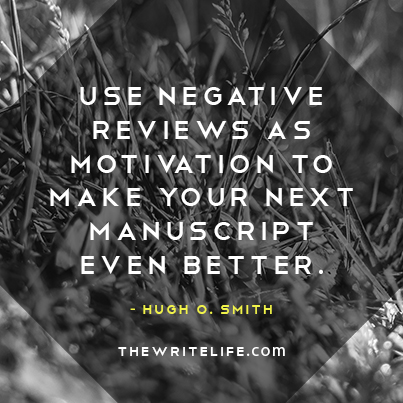
    3. Use it as motivation to make your next article or manuscript even better

    Use negative reviews as motivation

    Thanks, Ms. One Star Reviewer, for your message. I’ve gotten you out of my system and used your words as inspiration. I hope I don’t ever encounter you again, but if (when) I do, I’ll know how to handle you.

    Have you ever dealt with a negative review? How did you respond?

  • Yes, Fiction Writers Can Develop Awesome Online Platforms, Too

    Yes, Fiction Writers Can Develop Awesome Online Platforms, Too

    You know you should create your own online home and “develop a readership” before your book comes out. But what exactly does that mean? How do you actually do that?

    When I first started building an audience for my book, I wanted to find examples of individuals who were doing it well. There are lots of great examples from the non-fiction world, but how are fiction writers accomplishing this? How were they structuring their online presence? How were they interacting with potential readers? And what the heck were they writing and talking about?

    Stellar examples of authors with engaged readerships

    If you spend any time on various online platforms, you’ll find a lot of marginal content: individuals who are purely self-promotional or websites with poor design. To give you some great models to emulate, here are some examples of authors who are engaging their readers in a meaningful way.

    Blogging

    Many of us know Joanna Penn from her popular blog, The Creative Penn, but she is also an accomplished mystery/suspense author.

    Joanna has successfully made the leap from self-published to traditionally published author. At her author site, JFPenn.com, she blogs about ancient books, cities, and the psychology of religion — all common themes in her novels. She also interviews other authors in the same genre.

    Joshilyn Jackson also provides a great example of what to write about on a blog. She’s had her blog since 2004 — eons in the blogging world. Joshilyn makes a big distinction between blogging for writers and blogging for readers. She blogs for her readers and mostly blogs about “ridiculous stories of the messes I tend to get myself into.” Joshilyn’s blog has the same strong voice and wittiness that she’s known for in her novels.

    Facebook

    Dana Stabenow is a mystery author with more than 20 published novels. She’s a master at cultivating an engaged readership. A group of dedicated fans dubbed themselves the “Danamaniacs” over twelve years ago. They have their own Facebook page to discuss Dana’s work and hold online chats.

    Dana has offered a digital newsletter, the “Roadhouse Report,” since 2004. Dana is also active on Facebook and posts frequently about life in Alaska — her home and the setting for all of her novels — and other topics she finds interesting or intriguing. With more than 11,000 Facebook fans and 1,200+ Danamaniacs, she has a loyal and engaged group of readers.

    Pinterest

    The tagline of fantasy author Justine Musk’s site is “because you are a creative badass.” She has two traditionally published novels and an active presence on Twitter.

    What makes Justine unique is she’s using Pinterest as a planning tool for her next novel. The images she pins range from tattoos to quotes that hint at a troubled soul and a dark side. I know I’m intrigued. (Inspired by this idea? Click to tweet it!)

    Online forums

    Neil Gaiman’s work ranges from comics, short stories and novels to films. He posts frequently in his online journal but he has also created a message board where readers can interact and discuss his work. Go check the forums to see how they work, but beware the rabbit hole: there are over 250,000 posts.

    Twitter

    Maureen Johnson, a UK-based author dubbed the “Queen of Teen,” has an active presence on Twitter. She’s recently taken up knitting and has promised a badly knitted scarf for anyone who could help her gather 8,000 Twitter followers after a snubbing by @Huffpostbooks.

    Whether that was an ill-willed or in-jest comment, Maureen isn’t afraid to let herself be seen and she posts witty comments about current events and quirky things that catch her eye. She’s funny, relevant and her followers love her.

    Google+

    John Scalzi writes sci-fi fantasy and graphic novels. He’s active on Google+ and often posts upcoming book covers for his graphic novels. He also engages his readers in photo caption contests and posts teasers of first lines of his work-in-progress.

    Finding common themes in your writing is a great place to start engaging your audience for a fiction writer. Much in the same way that it takes some trial and error to develop your voice as an author, it will also take some time to find your online voice on your platform of choice. You may even need to experiment with several platforms before you find one that’s the best fit for you.

    Five steps to developing your own engaged readership

    So how do you follow in these great authors’ footsteps? Here are a few places to start.

    1. Observe some fiction authors with great engagement. You can start by following our list, but aim for 10-15 different authors to see a wide variety of examples.

    2. What do you like about how they engage their readers?

    3. What do you dislike?

    4. Model the style of the authors whose engagement resonates with you on the platform of your choosing.

    5. Continue to hone your voice and find your own style.

    Bonus points: Eventually you’ll want to provide your fans an opportunity to not only interact with you but also interact with one another.

    Most importantly? Be yourself.

    Regardless of which platform you choose for concentrating your energies, building an online engagement with your readers is time well spent. You’ll be building loyal fans, one reader at a time.

    Did we miss any fiction authors who have great reader engagement online? Let us know in the comments.

  • How Many Literary Agents Should You Query to have the Best Chance of Success?

    How Many Literary Agents Should You Query to have the Best Chance of Success?

    This column is excerpted from Guide to Literary Agents, from Writer’s Digest Books.

    One of the most common questions I get at writers’ conferences is this: Can I query multiple literary agents at once? My answer is that not only yes, but yes, you’re encouraged to.

    After all, though an agent will usually reply quickly (bless you, email), they may take three whole months to get back to you, only to send you a form rejection. You can’t wait around for agents one by one like that.

    So if you’re contacting various agents at the same time (simultaneous submissions), how many agents should you query? Would it be wise to just mail out your query to all 50 targeted agents who rep science fiction, trying to personalize your letter wherever possible?

    I wouldn’t, if I were you. I would submit to six to eight at a time, including those you’ve met at a writers’ conference or retreat.

    But why six to eight?

    Isn’t that a strange, arbitrary number?

    I say six to eight because I want you to protect yourself. My question to you is this: What if you submit your query to all 50 agents on your master list, but — heaven forbid — your query letter sucks? Every agent will turn you down and you’ll have hit a brick wall at the beginning of your journey.

    Instead, submit to a limited number of agents and gauge a response. If you submit to seven agents and get seven rejections with no reps asking to see more work, then guess what? Your query sucks. Overhaul it.

    Taking this approach one step further, let’s say you send your polished query to seven new literary agents, and get four responses asking for more work. Congratulations — your query letter is doing its job.

    But let’s say that none of those four agents who see a partial ask to read your full manuscript. Guess what that means? Your first few chapters aren’t up to snuff. Revise them. Overhaul them. Give the chapters to friends for a blunt critique.

    The message is this: If you’re not progressing as you hope, try to identify where you’re going wrong so you can improve on it as quickly as possible.

    This strategy will help you protect yourself. Give yourself the best chance of success in finding a literary agent!

    Other TWL Guest Posts by Chuck Sambuchino:

    1. The Worst Ways to Begin Your Novel: Advice from Literary Agents

    2. Tips for Pitching a Literary Agent at a Writers’ Conference

    3. Querying Literary Agents: Your Top 9 Questions Answered
  • Secrets to Querying Literary Agents: 10 More Questions Answered

    Secrets to Querying Literary Agents: 10 More Questions Answered

    This column is excerpted from Guide to Literary Agents, from Writer’s Digest Books.

    Writers always seem to come up with great questions on how to write a query letter.

    In fact, this post on query letter advice is so big that it’s broken down into two parts. See Part I of the Roundup, and learn about tricky topics such as resubmitting to an agent, simultaneous submissions, and more.

    Read on to see advice on 10 more complicated query questions. I hope one or several answers will help you on your journey. 

    1. If you’re writing a series, does an agent want you to say that in the query?

    The old mentality for this was no, you should not discuss a series in the query, and instead just pitch one book and let any discussion naturally progress to the topic of more books, if the agent so inquires. However, I’ve overheard more and more literary agents say that they did want to know if your book was the potential start of a series. So, the correct answer, it appears, depends on whom you ask.

    In circumstances like these, I recommend crafting an answer to cover all bases: “This book could either be a standalone project or the start of a series.” When worded like this, you disclose the series potential, but don’t make it sound like you’re saying “I want a five-book deal or NOTHING.” You’ll sound like an easy-to-work-with writing professional, and leave all options open.

    2. Should you mention that you’ve self-published books in the past?

    In my opinion, you don’t have to. So if you indie-published a few ebooks that went nowhere, you don’t have to list every one and their disappointing sales numbers. The release of those books should not affect your new novel that you’re submitting to agents.

    That said, if your self-published projects experienced healthy sales (5,000+ print books, 20,000+ ebooks), then sure, mention it. In other words, talk about your indie-pub projects if they will help your case. Otherwise, just leave them out of the conversation and focus on the new project at hand.

    3. What happens when you’re writing a book that doesn’t easily fall into one specific genre? How do you handle that problem in a query letter?

    Know that you have to bite the bullet and call it something. Even if you end up calling it a “middle grade adventure with supernatural elements,” then you’re at least calling it something. Writers really get into a pickle when they start their pitch with something like, “It’s a sci-fi western humorous fantastical suspense romance, set in steampunk Britain … with erotic werewolf transvestite protagonists.”

    Fundamentally, it must be something, so pick its core genre and just call it that — otherwise your query might not even get read. I’m not a huge fan of writers comparing their work to other projects (saying “It’s X meets Z” — that type of thing), but said strategy — comparing your book to others in the marketplace — is most useful for those authors who have a hard time describing the plot and tone of their tale.

     4. How many query rejections would necessitate a major overhaul of the query?

    Submit no more than 10 queries to start. If only one agent responds with a request for more, then you’ve got a problem. Go back to the drawing board and overhaul the query before the next wave of 6-10 submissions.

    5. Can your query be more than one page long?

    The rise of equeries removed the dreaded page break, so now it’s easy to have your query go over one page. But just because that’s so doesn’t mean it’s a wise move.

    My answer to the question is that while going a few sentences over one page is likely harmless, you really don’t need a query that trends long. Lengthy letters are a sign of a poor, rambling pitch that will probably get you rejected. So edit and trim your pitch down as need be. Get some beta readers or a freelance query editor to give you ideas and notes. Remember that a succinct letter is preferred, and oftentimes more effective.

    The exception to my answer is concerning queries for nonfiction books. Nonfiction queries have to be heavy on author platform, and those notes (with proper names of publications and organizations and websites, etc.) can get very long very fast. So if you have to list out lots of platform and marketing notes, feel free to go several sentences over one page — just as long as the pitch itself is not the item making your letter too long.

    6. Even if an agent doesn’t request it, should you include a few sample pages with your query letter?

    It’s probably harmless. But if you’re going to do this, first of all, remember to paste the pages below the query letter and not attach them in a document. Second of all, don’t include much — perhaps one to five pages. (My advised length refers to double-spaced pages, even if the pages do not paste into the email in perfect double-spaced formatting.)

    Having made both those points, I’m guessing that many people ask this question because they have a lot more faith in their opening pages than in their query. I get it; they’re different beasts, and you’re trying to up your chances and protect yourself a bit. But keep in mind that while including sample pages may perhaps help here and there with an occasional agent who checks out your writing, it doesn’t solve the major problem of your query being substandard. My advice is to keep working on the query until you have faith in it, regardless of whether you sneak in unsolicited pages or not.

    [twl_reusable_block post_id=41455]

    7. How do you follow up with an agent who hasn’t responded to your submission?

    This is a complicated question, and I’ll try to address its many parts.

    First of all, check the agency website for updates and their latest formal guidelines. They might have gone on leave. They might have switched agencies. And most likely, they may have submission guidelines that state how they only respond to submissions if interested. (You see this a lot with a line such as, “If you don’t hear from us in 8 weeks, it means we are regretfully not interested in your project.”) So keep in mind there might be a very good reason as to why you shouldn’t follow up or rather why you shouldn’t follow up right now.

    That aside, let’s say an agent claims they respond to submissions “within three months” and it’s been three and a half months with no reply. A few weeks have passed since the “deadline,” so now it’s time to nicely follow up. All you do is paste your original query into a new email and send it to the agent with a note above the query that says “Dear [agent], I sent my query below to you [length of time] ago and haven’t heard anything. I’m afraid my original note got lost in a spam filter, so I am pasting it below in the hopes that you are still reviewing queries and open to new clients. Thank you for considering my submission! Sincerely, [name].” That’s it. Be polite and simply resubmit. By the way, if an agent makes it sound like they do indeed respond to submissions but they don’t have a time frame for their reply, I say follow up after three months.

    But before you send that precious follow-up, make darn sure you are not to blame for getting no reply. Perhaps your previous email had an attachment when the agent warned “No attachments.” Perhaps your previous email did not put “Query” in the subject line even though the agent requested just that. Or perhaps your previous email misspelled the agent’s email address and the query truly got lost in cyberspace. In other words, double-check everything. And if you send that follow-up perfectly and the agent still doesn’t reply? Then forget ‘em! Move on.

    8. If you’re pitching a novel, should the topics of marketing and writer platform be addressed in the query?

    Concerning query letters for novels, the pitch is what’s paramount; any mention of marketing or platform is just gravy. If you have some promotional cred, such skills will definitely be beneficial in the long run as they will help you sell more books when your title is released. But on that note, a decent platform will not get a mediocre novel published. So feel free to list worthwhile, impressive notes about platform and marketing skills you possess, just don’t let your accomplishments in those areas cloud the fact that the 3 most crucial elements to a novel selling are the writing, the writing, the writing. (Click to tweet this idea.)

    9. Is it better to send a query over snail mail or email?

    If you have a choice, I don’t see any logic in sending a snail mail query. They’re more of a hassle to physically produce, and they cost money to send. 90 percent or more of queries are sent over email for two very good reasons: Email is 1) quicker, in terms of sending submissions and agents’ response time, and 2) it’s free.

    Keep in mind that almost all agents have personal, detailed submission guidelines in which they say exactly what they want to receive in a submission and how they want to receive it. So almost always, you will not have a choice in how to send materials. Just send what they ask for, how they asked for it. 

    10. If you’re writing a memoir, do you pitch it like a fiction book (complete the whole manuscript) or like a nonfiction book (a complete book proposal with a few sample chapters)?

    I’d say 80 percent of agents review a memoir like they would a novel. If interested, they ask for the full book and consider it mostly on how well it’s written. I have met several agents, however, who want to see a nonfiction book proposal — either with some sample chapters, or sometimes in addition to the whole book.

    So to answer the question, you can choose to write only the manuscript, and go from there. Or you can choose to complete a proposal, as well, so you have as many weapons as possible as you move forward. (In my opinion, a writer who has both a complete memoir manuscript and nonfiction book proposal seems like a professional who is ahead of the curve and wise to platform matters — and, naturally, people in publishing are often attracted to writers who are ahead of the curve and/or can help sell more books. Just something to keep in mind. By the way, look over my growing list of memoir literary agents.)

    Want more Query FAQs answered? Check out Part I of this post.

    Other TWL Guest Posts by Chuck Sambuchino:

    1. What Does a Literary Agent Want to See When They Google You?

    2. Tips for Pitching a Literary Agent at a Writers’ Conference

    3. Which Writers’ Conferences are the Best to Attend?
  • Querying Literary Agents: Your Top 9 Questions Answered

    Querying Literary Agents: Your Top 9 Questions Answered

    This column is excerpted from Guide to Literary Agents, from Writer’s Digest Books.

    When contacting agents, the query process isn’t as simple as “Just keep emailing until something good happens.”

    There are ins, outs, strange situations, unclear scenarios, and plenty of what-have-you that block the road to signing with a rep. It’s with that in mind that I have collected nine of the more interesting questions submitted to me by readers regarding protocol during the query process.

    (By the way, there is a Part II to this post you can read here: “Secrets to Querying Literary Agents: 10 More Questions Answered.”)

    1. Can you query multiple agents at the same agency?

    Generally, no. A rejection from one literary agent usually means a rejection from the entire agency. If you query one agent and she thinks the work isn’t right for her but still has promise, she will pass it on to fellow agents in the office who can review it themselves. Agents work together like that.

    2. Can you re-query an agent after she rejects you?

    You can, though I’d say you have about a 50/50 shot of getting your work read. Some agents seem to be more than open to reviewing a query letter if it’s undergone serious editing. Other agents, meanwhile, believe that a no is a no — period. So, in other words, you really don’t know, so you might as well just query away and hope for the best.

    3. Do you need to query a conservative agent for a conservative book? A liberal agent for a liberal book?

    I asked a few agents this question and some said they were willing to take on any political slant if the book was well written and the author had a great writer platform. A few agents, on the other hand, said they needed to be on the same page politically with the author for a political/religious book, and would only take on books they agreed with.

    Bottom line: Some will be open-minded; some won’t. Look for reps who have taken on books similar to yours, and feel free to query other agents, too. The worst any agent can say is no.

    4. Should you mention your age in a query? Do agents have a bias against older writers and teenagers?

    I’m not sure any good can come from mentioning your age in a query. Usually the people who ask this question are younger than 20 or older than 70. Concerning an age bias, I would say some literary agents may be hesitant to sign older writers because reps are looking for career clients, not simply individuals with one memoir/book to sell. If you’re older, write multiple books to convince an agent that you have several projects in you … and don’t mention your age in the query to be safe.

    5. Can you query an agent for a short story collection?

    I’d say 95 percent of agents do not accept short story collection queries. The reason? Collections just don’t sell well.

    If you have a collection of short stories, you can do one of three things: 1) Repurpose some or all of the stories into a novel, which is much easier to sell. 2) Write a new book — a novel — and sell that first to establish a reader base. That way, you can have a base that will purchase your next project — the collection — ensuring the publisher makes money on your short stories. 3) Query the few agents who do take collections and hope for the best. If you choose this third route, I suggest you get some of the stories published to help the project gain some momentum. A platform and/or media contacts would help your case, as well.

    6. When should you query? When is your project ready?

    There is no definitive answer, but here’s what I suggest. You want to get other eyes on the material — what are called “beta readers” — people who can give you feedback that is both honest and helpful. These beta readers (usually critique group buddies) will give you feedback and you can take what you want, then ditch the rest. What you’re aiming for is no more major concerns. So let’s say you give the book to three friends and they come back with some major concerns, such as “It starts too slowly” or “This character is not likeable.” Through revisions, you can address these problems. After rewrites, give it to more beta readers. If they come back with no major concerns, the book is ready, or at least very close.

    [twl_reusable_block post_id=41455]

    7. Should you mention in the query that your work is copyrighted and/or has had book editing?

    No. All work is copyrighted the moment you write it down in any medium, so saying something that’s obvious only comes off as amateurish. On the same note, all work should be edited, so saying that the work is edited (even by a professional editor) also comes off as amateurish.

    8. How should you start your query? Should you begin with a paragraph from the book?

    I would not include a paragraph from the book nor would I write the letter in the “voice” of one your characters — those are gimmicks. If you choose, you can just jump right into the pitch — there’s nothing wrong with that. But what I recommend is laying out the details of your book in one easy sentence: “I have a completed 78,000-word thriller titled Dead Cat Bounce.”

    I suggest this because jumping into a pitch can be jarring and confusing. Think about it. If you started reading an email and the first sentence was simply “Billy has a problem,” you don’t know if Billy is an adult or a child, or if he is being held captive by terrorists vs. being nervous because his turtle is missing. In other words, the agent doesn’t know whether to laugh or be worried. They’re confused. And when an agent gets confused, they may just stop reading.

    9. Should you mention that the query is a simultaneous submission?

    You can, but you don’t have to. If you say it’s exclusive, they understand no other eyes are on the material — but if you say nothing, they will assume multiple agents must be considering it. Keep in mind to always check each agent’s submission guidelines; a few rare agents will specifically request to be informed if it’s a simultaneous submission.

    Other TWL Guest Posts by Chuck Sambuchino:

    1. What Does a Literary Agent Want to See When They Google You?

    2. Tips for Pitching a Literary Agent at a Writers’ Conference

    3. 8 Lucrative Tips for Writing and Selling Articles to Magazines and Websites
  • Without This, You’ll Never Succeed as a Writer

    Without This, You’ll Never Succeed as a Writer

    This column is excerpted from Create Your Writer Platform, from Writer’s Digest Books.

    I always tell people that my biggest challenge of my job in helping people find literary agents is correcting bad information on the Internet. This is no doubt my biggest challenge on a day-to-day basis in helping people get published.

    But if I had to pick a second frustration — one that drives me absolutely bonkers more often than I’d like to explain — it’s the fact that so many writers make themselves difficult to contact and hurt their writer platform. I cannot tell you how many times I’ve wanted to help someone or promote a book or interview an author only to find no email address anywhere online.

    Why you want to make yourself easy to find

    For example, at least a dozen times, I’ve found a great debut author online whose book I wanted to include in my recurring Writer’s Digest magazine column (“Breaking In”) only to find … no email. No Twitter. No contact information. Plenty of times no website at all. Other times I’ve wanted to interview up-and-coming writers for one reason or another, and I face the same problem. They don’t make themselves available, and I find someone else instead. (Makes you wonder … perhaps someone reading this column right now missed out on some easy promo because they kept their email hidden.)

    I have no idea why people make themselves difficult to contact. I think it comes from some sort of old-school fear that if their email is online, all hell will break loose and their identity will get stolen by someone in Chechnya or they’ll be deluged with spam and messages from hundreds of people asking to borrow money.

    Take it from me: this will not happen. I make myself very available through all channels and am in a position to help people, but the number of cold-contact emails I get each month is small and manageable.

    The point I’m trying to make is this: in this day and age, book publicity is very valuable and very hard to come by. The last thing writers want to do is make it more difficult for editors to publicize their books. In order to give yourself the best chance at success, here are my suggestions for all up-and-coming writers in terms of making yourself available and easy to contact:

    1. Create a website, even a simple free WordPress blog with just one page

    The important thing is just to have something come up when I Google your name or the name of your book. Heck, your website can be one landing page — that’s all I need. Just put some information about yourself and your book (so I know I’m contacting the correct person), and include some relevant contact info — especially an email address you check regularly. Twitter’s also fine, as long as you’re on it often and respond quickly. If you want to see an example of a simple site that I set up for free, check out my writing website on WordPress.

    2. On that note, try to check your email every day

    Note how I just said “check,” not necessarily “respond to every waiting email.”

    You just must make sure there are no pressing matters. Here’s the thing writers must, must understand: editors and literary agents have schedules and deadlines. We also procrastinate more often than we should. This means that, plenty of times, we are contacting people at the last minute and need an expeditious reply.

    3. If you want to protect yourself from spam, take simple steps

    An easy thing many people do when posting an email address online is adjust the formatting and write it out like this: literaryagent (at) fwmedia.com (dot) com. Spam be gone! If you’re an established author with a communicative fan base — perhaps you write for children — then include a note by your email saying that “While I do read every email promptly and personally, due to the sheer number of them, I cannot respond personally to all messages. Sorry.”

    4. Know that only listing your publicist’s contact info on your site is, in my opinion, not good enough

    I know I will catch some hell for this one. The good thing about publicists is they understand deadlines and are usually very quick to return emails and touch base. But publicists get sick, too. They get buried in work just like everyone else. They may be so busy that they can’t consider media requests from non-top-tier outlets. And plus, they don’t always work on weekends (but plenty of journalists do!). That’s why you should include your own information — just in case it’s an urgent matter. And I know the subject of publicists gets kind of tricky.

    Plenty of publishing house publicists don’t really want writers doing their own publicity without supervision from them. If that’s the case, just use your judgment. When my humor book, How to Survive a Garden Gnome Attack, came out in Fall 2010, we got publicity/review requests from media outlets big and small. If the media outlet was very sizeable (e.g., USA Today), or was requesting copyrighted book images to go with the story (e.g., The Huffington Post), then I knew it was something my publicist would have to approve. But everything else was fair game for me to do on my own. (She didn’t have time to get involved with everything anyway.)

    I solicited blog coverage. I responded to lots of interview requests. I answered people’s questions. And I did it all as fast as I could — because you never know when someone has a publicity window that’s closing fast. Just keep in mind that if it’s an emergency, your publicist will understand. I remember one time I was on a docked cruise ship in Miami an hour from when we left and would lose phone reception. That’s when I got an email from a Boston Herald reporter, who wanted to ask me interview questions about how book deals worked. (Guess where she found my contact info? Who knows! It was everywhere online, because I make myself easy to contact.)

    Since this was not just some random blogger calling, but rather a large metropolitan newspaper, protocol said I should send the request formally through my HR division. But the reporter’s deadline was hours away. So I called the Herald back immediately and did the interview. I was careful to pay attention for any “dangerous” questions that had answers that would get me in trouble. But these concerns never materialized, and my quote appeared in the paper. And when you’re quoted in the media, your title also appears: “Editor of Guide to Literary Agents.” My bosses at work couldn’t be mad that I answered some innocuous questions while getting our product out in a big media outlet. In fact, they were quite happy.

    [twl_reusable_block post_id=41455]

    On a side note, I should mention that if you have a specific reason for keeping your info offline — such as safety concerns — that is something relevant and totally understandable. I’ve run into a few authors at writing conferences with crazy ex-boyfriends who have this issue.

    But if you’re keeping your info locked up for no reason, please realize your name and your reach is your author platform. You WANT people to contact you. You WANT other writers to reach out from the blue. I love it when a member of the media finds my info online and writes me. I don’t even mind it when a writer sends me an email with a random question. I’ve made long-term friends that way — friends who have bought my book and sung my praises to others.

    It’s called networking — and writer networking starts by simply making yourself available. (Like this idea? Click to tweet it).

    Other TWL Guest Posts by Chuck Sambuchino:

    1. What Does a Literary Agent Want to See When They Google You?

    2. Tips for Pitching a Literary Agent at a Writers’ Conference

    3. 8 Lucrative Tips for Writing and Selling Articles to Magazines and Websites