Tag: audience

  • The Write Life Turns One: Thanks for Being Part of Our First Year!

    The Write Life Turns One: Thanks for Being Part of Our First Year!

    It’s hard to believe, but The Write Life is celebrating its first birthday!

    Thank you for being part of this community of writers: for reading, subscribing, contributing, commenting and sharing. We’re glad you’ve enjoyed our posts this past year, and look forward to continuing to help you create, connect and earn.

    As we look forward to our second year, we’d love to know more about how we can help you. Would you mind sharing your thoughts in our five-minute survey?

    The survey asks questions like, What are your writing goals? What writerly challenges are you facing? What do you most need to make progress on the writer’s journey? Your feedback will guide us in providing information and content that’s most helpful for you.


    Thanks for supporting us through our first year, and here’s to many more!

    Cheers,

    The Write Life team


  • How Too Much Knowledge Can Hurt Your Writing Career

    How Too Much Knowledge Can Hurt Your Writing Career

    “The curse of knowledge” may sound like something out of a cheesy movie, but it’s as real as it gets — and if you’re not able to avoid it in your writing, it could hurt your business.

    The curse of knowledge is the inability to see yourself in a novice’s shoes.

    No matter how brilliant your writing is, it won’t matter if you don’t give your audience a chance to understand it. Your expertise allows you to speak with authority, but using jargon and advanced language will alienate readers with less experience.

    Right about now, you may think this problem doesn’t concern you, that you know your stuff, that you’re great at explaining your subject. So did I — before I realized how my knowledge affected my writing career.

    The curse of knowledge: A case study

    Most of my writing career revolves around WordPress. I have a number of WordPress-related articles on the web, and I published a book called WordPress 3.7 Complete. I know WordPress.

    Most of the time, this helps me because I don’t have to look too deeply to find an idea or an angle when writing a new article. But other times it stabs me right in the back.

    Eventually, I realized that because of my experience with WordPress, I was often failing to address those readers who don’t have the same experience — which alienates them from my writing.

    How did I find out? I took a look at the comments readers were leaving. In complex posts, readers left fewer comments and only referred to the simplest elements of the article. The easier to grasp the language, the more in-depth and detailed the comments were. In other words, people understood and enjoyed the simple approach more than the complex one. It’s similar to Derek Halpern’s analysis of the research showing that using longer, complex words actually makes people think you’re less intelligent.

    If I’m not careful, my knowledge of WordPress could actually prevent me from effectively conveying my ideas. And as a person building my reputation based on my skill in the WordPress niche, this could be a serious obstacle in my career path.

    Does your writing pass the grandma test?

    Not sure if you’re suffering from the curse of knowledge or not? Here’s a simple way to find out.

    Call your grandma and give her a piece of your writing. After she reads it, ask her to share her understanding of the core message. How close are her impressions to the message you wanted to share? [bctt tweet=”Does your grandma understand your writing? If not, you need to revise.”]

    This simple test gives you a quick indication of whether you need to elaborate on a concept or give a little more background explanation.

    Introducing new concepts without drowning in jargon

    Ok, so your grandma should be able to grasp the basic message you’re trying to convey. But what if you need to explain industry jargon?

    Using a bit of jargon in your writing is okay, even necessary, to fully introduce someone to a new topic. But if you use too much of it, you’ll lose your message — and your audience’s interest — in the process.

    Here’s a prime example of the curse of knowledge. Both of these videos attempt to explain gravity to the layperson; which one is more successful?

    This video features slick footage and well-known scientists, but it’s 44 minutes long and addresses additional concepts related to gravity. It’s interesting, but isn’t going to hold most people’s attention for very long.


    Contrast that video with this high school teacher’s workshop, in which he manages to explain the complicated idea of gravity in less than 10 minutes. He’s not using any difficult or technical language. He’s illustrating the concept instead of blasting the audience with scientific jargon, which makes his demonstration engaging and interesting.

    Aim for your writing to be like the second video. Here are two simple steps to help you avoid the curse of knowledge.

    Step 1: Be aware

    You can’t cure yourself of a bad habit if you don’t know you have one, right?

    Being aware is half the battle.

    Now that you know the curse of knowledge exists, keep an eye out for it as you edit your work. Whenever you finish writing a piece, read through it and try to identify the parts that could potentially be hard to understand for the average reader. If you’re not sure, have a less-experienced friend or colleague take a look — or give your grandma a call.

    Step 2: Better yourself

    A famous saying often attributed to Albert Einstein goes, “If you can’t explain something simply, you don’t understand it well enough.”

    This is a bit confusing, since by definition, the curse of knowledge affects people with knowledge. So a lack of thereof shouldn’t be among the causes, right?

    The explanation is in our usual learning patterns. Regardless of the topic you want to master, you’ll go through the same phases:

    1. You start by acknowledging that you know nothing about the topic

    2. You devour all the information you can find, and after a short period of time you think that you know everything there is to know on the topic

    3. You realize how many gaps there are in your understanding and experience a letdown

    4. You begin growing your knowledge, conscious of all there is left to discover

    The curse of knowledge is something that tends to appear between the know-it-all phase and the letdown phase. This usually the time you can’t convey your ideas — not because you are too advanced, but because you aren’t knowledgeable enough yet.

    Admitting that we don’t fully know our subject matter can be tough. However, it’s something that affects us all, and once we make peace with it, we can find solutions. Learning more about your niche frees you from sitting in front of a blank piece of paper for hours trying to figure out how to explain an idea that you don’t fully grasp, and allows you to connect with a larger, more diverse audience.

    So, what does your grandma have to say about your writing?

  • The One Big Reason Some Blogs Succeed, While Others Crash and Burn

    The One Big Reason Some Blogs Succeed, While Others Crash and Burn

    This article is excerpted from Chuck’s book, Create Your Writer Platform.

    Most writers’ blogs forever linger in obscurity. These sites never receive a number of page views that would be considered noteworthy (1,000 a day, for instance) or help them sell thousands of books over time.

    If you’re just blogging for fun and don’t care about how many hits you get, that’s one thing. But if you’re using a blog as a means to build your writing network and platform, you’re probably curious about what you can do to attract a bigger readership — and I can tell you how to do just that.

    So what separates the small percentage of larger, successful blogs from the rest of the herd? This is a question I’ve studied for many years, both while building my own Guide to Literary Agents Blog, as well as when I’ve reviewed other writers’ sites.

    The answer is surprisingly simple: the one core element that virtually every successful blog provides. (Note that this key trait is not just relative to blogs; popular social media accounts provide this one thing, too.)

    What trait sets successful blogs apart from the rest?

    Stop for a moment and identify the first websites you visit upon waking in the morning. I’m willing to bet “My email account” and “Facebook” are the top overall responses.

    But why do you visit these websites day in and day out? Why do you spend so much time on them? The answer is so obvious that you might have never put your finger on it. These sites provide immense value to you.

    Email allows you to connect with anyone around the world instantaneously and for free. Stop for a moment and remember how mind-blowing that is. Facebook lets you share news, articles and images with all your friends and relatives around the world — again, for free. You’ve likely been using these sites for so long that you’ve forgotten just how amazing they are — and how tremendous the value is for either.

    And it’s this element — value — that separates the few big sites from the many others.

    Remember that at any given time, dozens (if not hundreds) of things and to-do’s and websites are competing for our attention. That means your blog must provide a darn good incentive to read it. This could mean pulling together hard-to-gather information, or making readers laugh, or informing us, or sharing advice that makes our lives better or easier. Any of these elements translates to value in a blog.

    [twl_reusable_block post_id=41455]

    Am I providing value?

    Let’s say I spend a Saturday with my daughter at a local Cincinnati park. I take great pictures of her on a beautiful sunny day as she swings and slides. Then I think this would make for a great blog column, and post the best pictures online with some silly jokes and comments about how cute she is. Now here comes the money question:

    Do you really give a damn?

    Do you really care about what I did last Saturday?

    In all likelihood, no, you don’t give a damn. You don’t care enough to pull your attention away from countless other (much better) things and glance at my new post. And that is perfectly understandable — because the column provided no true worth for you. In fact, the value was for me; I had a great opportunity to document a fun day with my girl.

    People have a hard time wrapping their head around the very simple fact that much of the blog content they create isn’t really helpful for others, but rather for themselves in some way or another.

    How to create value

    If I truly want to vie for others’ attention, I need to turn the spotlight off myself. The best way to do that is to create something that is of importance not to me, but to people I’ve never met. Note that once I decide to do this, my task immediately becomes more complicated (but that’s a good sign I’m on the right track).

    So while you wouldn’t read that picture-filled post I just created, would you read a different post I wrote called “5 Great Family-Friendly Parks in Cincinnati You Probably Didn’t Know Existed”? I’m guessing you would, because this post has instant and undeniable worth for you. It will make your life easier and better.

    A simple litmus test you can do when considering if a post has enough value to draw people in is to ask this question: Was the post easy to compose or not easy to compose? [bctt tweet=”The more value something provides, typically the more difficult it is to create.”]

    And that’s why most blogs linger in obscurity: because writers don’t spend the amount of time necessary to compose worthwhile content that will demand attention.

    Think about it. How long would it take me to create that original blog post with pictures of my daughter? Probably 20 minutes. But how much time would it take me to compose the second post? A lot longer.

    I’d have to visit the parks or talk to people who had. I’d need to collect images of the parks, and show you screenshots of where they are via Google Maps. And I’d have to write up the perks and boons of each. My guess is it would take me four to eight hours in total. It’s a lot more work, but the end result is much more worthwhile to readers.

    So the next time you go on a vacation to the Maine coast, don’t return and assume strangers will want to hear about how your trip went. Remember what Freakonomics taught us: Incentives make the world go round, so give readers a reason to take notice. If you write about the trip and call it “Our Crazy Vacation on the Coast,” I’m going to ignore it. But if you compose a post called “7 Fun Places to Visit in Portland, Maine,” then you just might catch my attention.

    We’d love to hear from you: How do you create true value in your blog posts?

    [twl_reusable_block post_id=41455]

    The giveaway for Chuck’s book Create Your Writer Platform is now over. Thanks for all your comments. Congrats to Nikki!

    Other TWL Guest Posts by Chuck Sambuchino:

    1. How Successful Authors Use Social Media to Sell More Books

    2. Tips for Pitching a Literary Agent at a Writers’ Conference

    3. When Can You Call Yourself A Writer?
  • Get the Biggest Bang for Your Social Media Buck

    Get the Biggest Bang for Your Social Media Buck

    Facebook. Twitter. Instagram. Pinterest. G+. Your people don’t hang out on just one of these social media platforms, so you must infiltrate them all!

    But balancing a full-time job, writing for your blog, and pitching guest posts takes time. And now you have to update statuses, tweet to connect, take impressive pictures and come up with witty hashtags?

    Before you begin with the hair-pulling, consider this: you should focus your biz-building effort on whichever platform your audience prefers. (Click to tweet this idea.)

    Let’s take a look at a few online A-Listers to see how this works.

    [twl_reusable_block post_id=41455]

    Noah Kagan

    He has over 13,000 followers on Twitter. Let’s see what happened when he tweeted to sell his latest course:

    Pitiful.

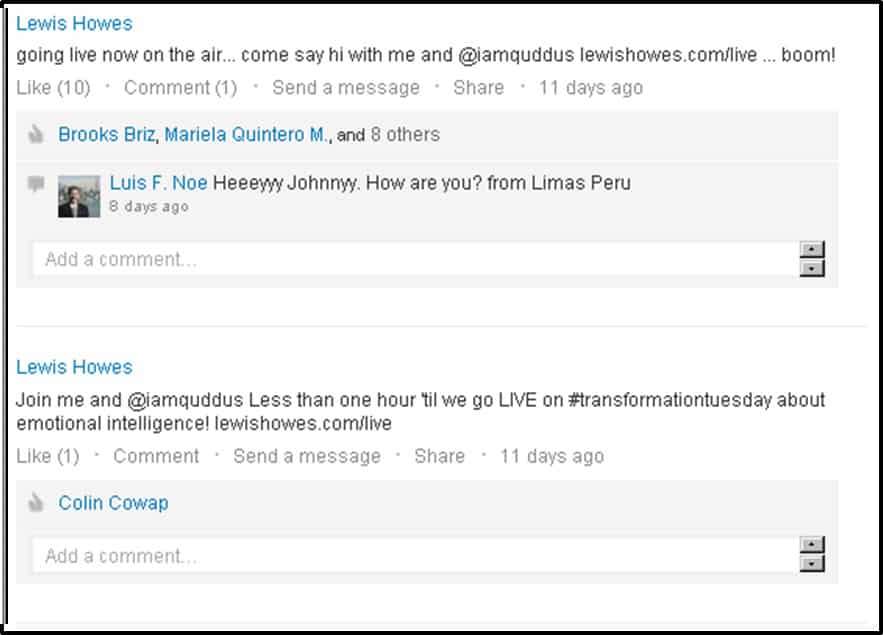
    Lewis Howes

    He built his business on the art of connecting on LinkedIn. What kind of engagement does he get? He’s shown as having 500+ connections and is likely to have more than double that.

    Take a look:

    Yikes.

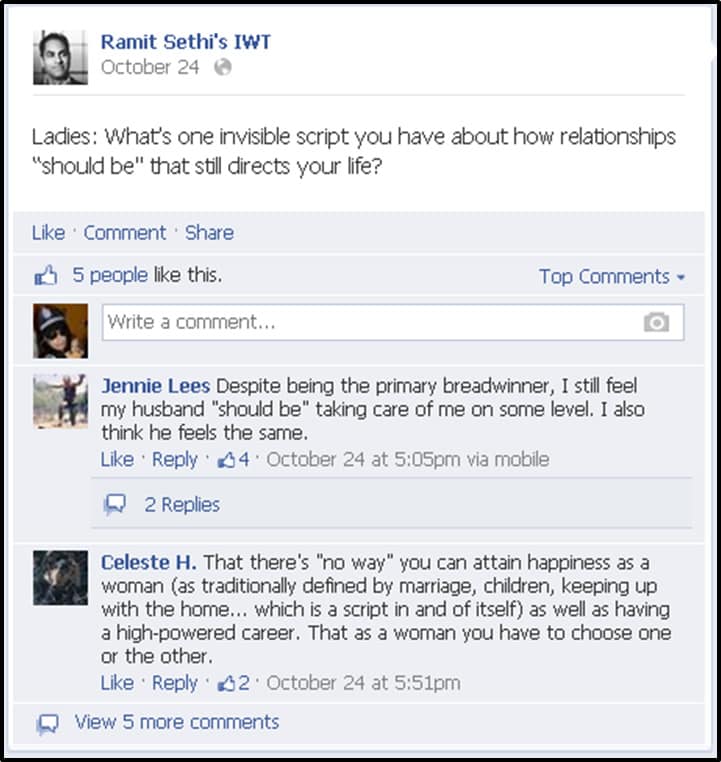
    Ramit Sethi

    Ramit is known for his fanatical testing. He asked the same question on Facebook and on Twitter. Let’s compare the engagement of his audience:

    Twitter:

     Facebook:

    Facebook is a winner for him, right? Perhaps that’s why he can be found liking and replying to comments there, and rarely on Twitter.

    He’s focusing on what gets results and using his social media platforms in a way that works for his business.

    Back to Noah Kagan

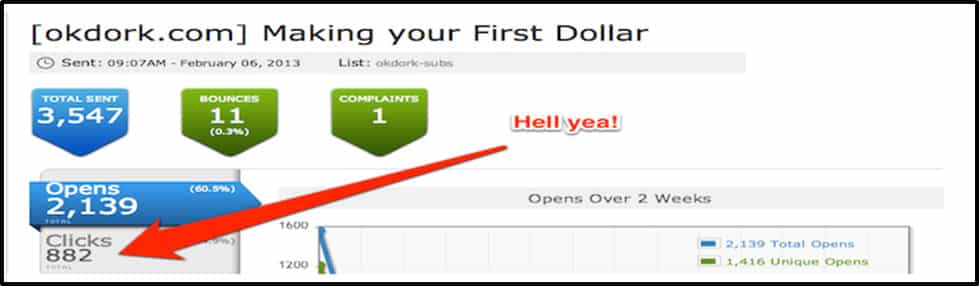
    Let’s see what happens when he sends the same Twitter blast out to his email list instead — a list that is a quarter the size of his Twitter following.

    Yeah, baby! There’s gold in that list (for Noah, at least).

    What can you learn from this?

    1.    Stats do the talking

    Take a look at your statistics from your social media efforts, email open/click through rates and discussion on your site. What works? What can you see that’s getting results?

    Focus more on this. Build this up before moving onto anything else.

    2.    Know your audience

    This one’s a given, right? And how exactly do you get to know them? You could ask them where they hang out. That’d be one way. The other way is to experiment. Get to at least 1000 followers and then start experimenting with one of the social media platforms.

    Start with the obvious choice for your audience. If your business is design-based or visual, Pinterest would work. If your audience enjoys industry news, then tweet those links.

    Over time, if the engagement doesn’t happen, tone it down on the first platform and start with another.

    3.    Social media is long term

    Overnight success takes time.

    First you announce the start of your new social media account to your existing audience, and they sign up. Then you make sure the links are all over your website. Next, you mention it in guest posts and add it to every online signature you have. And over time, it builds.

    Noah didn’t start his Twitter account with the followers he has today. It took years to build.

    Over to you. What industry are you in and what gets the most engagement from your audience?
    no
    1
    links
    no
    1
    links

  • 6 Effective Ways to Engage With Your Readers (So They Buy More Books)

    6 Effective Ways to Engage With Your Readers (So They Buy More Books)

    The image of the novelist as a slightly eccentric individual who likes writing alone in a dark room and avoids interacting with anyone else — even their literary agent — is an image of the past. Modern day fiction writers cannot afford to be like Harper Lee and stop communicating with their audience!

    Have you ever wondered how many authors get their books on the New York Times bestseller list? They do so by generating a buzz around their books and personas. People not only want to read their books but also know more about the author. For novelists, curiosity is the best way to keep readers coming back.

    So how can authors communicate and engage with their readers? Here are a few tips:

    1. Use social media

    Social media platforms like Twitter and Facebook are excellent tools that many writers use to interact with their audience.

    Some social networking platforms are geared specifically towards writers and book lovers, such as Goodreads. For example, Jeffrey Archer uses this platform very well to give his fans a peek into his life, inspirations, hobbies and upcoming novels. Fans can comment, read exclusive content and even participate in Q&A sessions.

    Social media can also be a great way for writers to get feedback on books that are in the pipeline. Authors can release rough excerpts from their books and receive immediate, honest feedback from readers.

    2. Conduct online Q&A sessions

    Social media platforms are excellent for talking to readers in real time. Writers can create events for their readers, such as Twitter chats or Google+ Hangouts, so that everyone shows up to the session at the same time and can ask questions spontaneously.

    3. Be active on fan fiction forums

    Many readers love reading and writing fan fiction. They come up with alternate endings, plotlines, and characters, and some fan fictions can even become as popular as the original book.

    These forums also play host to readers’ questions and comments. J.K. Rowling always makes it a point to engage with her readers on such forums. In fact, she actively answers questions online from readers and even reads the fan fiction herself. This is a great way for writers to get new ideas, understand what readers are looking for and interact with their audience.

    4. Blog

    Writers cannot spend every waking hour working on their next novel or story. Blogging is an excellent way to write about other topics, battle writer’s block, and communicate with readers.

    Neil Gaiman and Chuck Wendig are two of the many authors who blog as a way to interact directly with readers. They share writing tips and advice, describe current work, and update their audiences on new releases.

    5. Share additional content

    In addition to blog posts, writers can provide free and valuable content to readers in the form of videos, podcasts, audio clips, ebooks, images, and excerpts from upcoming books. The sky is the limit when it comes to brainstorming creative content that’s related to your work!

    6. Host book signing and reading sessions

    This is probably one of the most popular ways that writers engage with their readers, proving that not all connection is done online. There are tons of libraries, book shops, cafés, and other places to host readings in any city. Writers can meet their fans and readers face-to-face and engage with them in person. A great example of this is Chris Guillebeau’s DIY Book Tour to promote his two books.

    These are just a few ways that writers can keep in touch with their fan base and interact with readers. New and exciting platforms are coming up almost every day; what will the next great reader engagement tool be?

    What’s your favourite way to connect with your audience? As a reader, how do you most enjoy interacting with authors?

  • Yes, Fiction Writers Can Develop Awesome Online Platforms, Too

    Yes, Fiction Writers Can Develop Awesome Online Platforms, Too

    You know you should create your own online home and “develop a readership” before your book comes out. But what exactly does that mean? How do you actually do that?

    When I first started building an audience for my book, I wanted to find examples of individuals who were doing it well. There are lots of great examples from the non-fiction world, but how are fiction writers accomplishing this? How were they structuring their online presence? How were they interacting with potential readers? And what the heck were they writing and talking about?

    Stellar examples of authors with engaged readerships

    If you spend any time on various online platforms, you’ll find a lot of marginal content: individuals who are purely self-promotional or websites with poor design. To give you some great models to emulate, here are some examples of authors who are engaging their readers in a meaningful way.

    Blogging

    Many of us know Joanna Penn from her popular blog, The Creative Penn, but she is also an accomplished mystery/suspense author.

    Joanna has successfully made the leap from self-published to traditionally published author. At her author site, JFPenn.com, she blogs about ancient books, cities, and the psychology of religion — all common themes in her novels. She also interviews other authors in the same genre.

    Joshilyn Jackson also provides a great example of what to write about on a blog. She’s had her blog since 2004 — eons in the blogging world. Joshilyn makes a big distinction between blogging for writers and blogging for readers. She blogs for her readers and mostly blogs about “ridiculous stories of the messes I tend to get myself into.” Joshilyn’s blog has the same strong voice and wittiness that she’s known for in her novels.

    Facebook

    Dana Stabenow is a mystery author with more than 20 published novels. She’s a master at cultivating an engaged readership. A group of dedicated fans dubbed themselves the “Danamaniacs” over twelve years ago. They have their own Facebook page to discuss Dana’s work and hold online chats.

    Dana has offered a digital newsletter, the “Roadhouse Report,” since 2004. Dana is also active on Facebook and posts frequently about life in Alaska — her home and the setting for all of her novels — and other topics she finds interesting or intriguing. With more than 11,000 Facebook fans and 1,200+ Danamaniacs, she has a loyal and engaged group of readers.

    Pinterest

    The tagline of fantasy author Justine Musk’s site is “because you are a creative badass.” She has two traditionally published novels and an active presence on Twitter.

    What makes Justine unique is she’s using Pinterest as a planning tool for her next novel. The images she pins range from tattoos to quotes that hint at a troubled soul and a dark side. I know I’m intrigued. (Inspired by this idea? Click to tweet it!)

    Online forums

    Neil Gaiman’s work ranges from comics, short stories and novels to films. He posts frequently in his online journal but he has also created a message board where readers can interact and discuss his work. Go check the forums to see how they work, but beware the rabbit hole: there are over 250,000 posts.

    Twitter

    Maureen Johnson, a UK-based author dubbed the “Queen of Teen,” has an active presence on Twitter. She’s recently taken up knitting and has promised a badly knitted scarf for anyone who could help her gather 8,000 Twitter followers after a snubbing by @Huffpostbooks.

    Whether that was an ill-willed or in-jest comment, Maureen isn’t afraid to let herself be seen and she posts witty comments about current events and quirky things that catch her eye. She’s funny, relevant and her followers love her.

    Google+

    John Scalzi writes sci-fi fantasy and graphic novels. He’s active on Google+ and often posts upcoming book covers for his graphic novels. He also engages his readers in photo caption contests and posts teasers of first lines of his work-in-progress.

    Finding common themes in your writing is a great place to start engaging your audience for a fiction writer. Much in the same way that it takes some trial and error to develop your voice as an author, it will also take some time to find your online voice on your platform of choice. You may even need to experiment with several platforms before you find one that’s the best fit for you.

    Five steps to developing your own engaged readership

    So how do you follow in these great authors’ footsteps? Here are a few places to start.

    1. Observe some fiction authors with great engagement. You can start by following our list, but aim for 10-15 different authors to see a wide variety of examples.

    2. What do you like about how they engage their readers?

    3. What do you dislike?

    4. Model the style of the authors whose engagement resonates with you on the platform of your choosing.

    5. Continue to hone your voice and find your own style.

    Bonus points: Eventually you’ll want to provide your fans an opportunity to not only interact with you but also interact with one another.

    Most importantly? Be yourself.

    Regardless of which platform you choose for concentrating your energies, building an online engagement with your readers is time well spent. You’ll be building loyal fans, one reader at a time.

    Did we miss any fiction authors who have great reader engagement online? Let us know in the comments.

  • What It Really Means to Market Your Writing

    What It Really Means to Market Your Writing

    There are a lot of misconceptions about what it means to market something.

    Not the least of these is that marketing somehow cheapens writing or other creative work. Many writers, artists and other creatives avoid marketing like the plague — as if it will infect all other aspects of their work.

    It’s understandable that so many writers think this way; a lot of the advertising that we see every day is far from appealing, and the industry has earned a bad reputation for brainwashing people, being sneaky, and generally causing trouble.

    But the truth is that all that stuff is NOT what marketing is really about!

    Without marketing — real marketing — no one would be able to make a living writing, share their story, or gain new fans and followers. (Click to tweet this idea.)

    Marketing is much, much more than running an ad or a television commercial, or selling yourself long and hard, and marketing isn’t sleazy! You can do it ethically, honorably and effectively, to tell people what they need to know for them to want to read your work.

    What marketing is NOT

    What is it that keeps so many writers from really getting out there and promoting themselves? Primarily, it stems from a huge misconception about what marketing is, and what it means to do it.

    The fear (and it’s an understandable one) is that when you “market” your work, you have to ruthlessly promote yourself, and sell out your ideals to make a buck.

    This couldn’t be further from the truth.

    Marketing isn’t sales or advertising; those can be elements of marketing, but they’re far from the whole story.

    After all, as an independent writer, you’re not going to promote your novel by taking out full-page ads filled with scantily clad women in the newspaper! You’re not going to have billboards on highways promising dire consequences for all who have not read your book.

    Nor will you rampage through bookstores holding people at knifepoint until they make it to the cash register with your work, or fool people into thinking that you’re something you’re not.

    Marketing isn’t about brainwashing or trickery; it’s about finding people who will be genuinely interested in what you do and what you have to say, and telling them what you’ve got for them.

    Now, people can misuse marketing, but that doesn’t mean you have to. Marketing is only sleazy or unethical when marketers are. It’s not the hammer’s fault when it’s used to harm another person–and it’s not marketing’s fault when advertisers lie.

    That same hammer, in the hands of a carpenter, can build wonderful things, just as marketing can help you build your audience, and readership.

    What marketing is, and how to do it right

    Okay, so now let’s take a look at how marketing can be used ethically and effectively to get your message to the people who need to hear it.

    Let’s start with this very important assumption: you can’t make anyone do something they don’t already want to do.

    Yes, it’s true, despite what some people think about marketing. Someone who hates yoghurt isn’t going to see an ad for it and immediately run out and buy a pint. It doesn’t work that way.

    Likewise, a blog post about science fiction isn’t going to induce a die-hard western fan to go out and pick up a mountain of Star Wars fan fiction. It’s just not going to happen.

    So what’s the point?

    The point is that there are people out there who are dying to read your work–there really are! But they don’t know who you are or that they should be looking for you. It’s your job to let them know that you exist, and that you have stuff that they’d love to read! Marketing is what you’ll use to make that connection.

    That doesn’t sound too bad, does it? Making connections with people who could be interested in what you do?

    Now, let’s get a little deeper into this whole marketing thing. It actually has three distinct and important stages: Alignment, Attraction and Engagement. Briefly, alignment is about making sure you’re trying to connect with the right people, attraction is about getting their attention, and engagement is about building a relationship with them.

    Now, these elements are necessary for all good marketing, but let’s look more closely at what they mean for you, as a writer.

    What ALIGNMENT means to a writer

    You’ve probably heard that you need to picture your ideal reader. This is absolutely true. No matter how brilliant a wordsmith you are, odds are that not everyone on the planet is going to be interested in your work. And if someone’s not interested, you don’t want to bother with them!

    A big mistake that a lot of authors make is failing to really identify their ideal reader at all. It can be challenging to admit that there are people who won’t find your writing appealing, but let’s be honest. A 20 year old surfer dude and a 65 year old grandma of two might love the same books (that’s the beauty of things!) but they probably won’t.

    You want to invest your precious time and money trying to make connections with people who are most likely going to be interested in your work.

     There is a specific type of person who is really going to “get” your writing–and you, as the author, have the best understanding of who that’s going to be. Spend time thinking about them, paint a mental picture of them, and imagine where they spend their time, what they do when they need something new to read, and who or what they consult for recommendations. That will be your way to them.

    If you need some help getting started, check out this post about finding your ONE person–just replace the word “customer” with “reader”, and you’re good to go.

    What ATTRACTION means to a writer

    This part of the marketing process is actually the least important of the three, but it’s the one that most people associate with the word “marketing.” This is probably because it includes all of the things that people do in order to get themselves noticed.

    Attraction is about getting out there and making yourself known: writing blog posts for popular blogs, sharing information on social media, taking out ads with Google or in print spaces (which I don’t usually recommend for writers, by the way), joining communities, or whatever. There are lots of ways you can get someone’s attention, and as long as it’s the right person, that is usually enough to start a relationship.

    Now here’s the thing: this is only difficult if you can’t identify your target reader. If you can, then you’ll find that this part isn’t very hard. So if you’re struggling with getting attention, go back to the part about alignment.

    Remember that you’re not trying to trick or fool anyone into buying your book. You’re alerting interested readers to the fact that you’ve got something amazing to share! This is information they want and will be happy to receive.

    What ENGAGEMENT means to a writer

    Engagement is what you do to help move a reader from knowing that you exist to buying and reading your work. Sometimes that’s as simple as, “Here is my book!” and they buy it, but sometimes it takes a little more, and that’s okay.

    After getting someone’s attention, you need to get them to do something about it. Knowing about you isn’t the end goal; you want them to be reading you!

    Invite people to join your mailing list so that you can offer them samples of your writing, talk to them about ideas, and keep them updated on your new projects. If your alignment is good, this will be appealing to a reader.

    Remember that for every action you ask them to take, whether it’s downloading a copy of your ebook or writing a review for you on Amazon, you want to thank and reward them for their support with more value, interest and content.

    It’s a cycle where you ask for something, provide something of greater value, and then ask again. Over time, a stranger you met through an advertisement or blog post becomes a loyal fan who tells all of their friends when you’ve got something new ready, and who buys anything you produce.

    Okay, so where to begin?

    Does all of this sound a little overwhelming?

    Don’t worry–that’s okay. Marketing is a big topic, and you’re a writer first and foremost.

    Some easy first steps are:

    1. Consider carefully who your ideal reader is. If possible, look at your current readers and try to figure out what they’ve got in common. Do they tend to be mothers? Self-employed? Living in cities? That’s a great place to start fleshing out your reader profile.

    1. Get involved in the communities on and offline where your readers hang out! If they’re on forums, join the forums! If they comment on blogs, comment on them too! If they go to the library, put up notices!

    1. Plan out your relationship-building process. Once someone knows who you are, what do you need them to do? Do you want them to buy your book immediately? Do you want to build a longer-term relationship? What, other than your book, can you offer them to make a relationship with you sound appealing?

    For a more detailed description of the stages of alignment, attraction, and engagement, check out my free Naked Marketing Manifesto.

    Remember: you’re not doing anyone any favors by sitting around twiddling your thumbs and hoping that people will find and enjoy your work. Writing is not enough; you need to let people know you have something wonderful to share.

    There’s no shame in giving someone all the information they need to make a decision. The only shame lies in never giving someone a chance to do so.

    What have you done so far to market your work? Have you had any successes? If you haven’t done any promotion of your work — why not?