Tag: blogging

  • Writers Conferences 2025: 55+ Incredible Events to Consider This Year

    Writers Conferences 2025: 55+ Incredible Events to Consider This Year

    If you’re tired of learning about interesting opportunities just a little too late, bookmark this list of annual writers conferences (both in the United States and international) for future planning, so you can join in on the mingling, learning, and inspiration.

    While many of these conferences are on location, there are also online options so be sure to check those out too!

    Here are 55+ writers conferences to check out

    We’ve broken the list of writers conferences into categories, including blogging, freelancing, fiction, and more to help you narrow down on what interests you most.

    Writers Conferences to Consider

    General Interest

    Ready to connect with literary agents, editors, and fellow writers at a writers conference or writing retreat?

    WriterCon

    When: Annually in August

    Where: Oklahoma City, OK

    WriterCon is a community of writers working together to build skills, exchange knowledge, make connections, and achieve their writing dreams. The conference aims to provide knowledge and opportunities designed to push you forward along your writer’s journey.

    San Francisco Writers Conference

    When: Annually in February

    Where: San Francisco, CA

    Held annually in February, the San Francisco Writers Conference is a “celebration of craft, commerce and community.” Connect with industry experts, bestselling authors, agents, editors and leaders in both self-publishing and traditional publishing.

    Northern Colorado Writers Conference

    When: Annually in July

    Where: Fort Collins, CO and online

    The Northern Colorado Writers Conference provides support and encouragement to writers of all genres and levels. The group also offers monthly meetings, classes and other networking and social events.

    The in-person events are open to limited attendees, so you’ll get a more intimate experience.

    Association of Writers and Writing Programs

    When: Annually in February

    Where: Various North American cities

    Each year, the Association of Writers and Writing Programs (AWP) hosts the Annual Conference & Bookfair in a different city. The event celebrates authors, teachers, students, writing programs, literary centers and publishers in the region hosting the conference. With more than 12,000 writers and readers attending each year, AWP is the largest literary conference in North America.

    Las Vegas Writers Conference

    When: Annually in April

    Where: Las Vegas, NV

    Each year, Henderson Writers Group hosts the Las Vegas Writers Conference. The organization also hosts three meetings per week in Las Vegas. They’re open to the public, and members can read their writing for critique by attendees.

    Midwest Writers Workshop Super Mini-Conference

    When: Annually

    Where: Muncie, IN and online

    The Midwest Writers Workshop is a day-and-half conference and one of the more affordable option for writers at all levels. They offer a variety of in-depth small sessions in craft taught by published authors. You’ll also get to mingle with other writers and industry experts.

    Writing Day Workshops

    When and Where: Year-round throughout the U.S. and Canada (in person and online)

    Writing Day Workshops presents day-long workshops offering a crash course on how to get your book published, with classes and presentations on everything from writing queries to working with an agent to marketing your book.

    Missouri Writers Guild Conference

    When: Annually

    Where: St. Louis, MO

    The Missouri Writers Guild is a 100+-year-old organization for professional writers in all genres across the Midwest. Join the Missouri Writers Guild Conference for writers at all levels for breakout sessions and masterclasses covering the craft and business of creative writing.

    Fiction Conferences

    Romance Writers of America Annual Conference

    When: Annually in July/August

    Where: Location varies

    Romance writers gather at the Romance Writers of America Annual Conference to learn more about the business of being an author. Get an opportunity to meet and mingle with budding and successful romance authors, as well as workshops and events to boost your author career.

    SleuthFest

    When: Annually

    Where: Boca Raton, Florida

    SleuthFest is an annual conference for mystery, suspense and thriller writers sponsored by the Florida chapter of Mystery Writers of America.

    This conference includes writing and marketing workshops, networking events, and pitch sessions with guest agents and editors. It even includes hands-on forensic workshops!

    Worldcon and North American Science Fiction Convention

    When: Annually

    Where: Various locations around the world

    The World Science Fiction Convention (“Worldcon”) is an annual gathering of the science fiction and fantasy community, held in a different location around the world each year. When Worldcon is held outside of North America, the corresponding NASFiC is held in North America.

    This five-day international conference is attended by thousands of writers, artists, fans, editors, publishers, academics and dealers. The event embraces science fiction in all the forms, including film, TV, art, comics, anime and manga, and gaming.

    Killer Nashville

    When: Annually in August

    Where: Nashville, TN

    While attractive to mystery/thriller authors and screenwriters for its unique crime-focused sessions, Killer Nashville welcomes writers of all levels and genres. 

    “Imagine hearing a CIA Analyst, an FBI agent on terrorism, Dr Bill Bass on The Body Farm, bestselling CJ Box on how he juggles his writing and plans his days, Heyward Gould on screenplays, and so much more. They even had a crime scene, with awards to those who studied the clues and figured out the mystery.”

    Mystery author C. Hope Clark, reflecting on her 2012 Killer Nashville experience

    Virtual Winter Thrills (Thrillerfest)

    When: Annually

    Where: Manhattan, New York and online

    “It is the only conference where I really feel at home—and [International Thriller Writers] is truly the tribe I belong to…. I can talk about ways to murder people and weapons of choice and not feel weird. I can learn from some of the biggest names in the business, whose hours of writing experience number in the many thousands.”

    Thriller author J.F. Penn at The Creative Pen

    Virtual Winter Thrills is the latest iteration of the popular Thrillerfest writers conference from International Thriller Writers. It includes the perennial Practice PitchFest sessions and Master Class with best selling authors, plus a new series of craft and business classes called Winter Thrills MBA.

    Blogging

    We All Grow Weekend Fest

    When: Annually in the spring

    Where: Near Los Angeles, CA

    We All Grow is a unique professional conference for Latinas working in the digital space. If you’re an online influencer or creative entrepreneur, this conference can help you network with others, learn strategies for personal and business growth, and connect with brands that want to reach your community.

    Alt Summit

    When: Annually in March

    Where: Palm Springs, CA

    Originally the Altitude Design Summit for design bloggers, Alt Summit has expanded since its founding in 2009 to include thousands of creative entrepreneurs, content creators, artists, and influencers. The emphasis is on connecting and collaborating with fellow creatives, and you’ll also get to attend keynotes, panels, and TED-style talks from high-caliber celebrities of popular culture and the online business world.

    South by Southwest

    When: Annually in March

    Where: Austin, TX and online

    South by Southwest has become the country’s premier event for the music, comedy, film and digital technology industries—basically, any creative person or fan!  In 2021, they launched the first SXSW Online, a digital extension of the massive convention. In October 2023, Australia hosted its first South by Southwest conference.

    “What I love about SXSW—it always brings out my spontaneous side. I don’t make any plans until five minutes beforehand, and I love it.”

    Jenny Blake, Life After College, The Number One Tip for SXSW Newbie

    BlogHer Creators Summit

    When: Annually in summer

    Where: Various cities in the United States

    Previously known simply as BlogHer, the reimagined Creators Summit promises to bring all the heat of thought leaders and influencers that the conference has been known for for nearly two decades. Attend workshops, panels and keynotes for anyone who wants to level up their online business. You’ll even get to engage with popular beauty and wellness brands.

    Freelancing

    American Society of Journalists and Authors Annual Conference

    When: Annually

    Where: Various cities in the United States

    Attend the American Society of Journalists and Authors annual one-day conference to learn how to manage a freelance business or publish a book in the new media environment.

    You can also find other one-day events throughout the year, covering various topics relevant to nonfiction writers, journalists, and authors. For example, in January 2024 there was a national convention of professional ghostwriters called Gathering of the Ghosts, a collaboration between ASJA and Gotham Ghostwriters.

    Society for Professional Journalists Spring Conference Series

    When: Annually in Spring

    Where: Various cities in the United States

    The Society for Professional Journalists day-long professional development meetings take place across 12 regions throughout the United States. They draw pros, students and educators for networking and training in topics ranging from writing skills to using new technologies.

    Society for Advancing Business Editing and Writing

    When: Annually in Spring

    Where: Various cities in the United States

    Learn about new media for journalists, writing for various industries, managing your freelancing business, and more in this three-day conference from the Society for Advancing Business Editing and Writing for journalists, business writers, and editors. Also keep an eye out for focused virtual and in-person trainings around the country.

    Children’s Book Writing and Illustrating

    SCBWI Annual Conferences

    When: Various dates

    Where: Various locations

    The Society of Children’s Book Writers and Illustrators (SCBWI) hosts a slew of regional conferences around the world throughout the year, including the Annual Summer Conference in Los Angeles each August, and the Annual Winter Conference in New York each February.

    Christian Writing

    Blue Ridge Mountain Christian Writers Conference

    When: Annually

    Where: near Asheville, NC

    Held annually at LifeWay Ridgecrest Conference Center nestled in the gorgeous Blue Ridge Mountains in western North Carolina, the Blue Ridge Mountains Christian Writers Conference is the premier training and networking event for both seasoned and aspiring writers and speakers.

    Renewal Conference

    When: Annually in April

    Where: Bothell, WA

    This annual conference by the Northwest Christian Writers Association celebrates and cultivates writers who are Christians. Hone your craft and engage your faith at the same time through keynotes, workshops, Q&A panels, networking events, and one-on-one appointments with professional writers and industry leaders.

    Indie Publishing and Self-Publishing

    Author Advantage Live

    When: Annually

    Where: Online

    Author Advantage Live is a three-day interactive virtual experience contains all the information you’ll need to be successful as a self-published author—no matter your genre or goals! Author Advantage Live brings a vast list of expert speakers to the table. For example, Jenna Kutcher and Steven Pressfield were keynote speakers in 2022 and Amy Porterfield was the keynote speaker in 2023.

    SelfPubCon: The Self-Publishing Advice Conference

    When: Annually in Spring and Fall

    Where: Online

    SelfPubCon is for authors interested in self-publishing. It runs fringe to the London Book Fair and Digital Book World.

    The conference is free and contains 24 sessions—one an hour for 24 hours. You can register to learn how to attend the next conference, and you can attend sessions live or catch up on your own time.

    Orlando Reads Books

    When: Annually in Fall

    Where: Orlando, FL

    Orlando Reads Books is a four-day event that includes workshops, panels and social events for indie, hybrid, and traditionally-published authors. It features sessions on craft and marketing, as well as events that let you mingle with readers and fellow authors.

    Writer’s Digest Annual Conference

    When: Annually

    Where: Various locations

    The Writer’s Digest editors bring you the Writer’s Digest Conference with resources for craft, career and creative inspiration. Nearly 50 agents and editors participate in the infamous Pitch Slam, and dozens of industry experts lead educational sessions.

    International Writers Conferences (Outside of the United States)

    Canada

    Surrey International Writers’ Conference

    When: Annually in October

    Where: Surrey, British Columbia, Canada

    The Surrey International Writers’ Conference is the “most comprehensive professional development conference of its kind in Canada.” Open to writers of all levels and genres, the conference offers an opportunity to show off your work to the international literary marketplace as well as to hone your craft and business skills.

    Vancouver Writers Festival

    When: Annually in October

    Where: Vancouver, British Columbia, Canada

    In the cultural heart of Vancouver, B.C., on Granville Island, the Vancouver Writers Festival invites authors, poets, spoken word performers and graphic novelists to celebrate the art of the story. It takes place for six days each October and continues throughout the year through special events and the Incite reading series.

    “The Vancouver Writers Fest turns reading into a community experience, bringing people together to share thoughts, explore ideas and witness brilliant conversations.”

    Vancouver Writers Fest

    Kingston WritersFest

    When: Annually in September

    Where: Kingston, Ontario, Canada

    At Kingston WritersFest, writers and readers in attendance will get to participate in thought-provoking discussions and unique events that champion artistic expression and development.

    Hosted in a notably literary city, this festival is all about “the power of the written word to create a strong, engaged community.”

    WordFest

    When: Annually in April and October

    Where: Calgary, Alberta 

    A not-for-profit charitable arts organization, WordFest “brings readers and writers together through a premier international writers festival and year-round literary events.” Throughout the year, book clubs and other activities are available to those who want to engage with fellow writers and readers. Guests can enjoy readings, workshops, panel discussions and presentations that work toward connecting Calgarians through transformative ideas. 

    Blue Metropolis Montreal International Literary Festival

    When: Annually in April 

    Where: Montreal, Quebec, Canada

    The Blue Metropolis Montreal International Literary Festival is a bilingual (English/French) festival features programming for adults and children. Attendees enjoy workshops, readings and lectures from speakers across genres of writing and art.

    The festival is free to attend, but you’ll have to pay a fee for select activities.

    gritLIT

    When: Annually in April 

    Where: Hamilton, Ontario, Canada

    gritLIT is a four-day festival is a celebration of Canadian authors. Its purpose is to highlight local writers and engage with the community.

    “gritLIT brings the best contemporary Canadian writers to Hamilton to engage with local booklovers, to inspire and to be inspired by Hamilton authors, to promote a love of reading in young audiences and to celebrate the exchange of diverse ideas, experiences, and viewpoints.  ”

    gritLIT

    International Festival of Authors

    When: Annually in October

    Where: Toronto, Ontario, Canada

    Since 1974, the International Festival of Authors has highlighted authors of contemporary literature. It includes 11 days of readings, interviews, artist talks, round-table discussions, book signings and several special events.

    IFOA features novelists, poets, playwrights, short story writers and biographers from Canada and around the world.

    The Toronto Star called this Canada’s “premier literary festival” and “a top destination for both international superstars and up-and-coming writers.”

    Lakefield Literary Festival

    When: Annually in July

    Where: Lakefield, Ontario, Canada

    The Lakefield Literary Festival includes author readings and masterclasses in writing for all ages. Admission price per event ranges.

    “[The festival is] a celebration of the rich literary heritage of Lakefield and the surrounding area which includes the works of Catharine Parr Traill, Susanna Moodie and Isabella Valancy Crawford, among others, all of who lived and wrote in Lakefield.”

    Lakefield Literary Festival

    LitFest Alberta

    When: Annually in October

    Where: Edmonton, Alberta, Canada

    LitFest Alberta celebrates nonfiction through readings, lectures, panel discussions and workshops. It covers diverse topics—from food writing to feminism. Several events are free.

    Ottawa International Writers Festival

    When: Annually in October and May

    Where: Ottawa, Ontario, Canada

    The Ottawa International Writers Festival celebrates ideas and imagination! Programming includes a poetry cabaret, town-hall style discussion, and fiction and nonfiction readings. To celebrate writing “outside the pages of books,” the festival often includes staged play readings, feature films, documentaries, CD launches and songwriter circles.

    “Twice a year, we convene an international celebration of ideas to recharge our imaginations. From politics to poetry, science to music, history to thrillers, we celebrate the full diversity of the word and the gifted writers who guide us in our exploration of the world.”

    The Ottawa International Writers Festival

    When Words Collide

    When: Annually in August

    Where: Calgary, Alberta, Canada

    Readers, writers, editors, publishers, agents and other artists attend this festival, which highlights commercial and literary fiction. When Words Collide welcomes writers of most genre fiction, YA, children’s books, nonfiction, and poetry.

    UK and Ireland

    The London Book Fair

    When: Annually in Spring

    Where: Olympia, London

    The London Book Fair brings together authors, publishers and readers in the cultural hub of London to explore and understand the rapidly-changing publishing world.

    “The London Book Fair is the global marketplace for rights negotiation and the sale and distribution of content.”

    The London Book Fair

    The International Dublin Writers’ Festival

    When: Annually in June 

    Where: Dublin, Ireland

    From open mic readings to illuminating presentations, The International Dublin Writers’ Festival will give you the opportunity to attend training sessions led by renowned authors and industry experts, where you’ll learn about the craft and business of writing, as well as connect with fellow writers.

    “This conference will help you to improve your writing craft, publish successfully, and plan the marketing necessary for any author to achieve success whether traditionally published or self-published. This conference provides practical support, valuable training and an opportunity to meet and get to know fellow writers in one of the world’s great literary cities.”

    The International Dublin Writers’ Festival hosted by Books Go Social

    Listowel Writers’ Week

    When: Annually in May/June

    Where: Listowel, County Kerry, Ireland

    Running nearly 50 years, Listowel Writers’ Week is an annual literary festival for YA literature. It includes writing workshops, readings, interviews, forums, book launches and masterclasses. Enjoy tours of the historic Irish town and access to local and international writers.

    The festival also includes several writing competitions for novel, short story, humor, and playwriting. Awards even exist for sports journalism, writing for readers with special needs and writing in prisons.

    Stoke Newington Literary Festival

    When: Annually in June 

    Where: London, UK

    The Stoke Newington Literary Festival celebrates the diverse, “radical, rabble-rousing and literary history” of the Stoke Newington area of Hackney in London. Free and paid events feature readings and performances across genres and media. Admission to paid events ranges from £3 to £10.

    Strokestown International Poetry Festival

    When: Annually during the first weekend in May

    Where: Strokestown, County Roscommon, Ireland

    The Strokestown International Poetry Festival has been celebrating poetry since 1999. Its mission is to “showcase contemporary poetry, local, national and international, foster the development of emerging writers and consolidate poetry in local cultural life bringing it to the widest possible audience.”

    The weekend includes readings from several established and up-and-coming poets, a poetry workshop and poetry competitions for poems in English and Irish.

    Hay Festival

    When: Annually in Fall and Spring

    Where: Hay-on-Wye, Wales

    President Bill Clinton dubbed this festival “Woodstock of the mind,” according to The Telegraph.

    The Hay Festival in Wales joins coinciding festivals around the world to celebrate writing of all kinds through panel discussions and lectures.

    “Hay celebrates great writing from poets and scientists, lyricists and comedians, novelists and environmentalists, and the power of great ideas to transform our way of thinking.”

    Hay Festival

    Kent Arts Conference

    When: Annually in July or August 

    Where: Canterbury, Kent, UK

    Originally the Warnborough College Conference on the Arts and previously the Canterbury Arts Conference, the Kent Arts Conference has grown to accommodate an international audience. It welcomes artists in all disciplines and media, academics, students, historians and other professionals.

    Participants have the opportunity to share and publish research, and network with peers. The conference includes creative writing and visual art workshops, as well as presentations of art in a variety of media.

    Ledbury Poetry Festival

    When: Annually in July

    Where: Ledbury, UK

    The Daily Mail called this festival, launched in 1997, “the world’s most diverse poetry festival.”

    It really has something for everyone. The Ledbury Poetry Festival features an array of community events to celebrate the writing and performance of poetry. Attend readings, writing workshops, panel discussions, musical performances, craft seminars and open mics in the “lively and picturesque market town” of Ledbury.

    It also includes programs for new writers and a poetry competition.

    Europe

    Geneva Writers Group

    When: Various dates throughout the year

    Where: Various locations in Geneva, Switzerland 

    The Geneva Writers Group is brimming with opportunity. It offers several informative events throughout the year: the biennial Geneva Writers’ Conference; a “Meet the Agents” weekend on alternate years; monthly Saturday workshops from September to June that include masterclasses and critiquing sessions; coordinated writing groups; and an annual literary cruise on Lake Geneva. 

    Whether you’re an established author or just starting out, GWG welcomes writers from around the world and offers a supportive community that encourages creative writing. 

    Paris Café Writing

    When: Various dates in April and November

    Where: Le Marais, Paris

    Patricia Tennison, a professor and author of award-honored books, leads a small group of eight writers in a week-long workshop. Accompanied by her husband Joseph Prendergast, a poet and teacher, Tennison guides writers of all experience levels through five morning seminars and a private writing session. 

    Some meals and activities are included in the registration fee for Paris Cafe Writing, but guests are responsible for lodging and transportation. 

    Frankfurt Writers’ Conference 

    When: Annually in March

    Where: Höchst, Frankfurt am Main, Germany

    The Frankfurt Writers’ Conference began in 2018 and anticipates organizing an even bigger and better event each year. In two fun-filled days, the conference hosts an interactive workshop and discussions led by an accomplished list of German and English-speaking literary agents, publishing representatives and writers. 

    Expect to learn ways to improve your pitch, receive insider knowledge on the world of publishing and more. 

    Middlebury Bread Loaf Writers’ Conference

    When: Annually in September 

    Where: Erice, Sicily

    Middlebury Bread Loaf Writers’ Conference is a seven-day writers conference in the beautiful, ancient town of Erice.

    Attendance is limited to just five groups of six participants for an intimate experience. The conference includes small-group workshops, plus classes and lectures for all attendees. It’s open to fiction, poetry and nonfiction writers.

    For additional options, check out sister Bread Loaf conferences in Ripton, Vermont.

    Information, Medium & Society: International Conference on Publishing Studies

    When: Annually in July

    Where: Venice, Italy

    Since 2003, this evolving research network has brought writers, readers, publishers, emerging scholars and more together to discuss “investigations on the nature and forms of information, and publishing practices as distinctive modes of social knowledge and cultural production.”

    When you attend the International Conference on Publishing Studies, make sure to attend a range of sessions and presentations that allow opportunities for networking and learning more about key issues in the industry.

    Iceland Writers Retreat

    When: Annually in Spring

    Where: Reykjavik, Iceland

    Whether you’re an aspiring, published or hobby writer, you’re welcome to join the Iceland Writers Retreat. It includes small-group workshops, dinner and receptions for networking, and tours of the area.

    This program focuses on literary fiction and nonfiction books, so it’s not a good fit if you want to learn more about freelancing, online writing, genre fiction, poetry, or other media.

    Asia and Oceania

    NonfictioNOW

    When: Annually in December

    Where: Wellington, New Zealand 

    NonfictioNOW features roundtable discussions and keynote speakers that highlight a variety of nonfiction, including memoir, essay and literary journalism. There are also multimedia presentations, including graphic and video essay.

    “The NonfictioNOW Conference is a regular gathering of over 400 nonfiction writers, teachers and students from around the world in an effort to explore the past, present, and future of nonfiction.”

    NonfictioNOW

    Melbourne Writers Festival

    When: Annually in late August/early September

    Where: Melbourne, Australia

    The Melbourne Writers Festival is for readers, writers, and thinkers and engages participants through, storytelling, discussion, intellectual debate, educational programs, live performance, music, and art events.

    Enjoy writing workshops, lectures and panel discussions on all forms of creative writing.

    Asian Festival of Children’s Content 

    When: Annually in May or September 

    Where: Various Southeast Asian countries

    Guests joining the Asian Festival of Children’s Content get to have unique and culturally rich experiences, hosted in a different Southeast Asian country each year. Workshops, masterclasses, presentations, panels and other events organized by the Singapore Book Council explore the world of children’s publishing, from creation and distribution to consumer consumption. 

    Whether you’re an academic, a writer, editor, agent, publisher, teacher, parent or anything in between, guests are encouraged to partake in the celebration of Asian content for children and young adults, plus take advantage of opportunities to network and hone their craft.

    Central and South America

    San Miguel Writers’ Conference and Literary Festival

    When: Annually in February

    Where: San Miguel de Allende, Guanajuato

    Established and emerging writers are welcome at the San Miguel Writers’ Conference and Literary Festival.

    Attendees will get the chance to network with writers from around the world at this prestigious multicultural, bilingual (English/Spanish) writers’ conference and literary festival. Prepare to hone your craft through workshops, masterclasses, keynote presentations, panel discussions and seminars.

    And don’t forget the beautiful location! Bill Maxwell, opinion columnist at Tampa Bay Times, said of his experience in San Miguel:

    “Rarely have I fallen in love with a landlocked city. … This is a magical place, starting with its colonial architecture. Many of its large and colorful homes are nestled among jacaranda and decorated with bougainvillea. As I walked the narrow cobblestone streets, music and gaiety greeted me.”

    Bill Maxwell, opinion columnist at Tampa Bay Times

    Storyteller Within

    When: Annually

    Where: Lake Atitlan, Guatemala

    The Storyteller Within Women’s Retreat is a nine-day conference specifically for women. It includes daily yoga and writing sessions and encourages women to do self-reflective, inner healing work. Conference participants are selected through an application process.

    Cuenca International Writers Conference

    When: Annually in August (note: we’re unable to verify if this conference is still happening)

    Where: Cuenca, Ecuador 

    Ready to learn, network and recharge? At this conference, “you’ll laugh, you’ll learn, you’ll meet new friends who understand the writing life, and you’ll return home with a fresh perspective that allows new ideas to flourish.” 

    Tucked away in what’s considered one of the most beautiful cities in South America, the Cuenca International Writers Conference provides writers of all backgrounds intimate networking opportunities with distinguished presenters, stimulating workshops, and unforgettable cultural experiences.

    Advertisement for the Freelance Writers Den, a writing community with more than 300 hour of training for one affordable monthly price

    This is an updated version of a story that was previously published. We update our posts as often as possible to ensure they’re useful for our readers.

    Photo via Matej Kastelicg/ Shutterstock 

  • 20 Online Gold Mines for Finding Freelance Writing Jobs

    20 Online Gold Mines for Finding Freelance Writing Jobs

    [et_pb_section admin_label=”section”] [et_pb_row admin_label=”row”] [et_pb_column type=”4_4″][et_pb_text admin_label=”Text”]

    Writing is an amazing pastime, but for many, getting paid for doing it can feel farfetched and unrealistic. Of course, finding good freelance writing jobs can be challenging even for experienced writers, and breaking into the business can be opaque if not difficult.

    One of the biggest obstacles for writers attempting to get paid for their work is finding legitimate, paid, online writing jobs. It’s all too easy to stumble across freelance writing “gigs” that offer little more than exposure—which doesn’t put money in the bank.


    Advertisement for the Freelance Writers Den, a writing community with more than 300 hour of training for one affordable monthly price

    A great resource for freelancers, this membership site is $40/month and you get access to more than 300 hours of “bootcamps” that teach you how to make money as a freelance writer and hundreds of forums where you can get any question answered. Whether you want to listen to expert guests on their podcast, access the 24/7 community of writers, or check out video and audio training materials, the Den has everything a freelancer needs to grow their career — all in one place.

    If you’re serious about freelancing, this is worth considering. You can join at the links above, or read our full Freelance Writers Den review for more details.


    So where should you look online for freelance writing jobs?

    Fortunately, some reliable resources for finding online writing jobs do actually pay. 

    In this post, we’ll share a list of our favorites. Here are some of the best places to find freelance writing jobs online.

    1. FlexJobs

    One of the top job boards for not just freelance writing jobs but remote work in general, FlexJobs enables you to create a custom job search profile to meet your specific needs. Select your categories (there are several under “Writing”), your preferred work schedule, your experience level and more to hone down your search results to those that best fit the freelance writer job you’re looking for. You can also set alerts so you’re notified when new jobs matching your search criteria are posted. 

    A subscription is $9.95/week, $24.95/month, $39.95 for three months or $59.95/year. Here’s a search for “writer” jobs if you want to try it.

    2. SolidGigs

    SolidGigs is part job board, part productivity tool. Why? Because their team literally saves you hours of scouring job boards. They hand-pick the best gigs from around the web and compile them into a weekly email, including remote opportunities. 

    It’s $21/month to subscribe, and they offer a free 14-day trial. Along with curated job opportunities, you’ll also get access to business training courses and hundreds of lessons on freelancing and interviews with successful freelancers.

    3. Freelance Opportunities!

    Freelance writer Kaitlyn Arford curates this handpicked, exclusive freelance opportunities list, which is hosted on Beehiiv and sent twice weekly to subscribers. With both a free tier and a paid tier, Kaitlyn covers a wide variety of writing jobs, including journalism, copywriting, content writing, fact checking, content design, content strategy, search engine optimization, public relations, marketing, social media, and more.

    4. Working In Content

    Working In Content aims to connect organizations with passionate content professionals. As a bonus, it values diversity, equity and inclusion, and it encourages the employers it works with to do the same. 

    Whether you’re a UX writer or a content strategist, this site is a great option to find work in content design, marketing, management and more. It offers full-time and contract roles that are either remote or in cities like Seattle, New York City and San Francisco. Be sure to subscribe to its free newsletter that shares expert interviews, resources and job opportunities once a week.

    5. ProBlogger Job Board

    Created by Darren Rowse of ProBlogger, an authority site on blogging, the ProBlogger job board features part- and full-time, contract and freelance writer jobs across a wide variety of locations, industries and writing specialties.  

    Plus, given ProBlogger’s high profile in the blogosphere, it’s likely you can often find jobs posted by some big-time blogs and employers who have an idea what good writing is really worth. Besides content writing, it also lists a healthy dose of copywriting jobs.

    6. Best Writing

    This site is a content writing job board that includes remote, freelance, contract and full-time jobs. To peruse these hand-picked writing opportunities, visit the site online, sign up for daily job alerts or subscribe to its paid newsletter that shares brand new openings once per week for $19.50/month and up. 

    Another good resource: This site offers a content writing blog that features long-form interviews with prolific content writers, authors and founders who share tips of the trade.

    7. Behance Creative Jobs

    Powered by Adobe, Behance is an online platform for creative professionals to showcase their work, find inspiration and connect with companies looking to hire. 

    Behance allows you to upload your past projects to quickly create a visually-pleasing online portfolio, making it a great resource for writers without a website. It has its own job board which you can browse to find your next career move or freelance writing job!

    freelance writing jobs

    8. MediaBistro

    MediaBistro is a great resource for media freelancers of all stripes, offering online courses, tools and information that can help you navigate your career.

    Be sure to check out the freelance job board section of the site, as well, for a wide range of jobs for all experience levels from industries like TV, PR/marketing, magazine and book publishing and social media—a little something for everyone.

    9. FreelanceWriting

    FreelanceWriting provides a nice compendium of freelance writing and editing jobs with competitive pay rates. 

    With exclusive job opportunities as well as posts pulled from sites like Indeed and Craigslist, the job board consolidates a variety of gigs for everyone from newbie to seasoned freelancers. Save yourself the time of scouring numerous sites and let this newsletter bring the decent jobs right to your inbox.

    10. Who Pays Writers?

    Who Pays Writers? is a crowd-sourced list of publications that pay freelance writers—and it’s a gold mine. The list has hundreds of publications to explore; it not only shows you which publications are accepting submissions, it also tells you how much they pay per word. 

    The site primarily offers writers a good research opportunity to learn how much different publications pay, but there are some online blogging opportunities as well (depending on the publication). Maintained by an anonymous volunteer collective, the list is updated monthly.

    11. The Ultimate List of Better-Paid Blogging Gigs

    Freelancer Sophie Lizard compiled a free ebook listing 75 blogs that pay $50 to $2,000 per post, broken down into sections like Writing Blogs, Food Blogs, etc. She also includes some good tips on how to approach these blogs, how to promote yourself once you’ve landed a post, and more. 

    To get the ebook, add your email address to her newsletter list—you’ll also get free access to her money-making toolkit and more.

    12. LinkedIn Jobs

    If you’ve already got a LinkedIn profile (and you really should to attract new clients), don’t let it just sit there. Networking goes a long way in the freelance world, and LinkedIn is a great resource to do some networking through common connections.

    While you’re doing that networking, check out the Jobs section and sign up for email alerts when jobs are posted that match your interests. Many will be location-based, but who’s to say you can’t approach these employers with a proposal for freelance writing services? Maybe they need someone to fill the gap in the hiring interim, or maybe the job could just as easily be done remotely but they hadn’t considered that. Talk about a different kind of pitch! 

    13. Freelance Writing Gigs

    This invaluable resource updates daily with online writing jobs scooped from around the ‘net. It’s also got a rich archive filled with posts offering all kinds of tips and insight for beginning and experienced freelancers alike.

    Along with the daily blog posts, you can also check out the Freelance Writing Gigs Board, where those in need of copy services of all sorts post jobs on the regular.

    14. Where to Pitch

    This one takes a little bit of forethought and footwork. Instead of simply listing online writing jobs, Where to Pitch offers a list of potential venues when you type in a topic you’re interested in working on. If you’re willing to put in that effort, you’re bound to find some new publications to pitch.

    You can also sign up for the Where to Pitch newsletter,  which gets you access to five real pitches that snagged the writer bylines in the New York Times, The Atlantic, NPR, and other large publications.

    15. Upwork

    Although Upwork has a bit of a reputation for offering low-rate jobs, it’s definitely possible to find postings offering livable wages for writing jobs online. When this article was published, a job to write a finance/trading article for $500 and a ghostwriter gig for $600 were both listed. 

    Plus, you get the added benefit of rate transparency: You know exactly what you’re going to get before you even put in the effort to read the full job description! If you’re curious about this platform, here’s a longer post on why one writer says Upwork is legit.

    16. JournalismJobs.com

    Offering full-time, freelance and remote jobs opportunities, JournalismJobs.com can help you find writing, editing, reporting or copy editor gigs. You can also find jobs across a wide range on industries like non-profit, technology and TV, so you’ll never get bored with this website’s selections. 

    Plus, while you’re here, be sure to set job alerts to know right away about new freelance writer jobs, check out its section of career advice or even peruse the fellowship listings.


    Freelance Writing Jobs for Beginners

    If this list is helpful, you’ll get even more out of The Write Life’s ebook: 71 Ways to Earn as a Freelance Writer. We suggest dozens of different ways to earn income online as a writer, including information on how much each gig pays and tips for how to land those freelance writing jobs. The bulk of the jobs we suggest are ones you can do from home. 


    17. Smart Blogger

    Smart Blogger launched in 2012 and has since grown to become one of the world’s largest sites dedicated to writing and blogging. As well as a jobs page that lists hundreds of opportunities for freelance writers, they also have a resources and tools section which provides a number of valuable insights to help freelance writers in all areas of their work.

    There’s good reason that Smart Blogger has over 300 thousand subscribers to date and any aspiring freelance writers would be well placed to become one themselves.

    18. Contena

    Contena markets itself as an online program and suite of tools designed to help users get started with freelance writing and remote work. They operate through a membership scheme with prospective users invited to fill out a simple form on their website, however anyone is able to view the list of jobs available, which is impressively extensive.

    Independent reviews suggest Contena is indeed a great resource, so you should definitely check it out when seeking new opportunities.

    19. Freelance Framework

    Curated by content writer and marketer Chris Bibey, Freelance Framework is a daily newsletter delivering freelance writing gigs by email. Like most of these services, there’s a free tier and a paid tier, and the website features archives in case you want to search for something specific. Expect a variety of gigs spanning the globe.

    20. What Editors Want

    Curated by James Durston, this Substack curates calls for pitches from other sites around the Internet including X (formerly Twitter), LinkedIn, and even other newsletters mentioned on this list. There’s a lot to go through, with many of the articles citing 75+ calls for journalism and/or writing pitches. There are three tiers for this newsletter: free, monthly, and annual.

    Bonus. Opportunities of the Week

    Founded by Sonia Weiser, this bi-weekly newsletter became a must-have for freelance writers. Before being acquired by Study Hall, Sonia would gather dozens of calls for pitches and email them to her community. The service was previously offered through Ghost, where members were asked to contribute up to $10 per month. In addition to freelance writing jobs, she included career advice, resources on how much different outlets pay, and other helpful links.

    Alright, but how do you run a freelance writing business, anyway?

    Even with tons of resources for finding online writing jobs, it can be hard to know exactly what it takes to get your foot in the door with those editors. After all, you don’t just fall into a job (usually); you’ve got to prove to someone that you’re the right fit.

    All of that to say nothing of the fact that running a freelance writing business is its own job, once you get started. You’ll have to negotiate pay raises, deal with editorial disagreements, and even—perish the thought—figure out self-employment taxes.

    If you’re eager to learn about any of those topics, check out some of these helpful posts, created to help freelancers tackle every part of the writing-for-a-living experience.

    We never said it was easy, but the writing life certainly is a rewarding one.

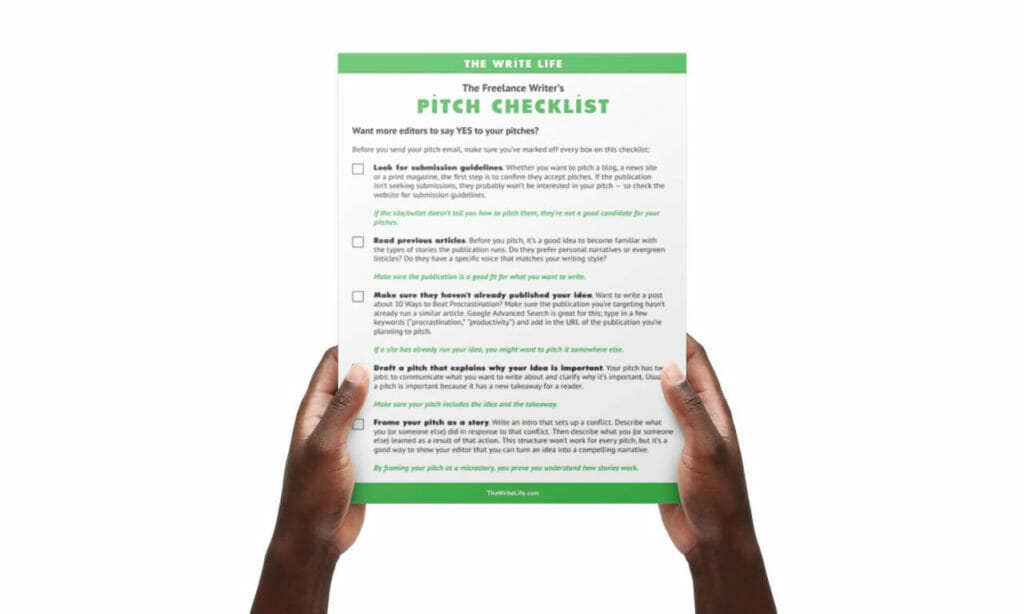
    Freelance Writer’s Pitch Checklist
    Grab it for free 👇

    Convince more editors to say YES to your pitches!

      We’ll also send you our weekly newsletter, which offers helpful advice for freelancing and publishing. You can unsubscribe at any time.

      This is an updated version of a story that was previously published. We update our posts as often as possible to ensure they’re useful for our readers.

      This post contains affiliate links. That means if you purchase through our links, you’re supporting The Write Life—and we thank you for that!

      [/et_pb_text][/et_pb_column] [/et_pb_row] [/et_pb_section]
    • Christian Writing Work: 6 Ways To Influence A Massive Market

      Christian Writing Work: 6 Ways To Influence A Massive Market

      If you are looking for Christian writing work, you’re on the cusp of joining a writing niche that is in no way small.

      The faith economy’s annual worth is $1.2 trillion. Much of this is due to writing. Christian writers contribute to the writing world in many ways, a few of which are via personal blogs, journalism, and writing faith-based books.

      Contributing to Christian publications can be a fulfilling way to use your talents. In addition, if you’re hoping to transition out of your traditional 9-5 job, there are specific ways you can pursue full-time Christian writing work. In this article, I first define Christian writing work and then dive into five concrete steps you can take to get started. 

      Christian Writing Work Defined 

      Christian writing work centers on writing, drafting, and editing Christian copy for online or print publication. Whether you naturally gravitate toward online journalism or writing faith-based books, if you want to jump into Christian writing work, there is a place for you.

      It takes writers of all backgrounds and talents to create a well-rounded market. In fact, there are many names you may recognize that make a living in Christian writing and whose work spans a plethora of genres and writing styles.

      You may know Jerry B. Jenkins’ name from his well-known series, Left Behind. Katelyn Beaty is also a Christian writer, but she steers clear of fiction, taking a more journalistic approach. John Piper’s Christian writing work spans the continents in both book and digital form.

      So wherever you find yourself, below are five ways you can get a foot in the door of Christian writing work.

      6 Options To Get Started

      Breaking into any industry can feel intimidating, especially if you don’t know where to start. The good news is there are many different roads you can take to begin Christian writing work. No one option is better than another, it simply depends on what’s best for you and your writing goals. 

      1. Freelancing

      Freelancing is a great first step into Christian writing work due to its availability to writers at various stages in their journey. If you are first starting out, you may want to create a simple website and list your services. This way, when you query potential clients, your website adds legitimacy to your request. 

      There are also many blogs that hire freelancers and pay per word. Other publications pay per article. For instance, Chicken Soup For The Soul reportedly pays $250 per 1,200-word article, as well as free copies of the book itself. 

      Christian writing work may feel difficult to get into, but once you send your first query, you’ve taken that first step. Freelancing is an extremely nonthreatening way to test the waters.

      2. Start Your Own Blog

      In an era of influencers, blogging is another opportunity to make a dent with Christian writing work. Sadie Robertson Huff (Duck Dynasty) is a celebrity influencer who uses blogging to reach her audience. Sarah Young (Jesus Calling) includes a blog on her author website.

      You don’t need to have sold 30 million copies of your book to start a blog, however. In fact, both Sadie and Sarah lacked a writing platform earlier on.  While you can always query established bloggers and ask to guest blog, starting your own blog is a way to get started in Christian writing work. This low investment with potential for high influence is a nearly fail-proof way to get started. 

      Don’t forget to blog regularly, whether a month or once a week, so your growing audience knows what to expect from you. As your audience list grows, your opportunity to monetize your blog will increase as well. 

      3. Submitting to Paid Publications

      Billy Graham started the vision behind the now well-known magazine, Christianity Today. This publication allows freelancers to query ideas, and if accepted, pays them for their article. There are many more paid publications you can check into as you pursue Christian writing work, and here are a few tips for doing so:

      • Query simultaneously
      • Send you best ideas
      • Include a few important credentials 
      • Be brief but efficient 
      • Track your progress 

      A simple Excel spreadsheet or even a good notebook can help you document the responses you receive and the dates you queried which publications. 

      4. Writing A Faith Book

      Sharing your story or writing on faith-based topics is another great way to get into Christian writing work. You can choose to traditionally publish or self-publish your book and even launch a speaking career if your book does well. 

      Authors often use books as the launching pad for their career, pulling quotes for social media, specific topics for speaking events, and even building entire online courses to go with the book.  

      5. Christian Journalism 

      For those with a more journalistic mindset, Christian journalism can be an exciting niche to tap into. You can offer your work in book form with the help of a publisher of Christian books, host a podcast, or craft research articles on the current topics in Christianity. 

      There are so many ways to use journalism in Christian writing work, and many people are paving the way forward in this area. If you have a background in journalism or are currently studying this writing form, you may want to explore the possibilities in this niche. 

      6. Working With Authors

      With millions of books published annually you can rest assured that ghost writers and editors are needed. Working with authors provides writers with a unique look at individual stories, provides a behind-the-curtain glimpse at authors’ lives, and can add credibility to their own Christian writing work. 

      If you are interested in working with an author, whether editing their manuscript or helping them write it, you can start in a few ways:

      • Sit down with an editor and ask for advice 
      • Look for editing jobs at Christian publishing houses 
      • Add this service to your website and begin freelance editing

      Working with authors is one way many well-established writers got into the business, and is a opportunity you can benefit from as well.

      Your New Day Job in Christian Writing Work

      Getting into Christian writing work is an exciting prospect. If you are a person of faith, pursuing this type of work is not only a helpful transition into a new career path, but distinctly fulfilling as well. 

      Here comes the hard part. How do you take the above opportunities and translate them into steps you can take today? Below are a few possibilities that you can pursue with little time investment and zero financial investment: 

      • Build a free website with a template 
      • Email Christian writers in your network asking for advice
      • Browse the above links for paid freelance work
      • Follow this step-by-step process to write your book

      Remember that just like any career shift, solidifying yourself in the industry takes time. Use your credentials to establish your credibility and keep in mind that slow and steady, over time, can yield great results. 

      Before I leave you to get started, here is a simple mindset tip to focus on as you begin your journey: Treat your pursuit of Christian writing work like the day job you one day want it to be. Prioritize it, give it your all, and pursue it relentlessly. Best wishes out there! 

      Want more writing advice?

      Subscribe to get our latest content by email.

        We won’t send you spam. Unsubscribe at any time.

      • What Is A Good Typing Speed? + 5 Tools To Improve Yours

        What Is A Good Typing Speed? + 5 Tools To Improve Yours

        Have you ever wondered what is a good typing speed? And are there ways to improve your overall typing skills?

        Keep reading to learn what makes a good typing speed, things that influence typing speed, and how you can measure and improve your personal typing speed.

        Why Typing Speed Matters

        If you can type with speed and accuracy, you will also often be productive. Depending on the type of work you do, having a fast typing speed will benefit your career.

        Whether or not you can type fast is not always a reason you will succeed or fail as a freelance writer.

        However, it can change how fast you can work and help you get your work done at a steady rate. If you can type faster and write at a quick pace, you can get more words done per hour so you can make more money.

        Sure, not every job as a freelance writer is based on how many words you can write per hour or how fast you can type, but being able to be proficient at what you do can save you a ton of time in the long run.

        If you are able to write more throughout the day, then you can take on more work at any given moment. Or, you can knock out things like busy work faster than you could otherwise.

        Being able to type fast can also help you do other things such as answer emails faster or do school assignments so you can work through your tasks faster in a day.

        Typing speed might also be something potential employers consider in order to hire you. It will show them that you can complete your work in a reasonable amount of time.

        What Is a Good Typing Speed?

        For the most part, you are going to have your words measured by a metric called wpm, which stands for words per minute. You might also see CPM, which stands for characters per minute.

        Most people will use a typing speed test to get an idea of how fast they are typing. That way, they can know if they are improving or not because when you can measure your speed, you can track your improvements over time.

        If you wanted to know actual numbers, here are some for you to use to measure your skills.

        Average typing speed

        • 40 wpm and over
        • 200 cpm and over

        Above average typing speed

        • 50 wpm and over
        • 250 cpm and over

        Productive typing speed

        • 60 wpm and over
        • 300 cpm and over

        High typing speed

        • 70 wpm and over
        • 350 cpm and over

        Competitive speed

        • 120 wpm and over
        • 600 cpm and over

        Keep in mind, there are some factors, such as the age of the person typing, that you might have to research or consider when it comes to measuring a good typing speed.

        What Influences Typing Speed?

        More than anything, learning how to properly type will help improve your typing speed.

        Some people only use their forefingers in order to type and that is not the most efficient way to type, even though a lot of people do it. You will want to practice using all of your fingers to type because it can help increase the amount of keys you can type in short intervals.

        There are also a wide variety of keyboard types out there that might be a better fit for you and how you prefer to

        Being sure to practice a lot and in an intentional way can also help you improve your typing speed. Challenge yourself to type faster or use different types of tools and tests to measure where you currently are and how to get better.

        Tools to Measure Typing Speed and Improve Your Skills

        While there are a ton of tools out there (and some free ones) to measure typing speed, we are going to focus on just a few of the popular ones so you can pick one that works best for you.

        We will also go over which ones of them offer you the ability to improve your typing speed as well.

        1. Typing.com

        Typing is a great resource that give you access to free timed tests. You can take various timed test (1 minute, 3 minutes, 5 minutes) or page tests (1 page, 2 pages, 3 pages) to get an overall idea at your typing speed.

        It is also a great site if you want to sign up for an account and start to improve your typing skills. Typing has a friendly user interface, making it a option for any age group to use.

        2. Ratatype

        Ratatype is another option that can help measure your typing speed to get an idea of where you are with your current skill set.

        There are some free typing lessons for you to use on their site as well, so you can actively try and improve your typing speed.

        They also offer options for teachers, corporate offices, and group settings, depending on what you need. There are also different game modes to make learning typing even more fun.

        3. Typing Trainer

        Typing Trainer is a free program that gives you different games, races, and challenges in order to help you improve your typing skills. With built-in lessons, you can go at a pace that works best for you.

        According to their website, in just four hours you can master the basics of typing so you can improve your typing speed. On top of the four basic hours, there are five hours of extra work for you to master even more things.

        4. GoodTyping

        GoodTyping offers 27 guided lessons to teach you the basics of typing. It is all web-based, as most of them are, but that keeps you from having to download anything extra or some additional software in order to get your lessons done.

        For extra fun, there are other typing courses in different languages. That can help if you need to type in multiple languages and need to improve your skills in that area as well. As you complete the courses, you can also get a typing certificate to certify your skills and speed.

        5. Typing Cat

        Typing Cat has the goal of improving your typing skills in a matter of 10 minutes a day. This is one that is not free, but it has more advanced features than you see on some of the other typing programs out there.

        It offers custom courses once it learns how you type and you also will have access to courses that were created by other users.

        What to Do Next

        Want to practice your typing? Use these prompts to get started!

        101 Creative Writing Prompts
        That Will Get You Excited to Write

        Grab it for free 👇

          We’ll also send you our newsletter, which offers advice on freelancing and publishing.
          You can unsubscribe at any time.

        • 23 Best Travel Blogs: Discover Inspiration and Guest Blogging Opportunities

          23 Best Travel Blogs: Discover Inspiration and Guest Blogging Opportunities

          Did you know the spark behind some of the best travel blogs today started in the 1700s?

          That’s right, travel writing rose to popularity with the use of paper, long before the age of online blogs and social media. Today, travel blogs document the world through the eyes of individuals, couples, and families. 

          But why is this form of blogging so popular? How can joining the ranks of the best travel blogs impact you and your writing? You might be surprised at the diversity of travel blogs, where people go, why they travel, and their purpose behind their globetrotting. 

          Best Travel Blogs and Their Rise To Popularity

          With work moving online, especially in the last three years, writers are free to travel the world. Some of the best travel blogs are powerful in several key ways, not least of which is their capacity to record events taking place around the world. 

          What makes the best travel blogs so beloved is multifaceted, but a few reasons behind the art of travel blogs are the following: 

          • Provide followers a personalized look around the world
          • Create another form of education for viewers 
          • Teach about cultures, individuals, and historical landmarks 

          However, travel blogging is also a great side hustle that you can turn into a lucrative career. Once you build up a following, you can transition from working to travel into traveling to work. Let’s take a look at some of the best travel blogs.

          The Shooting Star 

          Shivya Nath is an award-winning traveler who writes about sustainable travel, conscious living, veganism, and climate change. Her blog brings in thousands of views on a monthly basis. Shivya’s blog is a personal one, so while she does not seem to accept guest posts, she’s a great blogger to learn from.

          Joshua Berman

          This blog stands out among travel blogs for its rich content, niché, and adventurous focus. With a variety of posts and focuses, Joshua keeps a content-heavy blog with numerous resources. If you’re looking to get your foot in the door, you may want to inquire if he accepts guest posts. 

          Hike and Dine

          Do you love travel blogs that focus on the beauty of nature but also the deliciousness of food? Do you have an experience you’d love to share with a large audience? Contact Hike and Dine and share your story!

          Notes from the Road

          This personal blog shares not just well-crafted notes from the road of travel but artistic photography that draws you into the traveling experience. 

          Under The Overpass

          An entirely different form of travel, Mike Yankoski shares his story through handwritten journal entries recorded during the time he chose to spend homeless. This travel blog is far from glamorous but deeply inspiring.

          Uncornered Market

          This husband and wife team joins together to bring you a variety of experiences and resources. Running a career with a variety of offerings, they may be open to a guest blog, provided you share why your contribution could benefit their site. 

          My Family Travels

          This family travel website hosts a variety of posts from various bloggers. If you’re looking to up the number of travel blogs you’ve written for, contact this highly detailed travel team.

          Adventurous Kate

          With 83 countries under her belt and adventuring to all seven continents, Kate brings a bold flare to travel blogs. If you’re a female traveling solo, you may be able to contribute to her articles.

          Nomad Flag

          Keith has more than 25 years of travel experience. Seeking to learn from established travel blogs? Look no further than the Nomad Flag.

          An English Travel Writer

          Jenny shares her English travel experiences with a friendly voice and photos that bring her experiences to life.

          Nomadic Matt

          Matt teaches travelers how to travel smart and cheap and even offers a blogging training program.

          Oneika the Traveller

          This Emmy Award-winning journalist is a self-proclaimed perpetual explorer. An on-camera host for Travel Channel and NBC, she has set foot in 120 countries. 

          Globe Trotting

          Travel blogs targeting families can be a huge help to young parents. Need advice on how to take your next adventure? Check out Globe Trotting!

          Travis Levius

          A luxury travel journalist, Travis’s travel blogs will take you on otherworldly adventures across the globe. 

          The Incidental Tourist 

          Dawn’s blog offers extensive travel resources. She also invites you to contact her for potential collaborations. 

          Lydia Scapes

          Looking for some adventure travel, specifically climbing? Lydia has you covered from tips on staying in Rome to climbing gear you shouldn’t go without. 

          O. Christine

          O. Christine is an established travel blogger who partners with brands. While she does not accept guest posts, she does offer ways to work together. 

          Wild Blue Family

          Wild Blue is a family-run travel blog who calls Hawaii their base camp. The parents’ first date was a hike, so joining the ranks of travel blogs is a natural next step. They do accept sponsored posts.

          Where the Kids Roam

          One of many family travel blogs, this one is run by the father who writes in a quirky, yet enlightening, voice.

          Meet Me Here

          Paul focuses on experiencing the world through taste and helping others travel. While most travel blogs center around the blogger’s travels, Paul’s focus is helping his readers experience the delights of Georgia. 

          Intrepid Times

          If you’d like to submit your work to an already established travel writing blog, or enter a competition, Intrepid Times is for you. They also offer a writing internship. 

          Travel Writing World

          This award-winning travel writing podcast and website also offers podcast interviews, author profiles, articles, and book reviews. If you fit one of these categories, you may want to reach out about a potential collaboration. 

          Wanderlust Marriage

          This couple met in Brugge, Belgium in 2002. They were simply solo, post-college backpackers heading to the same location—Amsterdam. Fast forward and they now help travelers create the best experiences, memories, and budget-friendly trips.

          How To Break Into the Travel Blogs Niché

          After viewing so many phenomenal travel blogs, you may feel the slow dread of Imposter Syndrome creeping up. Instead of focusing on the places you haven’t traveled, focus on the places you have been, even if it’s only the town you were born in. Meet Me Here is a great example of how to build travel blogs out of a single location. Hike and Dine’s niché focuses on its two most-loved activities.

          If you’re unsure how to break in, ask yourself the following: 

          • What do I particularly gravitate to?
          • How does travel add a new angle?
          • What travel blogs should I learn from?
          • What ones could I learn to build ideas from?

          Travel blogs differ in a variety of ways, each bringing their unique angle to the experience of travel. Whether you love rock climbing or a glass of wine after a day hike, you can find your niché among travel bloggers. 

          Don’t forget that travel blogs do not usually begin as an award-winning site. It takes time to build your credibility and following, but with persistence in the right direction, you can do so.

          Don’t forget to enjoy the journey, pun intended, and let us know where you travel to!

        • How To Use Storytelling In Writing In 4 Essential Steps

          How To Use Storytelling In Writing In 4 Essential Steps

          You might have heard how important storytelling is when it comes to content and writing in general.

          No matter what type of writing you are doing, learning how to use storytelling to your advantage can help your work stand out and draw in readers.

          If you don’t know how to use storytelling in writing, thankfully there are some tips you can use to bring your writing to life, even if you are not doing creative writing.

          Throughout this article we will break down the fundamentals of storytelling, why all writers should learn the essentials, and then dive into some tactical things you can use in your writing.

          What Is Storytelling?

          Storytelling is the art of using a story to convey a message and to draw readers in and give them a reason to be emotionally involved in your writing.

          Storytelling is the social and cultural activity of sharing stories, sometimes with improvisation, theatrics or embellishment. Every culture has its own stories or narratives, which are shared as a means of entertainment, education, cultural preservation or instilling moral values.

          From Wikipedia

          Once you know the core elements of storytelling, you can start to use those tactics in everything you write to make it more engaging and interesting.

          Most of us think of fiction writing when it comes to storytelling, but you can use it in almost any kind of writing. Even if you do not write fiction, it can be good to practice storytelling as a way to draw more attention to your writing and level up as a writer in general.

          Why Is Storytelling Important?

          For the most part, humans remember and become more attached to stories than almost anything else. There is a reason we love reading books, watching movies, and telling stories at social gatherings. It is because we love that stories do to us.

          For example, we can hear statistics and data about events in the world, but we connect to it and remember things more when storytelling is involved. It is why you can remember stories you heard and can repeat them better than you can recall facts you learned in school.

          When we talk to people in our lives, we share stories and it is how we relate to each other.

          If you want to be a writer, no matter what writing niche you pick, knowing how to use storytelling to your advantage can help grow your career in ways you never planned.

          title card for how to use storytelling in writing

          Why Storytelling Matters In Blogging

          If you want your blog to stand out and start to hook readers, you will need to use elements of storytelling to grab attention.

          It is one of the best ways to build a following and create content that people want to share. Not enough blogs utilize storytelling in their posts, so it is a great tool to use to stand out between so many competitors.

          Including a story is also a way for your reader to really understand and visualize what you are trying to say and understand your message in a way that they would not otherwise.

          Benefits of Using Storytelling

          Storytelling is a great way to grab people’s attention and keep it hooked.

          There is something uniquely human about the love of stories and our desire to always keep them in our lives, even if it is

          You will often find that you can increase engagement as well when you use stories. People love to comment and engage on particular stories.

          Think about the creator behind Humans Of New York who simply walked around New York (and eventually then multiple places in the world) where he would ask people to share their stories. It captivated people around the world and garnered a lot of attention.

          Storytelling gives people a reason to share content, too, as it is more interesting than a blog that is just about a particular topic.

          How to Use Storytelling In Writing

          Now that we have covered the basics of why storytelling matters and what it is, now is the time to dive into the tactical things you can use to start bringing more stories into your writing.

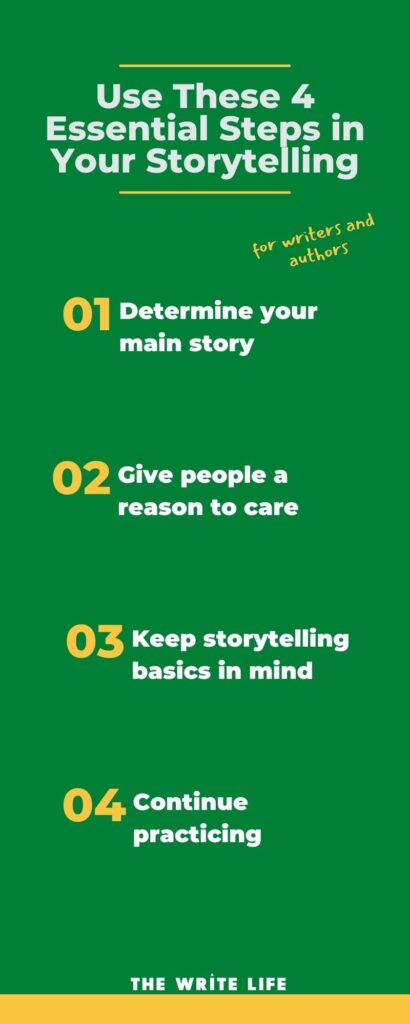
          Determine your main story

          In almost any story, there is a beginning, a middle, and an end. If you want to use storytelling in your writing, you need at least those three main points of your story outlined so you know what to include.

          That makes it incredibly simplified, but it is the best place to start if you are new to telling stories.

          Give people a reason to care

          First, you will need to think about who you are telling the story, the purpose of the story in the first place, and how those two go together.

          Sure, you can write a story for the sake of sharing a story, but often you will have a particular reason to share a certain story and a certain person you want to read it.

          This is especially true if you are blogging or doing any kind of writing for marketing or branding purposes.

          It might seem tedious to spend the amount of time thinking about the reader and what they need out of your writing, but it will be worth it.

          Keep some of these storytelling basics in mind

          There are some things you will and will not want to include in your writing.

          For example, take out cold, boring language. This is particularly common with businesses that use storytelling, where they rely on a ton of jargon and business-speak and avoid getting into the flow of telling a story.

          You will also want to highlight sensations and the senses when it comes to writing a story, since that is what makes them so visual. You will want to talk about how things smell, taste, look, feel, sound, and so on. It can draw them in and help them put themselves in a position to feel the story.

          Write the story as if you were telling it to someone you were with. That is a great way to write a story in a natural way.

          Continue practicing

          One of the main things you need to keep in mind if you want to use storytelling in writing is you will need to practice over and over in order to be an effective storyteller.

          Vertical graphic that says Use these 4 essential steps in your storytelling. 1) determine your story 2) give people a reason to care 3) keep storytelling basics in mind 4) continue practicing
        • Is ClickBank Legit? (2024 Review)

          Is ClickBank Legit? (2024 Review)

          Anyone who runs a blog and gets a decent amount of traffic is probably wondering how to start to make money with their site.

          When you start to look around the internet for ways to monetize your blog, you will most likely come across Clickbank as an option.

          You might wonder if it is a good platform to use to either sell your own products or sell the products of other people.

          If you have wondered is clickbank legit, how it works, how much you can make, and all the other basics you will need to know, this article will cover it all from top to bottom.

          [sps_reusable_block post_id=43047]

          What Is Clickbank?

          Clickbank is an affiliate marketplace and an e-commerce platform for people to sell their digital products. They let some physical products be sold as well, but double check if yours are allowed before you jump on there and sign up.

          Instead of having to go out and hunt for your own affiliate marketing programs, applying for each one, and keeping track of them all, clickbank brings it all into one central location.

          Clickbank offers thousands of unique products (at the time of writing this, over 4,000 products) and programs so you can find the right fit for your blog and for your audience.

          If you sell your own digital products, Clickbank is also a great option for you to sell more of them since other people can go on there and sell your products for you.

          How To Monetize With Clickbank

          If you are ready to monetize your work, you first need to sign up for Clickbank.

          Clickbank is also free to join as an affiliate and there is no screening process so you can simply sign up and get started making money right away. If you want to sell your own products, you will need to pay $49.95 to start offering your goods and services.

          When you pick a product on Clickbank to sell to your audience, you can make between 1% and 75% commission.

          The seller is the one to set their own affiliate rate, and often they will offer a good deal to start to attract affiliates.

          There is also another option to make money with Clickbank and that is for you to create and list your own offerings. Then, people who also use the platform can sell your producs (while earning their own affiliate income, as well).

          Both options are a great way for you to start making money online, which is all done easily through Clickbank.

          Types of Products on ClickBank

          On Clickbank, there are a ton of products in a wide variety of niches.

          Some of them include:

          • Education
          • Health and Fitness
          • Cooking
          • Traveling
          • Sports and competitive games
          • Beauty
          • Entertainment
          • Financial
          • Legal
          • Survival
          • Weight loss and diets
          • Investing
          • Real estate

          That is just the tip of the iceberg when it comes to the variety of products on there. You will be able to find a product for almost any niche you are in.

          Of course, you will want to find products that are related to your niche or else your audience might not be interested in them.

          Selling Clickbank products

          If you want to start making money with Clickbank as an affiliate, the first thing you will need to do is figure out which platform you want to sell through.

          If you already have an audience on a certain platform, that can help a lot. That will often be the first place you will want to start to offer this affiliate product.

          You should take some time to figure out why your audience would love this product, because that will help you craft a message that can help you sell more of them.

          The last thing you want to do is just pitch them some generic product without giving them a reason to buy the product or building any desire to do so.

          You could sell products through:

          • Your email list
          • Your YouTube channel
          • Your social media channels
          • On your website
          • In your blogs

          Selling Your Own Clickbank Digital Product

          If you are taking the time to put your own product up on Clickbank, you will want to spend a little time sprucing up your copywriting skills.

          When customers come to your landing page, you want to make sure it is up to date and ready to show them why they should buy your product.

          A big problem for bloggers who sell digital products is getting leads to their website, which is something that Clickbank can also help with. Even for the people who do not buy your product, you might be able to convince them to sign up for your newsletter, giving you a chance to sell to them again down the line.

          Is Clickbank Legit?

          Overall, yes. Clickbank is a legitimate site to help bloggers make money.

          Now, what it does not do is magically create those sales for you. You will still be in charge of getting eyeballs to your offerings and making sure your potential customers can find it.

          Clickbank simply offers the framework for you to succeed as long as you can make the sales on your own.

          One thing you will need to do, though, is check out the people who have products you are offering to your audience.

          Clickbank does not personally go through and vet every single product on their platform. Yes, they take down spam or fake products, but outside of that it is up to you to do your due diligence.

          Check out the product, check out the company offering the product, take a look through their website and social media profiles, and so on.

          No matter how good the commission rate is, you will want to do your homework so you can happily offer a product. Otherwise, you can destroy the trust between you and your audience you have worked so hard to build.

          Why You Should Join Clickbank

          If you sell products, using Clickbank is a helpful platform in order for you to sell more of them without as much effort on your end.

          Because people can log in and see your product as an offer, they can sell it for you (while getting a cut, of course). It is one of the better options when it comes to making money with your work, since you are not paying these people upfront to promote your product.

          If you are on the opposite end, it makes sense to join Clickbank because you can sell other people’s products to your audience.

          This can save you time from how long it can take to create your own product and instead just start selling other people’s hard work while you earn a cut.

          If you already have an audience, it can make sense to offer them more products that would help them and are already in your niche. Overall, it is a win-win for everyone.

          [sps_reusable_block post_id=43047]

          Ready To Make Money With Your Writing?

          If you are great at writing, and are looking for ways to make more money, being a freelance writer might be a perfect fit for you.

          Inside the Freelance Writers Den, you will learn all of the tips and tricks to boost your writing career and start making money without having to rely on affiliate sales.

          Want To Make More Money With Your Writing Skills?

          While it is great to be an affiliate and make money that way, if you are a good writer, you can make money in a wide variety of ways

          The Freelance Writers Den will help you succeed as a freelancer and give you all the tools you need to start getting clients.

        • How To Create A Blog Post Template (+ 5 Popular Templates)

          How To Create A Blog Post Template (+ 5 Popular Templates)

          If you are a blogger, you know how much time and sanity you can save by having a blog post template ready to go.

          Depending on the type of blogs and articles you create, you might have a wide variety of templates and designs, or you might just have a handful you cycle through. Either way, the sooner you can put them together, the better.

          For anyone who has writers on staff or even accepts guest posts, having templates ready to go to send people can save you so much time later on for formatting and editing the posts to fit into your website’s style.

          In this post, we’ll be going over some of the main types of blogs that people create and give you some tips for making a blog post template for each one of them.

          Why Create Blog Post Templates

          Having blog post templates on hand and ready to go can save you so much time as a blogger. They can also help make sure you don’t forget any part of a blog and you simply follow the template all the way until the blog is done.

          Blog post templates can also help you keep your blog brand consistent because all of your posts will be formatted and written in a cohesive way.

          If you end up outsourcing or hiring writers for your website, you will find so much time saved for everyone if you have blog post templates. That way, everyone can stay on the same page with how each blog is expected to look and flow together.

          Whether or not you have a team or it is just you writing them, you cannot go wrong with using a template to have on hand.

          What To Include In A Blog Template

          Naturally, it will depend on the type of template you are creating, but there are some fundamentals you will want to consider.

          Some things you might want to include:

          • Introduction formatting or rules. You might want to have it only be a certain amount of sentences or to include the main keyword.
          • Main keyword rules for each post. How often should they be included? Do you want to put them in a header? Do you have any other SEO needs?
          • Formatting rules throughout the post. You might want to include rules like inserting a call to action after the table of contents
          • Content rules. Depending on the type of content you are writing (we will dive into examples of different blog posts below), you might want to have different rules for how the information is structured and put together.

          Blog Post Template

          When it comes to blog post templates, you will want to make some basic ones based on what you want and write the most often.

          Although there are a lot of different kinds of blogs out there, lets cover five different options that are some of the most common so you can start to create your templates.

          #1 – Listicle Blog Template

          If you do not know, listicle blogs are exactly what they sound like: they are a general blog that has a whole list.

          It might be something like Top 10 products in your niche, 25 best books to read, 13 best coffee makers, and so on. You get the idea. They typically bring in a lot of traffic because people love lists and they rank well in Google.

          For this blog post, you will need to decide the heading size for each list. You’ll also need to decide how the numbers are outlined and if things like bullet points will be used.

          You should also explain why you put this list together. Maybe it’s to save the reader time or to give them tips that can help them level up a skill. No matter what it is, you should be incredibly clear on what they will receive by reading the list.

          For example, each item in the list could be labeled as 1., 2., and each of the titles will be Heading 2 sized.

          #2 – How-To Blog Template

          How-to blogs are where you take the time to explain a topic and give a deeper tutorial on the topic.

          You will first need to analyze the level of the person you are writing this article for. You might be aiming it at total beginners or it might be a blog post for experts.

          Determining that ahead of time will help you figure out the language you need to use in your blog post.

          Generally, you will want to start by introducing the topic and explaining to the reader what they’re going to learn by the end of the post.

          From there, you will want to go step by step through what you are explaining to make sure it flows in a cohesive way.

          #3 – Review Blog Template

          Whether you choose to review a single product, or compare a lot of different products together at the same time, you will still need some basic outlines of this post.

          Review posts are what they sound like: You spend the time reviewing a product or service and giving your feedback to the reader.

          You have most likely come across review posts when you are looking to buy something yourself and you want to make sure it is worth the money or meets the quality you want.

          In review blog post templates, you will want to start with an overview of what the review is about. From there, you can dive into the product itself and discuss each part of the product or service to give an overview of what people need to know.

          Once you go through all of the features and explain your thoughts, you will want to end it with a conclusion of some kind.

          #4 – Case Study Blog Template

          If you do not already publish case studies, you should. Depending on your blog topic, this is a great way to stand out and start to put your expertise together in a professional way.

          There is some overlap between how-to blog posts and case studies, but case studies provide an exactly real example.

          For example, if you were a copywriter, you could show exactly the before and after steps you did to help a client increase the email subscribers on their list.

          With case studies, it helps to get as detailed as possible with every single step you take along the way. This will require you to keep detailed records of everything you did so you can document it.

          For these templates, first you will want to start with what the case study is about. What were your thoughts, what were your ideas to solve it, how long did it take, and what will the reader understand by the end of the case study?

          From there, you will want to dive into the specific steps you took along the way and explain why you chose them.

          #5 – News

          This one is often pretty basic. You will want to follow journalist writing principles and include the main point of the news in the beginning of the blog post.

          However, you might want to set your own rules for word counts, the types of images to be used, and any other date-specific formatting rules since news is typically time based and not evergreen.

          What To Do Next

          Ready to send some pitches and grow your website?

        • How To Use Sensory Language In Your Writing

          How To Use Sensory Language In Your Writing

          The term “sensory language” refers to language used in writing that connects the readers to real life senses—touch, sight, sound, smell, and taste.

          Writing with sensory language falls into the “show don’t tell” realm of writing advice, where painting a vivid picture of what you want your reader to see is much more impactful than just listing the facts of that scene.

          Mastering writing with sensory language can elevate your prose, help your audience empathize with your characters, and create an overall more engaging story.

          Let’s look at some examples and tips for how to use sensory language in your writing.

          Why is sensory language important?

          Using sensory language is important in creative writing for lots of reasons, including the ones listed above. Here are a few more areas of improvement you can achieve by writing with the senses.

          Make your writing more engaging.

          Using sensory language can plug your reader into the scene. Impactful description can make them feel like they’re actually experiencing the story. Writing with a robust range of senses helps with reader immersion.

          When the reader is immersed, they’ll read for longer, and they’ll become more engaged with your story. An engaged reader is a loyal reader.

          *Here are tips to write clearly.

          Help your audience connect with the characters.

          Sensory description can help your reader feel closer to your characters. In a way, effective description should help your audience empathize with your characters, because they have a better grasp of exactly what the character is feeling through the tangible description.

          Reveal things about your characters and their perspectives.

          Not only can sensory language help your audience connect with the characters, but it can also reveal things about your characters. What you choose to describe and which senses you choose to include can reveal their personalities, goals, and perspectives.

          Set the scene.

          Setting up a scene with sensory language as opposed to straight listing of facts just makes a scene more fun to read. Your description sets the atmosphere of the scene, which can strongly affect your reader’s emotions!

          Here’s a video that talks more in-depth about atmosphere and how to create it with sensory language:

          Sensory language brings your story to life and lets your readers walk in the character’s shoes to really experience the story.

          Examples of Sensory Language

          Here are the general categories of sensory language, plus examples of how they might be employed.

          1. Sight

          Sight covers anything your character sees, obviously. It describes objects in view, visual textures, colors, lighting, dimension, perspective.

          Visual description is the most frequently used and most important sense to write with. The other senses build a more complex and immersive atmosphere, but sight is the absolute minimum for a scene to be understandable.

          2. Smell

          Smell can convey a lot of different things! A bad smell can make a room really uncomfortable. It can be distracting, it can give you a headache. If you’re dropping a character in an uneasy scene, using an off-putting smell is a great way to get your readers to connect with that emotion.

          Olfactory memory is one of the most powerful emotional triggers, but it becomes tricky to write about because you can’t actually trigger an olfactory memory with words, obviously. But you can try to emulate that emotional trigger by writing about common scents that your target demographic will most likely be familiar with.

          3. Taste

          You’ll typically see taste employed when a character is eating, but don’t overlook environmental tastes! Some smells sit on the tongue or the back of the throat, which make taste and smell related. If you’re writing with one, you’re likely writing with the other.

          4. Sound

          Sound is anything the character hears. Trees rustling in the wind, squirrels chittering, a child singing, a car honking. To enhance a sound, consider the effects that auditory sensation would have on your character.

          A character blasts the stereo in their car—can they feel it rattling up their spine? Maybe their speakers peak and the additional screech pulls goosebumps to their skin. Is it vibrating the floor of the car?

          Your character hears a loud and close scream that jolts them from sleep—how did that sound affect their body? Are they startled, shaking, heart pounding? Or are they groggy and confused?

          After you describe the sound, ask yourself how that sound is affecting your character.

          5. Touch

          Touch involves anything your character can feel. Pain, pleasure, and everything in between.

          Physical feeling can also include internal reactions. Things like nervous energy, nausea, fear and other strong emotions, dizziness, and hunger also count as touch sensory descriptions.

          6. Kinesthesia

          Kinesthesia is the general feeling of movement. These descriptions might fall into touch as well, but it specifically refers to the sensation of motion. Like a heart pounding, wind beating against your clothes, blinking rapidly.

          7. Combo moves!

          It’s great to twist more than one sense together to enhance a description.

          Smell and taste are very closely related—if you’re describing one, it’s easy to mesh them together for a more rounded description. It’s so natural for these to come in a pair that writers often do this by accident.

          Similarly, many of the same words can be used for touch and sight—you can say something feels or looks like something. Like a bunny can look fluffy and feel fluffy. A cockburr can look and feel spiky. The way you describe visual elements often comes with the implication of a physical feeling.

          Smell can affect touch as well! Something can smell warm and comforting, which would reflect in how your character feels physically. It could sting their throat or their eyes. It could make them anxious and their chest tight.

          Sight can affect touch—think of a bright light suddenly shone on you.

          Taste can affect touch—think spicy food. Or something like a description of ice cream, where your character will taste it and significantly feel the cold.

          A quick trick to combine senses is to ask yourself how the sensory input would physically affect your character.

          How to write sensory language

          So we know why sensory language is important, and we know what is included in sensory language—now how do we write with it?

          Check out this video about writing strong scene descriptions.

          1. Develop the idea of the thing you’re describing.

          In order to effectively describe something, we need to know exactly what it is. Picture the thing in your mind. Imagine the smell, tastes, feeling of it. What does it look like where it is? How is it lit? What context does it hold in the scene?

          Once you clearly know the thing you’re describing, you can convey that idea to your readers. If you can’t “picture” it in your head, it likely won’t translate to words effectively.

          2. Be clear on what it is.

          “Show don’t tell” is often a helpful bit of advice to make us write with concrete imagery, but also make sure that you state what the object/thing is that you’re describing. It’s great to state the facts of the scene in plain language, then get into the weeds of your character’s sensual experience.

          3. Consider which senses are relevant.

          Not all sensory descriptions will enhance a scene. If you try to hit all five every time, you’ll likely overdo it. Think of which senses are important to convey the tone, mood, and character perspective. Which senses would be the most overwhelming in that setting? What would the character notice first?

          For example, if your character has been dropped in a sewer, it’s probably too dark to see much right away, but they’d definitely smell it! That scene should likely be written olfactory-first, because that sense would be the most overwhelming.

          After that, they might notice the sounds—water dripping, rats scurrying, maybe the sound of pumps depending on where in the sewer they are.

          With smell and sound covered, enough time has probably passed for your character’s eyes to adjust to the dark. Now what do they see?

          Describing the scene in that order puts the reader in the character’s shoes, experiencing the environment at the same pace.

          4. Connect the description and senses to the character or story.

          Make sure the senses you chose to include are relevant to the character, scene, and story.

          Remember: In a POV character’s scene, we should see (and hear and smell and taste and feel) what they’re noticing. Think about what your character would be noticing and why, then incorporate that into your sensory language choices.

          5. Don’t overdo it.

          Many new writers tend to “checklist” things like their sensory language—they’ll think of how the scene looks, sounds, tastes, smells, and feels, and they’ll describe all of those things in sequence.

          That method could be a fine way to get your first draft out! But with revisions, try to nail down which descriptions are relevant for the character and/or scene. Trim back the descriptions that aren’t serving your story in any way.

          Another way to avoid the “checklist” feeling is to combine your senses. Like we covered earlier, there are many situations where senses overlap. Combining them can make it seem less formulaic, plus add uniqueness to your description.

          6. Let it sit, then read it over.

          As with any effective prose, the real writing happens in the revisions. Don’t rush it!

          Let your scene sit for a while, then look it over again and see how you like it. That might mean taking a break over the weekend, or it might mean setting your project aside for a month or two. Every writer and project is different, but make sure you take some amount of space from your book before you come back to polish up your sensory language.

          Writing with sensory language

          is always worth the time and consideration. Think of your description as the container you’re presenting the gift of your story in—if your container is lackluster, boring, or confusing, your recipient is less likely to open the box.

          Clean prose with intentional sensory language is like a good book cover. If the presentation is sloppy, you might lose readers before they can give you a chance. So invest time and effort in your language, and happy writing!

          TWL. CTA. Book Outline Template
        • How To Become A Literary Agent

          How To Become A Literary Agent

          If you want know how to become a literary agent, you have a great goal. Agents are the link between the writer and the publisher, and largely responsible for making a book go from the writer’s hands into the hands of the public. 

          Without literary agents, traditionally published authors would have an extremely difficult time getting published. If you are passionate about books, writing, interacting with others, and pitching projects you are passionate about, becoming a literary agent could be the perfect step for you.

          There is a process you can follow to help you reach your goals, salary expectations, and of course, a training pathway. In this article, we discuss all three:

          • Process
          • Salary Expectations
          • Training Pathway 

          Ready to dive in and get familiar with how to pursue your dream? Let’s go! 

          Process

          When choosing to become a literary agent, it’s important to follow three core steps. You could dive in and work to figure it out as you go, but to succeed long term, it’s crucial to set yourself up for success. 

          #1 – Familiarize yourself with the process.

          There are quite a few steps between the conception of a book idea and its final publication. As an agent, it’s your job to understand these steps, be able to articulate them to your client, and help them through the process. Below is a brief but not all-inclusive overview: 

          • Writer writes the book and proposal 
          • Agent shops the manuscript to acquisition editors 
          • The acquisition editor (if they like the book) research the writer’s platform and comparative titles
          • Acquisitions editor sets up a meeting with the publication board (pub board) and presents their findings
          • Often, an acquisition editor may contact the agent at this time and bring them up to speed on their progress 
          • Pub board votes on the project (either unanimous or majority vote)
          • If the vote goes through, the agent is notified and calls their client 

          Next, network with others in the industry. 

          #2 – Network.

          The more industry professionals you know, the higher your chances of engaging with the right writers, acquisitions editors, and publishers. If you want to become an agent but lack contacts, networking is a great way to start.

          Attend writing conferences, join live webinars, create a Twitter account and join the #WritingCommunity, or reach out to writing groups. The more people you know, the better your chances of becoming an agent and securing the right book deals with the right publishing houses.

          #3 – Intern with a professional agent.

          Even if you are post high school or college, an internship can be a great way to get your foot in the door and learn the process. Just as when you start a new job, you are trained, when learning how to become an agent, it’s helpful to have an agent train you.

          Working with a senior agent allows you to see the behind-the-scenes of the process, take notes on how agents and writers work together, and see details of the job you may otherwise miss. An internship, paid or unpaid, is an invaluable way to get hands-on experience in your desired job role.

          Salary Expectations

          Most agents require about a 15% commission rate on the published works of their clients. This commission is all-inclusive, meaning it encompasses anything from film rights to audiobook rights. 

          Note that the commission rate will likely be higher for you if the work includes a language translation or foreign rights sales.

          This commission fee is one reason why it is crucial to take on a client list you believe in and are passionate about helping. It is also crucial to vet writers before taking them on. Ask yourself the following questions before taking on a writer:

          • Are they hard workers? 
          • Is writing more of a side hobby or is it a career goal they’re willing to work for?
          • Are they actively learning how to write better, networking, and building their platform?

          An agent and writer contractual relationship may last for at least two years, so make sure you work with writers you truly do want to work with.

          Training Pathway 

          The pathway to becoming an agent varies person to person, but there are a few key steps you can start taking today to journey closer to your goal. Many of these steps are simply self-educating on the multifaceted industry that is publishing: 

          #1 – Learn what good writing is.

          If you want to make that 15% commission selling your client’s work, it’s important they are a great writer. Learn the difference between bad writing, good writing, and what makes writing truly great. 

          Learn to pick up the difference between passive and active writing. Identify first and third person stories and why each one used a different tense. 

          #2 – Learn about proposals.

          Your client’s book proposal can make or break the possibility of a great book deal. Learn what goes into developing a strong marketing plan, why endorsers matter, and the various checklists a writer needs to follow when including competitive titles. 

          #3 – Learn about acquisitions.

          As an agent, it will be your job to submit your client’s book proposal to an acquisitions editor. Knowing what they enjoy, what they are looking for, and the genres a particular house accepts is vital to you and your client’s success.

          Additionally, knowing when to pitch is an important element of successful pitching. Does December seem like a great month to pitch?* Make sure you know these answers. 

          *(December is typically not the best time to pitch because most publishers wind down their acquisitions between Thanksgiving and New Years.) 

          #4 – Get familiar with pitching (don’t apologize).

          There is a difference between pitching an idea, apologizing for adding to an editor’s inbox, and ending with “I completely understand if you do not want this title.” 

          Instead, learn how to pitch boldly, know the worth of your client’s idea, and pitch it well. Understand how to tread the line between being professional and personal, and learn the art of saying as much as possible with as few words as necessary.

          Take Your First Step Today

          If this article seemed a little overwhelming, don’t let it stop you from pursuing your dream. Yes, there was a lot of content, but you don’t need to pursue it all at once! In fact, it’s likely better to take it one step at a time.

          Rather than try to master each of the above steps, focus on one to educate yourself on today. Buy a book on how to write a great proposal or browse the web for free articles on the topic. Learn what goes into a proposal, and maybe try writing one yourself. 

          This will allow you to empathize with future clients while giving you concrete experience. The better you know how to complete the steps on your own, the more you can encourage your clients in the right direction.

          Becoming an agent is an exciting endeavor. You get to bridge the gap between their dream and its reality. This is not something to take lightly, but neither is it something to let overwhelm you. Enjoy the process of learning how to become an agent, signing on your first client, and don’t forget to celebrate when you both earn that first book contract!  

          Read here to find how people search for literary agents.

          TWL. CTA. Book Outline Template