
Tag: freelance writing gigs

  • How Working With an Agency Launched This Freelance Writer’s Career

    How Working With an Agency Launched This Freelance Writer’s Career

    If you’re a writer who has considered working with an agency then you’ll be interested in this first-person case study. Working with agencies isn’t for everyone but for some it can be the financial and career breakthrough you’re looking for as a freelancer.
    It was May 2014, and I was panicking.

    I was laid off from my job at a New York media startup three months before, and was squirreling away whatever severance money I had left.

    To complicate things, I moved to Orlando after getting married, abandoning the biggest media market in the country for a city where media jobs were scant.

    So, I did what any job seeker would do and scoured the job boards.

    I came across the Orlando Public Relations Society’s job board and saw a contract position working for a local marketing agency on a hospital’s website redesign.

    That three-month project launched my freelance career and became part of a strategy I’ve used the last three years to continually increase my income while growing a sustainable freelance content-marketing business.
    Case Study: How Working With an Agency Made this Freelance Writer's Career

    Why working with an agency can help your freelance career

    Most freelancers shy away from working with agencies for two reasons: the positions are usually in-house and the pay can be lower than working directly with a client.

    Those are valid concerns, but with the rise of content marketing there are more opportunities for remote work than ever.

    My first agency project, which involved creating content for a large hospital’s website, required four in-person meetings over three months. I did most of my work from home.

    That first position led to more projects with the agency, producing ghostwritten blog posts, press releases and content for email campaigns. Eventually the agency put me on retainer—and I still work for that team today.

    Freelancing is a hustle.

    Getting clients—and keeping them—is key to building a business. But this is often the most difficult part for freelancers. Marketing takes time, but agencies cut down the lead time for freelancers to get new clients because they’ve already done the hard work of building the relationship. They also manage the whole process, so you don’t have to worry about all the administrative work and meetings that are part of a direct client engagement.

    Over the years, all my agency work has been remote. I’ve worked with an agency in California that hires freelancers to produce longform B2B content, a New York-based content marketing agency that works with Fortune 500 companies and a Boston content marketing agency that does the same thing.

    I’ve also worked with the in-house content studios of a few New York media companies, another type of agency that’s emerged as the content marketing industry has grown. Many of these clients pay $1 a word. Some pay less, but all have given me a steady stream of work, which mostly has helped me avoid the financial ups and downs that are typical with freelancing.

    How to get started working with an agency

    The best thing about working with an agency is that if you’re good, the work keeps coming. But how do you get work in the first place? Follow these tips.

    Start local

    Reach out to local marketing and PR agencies. Marketers are skilled strategists—not skilled writers, so many agencies need people with journalism skills to write for their clients. Consider purchasing a Book of Lists from your local business journal, a comprehensive directory of the top local companies that also has contact info for their key executives. Or, scour online sources to find information for agencies in your area.

    Send a Letter of Introduction

    After you’ve identified companies, send the marketing manager or director a letter of introduction (LOI) highlighting your writing experience and subject expertise. Make the letter concise and tailor it to their business. You may get work right away or it may take months. Either way, an LOI can put you on a marketing manager’s radar and establish an initial relationship.

    Stay connected

    If you live in a smaller town, social media is the best way to expand your reach. Stay active on LinkedIn and Twitter (X), because this is where potential clients live. Engage in conversation, like their posts and share interesting content. Last year, I landed work after staying in touch with a former colleague on LinkedIn who now worked for an in-house content studio. She wouldn’t have known I was now freelancing had I not updated my profile.

    Vertical image with a lightbulb to illustrate how working with an agency can help launch your freelance career.

    Join organizations

    Join the local chapter of a marketing or public relations organization. Attend chapter events or volunteer. Doing this will let you connect with people in the industry you’d likely never meet. If you’re an experienced freelancer, join the American Society of Journalists and Authors (ASJA). ASJA is starting to embrace content marketing and holds virtual events and a big conference every year where you can connect with clients.

    Start a blog

    Start a blog focused on a topic you’re passionate about. I attended a webinar with Skyword, a content marketing agency that works with big clients, and their community manager said they often look at a writer’s blog when selecting freelancers for campaigns. A blog can show potential clients your writing style and knowledge about a topic—and it doesn’t cost you a cent to launch one with a platform like Medium.

    Working for agencies has helped me create a sustainable freelance business.

    I love doing content marketing, but there’s no way I would have written for brands like Hewlett-Packard or Marriott without an agency.

    Freelancing can be feast or famine, but agencies can help you navigate these extremes so you never starve for work.
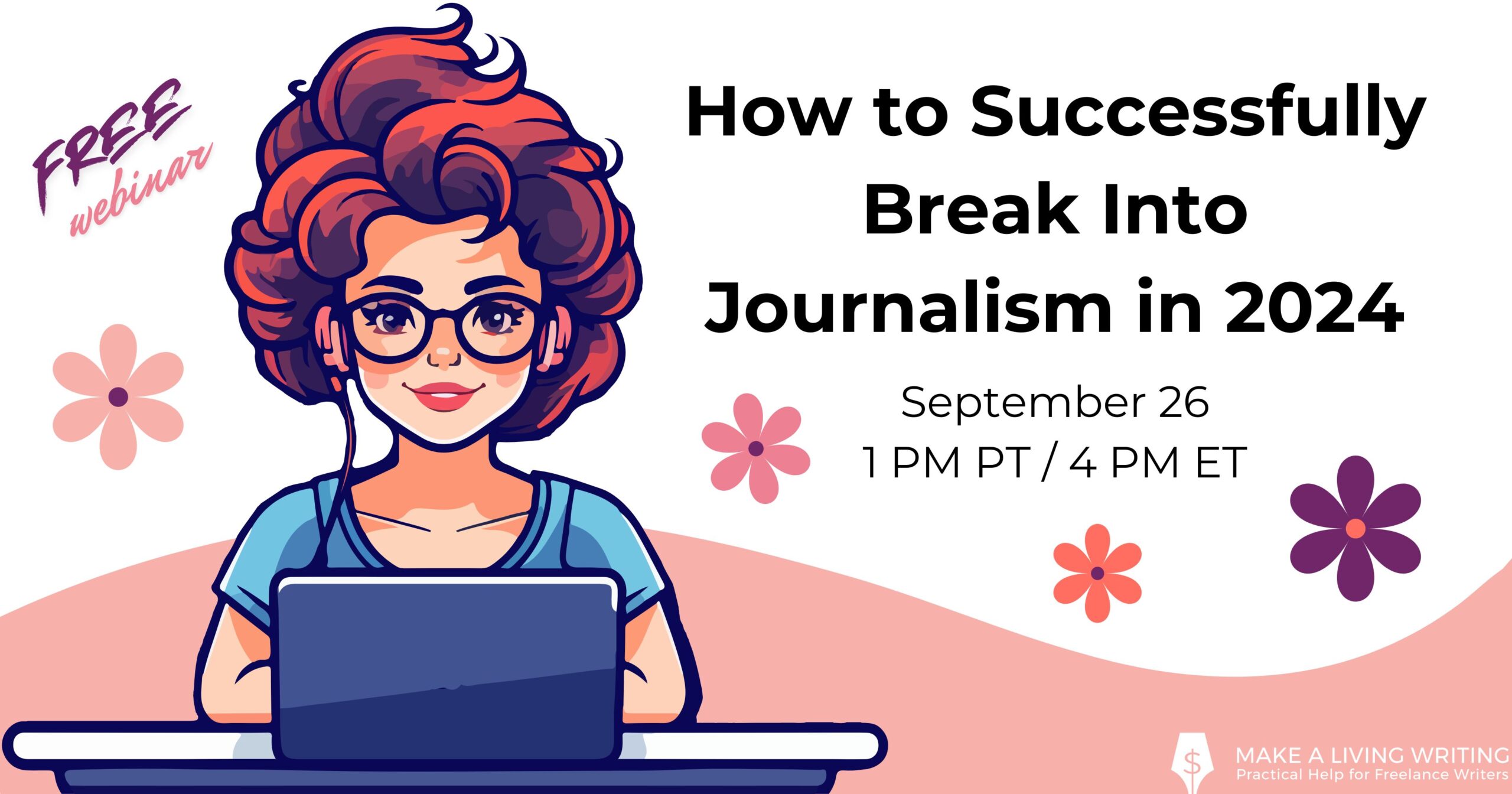
    If you’re wondering what opportunities exist for freelance writers in 2024 (hint: there are plenty!) then make sure to register for the free webinar called How to Successfully Break Into Journalism in 2024! You’ll learn about the different types of journalism and what you may best be suited for, and the top skills successful journalists need and what it can lead to.  

    This is an updated version of a story that was previously published. We update our posts as often as possible to ensure they’re useful for our readers.

  • Why You Should Try Writing for Trade Magazines (and How Much They Pay)

    Why You Should Try Writing for Trade Magazines (and How Much They Pay)

    When we think of magazines, our minds typically go to the glossy newsstand publications: magazines about fitness, celebrity gossip, home decorating or recipes.

    But covering parenting faux-pas and nifty new placemats aren’t your only options if you’d like to write for magazines. In fact, those glossies are only a tiny fraction of the publications out there looking for writers.

    Today we’re going to talk about a corner of the magazine market that has less competition, higher rates, and a ton of prospective markets: trade publications.

    What is a trade publication?

    Most industries have trade magazines tailored to professionals in their field. From supermarket produce professionals to sign makers to nail salon owners to roofers, most fields have one or more magazines specifically for people in their profession.

    For example, AdWeek is a trade publication that caters to advertising professionals. Aviation Week & Space Technology is a go-to resource for professionals in the aviation field. Animal Pharm News targets professionals in the animal health and nutrition space.

    Trade magazines cover a specific industry for a specific group of professionals. They tend to use language those professionals are familiar with (and others might not understand), including jargon and acronyms.

    How much do trade magazines pay? Often up to $1 per word or more. And they don’t receive as many pitches from up-and-coming writers as some of the household names you see on the newsstand.

    Your opportunities range from publications that cater to long-term care professionals to bowling alley managers to a wide array of other industry pros. I’ve written about everything from mango merchandising to how golf course managers maintain their greens despite herds of elk wandering through.

    Who writes for trade publications?

    In some industries, you’ll need specialized, advanced knowledge to write for industry publications, but other fields are far more open to writers who don’t have advanced knowledge of the field. Be sure to read the publication’s guidelines to see if you have to be an industry expert before spending your time crafting a pitch.

    Linda Formichelli, a freelance content writer who has also taught others how to earn money writing, has written for a wide variety of trade magazines over the years. Her trade clips include a pizza restaurant-owner publication, a magazine for credit-union executives, a publication for those who own in-plant print shops, and one that appeals to boat-related business owners.

    “I admit it — with trades, the glamour factor is missing in action,” Linda wrote. “You won’t get the same thrill seeing your byline in Boating Industry as you would in Glamour. But guess what? I’m not in this game for the bylines. I’m in it for the paychecks.”

    And keep in mind, many industry publications also run articles that aren’t specifically related to their fields. Many business, finance and law publications include short sections to appeal to a broader spectrum of interests, such as stories about travel and dining.

    How do you find trade magazines to pitch?

    When I first looked into trade magazines several years ago, I turned to Writer’s Market and pored through its many pages of listings. Some love the online, subscription-based version, but I went the old-school, library-book route. I lugged the thick volume home and spent hours going through the huge “trade journal” section, making a note of every publication that seemed like a good match.

    I spent a lot of time copying down crucial info from the guide and transferring it into a spreadsheet. But as soon as I went online to cross-reference the contact info, I realized some of the names from the print book were already out of date.

    It’s often a better idea to use print publications and online directories to find the names and website addresses of publications that might be a good fit — not editors. Then go directly to that publication’s website and find the writers guidelines to get the most up-to-date information.

    Google’s also an easy-to-use resource. Look for lists of trade publications like this one. Or Google “[your favorite industry] + trade magazine” and see what comes up. You’ll find quite a few resources and options with a quick web search.

    How do you decide which trade publications to approach?

    If you have experience in a particular industry, that’s a great place to start.

    For example, if you have experience with horses, pitch horse magazines. If you were a realtor once, look for real estate publications. Be sure to mention your qualifications and relevant experience in your letter of inquiry, as that can help you stand out from freelance writers who don’t have any background in the field.

    If you write often for publications in a particular industry, you’ll develop a niche over time. That can be more lucrative, because you’ll have more experience and know-how than other writers.

    But don’t make the mistake of thinking you have to be an expert in a certain topic to write for a trade magazine. Many publications are happy to work with skilled, reliable writers who have basic knowledge of a subject and can conduct research and interviews to fill in the gaps.

    How do you pitch a trade magazine?

    Once you’ve chosen a few publications, you’re ready to reach out.

    Before pitching, thoroughly research the publication by reading back issues to see what types of topics they like to write about, as well as what they’ve covered recently. Your goal is to tailor your pitch to their particular needs. Trade publications, even in the same industry, can vary widely in their coverage of similar topics.

    Double-check you’re following the freelancer contact instructions for each particular magazine. Some may prefer you pitch stories while others prefer a general “letter of inquiry.” If they don’t have specific information, a letter of inquiry is often a good place to start.

    An LOI is a “letter of inquiry,” “letter of interest” or “letter of introduction.” Your LOI introduces yourself, demonstrates your familiarity with the magazine and topic, explains why you’re qualified to write for the publication, and presents some of your ideas as well as your credentials.

    “You write it once, and you reap the rewards repeatedly. That’s why it’s important to get yours right from the get-go,” wrote Mridu Khullar Relph, who highlights the importance of having a letter of introduction in your back pocket to demonstrate you’re the best person for the job.

    This is an updated version of a story that was previously published. We update our posts as often as possible to ensure they’re useful for our readers.

    Photo via Farknot Architect / Shutterstock 

  • Double Your Freelance Writing Income: 5 Ways to Make it Happen

    Double Your Freelance Writing Income: 5 Ways to Make it Happen

    If you’re a working freelance writer, I’ve got a question for you: Would you like to earn twice as much money from writing as you do right now?

    (I should clarify that I mean without working twice as hard.)

    Who wouldn’t, right?

    I’ve been helping freelance writers double their income for many years now, and here’s what I’ve learned: Earning a lot more may be easier than you think.

    There are a few basic changes to how you run your writing business that reliably boost writers’ income.

    What small steps make a big difference? Here are my top five tips for quickly doubling what you earn from writing:

    1. Stop and analyze

    Many freelance writers are caught in a gerbil-wheel trap. You spend every minute frantically doing current client work and checking online job boards trying to land more gigs. You’re barely earning enough to pay bills, so there’s little free time.

    There are zero minutes spent reflecting on the big picture. Where is your writing biz headed? Who would you really love to write for, and how can you position yourself to get there?

    In the world of entrepreneurship, this is called working in your business instead of on your business. You’ll need to stop the busy-busy and take stock of your direction to make course corrections. If you’ve got even a single hour, you could reflect on what’s happening and potentially chart a new course.

    Question: When was the last time you made a list of all your clients, how much you make from them on an hourly basis — and where they came from?

    Do you see any patterns in your marketing of where better-rate clients came from? Worse ones? That may show you it’s time to stop checking online job boards, and time to do more proactive marketing, or to double down on LinkedIn networking. Or perhaps one industry niche is paying better than your others, and you should troll for more work in that area.

    Stopping to do a client analysis can help you see where you’re wasting time, which clients should be dropped, and which asked for a raise.

    2. Drop the biggest loser

    Once you know who your worst client is, lay plans to get rid of them.

    Writers often stay trapped at a low income level because they fear change. “I love writing for client X!” writers tell me, even though the gig works out to under $20 an hour. Bulletin: That client isn’t loving you back.

    Somewhere in your client list, there’s probably a client that should be cut loose, to free up marketing time to find better prospects.

    Use the time you save to find a better client. Once you do, drop the next-biggest loser. And so on. This simple process of swapping out lower-paid clients for better ones is the main technique I used to build my own business to six figures — right in the middle of the last big economic downturn.

    3. Create (or strengthen) your inbound funnel

    Are great clients finding you online? Whether it’s from a LinkedIn profile or your own writer website, a thriving writing business gets inbound clients who see your work and contact you. You should wake up in the morning and find emails, InMails, or Messenger notes from good prospects.

    If that isn’t happening for you, it’s time to build or improve your online presence. I’m currently teaching a bootcamp for new freelance writers, and I’m blown away by how many have fewer than 100 LinkedIn connections. Give the Internet a chance to help you find clients on autopilot!

    Consider making network-building and site improvement a weekly goal – it can pay off in less active marketing you have to do. And we all want that, right?

    If you’ve got a writer website but it’s never gotten you a client, it’s time to optimize it. Have you given SEO any thought, and are you getting found for the keyword phrase you’re targeting? It can be worth investing a little time to make sure you come off professional, and it’s clear what type of clients you want.

    Remember, most clients are searching for someone who knows their thing. They’re Googling for an Atlanta healthcare writer, or a freelance cryptocurrency writer. Something like that. Be sure to think like a client and communicate your expertise.

    4. Identify ideal clients

    If your marketing is all over the place, it’s time to focus. One of the best ways to do that is with an ideal-client exercise. Here’s how:

    Close your eyes and imagine your ideal freelance writing life. Who are you writing for? Is it Vanity Fair? IBM? Think big and make a list of at least 10 dream clients.

    Next, ask yourself this: What clips would impress those clients? Who would be a good stepping stone down the yellow brick road to that Emerald City?

    For instance, if you want to write for Forbes, you might pitch a piece to your city’s business magazine or weekly business journal, to start. Aligning current prospects with ideal clients helps you quickly assemble a portfolio that’ll impress the right people.

    Stop taking any and all gigs that come your way, and writing about everything under the sun. Instead, build a path that leads directly to your best writing jobs.

    Sometimes, this exercise will even lead you to realize you should pitch dream clients right away! I’ve seen writers pitch and get hired immediately by dream clients, once they did the ideal-client exercise and realized they had the portfolio to go for it.

    5. Raise your rates

    There’s a bottom line that if you want to earn more, you have to charge more.

    Start figuring out how you’ll do it. Hint: You’ll need to target clients that have real money and understand our value — bigger-circulation magazines, larger business and websites. Generally, these gigs aren’t sitting around an online job board.

    Make sure you know what you’re earning on an hourly basis (even if you charge project rates, like you should)…and keep inching that figure up.

    If you don’t have the stomach to ask existing clients for a raise, be sure to bring in new ones at higher rates. If you’re not raising rates, you’re not keeping up with the rising cost of living.

    I speak as someone who’s paying $7,000 for braces on kid #2 right now, that cost $5,000 with kid #1, about 5 years ago. The price of everything else is going up, and raising rates shows you’re professional and value your worth.

    Once you’ve done the client-analysis process and realigned your actions to suit your goals, make a date with yourself to repeat it every six months- one year. Your client base will change, as will your best actions to grow your income.

    We don’t tend to hit new earning levels without a goal. Set yours high and even if you fall short, you’ll be earning way more than you did before.

    This post contains affiliate links. That means if you purchase through our links, you’re supporting The Write Life — and we thank you for that!

    Photo via Monster Ztudio / Shutterstock 

  • 5 Romantic Ways to Earn a Living as a Writer

    5 Romantic Ways to Earn a Living as a Writer

    Maybe you’re the type who welcomes Valentine’s Day with open arms — and a slew of candy hearts for good measure. Or maybe you’d rather ignore Cupid’s birthday entirely, rebranding the event S.A.D. (Singles Awareness Day, that is).

    But whether you struggle with or celebrate this annual festival of fondness, one thing’s for sure: making money as a writer can be just as trying as navigating a romantic relationship…and just as blissful when the stars align.

    In honor of the season of love, we’ve put together a few fun ideas for earning cash as a writer, even — or maybe especially — if you’re a little love-sick. (In either sense of the term.)

    Below, find five dreamy ways to win a wage for your words.

    1. Help the lonely find love as a professional dating profile writer

    Just as we do for delivery meals and taxi rides, many of us turn to the wide world of the internet when we’re in search of Mr. or Ms. Right. (Or even Mr. or Ms. Right Now.)

    But crafting a well-written online dating profile can be a serious obstacle for those who aren’t linguistically inclined.

    Which is why “professional online dating profile writer” is now a real job title — and a uniquely 21st-century way to make money writing copy. You could offer up your services freelance on a platform like Fiverr or try to find a gig with a firm focused on this kind of content.

    You might also just reach out to the singles you know in person and ask if they’d like to give their OKCupid “About Me” section a bit of a professional spit-shine. Besides, most online dating profiles would probably be more objective (yet still attractive!) if they were written by a third party.

    2. Bring others’ romantic sentiments to life by writing greeting cards

    How many lovestruck — or lovelorn — people turn to the staid stanzas of a pre-written greeting card when attempting to express their emotions?

    You can use your way with words to help a stranger say what they really feel by writing those heartfelt, if generalized, sentiments.

    There are many large greeting card manufacturers who hire full-time writers and offer internships to those who are still studying. That’s how poet and short-story author Keion Jackson ended up as a senior writer at Hallmark Cards. You can also write for major card companies on a freelance basis, earning a flat fee for each accepted submission.

    And thanks to DIY sales platforms like Etsy, you could even strike out on your own, writing and selling artisanal greeting cards of your own creation — though in this case, it’ll probably help if you’re as crafty as you are literary.

    3. Find work as a freelance romance writer

    Yes, it’s true: finding any work as a freelance writer is already complicated. But it’s also true that you can get paid to write romantic fiction on a per-word basis.

    Check out, for example, this listing from Radish Fiction, calling for freelancers who are “interested in the romance genre and serialized storytelling.” At $50 per 1500 words, the pay isn’t exactly stellar… but it is paid!

    Romance writers are also sometimes in demand on freelance platforms like Upwork. This listing offers between 3 and 6 cents per word for “high quality romance writer[s],” and you’ll be provided an outline. Again, not exactly bread-on-the-table money, but a fun way to bring in a little bit extra!

    Whether you’re a hopeless romantic or a perpetual cynic, the season of love can be lucrative for a freelance writer.

    4. Or pitch and pen your own piece about love

    If you’ve got your own heartwarming (or heartrending) story to tell, you might be able to make significantly more than a few cents per word to tell it. You can earn a more substantial chunk of change, not to mention exposure and name recognition, if you successfully pitch your story to one of these literary outlets, which pay quite well for personal essays.

    Just be sure your piece fits your prospective publisher’s submission guidelines, and ideally relates to any recent pitch calls the editors have made.

    Keep in mind that editorial calendars tend to run several months ahead of publication, so you’ll probably want to reach out by December at the latest with a story you think would work well in February.

    5. Feeling feisty? Self-publish your steamy fiction

    Find yourself weaving wandering tales of courtship — or even out-and-out smut? No need to be embarrassed. In fact, you may be sitting on some serious earnings potential.

    There’s a huge market for romance novels, which accounted for about 15% of adult fiction purchases in 2017, easily beating fantasy and sci-fi combined. And thanks to the accessibility of self-publishing, you don’t necessarily need to do the time-intensive footwork of finding an open-minded agent.

    Looking for even more ways to earn cash as a writer? Check out these online gold mines for finding paid gigs, or this guide to getting your start as a freelancer.  

    Whether you’ll spend February 14th smiling in pink or scowling in black, we wish you the best of luck — both in love and in lucrative writing!

  • You Can’t Write it All: How to Avoid Side Hustle Burnout

    You Can’t Write it All: How to Avoid Side Hustle Burnout

    Please, inspirational quote on Instagram. Remind me that Beyonce and I get the same number of hours in each day.

    Oh please, internet guru. Remind me that if I have an hour a day for my side hustle, I’ll undoubtedly reap the financial rewards.

    What happens when your side hustle is writing? And your day job (or any number of part-time jobs you’ve cobbled together) also requires a lot of writing?

    In your case, an hour of free time might send you running as far from your laptop as possible.

    Writing takes a lot of brainpower. It takes a different kind of concentration and mental energy than say, raking leaves or walking dogs. Not better energy; just different energy.

    And if your 9-to-5 already uses some of the same skills you need to be a good writer, it’s too easy to get drained.

    If you spend all day on the phone or in meetings with clients, interviewing business owners to ghostwrite their blog posts on the side is going to feel exhausting. If you’re a proofreader by day, the idea of editing projects from Upwork at night is probably going to make your eyes cross.

    But since side hustle advice so often focuses on cultivating skills you already have, turning to your writing skills may feel like a natural fit — even if you already use those skills for eight hours each day.

    Here’s why that natural fit may actually make earning your second income harder.

    Side-hustle pro admits failure

    Breaking news: I’m a case study for side-hustle failure.

    My day job as a reporter stipulates that I can freelance to my heart’s content as long as the content isn’t in conflict with the work I do for my salary. (You’ve checked your contract or employee handbook for limitations there, right? Good.)

    So when I took this job and gave up my life as a frequent-traveling, frequent-napping freelancer, I expected I would be able to do the same type of work during my time off.

    I’d keep my content marketing clients with whom I had a great working relationship and a smooth workflow. I’d continue to write personal essays, integrating reporting elements like expert consultation, where applicable. And I’d write new reported pieces for the web publications on my bucket list.

    side hustle burnoutThis is the part of the movie where everything stops and you hear the record scratch.

    How was I going to to do reporting when I was already trying to pin down sources from 9 to 5 every day? How was I supposed to cultivate new sources? I can hear the outgoing voicemail message now: “I can be reached between noon and one and again after 5 p.m. Eastern.”

    Wow, that sounds professional.

    I even tried to outsource some of my research. When I had an idea but didn’t have time to do the initial research I needed to figure out my pitch, I enlisted the help of a researcher. I paid her for a few hours of work, and she delivered a document with key points, summarized news items on the topic and a bibliography.

    It was money well spent on a subject area I’m still curious about. But I still wasn’t able to refine my pitch enough to have it land with the publication for which I intended it. And had they accepted it, how would I have had time to pursue the story on a deadline? I didn’t even have time to do my own initial reading on the topic.

    So I made a hard decision: no more reporting outside of work, no matter how far removed the topic might be from what I write about there.

    Instead, I’m sticking with nonprofit content marketing, which takes energy and concentration, but doesn’t require chasing down anyone to try to get a good quote.

    It means my freelance work won’t be a factor in increasing my income this year. But it does mean  I’ll have some free time to work on personal writing projects. I can sketch out drafts of personal essays. I can work on flash fiction or short stories. The only deadline these projects will have are the ones I set for myself, and let me tell you, they are very generous deadlines.

    So when you see an inspirational quote about how many hours Beyonce has, just remember that she has assistants. Her assistants probably have assistants.

    That’s not you. I know, I’m bummed too.

    How to hustle without burning out

    If you’re working full-time and trying to freelance on the side, please stop lamenting the work you could be doing on a given evening, weekend, holiday or lunch break.

    Instead, remember the following:

    • Writing is hard. Doing it well is harder. Don’t burn yourself out because you’re trying to write everything, everywhere, all the time.
    • Your brain needs space to breathe. You also need time with friends, exercise and fresh air, and probably to do some laundry on occasion. You are allowed to have free time that isn’t dedicated to your full-time job or freelance writing.
    • Don’t try to replicate your 9-to-5 job into a writing-related side gig. Use adjacent skills, not the same exact ones. The idea is to generate income while keeping your work fresh, not to get stuck in a rut because you have to come home from work and do the same exact work.
    • If the ideal reliable, income-generating side hustle for you isn’t writing, that’s OK. Dog walking and yard work can be great gigs, and the screen-free time may even help generate some ideas for your next writing project — whether that project is paid or not.

    Day-jobbers and side-hustlers, how do you make it all work? Share your tips in the comments!

  • Land More Freelance Writing Gigs: 10 Tips to Pitch Like a Pro

    Land More Freelance Writing Gigs: 10 Tips to Pitch Like a Pro

    Knowing where to find freelance writing jobs is only half the battle. If you don’t know how to submit an application that seals the deal, you’re wasting your time.

    Like employers at traditional jobs, freelance writing clients and editors will be scrutinizing how you apply just as much as they scrutinize your experience and portfolio — if not more so.

    After all, what you say and how you say it gives them insight into the type of writer, and worker, you may be, so you want to make sure your application screams “hire this person immediately!”

    Here’s how to do just that.

    1. Customize

    Using a template is perfectly acceptable (it can actually save you a ton of time if you’re applying to a bunch of jobs at once) — just make sure it doesn’t look like you’ve used a template.

    “Avoid robot-like pitches because those who REALLY know their industries, the automated pitch tools, and everything else related to it already knows that your pitch was not hand-made,” says Peterson Teixeira, a marketing expert and business consultant who’s received plenty of pitches himself.

    Here are a few easy ways to make your cover letter or email look less cut-and-paste:

    • Keep your tone “business casual.” You want to come across as polished and professional, but you don’t want to sound like a stiff aristocrat from a Jane Austen novel. A friendly yet respectful voice can’t go wrong; if the publication has a more laid-back tone, adjust accordingly (without getting too casual).
    • Address it to a real person. A little sleuthing can make a big difference. “‘To Whom It May Concern’ is boring, and shows you didn’t put enough effort into finding out who’s reading your pitch,” says writer Mel Lee-Smith. “Find out who’s responsible for receiving pitches at the site, and address your email directly to them.”
    • Start off with an attention-grabbing introduction. Hook the client by telling a joke or opening with a line like, “Some people dream of winning the lottery. I dream of being an SEO blogger with a focus on consumer products. No, seriously. That’s not the kind of thing worth lying about.” The person reviewing your application has likely seen a blur of other submissions, so grabbing their eye from the get-go can help them really take notice of what you have to say. (Bonus points if you can make a nod to an inside joke or reference only readers of the publication would “get.”)

    2. Don’t go overboard

    Creativity in small doses is enticing; creativity that beats you over the head is a turn-off — especially if you’re applying for a more matter-of-fact gig.

    Know your audience and keep the balance appropriate for the publication and the position.

    “I have found that the most successful candidates are those that don’t supply me with cover letters that are superfluous in demonstrating creativity,” says Jake Tully, Editor-In-Chief of the blog at Truckdrivingjobs.com. “I’ve had people send over clearly fabricated origin stories when applying for a blog that focuses on issues of advocacy and informational posts. The creative writing isn’t impressive, nor does it show me that you are oriented towards nonfiction content writing.”

    3. Don’t get too personal

    Don’t go into too much personal detail unless it’s relevant to the position at hand.

    If you’re applying to write for a blog about parenting, the fact that you’re a stay-at-home dad of eight is relevant and worth noting. If you’re applying to be a marketing content creator for a tech blog, including that piece of information may come across as useless information at best — or a sympathy play at worst.

    “I know this sounds harsh, but when editors and hiring managers are going through cover letters, we’re usually on a time crunch,” says Joan Barrett, a freelance writer who’s also managed in-house writers for agencies. “It’s not that we don’t want to know people, but that is the reality…. When I’m applying for gigs, I assume that if (the client) wants to get personal, they’ll ask me more about myself outside of my professional experience.”

    4. Know your audience

    In an ideal world, you’d be totally familiar with the deepest recesses of every client’s archives.

    But sometimes a freelancer’s gotta pay the bills, and plenty of us have written content on topics in which we don’t consider ourselves subject matter experts, especially when we’re just starting out. (I could tell you more than you’d ever want to know about the history of the bagpipe.)

    You don’t have to be a rabid fan of a publication to write for it, but you do need to demonstrate a working awareness of what they cover, how they cover it and what they’re looking for in a writer. Check out their website, blog and social media stream. Study their tone. Identify their mission statement. Get a feel for their most popular pieces of content.

    The more you know about the client, the better you can tailor your pitch to their needs.

    5. Be clear and concise

    Job applications aren’t a word count game, so keep it short, sweet and impactful.

    “I sigh when someone sends me a 1,000-word document,” says Rick Sloboda, founder of Webcopy+. “Chisel it down to 150 words or so and you’ll make the recipient’s life easier. Plus, as is the case with web copy, less is more. When you convey your message with few words and high impact, you’re demonstrating a useful skill set and standing apart from the crowd.”

    6. Show your work…

    Whether the job post specifically asks for them or not, it’s always wise to send in 3-5 examples of pieces you’ve written for similar publications. Don’t assume clients will take the time to check out your archives; instead, deliver them a few well-crafted, laser-focused samples that will show them you’ve got the chops for their position.

    “I personally don’t care about cover letters,” says Teixeira. “I prefer to see an in-depth article about a subject you master, so I can see how you can keep me trapped in your writing.”

    7. Include a link to your portfolio

    That said, be sure to show include a link to your full portfolio to demonstrate the breadth of your experience.

    A client probably won’t care to click through every single one of the pieces you’ve written, but showing them you’ve been writing for years and have been published in a myriad of places is always a point in your favor.

    8. Be the solution to their problems

    Yes, your application is supposed to convince a client you’re awesome and they need to hire you, but the best way to do this is to focus on how you can make them better.

    “Focus on what you can bring to the site,” says Lee-Smith. “Don’t tell the site you’re pitching to that getting accepted will be a great opportunity for you. That’s kind of obvious. Instead, focus on what YOU can do for THEM, and back it up with examples.”

    This is where knowing your audience and can really pay off.

    9. Proof, proof, then proof again

    Mistakes like typos and grammatical errors on a traditional job application are frowned upon as they show a lack of attention, ability or both.

    Mistakes on a freelance writer’s application are judged even more harshly because, you know, accurate writing is kind of part of the job description.

    When such an easy mistake can have such a negative impact on your prospects, you can never be too careful. If you think you’ve proofed enough, let a few minutes pass and then proof one more time just to be safe.

    10. Follow up

    Don’t let a fantastic application fall through the cracks. There’s nothing wrong with checking back in if you haven’t received a reply within a reasonable amount of time.

    “Familiarize yourself with how long the application process takes,” says Lee-Smith. “If you haven’t heard anything by then, forward your email back to them and tack on a quick note saying you want to follow up on your application. People are busy and sometimes forget to respond. (This worked for me with my most recent pitch, and I got the job!)”

    Your turn: Do you have any other tips for making a freelance writing job application stand out? Share them with us in the comments!

  • What Happens When Your Editor Leaves? Advice for Freelance Writers

    What Happens When Your Editor Leaves? Advice for Freelance Writers

    Having a long-term working relationship with a paying publication’s editor is a freelance writer’s delight.

    Freelancers who send out lots of pitches know the routine: sometimes your query isn’t answered for six months or more; sometimes it’s answered by a form reply that implies that it wasn’t even read; and sometimes (Oh, cruel world!) your query isn’t ever answered. It got a one-way ticket into the ether.

    So, when you do get into the good graces with an editor — when you address them by first name, when you can breezily put together informal queries with one-sentence story ideas and they are actually considered — that’s good gravy.

    And then there is entry to Writer Valhalla: the editor suggests story ideas to you, dropping you casual notes like, “Tom, this one seems right up your alley ….”

    Sweet.

    But when that editor leaves the publication? Sour.

    But you don’t have to just pucker in pain if the publication pulls a switcheroo on you.

    If your editor leaves, was dismissed or even spontaneously combusts, you have a new objective: winning the confidence of the replacement editor.

    Illustrating the old editor/new editor evolution

    These matters are best explained with a real-world example.

    Mine is this: In 2012, I wrote a short piece for The American Scholar magazine’s Works in Progress (WIP) section.

    Having been around since 1932, you might think the magazine is a little long in the tooth, but it’s a lively publication that still appears in polished print on a quarterly basis.

    So, it was a plum for me to get into a regarded magazine with a broad circulation. The section editor enjoyed my first piece, and encouraged me to submit again. And again.

    Over three years, I had 11 pieces published in the Works in Progress section, and all were delightful to write.

    But alas, in mid-2015, my editor resigned, and in a genial email introduced me to the new section editor.

    I had one pitch in progress to the magazine, which the new editor took over. But that piece was graciously declined, because the magazine’s head editor wanted to break from the past WIP and explore “much more dynamic and original projects.”

    Keep scrubbing the decks (but use a different cleanser)

    Right off the bat, I knew I wanted to continue being published in American Scholar. Even though I was writing short, front-of-book pieces, I liked writing them, and the pay (around $.75 per word) was decent.

    So, over the course of the next year, I sent five or six queries.

    The criteria for the new direction of the section was a bit vague, but as the new editor said, she’d know the right pitch when she saw it. I kept an eye out for story ideas that seemed worthy of the WIP section, but that perhaps seemed a little spicier, or more unusual, or more out of the mainstream than before. (Whatever that might mean.)

    None of my new queries made the cut, until in March of this year, one finally did.

    After that article, my next quick pitch was tentatively accepted (though later declined).

    But the conversation is rolling. It feels great to re-establish the relationship, and to move forward.

    Below are some recommendations on how you keep your pitching fire alive, even when your favorite editor has left:

    Give thanks, and keep knocking

    First things first: You should have been thanking your original editor all along, with every acceptance; with every edit suggestion.

    Thank the editor for working with you. Leave a legacy of good feeling at the publication and stage the same for the succeeding editor.

    Besides thanking them, if your editor is moving to another publication, be quick to research that pub and suggest story ideas. Your old pal knows you can deliver the goods, so try to set up a new gig with them.

    If you think it’s time for you to also move on from the old publication, do it. Don’t fret if one magazine relationship has come to its rightful end. Cultivate another.

    But if you want to continue working with your original publication, do the work. Don’t be a pest, but keep yourself top of mind with pitches and suggestions. I often say, “Hope I’m not bugging you, but …” when I want a little elaboration on what they are looking for or why my pitch didn’t make it.

    Of course, never grovel and don’t write long requests or explanations. You are a professional. You’ve done good work for them before — correspond with the sense you’ll do good work for them again.

    And of course, thank them again when your byline (and you) are back in the saddle. Being a pleasant (and competent) writer to work with usually means you’ll be assigned more writing.

    I’ve been writing for Airstream Life magazine and a couple of its offshoots for more than 10 years. I’ve written scads of articles for its publisher, who has become a colleague and friend.

    I dread the thought that Rich might leave his post, but if he does, I’ll introduce myself to his successor, and keep pitching.

    Has an editor ever left a publication you wrote for a lot? How did you handle the news?

  • 6 Lucrative Freelance Writing Clients to Add To Your Portfolio

    6 Lucrative Freelance Writing Clients to Add To Your Portfolio

    When freelance writers look for work, they often look in the same few places. They pitch their favorite blogs, they email the one client who hired them a year ago and they try to figure out which Craigslist posts are scams.

    Meanwhile, there’s writing all around you that you’re not seeing. Book jacket blurbs, product descriptions and more — and all those words need writers.

    Last year, we released 71 Ways to Make Money as a Freelance Writer, packed with writing gigs you might not yet have considered.

    I helped put this ebook together, and I wanted to highlight six of these options. Consider these six new clients to add to your portfolio.

    1. Corporate blogs

    If you’re not already blogging for corporate websites, it’s time to get involved in this lucrative market.

    Companies are often very interested in having talented writers compose informative articles for the blog section of their website — I’ve written articles about A/B testing and landing page copywriting for Unbounce, for example — and they generally pay $200-$300 per piece.

    Ask your editors if they know anyone looking for a business blogger, and get ready to feature your best corporate clips on your writer’s website to attract more clients.

    Corporate writing can be a great way to build relationships that lead to even more corporate jobs; for example, you could get paid to write About Page copywriting or white papers.

    2. Authors who need book-jacket blurbs

    This writing gig is right under our noses — literally — but most writers never consider book jacket writing as a potential client opportunity. Once you get book-jacket clients on your roster, you can earn $300-$600 or more for every blurb you write. Plus, think of all the great books you’ll get to read before everybody else does!

    How do you get book jacket clients? Here’s what we suggest in 71 Ways:

    Add this service to your website, spread the word to your network, and offer it as an add-on option for clients whose books you’re editing or formatting for Kindle.

    If that feels like a lot of work, don’t forget — all that practice blurbing your own skills will make you a great book jacket writer!

    3. Authors who need editing

    See that “clients whose books you’re editing or formatting for Kindle,” above? If you don’t have any freelance editing clients currently in your portfolio, it’s time to add them. If you drop into our Facebook group, for example, you’ll notice writers asking where they can find good editors for their work. Why not market yourself as the answer to their question?

    Write up a list of the services you provide — proofreading, formatting, constructive critiques — and figure out a fair rate for your services. We suggest $30 to $100 an hour depending on the project size and scope.

    4. Businesses that need product descriptions

    Every product description you see, either online or in a catalog, was written by someone.

    Product descriptions are usually relatively easy to put together — you’ll get a list of product attributes to include, and it’s your job to craft those features into descriptive text — and you can make anywhere from $25 to $150 per hour.

    How do you get these clients? Start looking for job listings on sites like Indeed, or use your network and ask your current clients (or your writing-forum friends) if they know of anyone looking for catalog copy work.

    If you’ve already got a copywriting job or two in your portfolio, you’ll be in an even better position to get some great leads.

    5. Fan-fiction readers

    Yes, it’s time to get paid for writing fan fiction. Amazon Kindle Worlds will pay writers 35 percent on sales for 10,000+ word stories on The Vampire Diaries, G.I. Joe, Gossip Girl and more.

    Why not try your hand at some fan fiction and see if you can gain a few fans in the process?

    6. Yourself

    As a writer, you need to be your first and best client. This means figuring out how to earn as much money from your own work as possible: monetizing your blog with sidebar ads, using affiliate programs to earn money by promoting your favorite writing tools, creating and marketing your own digital products and Kindle books, and even holding your own classes and webinars.

    So take a look at your current writer’s website and portfolio and see how you can improve it.

    Imagine if you were working for someone else, and that person asked you how they could make money off their website. Then, incorporate those suggestions. Or, take a look at your favorite writers’ websites, figure out how they’re monetizing their sites, and borrow those ideas.

    Try spending the next month working towards landing one of these six freelance writing clients. Then take a look around you and see what other writing opportunities you might have missed — or read 71 Ways to Make Money as a Freelance Writer for more ideas.

    What’s the most unusual writing gig you’ve landed? Share your stories in the comments!

  • How Writing for More Clients Helps Your Freelance Writing Career

    How Writing for More Clients Helps Your Freelance Writing Career

    A good freelancer knows when it’s time to say goodbye to a client in order to take on a bigger opportunity — but a good freelancer also knows that putting all of your eggs into one large client basket isn’t necessarily the best idea.

    Do you always have to drop a client when you start working for a new one?

    This month, I explain why keeping a few of my favorite clients helps my career.

    Here are my numbers for June:

    Completed pieces: 58

    Work billed: $5,586.47

    Income received: $4,119.11

    Here’s a fun fact: I wrote just about 40,000 words in June — the same number of words that I wrote in June of last year. I wrote 58 pieces this June, and 54 pieces last June. I also billed $5,805 in June 2015, which is slightly more money than I billed in June 2016.

    The difference is that in June 2015, my year-to-date billings totaled $30,515. This year, they’re $34,288. My earnings continue to grow, year over year.

    The other difference is that in June 2015, I wrote for eleven different clients. In June 2016, I wrote for seven clients. Adding higher-paying clients to your portfolio means needing fewer clients to hit your monthly income goal.

    I could probably reduce my client load even further, but I don’t want to. Let’s look at why.

    Keeping my byline in the conversation

    At this point, the majority of my income — and the majority of my workload — comes from two clients. My other clients take up less than 25 percent of my writing time. They also bring in less than 25 percent of my income.

    Why do I keep writing for these additional clients? First, because I’ve been working for each of them for years now and I have a good relationship with their editors. Second, because I can complete their assignments quickly and easily; these no-stress gigs are fun to write.

    Most importantly, however, I keep writing for these clients because they keep my byline in the conversation.

    Having bylines in two publications is great. Having bylines in six or seven publications is better.

    My readers don’t know how long it took me to write a piece or how much I got paid to write it. All they know is that they read something worth commenting on or sharing on social media.

    The more writing I do for high-quality publications with strong readerships, the more my work is shared and discussed — and more people have the chance to see my byline and become familiar with my writing.

    I also like writing for multiple publications because it gives me more opportunities for referrals.

    The more editors I work with, the more people I have to recommend me or connect me to gigs — and because I have a larger chance of another editor reading something of mine, liking it and offering me a job.

    I know that my two biggest clients won’t last forever. When it’s time for me to start looking for a new client, I’ll have a larger pool of resources to draw from.

    I’ll also continue earning income even if one of my big clients goes away.

    A year of routine

    In last June’s Tracking Freelance Earnings, I wrote about wanting to change my writing routine to make more time for exercise and breaks — and to make sure I got up and got out of my pajamas right away, instead of working in my PJs until noon.

    I’m happy to inform you that this new routine stuck. I’m still working off the same basic schedule and work plan that I built for myself last year, and giving myself time to wake up, have breakfast, do my yoga practice and get dressed before I start my workday.

    I’m also giving myself a lunch break, which has evolved into a lunch-and-half-hour-walk break. It’s great to spend that half hour outdoors, away from my computer.

    Sure, there’s the occasional day that I wake up to an email that has to be answered right away, or a revision request that a client wants ASAP, but I’d say I get to keep this routine at least 90 percent of the time.

    I’m still doing pretty well with keeping regular hours, too; I rarely write in the evenings anymore, although I still end up doing a little bit of work over the weekend.

    I’d love to see where I am a year from now. Ideally, I’d like to be pretty much where I am today: writing for clients I really like, earning more money than I did the year before and sticking to a routine that keeps me healthy and productive.

    What about you?

    How does your freelance career compare to where it was last year? Where would you like to see it grow next year?

  • Tracking Freelance Earnings: February Income Report From Nicole Dieker

    Tracking Freelance Earnings: February Income Report From Nicole Dieker

    Do you work on freelancing projects that take more than a month to complete? As longer projects become a more significant part of my freelance workload, I’m rethinking how I track my income against my monthly earning goals.

    Here are my February numbers:

    Completed pieces: 55

    Work billed: $4,670.93

    Earnings received: $3,330.38

    I wrote nearly 56,000 words in February, with an average per-piece earning of $85. I didn’t hit my $5,000-a-month income goal in February, but I didn’t expect to. Every February, I take a week off to attend the JoCo Cruise, so I knew my “work billed” number would probably come up a little short. (The cruise is totally worth it.)

    On the subject of “work billed”: It’s a little complicated this month. If I were to calculate all of the fully completed and billed work, February’s number would only be $3,420. I spent most of February doing work on projects that will be complete in March, so I’m listing the $4,670.93 number because it more accurately reflects the amount of work I got done this month — and helps me determine how close I am to my $5,000 income goal.

    Taking on larger — and longer — projects

    My income tracking is becoming more challenging because I’m taking on bigger projects that can’t be completed in a month. When I got started as a freelancer, I wrote six short pieces a day for content farms; now I’m working on pieces that require significant research and take several weeks to complete.

    The longer a piece takes to complete, by the way, the more likely the deadline will shift at some point during the process. This has less to do with the dreaded “scope creep” than it does with the idea that it’s difficult to plan out all the details of a complicated project in advance.

    As my clients and I begin working on these projects, we often find we need to go after an additional source or spend an extra day looking for answers to a question — which in turn pushes back the deadline.

    What does that mean for me? Well, it’s harder to accurately track how much money I earn every month, for starters. If I spend two months working on a project, it isn’t useful to me to say “In February I earned nothing on this project, and in March I earned $4,000.” When I make my freelance spreadsheet, I need to prorate that $4,000 over the length of the project so I know that $2,000 counts for February and $2,000 counts for March — and I still need to earn $3,000 extra each month to hit my income goal.

    In case you’re an accountant: This is my informal income-tracking spreadsheet that helps make sure I’m on target, not the spreadsheet I use to do my taxes! That’s a different system, and tracks income in the month it was earned.

    It’s also harder to plan my workload, since I have to include overflow time for deadline changes, last-minute revision requests, and other tasks. This month, I’ve tried to solve this problem by turning Mondays into “buffer days” — instead of scheduling other work for Mondays, I’ll keep them open and flexible for whatever needs to be done. I’ll let you know how it goes!

    It’s one more thing you might have to figure out, as you move up in your freelance career: How to track long-term projects against your monthly goals, and how to manage a workload that might include shifting deadlines.

    Let’s switch focus and look at a freelancer who is just starting out. What are his freelancing goals, and what steps is he taking to achieve them?

    Q&A with Robert Lynch

    Robert Lynch is a freelance writer in Adelaide, South Australia. He recently started working as a freelancer, and has already picked up a weekly contract. He’s also making smart choices — like negotiating better rates, investing in his business and improving his pitches — to help build his career and grow his income.

    ND: What is your current freelance life like?

    RL: I’ve just finished university and finally have the time to pursue a writing career. At this point I’ve been freelancing for only three and a half months. In that time I’ve had some significant breakthroughs. I’ve sold one-off pieces and I picked up a regular weekly contract copyediting, which paid $170 a week. After two months at $170 per week I successfully negotiated with the client to increase my workload to [earn] $300 a week.

    What would you like to improve about your freelancing career?

    At the moment copyediting is my only freelance income. I’d like to build up other income streams to support me. I’ve written short stories, some accepted and some rejected. I’d like to be able to know whether what I’m writing is a good fit for a publication, so that I decrease the chance of rejection. This is something I’m sure I will get better at with time and practice.

    What steps are you taking to help you get there? Have you had success so far?

    I try to send one piece of fiction work away each week for consideration to be published. I write sci-fi mostly. This kind of freelancing has an 8-12 week lag from sending in the work to getting feedback, so if I send in work regularly after that initial lag I will get feedback regularly. At this point, I haven’t received feedback for the first piece that I sent away, so I have no idea whether this has had success or failure yet.

    I’m also trying to view freelancing as a small business, so there are business aspects that I have focused on. I’ve dedicated a lot of time in the last 14 weeks to building a writing platform. Getting my website/personal blog (www.robert-lynch.com) built and published; building a twitter following (@BobLynchBSc); and to a lesser extent commenting and replying to content that other people have produced.

    Success in this endeavour is hard to measure. People have come to my website and have read the content I have posted there. That’s good. I have no comparison on whether those numbers are high or low for a blog about a writer’s journey. I’m happy with what I have so far and I look forward to growing that following by producing content that helps other writers with their own journeys.

    Do you have an income goal for 2016?

    My income goal is to earn more than $500 [AUD] a week, which amounts to earning more than $26,000 in 2016. This is the minimum I can earn where I can then devote myself to writing full time. This is the number in which I get freedom from looking for work elsewhere. At the moment I’m working as a barman to make ends meet and I’d rather spend those hours writing.

    What steps are you taking to hit that income goal? Have you had success so far?

    I’m trying to get a few blogs published off of my site. From there I intend to start pitching regular blogging series to websites. I have already learnt a lot from your Pitch Fix series, so hopefully I will have some success. Some of these pitches will be to writing sites like The Write Life, but also some specifically science-based blogs. I have a science degree after all and since scientists are not known for their creative writing skills, I’m hoping to be able to help bridge the gap between real science and the general population. I don’t think that I’m going to build up these relationships overnight, but if I can, I see a future where I’m regularly earning as much from blogging as I am from copyediting.

    Another revenue stream I see as achievable this year is to be regularly selling fiction. I have found a number of magazines and websites that will pay for fiction. By sending in regular stories for consideration for publication I’m hoping to better my writing and be regularly aligning with editor’s needs by the end of the year.

    There are a few other revenue streams I’d like to try, but their ability to earn scales directly with the size of my writing platform, so they aren’t viable in the short term.

    With the $300 a week I already have coming in, I think that from just blogs and stories it’s more than achievable to be earning above that $500-a-week goal.

    What is the hardest part of freelancing for you?

    Fitting everything in. I want to transition to writing full time this year. At the moment I’m working 15 hours a week copyediting, trying to learn the writing business, trying to write 1,000 fiction words every day, keeping an active Twitter presence, trying to start blogging, running my own website and blog (which includes fortnightly videos on YouTube), working in a bar, still looking for work that I might get using my degree, volunteering as head medical trainer at my local football club and acting as the chairperson of my local writing group. After all of these things I still need to find time to spend with my girlfriend.

    Generally, I can’t fit everything in. That means that I have to prioritise those things that pay me money right now and some of the long-term business stuff suffers for it.

    In order to get better at this, I’ve mapped out a time management plan. If I stick to it then I think I’ll be able to fit everything in. I don’t have a history of sticking to routines though.

    What do you feel like you do really well as a freelancer?

    I have a strong work ethic and I’m actively pursuing feedback or advice to improve myself.

    Neil Gaiman did a commencement speech a couple of years ago where he said that to be a successful freelancer you need to do three things: Submit work on time, do good work, and be nice to work with. I am completely in control of whether the work is done on time, so I make sure that I don’t miss deadlines. Whether my work is good or not I can only know if I get unbiased feedback, so I actively seek it out. And I try to build good business relationships, which so far has got me repeat work and better pay.

    What advice do you have for other freelancers?

    In the short time I have been freelancing, all of my successes have come from taking risks and trying new things. In every case the worst thing that could have happened was that people didn’t like what I was doing or contractors just said no to my proposals.

    If there is anything that I have learned so far, it’s that you have to take a risk to get anywhere. If you never try, you’ll never have any success.

    What advice would you offer Robert Lynch? Also, what advice would you offer me, as I start working on longer projects? Share your thoughts in the comments.