Tag: Twitter

  • How to Be a Successful Blogger: Follow These 2 Major Tips

    How to Be a Successful Blogger: Follow These 2 Major Tips


    You created a blog — now what?

    I teach a lot about the importance of social media and platform and networking.

    I talk about values of self-marketing and using tools such as a blog to meet people and make connections.

    But then sometimes, a conference attendee will raise their hand and stop me, saying, “That’s all well and good, but how do we get people to actually read our blog?”

    The question is so basic that it can be glossed over when I’m teaching, so I want to address it here in this post — and share a few social media tips that will assist you moving forward.

    Although my specialty is publishing and I typically teach writers and novelists, these tips will help you learn how to be a successful blogger. All you need is an active Twitter account and a little creativity.

    Before we begin, if you don’t have a blog already, you can easily check to see if your preferred domain is available:

    1. Offer a clear incentive to click

    So you just hit “publish” on a recent blog post and want to spread the word. A simple thing you can do to promote your post is use your own social media channels — namely Twitter, and also possibly Facebook.

    If your own social media channels are still small or new, then you won’t be spreading the word to too many people, but that’s OK. Your network will grow over time, and your Twitter and Facebook mentions of your own posts will gather more shares over time.

    The goal is to mention to your network that you just created a blog post. They’ll then click through to absorb the material, and maybe even leave a comment or interact.

    If you create a great post that can help people, feel free to share it multiple times — once a week for several weeks, for example. Especially on Twitter, where people tweet a lot, there is no rule or law that says you can’t share good information multiple times.

    Incentives and clarity: that’s what it’s all about. Give people clear incentives to read your blog posts.

    This means 1) Realize that people will not do anything unless they understand what’s in it for them, so give them an incentive to click through; and 2) Make it perfectly clear what waits for them on the other side of that hyperlink, so they don’t pass up a click-through simply because they’re puzzled about what you’ve posted.

    [twl_reusable_block post_id=41455]

    Examples

    Let’s examine examples from my own life.

    Recently, I spent a lot of time researching literary agents who were actively seeking children’s books and novels with diverse characters. Compiling the post took me days of work and a lot of emails. It was a special post that I wanted to share. 

    Let’s examine three different ways I could share it through my own social media networks:

    Examine tweet possibility 1:

    1

    In my opinion, status updates like “Check out my latest blog post” or “New blog post is up” are the worst. They’re lazy, and don’t offer a new connection any reason to click. They’re lazy, and show someone who wants to exert no effort in gaining new followers.

    Grade: F


    Let’s try again with tweet possibility 2:

    2

    At least with this second tweet, you understand a little about what the blog post covers. But still, the tweet is scant and doesn’t provide absolute clarity on what lies on the other side of the click.

    And did you notice the grammatical mistake? Those extra words are a sign I was rushing through the composition of the tweet, and not sculpting it carefully. Poor proofreading reeks of unprofessionalism, and will turn off prospective followers.

    Grade: C


    Let’s try again with tweet possibility 3:
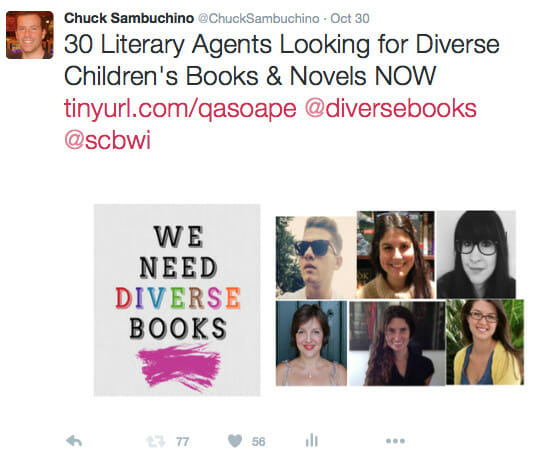
    3

    The tweet is optimized from top to bottom to gain the most shares and attention. Look at what it does well:

    • It provides absolute clarity by explaining exactly what the blog article is about.
    • It includes simple tricks to add sexiness, like a numbered list in the title and a capitalized “NOW” to show the post is important and timely.
    • I added Twitter handles for users who may enjoy spreading this information. You can also use hashtags to loop in new groups of people.
    • I added images. People love images with blog posts and social media status updates. Images bring a post to life.

    Seventy-seven retweets for this tweet is great, especially considering I had already mentioned this post several times before on social media

    Grade: A


    More Examples

    Let’s look at another example. Notice the evolution in incentivizing, and how each version is superior to the last.  

    Tweet possibility 1:

    4

    Tweet possibility 2:

    5

    Tweet possibility 3:

    6

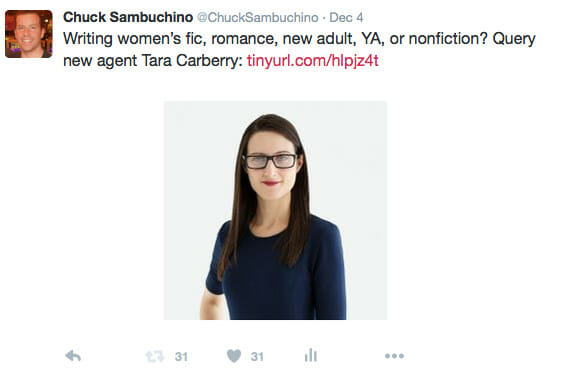
    The third tweet works so well because it doesn’t just reach out to writers. It specifically reaches out to the types of writers this agent wants to meet.

    The specifics here help the tweet, and if you happen to be a writer who is composing one of the types of book I mentioned, then this post is like a lightning bolt that says, “Click me, I have value, click me, I have value.”

    [twl_reusable_block post_id=41455]

    Advanced strategy: Form a Twitter power crew

    When you mention your blog posts on social media, what you really seek is reach and amplification through sharing.

    If 2,000 people share your post and it goes viral, it reaches many readers and thus its amplification is great. Meanwhile, if you only have 50 followers on Twitter, and you tweet out news of your post, it may not get very far.

    So why not work with others? Find other people and groups and form a Twitter power crew. You can all tweet each others’ posts and everyone’s amplification rises together.

    You scratch the backs of others, and they return the favor.

    2. Create valuable posts that will naturally get shared

    Promoting your own work isn’t enough — you need others to share it, too. When a blog post gets shared on social media, you get more people to read the post, and turn some of those new readers into consistent followers who get to know you and your brand.

    Ideally, your columns will spread organically from people you don’t know sharing your post. The best way to do this is to create a post that has value.

    Most blogs never achieve success because the blogs provide no true value. A good blog post can make your life easier, inform you, entertain you, make you laugh, show you things or places you want to see, or cull information into a single source.

    Creating a valuable blog is difficult. It takes a plan, time, and hard work. But if you spend the time to create something unique and valuable, then people will share it. Make posts for others, not for you. The example I use commonly is this:

    If I took my three-year-old daughter to the park, would you care? In other words, would you read a blog post about how I took her to the park? No.

    But what if I spent a month taking my daughter to some small, out-of-the-way parks, then composed a blog post called “The 5 Best Family-Friendly Parks in Cincinnati You Didn’t Know Exist (and Where to Park the Car).”

    If you live by me and have kids you would take note of it — and it’s because all of a sudden the post has value for you, not me. The post took me time and energy to create, but it pays off when parents share the post with their friends.

    It’s very simple. If you create something that’s just plain good, people will share it.

    What tips would you add for connecting with potential blog readers through social media? How have you become a successful blogger?

    This post has been updated. We regularly update our posts to make sure you have the best content. Also, this post contains affiliate links. That means if you purchase through our links, you’re supporting The Write Life — and we thank you for that!

    Ready to Learn How to Gain More Followers Thru Social Media?
    in partnership with Self-Publishing School

  • What Twitter’s Dear David Can Teach Us About Storytelling

    What Twitter’s Dear David Can Teach Us About Storytelling

    This season’s most compelling ghost story can be found in the most unlikely of places — Twitter.

    For the uninitiated, Dear David is the recounting of a haunting taking place in Adam Ellis’s New York City home. Since early August, Ellis, a comic artist, has been telling his Twitter followers about a dead child that answers to the name Dear David.

    His tweets went viral, and he continues to tell a story of escalating ghost behavior 140 characters at a time.

    Some people think he’s documenting a supernatural occurrence. Others think the entire story is a hoax. I’m not concerned if Ellis’s account is true or not. What I’m fascinated by is his ability to keep people on the edge of their seats using a restrictive medium.

    Here are four ways Ellis is utilizing storytelling techniques that we can apply in our own work as writers.

    1. Building suspense

    Ellis first started telling the story of Dear David on August 7, 2017.

    In a series of tweets he revealed that a boy with half a skull approached him during a state of sleep paralysis. The next night in a dream he was instructed to address the boy by the name “Dear David,” and was told he could ask him two questions. If he asked Dear David a third question, though, he would be killed.

    He explained that Dear David crossed over into his waking life. He then confessed that odd things were happening in his home, like his cats sitting in front of his door at midnight as if someone was on the other side.

    In that first set of tweets Ellis doesn’t tell a complete story. Instead, he leaves his audience with cliff-hangers. What does it mean that the cats sit by the door? Will they do it again? Is the ghost out to murder him?

    Ellis could have written a short story. Instead, he chose a medium where he is able to leave bread crumbs, while claiming to be reporting in real time. He established stakes and continues to make the audience wait for the next installment, thus ramping up the suspense.

    2. Creating mood

    What makes the story so delightfully frightening is that everything seems completely normal except for one small detail.

    Ellis is a normal guy going about his daily life, but since Dear David appeared, things are just slightly off. He looks outside his peephole and there is a shadow lurking by the bannister. A green chair moves ever so slightly. The cats are acting normal, except when they sit by the door every night at the same time.

    All of these small occurrences add to an overarching feeling of dread. Something isn’t right in his home and reading about it sends shivers up the spine.

    There are many ways to scare your readers, and Ellis does it via a slow build. The audience understands that pressure is building and it feels insidious.

    dear david3. Audience participation

    The ability to instantaneously comment on a tweet is something that is simultaneously the best and worst thing about Twitter.

    In the case of Dear David, Ellis has created a community of amateur sleuths who are invested in figuring out the story behind the haunting.

    Random people continuously give Ellis advice to keep the ghost at bay. Burn sage! Put salt around the door! Don’t use a ouija board in your apartment!

    But, one of the best moments of audience participation happened after Ellis installed nanny cameras to capture unusual activity in his apartment. He posted a video of his cats with a caption to watch how one of them jumped over something that was invisible. But, Ellis didn’t comment on the freakiest part of the video. It took people on Twitter to point out that the most astounding part of the video is that a glass on the table moved on its own.

    While most of us won’t have videos of inanimate objects moving in our writing, this story can help us think about moments of reveal.

    As writers, what should we tell our readers upfront? What can be left behind as clues so the audience can piece things together on their own, thus making for a more engaged experience?

    4. Creating a multimedia experience

    Ellis has utilized writing, illustration, video and photography to tell the story of Dear David.

    Most of us will stay banging out our stories on a keyboard because it is a specific calling. But, are there different ways to enhance our writing?

    Perhaps some stories aren’t meant to be told only on the page. Dear David has shown that it’s possible to use Twitter to construct a narrative that takes place over a period of time.

    In the same vein, maybe we writers can utilize other forms of media to play with storytelling.

    Dear David acts as a starting point for imagining multifaceted ways we can bring our characters to life. Can we tell our story through Instagram? Tumblr? A podcast? More than ever before there is wide open space for us to explore means of bringing our writing to different audiences.

    Dear David is the first time I’ve entertained the notion that it is possible to tell a story in small bursts.

    It’s the very modern version of serializing work in magazines. Instead of waiting for a new issue of a publication I’m waiting for a new Twitter thread by Ellis. I’m hooked.

    If Dear David turns out to be a complete work of fiction I don’t mind at all. I just want to see what happens next.

  • Get Inspired! 20 Writers to Follow on Twitter

    Get Inspired! 20 Writers to Follow on Twitter

    We writers all need community. We all need inspiration.

    And, for better or for worse, we need smart strategies for making money, whether through freelance work, books, speaking engagements or by helping others improve their writing.

    Twitter is bursting with like-minded writers, authors and entrepreneurs who want to connect and help one another out.

    It’s completely worth the time investment to find your tribe on Twitter.

    I’ve made it even easier for you: I scoured Twitter to find writers who post the most interesting, helpful, and motivational content in the Twittersphere.

    Bonus: I’ve highlighted FREE resources available from each oh-so-generous writer. You can also easily follow all 20 writers included on this handy Twitter list.

    1. Jane Friedman (@JaneFriedman) nonfiction author, publishing industry expert

    Jane is an expert with 20 years of experience in the publishing industry. She blogs several times a week about topics relevant to authors and writers.

    Jane’s personal passion is to help authors and publishers “make smart decisions in the digital age”.

    Follow Jane if you have any interest in publishing, from traditional to self-publishing to hybrid models.

    Quick tip: I highly recommend signing up for Jane’s email newsletter

    2. Stephanie Chandler (@Steph_Chandler) nonfiction author, marketing and entrepreneurship expert

    Stephanie is the founder and CEO of the Nonfiction Authors Association, author of eight books on marketing and on writing nonfiction, blogger and frequent guest speaker.

    Stephanie tweets about ways to help authors promote themselves, business strategies for entrepreneurs, publishing and more.

    Follow Stephanie if you’re looking for marketing techniques you haven’t already read a million times.

    Quick tip: Download Stephanie’s free report “35 Ways to Increase Website Traffic for Authors

    3. Dan Blank (@DanBlank) nonfiction author, book marketing expert

    Dan is the author of Be the Gateway: A Practical Guide to Sharing Your Creative Work and Engaging an Audience, geared toward helping creative types connect with an audience.

    Dan blogs weekly about book marketing and tweets useful tidbits from his blog and podcast.

    Follow Dan if you want to learn how to connect with a broader, business-minded writing community.

    Quick tip: Sign up for Dan’s weekly email updates

    4. Tim Grahl (@timgrahl) nonfiction author, expert on bestselling book launches

    Tim helps authors build their platform, connect with fans and sell more books.

    He has worked with more than 100 authors and has helped many become New York Times, Wall Street Journal and Washington Post best sellers.

    Tim provides practical, actionable book launch advice.

    Follow Tim if you’re ready to launch your book the right way.

    Quick tip: Tim has several free resources, including a book launch assessment and free book marketing courses and articles

    5. Joel Friedlander (@JFbookman) nonfiction author, book design and self-publishing expert

    Joel’s background in book design, advertising and graphic design has informed his collection of 700+ authoritative and easy-to-follow articles.

    Joel offers real-world advice to build better books, especially for self-published authors. He urges writers to get their work out into the world.

    Follow Joel if you’re totally into self-publishing or if you want to geek out on book design.

    Quick tip: Get Joel’s free guide: “10 Things You Need to Know About Self-Publishing

    6. Mridu Khullar Relph (@mridukhullar) international freelance journalist, nonfiction author and entrepreneur

    Mridu is a journalist and author with 700+ bylines who helps writers “find the work, do the work, run the business and live the life”.

    Mridu’s blogs and articles describe her personal experiences getting off the ground as a journalist in a way that engages and informs other writers.

    Follow Mridu for motivation and go-to advice on building a successful writing career as a journalist, magazine writer or freelancer.

    Quick tip: Mridu compiled a list of 70+ publications that pay $1 or more per word, so use it to start your target list today

    See Mridu’s writing for The Write Life here

    7. Jennie Nash (@jennienash) writer, book coach, author of seven books

    Jennie is an author of four novels and three memoirs with 30 years of experience in the world of books.

    She is adept at getting “into writers’ heads” and “inspiring them to write something that matters.”

    Follow Jennie for advice on book marketing, navigating the publishing industry, success stories and craft.

    Quick tip: Check out Jennie’s free resource library. When you sign up for her email list, you’ll receive a free 40-page ebook on how to edit.

    See Jennie’s writing for The Write Life here

    8. Rachel Bale (@deptofwandering) travel writer, blogger and creator of The Department of Wandering

    Rachel was drudging through her 9-5 job while living abroad in Berlin in 2014 when she made the leap to blogging and freelancing.

    Rachel’s tweets are primarily for the travel-hungry, but also serve up tips for bloggers.

    Follow Rachel for travel inspiration, blogging quick tips and fodder to pursue your writing dreams.

    Quick tip: Email subscribers can access the Department of Wandering free library of blogging resources here, including 50+ killer blog title ideas

    9. Mignon Fogarty, AKA Grammar Girl (@GrammarGirl) New York Times bestselling author, podcaster and writing/grammar authority

    Mignon Fogarty, AKA Grammar Girl, is the founder and managing director of Quick and Dirty Tips and the author of eight books on the art of grammar and writing.

    Grammar Girl focuses on short, friendly tips to improve your writing.

    Follow Grammar Girl if you still don’t know how to use a hyphen or the difference between active and passive voice.

    Quick tip: Sign up for Grammar Girl’s free weekly newsletter

    10. Michael Hyatt (@MichaelHyatt) New York Times bestselling author, blogger and podcaster focused on intentional leadership

    Michael is the former CEO of a publishing company and author of eight books, including the New York Times bestseller, Platform: Get Noticed in a Noisy World.

    On Twitter, Michael is a “virtual mentor” helping “overwhelmed, high achievers get the clarity, confidence, and tools they need to win at work and succeed at life.”

    Follow Michael on Twitter for productivity advice and motivation to kick butt in your career.

    Quick tip: As an email subscriber, you will get Michael’s free e-book: “Shave 10 Hours Off Your Workweek”. Click here and see the “Free ebook” sidebar on the right.

    11. Joanna Penn (@thecreativepenn) New York Times bestselling thriller author, podcaster, speaker

    Joanna has written 21 books and sold over 500,000 copies in 84 countries and five languages.

    Her mission is to save writers “time, money and heartache” by sharing content about “writing and creativity, publishing options, book marketing and being a creative entrepreneur.”

    Follow Joanna if you want advice from a super successful author.

    Quick tip: Get Joanna’s free Author 2.0 blueprint with tips on writing fiction and nonfiction, self-publishing, book marketing and how to make a living with your writing.

    12. Mary Kole (@Kid_Lit) author, kidlit expert and former literary agent

    Mary is a former literary agent, freelance editor and author of Writing Irresistible Kidlit: The Ultimate Guide to Crafting Fiction for Young Adult and Middle Grade Readers.

    Mary tweets helpful hints to guide writers on the art of writing for children and young adults.

    Follow Mary if kidlit is your jam.

    Quick tip: Check out Mary’s curated list of resources for writers

    13. Jenny Blake (@jenny_blake) author, speaker, career coach and business strategist

    Jenny is an author, coach and speaker who is “fiercely committed to helping people come alive through the pursuit of big ideas”.

    Jenny tweets about best practices to move forward with your life and career.

    Follow Jenny if you need a kick in the career pants.

    Quick tip: Sign up for Jenny’s weekly newsletter or take this quiz to see how flexible/pivot-savvy you really are

    14. Carrie S. Nicholson (@carefulcents) blogger who helps freelancers earn money on their terms

    Carrie is a blogger who has walked the walk: in 2012, she quit her full-time accounting job to pursue her own business helping freelancers stress less and earn money on their own terms.

    Carrie tweets about the latest productivity tools and strategies for freelancers.

    Follow Carrie if you are ready to make your freelance dreams a reality.

    Quick tip: Sign up for Carrie’s email newsletter and get her free guide to her top 10 productivity tools, and more

    See Carrie’s writing for The Write Life here

    15. Chuck Sambuchino (@ChuckSambuchino) humor and nonfiction author, former editor for Writers Digest Books

    Chuck served for many years as an editor for Writers Digest Books and established himself as an authority on writing and book publishing.

    He also has firsthand experience, having written three nonfiction books for writers and two humor books.

    Chuck’s tweets help writers get published and market their books.

    Follow Chuck if you’re looking for the inside track to book publishing.

    Quick tip: see where Chuck will be speaking next

    See Chuck’s writing for The Write Life here

    16. Amy Porterfield (@AmyPorterfield) marketer and entrepreneur who can help you build your email list, and more

    Amy is a marketer, podcaster and creator of bestselling marketing courses.

    Amy seeks to help people build an engaged email list and grow their businesses.

    Follow Amy if you want to know what’s working now on social media.

    Quick tip: choose your free marketing cheat sheet from Amy

    17. Joanna Wiebe (@copyhackers) writer and co-creator of Copy Hackers, a site focused on marketing, copywriting and freelancing content

    Joanna is a marketer, conversion copywriter and cofounder of Copy Hackers who was recently named one of Forbes’ 17 online marketing influencers to watch.

    Joanna tweets resources for marketers, copywriters and freelancers.

    Follow Joanna to up your copywriting game.

    Quick tip:  Copyhackers offers two free e-books:

    The Conversion Marketer’s Guide to Landing Page Copywriting

    How to Write Newsletters That Get Opened, Read and Clicked

    18. Leah Kalamakis (@theftfp) designer, developer and blogger passionate about helping freelancers and entrepreneurs

    Leah is a blogger, developer, designer and entrepreneur who created the Freelance to Freedom Project.

    On her blog and on Twitter, Leah shares actionable advice for freelancers and wannabe freelancers who seek control of their careers.

    Follow Leah if you’re ready to dive into this whole freelancing thing.

    Quick tip: Get Leah’s free freelancer’s toolkit or download Leah’s free effortless website planning toolkit

    See Leah’s writing for The Write Life here

    19. Sarah Kathleen Peck (@sarahkpeck) writer, blogger, teacher and first-time author

    Sarah is a writer whose work has been featured in The New York Times, Fast Company, and The Huffington Post.

    Sarah publishes weekly essays and teaches digital workshops on yoga, content strategy, thought leadership, marketing and more.

    Follow Sarah if you’d relish connecting with another writer and first-time author.

    Quick tip: Visit Sarah’s web site for free downloads or subscribe to her personal growth newsletter

    20. Jeff Goins (@JeffGoins) bestselling author and creativity expert

    Jeff is a full-time writer and creativity expert who has authored You Are a Writer, Real Artists Don’t Starve, and three additional nonfiction books.

    Jeff focuses on what it takes to become a bestselling author and how to make a living with your writing.

    Follow Jeff for the perfect mashup of writing advice and business sense.

    Quick tip: Get Jeff’s free guide to becoming a bestselling author  

    Who are your favorite writers on Twitter? Add to the list in the comments!


    nolinks
    no
    1
    nolinks
    no
    1
    nolinks
    no
    1

  • Twitter Marketing Strategy: How Much Book Promotion is Too Much?

    Twitter Marketing Strategy: How Much Book Promotion is Too Much?

    We’ve all felt it. The tightness in the chest. The feeling otherwise known as panic that sets in upon a book’s release. Will anyone buy it? Will people enjoy the stories we’ve poured our hearts into?

    We want to shout from the rooftops to celebrate releasing our work into the world, and we’ve heard that Twitter is a crucial part of a marketing strategy, and so we tweet, @mention and retweet. Yet how much should we say before all of our promotional efforts start to fall on deaf ears?

    Is there such a thing as too much Twitter promotion?

    Don’t start by selling

    Before you try to convince readers to buy your book, your goal as the author should be to build trust and a relationship with them. You can build trust with readers much like you build trust with anyone else. Start by finding a common bond, sharing information about yourself and letting others know what you like.

    Find topics to talk about apart from yourself and your books. Current events, fashion and food are often good choices. Talk about your favorite television shows, books or musicians.

    Show your personality. If you’re funny, don’t be afraid to show that side of yourself online. People respond to people they relate to, and being relatable is how you will attract your audience.

    Pay attention to your tweets, the @replies, the number of favorites or retweets. Note the ones that attracted a good response from your audience, and write more of that type of post.

    Learn the difference between hard selling and soft selling

    The truth is, if you know the difference between these two types of promotion, you can share information about your book daily without making your audience and readership feel “sold to.”

    A hard sell is a direct, “buy my book” type of message. It can be an aggressive strategy and is usually reserved for products that are hard to sell.

    Instead, you’ll want to master the art of the soft sell, a technique that relies on “suggestion or gentle persuasion rather than aggressive pressure.”

    Soft-sell marketing is subtle, persuasive and low pressure. The goal of soft-sell marketing is to build a relationship without aggressively pitching your book to readers.

    Once you’ve created a relationship with your audience, selling will feel less forced, more natural and conversational. Soft-sell marketing is effective because the author creates a lasting bond with her readership.

    If your audience connects with you, and they like you, they will buy from you. It’s that simple.

    Is there a magic formula for promotion?

    Some writers are always on the hunt for a magic formula. How many tweets should I post each day? What time of day should I focus on social media?

    Yes, there are ways to help grow your social media following, and there’s a lot of great advice for what to do (and not to do) on social media. However, if you build a rapport with your audience, you can tweet as much or as little as you like, and still be effective.

    [bctt tweet=”If you build a rapport with your audience, you can tweet as much as you like,” says @jenniferafusco”]

    Take a look at Laurell K. Hamilton (@LKHamilton), an author who tweets frequently. She’s both conversational and engaging with her audience. By looking at her posts, you can tell she’s having fun on Twitter.

    Romance author Molly Harper (@mollyharperauth) is also very effective on Twitter. She doesn’t tweet often, maybe once or twice a day, but her humorous personality shines through in her tweets, delighting her audience.

    How to soft sell on Twitter

    To illustrate the difference between hard selling and soft selling in tweets, let’s compare two sets of tweets from New York Times bestselling romance author Tawny Weber.

    The first three use a hard-sell approach:

    1. How’s Mission: Fake Engagement going to go? Find out in A SEAL’s Kiss [link] #SexySEALs
    2. Hot, sexy and brooding… Check out Brody Lane in A SEAL’s Salvation! #SexySEALs [link]
    3. #FREE A SEAL’s Surrender by @TawnyWeber: [link] #free #HarlequinBlaze #kindle #nook #ibooks

    Here are the same tweets, rewritten to incorporate a soft-sell message:

    1. OMG, A fake engagement. A SEAL’s Kiss [link] #SexySEALs Would you ever fake an engagement?
    2. Like hot, sexy and brooding heroes? I’d love to know what you think of Brody Lane. [link] A SEAL’s Salvation
    3. A free book? Yes, please. #FREE A SEAL’s Surrender [link] #HarlequinBlaze #kindle #nook #ibooks

    See the differences? The second set of messages use a friendly tone. The tweets are conversational in nature and the purchase of the book is implied without the use of hard selling.

    To write great soft-sell messages, read the tweet aloud. If you feel the message says, “buy my book”, rewrite it.

    Create soft-selling tweets with the goal of starting a dialog. Use hashtags to invite others to join the conversation. Your soft-sell messages don’t always have to include buy links or book related tags.

    Apply the same concepts to other social media channels

    Prefer pinning to tweeting? That’s OK.

    While I’ve focused on Twitter, you can easily apply the idea of building a rapport with your readership and using a soft-selling on Facebook, Pinterest, Google+ or wherever you prefer to promote your work.

    If you’re vigilant about keeping your social media conversations light, entertaining and engaging, and you in the effort in to build a bond with your readership, you won’t have to worry about how much promo is too much. Instead of being a burden or nerve-wracking endeavor, promotion will seem natural and effortless.

    How do you share your work on Twitter without being overly promotional?

  • 4 Mistakes Even the Best Writers Make on Twitter

    4 Mistakes Even the Best Writers Make on Twitter

    Want to use Twitter to make connections for your writing career? Check out our founder Alexis Grant’s course: Become a Twitter Power User.

    It’s not easy, convincing writers on the value of Twitter. But once the social network begins to make sense to you and you start seeing wins on a regular basis — a publisher links to your blog post, a literary agent responds to your tweet, or maybe you even land a freelance gig through a Twitter connection — you’ll never go back.

    Once you get over that initial hump, it’s time to take it a step further, so you see even more return on your investment. And that’s when you want to make sure to follow the advice below. Will these mistakes doom you forever? No. But they will keep you from turning your own Twitter world into a place where you meet clients, form friendships and cultivate your writing career.

    Here are four mistakes I see writers make on Twitter and why you should be sure to avoid them:

    1. Neglecting to include @mentions

    Adding @mentions is one of the smartest things you can do to grow your Twitter presence, the best way to get a big bang for your buck on this social media channel. For every single tweet you send, look for ways to incorporate an @mention, maybe even two.

    Mention a blogger? Look up that person’s handle and include it in your tweet. Sharing a link from a publication? Add that @mention to your update. Notice someone is simply mentioned in the article you’re sharing? Find a way to work their handle into your tweet, too.

    The @mention is your way of getting the attention of other people, of saying, “Hello! I exist, and I’m tweeting about YOU!” If you fail to include the @mention, that person or publication or organization you’re tweeting about will probably never see what you have to say… and in that case, is your time spent on social media even worth it?

    2. Overlooking the power of Twitter lists

    After the @mention, lists are one of the best ways to get the most out of Twitter — and yet so many people don’t use them. Lists help you filter through all the noise on this platform and hear only the things you want to hear — so you can create connections that matter. (Here’s a great how-to-use-lists guide from Mashable.)

    One of my favorite ways to use Twitter lists is by creating what I call a Notice-Me List. This is a private list that includes lots of people I’m hoping to form a relationship with on Twitter: bloggers, publishers, writers, social media strategists, etc. Anytime I come across someone who I want to know me, I add them to this list, which means the list is always changing.

    But it’s what you do with that list that counts. Once you’ve created it, take a few minutes each day or week to scroll through that list and look for ways to interact with people on it. That could mean @replying to their tweets or RTing their tweets with a short comment, or even clicking through one of the links they share to their blog and leaving a comment on the latest post.

    [bctt tweet=”Creating Twitter lists is great, but what you DO with those lists is what really counts.”]

    By interacting with these people, you’re opening the door to a relationship. If you respond in a smart way, they’ll hopefully write back. And even if they don’t respond, they might notice you and your work — which means they’re far more likely to respond to an email you send down the line.

    3. Procrastinating the move to Hootsuite

    If you’re not using a Twitter application like Hootsuite, Tweetdeck or Buffer, you should be.

    I don’t recommend them for complete Twitter newbies, because it takes a while to understand how to use the platform, and these applications are an added complication. But as soon as you get the hang of how to make connections on Twitter — that includes using @mentions and lists to get the most of the platform — make the switch to an app. It will make your life easier in the long run!

    Of these three tools, I prefer Hootsuite. But all three have loyal users, so you really can’t go wrong choosing one. If you do go with Hootsuite, watch this tutorial from Marian Schembari as a primer.

    4. Thinking that scheduling tweets is a big no-no

    You don’t have to be in front of your computer all day to benefit from Twitter. In fact, the best Twitter users actually schedule their tweets — that is, they create a bunch of tweets whenever they have time and schedule them to go live throughout the day or week. This is how you provide massive value — and become a tweep people want to follow — without spending all day online.

    Now, there are two caveats here. The first: Just because you schedule tweets doesn’t mean you should never hop onto the platform and interact. Some of the best connections I’ve formed have grown out of spontaneous conversation, interacting with other people on the platform. That’s essential — so don’t leave interacting out of the equation.

    Second, scheduling tweets is different than automating them.

    Automation is when you publish a blog post and a Twitter app is set up to automatically tweet that post. Scheduling is when you create a tweet by hand, but schedule it to go live at a later date. (Click to tweet this idea.)

    The main reason automation isn’t a good idea is because it’s not optimized. The tweet that goes out automatically is probably simply a headline and a link — and guess what? That violates our cardinal rule: include an @mention.

    If you want to add @mentions, you have to craft tweets by hand. That also allows you to make other tweaks that will encourage followers to click on the link, like asking questions or adding a #hashtag or putting some tease into your update (aka “This story about two writers earning millions blew us away!”).

    So there you have it — four tips that will help you get more out of Twitter. If you want to put the @mention rule into practice, give us a shout at @TheWriteLife. We’re always happy to make new writing friends!

    Alexis Grant is founder and editor of The Write Life. Check out her course: Become a Twitter Power User.

  • The 15 Best Twitter Lists for Writers

    The 15 Best Twitter Lists for Writers

    Twitter is an awesome tool for sharing and promoting your work as well as connecting with your community of readers. However, it’s equally important to meet others in your industry and build a resource of contacts for support and encouragement.

    Thanks to the ease of using Twitter and the instant accessibility of its users, it’s one of the best places to turn to in order to accomplish this level of connection. But with up to 60,000 tweets shared everyday, it can be hard to cut through the chatter and find what you need. This is where Twitter lists come in.

    What’s a Twitter List?

    In case you don’t already know, a Twitter list is a great feature that allows you to group together certain types of people, authors or businesses you want to connect with. You can also subscribe to other people’s Twitter lists if you don’t want to create your own.

    Below are the best Twitter lists for writers looking to hone their craft, expand their knowledge of self-publishing or generally connect with like-minded creatives.

    1. Jane Friedman’s Best Tweets for Writers

    A focused list of people who tweet articles and information helpful to writers.

    2. John Kremer’s People Worth Following

    A Twitter list that not only includes influential people, but also authors and writers connected to the book world.

    3. Joel Friedlander’s Self-Publishing List

    A great list of self-publishing resources, tips and tricks from other self-published authors.

    4. Galley Cat’s Best Book Reviews

    Get access to book reviews by readers and authors from one of the best book review sites around.

    5. Gail Baugniet’s Bloggers of Book Topics

    A complete list of writers, bloggers and authors who share links to books they’ve read, written or published.

    6. Julie Isaac’s Writing Faves

    Find everything from writing inspiration, to the latest news and happenings in the writing world.

    7. Rachel Jameson’s Writing Tips

    Follow some of the best writers in the industry as they tweet their best tips and tricks on topics like self-publishing, fictional novels and more.

    8. Melissa Foster’s Book Promos List

    As author of multiple books, Melissa knows a thing or two about promoting a new book, as does everyone on this list.

    9. Mike Stelzner’s Copywriting Gurus

    An exclusive list of well-known freelance writers and business copywriters who’ve built successful businesses.

    10. Srinivas Rao’s Book of Publishers

    If you want to connect with a publisher, here’s a list of some of the best ones in the industry.

    11. Courtenay Bird’s Digital and Social Media List

    If you’re looking for ideas or inspiration, this list includes some fantastic content and opinions from Twitter influencers.

    12. Joanna Penn’s UK Bloggers and Writers

    Use this list to connect with editors, authors and publishers from all over the world.

    13. The Write Life’s Writing Associations

    If you’re looking for a writing association to connect with, check out our very own list of influential organizations.

    14. Kathryn Vercillo’s Writing, Writers List

    Reach some of the best writers, authors and bloggers in the online writing world.

    15. Nick Thacker’s Writers List

    A complete list of resources for self-publishing, marketing and building your writing platform.

    What are some of your favorite Twitter lists for writers? Share them with us in the comments!

  • How Successful Authors Use Social Media to Sell More Books

    How Successful Authors Use Social Media to Sell More Books

    [twl_reusable_block post_id=41455]

    This column is excerpted from Guide to Literary Agents, from Writer’s Digest Books.

    Increasing your author visibility through different online channels allows you to meet readers, cultivate an audience, and increase your discoverability to sell more books. But finding your ideal social media channels is not the easiest thing to figure out and implement.

    That’s why I’ve reached out to some experts for advice. I asked six different platform-heavy writers — three nonfiction, three fiction — for their best general advice in terms of using social media. Here’s what they had to say:

    Do you have any general advice for writers looking to market themselves and their work via social media, promotion and platform?

    Mignon Fogarty: Creator of Grammar Girl@GrammarGirl

    “I think you really have to enjoy interacting on social networks or you won’t do it well or stay with it. You can’t force yourself to do it; you have to find the things you like and do those even if they aren’t the most popular. For one person it might be Twitter, for another LinkedIn, for another YouTube, for another podcasting, and another blogging.

    Also, I think some authors are too afraid to ask people to buy their book. I spend hours (and hours and hours) of my time answering people’s questions without compensation, so when I have a new book out, I don’t hesitate to post about it. I believe I’ve earned the right to market my products.

    On the other extreme, I see a lot of authors jump into Twitter and immediately start doing nothing but push their book. They haven’t earned the right to market their products, and all they do is turn people off.”

    Mary Kole: Former literary agent and author of Writing Irresistible Kidlit@kid_lit

    “I have gotten flack for saying this before, but I am sticking to my guns: do it well or don’t do it at all. There are billions of blogs and websites out there. On the Internet, if you build it, they will not automatically come. You have to give people a good reason to spend their precious time on your real estate.

    Don’t blog or tweet or Facebook because you think you have to. Your reluctance will ooze from the screen. Don’t engage if you can’t keep it consistent, both in terms of timing and in terms of quality.

    Figure out what you’re best at, then do that well and forget the other stuff. You should have some online presence, but you don’t have to jump into everything all at once, especially if you’re going to do it badly or irregularly.” (Like this idea? Click to tweet it).

    Dr. Lissa Rankin: Author of Mind Over Medicine@Lissarankin

    “Stay true to your integrity. I can’t tell you how many times I have said no, even though it sounded like such a good platform-building opportunity.

    Listen to your gut (which I call your “inner pilot light” — that wise part of you that really knows what’s best for you, your body, your relationships, and your business). Don’t let fear rule the show.

    In the beginning, I said yes to everything because I was afraid I’d miss an opportunity, and I wound up quickly burned out, depleted. But you can’t lead or heal from a place of depletion. You must heal yourself first in order to change the world. That’s the one lesson I’d share with aspiring authors/visionaries/healers.

    Don’t let platform building spiral you downwards. Fill yourself first. Learn to say no. Create healthy boundaries. Raise your vibration. Attract others who share this vibration. Avoid the temptation to get sucked into doing everything for everybody. You are enough doing exactly what you’re doing. Resist the urge to continually do more.

    Billy Coffey: Author of Snow Day, @billycoffey

    “Whether fair or not, getting your good story into the hands of the public now depends in large part upon your reach, and your reach depends in large part upon your savvy with blogs and social media. That can be a scary thing.

    Writers are notoriously withdrawn and even shy. The idea of having to ‘put yourself out there’ can be tantamount to having to tap dance in front of a firing squad. But it can be done. I promise that, and I offer myself as proof.”

    Amy Julia Becker: Author of A Good and Perfect Gift@amyjuliabecker

    “My biggest warning is that you can’t do it all. I’ve tried to approach platform building like organic farming. I’m cultivating what grows (my audience, hopefully), but I’m trying to do so without gimmicks and with integrity and respect for the writing itself. I hope that this is a sustainable method that will also bear fruit, so to speak, with a faithful and steadily, if slowly, growing audience.

    I think a lot about limitations and possibilities. If I limit my time platform building, I open up time for family or exercise or working on a larger project. If I focus on the possibilities of platform building, I limit my time for those other things. I try to keep it all in balance rather than thinking that I can, or should, do it all.

    [twl_reusable_block post_id=41455]

    If you could go back in time and do it all over again, what would you tell your younger self in terms of platform?

    Mignon Fogarty: Creator of Grammar Girl@GrammarGirl

    “I knocked myself out for a year doing my email newsletter every day and for one quarter doing my podcast twice a week — and in retrospect, I don’t think it was worth the effort. Weekly is enough. The benefit from publishing daily and podcasting twice a week was minimal.”

    Mary Kole: Former literary agent and author of Writing Irresistible Kidlit@kid_lit

    “This may sound like bad advice but: Blog less! I was killing myself trying to blog three times a week at Kidlit, then I added two extra blogs and tried doing those twice a week, too.

    The result? I’d travel or freak out and let the blogs go to seed for a while, and that was altogether worse than blogging less frequently because dead blogs and silence are the ultimate online networking sins.

    It’s very possible to have a platform with the ‘less is more’ philosophy, as long as you focus on the absolute quality of your efforts.

    Gina Holmes: Author of Crossing Oceans and Dry as Rain

    “I would tell myself that helping others succeed would translate into the biggest personal success. I would tell myself to go ahead and build my wings on the way down, and not to stress over every little number, setback, or failure.”

    Dr. Lissa Rankin: Author of Mind Over Medicine@Lissarankin

    “Oh, if only someone had told me to put a free opt-in in the upper right corner of OwningPink.com three years ago! After two years of great traffic, we had only 1,200 people on our newsletter list. (The sign-up was buried way down on the page and there was no free gift to entice people to fill it out.)

    The minute someone told me to offer a free gift, we got 5,000 new sign-ups in a month! Free teleseminars and telesummits (I’m about to do my first) are another great way to grow your newsletter list quickly.”

    Billy Coffey: Author of Snow Day, @billycoffey

    “I would have definitely started building my platform earlier. My younger self was stubborn and ignorant. I was one of those people who thought I could buck the system. And yet everything I’ve been able to achieve to this point is the direct result of finally understanding the importance of platform.

    Amy Julia Becker: Author of A Good and Perfect Gift@amyjuliabecker

    “My greatest success has been my blog. I’ve wasted time speaking without pay, especially when there is travel involved. I’ve also wasted time (and money) creating a website. Don’t get me wrong, I needed a website, but I should have been far more realistic about how much time it would take and what that time is worth.

    In addition, I would have begun blogging and writing short essays from the start. Not only would I have gained readers (and perhaps a book contract) much earlier, but I also would have benefitted as a writer from blogging.

    Blogging has improved the quality of my writing, and it also gives me a place to try out ideas. Most days, I write something, and two or three people comment on it and a few dozen share it through social media. But every so often, I write something and it provokes dozens of comments and hundreds of shares. I pay attention to that type of reaction because it means I should possibly write more about the same topic.”

    Special thanks to those writers who chimed in with answers.

    Don’t forget to comment to be in the running for Chuck’s book giveaway! You could win a free copy of his latest book, Create Your Writer Platform. (UPDATE: Marjorie won!)

    Other TWL Guest Posts by Chuck Sambuchino:

    1. The Worst Ways to Begin Your Novel: Advice from Literary Agents

    2. When Can You Call Yourself a Writer?

    3. Querying Literary Agents: Your Top 9 Questions Answered

    This post contains affiliate links. That means if you purchase through our links, you’re supporting The Write Life — and we thank you for that!

  • Twitter Tips for Writers That Will Help You Get the Most Out of the Network

    Twitter Tips for Writers That Will Help You Get the Most Out of the Network

    Twitter is a great tool for connecting with others and sharing your work, but how can writers make the most of it? How can you maximize your return from the time you take away from writing to devote to social media?

    We asked the TWL community to share their best tip to help writers use Twitter most effectively. Here are their answers:

    Use tools to maximize your impact

    Elizabeth S. CraigI like using the free version of Social Oomph to schedule tweets for different periods of the day. This helps me extend my reach, prevents me from flooding everyone’s feed, and keeps me from spending too much time on Twitter.

    Elizabeth S. Craig, author, blogs at Mystery Writing Is Murder and tweets @elizabethscraig

    Pay it forward

    Laura RossiBe generous — retweet, comment, favorite. You can’t expect support if you don’t give it. And make an effort for folks that include you on a #FF and other trending tags.

    Laura Rossi, PR & social media expert, blogs at Laura Rossi Public Relations and tweets @bookprgirl

    Be yourself

    Menachem WeckerTreat Twitter like a cocktail party or a bar; what works at the local watering hole will work on Twitter, and what doesn’t won’t.

    Many Twitter users pad their updates with a much healthier dose of exclamation points and shameless and uncreative self-promotion than they’d be bold enough to unleash in person. All conversations aren’t wonderful just because they are conversational; some are created more equal than others.

    Menachem Wecker, freelance reporter, blogs at Menachem Wecker and tweets @mwecker

    Practice brevity

    Steve ButtryUse Twitter to help you get to the point quickly. Paste a lead into Twitter and if it’s longer than 140, consider how to tighten it.

    Steve Buttry, Digital Transformation Editor at Digital First Media, blogs at The Buttry Diary and tweets @stevebuttry

    Be real

    Marianne ElliottMy best tip is to treat Twitter the way you would treat a real space, with real people in it, including — but not limited to — people who might want to buy (or publish) your books.

    Don’t be afraid to show your interest in other people, to engage in conversation and to share what you find useful, inspiring or entertaining. Have fun!

    Marianne Elliott, author, blogs at Marianne Elliott and tweets @zenpeacekeeper

    Make it a partyPeggy Frezon

    One way to promote your book is through a Twitter Party. Find a relevant topic, offer a few books for prizes, and have fun!

    Peggy Frezon, author, shares her work at Peggy Frezon and tweets @peggyfrezon

    Pursue genuine connections

    Andy HayesTwitter is about conversation & connection — if you use it to just syndicate links, you’ll get no return on your investment.

    Turn off anything automated. Look for people who are interesting to you: potential new clients, collaborators, like-minded souls. Say hello. Strike up a conversation. You might be surprised at who you find!

    Andy Hayes, Chief Creative Producer at Plum Deluxe, tweets @andrewghayes

    Find your voiceJanice Hardy

    Consider how you want to engage with people. What can you offer you followers? Are you funny, informative, chatty, or are you just spamming your book links?

    Janice Hardy, author, blogs at The Other Side of the Story and tweets @Janice_Hardy

    How do you use Twitter to contribute to your writing? Share your tips in the comments!

  • Why Writers Should Love Twitter (Hint: It’s Not Just About Selling Books)

    Why Writers Should Love Twitter (Hint: It’s Not Just About Selling Books)

    When I launched my ebook A Writer’s Bucket List in early 2013, I had a Twitter bonanza. The platform is my favorite way to connect with colleagues and readers, so I naturally lean on it for self-promotion. However, I knew not to expect much for direct sales, even from directly-promotional tweets.

    Many authors are struggling to figure out how to use Twitter to sell books. That’s because Twitter doesn’t sell books.

    Instead, the social medium is part of the long game of building your author platform so you can engage with readers elsewhere and, eventually, possibly sell books to some of them. (Like this idea? Click to tweet it.)

    It may seem counter-intuitive for a platform with a limited character count, but I’ve made some of my closest professional connections through Twitter. Users are open to meeting new people when they’re there. Compare that with networks like Facebook and LinkedIn, where people often restrict their connections and information to people they already know, and Twitter is your obvious launching point for building a community around your brand as an author.

    Here’s how you can use Twitter to grow your community and, indirectly, increase interest in your books and services:

    Make it easy to opt in

    Tweeting is an easy way for someone to support you. You can even provide pre-written tweetable messages and a Click to Tweet link, so that all they have to do is click.

    Even if they don’t expend much effort, once someone has supported you or your product, they feel more invested in you, more interested in seeing what you do next, and more likely to stick around.

    Send thank-you notes

    Whenever someone shares your book — or anything else you’ve written — on Twitter, they also probably @mention you. Since you’re directly notified of their support, you can easily follow up with a thank you.

    This isn’t always the case if they share via email, Facebook or another channel. This opportunity to say, “Thanks for sharing!” creates an extra point of contact, prompting conversations and deepening your connection with loyal readers.

    Boost your morale

    Tons of @mentions streaming in throughout the day can fuel you with the positive attention you need to keep active, especially during an exhausting book launch or major promotion. This is a little vain to admit, but I definitely appreciate (and sometimes desperately need!) those virtual pats on the back that remind me people are enjoying and supporting my work.

    Utilize lists

    Using Twitter lists is not just a neat way to organize your social and professional connections; it’s also a simple reminder to connect with certain people, and a way to showcase those you love. Most important for me are two private lists: a “Notice Me” list (prompted by Alexis Grant) to forge connections with leaders in my industry, and a “Helpful Besties” list to keep up with and support people who have been particularly supportive to me over the years.

    I also have public lists for “DIY Writers” and “About Writing” that serve to both keep me connected to my community and help show them off to my other followers.

    Hop into Twitter chats

    An awesome way to help members of your community connect with each other, plus regularly revive momentum around your author brand, Twitter chats are one of my favorite “promo” activities. Join existing chats for bloggers or authors in your genre, or host one of your own that gets people talking about your unique message. They’re the perfect way to connect with tweeps who already love what you love!

    Become a go-to resource

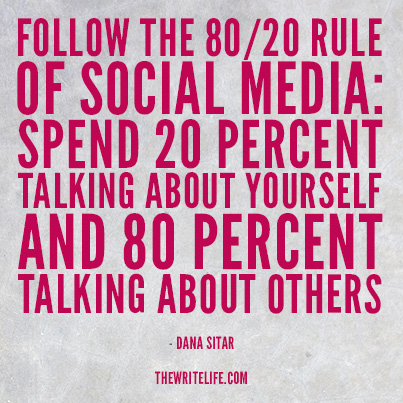
    You may already know the “80/20 Rule” of social media: spend 20 percent of the time talking about yourself, and 80 percent talking about others. Not only is it a good practice to promote the blog posts, books, and resources of others in your niche or genre, but it’s also a way for you to make your Twitter feed a must-read for your followers by ensuring they’ll always find something valuable there.

    80/20 rule of social media

    Ask questions

    Want to get people talking to you? Ask them something! Your Twitter followers might not speak up when you share your brilliant thoughts or latest articles because they’re intimidated or afraid to intrude. But if you reach out to them and welcome their comments, they’ll be happy to share — sparking a conversation and letting you get to know a little about what makes them tick!

    Share life and biz updates

    This one is pretty obvious, and it’s probably what you’re already doing on Twitter if you’re trying to sell books or grow your platform there. I’ll add that talking about yourself on social media doesn’t have to be all about you.

    Share updates and tidbits from your life as a burgeoning author as another way of connecting with followers, not promoting yourself. Show not only your victories but also your vulnerabilities, setbacks, even–gasp!–failures, so your followers understand they’re connecting with a real human, not a promo-bot.

    How do you use Twitter to connect with your community and grow your author platform?