Blog

  • A Step-by-Step Guide for Going After Clients You Really Want

    A Step-by-Step Guide for Going After Clients You Really Want

    To find clients, most freelance writers — especially new ones — need to get out there and approach them.

    But this strategy, known as direct marketing, can be intimidating if you haven’t tried it before. Most of us don’t like marketing ourselves because we’re afraid to appear sleazy. Who wants to come across like one of those pushy door-to-door salespeople?

    Here’s the truth: direct marketing is awesome.

    While you may already use blogging, referral programs and social media to strategically position yourself in the market and allow customers to come to you, you can’t rely solely on this inbound marketing to get new business. If you want more clients, you need to use direct marketing: reach out to them instead of waiting for them to come to you.

    Make sure that your direct marketing efforts make an impact by using the following strategies.

    Do your research

    Don’t just blindly send out emails or marketing messages. Look up every business or individual that you want approach. What’s their background? What are their goals? And more importantly, why would they need your services? Find out everything you can about your prospects.

    For instance, whenever I reach out to a business to offer my writing services, I make sure to check their website, read their blog, view their latest tweets, etc. This research ensures that I’m totally clear on how I can help them and whether they’re a good fit for my business, and leads into my next step.

    Direct your messages to a specific person instead of a general mailbox

    Make sure the right people — the decision-makers — see your message. When pitching your services to a larger company, it’s best to approach the marketing department instead of customer service or the general mailbox. If you’re dealing with a small business or startup, the company’s founder is usually a good bet.

    Go back to your research and figure out your ideal point-of-contact. Look them up on LinkedIn and Twitter, then figure out the best way to approach them.

    Personalize your approach

    Use the intel you uncover to customize your message. Show the prospect that you did your research by mentioning company-specific information or referencing recent blog posts or tweets. For example, if you read that the business recently won an award, include a note of congratulations in your message. Your thoughtfulness will impress the client and they’ll be more inclined to respond.

    Quick tip: To easily find information about your potential clients, check out Rapportive, a nifty browser plugin for Gmail that shows handy social information about your contacts right from your email interface. While you’re composing an email to Jane Doe, the plugin will display her social media accounts, blog, and recent tweets, so you can quickly find info that you can use to personalize your message.

    Be specific and sincere with your compliments

    Flattery will get you nowhere — true or false?

    Compliments can further personalize your pitch and help you get off on the right foot with your client — as long as you’re being genuine.

    A good way to demonstrate your sincerity is issuing specific compliments. Don’t just say “cool website!” or “I love your company.” Be more detailed. What exactly do you like about their company? Which particular website features do you love?

    Giving genuine and specific words of praise will help you make a stronger impression and increase the chances of hearing back from the potential client.

    Offer tailored recommendations

    Go beyond the compliments and tailored messages to show exactly what you can do for the client. Give them useful information that will help them improve their content — no strings attached. (Click to tweet this idea.)

    It’s a powerful client outreach technique because it’s incredibly effective. Personal finance and behavioral psychology author Ramit Sethi calls it the “Briefcase Technique,” because you’re pulling an incredible menu of ways you will help the client right out of your briefcase.

    Before pitching one prospective client, I studied their archived blog posts, then suggested headlines, topics and even some formatting tips.

    The result? The prospect got back to me after a few weeks and hired me to write eight blog posts per month.

    What are your best tips when it comes to approaching potential clients?

  • Freelance Writers: 4 Types of Publications You Should Pitch

    Freelance Writers: 4 Types of Publications You Should Pitch

    You have a stellar article idea. Now comes the hard part: where to send your pitch?

    You don’t know any good publications for your idea off the top of your head, so you slog over to the local Barnes & Noble and rifle through the newsstand.

    And…you find only one magazine that fits your idea. Is it even worth writing up a query letter? You head home, despondent, scrap your previously promising idea, and vow to try again with another topic.

    If this sounds like something you’ve done, I want to tell you a secret. Come closer… closer… no, not that close! Here it is:

    By relying only on your local newsstand, you missed out on hundreds of publications you could have pitched.

    There’s a metric buttload of publications out there, just waiting for enterprising writers who think beyond the newsstand. So leave the bookstore to the writers who don’t know any better, while you pitch these lesser-known but often well-paying markets.

    Trade magazines: They’re not glamorous, but they pay well

    For years, my stock in trade was, well, trade magazines. These are business-to-business publications that are read by people in a certain industry. For example, I’ve written for:

    • In-Plant Graphics, for owners of in-plant print shops

    • The Federal Credit Union, for CU execs

    • Pizza Today, which targets pizza restaurant owners and managers

    • Boating Industry, for businesses that make and sell boats and boat-related products

    • Independent Joe, a magazine for Dunkin’ Donuts franchise owners

    I admit it — with trades, the glamour factor is missing in action. You won’t get the same thrill seeing your byline in Boating Industry as you would in Glamour.

    But guess what? I’m not in this game for the bylines. I’m in it for the paychecks. (Agree? Click to tweet this idea.) Trades’ payment levels are all over the map, but the ones I wrote for typically paid from 30 to 50 cents per word.

    Even better, trades are much easier to break into than newsstand pubs. Instead of crafting a fully fleshed-out query letter, you can often get your foot in the door with a query/letter of introduction hybrid — a letter that introduces you as a writer and quickly presents three or four ideas you have for the magazine.

    Find trade magazines in Writer’s Market and directories like Tradepub.com.

    Foreign magazines: Look around the world to find paying markets

    Born in the USA! Proud to be an American! And all that jazz!

    Sure, the United States is home to tons of magazines that hire freelancers. But other countries have paying markets too – and a lot of them need English-speaking writers, so your natural knowledge of your native tongue can be an advantage.

    Because most American writers stick to U.S. publications, the competition for overseas gigs is a lot less fierce. And — hooray! — the pay can compare well to what you’d earn from an American market, depending on the country.

    In terms of finding international magazines, Google is your friend: Just type in the country with your keywords and start surfing through the results. For example, if you write about architecture, a quick Google search comes up with this extensive list of English-speaking architecture magazines around the world.

    Target international publication gigs the same way you would sell to U.S. markets: with a well-crafted query letter.

    Custom publications: Hiding in plain sight

    The magazine you get at Hannaford supermarkets. The publication your insurance company sends you in the mail. The one you pick up at your kid’s Taekwondo school while he’s working on his roundhouse kicks.

    You may not even think of these as potential markets, but many of these magazines — called custom publications — assign articles to freelance writers. Not only that, they pay well: up to $1 per word and even more.

    Custom publications are basically marketing vehicles, but you write for them in a journalistic style just as you would for a newsstand magazine. Some examples are:

    • ATA World, the magazine of the American Taekwondo Association

    • Fresh, for Hannaford supermarkets

    • WagWorld, for Purina’s Beneful dog food

    • Stronger, a magazine for Gold’s Gym members

    • Costco Connection, for customers of — guess what? — Costco

    Keep an eye out at the businesses you frequent and in your mailbox for custom publications you can pitch, and also visit the Custom Content Council and search for companies that create materials in your niche.

    Break in with a query/LOI hybrid or a well-researched query letter on a topic of interest to the publication’s readers. Don’t worry about trying to be “salesy” — these custom media projects are not at all about the hard sell, but instead aim to educate, entertain, and inform their readers.

    Business communications: Go directly to the source

    I’m going to say something crazy: You can find places to sell your articles by skipping magazines and online publications altogether.

    So what’s left?

    Actually, what’s left are the tons of businesses that need articles ghostwritten for magazines, newsletters, websites, and blogs. (I count blog posts as articles because of the popularity these days of long-form posts.)

    For example, an online shoe retailer may need articles on how to find the best fit for its newsletter, or a consulting firm might want ghostwritten articles they can submit to trade magazines in their industry.

    If you aim for successful, profitable, medium-to-large businesses, the pay can be pretty darn good: I’m talking $75 per hour or even more.

    The trick to landing these business clients is to pick a niche where you have some experience — whether it’s through a previous job or your education — and write a letter of introduction where you show you’ve researched the company and have found something they’re missing. For example, the company may not have a compelling newsletter, or their blog might be stagnant. Then you sell the benefits of these projects — and yourself as the perfect writer.

    The next time you have a brilliant article idea, sure, check out the local newsstand. But also widen your scope to trades, custom pubs, international magazines, and businesses — and watch your portfolio grow.

  • Why You Should Publish Your Book Before It’s Finished

    Why You Should Publish Your Book Before It’s Finished

    Here’s how a lot of people think you write and publish a book:

    1. You have an idea for a book

    2. You spend a year — or longer — working on it without showing it to anyone

    3. When you feel ready, you might show it to some friends or even a professional editor, though many people skip this step

    4. When you’re done-done, you submit your work to some Big Publishers (somehow… this part is fuzzy)

    5. Either you get a deal and you become a Published Author on your way to fame and fortune, or you don’t — and your manuscript collects dust, or whatever electronic files collect when you don’t ever look at them again

    These mistaken beliefs about the writing and publishing process are some of many damaging artifacts of twentieth-century publishing industry romanticism; together, these could be called “The Myth of the Doorstopper.”

    According to this myth, all good books are written by people who hide away for years in isolated cabins or bohemian apartments, then emerge with giant tomes which are perfectly complete at the very moment they are first made public (that is, published).

    The early days of in-progress publishing

    Nowadays, it is true that many novels are written and published that way, but historically, novels were often written and published in-progress — ever heard of Dostoyevsky, Dickens, or Tolstoy? Indeed, writers of in-progress books would often change their planned plots (if they had any fully worked-out plans to begin with) in response to the public’s reception of their work, as the chapters were published periodically.

    (Ever wondered why some nineteenth-century novels are so big? When you’re publishing serially and being paid chapter by chapter, it’s pretty tempting to embiggen the scope of your book if it becomes popular. Your publisher would certainly suggest that you do so.)

    Fortunately, new technologies have made it possible for writers to re-establish the conditions for in-progress publishing without waiting for Big Publishers to change their corporate strategies back to traditional serial publishing models. The combination of computers, the Internet, electronic reading devices and in-progress ebook publishing platforms means that authors and small publishers can start writing and publishing this way, again.

    In-progress publishing: a scenario

    Serial publishing is just one form of in-progress publishing, mostly suited to writing longer works of fiction.

    Imagine, instead, that you’re thinking of writing a nonfiction book; let’s say you’re passionate about model trains and you want to write “The Advanced Guide to Model Trains.” If you went the traditional “Myth of the Doorstopper” route, you’d write the whole thing and then try to find a publisher. If you couldn’t find one, you’d publish it yourself, or else just give up.

    Now, how would you feel if, after finally publishing your book, you discovered no one wanted an advanced guide, but that there was a huge demand from eager readers for a beginner’s guide? What if you found people objected to your overly technical approach to what they considered to be a fun topic? What if you discovered that, actually, you’re not a good enough writer yet to merit anyone’s attention? You’d have spent all that time writing a book no one wanted to read.

    Now, imagine that you chose the in-progress ebook publishing model instead. You start writing your technical “advanced” guide and publish the first version after you’ve only finished a draft of the first three chapters — after, say, just a couple of months of work (knowing, of course, that anyone who buys an early copy of your ebook will get all subsequent versions free and automatically.)

    What you’ll get is the same response described above, but without having wasted years of work and worry, and without the dashed dreams and belated realizations.

    Instead, you could change tack and start writing (and in-progress publishing!) a beginner’s guide, in a lighter tone, selling it to the readers you’ve already discovered from your first attempt, and building your readership as you write the book. You could be constantly evolving your book in response to meaningful reader feedback, and looking for new ways to find new readers over a longer period of time, rather than just at or after your book’s launch.

    Then, once you finished the beginner’s guide, you could write an intermediate guide for all your happy beginner readers. And eventually, you could even write that advanced guide you were so determined to write in the first place — but with an already established and growing following of readers.

    In-progress or “lean” publishing is both the past and the future of publishing. There will always be room for the authors of conventional twentieth-century Doorstoppers, but there will also be more room for people willing to write in more radical ways, and to engage with the kind of reader so eager, they’re willing to buy an unfinished book.

    Have you tried in-progress publishing? What do you think of the idea?

  • How to Confidently Set and Raise Your Freelance Writing Rates

    How to Confidently Set and Raise Your Freelance Writing Rates

    You fought the battle to work for yourself and won — yes! But when you turn around, you find yourself still in the trenches. Because whether you work for someone else or you work for yourself, you still need to get paid.

    But why is it so hard to get started? Why do you find yourself letting the client set the rate or giving into negotiations and settling for whatever they’ll pay?

    There’s just something about setting your freelance rate and eventually raising your freelance rate that leaves you feeling like you’re in over your head. I know, I’ve been there. But the good news is that you don’t have to stay there for long.

    Setting your freelance rate for the first time

    Pricing is hard, whether you’re negotiating a salary or deciding what to charge new clients. But there are two numbers you need to know that will help you set your freelance rate for the first time. Brace yourself, there’s a little math involved:

    Figure out your bottom line

    While you never want to price yourself based on how low you can go, you do need to know your bottom line. What is truly the lowest you can go and stay in business? Start with two important numbers: the minimum you need to bring in to keep freelancing each month, and the billable hours you’ll work each day.

    Let’s say you’re married, have the luxury of an employed spouse, and the minimum amount you can bring in each month while staying solvent is $2,300 (including taxes, expenses, healthcare, business apps, etc.). After hours invested in marketing, invoicing and other unpaid time investments, you expect to work five hours per day on billable projects, five days per week, giving you a total of 100 billable hours per month.

    Divide the second number by the first number (the amount you need divided by the number of billable hours per month you would like to work). This is your ideal hourly rate, the minimum that you should propose as you share your rates with clients.

    In this example, the writer would need to make $23 per hour to be able to work that schedule. If that’s not accurate or doable for your experience or your industry, you’ll need to adjust your numbers by planning to work more each day or more days per week.

    Figure out what you’re worth

    The second piece of this puzzle is the market you’re looking to break into. How much value do you bring to the table? What is the range your clients budget for the work? You might find that certain industries earmark a lot more of their budgets for writing than others, and those are the ones you want to zero in on.

    Figure out how much your services are worth by researching your niche among writers who publish their rates. Do your research on popular blogs and freelance writer websites, and map out the territory with their hard-won information. Rate your experience and talents against theirs, compare with your bottom line, and price accordingly.

    Other great resources include the Editorial Freelancers Association’s list of rates for various writing-related projects, the Professional Writers Association of Canada’s post What to Pay a Writer and the NJ Creatives Network’s post How Much Should I Charge?.

    Increasing your freelance rate

    One of the many reasons so many writers flock to freelancing is the idea of giving yourself a raise when you deserve one. But if you were careful as an employee, it’s time to be extra careful as a freelancer. Every move you make and every word you say reflects directly on your business and your brand — including the rate you can command. Choose to act genuinely, generously and professionally with the following two moves:

    Give truthful, timely notice to avoid surprise rate hikes

    When it’s time to increase your rates, price-gouging and ransom aren’t the way to do business. Whether you’re worth the cost or not, suddenly dropping a larger rate on your next project or (heaven forbid!) surprising a client in an invoice won’t work out for you in the long run.

    Take your time and give notice — which not only saves your relationship with the client, but earns you respect. Announce price increases at least two months in advance to allow your clients to budget for them. If you’re in a particularly strict industry, you may even accommodate a longer wait (for clients that get budgets approved quarterly or yearly, for example).

    And when you do it, don’t use weak language. Clients see right through whimsical statements like I’m sorry, but… and If it’s all right, I’ll… Simply state the facts: you’re more experienced, you’re working harder and faster, and you’re getting more attention from prospective clients. If none of these statements are true, you shouldn’t be raising your rates. (Click to tweet this idea.)

    Be generous to clients you enjoy working with

    Show your clients you enjoy working with them (because that’s why you’re still working with them, right?) by being generous when you raise your rates. No, that doesn’t mean you charge less. It means you give them a special coupon or a one-time deal to show them you appreciate their time (think Book before the end of the quarter and receive 20% off the entire project-type offers).

    Because here’s the real secret to setting your rates and raising them as your business grows: when someone aims to hire a freelancer, they’ll know what they want when they see it — the right experience for the niche, the right working relationship for the company, and the attention to detail and deadlines that will keep them in business. If you mesh with a client over these three details, they’ll be more than willing to pay you.

    If you raise your rate and they no longer want to work with you, you’re still in good shape; having a client drop you is not the worst thing the world.

    The worst thing would be bending your needs (and rates) to the will of a client who doesn’t appreciate what you do or want to pay you for it. Avoid those kinds of clients by setting your freelance rate right the first time, and raising it confidently ever after.

    How did you set your initial freelance rate? What strategies have you used to raise it?

  • Your Last Chance: Grab The Writer’s Bundle Before Midnight

    Your Last Chance: Grab The Writer’s Bundle Before Midnight

    Haven’t yet downloaded The Writer’s Bundle?

    Today’s your last chance! At midnight EST tonight, The Writer’s Bundle disappears forever. Grab it now while you can!

    Get your hands on these incredible resources from well-known writers like Chris Guillebeau, Jenny Blake, Jeff Goins and Sophie Lizard today for only $79. If you bought them each separately, it would cost you well over $700!

    Every resource – all nine of the ebooks and courses – is dedicated to helping you improve your writing skills, publish your work and grow your writing business.

    What are you waiting for?

    Image: Download now

  • You Won’t Believe What We’re Offering Writers Today

    You Won’t Believe What We’re Offering Writers Today

    We are SO excited to finally announce a project we’ve been working on for months: The Writer’s Bundle.

    Have you ever seen those amazing bundles where you can get a handful of valuable resources at a low price?

    Ever wish someone would put together a fabulous bundle deal specifically for writers?

    We’ve done it! We’ve bundled nine ebooks and courses — many of which you’ve likely heard about and wished you could afford — that together retail for more than $700. Resources from popular writers who are truly living the life many of us crave, bloggers like Chris Guillebeau, Jeff Goins, Jenny Blake, Tom Ewer, Danny Iny and more.

    These ebooks and courses cover topics every writer needs to understand to make a living in this industry, including freelancing, publishing, blogging and more.

    The best part? We’re making this bundle available for just $79, an incredible deal.

    The catch? It’s available for three days ONLY; the offer expires Wednesday, March 19 at midnight EST. That means if you’re interested, you’ve gotta act now!

    Click here for more details!

    Image: The Writer's Bundle Contributors

    Here’s what you’ll get:

    • Chris Guillebeau’s Unconventional Guide to Publishing (ebook and audio, retails for $129)
    • Jeff Goins’ How to Start Publishing for Kindle (ebook and audio, retails for $47)
    • Kristi Hines’ The Ultimate Blog Post Promotion Course (course, retails for $197)
    • Jenny Blake’s Build Your Business (course, retails for $75)
    • Tom Ewer’s Paid to Blog (course, retails for $29)
    • Sophie Lizard’s The Freelance Blogger’s Client Hunting Masterclass (course, retails for $98)
    • Alexis Grant’s Social Media for Writers (course, retails for $99)
    • Danny Iny’s Interview on Building an Engaged Community (audio + transcript, exclusive)
    • Ali Luke’s The Blogger’s Guide to Irresistible Ebooks, plus Publishing an Ebook Audio Seminar (ebook and audio, retails for $29 + $19.99)

    What are you waiting for? Go grab your bundle!

  • The Most Lucrative Ways to Make Money Off Your Blog

    The Most Lucrative Ways to Make Money Off Your Blog

    Many bloggers begin writing as a passion project, creating a site dedicated to a topic they love and keeping up the content because they genuinely enjoy the writing and want to share their thoughts and experiences with whoever is able to find them online.

    For some of these bloggers, there comes a point where the following grows from a small circle of friends and family to a more substantial and widespread group. At this time, blogging has the potential to become a full time occupation.

    But making that leap from part-time passion project to full-time profession requires one very important component that can be challenging for many bloggers: monetization.

    Monetization refers to the process of making money from the traffic coming to your site. It can take many forms and can be achieved with varying degrees of success.

    If you’ve realized that your site has the potential to make you some money, whether a full time salary or just a bit of extra spending money, here are some of the most lucrative ways to monetize your blog:

    Display ads

    Though some experts have predicted that display advertising is going away, the hard facts continue to indicate that ads are a great way for blogs to make money. Usually, monetizing through display ads involves creating an account with an ad network such as Google AdSense or one of the other top ad networks available to bloggers.

    These networks essentially make a market for banner ads; they match accounts that can provide ad inventory (bloggers) with companies looking to promote their products or services (advertisers). Ad networks make money by taking a percentage of the overall revenue generated; AdSense, for example, takes 32% of the total revenue and sends the remaining 68% to the publisher or blogger.

    If you’re not quite sure how to set up an AdSense account, there are some easy-to-follow manuals out there that can have you up and running in no time.

    Monetizing through display advertising can be quite lucrative if you have a meaningful audience, but it certainly requires a significant amount of thought and work to set up properly. There’s a fine line to walk between placing ad units that will draw the eye (and click) of your visitors and creating a negative, frustrating experience for them.

    Start by placing a couple of ads on your site; the most commonly used are a 728×90 “leaderboard” and a 300×250 “medium rectangle”. From there, if you have the time and willingness, you can experiment with different implementations to find out which set-up will work best for you.

    In addition to the “plain vanilla” display ads that can be served via AdSense and other ad networks, there are some more creative ways to monetize your blog content. Monetizing via display advertising means much more than throwing a couple of rectangle ad units up on your site. To get the most from your blog traffic, explore the new, non-traditional opportunities that have become available in recent years.

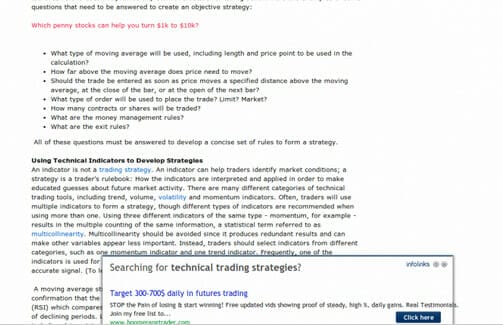
    • InfoLinks: Whereas display ads are served in sections of the site specifically dedicated to advertising, there are services that allow you to turn the actual text on your site into ads. You’ve probably seen this in action before: a few words of text that appear to be a link, but that display an ad when the mouse hovers over them. InfoLinks also offers some other creative ad implementations, such as the one seen here:

      InfoLinks

    • Pop-ups: If you’re willing to show an ad that “pops up” over your site’s content, you can make some nice money in the process. However, too many pop-ups can be irritating and it’s best to limit these types of ads; for example, try serving them only on the fifth page that a visitor views on your site.

    • Search engines: If you have a search box on your site, there’s yet another opportunity to earn a bit of incremental revenue. Google has a Custom Search Engine program that will give you a high-quality search function while also giving you a share of any revenue generated from clicks on the search results page.

    • Sponsored content: An increasingly popular trend, offered by companies such as Outbrain and Taboola, involves putting links — often a linked title — to external content. Under these arrangement, the publisher gets compensated for each click made to an external site.

    The really lucrative opportunity in display advertising comes if you’re able to sell your ads directly, without using a network such as AdSense as a middleman. Not only will you get the full revenue, but you’ll have an opportunity to command premium rates if you offer access to a valuable audience.

    Selling ads directly is a major challenge; you’ll need to dedicate a significant amount of time and effort to get traction with potential advertisers, and there’s often a very long sales cycle. If you’re serious about it, however, the first step is to build a solid media kit for your website.

    Email

    If you don’t collect email addresses on your site — for example, to send out a weekly or monthly newsletter — you should start. (MailChimp is a great, user-friendly program to get you started.) Not only will collecting emails help you stay in touch with your readers and build loyalty, but it can introduce new opportunities for you to make some money in the process.

    Here are three ways to start making money from the email addresses you collect on your blog:

    • Show ads in your emails: Just like you can show ads on your site, it’s possible to run banner ads in your emails to subscribers. Companies such as LiveIntent have popped up to offer this service (think of them as the AdSense of email ads), which allows bloggers to monetize email messaging.

    • Set up a “co-registration” system: Co-reg is a monetization technique that happens once a user signs up for your newsletter, when they are presented with opportunities to also subscribe to similar content. For example, if you write a cooking blog, you may be able to present your new subscribers with an opportunity to also get on the mailing list for cookware companies. For each “lead” you generate for the co-reg partners, you’ll earn a bit of revenue. There are several co-reg companies out there, including Tiburon and Opt-Intelligence.

    • Email list rental: If you’re looking to get really aggressive in email monetization, you can experiment with renting out your email list to third parties who want to communicate with your user base. This generally requires a direct relationship — meaning it can be a bit more challenging to get set up — but can be very lucrative if executed properly. If you have a large and targeted audience, there may be partners who will pay well for an opportunity to advertise their products or services to them.

    Affiliate Marketing

    The term “affiliate marketing” often carries a negative connotation, as it’s perceived by some as a low-brow monetization technique. Moreover, many bloggers think this revenue opportunity isn’t applicable to their type of site.

    But there are definitely ways for bloggers to implement affiliate marketing campaigns on their sites in ways that can translate into meaningful earnings. The simplest of these involves setting up an Amazon Affiliate account; you’ll include links on your site to Amazon, and earn a cut of the proceeds every time someone clicks through that link and buys something. Here’s an example of a site for a popular podcast where fans of the show are able to support it by using the Amazon affiliate links on the site:

    Here’s where you as a blogger can differentiate yourself from most affiliate marketers: don’t hide the fact that your site has affiliate links. In fact, make darn sure everyone who visits your site knows.

    If you provide high-quality, free content to your audience, don’t be afraid to let them know how they can support you. (Click to tweet this idea.) Let them know that by clicking through the links on your site to purchase the items they’d buy at Amazon anyways, they can help you pay your bills and allow you to focus on producing more high-quality content that will be free to consume.

    If you have a large and loyal audience, a completely transparent form of affiliate marketing can be a lucrative way to make money. You might be pleasantly surprised by the response you get!

    Bottom line

    While some bloggers are hesitant to embrace monetization for fear of “selling out,” there’s really no need to fret! Making money from your blog allows you to continue to provide high-quality content to your readers for free, and keeps you motivated (and able) to continue to do what you do best.

    There are countless ways to monetize; the list above is just a start. But it represents the easiest way to get off the ground and start making a few bucks from your blog. Remember, the road to blog wealth starts with a single dollar!

    What strategies have you used to monetize your blog?

  • How Fast Can You Read? New App Makes Speed-Reading Easier

    How Fast Can You Read? New App Makes Speed-Reading Easier

    Ever wished you could read faster? While you may not want to rush through your favorite novel, most of us would be happy to speed-read the morning news or breeze through an explanation that helps us learn a new skill.

    Spritz, a new app from a Boston-based startup of the same name, is “reimagining reading” by making it possible to read up to 1,000 words per minute (wpm), when the average adult reads about 300 wpm.

    How the heck does Spritz work?

    Spritz makes reading easier by focusing on the “Optimal Recognition Point” (ORP), or the part of the word you look at while your brain processes the meaning of the group of letters.

    Moving your eyes from word to word to find the next ORP accounts for about 80 percent of the time it takes to read conventionally-written words. To cut down on this wasted time, Spritz presents each word exactly where your brain wants it to be: in the same space on the screen and lined up by ORP.

    The result? Your eye doesn’t have to search for the next ORP. And that means your brain can process content more efficiently — to, for example, whip through that longform article in a fraction of the time — which is the big appeal of this technology.

    Image: ORP alignment in Spritz and a traditional speed-reading technique
    A comparison of ORP alignment in Spritz and Rapid Serial Visual Presentation (RSVP), a common speed-reading technique.

    Spritz is also ideal for smartphone and other small screens. Since the human eye can focus on about 13 characters at a time, Spritz only shows 13 or fewer characters at once.

    To give Spritz a try, head to the app’s homepage. Choose your language and speed, then click the white display for a demonstration. Elite Daily also includes a helpful demonstration in their article about Spritz.

    What do you think of this idea? Would you use an app like this to read faster?

  • The Ultimate Guide to Writing Ultimate Guides

    The Ultimate Guide to Writing Ultimate Guides

    The name of this post made you click on it, didn’t it?

    “Ultimate guide” has become an Internet buzzword over the past few years as people search for ways to bring in traffic, boost their site’s credibility and add quality content to their web sites. Anytime you see the words “ultimate guide,” you can bet there’s a ton of research behind the story, as well as a writer with very tired typing fingers.

    You don’t have to be an expert in your chosen subject area to write an ultimate guide. But you do have to have an expert-level understanding of what makes a great ultimate guide to undertake this type of post. (Click to tweet this idea).

    Here’s a primer on all you need to know and what you need to cover when writing your next ultimate guide.

    Choose a topic

    It can be hard to settle on an idea you like enough to write about. Ideally your topic should be something you are familiar enough with to write comfortably. At the same time, it also needs to be something others want to read about. If you’re an expert on making liverwurst from scratch, you may write a wonderful ultimate guide, but very few people are going to be interested enough to read it.

    A great example of a guide that combines expertise with information people want to read is Yoast’s definitive guide for WordPress optimization. This combination of authority and a universally appealing topic should be your goal.

    Keep in mind that your topic should be unique. There are hundreds of guides for search engine optimization, but fewer about niche areas of SEO, such as ecommerce sites. Pick something that will make your guide stand out among the many other competing voices.

    Cover all of your bases…

    Writing something called “the ultimate guide” can be a bit intimidating. How do you make sure you cover all of your bases? Here are some ideas to keep you on track:

    • Do keyword research to see what searches people are doing related to your topic.

    • Search Quora to see what questions people are asking about your topic.

    • Read other ultimate guides that have been written about your subject and note what’s missing.

    • Contact experts in the field to find out what they would like to see covered in an ultimate guide. Perhaps you can incorporate a few industry voices.

    • Find links you want to include, making sure you stick to high-quality sites that will expand more upon areas you don’t cover.

    • Create a detailed outline to ensure that you don’t forget anything.

    … but don’t cover too many bases

    Does that seem a bit confusing? You should always aim for thoroughness when making an ultimate guide, but don’t bite off more than you can chew. You have to keep your topic focused or else your guide will end up being 20,000 words long, and you’ll ramble off on so many tangents you’ll lose your audience.

    For instance, when making a list of resource links in your ultimate guide, stay organized and stick closely to your topic. A good example of this balance between too much and not enough information is the Alternative Medicine Resource List maintained by 12 Keys. While the list includes a number of different subcategories, which is great for anyone researching alternative treatments, it’s not so overwhelming that people will get lost amid all the links.

    Keep your content evergreen

    As the name “ultimate guide” suggests, this is a post designed to stand the test of time. You want people to find your ultimate guide in search results for years, not just weeks. That means that it needs to be evergreen. Evergreen content, much like its namesake trees, never loses its luster. It is relevant and important months and even years after it’s published.

    In order to make your post evergreen, avoid references to current pop culture and news. Also make sure you reference events by their date instead of saying something general like “next month” or “next year” — such comments are confusing to someone reading your guide three years from now. Finally, it is a good idea to intermittently go back and update your guide.

    Promote your guide

    Once you’ve finished writing your guide, it’s time to move on to promoting it. The first and most obvious step is to take to social media. Ultimate guides are highly shareable, and they get lots of momentum on the major social networks.

    You don’t have to spend all your waking hours on Twitter to do this. Try out various ways to automate your presence on the days when you have other more pressing tasks, setting up your feed to promote your guide even when you can’t be doing it live.

    Be proactive by packaging the guide in different formats to get it more play across the web. One approach is to to make an infographic out of your guide, and link the graphic back to your post. Infographics are a great way to drive traffic in from other sites. You could also repackage the guide as an ebook and give it out to anyone who subscribes to your newsletter. There are lots of creative ways to get more leverage from your guide.

    With the right topic, outline, timeliness and promotion, your guide can become one of your most successful writing projects. Now go find that topic! Just remember, stay away from liverwurst.

    Have you written an “ultimate guide?”

  • How to Make a Book Trailer: 3 Free Apps for Creating an Impressive Video

    How to Make a Book Trailer: 3 Free Apps for Creating an Impressive Video

    As any author can tell you, promoting your book is a challenge. In addition to standard marketing techniques, you must find new and innovative ways to engage with your readers. One way to do that is to create an animated book trailer.

    But not many people know how to make a book trailer. While it’s difficult to create animation from scratch, it can actually be quite simple to create a simple book trailer by yourself. And there are a number of free and easy-to-use applications that will help you do just that.

    To start, you’ll want some photos for your trailer; typically, these would be of you, your book cover, and your interior art. You don’t need high-res photos; 72 dpi is fine (640 px wide by 480 px high).

    If you’re a Windows user, you can download Photo Story or Movie Maker from Microsoft. Mac computers come pre-loaded with iMovie software. If you have PowerPoint, you can add soundtracks, slide animations and slide transitions to presentations, and then export to video. All of these options produce a video file that must be hosted somewhere (eg. your website or YouTube).

    Several newer apps combine trailer creation and hosting, including Animoto, Prezi, and PhotoShow. Let’s take a look at how they work.

    Animoto

    The Lite version of Animoto is free and enables you to create 30-second animated trailers. (Ed. note: Reader Susan let us know the free version of Animoto is no longer available, and pricing starts at $8 per month. However, Animoto does offer a free trial period.)

     Step 1. Select the animation style and soundtrack that best matches your book.

     Step 2. Outline the slides you’ll use in your animation. Each slide can either have text or an image. However, if you know how to use PhotoShop or another image editor, you can get the best of both worlds by adding text to your image files. If you’re technically savvy, you can substitute your own soundtrack too.

    Step 3. Animoto assigns a length of time to each slide. When your total runtime reaches 30 seconds, you won’t be able to add any more slides. You can edit the slide contents and rearrange the slide order. Click the “Preview Video” button to see your trailer!

    Step 4. Once you’re happy with your video, click the “Produce” button. Voila!

    If you want to add to your trailer, you can also pay for additional options like a longer video, more animation choices and more customization of your animation. Here’s the trailer I made with Animoto.

    Prezi

    The Public version of Prezi is free. It enables you to create trailer-like presentations with richly animated slide transitions that your audience must click through manually.

    Step 1. Sign up on Prezi.com. It will encourage you to download the desktop application, but you can also create your trailer completely online.

    Step 2. Click on “New Prezi” and choose a template. Prezi is similar to PowerPoint and offers some snazzy animated slide transitions.

    Step 3. Build your trailer “slides” one at a time by adding text and other content. Use the Insert button at the top center of the screen to add images, video and background music.

    Step 4. To preview the trailer, click the blue “Present” button in the upper left of the screen. Hit “Escape” to leave presentation viewing. Click on the “Edit Path” button in the upper left to reorder or delete individual slides.

    Step 5. Once you’re happy with the trailer, click the “Share” button in the upper right corner and select “Share Prezi”.

    Prezi will reserve you a web address, and when you go to that address, click the “Embed” button. Click the radio button labelled “Constrain to simple back and forward steps” and you will see HTML. Copy and paste that HTML into your web page wherever you want to embed your trailer.

    Here is my modest Twignibble trailer made with Prezi.

    PhotoShow

    The Free version of PhotoShow is easy to use and the features are pretty nice. Unfortunately, the trailers only persist for 30 days.

    Step 1. Click “Make a PhotoShow.”

    Step 2. Click “Add Photos” to import images to your trailer.

    Step 3. Click “Personalize” to enter the trailer title and author. Then use the different tabs to select a style, insert captions, text bubbles and other features.

    Step 4. The “Music & Photos” tab lets you reorder or delete images and control the audio. Click Done when you’re ready to see your video.

    Step 5. Click on “Post to your web page or blog”. Copy and paste the HTML into your website to embed your trailer.

    Since I don’t have a PhotoShow subscription, my trailer for How the Rhino Got His Skin is no longer publicly visible. However, if you enjoy using PhotoShow, an annual subscription for additional features and ongoing public access to trailers is only $39.

    Having a book trailer can be a fun way to share your work with your audience. However, remember that it’s just one small part of your larger campaign to build an online platform for your book. Good luck!

    Have you created an animated trailer for any of your work?