Category: Uncategorized

  • Writing Sample Examples: How To Make Each One Count

    Writing Sample Examples: How To Make Each One Count

    Regardless of what type of writer you are, you are bound to come across times you will need to submit relevant writing sample examples. Whether you need a writing sample to include with a book proposal to a publisher, you are crafting a writing sample to apply for a job, or you are sending writing sample examples for a graduate school application, it is an art to be able to write the perfect piece when it counts.

    So what distinguishes the great writing sample examples from mediocre ones that get passed over? And what are some easy-to-use tips specific to these different types of writing sample examples?

    Writing Sample Examples Fundamentals: Do’s and Don’ts

    DO

    • Do… read prompts thoroughly. While this is may seem obvious, many people glaze over the instructions and just start writing, potentially missing key elements of the prompt. Look for any information about the tone, the subject matter, and the word length. 
    • Do… write for your audience. The prompt you get may or may not be very detailed. Keep in mind you are not only writing to show your knowledge on a topic, but also to show you can write for the appropriate audience.
    • Do…proofread thoroughly. Any typos or grammatical errors will only detract from your finished work. We highly recommend you use a grammar checker, like ProWritingAid or Grammarly.

    DON’T…

    • Don’t write too little or too much. If you are given a word count, there is a reason for that word count. A 1,200-1,500 word article will require more detail and organization than a 500-word article. Make sure you outline and prepare your article and research to fit the word count. The Article Outline Template can help with this.
    • Don’t use an article you wrote for something else if you are asked to write an original piece. This is an example for you to show how your writing fits the qualifications. 
    • Don’t forget what your goal is. Keep your desired outcome front and center when you are crafting these writing sample examples. Your goal is to write a piece that fits the goal and delights the reader. 
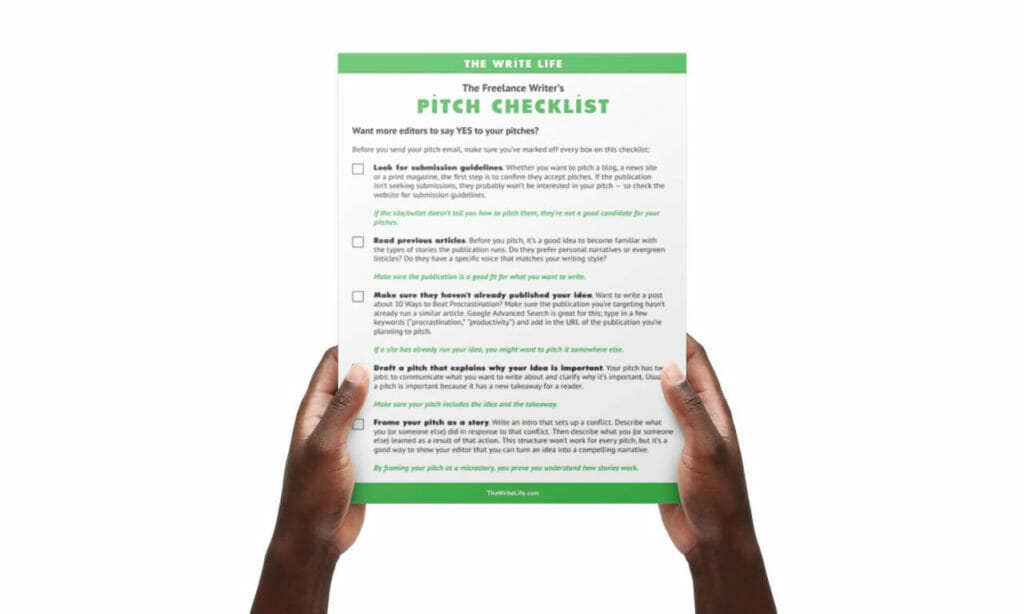
    Writing Sample Examples: For Job Applications

    When a potential employer is asking for writing sample examples, they are trying to gauge not only your style of writing, but also trying to pick up on key details about who you will be as an employee.

    Potential employers are generally interested in your attention to detail, your ability to follow directions and meet deadlines, your willingness to go above and beyond, and also your understanding of the company and their audience. 

    Checklist for Writing Sample Examples for Job Applications:

    • Read the instructions thoroughly. First, read for the basic idea of the prompt and then read a second time to take notes of everything you need to do to complete the prompt successfully. 
    • Research the company. Find their mission statement, their “about us” section, and understand not only what they do but also what their values are. Take a few minutes to read how they write on their blog, how they represent themselves on social media, and who they are on their website. 
    • Understand not only their brand but also look at who their audience is. Depending on what type of writing you are asked to do, make sure you take what you know about the company into consideration when you write and write for the appropriate audience. 
    • Proofread more than you normally would. That means not only proofread as you go, but read your writing sample examples several times both in your head and aloud so you can correct typos and catch any issues with phrasing or tone.

    Writing Sample Examples: For Freelance Writing Gigs

    Unlike the writing sample examples you’d write for job applications, the types of writing sample examples you include might be a bit different if you are trying to specifically land freelance writing gigs. 

    The editor might give you a prompt and ask you to write a piece for their audience to gauge how you will write for their site. The editor might also ask for recent examples of work you’ve published for other sites. Make sure you clearly understand what they are looking for and include any relevant information. 

    • For writing examples that have been published, include the link to the site. 
    • If you know any details of positive reactions to the article feel free to include that. 
    • Include writing examples that resonate with the same audience as the writing gig you are interested in. For example, if you are looking to write legal research pieces, include a similarly research-heavy piece you’ve written as opposed to a blog you wrote for a parenting website. 

    If you are crafting new writing examples for their blog as a trial article, 

    • make sure you clearly understand the blog and the assignment. 
    • Ask for any guides on their voice, tone, and other publication guidelines. 
    • Format your article for SEO as much as you are able. Remember to organize your subsections using H2 and H3, include your keywords in your headers and throughout the body, and space out your article to make it easier to read online. 
    • If you need more help with your SEO basics – check out our article SEO Writing Explained. There is also a course available from one of our partners at the SEO Content Institute. You can find more info by clicking the image below.

    Writing Sample Examples: For a Book Proposal

    When writing a book proposal to an agent or a book publisher, you do not usually send the manuscript in its entirety. 

    Instead, you will need to include in your proposal a lot of information. You will need to share a little about who you are as an author, who are your readers, a summary of the book, an outline of the book and also writing sample examples from the book itself.

    Checklist for writing sample examples from your book for book proposals:

    • Follow the submission guidelines for the agent or publisher. If you don’t have any submission guidelines, feel free to reach out and ask how they would like to receive your book proposal. For example, some agents and publishers have strong preferences over receiving submissions electronically versus in the mail. 
    • Include a self-addressed envelope if they ask for it and you are expecting to receive the proposal back. However, many publishers receive too many submissions to return proposals. 
    • Include at least two chapters of your book. If your chapters are short, consider adding a third. You should include enough of the book that the reader understands the flow of the book, gets a taste of the characters, and wants to read more. 
    • Proofread your chapters thoroughly. Even if your book has not reached the final stages of the editing process, you should not have any glaring grammar or punctuation errors. While you might still be refining the content, the chapters should be edited thoroughly. Don’t let anything detract from the chapters you submit.
    • Generally don’t include the introduction, first chapter or final chapter. These chapters can feel too introductory or else too final. Instead, include chapters that are compelling, feature memorable scenes, and draw you immediately to the heart of the action. 

    For more help writing book proposals, check out these great resources:

    Writing Sample Examples: For Graduate School Applications

    Graduate school applications include a variety of information, some that you control and some that you can’t by the time you are applying. Even with less than stellar grades, you can still win over a potential school by including stellar writing sample examples. 

    So what is important to include in these applications?

    Checklist for Writing Sample Examples for graduate school applications:

    • Follow the writing prompts. This seems too simple of a direction, but truly one of the keys to writing well is to read the details and write to the prompt. Stay within the guidelines you are given for word length and formatting.
    • Remember your audience. Writing for a college application is different than blog or website copy. If you are not currently in school and writing in an academic style, spend time reading other successful writing sample examples to get in that mode. 
    • Choose a topic that gets you excited. Universities are looking for not only people that are an asset to the university academically but also someone that enriches the student body. Feel free to let yourself shine and include your passions, your goals, and anything else that adds to who you are and will be as a student. 
    • Proofread. At this point, proofreading should be second nature, but don’t get caught up in the details of the application and forget to proofread. Have a trusted friend or advisor read your writing sample examples for a second opinion. 

    That’s a Wrap

    Remember that with careful attention to detail, research and proofreading, you can create writing sample examples that help open doors and get you to where you want to go in life. 
  • How to Shorten Your Sentences: 6 Easy Tips

    How to Shorten Your Sentences: 6 Easy Tips

    When it comes to writing, oftentimes less is better. Learning how to shorten your sentences can give your writing the flow it needs to hook readers.

    Even if your writing style is long, flowing sentences, you might want to challenge yourself to see if you can say the same thing but cut out all the unnecessary words.

    Hemingway was famous for a minimalistic-style of writing that focused on short sentences that got right to the point. If you ever read his books, you’ll see it as a constant style throughout.

    It’s not everyone’s personal writing style, but if you want to shorten your sentences, this article will walk you through how to shorten them, some tips and tricks to make it easier, and then show you some examples.

    Why You Should Shorten Your Sentences

    Short sentences can also be a way to deliver more of a “punch” to your writing or hammer home a point you’re trying to make.

    Bloggers and online writers know how important it is to keep sentences short and to the point. Shorter paragraphs help readers move through the text in a faster way than other kinds of sentences.

    It’s why you’ll often see blog posts have not only short sentences, but short paragraphs as well. It helps move the eye along and can help readers skim through to find the parts they want to read.

    You don’t want to lose readers in long, overcrowded sentences and paragraphs.

    Of course, there are a few writers famous for their long, flowing sentences, but it never hurts to learn how to write shorter sentences. Even if you choose to use both in your writing, it can be a good tool for you to convey different meanings.

    Sometimes, short sentences can pack more of a “punch” than other sentences. They’re so direct that they can catch attention and deliver a strong message.

    Keep in mind, you don’t want your sentences to be so short that you completely lose every single detail in your writing. You want to find a good balance of giving readers enough but not so much they lose interest.

    How to Shorten Your Sentences — Tips and Tricks

    Now that you’ve decided you want to start shortening your sentences, the next thing you need to know is how to actually do it. You’ll need to develop a strong eye for editing your writing. Check out our guide here on 25 tips to do so!

    Let’s go over a few ways you can start to tell if your sentences are getting too long.

    1. Look for commas

    Once you start to have a ton of commas, that’s a sign that your sentences are getting long. Commas are often used to string together multiple ideas, which you could easily break up into separate sentences with a period instead.

    2. Look for conjunctions

    If you start to see a lot of “and, or, but” conjunctions in your sentences, you might be able to make that two separate sentences. Try taking them out and see if the sentence works as two different sentences.

    3. Measure by word count

    It depends on the context, but over 100 words usually means the sentence is too long.

    4. Remove redundant words

    This one might take some practice, but you’ll need to practice going through your sentences and seeing which words you can take out without losing your meaning.

    A helpful exercise: think of the main point you’re trying to get across to readers. Hack everything down until you are just at that point and see if that still works.

    5. Use tools

    There are many online editing tools that can help you hack your sentences down to the bare minimum. One of the most famous tools for this is the Hemingway editor. This tool is named after Hemingway who was famous for his short and right-to-the-point sentences.

    Other tools like ProWritingAid and Grammarly can also help with this.

    6. Use the active voice

    It’s not always the case, but using the active voice can help you write shorter sentences. Why? Because you’re focused on describing the person and their actions.

    How to Shorten Your Sentences — Examples

    One of the most famous examples of a short sentence was when Hemingway was challenged to write a short story only using 6 words. He wrote: “For sale: baby shoes, never worn.”

    On the flip side, one of the longest sentences ever written is the 36 page, 3,687 words monologue by Molly Bloom in Ulysses by James Joyce.

    Now, I would never dare to say that I could write better than some of the author examples we’re going to use, but they’re famously long sentences that we’re going to work on shortening.

    Keep in mind, some of these sentences will arguably lose some of their details and flair.

    First example: Northanger Abbey by Jane Austen

    The original text:

    “Her plan for the morning thus settled, she sat quietly down to her book after breakfast, resolving to remain in the same place and the same employment till the clock struck one; and from habitude very little incommoded by the remarks and ejaculations of Mrs. Allen, whose vacancy of mind and incapacity for thinking were such, that as she never talked a great deal, so she could never be entirely silent; and, therefore, while she sat at her work, if she lost her needle or broke her thread, if she heard a carriage in the street, or saw a speck upon her gown, she must observe it aloud, whether there were anyone at leisure to answer her or not.”

    The rewrite:

    Her plan for the morning was settled. She decided to stay in the same place until the clock struck one and would discuss out loud what she observed that day.

    Second example: The Jazz Age by F. Scott Fitzgerald

    The original text:

    “Sometimes, though, there is a ghostly rumble among the drums, an asthmatic whisper in the trombones that swings me back into the early twenties when we drank wood alcohol and every day in every way grew better and better, and there was a first abortive shortening of the skirts, and girls all looked alike in sweater dresses, and people you didn’t want to know said ‘Yes, we have no bananas’, and it seemed only a question of a few years before the older people would step aside and let the world be run by those who saw things as they were and it all seems rosy and romantic to us who were young then, because we will never feel quite so intensely about our surroundings any more.”

    The rewrite:

    There is a ghostly rumble among the drums that swing me back into the early twenties when we drank wood alcohol. It seemed only a question of a few years before the older people would step aside and let the world be run by those who saw things as they were. It all seems rosy and romantic to us who were young then, because we will never feel quite so intensely about our surroundings any more.

    Third example: Rabbit, Run by John Updike

    The original:

    “But then they were married (she felt awful about being pregnant before but Harry had been talking about marriage for a while and anyway laughed when she told him in early February about missing her period and said Great she was terribly frightened and he said Great and lifted her put his arms around under her bottom and lifted her like you would a child he could be so wonderful when you didn’t expect it in a way it seemed important that you didn’t expect it there was so much nice in him she couldn’t explain to anybody she had been so frightened about being pregnant and he made her be proud) they were married after her missing her second period in March and she was still little clumsy dark-complected Janice Springer and her husband was a conceited lunk who wasn’t good for anything in the world Daddy said and the feeling of being alone would melt a little with a little drink.”

    The rewrite:

    By then, they were married. She felt awful about being pregnant before, but Harry had been talking about marriage for a while and was excited when she told him.

    With every kind of writing, it’s essential you decide as the author what is truly important to keep in.

    Looking for more resources?

    If you’re looking for more tips and resources to improve your writing, these can help.

    • On Writing Well – William Zinsser (book)
    • On Writing: A Memoir of the Craft – Stephen King (book)
    • Elements of Style – William Strunk Jr. and E.B. White (book)
    • ProWritingAid (grammar software tool)
    • Grammarly (grammar software tool)
    How to Shorten Your Sentences
  • How To Write About NFTs and Art: 4 Easy Ways to Start

    How To Write About NFTs and Art: 4 Easy Ways to Start

    If you’ve been on the internet in the past few years, you’ve most likely heard about NFT’s. You might be wondering how to write about NFTs and art and how to write about this growing industry.

    You have probably seen NFTs as icons on people’s Twitter profiles, since it’s a popular way to show off what NFTs someone owns. If you haven’t, you might have heard of them through the internet.

    If you’ve wanted to dip your toes into writing about NFTs, we’re going go cover everything you’ll need to know to get started.

    Introduction to NFTs

    NFTs stand for non-fungible tokens. They’re a part of the Ethereum blockchain, which falls under the umbrella of cryptocurrency.

    If that sounds complicated, to make it clearer, you’re essentially buying digital art.

    NFTs are digital collectibles, similar to buying art or trading cards in the real world. Once you own it, it’s your property. Most of the current conversation online around NFTs is through digital art, but people can also use it for other artistic endeavors as well, such as music and videos.

    According to The Verge, “NFTs are designed to give you something that can’t be copied: ownership of the work (though the artist can still retain the copyright and reproduction rights, just like with physical artwork). To put it in terms of physical art collecting: anyone can buy a Monet print. But only one person can own the original.”

    The main thing you need to know, in the shortest summary, is that it is a new way for artists to sell their work.

    When artists sell an NFT there is a digital footprint to prove the purchase. This helps both authors and buyers prove the purchase and keep track of the financial trail.

    Some businesses are using it as a new level of engagement with their company as well. Lately, big book and magazine publishers have been getting their foot in the door with NFTs, which is something writers should know about.

    Brands are just beginning to get comfortable with this new technology, so it will probably begin to grow even faster as time goes on and they learn it better.

    As they increase in popularity online, you might be interested in writing about this new industry or even start to sell some yourself. We’ll go over some of the basics you need to know if that’s what you want to do.

    how to write about nfts
    https://pixabay.com/illustrations/nft-nfts-cryptocurrency-6795915/

    How To Write About NFTs – Tips and Tricks

    NFTs and cryptocurrencies are only going to increase in popularity with time so if it is an industry you want to write about, there are a few things you’ll need to know.

    Let’s dive into how to write about NFTs and build your portfolio as a writer in this growing industry.

    Know the ins and outs of the NFT lingo

    When it comes to trends and new industries, it’s essential to master the language and lingo people in that community use.

    You will want to take the time to read some of the biggest NFT websites and follow experts on the matter so you know what you’re talking about.

    That way, people will take you seriously and won’t be turned off by your writing right away due to obvious errors in your writing. This will also help publications and people in the industry take you seriously as a writer.

    Make it easy to understand

    While you need to know the language of NFTs, at the same time, you need to make it easy to understand.

    Since it’s a new and slightly complicated industry, you need to make your writing accessible to the average person. You’ll get a lot more readers if you help people understand the basics, even if you’re writing to people deep in the NFT space.

    Know the newest trends

    One essential part to writing about NFTs is to know what trends are on the rise. For example, you’ll need to keep up with the newest NFT marketplaces and know what the options are.

    You’ll need to keep up daily to see which brands are jumping on NFTs and which industries are putting their foot in the game. Almost every day some new news comes out about NFTs since it is a hot industry that is constantly changing and evolving.

    Whether you choose to publish NFT articles and stories on your own website or write for websites, you’ll need to know the current trends to write about. If a huge celebrity or company joins the NFT space, you’ll want to be ahead of the story and publish it as soon as that news goes live.

    Keep up with the laws around NFTs

    Just as cryptocurrency laws and regulations are always changing, you’ll need to keep up with the newest laws around NFTs.

    It’s essential to fully inform your audience of what they need to know. Lots of people want to oversell and overhype NFTs but most people don’t know the basics so they can make correct and informed choices.

    For example, more people should be aware of NFT scams out there or know how to protect their assets. If someone breaks into your NFT account, they can steal the art you have purchased. You’ll want to make sure you cover the basics and keep your audience safe as they explore this new industry.

    Options and sites where you can make money writing about NFTs

    As a writer, if you want to start making money writing about NFTs, we’ll cover the basics of what you need to know to get started. There are a few options you can dive into to get your foot in the door of this exciting industry.

    Publish your own articles

    This is an option if you want to start publishing pieces and get a solid platform under your belt. You can also use this to build a portfolio and pitch bigger companies.

    If you grow it enough, you could also make money with affiliate marketing, advertising, or other income-generating options.

    Keep in mind, running your own site can take up a lot of time, so be clear on if you just want to use it to house your portfolio or you want to turn it into an income-producing website.

    Write for NFT and cryptocurrency sites

    There are two ways you can go about writing for NFT websites: market yourself as an NFT writer and try to get clients to come to you, or you can pitch to NFT sites to write for them.

    One way for writers to find news sites to write for, you’ll want to go to Google and search: NFT website “write for us”.

    Here are some that pop up for example when I do: Cryptofiles, Cryptopositives, and Cryptotimes.

    Depending on what you want to write, you could do articles, website copy, social media posts, emails, or more.

    Otherwise, you might want to use “NFT writer” in your bio on social media, on LinkedIn, your website, and so on, to attract potential clients who are looking for writers in this space.

    Sell your own NFTs

    If you didn’t know, writers also have the possibility of selling their own NFTs.

    Some authors are selling first editions of their digital books. They also have been selling their cover art as NFTs where they create unique or special ones specifically for this.

    This is most likely not the option you’re looking for, but we had to mention it just in case it was something that you didn’t even know was possible as a writer.

    Overall

    Writing about NFTs is a growing industry and it’s something that could be a great option for freelance writers to cover and add to their overall resume.

    TWL. CTA. Book Outline Template
  • How to Be a Successful Blogger: Follow These 2 Major Tips

    How to Be a Successful Blogger: Follow These 2 Major Tips


    You created a blog — now what?

    I teach a lot about the importance of social media and platform and networking.

    I talk about values of self-marketing and using tools such as a blog to meet people and make connections.

    But then sometimes, a conference attendee will raise their hand and stop me, saying, “That’s all well and good, but how do we get people to actually read our blog?”

    The question is so basic that it can be glossed over when I’m teaching, so I want to address it here in this post — and share a few social media tips that will assist you moving forward.

    Although my specialty is publishing and I typically teach writers and novelists, these tips will help you learn how to be a successful blogger. All you need is an active Twitter account and a little creativity.

    Before we begin, if you don’t have a blog already, you can easily check to see if your preferred domain is available:

    1. Offer a clear incentive to click

    So you just hit “publish” on a recent blog post and want to spread the word. A simple thing you can do to promote your post is use your own social media channels — namely Twitter, and also possibly Facebook.

    If your own social media channels are still small or new, then you won’t be spreading the word to too many people, but that’s OK. Your network will grow over time, and your Twitter and Facebook mentions of your own posts will gather more shares over time.

    The goal is to mention to your network that you just created a blog post. They’ll then click through to absorb the material, and maybe even leave a comment or interact.

    If you create a great post that can help people, feel free to share it multiple times — once a week for several weeks, for example. Especially on Twitter, where people tweet a lot, there is no rule or law that says you can’t share good information multiple times.

    Incentives and clarity: that’s what it’s all about. Give people clear incentives to read your blog posts.

    This means 1) Realize that people will not do anything unless they understand what’s in it for them, so give them an incentive to click through; and 2) Make it perfectly clear what waits for them on the other side of that hyperlink, so they don’t pass up a click-through simply because they’re puzzled about what you’ve posted.

    [twl_reusable_block post_id=41455]

    Examples

    Let’s examine examples from my own life.

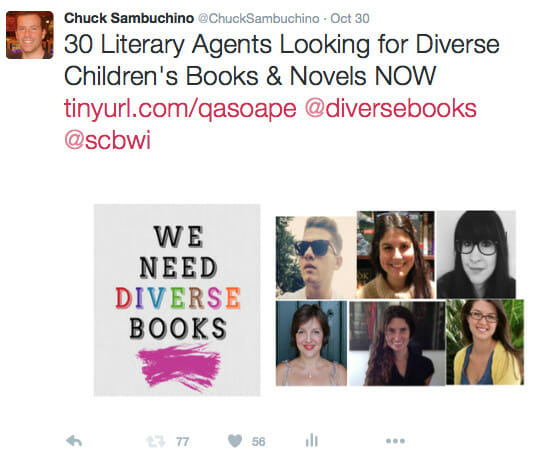
    Recently, I spent a lot of time researching literary agents who were actively seeking children’s books and novels with diverse characters. Compiling the post took me days of work and a lot of emails. It was a special post that I wanted to share. 

    Let’s examine three different ways I could share it through my own social media networks:

    Examine tweet possibility 1:

    1

    In my opinion, status updates like “Check out my latest blog post” or “New blog post is up” are the worst. They’re lazy, and don’t offer a new connection any reason to click. They’re lazy, and show someone who wants to exert no effort in gaining new followers.

    Grade: F


    Let’s try again with tweet possibility 2:

    2

    At least with this second tweet, you understand a little about what the blog post covers. But still, the tweet is scant and doesn’t provide absolute clarity on what lies on the other side of the click.

    And did you notice the grammatical mistake? Those extra words are a sign I was rushing through the composition of the tweet, and not sculpting it carefully. Poor proofreading reeks of unprofessionalism, and will turn off prospective followers.

    Grade: C


    Let’s try again with tweet possibility 3:

    3

    The tweet is optimized from top to bottom to gain the most shares and attention. Look at what it does well:

    • It provides absolute clarity by explaining exactly what the blog article is about.
    • It includes simple tricks to add sexiness, like a numbered list in the title and a capitalized “NOW” to show the post is important and timely.
    • I added Twitter handles for users who may enjoy spreading this information. You can also use hashtags to loop in new groups of people.
    • I added images. People love images with blog posts and social media status updates. Images bring a post to life.

    Seventy-seven retweets for this tweet is great, especially considering I had already mentioned this post several times before on social media

    Grade: A


    More Examples

    Let’s look at another example. Notice the evolution in incentivizing, and how each version is superior to the last.  

    Tweet possibility 1:

    4

    Tweet possibility 2:

    5

    Tweet possibility 3:

    6

    The third tweet works so well because it doesn’t just reach out to writers. It specifically reaches out to the types of writers this agent wants to meet.

    The specifics here help the tweet, and if you happen to be a writer who is composing one of the types of book I mentioned, then this post is like a lightning bolt that says, “Click me, I have value, click me, I have value.”

    [twl_reusable_block post_id=41455]

    Advanced strategy: Form a Twitter power crew

    When you mention your blog posts on social media, what you really seek is reach and amplification through sharing.

    If 2,000 people share your post and it goes viral, it reaches many readers and thus its amplification is great. Meanwhile, if you only have 50 followers on Twitter, and you tweet out news of your post, it may not get very far.

    So why not work with others? Find other people and groups and form a Twitter power crew. You can all tweet each others’ posts and everyone’s amplification rises together.

    You scratch the backs of others, and they return the favor.

    2. Create valuable posts that will naturally get shared

    Promoting your own work isn’t enough — you need others to share it, too. When a blog post gets shared on social media, you get more people to read the post, and turn some of those new readers into consistent followers who get to know you and your brand.

    Ideally, your columns will spread organically from people you don’t know sharing your post. The best way to do this is to create a post that has value.

    Most blogs never achieve success because the blogs provide no true value. A good blog post can make your life easier, inform you, entertain you, make you laugh, show you things or places you want to see, or cull information into a single source.

    Creating a valuable blog is difficult. It takes a plan, time, and hard work. But if you spend the time to create something unique and valuable, then people will share it. Make posts for others, not for you. The example I use commonly is this:

    If I took my three-year-old daughter to the park, would you care? In other words, would you read a blog post about how I took her to the park? No.

    But what if I spent a month taking my daughter to some small, out-of-the-way parks, then composed a blog post called “The 5 Best Family-Friendly Parks in Cincinnati You Didn’t Know Exist (and Where to Park the Car).”

    If you live by me and have kids you would take note of it — and it’s because all of a sudden the post has value for you, not me. The post took me time and energy to create, but it pays off when parents share the post with their friends.

    It’s very simple. If you create something that’s just plain good, people will share it.

    What tips would you add for connecting with potential blog readers through social media? How have you become a successful blogger?

    This post has been updated. We regularly update our posts to make sure you have the best content. Also, this post contains affiliate links. That means if you purchase through our links, you’re supporting The Write Life — and we thank you for that!

    Ready to Learn How to Gain More Followers Thru Social Media?

    in partnership with Self-Publishing School

  • How to Write an About Me That Attracts More Readers

    How to Write an About Me That Attracts More Readers

    It’s one thing to write about another world or a certain topic, but it’s another thing to write about yourself. Although tons of writers excel at their craft, when it comes time to sit down and talk about their experience or what they do, they get stuck.

    A quality About Me summarizes who you are and conveys the essential information about your career. It can be hard to take years of experience and summarize it in a few tidy paragraphs. However, as you start to grow as a writer, you’ll soon find out just how important it is. Whether someone is interviewing you or you need an About Me page on your website, you’ll need to have that information already put together.

    Having a well-written bio can help you stand out amongst the tons of other writers out there. The question is: how do you create a solid bio that tells your story and highlights your experience?

    We’ll go over some tips on how to write an About Me and show you how to tailor it for specific purposes.

    How to Write an About Me

    When you start writing your About Me, you’re going to want to pull all of the information together in one place. You’ll see why in a minute.

    If you do the hard work of putting together a general bio of yourself, you will be able to tweak it and use it across different platforms and for different purposes.

    For example, if you have one ready to go, you’ll be able to tailor it for your website, your LinkedIn, your Twitter account, or any place else you may need to describe who you are and what you do.

    Ideally, you’ll write one in both first person and in third person so you can use it across different platforms, depending on the context.

    Some basics you could include in your About Me:

    • What types of writing you do
    • Your background and experience
    • Projects you are currently working on
    • Fun facts about yourself or what you are passionate about
    • Any accomplishments you have achieved
    • Links to your work

    If you’re having trouble putting together your own About Me, one way to make it easier is to ask people close to you to describe you and your work. This can help you brainstorm things to include and also give you a unique perspective.

    So often, people overlook their own experiences and their own accomplishments, so the people around you might have a better idea of what to say than you do. If you have an audience or readers online, you might consider asking the same thing from them.

    how to write an about me 2

    How to Write an About Me for My Book

    When it’s time to sit down and write your author bio, there are a few things you’ll need to keep in mind.

    The first thing to keep in mind is that your bio will help you sell your book. Often, when someone is deciding whether to buy a book or not, they will look at who the author is to help them make a decision.

    With that in mind, you want to keep your potential readers at the forefront of your mind while you craft your bio. How you describe yourself and your work will also help position your book as something they will want to read.

    For example, if you have a book on traveling, including all of the countries you’ve been to or some unique angle you’re taking with your writing can help intrigue readers. You will want to answer the question of, “Why would someone want to read this book from me?”

    While testimonials are in a different part of a book, if you have a relevant person to mention that can give you a boost, you will want to mention it here. An example could include if you were mentioned in a celebrity’s book club. A foreword or endorsement from an influencer can also be used in your About Me.

    How to Write an About Me for A Website

    Similar to an author bio, reading the About Me page of a website can intrigue or turn away potential readers.

    You will want to tell people why you are the person they should be reading and learning from.

    Compared to some other platforms, you’ll also want to think about what keywords are commonly used in your industry. Things like SEO and keywords matter when it comes to building traffic to your website. You will want to make a list of topics that people might be researching that you write about and think about ways to include that in your bio.

    Of course, you don’t want to go overboard and make it sound like it was written by a computer, but there are ways to subtly drop in keywords to your About Me and have it flow naturally.

    For websites, people often have longer About Me pages than you would see in other places, such as on social media. This is where you can put your full story and a lot more details about your work experience and who you are as a writer.

    The benefit of having a website with an About Me page is to have somewhere to send people who love your work. Even if you have to keep your bio short on Instagram, people can visit your website to get your whole story.

    How to Write an About Me on LinkedIn

    Depending on the topics you write about, having a LinkedIn account may or may not make sense.

    Most people on LinkedIn are looking for a job, but there’s a lot to be said about using it purely for networking.

    If you do decide to join, there are a few things you need to know about writing a bio on LinkedIn compared to other platforms.

    As of writing this, you have about 2,000 characters in your LinkedIn profile summary space to write your “about” section. That’s a few paragraphs or so to describe who you are and what you write.

    One thing Linkedin bios have in common with website bios is that they both use keywords to help people find you. If you’re writing about travel, you need to include keywords related to travel so people can find you.

    For more training on how to build a LinkedIn profile to get inbound writing opportunities, check out this training from the Freelance Writers Den.

    How to Write an About Me on Twitter or Instagram

    One huge factor when it comes to setting up your profiles on Twitter or Instagram is the fact that the bio section is much shorter than other places online.

    However, the same rules of needing to answer, “Why should someone care what you have to say?” apply here as well. Crafting a good bio can help convince people to follow you and keep up with your journey as a writer.

    You will only have at maximum a sentence or two to describe who you are and why people should follow you. Talk about a challenge!

    Most people don’t use full sentences on these platforms and instead use keywords or emojis to describe their work. 

    That’s a Wrap

    Overall, while it might be hard to write about yourself, you’ll be grateful you have it done when you need it. Your About Me will most likely continue to grow and evolve as your career does, but having one always on standby is incredibly helpful to your career as a professional writer. Whether you’re a freelance writer, blogger, or author, you’ll want to have an About Me that grabs people’s attention and opens doors of opportunity.

    If you need more help crafting your Linkedin profile to attract the right types of writing clients, check out this training from Freelance Writers Den.

    LINKEDIN-MARKETING-FOR-FREELANCE-WRITERS
  • How to Publish on Medium… and Make Money from It

    How to Publish on Medium… and Make Money from It

    When it comes to writing online, there are endless options for publishing your work.

    However, for the most part you have two main options: to create your own website to publish your content, or to use a site that will host your writing for you.

    If you don’t want to do the extra work of setting up your own website, you can use Medium to get publishing right away.

    If you have been writing online for any length of time, you have probably stumbled across Medium.com as a publishing platform.

    [sps_reusable_block post_id=43047]

    If you’re a writer, you might want to know how to publish on Medium and how to get set up with an account. We will go over what Medium is, how it works, how to publish on their site, and how to monetize your writing on Medium.

    how to publish on medium

    What is Medium

    According to their website, Medium is “A place to write, read, and connect.” If you haven’t used it before, it is essentially a publishing platform with a social networking aspect built-in.

    As you publish, Medium helps send your articles out to people who are interested in the topics you write about. It also has a clean interface so you can publish easily without all of the complications of publishing on your own site.

    Just to note, Medium is not the first website to offer an easy-to-use blog. Before Medium there were sites like WordPress.com, Blogger, and Tumblr. However, Medium has a different overall look and different monetization features.

    Why publish on Medium

    A lot of people choose to start writing on Medium because it’s free and already has a lot of built-in traffic. With a traditional website, you often have to work hard to send people to your website. On Medium, when you publish with certain keywords or categories, people who are already on the site will naturally find your writing. 

    That can save you a lot of time from worrying about growth, SEO, or any of the other stresses that come with owning your own website.

    There is a built-in algorithm, similar to what you would find on social media sites, that tailors content to you so you can find interesting writers and posts to read. As you can imagine, when you publish on this site, it gives the same benefits to your content as well by showing it to people who would be interested in your work.

    It’s not easy to do, but there is also a chance for your articles to go viral across Medium. If they hit a certain number of readers, likes, and comments, there’s a chance for them to appear in front of more people or to be sent out in their newsletter.

    Medium also connects to your social media profiles, so you can automatically send out your articles through them. This also means you can connect with people who already follow you on social media. If you’ve done the hard work to build connections and get to know other people, they will have the chance to follow you on Medium as well.

    Keep in mind, you do not have to exclusively only post your content on Medium or on your own website, you can share it in both places if it makes sense for your publishing strategy. 

    How to get started with Medium

    To start writing on Medium, you will need to sign up for an account on their site. As mentioned before, it’s free to sign up but they do have a membership option. The membership allows you unlimited access to every story with a portion of your membership going to the writers you read the most. It starts at $5 per month or $50 for the year.

    Once you sign up, you’re ready to start writing. Signing up for an account also gives you the ability to comment on other people’s blogs, follow certain authors or publications, and generally network with other writers.

    The basics of publishing on Medium

    To publish on Medium, you simply need to add in a new post, write your text, and format it to look how you want it to – which is easy with their editing tools. It’s helpful to have a tool that is easy to edit and manage if you don’t have a lot of technology or coding skills.

    After you write your post, you can add in some tags or add it into certain publications. Then you simply need to publish the post and if you link your social media profiles, it will automatically send out to them as well.

    You can learn more about publishing on Medium and formatting your article in this article.

    Inside of Medium, you have the option to set up what they call a publication on top of writing your regular articles. Publications are often written by multiple authors around one particular topic. You can create your own publication or join one that already has readers (with permission from the publications’ editors).

    Publications allow writers to send out newsletters and they also receive their own stats page, so all the writers involved can keep track of how the publication is doing or where readers are coming from.

    Plan what to write about

    Ideally, before you start publishing on Medium, you should outline what you’re going to cover and make a basic content calendar.

    Once you decide what to write about, you’ll want to set up a publishing schedule. What can you fit inside your schedule and how often can you publish a post? Answering those questions will give you an idea of how often you should be publishing. You don’t want to set up a blog to only publish in it once every few months.

    Medium keeps track of your engagement and your overall metrics, so you can see which posts are gaining traction. That way, you can tailor your future content around what your audience already loves to read. Even with the best planning, it can be hard to figure out what readers will love to read from you, so analytics can help.

    How to make money on Medium

    Now let’s get to the real question that most people want to know: how can you make money on Medium? If you’re going to be putting in the hard work to come up with a niche, publish regularly, and stay on top of your content, you might as well make some cold hard cash while you do so.

    They have a whole page that breaks down the specifics, but we’ll give you a quick overview to get started.

    First, you’ll need to apply for the program and meet its eligibility requirements. As of the time of writing this article, to meet their criteria you need to publish a story, gain at least a hundred followers, and publish one every six months.

    One of the first ways you can get paid is by keeping and attracting readers to your work. The more people read and stay on your stories, the more you will get paid.

    From there, you can also make money based on how many people you can convince to join the Medium membership. As of the time of writing this, you earn half of their membership fee (after payment processing fees) for as long as they remain a member. That’s a good deal for a lot of creators out there to start making an income from their writing.

    Overall, Medium is a great site for writers to publish their content and reach a whole new audience.

    [sps_reusable_block post_id=43047]

  • 5 Types of Journaling Writing to Keep You Creative

    5 Types of Journaling Writing to Keep You Creative

    While I’ve always had a journaling writing practice, it has changed over the years. I began with a mini diary with a lock where I would write who my best friends were, who I had a crush on and the names of my future children. Now, my journals are a hybrid of brainstorms, ideas and things on my to-do list. It’s less structured than I would like, but it still helps me make sense of my thoughts and figure out what I think.

    A basic definition for keeping a journal simply means recording daily events. And yet we tend to make it more complicated than that! So, whatever your journaling practice looks like these days, as long as you’re marking time passing, then you’re doing it right. A grocery list, a few notes from a lecture you heard or a formal reflection practice, whatever.

    The act of keeping a journal is not a new thing, and there are many different techniques you can use to help you develop an effective journaling practice.

    5 types of journaling writing

    Morning Pages

    Here’s what you do: as soon as you get up in the morning, write three stream-of-consciousness pages. Longhand. This is a style of free writing made popular in Julie Cameron’s book The Artist’s Way. Its intention is to help artists break through their creative blocks.

    Those who practice Morning Pages swear by it, and there’s even a 5 a.m. Club on Twitter who gathers around the habit of writing first thing in the morning. People tend to congregate at 5 a.m. Eastern Time, but you’ll find #5AMWritersClub posts throughout the day.

    Free writing

    This is a similar practice to Morning Pages, except you can write at any time of day. Most people write to a timer rather than a page count and the idea is to allow your thoughts to flow without editing or even thinking too hard about it. Follow your curiosity and see where it leads.

    You could start with a writing prompt, a problem you want to solve or even with “I don’t know what to write” over and over until you know what to write next. Allow yourself to write uncensored and without judgment. You’re just looking to get things out and off of your mind.

    Bullet journaling

    This is a simple and practical system with the end goal of being organized and productive. Keeping a Bullet Journal means adhering to a system of bullets and learning a series of shorthand symbols to help you plan tasks, reminders, meetings and more.

    This is a flexible system that you can make your own, and works best when used to plan, reflect and keep track of what matters most to you.

    Gratitude journaling

    You can transform any type of journal writing technique into gratitude journaling and it can be a tremendous aid in self-care, mental health and contentment.

    This can be an extremely powerful journaling practice as it helps you stay positive and acknowledge the things you have to be thankful for. The result of focusing on the good? You become a happier, less stressed-out person.

    Reading journaling

    This is a fun journaling style for writers and readers. There’s no set formula for keeping a reading journal, but most people use it to keep track of inspiring quotes, ideas to ponder or even a list of books to be read later.

    Whether you’re keeping a journal to better remember what you read, or using it as a way to respond and analyze what you’re reading, this can be a great way to engage with words in a new way, and boost your creativity.

    Five reasons you should keep a journal

    Some people may resist keeping a journal, citing it as self-absorbed or even narcissistic, but as someone who has seen nothing but positive results from years of writing things down I wanted to recount five reasons, from my experience, why you should reconsider the practice.

    You become more observant

    Being in the habit of writing things down trains you to notice what’s around you. You take in the world as an observer, rather than simply floating along.

    You become more organized

    Writing things down helps you organize your life and your thoughts. Feeling big feelings? Write about it. Break it down into smaller pieces; manageable chunks.

    You become more goal-oriented

    When you keep track of events and achievements, you’re more likely to notice when you stop moving forward. Once you are aware, you can take control of your personal development.

    You become more self-aware

    In most cases, journaling writing is a solo activity. It’s quiet time spent reflecting, thinking and dreaming. It can be an important time of growth in self-awareness and maturity.

    You become a better communicator

    The more you write, the better you become at articulating your thoughts and feelings. And the better you communicate with yourself, the better you’ll communicate with others.

    Keeping a journal doesn’t have to be a basic activity, but it also doesn’t have to be overly complex. Make daily reflections, jot down a few notes, practice something more formal or carve your own path. If you’re looking for ways to be more creative then why not give journaling writing a try?

  • How to End a Story: 6 Approaches That Lead to Success

    How to End a Story: 6 Approaches That Lead to Success

    Learning how to end a story effectively is even more important than learning how to start it. 

    Both the beginning and end of a work of fiction greatly impact a reader’s level of satisfaction. If the start of your story is weak or unengaging you run the risk of people putting down your book before it even gets going. But a lot of readers are willing to persist even if a story’s opening isn’t really to their taste. A strong middle section and climax can overcome any initial disappointment.

    But what if your story finishes on a weak note?

    Because it’s the final experience readers have before putting your book down, it leaves a lasting impression. Most people don’t finish books the books they start to read. Those who do are the most invested readers out of everyone who chose your book. It makes sense that they would be strongly let down by an unsatisfying conclusion.

    So how can you write an ending to your story that leaves readers satisfied?

    6 Ideas to Consider for How to End a Story

    Here are six types of story endings that have stood the test of time along with some general tips on ending a story the right way.

    Conclude your story in a neat and tidy way

    Sometimes, the best way to end a story is by offering a clear resolution that neatly ties up all the loose ends and plot points. 

    If you’ve ever felt a plotline has been forgotten about or ignored, you’ll know how irritating it can be. Making sure the fate of everyone in your book is clearly explained can avoid that dilemma. 

    Examples of this type of ending include romances where the characters get together and have no threats to their happiness or unity on the horizon. Or adventure stories where good triumphs over evil and any villains have met definitive defeat. 

    This type of story ending can be seen as a bit unimaginative but it is the safest option. Going this route avoids the possibility of annoyed reviewers leaving comments along the lines of “but what about so and so character” or “it wasn’t clear to me if there’s still a chance of this or that happening”. 

    Leave your reader hanging from a cliff

    Cliffhanger endings leave some elements of a story unresolved. Deciding to end your story on a cliffhanger is important if you want to leave readers eagerly anticipating the next installment in a fiction series.

    It’s important to note that a cliffhanger ending should be a conscious choice. The majority of plot points should be resolved and the ending should not feel like a disappointment. You need to strike a balance between leaving your reader feeling they’ve reached something of a climax while still leaving some story aspects intentionally open.

    If you have a rough or even concrete idea of what your story sequel will look like then make sure your cliffhanger ending will segue naturally into the next installment. Or, if you’re unsure of whether a follow-up book is the right route, you can leave the possibility open without committing to it. For example, when George Lucas chose to freeze Han Solo in Star Wars it was due to not knowing whether Harrison Ford would be available for the sequel.

    A cliffhanger ending runs a higher risk of leaving readers disappointed than tying everything up neatly. However, when written well, they are some of the most exciting endings possible.  

    Provide a twist in the tale

    A twist ending is a great choice if you can pull it off effectively. This type of story ending can have the highest level of impact but is also very difficult to get right.

    Twist endings typically run into two problems. 

    First, readers may be able to spot your twist coming a mile away. There’s nothing more annoying than a big ‘reveal’ at the end of the story that you predicted back in the first act.

    The second common issue is a twist ending that is too unbelievable. If something happens out of nowhere and there was no hints in hindsight readers may fail short change. An effective twist ending, therefore, needs to work on both an emotional and a logical level.

    To write an effective twist ending, you want to give a few clues that foreshadow the twist without being heavy-handed or obvious. Ideally, your reader won’t figure out their significance at first, but when looking back will notice there were subtle clues in place. You can also play around with red herrings that hint at an altogether different ending, but be careful about using too many and confusing your reader.

    Twist endings are incredibly hard to get right, but if you can manage to write a good one, you’re sure to leave readers thinking about your story long after it ends. 

    [sps_reusable_block post_id=43059]

    Play around with ambiguity and unreliability 

    Some readers detest not knowing exactly how a story ends. Others love the chance to come to their own conclusion. 

    The suitability of an ambiguous ending is also partially down to your choice of genre. For example, romance readers typically want a clear ending where the outcome they’ve been rooting for the whole time is given to them clearly. Readers of a gritty psychological thriller, however, might enjoy having their minds messed with by an ending that doesn’t spell everything out for the reader.

    Unreliable narrators are a great fit for ending a story on an ambiguous note. Consider American Psycho by Brett Easton Ellis (spoiler alert!). 

    Throughout the story, we are shown events through the eyes of Patrick Bateman. However, there’s a lot to suggest the ways he’s telling things may not be exactly how they’ve gone down. Ellis doesn’t resolve things either way and allows the reader to reach their own conclusion.

    Sometimes, ambiguous endings are truly divisive. Just ask any Sopranos fan. This type of ending is a good choice if you’re confident in both your ability to write it and the likelihood that your readers won’t hate you for it. It’s probably the wrong choice for the majority of stories though. 

    End on an epilogue 

    Epilogues can be an effective way of adding a sense of realism or depth to your story. By suggesting that events carried on far after the main action ends, it gives your reader the feeling that the story took place in a believable world rather than one that existed purely to serve the plot.

    However, sometimes epilogue endings can feel a little unwieldy and almost tacked on as the author couldn’t think of another way to conclude. For example, Ender’s Game has an epilogue that adds a ton of detail that sort of feels rushed and brief in comparison to the main tale told. 

    If you want to use an epilogue as a device to end your story, take the time to read a wide range of stories that ended in this way. Read those that are well-reviewed and those that are hated alike. This breadth of reference will allow you to identify the type of endings that work well so you can try and apply their principles to your own story. 

    Choose a cyclical ending 

    If your story begins and ends similarly, giving readers the feeling that events have come full circle, you’ve employed a cyclical ending. 

    A cyclical ending isn’t the same thing as simply ending things as they started. Even though the story might begin and end in the same place, the readers should have been on a journey alongside the characters who have developed or learned something along the way.

    One example of a cyclical ending that many people will be familiar with from school is Of Mice and Men. The story starts and ends in the same location which is said to be symbolic of the inescapable fate of its main characters constrained by the lot life dealt them.

    Now that you know six proven ways to end a story satisfactorily, let’s look explore the concept of effective endings in more detail.

    Story Ending FAQs

    How do you end a short story?

    You can end a short story in all of the same ways that you can end a full story. An epilogue ending is perhaps a less likely choice due to the constraint on length you’re working with but is still technically possible. 

    What is the ending of a story called?

    You might see the ending of a story referred to as its climax, conclusion, denouement, or simply ending. These terms are all slightly different in meaning although they are often used interchangeably. 

    How do you write a sad ending?

    Sometimes, sad endings linger in our hearts and minds in a way that happy endings don’t. Think about the power of Romeo and Juliet’s ending, for example, or the movie adaptation of Stephen King’s The Mist. Writing a sad ending to a story requires the readers to care about the characters. A sense of avoidable tragedy can often increase the emotional gut-punch of this type of ending. 

    How do you end a children’s book?

    The end of a children’s story should be appropriate for the age of its readers and the overall tone of the book. Gritty twists or sad endings are, unsurprisingly, not the way to go here. Younger readers often prefer a neat ending that leaves them feeling as if everything has been explained. You can still use a surprise ending, but it should be a fun and happy surprise!

    You now have six different answers to the question of how to end a story as well as some tips for different genres and styles of writing.

    It’s important to remember that there’s no right or wrong way to end a story. Multiple types of endings could work for your story. It comes down to your ability to write them well and to satisfy your readers. 

    If you’re unsure of the right type of ending for your story in particular, feel free to jot down ideas for each of the six different types but applied to your work of fiction. Which feels most suitable? Get feedback from people whose opinion you value and see which type of ending they feel would work well. 

    Take as long as you need to write and rewrite your ending. Getting it right is crucial if you want to get good reviews and leave your readers with a positive impression of you and your work. 

    [sps_reusable_block post_id=43059]

  • What is good writing?

    What is good writing?

    Asking “What is good writing?” sounds a little like the start of an unsolvable riddle. 

    After all, one person’s definition of good writing would be the kind of prose that would repel another reader. Just look at the popularity of authors like Stephanie Meyer and Dan Brown. While a lot of readers and writers heavily criticize their work, surely they’re doing something right to sell so many copies and win so many fans?

    In fact, the difference in opinion on what constitutes good writing is the answer to the question itself.

    While there is no universal definition of good writing, any writing that pleases the person reading it can be considered good.

    Of course, the matter is a little more nuanced than that. While we can agree that satisfying an intended readership is the hallmark of good writing, how exactly does a writer achieve that aim?

    Let’s take some time to consider why good writing matters before delving deep into what good fiction and nonfiction writing looks like.

    Why does good writing matter?

    It’s easy to be self-deprecating about working as a writer.

    This attitude stems from several places. You can look around at people working as doctors and other professions that get a lot of respect from society and feel like your work pales into insignificance in comparison. Writers are also often the punchline of jokes about low-paying careers.

    But while it’s vital to stay humble and retain a sense of humility, it’s also important not to do yourself and your craft a disservice. 

    Good writing matters.

    Stories can give people a breadth of experience that they would be unable to achieve in the course of their everyday life. It creates empathy with types of people we would never meet. We can visit places that we would never otherwise travel to – including those that don’t exist in reality. 

    Think about the beautiful moments of escape provided by getting lost in a fiction book. They offer relief and joy for people living tough lives severely lacking in either. That matters, and should never be dismissed.

    Nonfiction is also just as important in changing and enhancing people’s lives. 

    People have regained a sense of hope and purpose after picking up works of nonfiction. Whether through a self-help book that speaks to their pain points in a way that no one in their real life ever could, or a memoir or autobiography that opened their eyes to a successful path in life, nonfiction offers countless avenues for making life better.

    So by all means retain a sense of humor about writing and the lifestyle it entails. But never dismiss it as unimportant.

    Writing matters. With that being the case, isn’t it worth striving to write well?

    Let’s take a look at some practical aspects of good fiction and nonfiction writing.

    What makes a good fiction writer?

    Good fiction writing is dependent upon the genre being written, but some aspects are universal to almost all genres. 

    If you take a moment to think about the fiction that has most captivated you, you might bring to mind stories that feature the following elements.

    A gripping plot

    Without a good plot, fiction falls flat. 

    There’s nothing worse as a reader than being intrigued by the premise of a novel but finding its plot to be confusing or lacking in structure. 

    Lovers of the written word can debate all day if a book’s plot or characters are more important. Try having that discussion next time you’re around like-minded people. It’s an interesting way to pass time.

    Truthfully, some books are considered classics based on a great plot but relatively shallow characters. Others have incredible, lifelike characters but a less than exciting plot. That’s to say that fiction can rely on either, but to be truly great, it should feature both.

    Different story structures can be used to strengthen your fiction plot, and different schools of thought on plotting VS pantsing. 

    No matter how you go about it, find an approach to your book’s plot that works for your style of writing and keeps your readers engaged.

    Memorable characters

    The best fiction characters are written in a way that makes them seem almost real. They take on a life of their own in the mind of the reader. People truly care about their fate and think about them long after the final page has finished. 

    Writing a good character is partly reliant on the genre of story they feature in. For example, the protagonist of a work of literary fiction is likely to be portrayed very differently than the main character in a fantasy epic. 

    But regardless of genre, memorable characters often share some commonalities. The main character in a story is often relatable and someone the reader is likely to root for. There are of course exceptions, but often the reader can see themselves as similar in some way to the protagonist, creating a sense of empathy and investment.

    No matter what type of character you write, aim to give them depth and a sense of coherence. There is nothing more jarring for a reader than when your character does something that seems, well, out of character! It breaks the suspension of disbelief and sense of emotional investment a reader has. 

    Good pacing

    Have you ever read a story that seems to end kind of abruptly? How about one that drags in the middle leaving you deeply bored? Or what about a book that takes an inexcusable length of time to get going?

    If you’ve ever experienced bad fiction pacing as a reader, you know just how detrimental it is to your enjoyment of a book, even if the other elements are solid. Sadly, as a writer, it can be a little harder to spot.

    When writing, it’s easy for us to get caught up in overexplaining certain parts of our story. We sometimes have a lack of faith that our story will make sense unless we over-explain it. This is understandable but needs to be guarded against. 

    Good pacing is far easier to achieve with someone helping you out. At the very least, try and find alpha readers and beta readers. At best, seek out the highest level of professional editing you possibly can. Your pacing, and your readers, will benefit immensely.  

    The satisfaction of genre expectation

    Fans of genre fiction are looking for certain expectations to be met.

    That’s not to say that effective writers shouldn’t play around with genre conventions to surprise and delight readers. But the fact of the matter is it’s far easier to satisfy genre expectations than it is to skilfully subvert them.

    So how is this done?

    It’s almost a prerequisite for good writing to read widely in the genre you wish to write. This is the only way to get a feel for the tropes and moments that epitomize what readers love and crave. 

    Aside from reading widely in the genre you write in, take the time to check out reviews. Look at glowing reviews and also one and two-star reviews. What did people love? What did they hate? Getting a sense of these things will allow you to satisfy genre expectations in a way that will please your intended readers.

    Emotional engagement

    The very best fiction writing engages readers on an emotional level. 

    This is true regardless of the genre that is being written. The term emotional might bring to mind certain styles, but it’s widely applicable. For example, consider how:

    • Good horror writing causes the reader to feel genuine fear and suspense.
    • Romance writing, or romantic plots in other types of fiction, makes the reader yearn for the characters they care for to work out romantically. 
    • Effective fantasy writing makes the reader feel a sense of despair, hope, and satisfaction over the ebbs and flows of the hero’s journey.

    You could take almost any genre out there and realize how it impacts readers on an emotional level. Ultimately, fiction readers want to be entertained, but they also want to feel something. Give them that gift and you will have them coming back for more. 

    An effective ending

    How often do fictional works fall flat due to a lackluster ending?

    Even if people have enjoyed a story up until its closing stages, that can all be for nothing if the ending leaves them with a bad taste in their mouth. 

    Effective endings should work on a logical and emotional level. Logically, the story shouldn’t leave loose ends or unanswered questions that will frustrate readers. Unless it’s an intentional choice setting up a sequel, but even then, there should be a sense of climax. 

    Emotionally, readers shouldn’t be left feeling short-changed. Romance readers deserve to see their hopes realized. Fantasy fans should have a sense of epic fulfillment after closing the final page.  

    Just like writing the start of a story, learning to get the ending right is difficult. It takes time, patience, and intentional practice. 

    Study the endings of stories that are almost universally praised, and practice these principles in your own writing. The ending of a fiction story carries far too much importance to be left to chance. 

    What is good writing for a nonfiction writer?

    In some ways, being a good nonfiction writer is simpler than being a good fiction writer.

    Fiction is very much an art form. Even the bestselling and most widely-praised fiction books have people that hate them and are very vocal about their feelings. It’s a lot rarer to see that level of vitriol aimed at nonfiction.

    Ultimately, good nonfiction writing is about fulfilling a promise to the reader. From a book’s title, subtitle, and description, the reader should have a clear idea of the benefit they will gain if they take the time to read a book. 

    For example:

    • A self-help book should clearly define the problem it will solve, the person it will serve, and the positive outcome achieved by finishing the book.
    • A memoir or autobiography should explain the life story it will share, why it matters, and the lessons the reader will learn along the way.
    • A how-to book should explain why its writer has credibility in that area, the subject matter they will teach, and which type of reader will most benefit from choosing it instead of other competing books of a similar type.

    Of course, effective nonfiction writing requires familiarity with genre conventions, writing tone, and the expectation of readers, similar to fiction writing. 

    But if you’re able to clearly state a promise to the reader before they start your nonfiction book, and fulfill that promise throughout the book, you can consider yourself a good nonfiction writer. 

    How to become a good writer

    Now that we’ve taken the time to consider what good fiction and nonfiction writing looks like, let’s end with some thoughts on how to become a better writer.

    It’s important to realize, in the words of Ernest Hemingway, “we are all apprentices in a craft where no one ever becomes a master.” There’s always room for improvement. Don’t become disheartened by comparing yourself to other writers, for they are fellow apprentices on their unique journey, just like you.

    Instead, make sure you’re always getting incrementally better. 

    The two keys to good writing are consistent reading and consistent practice. Writing courses and writing groups are useful, but unless you’re reading and writing consistently and intentionally, everything else is folly. 

    Hopefully, you agree that good writing matters to the world. 

    So don’t you owe it to yourself and your readers to be the best writer you can be? 

    Keep that thought in mind after you finish this article. 

    You matter as a writer. Your words can change lives for the better. Never forget that.  

  • Need Writing Motivation? 33 Ideas to Get Your Groove Back

    Need Writing Motivation? 33 Ideas to Get Your Groove Back

    Are you running low on writing motivation?

    It happens to the best of us, so no judgment here! In fact, if you didn’t feel ebbs and flows in your desire to write, you wouldn’t be human.

    The important thing is to recognize your lack of motivation, refuse to dwell on it, and seek a solution to get through it. The worst thing you can do is start tweeting about your lack of motivation and making writer’s block a part of your identity. 

    While you don’t always choose to feel unmotivated, it’s always a choice to push through it.

    Here are 33 doses of writing motivation to get you back on track. 

    Write somewhere different

    Writing in the same location is an important part of productivity for some writers. However, switching up the place you write in can give your brain a sense of novelty and spike your creativity.

    This can be as simple as writing in a different room in your house or as elaborate as taking a vacation to an inspirational location. You can always choose a middle ground and work in a cafe you’ve never been to before.

    Try a new writing app

    There is a vast number of specialist writing tools and apps out there. Making a switch, even temporarily, from your usual choice can help you feel more motivated.

    If you write in a fairly conventional app, why not try a fun, gamified writing tool instead? Or if you find the businesslike environment of Google Docs or Word to be uninspiring, give a minimalist, zen-like writing tool a try.

    Use a new writing device

    Sometimes, sitting down at the same old computer feels tedious. If you want to experience something new, try outlining some work on your phone or tablet. 

    It’s not ideal for long writing sessions, but using a mobile device can give you the impetus to start outlining, allowing you to then return to your main writing device to continue your project once you’ve made an initial breakthrough. 

    Set a writing streak

    Some writers find setting an unbroken streak to be an effective way to stay productive. Try marking all your writing days on a calendar or a whiteboard. 

    Even when you find yourself low on motivation, you might find your desire to keep your unbroken streak outweighs your desire to stop writing.

    Write by hand

    A lot of writers swear by the power of writing by hand, especially if they usually write using a computer or other digital tool. 

    Try finding a nice pen you enjoy the feel of using and a notebook that gives you joy to write in. This can unlock your creativity and give you the motivation to make progress on your writing projects. 

    Make a bet

    If you’re the type of person who’s competitive and hates the thought of losing, consider making a bet with another writer or even a friend or spouse. 

    This bet doesn’t have to be financial. In fact, it probably shouldn’t be. Instead, have some fun and offer to buy them a cup of coffee if you can’t achieve your writing target for the day. This should only be used sparingly as you don’t want to come to rely on betting to feel motivated to write!

    Partner with another writer

    Having a writing partner is a great way to feel motivated to write. It’s a little like if you have someone to exercise with. It’s a lot easier to simply not do something if you’re the only one who will know or be effective. If you’re impacting someone else then it’s a lot harder to not show up, even if you’re feeling unmotivated.

    Some writing partnerships are simple and consist of sending each other a quick text along the lines of “let’s both write for x hours and check-in after”. Others involve meeting up and writing together for a defined time. Find what works for you and your partner.

    Set a low bar

    Setting yourself a very low bar for success can almost trick your brain into feeling motivated to write. 

    If you know you need to write 2000 words or for three hours, you might feel too overwhelmed to even start. However, if you tell yourself you only need to write 100 words or for 10 minutes, and then you’re allowed to stop, you’re likely to end up getting some initial momentum and writing for far longer than the short target you set yourself. 

    Use a writing prompt

    The simple act of writing something, no matter what it is, is often powerful enough to let your writing flow again. 

    Using a writing prompt removes the burden of having to think of what to write. Find a writing prompt that intrigues you, or failing that, commit to choosing one at random and working on it no matter what.

    Reward yourself

    Although some writers might have an unrealistic view of writing as some kind of pure art form that should be pursued for its own sake, that’s just not how things are. Like anything else, we are motivated by rewards. 

    You can motivate yourself by setting external rewards for your writing. For example, if there’s a TV show you enjoy, you’re not allowed to watch it until you hit your writing target for the day. This only works if you’re self-disciplined or have someone else on hand to make sure you don’t cheat!

    Restrict yourself

    The opposite of rewarding yourself also works. You can restrict yourself from things you enjoy unless you do them while writing. 

    For example, if you love going to Starbucks, make it so that you are only allowed to go to Starbucks to write. No other times. Of course, this only works if you keep the bargain with yourself and write while you’re there!

    Listen to motivating music

    Some writers love working to music. Others hate it. 

    If you’re the type of writer who finds motivation through music, consider making a special playlist of songs that get you in the zone to work. You might have different playlists for different types of writing or just a general writing playlist. Also, if you don’t like listening to music while you write, you can use music exclusively before writing to get you in the zone. 

    Set public targets

    The pressure of making a goal public can have a motivating effect for many writers.

    When people have a big target, such as running a marathon or losing a certain amount of weight, they often find that making the goal public is helpful. That’s because we want to appear consistent in the eyes of others. Try this approach for your writing goals. 

    Leverage social media

    When the only ones watching out for your writing motivation ( or lack of it) are your cat and coffee cup, you might feel like it doesn’t make a difference if you write or not.

    Social media gives you access to writing partners, communities, hashtags, and advice, all at the click of your mouse or touch of your screen. Just make sure to avoid falling into the addictive trap of endless scrolling instead of writing!

    Take some exercise

    The mind and body work in harmony.

    If you’re feeling unmotivated, a quick burst of exercise might be the solution you’re looking for. Ideally, get out into the fresh air and enjoy the benefits of exercising outdoors. However, even just a quick run on the spot, several pushups, or a quick YouTube yoga routine can do the job.

    Visualize success

    A lot of motivational thought leaders such as Tony Robbins recommend the power of visualization.

    Picture yourself completing a writing project. If you’re working on a book, picture holding the finished copy in your hand and the pleasure associated with that. This might motivate you to take action to move towards that outcome.

    Picture the pain of failure

    Some people are more motivated by the fear of failure than the possibility of success.

    If that sounds like you, then make the vision of failing as realistic and painful as you can. Think about how disappointed you will feel in yourself and how others will see you as an underachiever. This technique should only be tried if you have the right emotional disposition for it!

    Hire a coach

    If you have the money, a writing coach can help keep you on track. 

    Some writing courses come with built-in coaching components. Or you can simply seek out a writing coach among your network. Even an informal accountability relationship with a writer a little more advanced than you can work wonders.

    Take a course 

    Investing in a writing course can give you the financial and emotional investment you need to feel motivated. 

    Make sure the course is a good fit for the stage of your writing career you are at, and be sure to take action on what you learn. Learning for learning’s sake is not the objective here!

    Use an accountability service 

    Accountability services exist to help people feel enough motivation to achieve their goals, no matter what those goals happen to be.

    Consider using a service like Stickk or another specialist accountability tool to keep your writing on track even when you lack motivation. 

    Commit to a group

    There are plenty of writing groups out there that offer a wide range of benefits, with motivation being only one of them.

    While some writing groups are pretty casual, others are somewhat demanding, requiring a certain level of participation to remain a member. The latter type might be the precise motivation you need to succeed. 

    Take a limited break

    Sometimes, trying to power through times of low motivation is counterproductive. 

    If you truly feel like you can’t write, and nothing’s working, forcing yourself to stay seated at your laptop can be the wrong move. Instead, give yourself a limited break. For example, you’re allowed to go and do something else for 10 minutes, but only 10 minutes. After that, you have to try to write again.

    Make a routine

    If you’re a student of success and the science of achievement in general, you’ll soon realize that a lot of the leading thinkers in this field talk about relying on routine rather than motivation.

    Committing to a routine almost takes motivation out of the equation. Rather than waiting for writing inspiration to strike, you simply follow your routine. Establishing a routine takes time, so don’t expect to fall into one over night. 

    Switch between fiction and nonfiction

    Feeling stuck often comes from allowing your writing to become somewhat stagnant. 

    For example, you might have only ever written nonfiction, even though you love fictional stories. If that’s the case, permit yourself to try something entirely new. 

    Try a new genre 

    Even the most successful writers sometimes tire of writing the same old style.

    That’s why bestselling authors will sometimes adopt a new pen name and write in a different genre just to keep things interesting. You don’t have to be famous to try something new! Pick a genre at random or select one that intrigues you. Try writing it to see if your motivation returns.

    Copy a writer’s style

    When we write in our own voice, we inevitably have a certain level of ego invested in our work. Even though no one else is judging us, we are almost certainly judging ourselves. 

    If that sounds familiar, give yourself permission to try and copy the style of another writer. For example, write a chapter in the style of Stephen King or J.K Rowling. This is a fun way to work and similar to covering another musician’s song rather than composing your own. 

    Write in an existing fictional world

    If blank page syndrome is causing serious stress in your writing life, try writing an extension to a story you love.

    For example, you could write the next stage of a famous character’s life. Or, you could play alternate realities, such as writing The Shining as a comedy. This removes the burden of coming up with a fictional world from scratch.

    Write about your life 

    Your life is a source of writing inspiration that is uniquely yours. 

    Why not write about your own life when you’re feeling unmotivated? You can recall the best of times or the worst of times. You can even embellish your own story. After all, no one is going to check unless you choose to share your words.

    Go people watching

    The best fiction writers often advocate for using people watching as a source of writing detail.

    You can go to a cafe and observe people (without being creepy, of course!). Write about what you imagine their lives to be like. You can also do this purely online. Check out some random photos on news sites or dedicated image sites. Use them for inspiration to start writing. 

    Listen to an audiobook

    There’s something about listening to an audiobook that can set your creative wheels in motion.

    This could be an audiobook of writing advice or a spoken version of a fiction story. Sometimes, the rhythm of hearing good writing spoken aloud will activate your creative impulses.

    Read a writing guide 

    We’re blessed to live in an era when the best writing advice of all time is available instantaneously. 

    Spent a few dollars to purchase a writing guide from an author you admire. Or simply check out a free blog post or podcast episode. Getting inspiration from external sources can be just the motivation you need.

    Use writing as procrastination

    You’ve almost certainly experienced the desire to procrastinate instead of getting down to writing. 

    But have you ever strategically used the converse? If there’s something else you really should be doing, like some dull chore or task, permit yourself to write as a form of procrastination. You might find your writing motivation has suddenly returned!

    Enjoy a special writing beverage

    You can use the principles made famous by Pavlov to boost your writing motivation.

    Select a special beverage that you’re only allowed to consume while you write. This will differ from writer to writer, but a special type of coffee or tea is a popular choice. Eventually, your brain will automatically associate the taste and aroma of the drink with the activity of writing, resulting in automatic motivation. 

    So there you have it. 33 quick doses of writing motivation! Next time you feel stuck, give one of them a try. It might just be the jolt you need to get back on track.