Tag: writing life

  • Your Messy Desk is Hurting Your Writing Career. Here’s How to Declutter

    Your Messy Desk is Hurting Your Writing Career. Here’s How to Declutter

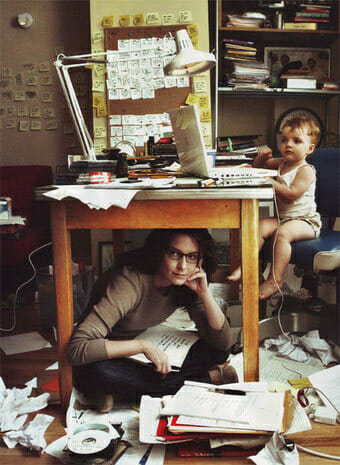
    Do you have a messy desk? It may be affecting your writing career!

    You want to write, but you can’t. It’s not writer’s block, a lack of ideas or a blank wall. Instead, it’s information overload with myriad to-dos fighting for precedence in your mind.

    You start to make a list, but your desk is a mess, with piles of papers (all important), post-it reminders (even more important) and books (most important of all) haphazardly stacked on every inch of space. How can you begin to work in this environment?

    Got a messy desk? What does your #writespace look like? Share a photo on Facebook, Twitter or Pinterest with the hashtag #writespace and tag us @thewritelife!

    Clutter’s effect on creativity and productivity

    Clutter makes it difficult to focus on one task or object, according to researchers at Princeton University’s Neuroscience Institute. Your brain has a limited ability to process information, so a disorganized work environment pulls your attention in different directions—and away from your writing.

    And it’s not just physical clutter; a digital build-up of emails and social media notifications can be just as bad for us, according to Mark Hurst in Bit Literacy: Productivity in the Age of Information and E-mail Overload.

    What does that mean for writers? Dividing your attention between several stimuli—like your novel’s plot hole, your messy desk and your Twitter feed—often results in increased stress and decreased creativity and productivity.

    Try these strategies to take control of the clutter and manage your writing space, both external and internal.

    Messy desk? Declutter your physical space

    Clearing the detritus from your workspace allows you to start fresh. Plus, getting up from your desk and moving around is a great break from work; who knows what new ideas you might inspire by getting your blood flowing?

    1. Clear your desk

    Here’s a quick way to clear your messy desk. Set a timer for five minutes. Take everything off your desk and from your drawers (except your computer or notebook and pen, of course). Put every other item in a box, out of sight. As you work for the next three days, if you need an item, bring it back to your desk.

    2. Organize your less-necessary items

    Anything left in the box after three days isn’t crucial. Go through it and sort the items into two piles: file or discard. Save the items you need, like receipts and invoices, but be tough on yourself. Do you really need those to-do lists from two months ago?

    3. Improve your storage system

    Where you keep your go-to objects is important, but only the ones you use the most should make it to your workspace.

    Place your most used items within reach for easy access, like in the top drawers of your desk or on a nearby shelf. Less-important tools should be out of sight and filed away. While your computer might live on top of your desk, your thesaurus might only come out during rewrites.

    4. Set yourself up for success each day

    Before you quit working at the end of the day, take a few minutes to set everything back in its place. This way, the next time you sit down in your clean, uncluttered space, you’ll be able to get right to work.

    Declutter your mental space

    Even the most spotless desk won’t help a busy, distracted or disorganized mind from focusing on writing. Try one of these strategies to clear your mind and help you get back to work.

    5. Journal

    It’s a popular option for a reason: journaling about what’s bothering you helps reorganize your thoughts. Whether it’s your novel’s plot, your personal life or the challenges of freelance life, writing your problem out will help make space for new approaches and solutions.

    6. Make a to-do list to clean up your messy desk

    Trying to remember everything you need to do in the next day or week isn’t conducive to doing quality work. Instead, follow productivity guru David Allen’s advice and write everything down.

    Create a system to manage your tasks and schedules so you stay organized—and can get back to work. Need help? Try one of these free tools and apps.

    7. Make a to-do-later list

    Don’t stop your writing session to research a quick fact for your story or find that link you want to include in your blog post. Instead, keep a running list of small tasks that come to mind while you’re working, but don’t interrupt your writing. You can always look up a tiny detail, like the price of the first iPhone, once you’ve written the rest of your article or chapter.

    7. Turn off notifications

    Anything that makes a noise or pops up is distracting. Turn off all notification signals while you write: put your phone on silent or Do Not Disturb mode, turn off email notifications and close or silence social media sites.

    8. Clear your inbox

    While you might not want to pursue Inbox Zero, purging your inbox of unread newsletters and messages helps restore a sense of control. Take 30 minutes to scan your emails and delete unnecessary ones.

    Maintain this change by unsubscribing from newsletter that are no longer relevant, or use a service like Unroll.me to bundle them into one scannable message.

    Enjoy your uncluttered writing space

    Putting these strategies to work doesn’t mean you’ll need to become Sam or Susie Spotless, magically organized and perfectly calm; as Mikael Cho points out in a post on Lifehacker, you want the space to feel like it’s yours.

    While clutter has been shown to negatively affect your performance, it is your perception of clutter that matters, not someone else’s. If having a notebook, pen, or a photo of your significant other on your desk, doesn’t feel like clutter to you, then it’s not.

    The key is simply to create more space, both external and internal, in your writing life—helping inspire new ideas, more creativity and better productivity.

    How does cleaning up your messy desk and decluttering your writing space help you? Share your thoughts and photos with the #writespace hashtag on Facebook, Twitter and Pinterest, and tag us @thewritelife!


  • How to Stay Sane While Building Your Writing Career Part Time

    How to Stay Sane While Building Your Writing Career Part Time

    Do you have all day, every day, to write?

    Nope?

    Me neither.

    In fact, pretty much every professional writer — whether they’re a novelist, freelancer, nonfiction author or blogger — has to start building their career around an already-busy life.

    Maybe you’re working full time in a 9 to 5 role. Maybe you’ve got young kids. Maybe your life is packed with volunteering, caring or other commitments.

    Or maybe you’re unwell or have a disability, and that means you can only write for an hour or two each day.

    It can be really frustrating trying build your career when you can only work part time.

    But it can be done … and you don’t need to drive yourself (and your loved ones) insane while doing it. Here’s how.

    Don’t compare yourself with full-timers

    It’s all too easy to look at what other writers are doing and feel bad that you can’t match up.

    But if you’re comparing yourself with someone who’s working full time (or close to) and who’s established in his career, you’re setting yourself up for disappointment.

    Sure, Joe Blogger can turn out five great posts a week when he’s making a full-time living from his blog and doesn’t have to work another job.

    Sure, Ann Author can put out a whole trilogy of novels every year — but she has all day, every day to work on them because she has a backlist of nine novels providing her with an income.

    You don’t know what life was like when they started out. Perhaps Joe Blogger struggled for two years before he had enough of a blog audience to make even $100 a month. Perhaps Ann Author took 10 years to write her first novel, because she was working around her kids.

    If you must make comparisons, compare yourself today with yourself a month ago (or three months ago, or a year ago). How have you improved since then? What have you learned? What have you accomplished?

    Focus on one core area

    In the early days of your career, it’s tempting to cast a wide net: to try out lots of different types of writing and lots of different marketing methods, hoping that something will pay off.

    Spreading your attention too thin, though, means you’ll struggle to make headway in any area — especially as your time is limited.

    Instead, choose one core area to focus on. Don’t try to get your blog underway and write a novel at the same time. Don’t offer every writing service possible to your clients. Pick one speciality, and stick with it.

    You’ll learn faster, you’ll build up your experience and expertise quickly, and you’ll make encouraging progress that helps keep you motivated.

    Find your best (available) time of day to write

    Are you a morning lark or a night owl? Different people work best at different times of day — here’s a fascinating visual look at the routines of some famous creative people.

    I’ve always been a morning person, though these days I find I can write well in the afternoons too. Evenings are my biggest “slump” time — I find it hard to focus and be creative then.

    Chances are, you already have a reasonable idea of when you’re at your best, but it’s worth experimenting to see if a different time of day could suit you better (especially if your day job or other commitment takes up your best writing hours).

    Think about:

    • Getting up 30 minutes earlier to write before the rest of the family is awake. Leave everything set up to write the night before (e.g. your laptop ready on the kitchen table).
    • Writing during your lunch hour — can you get out of the office to a coffee shop or library, so colleagues don’t disturb you?
    • Using your best hours on the weekends — maybe you’d love to write between 9am and 11am, and you can’t do that during the week.

    Move toward cutting or quitting other work

    This might seem a long way off right now, but if you plan for it, you might be able to cut down your hours at your day job sooner than you think.

    If you currently have a full-time job, could you work four days a week instead of five, giving you one full day to write? That might mean saving up an emergency fund, cutting your spending or ensuring you have some regular writing income.

    If you do need to work your full-time hours, could you work them in a condensed way across four or four-and-a-half days?

    If your life is full of voluntary commitments, can you cut back on some of these? You’re not being selfish if you make time for your writing career — it’s important and worthwhile.

    If you have young children, can you pay for some childcare or arrange an informal childcare swap with a friend?

    Rearranging the elements of your life takes time. Getting clear about what you want and working out what steps you need to take to get there helps you make real progress. Simply carrying on and hoping things change won’t get you far.

    Create systems to make writing easier

    Whatever sort of writing you do, there’s a good chance you carry out the same sorts of tasks over and over again.

    That could be answering emails, writing blog posts, posting updates on social media, carrying out work for clients or almost anything else.

    Every task, however complex, can be broken down into a process of steps. Creating a checklist or a template could save you a huge amount of time.

    [bctt tweet=”Creating a checklist or a template could save you a huge amount of time in your writing.“]

    For instance, if you find yourself spending hours responding to prospective client‘s enquiries, you could create an “FAQ” page on your site that addresses some of the most common ones.

    Even something like “write next novel chapter” could be turned into a process — perhaps you’ll spend five minutes brainstorming ideas for the chapter, then five minutes deciding on the order of events, before jumping into the writing itself.

    Systems will:

    • Save you time: it’s quicker to add a couple of personalising lines to a standard template email than to write the whole thing from scratch every time you reply to a client inquiry.
    • Save you brainpower: it’s much easier to run through a checklist than to have everything in your head (worrying constantly that you’ll forget a crucial step).
    • Make it easier for you to hand work over: at some stage, your business won’t be able to grow any further without you hiring help.

    I have every sympathy for writers building a career while juggling other commitments too. I started out writing around my full-time day job, and now have a toddler daughter (and another baby on the way).

    The truth, though, is that pretty much every writer has to fit their writing around everything else when they first start out. You want to make this phase as easy as possible, and you also want to give yourself a good chance of exiting it quickly — so you can write full time (or as near to full time as you want).

    Do you have a particular problem or struggle that’s holding you back as a part-time writer? Or have you successfully made the part-time-to-full-time transition?

  • Writing Spaces: Where 9 Famous Creatives Do Their Best Work

    Writing Spaces: Where 9 Famous Creatives Do Their Best Work

    Where’s your favorite place to write?

    Does your writing space help you be productive and stay organized?

    If you need some inspiration, check out the writing spaces and environments of these famous artists, writers and storytellers.

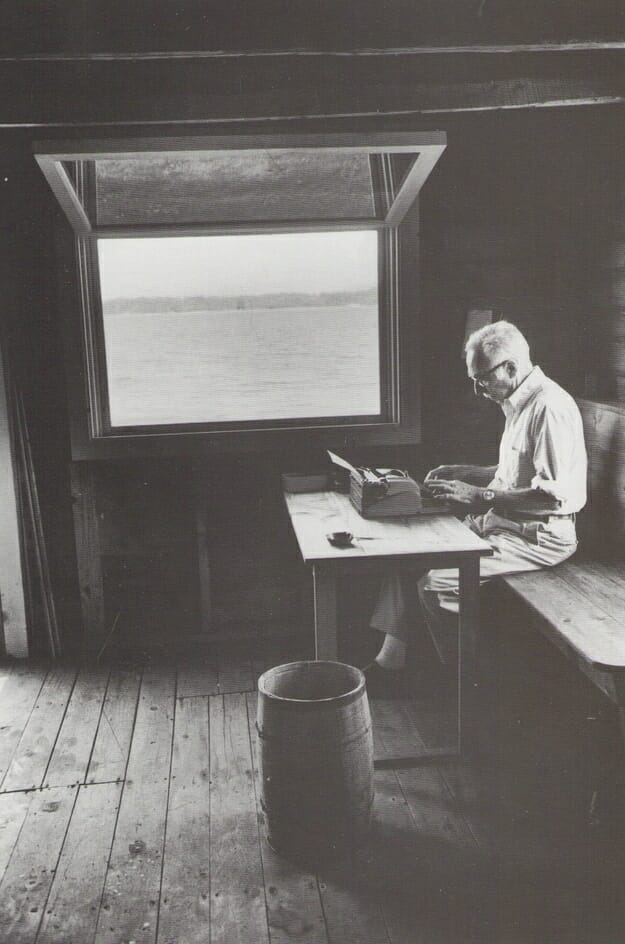
    1. E.B. White, author

    Sometimes all you need is a comfortable desk with a view of the outdoors for inspiration. (Ideally, near a farm with plenty of interesting animals, including a few spiders.)

    Image: e.b. White

    Image credit

    2. Jane Austen, author

    This table may be tiny, but it supported the creation of her later works, including Emma, Persuasion, and a revision of Pride and Prejudice.

    Image: Jane Austen

    Image credit

    3. Mark Twain, author

    When you’re struggling to write, sometimes taking a break can help get your creative juices flowing. Perhaps a game of pool would inspire some ideas?

    Image: Mark Twain

    famouscreatives

    4. Nigella Lawson, chef and food writer

    When you’re looking for inspiration, having all your favorite books within arm’s reach certainly can’t hurt.

    Image: Nigella Lawson

    5. Steve Jobs, inventor

    Jobs was well-known minimalist. He described one home by saying, “All you needed was a cup of tea, a light, and your stereo.”

    Image: Steve Jobs

    6. Virginia Woolf, author

    This simple desk and chair overlooking the outdoors were ideal for writing, at least in the summer. Woolf noted that this converted toolshed was so cold in the winter that she couldn’t hold a pen!

    Image: Virgina Woolf's Desk

    7. Tina Fey, author and comedian

    Were you wondering about the workspace that may have inspired 30 Rock, Mean Girls or Bossypants?

    Image: Tina Fey

    8. Chip Kidd, book cover designer

    Many artists find their creative inspiration in other books, authors and stories.

    Image: Chip Kidd

    9. George Bernard Shaw, playwright

    Keep it simple with a typewriter, a clean white desk and a small window in a private place. That last one was key for Shaw, who once confessed, “People bother me. I came here to hide from them.”

    Image: George Bernard Shaw

    What’s your favorite place to write?

  • How to Beat Writer’s Block: 5 Ways to Face the Blank Page

    How to Beat Writer’s Block: 5 Ways to Face the Blank Page

    Just as an artist wouldn’t be able to rework a blank canvas, a writer cannot edit a blank page. Making mistakes is part of the process; don’t smother your creativity out of fear and doubt.

    Everyone has ebbs and flows in their creativity. Just as bamboo is strong but bends and sways in the breeze, be flexible in your approach to writing, maintaining an awareness of where you are going and the flexibility of thought to follow wherever your creative process takes you, unencumbered by resistance or doubt.

    “The one thing that you have that nobody else has is you. Your voice, your mind, your story, your vision. So write and draw and build and play and dance and live as only you can,” author Neil Gaiman told The Guardian.

    If you struggle to overcome a fear of the blank page, take a deep breath and try one of these techniques.

    1. Take action

    For many, the blank page can be intimidating and overwhelming. Though just as when you worried about a monster in your closet as a child, to make the monster disappear, all you need to do is open the door.

    Similarly, “open the door” to your creativity by starting to write. The trick — as with honing every skill — is to practice.

    Don’t just plan to write — write. It is only by writing, not dreaming about it, that we develop our own style,” author PD James said, when asked for her favourite writing tips by Guardian Books.

    You wouldn’t trust a heart surgeon who has read books on how to operate, but never actually picked up a scalpel. Reading about writing craft is wonderful, but you also need to write — ideally, every day, even if it’s just for five minutes.

    [bctt tweet=”Reading about writing craft is wonderful, but you also need to write, says @WriterJoMalby“]

    “[The] Resistance knows that the longer we noodle around ‘getting ready,’ the more time and opportunity we’ll have to sabotage ourselves. Resistance loves it when we hesitate, when we over-prepare. The answer: plunge in,” author Steven Pressfield told Krista Stevens in this interview.

    2. Stick with the process

    Be prepared to tolerate the anxiety that comes with not being able to write as well as you’d like, and push through it. Suspending judgment when you’re writing frequently leads to unexpected creative gems.

    “That freedom opens you to the surprising stuff you never saw coming; stuff that makes you smile as you sit there in the coffee shop, your mug of joe cooling because you’ve forgotten to take a sip in 15 solid minutes,” says author and Contributing Editor at Writer’s Digest, Elizabeth Sims.

    “When beginning a writing session, new authors often feel that they must jump off to an excellent start, when all they really need is to start.”

    3. Be willing to write badly

    When we allow ourselves to let go of any preconceptions of what our writing should be, we loosen the creative faucet. Let go of your inner red pen and leave the editing until later.

    [Be] willing to write really badly. It won’t hurt you to do that. I think there is this fear of writing badly. Forget it! Let it float away and the good stuff follows,” says novelist Jennifer Egan in an interview with The Days of Yore.

    “The bad beginning is just something to build on. It’s no big deal. You have to give yourself permission to do that because you can’t expect to write regularly and always write well. That’s when people get into the habit of waiting for the good moments, where I think writer’s block comes from. Maybe good writing isn’t happening, but let some bad writing happen …

    “When I was writing “The Keep,” my writing was so terrible. My working title for that first draft was, A Short Bad Novel. I thought: “How can I disappoint?”

    4. Use freewriting to kickstart your creativity

    Many authors advocate freewriting as a wonderful way of coercing your creativity out of its shell — whether you believe in the idea of a writing muse or not.

    “I have forced myself to begin writing when I’ve been utterly exhausted, when I’ve felt my soul as thin as a playing card, when nothing has seemed worth enduring for another five minutes … and somehow the activity of writing changes everything,” author Joyce Carol Oates told The Paris Review in 1989.

    Whether you use a writing prompt, an image, or a line of text from a favourite book, set a timer, start writing and don’t stop until your time is up. The trick is to keep moving, even if you’re not sure what to say next.

    5. Remember to enjoy yourself

    When we feel barricaded in by deadlines or pressured by outside forces, it’s easy to forget the beauty, joy and fun of writing.

    “Have humility. Remember you don’t know the limits of your own abilities. Successful or not, if you keep pushing beyond yourself, you will enrich your own life — and maybe even please a few strangers,” AL Kennedy told The Guardian.

    Celebrate each writing accomplishment, whether it’s as large as finishing your first draft of a novel or as small as writing the first sentence. The more you enjoy your work, the easier it becomes to write the next sentence and tackle the next writing goal.

    How do you deal with blocked creativity and fear of the blank page?

  • Feel Nervous About Submitting Your Writing? Why That’s a Good Thing

    Feel Nervous About Submitting Your Writing? Why That’s a Good Thing

    Does this story sound familiar?

    Whenever I submit something I’ve written for a client, I develop a nervous twitch. I wonder if the client is going to like what I’ve written, or if they’ll think it’s absolute garbage.

    No matter how much time and effort I’ve put into it, how much of my soul I’ve poured out onto the page, I wonder if this will be the time when someone sees me for the charlatan of a writer my self-condemning alter ego insists I am.

    “There, that’s the one,” he says. “That’s the one who’s going to finally tell you just how horrible a writer you really are!”

    This nervousness and anxiety, I’ve come to realize, is actually a good thing, if it’s properly harnessed. You just have to make sure you don’t allow that evil alter ego to speak too loudly, or to convince you that you’re a lousy writer. The trick is in finding the right balance and using your nervousness as motivation.

    Are you really that good?

    If you have no anxiety about your writing at all, you might fail to take constructive criticism seriously — and miss a chance to improve your craft. On the other hand, if you allow yourself to be convinced you cannot write, you might give up altogether.

    The nervousness and anxiety are what propel you to continue honing your skills. If you truly thought you already knew everything there was to know about writing, it wouldn’t be fun or challenging anymore, and there would be little reason to continue doing it. As long as you feel like you have more to learn, though, you will keep working to refine your skills and become an even better writer.

    Anxiety and writer’s block

    This feeling of anxiety isn’t the same as the “writing anxiety” that can block your writing and cripple you as a writer, although these are also often signs that you have a healthy regard for wanting to improve your writing. Writer’s block is a symptom of that same condition, but it isn’t the only symptom.

    No, the kind of anxiety I’m talking about develops after the writing is done. It’s the feeling that the work isn’t quite finished or isn’t quite good enough. You’ve probably felt this from time to time — if not every time you finish a project. The key is to not let this feeling stop you from submitting the work.

    Donald M. Murray describes this issue quite eloquently in his essay “The Maker’s Eye.” He rebukes the illusion that a written work can ever be finished, arguing that “a piece of writing is never finished. It is delivered to a deadline, torn out of the typewriter on demand, sent off with a sense of accomplishment and shame and pride and frustration.”

    Harness that anxiety!

    Use your anxiety to fuel your revisions. Allow yourself to detach from what you’ve written and read it as if you were a stranger to the piece. By becoming your reader, you can look for what the reader wants to find in your writing: information, a call to action, entertainment or a mixture of all of the above.

    Being anxious and slightly nervous about the quality of your work is a good sign that you are passionate about your writing. If you lack passion, you could find your writing career coming to an abrupt end.

    How do I know when enough revision is enough?

    You need to find the healthy balance between revising, rewriting, and realizing that the piece is due and it is time to turn it in. Take to heart all of the praise you’ve received for your writing, and realize that while what you have written may not be perfect, it is high-quality work that possesses all of the soul and heart you can pour into it.

    If you read it as a stranger and find within your words the information, call to action, entertainment, or whatever you wanted the reader to get out of it, hand it in! You’ll likely have another opportunity to revise it after your client or editor has a look and shares her comments.

    Not convinced? Here’s a perfect example: I revised this particular post several times before I took a deep breath and submitted it to the editors, and then revised it once more after their feedback!

    What if the client really does hate my work?

    It’s possible that one day, a client may not like what you’ve written. When that time does come, take it in stride. Not everyone has the same preferences; not everyone likes the same movies, so why would everyone like the same style of writing? Ask for their feedback on how to revise the work: do you need to work on better emulating the client’s voice, strengthening your self-editing skills, or creating clearer calls to action?

    Learn from your mistakes, and move on to make your writing even better.

    [bctt tweet=”Learn from your mistakes, and move on to make your writing even better, says @byrneswritenow”]

    A writer needs to have thick skin and be able to handle constructive criticism without taking it personally. As with any form of art, your skills and abilities should constantly be improving, and you should be able to take constructive feedback and use it to improve your art.

    You’re passionate about your writing — but recognize that with that passion comes some anxiety and nervousness. Just don’t let your nerves rule you — use them to motivate you to strengthen your skills.

    Do you ever feel anxious before submitting client work or pressing “publish” on a blog post? What do you do?

  • How Fear of Failure Keeps Writers From Producing Their Best Work

    How Fear of Failure Keeps Writers From Producing Their Best Work

    Someone, somewhere, will fail today.

    That person might be you.

    In fact, it’s pretty likely that something will go wrong for you today — no day is ever absolutely perfect. Maybe your favorite client doesn’t like the work you delivered. Maybe you said the wrong thing and it cost you a gig. Maybe your latest blog post got negative feedback.

    It happens to the best of us. You completely miss the mark. You fall flat on your face. You get bad results and generally make a mess of things, despite your best intentions.

    You’ve failed. Now what?

    Most freelancers get hung up on what went wrong. They focus on the slip-up, analyze the situation, and dissect every angle, feeling upset and discouraged. They often head over to their favorite freelancer hangout, where like-minded freelancers living pretty much the same sort of life jointly lament about the situation and hash over what went wrong.

    That’s what most freelancers do — and it means they’re lying to themselves. Worse, they’re holding their businesses back.

    The 3 lies that kill your freelance writer success

    Whether you’re just starting out in your career or have already become a wild success, you will fail. You’ll make mistakes, you’ll screw up and you’ll suffer setbacks. This isn’t discouragement; it’s just the way life works.

    What you tell yourself about these failures determines how you move on, and whether you move forward. You can be honest, truthful and proactive, or you can lie to yourself about what it all means.

    What are these lies that freelance writers tell themselves?

    1. It’s personal. This screw-up? It’s all about you — all your fault. You didn’t do the “right” thing. You’re not good enough. The client doesn’t like you.

    2. It’s permanent. You worked hard, tried your best, and blew it. That project? A total failure. It’s done. Over. It’s the end of the line.

    3. It’s pervasive. You never do anything right. You’re always screwing up. You think like Charlie Brown: “Everything I touch gets ruined!” Why even bother trying? It’s just going to be more of the same.

    Sound exaggerated? Not at all. I see freelance writers telling themselves these lies all the time. Worse, they believe them to be true. The more they think these lies and come to believe them, the more these freelance writers slowly, surely, and definitely destroy any possibility of ever reaching success. You’ll find them five years later, with the same sort of clients, the same sort of work and complaining about the same sort of things.

    It’s self-sabotage at its very best. But it doesn’t have to happen to you.

    How to choose your own story

    Think of life this way: it’s a story, and you’re the author. You’re writing your story every single moment of every single day, and the choices you make determine what happens next.

    If you face failure and then spend the rest of the workday running through all the reasons you weren’t good enough, or how this always happens to you, you’ve written a story full of drama. You become a victim of circumstances, wallowing in self-pity.

    That won’t get you anywhere — not in life, and certainly not in business. You don’t have to write that story. You can make different choices, ones that completely change what happens next. Imagine you faced the same failure, and instead of wailing “why me?” you ask yourself this instead:

    “Why not me?”

    Just imagine how your story would change then.

    You see, failure isn’t personal, or permanent, or pervasive — unless you choose to make it so. Failure is only ever temporary, and an isolated result brought about by the choices you made within the given circumstances.

    [bctt tweet=”Failure isn’t personal, permanent or pervasive, says @menwithpens“]

    It doesn’t signify the sum total of your freelancing career existence, even if you’ve failed repeatedly for the past six months.

    It does signal that next time, you should try something different. You’ll inevitably get different results.

    Even better, you can choose to view failure as feedback, like clear GPS evidence that shows you’ve made a wrong turn somewhere and need to get on a different path. It gives you an opportunity to learn something about the path you were on and the behaviors you chose, and it allows you a chance to course correct and get back on track.

    Think about Michael Jordan, a six-time NBA Champion and five-time Most Valuable Player in the world of basketball. He’s incredibly successful, and no one who thinks of failure thinks of him.

    Yet he says: “I’ve missed more than 9,000 shots in my career. I’ve lost almost 300 games. 26 times, I’ve been trusted to take the game winning shot and missed. I’ve failed over and over and over again in my life. And that is why I succeed.”

    Wayne Gretzky’s take on failure? “You miss 100% of the shots you don’t take.”

    Replace failure with failing forward

    Most people see failure as a negative event versus a positive learning experience, but failure makes us better at what we do. Successful people risk failure every day, and their risks often involve very high stakes.

    But successful people risk failure because failure helps them succeed more. They’re failing just like you might be… only they’re failing forward, taking negative results and turning them into positive learning experiences.

    If you’ve been thinking of yourself as a failure for some time, or even just feeling downtrodden about failures you’ve experienced, it’s time for a change in mindset. And since you’ve likely been operating with a failure mindset for some time, adopting a new outlook will likely take some practice.

    Start here:

    1. Ask your brain better questions

    The human mind is built to answer any questions that pop into it. The answers it gives back to you depend on the quality of the questions you ask in the first place.

    Questions like “Why does this always happen to me?” or “How could I be so stupid?” send your mind racing to find reasons that explain why you’re not good enough.

    “What can I learn from this experience?” is a much better question. It sends your mind chasing after answers that become learning lessons.

    Other questions you could ask yourself include, “What can I change about my approach for next time?”, or “How can I use this situation to my best benefit?”

    I guarantee you’ll gain positive results from smart questions like these.

    2. Stop listening to people who aren’t doing any better than you

    It’s normal to share what went wrong with friends, family and people we trust. And very often, these people give us advice about what they think went wrong, and what we should do about it.

    Be careful about whose advice you take. If these people aren’t currently doing better than you and enjoying more success than you are, it’s likely their advice won’t do you much good.

    Seek out advice from people living the type of success you’d love to have — who have the sort of clients you’d like, the sort of income you want, the sort of lifestyle you dream of. They’ve been where you are — and gone far beyond it, which means their advice will likely help you move forward more than anyone else’s.

    Avoid people who continually complain or talk about what’s not going well. Instead, hang around with positive-minded people who fire you up, who motivate you. They look forward to the future, and they’ll inspire you to dream big while helping you achieve your goals.

    3. Seek to serve

    Feelings of failure often creep in when focusing on your own problems and concerns. But mentally rehashing what’s not going well often just reinforces the feelings of failure and how hard it is to succeed.

    That type of thinking keeps you firmly where you are — which is definitely not where you want to be.

    Pull your eyes away from the mirror. Look instead to the needs of others and practice finding ways to lend a hand, while encouraging those around you. Become someone people want to be around, and help them move past their own struggles.

    You’ll deepen your relationships, increase your confidence, and get your mind away from focusing on failure. You’ll also find yourself becoming more of a problem-solver, a person who can see the positive side, take action and help out. With that mindset firmly in place, you’ll soon find ways to help yourself.

    Everyone fails. It’s how you deal with it that counts.

    [bctt tweet=”Everyone fails. It’s how you deal with it that counts, says @menwithpens”]

    You might not be succeeding right now. You might not have all the clients you want, or the type of work you want to do every day, or the sort of income you’d like to be earning.

    That’s okay. You can get to that point — if you’re ready to accept that all failures are actually learning experiences.

    Be willing to look on the bright site, learn from what went wrong and use that as feedback to change your behaviors and make better choices moving forward.

    Just imagine: you’ll have your failures to thank for your success!

    What have you learned from your failures?

  • How Your Miserable Day Job Can Help Launch Your Freelance Career

    How Your Miserable Day Job Can Help Launch Your Freelance Career

    Have you experienced this moment? It happens to nearly every independent and spirited writer stuck on the corporate ladder to make ends meet: the moment you’re sitting in your cubicle and the padded beige walls start closing in on you.

    You don’t think you can possibly muster the motivation to sit through one more pointless meeting, read one more unnecessary memo or answer one more stupid email. You feel miserable, uninspired and imprisoned.

    I’ve been there. As an aspiring freelance writer, I wanted to spend every second practicing my craft and seeing the full benefits of my talent and skills — something that was impossible for me to do while working for someone else.

    Eventually my pot of frustrations boiled over and I channeled the energy into motivation, replacing work I despised with a writing career I could love. If you’re feeling the same type of dissatisfaction at work, writing full-time is likely a career you’ve considered – but never had the motivation to start. Fortunately, your miserable job is exactly what you need to give you that final push in launching your freelance writing career.

    Turn your misery into determination

    Being miserable is a mind game. All that hashing and rehashing the things you hate about work adds up to a lot of wasted time and energy!

    Instead of dwelling on job frustrations, I used my misery as willpower to craft my writing business in the wee hours of the morning and motivate me when I encountered rejection or self doubt. My unhappiness with my job made me more determined to live life on my own terms, giving me a mission that no setback could derail.

    Stop pitying yourself and use your misery as fuel. When you catch yourself being negative about work, make a conscious decision to focus on the goals you’re working toward.

    [bctt tweet=”Turn your day job misery into determination, says @trendycheapo on @thewritelife”]

    Use your lunch break to work through your to-do list. Put sticky notes around your desk with motivational quotes on independence, freedom and success. Stay up late to work on your goals, even when you’d rather binge-watch Netflix. Hey, Leslie Knope and Alex Vause can’t save you from desk prison — you’re going to have to save yourself.

    Use your misery to help you make sacrifices

    Writers sacrifice a lot to start their businesses, especially financially. Launch-related costs like website hosting and design can be expensive, though you’ll probably want to bootstrap your business at first. Additionally, you’ll need a sizable emergency fund to support yourself during slower periods of work.

    Use your daily misery as a reminder to stay frugal. Save every last cent you can. Remind yourself that every unnecessary dollar spent is an unnecessary moment in misery. When you feel the urge to spend money, think back to your cubicle cell and remember you’re working towards a bigger purpose: freedom.

    Stop viewing your job as a roadblock and instead recognize its purpose: funding your personal startup.

    Let your misery push you out of your comfort zone

    Networking is essential for a writer, although it can be tough when you’re stuck at a horrible job. You might doubt yourself and feel insecure about what you have to offer others.

    Yet that misery is putting you in the perfect position to take networking risks. You have absolutely nothing to lose and everything to gain by going outside your comfort zone.

    Join a writing group and follow your niche’s leaders on Twitter. Write thoughtful comments, tweets and emails to get noticed. Print business cards and sign up for networking mixers in your area. And when you’re feeling awkward in the corner of a social event, remember that your ticket out of misery is simply making the right connections.

    Use your misery to push you to take the first step — and then the next

    Building a sustainable writing business is tough and takes a while, especially if you want to work full time. Sure, you may not be able to quit your job tomorrow or next month — it took me six months of planning — but focus on your unwavering desire to leave your job for the opportunity to live life your own way.

    If you put in your best effort, your last day at your miserable job will come sooner than you think.

    Image: Turn your misery into motivation

    Are you stuck in a day job, but planning to go freelance?

  • Cliches to Avoid: 4 Story Endings Your Readers Will Hate

    Cliches to Avoid: 4 Story Endings Your Readers Will Hate

    Writing a book is difficult, but crafting an ending that is both impactful and wraps the plot up beautifully is even more so.

    You worked hard to create a beginning that grabbed your readers, so make sure to write an ending that lives up to the rest of your story. Relying on clichés will only leave your readers feeling disappointed and dissatisfied.

    Stay away from these four cliché endings:

    1. The happily ever after

    What it is: All of the characters in your book live happily ever, with no hardships to bear. The hero defeats his foes and all of the plot twists are nicely tied up – perhaps a little unrealistically.

    Why to avoid it: Life doesn’t necessarily end happily ever after, which makes this type of ending feel disingenuous. You want your readers to feel enthralled with your book so that they’ll want to share it with friends, read more of your work or even re-read your story. Real life isn’t perfect, so make sure that your book stays in the realm of realism.

    2. The drawn-out dream

    What it is: The drawn-out dream ending involves the main character waking up safe and sound in their bed, realizing that the entire plot has just been a dream.

    Why to avoid it: This type of ending typically annoys readers, who feel that the author has copped out. A book should be emotional to everyone involved, and an author who uses this ending seems to betray readers’ trust and cheapen the emotions they’ve felt throughout the book.

    3. The guilty hero’s monologue

    What it is: When the hero finally defeats the bad guy or force, the reader is privy to her internal thoughts of regret or remorse. The monologue is supposed to show the character’s guilt at what she’s had to do and how it’s eating away at her. Even though the ending is happy, our hero must now live with the blood on her hands.

    Why to avoid it: In general, writers should strive to show, not tell, readers what is happening in the book. By strongarming readers into feeling specific, manufactured emotions, you are taking away their freedom to experience the story in a way that is reflective of their background and experiences. Readers may feel they are being led to specific conclusions, and few enjoy the feeling of an author holding their hand throughout a book — especially the ending.

    4. The lover’s life

    What it is: This is a special twist on the happily ever after ending, in which the main character falls in love, sometimes for an unexplained or random reason. It shows that true love makes the world go ‘round and that all that happened in the course of the story was worth it.

    Why to avoid it: Unrealistic endings tend to annoy readers. If a love interest is too sudden, it isn’t all that real. If it is unexplained, it leaves your characters lacking depth. The truth is that not everyone falls in love and lives happily ever after. The best endings are unique, somewhat realistic, and really make your readers think.

    Set the text aside, brainstorm some unique possibilities, and pick up your manuscript again when you have a more interesting picture of what could be.

    If you want to learn how to finish a story the right way, check out our guide here.

    What other cliché endings did we miss? What frustrates you at the end of a great story?    

  • How Too Much Knowledge Can Hurt Your Writing Career

    How Too Much Knowledge Can Hurt Your Writing Career

    “The curse of knowledge” may sound like something out of a cheesy movie, but it’s as real as it gets — and if you’re not able to avoid it in your writing, it could hurt your business.

    The curse of knowledge is the inability to see yourself in a novice’s shoes.

    No matter how brilliant your writing is, it won’t matter if you don’t give your audience a chance to understand it. Your expertise allows you to speak with authority, but using jargon and advanced language will alienate readers with less experience.

    Right about now, you may think this problem doesn’t concern you, that you know your stuff, that you’re great at explaining your subject. So did I — before I realized how my knowledge affected my writing career.

    The curse of knowledge: A case study

    Most of my writing career revolves around WordPress. I have a number of WordPress-related articles on the web, and I published a book called WordPress 3.7 Complete. I know WordPress.

    Most of the time, this helps me because I don’t have to look too deeply to find an idea or an angle when writing a new article. But other times it stabs me right in the back.

    Eventually, I realized that because of my experience with WordPress, I was often failing to address those readers who don’t have the same experience — which alienates them from my writing.

    How did I find out? I took a look at the comments readers were leaving. In complex posts, readers left fewer comments and only referred to the simplest elements of the article. The easier to grasp the language, the more in-depth and detailed the comments were. In other words, people understood and enjoyed the simple approach more than the complex one. It’s similar to Derek Halpern’s analysis of the research showing that using longer, complex words actually makes people think you’re less intelligent.

    If I’m not careful, my knowledge of WordPress could actually prevent me from effectively conveying my ideas. And as a person building my reputation based on my skill in the WordPress niche, this could be a serious obstacle in my career path.

    Does your writing pass the grandma test?

    Not sure if you’re suffering from the curse of knowledge or not? Here’s a simple way to find out.

    Call your grandma and give her a piece of your writing. After she reads it, ask her to share her understanding of the core message. How close are her impressions to the message you wanted to share? [bctt tweet=”Does your grandma understand your writing? If not, you need to revise.”]

    This simple test gives you a quick indication of whether you need to elaborate on a concept or give a little more background explanation.

    Introducing new concepts without drowning in jargon

    Ok, so your grandma should be able to grasp the basic message you’re trying to convey. But what if you need to explain industry jargon?

    Using a bit of jargon in your writing is okay, even necessary, to fully introduce someone to a new topic. But if you use too much of it, you’ll lose your message — and your audience’s interest — in the process.

    Here’s a prime example of the curse of knowledge. Both of these videos attempt to explain gravity to the layperson; which one is more successful?

    This video features slick footage and well-known scientists, but it’s 44 minutes long and addresses additional concepts related to gravity. It’s interesting, but isn’t going to hold most people’s attention for very long.


    Contrast that video with this high school teacher’s workshop, in which he manages to explain the complicated idea of gravity in less than 10 minutes. He’s not using any difficult or technical language. He’s illustrating the concept instead of blasting the audience with scientific jargon, which makes his demonstration engaging and interesting.

    Aim for your writing to be like the second video. Here are two simple steps to help you avoid the curse of knowledge.

    Step 1: Be aware

    You can’t cure yourself of a bad habit if you don’t know you have one, right?

    Being aware is half the battle.

    Now that you know the curse of knowledge exists, keep an eye out for it as you edit your work. Whenever you finish writing a piece, read through it and try to identify the parts that could potentially be hard to understand for the average reader. If you’re not sure, have a less-experienced friend or colleague take a look — or give your grandma a call.

    Step 2: Better yourself

    A famous saying often attributed to Albert Einstein goes, “If you can’t explain something simply, you don’t understand it well enough.”

    This is a bit confusing, since by definition, the curse of knowledge affects people with knowledge. So a lack of thereof shouldn’t be among the causes, right?

    The explanation is in our usual learning patterns. Regardless of the topic you want to master, you’ll go through the same phases:

    1. You start by acknowledging that you know nothing about the topic

    2. You devour all the information you can find, and after a short period of time you think that you know everything there is to know on the topic

    3. You realize how many gaps there are in your understanding and experience a letdown

    4. You begin growing your knowledge, conscious of all there is left to discover

    The curse of knowledge is something that tends to appear between the know-it-all phase and the letdown phase. This usually the time you can’t convey your ideas — not because you are too advanced, but because you aren’t knowledgeable enough yet.

    Admitting that we don’t fully know our subject matter can be tough. However, it’s something that affects us all, and once we make peace with it, we can find solutions. Learning more about your niche frees you from sitting in front of a blank piece of paper for hours trying to figure out how to explain an idea that you don’t fully grasp, and allows you to connect with a larger, more diverse audience.

    So, what does your grandma have to say about your writing?

  • Freelancing with a Family: How to Balance Your Work and Your Kids

    Freelancing with a Family: How to Balance Your Work and Your Kids

    The freelance life can be crazy. There’s always a call to make, a contact to pursue, a pitch to send. It takes time and energy to manage everything without going nuts.

    Now imagine incorporating family, children and pregnancy into the mix — adding the needs and schedules of additional people into your freelance life. How do you embrace the constant stream of demands from your partner, children, self, work and friends without feeling pulled in a million directions?

    The Write Life Founder Alexis Grant recently wrote about the benefits of setting up a freelance writing career prior to having kids to allow for greater options once family and children arrive. As a pregnant freelancer with an older child, I can vouch that freelancing does provide greater flexibility than an office job.

    However, freelancing with a family definitely requires an additional set of rules and skills. Here are some of the strategies that have helped me manage:

    Make a plan

    Be crystal clear on your business and your goals. What comes first? What are the top three must-do items on your list?

    Setting your priorities allows you to organize your daily and weekly activities so that they support your long-term goals. At the end of each week, lay out what you want to accomplish the following week. At the end of every day, make your to-do list for the next day. Then, each morning, you need only open your to-do list and start working through it.

    Outlining your goals will also help you manage your time when emergencies arise. For many freelancers, family comes first: regardless of deadlines, when your family needs you, that’s where your attention goes.

    In this kind of situation, rather than scrambling around in triage mode, simply focus on the top items on your list. The rest can wait until you go back to your regular schedule.

    Figure out when you do your best work

    Maybe you’re the type who grabs available time when it appears and have trained yourself to work in small increments. Or perhaps, like me, you need long blocks of time to focus. Are you a morning person? Or do you work better at night when the kids are asleep?

    Find the time that works best for you, and block it off as writing time.

    Bestselling women’s fiction author and mother of four Catherine Mann divides her tasks into three types depending on the level of concentration she needs for each. “I edit when waiting in lines, and it’s easier to start and stop. I research while sitting with the family watching television. Fresh writing happens during the precious quiet hours alone.”

    Outline your schedule

    Lay out all your commitments in your calendar, including deadlines, time to write, meetings, school and anything else you want to do. You may choose to include both work and personal appointments.

    Zach Everson, a father of two-under-four who writes for AOL Travel and Gadling, suggests “blocking off family time like any other project. If a client asks for that time, the answer is always no. It’s non-negotiable.”

    Some prefer to schedule each minute of the day down to the last second. Others schedule only the most important or organize their time more generally. For example, my daughter Lila goes to school in the mornings, so that’s when I work on my book and write articles. In the afternoons, I focus on smaller work projects, social media and spend time with family.

    Always remember to leave extra room in your schedule for the unexpected. While you don’t want to make a habit of deviating from your plan, you want to be flexible enough to accommodate projects that run longer than planned or other life events that might arise. (Click to tweet this idea.)

    If possible, rely on a partner…

    In her book Lean In, Sheryl Sandberg advises that to create a successful work and home balance, you need a partner who is really a partner, someone who puts as much into your home life as you do. She may have been referring to C-suite executives, but her words apply to freelancers as well.

    While nothing in this world is perfect and equal, it’s crucial to have a conversation with your partner to assess the needs of the household. Who needs what and when? What is reasonable to expect from each person? Taking all variables into account, decide together who will take responsibility for what.

    … Or outsource so you can work efficiently

    What if you don’t have a partner? Or if it’s unrealistic to expect your partner to take on additional responsibilities? Sometimes, it simply makes more sense to hire the help you need.

    First, identify where you most need extra support. Perhaps formatting blog posts stymies you, or you resent the time it takes to schedule your social media updates. Next, decide which items on your to-do list must be done by you, and which you can hand to someone else. Finally, create a document that outlines how to accomplish each task; you’ll simply hand over processes for someone else to implement. Remember, also, you can hire someone to help you with household chores or babysit if that is more appropriate to your life.

    Jillian Tobias, a writer who runs her own social media strategy company, brings in a babysitter to care for her nine-month-old twins for a few hours every day. This arrangement allows her to concentrate on work without worrying about her mom role. As an added benefit, knowing she has limited time to meet deadlines forces Jillian to be hyper-focused and finish her work quickly and efficiently.

    Procrastination is your greatest enemy

    If you procrastinate away a day of writing time, it’s unlikely you’ll recover that time elsewhere. Instead, you’ll lose sleep, family time or time you set aside to complete other projects.

    It takes practice sticking to a schedule and trial and error to learn what works best for you. Ultimately, you have to be honest with yourself. If you’re wasting time, find ways to stop.

    Let go of the idea of doing it all

    There’s this misguided idea out there that parents must be perfect. Square meals. Proper bedtimes. Only educational activities. Oh, and please keep the house immaculate while writing impeccable prose.

    Professional blogger and writer Leigh Ann Dutton advises that you clear all guilt from your mind. “Guilt takes up precious real estate that could be better used moving projects forward or caring for your family.”

    If the house gets messy, if you end up wearing dirty clothes, if you order in — it’s ok.

    Celebrate your wins

    It’s easy to berate yourself for what you haven’t done and forget how much you’ve accomplished. Instead, take time at the end of every week to highlight what you finished and give yourself a huge pat on the back. Your to-do list will be waiting for you when you return on Monday.

    Life is too short to spend worrying or feeling frazzled because you can’t do it all or be everything to everyone. Instead, balance your time and life so you can not only complete the work most important to you, but you can spend satisfying, relaxing family time as well.

    Do you balance freelance work with family time? What’s your favorite strategy?