Tag: freelance writers

  • Don’t Feel Guilty, Freelancers: 4 Reasons to Love Coffee Shops

    Don’t Feel Guilty, Freelancers: 4 Reasons to Love Coffee Shops

    It sometimes feels like freelancers and coffee shops seem to go together like some of the great combinations in the world. (Spaghetti and meatballs or peanut butter and jelly, anyone?)

    But the real question is: Why has this vision become such a freelance-writing cliche of happily typing away while sipping your favorite latte?

    Beyond the romanticized idea of being able to pick up your laptop and work wherever you wish, there are some major benefits of writing an article, memoir or even a simple blog at your favorite coffee shop.

    Like many other freelance writers, I’ve experienced many moments or reasons it makes sense for a freelance writer to want to spend time perfecting their craft at a coffee shop.

    1. The location lends itself to inspiration

    What better way to inspire yourself than being surrounded by tasty coffee, eclectic interior designs (furniture I could only dream of owning) and fancy coffee cups?

    The notion that sometimes “faking it until you make it” plays out well in a coffee shop.

    You are sitting amongst so many things you may wish to own one day which could potentially spark the drive to pitch articles around that topic. Sometimes, even being in a spot that inspires you can break imposter syndrome moments from slipping into your mind.

    2. The “I see you here often” moments

    This is said in a non pick-up-line type of way, but constantly being at a coffee shop tends to spark conversations among others who may have also chosen this particular coffee shop as their remote working spot.

    It’s not rare for others to gravitate towards familiar faces and wonder what exactly they are doing, working on and what industry they work in.

    I was approached at my coffee shop of choice and later left with someone who would be able to teach me how to write for SEO.

    This individual had seen me day in and day out typing away and figured the opportunity to network was upon us. He needed a writer and I needed SEO help. Voila, a partnership made over coffee!

    3. Self care

    Freelance writers are one group of workers that tends to deal with isolation, exhaustion and depression at a higher rate than others due to the autonomy of the industry.

    Leaving the house or apartment and finding a place to work, relax and also be among people and inspiration seems like an ideal escape from the compounds of your home — no matter how cozy it is and a great way practice self care.

    It only makes sense that a person freelancing decided that a coffee shop, with all the comforting amenities of home, would be the ideal spot to work and the freelance culture accepted the coffee shop as a “home base” away from home.

    4. A chance to network and connect

    Beyond nabbing a client at a coffee shop, I’ve also had experiences where two people networking becomes a web of networks once others jump into the conversation.

    Two freelance photographers were chatting and another guy at the table next to them leans in and offers them an internship at a photography studio he owns.

    A Starbucks barista, who pours my latte every Monday, is actually a photographer and videographer who needed some marketing to give his business an extra push. Had he not made a passing comment while making my Matcha latte, I wouldn’t have known. Business cards were exchanged and instead of simply being my barista, we now help each other with our freelance business ventures.

    Being out in the open and chatting about your work can also bring others into the conversation who would not have been there had this conversation been over the phone while both individuals were in their respective homes.

    The coffee shop puts you out there, gives you the figurative microphone to put your writing portfolio, aspirations and pitches out in an environment that invites conversation in a relaxed environment. Sometimes, it can really work in your favor — and, you are filled with caffeine so that’s a plus too.

    The downside of writing from a coffee shop

    Of course, working from a coffee shop isn’t going to be perfect. There are some downsides, mostly in the form of distractions.

    Unfortunately, as much as freelance writers may be a big part of the coffee shop population, we are not the only ones who frequent there, so you may be stuck next to a gossiping teenager, loud man on the phone, or someone with a cold who probably shouldn’t have left the house.

    Beyond distractions, the only other downside is the “payment” for using a coffee shop.

    Obviously, while you may be able to pop in and sit at some shops, it’s definitely frowned upon, and buying a product is the typical “payment” for your time. It does add up if you try to go every day, so it may be best to budget your week out and use coffee shops for those days when you need the inspiration and caffeine the most.

    Whether you are a seasoned coffee shop freelancer or figuring out that mixing caffeine and conversation can do wonders for your career, there is no denying that coffee shops offer the perfect combination to jumpstart your energy, networking and writing.


  • 5 Crucial Tips if You Want to Write for Local Publications

    5 Crucial Tips if You Want to Write for Local Publications

    If you’ve pitched stories to national outlets before, you know to expect a rejection within two weeks or so. That’s because these media organizations typically have larger staffs, and might call on another editor to look at your pitch.

    However, local publications are often much smaller and might not have as quick of a response time. That’s why the first pitch is so important.

    After freelancing for almost a year, I finally broke into an independent regional magazine.

    Now, I regularly contribute to city-specific publications, including an alternative weekly and hyperlocal, neighborhood-specific news blog.

    In addition to discussing my experiences, I reached out to a few editors and writers about breaking into local publications for the first time.

    1. Find a local angle

    You may be tempted to pitch a national story to a local newspaper or magazine, but think again.

    Although national issues affect the smallest of towns, you need to find a hook to make them locally relevant.

    Do look for local angles on national stories,” explains Ken Schlager, editor of New Jersey Monthly. “Don’t pitch the obvious, like a review of a new restaurant. Do pitch local trend pieces that might not be obvious to the average observer.”

    For instance, in February, some local punk bands hosted a benefit show for a 24-hour LGBTQ suicide hotline. Although the story began as timely coverage of an event, the story was an opportunity to localize transgender rights and discuss bathroom bills in different states.

    “Get a good sense of what’s been done already and try to find uncharted territory, or perhaps a different angle on a story that’s already been told,” says Lindsay Lennon, who regularly contributes to regional publications. “If there’s a seemingly great story that hasn’t been covered yet, try to get the scoop on why.”

    2. Always look for stories

    If you’re truly committed to telling your community’s stories, try adopting a new mindset. For every event you attend, remind yourself that you are the storyteller in the room and rock it.

    “Walk your beat,” Lennon stresses. “Talk to people. Go to local government meetings. Pick up the phone. Do not just send out emails. Sit down and have a chat with the mayor or the town supervisor or anyone who is considered a local magnate.”

    While many journalists and writers search for sources on social media, especially those in the millennial generation, Lennon prefers to stay within her own network. When you’re working with strangers, including those you’ll never meet face-to-face, credibility could be taken for granted. That’s why she prefers to only interview those she knows.

    Personally, I have used the internet to get connected, but I usually try to contact sources to verify their interest in going on the record before pitching a story.

    3. Pitch far in advance

    Especially for print publications, you want to give editors a lot of leeway when it comes to timeliness.

    For example, in February, I pitched a local print magazine editor June, July and August stories.

    A lot of times, local magazines have annual themed issues — top doctors, best & worst surveys, best new restaurants — and you can easily find out what month those issues come out, so you can time your pitches,” explains freelance writer Kate Andrews, who has been reporting on local issues her whole career and currently contributes to several publications specific to Richmond, Virginia.

    Andrews recommends pitching magazines three months ahead of time, as well as looking over the submission guidelines. “Of course, read the publication thoroughly before pitching so you know what they cover and know what they have written about recently, so you can avoid pitching the same story,” she adds.

    4. Know your competition

    If your community has multiple publications dedicated to local stories, it’s best to familiarize yourself with all of them. Likely, they’re all competing with each other.

    As a freelance writer, you might not have to commit yourself to one, but reading different publications helps you understand the tone and style of each one.

    “If there’s a competing publication, pay attention to what they are writing about, so you don’t pitch that story to the first publication,” Andrews mentions. “I guarantee the editors for both are paying attention to the other one. That’s not to say you can’t write for both, but it’s probably smarter to pick different subject areas so one publication doesn’t feel ‘robbed’ if you write a story for the other one.”

    The writing world is a small one, especially when it comes to local publications.

    “Be aware that if you’re in a smaller or midsize city/region, most of the editors/staff at local and regional publications know each other,” Andrews adds. “So, if you burn bridges in some dramatic way at one place, word will travel and you may not get any work. On the other hand, if you have a good reputation at one publication, you may get work at a second place.”

    5. Emphasize your familiarity with the area

    Show the publication you’re an expert, and make a personal connection.

    Shoshi Parks, a contributor to Hoodline who lives in San Francisco, contacted the publication first with her qualifications. In her introduction email, she explained her familiarity with the neighborhood —in addition to having lived there for a decade, she owns a small business in the city and is active in a few local nonprofit organizations. She also included a writing sample.

    “Your perspective on your city is valid and unique,” Parks elaborated. “Think about what’s in your world and use it to convince editors that you have a valuable point of view. Having a writing sample or two is also helpful, even if it’s self-published, so that editors can see your skills for themselves.”

    When reaching out to local publications, you should take pride in where you live. Promote yourself as a local authority who is qualified not only as a writer, but an expert, to report on regional issues that matter the most to the surrounding community.

    “I find writing for local publications to be so fulfilling as both a storyteller and a consumer of information and lore,” Lennon adds. “Having a sense of place is one of the warmest and most oddly comforting phenomenons I’ve experienced in my life, and I think writing about a place and its inhabitants only enhances this sense.”

    Challenge yourself as a writer to find interesting stories through events, people you know, and of course, everyday life. Ask yourself what your community needs to know through local journalism, using your insight as a community member.

    Chances are, you probably have a lead under your nose to break into local publications.

  • Flying Under The Radar: How to Use LinkedIn to Find Writing Jobs

    Flying Under The Radar: How to Use LinkedIn to Find Writing Jobs

    With so many social media outlets available, and many of them much more popular, LinkedIn flies under the radar for freelance writers.

    LinkedIn is largely thought of as the professional’s social media network, but freelancers (myself included until I learned better) generally think LinkedIn is for the professional looking for full-time work only. Wrong.

    Not too long ago, I wouldn’t have thought of using LinkedIn to find freelance writing gigs. Now that I know better, I regularly use LinkedIn to connect with businesses looking for writers, and the leads just keep coming.

    Here’s how to use the professional network to get more assignments.

    Start with your network

    Most people have at least 100 connections on LinkedIn.

    Those connections are probably a mix past business colleagues, friends and family, and people you don’t actually know but are in similar professions.

    Have you ever thought of asking those connections for an introduction to a publication or business you want to write for?

    I have 312 connections. Of those connections, I might know 75 of them personally. But when I search for a company or a business I want to write for, most of the time one of my connections is also connected to someone at said business or publication.

    This provides the perfect opportunity to leverage my network to make a new connection.

    Most would agree, knowing someone who knows someone is better than a blind pitch. LinkedIn, as Carol Tice, long-term, successful freelance writer told me me in a mentoring conversation, “This is the one place where asking your network to introduce you to a new publication or business is acceptable.” In fact, she’s been hired by Fortune 500 companies through LinkedIn.

    It’s the professional’s social media network for a reason!

    So how do you do this?

    1. In the search bar, type in the company or publication you’re interested in writing for.
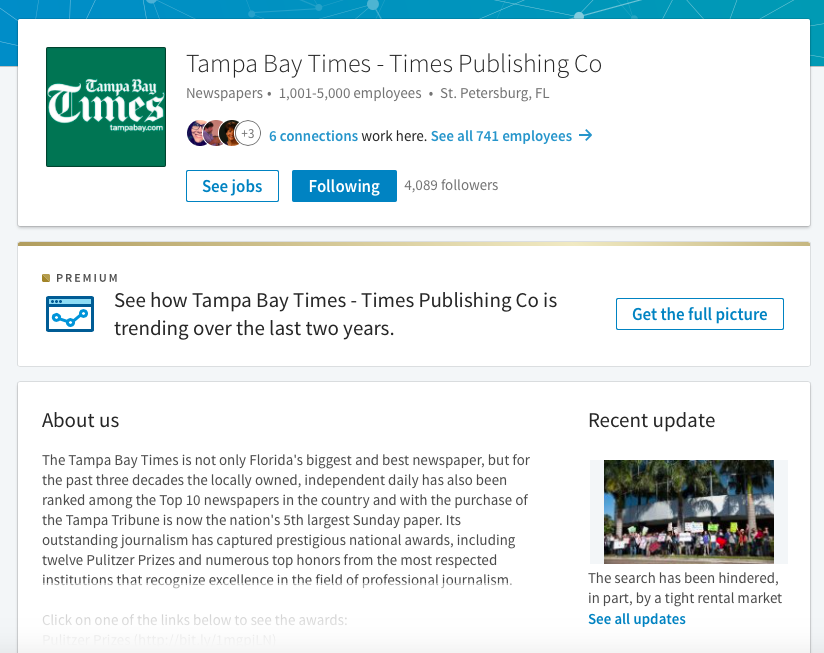
    1. Pull up the company page and see if you have any connections in common.

    LinkedIn Business Page

    1. Click on the blue link that tells you how many connections you have in common, and choose one of them to reach out to.
    1. Reach out to one of them directly, and send a quick intro (not a full-fledged letter of intent or pitch) through the messaging option. You can ask if they know who you’d contact or if they’d be willing to introduce you through email to someone.

    Ever looked up a marketing manager or editor and noticed you had connections in common?

    Another way to use your LinkedIn network to your advantage is to ask for an introduction to the person you’re trying to connect to.

    how to use linkedin

    Use InMail

    Did you know you can try LinkedIn Premium for 30 days for free?

    Sign up for a trial and use the 30 free InMails to get your name out there to businesses you want to work for.

    LinkedIn makes it really easy to find marketing managers and editors with its intuitive search features.

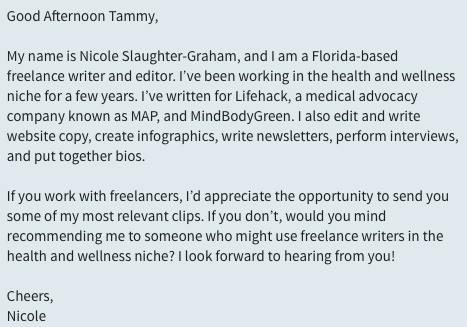
    When sending InMail, a quick introduction rather than a detailed pitch is best. Send a little inquiry letting the prospective client know about your experience and your services.

    This is what mine looked like:

    LinkedIn_Message

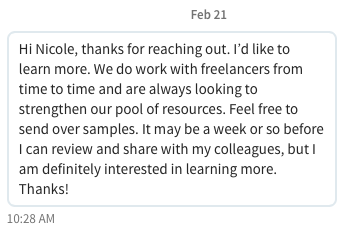
    About three weeks later, I received a response that went a little something like this:

    LinkedIn_Response

    I learned about using InMail thanks to a post on Carol Tice’s blog, Make A Living Writing about how to use InMail to connect with prospects.

    The easiest way to use InMail in volume is to narrow down your niche. I chose higher education and health, because those are two of my favorite topics to write about. Then, I used the LinkedIn search feature to search marketing managers in those two niches. This helped me narrow my results so I could choose who to send InMail to.

    Become a LinkedIn Pro with ProFinder

    A relatively new feature, LinkedIn ProFinder connects freelancers with clients. It’s easy to get started, and the results can be pretty great.

    Just click on the “Join as a Pro” link in the top right-hand corner of the LinkedIn Profinder page and fill out the prompts. You are able to select the services you provide and once approved, ProFinder will connect you with businesses submitting jobs that match your skills.

    I signed up for ProFinder and about a week later, I found out through email I was added to the ProFinder network. Not two days after that, I received an email for my first lead.

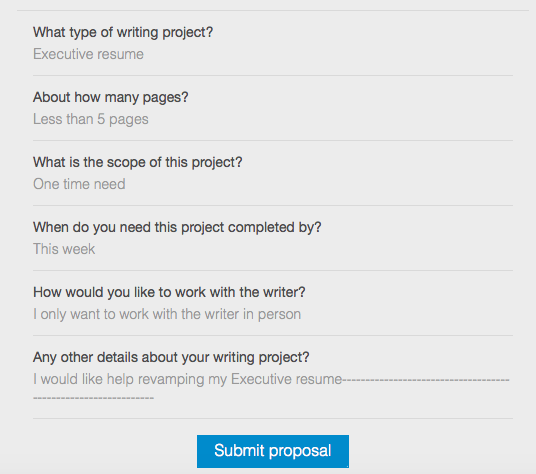
    The leads include everything you want to know about the project, and you will be invited to submit a proposal.

    It will look a little something like this:

    LinkedIn_ProFinder

    If the job is something you are interested in, go ahead and submit away! In the proposal, you will write a brief cover letter and submit an hourly or project rate.

    Since I started with ProFinder about a month ago, I’ve been notified of five projects, submitted proposals for three of them, and been contacted for two interviews. I’m still in conversation with one of the prospects and have already signed a contract with the other.

    Definitely worth the time!

    Even if you aren’t keen on using social media to find freelance gigs, think of LinkedIn as more of a networking tool.

    It really is a goldmine if used to its full potential.

    Have you used LinkedIn in your freelance business? What techniques work for you?

  • Freelance Writers: Join us for a Quarterly Check-In

    Freelance Writers: Join us for a Quarterly Check-In

    How has your freelance business gone this year?

    Are you earning what you hoped to be earning? Are you analyzing what you’re doing right and what you could do better? Do you have any goals for the next three months?

    Believe it or not, we’re already in the second quarter of 2017 — which means it’s time for our first Quarterly Freelance Check-In.

    I’ve put together five check-in questions and answered each of them below, and they really helped me clarify what I need to do career-wise in the next three months.

    As you read about my challenges and goals, think about your own — because I’m going to ask you the same five questions.

    1. How much money did I earn this quarter?

    This quarter, I earned $15,070.04 in freelance income, of which $14,555.25 has currently hit my bank account.

    These earnings meet my $5,000/month income goal, but just barely.

    In the fourth quarter of 2016, I earned over $10K per month thanks to a big, high-paying project. Now that the project has completed, going back to $5K/month is a significant income adjustment.

    It wasn’t just the project completion that halved my earnings. One of my clients no longer needed me as a freelancer — it was a budget thing, and we ended on good terms — and I stopped getting monthly Patreon income after I finished the draft of my novel. (If you haven’t yet read the story of how I used crowdfunding platform Patreon to fund the draft of my forthcoming novel, you should.)

    So I had some expected income losses as well as some unexpected losses this quarter. I still hit my bottom-level income goal, but I didn’t exceed it. At all.

    2. What was the best thing I did for my freelance career this quarter?

    I’m deep into production, marketing and promotion for my forthcoming novel, so I’d like to think that the best thing I did for my freelance career this quarter was hold steady.

    I knew going into 2017 that I’d spend the first six months hugely focused on my book, which meant that it wouldn’t be a good time to take on a brand-new anchor client.

    Building a strong relationship with a new group of editors takes more time and energy than maintaining a strong relationship with your current editors, so I elected to stay focused on my current clients — and on my novel — instead of adding the work of finding and building a relationship with a new client.

    3. What was my biggest mistake (or, what am I going to do differently next quarter)?

    My biggest mistake was not realizing how much a $5,000/month income might set me back. I’ve lived on $5,000/month before. At one point it was an income stretch goal.

    However, things have changed for me in the past few years:

    • I moved from a tiny studio apartment with no kitchen into a one-bedroom apartment, and my rent increased by $320 per month. (I currently pay $995/month in rent.)
    • I got out of credit card debt and never want to get back into it again. Putting items I can’t afford on credit cards is no longer an option.
    • I changed CPAs and now set aside 25 percent of my income for taxes, instead of 20 percent. (I always got huge tax bills at the end of the year when I saved 20 percent, so it’s not like I didn’t need that money for taxes.)
    • I want to put 15 percent of my income in savings, not the 10 percent I had been previously saving.
    • I’ve opened up a Roth IRA and want to make the maximum contribution every year.
    • The basic costs of living have gone up slightly. My health insurance premium, for example, costs $82 more than it did in 2014.

    So $5,000/month doesn’t feel like “enough” for me anymore. It feels like the kind of income that is going to prevent me from investing in myself and my career.

    4. What do I want to achieve as a freelancer next quarter?

    I want to earn more money.

    $5,000 per month meets my basic income needs, but it doesn’t allow for a lot of growth, either personal or professional.

    With more income I could justify going to more writers’ conferences, for example. I could also save more money, spend more time visiting friends, and buy a new sofa to replace the saggy, uncomfortable Ikea model I currently have in my apartment.

    The trick is to balance my income needs with my available work time. Last year, I had a very balanced work schedule and I’d like to maintain that. During the first quarter of 2017, I had a little more space in my workday; the goal for the second quarter of 2017 is to fill just that space — and no more — with the highest-earning projects possible.

    I’d like to increase my income by $1,000-$1,500 each month, and I’d like to do it by taking on just two more projects each month. That would give me both the income — and the balance — to live comfortably.

    5. What steps am I taking to get there?

    I’ve started reaching out to some of my highest-paying clients to either pitch additional articles or express interest in taking on more work. Ideally, these clients will have a few extra pieces I can take on and this problem will be solved.

    Right now I’m focusing on clients with whom I’ve already established a relationship, rather than cold-pitching new clients.

    If those clients don’t have additional work for me, I’ll reach out to a few clients who have expressed interest in the past, but whom I’ve had to turn down because of time constraints. If those clients don’t have work, then it’s time to reach out to my network and start figuring out who’s hiring.

    Now it’s your turn! Are you ready to tackle the check-in questions?

    Take the time to think about your own answers — and if you feel comfortable, share them in the comments.

    The more specific we get about what we want and how we’re going to go after it, the more likely we are to achieve our freelancing goals.

  • Freelance Writers: 3 Methods for Balancing Busy Client Days

    Freelance Writers: 3 Methods for Balancing Busy Client Days

    If you’re like me, fellow freelance writer, you have a few (or more) clients that you have to pay attention to on the regular.

    While the ideal schedule might have you batching large chunks of time and only focusing on certain projects or client on certain days, there are times when that to-do list grows and that plan just isn’t possible.

    Which might mean that, on any given day, you’re working on web copy for a local startup, telling a story with stats for that leadership firm’s next infographic, or writing clever out-of-office messages for your digital-marketing client.  

    The variety is exciting. It keeps the days moving, and lets you flex all sort of writing muscles.

    Yet despite the energy of your medley of clients and projects, the variety can still provide a sincere challenge: How to quickly and smoothly switch gears as you work on one project to the next, especially when you have a mile-long to-do list and only so much time to do it in.

    These three tips can help you transition among your diverse projects.

    1. Switch up your environment

    Where do you typically work? Our physical surroundings contribute — often more than we realize — to our mindset, productivity, and creativity. I know I work best from my home office in the mornings, when the sun is rising and light floods my eastern-facing windows. The same energy that the space brings in the mornings isn’t there in the afternoon, though, and I can feel, on a visceral level, my productivity and creativity plummeting.

    It takes switching up my environment to break my mindset. Once I came to that realization, I also realized how valuable this tactic is for switching mental gears between clients or projects.

    While it can’t always mean leaving the house to hit up a coworking space or coffee shop, it can mean switching from your desk to your couch to your kitchen table.

    Or, you can focus on the smaller details of your surroundings.

    Two things I always have going in my home office are music (thank you, Spotify) and my essential-oil diffuser. Sometimes all it takes to switch gears is putting on a different type of music — low-key house beats over celtic instrumentals, for example — to trigger a mental shift.

    Other times, it takes an appeal to our strongest sense: smell. In that case, I might switch from an earthy, balanced blend in the diffuser to a citrusy, energetic blend.

    When you switch up your environment, your brain naturally snaps out of the zone it was in when you were chugging away at that one project, and gives it the shock it needs to recognize a change and switch gears.

    A bonus: If you only listen to a certain type of music when doing a certain task, your brain will naturally associate one with the other, and your transitions will be even smoother.

    2. Use a different font

    This is an incredibly simple hack, but it really can be that easy.

    I often switch between three or four clients in a day — each of whom requires an entirely different persona. Because of this, I like to think of each font as a voice. (Bear with me here.)

    For one of my clients, I write only in Droid Sans. For another, it’s Trebuchet MS. When I’m free writing during my daily #justwrite session, I often move over to OmmWriter and choose the typewriter setting.

    Much like changing up your physical surroundings, choosing to use a different font per client or project will help your brain get associated with different types of work or voices.

    Seeing that font will trigger recognition and help your brain turn over quicker.

    3. Break up batches with a mental break

    So your day might not be built with those ideal three or four-hour batches, but it doesn’t mean you can’t Pomodoro your way through your projects in smaller chunks.

    Even then, though, those hyper-focused periods of work require a mental break in between. It’s good for your productivity. It’s good for your creativity. It’s crucial for preventing burnout.

    Whether or not you think you need it, build in mental breaks throughout the day.

    Head out the front door and go for a 15-20 minute walk or jog. Find a comfy spot and put on a five-10 minute meditation. Grab that paperback you’ve been ignoring and read for 15 minutes. (Snack while you do this — eating is important, too, believe it or not.) Hit up the couch for a 10-20 minute power nap.

    The most important thing? Shut your brain down. Intentionally stay away from screens.

    It can feel like you don’t have time to step away, but I promise — you do. And if it feels like you’re slacking, remember this: The best ideas don’t require being in front of a screen. It’s during my “mental breaks” that I’m subconsciously turning over ideas, digging into problems, and coming up with solutions.

    Break your patterns to be more productive

    Routine is good. It helps us accomplish our non-negotiables. If it weren’t for routine, I wouldn’t exercise regularly, or drink the 75 ounces of water I aim for in a day.

    But when it comes to switching gears among the plethora of clients or projects you’re serving as a freelance writer, sometimes it requires breaking that routine, switching up your physical and digital surroundings, and walking away (for a little while) to be able to effectively switch gears and get it all done.

    P.S.: Nearly all of the above is best done with coffee. It always helps.

    How do you transition among your diverse client projects? Share your tips below!

  • What Happens When Your Editor Leaves? Advice for Freelance Writers

    What Happens When Your Editor Leaves? Advice for Freelance Writers

    Having a long-term working relationship with a paying publication’s editor is a freelance writer’s delight.

    Freelancers who send out lots of pitches know the routine: sometimes your query isn’t answered for six months or more; sometimes it’s answered by a form reply that implies that it wasn’t even read; and sometimes (Oh, cruel world!) your query isn’t ever answered. It got a one-way ticket into the ether.

    So, when you do get into the good graces with an editor — when you address them by first name, when you can breezily put together informal queries with one-sentence story ideas and they are actually considered — that’s good gravy.

    And then there is entry to Writer Valhalla: the editor suggests story ideas to you, dropping you casual notes like, “Tom, this one seems right up your alley ….”

    Sweet.

    But when that editor leaves the publication? Sour.

    But you don’t have to just pucker in pain if the publication pulls a switcheroo on you.

    If your editor leaves, was dismissed or even spontaneously combusts, you have a new objective: winning the confidence of the replacement editor.

    Illustrating the old editor/new editor evolution

    These matters are best explained with a real-world example.

    Mine is this: In 2012, I wrote a short piece for The American Scholar magazine’s Works in Progress (WIP) section.

    Having been around since 1932, you might think the magazine is a little long in the tooth, but it’s a lively publication that still appears in polished print on a quarterly basis.

    So, it was a plum for me to get into a regarded magazine with a broad circulation. The section editor enjoyed my first piece, and encouraged me to submit again. And again.

    Over three years, I had 11 pieces published in the Works in Progress section, and all were delightful to write.

    But alas, in mid-2015, my editor resigned, and in a genial email introduced me to the new section editor.

    I had one pitch in progress to the magazine, which the new editor took over. But that piece was graciously declined, because the magazine’s head editor wanted to break from the past WIP and explore “much more dynamic and original projects.”

    Keep scrubbing the decks (but use a different cleanser)

    Right off the bat, I knew I wanted to continue being published in American Scholar. Even though I was writing short, front-of-book pieces, I liked writing them, and the pay (around $.75 per word) was decent.

    So, over the course of the next year, I sent five or six queries.

    The criteria for the new direction of the section was a bit vague, but as the new editor said, she’d know the right pitch when she saw it. I kept an eye out for story ideas that seemed worthy of the WIP section, but that perhaps seemed a little spicier, or more unusual, or more out of the mainstream than before. (Whatever that might mean.)

    None of my new queries made the cut, until in March of this year, one finally did.

    After that article, my next quick pitch was tentatively accepted (though later declined).

    But the conversation is rolling. It feels great to re-establish the relationship, and to move forward.

    Below are some recommendations on how you keep your pitching fire alive, even when your favorite editor has left:

    Give thanks, and keep knocking

    First things first: You should have been thanking your original editor all along, with every acceptance; with every edit suggestion.

    Thank the editor for working with you. Leave a legacy of good feeling at the publication and stage the same for the succeeding editor.

    Besides thanking them, if your editor is moving to another publication, be quick to research that pub and suggest story ideas. Your old pal knows you can deliver the goods, so try to set up a new gig with them.

    If you think it’s time for you to also move on from the old publication, do it. Don’t fret if one magazine relationship has come to its rightful end. Cultivate another.

    But if you want to continue working with your original publication, do the work. Don’t be a pest, but keep yourself top of mind with pitches and suggestions. I often say, “Hope I’m not bugging you, but …” when I want a little elaboration on what they are looking for or why my pitch didn’t make it.

    Of course, never grovel and don’t write long requests or explanations. You are a professional. You’ve done good work for them before — correspond with the sense you’ll do good work for them again.

    And of course, thank them again when your byline (and you) are back in the saddle. Being a pleasant (and competent) writer to work with usually means you’ll be assigned more writing.

    I’ve been writing for Airstream Life magazine and a couple of its offshoots for more than 10 years. I’ve written scads of articles for its publisher, who has become a colleague and friend.

    I dread the thought that Rich might leave his post, but if he does, I’ll introduce myself to his successor, and keep pitching.

    Has an editor ever left a publication you wrote for a lot? How did you handle the news?

  • Freelance Writers: How to Take Time Off (Yes, Really!)

    Freelance Writers: How to Take Time Off (Yes, Really!)

    No doubt about it, the freelance life has some perks.

    You can work on a deck with a glass of lemonade or even put together some prose at your local museum.

    Sometimes, you can set your hours and make time for a mid-morning yoga class or make a doctor’s appointment for the middle of the day.

    But despite these perks, it’s hard to really, truly get away as a freelancer. Sure, you can work from a hammock (full disclosure: I am typing this from a hammock on my back porch right now).

    But you’re still working.

    But getting away — not just from your typical surroundings, but also from your phone or email inbox — is possible.

    Here are a few tips for taking a real vacation — or as close to one as you feel comfortable taking.

    Pick your destination with unplugging in mind

    It’s hard to ignore a blinking message light on your phone.

    What does that little green flashing light mean? Does it mean your editor hates the piece you submitted? Is a new editor excited to work with you on a time-sensitive piece?

    It could mean anything, really, and it’s tempting to succumb to temptation and check your messages, even when trying to “disconnect.”

    The surefire way to avoid this notification anxiety? Go somewhere your phone doesn’t work.

    It’s not too hard to find a campground with no cell phone service, data connection, or Wi-Fi. Even just a weekend where you’re disconnected can go a long way towards unwinding.

    Of course, it might also make you a nervous wreck who drives 30 miles for a data connection twice a day just in case. Some people find it less stressful to “unplug” somewhere they can check in once a day or so for five minutes and turn their phone off the rest of the time.

    A “disconnected” vacation doesn’t have to mean being disconnected 100 percent of the time. Trial and error is the best way to figure out what works best for you.

    Communicate ahead of time

    If you don’t normally work on the weekends, going far out of cell phone reception for one weekend isn’t likely to be something that requires advance communication with clients.

    But if you’re disconnecting for a longer period of time, it’s important to communicate when you’re going to be unreachable. And this doesn’t mean just slapping up an auto-reply on your way out the door saying you’ll be gone for the next month.

    If you’re heading away from cell phone reception for more than an afternoon or so, look at the calendar to see which clients might need to get a hold of you during the period you’ll be away.

    Are you expecting to receive edits on a piece soon? Is it a client’s busy season where they frequently send you last-minute assignments? There’s definitely a bit of guesswork involved, but it’s important to consider what might happen while you’re away.

    A lot of this depends on how long you’ll be gone for. If you’ll be gone for an afternoon, you likely don’t need to do anything at all, since you can respond to your messages in the same evening.

    But if you’ll be gone for a month, you’ll have some serious work to do ahead of time.

    Tie up loose ends

    Before you leave town, let your clients know you’ll be mostly unreachable. Be sure to do this well ahead of time. Don’t just send an email blast to every editor you’ve ever met.

    If an assignment is due soon, try to turn it in early, letting the editor know when you’ll be unreachable and that you’ll be happy to address edits before you leave or after you return.

    Likewise, if you’re expecting edits on a piece soon, let the editor know a few weeks ahead of time so you can hopefully complete any necessary editing before (or after) the trip.

    Of course, from time to time, you’ll still have to spend some time working on the road. But using this system can definitely cut down on the amount of time spent working when you’d rather be relaxing.

    Dealing with a freelance disaster

    No matter how well you prepare, the occasional freelance disaster is inevitable. What do you do if this happens while you’re disconnected?

    If you’re completely disconnected, you likely won’t know about the disaster until you return to the land of Wi-Fi and cell phones. The thought of this makes some people’s skin crawl, but others find freedom in the idea.

    Whether or not being completely disconnected works for you is something every freelancer has to figure out for themselves.

    But if you’re checking in once a day or every few days, you might just check in one day to find trouble brewing.

    The extent of such a potential disaster largely depends on your line of work. If you work as a PR consultant and your big client has a major problem and needs spin control pronto, you’ll likely have to jump into work mode for a significant length of time.

    But if it’s just a client who needs a quick copy edit? That’s easy enough to refer to a trusted freelance colleague.

    In order to minimize stress if a disaster requires you to respond to while on vacation, be sure to have what you need with you on the road. Bringing any passwords you might need and important documents on a flash drive can make responding to the situation much easier. Also consider storing important documents on the cloud for any access anywhere.

    Another great option to consider is using the buddy system.

    Use the freelance buddy system

    Working in an office comes with a built-in backup system. If you’re out of town, you can set up a voicemail message and email auto-reply saying when you’ll be gone and asking people to contact another team member with urgent needs and concerns.

    Freelancers don’t typically have these built-in systems available. But that doesn’t mean you can’t create your own. Knowing other freelancers, especially those in your field and those who write for similar clients, is invaluable.

    Take some time to get to know other freelancers and consider working out an arrangement with those whose work you trust and respect.

    Leave their information as an “in case of work emergency” contact, and work out with them ahead of time what they will do if they are contacted on behalf of one of your clients.

    Of course, you need to trust this person and everyone needs to be clear on expectations.

    But it can be a great way to get a reprieve from your phone and email while leaving any work concerns in the hands of someone you trust.

    And, of course, you can return the favor when they go on vacation.

    What do you do to prepare for an unplugged vacation?

  • 30 Resources for Turning Your Writing Business Into a Money-Making Machine

    30 Resources for Turning Your Writing Business Into a Money-Making Machine

    To be a successful freelancer, you have to understand money.

    Being your own boss means negotiating your own rates, tracking your own invoices and managing your own freelance taxes.

    I’ll be honest with you: The financial side of freelancing can be hard to master, especially if you’re the kind of freelancer who doesn’t like to remind clients about late payments or ask editors for more money.

    Luckily, there are a lot of resources out there, whether you’re a first-time freelancer or a regular contributor at a major publication. We’ve got a list of 30 essential financial resources to help you manage your finances and earn more money.

    Articles

    1. Starting a Freelance Business (The Penny Hoarder)

    If you’ve never freelanced before, I’ve written an article detailing everything you’re going to need to think about to ensure your business is successful. The article touches on how to make a profit, but it also looks at marketing, dealing with licenses and taxes, and more.

    Consider it a brief overview of how freelance businesses work.

    2. A 7-Day Plan for Starting Your Freelance Writing Side Gig (Creative Class)

    Here’s how to put your freelance dreams into action. If you’re thinking about freelancing but don’t know what first steps to take, start with Day One — and yes, this seven-day plan does put you on the path to earning money as soon as possible.

    You might send out your first money-making pitch by the end of the first week!

    3. 10 Money-Making Tasks Successful Freelance Writers Do Every Day (The Write Life)

    Now that you’ve started your freelance career, it’s time to boost your income. Michael Ofei has 10 money-making tasks to add to your daily routine. I do several of these tasks every day, and I can vouch that they do help you earn more money!

    4. How to Calculate Your Hourly Rate (Freelancers Union)

    Ian Balina takes you through the step-by-step process of calculating your ideal hourly rate. It’s a useful number to have at hand, whether you’re negotiating rates with a client or trying to decide whether a freelancing gig is worth your time.

    5. Is it good for your soul, career, or wallet? How to decide if you should take a gig (Freelancers Union)

    While you’re thinking about whether a freelancing gig is worth your time: this is one of my favorite freelancing articles, and it’s something I think about every time I consider taking a new assignment.

    Read it and take its advice to heart.

    6. How to Negotiate Better Rates Even When You Don’t Think You Can (The Freelancer)

    I interviewed Katie Lane of Work Made For Hire to discuss strategies and tactics every freelancer can take to negotiate rates, even when negotiation feels impossible. These tactics have absolutely worked for me, so consider them highly recommended.

    moneymachine

    Courses

    7. 30 Days or Less to Freelance Writing Success

    Gina Horkey of Horkey Handbook has a course designed to jumpstart your freelance career in just 30 days. If you follow her steps, you’ll define your niche, create your writers’ website, pitch your first potential clients and more.

    You’ll also get access to a private Facebook group where you can share experiences and learn from other freelancers.

    8. Creative Class

    Paul Jarvis’s Creative Class teaches freelancers the business of being creative. You’ll study sales, marketing, how to price by value, and more.

    Take the class by itself, or pay a little extra to join the Creative Class Slack channel and join a community of freelancers working to grow their businesses.

    9. IttyBiz Growth Guidebook and Free Marketing Courses

    I have learned so much from Naomi Dunford’s IttyBiz, so I love recommending her stuff — especially when it’s free! The Growth Guidebook and Free Marketing Courses are designed to help you grow your small business and earn more money.

    Dunford has free marketing courses for both writers and bloggers, so check them out to see if you learn a few things, too.

    Ebooks

    10. The Unconventional Guide to Freelance Writing

    Here’s another resource I love recommending. Chris Guillebeau’s Unconventional Guides are packed full of useful information, and the Unconventional Guide to Freelance Writing includes tips on making budgets, pitching clients, growing your business and more.

    11. 71 Ways to Make Money as a Freelance Writer

    Freelance writers talk a lot about pitching articles, but that’s only one of the ways writers make money. You could write product copy. You could create email campaigns. You could manage a company’s social media account.

    This Write Life guide — which I helped create — gives you 71 different ways to make money, as well as tips to help you get started.

    12. Find Your Freelance Writing Niches: Make More Money for Less Work

    John Soares created this guidebook to help freelance writers find lucrative writing niches. Some types of writing pay more than others, and learning how your skills and interests match up with high-earning niches will help you grow your career and your income.

    13. The Mint Manual

    Tim Murphy’s Mint Manual isn’t about freelance writing — instead, it’s about mastering the financial tracking program Mint so you can understand how much you’re earning, where your money is going and how to manage your cashflow more effectively.

    Tools

    14. Mint

    I mentioned The Mint Manual, so we should also talk about Mint. You’ve probably already heard of it, if you’re not already using it.

    This popular finance-tracking program helps you create budgets, set goals and track your income and expenses.

    15. Level

    Like Mint, Level helps you quickly track your finances and see where your money is going. I like Level because I can easily sort my expenses into categories — food, bills, business and so on — and compare spending in each category over time.

    16. Harvest

    Harvest provides both time-tracking and invoicing tools for freelancers who want to get paid for every hour they work. The program also helps you track expenses and even sends out automated payment reminders to clients who don’t pay on time!

    17. Freshbooks

    Like Harvest, Freshbooks helps you track your time and expenses and quickly prepares invoices for clients. Freshbooks also includes automated payment reminders.

    18. Toggl

    If you just want a quick way to track the amount of time you’re spending on a project — or want to compare “time spent writing” to “time spent answering email” — Toggl is the tool for you.

    I used Toggl as part of my Tracking Freelance Earnings column to determine how much time I spent writing versus time spent doing other administrative tasks.

    The more you know about how much administrative work it requires to complete each writing assignment, the better you can determine whether a freelance rate is worth the time it’ll take to complete the gig.

    Groups

    19. Freelance Writers Den

    Carol Tice of Make a Living Writing also runs the Freelance Writers Den, a members-only online forum in which freelancers discuss everything from who’s hiring to how to renegotiate rates.

    I was a Den member when I was starting out as a freelancer, and it was great to have a space in which to ask questions and learn from other writers. The Den keeps its membership small, so you might have to join a waiting list — but don’t let that discourage you from applying.

    20. The Write Life Facebook Group

    The Write Life has a Facebook group, and you should join! The group regularly discusses how to earn more money as well as how to improve our work — both win-wins, financially.

    21. Calls for Submissions

    This Facebook group is exactly what it sounds like: a place for people to submit calls for submission. Check it out and see if any of the calls catch your eye. Then, submit!

    22. Careful Cents Freelancers Club

    Carrie Smith’s Careful Cents Club is designed to help freelancers “overcome all the obstacles that come with being your own boss.”

    Check it out and see if it helps you overcome a few obstacles of your own.

    23. Ideas Words Empire

    Laura Shin calls her Ideas Words Empires community “a Genius Bar for your freelance life.”

    She’s got amazing resources at her site, including an entire section on earning more money, so give it a visit and consider joining the community.

    Other useful tools

    24. Who Pays Writers

    When I need to know how much a publication pays, I turn to Who Pays Writers. This site allows writers to anonymously submit rate information, as well as word count, who kept the rights and other important details.

    25. The Freelancer’s Rates Database

    The Freelancer has another great rates resource, so check it out if you’re looking to find out how much a site is likely to pay.

    If you can’t find a publication’s rates info on Who Pays Writers, it might be in The Freelancer’s database — or vice-versa.

    26: Freelancers Union

    I know I linked to a couple of Freelancers Union articles above, but I want you to add this entire website to your resource list. I turn to Freelancers Union for information on tax deductions, rate negotiations and more.

    They’ve got a job board, regular meetups and an online community you can join.

    27. A task-tracking system

    Every freelancer needs a good task-tracking system — otherwise, how will you know which of your clients still owe you money?

    I’ve been using David Allen’s Getting Things Done system for years, and I have a master spreadsheet I use in combination with Basecamp to keep track of all my action items and things I’m waiting on.

    Figure out what task-tracking system works for you, and use it to keep on top of both your deadlines and your income.

    28. A CPA

    Don’t put off getting a CPA because you think you can’t afford it. A good certified public accountant will handle your freelance taxes — and tell you how much to set aside for estimated taxes — for a few hundred bucks, which is more than worth the cost!

    Plus, once you start building a relationship with a CPA, you’ll have someone to turn to with those other business questions like, “Should I become a LLC?”

    29. A good network

    Build your freelance network now, and it will pay you back later.

    Follow your favorite writers and editors on Twitter. If you had a good experience with an editor, pitch that editor again. If you know someone who’d be a great fit for a gig, recommend that person’s work.

    The more you connect with other people in your field, the more they’ll help you out — and the more you can help them out in return.

    30. A savings account

    I put 10 percent of every freelance check into a savings account, and it’s one of the smartest financial moves I’ve made. A savings account helps buffer you through freelance lulls, and it also allows you to take on bigger, higher-paying projects that might take a few months to complete. Just make sure to pay your savings account back once you get paid!

    Which of these resources are you excited about exploring? Let us know if you’ve tried any of these courses or joined any of these groups, and add your own financial resource recommendations in the comments!

    This post contains affiliate links. That means if you purchase through our links, you’re supporting The Write Life — and we thank you for that!