Tag: writing

  • 23 Facebook Groups for Writers You Don’t Want to Miss

    23 Facebook Groups for Writers You Don’t Want to Miss

    Whether you’re a freelancer, a blogger, a fiction writer or anything in between, we could all use a little company on the sometimes lonely road known as the writing life.

    Maybe you just got your first offer to ghostwrite a book and have no idea what to charge. Maybe your characters refuse to do what you want them to do (isn’t that just like them?), and you could use someone to commiserate with. Maybe it’s after midnight and you’re still up trying to wrestle the words into submission, and you find yourself searching for “writing groups near me” just to find a few writer friends.

    Whatever the reason, online writing groups can be a fantastic way for writers to connect, trade advice, swap war stories and find new opportunities. Knowing there are other people out there who “get” what it’s like to be a writer can be a huge comfort, and the chance to share experience and tips with people on all stages of the writing journey is invaluable.

    [sps_reusable_block post_id=43047]

    These online writing groups are supportive and helpful

    We polled writers to find out which online writing groups they personally could not live without — and many of them relied heavily on Facebook groups.

    Note: Even if a Facebook group isn’t currently super active with members posting, you can still find a ton of great resources. We suggest searching groups to find topics you’re interested in. For example, search “rate,” “pay” or “compensation” to find topics on money.

    So here are some of the best Facebook groups for writers.

    1. The Write Life Community

    Before we dig in deep about what’s out there, we hope you’ve joined The Write Life Facebook group! Writers of all experience levels share their struggles and wins, ask each other questions, and generally support and encourage one another. Recent topics of discussion include how to beat procrastination and the best ways to find remote writing opportunities.

    Size: 28,100 members (as of March 2021)

    2. Author Success Collective

    This group for aspiring and current authors was created by Self-Publishing School to allow a place for authors to come together, talk about what’s working and not, along with a place to connect with like-minded people with a single goal—to write and publish high-quality books that sell. They also host challenges with unique, themed-based content to help you along your journey.

    Size: 4,000 members and growing

    3. The Freelance Content Marketing Writer

    Created by Jennifer Goforth Gregory, who has a book by the same name as the group, this space is for writers who work in content marketing. Most have a background in digital marketing, journalism or freelance writing, and they discuss topics like how much to charge for specific services, where to look for a virtual assistant, and alternatives to getting paid with PayPal. Plus, each week a jobs thread is created, so you can check out new opportunities.

    Size: 6,300 members (as of March 2021)

    4. Writers Helping Writers

    Whether you’re a newbie looking for advice or an established pro who’d like to pay it forward, this community is a great place to support and learn from other writers, as well as editors, publishers, agents and more. Posts include writers asking for feedback on cover designs, sharing motivational quotes and comics about writing, and sharing writing wins.

    Size: 286,000 members (as of March 2021)

    5. What’s Your Plan B?

    This group is for journalists who have left the industry, are preparing to leave the industry, or fear they might be forced into leaving the industry… and what they’ve gone on to do with their careers. It’s full of ideas from writers and editors who have used their skills to make an income in new ways and requests from journalists who are struggling with the change. It’s a supportive space!

    Size: 16,200 members (as of March 2021)

    6. Pat’s First Kindle Book (From Start to Finish)

    Ever wanted to write a Kindle book or wondered how the process works? Join this group to get a behind-the-scenes look at popular blogger Pat Flynn’s own journey to publish a Kindle book from start to finish. In addition to watching Pat’s journey, readers have a chance to ask questions, share their own advice and experiences and get feedback on similar projects they’re working on.

    Size: 16,700 members (as of March 2021)

    7. Inner Circle Writers’ Group

    Created by Grant Hudson of independent publisher Clarendon House Publications, this group is for new and established writers who are interested in the craft and practice of writing. Many of the posts are writers cheering each other on as submissions are accepted and published, so if that’s something you’re working toward, you’ll be in good company here.

    Size: 9,000 members (as of March 2021)

    8. Ask a Book Editor

    This group is all about asking questions you have about the writing process and getting answers from editors. Admins prefer participants ask specific questions, rather than posting excerpts and asking for feedback. This is a great place to lurk and learn even if you don’t have a reason to participate! There’s also a Help Wanted section for writers looking to hire an editor.

    Size: 7,600 members (as of March 2021)

    9. 10 Minute Novelists Group

    For novelists looking to improve their craft, especially those who are crunched for time to write. As one member told us, “10-Minute Novelists is my all time favorite…the group is so supportive, the admins are very active in discussions and post regularly…It’s helped me so much!” Look for inspiring features like Tuesday #BuddyDay (when you can find critique partners and beta readers) and Wednesday #AuthorHappiness chats (where members celebrate their weekly successes).

    Size: 15,900 members (as of March 2020)

    10. Beta Readers and Critique Partners

    If you’re willing to become a beta reader or critique partner, or you want to find one for your work, this is the place to connect with other writers. You’ll see calls for reads of poetry, action, drama, historical fiction, personal essays, non-fiction…pretty much every type of writing.

    Size: 18,700 members (as of March 2021)

    11. Word Nerds Unite

    Run by Gabriela Pereira at DIY MFA, a do-it-yourself alternative to a master’s in writing, this group focuses on all things writing. Topics have included how to beat writer’s block, call-outs for beta readers and grammar questions. Pereira herself interacts regularly, sharing Word Nerd Wins and hosting weekend writing sprints, which she says are like virtual writing retreats. This is a fun and motivated crowd!

    Size: 8,400 members (as of March 2021)

    12. Calls for Submissions (Poetry, Fiction Art)

    This group collects submission calls for poetry, fiction and art and presents them all in one easy-to-follow place. If you’re looking for publication opportunities, it’s worth checking out.

    Size: 66,300 (as of March 2021)

    13. Indie Author Group

    This group of indie authors and self-publishers focuses mainly on fiction. It’s a great place to get advice, air your grievances and discover new authors.

    Size: 12,100 members (as of March 2021)

    14. Indie Writers Unite!

    Open to indie writers of all kinds, this group allows self-promotion only in admin-created threads, and has a fair but firm panel of moderators who keep spammers and trolls at bay.

    Size: 8,200 members (as of March 2021)

    15. Journey Feed Blogging Community

    Founded by blogger Edwin Covarrubias, this is a place for bloggers to connect and share ideas. You’ll also find opportunities to promote your blog if you’re a new blogger looking to find readers.

    Size: 4,900 members (as of March 2021)

    16. Blogging Boost

    Another group chock full of advice, resources and support for bloggers, this group limits self-promotion to Mondays only, which helps save your feed from over-saturation.

    Size: 33,000 members (as of March 2021)

    17. Write On! Online

    An extension of a live group that started at a Barnes & Noble in California in 2002, this group aims at helping writers set goals, troubleshoot and network. It’s hosted by hosted by Debra Eckerling of The D*E*B Method. As one member told us, “They have a supportive environment…to provide that much needed ‘kick in the pants’ without the guilt.”

    Size: 2,500 members (as of March 2021)

    18. Writers Write

    If you’re looking for less of a participatory experience and more of a compendium of all things writing, this group is a fun news source of recent doings in the writing world. Notable posts include reaction to Bob Dylan’s nomination for (and subsequent radio silence towards) the Nobel Prize for Literature and Kanye West penning a poem on McDonald’s french fries for Frank Ocean’s new art mag. Dare we say it’s a great way to kill a little “writer’s block” time?

    Size: 19,800 members (as of March 2021)

    [sps_reusable_block post_id=43047]

    19. Writers World

    As one of the phrases on this group’s logo image indicates, you need “lizard skin” to be an active member in this critique-only group. You’ll find no pep talks or ego-fluffing here, simply polite, but pull-no-punches assessments of any pieces members offer up for critique. (One of the admins has edited for Disney and NBC, if you wonder how useful those critiques are.) If you want to get serious about your work, and you can handle bold honesty, this group can help you hone your skills.

    Size: 7,600 members (as of March 2021)

    20. NanoLand

    Have you ever participated in National Novel Writing Month (aka NaNoWriMo)? This group can help you through the challenge by offering support, tips and empathy as you type, type, type your way to 50,000 words in 30 days. It continues to stay active outside of November, too. 

    Size: 22,600 members (as of March 2021)

    21. Women Writers, Women’s Books

    Ladies, this one’s for you. Connect with women writers of all genres and experience levels, from indie scribes to traditionally published and self-published authors. Member Suzanne Brazil said of the group, “They have an active Twitter presence, publish helpful essays, support each other’s blogs and author pages and are generally just a great place for technical questions, writing advice, and encouragement! Can’t recommend them highly enough.”

    Size: 19,200 members (as of March 2021)

    22. The Aspiring Travel Writer

    Run by blogger and podcaster Alexa Williams Meisler of Break Into Travel Writing, this group’s goal is to provide “a page to ask questions, share ideas and support each other in the travel blogging world.” Self-promotion is limited to “Friday Free for Alls” to allow members to focus more on supporting and learning from each other.

    Size: 8,300 members (as of March 2021)

    23. Writing Bad

    Whether you’re just starting out or you’re a seasoned author with several published titles to your name, this group welcomes you. The whole concept is they don’t believe in bad writing — just undeveloped writing that needs some TLC. The members of the group are there to offer you support.

    Size: 13,700 members (as of March 2021)

    Want more Facebook groups for writers to choose from? Writer Elna Cain offers more ideas here.

    This is an updated version of a story that was previously published. We update our posts as often as possible to ensure they’re useful for our readers.

    Photo via sitthiphong/ Shutterstock 

    [sps_reusable_block post_id=43047]

  • How to Create Characters Who Will Come Alive in Your Novel

    How to Create Characters Who Will Come Alive in Your Novel

    The summer after I graduated from college, I worked as a waitress at a restaurant in my hometown.

    I needed a way to make a few bucks while I applied to graduate school, and given my love for food and cooking, I figured a restaurant environment would be a fun and easy place to do that.

    Waitressing certainly wasn’t easy and it wasn’t exactly fun, at least not in the traditional sense. But I did learn some life lessons — like that when your manager descends into the basement for long periods of time and returns with white powder on his face, that white powder is not merely “dust” — and I met some very interesting people.

    One of those people was our busboy, Mussie. Mussie was an Ethiopian Jew who had made his way to America a few decades earlier, after fleeing Ethiopia in the late ‘70s during the Red Terror.

    On my first day, he eyed me skeptically and barely spoke two words to me, speaking instead through one of the other waitresses.

    On my second day, he discovered I was Jewish and wanted to be a journalist. His eyes lit up. “My Jewish princess!” he cried. From then on, he treated me like his own daughter.

    Mussie was a complicated man. He was generous and compassionate but extremely private. He loved Tim Russert and hated Cokie Roberts and read the newspaper every day. He had a major gambling problem and many debts. He was also an alcoholic. Every night at 9:00 on the nose, he would pull a beer out of the mini-fridge in the galley and slug it down. If work was too busy, and he couldn’t get his 9:00 beer, things got a little hairy.

    The more I got to know Mussie, the more I loved him in all of his complexity. “Someday, I’ll model one of my fictional characters after him,” I told myself.

    Basing fictional characters on real people

    But when I sat down many years later to begin work on my novel, Mussie never made an appearance. In fact, none of the characters in my debut novel, The Girls’ Guide to Love and Supper Clubs, are based on real people.

    And with the exception of one minor character, neither are the characters in my second novel. Why not?

    This may sound counter-intuitive, but I’ve found it’s harder to write a multidimensional, realistic character if you base that character on a real person. Real people are complicated and unpredictable, and those complexities often don’t translate well onto the page.

    Take Mussie. He is generous, compassionate, hard-working, and conservative, but also weak, circumspect, and undisciplined. When confronted with a conflict — a necessary ingredient in any novel — which attribute would drive his response? One of them? All of them? A select combination?

    With a fictional character, the writer can choose, but having such a large and conflicting group of traits makes the author’s job a lot harder. And, even worse, the reader will have trouble grasping the essence of the character if that character’s motivations and responses are constantly changing.

    A better way to write complex characters is, ironically, to simplify them. Choose three attributes, preferably conflicting ones, and allow those attributes to drive your character’s actions throughout the story.

    A better way to write complex characters is, ironically, to simplify them.

    Creating complex characters through simplicity

    For example, in my debut, the main character, Hannah, is outspoken, risk-averse, and passionate about cooking. One of those characteristics drives every decision she makes, and the others add tension.

    So when she decides to start an underground (and questionably legal) restaurant out of her landlord’s townhouse, that decision is driven by her passion for cooking.

    But because she is risk-averse in every other aspect of her life, I have added a layer of tension to the story: Hannah knows what she’s doing is wrong, and she is conflicted about it. She is also afraid to stand up to her parents and tell them she wants to go to culinary school — risk-averse! — which adds complexity to her character because she is generally so outspoken.

    Think through some of your favorite characters in literature. My guess is, despite all of those characters’ seeming complexity, you can boil down their personalities into about three traits.

    Harry Potter, Raskolnikov, Owen Meany, Bridget Jones, Humbert Humbert — all of these characters seem larger than life, and yet we feel as if we “know” them because their authors have brought them into crisp focus for us.

    Real people have numerous personality traits, and off the page, your fictional characters should too. But on the page, simplify your characters’ motivations, and you’ll end up with layered characters that will bring your story to life.

    How do you approach the challenge of creating complex and interesting characters?

    This is an updated version of a story that was previously published. We update our posts as often as possible to ensure they’re useful for our readers.

    Photo via LOGVINYUK YULIIA / Shutterstock 

  • How to Write a Fight Scene: 5 Ways to Add More Punch to Your Novel

    How to Write a Fight Scene: 5 Ways to Add More Punch to Your Novel

    When I began writing my first crime novel, I knew it would be a challenge. But there was one aspect of writing that I was sure would be much easier than the rest: the action scenes.

    The plot was going to take a lot of work, the research would be arduous, the character development would drain me — but the action scenes were going to be a breeze.

    That was before I wrote one.

    How to write fight scenes that satisfy your reader

    The fight scene played out in my head and I wrote it happily, seeing each blow in my mind’s eye. I heard each hit as it landed, saw the blood and cracked bones, felt the impact of fists and feet and knees and elbows.

    The fight, in my mind, was glorious. The fight I’d committed to paper, however, was a literal blow-by-blow account, and it was boring.

    Discouraged, I trashed the first draft and did some further research. The second, third and fourth drafts have been much better.

    Since then, I’ve learned a few things. Here are five tips that will help you learn how to write fight scenes.

    1. Study how great authors do it

    Mario Puzo, Lee Child, Karin Slaughter, John Connolly, Deon Meyer, Patricia Cornwell, Elmore Leonard, Louis L’Amour, Larry McMurtry and Robert B. Parker have all written novels chock full of bad characters doing bad things.

    If you want to know how to write action, study these writers’ work. Some scenes feature intense, vivid descriptions; some have almost no description at all. Some action scenes are fast and deadly, some are longer and suspenseful.

    Reading a variety of work will help inspire you to try a few different ways of writing action scenes, and ultimately find the one that works best for you and your story.

    2. Use a style that fits with your novel’s tone and pacing

    This doesn’t mean your actions scenes have to fit exactly in with the rest of your prose, but you should use a style that complements the rest of your work.

    For example, in his Spenser novels, Robert B. Parker often goes into great detail about what his characters wear, but his actions scenes are short and deadly.

    I hit Shelley under the jaw, and he stepped back and swung at me. I shrugged my shoulder up and took the punch on it. I hit Shelley four times, three lefts and a right in the face. He stumbled back, blood rushing from his nose.

    — Robert B. Parker, Early Autumn

    Conversely, Lee Child’s hero Jack Reacher is a giant of a man, capable of great violence but also imbued with a great capacity to reason. Reacher is the thinking man’s action hero, so Child’s fight scenes tend to be less choppy and more descriptive, fitting in well both with the character and the overall tone of the books.

    Reacher half turned and half stepped back, toward his door, a fluid quarter circle, shoulders and all, and like he knew they would the two guys moved toward him, faster than he was moving, off-script and involuntary, ready to grab him. Reacher kept it going long enough to let their momentum establish, and then he whipped back through the reverse quarter circle toward them, by which time he was moving just as fast as they were, two hundred and fifty pounds about to collide head-on with four hundred, and he kept twisting and threw a long left hook at the left-hand guy.

    — Lee Child, Never Go Back

    The styles are different, but both are effective and entertaining.

    3. Keep the story moving

    Do you really need an action scene at that particular point in the story? We’ve all endured scenes where suddenly a fight occurs when there was no need for it: it didn’t advance the story in any way, and seemed as if it was included just for the fight’s sake.

    Good writers know how to use action effectively to advance their story.

    Pulitzer Prize winner Larry McMurtry includes the scene below in his novel Lonesome Dove. It’s a short and brutal scene, but it gives you great insight into the personality of his character, Woodrow Call. The scene also forces the reader to ask questions that enhance the enjoyment of the rest of the novel.

    The six soldiers, watching, were too astonished to move. The small-seeming cowman kicked Dixon so hard in the face that it seemed his head would fly off. Then the man stood over Dixon, who spat out blood and teeth. When Dixon struggled to his feet, the smaller man immediately knocked him down again and then ground his face into the dirt with a boot.

    “He’s gonna kill him,” one soldier said, his face going white. “He’s gonna kill Dixon.”

    — Larry McMurtry, Lonesome Dove

    Before you construct an action scene, ask yourself, does this scene belong here, or elsewhere? Does it belong in the story at all? Does it move the plot along? Will my readers learn anything about the character(s) because of it?

    If not, cut it out — or move it to another place in your story.

    Image: Use action effectively

    4. Make sure it rings true

    We’ve all read books and seen films where a bullet never comes close to the heroine or she recovers much too quickly from a terrible beating. If I made my hero too invincible, my audience would see right through me, but how to bring intense, bloody reality to the slings and arrows my hero was sure to endure?

    I used to work as a bouncer, so I’m familiar with what violence looks and feels like and I tried to bring that to my action scenes. However, I was concerned that I wasn’t bringing enough reality to events that I hadn’t ever seen in person.

    Here’s how to solve this conundrum: realize that most authors have not seen gunshot or stab wounds firsthand. I have never seen anyone get shot (thank goodness!), but there’s nothing stopping me from doing some research. South African novelist Deon Meyer shadows police officers and interviews forensics experts to help him create scenes like this one, from Dead Before Dying.

    The shot thundered across the beach, an echo of the waves. The lead bullet broke his bottom right incisor, tore through his palate, just above his upper teeth, punched through the lower bone of his eye socket, and broke through the skin just in front of his left ear. He staggered back, then dropped down into a sitting position. Pain shot through his head. The blood dripped warmly down his cheek. His left eye wouldn’t focus.

    But he was alive.

    — Deon Meyer, Dead Before Dying

    5. Consider the aftermath of the fight

    Things happen as a result of violence. A fight scene should change a character or give the reader a deeper understanding of the character’s motivations, emotions and possible future actions.

    Consider this passage from Mario Puzo’s Godfather saga, just after Sonny Corleone’s assassination:

    Don Corleone was staring at the table. “I want you to use all your powers, all your skill, as you love me,” he said. “I do not wish for his mother to see him as he is.” He went to the table and drew down the gray blanket. Amerigo Bonasera against all his will, against all his years of training and experience, let out a gasp of horror. On the embalming table was the bullet-smashed face of Sonny Corleone. The left eye drowned in blood had a star fracture in its lens. The bridge of his nose and left cheekbone were hammered into pulp.

    For one fraction of a second the Don put out his hand to support himself against Bonasera’s body.

    “See how they have massacred my son, he said.”

    — Mario Puzo, The Godfather

    Don Vito Corleone, a man used to violence, is visibly moved and irrevocably changed by his son’s brutal slaying. Shortly thereafter, the Don steps down and his youngest son, Michael, rises to power. This one scene initiates a series of calculated events that permanently alter (and end) the lives of almost every character in Puzo’s novel.

    Puzo makes his action scenes intense and exciting, but he also knows that the violence comes at a steep cost and isn’t shy about making his characters pay the price for their brutal ways. They deal with their physical and emotional pain in ways that are entertaining to read and help to advance the narrative.

    In the same way, as you create your exciting action scene, plan the aftermath of the violence. The action must propel your story forward and have consequences for your characters, whether immediately or down the road.

    For more information on how to write a fight scene, check out Joanna Penn’s free interview with martial artist and author Alan Baxter, or Baxter’s book Write the Fight Right.

    This is an updated version of a story that was previously published. We update our posts as often as possible to ensure they’re useful for our readers.

    Photo via Dusan Petkovic/ Shutterstock 

  • 5 Powerful Tips to Write Travel Stories Only You Can Tell

    5 Powerful Tips to Write Travel Stories Only You Can Tell

    Packing up your writing gear and heading somewhere warm and sunny for vacation? Or just a trip back home?

    It doesn’t matter where you’re off to — there will be a story waiting for you. (And plenty of travel writing jobs and outlets to consider sharing your experience with once you’re home.)

    Our travels are made up of great stories — ones filled with drama, cultural misunderstandings and frustration, as well as serendipity, joy and transcendence. 

    [sps_reusable_block post_id=43047]

    5 tips for travel writing

    Writing about these stories will not only fulfill your storytelling itch, but also improve your general writing skills. Whether it’s refining your powers of observation or enhancing your ability to reflect on meaningful experiences, writing about your travels can be a masterclass in everything from memoir to nature writing to world-building.

    Here are 5 tips for writing a travel essay.

    1. State your quest

    Every journey is a quest, whether you know it or not.

    Ask yourself: How did it start? What are you aiming to do or achieve?

    Your quest can be as abstract as ‘find myself’ or as specific as ‘swim in the Atlantic Ocean.’ It can be as monumental as ‘change my life completely’ and as small as ‘replace the glass ring my best friend gave me in 1999.’

    This quest doesn’t have to be the ONLY reason you’re going to this new place. It can be part of the reason, or become important once you arrive and spend time in this place.  

    Think about it: all good travel memoir books and essays have a quest at their center.

    In The New Mecca, George Saunders is trying to form his own impressions of Dubai outside of the media’s portrayals of the city.

    In Vietnam’s Bowl of Secrets, David Farley is after the secret recipe to a dish found only in the Vietnamese town of Hoi An.

    We all know that Elizabeth Gilbert has a suite of deep quests in her famous travel memoir Eat, Pray, Love. She wants to move on from the crippling male relationships in her life and find a deeper meaning to her existence.

    Once you start writing about your quest, your readers will want to know: does she achieve her quest? Does she get the thing she wants? Keep your reader guessing until the end.

    2. Plant a question in the reader’s mind

    What’s the difference between a well-read story and a not so well-read story?

    The opening. Plant a question for the reader as early in your opening as you can. The question doesn’t have to be life-or-death or profound. It can be very simple.

    Such as:

    I suppose I should have warned Rand. (from Pranzo in Italy)

    This is a very short and simple opening. But do you want to know more? Of course you do! You want to know what she should have warned Rand about. And who is Rand anyway?

    The question needs to provide enough intrigue to keep the reader interested. There’s a fine line between creating curiosity or puzzlement, so don’t aim to befuddle your reader. You must also answer your question at some point in your story.

    As soon as you plant a question, the reader is going to be curious about what happens next. It’s simply human nature to want to know the answer. It’s all in the way you phrase the opening.

    3. Tell the story of what drew you to this place

    What were your impressions of this place before you arrived? Dive deep into your memory to uncover some specific basis for these impressions.

    Was it the video game Carmen Sandiego and the sounds of those foreign cities names: Jakarta, Katmandu, Kuala Lumpur? Was it a religious studies class freshman year, where you watched a video about monks in Sri Lanka?

    It could be literally anything. Even having no impression is an impression—how did this place slip your radar completely?

    You may think this information doesn’t matter. After all, everyone wants to go to a place like Hawaii, don’t they? Sure, it’s a dream trip for many. But what is that dream for YOU? Only you can tell that story.

    Writing about your initial impressions of a place and how it met or didn’t meet your expectations will make for a much richer travel story.

    4. Tell a small story

    Don’t try to write about everything that happened during your summer in Sri Lanka or even your week in Hanoi.

    Choose a very small story instead.

    For my travel memoir, my story covered the two years I spent in the United Arab Emirates.

    Of course, A LOT happened. But each chapter is made up of a small, specific story that illuminates something larger about that two year experience.

    Here are some examples of the small stories I told within my book:

    • A student who tells me a secret
    • The day I yelled at my all-male class
    • Visiting the Gold Souk in Dubai with my boyfriend, where he buys me a fake engagement ring

    I smoothly connected those stories so that the entire book read as a unified story.

    Nothing dangerous or profound needs to happen. These small stories are satisfying because of their small scope and the change that’s revealed at the end.

    5. End with a change

    Travel changes us. Every time. So how did you change? Did you accomplish your quest?

    Whether your answer is a yes or a no, you learned something in the process of trying to achieve it. All travel memoir stories end with some kind of change. It can be huge, or it can be very small. Just a shift in perspective is quite enough to satisfy a reader.

    Whether the change is a realization that you actually enjoy traveling by yourself or that you do feel a connection with your grandmother’s village in Sicily, telling and showing the reader your transformation will make your story memorable and worth sharing.

    Take these tips with you on your holiday travels. You’ll have something exciting to write about in the new year.

    Remember, no one else but you has traveled to this place at this particular time, and had the thoughts and experiences you did.

    Share them as precisely and deeply as you can.

    This is an updated version of a story that was previously published. We update our posts as often as possible to ensure they’re useful for our readers.

    [sps_reusable_block post_id=43047]

    Photo via Jacob Lund /Shutterstock

  • Will Moyer’s Writing for the Web: Review

    Will Moyer’s Writing for the Web: Review

    We review ebooks, courses and tools for writers, so you can make good decisions about how to invest in your writing career.

    Ebook: Writing For The Web

    About the creator: Will Moyer is a web designer and front-end developer who loves writing and clean design.

    Price: $4.99

    Who It’s For: Writers, bloggers and editors who want to streamline their content-creation and collaboration processes.

    If you’re already tech-savvy (e.g., you’ve explored a variety of writing tools and are comfortable with HTML), this book won’t add much to what you already know.

    However, if you’re frustrated with your existing writing tools and want to learn about your collaboration options beyond emailing Word docs back and forth, you’ll want to check it out.

    What It Will Help You Do: This is a logical, practical, no-nonsense look at a writer’s workflow and toolbox. The book helps you analyze your current tools and process and identify opportunities to make it easier, more comfortable, and more efficient.

    Will’s list of suggested plain text editors and collaboration tools for different writing preferences gives you the chance to find one that works for you, whatever your needs. (Want to switch back and forth between your Windows laptop and your iPad? Need to share your work with a client who only accepts Word docs? There’s an option for that.)

    The book also includes a gentle intro to HTML and CSS; while Will acknowledges that writers don’t need to know a lot about programming, they do need to understand enough to see how it affects their digital content’s presentation.

    The Best Part: Will’s conversational style makes the book easy to read; he clearly explains technical concepts and addresses concerns for the non-technical writer. His list of tools and explanation of how to link them together into a workflow is helpful to those interested in overhauling their writing processes. The resource links at the end are great as well.

    The book outlines a variety of options and leaves the choice in the reader’s hands — how will you create your own toolbox?

    What Would Make It Even Better: As Will freely admits, the book is just one guy’s opinion on writing workflow options. Having said that, it’s a pretty well-thought-out one.

    Our Recommendation: If you’re considering making a change to your workflow, this book will help you find and understand tools that can make you more efficient.

    This post contains affiliate links. That means if you purchase through our links, you’re supporting The Write Life — and we thank you for that!

  • Write Every Day: How to Meet Your Daily Writing Goals

    Write Every Day: How to Meet Your Daily Writing Goals

    If you still have doubts about whether you should be writing every day, it’s time to kick them to the curb.

    Writer after established writer gives the same advice: to build your writing skills, you need to stretch them on a daily basis.

    Stephen King says you should write every day until you meet a predetermined word count. Of course, it doesn’t have to be 2,000 words, but you have to start somewhere.

    Author Bill O’Hanlon recommends starting by writing for 15 minutes a day. And this doesn’t mean spending 15 minutes staring at a blank screen or rewriting that first sentence for the 15th time. It means making a genuine effort to write, whether it’s starting the next chapter of your novel or simply freewriting.

    Whether you write to a particular word count goal or choose a time limit, you need to find a strategy that works for you. Just remember: it doesn’t matter which method you pick as long as you use it.

    Create a habit of writing every day

    While “just sit down and write” is common advice, creating a habit of writing every day can be challenging for different reasons. Some writers struggle to find time to write creatively between unpredictable schedules, full-time jobs or families.

    First, acknowledge your time or energy constraints — the size of your canvas, as James Clear calls it. Then, work within them to train yourself to write, using strategies like freewriting, creative rituals and eliminating all distractions.

    Make tomorrow’s first step simple

    Starting to write each day can be the hardest part, but you can set yourself up for success with a little preparation at the end of each day.

    One strategy is to stop writing mid-sentence at the end of every day. This way, the next day you won’t spend hours trying to figure out where to start; you simply finish that sentence and keep going.

    Take it a step further by copying that last sentence into a separate document at the end of each day. Spend some time writing out a few possible directions or a brief outline for tomorrow’s writing.

    The next day, work only from that new document. This way, you won’t be distracted by the possibility of editing yesterday’s work — you’ll be focused on creating today’s.

    Use technology to help you

    Blogger Buster Benson suggests writing 750 words each day. To help himself and others meet this goal, he built 750 Words.

    [bctt tweet=”Use technology to help you write daily. @Buster suggests writing 750 words each day. “]

    This simple tool provides a distraction-free writing environment and lets you know once you reach your daily goal. The writing you produce is totally private, and a subscription is $5 a month after a free 30-day trial.

    Sticking to a tighter budget? Try some of the many free apps and programs available to help your concentration and productivity.

    Try Seinfeld’s calendar system

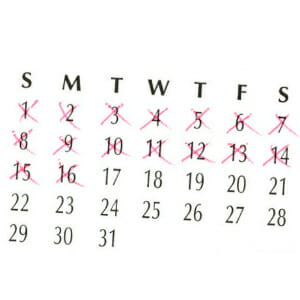
    Someone once asked Jerry Seinfeld for advice on becoming a great comedian. His reply was simple: buy a big wall calendar and hang it somewhere you’ll see it often.

    Every day you meet your writing goal, mark a big X in red marker over that day on the calendar.

    “After a few days you will have a chain. Just keep at it and the chain will grow longer every day. You’ll like seeing that chain, especially when you get a few weeks under your belt. Your only job is to not break the chain.”

    Easy, right? Just don’t break the chain.

    Use this technique to meet specific writing goals. For instance, if you’d like to write a ebook, track your writing specific to that project on your giant calendar — if it’s in addition other writing, just use another color of marker.

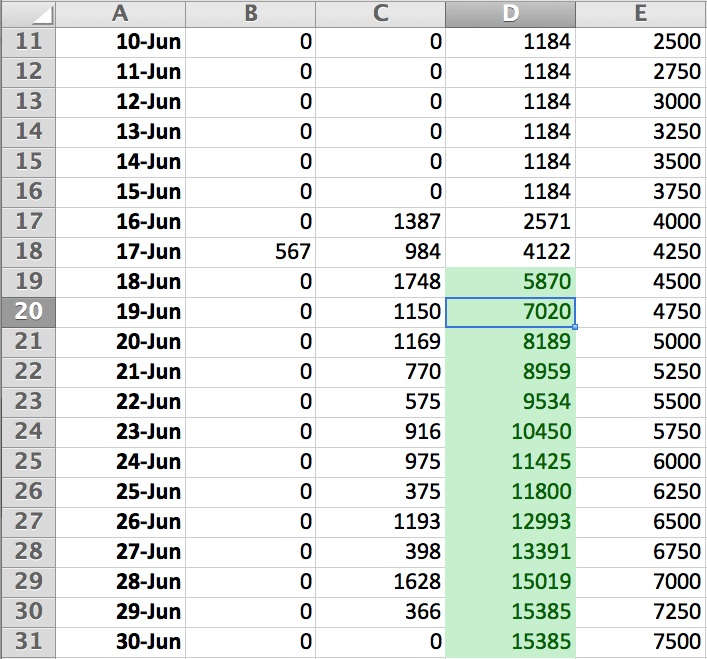
    Don’t have (or want to buy) a calendar? Writer Nora Bailey created an Excel spreadsheet formatted as calendar, with number of words written under specific days. When she meets her writing goal each day, the “total words” field automatically turns green.

    Image: Writing Calendar in Excel

    It’s deceptively simple to negotiate with yourself that you won’t be doing any writing today. You can say it’s late, you don’t feel like it or simply deny that you ever really wanted to start writing. The trick is in putting those excuses aside and putting pen to paper, fingers to keyboard.

    There’s no one strategy that helps all writers write every day. Experiment to find one that works well for you!

    Do you write every day? How do you make it a priority and maintain the habit?
    links
    no
    1

  • How to Write Better: 7 Simple Ways to Declutter Your Writing

    How to Write Better: 7 Simple Ways to Declutter Your Writing

    You know that feeling when you open up your closet and it’s so stuffed with clothes you don’t wear that you can’t find the ones you really like?

    Or maybe your desk is piled with papers that need filing, and you waste all kinds of time looking for that one you need? Clutter adds stress and sucks up valuable time.

    The same situation applies to writing. Unnecessary words and redundancies in a page or paragraph obscure its core meaning and interrupt its flow. The essence of your message is buried under all those excess words.

    Once you’ve written the first draft of your novel or short story, it’s time to go back and look for cluttered sentences and paragraphs.

    Ferret out words that don’t add to the meaning or imagery and are just hampering the fluid flow of ideas. Look for instances of overwriting or beating a point to death. Say it once — or twice, max — then move on. Otherwise you risk annoying your readers.

    Ready to search out the clutter in your story?

    1. Avoid little-word pile-ups and eliminate redundancies

    Reveal the essence of your message by streamlining your words. Instead of “in spite of the fact that,” just say “although.” Instead of “in the vicinity of,” say “near.”

    Replace “in the direction of,” with “to” or “toward.” Instead of “came in contact with,” say “met.” Instead of “during the time that,” say “while.” No need to say “located at” – just say “at.”

    Before:

    On their cross-country trip, they slept each night in the cheap motels located less than a mile’s drive from the interstate.

    After:

    On their cross-country trip, they slept each night in cheap motels just off the interstate.

    Before:

    The car drove slowly through the large complex heading in the direction of a secluded building at the back of the facility. It was located on the shore of the Mississippi River. The vehicle came to a stop next to the entrance to the building.

    After:

    The car drove slowly through the large complex toward a secluded building on the shore of the Mississippi River. It stopped next to the entrance.

    Before:

    He was shooting off his mouth in the bar last night telling everybody that he was going to find the bastard that ratted on him.

    After:

    He was shooting off his mouth in the bar last night about finding the bastard that ratted on him.

    Before:

    He moved his mouse pointer over to the other email that he had received.

    After:

    He clicked on the second email.

    2. Don’t drown your readers in details

    Leave out those tiny details that just serve to distract the reader, who wonders for an instant why they’re there and if they’re significant.

    Before:

    He had arrived at the vending machine and was punching the buttons on its front with an outstretched index finger when a voice from behind him broke him away from his thoughts.

    After:

    He was punching the buttons on the vending machine when a voice behind him broke into his thoughts.

    In the first example, we have way too much detail. What else would he be punching the buttons with besides his finger? We also don’t need to know which finger he’s using or that it’s outstretched, since everybody does it pretty much the same. Minute details like these just clutter up your prose.

    Before:

    An angular snarl stuck to his face, the officer indicated with a hand gesture a door that was behind and off to the right of Jason. He swung his head around to look in the direction the officer was pointing.

    After:

    Snarling, the officer gestured to a door behind Jason. He turned to look behind him.

    3. Take out empty, “filler” words

    Words like “it was” and “there were” simply get in the way of your story without adding anything useful.

    Before:

    I headed down a rickety set of wooden steps to the basement. There was a dim light ahead in the hallway. To the right there were cardboard boxes stacked high. To the left, there was a closed door with a padlock. Suddenly, I heard muffled sounds. There was someone upstairs.

    After:

    I headed down a rickety set of wooden steps to the dimly lit basement. To the right, cardboard boxes were stacked high. To the left, I saw a closed door with a padlock. Suddenly, I heard muffled sounds. Someone was upstairs.

    I could play around with this some more, but you get the picture.

    4. Take out the word “that” wherever it’s not needed

    Read the sentence out loud, and if it still makes sense without the “that,” remove it. This change smoothes out the sentence so it’s less clunky and flows better.

    Before:

    She said that you thought that it was too expensive and that you wanted to shop around.

    After:

    She said you thought it was too expensive and you wanted to shop around.

    5. Delete words or phrases that unnecessarily reinforce what’s already been said

    Cluttering your sentences with too many unnecessary words can get in the way of clear communication and confuse and subliminally irritate the reader. Go through your manuscript and see where you’ve cluttered up sentences and paragraphs with little words and phrases that aren’t needed and just impede the natural flow of ideas.

    The phrases in italics are redundant here:

    We passed an abandoned house that nobody lived in on a deserted street with no one around. The house was large in size and gray in color.

    At this point in time, the truth is that complaints are increasing in number, but I don’t see that as a problem to be solved.

    6. Don’t tell after you’ve shown

    For example:

    She moped around the house, unable to concentrate on anything. She felt sad.

    He paced nervously around the room, muttering to himself. He was agitated.

    In both instances, the second sentence can and should be deleted.

    7. Condense any long-winded dialogue

    In real life, people don’t usually speak in lengthy, complete sentences or uninterrupted monologues. Read your dialogue out loud to make sure it sounds natural, not like a rehearsed speech.

    [bctt tweet=””Read your dialogue out loud to make sure it sounds natural,” says @JodieRennerEd“]

    Break up any blocks of one person speaking at length by rewriting them in questions and answers or a lively debate, with plenty of tension and attitude. Try using lots of incomplete sentences and one- or two-word answers, or even silences.

    How would your characters actually speak in real life? Think about their personalities and character traits. For example, men, especially blue-collar men, tend to be terser and more to-the-point than women.

    Looking for more ways to declutter your writing? In my editor’s guide to writing compelling stories, Fire up Your Fiction, I offer lots of concrete tips with examples for streamlining your writing for a smoother flow and pacing. Also, check out the post on tightening your copy.

    How do you streamline your writing?

  • Feel Nervous About Submitting Your Writing? Why That’s a Good Thing

    Feel Nervous About Submitting Your Writing? Why That’s a Good Thing

    Does this story sound familiar?

    Whenever I submit something I’ve written for a client, I develop a nervous twitch. I wonder if the client is going to like what I’ve written, or if they’ll think it’s absolute garbage.

    No matter how much time and effort I’ve put into it, how much of my soul I’ve poured out onto the page, I wonder if this will be the time when someone sees me for the charlatan of a writer my self-condemning alter ego insists I am.

    “There, that’s the one,” he says. “That’s the one who’s going to finally tell you just how horrible a writer you really are!”

    This nervousness and anxiety, I’ve come to realize, is actually a good thing, if it’s properly harnessed. You just have to make sure you don’t allow that evil alter ego to speak too loudly, or to convince you that you’re a lousy writer. The trick is in finding the right balance and using your nervousness as motivation.

    Are you really that good?

    If you have no anxiety about your writing at all, you might fail to take constructive criticism seriously — and miss a chance to improve your craft. On the other hand, if you allow yourself to be convinced you cannot write, you might give up altogether.

    The nervousness and anxiety are what propel you to continue honing your skills. If you truly thought you already knew everything there was to know about writing, it wouldn’t be fun or challenging anymore, and there would be little reason to continue doing it. As long as you feel like you have more to learn, though, you will keep working to refine your skills and become an even better writer.

    Anxiety and writer’s block

    This feeling of anxiety isn’t the same as the “writing anxiety” that can block your writing and cripple you as a writer, although these are also often signs that you have a healthy regard for wanting to improve your writing. Writer’s block is a symptom of that same condition, but it isn’t the only symptom.

    No, the kind of anxiety I’m talking about develops after the writing is done. It’s the feeling that the work isn’t quite finished or isn’t quite good enough. You’ve probably felt this from time to time — if not every time you finish a project. The key is to not let this feeling stop you from submitting the work.

    Donald M. Murray describes this issue quite eloquently in his essay “The Maker’s Eye.” He rebukes the illusion that a written work can ever be finished, arguing that “a piece of writing is never finished. It is delivered to a deadline, torn out of the typewriter on demand, sent off with a sense of accomplishment and shame and pride and frustration.”

    Harness that anxiety!

    Use your anxiety to fuel your revisions. Allow yourself to detach from what you’ve written and read it as if you were a stranger to the piece. By becoming your reader, you can look for what the reader wants to find in your writing: information, a call to action, entertainment or a mixture of all of the above.

    Being anxious and slightly nervous about the quality of your work is a good sign that you are passionate about your writing. If you lack passion, you could find your writing career coming to an abrupt end.

    How do I know when enough revision is enough?

    You need to find the healthy balance between revising, rewriting, and realizing that the piece is due and it is time to turn it in. Take to heart all of the praise you’ve received for your writing, and realize that while what you have written may not be perfect, it is high-quality work that possesses all of the soul and heart you can pour into it.

    If you read it as a stranger and find within your words the information, call to action, entertainment, or whatever you wanted the reader to get out of it, hand it in! You’ll likely have another opportunity to revise it after your client or editor has a look and shares her comments.

    Not convinced? Here’s a perfect example: I revised this particular post several times before I took a deep breath and submitted it to the editors, and then revised it once more after their feedback!

    What if the client really does hate my work?

    It’s possible that one day, a client may not like what you’ve written. When that time does come, take it in stride. Not everyone has the same preferences; not everyone likes the same movies, so why would everyone like the same style of writing? Ask for their feedback on how to revise the work: do you need to work on better emulating the client’s voice, strengthening your self-editing skills, or creating clearer calls to action?

    Learn from your mistakes, and move on to make your writing even better.

    [bctt tweet=”Learn from your mistakes, and move on to make your writing even better, says @byrneswritenow”]

    A writer needs to have thick skin and be able to handle constructive criticism without taking it personally. As with any form of art, your skills and abilities should constantly be improving, and you should be able to take constructive feedback and use it to improve your art.

    You’re passionate about your writing — but recognize that with that passion comes some anxiety and nervousness. Just don’t let your nerves rule you — use them to motivate you to strengthen your skills.

    Do you ever feel anxious before submitting client work or pressing “publish” on a blog post? What do you do?

  • How to Turn Your Blog Into a Book (2024 Guide)

    How to Turn Your Blog Into a Book (2024 Guide)

    The idea of writing a whole book can be pretty daunting. Even if you’re a fairly experienced writer, you might think it’s beyond you.

    But if you’ve been blogging for a few months or years, you may have already written enough to fill a book. Turning your blog into a book is an increasingly popular option. (If you’re using WordPress, the Word Stats plugin is a simple way to check your cumulative word count.)

    Creating a book is straightforward and not especially expensive, with e-publishing and print-on-demand technology. Here are three reasons why bloggers do it — and why you might want to give it a try:

    1. Books reach a different audience

    Not everyone reads blogs. Maybe they’re not especially comfortable with technology, or they only have internet access while at work, or they simply prefer to read in other formats.

    And those who do read blogs might never have come across your personal corner of the busy blogosphere.

    Books can reach a different audience — potentially becoming a tool for promoting your blog, or even your writing services.

    2. Books have a certain credibility

    While it’s true that, today, anyone can publish a book (just as anyone can start a blog), books have a certain credibility.

    Being able to tell your audience that you’ve written a book, or including your book in your bio when you’re guest posting or speaking, can give you instant “expert” status in their eyes.

    Of course, if you’re going to look credible, it’s important to have a well-edited and well-produced book … which we’ll be getting to in a moment.

    3. Books give your content a new life

    If your blog’s been running for a while, there’s a good chance that most of your current readers missed out on your early content.

    While your archives, categories and search box can all help them find your earlier writing, you almost certainly have some brilliant posts going unread in your blog’s archives.

    By pulling together your blog content into a book, you can give it new life. Instead of skimming through your latest post in their inbox, your readers can curl up with their ereader or a hardcopy of your book and dig in.

    Is the blog-to-book journey starting to sound like one you want to take?

    I’ve bought quite a few books and ebooks in my time that started life as blog posts, and I’ve also been going through the blog-to-book process with my client and friend Barry Demp. He’s just published his new book The Quotable Coach: Daily Nuggets of Practical Wisdom — a compilation of posts from the past two years of his blog, The Quotable Coach.

    If you feel ready to self-publish, here are the three major steps that we recommend you follow:

    1. Compile and edit past blog posts

    Before your blog can become a book, you need to get all your posts into one place — probably a document on your computer, whether you choose to use Microsoft Word, Scrivener, Google Docs or another tool.

    You’ll need to go through and format your post titles in Heading 2, so that when you convert your document to an ebook, these can become chapter headings.

    You’ll almost certainly also want to do some editing: perhaps updating out-of-date references, fixing typos, or even adding or removing whole paragraphs.

    You may also find that you need to remove some posts. This could be posts that:

    • Were specific to a particular time, such as the 2012 Olympics or your New Year’s Resolutions for 2013.
    • Are much shorter than average — perhaps a post for a special promotion of your book.
    • Don’t match up to your usual standards; we found ourselves deleting several early posts that were written before we’d quite found our stride.

    2. Line up beta readers and reviewers

    However strong your editing skills are, you’ll want to have some extra eyes on your finished book. Ideally, this means hiring a paid editor — but if that’s not affordable, ask friends, family or colleagues to help out.

    These beta readers (like beta testers in the software world) could read just part of your book and let you know about any problems they spot — from typos and missing words to structural issues. Do try to give them as much advance notice as possible, and at least a couple of weeks to get feedback to you.

    Beta readers may well also be willing to review your book (though you’ll probably want to approach other individuals for reviews too). Reviews or testimonials are a hugely important selling tool, especially as you’re publishing your book yourself rather than with a major publisher.

    Again, give reviewers plenty of time, and stay in touch as your launch date approaches. Once your book is online and ready for reviews, send them the link (and brief instructions) so they can easily leave a review.

    3. Get a professional cover design

    If you’re going to invest in just one thing for your book, go for a great cover design. Like it or not, we all judge books by their covers — and if yours screams “amateur,” your book is unlikely to get a second glance.

    We went with 99designs to get a range of different options from many different designers at a great price. You might instead choose to work with an individual designer (especially if they’ve already done some work on, say, your website or logo). You may even be able to barter design for writing with an artistically-minded friend.

    If you really have no option but to create the cover yourself, keep it simple and classy: think “minimalist.” Use large fonts that can be easily read at thumbnail size, and stick with just one key image.

    So … how about it? Have you ever read a book that started life as a blog, and would you turn your blog into a book?

  • Writing for Clients? 3 Simple Ways to Nail the Company’s Voice

    Writing for Clients? 3 Simple Ways to Nail the Company’s Voice

    Picture this: You’re a new-ish freelance writer. You offer a good mix of services for varying clients, audiences, and goals. You’ve got a solid writer website, a killer LinkedIn profile and you’ve been networking and marketing your business like crazy. And it’s working!

    Your inbox is loaded with emails from prospective clients with writing assignments they want you to tackle. You happily accept all, knowing you’ll pull some all-nighters if you have to just to hit your due dates. This is freelancing, after all, and with the unpredictable nature of work availability, you’re ready to capitalize on the full-plate opportunity.

    As you look through your assignments, though, it hits you: these are all so different. It would be one thing to crank out a bunch of pieces for one client, but you’re writing a blog post for a software company, website copy for a pool builder, an ebook for a travel agency, a press release for a beauty retailer… And you’re just one person! It was hard enough to find your own writing voice, and now you’ve got to identify and adopt several others.

    You know your clients are counting on you to properly represent each company’s personality, and you want them to feel like you captured their brand’s voice — so that the next time they need something written, they’ll immediately think of you. But with such a variety of assignments, how can you nail each client’s voice, every time? Here are some ideas:

    1. Interview the client

    Conducting an interview with your client gives you great material for developing the appropriate voice for their writing needs. This works particularly well for smaller businesses, where you probably have access to company leadership (and the brand’s personality likely closely reflects the owner’s).

    Get the head honcho talking about the beginnings of the company, the business model, target customer profiles, company values, and overall mission. Hearing this information in the client’s own words is invaluable. What kind of vibe are you getting? How can you incorporate it into the piece?

    An alternative to the sometimes-tricky task of coordinating schedules for a live interview is using a questionnaire. Simply put your interview questions in an email, suggest a due date, and send it off to your client. While you won’t get the off-the-cuff — and likely more colorful — version of the info, you’ll give yourself and your client a chance to work through the questions at a time that works best for each of you individually.

    Real-life example: When I received a completed questionnaire from one of my recent clients, I immediately noticed a liberal use of smiley-face emoticons. As I read through their answers, I giggled to myself at the response to my question about what differentiated them from their competitors: “We’d tell you, but then we’d have to kill you.”

    I knew serious, straightforward business-speak was not going to work for this client, and that I needed to incorporate some playful, silly bits into their voice.

    2. Develop a character

    When you’re working with a larger company, it’s more likely that instead of capturing your client’s personal voice, you’ll need to write on behalf of a unique and independent brand. While asking the aforementioned interview-style questions of your contact person may still be a good idea, another powerful tactic is to develop a character for the writing voice. To do this, imagine the brand is a person (or cartoon, or animal, or whatever seems appropriate for the company’s personality; they may already have something you can work with).

    Now ask yourself: what is this character like? Is it a male or female? What age? What nationality? What are his/her likes and dislikes, traits and quirks, habits, and hobbies? Once you’ve got a good grasp on the details of this persona, you can ask yourself the most important question: how would this character speak?

    Then, write.

    Real-life example: I once wrote for a B2B brand that wanted its messaging to seem as if it were coming from a “feel your pain” perspective, as if the brand really “got” their customers and prospects, and was familiar with the challenges they faced.

    To accomplish this, I created a character who had held the same sort of professional role — senior-level marketing — as the people the brand was targeting but was now working for my client. When I wrote with this character’s voice, I was able to use examples and terminology that illustrated how the brand could truly empathize with the day-to-day life of its target market.

    3. Read existing material

    This is a very “duh” tip, but it’s worth addressing because it’s more effective than you might think. Ask your client if the material they’ve already got out there — on their website, blog, or social media channels — is in the tone and style they want to continue using.

    If so, read through as many pieces as necessary to pick up the voice with which you should write. You should read until you feel so comfortable with the language and pace that you’re confident you can easily mimic the voice. I like to do this right before I start working on an assignment, to pump myself up and get my “head in the game,” as dorky as that sounds.

    Real-life example: This isn’t from a client, but it’s a good illustration of the power of the approach nonetheless. When I first read Shakespeare in high school, the style was so foreign to me, I had a difficult time getting past the language to follow the story. The more I read, though, the more I got used to it, and I eventually became so engrossed in what was happening between Romeo and Juliet that I didn’t even blink an eye at the “weird” words anymore. Not only that, but I also realized after an hour or so of reading, I’d start thinking in Old English! I had totally adopted the voice.

    Bonus: Modify the voice for the medium

    Even the most unique and defined voice needs to flex with the norms, expectations, and audience of varying communication channels. In one day, the same business may tweet an informal comment on industry matters, publish a new compelling ad and release exciting company news. Each of these messages would necessarily read quite differently from the other.

    Stick to your client’s voice — but don’t forget to adjust it accordingly.

    How do you manage different voices for different clients?