Tag: copywriting

  • How To Successfully Find Copywriting Jobs (+ Tips to Land Them)

    How To Successfully Find Copywriting Jobs (+ Tips to Land Them)

    Anyone who wants to make a living as a writer has probably considered copywriting as an option. You might wonder what it takes to find your first copywriting jobs or what you need to do to become a copywriter in the first place.

    If you don’t know, copywriting is simply persuasive writing.

    It’s the art of using words to get people to do something, whether it’s sign up for an email list, buy something, subscribe to a YouTube channel, or something else.

    Companies mostly use copywriters to increase their brand awareness or improve their sales and conversions.

    Even if you don’t plan to become a full-time copywriter, it’s a great skill to learn so you can use it in your day-to-day life. For example, if you’re trying to ask your boss for a raise, knowing how to use the art of persuasive writing can help you pitch it in a way that increases your chances of success.

    For some context as the author of this post, I have been a full-time freelance copywriter since 2012. It is an excellent choice for writers if they are passionate about writing and marketing.

    If you don’t have any passion for business and consumer behavior, there are so many other type of writing jobs you could get into, but you won’t enjoy copywriting. It is much more business-oriented than pure creative writing. Don’t get me wrong, there’s a ton of creativity, you just need to focus on the business goals as well.

    If any of that sounds interesting to you, you’re going to enjoy this career whether you get a traditional job or go the freelance route.

    We’ll be going over what copywriting jobs consist of, where you can find them, what requirements you’ll need to become one, how much you can expect to be paid, and more.

    What you need to know about copywriting jobs

    The first thing you need to know about copywriting jobs is that they’re often different than traditional writing jobs.

    Because so much of copywriting is directly tied to business and marketing, these are industries you’ll need to at least loosely know as well as copywriting.

    There are a few forms of copy you’ll need to know in order to find a job as well.

    Pro tip: It’s called copy. Not “copies”. Copywriters write copy. That’s what it’s called and will save you from looking like a newbie when you’re applying for jobs.

    For the most part, you will be given a wide variety of assignments as a copywriter. The only way you can avoid this is by specializing and choosing to freelance. For example, you could choose to only write email funnels.

    However, if you’re going to get a job as a copywriter, you could given assignments like:

    • Landing pages
    • Website copy
    • Social media posts
    • Company pitches
    • Email marketing campaigns
    • Slogans
    • Advertisements
    • Product descriptions
    • Blogs

    The perk of this is that it can be exciting to come into work every day and have new types of assignments on your desk.

    For the most part, unless you’re hired on directly to work with a company, you will find a ton of agency jobs out there. When you work at an agency, you’re also going to be tasked with writing for various industries.

    If you love a challenge and learning a new industry, you will thrive.

    The fun part about copywriting is that there are so many ways you can customize your career and the types of assignments you work on.

    What are the requirements needed to get a copywriting job

    While degrees aren’t always required to become a copywriter, they do help. Because copywriting is also directly tied with marketing, you will often see copywriters with some form of marketing or business degree instead of a writing degree.

    However, having a degree in general isn’t always needed.

    The most important skill you need is to be able to write high-quality copy. It matters more than any degree or background you could have.

    You need to spend your time creating a portfolio that stands out and summarizes all of your creativity in one place.

    If you’re new to copywriting, you might not have a huge portfolio. That doesn’t stop you from putting together some mock pieces to showcase what you could do for a company.

    You can also put all of your past writing experience into your portfolio. You’ll need copywriting pieces but it’s not a bad idea to show that you’re a versatile and strong writer.

    Where to find copywriting jobs

    Depending on what kind of copywriting job you want (traditional 9-to-5 versus freelance), you’re going to be looking in different places.

    However, the thing that combines both of these worlds is networking. Networking will play a huge role in your success with finding a job, no matter which way you go about it.

    Next to networking, you’re going to need a solid portfolio. More than any degree out there, your portfolio is the key to getting hired as a copywriter.

    Traditional copywriting jobs

    To find a traditional copywriting job, the first thing you’re going to need is a solid portfolio. From there, you’ll need a resume with the basics of your school and work experience.

    When it comes to finding the actual jobs to apply to, there are thousands of sites from LinkedIn to Indeed to search through.

    If you want to stand out as a copywriter, it might be better to find a specific agency or company you want to work for and then send your information over to the right person.

    At most companies, you’re going to want to find the creative director or someone in the communications department at the company.

    Sure, it helps if a company is actually hiring at that moment so you can get your foot in the door, but don’t underestimate the value of networking and getting your portfolio in the hands of people who could hire you.

    Freelance copywriting jobs

    While there are sites out there like Upwork to find your first freelance copywriting jobs, know that they’re incredibly competitive and the rate is often pennies on the dollar for the hard work you put in.

    In all of my years of experience, the best way to find freelance copywriting jobs is to find companies and niches you’re passionate about and directly pitch them.

    It helps to have your prices figured out ahead of time so you can pitch them and mention pricing instead of doing the awkward, “Well what can you afford?” dance that new freelance copywriters do.

    It takes a while to get your foot in the door, so be patient while you

    What do copywriting jobs pay

    According to Payscale, the average copywriting salary is $54,909 per year.

    For freelance copywriters, the pay is all over the map. It’s possible to make six-figures or just a few hundred dollars a month, depending on what kind of copy you want to do, the niches you work in, and how much you want to work.

    For the most part, freelance copywriters charged based on project or type of copy.

    For example, you could sell a package of four different emails for a company for a flat rate. You can do hourly or by word, but it’s not as common as per project. To figure out your pricing, you’ll want to figure out how long certain types of project take and then work backwards to an hourly rate.

    It’s not unheard of for new copywriters to start around $30 per hour. Of course, depending on your experience, you might feel comfortable charging more or less.

    What to do next

    Looking to find a supportive group of freelancers to get
  • Web Copywriting: 3 Steps to Write Successfully for the Web

    Web Copywriting: 3 Steps to Write Successfully for the Web

    Firstly – let’s crack the code of what web copywriting is…

    Web copywriting is any text that is written with the purpose of advertising and marketing on the internet. You are trying to sell something with your words, and sometimes this is referred to as “sales copy.”

    Can anyone be a copywriter? 

    Absolutely. It’s a great way of making an extra income, and it’s super easy to get the hang of (once you understand the art of it). 

    You may be thinking, “Yeah, I love to write, but I’ve never thought of building a career out of it!”

    I thought the same. 

    I had no confidence in my writing and didn’t know how to take it to the next level – let alone make money from it!

    But after implementing these three tips for successful copywriting, I saw my writing transform from being stale and lifeless, to totally binge-worthy. 

    In this guide, we’ll break down the game-changing tips to help you become a better web copywriter: Let’s have a quick look at them: 

    👀 Grab Your Audience’s Attention Instantly

    Every great piece of copy I’ve ever read, I knew it was great because I simply kept reading it!

    The average attention span is about 8 seconds. 

    Literally, that’s it. 

    So you have 8 seconds to hook your reader in which means you need a killer introduction, which gets straight to the point and answers the reader’s question. 

    Let’s take a look at an example:

    Say your article title is, How to Choose Between Etsy and Shopify When Wanting to Sell Products Online

    Your intro straight away should say something like,

    “Let’s get straight to the point, Shopify is slightly better than Etsy because it’s a lot more personal, flexible, and lets you easily scale up your store.”

    A common mistake writers can make is that they include unnecessary introductions of Shopify and Etsy, and by the time you know it, the reader has bounced off the page. 

    Your audience is already aware of how great both of these platforms are, hence why they’re now at the stage of just choosing between them to start selling products. 

    Try not to overload your audience with information they’re likely to have – keep it concise and to the point.

    🤝 Benefits Over Features

    The second rule is a MUST in any writing that is trying to convert sales. 

    Always write about benefits over features. 

    Another common mistake that most writers make is they will list all the factual pieces of information, rather than talking about how the product or service can serve them. 

    Truth be told, there’s one question on your reader’s mind when making a purchase decision, which is:

    “What’s in it for me?”

    The purchasing process is driven by emotions so talk about the experiences a customer will gain from it instead of stating technical points that hold little meaning for the reader. 

    Let’s take a real-life example:

    If someone’s looking to buy a vlogging camera, writing about the ‘’large sensor and optical image stabilisation’ might not cut it on its own – especially if the customer only cares about how good their YouTube vlogs will look!

    Always highlight the benefit of this large sensor by adding:

    “The large sensor makes this camera the best option on the market for vlogging in natural daylight – so you don’t have to worry about changing the settings before heading out!”

    Shine the light back on your reader, and explain why the camera is going to make their life a whole lot easier. 

    Listing endless features of the camera might not make sense to someone who’s not tech-savvy either.

    📞 Include Constant Call-To-Actions

    What is a call-to-action?

    A call-to-action (CTA) is anything on the page that prompts an immediate response from your reader. 

    It’s a way of pointing them in the right direction to finalise a purchase of a product of service.

    Call-to-action buttons are not always for monetary purposes – they’re also great at prompting your reader to share the article with others for more site traffic.

    They’re often seen in the form of buttons like these:

    Web copywriting is important and you need to keep the reader moving through the article, but it’s not that useful if your reader has no idea where to go next. That’s where a CTA comes in.

    You’ll rope in the reader with your majestic words, but you’ll have to tell them explicitly how to get their hands on this product or service with call-to-action buttons.

    Even if it’s just a number to ring, make it really obvious to the reader how they can go ahead with a purchase, or just learn more.

    There are also definitely things such as bad CTA writing! Make sure the CTA is obvious, direct, and ambiguous. 

    Writing for the Web: Summary

    And that’s a wrap!

    We’ve broken down the three steps for successful web copywriting. If I may add a bonus tip: don’t be afraid to bring your character through the copy because, when it feels like you’re speaking to a friend, it’s a lot more engaging for the audience!

    Let’s have a quick recap at what these tips are:

    • Grab Your Audience’s Attention Instantly – Keep your intro concise and to the point!
    • Write About Benefits Over Features – Avoid including a list of product features, instead discuss the value of it.
    • Include Constant Call-To-Actions – Let your reader know where to go next!

    Becoming an awesome copywriter doesn’t require you to be a pro, it’s all about implementing a good strategy and sticking to it. 

    Now that you have these top tips to refer back to, it’s time to take action! (See what I did there?)

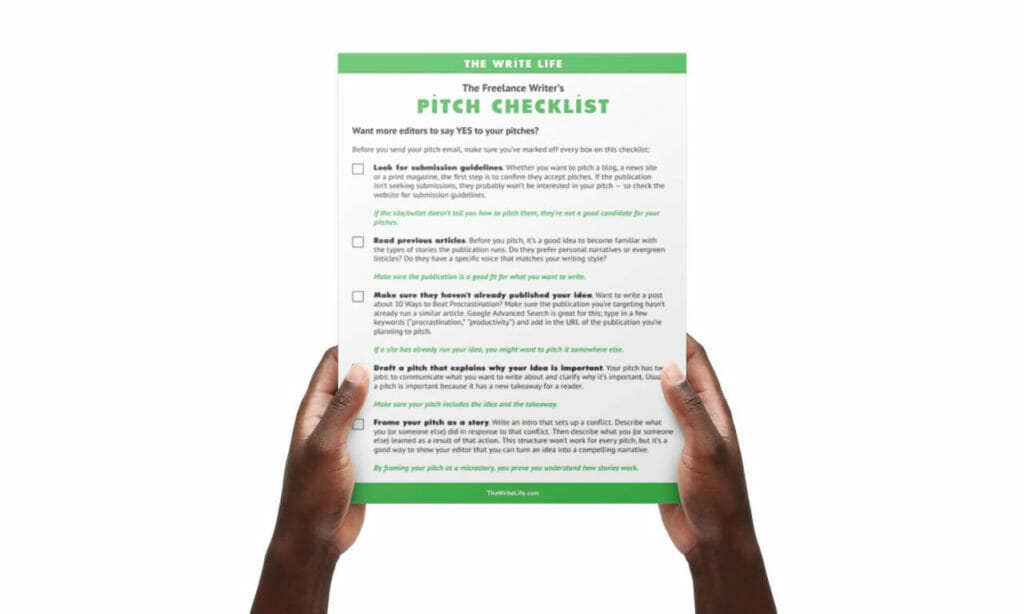
    Grab your pitch checklist, so you can land more web copywriting gigs.

    Now, all there’s left to say…Happy Writing! 😎

    Written by Zara Choudhry, Founder of AnonymouslyZara – a platform inspiring women through articles about faith, lifestyle, career tips and healthy relationships. 

  • 9 Copywriting Examples to Inspire You

    9 Copywriting Examples to Inspire You

    One of the best ways to stay inspired when working as a copywriter is by studying what other copywriters are doing. Look at what they produce and break down the elements. Ask yourself, why does this work? What unusual writing techniques are they utilizing? What can I learn from their approach?

    Copywriting examples to inspire you

    Here are nine copywriting examples from industry experts to get you started.

    Alex Cattoni

    “Copy is literally everywhere you go. Billboards, product packaging, bus ads, and even those cute little A-frame signs that sit outside your favourite café or restaurant. Once you start appreciating and recognizing the copy that’s hidden in plain sight—you’ll naturally get better and better at writing your own copy.”

    Alex Cattoni is best known for the Copy Posse Program, a boutique agency and online copywriting academy. Her course teaches people how to write high-converting sales copy and craft iconic promotional campaigns. 

    She has spent more than a decade in the online marketing world and believes that connection and conversion are not mutually exclusive.

    Brian Clark 

    “It really should be the right content at the right time for the right person”

    Brian Clark is a serial digital entrepreneur and the founder of Copyblogger amongst other websites and communities.

    He built his businesses using online marketing techniques and is best known for his advice that empowers people to grow their businesses through social media and online marketing.

    David Oglivy 

    “On the average, five times as many people read the headline as read the body copy. When you have written your headline, you have spent eighty cents out of your dollar.”

    David Oglivy is known as the “father of advertising” and believed the best way to get new clients was to do amazing work for existing clients. 

    His client roster included Rolls-Royce and Shell.

    Frank Kern

    “Would you like me to personally double, triple, or even quadruple your business…for free?”

    Frank Kern is world-famous for his annual sales letter, which is considered a masterpiece. 

    He teaches people how to write conversion copy and is the creator of an automation marketing method called Behavioral Dynamic Response.

    Helen Lansdowne 

    “A Skin You Love To Touch”

    Helen Lansdowne Resor was a notable copywriter and is a member of the Advertising Hall of Fame. 

    She is best known for creating the slogan “A Skin You Love To Touch” for the Woodbury Soap Company in 1911. The tagline was so successful the company used it until well into the 1940s.

    Jay Abraham 

    “Sometimes the best copy to sell a horse is ‘Horse for Sale.’”

    Jay Abraham is a marketing expert best known for his strategic approach and critical thinking. He helps businesses increase income, wealth and success by finding new solutions for old problems.

    He’s best known for thinking “way outside the box” while thinking “way inside the box” at the same time.

    Leo Burnett 

    “Make it simple. Make it memorable. Make it inviting to look at. Make it fun to read.”

    Leo Burnett built his global advertising agency on the belief that the most creative, effective and powerful work understands people’s needs, wants, dreams and hopes at its core.

    His client list included Kellogg, Pillsbury, Procter & Gamble, and Campbell Soup.

    Nicki Krawczyk

    “If your target audience can’t trust you, then you’ve lost a major piece of the game.”

    Nicki Krawczyk is best known for the Comprehensive Copywriting Academy (read our review of the course here) where she teaches copywriting strategies and techniques for both direct response copywriting and branding copywriting.

    Her clients include Adidas, AT&T, Hasbro, Marshalls, Reebok and more.

    Ray Edwards

    “So, just for the moment, let’s think of your product as the movie. And let’s think of your sales copy as the ‘trailer.’”

    Ray Edwards is a communications strategist, copywriter and author. He is known for his book “How to Write Copy That Sells: The Step-By-Step System for More Sales, to More Customers, More Often” and his podcast, The Ray Edwards Show.

    Ray is the creator of a certified direct response copywriter program called The Copywriting Academy and offers many practical guides for copywriters.

    9 Copywriting Examples to Inspire You

    Copywriters on Twitter to follow

    #CopywritingTwitter is one of the best places to find other copywriters to network with and learn from. If you want to join a community of copywriters to be regularly inspired by, here are a few to get started:

    Which copywriters inspire you? Let us know!

    If you’re looking to uplevel your writing and get more high paying writing jobs, check out this training from the Freelance Writers Den.

  • How to Become a Master Copywriter in Just One Year

    How to Become a Master Copywriter in Just One Year

    Before getting into becoming a master copywriter, let’s be honest: “master” is relative, because even well-known masters of copywriting today still haven’t reached the pinnacle of their craft.

    There’s always something new to learn, something more to discover.

    But there are indeed ways you can rise up the ranks in your copywriting career so that you can call yourself a master (and feel 150 percent confident in that title) – and you can do so in just one year. Possibly even less.

    How to become a copywriter

    Here’s exactly how you can become a master copywriter in less than a year, and in just five easy steps:

    1. Read a whole lot

    Mastering any skill means absorbing all the information and education that possibly exists. Copywriting is no different, and plenty of resources can get that learning going on the path to a solid writing education.

    Head over to Amazon and pick up several copywriting books from renowned leaders in the industry, like Bob Bly, Joe Sugarman and David Ogilvy. It’s best to avoid books from relative unknowns or wannabes; to become a top copywriter, you want to learn from the top leaders in the field.

    Read each book slowly and with high levels of focus. Don’t just skim the content or skip chapters because you think you know what’s in them — you’ll forget 80 percent of everything you’ve read and miss the crucial details that make a big difference.

    Then reread each book as you finish it, taking notes the second time around. Your brain will retain more information and understand it better, thanks to devoted effort. You’ll absorb the education and make it second nature much faster that way.

    2. Practice even more

    Deliberate, intentional practice of each technique you learn is key to mastering it. Think of Olympic athletes who spend years perfecting one specific movement, over and over — you should do the same with every single copywriting technique you learn.

    In fact, lack of practice is one of the most common reasons good copywriters never become great. They don’t put in the extra effort to truly master their craft, and they always stay stuck at status quo because of it.

    So as you read through your books and learn new, specific techniques, take time to practice each one thoroughly. Then practice it some more.

    Have a sheet of paper or your keyboard handy so as you spot a new technique, you can stop right there and try it out immediately, over and over. When you feel you “get” it well, you can move on to the next new technique.

    But that doesn’t mean you should stop practicing. Have individual practice sessions for each technique, then as you become truly confident, integrate two techniques you feel you’ve mastered. Practice them together, as a whole, then add in a third technique you know well.

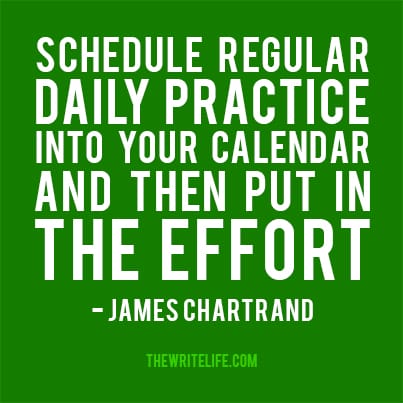
    Schedule regular, daily practice into your calendar, and put in the effort to continually improve your skills. You’ll pat yourself on the back for going the extra mile.

    Practice, says James Chartrand

    3. Get one-on-one training

    Self-education is great, and it can certainly take you a long way, but there’s nothing better than working one-on-one with a copywriting coach to advance even further towards mastery of your skill.

    After all, this person has been where you are and can show you how to take your copywriting skills to the next level. He or she can provide direct, immediate feedback on what you think you’re doing well enough or what you feel you need work on.

    Feedback from someone better than you is key: You’ll learn which areas need work, exactly what you should do to improve and get confirmation when you’re doing it right – or correction that helps you when you can’t quite get it.

    Group course environments are good if you can’t get a leading copywriter to mentor you personally in a one-on-one environment. You’ll receive less attention in a group because the instructor’s focus is diluted over several students, but it’s definitely better than no feedback at all.

    4. Get over your issues

    The biggest hurdle to becoming a master copywriter isn’t your skill set, your lack of education or your ability to produce good prose – it’s your psyche.

    The biggest roadblocks that slam themselves down in front of would-be copywriting masters are always psychological in nature. They’re rarely skill-related obstacles only. Writer’s block, blank-page syndrome, difficulty knowing what to say, endless editing, performance pressure… those are all common issues that could prevent mastery.

    The good news is that these issues are all in your mind, and you control your mind. There are all sorts of ways you can overcome your writing psychology roadblocks so you can advance to mastery levels.

    It may sound fu-fu, but never underestimate the value of a good therapist or coach. This person can help you overcome writing fears and issues for stress-free copywriting in short order.

    Strategies that could be used include exchanging bad habits for better ones, relaxation techniques, and discussion of fears so you can dissolve them into full confidence.

    A creative psychology coach is often the best person to have on your side, though they’re fairly rare and difficult to find. You’ll reap the rewards, though, and find yourself mastering copywriting at twice the speed you were before.

    5. Expand your knowledge

    Okay: You’ve read the books, taken the training, practiced like mad and sorted out your crazy-making. You’re doing well and feeling great about your copywriting skills!

    Now’s the time to expand and enrich your education in complementary fields, such as sales and marketing, storytelling, consumer psychology and critical thinking. Add a dab of each of these to your copywriting, and you’ll be able to reach new heights in your copywriting career in no time flat.

    In fact, it’s well known that copywriting is simply salesmanship in print. So why not start there?

    Before you get discouraged at all this learning, take heart: You don’t have to become a master in each of these related fields. But with a good working knowledge of related skills sets from different fields, you can integrate each into your copywriting.

    You’ll be well set to take your copywriting skill set to the final levels… and become a master – in less than a year.

    Looking at other writing careers? Check out this article, where you’ll find more options to get paid as a writer.

    Perhaps this quiz can help you decide.

    This is an updated version of a story that was previously published. We update our posts as often as possible to ensure they’re useful for our readers.

  • 3 Unusual Techniques That Can Revive Your Copywriting

    3 Unusual Techniques That Can Revive Your Copywriting

    When you’re being paid to write there’s one thing you don’t want to happen: running out of words.

    It happened to me shortly after I began working as a freelance copywriter. The problem wasn’t that my vocabulary had somehow been depleted, but that I’d forgotten who my audience was.

    As a copywriter, you might be peddling designer shirts in the morning and pest-control products in the afternoon. But unless you’re a natural-born salesperson (and few writers are), flitting from one job to another means you could end up writing something that is totally wrong for your audience. Or just plain bad.

    Time is money to a freelancer so anything that can ease the transition between jobs is a welcome relief. That’s why I’m sharing my three sources of inspiration to hopefully help you focus on — and hook — your target reader.

    1. Home-shopping channels

    I once wrote landing-page content for several collections of a large online fashion retailer. Gradually, I noticed that I was beginning to repeat the same old words, most of them adjectives like chic, classic, timeless, beautiful. I got so exasperated by my lack of originality that I gave up and turned on the TV!

    I just happened to land on a home-shopping channel. As I watched the presenters tirelessly sell a range of sandals for 60 straight minutes, I realized how much I had to learn about the art of the hard sell.

    Whether you’re writing advert copy, a blog post or your own website’s “about” page, your goal is to sell. Even when you’re not selling a product, you’re selling your words, your voice, your credibility to the reader on the other side. Otherwise, what’s the point?

    Good sales writing should lead with the biggest benefit to the reader. But I was so disengaged from the products that I was lazily relying on meaningless descriptors.

    These home shopping presenters, on the other hand, reeled off uses and features that I’d never even thought of, often turning a product’s cons into pros in order to bolster its selling points. By focusing on features, an otherwise lackluster, flimsy-soled pump, for example, can become a “feather-light and flexible holiday shoe that won’t make a dent in your baggage allowance.”

    While your writing will need to be better crafted than the home shopping channels’ rapid-fire hard sell, watching how they market items to their viewers can help refresh your vocabulary and prompt you to think about the ways customers interact with a product.

    2. Vlog reviews

    If you need more inspiration on selling a certain product to a specific demographic, watching a few vlog reviews on YouTube could be a quick and easy solution.

    Nowadays there are vloggers from almost every corner of the market. Vloggers with a core audience are often sent products to test and review, mainly so brands know how that audience responds to new items.

    If you watch a pro vlogger at work, you’ll get a sense of the words, phraseology, references and features that help connect a specific product to its target audience. Tutorials can also help you identify new uses for a product.

    Above all, vlog reviews can provide a glimpse into the most important benefits and features for your target reader.

    But remember, the aim is not to appropriate that vlogger’s style of address. Just because you’re pitching a younger market doesn’t mean your client wants you to go in there all LOLZ and hashtags blazing. Find a middle ground that maintains the integrity and voice of the brand and that of your target reader.

    3. Personal essays

    You may not care much for the content of personal essays, but a one-to-one approach is key to writing advertising copy and blog posts that connect with customers and followers.

    Personal essays are so popular because their voice is direct, confident and trustworthy, engaging the reader on a strong emotional level. That’s why writing as if you are speaking to one person helps gain your reader’s attention and win them over.

    Central to this is knowing who your reader is. Even having someone in mind that you know personally makes it easier to sell the features and benefits of your product, service or experience, so long as they fit the demographic.

    But unlike a personal essay, the subject isn’t you; it’s your reader. While your aim is to channel the intimacy of the first-person voice, you need to ensure you address the reader throughout.

    For that, you need to reverse the conversation.

    Your copy can still have the flair of an easy lunchtime gossip over a hot cup of coffee so long as you don’t forget to prioritize the reader. That means addressing their wants, needs and concerns, right down to the day-to-day challenges they face.

    In short, use your writing to show your reader that you’re listening — that you know them. You’re the friend who is deeply invested in their life, who cares about what they think and who values their time.

    Even if your client does not want you to use the second-person voice to address the reader directly, your writing can still be authentic, warm and relatable.

    Copywriters, what strategies do you use to keep your writing fresh?

  • What I Did to Earn $5,000 in One Month as a New Freelance Writer

    What I Did to Earn $5,000 in One Month as a New Freelance Writer

    I know why you’re reading this.

    You’re exactly where I was about a year ago: Feeling lost. Wondering how you’ll find success as a freelance writer.

    Ready for some good news?

    You can make serious income from writing work. I’m talking “pay your bills and still have plenty left to support your Whole Foods addiction” money here, people.

    I’m not going to sugarcoat it — I had to hustle like crazy at first to make it happen.

    But once I understood the process, the money started pouring in, and I made more than $5,000 in my fourth month as a full-time freelance writer.

    How, you ask?

    Good question. Here’s what I did:

    1. Set crazy goals and worked hard to achieve them

    Full disclosure: I didn’t exactly choose to become a freelance writer.

    I got fired from my full-time job, and suddenly having no source of income motivated me to make freelance writing work for me.

    I knew it was going to be tough, but I was confident in my ability to succeed. So, I told myself that I’d out-earn my previous salary within four months.

    Deep down, I knew it was a crazy goal. But I set it anyway, told myself that it was achievable, and woke up every day with the drive to make it happen.

    And it did happen. I got fired in April 2015, and four months later, made $5,172 from freelance writing work in August 2015 alone.

    If I’d allowed myself to be held back by a negative mindset, it wouldn’t have happened.

    Set an income goal that seems crazy to you but is still achievable. Having a clear goal to work toward will help you grow your business quickly.

    2. Picked a niche

    I worked as a B2B copywriter for IT companies for a while before I became a freelance writer, so I chose that as my niche.

    And you better believe I plastered “B2B Copywriter for IT Service Providers” all over my freelance writer website and social media profiles.

    Why?

    Because a freelance writer known as an expert in a specific niche usually gets more high-paying clients than one who isn’t.

    Think about it. If you were hiring a writer, would you want to work with one who specialized in your industry or one who wrote all sorts of content?

    You’d want the specialist. Every time.

    Your potential clients feel the same way. So pick a niche, and start marketing yourself as an expert in that niche.

    Keep in mind that you can pick multiple niches if you want — the specialization part is what’s important. And you don’t need a crazy amount of expertise on a topic to make it your niche. As long as you can deliver what clients need, you can learn as you go.

    3. Built a strong freelance writer website

    I had a basic portfolio website for a while, but I knew that wasn’t going to cut it if I wanted to make serious money as a freelance writer.

    So, I learned everything I could about WordPress and built a freelance writing website.

    Seems like common sense, right?

    It is. Lots of writers do have a website.

    The problem?

    They create their website from the perspective of a desperate job-seeker who is writing a resume — not an expert business owner who knows how to get results for clients.

    Those writers might as well give themselves a neck tattoo that says “PLEASE UNDERPAY ME.”

    I know that’s harsh, but it’s true. Clients tend to make assumptions about your value based on your website.

    I don’t want you to make the same mistakes that hold other freelance writers back, so keep these tips in mind when you’re creating your freelance writing website:

    • Write your website copy in a way that brands you and attracts your ideal clients. My website has the word “badass” right in the headline because that’s how I talk. That kind of tone sets me apart, and I’ve found that my audience (B2B business owners and marketers) appreciates the straightforward approach. It might offend some people and drive them away, but it doesn’t matter — those people wouldn’t be the right clients for me anyway.
    • Leave out meaningless adjectives, and speak directly to the client’s needs and pain points. No more wasting valuable space on your site talking about how “disciplined” and “passionate” you are as a writer. Clients don’t care about that  they care about what services you can provide for them.
    • Choose a clean design and make sure your site is user friendly. Avoid cluttering your site with unnecessary images and giant walls of text. Instead, use white space to draw the reader’s eyes to the important points. And if you want to find out what people really think of your website, try a free user testing tool like Peek.

    Put yourself in a potential client’s shoes. What are they really looking for when they hire a freelance writer like you? Use your answer to guide you when you’re creating your website.

    4. Cold-pitched my target audience

    Several years ago, I worked as a door-to-door salesperson.

    That’s right — I had to knock on people’s doors and try to sell them cable and internet services.

    My salary was so low that I depended on commission to pay my bills, so I had to hustle.

    Now, I know what you’re probably thinking:

    No wonder you recommend cold pitching. It must be easy for someone who worked in sales!

    But I’m going to let you in on a little secret: it’s not easy.

    It’s terrifying.

    But is it worth it?

    Totally.

    In fact, cold pitching helped me earn $800 in my first month as a freelance writer.

    Now, I didn’t just send pitches to random businesses. I mostly used LimeLeads, a huge database of leads, to look up B2B/IT businesses in my niche.

    But you don’t have to use LimeLeads — you can find potential clients using social media and Google. Then, send each of them a tailored pitch.

    Here are a few tips that’ll help you write effective cold pitches:

    • Include a link to your freelance writing website in your pitch. Your site should have your niche defined in the headline so that potential clients know immediately that you specialize in their industry.
    • Focus on how you’ll get results for the company you’re pitching. Don’t talk about yourself too much in your email. Instead, talk about how you’ll help the company get more customers, build their audience, etc.
    • Avoid pitching like you’re a desperate job seeker. Instead, write like you’re a confident business owner (because you are!), and you’ll be able to demand respect and higher rates.

    Keep in mind that you’ll get rejected tons of times — that’s just how cold pitching works. Most of the cold emails I sent at the beginning of my career were ignored completely.

    But after a while, I started getting responses. Some of those turned into clients.

    So don’t get discouraged if you don’t see immediate results. If you approach cold emailing correctly, you will be able to get new freelance writing clients from it.

    5. Outsourced strategically

    I’ve got a confession to make. I’ve always hated editing.

    Mostly because I’m a perfectionist, which makes self-editing is a huge time suck for me.

    I realized this early on in my freelance writing career, so I started paying an editor to look over all my work, even though I was a broke newbie.

    Yes, outsourcing costs me money, but it saves me far more money in the long run.

    I think about it like this:

    Editing doesn’t make me any money or help me grow my freelance writing business. When I cut editing out of my workday completely, I open up more time to work on tasks that make my business more profitable, like writing or marketing.

    Figure out what tedious tasks you can outsource to make your freelance writing business more profitable.

    Time is money when you’re a freelance writer, so you need all the time you can get.

    6. Rejected low-paying clients

    When you start out, it’s tempting to take whatever work you can get. And if you don’t have any connections, you may have to settle for some low-paying clients at first so you can pay the bills.

    But you shouldn’t do it for long.

    Why?

    Because filling your schedule up with low-paying writing work takes away the free time you could spend marketing yourself to high-paying clients. And before you know it, you end up caught in a vicious cycle of accepting whatever pay you can get.

    Here’s a better idea based on what I did to grow my income quickly:

    Figure out the bare-minimum amount of money you need to survive every month. Once you’re making that amount from your low-paying clients, stop accepting any new low-paying work and spend all of your free time working on marketing yourself and pitching to high-paying clients.

    That way, you can avoid getting stuck in a rut and start growing your business —and your income.

    7. Built a strong social-media presence

    First of all, realize that you shouldn’t immediately expect a flood of high-paying clients from social media. You’ll have to spend some time building a presence and making connections first.

    Here’s a three-step process I used to land clients through social media:

    • Connect with target clients. For example, if you specialize in writing blog posts about marketing, you might connect with content marketing managers at marketing agencies. They’d be the people most likely to give you work.
    • Start liking and commenting on your target clients’ posts. By doing so, you’ll start building relationships with potential clients and get on their radar.
    • Send a client-focused pitch. If you do this after you’ve built a relationship with the potential client on social media, it works like a charm. Be personable and talk about how you can help their business in your pitch. Even if they don’t hire you right away, there’s a good chance they’ll keep you in mind for later or send you a referral.

    I know it’s tempting to send sales pitches to potential clients the moment you connect with them, but don’t do that. You’ll find those clients much more receptive to working with you if you’ve spent significant time building a relationship with them.

    Which of these tactics will you use to increase your freelance writing income? Let’s talk about it in the comments section!

  • Cliches to Avoid: 4 Story Endings Your Readers Will Hate

    Cliches to Avoid: 4 Story Endings Your Readers Will Hate

    Writing a book is difficult, but crafting an ending that is both impactful and wraps the plot up beautifully is even more so.

    You worked hard to create a beginning that grabbed your readers, so make sure to write an ending that lives up to the rest of your story. Relying on clichés will only leave your readers feeling disappointed and dissatisfied.

    Stay away from these four cliché endings:

    1. The happily ever after

    What it is: All of the characters in your book live happily ever, with no hardships to bear. The hero defeats his foes and all of the plot twists are nicely tied up – perhaps a little unrealistically.

    Why to avoid it: Life doesn’t necessarily end happily ever after, which makes this type of ending feel disingenuous. You want your readers to feel enthralled with your book so that they’ll want to share it with friends, read more of your work or even re-read your story. Real life isn’t perfect, so make sure that your book stays in the realm of realism.

    2. The drawn-out dream

    What it is: The drawn-out dream ending involves the main character waking up safe and sound in their bed, realizing that the entire plot has just been a dream.

    Why to avoid it: This type of ending typically annoys readers, who feel that the author has copped out. A book should be emotional to everyone involved, and an author who uses this ending seems to betray readers’ trust and cheapen the emotions they’ve felt throughout the book.

    3. The guilty hero’s monologue

    What it is: When the hero finally defeats the bad guy or force, the reader is privy to her internal thoughts of regret or remorse. The monologue is supposed to show the character’s guilt at what she’s had to do and how it’s eating away at her. Even though the ending is happy, our hero must now live with the blood on her hands.

    Why to avoid it: In general, writers should strive to show, not tell, readers what is happening in the book. By strongarming readers into feeling specific, manufactured emotions, you are taking away their freedom to experience the story in a way that is reflective of their background and experiences. Readers may feel they are being led to specific conclusions, and few enjoy the feeling of an author holding their hand throughout a book — especially the ending.

    4. The lover’s life

    What it is: This is a special twist on the happily ever after ending, in which the main character falls in love, sometimes for an unexplained or random reason. It shows that true love makes the world go ‘round and that all that happened in the course of the story was worth it.

    Why to avoid it: Unrealistic endings tend to annoy readers. If a love interest is too sudden, it isn’t all that real. If it is unexplained, it leaves your characters lacking depth. The truth is that not everyone falls in love and lives happily ever after. The best endings are unique, somewhat realistic, and really make your readers think.

    Set the text aside, brainstorm some unique possibilities, and pick up your manuscript again when you have a more interesting picture of what could be.

    If you want to learn how to finish a story the right way, check out our guide here.

    What other cliché endings did we miss? What frustrates you at the end of a great story?