Tag: guest blogging

  • 6 Ways to Knock Your Next Guest Post Out of the Park

    6 Ways to Knock Your Next Guest Post Out of the Park

    The holy grail of guest blogging is not writing for a popular blog. It’s writing a popular post for a popular blog.

    One that gets mentioned, shared, and retweeted.

    One that sends you traffic and earns you subscribers.

    The best part? It opens the door to a new relationship with the popular blogger, since hosting your viral post is also a win for them.

    But let’s back up for a moment. How do you take your guest blogging game from so-so to superstar?

    Here are six go-to strategies for writing a great guest post.

    1. Read the guidelines

    Sites that continually accept guest posts will have clear guidelines to follow. Read them. Ingest, digest and get to work.

    2. Do your research

    Read as many of the posts on the blog as you can. Learn which posts are popular and why. What are the readers saying in their comments? Can you find a different perspective on the same topic as a popular post?

    For example, the forum on Tiny Buddha is a gold mine for the kinds of things its readers fear, love, yearn for, and worry about. I noticed a theme of loneliness, thought about a time when I felt this way (this blog’s guidelines require personal experience) and started writing.

    The result? My post, “Loneliness is a Choice: Proactively Choose to Connect with People” is one of Tiny Buddha’s most popular.

    3. Write a concise email

    If the blogger has guest post guidelines on their site, they won’t need a 200-word intro on the post you send them.

    Simply state that you’ve been reading their blog for a while and think their audience would enjoy your post. Give the title of the post and some details of its content.

    And that’s it. No need to grovel, beg, or offer your pet poodle as a bribe. If they like it, they will get in touch with you. If they don’t reply after a week, follow up.

    4. Use your networks

    Your post was accepted? Awesome! Make a note of its go-live date and get ready to promote it to your own community.

    Once the post is live, be there for your baby. Share it using all of your social media prowess. Email your subscribers a link to the post.

    5. Be responsive

    Be active in the comments section: answer questions left by readers, and engage in discussions with the audience. Check back on the post often or sign up to be updated when new comments are posted.

    6. Build connections

    Guest posting gets easier with established relationships; I had already written several posts for Tiny Buddha before submitting this particular one, so I had a good idea of what the editor was looking for.

    What if you want to submit a post, but you don’t have a relationship with the blogger? Start by building a rapport through commenting on existing posts, communicating on Twitter/Facebook/their preferred social media platform, and replying to the emails they send (you are subscribed to their list, aren’t you?).

    Going from writing just another guest post to creating a destined-to-be-popular post takes time. Use yours wisely, and do everything you can to show you care about its future. (Click to tweet this idea).

    And now, ladies and gents, you know the secrets to writing popular guest posts. So what are you waiting for? Get writing!

    What other strategies have you used in order to write a popular guest post?

    This post contains affiliate links. That means if you purchase through our links, you’re supporting The Write Life — and we thank you for that!

    This post originally ran in 2013. We’re sharing it again because it’s such a great resource!

  • How to Market Yourself as an Author Before You Have a Book to Sell

    How to Market Yourself as an Author Before You Have a Book to Sell

    Let’s say you have a book out and want to promote it. So you contact a website and offer to write a free guest post (or several) for them.

    In exchange for providing the free content, you have some requests:

    • You want the column(s) to be accompanied by your book cover
    • You want the column(s) to be accompanied by your headshot
    • You want the column(s) to be accompanied by your bio, with a link in the bio that will redirect readers to a buy page for the book — Amazon or IndieBound or whatever you ask

    Some people may have further things to promote, like classes or workshops or consultation services or an eBay profile full of knickknacks. It doesn’t matter.

    The point is that if you’re writing the column for free, what you want out of the exchange is the chance to promote something. Simple and easy.

    This is Guest Blogging 101, and everyone wins in this deal.

    The best time to promote yourself: now

    But what if you don’t have a book or anything to sell yet? What are you selling then? Simple:  You’re selling a connection to yourself.

    Sure, you don’t have a book for sale now, but you will in the future — so you need to connect yourself to interested individuals now so you can inform them of the book release down the road.

    You can encourage potential readers to stay connected to you in a few simple ways:

    • Follow you on Twitter
    • Sign up for your free email newsletter
    • Like your Facebook fan page, or befriend you on your personal page
    • Subscribe to the RSS feed for your blog

    If you get someone to connect with you in any of these ways (preferably in multiple ways), then you establish a lasting connection with a person that doesn’t likely disappear.

    This means that when your book comes out in three weeks or three years, you still have an avenue to inform them of its existence, and thus possibly make a sale. This is your author platform, plain and simple.  

    [twl_reusable_block post_id=41455]

    Give people a real reason to connect with you

    Not sold on this concept? Let’s imagine a simple, watered-down scenario.

    Say you get a call from the local Toastmasters Group. The coordinator says, “We just had a last-minute speaker cancellation. I’ve got 50 people in this room waiting to hear a speech. I got your name from [acquaintance] and she said you were an aspiring writer and a very good speaker. I wonder if you might be able to come down and talk to my crowd.”

    Your answer is yes. You throw on some nice clothes and head down. Then for one hour you speak in front of this Toastmasters crowd about [anything you want].

    At the end of the speech, you motion to a sign-up sheet near the door. “If you enjoyed what you heard today,” you say, “please sign up for my email newsletter so I can update you from time to time on my writing.”

    This is the key element. You’ve given them 60 minutes of information for free. The whole payoff is them signing up for your newsletter.

    Then all 50 people slowly get up and mosey out the door, with not one leaving an email on your sheet.

    If that happens, then what was the point of speaking?

    Fifty people just walked out the door and you have no means to contact them later.

    If you don’t have a product or service to immediately promote and sell, you must connect to people so you can have a selling avenue down the road, or else they can slip away forever.

    If they befriend you on Facebook or subscribe to your blog, then you nabbed that valuable connection and can potentially get them interested in your future products and services when you reach out down the line.

    Keep in mind that people need motivation to stay in contact with you — they need to know you’ll be giving them something of value.

    Let’s just say the Guide to Literary Agents didn’t exist and I had no books to sell, but I did have social media accounts.

    In my bio on a guest post, I would say, “If you’re looking for a literary agent, check out Chuck’s blog, sign up for his newsletter, and follow him on Twitter. All those channels include free information about queries, submissions, new agents, interviews, platform and more.”

    In other words, I don’t just say “And follow me on social media — pretty please.” I drive home the incentives of connecting with me.

    And by doing that, more people link with me online, and I gather more followers to inform of a book down the road.

    What tips would you add for forging relationships with potential readers?
    links
    no
    1

  • How to Write for The Huffington Post and Earn Money for Your Work

    How to Write for The Huffington Post and Earn Money for Your Work

    Guest blogging is a long-term strategy. It can help you build your reputation and establish expertise in your niche, as well as lead to new work opportunities.

    However, where you guest post has a huge effect on your results. Sharing your thoughts on a blog with a lot of clout in your niche will make a much bigger difference to your reputation and traffic than guest-posting on your brother’s blog that only your parents read.

    For many writers, the ultimate guest-posting goal is a mainstream authority publication such as The Huffington Post. It’s not easy to become published on this site, but in my experience it’s certainly worth the effort: Not only did it add to my writing resume, but my first post as a Huffington Post blogger brought in $800 within a few days.

    That’s why I want to share with you how to write for The Huffington Post. Here’s a detailed look at my experience, plus advice from other HuffPo bloggers on how to pitch for the best results and how to make the most of your new byline.

    How to Write for The Huffington Post

    While joining the ranks of Huffington Post bloggers isn’t the easiest task, it is doable. Catherine Alford and others who have succeeded say they did the following:

    • Modeled their post after the style of one of the bloggers in the targeted section
    • Sent a short pitch, emphasizing the most interesting aspects of their idea
    • Sent a complete package, with pitch, author bio and head shot
    • Commented on The Huffington Post Facebook page until invited by an editor to write something
    • Developed a relationship with a current HuffPo blogger by commenting on posts and asked for help submitting a piece to an editor
    • Contacted the editor of the targeted section by email

    Huffington Post blogger Lisa Arends advocates reading posts daily in the section you would like to write for, and contributing “well-thought-out responses.” She says, “Keep this up for a while and you may get lucky and have an editor contact you with a blog idea.” If not, at least you’ve built a reputation for smart comments, which may help when you pitch an idea.

    If none of the above methods work, simply submit a well-written post using the form on The Huffington Post contact page. It asks for your “final or near-final draft,” which must be less than 1,000 words.

    My experience blogging on The Huffington Post

    My story is a little bit different; I was lucky enough to have some help. I had just published my book, 101 Weird Ways to Make Money, and my publisher’s publicist arranged for me to create an article and slideshow for The Huffington Post on weird jobs that can become businesses.

    In that article, I linked to my website, which had been seeing between 700 and 1,000 page views and earning between $12 and $30 daily through Google AdSense, with an average of $20 per day.

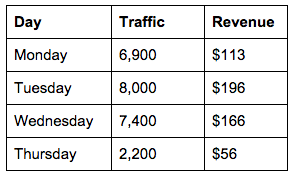
    Here’s the traffic and revenue I earned the day the article ran (Monday, August 15, 2011) and the following days:

    Huffington Post blog traffic

    After Thursday, the numbers resumed their normal range, though my traffic stayed slightly higher, with 1,200 to 1,500 daily page views. But revenue of $531, instead of the $80 I would normally have earned in four days, suggests the traffic from The Huffington Post link was worth at least $450. Not bad for one post!

    In addition, my website includes links to several of my other sites, so I’m sure I picked up another $50 worth of indirect traffic for those sites. And I linked to my book in the article and author bio, so I sold quite a few copies that week.

    All together, that article and slideshow on The Huffington Post was probably worth $800 in additional income within a few days. In addition, it helped me attract visitors to my sites and promote sales of my book for several months.

    It was a (very busy) year before I realized I had not just a post, but my own blog set up on The Huffington Post. I requested my password and started posting occasionally. The results were never as dramatic as that first post, but I did see increased traffic and book sales. And best of all, the editors never objected to my posts containing relevant links to my own websites.

    How to Earn Money by Writing for Free

    While The Huffington Post does not generally pay its bloggers, as my experience demonstrates, it’s still possible to earn cash by writing for free. Here are the strategies I used:

    Include specific, valuable links

    To start, be strategic when choosing links to include in your author bio. For example, if you’ve written a book or created a course, link to that. If you’re a freelance writer, you’ll want to link to your writer website or online portfolio. If you’ve monetized a website with affiliate products or pay-per-click advertising, link to it.

    In addition, if any of these links are relevant to your post’s content, include them on related anchor text in the body of your post. I’ll reiterate: the links must be relevant. If they’re not, the editors will likely remove them.

    Aim for the front page

    For these links to be valuable, a lot of people need to see and click them, which means you’ll need a lot of readers. I was a extremely lucky with my first post; it was featured on the front page of the HuffPost Small Business section, which brought in a ton of readers. Later posts never approached that level of traffic.

    With these results in mind, it can’t hurt to aim for this special treatment. Look at what’s being shared on your targeted section’s front page. Are the featured articles controversial or fun? Are they short or long? Do they have shocking titles?

    Many big names blog on The Huffington Post, so competition for better placement is tough. When former Secretary of Labor Robert Reich’s post is on the front page of the Politics section, yours isn’t likely to push his aside. On the other hand, he doesn’t write every day. If you’re working in a section with fewer big names, you might have an even better chance to get a good post featured. Study your targeted section to learn the famous bloggers in your niche and how often they post.

    Share your post as much as possible

    Promote your post to your own networks to direct as much traffic to it as possible, as you would with any guest post. Share it with your Facebook and Twitter followers, write a short blurb about it on your blog or email it to your newsletter subscribers.

    With a bit of luck, your HuffPo post might even go viral. Blogger Catherine Alford was lucky enough to see her recent post blow up:

    [It] went hugely viral with more than 220,000 likes and 43,000+ shares. That viral post also led to me getting interviewed on Huffington Post Live, which led to tons of emails and new readers. There’s no doubt that it’s beneficial to any writing career to be an author there.

    Whether or not your post goes viral, you’ll at least point a few new readers toward your site and offerings and add “Huffington Post Blogger” to your resume.

    If you’ve been published on The Huffington Post, how did you do it and what results did you see? If you haven’t, would you like see your byline there?

  • Guest Post Strategy: Should You Pitch the Editor Before You Write?

    Guest Post Strategy: Should You Pitch the Editor Before You Write?

    When planning your guest-posting or freelance-writing strategy, you already know to start by creating a list of blogs to pitch. You’ve read their guidelines and brainstormed great article ideas for each one.

    What’s next: do you query the editors with short outlines and start writing only after your proposals are approved? Or do you write the articles first, and then try to sell them?

    There’s no hard-and-fast rule about this situation — except that you must read each site’s guidelines before pitching! — so you’ll have to decide which way works best for you. However, having tried it both ways, here are eight compelling reasons to write your posts before pitching them.

    1. You already know you can write the article

    Recently, an editor approved my proposal for a post (not yet written) on how anyone can be a movie producer. I had done some research prior to pitching, but I soon discovered that investing in films as a producer had since become much more expensive and complicated — making the article unsuitable for that blog’s readers. There was no way around it: I had to tell the editor I couldn’t write the article.

    You don’t want to promise an article you can’t deliver, especially if you’re trying to land a new client or establish a new relationship with an editor. Of course, if you do enough research you’ll know you can complete an article — but at that point the work might be half done, so why not finish it? Using a template for your article can help ensure its structure stays on track.

    2. You know it will work for a client

    Sometimes you can propose and write a great article, but it isn’t quite right for your client’s blog or magazine, even if it seemed like it would be when you first pitched it. You might have to rework it in some way that’s unsatisfying or just drop it, whereas if you had written it first, you could have found the perfect outlet for that perfect article.

    Once an article is finished, it’s much easier to see if it will fit well in a particular publication. Knowing this before you pitch an editor saves you the time of querying outlets that won’t be the right fit.

    3. You can submit your work immediately

    Many blogs and magazines specify that they want a query, not the full article. But more than once, I’ve sold an article because I put it in the email anyway. Somewhere in my query I mention “the article is below if you’re interested,” and I make sure it follows everything else, including my signature.

    Yes, this violates a rule. But if an editor is interested, instead of contacting me to read more, she merely scrolls down. Otherwise, she can stop at my signature. How could that add more work or trouble to an editor’s life? Note that I’ve pasted the article into the body of my email; I’m not clogging her inbox with an unwanted attachment.

    In any case, if you don’t want to risk breaking the rules, having the article already written means you can send it as soon as a client expresses interest — before that interest wanes.

    4. You can pitch your post elsewhere

    What do you do when you spend the time to write a great article and the client you have in mind rejects it? Sell it to someone else!

    I recently sold an article several months after it was rejected by the editor of the blog for which I originally wrote it. I had to change a few lines, but I earned $35 more than the first client was paying.

    [bctt tweet=”Re-pitch your unsold articles to other clients, says @stevegillman”]

    Keep your unsold articles organized and regularly offer them to other clients. This is especially important if the article will go stale, like ones that mention news items or new products. If the article still doesn’t sell . . .

    5. You can use it on your own blog

    When your articles don’t sell you can always use them on your own blog or website. This works best if you write mainly in one niche. My specialty at the moment is personal finance, and I have several related websites. Sometimes I’m happy when my editors reject a few articles, because then I have content for my own sites (for which I seem to procrastinate otherwise).

    Interestingly, the rejected articles often get the best response from my readers, perhaps because they’re edgier. Nobody wanted to touch my article on making money as a “professional cuddler,” for example, but my newsletter readers and website visitors loved the piece.

    Of course, you’ll still want to get paid for your work. Consider monetizing your website with Google AdSense, promoting affiliate products, or selling your own books. My best “money site” only brings in about $200 per month now, but every little bit helps.

    6. You can add it to your portfolio

    When you can’t find the appropriate client for a good article, you at least have a solid addition to your portfolio. Post it on your blog or website and add the link to the clips you send in queries.

    7. It’s less stressful

    I can’t be the only one who gets a little stressed when facing deadlines for articles that I haven’t written on topics that may not be as interesting as I hoped.

    It’s so much more relaxing to have the work done when proposing articles. And it’s likely that the quality of your articles will be higher when you aren’t rushing to meet a deadline.

    8. The article is more likely to sell

    Try this experiment: write a description of an article, then write the article, and then write a new description based on the finished piece.

    How do your two descriptions compare? I doubt they’ll be the same, and I suspect the second one will be more interesting. Having a better description helps sell your article — because now you know exactly what you’re selling.

    In any case, writing your description after the article is done helps it more accurately reflect the finished product when you include it in a query, and that makes for a satisfied client.

    The bottom line

    To properly propose a piece for a client, you’re going to do some research and outline an article. If you’re putting that much work into it already, why not just finish a draft of the article?

    A finished post is more likely to sell, and in the case that it doesn’t, you have several more options. For your next guest post, why not try writing first?

    Do you write first or query first? Why do you use your preferred method?

  • 7 More Writing Blogs That Want Your Guest Posts

    7 More Writing Blogs That Want Your Guest Posts

    You’re a great writer. You’re writing excellent posts with nuanced arguments and sharing practical advice and personal experience on your own blog. There’s just one problem: only your sister is reading it.

    Blogging on your own site helps establish your voice and authority, your little corner of the internet. But attracting readers to your blog can be a challenge — where do you find them, and how do you convince them that you’re worth listening to?

    For many bloggers, guest posting is the answer. By sharing your expertise on another blog, you build relationships with other bloggers in your niche and connect with a broader audience — some of whom may be your future readers and customers.

    Danny Iny shared his advice on guest posting back in the early days of TWL, and since the online world changes quickly, we’ve created a new list. Here are seven more blogs to consider pitching when planning your guest posting strategy.

    1. Be a Freelance Blogger

    Created by Sophie Lizard, Be a Freelance Blogger helps writers earn more money by blogging for hire. Many posts focus on finding clients, figuring out how to set your rates and developing your blogging skills. They’re informative, but also entertaining for readers.

    Popular posts include:

    Submitting a guest post to Be a Freelance Blogger is a nine-step process, which sounds intimidating but isn’t actually that complicated. Start by getting to know the blog and its community by reading popular posts and sharing your thoughts in the comments. Brainstorm story ideas, then pitch them to Lauren, BAFB’s Community Manager (lauren@beafreelanceblogger.com). Once she gives you the green light, it’s time to write your first draft!

    For more information on guest posting on BAFB, check out our Guest Blogging Spotlight.

    2. Writer’s Relief

    Founded in 1994, Writer’s Relief helps writers submit their work to literary agents and editors. Their blog offers tips on craft, advice on querying and interviews with successful authors, and they accept guest posts on topics ranging from marketing to conferences to writing inspiration.

    Your submission must be original and unpublished, and should be a maximum of 600 words. Paste it in the body of an email to info@wrelief.com, include your bio and answer this question: “What major thing will readers learn from your article?”

    For more, follow their guidelines and learn from these popular posts:

    3. Writing Forward

    Calling all fiction, poetry and creative nonfiction writers! Writing Forward wants to share your advice on crafting great writing, and they’re open to submissions whether or not you’ve been published elsewhere.

    Popular posts on Writing Forward include:

    There’s no compensation for guest posts, but you’re free to include links to your own blog in your post and bio. Note that commercial or spammy backlinks will not be published.

    Interested? Check out Writing Forward’s guidelines and send a query in the body of your email to founder and editor Melissa Donovan at melissa@writingforward.com.

    4. Live Write Thrive

    Novelist and writing coach C.S. Lakin shares advice on storytelling, writing inspiration and promoting your book. She accepts guest posts related to her “Writing for Life” category and specifically looks for posts that will “encourage, help or instruct writers” to better their craft and share their work.

    Popular guest posts on LWT include:

    Review the guidelines and pitch your ideas through the site’s contact form before writing a post. Note that LWT only runs guest posts once a week and has a long lead time, so you’ll want to get in touch early if you have a specific time frame in mind.

    5. Funds For Writers

    C. Hope Clark runs Funds For Writers, a site dedicated to helping writers earn more money for their work. Each weekly newsletter features a note from Hope, news and opportunities in the writing world, and you guessed it — a guest post. FFW focuses on paying markets, grants, contests, writing jobs, publishers and agents; this is not the place to submit posts about writing craft or character development.

    Guest posts should share your best advice and success stories about building a writing business, breaking into a high-paying niche or unusual ways to earn an income through writing. Recent examples of guest newsletter posts include:

    • Take the Stress Out of Author Marketing
    • Work Smarter 2.0

    Since guest posts are shared in a newsletter, Hope is looking for tight, concise submissions: 600 words, max. Review the guidelines and send your ideas to Hope at hope@fundsforwriters.com.

    6. Writers Helping Writers

    Run by Angela Ackerman and Becca Puglisi, Writers Helping Writers is a resource for writers interested in craft, publishing and marketing. To be accepted, guest posts need to share fresh, practical information that helps writers develop their writing, connect with audiences and improve their promotion strategies.

    Guest posts that have done well include:

    Ready to submit your ideas? Check out their guidelines and submit your suggestions through this form.

    7. Pen & Muse

    Pen & Muse calls itself “a writer’s haven, for writers of all ages and genres.” A team of Muses, led by Kristen Jett and Jolene Haley, shares advice on the world of writing and publishing, including advice on marketing, branding, craft, self-publishing and more.

    Popular posts on the blog include:

    • When You Should and Shouldn’t Use a Pen Name
    • How To Outline Your Novel (Part One)
    • The Secret To Getting An Agent & Getting Your Work Published

    If you’re interested in submitting to Pen & Muse, make sure your work is original and unpublished. For inspiration, consider adding your voice to one of their featured series: How I Plot, What I learned from [Your Most Recently Published Book] or [Title of Your Last Manuscript], My Favorite Editing Trick, or Adding Depth To Your Characters.

    Read the rest of the guidelines, then submit your idea through the contact form on the same page. They’re scheduling up to three months in advance, so be sure to send your idea in early if you have a specific run date in mind.

    For more information on sites that accept guest posts, be sure to follow our series of Guest Blogging Spotlights.

    Now, what are you waiting for? Get pitching!

    Have you submitted a guest post on any of these sites?
    links
    links
    links

  • Pitching a Guest Post? 7 Ways to Stand Out in an Editor’s Inbox

    Pitching a Guest Post? 7 Ways to Stand Out in an Editor’s Inbox

    Editors receive hundreds of pitches each week. When so many of them sound exactly the same, they all start to blend together in the inbox. If you’re able to capture an editor’s attention, there’s a much greater chance you will actually get an assignment. That’s where creative pitching comes in.

    Creative pitching — using unusual, imaginative ways to pitch a piece — helps your query stand out in a sea of bland guest post requests. A creative pitch can be funny, visual or collegial, depending on the target audience. By engaging editors instead of boring them to death or, worse, using gimmicks like ALL CAPS or over-the-top claims (“this will be the most-read post you’ve ever put up!”), you help ensure your pitch won’t get buried in the inbox.

    While creative pitches won’t work for every site — don’t send them to serious outlets with very strict writer guidelines — they’re a great way to help you stand out. At the very least, you’ll have fun writing them! Here are seven ideas to spice up your next pitch.

    1. Play with odd or funny subject lines

    Pique the editor’s curiosity by using something truly surprising in your subject line. I have a friend who follows up to blogs she’d like to write for with subject lines like “Earth to [Blog Name], do you read me?” These follow-up emails almost always get a response!

    It can be as outrageous as you want, within reason. Swearing or being crass may not win you any points — unless you’re pitching a blogger who’s known for that kind of voice, like Ash Ambirge at TMF Project.

    Check the contributor guidelines first, since some blogs specify that pitches should have a certain subject line.

    2. Tell a joke in your email

    Jokes are a fun way to open a pitch because they can brighten an editor’s day and break up the monotony of sorting through their email. This approach is also a great way to show you’re a real person, not a robot or spammer.

    [bctt tweet=”Try using a joke to stand out when pitching a guest post, advises @adrienneerin”]

    I am not the funniest person in the world, but I enjoy a good dad joke or funny pun. You could try starting a the joke in the subject line and finishing it in the email body — at least it might get them to open the email, right?

    3. Use an image in your pitch

    By including an image, graph or chart you plan to use in your post, the editor can get a better feel for what you’ll write. This is especially helpful if you’re promoting an infographic or have the design skills to create nice visuals to accompany your piece.

    When I recently promoted a time-sensitive infographic about distracted driving (April was Distracted Driving Awareness Month), I found that including an image drastically increased the number of responses I received.

    4. Include a TL;DR summary

    TL;DR is internet parlance for “too long; didn’t read.” Many editors lack the time to read through an entire pitch. Adding a TL;DR summary that makes your pitch in one line might elicit a smile from editors who tire of long pitches when really they just want a short summary — and earn you a response.

    5. Offer a critique

    This strategy doesn’t mean you should tell someone their blog sucks. Rather, point out something that you think is missing and offer a solution.

    For example, maybe a blog you’d love to write for has outstanding information about running and racing, but there’s no information on cross-training. Mention that in your pitch and suggest a few cross-training posts you could write.

    6. Explore your common ground

    Do a  quick “background check” on the editor you’re pitching. Did you attend the same college? Have you written for any of the same blogs? Do you share an abiding passion for pug dogs? Open your pitch with a reference to your mutual interest and you’ll stand out from others in her inbox.

    7. Reference a recent post on the blog

    Bloggers hate getting pitches that are vague and show zero knowledge of their site. Demonstrate that you understand what they’re all about by referencing a recent story and why it worked. That establishes your bona fide interest in this specific site and helps you stand out from all the mass queries.

    I like to show that I am not just throwing out a million identical pitches; I’ve actually read, liked and followed this particular blog. For extra credit, I try to comment regularly on blogs I’d like to write for, and I’ve found that editors are far more likely to reply when I’m already a familiar name on their site.

    You might not win over every editor using these tactics, but you’ll make your pitch hard to ignore. Of course, once you’ve landed the assignment, writing a great guest post is up to you.

    How have you used a creative pitch to get an editor’s attention?

  • Submitting an Unforgettable Guest Post: Tips from an Editor

    Submitting an Unforgettable Guest Post: Tips from an Editor

    Guest posting is a fantastic way to get your writing in front of new audiences, network with other bloggers and build your portfolio.

    But apart from writing damn good content (which, of course, is a given), how do you navigate the process of pitching, writing, and follow-up in a way that will get you on an editor’s good side?

    (And you want to be on their good side, not only to boost your chances of this initial post being accepted, but to increase your likelihood of being asked to post again.)

    As Assistant Editor of Brazen Life and Managing Editor of Career Attraction, I’ve seen some fantastic submissions and interactions with guest posters, and I’ve also witnessed plenty of situations that made me want to staple myself in the eyeball:

    • A writer once pitched a fantastic topic, then sent me an email saying simply, “Hey, I changed the content. Here you go!” and attached a totally different, unacceptable post for no apparent reason.
    • I’ve received countless iterations of this mass email: “Dear [editor name here], I came across your [site name here] and want to offer you a unique, high-quality post totally FREE!! All I ask is a few links back to my site in return. Here is my post, please tell me when it will be published!”

    While I know none of you would commit any of these grievous mistakes, there are some blunders I’ve noticed even quality writers committing, and I’d like to give you a heads up from the other side of the submission process. Consider it an inside scoop to give you the upper hand on the competition.

    Pitching Your Post

    DON’T write us until you’ve checked our writer’s guidelines

    Most sites have a “write for us” page that tells you exactly what topics the site is looking for, what style of writing it prefers and how to submit your pitches. Look for it and review it carefully before sending us anything. Only if you don’t see one anywhere is a cold pitch acceptable.

    If you get a lenient editor, they may be nice enough to respond to a cold pitch with, “Please check out our guidelines here and get back to me,” but even then, you’ve already lost points for not doing your homework. Editors are busy and receive tons of pitches every day. Ones that indicate a writer took no time to get to know the site he’s pitching are likely to be deleted.

    We want writers whose killer posts will rocks our worlds. We tend to lose confidence in your ability to produce them when you don’t follow our basic guidelines.

    DO keep it brief, to the point and specific

    A line about how much you like our site is a nice gesture; sucking up for a whole paragraph is not. (Did I mention we’re busy people?)

    Give a quick intro of who you are and what credentials make you awesome, then give us the pitch. And by “pitch,” I mean a catchy, well thought-out title followed by a few bullet points discussing what your post will cover.

    Give us something to work with. “I want to write a post on resume tips” doesn’t tell us anything about what the post will discuss or how well you’ll handle it. “I want to write a post on ‘10 Resume Mistakes You Need to Stop Making Now,’ including X, Y and Z” is more like it.

    DON’T pitch us without first checking our site for your topic

    We don’t expect you to have our site memorized; in fact, we understand that many writers pitch us solely because our sites would be good exposure, not because they’re diehard readers. And that’s okay. But that doesn’t excuse you from checking to make sure you’re not pitching an idea that’s already been done.

    Most blogs have a “search” function you can use to see if the topic you’ve thought up has been covered already (especially recently). If a site doesn’t, try Googling “[site name]” plus “[your topic idea]”.

    Your best bet, even after this recon? Pitch us several potential topics so we can choose the one that best fits our site. You don’t know what posts we may have scheduled for upcoming weeks, so giving us options makes it easier for us to say “yes” rather than “no, thank you.”

    DO show us what you’ve got

    Not to be mean, but we don’t know most of you from Adam (or Eve). While you can list out the reasons why we should let you write for us, it’s much better to show us exactly what we can expect to get in a guest post from you.

    Instead of saying “I’ve been featured on these sites,” provide us with links to your work. Try to select posts that share a similar topic area or style as our blog so we can really see you’ve got the chops. I can’t tell you how many pitches I’ve been on the fence about until I saw the writer’s examples to give me a better feel for their abilities.

    Writing Your Post

    DON’T make it all about you

    While personal stories and anecdotes are a great way to connect with your audience and can really make your post stand out, readers are ultimately reading your post to learn what it can do for them.

    So if you’re writing about a personal experience and what you learned from it, tweak your language so that you’re sharing your personal experience, then telling the readers what they can learn from it. Make sure you to use “you” as much as possible to make them feel invested in the piece. Instead of saying, “One problem most writers face is writer’s block” (which in itself is a horrible sentence), say, “If you’ve ever faced writer’s block (and what writer hasn’t?), you know exactly how frustrating it can be.”

    Always bring it back to the reader and address them directly whenever possible.

    DON’T neglect your headline

    Most readers subscribe to dozens of blogs, and the one thing that’s most likely to grab their attention — whether they’re skimming their Twitter stream, RSS feed or inbox — is a headline that forces them to stop and think, “Okay, I’ve gotta know what this is about.” It’s also good for guest poster brownie points, because it demonstrates to the editor that you know how to write for the web and you’ve got your creativity hat on.

    An added bonus for you as a writer is that crafting a strong headline can help you hone your focus as you’re writing the post itself. “10 Ways to Be More Productive” could lead to a decent enough post. “10 Ways to Kick Your Day’s Ass” will not only snag a reader’s attention, but will likely lead to a much stronger post that will keep that attention once they start reading.

    DO write a kick-ass intro

    You’ve hooked the reader with your headline, and that’s great, but you still need to convince them that your post is worth delving into. For a quick master class in intro writing, check out 11 Ways to Write an Irresistible Intro to Your Blog Post by Write to Done and How to Nail the Opening of Your Blog Post by Copyblogger.

    DO keep an eye on formatting style

    Even if your content is flawless, most blogs follow a stylesheet, which means an editor will have to tweak some of your formatting before they can publish your post. Anything you can do to save them extra work a) earns you brownie points out and b) demonstrates that you’re really dedicated to providing content catered to the site (which earns you more brownie points). Before writing, take a look at current posts on the site and mirror the way they’re laid out.

    Does the site center their sub-headers or left-align them? Do they prefer to bold key phrases or italicize them? If they include hyperlinks to other posts on their site, pepper in a few for good measure. (BTW, adding liberal links to your own site probably won’t go over well, and they will likely be stripped from the post even if it’s accepted, so don’t bother.)

    After You Submit

    DO be patient with us

    Some writer’s guidelines will say precisely how long you can expect to wait to hear back on your submission. Others won’t. Either way, bear in mind that we’re juggling many responsibilities, including submissions from our current roster of writers, so it will probably take a little time for us to review your post and respond to you.

    If we don’t get back to you after a two weeks or so,  it’s okay to send a polite “Just checking that you received my post” email. (Starting it off with “I know you’re busy” is always a nice touch.) But don’t get message-happy.

    No news is simply that… no news. It doesn’t mean we’ve deleted your email altogether. It doesn’t mean we hated your post so much we’re secretly stringing you along to see how much we can torment you. Give us a little time and, if you followed all the guidelines you were supposed to, we will get back to you, even if it’s only a “Sorry, but this isn’t the right fit for our site at this time.”

    DON’T take revision requests personally

    We’re not asking you to rewrite a section or flesh out an idea because we’re living out a Devil Wears Prada power fantasy. We want your post to be the best it can be, both for our site and for your sake as a writer. So please (please!) don’t take it personally if we tell you it needs some work.

    We may be making suggestions that will make the post better suited for our site’s audience, or we may have spotted some things you need to work on in your writing. Either way, if we’re asking you to revise, it means we want to be able to use the post. Please understand that any notes we send you are a good sign.

    DO be a good participant once your post is live

    Too many writers see guest posts as free PR, working their butts off to seal the deal with their pitch but disappearing once their post goes live. The writers who really stand out in an editor’s mind (and are more likely to be asked to post again) are those who take an active role in the conversation around their post when it’s published. (Click to tweet this idea).

    Subscribe to the comments and be sure to respond, ask questions and spur the conversation onward. Share the post with your audience on Facebook and Twitter.

    Editors like writers who produce great content, but they love writers who also help spread the word about that content. Hit-and-run guest posters feel a bit insincere (and also demonstrate a lack of interest in the promotion of their own writing, which is sad). Go the extra step, and don’t let the relationship end once the “publish” button is clicked.

    Do you regularly guest post for other blogs (or oversee guest post submissions for one)? What other tips would you add?

  • Jon Morrow’s Guest Blogging Course: Review

    Jon Morrow’s Guest Blogging Course: Review

    We review ebooks, courses and tools for writers, so you can make good decisions about how to invest in your writing career.

    Course: Guest Blogging

    About the Creator: Jon Morrow is the former Associate Editor of Copyblogger and the brains behind Boost Blog Traffic. He’s big in this space, someone who practices what he preaches. And he has an inspiring personal story, too (more on that below).

    Price: $499, with an unconditional 30-day money back guarantee. If you do everything Jon tells you in the course and you still don’t get a guest post on a popular blog of your choice by the end of the 90-day program, you pay nothing.

    Who It’s For: Beginners and mid-level bloggers who want to learn about how to guest post on other people’s blogs. It also teaches why guest posting is a valuable strategy and how to leverage value out of the investment of your time on someone else’s blogs.

    What It Will Help You Do:

    1. How to find blogs that will accept your guest posts

    2. How to create a relationship with the blogger/editor before you pitch to them

    3. How to write awesome headlines

    4. How to write awesome blog posts

    5. What’s expected from you as a guest poster

    6. How to leverage value out of your guest posts (Hint: it’s not about the links)

    What’s Included:

    • Headline Hacks ebook

    • 17 lesson videos (some with homework)

    • Various other course related .pdfs, videos, and podcasts

    • Access to a private forum

    • Help with reviewing and editing your guest posts before they are submitted–as in someone will spend quite a bit of time on helping you with your post.

    • Access to weekly video conferences Jon where guest posts are reviewed and Q&A sessions.

    The Best Part: Jon Morrow. Jon is quite an inspirational person. As you go through the course, you get to know a little about his life story.

    Jon has a way of writing and communicating that makes it seem like he’s in the room with you. He also wants to share and pass on those communication skills to you.

    I also appreciate that the course teaches you how to guest post in a methodical and process orientated way. The course defines guest posting as a process and then explains each step of the process to you.

    What Would Make It Even Better: The content of the course is great. What would help make the overall community better is to improve the activity of the forum between members. The potential of the community perhaps isn’t being explored to the fullest.

    Our Recommendation: If you’re serious about your career as a blogger and plan to spend more than four hours a week on blogging in the coming year, then buy this course. You don’t want to spend hundreds of hours of work on your blog and not get something back from the time you’ve spent.

    If you are an existing blogger with tens of thousands of subscribers already, you probably don’t need to go hunting for guest posting opportunities.

    This post contains affiliate links. That means if you purchase through our links, you’re supporting The Write Life — and we thank you for that!

  • 7 Popular Blogs About Writing That Want Your Guest Posts

    7 Popular Blogs About Writing That Want Your Guest Posts

    It can be hard to be a writer these days.

    Sure, the web has democratized attention — but when everyone has a chance to make their voice heard — everybody tries and it can be tough to get anyone to notice.

    But what if I told you that there were dozens and dozens of websites that are read by thousands and thousands of people looking for authors like you to write for them?

    Would writing for an audience of tens of thousands make a difference to the sales of your book, perhaps?

    Maybe it would help you get enough attention on your blog that you catch the eye of an agent or publisher?

    Or maybe it will just help you share your story with more people?

    Whatever your reasons are, the fact is you probably want and need to get your words and ideas in front of people who are really interested in what you’re doing.

    Well, there’s a way to do all of that and more, without taking all of your time or any of your money.

    It’s called guest posting, and it’s something that serious bloggers have been doing for years…

    The Power of Guest Posting

    You may already be familiar with guest posting, but in case you aren’t, I’ll run through a quick explanation of how it works.

    You start the process by creating a list of blogs that your ideal reader is likely to frequent — preferably big, powerful authority blogs in your niche. Spend time commenting on different posts, making sure to leave interesting and valuable insights.

    While you’re doing this, pay attention to what types of posts perform really well on each blog. How-tos? Exposés? List posts? Keep notes on the preferences of each blog as you comment and engage.

    After you’ve left a good number of comments on a blog, reach out to the blog owner with a clear and concise email proposing a post, including your suggested headline, and a little information about what you’d like to write for them, who you are, and why their audience will appreciate it if they give you a chance.

    If and when they accept, draft up the post, including a brief bio, and make sure to schedule some time on the day that the post goes live to answer your comments.

    There are plenty more details, of course, but at the end of the day, that’s the guest blogging process — and if you want to learn more, feel free to check out the Write Like Freddy training program — almost a thousand bloggers have benefited from it so far.

    Okay, enough about the theory. Where can an author or writer go to guest post?

    Read on for seven of the best places to start your search.

    1. Write to Done

    Mary Jaksch is the chief editor of Write to Done, a space for new and experienced writers to share their experiences, knowledge and advice with each other. Write to Done is one of the industry leaders in this area, and so having a post appear there is a great shot in the arm for your credibility and exposure.

    Some of the posts that have done exceptionally well on Write to Done are:

    • How to Write Funny
    • 31 Ways to Find Inspiration for Your Writing

    Write to Done accepts guest posts frequently, but they have to be top notch! We’re talking about incredibly, unbelievably useful content — so peruse the guidelines and send your very best. Make sure to pay attention to the details!

    2. Make a Living Writing

    Carol Tice started Make a Living Writing to share her experience making a living as a freelancer. Using her extensive knowledge and experience in the field, she helps writers graduate from content mills and other low-paying markets. Make a Living Writing was named one of the Top 10 Blogs for Writers in both 2010 and 2012.

    Some of the most popular posts on Make a Living Writing are:

    • How I Make $5,000 a Month as a Paid Blogger
    • Answers to 100 Freelance Writing Questions – Including Yours
    • 113 Things You Can Do to Grow Your Freelance Writing Income – Now

    To guest post on Make a Living Writing, brush up on writing strong headlines, and don’t send any finished articles — Carol only wants a proposed headline and an outline of the points that you want to cover. Keep in mind that her most successful guest posters are blog subscribers and regular readers, so sign up!

    Oh, did we mention she pays $50 per guest post? Email Carol directly to submit your pitch. (Update: While Carol is no longer accepting guest posts from all writers, you may still be eligible if you’re a current or former member of the Freelance Writers Den or a student or graduate of Jon Morrow’s Guest Blogging course.)

    3. Men With Pens

    James Chartrand is the pen name of the founder/owner of Men with Pens; she’s a leading copywriter and professional blogger from Montreal, Canada. She has been featured in Forbes, Intuit, Newsweek, New York Times and the Huffington Post, and regularly contributes to top blogs, like Copyblogger.

    Men with Pens focuses on the writing side of commercial marketing, customer perception, online businesses, problogging, and consumer psychology. It has been voted one of the Top Ten Blogs for Writers for four years running.

    Here’s a sampling of the stuff that does particularly well on her site:

    Your post should be geared toward seasoned writing professionals and should specifically address the subject of succeeding online with your writing, whether about copywriting, freelancing, entrepreneurship, or online marketing. The content should be useful — and although this should probably go without saying, it should be well-written. Affiliate links not permitted. You can read all of the guidelines right here.

    4. Jeff Goins

    Jeff Goins is the author of Wrecked and leader of a thriving blog community. Jeff explores why writers write, how they can improve, and how to get eyes on their work. Definitely not a blog you want to miss if you’re serious about writing.

    Some of Jeff’s best posts are:

    Jeff talks about the importance of guest posting himself — so why don’t you send him a well-thought out pitch! Remember to include not just a headline, but also a few solid points you intend to cover, and a good reason why he should pay attention to you!

    5. The Creative Penn

    On the Creative Penn, Joanna Penn integrates her experience as an author, speaker, and online entrepreneur into her posts, creating a vast resource for people interested in writing, publishing (online and in print), and internet marketing and promotion for their books. Her blog features regular blog posts and interviews with authors and people in the publishing or marketing sphere.

    Check out some top posts:

    Joanna welcomes guest posts about writing, publishing, marketing or creativity, and favors articles which are useful or thought provoking. She typically accepts posts that are 500-1500 words in length, and an appropriate image must be included with your post submission.

    Plan this guest post in advance; the current waiting time for guest posting on Creative Penn is three months! They say that good things come to those who wait, so get your pitch in now(Update: The Creative Penn is not currently accepting guest posts.)

    6. The Write Practice

    The Write Practice is composed by Joe Bunting and Liz Bureman, and they are all about improving your writing skills and getting you published!

    How do they do that?

    They’ll make you practice, and practice and practice — because nothing else will improve your skills! With tutorials on common necessary skills, and inspiration for everyday writing — the Write Practice is a wonderful place to “see and be seen.”

    Here are some of the most interesting posts from the Write Practice. Use them as examples, and try them yourself!

    The Write Practice likes guest posts about how to write various genres, from poetry to journalism. Make sure to follow all of the guidelines, and be patient if it takes a little time to get a response!

    7. The Renegade Writer

    Linda Formichelli and Diana Burrell are the dynamic duo behind The Renegade Writer, and they practice what they preach: their philosophy is that to be a successful freelancer, you must do what works for you, rather than blindly following pre-established “rules” of the trade. Linda’s blog strives to encourage people to figure out their individual system of what works, and get them motivated to reach their writing dreams.

    Some of their best performing posts are:

    Guest posting on The Renegade Writer will also net you $50 in addition to access to their wonderful and engaged audience. If your post is published, you must be ready to promote it via social media and be actively engaged with readers in the comments. They prefer posts about productivity, motivation, query writing, tips on how to diversity your income, amongst others — and the higher the word count, the better! (Update: The Renegade Writer is not currently accepting guest posts.)

    So there you have it — seven popular writing blogs that you should be writing for to gain exposure, credibility and excellent experience. Having relationships with these bloggers and their readers will have long term benefits for your writing career. So don’t hesitate!

    Get out there and pitch!