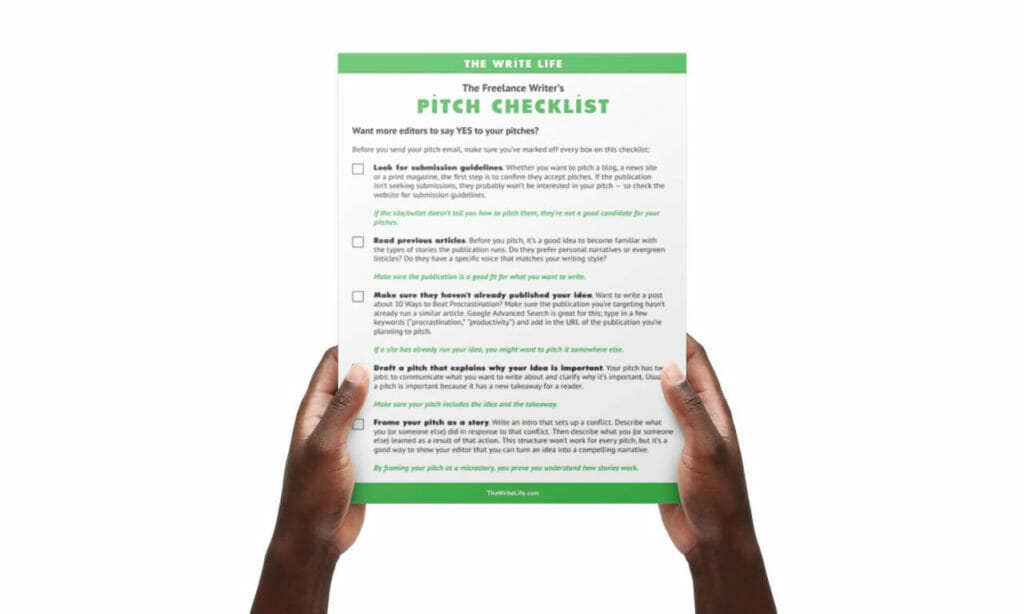
Everyone says to read a publication before you pitch it, but what exactly are you supposed to be looking for?
Below are a few things to examine in order to help you figure out what your dream magazine is looking for and tailor your pitch for that title.
First, grab a few issues of the publication you’d like to pitch.
These might be hard copies, web flip books, or stories on its website. Ideally, you’ll have a handful of issues to look through, including back issues and the most current issue available.
I often go to my local library and grab a variety of issues of a magazine to study. I try to make sure I have as many regular issues as possible, though special issues (such as “best discoveries of the year” or “holiday shopping guide”) can also be useful to examine.
Once you have these copies in hand (or up on your computer), take a look at each issue, page by page, to gain some valuable insights.
Keep an eye out for these areas in particular:
Cover
With a print publication, start by looking at the cover. Even if there aren’t a lot of words, you’ll learn a lot from a quick scan of the cover.
What is the main image? Which articles are promoted? How many articles are promoted on the cover? Does the issue have a theme that’s mentioned on the cover?
Noting these details will give you an idea of the topics the editors hope will appeal to the publication’s target audience.
What type of imagery is used? Is it a model in a swimsuit or a wholesome family picnic? Is a celebrity on the cover? Whatever the main image is, the publisher is hoping it will catch the eye of their target demographic passing newsstands, so keep that in mind while pitching.
After taking a careful look at the stories and images promoted on the cover, take a look at the nitty-gritty issue information.
You’ll often find this on the cover, spine, or inside the magazine. Find out how many issues are published each year and when they’re published. Are there special issues or themes such as “holiday special” or “buyers’ guide”?
If there are clear editorial-calendar themes, look at the magazine’s website to see if you can determine upcoming themes — and target your pitches to those topics.
Masthead
The masthead is where you can find out who edits each section of the magazine; you can suss out who to pitch and maybe even find out how to get a hold of them.
When examining the masthead — typically found on one of the first pages inside the magazine —take a look only at the most recent issue you can find.
You won’t want to waste your time pitching the wrong person or someone who is no longer with the magazine, so be sure to look at the latest issue for the most up-to-date information possible.
You might also want to take a look at the contributors. Who is writing for this magazine? Do you know any of the writers listed? Would they be potential contacts to help you break into this market?
The publication’s website
When you’re looking at a physical magazine, it’s still important to also take some time to check its website.
See if you can find writers’ guidelines on the site or an email address to ask for detailed writer’s guidelines, since many publications do not put these online to avoid a deluge of submissions.
The website may also contain an upcoming editorial calendar, calls for specific pitches, and other valuable information.
But be aware that print and online versions of the same publication often pay vastly different rates (with print often earning much higher rates), so be sure you’re looking at the information for the market (print or online) that you want to write for.
Advertisements
While you’re probably not planning on writing ad material for the publication, the ads are a huge component of the magazine.
Are the ads offering fancy watches, ultra-lightweight backpacking gear, or classic fishing gear? Do you see ads for family vacations in Montana or luxury cruises in the South Pacific?
Studying the ads can tell you a lot about who the magazine is looking to appeal to, whether it’s high-end clientele, families, athletes, or others. Being familiar with the target ad group helps you craft your pitches to the right audience.
Photos and images
Just because you’re a writer doesn’t mean you should skip over the images.
Take a good look at the photographs and images used to accompany articles. Are they edgy? Traditional? Do they look fresh and new or a bit dated?
Also consider where the images come from. Do you see a lot of stock photography or does it appear that the publication contracts with photographers for most of its stories?
Hiring photographers for custom shoots can be quite expensive, so this can also give you a general idea about the kind of budget the publication might be working with.
If the publication uses almost all stock photography and amateurish photos, it might have a fairly low budget or use its resources in other ways. But if it’s packed with top quality professional images that are obviously shot for that particular publication, it might be a more established publication with deeper pockets.
It’s all speculation, but it’s possible to pick up clues by examining the photography in a magazine.
“Front of the book”
When you flip open a magazine, the first thing you see is almost never the cover story. Before getting to the features, most magazines typically offer short pieces in the “front of the book” (FOB) section.
While it generally won’t be labeled “front of the book” in the magazine, pros know these small pieces in the front of the publication are a great place to break into a new market.
A magazine will often have small recurring items in this section, such as news briefs, book reviews, roundups, and other regular short sections.
If you’re looking to get into a publication for the first time, pay special attention to this section.
Which section headings are used in the first few pages of every issue? What tone do they use?
Use this information to craft your pitches for this section. Magazines often need a lot of fresh content for the front of the book since they need so many short pieces for each issue.
Features
Now, we’re at the meat of the magazine: the feature section. These are the long articles that entice readers to pick up the magazine and start reading.
What topics do you see featured in each issue? How long are the feature articles?
What tone is used? Does each author have a unique voice or is it tailored to the voice of the publication? How many sources are in each article? Are these articles more timely or evergreen? Do they incite controversy?
The features are the showcase pieces that the magazine uses to entice both readers and advertisers.
They also typically pay the best out of all the pieces in a publication. Take a close look at these and catalog the information in your mind for when you’re pitching features so you can tailor them to the magazine. Consider taking notes to review in the future when you’re ready to pitch.
What do you do with this information?
Now that you’ve asked yourself a bunch of questions and spent some time poring over several issues, it’s time to turn this information into action.
You likely have a few ideas in mind for pitches. Now you can find out what sections of your dream pub they might work well in.
If you have an idea about a neighborhood restaurant and see a magazine with a great “Restaurant Corner” section at the front of the book, you’ll know to tailor it to that. See how long it is, what kind of information is included, and use that information to tailor your pitch.
Editors want to make sure you’re familiar with their publication. Don’t just say you want to write about the restaurant. Say you want to write a 250-word piece for the “Restaurant Corner” section. Doing so shows you’ve done your research and are familiar with the publication.
You can also use the information gained from studying the publications to make sure your pitching and writing tone fits with the magazine. If the publication is very serious, refrain from snark. If it uses a lot of buzzwords and trendy lingo, throw in a few similar phrases of your own.
It’s also helpful to, check and see if the publication has recently published anything similar to your pitch ideas.
Once you have a good idea of what the publication likes to feature and what kind of reader it’s trying to appeal to, you’ll know where you can fill in the gaps and can now pitch accordingly.
What are your tricks for studying publications — and turning your research into pitches that sell?