Blog

  • Can You Write a Great Essay? Apply to Win This Maine Inn

    Can You Write a Great Essay? Apply to Win This Maine Inn

    Your writing chops could be your ticket to small business success.

    Janice Sage, innkeeper at Maine’s Center Lovell Inn and Restaurant, is retiring after 22 years. She’s giving the inn away, and she’s choosing the winner through an essay contest.

    Sage actually earned her own rights to the inn by writing an essay, and she had never been to Maine before she won the inn in 1993. While Sage could sell the business, she has said she would rather give it away to someone with passion and business know-how.

    How to win the inn

    Dream of being the next innkeeper? Sage told the Boston Globe that she’ll be looking for “grammatically correct entries that show a passion for work.”

    The prompt for your 200-word essay: “Why I would like to own and operate a Country Inn.”

    Sage will keep the application money and narrow down the applicant pool to 20. Then, a judging duo with no stake in the business will choose the winner. The new owner will also receive $20,000 to put toward the business.

    Applications are due by June 6, 2015. You’ll need to include the $125 application fee, and deliver your essay by snail mail.

    If fewer than 7,500 entries are received, entrants will have their application fees refunded. The search will still move forward, but if a winner is chosen, they won’t receive the $20,000 award.

    Don’t plan to make this your vacation home

    The Boston Globe story illustrated the difficulty of running a bustling B&B: Center Lovell Inn has seven guest rooms, 10 staffers and 120 dinner guests on a good night. The innkeeper tends to be on duty 17 hours per day. “Unless you raise[d] 14 kids, you’re not going to be used to this,” Sage told the Globe.

    Want to own the inn, but still want time to write? The contest mandates that the winner keep the inn and restaurant open for at least one year after taking over. After that, the facility is yours for the rebranding.

    But with a real estate value of about $900,000, the taxes, legal fees and upkeep of the property could be too much to maintain without running some kind of business.

    Still interested in becoming the innkeeper?

    Yes, your writing skills could help you win this picturesque inn. But if it’s going to be worth the investment for you, you’ll need to love business as well. When you’re tending to guests around the clock, you won’t have much time to escape into a nook or cranny with your notebook.

    Our advice: Apply, win the inn and invite TWL readers to a yearly writing retreat on the property. We’ll see you in Maine!

    Are you going to enter the essay contest to win the inn?

  • 6 Old-School Rules You Should Break as a Freelance Writer

    6 Old-School Rules You Should Break as a Freelance Writer

    As freelancing has become more common, a set of “rules” has emerged as the norm. Blog posts advise us to put on pants, be active on every social media channel and pick a specific niche.

    This is all good advice. But where do you draw the line between following the rules, versus being innovative and doing what works best for you?

    Sometimes breaking the rules can actually strengthen your freelance writing business. Not convinced? Here are six rules you can break as a freelance writer — with advice from freelancers who’ve successfully flaunted them.

    1. Always pitch editors via email

    Yes, most communication these days is done via email. But the tried-and-true method of cold calling an editor can still be a smart way to break the ice. If you want to make your pitch stand out, consider picking up the phone.

    “I’d just always thought if I [called editors], they’d view me as unprofessional (and kind of hate my guts for bugging them,” explained Deb Mitchell at The Renegade Writer. “I didn’t even get to leave voicemails with five editors before my phone rang.”

    The editor had been delighted to hear from her, and wound up assigning her a story on the spot.

    Before trying this strategy, read the publication’s submission guidelines. Some editors are clear that they prefer emailed pitches, especially if you don’t have a relationship with them.

    However, if you feel that cold calling an editor is the best route for you, go for it. You could also send an initial email, then follow up with a phone call.

    Don’t enjoy the phone? Consider other non-email strategies that play to your strengths. Writer Cinthia Ritchie successfully pitched a guest post to Carol Tice of Make a Living Writing on Twitter!

    2. Make your pitch professional

    Yes, you want to follow the instruction in the publication’s pitch guidelines, but you also want to make your email (or phone call) stand out by showing off a bit of your personality.

    How can you add personality to a pitch? Include a photo of yourself to your pitch, show your quirky side with personal anecdote, or tell a joke. If you can make the editor chuckle (or even laugh out loud), you’ll have a good shot at getting her to read the rest of your pitch.

    Asking about the editor and hiring manager’s “spirit animals” during an interview helped my friend Claire Murdough land a contract writing job at a startup in San Francisco. Her question broke the ice, and got everyone laughing and talking. Plus, Claire knew the startup’s atmosphere and that her quirky personality has helped her land gigs in the past.

    Even a bit of fun with grammar is a good idea. “When it comes to grammar, my stance is that rules are made to be broken — but you gotta know those rules backwards and forwards to have the authority to break them,” says copywriter Betsy Mikel.

    “I find that grammar rules can get in the way of being conversational. When I have to weigh being conversational versus following a nit-picky rule, conversational often [wins] out,” explains Betsy. “Most people would rather read something written by a friendly human than a stuffy academic. So it’s mostly about putting readers first over the editorial rules.”

    3. Pitch your idea and wait for approval before writing

    Most pitching processes start out with you researching the site’s content, coming up with a topic, and then pitching your idea to the editor. If it’s accepted, you write up the piece as soon as possible and send it over for the editor to review.

    But what if you flipped the script? Instead of waiting for an editor to say “yes” to your idea, try including the post itself in your pitch email (or at least a detailed summary) so he can see exactly what you’re talking about. This could help push your pitch over the edge from a “maybe” to a “yes,” according to freelance writer Steve Gillman.

    Additionally, you’ll be able to better organize your time. Rather than waiting until the editor approves your idea after a week or two, when your schedule may be busier, you’ll have already written the post. You can spend more time pitching ideas, and less time trying to fit in a last-minute (and possibly rushed) article.

    4. Submit a piece and relax

    As writers, we spend the majority of our time seeking out an assignment, pitching ideas, researching content, writing a draft and editing our post. So when we submit the final piece to an editor, we believe we’re finished.

    But we’re actually still a few steps from the finish line. Aside from any revisions the editor requests, you’ll need to respond to reader comments and questions on the published post. You should also send the editor a quick thank-you note showing your appreciation.

    Finally, it’s important to share the piece within your network and on social media. Help spread the word by posting a blurb and link on Twitter, Facebook or Pinterest. Sharing the post with your followers helps demonstrate that you’re invested in the article, and it’s increasingly expected from freelancers, notes Carol Tice.

    5. Work for exposure

    At the beginning of their careers, most freelance writers work for free or very cheap to gain more traffic and exposure, and build their portfolios. That’s great, but make sure you have a timeline for parlaying those unpaid gigs into paying ones.

    “One rule I never follow is accepting that as a new freelance writer you will sometimes have to accept ‘exposure’ as a payment form,” explains freelance writer Kayla Sloan.

    “When I was first starting out, there were a lot of job opportunities that wanted to pay a very small wage and instead provide ‘exposure’ for me and my writing. I’m not saying exposure and getting your name out there is a bad thing, but you shouldn’t get in the habit of accepting exposure as a payment form or you’ll never grow your business and get where you want financially. After all, exposure doesn’t pay the bills!”

    If you do plan to work for free, make sure you have a detailed plan outlining what you’ll learn from it, how many clients you’ll work with and how long before you’ll start charging for your work.

    6. Create set rates for clients

    When it comes to getting paid, many editors want you to pitch them your rate before they will OK an article idea or long-term relationship. But this rule needs to be thrown out ASAP.

    I’ve learned this lesson the hard way, and it’s meant missing out on a large amount of income. When at all possible, ask about the editor’s budget before quoting your freelance rate. Every time I’ve done this, I’ve been quoted at least $100 more for the piece than I was intending to charge (and in some cases even $500 more).

    To weed out some lower-paying clients, you may want to consider listing starting rates on your website. “I currently put rates on my writer’s site. Since I started doing that, I’ve gotten [fewer] low-ball inquiries,” says blogger and writer Bree Brouwer.

    “I may remove them at some point in the future (since I’m doing freelance gigs on the side of my job now), but I was surprised to see the difference [caused by] adding rates to my site.”

    If you aren’t comfortable publishing your rates, be open to having a general idea of what you charge for certain packages. “I break the mold as a freelance writer by not having a set rate card,” says blogger Miranda Marquit.

    “Many freelancers have a set rate card for their articles, but I prefer to have a general idea of what I want to charge for certain types of writing, and quote a rate based on the client, their needs, and other factors. Then I can negotiate. I’m more likely to negotiate rates on a client basis rather than offer a standard rate card to everyone.”

    Which rules will you break?

    Stick to your guns when you’re quoting your rates, but know when to ask what the client’s budget is, too. Don’t be worried that clients won’t pay what you ask. You’ll be surprised at how many editors pay handsomely for high-quality work — and how many red-flag clients you can avoid by charging a little more.

    Some rules are meant to be broken! Find those that fit your personality and work style, and throw out the ones that don’t.

    Which rules do you break as a freelance writer?

  • How Successful, Work-From-Home Freelance Writers Really Find Work

    How Successful, Work-From-Home Freelance Writers Really Find Work

    Aspiring writers always ask me, “What’s the easiest way to find writing jobs?”

    They’re hoping I can send them a link to some magical job board or bidding site where big-name copywriting clients and $1/word magazine editors are posting ads seeking writers.

    Well, here’s the thing: There’s an inverse relationship between how easy a gig is to get and how lucrative it is.

    So the question is: Do you want to do it the easy way — or the way that will land you assignments?

    Where the writing gigs aren’t

    Tons of writers flock to job boards and bidding sites, where they fall prey to clients who offer to pay them peanuts.

    (That’s a metaphor, but actually, I think a jar of peanuts would be worth more than the cash these writers would earn from a typical article.)

    Good clients don’t advertise for writers online because they have professional writers coming to them. For example, you’ll probably never see $1 – $2 per word magazines like Redbook, Entrepreneur or Health posting on job sites. (And if you do see it, it will likely be the case that they’re looking for “citizen journalists” — another term for “unpaid writers.”)

    Carol Tice of the Freelance Writers Den likes to say that businesses that advertise for writers are dysfunctional — and not the kind of clients you want to write for if you can help it.

    And she’s right: What else would you call clients who are willing to sift through thousands of applications from low-quality writers who are slavering to score $5 for an 800-word article? You’re not one of those low-quality writers, so these clients are not for you.

    Yes, there are some paid job boards that vet listings to make sure they pay a decent rate. But those free ones most writers flock to? Not so good.

    OK, now I’ve scared the jelly out of you by saying there is no easy way to find writing gigs. But the good news is, if you put forth more effort in seeking out, qualifying and approaching prospective clients, you can land assignments that pay a hundred times what you would make from some content mill that advertises online.

    Work-from-home freelance writers

    A great truth of freelance writing is:

    Shoe leather counts

    Here’s an illustrative example. Let’s pretend we’re interviewing the writer who earns mere pennies and the one who makes a good living writing, and have asked each of these writers, “How do you find gigs?”

    Here’s what the cheapie writer would say:

    “So, I go to sites like Elance and spend a few hours looking through the ads, and I apply to the ones that will pay me at least $5 per article.

    “When I get an assignment, I bang it out super fast so I’m making $10 per hour! I spend a lot of time scrolling through ads, and write to a couple of potential clients every week.”

    And the writer who rakes in loads of moolah would say this:

    “OK, so I search around online and keep my eyes open in the real world for trade magazines I might be able to pitch, since that’s the market I like to write for. I write for the banking and credit union industry, so another thing I do is when I go to a bank or do any banking online, I ask the person working with me what industry trades they read.

    “When I find a good market, I read it online and figure out what kinds of articles they run and whether the articles are written by freelance writers, staffers (which means they don’t use freelancers) or industry experts (who typically aren’t paid).

    “Then, if the magazine looks like a good match, I write a customized Letter of Introduction that outlines a few targeted article ideas and my credentials. I search through LinkedIn or the magazine’s website to sleuth out the best editor to pitch and their email address, and then I send my LOI to that person.

    “I do this non-stop, even if I have a full plate of assignments. I typically earn 50 cents per word — so a 1,000-word article will pay $500. That would take me six hours to research, interview and write, so I’m earning $83 per hour.”

    Bake your own loaf

    A metaphor I like to use is that many writers go out and pick up crumbs tossed out there by clients who advertise gigs — where they could learn to bake their own entire loaf.

    Do you see the difference in the amount of effort the two writers we interviewed expend in landing writing gigs? One works to find high-quality markets to approach and customizes her pitch for each one (that’s the loaf baker), and another waits for markets to extend an engraved invitation asking him to apply for low-paying gigs (that’s the crumb collector). And you know which one makes the big bucks.

    If you want the impressive-byline, lucrative writing gigs, you need to go out and get them. Search for businesses in the industry you want to write for. Read magazines at the bookstore, at the library and online. Pore over magazine directories like Writer’s Market.

    Learn how to write a compelling query letter and kick-ass Letter of Introduction; these formats are challenging at first, but they get easier the more you do them. Research how to cold call potential copywriting clients. Take the time to qualify your prospects and pitch only those you have figured out will pay you well.

    Don’t just wait for assignments to fall into your lap. Make them happen. Bake your own loaf.

    Your effort will be paid off in dollars — and you’ll be laughing in the face of the clients who want to pay you pennies.
    links

  • Feeling Stuck? 7 Tools for Developing Fresh Story Ideas

    Feeling Stuck? 7 Tools for Developing Fresh Story Ideas

    As writers, we have a number of jobs. Putting words down on a page is only half of what goes on behind the scenes, right? There’s also the editing, the research, the continuous coffee making and, of course, coming up with ideas.

    This last task is one of the most important parts of the writing process because without ideas you have, well, not a lot. If you write regularly, whether that means blog posts, short stories or copy, you know that coming up with consistently brilliant ideas isn’t always easy.

    It’s true. While most writers are naturally creative and innovative, we sometimes run out of steam. Tapping away at a keyboard for hours at a time can leave your brain mushy and your ideas lacking a certain luster. Once you’ve finished writing for the day, you have to plan out your ideas for tomorrow (cue head hitting desk), leaving you feeling unmotivated and, at worst, like a bad writer.

    Luckily, there are plenty of places you can tap into for writing inspiration when you’re running low on ideas.

    1. Buzzsumo

    Buzzsumo is great for creating instant “lightbulb” moments for blog posts and articles.

    It’s extremely user-friendly — all you have to do is type in a few words about the topic you’re researching. Buzzsumo’s algorithm uses social shares to measure how readers engage with certain topics, pulling in the best-shared posts relating to the keywords you choose.

    The downside? Buzzsumo isn’t free. You can use it on a limited basis without paying anything, but if you want to see more than 10 results, you have to cough up $99 a month or more. However, I often find that the initial 10 results are enough to get the cogs moving, so I’ve stuck with the free option.

    I used Buzzsumo to come up with an article for The Huffington Post about things you shouldn’t do as a freelancer. After typing in “freelance tips,” I saw top articles like “10 Tips for Surviving as a Freelance Artist,” “Things I Learned the Hard Way,” and “Freelancer Tips for Success.” Since these posts focused on things you should do as a freelancer, I flipped the idea on its head and came up with “69 Things You Should NOT do as a Freelancer”.

    2. Quora

    While Quora used to be full of weird and random questions, it’s now a great source of inspiration and writing ideas. The site is full of people asking interesting questions that you just might be able to answer!

    Quora is free, and is great for finding out what readers really want. Just type in a few keywords and you’ll find yourself inundated with questions you can answer.

    I’ve found lots of inspiration on Quora for travel pieces, since there are hundreds of people looking for tips, hacks and itinerary inspiration. I’ve even been inspired by other people’s answers on Quora.

    For example, one user responded to a question about working remotely while traveling by saying that most people he knew who quit their jobs to live such a life were outgoing and confident. Now, I quit my job to travel the world, but I’m definitely not confident or outgoing, so I wrote a post highlighting how you don’t have to be confident to travel.

    3. Pinterest

    Pinterest is no longer just a place to browse through pretty pictures (though I can definitely spend a few hours doing that!). It’s also filled with great articles and tons of article ideas.

    Give it a try: Type “writing” into the search bar and check out the results that come back. Narrow them down by using the bar across the top to apply filters like “tips,” “inspiration,” “examples,” etc.

    If I click on “tips,” I can see loads of pretty pins with text over images. I see one that offers “Advice for New Writers,” so I might alter this slightly and create a post called “Advice for Shy Writers” based on my experience.

    I mainly use Pinterest for short story inspiration, using the highly visual layout to create settings and scenes for my characters. It’s perfect if you’re writing a novel or need to describe a destination for a travel piece, because you’ll find hundreds of examples that inspire your descriptions.

    4. Feedly

    I’m a big Feedly fan. Every morning I check my feed for new posts from my favourite sites.

    The great thing about this tool, besides the fact that it’s free, is that you can personalise your feed to include any topics and blogs you want, and you can separate them out into manageable lists. Writing for a cooking blog? Add a load of foodie sites to your feed. Need some travel article ideas? You know what to do!

    To get the most out of Feedly, bring up the search bar in your browser and type in a keyword. You’ll then see other blog posts on that topic all in one place. Handpick your favorite ones, and add those blogs to your feed to stay up-to-date on their new posts — which sets you up for future inspiration.

    I have a lot of large travel publications on my Feedly and I noticed that a lot of them were posting articles about “X Free Things to do in” a given city. The destinations they were featuring were fairly generic and well-covered — Lisbon, Barcelona — so I racked my brain to come up with less-commonly-written-about places where readers could benefit from having a selection of free things to do.

    I came up with “Free Things to do in Copenhagen.” It’s a notoriously expensive city, plus I already had a post on costs in Copenhagen that does particularly well on Google, so I knew this new post would be a hit.

    5. Bloglovin

    Like Feedly, Bloglovin is a free RSS reader that allows you to personalise your feed with blogs and sites that interest you. The great thing about this tool is that you can save articles for later, explore new blogs in different diagonals, and follow other users who like the same things as you, which gives you lots of different avenues to go down in search of inspiration.

    I follow mostly travel and lifestyle bloggers who post about their daily lives and what goes on behind the scenes of their blogs. I used to post solely about travel, offering tips and narratives about places I’d been.

    However, after seeing that some of the most popular posts on Bloglovin were ones that delved into the blogger’s life and turned the spotlight on them, I decided to shake things up. I now have a series on my blog about my life as a freelancer, and these posts are some of the most engaged with on my site.

    6. Google Alerts

    If you haven’t already set up Google Alerts, stop reading now and go and sign up — it’s free!

    Set as many alerts as you like with different keyword variations and topic ideas, like your name or “how to beat writer’s block.” I’d recommend receiving updates once a day; otherwise they can clog up your inbox.

    Google Alerts are perfect if you’re writing news articles and blog posts on trending topics. Each day, you’ll have a fresh set of blog posts, articles and news reports featuring the keywords you’re researching waiting patiently in your inbox.

    One of my blogs focuses on art around the world, highlighting artists, exhibitions and creative cities. I use Google Alerts to spark recent, relevant ideas as the art world changes so often. For example, the other day my alerts included a news article about “Sofia, Eastern Europe’s Unknown City of Art”, which has inspired me to write a post about some of Europe’s lesser-known arty hotspots.

    7. HARO (Help a Reporter Out)

    I only signed up for HARO this week after hearing that another blogger I follow tapped into it for inspiration. It’s free, and you get daily emails from reporters and journalists who are looking for sources for articles. The queries are divided into categories, so you can choose which alerts you receive (I’ve signed up for the travel and lifestyle segments).

    As I’m a new user of HARO, I haven’t incorporated any of its ideas into my writing yet. However, I can see the huge potential. For example, yesterday there was a call for “Restaurants Not Reachable By Car”, which could become “10 Quirky Hotels in the Middle of Nowhere,” or “5 Mediterranean Beaches Only Accessible by Car”.

    Not all of these tools will work for you. Find the ones that work best for your needs and experiment — mix and match ideas from different platforms and follow a selection of different publications. Most of all, have fun opening up new verticals of inspiration at the click of a button!

    What’s your favorite tool for writing inspiration? Where do you turn when you need to come up with new ideas?

  • Your Last Chance: The Writer’s Bundle Disappears Tonight

    Your Last Chance: The Writer’s Bundle Disappears Tonight

    Wow — We’ve been blown away by all the excitement around The Writer’s Bundle. It’s great to see so many of you taking advantage of this deal, and talking about it on Facebook and Twitter!

    Still on the fence? If you want to get your hands on this fabulous package of nine ebooks and courses, you’ll need to act quickly: The Writer’s Bundle disappears at 11:59 p.m. ET tonight.

    That’s right: This is your LAST CHANCE. Don’t say we didn’t warn you!

    These resources will help you write and self-publish a book, build a freelance writing business and supercharge your marketing efforts. If you bought them all separately, they’d cost nearly $1,100 — but you can get your hands on them today for $99 ONLY.

    Click here to get The Writer’s Bundle

    Questions? Check our FAQ. If your question isn’t answered there, feel free to get in touch at team@thewritelife.com.

    And if you’ve already downloaded The Writer’s Bundle, we can’t wait to hear what you learn through these resources!

  • Tracking Freelance Earnings: February Income Report From Nicole Dieker

    Tracking Freelance Earnings: February Income Report From Nicole Dieker

    Hi! If you’re new to this column: I’m tracking my freelance income every month and sharing it with all of you.

    This is my third year of public income tracking, and my first year sharing my income with The Write Life.

    Let’s take a look at February’s numbers:

    Completed Pieces: 63

    Work Billed: $4,980.00

    Earnings Received: $4,357.96

    Remember how I wrote, at the beginning of this project, that I was going to set myself the goal of earning $5,000 per month by summer 2015?

    I may hit that goal a lot sooner than I thought.

    February’s billed work came in at just under $5,000, and that was despite taking the first full week of February off to go on vacation. I put in late nights in January to bill $6,000.80, thinking I would only bill around $4,000 in February. Turns out I underestimated myself.

    These earnings are higher than I expected because of the new client I picked up at the end of January. Sometimes that’s all it takes: one new client, and I’m looking at steady earnings of around $1,400 a week.

    That’s right where I want to be, financially. This month, I earned $79.05 per piece on average — up from last month’s average of $68.97 per piece — with my per-piece earnings ranging from $300 on the high end to $50 on the low end.

    Saying hello to one client means saying goodbye to another

    In January, my low-end piece was $15.84 for 396 words. When I got my new client at the end of January, I decided to gracefully end my relationship with the $15.84 client, who was at that point my lowest-paying client.

    I had been working with that client for about a year, and we had a good working relationship, but I knew it was time to move on and put more effort into higher-paying pieces. So I wrote a short “resignation email” announcing my intention to move on and giving two weeks notice, which seemed appropriate. The client responded with good wishes and suggested I keep in touch if I was interested in taking on more work in the future.

    I’ve said goodbye to a few clients as I’ve moved up in my freelance career, and it is always nerve-wracking. I always have this fear in the back of my mind that if I quit working with Client A on Monday, I’ll wake up Tuesday morning to find that Clients B, C and D have all decided to fire me and I should have stuck with Client A when I had the chance!

    However, in this case saying goodbye to this client was the smart financial decision. It opened up room in my schedule to pick up higher paying assignments with my new client, and it felt like a step forward in my career.

    Counting my words

    Since some of you asked about word count, I tallied it up: In February, I wrote nearly 48,000 words, not counting revisions or tweaks to articles. This means I’m running at just over 10 cents a word, on average.

    None of my current clients calculate my rates on a per-word basis though, and very few of them even give me word count requirements. At this point I know what any given client’s piece should “feel like”, lengthwise: A piece for The Write Life should be between 700 and 900 words, for example, and a Boing Boing piece can be anywhere between 1,500 and 3,000.

    I could try to “game the system” by keeping my pieces as short as possible, but that’s not the point. I’m not trying to get the highest per-word rate, I’m trying to write the best pieces possible for each client, so I can keep them happy, improve my skills and eventually land higher-paying work.

    Where’s the rest of the money?

    I billed $6,000.80 in January, but only $4,357.96 hit my bank account in February. Where, you might ask, is the rest of the money?

    This is a good question with a complicated answer. First of all, there is not a direct month-to-month correlation between money billed and money earned. Some clients pay on 60-day cycles, for example, and others pay when the piece is published, which could be months after the final draft was approved.

    Secondly, it sometimes takes a few days for Paypal transfers and automatic deposits to process through the bank. I had $1,082.30 hit my bank account on March 4, and some of that was January billing money that arrived just a little too late to be counted for February.

    All in all, I’m not worried about payments that haven’t come in yet. I keep track of every client who owes me money, mark the payments off as they arrive, message clients if payments don’t arrive as expected, and trust a steady stream of money will continue to trickle my way.

    I’m excited to watch that steady stream of money grow as we move into March. If I continue this trend of billing around $1,400 per week, I’ll end March with around $5,600 in billed work. That sounds like a great way to wrap up my freelancing year’s first quarter, and prepare to pay my first chunk of 2015 estimated taxes! More on that next month.

    This could make for a great conversation in the comments: When do you know it’s time to “say goodbye” to a client? Do you give two weeks’ notice? Do you find that saying goodbye to a client opens up a new stage in your freelancing career?

    Want to learn how Nicole has come this far in her freelance career? Check out her past income reports for The Write Life:

  • An Unbelievable Offer for Writers: The Writer’s Bundle

    An Unbelievable Offer for Writers: The Writer’s Bundle

    Remember that amazing bundle sale we ran last year?

    Guess what… It’s BACK! And completely different from last year. We’ve packed it full of nine new resources that will help you make a living as a writer.

    Click here for more details on The Writer’s Bundle

    If you’ve been thinking about investing in a course or ebook to help you build your freelance business or self-publish your book, now’s your chance.

    We’ve bundled together nine ebooks and courses for writers into one impressive package. If you bought each of these tools separately, it would cost you nearly $1,100.

    But through The Writer’s Bundle, you can get them for only $99.

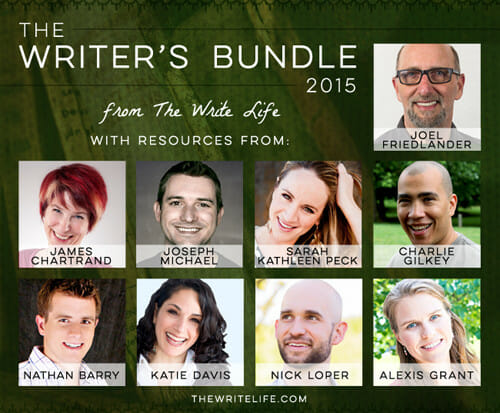
    Curious about making the most of Scrivener to write and format your book? Learn from the Scrivener Coach himself, Joseph Michael, in Learn Scrivener Fast.

    Want to give your ebook the best chance of success? Check out the step-by-step guidelines in Nick Loper’s Kindle Launch Plan.

    Querying agents and editors? You’ll definitely want Joel Friedlander’s Book Proposal and Manuscript Templates.

    The catch? The Writer’s Bundle 2015 is available for three days only.

    After 11:59 p.m. ET on Wednesday, March 11, 2015, it will be gone forever — so if you want to get your hands on this deal, you’d better act quickly!

    Click here for more details

    Resources for writers: The Writer's Bundle

    Here’s what’s in The Writer’s Bundle:

    • Kindle Launch Plan: $1,400 in 30 Days & an Amazon Bestseller, from Nick Loper (Course; retails for $99)
    • Content Strategy for Thought Leaders, from Sarah Peck (Course; retails for $300)
    • Book Proposal & Manuscript Template, from Joel Friedlander (Tools and ebook; retails for $27)
    • Learn Scrivener Fast, from Joseph Michael (Course; retails for $197)
    • Video Idiot Boot Camp, from Katie Davis (Course; retails for $297)
    • The Momentum Kickstarter Kit, from Charlie Gilkey (Tools and ebooks; retails for $47)
    • Authority, from Nathan Barry (Ebook; retails for $39)
    • Write for the Web, from James Chartrand (Ebook; retails for $23)
    • Turn Your Side Hustle Into a Full-Time Business, from Alexis Grant (Ebook; retails for $47)

    Interested? Grab your bundle before it’s too late!

  • How to Write a Novel: A Simple Process for Beating Writer’s Block

    How to Write a Novel: A Simple Process for Beating Writer’s Block

    It’s not easy to write a fiction book, especially if you’re trying for the first or second time.

    When I first started writing fiction, even with years of blogging, copywriting and more under my belt, I still struggled to get the story that was in my head to look good in words on the screen. There were so many moving parts — plot, setting, story, theme, character, description, grammar — it was hard to keep track of everything needed to create a solid, readable story.

    Sometimes I could read something I’d written and tell it wasn’t communicating what I needed it to, but I had no idea what was wrong. Other times, I read it and knew what was wrong, but didn’t know how to fix it.

    This led to frustration, which led to procrastination, which led to writer’s block. It was a vicious cycle that often resulted in months of zero fiction writing. Not good!

    Over the years, I’ve honed on a simple process that has helped me combat all those fears, worries and blocks while writing the first draft: Start with something very, very easy (a sentence or two about your chapter) and build on that little by little.

    I originally wrote about this process as a side note in my article about writing 3,500+ words per hour on a consistent basis, but some writers wanted to dig deeper into the concept. So here it is: my foolproof way to get rid of writer’s block forever (and have a ton of fun writing your novel in the process!).

    [twl_reusable_block post_id=41455]

    Step 1: Outline your chapters

    Most authors outline already in some way or another. Everyone has their own process and any process will work well with these steps.

    The way I outline is simple: I make a list of my chapters and their basic conflicts. It looks like this:

    Chapter 1: Harry Potter (sort of) defeats He-Who-Must-Not-Be-Named as a baby. In order to protect him, Dumbledore must take him to his muggle relatives, where he’ll be raised outside the magical world.

    Chapter 2: Harry’s muggle relatives treat him terribly and he is an outcast in the non-magical world. He accidentally sends a boa constrictor after them. They think he’s a freak!

    … and so on.

    I tend to have a scene per chapter, but I know many authors who write multiple scenes in a single chapter. In that case, I recommend writing a sentence or two about the conflict in each scene.

    That’s all you have to do to complete your outline!

    Step 2: Create your beats

    The beats step is the one I see most authors skip. This unfortunately often leads to major head-banging down the line. I do not recommend skipping beats.

    Your beats are essentially more detail about each chapter. You’re going to turn two sentences into a few paragraphs. This seems like a lot of work, but it is very, very worthwhile and saves you dozens of hours later.

    What do you write in your paragraphs? Basically, explain what happens in each scene, as if you’re describing your book to a friend. (You could actually describe each scene to your friend if it helps you complete this section.) As you describe your scene, your friend (or you, if you’re doing this alone) is going to ask questions.

    You: Harry Potter (sort of) defeats He-Who-Must-Not-Be-Named as a baby.

    Friend: Wait, who are these people?

    You: Harry Potter is a baby born to these two wizards, and HWMNBN is this all-powerful, but psycho wizard who wants all the other wizards to fear him.

    Friend: Sort of defeats him? Intriguing. How? How exactly does a baby defeat an all-powerful wizard? (Wait a minute…)

    You: Well, it’s a secret for now, but there’s this weird scar on his forehead as a result. MAJOR HINT. Also, “defeated” is a strong word. HWMNBN isn’t quite dead, I wouldn’t say…

    Friend: So how do we know he defeated him?

    You: Well, Dumbledore, this other amazing wizard, is telling several of his wizard friends, this huge one named Hagrid, and Professor Mcgonagall, who appears as a cat at first —

    Friend: Umm…

    You: It’s all explained in Book 4! Anyway…

    You get the picture. Each sentence in your outline can be expanded to 1-2 paragraphs of explanation. You need to decide what specific information/action is going to go in your scene and also how this information is dispensed, how much the reader knows, what the reader and/or the characters actually see and experience, and so on. Those are your beats.

    Your beats save you time in several ways. First, you’re going to tell a better story from the get-go. Your friend is going to give you feedback about what does and doesn’t make sense in real-time, which means that you can fix it before you even start your draft. This means fewer rewrites, less editing, not having to toss huge chunks of work and so on. I call this Nailing Your Outline.

    You’re also not going to suffer from blank page syndrome. Have you ever written a chapter outline that looks like:

    “Harry Potter and Voldemort battle each other and one of them wins.”

    ???

    Yes, that’s technically what happens, but it’s an extremely unhelpful sentence when you finally go to draft. You are going to spend many hours (and plenty of head-banging) trying to write that scene with just that information.

    When you beat this out, though, you’re going to come up with all the little details about why it happens, how it happens, what specifically happens to each character and more. Harry has X weapons and Y friends who help him in the following ways. Voldemort is weak from A, B and C, but he has secret weapon D in his back pocket.” And so on.

    The bad thing about beats is if you do them right, they will be completely unusable as text in your draft. You are writing narrative summary — the “tell” of “show vs. tell.”

    But the great thing about beats, and the reason I recommend them, is because you will create a useful blueprint for your novel that touches on characters, plot, theme, setting and more. This will help your drafting go smoothly, which will save you a ton of time in the long run. Power on!

    Step 3: Get to work on your sketches

    Surely it’s time to draft now, right? Hmm, not so much. Here’s what I’ve learned about aspiring writers, especially ones with day jobs — they don’t exactly have a ton of time to sit down and crank out those words.

    What they have instead is little pockets of time — 25 minutes here, an hour there — where they can write a small bit of their book, if only they could focus. Instead of tackling The Draft, I recommend trying sketches. A sketch is basically a bite-sized draft at half-mast.

    When I beat my scenes, I focus on three “types” of content:

    • Dialogue: a conversation between two or more people
    • Monologue: an internal conversation one is having with their thoughts
    • Action: something that is happening

    Each beat more or less ends up being one of these three types. During the sketch, I write the bare bones or the skeleton of each of these types.

    So if I had a section that was a conversation between two people, I would write:

    “Hi, Ginny,” Harry said.

    “Why are you talking to her?” Ron asked.

    Harry shrugged. “She looked like she wanted to talk to us. Do you want to play, Ginny?”

    Ginny stared at them blankly.

    “Ginny?” Hermione said. “Are you okay? Your cheeks are turning red!”

    Ron sighed. “Well, now you’ve done it. Ginny’s run off and all she left was this very odd looking notebook with the name ‘Ginny Potter’ scrawled about a hundred –” Ron looked up at Harry. “Hey, wait a minute!”

    “Give me that!” Hermione said, snatching the notebook from Ron. She put it behind her back. “This is private. You shouldn’t be touching your sister’s belongings.”

    Ron glared at Harry. “What are you doing in her diary? Are you snogging my sister?!”

    Harry grinned. “Your sister is just one of my groupies. Remember? I’m the boy who lived, which is the magical equivalent of being Harry Styles. She can’t help but fall for this hella-good hair.”

    Basic dialogue sketch, right? No information about where they are or what they’re doing. I’ll add in all of that later, if the sketch makes it into the scene to begin with (it might fit better in another scene, or not at all). But for now, I’m just sketching.

    Think of sketching as drawing a very light line on the page for where you think you might want to go with the scene. You aren’t writing in ink. You aren’t adding any color. Don’t over-think this part. Don’t second-guess yourself. Just have fun and let the words flow.

    The most important thing about a sketch is it’s flexible. I could add in details to this scene and put them at the Weasley bungalow, or I could put them in Potions class, or I could put them on the Hogwarts Express with just a few simple tweaks to the dialogue. This flexibility makes it easy for me to “see” my story being told, but still move it around, reorder it and make it work as needed.

    The other great thing? This little section of dialogue took me less than five minutes to create and jot down. I was lightning fast not because I’m a genius writer, but because I removed a ton of decisions from the sketch. The fewer decisions you have to make while writing, the better your flow will be. Simple!

    That is sketching. It may or may not work for you, depending on the type of writer you are, but if you are a big-picture type like me, this is a simple way to finish your draft quickly in the in-between moments of your daily life.

    Do a few sketches per day and soon you will have a ton of chapters ready to go into draft mode. Finally!

    Step 4: Start writing a draft

    At this point, I can’t imagine you will have much trouble writing your draft. You’ve done a lot of the work already!

    During the draft, I add in the following “types” of content:

    • Description: the scene setting, what the characters are wearing and even description of what they are doing within a conversation — Ginny is tilting her head, Ron is tapping his foot, etc.
    • Narrative Transitions: characters move around and sometimes you have to show that they were in the Great Hall eating dinner, and now they are in the Gryffindor Common room playing chess. Movement that doesn’t have a direct impact on the story is quite boring, so this usually only needs a sentence or two; however, leave it out and your readers will be seriously confused as their minds magically transport through time and space (though, to be fair, this is Harry Potter).
    • Color: I smooth out the wrinkles in the writing and add a bit of personality to styling  the sentences themselves. Mostly, this means making the draft funnier or more clever. Sometimes, it means describing different types of Bertie Bott’s Every Flavour jellybeans. You know that extra pizazz you need to add to your story to bring out its magic — now’s the time.

    When I was studying computer programming, my professors always had a rule that the first step of writing any program was to get it to compile. That meant that the computer could actually read the code it was receiving. It didn’t mean that the code did what it was supposed to do, or that it was efficient or stylish — it just meant that the computer could comprehend it.

    To me, the draft is the “compile” step. You want to take all the fragments of content you have and string them together into something that a human can actually read. It doesn’t mean the writing does what it’s supposed to do, or that it’s efficient or stylish — it just means that a human can understand it.

    Once you’re done with your first draft, you can go on to revising, editing, and so on — but I hope you’ll be pleased with how much faster these processes go. Using these four steps isn’t only going to make you a stronger storyteller and better writer in the long run; it’s also going to help you tell this story well the first time. Which means you’ll be able to write the first draft faster and spend less time editing (and head-banging) later on!

    Follow these four steps and I’m confident that you will not only finish your first draft quickly, but you will never have that awful, debilitating writer’s block on your novel again — and you might even learn a lot more about how you like to tell a story. Good luck!

    What’s your writing process like — do you use outlines, beats and sketches to help you draft?

    Don’t forget to comment to be in the running to win one of 10 copies of Write Better, Faster: How To Triple Your Writing Speed and Write More Every Day(Update: All winners have been contacted.)

  • Writing Advice: 5 Things I Wish I Could Tell My 20-Year-Old Self

    Writing Advice: 5 Things I Wish I Could Tell My 20-Year-Old Self

    I sometimes wish I could offer the 20-year-old version of me — the one just getting started — advice about writing based on what I’ve learned over the last two decades. Considering the mistakes I’ve made, and what I’ve learned from them, I could give myself a good head-start.

    While my mistakes were plentiful, five stand out as being particularly useful lessons to a writer just out of the gate. Here’s the writing advice I’d share with the younger, more energetic me. If you’re a new writer, perhaps it will be useful to you as well.

    1. Write as often as you can, every day if possible

    We all practice things to become better at them, even when we don’t feel like practicing. If you play an instrument, you try to practice as often as you can to become a better musician. Why is writing any different?

    For most of my writing career, however, I never wrote very much. I’d produce a story or two each year, maybe 25,000 words total. If I wrote 30 or 40 days in a given year, it was a lot. During the first 21 years I was writing, I sold a story, on average, once every three years.

    Two years ago, I set out to see if I could write every day. I wasn’t worried about how much I wrote, just that I would write every day, even if it was only for 10 minutes.

    The result? I have a nearly perfect track record. The last day on which I didn’t write was July 21, 2013. I’ve written for 714 out of the last 716 days. In that time, I have produced just over 500,000 words.

    Writing every day gives me the practice I need to become a better writer. I think it shows. During the last two years, I’ve sold a story or article once every 45 days on average. Practice helps. I shudder to think how much better I might be today if I had been writing every day for the last 23 years.

    2. Find a writing group that will read what you write and give critical feedback

    When I started writing, it never occurred to me to show what I wrote to someone else for critical feedback before sending it off to a magazine. For the most part, I was the only one making critical assessments of my work, and — as it turns out — I am not my best critic.

    In 2008, I attended an online science fiction writing workshop run by James Gunn at the University of Kansas at Lawrence. This was my first real exposure to workshopping stories, getting vital critical feedback (as well as giving it), and using that feedback to improve my stories. After completing the workshop, I saw a notable improvement in my stories, and began selling more of them.

    In 2010, I joined a local writing group in Arlington, Virginia, through Meetup. I’ve been a member of that group ever since, and the critical feedback I’ve received from the group members has been among the best lessons I’ve received as a writer.

    Plus, it’s nice to occasionally hang out with people who get what it’s like to be a writer.

    3. Don’t bother your favorite writer by asking him to read and comment on your latest masterpiece

    Yes, I did this. I didn’t know any better. I know that’s not a good excuse, but it’s the truth. Sometime in 1992 or 1993, I sent one of my stories to my favorite writer at the time — Piers Anthony — asking for feedback. Looking back on it, I am horribly embarrassed that I did this.

    I was fortunate. Mr. Anthony not only wrote me a pleasant reply, but he included a critique of my story. I imagine there are other writers who would not have been so genial.

    These days, I am occasionally the recipient of such requests. For several years, I did my best to give what feedback I could; I saw it as my penance for the sin I’d committed. But if I could have a do-over, I would grab the younger version of myself by the lapels and scream, “DON’T DO IT!”

    4. Don’t be afraid of rejection

    When I started out, I was a little afraid of rejection. I got used to it pretty quickly as my pile of rejection slips grew.

    I also learned that (at least in my case) they were never personal. No one ever wrote, “This story is terrible. Don’t give up your day job.” For a long time, the rejections were just form letters.

    What surprised me — what I didn’t expect — was my fear of acceptance. The first time I sold a story, I was thrilled. As it got closer to the publication date, however, I grew nervous. After all, when a story is rejected, only the editor or slush reader sees it. When a story is published, an entire audience can see it — and judge it. That was nerve-wracking the first couple of times. But I got over that fear, too.

    This judgment also comes in the form of reviews and criticism, both formal and informal. An informal criticism, for example, is when a coworker reads a story of yours in a magazine and says, “Even I could have written something better than that!”

    Looking back, the real value of rejection was building a thick enough skin to survive the slings and arrows of acceptance.

    5. Embrace your editor’s wisdom

    I’ll admit it: when I started out writing (and for quite a long time after that) I thought an editor’s role was to reject stories. Or maybe correct a spelling mistake. Or poor grammar.

    When I began to sell stories and actually work with editors, I learned the truth: An editor is like a coach standing on the sidelines, helping your writing look and feel as good as it can be.

    The first editor I worked with, Edmund Schubert, editor of InterGalactic Medicine Show (and a very good writer in his own right) worked patiently with me on the story he eventually bought. I tried to learn from that experience.

    Dr. Stan Schmidt at Analog Science Fiction would send me page-long rejection slips describing what was wrong with the stories I sent him. I tried to learn from those, and not make the same mistake twice. After three such rejection slips, he bought a story from me.

    Every editor I have worked with, whether fiction or nonfiction, has been a great help, and made my story or article better than what it was when I submitted it. These days, I try to learn something from every interaction I have with editors.

    What I’ve learned most of all is that editors are not there to reject stories. They are there to find the best stories, and work with the writer make them even better.

    Writers, what do you wish you could tell your younger selves? What advice would you share with a writer who’s just getting started?

  • Freelance Writers Need Vacations, Too. Here’s How to Take One

    Freelance Writers Need Vacations, Too. Here’s How to Take One

    If you’re following my Tracking Freelance Earnings column, you probably noticed that my January Income Report mentioned I was going on vacation.

    From January 31 through February 8, I was on the JoCo Cruise, a geek-themed cruise featuring performers such as Jonathan Coulton, David Rees, Jean Grae and Hari Kondabolu. I go on this cruise every year as both a vacation and an opportunity for professional development — this year, for example, the cruise included a writing track led by John Scalzi — and consider it one of the best parts of my year.

    Because freelancers don’t get paid vacation days, I put in a lot of late nights completing extra work so I would still meet my monthly income goals.

    In addition to working ahead, how else should freelancers prepare for extended trips? It all comes down to two words: communication and planning.

    Prepare your clients

    As I wrote in a recent Ask A Freelancer column, communicating your vacation schedule and availability to your clients is one of the most important parts of vacation preparation. Although I am technically “my own boss” and don’t have to ask for permission to take time off, freelancers lose clients pretty quickly if we get in the habit of disappearing without any warning!

    I started preparing my clients for my upcoming vacation in mid-January. I gave each of my clients three key details:

    1. The dates I would be gone
    2. My availability while I was away (for this trip, I let them know that I had limited access to the Internet and was not planning to check email; in other situations, I might say “I will be checking email once daily”)
    3. The assignments I would complete before I left

    That third point is particularly important, because it helps manage expectations and provide assurance. Clients want to know that their magazine, blog, website or project is going to run smoothly regardless of whether their freelancer is behind a desk or on a cruise ship watching David Rees sing “Shake It Off.”

    Here’s how I addressed this issue with The Write Life:

    On January 14, I let them know that I planned to draft my January Income Report on January 29 and complete any revisions on January 30. Giving my clients specific dates and action items helps assure them that I have a plan for completing all of my necessary work.

    I turned in my Write Life draft a day early, on January 28, which had been my plan all along. It’s an easy way to exceed expectations and give my editors a buffer in case we needed a longer revision process. (Editor’s note: I love this strategy.)

    On the night before my trip, I set up an out-of-office email stating that I would be on vacation and away from email until Monday, February 9. Don’t forget this step! At least one of your clients is bound to forget that you are on vacation, and the out-of-office email acts as a reminder. Likewise, if anyone contacts you about any new work while you are away, the out-of-office message reassures them that you are not ignoring their email.

    Plan ahead to prevent surprises

    The biggest worry I have, when I go on vacation, is that one of my clients will have an expectation about my availability that I won’t be able to meet.

    When I went on the same cruise a year ago, for example, I was working for a copywriting firm that connected me with various third-party clients. One of those third-party clients, not knowing that I was on vacation, sent me a revision request on a project. The copywriting firm was able to manage that expectation and assure the client that I would complete the revision after I returned.

    This worry about managing expectations is one of the reasons why so many of us check email while we’re on vacation — 44 percent of workers, according to a 2013 American Psychological Association study.

    It’s not necessarily the fear of missing work; it’s the fear that someone is going to be disappointed or frustrated that we aren’t immediately able to help them. Good planning helps mitigate that frustration, and advance communication reassures clients that all of their needs will be taken care of either before or after we get back.

    I have to admit that when our ship docked in San Juan, Puerto Rico — where I had domestic cell service — I turned on my phone and scrolled through my messages. I had prepared well; none of my clients had any immediate requests, and there were no surprises in my inbox.

    Get back to work

    The “back to work” phase of vacation is just as important as the planning phase.

    Before you leave on vacation, figure out what your work schedule is going to look like for the week you get back. Are you going to be starting any new freelance assignments? Do you have deadlines to meet? Pitches to send?

    Making a plan before you leave helps you jump straight back into your workflow without wasting time — or, more importantly, losing track of something important that might have slipped your mind while you were relaxing by the ocean!

    I also put in some extra time on the Monday and Tuesday after I got back to catch up on the emails that needed answering. (Just because there weren’t any immediate requests in my inbox didn’t mean that there weren’t about 30 emails that needed a response.) By Wednesday, I was back to my usual freelance schedule.

    So that’s how I handle a freelancer’s vacation. I’ve already put down a deposit for next year’s JoCo Cruise, which means that next January I’ll be ready to start this process all over again.

    How do you prepare your clients before you go on vacation, and how do you handle the transition back to work? Do you check your email while you’re away?