Blog

  • 18 Places to Find Blogging Jobs, So You Can Earn Money as a Freelance Blogger

    18 Places to Find Blogging Jobs, So You Can Earn Money as a Freelance Blogger

    Becoming a freelance blogger and finding paying jobs can be tough.

    Where should you look for gigs that pay more than a couple measly bucks for a 500-word post? Are content mills the only way to get paid to write?

    The truth is, if you know where to look, you can definitely find better-paying blogger jobs.

    With the rise of content marketing, an increasing number of companies are hiring freelance writers to produce articles for their blogs. Sometimes they offer one-off assignments, which can pay $75 or more per post. Other online publications may look for bloggers who are willing to write several posts a week, the kind of steady gig that can really add to your bottom line.

    Stock photo of a pair of hands poised over a laptop keyboard to illustrate a freelance blogger at work.

    Here are 18 resources to check out if you want to become a freelance blogger

    Wondering how to make money as a freelance blogger? From lists of websites that want your work to job boards, there are so many places online to find freelance blogging jobs.

    When you first start out as a freelance blogger, you might not know which websites pay for posts. Lucky for you, several experienced freelance writers and bloggers have put together lists of websites and blogs that want your work.

    No matter your niche, there’s likely a way to get paid for a blog post about it.

    1. The Ultimate List of Better-Paid Blogging Gigs

    Freelance blogger Sophie Lizard put together this list of blogs that pay between $50 and $5,000 USD a post.

    2. Funds for Writers Paying Markets

    Writer Hope Clark curates this list of writing opportunities, which generally pay around 10 cents a word and up. Not all of the listed markets are blogs, but many of these publications look for both magazine articles and blog posts, so check their guidelines for more information.

    3. Writers’ Markets

    All Freelance Writing has a huge listing of paying writing opportunities. For blogging jobs, choose “blogging markets” from the drop-down menu.

    4. 58 Websites Where You Can Get Paid to Write (Even if You’re Brand New to Freelance Writing)

    Author Avery Breyer put together this comprehensive list of websites that pay in 2023 specifically for newbie freelance writers. If you’re just dipping your toes in the freelance waters, bookmark this list.

    Writing job boards

    What about job boards? While you could spend hours digging through general job boards like Indeed.com, a better bet is to scour boards that focus on writing jobs.

    Be sure to read postings thoroughly and do your due diligence before applying—and if the company wants you to write a 1,000-word “sample article” for free, you should probably pass.

    5. BloggingPro’s Job Board

    The site offers plenty of blogging jobs in addition to copywriting and print opportunities. Most gigs pay on a per-post basis, though not all of them list their rates. Some listings come directly from the client, like businesses looking for contributors to their blogs, while others are from content mills.

    6. MediaBistro’s Job Board

    This job board has tons of postings for freelance writing-related jobs, from email marketing and copywriting positions to public relations and editing gigs. Tip: Broaden your search to “freelance writer” or “content curator” to help pull up more results. Many of the positions are based in New York City, but you’ll also see quite a few offers for remote work.

    7. FlexJobs

    FlexJobs curates remote and freelance positions into a paid job board. You can set the filter to only see blogging-specific jobs by selecting “Remote Writing Jobs” then “Telecommuting Blogging Jobs” under the “More Categories” arrow. The curators post at least one or two each day.

    8. Freelance Writing Job Board

    This Freelance Writing Job Board claims to be the #1 source for freelance writing jobs, and it has been up-and-running since 1997. They pull in jobs from popular sites like Indeed, Craigslist, and BloggingPro.

    The best part? It’s totally free. Users can filter out blogging jobs as well. However, many of the current listings disappear when using the filter, so we suggest scanning the posts without the filter.

    9. Writers Work

    Writers Work is a paid job board that scours all types of writing jobs across the Internet and vets them for you. You can also use the platform to create an online portfolio, and they have lots of tools and advice for writers.

    10. SmartBlogger JobsBoard

    The SmartBlogger JobsBoard allows you to search by job type, remote options, benefits, and skills, so you can find the perfect fit for your needs.

    11. Online content marketing agencies

    Content marketing agencies have a bad reputation, but some of them can be worth your time. ClearVoice, Contently, and Skyword are three examples. These differ from content mills because they can pay up to $1 per word. Plus, they’re free to use and they do the hustling work for you.

    All it takes is setting up a portfolio on their site with relevant samples, which can take a while and you can also be denied membership if your work isn’t up-to-snuff. Start with one of them and read tips on setting up an effective portfolio, since each site has a unique proven strategy. After simply creating a profile, you could end up with a steady stream of paying jobs in a few weeks or months. Plus, it never hurts to have a portfolio in more than one place.

    Other great places to find blogging jobs

    Wading through job boards can be exhausting, and often the gigs don’t pay much. As soon as you’ve built up a portfolio website, it’s best to move on to other options.

    Why not stick with the job boards?

    For one, you’ll make more money pitching clients on your own, advises freelance writer and blogger Linda Formichelli. You’ll also likely have less competition than you would when applying to a blogging job posted on a free job board.

    Curious? Here are a few other places to look for blogging work:

    12. Who Pays Writers

    Created by writer and editor Manjula Martin, Who Pays Writers collects anonymous reports of rates paid by all sorts of publications, from tiny niche blogs to massive print magazines. No, these aren’t job listings, but you can use them strategically to land a blogging gig.

    Search the directory for the word “blog” to see submitted rates for blogs, plus information on the type of contract, lead time and how to pitch. You can also simply scan recent submissions for blogs or websites you’d love to write for to get an idea of their rates before you pitch them.

    Once you have your hit list of blogs you want to write for, check out their contributor guidelines and get pitching!

    13. Contently’s Freelance Rates Database

    While it also includes pay for photography and design, most of the database is devoted to writing jobs. Many are print publications, but you’ll see some blog markets listed along with flat or per-word rates. You can use it the same way you’d use Who Pays Writers: as information and inspiration for your pitch list.

    14. Where to Pitch

    If you’ve got an idea for an article you want to write, but you’re not sure where to pitch it, check out Susan Shain’s Where to Pitch. Simply type in a vertical (e.g. “health” or “money”)—and Where to Pitch will tell you which publications might be a good fit.

    15. Search Engines

    No, not blogging for Google. Searching using the right queries can help you find all sorts of interesting blogging gigs.

    Try searching for “[your topic] + write for us” and see what pops up—you might find paying opportunities you hadn’t considered. Play with the wording and search for your niche plus keywords like “contributor guidelines,” “submission guidelines” or “how to contribute” to find paid blogging opportunities that are listed on the company’s website. They’re likely less overwhelmed with pitches and applications than companies that list their needs on job boards.

    16. X, formerly Twitter

    Yes, all that time you spend on social media could actually help you land jobs. Beyond letting you showcase your writing for other clients, X (Twitter) can help you find blogging opportunities in a few different ways:

    • Search for blogging jobs: Simply type “blogging job” or “write for us” into the search box
    • Check hashtags: Clicking on hashtags like #blogging, #bloggingjobs and #writinggigs can help you find newly posted jobs. Many of these opportunities come from Craigslist, though, so do your due diligence before applying and look for gigs where you work directly with the client, rather than applying to an anonymous “content company”
    • Follow your favorite bloggers and editors: Congratulations, you probably already do this! Following bloggers in your niche means you’re perfectly positioned to pounce on any opportunity, like when a solopreneur decides to bring on a blog assistant or a popular blog starts paying for guest posts. To keep these important tweets separate from the rest of your Twitter stream, use a Twitter List. Pro tip: Writer Sonia Weiser often retweets writing opportunities she collects for her weekly email “Opportunities of the Week
    • Follow other freelance writers and bloggers: Everyone wants to share their work, right? When you see another blogging or writer tweet a link to their work on a blog or publication you’d love to write for, check it out. Feel free to favorite or retweet it, and check out the site’s contribution guidelines for more info

    17. Your current client roster

    Your clients already know you do an awesome job, right? See whether they need your help with blogging as well.

    If you’re handling a client’s social media strategy, ask whether they need support with their blog. After copywriting a fantastic sales page, mention your ability to use those same ghostwriting skills to write a blog post or two in the company’s voice.

    Or maybe a client needs help spreading the word about her services—could you help her contribute guest posts to popular blogs in her niche?

    You’ve already proven your skills and reliability to your client, so make the most of the relationship.

    18. Your own blog

    No, blogging isn’t a path to riches. But wouldn’t having clients come to you be easier than chasing them down on job boards?

    Showcase your talents on your blog and share examples of your work for past clients. Ensure you have a clear and compelling call-to-action to make it easy for clients to get in touch. Where will you find your next blogging job?

    Finding paid blogging jobs isn’t the easiest thing to do on the Internet, but it’s not impossible, either. Hone your writing skills, learn how to write a killer headline, craft a brilliant pitch email and start finding opportunities using the resources on this list.

    And on behalf of editors everywhere: Read the submission guidelines. If you don’t, your blogging brilliance might never make it past the editor’s inbox.

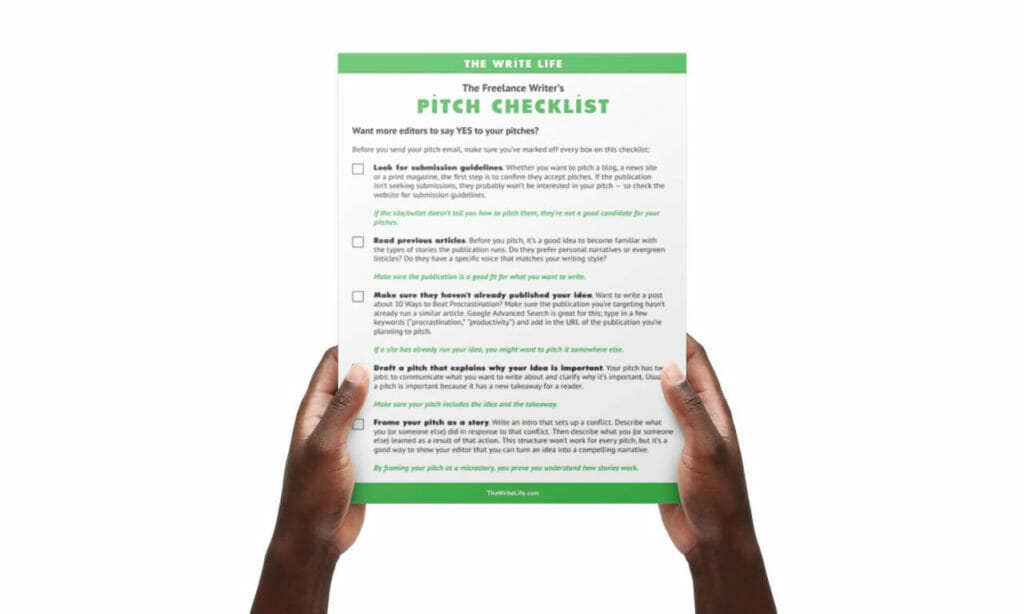
    Freelance Writer’s Pitch Checklist
    Grab it for free 👇

    Convince more editors to say YES to your pitches!

      We’ll also send you our weekly newsletter, which offers helpful advice for freelancing and publishing. You can unsubscribe at any time.

      This is an updated version of a story that was previously published. We update our posts as often as possible to ensure they’re useful for our readers.

      This post may contain affiliate links. That means if you purchase through our links, you’re supporting The Write Life—and we thank you for that!

      Photo via Stock Rocket/ Shutterstock 

    • 20 Fantastic Writing Grants, Plus Tips for Applying

      20 Fantastic Writing Grants, Plus Tips for Applying

      When when you find yourself with a big, time-consuming writing project to pursue, your love of words alone might not pay the bills. That’s when writing grants can swoop in to save the day (and your budget).

      If you find you enjoy writing grant applications, grant writing for others can be a lucrative niche as well.

      Writing grants for women, poets and more

      Ready to apply for money to fund your writing? Here are 20 great writing grants for creatives based in the United States.

      1. Leeway Foundation Art and Change Grants

      These grants of up to $2,500 are available to women and transgender artists and cultural producers based in Greater Philadelphia, whose work emphasizes social change. That means, “social change must be integral to the ideas, beliefs and goals that are woven throughout your [writing] and your process of creating and sharing your art,” and should positively engage the community.

      Keep in mind that one key to success for this grant is securing a “Change Partner”: an individual, business, or organization that is connected to your work, and who will endorse your project.

      If you are at least 18 years old and live in Bucks, Camden, Chester, Delaware, Montgomery or Philadelphia counties, you are eligible to apply. However, full-time art students are not eligible. All genres are welcome. Applications must be received by the biannual deadlines, and you can only apply once per grant cycle.

      Check out this page for all the details.

      2. Grants for Artist Projects (GAP) Awards 

      If you are a resident of Washington state, 18 years or older and not currently enrolled in a graduate or undergraduate degree program, this is the grant for you.

      The Grants for Artists Project (GAP) awards up to $1,500 annually to 50+ practicing literary and visual artists. Grant money can support the “development, completion or presentation of new work.”

      The organization also connects artists to an array of services, including career development, legal support, residencies and continuing education—just to name a few. Keep your eye out for the details here

      3. Bard College Fiction Prize

      This writer-in-residence award is an amazing opportunity for an emerging writer under the age of 39 to devote a semester to a fiction project.

      The recipient is required to give one public lecture on the campus and to informally meet with Bard students, but the rest of the time is dedicated to their writing project. Besides a sizable $30,000 cash award, the winning writer also gets to be a writer in residence at Bard College for one semester.

      Check this page to learn about upcoming deadlines. The application process is very straightforward; no lengthy FAQ pages here.

      Applicants should have published at least one book, three copies of which must be submitted with a cover letter explaining their next project and their C.V.

      4. Arts Writers Grant Program

      If contemporary visual art is your writing area of expertise, you’re in luck. This writing grant funds writers who are passionate and knowledgeable about contemporary art and whose work will broaden the arts writing audience.

      Both emerging and established writers can apply for a grant ranging from $15,000 to $50,000 in one of three project types: articles, books and short-form writing. Keep your eye out for the application period to reopen in Spring.

      Details are available here.

      5. Arizona Artist Research and Development Grant

      Arizona writers who want to “advance their artistic practice, expand their creative horizons and deepen the impact of their work” may want to try their luck with this grant, which will be awarded to up to 30 artists across all disciplines this year. The grant’s amount goes up to $5,000 depending on funding.

      Applicants whose projects emphasize the “new”—new techniques, new strategies, new ways of engaging communities—are primed for success. Writers should also explicitly state in their applications how their project will impact not just their own artistic practices, but also benefit the larger Arizona community.

      The application has numerous demanding parts, so be sure to give yourself time to delve into the guidelines. Learn more here.

      Close-up photograph of a person holding a pen in their right hand, poised over a stack of papers that look like an application form. This is to illustrate the 20 writing grants described in this blog post.

      6. Kansas City Inspiration Grant

      Kansas City writers in the metropolitan area may be awarded between $1,000 and $2,500 for professional development and other budding projects. The regional arts council notes that the highest priority for the grant is to fund projects that significantly advance career development or an artist’s capacity to complete their work—not to fund “business as usual.”

      A full proposal, which includes up to six samples of work, is only submitted after an applicant passes this initial phase.

      Note that if you request more than $1,500 for your project, matching funds may be required.

      Check out the Inspiration Resources page for more information.

      7. RISCA Project Grant Projects for Individuals

      As with most other state arts council-based grants, this Rhode Island grant is available to writers who ultimately plan to share their work with the public through a reading, performance or another open event. The emphasis on public value is strong with the RI Arts Council, so this grant will best serve socially-minded writing projects.

      Individual applicants can request up to $3,000, but be mindful that grants may be only partially funded. If your request is especially sizeable you might consider providing proof that other organizations or individuals have financially invested in your project.

      Find application details here.

      8. North Carolina Artist Support Grant

      North Carolina writers at any stage in their careers are invited to apply for writing grants to fund new or existing projects, with statewide awards ranging from $300 to $5,000. (Grant amounts vary by region.)

      Application procedures and deadlines vary depending on your county, so make sure you reach out to the office designated on this page for specific regional details. The guidelines are fairly open-ended, which is good news for writers who want to use the funds for a variety of professional development needs.

      9. Awesome Foundation Grant

      This grant is as awesome as it sounds.

      Winners receive $1,000 with “no strings attached” to pursue their incredible projects, and the foundation and its donors have no say in the finished project.

      Chapters of the foundation organized by region or subject review applications and select the grantees. The process is almost unsettlingly simple, but don’t be deterred—this really is a great opportunity.

      Check the website for specific information about the application requirements and deadlines for your chapter.

      10. The Regional Arts Commission’s Artist Support Grant

      This grant, funded by the Regional Arts Commission, provides “direct funds for an individual artist’s projects, needs, or creative opportunities in all artistic disciplines.” The grant ranges from $500 to $3,000 and can be used for project completion, conference fees, rental space, materials, and any other resources that contribute to an artists’ development. 

      You’ll be eligible for this grant if you’re 19 years or older, a resident of St. Louis City or County and have been for at least one year, and if you’ve created and presented or performed original work to the public.

      Learn more here.

      11. PEN/Phyllis Naylor Working Writer Fellowship

      Since 2001, this annual writing grant of $5,000 has been awarded to an author of children’s or YA fiction. “It has been developed to help writers whose work is of high literary caliber and assist a writer at a crucial moment in their career to complete a novel-in-progress.” 

      To ensure total impartiality of the judging process, your submitted novel-in-progress will be judged blindly, so be sure not to put your name anywhere on your manuscript.

      Among other requirements, eligible applicants should have published at least one children’s or YA fiction novel, and it must have been published by a U.S. trade publisher.

      Check out the website for more details.

      12. Karen and Philip Cushman Late Bloomer Award

      If you’re a writer over the age of 50 and your work has yet to be traditionally published in the children’s literature field, this one is all yours.

      Karen and Philip Cushman and the Society of Children’s Book Writers and Illustrators (SCBWI) established this grant for writers in 2013. Cushman considered herself a late bloomer, as her first children’s book wasn’t published until she was 53. This grant is meant to celebrate and encourage writers just like her.

      Recipients receive $500 and free tuition to an SCBWI conference anywhere in the world. Plus, the requirements are a breeze: you must be a member of SCBWI and an unpublished writer of 50 years of age or older. Submissions re-open each year on March 1.

      13. Massachusetts Artist Fellowship 

      Artists in Massachusetts specializing in various disciplines can apply to receive a $1,500 award, funded by the Mass Cultural Council, which considers “the work of individual artists to be an essential part of our vital communities.” 

      The fellowship is only open to artists who are 18 years or older and have been a resident of Massachusetts for at least two years. You must also be prepared to present original work; no interpretations or translations, please. 

      Although the program has a rolling application process, please note all new applications for Cultural District designation are paused until FY26 as program is internally reviewed and redesigned.

      14. C.D. Wright Prize for Poetry

      In honor of C.D. Wright’s legacy, The Arkansas International seeks “to award innovative poetry that ‘lives freely and variously and fully engaged with others and the world.’”

      Any poet writing in English is eligible to submit, so long as they have not yet published a first book. U.S. citizenship is not a restriction of eligibility. The winner receives $1000 and publication in the Arkansas International. Recent judges have included Hanif Abdurraqib and Shane McCrae.

      Submissions open annually at the start of June and close at the end of August.

      15. The George A. and Eliza Gardner Howard Foundation Fellowship

      If you need to set aside some time to focus on your writing, this opportunity might be what you’re looking for.

      Administered by Brown University, this fellowship was created with the intention to “provide artists, scholars, and writers with time to complete their work.” Previous fellowships awarded $35,000 to nine mid-career individuals in the fields of Creative Nonfiction and History.

      You’ll be eligible if you’ve achieved recognition for one major project, and if you can answer “yes” to these questions.

      Check out the website for more information.

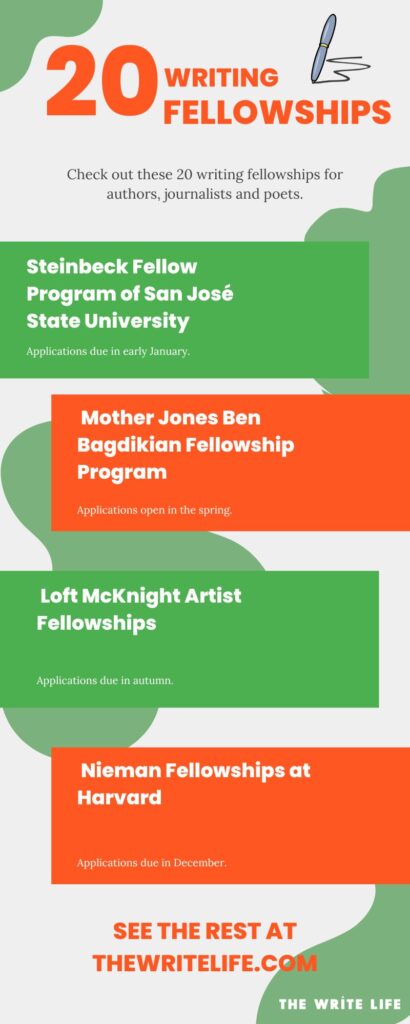
      Vertical graphic with watercolor-like brushstrokes and text overlay that says 20 writing grants for women, poets, and more.

      16. The Ernest J. Gaines Award for Literary Excellence

      This award is “nationally recognized in its role of enhancing the visibility of emerging African-American fiction writers while also expanding the audience for this literature.” The $15,000 cash prize will support the writer as he/she focuses on writing. 

      To be eligible, you’ll need to be an African-American U.S. citizen with a published work of fiction, and you should be willing to attend the award ceremony in Baton Rouge, Louisiana. During your stay, participation in community engagement and educational outreach activities are also expected.

      Learn more on the website.

      17. Artists 360

      Designed to elevate greater Northwest Arkansas artists, Artists 360 provides $7,500 grants “to support creative projects, learning opportunities to develop entrepreneurship skills and build sustainable creative practices, and connections to a dynamic regional artist network.” The four artistic disciplines accepted are visual arts, performing arts, literary arts and traditional arts. 

      To be eligible, be an artist with an active and current artistic practice, have specialized training in your field, and show you’ve succeeded in the arts through high-quality work and/or contributions to the field.

      Find more details here

      18. Saratoga Arts Individual Artist Grants

      Writers in the upstate New York State region—Fulton, Montgomery or Saratoga counties, specifically—this grant is for you. Funded by the Saratoga Arts, the Artist Grant focuses on individual artist work to enhance career development, skills and broaden exposure, “while fostering creative, resourceful and inspiring connections between artists and a community.”

      Grants of $2,500 will be awarded to artists to create new work and share their creative process with the community. Funding can support art-related supplies and materials needed for the execution of the program, artist fees and other outreach costs.

      Learn more on the website.

      19. Independently Published Pre-publication Grant

      You must be a current SCBWI member when your work is submitted and when the award is announced.

      Money from the grant must be used to self-publish your book, including but not limited to:

      • Hiring illustrators
      • Hiring content editors, proofreaders, and copyeditors
      • Hiring book designers
      • Book trailers
      • Website development
      • Printing and shipping costs
      • Publishing software

      Grants will be awarded based on:

      • Quality and professionalism of your synopsis
      • Strength of your business plan

      Check out the website for more information.

      20. Work-in-Progress Awards

      To assist children’s book writers and illustrators in the completion of a specific project currently not under contract. Given in the categories of Picture Book Text, Chapter Books/Early Readers, Middle Grade, Young Adult Fiction, Nonfiction, and Underrepresented Fiction or Nonfiction.

      The SCBWI Work-In-Progress (WIP) Award assists children’s book writers and illustrators in the publication of a specific project currently not under contract. One winner per category will be selected. SCBWI reserves the right not to confer this award in any given year.

      Submissions open March 1 through March 31. Learn more here.

      Want more writing advice?

      Subscribe to get our latest content by email.

        We won’t send you spam. Unsubscribe at any time.

        Looking for more great writing grants and funding options? Check out C. Hope Clark’s fantastic list of opportunities at Funds for Writers

        The original version of this story on writing grants was by Kristen Pope. We update this post regularly so it’s more useful for our readers.

        Photo via Tero Vesalainen / Shutterstock 

      • 4 Ways To Avoid Using Filler Words In Your Writing

        4 Ways To Avoid Using Filler Words In Your Writing

        While most of think of filler words as using “um” or “uh” in speeches, there are lots of other extras we put in our writing.

        These extras can distract from your main message and make your writing come off as less serious.

        Keep in mind, the type of writing you do changes what words are appropriate, and what are considered extra.

        For example, academic essays will have a more elevated writing style than most social media posts. However, there’s almost always something you can cut.

        This article reviews basics of filler words: what they are, why they don’t work, and how to avoid them.

        What are filler words?

        Filler words are words in speech or written text that could be eliminated and are there to take up space.

        In speech this sounds like:

        • Um
        • Uh
        • Er
        • Ah
        • Like
        • OK
        • Yeah
        • Right
        • You know

        Writers often use filler words when they are unsure of what they have to say or want to hit a certain word count.

        Most of us don’t realize how often we use filler words. I’ve been writing for years and I’m certain there are many in this article! It’s a hard habit to break, especially when you have a lot of writing to do and not a lot of extra time.

        Depending on your writing style, some filler words make sense to keep. But more often, you can self-edit to make your writing stronger. At first it may be difficult to identify what is style and what is filler, but if you aim to cut the fluff, you’ll be on the right track.

        What’s the difference between filler words in writing and in speech?

        For the most part, filler words are the same in both writing and speech. It’s more common to use filler words in creative writing and casual speech.

        If you are creating a proposal or a formal presentation, you will want to make sure you focus on cutting unnecessary words so your piece looks and sounds professional.

        Why avoid using extra words in your writing?

        Filler words are bad because they confuse readers and dilute your writing. If you have too much filler people may think your writing is padded and not enjoy the reading experience.

        In particular, if you are doing any kind of persuasive writing, it’s important to avoid fluffy or flowery language because it can bury your message.

        There is an argument for using filler words in creative writing or poetry, but for most types of writing, it communicates best when it’s clear, concise, and direct.

        Hot take: some creative writers could benefit from learning how to shorten their sentences!

        Examples of filler words

        This is a brief overview of filler word examples. Keep in mind that each example below is not guaranteed to be a filler word—it depends on the sentence itself and what is being said. This is especially true for character dialogue.

        One way to test if a word is filler is if you can remove it and the sentence still holds the same meaning.

        Filler Words

        • Really
        • Very
        • Highly
        • Just
        • Like
        • As you know
        • However
        • Finally
        • In conclusion
        • You know
        • You see
        • Right
        • In my opinion
        • I guess
        • I mean
        • Seriously
        • Literally
        • Totally
        • However
        • As mentioned

        Filler words take up space and make sentences wordy.

        4 ways to improve your writing

        Here are four ways to avoid using filler words to improve your writing.

        1. Start with a brain dump

        Before you worry too much about filler words, start by freewriting until everything in your head is on the page.

        Write, then edit. (You can’t edit a blank page!)

        Your first draft should be judgement-free so you can let your ideas flow. That way you have something to work with when it is time to edit.

        2. Cut every sentence in half

        This is a guideline rather than a rule. Sometimes cutting won’t make sense.

        Pushing yourself to remove unnecessary words is a good and challenging practice. You might be surprised at how clear your writing becomes when you remove what’s extra.

        3. Decide what’s filler and what’s essential

        Some words like “in addition” or “however” can be important transition words. Every sentence is unique and sometimes what’s filler in one is essential in the other. If you’re not sure, try reading your sentence aloud with and without the word in question. Your ears will know what’s best!

        4. Use an editing tool

        Using writing and editing tools such as Hemingway app can help you decide how to cut your writing without losing its essence.

        There are a lot of tools available, out there, but that one is a popular one for writers since it edits work based on the short sentence style of Ernest Hemingway.

        Advertisement for the Freelance Writers Den, a writing community with more than 300 hour of training for one affordable monthly price
      • What Is a Writing Style Guide, and Which One Should You Use?

        What Is a Writing Style Guide, and Which One Should You Use?

        Early in my writing career, I discovered a troubling truth about those arguments I’d had in my (very, very cool) adolescence about spelling, commas, pronouns and other conundrums of the English language.

        No right answers exist.

        No definitive tome rules over all of English to set the record straight—in part because the contradicting rules each have merit in some situations. 

        Instead of a single set of writing laws, we have style guides. These magnificent manuals tame the whims of writers and place boundaries on the problematic potential of our language. And, yes, tell us whether or not to use an Oxford comma.

        Professional writers should know how to pick a style guide, which guide is standard for which types of writing and how to use a style guide to polish your writing (and impress your editors).

        What is a writing style guide?

        A style guide is a collection of conventions for writing for an industry, brand or project.

        Historically published as books and now also as online databases, they guide writers and editors in grammar, spelling, punctuation, word usage, formatting and other questions that come up while you write because of the variance and fluidity of the English language.

        Most industry style guides are descriptive, so they make recommendations based on how people use language commonly, rather than dictate rules for how we should use it.

        Style guides for brands or projects are more often prescriptive, setting guidelines for how an individual or company should use language in written materials.

        Some companies use “style guide” to mean a set of standards for tone, voice, visuals and programming to guide their marketing and design efforts. I generally call that a “brand style guide” or “visual style guide” to distinguish from the writing or editorial style guide.

        Why do you need a style guide?

        A style guide ensures consistency and clarity in writing across an industry, company or project. 

        English offers a ton of ways to write almost anything, even within one continent. Sometimes deciding which way to go is a matter of expression — like whether to say “traffic light” or “stop-and-go light.” Sometimes the answer is written into common grammar rules, like using “me” as an object and “I” as a subject.

        But a lot of times, a correct answer doesn’t exist — like whether you can start a sentence with “because.” Style guides step in to determine a standard in those cases to keep your book, publication or marketing materials from being a mess of inconsistencies driven by personal preferences.

        How many writing style guides are there?

        Tons of style guides exist across industries and genres, and new ones pop up frequently. Most writers will encounter four commonly used guides: AP style for journalism, Chicago style for publishing, APA style for scholarly writing and MLA style for scholarly citation (more on each of these below).

        Style guides tend to emerge to define standards for distinct styles of writing — technical, academic, journalistic, fiction or blogging, for example. They often start as guides for one organization and become industry standard.

        What is the best writing style guide?

        No style guide is more accurate or correct than another. The best one for your writing depends on what you’re writing and where it’ll be published.

        How to pick a style guide for your writing project

        To find the best style guide for the kind of writing you do, consider:

        • House or corporate style: If you’re working with a publication, publishing house or company, first ask your editor or manager whether it uses a house style guide. They’ll point you to internal documentation or let you know which industry guide they prefer
        • Genre and medium: Learn which style guide is standard for the type of writing you do. This will help you prepare manuscripts before you have a publication on board, and it’ll give you a place to turn if you work for a company that doesn’t document editorial standards
        • Niche or field: Lots of niche style guides exist for industries or academic fields, like chemistry or sociology, to address unique issues

        Writing style guides every writer should know

        These are the four main style guides you’ll encounter as a professional writer, plus some alternatives to be aware of.

        Associated Press Stylebook

        The AP style guide is officially called “The Associated Press Stylebook.” It publishes a biennial spiral-bound print book and the AP Stylebook Online.

        What is AP style?

        AP style is a set of standards for writing in news media and one of the most comprehensive style guides. It includes recommendations for grammar, spelling, punctuation and usage; plus topical guides to define standards for news topics and cultural trends (like gender-neutral terms).

        Who uses AP style?

        AP style is the industry standard for journalism, and most blogs and content marketing. It’s technically the house style for the Associated Press, and most newspapers adopted the standards because many publish AP stories alongside their own.

        How often is AP style updated?

        Editors update AP Stylebook Online throughout the year to address questions and major news events. Up until 2020, a new print edition was published annually, but is now updated and published every other year. AP editors debut changes each spring at the ACES conference for editors.

        Chicago Manual of Style

        Colloquially called the Chicago style guide or CMOS, the Chicago Manual of Style has been published by the University of Chicago Press since 1906, including the Chicago Manual of Style Online since 2006.

        What is Chicago Manual of Style?

        CMOS is a set of standards for writing in commercial and academic publishing and one of the most widely used style guides. It includes recommendations for grammar, spelling, punctuation and usage; plus manuscript formatting and two variations of source citation.

        Who uses Chicago Manual of Style?

        Chicago is the preferred style of print publishers in both fiction and nonfiction, and many academic journals in the humanities. Instructors in college or high school courses might teach Chicago-style citation but don’t usually enforce other preferences of the manual unless you’re writing for publication, like in grad school.

        How often is Chicago style updated?

        The press has published 17 editions of CMOS since 1906, most recently in 2017. In recent history, an updated print edition has been published about every seven years. CMOS Online is updated throughout the year, and editors address timely topics and questions online through the Chicago Style Q&A.

        Publication Manual of the American Psychological Association

        The APA style guide, officially the “Publication Manual,” started in 1929 as a lengthy article from a group of psychologists, anthropologists and business managers. APA has published seven editions of the “Publication Manual” since the first in 1952, and the APA Style Blog since 2009.

        What is APA style?

        APA style is a set of standards to make scientific writing easier to comprehend. It includes recommendations for grammar, spelling, punctuation and usage; plus its signature in-text citation style, ethical standards for publishing research and how to format an academic paper.

        Who uses APA style?

        Scholarly writers and journals in many social sciences, humanities, health care and some natural sciences follow APA style. College-level instructors might prefer APA-style citation, and most high school and college instructors prefer APA-style paper formatting, but neither tend to enforce other APA recommendations.

        How often is APA style updated?

        APA has published seven editions of the “Publication Manual,” most recently in 2020. Since 1974, a new edition has come out about every 10 years. The APA Style website is updated with each new edition, and editors update the blog occasionally with timely topics and news.

        MLA Handbook

        MLA style began in 1951 when the Modern Language Association of America published the “MLA Style Sheet.” It’s been publishing the updated “MLA Handbook” for students since 1977 and the bulk of its contents online through the MLA Style Center since 2009.

        MLA used to publish a separate “MLA Style Manual” for grad students and professional scholars, but that went out of print in 2016. Now “MLA Handbook” is meant for writers at all levels.

        What is MLA style?

        MLA style is primarily a set of guidelines for citation and formatting in academic papers. It’s best known for its source citation template. It includes limited guidance on writing mechanics and no recommendations for usage.

        Who uses MLA style?

        Scholarly writers and journals in segments of the humanities focused on language and writing, like language studies and literary criticism, follow MLA style. English students in college and high school might use MLA style for citation and paper formatting instead of APA style.

        How often is MLA style updated?

        MLA has published eight editions of the “Handbook” since 1977, most recently in 2021. It updates and publishes a new print edition about every three to five years, and answers ongoing writer questions online through Ask the MLA.

        Alternative style guides

        The field or niche you work in might need to address unique publishing quirks the heavy-hitting style guides don’t cover.

        Organizations have responded to that need over the years by developing their own style guides. These might be alternatives or complementary to the dominant style guide in a genre.

        Popular guides journalists use to complement or supplement AP style include:

        • The New York Times Manual of Style and Usage provides additional and alternative guidance to the AP Stylebook, like recommending the use of courtesy titles instead of referring to a subject just by their last name (e.g. Mr. Smith).
        • BuzzFeed Style Guide defines standards for writing online and on social media, codifying such conventions as how to spell “I’mma” (as in “I’mma let you finish…”) and leading the way in guidance for inclusive language
        • Diversity Style Guide is a project of the Center for Integration and Improvement of Journalism at San Francisco State University that gathers guidance from several organizations to help media cover people of diverse races, ethnicities, genders, abilities and more
        • Conscious Style Guide includes guidance on usage, framing and representation to be inclusive and respectful of any audience
        • GLAAD Media Reference provides guidance on covering LGBTQ stories and issues
        • Guardian and Observer Style Guide offers insights into the newspapers writing, editing and English usage

        Some complements and alternatives to APA style for academic writing include:

        • AMA Manual of Style from the American Medical Association for writing about health and medicine
        • NLM Style Guide from the National Library of Medicine, published online-only by the National Institute for Health for writing about health and medicine
        • Scientific Style and Format by the Council of Science Editors
        • ACS Style Guide from the American Chemical Society for chemistry professionals
        • The Bluebook citation guide for legal professionals and scholars
        • Oxford University style guide for educational institutions and its staff

        Popular guides for technical writing for formal reports and user manuals include:

        Other books about writing

        Some commercial books about writing are not authoritative in any industry, but writers and editors keep them on hand for style and usage recommendations. Some popular books:

        • The Elements of Style” by William Strunk, Jr. and E.B. White, a well-known guide detailing just a few rules of grammar and punctuation, composition and formatting, and a list of commonly misused words and phrases.
        • “A Dictionary of Modern English Usage” by H.W. Fowler (also known as “Fowler’s Modern English Usage”), a guide to word choice, grammar and style peppered with Fowler’s humor and unshakable opinions.
        • Garner’s Modern English Usage” by Bryan A. Garner, a witty reference book on grammar and vocabulary.
        • “Writing with Style” by Lane Greene, an insight into what one can learn from the Economist

        House style guides and book style sheets

        Any publication or company you write for likely has a house or corporate style guide. In most cases, they follow an industry guide—like AP style—as a base. The house style guide documents anywhere it makes sense to deviate and addresses questions the industry guide doesn’t answer.

        If you write a book, your editor creates a style sheet for the manuscript. It includes style rules, plus a list of names of places and people in the book to ensure consistent spelling throughout.

        Getting the most out of a style guide

        Once you know which style to follow and set up your online subscription or stack your desk with reference books, here’s how to put those magnificent guides to use.

        Know when to consult it

        No one expects a writer or editor to know all the rules of any style guide, no matter how much you’ve used it in your career. The trick to using a style guide is knowing when to consult it.

        Become familiar with the biggest differences among styles, and train yourself to check the guide when you encounter them. Some major triggers:

        • Headline capitalization: AP style uses sentence case, while Chicago uses title case, and APA uses each in different situations. House style is often different from any of these
        • Citation: MLA, APA and Chicago each offer templates for citing sources within a paper or a reference list
        • Punctuation: Notably, guides differ in their recommendations for the Oxford comma, the percent symbol, hyphens and dashes
        • Numbers: Whether to spell a number or use a figure varies among style guides and even within each, depending on how you use the number. Also look up how to handle dates, ages and time
        • Compound words: Recommendations for compounds change quickly, especially as words become common. Check a current guide for whether to write health care, healthcare, or health-care, for example
        • Abbreviations and acronyms: Should you use a state abbreviation (like Fla.) or a postal code (like FL)… or always spell it out? In acronyms like U.S., do you need the periods? AP says yes, Chicago says you can go either way
        • Formatting: Chicago and APA italicize book titles, while AP uses quotation marks around them. Guides also include preferences for formatting bulleted lists, block quotes, sentence spacing and more
        • Words about technology: Common usage changes quickly, and your content can look outdated if it doesn’t keep up—for example, a hyphen in “e-mail” or capitalizing “Internet.” Check your current style guide for recommendations, but also address these in house style if conventional guidance doesn’t make sense for your audience
        • Brand names: Will you use camel case for eBay and iPhone? All-caps for IKEA? A hyphen in Wal-Mart or Walmart? Style guides make recommendations, but this is another area house style should address more thoroughly for your audience
        • Identifying groups of people: The boundaries for respectful and inclusive language are ever-shifting, so terms you’re accustomed to could be outdated. AP style, complementary media guides and APA style include up-to-date guidance based on common usage and recommendations from advocacy groups. Refer to those if your industry guide doesn’t include preferences

        A good rule of thumb: Consult your style guide, even when you think you know the answer! You might misremember, conflate styles or miss a vital update.

        Don’t deviate if you don’t have to

        If you have the privilege of contributing to a company’s or publication’s style guide, start with an industry-standard guide (AP, Chicago or APA) as a base, and stick to it unless you have a compelling reason not to.

        Writers and editors in your industry are likely familiar with the basics of the common style guide, but every in-house idiosyncrasy is a detail you have to teach each freelancer and new hire you work with. It’s also an opportunity to appear incorrect to readers and peers. 

        Don’t sweat the small stuff

        I say this as both an editor and a writer!

        Writers, familiarize yourself with big style differences and important in-house preferences, but don’t get preoccupied with minute details. Editors are there to correct those; it’s not worth your time to spend all day perusing a style guide for answers.

        Kick your writing style up a notch

        Knowing how to use a style guide boosts your value as a writer. It means you’ll turn in cleaner copy and require less work from editors.

        On a fun note, it also helps you understand your work better! Learning the linguistic conventions in your industry and niche and reading the explanations for them can help you define the audience you write for, how they think and what they know.

        Plus, as someone who works with words, knowing how style guides work deepens your relationship with the work you create. Writing a sentence becomes exhilarating when you comprehend the simultaneous fluidity and brute force of the language you’re using.

        Right? Just me?

        Photo via GuadiLab / Shutterstock 

      • 20+ Incredible Writing Retreats to Attend in 2025

        20+ Incredible Writing Retreats to Attend in 2025

        Dream of getting away to a writing retreat so you can just write?

        Want to meet and work with other writers with structured guidance, but in a more intimate setting than a writing conference? A writer’s retreat in an exotic location may be just what you need.

        Whereas writing residencies are mostly about working in solitude, conferences focus on networking and lectures, writing retreats fall somewhere in between.

        Why you might want to attend a writing retreat

        Most writer’s retreats are in beautiful locations (where, presumably, your creative juices will flow), and offer a combination of workshops, tours and interaction with a small group of writers.

        They’re a great way to combine a vacation with inspiration, networking and, of course, lots of writing.

        Writing retreats can be pricey, but some offer scholarships (so always ask!), or consider creating your own retreat with friends.

        And remember: A writer’s retreat is an investment in your career, as well as an opportunity to get away. If they’re out of your price range, then perhaps a writing residency would be a better fit. Or, check out this list of grants for writers.

        Looking for a women-only retreat? Some of the retreats on this list fit the bill, and you can also hop over to our post on women’s writing retreats.

        Incredible writers’ retreats to attend in 2025

        The writing retreats below take place in the remainder of 2024 and continue in 2025. Unless otherwise noted, the prices include workshops, shared accommodation, activities, and most meals. None include airfare to and from the destination.

        Please keep in mind that The Write Life team has not attended these retreats. While we’ve gathered as much information as possible to share with you, consider this a starting point, and do your own research before committing. To ensure you’ll have an enjoyable experience, we recommend reading testimonials and reviews, or asking the host to connect you with past participants.

        USA and Canada

        1. Murphy Writing Retreats 

        Murphy Writing at Stockton University offers a variety of writing workshops, retreats and getaways, with online and in person options. To stay informed about upcoming programs and places, it’s best to sign up for their newsletter.

        Cost: Prices vary.

        2. Good Contrivance Farm Writer’s Retreat

        Located 25 miles north of Baltimore on a six-acre property in historic Reisterstown, Maryland, this writer’s retreat is open to writers of all levels, plus it operates on a first-come, first-served, non-competitive basis. (Although, you still need to submit a resume and one writing sample for admission.)

        Good Contrivance Farm is a non-profit dedicated to the preservation and restoration of small, historic farms in Maryland, and it offers the retreat as part of public outreach efforts. 

        Directed by Pushcart Prize writer (plus a ton of others) Ron Tanner and his wife Jill Eicher, the retreat offers workshops and readings as well as plenty of alone time for you in the farm’s contemporary loft apartment. 

        Harlan Roberts wrote a Google Review, saying,

        “My wife and I just spent a week here and we both got a LOT of work done! She managed to edit half of her current novel and I finished editing a book of my short stories. Ron Tanner has put together the perfect writing retreat. It’s quiet, comforting and very accessible.” 

        Cost: Check the website for the most up-to-date costs. In 2022, the cost was $570 USD for one person for a weeklong stay (meals and beverages not provided); $670 USD for two. Discounts are available for longer stays up to four weeks. 

        3. Rocky Mountain Fiction Writers Retreat

        In addition to a writing conference offering Round Table Critiques, Pitch-Prep Coaching, and One-on-One Mentor appointments, The Rocky Mountain Fiction Writers offer parties and retreats.

        Cost: Registration costs vary.

        4. Find Your Story

        Are you in the second half of your life? Are you a newbie writer who wants to tell your story? Then this women-only six-week online course was designed for you. 

        Over six weeks you will find the life story you are ready to tell, feel your way through blocks in your writing, organize confusing life events into a traditional plot structure, discover the secret of getting the first draft written, start writing your first draft and leave with a detailed plan.

        After attending Westrom’s writing class in 2018, Cherri Julia Maker Ridingin wrote on Facebook:

        “Jennifer is a strong leader in a soft way, highly intuitive, and an outstanding teacher. Class three is next week, and already I feel that I have released some blocks that were preventing me from moving forward in my writing. Her lessons have touched me deeply.” 

        Cost: $899 USD for the six-week course. Each class is limited to six women.

        5. The White Mountain Book Writing Retreat

        This retreat in the mountains of New Hampshire focuses on two things: self-nurturing and nonfiction book writing. If you keep putting off your book because of, well, life then host Dorothy Holtermann might say the White Mountain Book Writing Retreat is for you. 

        Held in September each year, you’ll learn Dorothy’s “Birth a Book system” through group classes and private coaching, all while feeding your body with farm-to-table organic food and daily yoga classes. If you’re Zooming, you can still join the fun: receive “healthy food goodies” by mail, enjoy live meditation classes and book writing and performance classes that are sure to be interactive.

        Cost: Between $2,995 (private room with shared bath) and $3,200 (private room with private bathroom ensuite) USD per person to attend.

        6. Book Writing Retreat at the Hightlights Foundation

        Discover how to write and publish your book at this five-day writing retreat supported by experienced guides, healthy food and daily yoga.

        If you’re a health and wellness practitioner, an innovator in holistic practices, someone who champions self-care or a memoirist with a mission, then you’ll get a lot out of this experience held each June in Milanville, PA.

        The Book Writing Retreat will take you from idea to publication while being surrounded by nature in the scenic Upper Delaware River Valley in the Pocono Mountains foothills.

        Cost: Tuition starts at $2,995.

        7. Autumn Writing Retreats in the Berkshires

        Let autumn in Massachusetts be your muse on these five-day retreats focused on The Vibrant Landscape of Writing.

        Led by Page Lambert, author, teacher, book doctor, retreat leader and project consultant, you’ll have the chance to immerse yourself in the landscape of your fiction, creative nonfiction or poetry project while guided in group discussions and one-on-one private sessions.

        Lambert has a lengthy page of testimonials on her website. In one, Paula Hagar said Lambert was:

        “The most awesome writing teacher I’ve ever studied with.” In another, Marsha Rosenzweig Pincus called the Peru trip “one of the most inspirational, spiritual and transcendent experiences of my life.”

        Cost: $2,350 USD. Each retreat is limited to five writers-in-residence.

        8. Writers Who Run, Retreat and Race

        Held in the Blue Ridge Mountains of North Carolina, this exciting retreat came is a passion-filled writing and running adventure for year-long momentum. If you’re a writer and running looking to do more of what you love, then definitely check out the Writing is Magic retreat from Writers Who Run held in August.

        After a two-mile run each morning, you’ll have a full schedule of workshops, critique groups, writing time and social events. The culminating event is a scenic 5K and 10K race on Saturday morning!

        For testimonials, check out these YouTube videos from past participants. 

        Cost: Choose between the Basic Package ($2,495 USD) or PRO Package ($2,985 USD), a shared or private room, and an in-full payment or a payment plan.

        9. Elixir Writing Retreats

        Elixir Writing Retreats curate unique experiences for writers at all stages. These retreats happen in different locations each year and include adventure, fellowship, expert instruction and cultural experiences.

        The best way to stay informed about upcoming retreats is to subscribe to the Elixir Writing Retreats newsletter on their website.

        Cost: Varies.

        Mexico and Latin America

        10. Creative Revolution Retreat

        Leigh Shulman invites you to choose your own retreat dates—and join her when it works for you for a Creative Revolution Retreat in Salta, Argentina. This experience is meant for people at any stage of writing a book, or for those who want to start writing but need some guidance. 

        Over eight days, you’ll enjoy intensive writing workshops tailored to your project, yoga, cultural activities, a massage and a private apartment in a bustling city center. Space is limited and the host prefers an intimate retreat, so grab a couple of friends and book a date.

        “The retreat met and exceeded my expectations,” Kathleen Evans said in a testimonial on Shulman’s site. “Each day I could feel the progress during this retreat, and I feel that I’ve really grown. My writing has matured, and I have a solid plan and an idea of where I want to go with my writing project.”

        (She tweeted about it, too.)

        Cost: Since this retreat is custom designed, the cost varies. A $500 USD deposit is required.

        11. Living a Creative Life: A Journey to San Miguel

        Journey to Patmos, Greece, Iona, Scotland or San Miguel de Allende, Mexico with Goodworld Journeys and experience a unique salon-like retreat. Features include deep listening conversations, engaged learning on creativity and artistic craft, restorative wanderings and festive meals. There are also opportunities to learn from award-winning and bestselling authors who lead teaching sessions throughout the experience.

        The next Journey is planned for the mountain town of San Miguel in Spring 2025.

        Cost: Varies.

        Europe

        12. Retreats for You

        Debbie Flint, the owner of a picturesque 17th-century thatched house in southwest England, runs a variety of retreats throughout the year as part of Retreats for You. Importantly, they all come with home-cooked meals and resident Labradors you can walk through the countryside. Take a look through the events calendar and find a retreat that suits your project or writing needs.

        The center, which welcomes groups, has a five-star rating on Facebook with more than 80 reviews. Anita Chapman wrote on Facebook:

        “The house is gorgeous and comfortable; the food is delicious, and there is always home-made cake…. Alison is a fantastic tutor who knows a great deal, delivering it beautifully; and she has a real interest in her students’ projects.”

        Cost: Varies. 

        13. Write Away Europe—France

        Looking for a place to “connect with your muse and get inspired”? Head to the France Chateau Writers Retreat for “an inspiring and immersive week to focus on your writing, get feedback and guidance, generate new ideas and gain the confidence and commitment to bring them to life.”

        You’ll be a part of a curated community including writers from all stages who want to tell their story in the best way possible with guidance from experienced facilitators. This retreat takes place each Spring and Autumn.

        Cost: $3,950 USD per person.

        14. Creative Writing Retreats

        Yearning for time and space for yourself and your writing? These intimate Creative Writing Retreats in Idyllic Switzerland are open to participants at any level of experience and offer expert guidance in a supportive environment. 

        Gain focus, find inspiration and hone your craft through daily workshops, independent writing time and feedback sessions. Published novelist Valeria Vescina will help you conquer those blank pages and breathe new life into your work in progress. Her solid credentials include years of teaching creative writing to all age groups and levels: from secondary-school pupils and students on Creative Writing BA and MA degrees to Adult Education classes.

        Cost: Varies, depending on which retreat you attend.

        15. The Creative Writer’s Workshop: Fiction and Memoir Retreats

        The Creative Writer’s Workshop hosts a variety of workshops and retreats in Ireland for writers working on fiction, autobiographical fiction and memoir.

        Inspire your writing spirit, invigorate your senses and create the story that’s in your heart. A writing adventure to deepen your connection to story in the stunning landscape of Ireland’s western shores.

        Cost: Varies.

        16. Ireland Writing Retreat: Wild Atlantic Writers  

        Held several times a year (and not always in Ireland—at least one retreat per year is in the South of France), the Ireland Writing Retreat is a weeklong course for up to 10 participants.

        Aside from daily writing workshops and critiques of retreat assignments, participants will also be given the opportunity to avail of focused one-on-one critique and discussion session on one of their works-in-progress.

        Due to ever-increasing popularity, acceptance is not on a first-come, first-served basis. Just as important as when you apply is your response to a special application questionnaire.

        Cost: Varies. Accommodation is not included.

        17. Pink Pangea Writing Retreats 

        Pink Pangea is an international community of women who love to travel, write, hike and do yoga. Their retreats are created for smart women who love exploring and growing through adventures.  

        Upcoming retreats take place all over Europe including Barcelona, Spain, Akureyri, Iceland, Paris, France, Rhodes, Greece, Venice, Italy and Lisbon, Portugal.

        Cost: Varies.

        18. A Writer Within—Tuscany

        Spend a week at a historic villa in Tuscany—complete with your own private chef—at this women-only retreat held twice per year.

        A typical day at the A Writer Within retreat begins with freshly-baked pastries and an abundant healthy breakfast followed by a three-hour group writing session. Following an al fresco lunch, you may take a guided tour of nearby towns, historical sights or the surrounding countryside. If you don’t decide to stay behind and enjoy personal writing or relaxation time. After a three-course dinner, the group will gather informally to share work and reflect on the day.

        Kay has written and video testimonials on her site. A review from Marisa Brown said:

        “I said ‘yes’ to the dream of a writing retreat, and what better guide than Kathryn Kay to make that dream become a reality. As a workshop leader, Kathryn is gracious, grounded and focused. This was truly an all-encompassing experience of exploring myself and my writing.”

        Cost: $5,200 USD for a private room or $3,900 USD for a shared room.

        19. Portugal, England and Greece Writer’s Retreats

        Women Reading Aloud hosts several writing retreats each year in locations such as Madeira, North Cornwall and Alonnisos.

        These retreats can be anywhere from seven to 10 days and include writing workshops, artisanal workshops, cultural experiences and instruction from experienced authors.

        Cost: Varies.

        Asia, Africa & Middle East

        20. The Writing Room Writing Retreats

        Enjoy the Western Cape, South Africa as you experience an immersive writing retreat with The Writing Room. These five-night adventures include writing classes, coaching and free writes and happen twice a year.  

        All types of writers are welcome to these retreats, which are designed to remove you from ordinary life and placed into the world of story and creativity.

        “I recently attended the writers retreat and residency at Skala Eressor [sic]…. This has been the most profound retreat I have ever done. Kate and Sarah are masters at creating a space for creativity and writing skills. I loved every moment of it and would recommend this to every aspiring writer.”

        From Mary-Joe Emde in a Facebook review.

        Cost: Varies.

        21. Indian Summer House Writers Retreat  

        The Indian Summer House is a luscious boutique hotel in southern India. Here, you can attend an organized writers retreat for memoir or set up your own dates upon request. 

        “Our numbers are small and the opportunity to mix your own writing time with workshops, consultations and informal readings is flexible according to how participants would like to be involved.”

        Caroline Van De Pol

        In addition to morning yoga and meditation, tantalizing meals and cultural activities, you’ll have daily writing workshops, evening reading sessions and abundant writing time. 

        In a recent TripAdvisor review, user shonee2018 gave their experience an “excellent” rating.

        “Time has this lovely pace in India,” they wrote. “It seems to pass even more gently at Indian Summer House during our daily writer’s workshops with Caroline Van De Pol, readings and discussions to reflect and share our work with others or enjoying the outdoor showers, having a drink in the coconut lounge, jumping into the pool two, three times a day or relaxing at the spa.” 

        Cost: Varies. 

        22. The Himalayan Writers Retreat 

        The 10-day International retreats in the Himalayas from The Himalayan Writing Retreat are carefully curated, safe and all-inclusive (including airport-to-airport arrangements).

        Every retreat has a guest leader and two resident facilitators: a psychologist and an author. They’ll guide you through everything from discussions to long walks, bonfires, yoga and pottery. Aside from airfare, everything is included in the price—even a trip to the Taj Mahal!

        This retreat has more than 100 five-star Google reviews. Ramanjaneya Sharaph wrote:

        “The workshop covers all aspects, from the science and craft of writing, to getting published. This is a workshop in the true sense of the word. There are enough hands on [sic] writing exercises, with feedback from the course leader and other participants, that helps better understand the concepts.” 

        Cost: $3,400 to $3,600 USD per person.

        Advertisement for the Freelance Writers Den, a writing community with more than 300 hour of training for one affordable monthly price

        This is an updated version of a story that was previously published. We update our posts as often as possible to ensure they’re useful for our readers.

      • How Much Does an Editor Cost? Here’s What to Expect for Your Book

        How Much Does an Editor Cost? Here’s What to Expect for Your Book

        Once you’ve finished a draft of your book, the natural next step is to look for a book editor. But how much does an editor cost?

        And, most importantly, is it going to break the bank and wipe out your revenue? 

        I wish I could give you a firm rule, something like proofreading will always cost one cent per word, copyediting two cents per word, and developmental editing three cents per word.

        Wondering how much does an editor cost? Keep reading!

        The truth is much hazier than that. How much a book editor costs depends on several factors.

        So my goal here is to flesh out those factors and give you a sense of how much book editing might cost.

        Freelance editing rates vary widely from one editor to the next, so I’ll also help you think through how to compare different editors and decide which one to hire.

        How much does an editor cost? 

        How much an editor costs, as with any self-publishing service, depends on a lot of factors. That said, for copyediting/proofreading, you’re generally looking at $1,000-$3,000 per book. For developmental editing—the higher level stuff—you’ll be looking at $5,000 to $10,000 USD per book.

        There’s obviously a lot of room in there, so let’s break down some hard numbers and actual rates. 

        Many writers point to the Editorial Freelancers Association rates page as a guide toward setting editorial rates. (Disclaimer: I’m a member of the EFA.)

        The EFA rates page lists various editing and writing tasks and their attendant hourly rates as self-reported by EFA members who took the rates survey. They break down editing into five subcategories and list proofreading as a separate category.

        (Tip: they also list per-hour and per-word rates for writing work.)

        For comparison purposes, let’s look at the editing rates and use an average page-per-hour and an average hourly rate. For instance, the EFA lists basic copyediting of 5–10 pages per hour at a cost of $30–$40 per hour, so I’ve assumed 7.5 pages per hour at a cost of $35 per hour. The other total calculations also use their respective average rates.

        For a 70,000-word book, your editing costs could be:

        • Developmental editing: $.08 per word, or $5,600 total
        • Basic copyediting: $.018 per word, or $1,260 total
        • Proofreading: $.0113, or $791 total

        It’s easy to extrapolate from this what your total expected editing cost could be. Fantasy, sci-fi, and epic novel writers should be forewarned.

        For a 120,000-word book, your editing costs could be:

        • Developmental editing: $.08 per word, or $9,600 total
        • Basic copyediting: $.018 per word, or $2,160 total
        • Proofreading: $.0113, or $1,356 total

        While these are simply one website’s average estimates for editorial costs, they serve as a reliable benchmark.

        If you end up paying more for an editor, you might be glad you did. As in life, so too in books: you often get what you pay for.

        7 questions to ask before hiring an editor

        Think through these questions when trying to figure out how much to spend on your editing project. They’ll help you figure out how much you’ll need to pay an editor to review your book.

        1. What kind of editing do you need?

        What does a book editor do? Not all editing is created equal. Here are a few different kinds of editing:

        • Developmental editing: big picture, content editing, macro editing
        • Copyediting: micro editing, grammar editing, flow and structure editing
        • Proofreading: consistency check, format and layout

        Developmental editing costs more than copyediting, and copyediting costs more than proofreading.

        2. What’s your total word count?

        Book editors for hire typically charge by word count or page count. Some charge by the hour, but that’s rare, especially for editing long books.

        Knowing your total word count is essential to an editor’s cost estimations for taking on your project.

        3. How complex is your book?

        Editing academic work to a niche style guide will cost more than editing a novel per the Chicago Manual of Style.

        Editing a book with hundreds of footnotes or endnotes should cost more than editing a book without citations.

        In other words, the complexity and niche of your work will affect the book editing rate.

        4. What’s your deadline?

        How quickly do you need the work done? The more flexible you are with your deadline, the less you might pay.

        If you ask for your 100,000-word novel to be copyedited within two weeks, you might have to pay a premium for such a fast turnaround, especially if your editor is already booked.

        5. What’s your writing experience?

        Do you consider yourself a beginner, mid-level or expert writer?

        By default, beginning writers will need more help, which means more time, which can mean more money.

        An experienced editor can often take a look at an excerpt from a manuscript, get a feel for your experience level, and deduce the amount of time they need to edit the full manuscript.

        For beginning writers: always look at hiring an editor as an investment in both your book and yourself. With the right editor, you should grow as a writer because of the feedback.

        6. What’s your editor’s experience level and/or demand?

        A novice editor will cost less than an editor with decades of experience and multiple best-sellers in their portfolio.

        Of course, you get what you pay for, and an experienced editor might bring more value.

        Likewise, if you want to work with an editor who’s in high demand and booked six months out, you’ll likely have to pay more than if you choose to work with an editor who has lots of room in her schedule.

        7. What’s your flexibility?

        If an editor is booked solid, can you afford to wait six months to get the editor you want?

        Or, will you pay a premium to jump their queue if they offer such an option? Or, will you choose a lesser-known or less experienced editor at a lower price so that you can have your editing accomplished faster?

        How to compare editing costs (free download)

        If you’d like to get truly organized about your search, download this simple book editing checklist to help in your search for an editor who meets most of your desired criteria and offers freelance editing rates you’re willing to pay.

        [sps_reusable_block post_id=43061]

        I say “most of your desired criteria” because it’s rare to find an editor who will meet all your criteria.

        For instance, you may have to pay a few hundred to a few thousand dollars more for your top pick. Or, you may find someone at your precise price point, but their experience isn’t quite what you’d like it to be. You must be the one to assess what trade-offs you’re willing to make.

        By using that checklist, you should be able to quickly and easily compare the editors you’re vetting.

        If you’re given an hourly rate for freelance editing, ask the editor how many pages per hour they can edit, then extrapolate their per-word rate.

        Compiling this information is a headache (especially for math-averse writers like myself), but seeing every editor’s rate as a per-word rate will help you better compare editors.

        To learn more about editing as a whole, and the entire publishing process, check out the resource below.

        This is an updated version of a story that was previously published. We update our posts as often as possible to ensure they’re useful for our readers.

      • Pitching Long-Form Journalism? Here’s our Best Tip for Getting the Gig

        Pitching Long-Form Journalism? Here’s our Best Tip for Getting the Gig

        Have a long-form journalism idea? Here are some pitching tips from Nicole Dieker.

        When you’re pitching a complicated story, it’s important to provide enough background information to help an editor understand why this story needs to be told.

        But too much background can bog down your pitch, or bury the story you really want to tell.

        In this pitch fix, we’re looking at long-form journalism

        This time, we’re going to look at a pitch where the author is clearly an expert on a complicated subject—but she needs a little help pulling the story she wants to write out of her background information.


        Colleen Mondor’s aviation-industry pitch

        Colleen Mondor is an author, blogger, and journalist. She’s written a nonfiction memoir, The Map of My Dead Pilots: The Dangerous Game of Flying in Alaska, and wants to build her long-form journalism portfolio.

        Mondor submitted the following pitch to
        Outside, Men’s Journal, and Air and Space Magazine but hasn’t been able to place her story.

        What do you think is holding this pitch back?

        Dear XX:

        In the 90 years since aircraft first flew in Alaska, the bush pilot myth has become synonymous with Alaskan life. Tourists are drawn to stories of mercy pilots and pictures of aircraft loaded with everything from sled dogs to outboard motors are as much a part of the state’s image as the northern lights and Denali. But the harsh truth about aviation here is that while it is consistently one of the most dangerous places to fly in the world, almost all of the accidents are preventable.

        Alaska averages about 100 aircraft accidents a year which, over the past decade, have resulted in 194 fatalities. In 2013 there was a particularly devastating crash in the small town of Soldotna. That accident made national news as two South Carolina families were killed after their charter aircraft stalled on takeoff. The recently released probable cause report found the longtime Alaska pilot made multiple errors prior to departure including failing to weigh the additional cargo onboard, loading it behind the aircraft’s center-of-gravity and exceeding the aircraft’s weight limits. He was also killed in the crash.

        The investigators with the Alaska regional office of the NTSB are determined to reach beyond pilot actions to find aspects of company culture, flight training or lax federal oversight that might contribute to poor decision-making. They have also joined with representatives of the Alaskan Aviation Safety Foundation and Aircraft Owners & Pilots Association to target specific aspects of the state’s aviation environment and community to affect positive change in pilot attitudes and actions. These are the people who are not willing to dismiss Alaska simply as an inherently dangerous place to fly and I think their story needs to be told.

        I first worked in the aviation industry in Alaska over 20 years ago, as a dispatcher for a Fairbanks-based commuter. I also studied aviation in college and graduate school, both in Alaska and Outside, and learned to fly when I was 18. I wrote about my years as a dispatcher in a 2011 memoir, The Map of My Dead Pilots. I have worked as a journalist and essayist on this subject for years including the past three for the Bush Pilot section of Alaska Dispatch News (the Anchorage daily newspaper), and recently in Narratively magazine. Alaska aviation is a topic I am deeply involved with, and I look forward to writing about the people who are trying to change the way it operates.

        Pitch Fix for long-form journalism: State your story

        When I read Mondor’s pitch, I kept waiting for the sentence that began “My story will be about” or “I’d like to write about.” I was impressed by the background information and detail, but I had a hard time figuring out what story Mondor was actually pitching to these magazines and how she planned to tell it.

        Mondor has one sentence that alludes to what she intends to write: “These are the people who are not willing to dismiss Alaska simply as an inherently dangerous place to fly and I think their story needs to be told.”

        It’s a great start, but I want to know more

        Does Mondor have a specific person’s story in mind? Is she planning to conduct interviews for the bulk of her research, or is she thinking about going more in-depth, perhaps embedding herself with Alaska’s NSTB investigators to observe their work—and their challenges—in person?

        If you thought “Wait, NSTB investigators? Isn’t this a piece about bush pilots?” I wouldn’t blame you. Mondor begins her pitch with “The bush pilot myth has become synonymous with Alaskan life,” leading the reader to expect that she plans to write about pilots. When you read carefully, you learn she really wants to write about the investigators who look into why pilots crash.

        This information should be at the center of Mondor’s pitch, and the entire pitch should focus on the story she wants to tell and the methodology by which she will tell it. Otherwise, she runs the risk of confusing her editors and losing the opportunity to report on an important aspect of Alaskan aviation.

        Pitch tips for long-term journalism. Vertical image with 70s style graphic swirls and font

        Here’s how I’d rewrite Mondor’s pitch:

        In the 90 years since aircraft first flew in Alaska, the bush pilot myth has become synonymous with Alaskan life. However, many people aren’t aware of the other side of the myth: the numerous preventable aircraft accidents. Alaska averages about 100 aircraft accidents a year which, over the past decade, have resulted in 194 fatalities.

        When these tragedies take place, the investigators with the Alaska regional office of the National Transport Safety Board (NTSB) look beyond pilot actions to find aspects of company culture, flight training or lax federal oversight that might contribute to poor decision-making. They have also joined with representatives of the Alaskan Aviation Safety Foundation and Aircraft Owners & Pilots Association to target specific aspects of the state’s aviation environment and community to affect positive change in pilot attitudes and actions. These are the people who are not willing to dismiss Alaska simply as an inherently dangerous place to fly and I think their story needs to be told.

        I’m developing a long-form article in which I embed myself in the Alaska regional NSTB office for one month to give readers a clearer picture of the daily challenges and struggles these investigators face. I’ll follow the investigators as they visit crash sites, document accidents, and work to understand the bigger questions: What went wrong? Was it simple pilot error, or were there larger forces at work here? Why does Alaska have so many aircraft accidents, and how can these accidents be prevented?

        This article will be written in a nonfiction narrative style, viewing the investigators and the pilots through a human lens. Readers will finish the piece feeling as if they were there in the NTSB office with me, watching coworkers make jokes and talk about their families before they’re called out to investigate yet another accident. They’ll also learn how this type of work affects family and personal life, and what a career based on analyzing tragedy does to a person over time.

        If you are interested in learning more about this topic or discussing how this story might fit into your publication, please let me know.

        A bit about my background: I first worked in the aviation industry in Alaska over 20 years ago, as a dispatcher for a Fairbanks-based commuter. I also studied aviation in college and graduate school, both in Alaska and Outside, and learned to fly when I was 18. I wrote about my years as a dispatcher in a 2011 memoir, The Map of My Dead Pilots. I have worked as a journalist and essayist on this subject for years including the past three for the Bush Pilot section of Alaska Dispatch News (the Anchorage daily newspaper), and recently in Narratively magazine. Alaska aviation is a topic I am deeply involved with, and I look forward to writing about the people who are trying to change the way it operates.

        Mondor’s response

        I asked Mondor if she was planning to rework her pitch based on my fix, and here’s her response:

        This is really really funny. I was reading over some pitches at Open Notebook a few days ago and I started thinking about how I buried the fact that there were very real people involved in my story—the NTSB investigators (and others) who are so committed to changing the statistics. I have been so worried about getting the facts straight and making clear that this would not be another “death-defying Alaska bush pilot” article, that I left out the significant human element. (Who are the point!)

        And bam—you saw it too and more importantly, you made it work.

        I’ll likely tinker with this just a bit to fit exactly what I want to write about but honestly, I won’t change much. Reading over it again, I’m realizing how much I needed a second pair of eyes on it. Sometimes, no surprise, writers just can’t see the forest for the trees.

        I’ll be sending this out by the end of the week—thanks so much.

        Do you agree with this month’s Pitch Fix for long-form journalism? When you’re pitching a long-form journalism story, how much background information do you include? What other advice do you have for Colleen Mondor?

      • 20 Writing Fellowships for Authors, Journalists and Poets

        20 Writing Fellowships for Authors, Journalists and Poets

        If you’re keen to focus on a long-term writing project, but you aren’t sure how to fund your work, writing fellowships may provide the support you need.

        Writing fellowships usually consist of funding and space for writers to focus on a creative project rather than the business of supporting themselves. 

        From writing fellowships for new writers to creative writing fellowships, there are plenty of different types for any kind of creative who is looking for a chance to let their projects thrive.

        Many writing fellowships require residency in a particular city for the duration of the fellowship, while others fund international travel—but all provide financial support that enables their recipients to fully dedicate their time to writing.

        The world of writing fellowships can be dizzying, but we’ve sifted through the options and found some of the best for poets, fiction writers, nonfiction writers and journalists alike.

        The opportunities here run the gamut from fellowships for established writers to launching pads for those at the beginning of their careers. Each fellowship on the list is an annual contest, so if this year’s deadline has passed, you’ll have lots of time to prepare for next year.

        How to Successfully Break Into Journalism Webinar Replay

        20 writing fellowships for authors, journalists and poets

        Wherever you are in your writing career, you’re bound to find a tempting option or two on this list of writing fellowships that could help you pursue your next project.

        1. Steinbeck Fellow Program of San José State University

        If you’re up for a year in San José and need funding to focus on your work of fiction, creative nonfiction, drama or biography, this is a fantastic opportunity. 

        Named the Steinbeck Fellow Program in honor of John Steinbeck, this $15,000 fellowship allows writers to spend a year working on their manuscript while benefiting from the faculty and graduate-student community at SJSU.

        The fellowship is designed for writers who have had “some success, but have not published extensively.” It requires a one- to three-page proposal, including a timeline, three letters of recommendation, a resume and a writing sample under 25 pages.

        Deadline: Applications are usually due in early January.

        2. Mother Jones Ben Bagdikian Fellowship Program

        Emerging journalists who want to immerse themselves in an investigative reporting environment will be hard-pressed to find a better opportunity than this. 

        Based in San Francisco or Washington, D.C., Mother Jones’ editorial fellowship program is renowned for its impressive alumni list. Fellows do hands-on research and fact-checking and have opportunities to pitch online and print content.

        Mother Jones offers fellows $23.52 per hour USD.  To apply, follow the guidelines posted on the website.

        Deadline: The 2025-2026 fellowship cycle will begin in June 2025, and run for one year. Applications will open in the spring.

        3. The Rona Jaffe Foundation Fellowship

        The Rona Jaffe Foundation Fellowship at the Fine Arts Work Center is awarded each year to an emerging woman writer of exceptional promise. The fellowship fully funds the seven-month residency and includes a $2,500 prize to help defray the cost of travel and living expenses.

        There is also a Fellowship Access Fund for others accepted into the Writing or Visual Arts Fellowship. This is a one-time award ranging from $500 to $2,500 USD.

        Deadline: The 2025-2026 Writing Fellowship deadline is December 16, 2024. The 2025-2026 Visual Arts Fellowship deadline is February 3, 2025.

        4. The Kenyon Review Fellowship

        Creative writers of all genres are invited to apply for the two-year KR Fellowship at Ohio’s Kenyon College. Applicants should have experience teaching literature or creative writing to undergraduate students, as they will be required to teach one semester each year in the English department while undertaking “a significant writing project.”

        Additionally, fellows are expected to work on a variety of creative and editorial projects for The Kenyon Review. Fellows receive an annual salary plus benefits. Be sure to highlight your “achievement and long-term potential” in your application, and play up your teaching experience.

        Deadline: In 2024, applications were due October 18. Check the website for future deadlines. 

        5. Loft McKnight Artist Fellowships

        Minnesota writers, this one’s for you. Five $25,000 writing fellowships are available: four in creative prose or poetry and one creative writing fellowship for a writer of children’s literature. 

        If you’re just starting out, you might want to bookmark the Loft McKnight Artist Fellowship for later in your career.  To be eligible, writers must demonstrate past publication, either a book or a significant number of literary journal publications.

        The funding is intended to enable its recipients to focus on their craft for the year. Your 15 to 18 page writing sample will be the bedrock of your application.

        Deadline: The deadline is usually in autumn. In 2024 the deadline is November, 19. 

        6. Bucknell Stadler Fellowship

        The Bucknell University Humanities Center provides several fellowship and grant opportunities for both faculty and students who wish to study and work in the humanities.

        The Humanities Center Faculty Research Fellowships (FRF) are intended to provide faculty in the humanities with the resources needed to support and enhance ongoing research leading to publication in peer-reviewed venues (print and/or digital). In 2024 to 2025, the fellowship provides $3,000 for research expenses. The fellowship period will be Oct. 1, 2024 through June 30, 2025.

        Deadline: The Application Period for 2024-2025 is closed, but check back for future opportunities.

        7. Nieman Fellowships

        Perhaps the most generous award available for established journalists, the Nieman Foundation at Harvard offers writing fellowships for up to 24 journalists each year. Fellows spend two semesters at the college delving into master classes, shop talks, seminars and journalism conferences.

        Most fellows receive a stipend of $75,000 over the nine months they spend at Harvard, in addition to housing, childcare and healthcare. 

        This fellowship is less about making time to write and more about the chance to benefit from a community of fellow journalists and academics before you return to your professional life.

        You must have five years of full-time media experience under your belt to apply. Also noteworthy: 12 of the 24 fellows will be international journalists, so non-U.S. citizens should definitely consider this opportunity.

        Deadline: The deadline for international candidates is generally in early December (in 2024 the deadline is December 1), while U.S. candidates can generally apply until late January (this cycle it’s January 31, 2025).

        8. James Jones First Novel Fellowship

        Fiction writers wrestling with their first (unpublished) novel should take note of this fellowship. Named in honor of the “From Here to Eternity” author, the winner of the First Novel Fellowship will receive $12,000 USD.

        Applicants are asked to submit an outline of their novel-in-progress, as well as the first 50 pages of their manuscript (so if your novel is still in idea form, take advantage of NaNoWriMo or a similar challenge and get cracking). If you have more than one novel in the works, you’re welcome to submit multiple manuscripts as separate entries. An entry fee of $30 is required to accompany each submission.

        Deadline: Entries are accepted from October 1 of every year until midnight on March 15 of every year.

        9. The Hodder Fellowship

        Open to writers and visual artists (and composers, choreographers, performance artists or other kinds of artists), the Hodder Fellowship invites fellows to pursue independent projects at Princeton’s Lewis Center for the Arts during the academic year. Fellows are awarded a $92,000 stipend over the 10-month fellowship. 

        The “exceptional promise” called for by the criteria should take the form of advanced degrees and previously published work, as most literary fellows have published a book prior to their fellowship year.

        The Hodder is unique, as far as campus-based writer fellowship programs are concerned: Fellows are not required to teach or even interact with campus life if they don’t want to. The Lewis Center looks for writers who are at a crucial moment in their career, where they’ll greatly benefit from time away from busy lives.

        Deadline: Applications are generally due in mid-September. In 2024, the deadline was September 10 at 11:59 p.m. Eastern Time.

        10. Pen Center Emerging Voices Fellowship

        Designed for underrepresented, marginalized writers who are isolated from the literary establishment, the Emerging Voices Fellowship fosters the careers of emerging writers through coursework, readings, Q&A sessions with prominent authors, mentorship, scholarship opportunities and a $1,500 honorarium. 

        For five months in Los Angeles, Emerging Voices fellows will work on a specific writing project with a professional mentor in addition to attending organized events and classes.

        Writers of fiction, creative nonfiction and poetry are invited to apply. The fellowship is not open to writers who have an undergraduate degree in English with a creative writing emphasis, or those who have completed MA or MFA creative writing programs. And if you’re already widely published or can boast an array of accolades, this isn’t the fellowship for you.

        Deadline: The application period is open between January 1 and January 31. 

        This is a vertical image highlighting four writing fellowships available to writers, poets, and journalists.

        11. Persephone Miel Fellowship

        The Persephone Miel Fellowship is a great opportunity for non-U.S. journalists who want to amplify their reporting on issues that are overlooked by the mainstream media. 

        The fellow will receive a $5,000 grant for a reporting project on topics and regions of global importance, with an emphasis on issues that have gone unreported or underreported in the mainstream media.

        Any journalists (staff writers or freelancers) outside of the U.S. who wish to report from their home country are invited to apply, especially women or journalists from developing countries.

        Deadline: The deadline is typically in early March. Please visit the website for future call dates and deadlines. 

        12. Wallace Stegner Fellowship

        Ten talented fellows—five fiction writers and five poets—will spend two years writing at Stanford University as recipients of the Wallace Stegner Fellowship.

        Fellows participate in a weekly three-hour workshop led by Stanford faculty, but have no other campus duties beyond workshop attendance.  However, it is expected that fellows will attend the numerous enriching events offered by Stanford’s creative-writing program, such as readings and lectures given by established authors.

        The main goal of the fellowship is to complete or make significant progress on a manuscript. The Stegner is open to any interested writer, regardless of age or nationality, and pays a living stipend of $43,000 per academic year,  in addition to tuition and health insurance. Applicants cannot be enrolled in a degree program at the same time as their fellowship.

        Deadline: The application period is usually open in autumn. In 2024, the deadline for the 2025-2027 fellowship closes November 1 at 11:59 p.m. Pacific Time.

        13. Patrick Henry History Fellowship

        If delving into American history through your writing is your dream, this one’s for you. The Patrick Henry History Fellowship is a nine-month residency at Washington College in Chestertown, Md. and is open to both scholars and non-academic writers whose work focuses on “the history or legacy of the U.S. founding era and the nation’s founding ideas.”

        Candidates should be able to demonstrate significant progress on their writing project prior to applying and should have extensive publication history under their belts. The fellowship pays $45,000 and provides health insurance, faculty privileges and a book allowance.

        Deadline: The deadline for the 2025-2026 fellowship is January 15, 2025.

        14. Scripps Fellowship

        Budding environmental journalists will swoon for the chance to spend two semesters at the University of Colorado at Boulder’s Center for Environmental Journalism. 

        In addition to undertaking an independent study which should lead to “a significant piece of journalistic work,” recipients of the Scripps Fellowship take at least three classes each semester in environmental science, law and policy, and participate in relevant field trips around Denver, Boulder and beyond.

        Fellows receive $80,000 for the academic year. Five writing fellowships are awarded each year, and the fellowship is open to any U.S. citizen with five years of professional journalism experience under their belt, even if they have never reported on the environment.

        Deadline: The application deadline is March 1, annually.

        15. Wisconsin Institute for Creative Writing Fellows

        The Wisconsin Institute for Creative Writing Fellowships are for applicants with an MFA or PhD in creative writing who have no published books or only one full-length collection published by the application deadline. The Institute typically internationally awards two fiction fellowships and two poetry fellowships, and one third-year MFA fellowship to a current student.

        The year-long writing fellowships provide “at least” $40,000 with “generous” health benefits, and it requires fellows to teach one course per semester. 

        Fellows should live near Madison, Wis., and be available to fully participate in the local writing community, give a public reading and help select the following year’s fellows.

        Deadline: The application period is generally open in the winter, with a deadline set at March 1.

        16. Leon Levy Center for Biography Fellowships

        The Leon Levy Center for Biography (LLCB) offers several fellowships annually to fund the research and writing of outstanding biographies, including special fellowships for CUNY dissertation students writing biography, and the Sloan Fellowship to fund biographies of scientists.

        Recipients spend time working on their projects, going to seminars, attending public events and being part of the community. First-time biography writers are preferred.

        Deadline: Applications are typically due in early January.

        17. O’Brien Fellowship in Public Service Journalism

        The O’Brien Fellowship in Public Service Journalism is a nine-month fellowship focusing on journalism “with the potential to drive action and improve lives.” Applicants should have at least five years of professional experience and produce journalism regularly. 

        Fellows work on public service journalism from a regional, national or international level, working from the O’Brien suite at Marquette University’s Diederich College of Communication in Milwaukee.

        Funds include a $75,000 salary stipend (USD), and fellows can tap into generous allotments for housing, although they also take remote or partially-remote applications in addition to full-residency applications.

        Deadline: Applications typically open in December, with the deadline in January.

        18. National Endowment for the Arts

        Operating on a two-year cycle, Creative Writing Fellowships in prose and poetry are available for writers at various career stages in alternating years through the National Endowment for the Arts Literature. That means fellowships in prose (fiction and nonfiction) are available one year, and fellowships in poetry are offered the next. 

        This competitive program offers $25,000 grants to a diverse range of published creative writers to support their efforts in writing, research, travel and other career advancement endeavors that result in the expansion of their portfolio of American art. “The criteria for review are the artistic excellence and artistic merit of the submitted manuscript,” so be sure to submit your best work.

        Deadline: Applications are typically due mid-March each year (in 2024 the deadline was March 13 at 11:59 p.m. Eastern Time). Watch the website for next year’s application announcement.

        19. A Public Space Writing Fellowships

        A Public Space is an independent, non-profit publisher of the award-winning literary and arts magazine of the same name. The Writing Fellowship supports “early-career writers who embrace risk in their work and their own singular vision.”

        This six-month writing fellowships includes editorial support from the magazine’s editors to help you prepare a piece for publication in the magazine, a $1,000 honorarium, plus the opportunity to meet agents, editors and published writers in the publishing community.

        Keep in mind only writers who’ve yet to be published or contracted to write a book-length work are eligible. To apply, you’ll need a cover letter with a one-paragraph biographical statement and one previously unpublished prose piece of any word count.

        Deadline: Watch the website for details on upcoming Writing Fellowships, which should be posted in December.

        20. Emerging Writer Fellowship

        If you’re 18 or older and you have a passion for writing, you meet the criteria to apply to the Emerging Writer Fellowship, a year-long experience created by GrubStreet creative writing center. To develop new, exciting voices and eliminate some of the financial barriers to entering the publishing world, the Emerging Writer Fellowship provides three writers tuition-free access to GrubStreet’s classes and conferences. 

        Throughout the year, writers will attend seminars, multi-week courses of their choosing and conference sessions to learn more about the craft of writing and the publishing industry. Apply with a 500-word personal statement and writing samples.

        Deadline: Check the website for details on upcoming Emerging Writer Fellowships, which should be posted in January.

        How to Successfully Break Into Journalism Webinar Replay

        This is an updated version of a story that was previously published. We update our posts as often as possible to ensure they’re useful for our readers.

      • 7 Great Gifts for Aspiring Writers

        7 Great Gifts for Aspiring Writers

        If you’re a writer, you might find yourself completely at a loss when someone asks you what you want for a gift. Writers can be difficult to shop for and it can be hard to find gifts for aspiring writers.

        There are a few obvious choices (and we’ll talk about those), but when it comes to writing, there’s really not a whole lot of material required—you need a pen and paper. Maybe a computer, if typing is your jam. Maybe a keyboard, if you want to be fancy about it.

        Gifts for aspiring writers

        If you want to show your love to an aspiring writer with a stellar gift that signals your support—that can be tricky. Especially because so much of writing is deeply personal, and so much of the specifics can vary when it comes to genre.

        So, what do you get for the aspiring writer in your life? Or if you are the writer in someone’s life, what do you ask for?

        Here are a few ideas to get the gift-giving wheels turning.

        Writing software

        While it’s possible to make do with a notebook or free software like Google Docs, there are many other software options available for writers looking to optimize the experience of writing itself.

        These writing softwares help keep work organized by providing places to categorize information.

        Writing software will also make it easy for to format, whether it’s a novel, a book proposal, or some other type of complex document.

        Here are a few software options that aspiring writers will love:

        Here are a few more suggestions for writing software options for aspiring writers

        Journals—seriously

        It might seem too obvious to get a writer a journal, but writers can never have enough notebooks.

        Here are a few options to consider:

        • Spiral-bound single-subject college-ruled notebooks | You don’t have to spend a ton of money to get a writer a good notebook. A few simple college-ruled notebooks like this will definitely be useful, and you can find them almost anywhere. These are great to add to a writer bundle along with a scented candle or tea sampler!
        • Leuchtturm1917 Ruled Notebook | For a more luxurious writing experience, you can’t go wrong with a hardcover notebook like this. The ruled option is great, but if your aspiring writer has big handwriting or generally prefers to have more creative freedom with their work, the dotted version of this notebook might be better for them
        • Rediform Chemistry Lab Notebook | These simple college-ruled notebooks have numbered pages, which is perfect for an organized writer. They’re conveniently sized and perfect for jotting down whatever comes to mind—these are perfect to carry around all day
        • Leonard Notebook from Bull & Stash | If you’re looking for something more high-end that your writer can use forever, opt for a notebook with a quality cover and refillable pages. The refills mean that writers can order fresh paper (which is much less expensive than replacing the entire journal) and keep using the original cover

        You may also like: 5 Types of Journalling Writing to Keep You Creative

        Books about writing

        Aspiring writers are often hungry for writing guidance, and they’re often (obviously) huge fans of reading. So what could be better than a book about how to write?

        Here are some great options for early writers.

        You may also like: Stephen King’s 23 Best Writing Tips

        Hot drink supplies

        Writers are famously fussy, as much as they might try to deny it, and you’d be hard-pressed to find many writers who don’t have rituals surrounding their work. And central to many writers’ process is a cozy beverage—this might be a cocktail, a cup of something warm, or a can of their favorite soda.

        If you want to help out the writer in your life and you want to get them something writing adjacent, here are some suggestions:

        • DIY Hot Cocoa Mix | You can get your writer a big tin of delicious hot cocoa mix from the store and it will be warmly, gratefully received. But if you want to go the extra mile, try making a hot cocoa mix from scratch! I recommend including this in that bundle idea I mentioned earlier—put this in a basket with a scented candle and a nice notebook and you’ve got a writer kit!
        • Tea Sampler and Infuser | Does your aspiring writer love tea? Many of them do. If you don’t know what kind of tea they love, you can’t go wrong with a sampler (and, of course, a cute infuser to keep them company while they’re working on their next masterpiece)
        • Awesome Coffee Club | You’d be hard-pressed to find a writer who doesn’t have a mild-to-severe caffeine problem, or at least a deep love of coffee. The Awesome Coffee Club, founded by the Green brothers, offers delicious coffee that’s ethically sourced. Here’s the quote from their site: “Sourcing partners work directly with small farmers’ collectives to ensure that your coffee is not only good for the growers but also farmed with a focus on regenerative agriculture.” If your aspiring writer is a nerdfighter or person who generally cares about ethical consumption of delicious coffee, send a bag of coffee to them for Christmas

        Writing utensils

        Like notebooks, this might seem like a no-brainer, but again, writers do require endless writing supplies. If you’re lucky enough to know what your writer’s favorite kind of pen or pencil is for everyday use, order them a big box so they never run dry. If you’re not sure, don’t worry, there are options.

        • Sharpie S-Gel Retractable Gel Pen | For an affordable, everyday pen, you can’t go wrong with the S-Gel. I use these all the time and don’t personally notice a lot of bleeding like I do with other gel pens. The writing is incredibly smooth, the pen is comfortable to hold—you can’t go wrong
        • Parker Jotter Stainless Steel CT Pen | At $20, this is your perfect mid-range pen. You can get ballpoint and gel versions of it, and the all-metal classic design makes it look just as luxurious as it feels to write with
        • rOtring 600 Ballpoint Pen or Mechanical Pencil | Another great budget option is this ballpoint pen, lauded for its durability, smooth design, and, of course, smooth writing. If your writer prefers pencils to pens, try the rOtring mechanical pencil for an upgraded writing experience. Reviewers say that the color wears off, revealing the brass underneath, and this lends it sort of a worn-in, personal detail

        If the writer in your life is experiencing calluses on their hands from overusing a writing utensil, here’s what to do about it.

        Local book store gift card

        Most writers are readers and if you know enough about their taste in books to pick up a specific book from your local bookstore, that’s great! If not, there’s no need to fret—you can still give them the gift of a wonderful new book.

        Check out your local bookstore and get them a gift card. You can also get them an Amazon gift card if your city doesn’t have a local bookstore, but local bookstores have that personal, special touch that writers love. Not only are you giving them the chance to buy whatever book they want, but you’re giving them the chance to wander through a bookstore for an afternoon.

        This is a great gift on its own, or make it a bundle with some cocoa mix, a journal, and new pens.

        Online writing courses

        Books about writing and online content about writing are great places for writers to get information about guidance on their craft, but the fact is, many writers are desperate for personalized feedback. Even if you’re one of the lucky few writers who has a loved one willing to read your work, the chances of that loved one having professional-grade feedback are slim to none.

        Writing courses offer writers the chance to actually get professional feedback on their work. They can be a total game-changer, and the advice they get in these courses can help them for the rest of their lives.

        No big deal!

        Here’s a few online courses for beginning writers. Check out the Coursera descriptions linked below for more information about pricing, time to complete, and information about for whom the classes are intended.

        Want more suggestions? Check out these 59 gift ideas for writers

        Want more writing advice?

        Subscribe to get our latest content by email.

          We won’t send you spam. Unsubscribe at any time.

        • 12 Places to Find Online Transcription Jobs From Home

          12 Places to Find Online Transcription Jobs From Home

          I love typing, but I have zero creative writing ability. ZERO. I’ve blogged before, but it usually means sitting for hours at my computer with a few clumsy sentences written and no ideas for how to proceed. 

          When I got pregnant with my first child, I wanted to take something I knew I was really good at—typing, grammar and punctuation—and turn it into an income-generating side gig I could do at home. 


          Ready to make more money from your freelance writing in any economy?

          Recession-Proof-Freelancer-ebook-freelance-writers
          Download The Recession-Proof Freelancer ebook, your ultimate resources for becoming an unstoppable force in the world of freelancing!

          Here’s how I found my first few transcription jobs

          I found a course, Transcribe Anywhere, and quickly knew I had found something that was going to work for me and help me find transcription jobs that bring in extra income. (Here’s The Write Life’s review of the Transcribe Anywhere course if you want details.)

          Typing exactly what I hear from audio requires no creativity, unless you count the creative punctuation required to break up someone’s looooong run-on sentence into smaller chunks. 

          What it does require is all of the things I already knew I was good at, and the course taught me how to use those skills to build a business. 

          Now two years later, I have three kids (yep… a two-year-old, a one-year-old, and a newborn. No, we don’t get much sleep). I’m still doing transcription jobs from home, and even though my family is growing and keeping me busier than ever, I’m also making more money from transcription than ever before as I get better at my work and find great clients. 

          I work part-time working as a remote transcriptionist, about 20 hours a week, and I’m consistently able to bring in around $2,000 per month for my family. 

          Where to look for transcription jobs

          If you’re looking to get into the world of transcription, I’ve put together a list of companies where you should consider looking for work, including several options for legal transcription jobs. 

          They’re loosely ordered according to how much experience you need to work there and how much you can expect to earn through those jobs. So if you’re aiming for online transcription jobs for beginners, the first few items on this list are the best place to start.

          Keep in mind that most of these companies pay on a per audio minute rate, which does not translate to how long it takes to transcribe it. 

          The general standard in the transcription industry is a 4:1 ratio, meaning it usually takes around four minutes to transcribe one minute of audio. 

          Here’s where to look for online transcription jobs.

          1. Rev

          One of the biggest and most well-known transcription companies, Rev always seems to be hiring new applicants. It has tests that you have to complete before you’re hired—the Rev transcription test and grammar quiz—but it seems to always have work available. 

          Typically, you can choose your own schedule and do as much or as little work as you want. 

          Rev has a reputation for low pay, about 30 cents to $1.10 per audio or video minute. But if you want to get started and have a completely flexible schedule while you’re learning and building your skills, this might be a good fit. It’s also a way to try out online transcription jobs and earn some money to see if you enjoy it before you invest in training.

          No experience is required, although you do have to pass a test. Rev also has options for video captioning work, which pays at 54 cents to $1.10 per audio or video minute, and if you know a foreign language, subtitle work for $1.50 to $3 per audio or video minute.

          My friend and colleague Kristie Cooley started out working for Rev and says: “I enjoyed being able to log on at any time of the day to pick work. Its system is also super user friendly!” On the flip side, however, she also reported that the people who grade your completed transcripts can be inconsistent and give different instructions or feedback. 

          2. TranscribeMe

          TranscribeMe is another good option if you’re looking for online transcription jobs for beginners. 

          The company only pays 25 cents per audio minute, but they break all of their work up into smaller chunks of two to four minutes. That makes this company a nice choice if you have only a limited amount of time to spend on transcription or if you want to gain experience with a large variety of audio materials. 

          3. SyncScript 

          SyncScript’s pay rate still isn’t impressive, but it’s higher than the first two options on this list, starting at 57 cents or 63 cents per audio minute based on the assignment type. This is another company to consider if you’re looking to get your feet wet in the transcription industry. 

          SyncScript is almost always running ads to hire new transcriptionists. The company requires a typing speed of 70+ words per minute and 98 percent accuracy. It also requires new candidates to transcribe a seven-minute test audio and pass a grammar test. Once you’re on the team, they ask you to be available to transcribe a minimum of three audio hours per week. 

          Cooley says about working for SyncScript: “Their communication is awesome! Every single one of the files that I’ve gotten are super clear audio.” 

          4. Focus Forward 

          Focus Forward is another transcription company that lets you work as much or as little as you choose. It does all kinds of transcription, from focus groups, meetings, and TV logging. The company pays 40 cents per audio minute, paid biweekly via PayPal, with opportunities to participate in higher-paying assignments the longer you’re with the company. It, too, requires applicants to pass a transcription test to quality.

          5. Daily Transcription

          Daily Transcription frequently advertises for new transcriptionists to join their team, and it pays a higher rate than some of the companies described above, about 75 cents to 85 cents per audio minute. 

          It provides training so you can learn as you go, and it pays weekly via check. Its work tends to focus on video and television transcription, but you’ll also find some legal and academic work. 

          Daily Transcription requires a skills assessment test and a transcription test to get started, and you need to have typing skills of at least 50 words per minute.

          6. Ubiqus

          I spent some time working for Ubiqus (now Acolad) when I first got started, so I can confirm this is a good company to work for. The company offers general, legal, and medical transcription jobs.

          Their pay structure is a little different than most other companies; it pays per word instead of per audio minute. The rate of pay varies depending on the content of the audio. 

          It’s hard to compare a per-word rate with a per-minute rate, and there are a lot of variables such as how quickly or slowly someone talks, but it roughly averages out to around $1 per audio minute, give or take. I personally prefer a per-minute rate, because then you know exactly how much a job will pay you before you start it. With a per-word rate, you really have no idea how much you’ll make on a job until you’ve already completed it. 

          7. Allegis

          Allegis specializes in all sorts of industries, including insurance and legal transcription (so this company would be a good fit if you decide to take the legal version of the Transcribe Anywhere course, where I did my training). 

          The company sometimes posts openings for novices with no transcription experience. You just have to keep an eye on their job postings. 

          Rates are proportional to the client contract, so Allegis doesn’t provide pay rates on its website. Plus, the amount you earn for transcription jobs depends on how fast (and accurately) you can complete the assignment.

          However, Glassdoor reports that hourly pay ranges from $2 to $36 for transcribing jobs, while one Reddit user says you can expect to make $15 to $20 per hour if you type 100 or more words per minute. 

          It’s challenging to compare a per-hour or per-page rate with a per-audio-minute rate, but generally you have more earning power as a legal transcriptionist than a general transcriptionist because it is a specialized field. Legal transcription jobs are typically formatted very precisely, with specific margins, a set number of lines per page, and a specific number of characters per line, so each page is the same amount of typing. 

          I haven’t worked with Allegis personally, but transcriptionist friends of mine say it requires a weekly quota from transcriptionists, so you don’t have quite the same degree of flexibility. It also has periods of time with less work available, so it’s not always consistent. 

          8. Deposition Services, Inc.

          This is another option for finding legal transcription jobs. Deposition Services, Inc. (now eScribers) provides a two-week online training program for its legal transcription work. It specializes in transcribing depositions, hearings, conferences, and seminars. 

          It pays a per-page rate, but it doesn’t specify publicly what that rate is, only that it equals out to about $15 to $20 per hour. 

          9. Audio Transcription Center

          The Audio Transcription Center has a higher pay rate than many of the previously listed companies for its freelance transcription jobs: $1 per audio minute.

          Its transcription test is challenging, and you’ll likely need a decent amount of experience — especially with focus groups involving multiple speakers—to pass it.

          Much of its work focuses on oral history interviews and focus groups. It has an online application and requires a resume and cover letter as well. It also requires a screenshot of a typing test showing a performance of 75 words per minute or more with at least 98% accuracy. 

          10. TranscriptionServices.com

          Another company that reports its always hiring remote transcriptionists is TranscriptionServices.com.

          It requires that you pass a 10-minute test in order to join the team, and it mentions that it includes pretty challenging audio. Based on the difficulty of its test, this company sounds best suited to those who already have some experience with online transcription jobs under their belts.

          Transcriptionists who work with this company have complete flexibility to set their own schedule with no production commitments. Though the current pay rate is unclear, the website says it pays competitively for transcription work. However, it used to start at $25 per audio hour for very clear audio up to $50 per audio hour for the most challenging audio.

          One noteworthy fact about this company is what it calls its social mission: “For every order, we provide a month’s worth of hearing aid batteries to a recipient in a developing country.”

          11. GMR Transcripts

          GMR Transcription works with universities, government and medical institutions, non-profit organizations and more, so you can expect legal, academic and medical online transcription jobs if you work with this company. 

          Although it doesn’t list pay rates on its website, the company says, “Our transcriptionists/translators typically earn between $1,000 to $3,000 per month, depending on their skills and the kind of work they take.” 

          If you’re willing to take on more difficult assignments or complete assignments with quick turnaround times, you’re likely to earn much more. Plus, although no experience is required for this transcription job, the more you have, the better. 

          To apply, submit a resume and take a short transcription test. Like many others on our list, GMR Transcripts lets you work when you want and as often as you want. And all you need to start is a computer with high-speed internet, Microsoft Office, a foot pedal and over-the-ear headphones. 

          12. Scribie

          Scribie offers general transcription jobs you can do from home, providing freelancers short audio clips of 10-minutes or less that you get to choose yourself—that means you’re not obligated to work on any assignment you’re not interested in. 

          Before you apply and take its certification test, you can practice with tons of its practice tests to ensure your skills are up to par. Because beyond a good typist, the company always wants transcribers who can correct manual and automated transcripts. 

          Once hired, transcription jobs with this company pay $5 to $25 per audio hour. Rather than receive a weekly or monthly payout, your earnings accrue daily in your Scribie account, and you can transfer them to your connected PayPal account at anytime. 

          A bonus: Here’s how to get the best transcription jobs

          I’ve shared lots of companies that are solid options when you’re just getting started as a transcriptionist. But I’ve had the most success—and definitely made the best money—finding my own clients to work for. 

          This can include so many different people and professions: pastors, public speakers, podcasters, lawyers, doctors, writers, journalists, research companies. 

          Marketing yourself and looking for clients is a time-consuming process, but once you find the right ones, your earning potential is much higher working for yourself rather than as a subcontractor for someone else.

          For example, Rev charges their clients $1 per minute for transcription, and they pay their subcontractors about half of those earnings. If you have your own clients and charge them the same rate, you’d keep that entire $1/minute to yourself. 

          When I calculate my hourly rate for transcription jobs, I typically make between $30 to 45 per hour. It’s a broad range because some audios take much longer to do than others, depending on the content and the quality. I’ve increased my hourly rate by having high standards about the type of audio material I accept and using tricks to increase my speed, such as having a multitude of autocorrects. 

          Just keep in mind that when you work for yourself, you’re responsible for all of the go-between with your clients and all of the business management aspects of the job, whereas as a subcontractor, all you really have to focus on is the actual transcription work.

          A few places to look for your own clients include LinkedIn, Facebook groups, and even Craigslist—I found my very best client there, as well as many smaller one-off jobs. You might want to share information about your services on your own website as well, like I do for my company, Q Transcription.

          A final note of encouragement

          As you start out, remember it’s OK to start small.

          I began as a subcontractor for a couple of big transcription companies, and initially, I was thrilled to make around $200 a month. As I got faster and more skillful doing transcription jobs from home, I was able to earn more. 

          After a few months, I knew my abilities were worth more, and I started looking for clients of my own so I could charge a higher rate. 

          I currently have four clients who keep me extremely busy, and I no longer work for any of the companies I started out with. I’m able to make a good income each month while staying home with my children, which is exactly why I got into transcription in the first place. 

          If this sounds totally overwhelming, the Transcribe Anywhere course, where I did my training, includes a module on marketing and building your business. 

          Pro tip: Start with its free transcription mini-course to see if this industry is a good fit for you.

          [sps_reusable_block post_id=43043]

          An original version of this story previously appeared on this page. We updated the post so it’s more useful and accurate for our readers.