Category: Uncategorized

  • Different Types of Characters in a Story

    Different Types of Characters in a Story

    When you’re writing, you have different tools and components at your disposal—plot, structure, character, theme, etc. You manipulate these things to make your work the best it can be, and having a good understanding of how all of these components work means you can move them around with intention.

    Characters are sort of like pawns. To know what to do with them, you need to know what they’re doing in your story—what purpose do they serve, and what are readers going to expect from them based on similar characters from other stories?

    In this article, we’re going to talk about the different types of characters in a story that you’ll encounter across mediums (T.V., movies, books, etc.). Not only will this make it easier for you to analyze the media you encounter, but it’ll help you more intentionally and thoughtfully craft your own work.

    Character Roles

    Let’s first talk about characters by the role they play in your story. This is the function they serve in terms of the story, and these terms are used across genres and mediums (a protagonist is called a protagonist whether you’re talking about a children’s adventure book or a grisly war movie).

    These roles often overlap—antagonists may start out as deuteragonists, for example, and in a series like Heroes of Olympus by Rick Riordan, characters who are protagonists in one installment may not get as much on-page time as they do in another. 

    Protagonist

    The protagonist is the main character of your story. They’re the ones driving the plot and undergoing the most change, usually. The story is about them, and the story’s main arc will be tied directly into their own internal character arc. A story told from multiple points of view may have multiple protagonists—if this is the case, each character should have similar weight.

    Examples: Luke Skywalker in Star Wars, Miles in Looking for Alaska by John Green
    Character Development Worksheet

    Antagonist

    The antagonist directly opposes the protagonist. We see this in superhero movies all the time: the antagonist wants to destroy the world while the protagonist wants to save it. They often need to be defeated by the protagonist in order for the plot to resolve. The antagonist’s chief job is to create problems for our main characters.

    Examples: Sauron in Lord of the Rings, Logan Roy in Succession, Nurse Ratched in One Flew Over the Cuckoo’s Nest by Ken Kesey

    Deuteragonist

    A deuteragonist is the character who is secondarily important to the protagonist. This is often the protagonist’s closest friend and companion. Because of their proximity to and influence over the protagonist, they play an enormous role in the plot, and they often undergo significant change themselves—conflict between the deuteragonist and the protagonist is a common subplot meant to steer the protagonist toward the inner change needed to succeed in the climax.

    Examples: Dr. Watson in The Adventures of Sherlock Holmes by Sir Arthur Conan Doyle, Sam Gamgee in Lord of the Rings

    Tertiary Characters

    Tertiary characters are the third most important characters in a story. These characters don’t often see a lot of character development, or at least not particularly complicated development—they mostly exist to flesh out the world and add texture and depth to the setting, as well as to deliver one or two pieces of information to the main cast. They might be townspeople, henchmen, or miscellaneous council members.

    Example: Pintel and Ragetti from Pirates of the Caribbean: the Curse of the Black Pearl

    To know how to name characters, click here.

    Character Archetypes of the Hero’s Journey

    An ‘archetype’ is sort of like the blueprint. An ‘archetypal mother,’ for example, would be the picture of a mother—not necessarily the perfect mother, but the perfect example of a mother. In The Hero’s Journey, Joseph Campbell outlines eight major character archetypes which pop up in fiction.

    The Hero

    The hero is usually the protagonist. This is the character who has to battle their internal struggles to overcome the antagonist and save the day in the end—the reader generally roots for them and wants them to win. They tend to be aligned with moral good.

    Examples: Marvel’s Captain America, Percy Jackson from The Lightning Thief by Rick Riordan

    The Mentor

    This character exists to offer advice and guidance to the hero. They don’t usually have much of an arc unto themselves, instead serving as a plot device—they show up when the hero needs a key piece of wisdom to help them on their internal journey. This character tends to be older, but that’s not necessarily a rule.

    Examples: Yoda from Star Wars, Gandalf from The Lord of the Rings

    The Ally

    The ally is the hero’s right hand man. This is usually the deuteragonist—this person wants to help the main character achieve their goals, and their interests are tightly aligned with the hero’s. If they become misaligned, this is the source of enormous conflict, as the ally and hero tend to depend on one another.

    Example: Nick Carroway from The Great Gatsby

    The Herald

    The herald isn’t always a character—this can be a person, but it could also be an object, like a message. The herald’s purpose is to herald, or signal, an upcoming change for the hero. This typically happens at the start of the story—a character’s living their regular life until the herald calls them to adventure.

    Examples: the letter from Hogwarts in Harry Potter, the summons from Fiona’s parents in Shrek 2

    The Trickster

    The Trickster is there for comic relief. Sometimes this is also the protagonist’s best friend (you see this a lot in buddy-cop movies), since having a sidekick who tags along to make wisecracks is an easy way to keep the mood light. They may also provide emotional support or serve some other function, but this character is the one you think of as ‘the funny one.’

    Examples: Donkey from Shrek, Jaskier from The Witcher 

    The Shapeshifter

    While most of the main characters undergo change in some form or fashion, the shapeshifter’s change is different—they cross the line between ally and enemy. Someone who starts out as an ally and is later found out to always have been an enemy is an example—so is a redeemed villain who always had a heart of gold.

    Examples: Zuko from Avatar: The Last Airbender, Rhea Jarrell in Succession

    The Guardian

    The guardian, also known as the threshold, is a character who stands between the hero and his destination. They warn the character about the danger ahead, either explicitly in the form of a verbal warning, or implicitly by their dangerous nature. The hero has to defeat, outsmart, or otherwise work around the guardian to proceed with the quest.

    Examples: Cerberus from The Lightning Thief by Rick Riordan, The Minotaur from The Lightning Thief by Rick Riordan

    The Shadow

    The shadow character is the antagonist, or the antagonistic force. This is the threat which looms over the story and which ultimately must be defeated by the hero. They also represent an opposite world view from that of our protagonist—usually this looks like a morally good protagonist who represents evil.

    Examples: Darth Vader from Star Wars, Gollum from The Lord of the Rings by J.R.R. Tolkien

    Character Tropes by Genre

    Character archetypes, as you can see by the examples listed above, span over many genres and mediums. Within specific genres, though, these archetypes take the shape of character tropes.

    Tropes are commonly used elements within a story—they’re building blocks to which a reader will instantly assign meaning based on their previous interactions with that trope.

    To know how to create believable worlds for your character, click here.

    Character Tropes in Sci/Fi Fantasy

    The Wizard

    The Wizard usually acts as a mentor figure. They tend to be older (sometimes centuries old or immortal), and they often have some supernatural abilities which give them transcendental knowledge which they can impart to the protagonist. They also tend to be loners and live in seclusion.

    Example: Gandalf from The Lord of the Rings

    The Chosen One

    The Chosen One is a trope where the main character is literally destined for the plot. They’re the only person who can, for some plot-provided reason, save the day. The Chosen One will often grapple with this enormous responsibility, and their decision to take on that responsibility or abandon it will make up their inner arc.

    Example: Harry Potter

    The Reluctant Hero

    The Reluctant Hero is one who doesn’t want to save the day. They want to go about their regular lives, but eventually, the plot demands that they take on the role of the hero.

    Example: Shrek

    The Dark Lord

    The Dark Lord is a very powerful wizard, sorcerer, or magician-type character who also usually serves as the story’s antagonist. They tend to represent evil, and they tend to have an all-powerful aura about them—Dark Lords often have armies, henchmen, and so on which must also be reckoned with during the quest.

    Example: Voldemort

    Character Tropes in Romance

    Secret Billionaire

    The Secret Billionaire knows that they’re a billionaire, but their love interest and the story’s secondary characters don’t. This means that the love interest falls in love with them purely for their personality and not for their money, which is what the Secret Billionaire is used to, and which is why the Secret Billionaire will resist the exposure of their wealth so hard.

    Girl-Next-Door

    The girl-next-door is a little naive, friendly, and helpful. They’re not supermodel beautiful or insanely talented in any particular regard—their strengths come from their down-to-earth goodness, patience, and sensibility. These are common protagonists in romance novels, since they function as great self-inserts for readers.

    Newbie

    The newbie trope, also known as the virgin trope, is where we have a character (most often a young woman) who is completely new to the world of romance, sex, and dating in general. When handled poorly, we get characters like Anna from Fifty Shades, whose naivety feels almost supernatural in nature and who is frequently infantilized for the purpose of fetishization.

    Character Tropes in Horror/Thriller

    The Scholar

    The scholar character is the one who does a ton of research—they might be a professor, lab assistant, or doctor—and provides the protagonist with this information at some key point in the story. In a supernatural horror, this information might be lore about the entity haunting the cast. In a realistic thriller, it might be a detective or police force sharing what they know with the protagonist.

    The Amateur Sleuth

    The amateur sleuth, commonly the protagonist, has no background in solving crime. They’re often an everyday person who becomes forced to investigate the mystery themselves when proper authorities aren’t an option, either because they refuse to take on the case or prove incompetent.

    The Lonely Monster

    The lonely monster is usually the antagonist. This character, as the name implies, lives alone, and if that loneliness is highlighted by the story, it might give them a sympathetic edge. This might be a ghost kicking around an old asylum, a monster hiding out in an abandoned warehouse—they still often need to be defeated by the heroes, but they might not feel great about it.
    Character Development Worksheet
  • How To Use Sensory Language In Your Writing

    How To Use Sensory Language In Your Writing

    The term “sensory language” refers to language used in writing that connects the readers to real life senses—touch, sight, sound, smell, and taste.

    Writing with sensory language falls into the “show don’t tell” realm of writing advice, where painting a vivid picture of what you want your reader to see is much more impactful than just listing the facts of that scene.

    Mastering writing with sensory language can elevate your prose, help your audience empathize with your characters, and create an overall more engaging story.

    Let’s look at some examples and tips for how to use sensory language in your writing.

    Why is sensory language important?

    Using sensory language is important in creative writing for lots of reasons, including the ones listed above. Here are a few more areas of improvement you can achieve by writing with the senses.

    Make your writing more engaging.

    Using sensory language can plug your reader into the scene. Impactful description can make them feel like they’re actually experiencing the story. Writing with a robust range of senses helps with reader immersion.

    When the reader is immersed, they’ll read for longer, and they’ll become more engaged with your story. An engaged reader is a loyal reader.

    *Here are tips to write clearly.

    Help your audience connect with the characters.

    Sensory description can help your reader feel closer to your characters. In a way, effective description should help your audience empathize with your characters, because they have a better grasp of exactly what the character is feeling through the tangible description.

    Reveal things about your characters and their perspectives.

    Not only can sensory language help your audience connect with the characters, but it can also reveal things about your characters. What you choose to describe and which senses you choose to include can reveal their personalities, goals, and perspectives.

    Set the scene.

    Setting up a scene with sensory language as opposed to straight listing of facts just makes a scene more fun to read. Your description sets the atmosphere of the scene, which can strongly affect your reader’s emotions!

    Here’s a video that talks more in-depth about atmosphere and how to create it with sensory language:

    Sensory language brings your story to life and lets your readers walk in the character’s shoes to really experience the story.

    Examples of Sensory Language

    Here are the general categories of sensory language, plus examples of how they might be employed.

    1. Sight

    Sight covers anything your character sees, obviously. It describes objects in view, visual textures, colors, lighting, dimension, perspective.

    Visual description is the most frequently used and most important sense to write with. The other senses build a more complex and immersive atmosphere, but sight is the absolute minimum for a scene to be understandable.

    2. Smell

    Smell can convey a lot of different things! A bad smell can make a room really uncomfortable. It can be distracting, it can give you a headache. If you’re dropping a character in an uneasy scene, using an off-putting smell is a great way to get your readers to connect with that emotion.

    Olfactory memory is one of the most powerful emotional triggers, but it becomes tricky to write about because you can’t actually trigger an olfactory memory with words, obviously. But you can try to emulate that emotional trigger by writing about common scents that your target demographic will most likely be familiar with.

    3. Taste

    You’ll typically see taste employed when a character is eating, but don’t overlook environmental tastes! Some smells sit on the tongue or the back of the throat, which make taste and smell related. If you’re writing with one, you’re likely writing with the other.

    4. Sound

    Sound is anything the character hears. Trees rustling in the wind, squirrels chittering, a child singing, a car honking. To enhance a sound, consider the effects that auditory sensation would have on your character.

    A character blasts the stereo in their car—can they feel it rattling up their spine? Maybe their speakers peak and the additional screech pulls goosebumps to their skin. Is it vibrating the floor of the car?

    Your character hears a loud and close scream that jolts them from sleep—how did that sound affect their body? Are they startled, shaking, heart pounding? Or are they groggy and confused?

    After you describe the sound, ask yourself how that sound is affecting your character.

    5. Touch

    Touch involves anything your character can feel. Pain, pleasure, and everything in between.

    Physical feeling can also include internal reactions. Things like nervous energy, nausea, fear and other strong emotions, dizziness, and hunger also count as touch sensory descriptions.

    6. Kinesthesia

    Kinesthesia is the general feeling of movement. These descriptions might fall into touch as well, but it specifically refers to the sensation of motion. Like a heart pounding, wind beating against your clothes, blinking rapidly.

    7. Combo moves!

    It’s great to twist more than one sense together to enhance a description.

    Smell and taste are very closely related—if you’re describing one, it’s easy to mesh them together for a more rounded description. It’s so natural for these to come in a pair that writers often do this by accident.

    Similarly, many of the same words can be used for touch and sight—you can say something feels or looks like something. Like a bunny can look fluffy and feel fluffy. A cockburr can look and feel spiky. The way you describe visual elements often comes with the implication of a physical feeling.

    Smell can affect touch as well! Something can smell warm and comforting, which would reflect in how your character feels physically. It could sting their throat or their eyes. It could make them anxious and their chest tight.

    Sight can affect touch—think of a bright light suddenly shone on you.

    Taste can affect touch—think spicy food. Or something like a description of ice cream, where your character will taste it and significantly feel the cold.

    A quick trick to combine senses is to ask yourself how the sensory input would physically affect your character.

    How to write sensory language

    So we know why sensory language is important, and we know what is included in sensory language—now how do we write with it?

    Check out this video about writing strong scene descriptions.

    1. Develop the idea of the thing you’re describing.

    In order to effectively describe something, we need to know exactly what it is. Picture the thing in your mind. Imagine the smell, tastes, feeling of it. What does it look like where it is? How is it lit? What context does it hold in the scene?

    Once you clearly know the thing you’re describing, you can convey that idea to your readers. If you can’t “picture” it in your head, it likely won’t translate to words effectively.

    2. Be clear on what it is.

    “Show don’t tell” is often a helpful bit of advice to make us write with concrete imagery, but also make sure that you state what the object/thing is that you’re describing. It’s great to state the facts of the scene in plain language, then get into the weeds of your character’s sensual experience.

    3. Consider which senses are relevant.

    Not all sensory descriptions will enhance a scene. If you try to hit all five every time, you’ll likely overdo it. Think of which senses are important to convey the tone, mood, and character perspective. Which senses would be the most overwhelming in that setting? What would the character notice first?

    For example, if your character has been dropped in a sewer, it’s probably too dark to see much right away, but they’d definitely smell it! That scene should likely be written olfactory-first, because that sense would be the most overwhelming.

    After that, they might notice the sounds—water dripping, rats scurrying, maybe the sound of pumps depending on where in the sewer they are.

    With smell and sound covered, enough time has probably passed for your character’s eyes to adjust to the dark. Now what do they see?

    Describing the scene in that order puts the reader in the character’s shoes, experiencing the environment at the same pace.

    4. Connect the description and senses to the character or story.

    Make sure the senses you chose to include are relevant to the character, scene, and story.

    Remember: In a POV character’s scene, we should see (and hear and smell and taste and feel) what they’re noticing. Think about what your character would be noticing and why, then incorporate that into your sensory language choices.

    5. Don’t overdo it.

    Many new writers tend to “checklist” things like their sensory language—they’ll think of how the scene looks, sounds, tastes, smells, and feels, and they’ll describe all of those things in sequence.

    That method could be a fine way to get your first draft out! But with revisions, try to nail down which descriptions are relevant for the character and/or scene. Trim back the descriptions that aren’t serving your story in any way.

    Another way to avoid the “checklist” feeling is to combine your senses. Like we covered earlier, there are many situations where senses overlap. Combining them can make it seem less formulaic, plus add uniqueness to your description.

    6. Let it sit, then read it over.

    As with any effective prose, the real writing happens in the revisions. Don’t rush it!

    Let your scene sit for a while, then look it over again and see how you like it. That might mean taking a break over the weekend, or it might mean setting your project aside for a month or two. Every writer and project is different, but make sure you take some amount of space from your book before you come back to polish up your sensory language.

    Writing with sensory language

    is always worth the time and consideration. Think of your description as the container you’re presenting the gift of your story in—if your container is lackluster, boring, or confusing, your recipient is less likely to open the box.

    Clean prose with intentional sensory language is like a good book cover. If the presentation is sloppy, you might lose readers before they can give you a chance. So invest time and effort in your language, and happy writing!

    TWL. CTA. Book Outline Template
  • How to Become A Paid Writer: 9 Great Options

    How to Become A Paid Writer: 9 Great Options

    Interested in learning how to become a paid writer?

    When most people think about professional writers, they imagine someone in a cabin in the woods, typing away on an old-school typewriter.

    You might be surprised at all the different options available for professional writing. It’s not just books!

    Not only are there a wide variety of career options, there are a wide variety of styles as well. You could be more creative, more professional, get to travel, work in your pajamas, or anything else you want to do.

    The possibilities for becoming a paid writer are truly endless.

    This article will dive into a ton of options for people who want to become writers and will go over some of the ways you can get started with each.

    How to Become A Paid Writer – The Options

    Keep in mind, even with all of these options there are different niches and paths you can take where different types of writing will overlap.

    For example, you could be a freelance technical blogger instead of just a general freelance writer. Finding ways to mix and match can also help you stand out as a writer as well.

    Let’s dive into each of the types of writing, how to know if they might be a good fit, and how to get your foot in the door so you can learn how to become a writer.

    Freelance writing

    With freelance writing, you’re pretty much able to get your foot in the door of any industry or type of writing you choose.

    You could choose to start freelancing until you find a company or niche that lights you up and then choose to become an employee again. You could also just choose to ride out the freelancing journey.

    What makes freelance writing different, though, is that you’re captain of your own ship and need to treat your work like a business.

    That means, you’ll need to find clients, learn how to keep track of your own finances, and stay on top of your deadlines.

    For the most part, you can be a freelance writer in almost any of the type of writing we will list down below. That’s exciting, but you’ll also need to narrow down the options you want to try so you know what you want to pursue first.

    If you want to get into freelance writing, you’ll need to be self-disciplined and feel excited about the thought of pitching clients and networking. You might also consider finding a niche or specialty so you can stand out from other freelance writers.

    Blogging

    With choosing to be a blogger, you have two main choices: you can run your own blog or write blogs for other companies.

    Of course, you also have the option to do both, but you will want to keep both options in mind as you think about getting into blogging work.

    Keep in mind, they both have their challenges but if you choose to run your own blog, you’re going to have to learn a lot more skills than you would just as someone who writes for blogs. You’ll need to learn SEO, you’ll have to buy a domain and hosting, and you’ll need to learn general marketing skills to get your website off the ground.

    On the flip side, writing for blogs means you’ll need to be able to find clients and you’ll have to have some kind of initial portfolio to show off.

    If you want to get into blogging, you’ll need to learn about SEO, how to style blogs to interest and attract readers, and figure out which industries or niches you want to write for so you can start pitching.

    Nonfiction writing

    Nonfiction writing includes a wide variety of writing industries from journalism to nonfiction books. You could write biographies, historical books, instructional-type writing, humor, life stories, philosophy, and more.

    Essentially, nonfiction writing includes all writing that doesn’t have a fictional narrative. It’s based on real events and real people.

    As you can imagine, this covers a lot of different industries and types of writing out there.

    If you want to get into nonfiction writing, you’ll have to love the art of research and putting true stories together in a way that is interesting or helpful to other people.

    Fiction writing

    Fiction writing is narrative writing that often includes a story. If you want to get into fiction writing, you will need a creative mind and a story to tell.

    If you are that person who dreams about writing a story that inspires others or lights up someone’s imagination, this is where you’ll focus.

    You’ll have to write out your story and start putting it together piece by piece. Once you do that, you’ll need to either start finding a publishing company or choose to self-publish.

    Children’s books

    Writing children’s stories might be a great fit for you if you have a creative mind and you love to tell children’s stories.

    Similarly to getting into fiction writing, you’ll need to come up with unique stories, but it needs to be ones that children love to read. You will also need to either have some kind of artistic skills or pair up with someone who can draw your story to make it come to life.

    Almost all children’s books have art or pictures inside of them, so that’s an essential piece you’ll need to include.

    Technical writing

    For anyone who loves to deep-dive into software, products, or services, technical writing might be a good choice.

    You will need to break down complex topics, such as how to install software on a computer, into understandable, easy steps that the average person could follow.

    To break into this type of writing, you’ll need to study technical manuals and possibly pick an industry or type of technical writing you want to cover.

    Creative writing

    If you’re a creative person who doesn’t want to write technical jargon, diving into the creative writing world might be a perfect fit for you.

    You could do anything from poetry to short stories to even creative advertisements.

    There are so many ways you can use creativity and a joy of storytelling in almost any kind of writing. You just need to know if you’d rather be a creative writer or a more professional writer, since that will help you narrow down what kind of opportunities to pursue.

    Proposal and grant writing

    Proposal and grant writing is rewarding because you are often helping nonprofits raise money through grants.

    If you want to get into grant writing, one of the best ways to get your foot in the door is to start to network with nonprofits you feel passionate about so you can get on their radar.

    You will also need to learn how to format proposals and grants correctly, as it is a strict industry where even the slightest error can disqualify a nonprofit. You’ll need a sharp eye to catch any errors along the way.

    Business writing and copywriting

    If you have an interest in business, marketing, and psychology, you might succeed in the world of business writing.

    Business writing is a bigger umbrella for all kinds of writing that a business could need.

    Copywriting is also under this umbrella, as it’s persuasive writing with the goal of getting readers to take action. Both of these types of writing will require you to understand marketing and buyer’s psychology.

    If you want to get into this type of writing, you will need to study marketing and sales. Along with that, you’ll need to start networking with companies to get your foot in the door to write for them.

    how to become a writer

    Conclusion

    There are so many ways you can get started as a paid freelance writer and ultimately make a career out of writing. More than ever before, you have options. Now the hard question is: What will you choose?

    Don’t be afraid to try a few or all of them out to find a good fit!

    If you’re interested in becoming a paid freelancer, check out the Freelance Writers Den.

  • How To Become A Literary Agent

    How To Become A Literary Agent

    If you want know how to become a literary agent, you have a great goal. Agents are the link between the writer and the publisher, and largely responsible for making a book go from the writer’s hands into the hands of the public. 

    Without literary agents, traditionally published authors would have an extremely difficult time getting published. If you are passionate about books, writing, interacting with others, and pitching projects you are passionate about, becoming a literary agent could be the perfect step for you.

    There is a process you can follow to help you reach your goals, salary expectations, and of course, a training pathway. In this article, we discuss all three:

    • Process
    • Salary Expectations
    • Training Pathway 

    Ready to dive in and get familiar with how to pursue your dream? Let’s go! 

    Process

    When choosing to become a literary agent, it’s important to follow three core steps. You could dive in and work to figure it out as you go, but to succeed long term, it’s crucial to set yourself up for success. 

    #1 – Familiarize yourself with the process.

    There are quite a few steps between the conception of a book idea and its final publication. As an agent, it’s your job to understand these steps, be able to articulate them to your client, and help them through the process. Below is a brief but not all-inclusive overview: 

    • Writer writes the book and proposal 
    • Agent shops the manuscript to acquisition editors 
    • The acquisition editor (if they like the book) research the writer’s platform and comparative titles
    • Acquisitions editor sets up a meeting with the publication board (pub board) and presents their findings
    • Often, an acquisition editor may contact the agent at this time and bring them up to speed on their progress 
    • Pub board votes on the project (either unanimous or majority vote)
    • If the vote goes through, the agent is notified and calls their client 

    Next, network with others in the industry. 

    #2 – Network.

    The more industry professionals you know, the higher your chances of engaging with the right writers, acquisitions editors, and publishers. If you want to become an agent but lack contacts, networking is a great way to start.

    Attend writing conferences, join live webinars, create a Twitter account and join the #WritingCommunity, or reach out to writing groups. The more people you know, the better your chances of becoming an agent and securing the right book deals with the right publishing houses.

    #3 – Intern with a professional agent.

    Even if you are post high school or college, an internship can be a great way to get your foot in the door and learn the process. Just as when you start a new job, you are trained, when learning how to become an agent, it’s helpful to have an agent train you.

    Working with a senior agent allows you to see the behind-the-scenes of the process, take notes on how agents and writers work together, and see details of the job you may otherwise miss. An internship, paid or unpaid, is an invaluable way to get hands-on experience in your desired job role.

    Salary Expectations

    Most agents require about a 15% commission rate on the published works of their clients. This commission is all-inclusive, meaning it encompasses anything from film rights to audiobook rights. 

    Note that the commission rate will likely be higher for you if the work includes a language translation or foreign rights sales.

    This commission fee is one reason why it is crucial to take on a client list you believe in and are passionate about helping. It is also crucial to vet writers before taking them on. Ask yourself the following questions before taking on a writer:

    • Are they hard workers? 
    • Is writing more of a side hobby or is it a career goal they’re willing to work for?
    • Are they actively learning how to write better, networking, and building their platform?

    An agent and writer contractual relationship may last for at least two years, so make sure you work with writers you truly do want to work with.

    Training Pathway 

    The pathway to becoming an agent varies person to person, but there are a few key steps you can start taking today to journey closer to your goal. Many of these steps are simply self-educating on the multifaceted industry that is publishing: 

    #1 – Learn what good writing is.

    If you want to make that 15% commission selling your client’s work, it’s important they are a great writer. Learn the difference between bad writing, good writing, and what makes writing truly great. 

    Learn to pick up the difference between passive and active writing. Identify first and third person stories and why each one used a different tense. 

    #2 – Learn about proposals.

    Your client’s book proposal can make or break the possibility of a great book deal. Learn what goes into developing a strong marketing plan, why endorsers matter, and the various checklists a writer needs to follow when including competitive titles. 

    #3 – Learn about acquisitions.

    As an agent, it will be your job to submit your client’s book proposal to an acquisitions editor. Knowing what they enjoy, what they are looking for, and the genres a particular house accepts is vital to you and your client’s success.

    Additionally, knowing when to pitch is an important element of successful pitching. Does December seem like a great month to pitch?* Make sure you know these answers. 

    *(December is typically not the best time to pitch because most publishers wind down their acquisitions between Thanksgiving and New Years.) 

    #4 – Get familiar with pitching (don’t apologize).

    There is a difference between pitching an idea, apologizing for adding to an editor’s inbox, and ending with “I completely understand if you do not want this title.” 

    Instead, learn how to pitch boldly, know the worth of your client’s idea, and pitch it well. Understand how to tread the line between being professional and personal, and learn the art of saying as much as possible with as few words as necessary.

    Take Your First Step Today

    If this article seemed a little overwhelming, don’t let it stop you from pursuing your dream. Yes, there was a lot of content, but you don’t need to pursue it all at once! In fact, it’s likely better to take it one step at a time.

    Rather than try to master each of the above steps, focus on one to educate yourself on today. Buy a book on how to write a great proposal or browse the web for free articles on the topic. Learn what goes into a proposal, and maybe try writing one yourself. 

    This will allow you to empathize with future clients while giving you concrete experience. The better you know how to complete the steps on your own, the more you can encourage your clients in the right direction.

    Becoming an agent is an exciting endeavor. You get to bridge the gap between their dream and its reality. This is not something to take lightly, but neither is it something to let overwhelm you. Enjoy the process of learning how to become an agent, signing on your first client, and don’t forget to celebrate when you both earn that first book contract!  

    Read here to find how people search for literary agents.

    TWL. CTA. Book Outline Template
  • How To Use Affiliate Marketing On Your Writing Website

    How To Use Affiliate Marketing On Your Writing Website

    Whatever form you use to publish your books, traditional or self-publishing, affiliate marketing is a great way to earn a second income stream through your platform. With countless books being published in both spheres, daily, making money from writing can feel daunting. 

    However, being an author today is quite similar to being an entrepreneur. Gone are the days when writers sat down at their desk, handwrote their manuscript, and mailed it in to the publisher, only to repeat the process.

    Today, author’s largely rely on platform to make sales, but marketing is not the only way to bring in revenue from your books. Affiliate marketing could be a helpful method to look into, and could be conducive to your making a lucrative career from your author website.

    In this article, we cover the following: 

    Ready to monetize your website, engage with other brands, and give your readers new opportunities? So how to use affiliate marketing on Your writing website? Let’s first lay the foundation of what exactly this form of marketing is. 

    What Is Affiliate Marketing?

    Affiliate marketing is a way for writers to earn a commission based on their promotion of a product or service with a different company. Since companies want marketing, and writers want revenue, affiliate marketing is the common ground between the two.

    This form of marketing is results-based. Usually it relies on one of three points of contact between the author and their audience for the author to earn a commission:

    • A sale (a course, a book, etc.)
    • A lead (such as readers opting in to a lead magnet)
    • Clicks (signing up for a webinar, free class, etc.)

    An additional bonus to adding this stream of income to your website is that there are traditionally little to zero start-up costs. For instance, you’re in business if a company:

    • Reaches out to you
    • Asks you to be a “brand ambassador”
    • Invites you to use a unique coupon code 
    • Tells you to promote the code to your followers
    • Ensures you will earn a commission for any sales with the code

    This is another form of affiliate marketing common to social media and specifically, influencers. But how much can you actually earn using your platform to market other brands? Is it worth it to saturate your own, curated platform for a commission of sales you may or may not make?

    How Much You Can Earn?

    According to one site, statista estimates the affiliate marketing industry will be worth $8.2 billion by 2022, up from $5.4 billion in 2017. However, the way you execute affiliate marketing largely determines if you can create and grow it as a successful income stream. We will dive into this in a little bit.

    That said, what you earn is entirely based on commission. You can’t rely on a steady income, and how you market products, who makes up your audience, and even the trends in the economy can influence the amount of commissions you receive. 

    If you have a large platform, market effectively, and your audience has disposable income to use on the products or services, you can expect to do well. The percentage of commission you make will vary company to company, so make sure it is an acceptable percentage before you agree.

    However, Payscale researched over 7,000 profiles and reported the average salary for an affiliate marketer was over $53,000. Remember, this was the average annual salary, and Payscale also reported that a large number of affiliate marketers make much more.

    What Are Some Examples?

    Three concrete examples of affiliate marketing are as follows.

    #1 – Pay per sale: This may be one of the most common examples for ways in which affiliate marketers make their commission. When you make a sale for the company, the company pays you a percentage. 

    #2 – Pay per action: Marketers want their audience to take action. Whether they create what’s stereotypically called a call-to-action at the end of a blog, ask users to trade their email to receive a newsletter, or something else, affiliate marketers can make money each time a user completes an action. 

    #3 – Pay per lead: Are you looking to grow your email list? Chances are high that at least one company you market for is as well. With offers being made around the clock in order to draw in leads, guide them through a sales funnel, and eventually make a sale, this is a common way you could receive your payout.  

    For instance, let’s say you team up with a successful author and promote their writing course. You could get paid every time a user purchases the course, opts in to their newsletter, or enters a sweepstakes or some other lead.

    Check how to earn money with affiliate links.

    Things To Be Aware Of.

    When it comes to affiliate marketing, integrity and honesty are the name of the game. Social media users know that influencers can make six figures, if not more, for simply posting a square to their grid. Maintaining integrity in posting about products or services is crucial if you want to keep your affiliations, not to mention your honesty. 

    Do your due diligence prior to making a post, and read the room globally before pressing post. Some affiliate marketing may be acceptable and even needed during specific times, others could appear tone-deaf and intensitive. 

    Different Affiliate Schemes 

    Depending on your personal brand goals, you may want to choose to go with either ClickBank or Amazon. For instance, Amazon sells physical products. Are you a writer wanting to promote ergonomic keyboards, your favorite planner, or your go-to pen? Consider working with Amazon.

    ClickBank, on the other hand, focuses more on digital products. Take note of any percentages that may be taken from your commission rate: “At ClickBank, we do charge a small commission to our vendors on product transactions, so as an affiliate, your commission is based on the remaining total.” 

    You may also want to consider the eBay Partner Network. They are known as one of the highest programs, with commissions going from 50-70%. Even if you choose to work with eBay, they allow you to work with other programs and do not demand exclusive rights. 

    What’s Right For You?

    Your next best step will depend on your brand, your career goals, and your website presence. What do you want viewers to think first when they land on your website? Do you want to come off as salesy, and if not, what’s the best way to start affiliate marketing? 

    Consider these questions before setting out. While this form of marketing can be extremely lucrative for some, for others it may hijack the brand you’ve worked so hard to build. Remember that growth will likely be slow and steady whether you increase your income through book sales or other income streams. 

    Regardless, affiliate marketing could be just what you need to get over a growth hurdle and continue in an upward trajectory. Take your time, research different programs, carefully access your brand and long-term goals, and only then take the plunge. Best wishes on whatever route you choose! 

    TWL. CTA. Book Outline Template
  • Poets and Writers Magazine – Is It Worth Subscribing?

    Poets and Writers Magazine – Is It Worth Subscribing?

    If you want to become a poet or a writer, you have most likely come across the Poets and Writers Magazine.

    It’s a magazine that condenses a lot of helpful information writers need to succeed in their careers. With so much being available online, you might be wondering if it’s worth the subscription or how to use their website to find what you need.

    Poets and Writers Magazine currently has 100,000 readers, so there must be something to it. While it’s not helpful for all kinds of writing, if you’re specializing in poetry or creative writing, it’s one of the go-to resources in the industry.

    We’ll be going over what you need to know, if you should subscribe, the history of the magazine, and how you can get the most out of it.

    Poets and Writers Magazine

    Since starting in 1987, Poets and Writers Magazine focused on helping condense all the issues writers care about into one place.

    At the time, there weren’t too many publications bringing writers together to support them in their careers. So knowing who to pitch to or how to grow your career was not as clear cut.

    Having it all in one place showed people that making a creative career was possible and a worthwhile endeavor.

    While mainly focused around poetry and fiction writing, Poets and Writers Magazine also provides guidance for anyone pursuing writing careers of any kind. There are profiles of writers, tips, publication submission information, grants, and more.

    You might not need to subscribe if you’re in a different writing field, but it might be worth it to scroll through their tips and apply it in your own way.

    It is one of the largest nonprofits and literary organizations in the United States.

    poets and writers magazine

    What else to know and their workshops

    Poets and Writers Magazine publishes a bi-monthly magazine, which brings you information all in one place. It publishes information on literary grants and awards, publishing deadlines, profiles of writers, and tips to succeed as a writer.

    They have both digital and print editions, depending on what you prefer. They also have an option to hear the magazine through the phone if you have trouble reading.

    They also offer workshops for writers so you can get your pieces finished and ready for publication. You can also find them at community events or hosting live readings. Some of the events were hosted virtually due to the pandemic.

    One of the popular workshops is the one called Mapping the Maze. It’s a workshop for poets and literary prose writers to navigate the world of publishing. If you already have your work written but you want to start querying literary agents, this is the workshop for you.

    If you want to pitch directly to the magazine, you can check out their submission guidelines. That might be a good way for you to get your ideas published in a legitimate magazine.

    Benefits of signing up for the Poets and Writers Magazine

    One of the most obvious benefits of signing up is that these are currently professionals in their field. You’re not reading some post from some blogger on a website, where you have no idea what their credentials are.

    This magazine is written by people who are successful in the industry or have been in it long enough to help you navigate your way through.

    If you want to cut through the noise out there and get simple, practical advice, this might be a much-needed resource for you and your career.

    Even if you don’t sign up for the magazine (which is pretty cheap, considering), their website has a ton of information to help you.

    The only reason you might not want to sign up is if you’re in a different writing field. For example, if you want to be a screenwriter, this might not necessarily be a good fit for you.

    Editorial sections in Poets and Writers Magazine

    Poets and Writers Magazines has four major publishing sections. We’ll also include word count if you are interested in pitching an article or story to them in the future.

    News and trends

    These articles are 500 to 1,200 words that summarize the most important news in the publishing and writing industries.

    The Literary Life

    These articles are 1,500 to 2,000 words and are more about what it’s like to live life as a writer.

    The Practical Writer

    These articles are 1,500 to 2,000 words and cover all the business aspects of creative writing. They might be tips, tricks, or pitching information.

    Feature articles

    These are interviews and profile that can range anywhere from 2,000 to 3,000 words. Sometimes they will also include in-depth looks at other subjects such as writers conferences and residencies.

    The Poets and Writers Magazine Website

    Whether or not you choose to subscribe to the magazine, the website itself has a ton to offer.

    Here are just some of the things that are available on their site:

    • Writing contests
    • National literary events calendar
    • Directory of poets and writers
    • MFA programs
    • Select content from the magazine
    • List of literary magazines
    • Literary agents
    • List of book review outlets
    • Ways to market your writing
    • Resources for how to pitch your work and grow your career

    Here’s some deeper information on some of these tabs.

    Writing contests – These include details about creative writing contests. Some of them include poetry contests, short story competitions, essay competitions, awards for novels, and more.

    Literary magazines – This is a master database of editorial policies, submissions guidelines, and contact information for different places.

    Small presses database – This is where you can find information on potential publishers, submission guidelines to various publications, and the contact information of various editors.

    Literary agents – This is information about agents who represent fiction writers, poets, creative nonfiction writers, and anyone else who is in a similar writing category. You can see deeper information on the agents and the types of books they want to represent. You can also see what books they currently represent to get a feel for what they currently look for in writers.

    Poets and Writers Magazine Subscription

    If you do choose to subscribe to the Poets and Writers Magazine, let’s take a look at how much it costs.

    Note: These are for the United States subscription. If you’re in Canada or international, you will want to check their subscriptions to get the most accurate and current price.

    Print

    • 2 years (12 issues) – $26.00
    • 1 year (6 issues) – $15.00

    Print and Digital

    • 2 years (12 issues) – $32.00
    • 1 year (6 issues) – $18.00

    Digital only

    • 2 years (12 issues) – $20.00
    • 1 year (6 issues) – $12.00

    The Poets and Writers book

    The Poets & Writers Complete Guide to Being a Writer is a book by the same company. It is a how-to guide when it comes to becoming a writer and turning it into a whole career.

    The book has excellent reviews and is a great resource for anyone looking to turn their writing into a lifelong career.

    It not only has writing tips but it also includes business tips to manage the writing industry as a whole.

    Some things it also includes:

    • How to pick the right MFA program
    • How to market yourself
    • How to find a literary agent
    • How to find writing contests

    TWL. CTA. Book Outline Template
  • 7 Ways to Write Beautiful Prose

    7 Ways to Write Beautiful Prose

    Writing beautiful prose isn’t something every writer nails in the beginning. It usually takes tons of intentional practice!

    Strong prose often reads like poetry. The term “purple prose” refers to writing that might be a bit too flowery. That’s not always a bad thing—lots of readers and writers love flowery prose. It’s up to the author to decide the balance between beauty and readability in their own work.

    So how do we balance beautiful writing with intentional, purposeful writing?

    If you want your writing to be more beautiful, artistic, or unique, here are 7 ways to write beautiful prose.

    1. Avoid or reimagine cliché phrases

    Clichés aren’t always bad. In fact, they can be poignant, impactful phrases with slight reimagining.

    There’s a reason new writers default to using clichés—they’re easy! Clichés are phrases and terms that have been in general public use for so long that they’re easily understandable for most people.

    Examples of cliché phrases:

    • Gilded cage
    • Head over heels
    • Only time will tell
    • The calm before the storm
    • Kiss and makeup 
    • Low-hanging fruit
    • I stopped dead in my tracks
    • Put out feelers
    • Rain on my parade
    • Stabbed him in the back
    • Fire in my blood
    • Blood ran cold
    • Digging yourself into a hole
    • Get your toes wet
    • Stealing candy from a baby
    • Right up your alley
    • Play your cards right
    • All bets are off
    • All in due time
    • Batten down the hatches
    • Pot calling the kettle black
    • On thin ice

    Clichés are a shortcut to slice right to the meaning of something without having to come up with your own words for it. That’s why using clichés can make a writer look lazy. They’re just reusing something that someone else wrote.

    But that doesn’t mean you should never use them! Intentional writers can take a cliché and turn it on its head to bring new life to an old adage.

    Look at this advice from Self-Editing for Fiction Writers:

    “…before going with the cliché, give some thought to the possibility of “turning” it, altering it slightly to render the phrasing less familiar. In a celebrated novel we edited, the writer used the phrase “they vanished into thin air” to avoid a lengthy, complicated explanation. We suggested a change to “they vanished into thick air,” which fit the poetic, steamy atmosphere of the European city in which the scene was set.”

    The swap-up doesn’t have to be big! The tiny edit of switching “thick” for “thin” was enough to doctor up that cliché and make it fresh.

    Changing a word, the order of words, or adding words to a cliché are easy ways to give them a new spin.

    “She’s opening a can of worms,” could become, “she’s opening a can of worms and eating them.”

    “We’ll cross that bridge when we get to it” can be combined with, “burning bridges,” to become, “We’ll burn that bridge when we get to it.”

    “Time flies,” could become, “time flies until the engine burns out.”

    “Diamond in the rough” can be changed with just one additional word: “Blood diamond in the rough.”

    Don’t be afraid of using clichés—just be cool about it.

    2. Get specific

    When tapping into the emotional side of prose, specificity is often a writer’s best friend. Anyone can make vague, sweeping statements to try and convince a reader they’re feeling something, but a skilled writer can zoom into emotional details to tap into those emotions naturally.

    Like Richard Price said— “The bigger the issue, the smaller you write. Remember that. You don’t write about the horrors of war. No. You write about a kid’s burnt socks lying in the road. You pick the smallest manageable part of the big thing, and you work off the resonance.”

    Focusing on the small details is often where you’ll find the emotion of a scene, which will give you more room to write it beautifully.

    3. Unexpected turns of phrase

    Don’t always go for the most obvious thing! Diverting the expectations of how a sentence will end can really wake up your reader.

    This obviously counts for repurposing clichés, like we talked about earlier, but it can also apply to any sentence that might be more predictable than you’d like it to be.

    As an extreme example: “I woke up that morning, got dressed, ate breakfast, walked the dog, and tripped over the severed arm of my next door neighbor.”

    This concept can also be as simple as swapping a single expected word for something else. I try to do this in my own writing—for example, this sentence from Mother:

    “A child was raised on stories of crows—dark creatures with black intentions.”

    The expected phrasing would be “black creatures with dark intentions,” but a slight reshuffling of those two words makes it a fresher sentence.

    Using unexpected phrasing can shake your reader’s attention and keep them engaged with the story and prose.

    4. Be accurate and concise

    Heavy-handed prose isn’t going to make your imagery more effective. Often, less is more.

    Use however many words you need to convey your point, but try to trim back on superfluous prose and really nail down the meat of the sentence.

    Writing beautiful prose is similar to writing poetry. You want every word and image to carry its weight.

    Many poets will write a first draft of a poem, then pick one or two very strong lines from that draft to write a new poem around. Repeat until every word and line of the poem is as strong as it can be.

    Authors who write beautiful prose consider every word and image, weigh their effect, and make adjustments.

    5. Rhythm

    Writing beautiful prose isn’t just about word usage and imagery—the rhythm of a piece is just as important.

    Several factors can influence the rhythm of a bit of writing, including sentence length, syllable balance, internal rhymes, assonance, alliteration…

    Sentence length and syllables

    The sentence length and syllable count can affect the way a reader paces the scene in their head. Long, flowy sentences can give a feeling of calmness. Long, choppy sentences can make a reader fly through it, giving a sense of speed and urgency.

    Shorter sentences might give a feeling of hesitation or confusion.

    Lots of medium-length sentences can make it seem like time is moving slower.

    Within different sentence lengths, your word choice and length can determine how the pacing and mood come across.

    Reading your work out loud is very helpful in gauging how the pacing is affected.

    Example:

    “I inhaled. The concrete pricked my bare feet. I grabbed the ladder rung and steeled myself. Swallowed. The crowd quieted as I took my spot on the diving board.”

    “I inhaled and focused on the concrete picking at my bare feet before gripping the ladder rung and hoisting myself onto the diving board.”

    The same event is happening in both of those examples, but they have drastically different pacing. What do you feel is the mood of each sentence?

    Rhymes, assonance, alliteration

    While outright rhyming in regular fiction prose would probably stand out as odd and distracting, utilizing literary elements like internal rhymes, assonance, and alliteration in certain bits of prose can make it musical and poetic.

    So depending on your goals and vibe, doing a little bit of poetry in your prose might be nice! Don’t be afraid to play around with sounds in your writing.

    6. Ending words/sentences

    The last word of a sentence carries a lot of weight. It’s the last thing a reader sees of the sentence, image, or thought, so writers should consider the clause and/or word their sentence leaves on.

    Similarly, the last sentence or image of a paragraph, chapter, etc., is important for the same reason.

    Excuse me for using my own writing as another example (it’s the only book on my desk right now), but here’s a sentence from Sliced that describes a character covered in blood: “His shirt is crusted brown, layered beneath fresh red.”

    That sentence could have been something like: “Fresh red and crusted brown layer his shirt.”

    “Shirt” isn’t a very scary or interesting word. Ending the sentence with “fresh red” makes the overall image of that sentence the blood, rather than focusing on his shirt.

    Give careful consideration to how you end sentences and paragraphs, because the ending is often what sits with your reader.

    7. Consider perspective

    Anyone can describe a scene. The things you choose to describe and the way you frame them can lead your readers to feeling the way you’d like them to feel.

    One of my favorite quotes on writing is from Kait Rokowski:

    “Nothing ever ends poetically. It ends and we turn it into poetry. All that blood was never once beautiful. It was just red.”

    Writing is more than just a description of a thing. It’s the way the thing is described. When choosing details and framing to focus on in a bit of prose, consider what you want your reader to feel with that description. If you’re writing through a character’s POV, consider how they feel about the thing they’re looking at.

    Audience and character perspectives can shift the meaning of anything, so ask yourself what your goal is with each image.

    How to write beautiful prose

    Writing strong, beautiful prose likely isn’t something that will come easy or quick. It takes practice, intentionality, and staying present with your work.

    Intentionally using cliché phrases, specificity, surprises, conciseness, rhythm, endings, and perspective will give you a strong start to creating beautiful writing.

    The real writing happens in the edit, so keep hacking at those revisions!

    Happy writing.

    TWL. CTA. Book Outline Template
  • Writers Work Review

    Writers Work Review

    If your dream is to be a working writer, chances are you have spent some time looking for online writing work. Usually it takes at least a few months to go from a blank page to published book, and while you work on marketing your masterpiece, sometimes it helps to have some side gigs.  

    Creating a versatile portfolio of writing work is a great way to build your writing brand, get your name out there, and of course, bring in income through your passion. Writing takes many different forms, and so do your options for making money as a writer. 

    The online writing platform we review today is Writers Work, self-described as the all-in-one platform for launching your dream job.

    But is Writers Work worth it? In this article, we discuss:

    At the end of this Writers Work review article you should feel more equipped to make the decision that’s best for you to move toward your writing goals. Many writers write, but to actually get paid for doing what you love is a privilege not to take lightly. 

    Let’s dive into Writers Work and if you should consider making it your next writing investment to further your career as a full-time writer!

    [sps_reusable_block post_id=43047]

    Writers Work Review: What Is It?

    Writers Work is a subscription-based writing platform that helps you find writing jobs so you can grow your career and increase your income. With one plan and two ways to pay (once or monthly), Writers Work takes you through a sign-up process in order to get started.

    This platform focuses on helping writers kickstart their writing career and conducts some of the upfront work for you, allowing you to spend more time doing what you love—writing. 

    So, if you want help getting off the ground in your freelance writing career, Writers Work could be the next step for you. Before making your decision, it’s important to consider both the pros and cons so you can make an informed decision. 

    We’ll start with the positive, because there is quite a bit to say about the pros of Writers Work. 

    The Positive Aspects 

    More than just sending jobs your way, Writers Work helps you understand the business side of a writing career. 

    #1 – They provide modules of training that includes guidance on:

    • How to find clients
    • How much to charge 
    • How to get your start
    • How to do your taxes 

    #2 – In addition to training you, they have what they call the Magical Job Finder:

    • Writers Work looks through the web and finds jobs for you
    • These jobs are sent to your dashboard 
    • You save time and can sift through jobs you actually are interested in
    • This way your next job is a click away 

    #3 – Their Instant Submission Finder helps you get published and get paid by:

    But once you find a job, you need to focus on getting the work done, right? Writers Work thought this through as well. They provide writing tools to help you find your deep focus, and stay there, eliminating distractions so you can get your work done in a timely manner. 

    #4 – But wait, there’s more! Downright Obsessive Grammar Help is a built-in grammar checker that:

    • Helps you correct typos
    • Finds dangling modifiers
    • Aids you in writing copy free of errors 
    • Enables you to impress your clients with standout writing 

    If you struggle to complete tasks on time, even if you find that deep focus, you’re in the right place. Writers Work not only helps writers get work and polish their writing, but submit their writing on time. 

    #5 – Enter, Project Organization which:

    • Connects documents to a project
    • Allows you to create sub tasks
    • Helps you track time
    • Alerts you when a deadline approaches 

    If the above pros still don’t impress you, Writers Work also comes with two other bonuses. 

    #6 – These two are help you meet your goals and show off your work:

    • Habit Builder to help you meet your writing goals. 
    • To show others just how great your writing is, you can also make use of the Online Portfolio and not even have to worry about creating a website to showcase your work. 

    Before you sign up right now, let’s cover a few of the negative aspects so you have a well-rounded perspective. 

    The Negative Side

    According to one user, Writers Work has a controversial reputation, based on how it advertises. Home Working Club lists the following negatives to consider: 

    • The site does not directly hire you for jobs
    • You must obtain gigs yourself 
    • Jobs are third-party 
    • Upon signing up, Writers Work attempts to upsell you with arguably necessary/unnecessary extras 

    It’s important to consider these negatives before diving into this platform. While there are pros and cons to all jobs, before signing up for a service and investing money in the process, take some time to think through your own pros and cons. 

    How To Grow Your Writing Jobs

    If you decide to try Writers Work, give it your best for a set duration of time and see what kind of jobs you can get, what they pay, and what your average hourly income turns out to be. 

    Even if you don’t choose to go with this platform, you can grow your writing career now that you have a list of factors to look out for as you start freelancing. 

    Take the next few minutes to consider the list below: 

    • Do you need training on:
      • How to find clients?
      • How much to charge? 
      • How to get your start?
      • How to do your taxes? 
    • Would it be helpful to have a go-to platform to find jobs?
    • Should you brush up on your grammar? 
    • Are you type A or do you need to organize a bit better? 
    • How can you ensure you meet your goals? 
    • What’s the best place to create a portfolio of your work? 

    While Writers Work answers these questions for you, try to answer them first for yourself. Then, if you do sign up to use this platform, compare your findings with their guidance. It’s helpful to have two sources to draw from. 

    Simply finding the answers to the above questions will help you grow your writing capabilities, increase your confidence, and ideally, grow your freelance career. 

    [sps_reusable_block post_id=43047]

    Don’t Forget Execution

    Just like when it comes to researching for your next book project, it’s easy to get lost online or in the stack of books you are consulting.

    The same is true for your freelance career. If you want to make it as a writer it’s vital to put into practice what you learned and go after those jobs. Whatever platform you choose to use, or not use, make sure you put your all into finding those jobs and giving your clients your best work. 

    This will help you increase your word-of-mouth marketing, networking opportunities, and build you a name in the writing community. A great reputation as a writer is the best platform you can find. Best wishes out there!

  • Web Copywriting: 3 Steps to Write Successfully for the Web

    Web Copywriting: 3 Steps to Write Successfully for the Web

    Firstly – let’s crack the code of what web copywriting is…

    Web copywriting is any text that is written with the purpose of advertising and marketing on the internet. You are trying to sell something with your words, and sometimes this is referred to as “sales copy.”

    Can anyone be a copywriter? 

    Absolutely. It’s a great way of making an extra income, and it’s super easy to get the hang of (once you understand the art of it). 

    You may be thinking, “Yeah, I love to write, but I’ve never thought of building a career out of it!”

    I thought the same. 

    I had no confidence in my writing and didn’t know how to take it to the next level – let alone make money from it!

    But after implementing these three tips for successful copywriting, I saw my writing transform from being stale and lifeless, to totally binge-worthy. 

    In this guide, we’ll break down the game-changing tips to help you become a better web copywriter: Let’s have a quick look at them: 

    👀 Grab Your Audience’s Attention Instantly

    Every great piece of copy I’ve ever read, I knew it was great because I simply kept reading it!

    The average attention span is about 8 seconds. 

    Literally, that’s it. 

    So you have 8 seconds to hook your reader in which means you need a killer introduction, which gets straight to the point and answers the reader’s question. 

    Let’s take a look at an example:

    Say your article title is, How to Choose Between Etsy and Shopify When Wanting to Sell Products Online

    Your intro straight away should say something like,

    “Let’s get straight to the point, Shopify is slightly better than Etsy because it’s a lot more personal, flexible, and lets you easily scale up your store.”

    A common mistake writers can make is that they include unnecessary introductions of Shopify and Etsy, and by the time you know it, the reader has bounced off the page. 

    Your audience is already aware of how great both of these platforms are, hence why they’re now at the stage of just choosing between them to start selling products. 

    Try not to overload your audience with information they’re likely to have – keep it concise and to the point.

    🤝 Benefits Over Features

    The second rule is a MUST in any writing that is trying to convert sales. 

    Always write about benefits over features. 

    Another common mistake that most writers make is they will list all the factual pieces of information, rather than talking about how the product or service can serve them. 

    Truth be told, there’s one question on your reader’s mind when making a purchase decision, which is:

    “What’s in it for me?”

    The purchasing process is driven by emotions so talk about the experiences a customer will gain from it instead of stating technical points that hold little meaning for the reader. 

    Let’s take a real-life example:

    If someone’s looking to buy a vlogging camera, writing about the ‘’large sensor and optical image stabilisation’ might not cut it on its own – especially if the customer only cares about how good their YouTube vlogs will look!

    Always highlight the benefit of this large sensor by adding:

    “The large sensor makes this camera the best option on the market for vlogging in natural daylight – so you don’t have to worry about changing the settings before heading out!”

    Shine the light back on your reader, and explain why the camera is going to make their life a whole lot easier. 

    Listing endless features of the camera might not make sense to someone who’s not tech-savvy either.

    📞 Include Constant Call-To-Actions

    What is a call-to-action?

    A call-to-action (CTA) is anything on the page that prompts an immediate response from your reader. 

    It’s a way of pointing them in the right direction to finalise a purchase of a product of service.

    Call-to-action buttons are not always for monetary purposes – they’re also great at prompting your reader to share the article with others for more site traffic.

    They’re often seen in the form of buttons like these:

    Web copywriting is important and you need to keep the reader moving through the article, but it’s not that useful if your reader has no idea where to go next. That’s where a CTA comes in.

    You’ll rope in the reader with your majestic words, but you’ll have to tell them explicitly how to get their hands on this product or service with call-to-action buttons.

    Even if it’s just a number to ring, make it really obvious to the reader how they can go ahead with a purchase, or just learn more.

    There are also definitely things such as bad CTA writing! Make sure the CTA is obvious, direct, and ambiguous. 

    Writing for the Web: Summary

    And that’s a wrap!

    We’ve broken down the three steps for successful web copywriting. If I may add a bonus tip: don’t be afraid to bring your character through the copy because, when it feels like you’re speaking to a friend, it’s a lot more engaging for the audience!

    Let’s have a quick recap at what these tips are:

    • Grab Your Audience’s Attention Instantly – Keep your intro concise and to the point!
    • Write About Benefits Over Features – Avoid including a list of product features, instead discuss the value of it.
    • Include Constant Call-To-Actions – Let your reader know where to go next!

    Becoming an awesome copywriter doesn’t require you to be a pro, it’s all about implementing a good strategy and sticking to it. 

    Now that you have these top tips to refer back to, it’s time to take action! (See what I did there?)

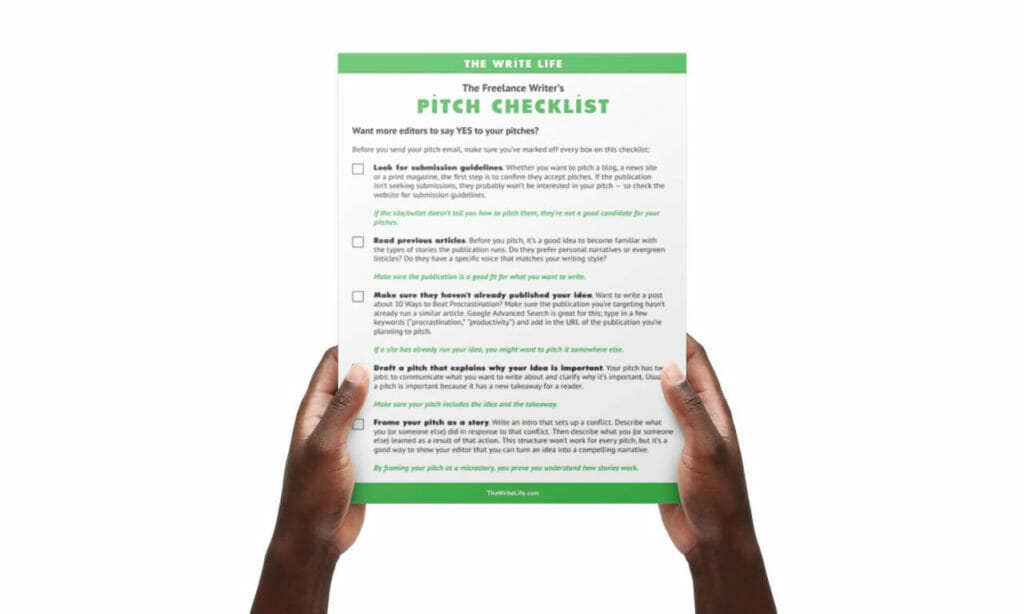
    Grab your pitch checklist, so you can land more web copywriting gigs.

    Now, all there’s left to say…Happy Writing! 😎

    Written by Zara Choudhry, Founder of AnonymouslyZara – a platform inspiring women through articles about faith, lifestyle, career tips and healthy relationships. 

  • Business Plans For Freelance Writers

    Business Plans For Freelance Writers

    Whether your dream is for full-time writing to replace your day job, you already reached this goal and are building your business, or you’re well into freelance writing and need guidance, today we discuss business plans.

    Writing is, by nature, a creative process. Storytelling relies on great stories (surprise), told in an engaging manner and with quality writing. If writing is a hobby, you can stick to the creative side without thinking about business, taxes, or an elaborate plan for your writing hustle.

    However, if you want to make money writing, work as a freelance, and want to succeed, it’s essential to discuss business plans. In this article, we elaborate on the business side of writing via business plans:

    Yes, you are a creative, and that part of your personality is extremely important to your career. For sake of longevity and a career that can take over your day job, let’s dive into what business plans are.

    What is a Business Plan

    Business plans for freelance writers are simply documents of your goals for the upcoming years (usually 3-5). These goals should encompass your financial goals, and projections, and include practical business dreams.

    Because your business plan is a roadmap for how you will achieve your goals, specifics are crucial. Business plans help take you from ideation to execution and provide the necessary steps in between.

    Just because your plan focuses on long-term goals and practical projections, don’t forget the importance of pushing expectations and working toward lofty goals. Failure is part of the growth process—fail responsibly, grow steadily.

    How To Write One

    The quickest way to write your business plans as a freelance writer is to use a business plan template or software. You can also start from scratch, but it’s important to follow several steps when creating your plan. You will want to include:

    An Executive Summary:

    Think of this as your business elevator pitch and include: What your business is, your business name, your products or services, how you are the solution to clients’ pain points, projected expenses, and income, etc.

    Your Description Of Your Business:

    Think of this as your business synopsis and include your qualifications, what type of business you are (sole proprietorship, LLC, S Corp, corporation), target client (think of this as your book’s target audience), etc.

    Organizational Structure:

    Do you work alone or hire work out? Do you only have subcontractors or do you have full-time employees?

    Market Analysis:

    Dive deeper into your ideal client, research competitors, including pricing, etc.

    Marketing:

    Determine your marketing budget and list ways you plan to market, such as social media advertising, newsletter, referral system, etc.

    Financial Details:

    Will you need to budget for startup costs such as a computer, office materials, or certifications? What are your estimated profits and losses, and how do you plan to break even and grow revenue over the next several years? Project the monthly profit and loss for the first 12 months.

    Benefits Of Doing So

    There are many benefits to creating a business plan, one of which is increased clarity. When you can see your three to five year plan on paper in front of you, it’s much easier to follow the steps to a successful, thriving business.

    Start-up businesses take so much time and investment upfront that it’s easy to slack with marketing as you handle all the other aspects of your business. Creating a business plan includes brainstorming and articulating a marketing plan.

    When you find yourself in the trenches of your business, responding to emails, sending follow-up invoices, and documenting tax write-offs, it will help you to have a previously established plan of action.

    Your business plan also creates a structure that is difficult to find without a hard copy of what you are doing and plan to accomplish. Structure reinforces credibility and will help you track your progress. If you need to make hires further down the road, you will have a plan to refer to and know exactly what spots you need to fill.

    Pitfalls Of Not Doing One

    The pitfalls of not creating a viable business plan can be summed up as the negative side of the above list. However, not building a business plan can also contribute to Imposter Syndrome.

    Creatives often struggle with the business side of writing because they are trained so much in the creative side. If writers already experience feelings of inadequacy in their lane of talent, how much more will they as they make their creative talent a business venture?

    It may seem like several sheets of paper, but giving yourself the opportunity to reference a hard (or digital) copy of what you are accomplishing and working toward helps fight doubts.

    Not everyone has the persistence to dream up a business, let alone start one and carry it through to full-time execution. Reference your plan to make sure you stay on track and don’t let discouragement creep in.

    How To Think Like A Business Owner

    You know how to think like a writer, and actually, thinking like a business owner is quite similar.

    When you think like a writer, you likely follow similar steps to this list:

    • Get your idea
    • Flesh out your idea
    • Plan your idea
    • If you are a pantser, you will spend much less time on this point
    • Create a schedule and way to execute writing your book
    • Build time into your schedule to write
    • Stick to your daily word count or page count goals
    • Use weekends to make up lost time

    When it’s time to think like a business owner, you should:

    • Decide you want to start a freelance writing business
    • Flesh out your business plan
    • Plan the scaffolding of your business
    • What are the specific steps you need to take?
    • Create a working schedule
    • Build time into your schedule to hit your goals
    • Stick to your daily tasks
    • Use weekends to make up lost time

    Educating yourself with books on business, freelance writing, and how to maintain daily habits can go a long way in providing structure and resources. You do not need a business degree to start a business (although it can be helpful).

    Start Your Freelance Career Today

    So many freelancers got their start without a degree in various fields. You can too—just remember it takes a lot of work. The magic word to becoming a freelance writer is consistency. Don’t forget that every step takes you closer to your goals.

    You will likely fail, but fail with intention and fail toward growth.

    To help get you started, here is a list of resources:

    (*Self-Publishing School is not paid to endorse these resources, nor does SPS benefit if you engage with these resources.)

    Books:

    • Atomic Habits, James Clear
    • Marketing Made Simple, Donald Miller
    • The 7 Habits of Highly Effective People, Stephen Covey

    Podcasts:

    • Powered, Abu Fofanah
    • Business Made Simple, Donald Miller

    You now have the tools, the resources, and the steps to build your business plan. All that’s left is to execute what you learned. We wish you the best as you progress in your freelance writing career!

    Start today, and you’ll likely be surprised where you find yourself a month, a year, and even five years from now. We can’t wait to see it!

    freelance writers den open