Tag: freelancing

  • 23 Best Travel Blogs: Discover Inspiration and Guest Blogging Opportunities

    23 Best Travel Blogs: Discover Inspiration and Guest Blogging Opportunities

    Did you know the spark behind some of the best travel blogs today started in the 1700s?

    That’s right, travel writing rose to popularity with the use of paper, long before the age of online blogs and social media. Today, travel blogs document the world through the eyes of individuals, couples, and families. 

    But why is this form of blogging so popular? How can joining the ranks of the best travel blogs impact you and your writing? You might be surprised at the diversity of travel blogs, where people go, why they travel, and their purpose behind their globetrotting. 

    Best Travel Blogs and Their Rise To Popularity

    With work moving online, especially in the last three years, writers are free to travel the world. Some of the best travel blogs are powerful in several key ways, not least of which is their capacity to record events taking place around the world. 

    What makes the best travel blogs so beloved is multifaceted, but a few reasons behind the art of travel blogs are the following: 

    • Provide followers a personalized look around the world
    • Create another form of education for viewers 
    • Teach about cultures, individuals, and historical landmarks 

    However, travel blogging is also a great side hustle that you can turn into a lucrative career. Once you build up a following, you can transition from working to travel into traveling to work. Let’s take a look at some of the best travel blogs.

    The Shooting Star 

    Shivya Nath is an award-winning traveler who writes about sustainable travel, conscious living, veganism, and climate change. Her blog brings in thousands of views on a monthly basis. Shivya’s blog is a personal one, so while she does not seem to accept guest posts, she’s a great blogger to learn from.

    Joshua Berman

    This blog stands out among travel blogs for its rich content, niché, and adventurous focus. With a variety of posts and focuses, Joshua keeps a content-heavy blog with numerous resources. If you’re looking to get your foot in the door, you may want to inquire if he accepts guest posts. 

    Hike and Dine

    Do you love travel blogs that focus on the beauty of nature but also the deliciousness of food? Do you have an experience you’d love to share with a large audience? Contact Hike and Dine and share your story!

    Notes from the Road

    This personal blog shares not just well-crafted notes from the road of travel but artistic photography that draws you into the traveling experience. 

    Under The Overpass

    An entirely different form of travel, Mike Yankoski shares his story through handwritten journal entries recorded during the time he chose to spend homeless. This travel blog is far from glamorous but deeply inspiring.

    Uncornered Market

    This husband and wife team joins together to bring you a variety of experiences and resources. Running a career with a variety of offerings, they may be open to a guest blog, provided you share why your contribution could benefit their site. 

    My Family Travels

    This family travel website hosts a variety of posts from various bloggers. If you’re looking to up the number of travel blogs you’ve written for, contact this highly detailed travel team.

    Adventurous Kate

    With 83 countries under her belt and adventuring to all seven continents, Kate brings a bold flare to travel blogs. If you’re a female traveling solo, you may be able to contribute to her articles.

    Nomad Flag

    Keith has more than 25 years of travel experience. Seeking to learn from established travel blogs? Look no further than the Nomad Flag.

    An English Travel Writer

    Jenny shares her English travel experiences with a friendly voice and photos that bring her experiences to life.

    Nomadic Matt

    Matt teaches travelers how to travel smart and cheap and even offers a blogging training program.

    Oneika the Traveller

    This Emmy Award-winning journalist is a self-proclaimed perpetual explorer. An on-camera host for Travel Channel and NBC, she has set foot in 120 countries. 

    Globe Trotting

    Travel blogs targeting families can be a huge help to young parents. Need advice on how to take your next adventure? Check out Globe Trotting!

    Travis Levius

    A luxury travel journalist, Travis’s travel blogs will take you on otherworldly adventures across the globe. 

    The Incidental Tourist 

    Dawn’s blog offers extensive travel resources. She also invites you to contact her for potential collaborations. 

    Lydia Scapes

    Looking for some adventure travel, specifically climbing? Lydia has you covered from tips on staying in Rome to climbing gear you shouldn’t go without. 

    O. Christine

    O. Christine is an established travel blogger who partners with brands. While she does not accept guest posts, she does offer ways to work together. 

    Wild Blue Family

    Wild Blue is a family-run travel blog who calls Hawaii their base camp. The parents’ first date was a hike, so joining the ranks of travel blogs is a natural next step. They do accept sponsored posts.

    Where the Kids Roam

    One of many family travel blogs, this one is run by the father who writes in a quirky, yet enlightening, voice.

    Meet Me Here

    Paul focuses on experiencing the world through taste and helping others travel. While most travel blogs center around the blogger’s travels, Paul’s focus is helping his readers experience the delights of Georgia. 

    Intrepid Times

    If you’d like to submit your work to an already established travel writing blog, or enter a competition, Intrepid Times is for you. They also offer a writing internship. 

    Travel Writing World

    This award-winning travel writing podcast and website also offers podcast interviews, author profiles, articles, and book reviews. If you fit one of these categories, you may want to reach out about a potential collaboration. 

    Wanderlust Marriage

    This couple met in Brugge, Belgium in 2002. They were simply solo, post-college backpackers heading to the same location—Amsterdam. Fast forward and they now help travelers create the best experiences, memories, and budget-friendly trips.

    How To Break Into the Travel Blogs Niché

    After viewing so many phenomenal travel blogs, you may feel the slow dread of Imposter Syndrome creeping up. Instead of focusing on the places you haven’t traveled, focus on the places you have been, even if it’s only the town you were born in. Meet Me Here is a great example of how to build travel blogs out of a single location. Hike and Dine’s niché focuses on its two most-loved activities.

    If you’re unsure how to break in, ask yourself the following: 

    • What do I particularly gravitate to?
    • How does travel add a new angle?
    • What travel blogs should I learn from?
    • What ones could I learn to build ideas from?

    Travel blogs differ in a variety of ways, each bringing their unique angle to the experience of travel. Whether you love rock climbing or a glass of wine after a day hike, you can find your niché among travel bloggers. 

    Don’t forget that travel blogs do not usually begin as an award-winning site. It takes time to build your credibility and following, but with persistence in the right direction, you can do so.

    Don’t forget to enjoy the journey, pun intended, and let us know where you travel to!

  • Testimonials for Writers: 3 Ways They Help and Why They’re so Powerful

    Testimonials for Writers: 3 Ways They Help and Why They’re so Powerful

    Testimonials for writers are a crucial factor in creating a word of mouth buzz that can boost your book sales or service referrals.

    Whether you want to put more books into the hands of readers or offer writing services, great testimonials can be a positive influence on your goals. 

    While you’ve likely heard of endorsements, and maybe even have some, testimonials are a bit different.

    In this article, we’ll talk about the different facets of testimonials for writers. If you’re ready for a career boost, read on!

    What Are Testimonials for Writers?

    Testimonials for writers are a third-party review of you and your work. While they’re often shared through a written statement, testimonials can take various forms such as:

    • Short video statements 
    • Quotes posted on website
    • Social media posts 
    • Interviews

    How Testimonials Help Writers

    Whether you ask clients to write up a brief endorsement, share about their experience on social media, or engage in an interview, testimonials are foundational for building credibility. 

    If testimonials for writers are such a crucial factor, how do they actually contribute to your ongoing success? There are many ways testimonials help, but below are the top three reasons you should start collecting them today.

    Personalize Your Audience

    Consider the following situation: You launched your book a year ago and have some traction. You wish you had more reviews, but you’re happy with your growing platform and newfound traffic to your author website. 

    What if when potential readers come to your site, testimonials greeted them on your home page? As soon as your site loads, they see real readers who love your book and want to share how much they enjoyed it. In this way, testimonials personalize your audience.


    Create Authentic Hype

    With so many marketing resources today, almost anyone can create a good deal of buzz around their product or service. However, testimonials for writers take this buzz to an authentic level. Yes, people have used the word authentic so much that it’s a buzz word all on it’s own, but this is because individuals appreciate authentic reviews. 

    The more testimonials you have from readers with names and lives, the more authentic your hype will be. What usually makes you want to purchase a new book more: The author tweeting how awesome their book is, or a reader telling you they couldn’t put it down?

    Provide Resources

    Particularly if you offer paid services such as editing or marketing, potential clients want to know you’ve been vetted and are worth the price point. Testimonials, for writers in particular, are a helpful way to provide the credibility future clients need.

    If individuals can see a list of clients you’ve helped, look them up, and perhaps even reach out to them for a referral, they will feel much safer hiring you.

    How To Get Testimonials

    If testimonials for writers are this important, the next question to answer is how to get them. Your first testimonials will likely be the most difficult, but don’t worry. With a few well-crafted sentences you’ll be well on your way. 

    Offer the possibility to current clients 

    Many clients are focused on their project and getting it done well. Leaving testimonials for writers is simply not top of mind. When I’ve asked for testimonials, I’ve found offering the possibility to a client is all they need to write a review. Most clients are happy to help but don’t realize how much power their few sentences wield. 

    Ask for testimonials from previous clients 

    If you have worked for clients in the past but didn’t realize the value in testimonials for writers, a simple email can help you. Write up a brief template thanking the client for working with you. Ask them to write a sentence or two of review if they enjoyed the collaboration and are comfortable. 

    Write a draft to send to clients 

    If you work with bigger name clients who may not have time to craft their own testimonial, you can treat testimonials similarly to blurbs. Write a sentence or two describing how you imagine the client felt about their experience working with you. 

    Then follow a few steps: Email them asking for a testimonial. Include that you wrote an outline to make it easier for them. Allow them to edit as they see fit.

    Tip: You can legitimize testimonials by including first and last names if possible, or first name and last initial. Asking for clients to include where they work or what they are known for is also a helpful way to add detail that builds rapport. 

    Examples from Real Writer Websites

    What about writers who have done this well? Let’s start with the bestselling author of Atomic Habits, James Clear. When you visit the book page on his website you immediately see a sentence or two of testimonials from other professionals.

    Clear highlights Mark Manson’s testimonial, another bestselling author. He also includes one from Arianna Huffington, Founder of Huffington Post and Thrive Global. 

    Elizabeth Gilbert’s Big Magic has inspired creatives in innumerable ways. Despite the massive success of her book, she too includes a testimonial on her book page. 

    If you’re not a bestselling author yet or offer services, testimonials are still tremendously helpful in your success. The freelancer behind Hear Ye Writing includes numerous testimonials on her website.  

    Testimonials For Writers: Parting Tips 

    While there is no right or wrong way to include testimonials, there are a few steps you can take to help them stand out. Testimonials that include the following will help legitimate both your testimonials and your product or service: 

    • First and last name of client
    • The client’s credibility 
    • Where they work 

    Consider the following testimonial examples: 

    Example one: “I loved working with Jane Smith. Her turnaround time was impeccable and her quality was just what I was looking for.” 

    Example two: “I loved working with Jane. Her turnaround time was impeccable and her quality was just what I was looking for.” —John Smith, CEO of Fake Business Name and author of Book Title

    Do you see how adding these three small factors levels up the testimonial? Always be sure to ask clients if they are comfortable for you to include their name and credentials prior to posting. 

    Additionally, if you write a template testimonial for past clients, receive the okay before publishing it live on your website. 

    For Those Starting From Scratch 

    If you’re just getting started and haven’t worked with clients before, there is still a place for you. Testimonials for writers can apply to unpaid coaching services, feedback, beta reading, and more. When posting these type of testimonials, be clear about what you offered. 

    For instance, if someone from your writing community asks you to beta read their book, consider asking for a testimonial. Use the template below to inspire your request: 

    “I’m a new writer and asked [your name] to beta read my book. He was more than happy to provide great feedback. I’m thankful for his insight on my manuscript!”  

    It can feel intimidating to start out, but take your first step boldly. The first request is usually the most difficult. It only gets easier! 

    Want more writing advice?

    Subscribe to get our latest content by email.

      We won’t send you spam. Unsubscribe at any time.

    • Is ClickBank Legit? (2024 Review)

      Is ClickBank Legit? (2024 Review)

      Anyone who runs a blog and gets a decent amount of traffic is probably wondering how to start to make money with their site.

      When you start to look around the internet for ways to monetize your blog, you will most likely come across Clickbank as an option.

      You might wonder if it is a good platform to use to either sell your own products or sell the products of other people.

      If you have wondered is clickbank legit, how it works, how much you can make, and all the other basics you will need to know, this article will cover it all from top to bottom.

      [sps_reusable_block post_id=43047]

      What Is Clickbank?

      Clickbank is an affiliate marketplace and an e-commerce platform for people to sell their digital products. They let some physical products be sold as well, but double check if yours are allowed before you jump on there and sign up.

      Instead of having to go out and hunt for your own affiliate marketing programs, applying for each one, and keeping track of them all, clickbank brings it all into one central location.

      Clickbank offers thousands of unique products (at the time of writing this, over 4,000 products) and programs so you can find the right fit for your blog and for your audience.

      If you sell your own digital products, Clickbank is also a great option for you to sell more of them since other people can go on there and sell your products for you.

      How To Monetize With Clickbank

      If you are ready to monetize your work, you first need to sign up for Clickbank.

      Clickbank is also free to join as an affiliate and there is no screening process so you can simply sign up and get started making money right away. If you want to sell your own products, you will need to pay $49.95 to start offering your goods and services.

      When you pick a product on Clickbank to sell to your audience, you can make between 1% and 75% commission.

      The seller is the one to set their own affiliate rate, and often they will offer a good deal to start to attract affiliates.

      There is also another option to make money with Clickbank and that is for you to create and list your own offerings. Then, people who also use the platform can sell your producs (while earning their own affiliate income, as well).

      Both options are a great way for you to start making money online, which is all done easily through Clickbank.

      Types of Products on ClickBank

      On Clickbank, there are a ton of products in a wide variety of niches.

      Some of them include:

      • Education
      • Health and Fitness
      • Cooking
      • Traveling
      • Sports and competitive games
      • Beauty
      • Entertainment
      • Financial
      • Legal
      • Survival
      • Weight loss and diets
      • Investing
      • Real estate

      That is just the tip of the iceberg when it comes to the variety of products on there. You will be able to find a product for almost any niche you are in.

      Of course, you will want to find products that are related to your niche or else your audience might not be interested in them.

      Selling Clickbank products

      If you want to start making money with Clickbank as an affiliate, the first thing you will need to do is figure out which platform you want to sell through.

      If you already have an audience on a certain platform, that can help a lot. That will often be the first place you will want to start to offer this affiliate product.

      You should take some time to figure out why your audience would love this product, because that will help you craft a message that can help you sell more of them.

      The last thing you want to do is just pitch them some generic product without giving them a reason to buy the product or building any desire to do so.

      You could sell products through:

      • Your email list
      • Your YouTube channel
      • Your social media channels
      • On your website
      • In your blogs

      Selling Your Own Clickbank Digital Product

      If you are taking the time to put your own product up on Clickbank, you will want to spend a little time sprucing up your copywriting skills.

      When customers come to your landing page, you want to make sure it is up to date and ready to show them why they should buy your product.

      A big problem for bloggers who sell digital products is getting leads to their website, which is something that Clickbank can also help with. Even for the people who do not buy your product, you might be able to convince them to sign up for your newsletter, giving you a chance to sell to them again down the line.

      Is Clickbank Legit?

      Overall, yes. Clickbank is a legitimate site to help bloggers make money.

      Now, what it does not do is magically create those sales for you. You will still be in charge of getting eyeballs to your offerings and making sure your potential customers can find it.

      Clickbank simply offers the framework for you to succeed as long as you can make the sales on your own.

      One thing you will need to do, though, is check out the people who have products you are offering to your audience.

      Clickbank does not personally go through and vet every single product on their platform. Yes, they take down spam or fake products, but outside of that it is up to you to do your due diligence.

      Check out the product, check out the company offering the product, take a look through their website and social media profiles, and so on.

      No matter how good the commission rate is, you will want to do your homework so you can happily offer a product. Otherwise, you can destroy the trust between you and your audience you have worked so hard to build.

      Why You Should Join Clickbank

      If you sell products, using Clickbank is a helpful platform in order for you to sell more of them without as much effort on your end.

      Because people can log in and see your product as an offer, they can sell it for you (while getting a cut, of course). It is one of the better options when it comes to making money with your work, since you are not paying these people upfront to promote your product.

      If you are on the opposite end, it makes sense to join Clickbank because you can sell other people’s products to your audience.

      This can save you time from how long it can take to create your own product and instead just start selling other people’s hard work while you earn a cut.

      If you already have an audience, it can make sense to offer them more products that would help them and are already in your niche. Overall, it is a win-win for everyone.

      [sps_reusable_block post_id=43047]

      Ready To Make Money With Your Writing?

      If you are great at writing, and are looking for ways to make more money, being a freelance writer might be a perfect fit for you.

      Inside the Freelance Writers Den, you will learn all of the tips and tricks to boost your writing career and start making money without having to rely on affiliate sales.

      Want To Make More Money With Your Writing Skills?

      While it is great to be an affiliate and make money that way, if you are a good writer, you can make money in a wide variety of ways

      The Freelance Writers Den will help you succeed as a freelancer and give you all the tools you need to start getting clients.

    • 7 Persuasive Writing Tips To Make Your Writing Stronger

      7 Persuasive Writing Tips To Make Your Writing Stronger

      Persuasive writing is the art of trying to convince others of your point of view using the written word. The goal of it is to persuade someone to do something or think a certain way.

      While it can use elements of creative and expository writing, it is almost in a category all on its own because the goals are different. If you are not trying to persuade someone, then it is not persuasive writing.

      If you have not written any persuasive writing in quite some time, you might be a little rusty on how to write it and what to include.

      Let’s talk about what persuasive writing is, what it is not, and give you seven persuasive writing tips to help you make a strong written piece.

      What Is Persuasive Writing?

      Persuasive writing is writing that tries to convince the reader of something, usually the writer’s opinion.

      It can use a wide variety of writing styles, but it must have the goal of persuading the reader to be considered persuasive writing.

      Persuasive writing can come in many forms, from ads to articles. It will often spend time throughout the piece acknowledging the other side’s arguments and combatting each of the opposing side’s arguments.

      Someone writing a persuasive writing piece should know exactly what they’re talking about. Sure, some types of persuasive writing will use made up facts or arguments that do not work logically.

      It is important to always double-check your facts when you are writing a persuasive writing piece.

      Examples of Persuasive Writing?

      Persuasive writing should be used anytime you need to convince someone of your argument.

      This could be in opinion pieces, on social media, in blogs, in advertisements, or more. It could even be as simple as trying to convince your family why they should go to a city you love for the annual trip.

      When you understand how to use it, you will also be able to see it all around you. It is in ads, movie trailers, on social media, and so on.

      No matter what you are using persuasive writing for, there are some elements you should be using each and every time, which we will dive into down below.

      One example of persuasive writing you can easily imagine is a review of a product. Go on Amazon and look at almost any review of any product. You will see persuasive writing pushing you to either buy or not buy that product.

      7 Persuasive Writing Tips

      Now that you know what persuasive writing is and when you should use it, let’s cover some ways you can make your writing more persuasive.

      #1 – Find your best argument

      The first thing you want to do is to find either your best argument you want to highlight or find the main angle of your writing.

      Lots of people try to be persuasive by bringing in every good point they have in their arsenal. That is the opposite of what you want to do.

      While it helps to have your main facts and supporting facts, throwing a thousand pieces of new information at someone is only going to overwhelm them instead of help your argument.

      It can help to lay out all of your main arguments and highlight your strongest ones that would persuade your reader. Only after you figure those out and present them to your reader can you dive into your supporting points.

      #2 – Know who you are writing to

      You cannot create persuasive writing if you do not know who your audience is.

      When you know who your audience is, you will be able to pick particular words and thoughts that will resonate with that audience.

      Depending on the platform you are using for your persuasive writing, you will need to narrow down who the people are you are writing to (or single person if it is something like a college paper).

      This helps you form your arguments because you understand who the reader is and what they care about.

      #3 – Keep them intrigued

      If you want to keep someone reading your argument, you will need to keep them invested enough to keep reading.

      You will need to meet the reader where they are at with their understanding of your topic. You do not want to start a persuasive writing piece with being mean and aggressive trying to prove your point.

      Instead, you will want to show that you understand their perspective on things, but guide them to understand your perspective and why you believe the things you do.

      It is important to do whatever you can to keep them reading. if you lose the reader and they are no longer interested in what you have to say, you have lost your persuasive writing point.

      #4 – Prove your point

      Now is the time to bring in all of the facts and experiences you can to prove your point.

      You have done enough work to walk them through your thoughts, facts, and perspective, but now is the time to hammer it home and highlight your best points.

      Ideally, you pick only a handful of main points as you do not want to overwhelm them. You want to keep your main points focused and on topic.

      Take the time to deep dive into each point you have and use supporting facts to back up what you are claiming.

      #5 – Overcome their objections

      Once you have laid out your arguments, the reader will often have objections in their mind about why you are not right. Maybe it is not always full-on objections, but they might have reservations at the very least.

      You will need to outline what these are and take a moment to overcome them. You do not need to dance around what they are, you can address them head-on.

      Address them head on and it will only make your writing that much stronger.

      #6 – Bring in emotional elements

      Whether you want to use storytelling or facts, you need to rile their emotions. This does not mean to manipulate or lie to them, but when you bring emotions into it, you are able to connect with them in a different way.

      Of course, you want to use facts to back up your main arguments, but this is not journalism, this is persuasive writing.

      Telling stories and writing ideas that spark their emotions is not always a bad thing. Humans love stories to connect to and understand things better.

      You do not want to go overboard with emotions, because then your writing will not seem grounded, but a few here and there is a good idea.

      #7 – Bring in social proof

      Social proof is essentially making sure that you show how the point you are arguing is working for other people.

      Few things will hammer home your argument quite like showing how other people feel or think about your topic. It is a great way to back up your argument with a real life example.

      This is why things like health supplement companies and gyms use “before and after” photos to showcase what people have done with their product or service.

      The social proof you bring into your argument needs to have that kind of impact.

      What To Do Next

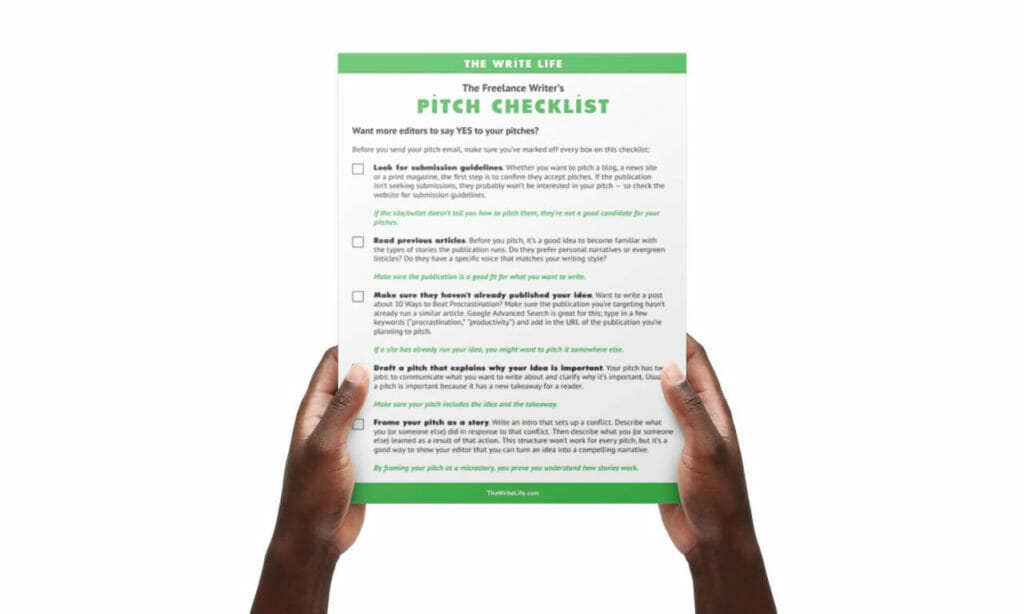
      Ready to put your persuasive writing to the test and start pitching? Get our pitch checklist so yours are a success:

    • How to Become a Foreign Correspondent: An Accidental Journalist Shares Her Story

      How to Become a Foreign Correspondent: An Accidental Journalist Shares Her Story

      I liked being in the know when it came to current events. I liked learning from others’ stories. I was competitive by nature, and plenty curious too. On top of all that, I even liked to write.

      Yet still, when I began my first job in journalism at age 22, copyediting a short-lived English-language business magazine in Egypt, I never thought that a career in media would stick. More so, it was an opportunity to make a few hundred dollars a month while learning Arabic and hanging out with friends at Cairo bars that overlooked the mighty (and quite dirty) Nile.

      “I like writing, but I definitely don’t want to be a REPORTER. You know, the sort of person who does interviews and goes to press conferences,” I wrote in a journal at the time.

      Fast forward five years, and now I have a book coming out about exactly that, my life as a foreign correspondent in a country I never dreamed that I would call home, Yemen.

      How did I become a freelance foreign correspondent?

      While there have been some hard knocks along the way, and there are parts of journalism I really — I mean really — don’t like, and I definitely have embarrassed myself in front of editors (“What’s a nut graf?” I once asked the foreign editor of the San Francisco Chronicle during a phone conversation), I wouldn’t trade in this life for anything else.

      That’s what being a freelance foreign correspondent-turned-author has become: a life. It’s far from a 9-5. It’s all-encompassing, and in the end it was exactly what I wanted.

      Furthermore, it wasn’t as hard as one might think to get here. At least not conventionally difficult. Living in a place with scant electricity while trying to file stories for the New York Times, that was hard, but getting the gig wasn’t.

      Learning the tricks of the trade

      After I began the job copyediting at the magazine in Cairo, I was speaking with a friend of a friend at a party late one night over a bottle of duty-free Jameson.

      “You speak Arabic. You’re young. You should do it! Why not?” he encouraged. This twenty-something American, Steve, was a freelance correspondent who wrote for publications like the Christian Science Monitor. He was moving back to the States shortly and thus, he said, was happy to tell me the tricks of the trade. I emailed him the next day, pushing past my defeating headache, and asked if we could meet for coffee.

      That’s when Steve taught me how to pitch a story. All I needed was a good idea and the ability to write, he told me. That’s it. I didn’t need to go to journalism school — though he had — and I didn’t need any fancy accreditations.

      Notably, the fact that we were abroad made my start in journalism all the more possible. The playing field was smaller. That’s why when new graduates ask me how to start a career in journalism, I often tell them to move abroad and find a job at local English-language press, because I know if they are savvy enough, they’ll figure it out from there.

      [bctt tweet=”Want to be a journalist? Move abroad and work for English-language media, says @kasinof”]

      Turning ideas into action

      Back in Cairo at 22, I didn’t think following Steve’s advice would be easy, but it was. I was full of ideas.

      What was interesting about life in Egypt? That Egyptian young people were using Facebook to organize politically in a country where other avenues for freedom of expression were cut off. Another: that Iraqi refugees who worked for the U.S. military during the invasion were now being denied resettlement to the US.

      Making my own lucky break

      I can’t say that I am very proud of my clunky writing from those years, but I was trying. I called editors and bugged them and forced them to listen to me.  Most important of all, every time I crossed paths with a real foreign correspondent, someone established, I showed them I was eager to learn. Occasionally, one of those people would help me.

      That’s how I was connected with the New York Times. A friend in Cairo introduced me to the Times’ Cairo bureau chief. Two years later, he would let me do some work for him. I sat in the paper’s small apartment-turned-office on a tree-lined street in the neighborhood of Zamalek, saw my byline in the New York Times and didn’t believe my eyes.

      Then I moved to Yemen, and then the Arab Spring started. Protests and hope from the Middle East filled the media, but so did violence. The learning curve skyrocketed. I learned about reporting because reporting for the Times was such a serious endeavor. I learned about how humans behave in conflict, and I learned how to weasel my way into interviews with government officials.

      My best advice for aspiring journalists

      When new journalism graduates come to me for advice, they’ll often ask: “How will I know if I have what it takes?”

      The most important thing for someone who is trying to start a career in journalism,” I’ll tell them (and this advice holds true for anyone who wants to be a writer) “is to not be afraid of failure.” Listening to fear when I was in a conflict zone in Yemen was wise. But letting it prohibit me from putting my all into my writing? Never.

      Have you ever dreamed of working as a foreign correspondent?

      If you’re exploring other writing careers, check out this article to find more options to get paid as a writer.

      Perhaps this quiz can help you decide.

    • How to Get Paid to Read Books: 4 Exciting Options

      How to Get Paid to Read Books: 4 Exciting Options

      If you’re an avid reader, you might be wondering how to get paid to read books. There are multiple ways you can make money on the side, or even a full-time income, reading books.

      For the most part, there are two main ways to get paid to do so: you either are involved in the book editing process or you’re involved in promoting or reviewing the book after publication.

      Both options have their strengths and weaknesses, which we’ll dive into.

      You can also choose to do it just on the side and make a little income here and there, or if you truly love it, you can go all-in and make this your full-time income and career.

      how to get paid to read books
      Image: https://negativespace.co/reading-book-morning/

      Getting involved in the book industry

      When it comes to getting paid to read books, there are multiple routes you can take. You can try out multiple, do them on the side of your full-time job, or turn it into your career.

      Some of the main options for how to get paid to read books include:

      To get your foot in the door for each of the options, you might need to build a portfolio or freelance on the side to get some experience. Even something as simple as reviewing the books you’re currently reading on Goodreads could be a first step.

      It also wouldn’t hurt to spend some time in your day-to-day schedule networking with people who could hire you later on. You might want to spend your time chatting with authors, editors, book bloggers, and anyone else who might help you get your official start.

      Few key things to keep in mind

      Now, if you want to learn how to get paid to read books, there are a few things you’ll need to keep in mind.

      First, you’ll need to decide if you want to be a part of the editing process before the book is published or do you want to part of the process after the book is published.

      If you have a desire to get involved before the book is published, you will most likely need editing, grammar, or similar skills.

      Otherwise, you’ll most likely be more involved in the promotion or reviewing side of book publishing.

      You might also need to work your way up in the beginning. For example, you might need to do a good handful of your reviews for free or for payment of an advanced copy of the book before you’re able to start charging for it.

      Just consider it a learning curve and know that eventually the work will pay off, especially if you keep networking and writing.

      Experience needed

      Depending on how you want to get involved in the industry, you might need certain experience or connections to get your official start.

      Keep in mind, you don’t always have to have traditional experience, such as a college degree. If you’re simply passionate about books, there is a way for you to get involved in the book industry as you build your reputation and skills.

      If you want to get a traditional job in the book world, you might need to get a few different traditional qualifications, but you can also spend time freelancing or doing an internship.

      However, if you choose to go down a different path, you might want to simply focus on publishing your reviews online to gain experience that way.

      How to get paid to read books — the options

      When it comes to figuring out how to get paid to read books, you might approach it in a few various ways.

      This will outline all of the clear-cut options for you to pursue, but also know that many people rotate between all of the options or create their own completely unique paths.

      Proofreader

      As a proofreader, your job will be to make sure the book is free of spelling and grammatical errors before it is published. You’ll need an intimate knowledge of grammar and formatting rules.

      If you’re someone with a sharp eye for small mistakes, this might be a great way to get paid to read books.

      To get your foot in the door, either for a job or as a freelancer, you’ll need to be able to showcase your editing skills. You can start to build these even through freelancing or joining groups to edit people’s work.

      The average salary for a proofreader is $53,800.

      Editor

      Becoming a book editor will take a little more work than some of the other paths, but it’s certainly not impossible to get into.

      Many people who eventually become book editors start as book reviewers.

      Editors are important because not only are you often catching things like typos or grammatical errors, but you are also often tasked with helping steer the direction of the book.

      You will need to be able to see how various chapters weave together, how they overlap, and what needs to be added or removed. It’s much more involved than proofreading, so know that it can be a much bigger time commitment. However, it can be exciting to know that you’re involved in how a story comes together.

      If you’re someone who often thinks, “This chapter didn’t even make sense” or see how there are missing key plot holes in stories, this might be a perfect career for you.

      The average salary of a book editor is $63,946.

      Early reviewer

      Becoming an early reviewer is an exciting prospect as you’ll get advanced copies of books before anyone else gets to read them.

      If you’re truly making a name for yourself in the industry as a reviewer, some publishers will even pay you for your time to deeply review the book and give your feedback.

      When it comes to payments as an early reviewer, keep in mind that payments range anywhere from a few bucks to hundreds of dollars. The various amounts usually are dependent on your reputation, the site you’re submitting your reviews to, and the length of the review.

      Goodreads is one of the biggest platforms for book reviews, so if you’re just dipping your toes in you might at least want to start building a portfolio and reputation there.

      Some sites that pay for actual reviews include Kirkus Media, Online Book Club, Booklist, and more.

      If you choose to go more of a traditional route, most major publications also have a book review section. If you choose to go this route, you will want to start building your portfolio sooner than later, which you can do on almost any of the major book review sites.

      Book blogger or brand

      If you choose to go down your own path, you can start up a blog and start writing about books. You can cover books you’ve read, books you’re looking forward to, pick a particular type of book niche, or cover anything else about books you want to.

      Building up a blog can be a labor of love in the beginning, but tons of book bloggers are sent advanced copies of books or are even paid to review books on their own blogs.

      If you were truly ambitious, you could also create related social media profiles, podcasts, YouTube channels, or anything else you wanted so you could build a brand in the book world.

      For example, book discussions on TikTok are (at the time of writing this article) one of the most popular ways reviews are spreading across the internet. They’re so popular, even Barnes and Noble is dedicating an entire section of their website and stores to books currently popular on the platform.

      Next step

      If you’re ready to get paid to read books, choose your path based on the advice listed above. Luck favors those who take action.

      And if you’re ready to build a full freelancing career around one of these paths, check out the Freelance Writers Den.

    • Hello Bonsai Review: A Task-Management Tool Keeping Freelance Writers Organized

      Hello Bonsai Review: A Task-Management Tool Keeping Freelance Writers Organized

      I fancy myself a pretty organized person. But when it comes to freelance writing, it’s easy for me to lose track of things.

      Did I save that contract in Microsoft Word or Google Docs? Am I on invoice number 1038 or 1039? I thought I was happy with the rate my client is paying me, but I’ve been working on this project for who knows how long — is it even worth it?

      When we’re our own boss, we have a lot of balls to juggle. If you were working in a traditional office, you might have a system for categorizing files or an accounting team to track work-related expenses. But since you’re on your own, how are you supposed to track everything?

      In swoops Bonsai. In this Bonsai Review post, we’ll break down what it is, how to use it, how much it costs, and more. Ready?

      What is Bonsai?

      Bonsai is an online platform that aims to help freelancers streamline their numerous daily tasks. 

      When you create an account, go to the dashboard to access things like your contracts, invoices, proposals and client information. By keeping everything in one place, you can stay organized and hopefully accomplish tasks more efficiently.

      Bonsai’s goal is to provide you with everything you need for a freelance project, from start to finish (or proposal to payment). You’ll receive a 14-day free trial when you sign up, which should give you time to get a feel for how Bonsai can influence your daily life.

      What can you do with Bonsai?

      Here’s what you can do with Bonsai.

      Keep track of clients, projects and tasks

      From your dashboard, you have a section for clients, where you can store information like clients’ contact information and social media profiles, and even how much money they owe you. 

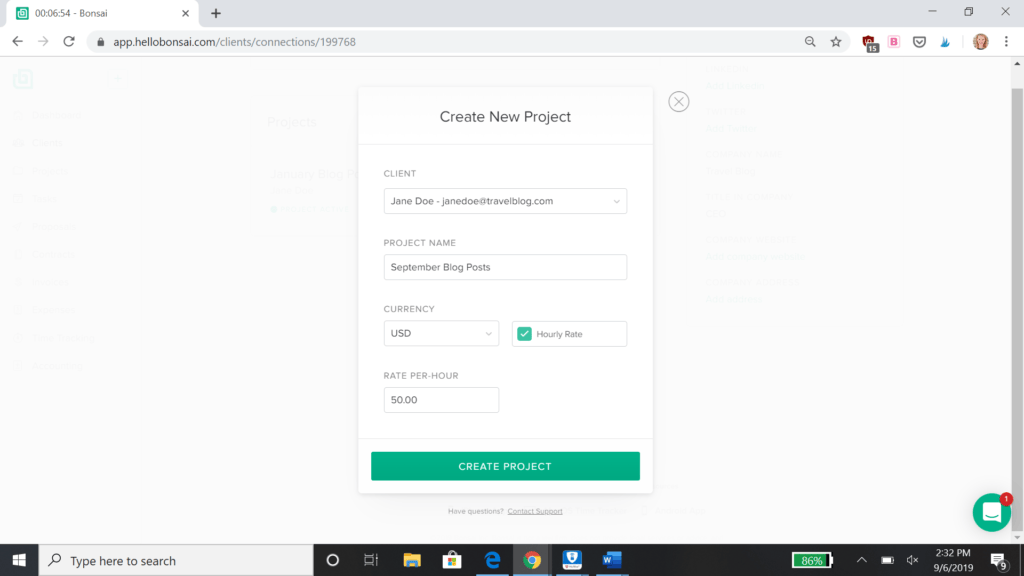
      For example, let’s say I enter information for my three main clients, Finance Company, Travel Blog and Beverage Website.

      Then you can create projects for each client. Under Finance Company, I may add projects for credit card pieces, student loan pieces and equity pieces. For Travel Blog, the projects could be January blog posts, February blog posts, etc.

      Finally, you can create specific tasks under each project. For instance, under January blog posts, I might add each individual blog post as a task, assuming I write more than one blog post per month.

      This is essentially a digital version of a binder filled with folders and color-coded tabs. Monica Geller from Friends and Amy Santiago from Brooklyn Nine-Nine would have a field day with Bonsai if they were freelance writers.

      Time yourself

      In the top right corner, you’ll see “Start Timer.” When you click this, you can choose a specific project and even a task to time. You can also add notes, like “research” so you know you spent that time researching, not writing.

      The timer is especially helpful if you charge clients by the hour. I don’t charge hourly, but I still prefer to use the timer. If I charge $100 for a piece but realize it required 10 hours of work, I might think twice before taking on a similar assignment.

      Before signing up for Bonsai, I used a time tracker called Time Doctor. The program experienced several glitches over the months I used it, which was annoying because I was charging by the hour back then. So far, Bonsai’s timer has been more reliable and accurate.

      Create invoices

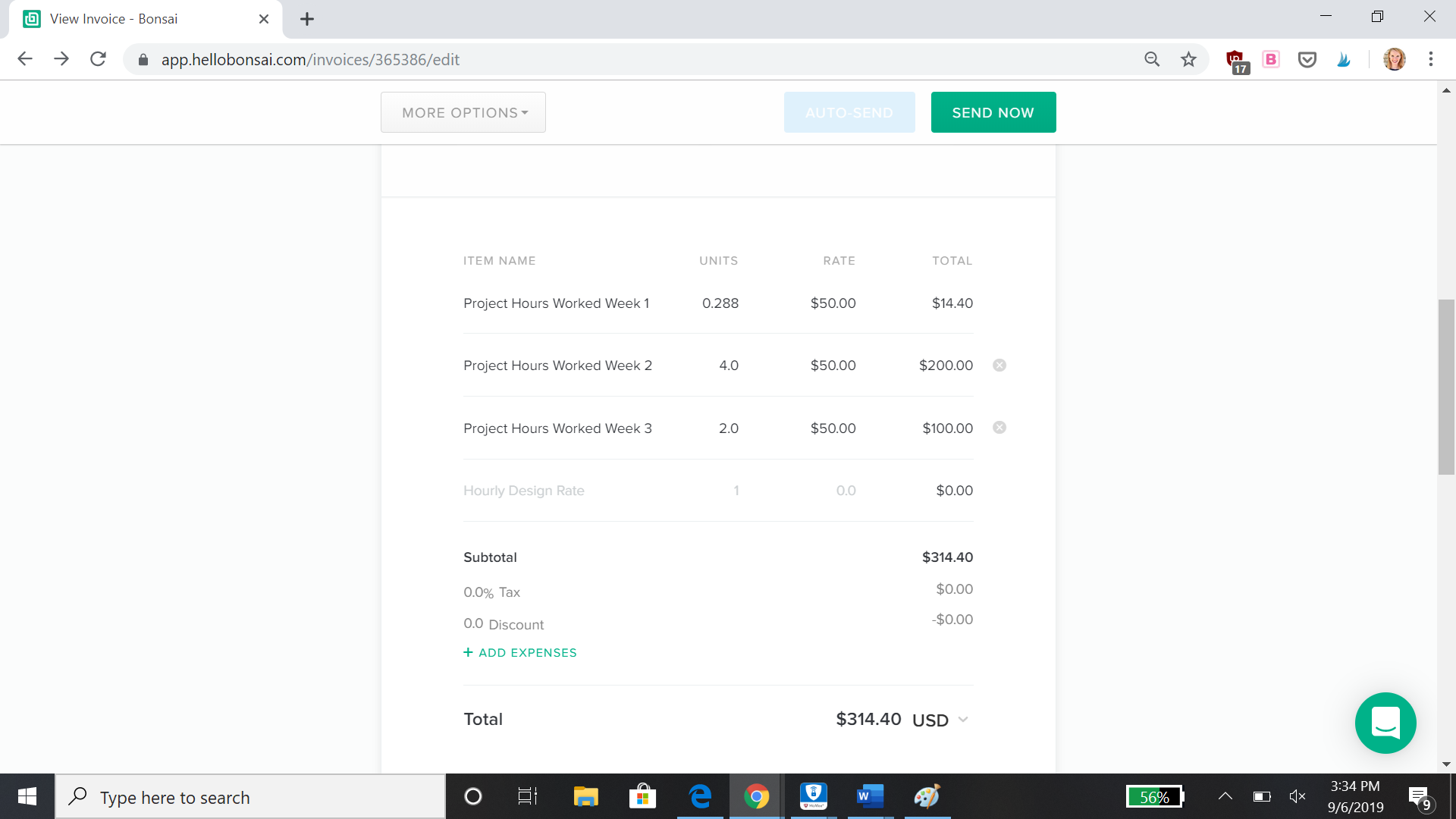
      Kim T., a writer who has been using Bonsai for two years, says the invoicing software might be her favorite part of the platform. “Bonsai is great for effortless invoicing and payment,” she explains.

      “Effortless” really is the appropriate word. You can create an invoice, then link it to the timer so that the amount of time you spend on a project automatically shows up in the invoice. This can save you time plugging in numbers if you charge hourly.

      Or you may choose to create invoices manually. Bonsai provides you with invoice templates, so you don’t have to start from scratch.

      I despise creating invoices in Microsoft Word, even with Word’s templates, so I have to agree with Kim — Bonsai’s invoices are a huge plus.

      Write proposals and contracts

      Time to pitch a big project? You might need to write a proposal.

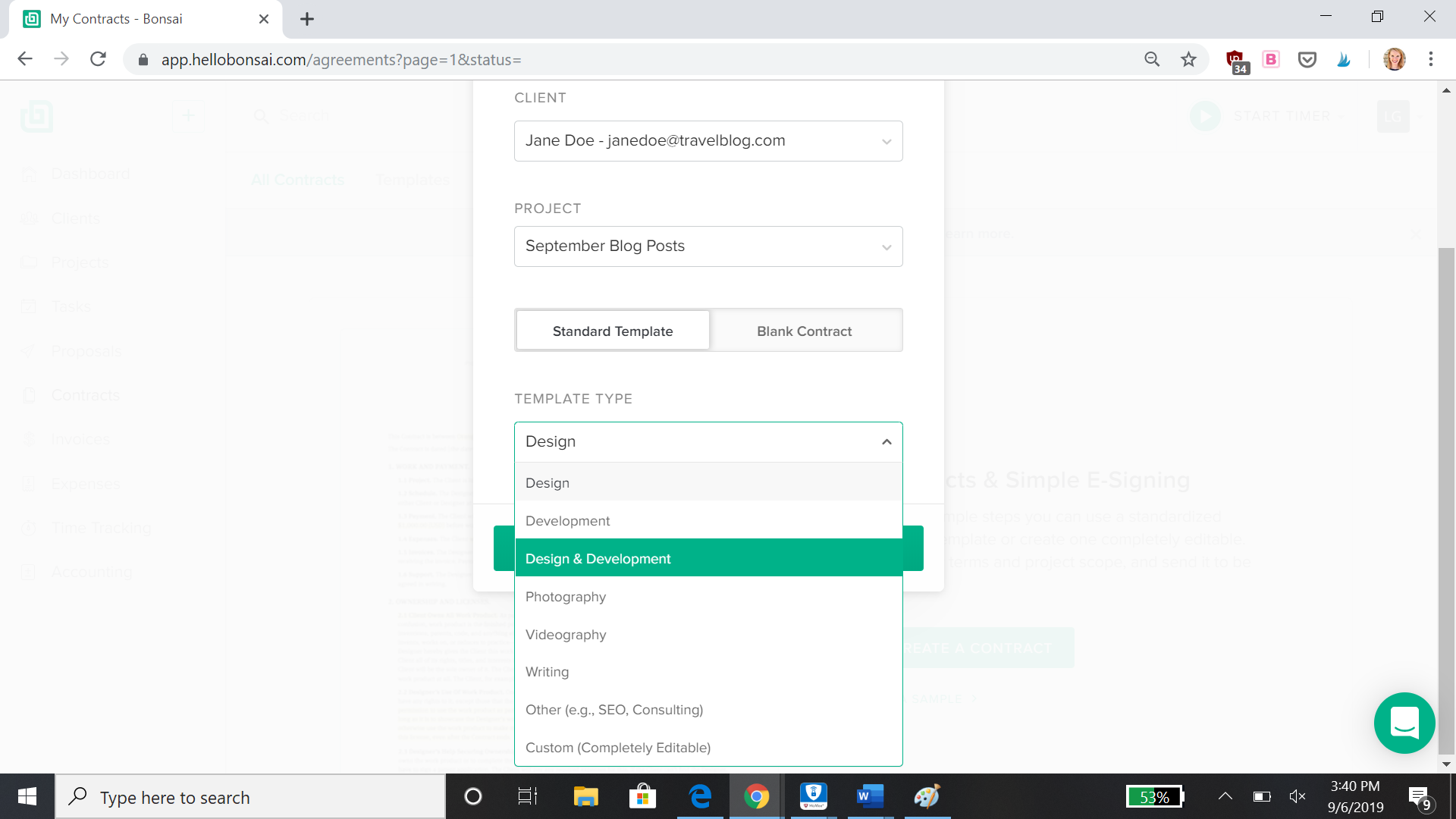
      Bonsai provides several proposal templates depending on what type of work you’re proposing. There’s one for writing projects that divides the proposal into Context & Objectives, Timeline and Why Me. 

      There are also templates for other types of work, like Design or Consulting. (Because we all know at least one writer who has expertise in more than one field!)

      Once a client accepts your proposal, you can write up a contract. Bonsai’s contracts are even more customizable than its proposals, and it’s the customizability that Kim says makes Bonsai stand out from other platforms. There are numerous contract template options, including a “custom” option that helps you create a contract from scratch.

      Record business expenses

      The Expenses section is where you’ll keep track of items like Uber and Lyft rides, airplane flights, business meals — anything a client might reimburse you for. You can subdivide expenses into categories like Advertising, Office Expenses and Supplies. Bonsai will track which billable expenses you have been reimbursed for and which ones you’re waiting to be reimbursed for.

      You can also track non-billable expenses, which can be useful when tax season rolls around and you’re thinking, “Oh, what business expenses can I write off?”

      Be your own accountant

      The more clients you have and the more diverse your freelancing work is, the more likely you are to benefit from an accountant. But if you’re already paying for a subscription to Bonsai, why bother hiring an accountant? Use the platform to act as your own accountant!

      You can link the Accounting section to your Expenses and Invoicing sections to track your business budget. The layout is useful for tracking both billable and non-billable expenses so you can see how much you’re spending on your writing career versus how much you’re bringing in. 

      What could improve about Bonsai?

      The invoicing may be convenient, but the system isn’t flawless. 

      You can only customize invoices to a point. The sections are “Item name,” “units,” “rate” and “total.” But for one of my clients, I need to have a separate section for “item code,” and I don’t need a “units” column. 

      It would be great if I could just replace “units” with “item code,” but unfortunately this isn’t an option.

      When you set up an invoice, you choose a payment method, and a few of these methods involve fees. I always request direct deposit when I can, but Bonsai charges a $5 fee for direct deposit. I’d rather just create an invoice through Microsoft Word and pocket the $5. They do offer instant payouts as a type of alternative though, and the fee is 1.5% of the total invoice to have it deposited into your account immediately.

      Kim has been using Bonsai for much longer than I have, and although she’s a fan overall, she finds herself wishing she could use the platform for more complex tasks. 

      “It’d be wonderful if I could take a client/project and run a report that tells me the total amount billed as it relates to the total hours spent,” she says.

      We can only hope Bonsai continues to develop each section so that freelancers can do even more with the program.

      Bottom line: Should you give Bonsai a try?

      If you’re a freelance writer with multiple clients and/or projects, it’s certainly worth setting up a Bonsai account. Storing all my information in one place has made me feel less frazzled.

      Your ability to access certain features depends on which plan you select. Here are your options:

      • Bonsai Starter ($24 per month): Ability to create invoices, proposals and contracts, track expenses, access a basic CRM, and use chat support.
      • Bonsai Professional ($39 per month): All the features you can access with a Starter membership, as well as the ability to subcontract through Bonsai and white-label (or legally replace a brand’s logo with your own). You can also add multiple users to your account and integrate with Zapier, Calendly, and Quickbooks.

      If you’re looking for a more affordable deal and are open to long-term commitment, you can sign up for annual billing. You’ll receive the equivalent of two months free, which comes to only $17 per month for Bonsai Starter and $32 per month for Professional.

      You might give the two-week trial a go and see if you want to sign up for Bonsai Plus. However, I don’t see much use for Premium unless you either have some very specific, advanced needs, or you employ other people and want to add them to your account.

      This post contains affiliate links. That means if you purchase through our links, you’re supporting The Write Life — and we thank you for that!

      Photo via JKstock/ Shutterstock 

    • Business Plans For Freelance Writers

      Business Plans For Freelance Writers

      Whether your dream is for full-time writing to replace your day job, you already reached this goal and are building your business, or you’re well into freelance writing and need guidance, today we discuss business plans.

      Writing is, by nature, a creative process. Storytelling relies on great stories (surprise), told in an engaging manner and with quality writing. If writing is a hobby, you can stick to the creative side without thinking about business, taxes, or an elaborate plan for your writing hustle.

      However, if you want to make money writing, work as a freelance, and want to succeed, it’s essential to discuss business plans. In this article, we elaborate on the business side of writing via business plans:

      Yes, you are a creative, and that part of your personality is extremely important to your career. For sake of longevity and a career that can take over your day job, let’s dive into what business plans are.

      What is a Business Plan

      Business plans for freelance writers are simply documents of your goals for the upcoming years (usually 3-5). These goals should encompass your financial goals, and projections, and include practical business dreams.

      Because your business plan is a roadmap for how you will achieve your goals, specifics are crucial. Business plans help take you from ideation to execution and provide the necessary steps in between.

      Just because your plan focuses on long-term goals and practical projections, don’t forget the importance of pushing expectations and working toward lofty goals. Failure is part of the growth process—fail responsibly, grow steadily.

      How To Write One

      The quickest way to write your business plans as a freelance writer is to use a business plan template or software. You can also start from scratch, but it’s important to follow several steps when creating your plan. You will want to include:

      An Executive Summary:

      Think of this as your business elevator pitch and include: What your business is, your business name, your products or services, how you are the solution to clients’ pain points, projected expenses, and income, etc.

      Your Description Of Your Business:

      Think of this as your business synopsis and include your qualifications, what type of business you are (sole proprietorship, LLC, S Corp, corporation), target client (think of this as your book’s target audience), etc.

      Organizational Structure:

      Do you work alone or hire work out? Do you only have subcontractors or do you have full-time employees?

      Market Analysis:

      Dive deeper into your ideal client, research competitors, including pricing, etc.

      Marketing:

      Determine your marketing budget and list ways you plan to market, such as social media advertising, newsletter, referral system, etc.

      Financial Details:

      Will you need to budget for startup costs such as a computer, office materials, or certifications? What are your estimated profits and losses, and how do you plan to break even and grow revenue over the next several years? Project the monthly profit and loss for the first 12 months.

      Benefits Of Doing So

      There are many benefits to creating a business plan, one of which is increased clarity. When you can see your three to five year plan on paper in front of you, it’s much easier to follow the steps to a successful, thriving business.

      Start-up businesses take so much time and investment upfront that it’s easy to slack with marketing as you handle all the other aspects of your business. Creating a business plan includes brainstorming and articulating a marketing plan.

      When you find yourself in the trenches of your business, responding to emails, sending follow-up invoices, and documenting tax write-offs, it will help you to have a previously established plan of action.

      Your business plan also creates a structure that is difficult to find without a hard copy of what you are doing and plan to accomplish. Structure reinforces credibility and will help you track your progress. If you need to make hires further down the road, you will have a plan to refer to and know exactly what spots you need to fill.

      Pitfalls Of Not Doing One

      The pitfalls of not creating a viable business plan can be summed up as the negative side of the above list. However, not building a business plan can also contribute to Imposter Syndrome.

      Creatives often struggle with the business side of writing because they are trained so much in the creative side. If writers already experience feelings of inadequacy in their lane of talent, how much more will they as they make their creative talent a business venture?

      It may seem like several sheets of paper, but giving yourself the opportunity to reference a hard (or digital) copy of what you are accomplishing and working toward helps fight doubts.

      Not everyone has the persistence to dream up a business, let alone start one and carry it through to full-time execution. Reference your plan to make sure you stay on track and don’t let discouragement creep in.

      How To Think Like A Business Owner

      You know how to think like a writer, and actually, thinking like a business owner is quite similar.

      When you think like a writer, you likely follow similar steps to this list:

      • Get your idea
      • Flesh out your idea
      • Plan your idea
      • If you are a pantser, you will spend much less time on this point
      • Create a schedule and way to execute writing your book
      • Build time into your schedule to write
      • Stick to your daily word count or page count goals
      • Use weekends to make up lost time

      When it’s time to think like a business owner, you should:

      • Decide you want to start a freelance writing business
      • Flesh out your business plan
      • Plan the scaffolding of your business
      • What are the specific steps you need to take?
      • Create a working schedule
      • Build time into your schedule to hit your goals
      • Stick to your daily tasks
      • Use weekends to make up lost time

      Educating yourself with books on business, freelance writing, and how to maintain daily habits can go a long way in providing structure and resources. You do not need a business degree to start a business (although it can be helpful).

      Start Your Freelance Career Today

      So many freelancers got their start without a degree in various fields. You can too—just remember it takes a lot of work. The magic word to becoming a freelance writer is consistency. Don’t forget that every step takes you closer to your goals.

      You will likely fail, but fail with intention and fail toward growth.

      To help get you started, here is a list of resources:

      (*Self-Publishing School is not paid to endorse these resources, nor does SPS benefit if you engage with these resources.)

      Books:

      • Atomic Habits, James Clear
      • Marketing Made Simple, Donald Miller
      • The 7 Habits of Highly Effective People, Stephen Covey

      Podcasts:

      • Powered, Abu Fofanah
      • Business Made Simple, Donald Miller

      You now have the tools, the resources, and the steps to build your business plan. All that’s left is to execute what you learned. We wish you the best as you progress in your freelance writing career!

      Start today, and you’ll likely be surprised where you find yourself a month, a year, and even five years from now. We can’t wait to see it!

      freelance writers den open
    • How to Pitch a Story: 9 Insider Tips for Contacting the Right Editor

      How to Pitch a Story: 9 Insider Tips for Contacting the Right Editor

      You’ve got a fantastic idea for a story. You even know which publication or website it’s perfect for.

      The only problem? You have no idea who you should pitch — or how to get in touch with them.

      Figuring out which editor to contact — and finding that editor’s email address — can be a frustratingly time-consuming aspect of freelance writing. But it’s oh-so-necessary if you want to see that story published.

      How to pitch a story to an editor

      Don’t despair; there are a few tricks for making the process easier. All it takes is some sleuthing — after a while, you may even find the process fun! (I’m not the only one who does a little victory dance when I finally get in touch with the right editor, am I?)

      In this post we’ll review both how to figure out which editor to pitch, and then tricks for finding that person’s email address, so you can place and get paid for more pieces.

      To kick us off, here are some ideas for how to identify which editor to pitch.

      1. Get as specific as possible

      Unless it’s a really small publication, avoid pitching the editor-in-chief; she’ll probably just delete your email.

      Instead, try to find the editor who oversees your story’s beat. If you’re writing about an up-and-coming clothing designer, for example, look for the fashion or style editor. The easiest way to determine this is to Google “Real Simple fashion editor,” or “Real Simple masthead” and then search for “fashion” or “style.”

      If you can’t find that information, “Go for a senior, deputy, or associate editor,” says freelance writing expert Linda Formichelli. “If that editor isn’t the right one, she’ll often send your query along to the correct editor.”

      She says not to bother with contributing editors or copyeditors, as they’re not responsible for assigning stories.

      2. Call the publication

      This may sound old-fashioned, but it works. If your target publication has a phone number listed, call and ask to be connected to the relevant department. Once you have someone on the line, ask, “Who should I contact with a pitch about travel to Greece?” Easy peasy.

      “I sound like a broken record…‘Pick up the phone! Pick up the phone!’” says Formichelli. “Many of my students are pleasantly surprised that they get a quick answer.”

      3. Ask your contacts

      If you’re a member of any online writing groups, ask your fellow members if they have a contact at your target publication. If they’re familiar with your work, they may even be willing to introduce you over email—bonus points!

      “Be sure to supply your email address on the forum or invite direct messages so respondents won’t have to share the info with the whole group,” suggests Formichelli.

      4. Search Twitter

      Smaller websites and publications may not publish a masthead. One of the best ways to find otherwise-unlisted editors is through Twitter, since users often list their place of employment in their bios. In Twitter’s search tool, type in the word “editor” plus the @handle of the publication you’re targeting.

      Some editors even prefer to be pitched on Twitter before moving the conversation to email, so it doesn’t hurt to send a direct message.

      If you’re really keen to make a connection, you might even create what The Write Life founder Alexis Grant calls a Notice-Me List, then strategically interact with editors you want to write for.

      5. Join Freelance Writers Den

      Yes, you’ll have to pay for a monthly membership, but for serious freelance writers, it’s worth it. You’ll get access to courses, ebooks, podcasts, and trainings to help you know who to pitch, how to pitch them, and how to uplevel your rates as a freelance writer. Ultimately, you’ll learn how to grow your freelance writing income and you’ll be surrounded by a community of freelancers who can inspire, encourage, and give advice along the way.

      And don’t forget, this is self-education, which means the fee is tax-deductible in many countries!

      Advertisement for the Freelance Writers Den, a writing community with more than 300 hour of training for one affordable monthly price

      Next up: Tips for finding that editor’s email

      Once you’ve figured out which editor to pitch your story to, you’re well on your way! But how the heck do you find that person’s email address?

      Here are a few tips for getting your hands on the editor’s email.

      Don’t skip this step just because it seems too easy.

      Search “Jane Doe email address,” and it could pop right up. You could also try searching “janedoe@publication.com” to see if you get any hits.

      And remember, while most of us stick to the search box on Google’s homepage, the search engine offers many more ways to find what you’re looking for. If you really want to milk Google for all it’s worth, try these advanced tips for using Google search from Lifehacker.

      7. Try Sales Navigator for Gmail

      This used to be called Rapportive before it was acquired by LinkedIn. Now there’s both a free and premium version. The Gmail extension shows the social media profiles of whoever you’re emailing right in the sidebar of your Gmail account, which is useful for brand building and general networking — and pure gold for finding email addresses.

      When searching for an editor’s email address, start typing different name combinations into the “To” field, like jane@publication.com, janedoe@publication.com, jane.doe@publication.com, and jdoe@publication.com. If she uses her work email for her LinkedIn profile, her name and photo will pop up when you’ve hit the jackpot.

      8. Look on LinkedIn

      Do more than just glance at their profile. Dig a little. It’s becoming more common for LinkedIn users to include their email address either in their contact information section or at the bottom of their introduction note. Look deep in their profile and you might find an email address.

      LinkedIn also has a direct message feature, but chances are you’ll have to upgrade to premium to send a message to someone who’s not your connection.

      While you’re there, look to see if anyone you know is connected with this editor. Maybe they’ll make an introduction for you!

      9. Find the editor’s colleagues

      If you’re still coming up short, try to find an email address for a colleague at the same publication. In a post for The Muse, Grant calls this one of her “absolute favorite hacks.”

      She shares this example: “Say you found one of Joe Schmo’s colleagues, Mary King, and her email is mking@starbucks.com. Knowing that, you can easily guess what Joe Schmo’s email might be: jschmo@starbucks.com.”

      Next step? Pop it into your Gmail extension to see if you’ve got a match. (Note that just because it doesn’t appear doesn’t mean it’s a no-go; some editors may use their personal email addresses for their LinkedIn profile.)

      You can also simply try sending your pitch and see if the email goes through. You never know, you might get lucky!

      Freelance Writer’s Pitch Checklist
      Grab it for free 👇

      Convince more editors to say YES to your pitches!

        We’ll also send you our weekly newsletter, which offers helpful advice for freelancing and publishing. You can unsubscribe at any time.

        The Write Life regularly updates and republishes posts so they are more useful and relevant for our readers. We updated this post in 2022.

      • How To Write About NFTs and Art: 4 Easy Ways to Start

        How To Write About NFTs and Art: 4 Easy Ways to Start

        If you’ve been on the internet in the past few years, you’ve most likely heard about NFT’s. You might be wondering how to write about NFTs and art and how to write about this growing industry.

        You have probably seen NFTs as icons on people’s Twitter profiles, since it’s a popular way to show off what NFTs someone owns. If you haven’t, you might have heard of them through the internet.

        If you’ve wanted to dip your toes into writing about NFTs, we’re going go cover everything you’ll need to know to get started.

        Introduction to NFTs

        NFTs stand for non-fungible tokens. They’re a part of the Ethereum blockchain, which falls under the umbrella of cryptocurrency.

        If that sounds complicated, to make it clearer, you’re essentially buying digital art.

        NFTs are digital collectibles, similar to buying art or trading cards in the real world. Once you own it, it’s your property. Most of the current conversation online around NFTs is through digital art, but people can also use it for other artistic endeavors as well, such as music and videos.

        According to The Verge, “NFTs are designed to give you something that can’t be copied: ownership of the work (though the artist can still retain the copyright and reproduction rights, just like with physical artwork). To put it in terms of physical art collecting: anyone can buy a Monet print. But only one person can own the original.”

        The main thing you need to know, in the shortest summary, is that it is a new way for artists to sell their work.

        When artists sell an NFT there is a digital footprint to prove the purchase. This helps both authors and buyers prove the purchase and keep track of the financial trail.

        Some businesses are using it as a new level of engagement with their company as well. Lately, big book and magazine publishers have been getting their foot in the door with NFTs, which is something writers should know about.

        Brands are just beginning to get comfortable with this new technology, so it will probably begin to grow even faster as time goes on and they learn it better.

        As they increase in popularity online, you might be interested in writing about this new industry or even start to sell some yourself. We’ll go over some of the basics you need to know if that’s what you want to do.

        how to write about nfts
        https://pixabay.com/illustrations/nft-nfts-cryptocurrency-6795915/

        How To Write About NFTs – Tips and Tricks

        NFTs and cryptocurrencies are only going to increase in popularity with time so if it is an industry you want to write about, there are a few things you’ll need to know.

        Let’s dive into how to write about NFTs and build your portfolio as a writer in this growing industry.

        Know the ins and outs of the NFT lingo

        When it comes to trends and new industries, it’s essential to master the language and lingo people in that community use.

        You will want to take the time to read some of the biggest NFT websites and follow experts on the matter so you know what you’re talking about.

        That way, people will take you seriously and won’t be turned off by your writing right away due to obvious errors in your writing. This will also help publications and people in the industry take you seriously as a writer.

        Make it easy to understand

        While you need to know the language of NFTs, at the same time, you need to make it easy to understand.

        Since it’s a new and slightly complicated industry, you need to make your writing accessible to the average person. You’ll get a lot more readers if you help people understand the basics, even if you’re writing to people deep in the NFT space.

        Know the newest trends

        One essential part to writing about NFTs is to know what trends are on the rise. For example, you’ll need to keep up with the newest NFT marketplaces and know what the options are.

        You’ll need to keep up daily to see which brands are jumping on NFTs and which industries are putting their foot in the game. Almost every day some new news comes out about NFTs since it is a hot industry that is constantly changing and evolving.

        Whether you choose to publish NFT articles and stories on your own website or write for websites, you’ll need to know the current trends to write about. If a huge celebrity or company joins the NFT space, you’ll want to be ahead of the story and publish it as soon as that news goes live.

        Keep up with the laws around NFTs

        Just as cryptocurrency laws and regulations are always changing, you’ll need to keep up with the newest laws around NFTs.

        It’s essential to fully inform your audience of what they need to know. Lots of people want to oversell and overhype NFTs but most people don’t know the basics so they can make correct and informed choices.

        For example, more people should be aware of NFT scams out there or know how to protect their assets. If someone breaks into your NFT account, they can steal the art you have purchased. You’ll want to make sure you cover the basics and keep your audience safe as they explore this new industry.

        Options and sites where you can make money writing about NFTs

        As a writer, if you want to start making money writing about NFTs, we’ll cover the basics of what you need to know to get started. There are a few options you can dive into to get your foot in the door of this exciting industry.

        Publish your own articles

        This is an option if you want to start publishing pieces and get a solid platform under your belt. You can also use this to build a portfolio and pitch bigger companies.

        If you grow it enough, you could also make money with affiliate marketing, advertising, or other income-generating options.

        Keep in mind, running your own site can take up a lot of time, so be clear on if you just want to use it to house your portfolio or you want to turn it into an income-producing website.

        Write for NFT and cryptocurrency sites

        There are two ways you can go about writing for NFT websites: market yourself as an NFT writer and try to get clients to come to you, or you can pitch to NFT sites to write for them.

        One way for writers to find news sites to write for, you’ll want to go to Google and search: NFT website “write for us”.

        Here are some that pop up for example when I do: Cryptofiles, Cryptopositives, and Cryptotimes.

        Depending on what you want to write, you could do articles, website copy, social media posts, emails, or more.

        Otherwise, you might want to use “NFT writer” in your bio on social media, on LinkedIn, your website, and so on, to attract potential clients who are looking for writers in this space.

        Sell your own NFTs

        If you didn’t know, writers also have the possibility of selling their own NFTs.

        Some authors are selling first editions of their digital books. They also have been selling their cover art as NFTs where they create unique or special ones specifically for this.

        This is most likely not the option you’re looking for, but we had to mention it just in case it was something that you didn’t even know was possible as a writer.

        Overall

        Writing about NFTs is a growing industry and it’s something that could be a great option for freelance writers to cover and add to their overall resume.

        TWL. CTA. Book Outline Template