Tag: blogging

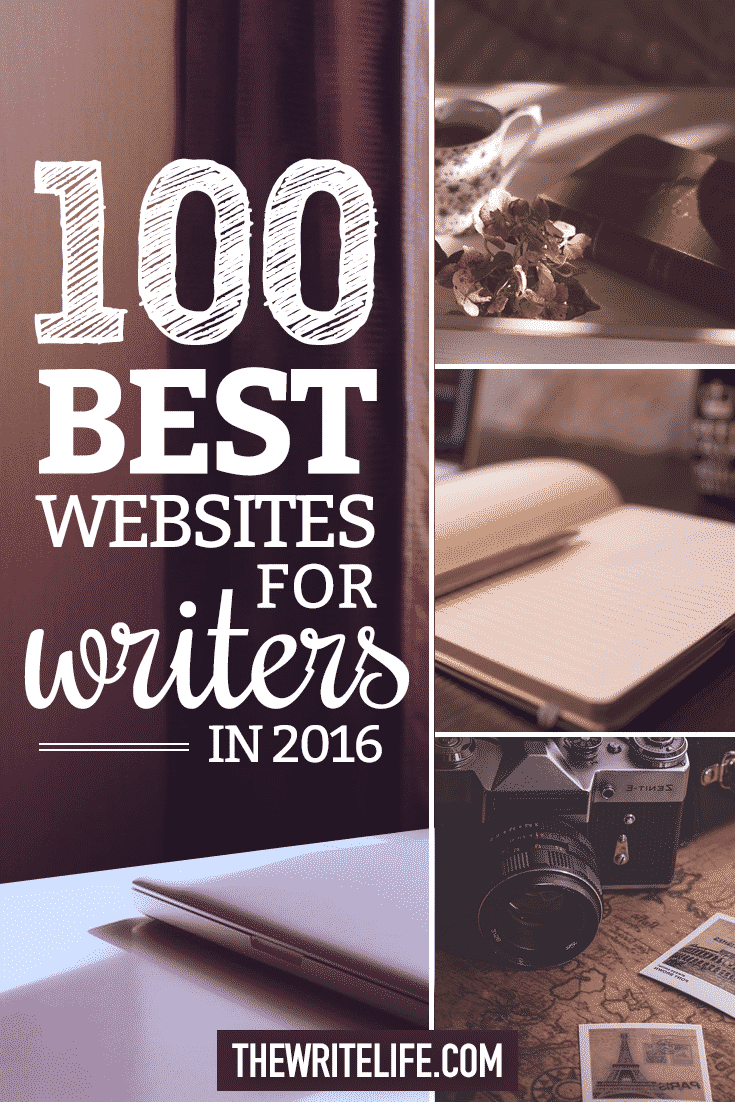
  • The 100 Best Websites for Writers in 2017

    The 100 Best Websites for Writers in 2017

    Editor’s note: Looking for our most updated list of best writing websites? Here’s our list for 2021.

    What do you picture when you imagine yourself writing?

    Are you quietly tapping away on your office desktop computer in the early morning hours? Maybe you’re scribbling new ideas and observations amidst the hustle and bustle of a coffee shop.

    It’s likely that you imagined yourself alone. And that’s not surprising, because when it comes down to actually doing the work, you — the writer — are the one who has to put pen to paper.

    But here’s the thing about great writing: it takes a village.

    They may be your words, but the words you write are a culmination of years of practice, learning from mentors, emulating your favorite authors, workshopping with peers and supporting fellow writers.

    Each year, The Write Life celebrates this “village” by releasing a list of the 100 Best Websites for Writers, and we’re excited to do so again this year.

    Thanks to your suggestions, you’ve helped us curate hundreds of websites to bring you the best of the best.

    Many are tried-and-true favorites previously featured in our 2014, 2015, and 2016 lists, and this year we’re thrilled to feature more than 50 newcomers. 

    Each website featured in this list meets the following criteria:

    • It was recommended by readers of The Write Life
    • It publishes content helpful to writers
    • It has been updated recently and regularly

    We’ve broken our 2017 list into eight categories: Blogging, creativity and craft, editing, freelancing, marketing and platform building, podcasts, publishing and writing communities. For the first time, we are excited to include a category for podcasts, which have proven to be a powerful and growing resource for writers. All sites are listed in alphabetical order within their categories, with numbers for ease of reading (not ranking).

    No matter what your writing goals are, there’s something here for everyone.

    And if you want to start your own website or blog, here’s our step-by-step guide. Your website could be next on our list!

    blogging

    1. Be a Freelance Blogger

    Sophie Lizard teaches you how to take your freelance blogging skills to pro level. Through her blog posts, free community and jobs board, you’ll increase your blogging income and become an expert in your niche.

    Post you’ll like: The Batman vs. Superman Guide to Freelance Blogging

    2. Beyond Your Blog

    Are you working to grow your blog audience? Beyond Your Blog provides practical tips and resources for getting published on other blogs and and in digital publications, so you can tap into new groups of engaged fans.

    Post you’ll like:  8 Things to Avoid When Pitching a Website or Print Publication

    3. Copyblogger

    Take your content marketing, SEO and community building skills to the next level with Copyblogger’s library of free ebooks, blog posts, forums and more. It’s a leading resource for professional blogging from the creators of the Rainmaker Platform for digital marketing.

    Post you’ll like: 10 Content Marketing Goals Worth Pursuing

    4. ProBlogger

    Founder Darren Rowse and the ProBlogger team bring you the latest news and tips to build a better blog. This site offers extensive resources on how to monetize your blog, as well as a job board constantly updated with new blogging opportunities.

    Post you’ll like: 10 Simple Hacks That Will Increase Your Blog Traffic

    5. See Jane Write

    At See Jane Write, founder Javacia Harris Bowser seeks to empower women to be “authors of their own lives and live a life worth writing about.” Consistently recommended by many of our readers, See Jane Write is a great place for bloggers who are looking to grow their platforms and turn their blogs into businesses.

    Post you’ll like: How to Blog Consistently Even When Life Sucks

    6. Aliventures

    Ali Luke provides both practical and motivational advice on writing books, blogging and building a business around your writing. Check out her Writer’s Huddle community and ebooks on blogging.

    Post you’ll like: Should You Be More Business-Like About Your Writing?

    7. Ann Kroeker

    Author and writing coach Ann Kroeker is on a mission to help writers reach their goals by maximizing curiosity, creativity and productivity. Her website is home to numerous blog posts, podcasts and resources for writers.
    Post you’ll like: Write in the Middle of Traveling

    8. Australian Writers’ Centre

    No matter what type of writing you enjoy, the Australian Writers’ Centre has a course for you. Along with a full blog archive, this site offers dozens of online and in-person courses on freelance writing, creativity, novel writing, business writing, blogging and more. Courses start at $97.

    Post you’ll like: Why You Should Write Your Memoir Now, From Patti Miller

    9. Bang2Write

    If you’re a screenwriter, Bang2Write is for you. This site offers tons of advice on how to develop great stories and pitch your scripts, along with best practices for writing research.

    Post you’ll like: 9 Steps To Get Your Spec TV Pilot Written, Edited & Sent Out

    10. Barely Hare Books

    You are the hero of your own novel-writing adventure, and Rae Elliott of Barely Hare Books is here to help you defeat the monster keeping you from writing that fandom-worthy story. With blog posts, a podcast and several ebooks, this site has lots to explore.

    Post you’ll like: 5 Lessons Writers Learn from The Office About Crafting a (Genuinely) Funny Character
    100 best websites for writers 2017

    11. C. S. Lakin’s Live Write Thrive

    Author, editor and writing coach C. S. Lakin loves helping writers get their manuscripts ready for publication. At Live Write Thrive, she writes about proper scene structure, character development, editing and crafting a fantastic story.

    Post you’ll like: 3 Things You Must Have in Your Novel’s First Paragraph

    12. DIY MFA

    The folks at DIY MFA believe you can access the benefits of an Master in Fine Arts without having to go the traditional (expensive) route. It all comes down to a simple but powerful combination: writing with focus, reading with purpose and building your community.

    Post you’ll like: Writing Friends and Where to Find Them

    13. Elizabeth Spann Craig

    Prolific mystery author Elizabeth Spann Craig blogs about all things relevant to a writer’s life, including public speaking, productivity, gaining visibility and connecting with the wider author community. Her weekly roundup of writing articles is a reader favorite.

    Post you’ll like: Tracking Our Recurring Storylines

    14. Eva Deverell

    A passionate writer and creative writing teacher, Eva Deverell offers tons of resources for readers, writers, poets and people who just love learning. With worksheets, blog posts, writing prompts and ebooks, this site offers practical ways to deepen your craft.

    Post you’ll like: How to Write a Novella

    15. Every Writer

    At Every Writer, owner and editor Richard Edwards covers everything you can imagine about writing, including writing tools, website building, and how to overcome writer’s block. He even shares tips on starting a literary magazine. Check out his poetry and writing contests, too.

    Post you’ll like: Grow as a Writer: Critique Your Own Work

    16. Fiction University

    Janice Hardy understands there’s no “right” way to write. So instead of giving advice on what writers should do, she explains how to make industry rules work for you. With new articles and guest columns every day, you’ll gain valuable insight into the book-writing and publishing process.

    Post you’ll like: Why We Should Do Bad Things To Our Characters

    17. How to Write a Book Now

    At How to Write a Book Now, author Glen C. Strathy shares tips on everything about the writing and book publishing process, from where to start, to story model analysis, to creating compelling characters. Readers can also submit their questions about writing.

    Post you’ll like: Novel Writing Ideas: How to Get Them

    18. Inky Girl

    Inky Girl is the place for children’s book writers and illustrators. Debbie Ridpath Ohi shares original comics, interviews with industry experts, and advice on telling unique stories. Her series on writing picture books is a reader favorite.

    Post you’ll like: Why Picture Books Are Important

    19. Journalist’s Resource

    Run by the Harvard Kennedy School’s Shorenstein Center, Journalist’s Resource offers write-ups on the latest scholarly studies, reports and data. This is a great place to find reliable research as well as inspiration for your next freelance article.

    Browse the latest research here.

    20. Knockin’ Books

    The editors at Knockin’ Books are self-described “addicted” to reading, so they’ve created this site to help connect readers and authors. Whether you’re a reader looking for your next favorite book, or a writer looking for a beautiful cover design, you’ll find it at Knockin’ Books.

    Post you’ll like: Ways to sell your self-published book

    21. Lucy Flint and the Lionhearted Writing Life

    After eight years of a love/hate relationship with writing, Lucy Flint went on a mission to explore how writing can be more enjoyable, easy and fulfilling. In her blog posts, she shares tips on how to be more courageous in your writing, stop being stuck and more. Her site is a mini dance party for your writing life.

    Post you’ll like: Three Simple Steps Toward A Yummier, Happier, And Much More Sustainable Writing Life

    22. Market Meditations

    At Market Meditations, Charles Chu documents the experiments and lessons he’s learned in the pursuit of being more productive, successful and effective at the work he does. This is a great blog to follow if you’re looking to raise your potential at work.

    Post you’ll like: Why 95% of Blogs Fail

    23. Positive Writer

    In the pursuit of creating work that matters, all writers get stuck from time to time. Doubts can creep in, and it’s sometimes hard to get back on track. Bryan Hutchinson offers motivating blog posts to help you move beyond writing paralysis and finish the work you set out to create.

    Post you’ll like: The Audacity to Be a Writer

    24. PsychWriter

    At PsychWriter, Tamar Sloan explores the intersection of psychology and writing, specifically as it pertains to character development and reader engagement. This blog covers the art of making your characters and story believable.

    Post you’ll like: Why Readers Read: What every writer needs to know

    25. Re:Fiction

    No matter what kind of fiction writer you are, Re:Fiction welcomes you. This site offers resources to help you at all stages, from getting better at writing, to publishing, to marketing and building your platform. It also offers multiple scholarships for professional editing and critiques each month, on manuscripts of up to 5,000 words.

    Post you’ll like: 6 Tricks to Make You Better at Self-Editing

    26. The Write Practice

    What do all successful writers have in common? Practice. At The Write Practice, Joe Bunting and his team help you develop your writing rhythm and grow into your voice and identity as a writer.

    Post you’ll like: 10 Secrets to Write Better Stories

    27. The Writing Kylie

    Kylie Day’s blog is a great place for those who are in the midst of writing a novel. With tips on outlining and story structure, and a dose of inspirational posts about the writing life, this blog will help you on your path from story idea to complete manuscript.

    Post you’ll like: The Ultimate Guide to Outlining Your Story

    28. Tweetspeak Poetry

    Tweetspeak Poetry is the go-to site for “the best in poetry and poetic things.” Here, readers and writers alike can indulge in beautiful poetry, writing workshops, book clubs and more. This is also a great place to find resources for teaching poetry.

    Post you’ll like: Infographic: How to Write a Ballad

    29. Write or Die

    Writer Mandy Wallace believes that when it comes to writing, you can’t wait to become inspired or for luck to strike. Just “Show up, shut up, and write,” and sooner or later it will all come together. Wallace’s blog documents the writing lessons she’s learned and offers practical guides for upgrading your own writing.

    Post you’ll like: Where to Find Story Ideas So Good, They Practically Write Themselves

    30. Writerology

    The one constant when it comes to writing? It all comes down to the people: you as a writer, your characters and their development, and the audience you seek to connect with. At Writerology, Faye Kirwin combines her expertise in writing and psychology to help you hone your craft, understand people, and write amazing stories.

    Post you’ll like: False Memories In Fiction: How Emotional Scenes Can Create Unreliable Narrators

    31. Writers Helping Writers

    Authors Angela Ackerman and Becca Puglisi are dedicated to creating one-of-a-kind resources that writers will actually use. Their books and blog posts focus on helping writers become better storytellers, and their One Stop For Writers library is teeming with tools for planning, researching and writing your book.

    Post you’ll like: The Subtle Knife: Writing Characters Readers Trust But Shouldn’t

    32. Writers In The Storm

    Just like their characters during perilous times, writers must weather the storm of their profession — and shifting industry tides. Run by a group of authors, the Writers In The Storm blog provides inspiration and tips for writers during all stages of the process.

    Post you’ll like: Honey, I Broke the Writing Process

    33. Writer Unboxed

    Frustrated their analytical articles about books and movies were rejected, founders Therese Walsh and Kathleen Bolton decided to create Writer Unboxed in 2006 so they could freely publish their observations. It has since grown into a thriving community where writers of all levels can contribute their thoughts on the craft of writing.

    Post you’ll like: Creative Work is Performance. Assess Your Creative Health Now.

    34. Write to Done

    Write to Done is all about learning to write well. Founder Mary Jaksch brings the age-old advice to keep writing to a whole new level, noting that it’s not practice that makes you a better writer — it’s practice directed in a positive way.

    Post you’ll like: 201 Ways to Arouse Your Creativity  

    35. Grammar Girl

    You may speak English fluently, but the language can still be quite a mystery. Grammar Girl is the go-to guide for all things “grammar, punctuation, usage, and fun developments in the English language.” She has a popular podcast, too.

    Post you’ll like: 9 Books to Give Your Favorite Language Lover

    36. Kathy Steinemann

    Kathy Steinemann loves words. On her blog, she shares master lists of adjectives and offers tips for avoiding overused words and being more descriptive and original in your writing.  

    Post you’ll like: Over 400 Redundant Words to Avoid In Writing

    37. Scribendi

    Scribendi is focused on the art of editing and proofreading. Their resources for writers cover everything from grammar, to finding inspiration, to the mechanics of writing.

    Post you’ll like: How to Use Social Media to Improve Your English

    38. Comps & Calls

    On the first of each month, Cathy Bryant posts an extensive list of competitions, contests and calls for submission. She notes whether they’re paid or not, for quick skimming. This site is a great one-stop shop for all recent writing opportunities.

    Post you’ll like: Comps and Calls for January 2017  

    39. Elna Cain

    Elna Cain believes you don’t need experience to be a successful freelance writer — you just need a passion for writing. On her blog, she shares tips and strategies to help new freelance writers succeed.

    Post you’ll like: How to Be a Freelance Writer (Without Leveraging Your Experience or Contacts)

    40. Freelancer FAQs

    You have questions, they have answers. Team members and guest contributors at Freelancer FAQs address all the things you’ve ever wanted to know about freelance life, including marketing, getting started, recommended resources, money management and more.

    Post you’ll like: How Does a Freelance Writer Stay Organized When They’re Too Busy?

    41. Freelance to Freedom

    You love to write. But in order to be a successful freelancer, you need to work those business muscles. That’s where Freelance to Freedom comes in. Founder Leah Kalamakis offers articles and e-books that teach everything from client management to setting up your business website.

    Post you’ll like: 6 Reasons your Website is Costing you your Freelance Writing Clients (and how to fix it)

    42. Freelance to Win

    At Freelance to Win, Danny Margulies wants you to stop compromising and start living a life of freedom — all by building a freelance career. Danny is an expert at landing gigs on Upwork, and his blog shares all the latest tips on how to use this platform for ultimate success.

    Post you’ll like: 7 Surprising Upwork Proposal Mistakes I See Every Day

    43. Freelance Writing

    It’s been around since 1997 and is still going strong: Freelance Writing has an extensive archive of articles, tutorials, media and resources all geared to helping you build a successful career. Its jobs listings get updated daily, so you’re always in the know about new opportunities.

    Post you’ll like: 6 Freelance Writing Niches That Are Often Overlooked

    44. FundsforWriters

    Hope Clark believes writing can be a realistic career for all writers. Her weekly newsletter lists the best competitions, grants and other well-paying markets, and her platform has grown to include a blog and a bi-weekly paid newsletter with even more high-paying opportunities per issue.

    Post you’ll like: No Room for Snark

    45. Horkey Handbook

    Within six months of starting her freelance writing career, Gina Horkey was earning $4,000 a month. Now, she wants to help others achieve their dreams of making a real living off freelance writing.

    46. LittleZotz Writing

    Lauren Tharp has found a way to write as a freelancer full time and is dedicated to helping other writers do the same. With bi-monthly newsletters, a blog, and a podcast, LittleZotz is a great source of practical tips for your freelance life.

    Post you’ll like: 12 Common Freelance Writer Mistakes

    47. Make a Living Writing

    At Make a Living Writing, Carol Tice helps writers move up from low-paying markets and earn more from their work. With her blog, e-books and paid community, you’ll find awesome advice, support and resources to grow as a freelance writer.

    Post you’ll like: How I Made 6 Figures as a Freelance Writer

    48. Pen & Pro$per

    At Pen & Pro$per, Jennifer Brown Bank shares more than 15 years of professional writing experience to help others reach financial success with their writing. As one The Write Life reader said, “With an outstanding array of diverse topics, tips and tricks of the writing profession, this is a blog well worth bookmarking!”

    Post you’ll like: The Definitive Guide to When to Write for Free

    49. Untamed Writing

    “Your life is YOUR life. You should be able to do whatever you want with it.” So says Karen Marston, founder of Untamed Writing, her internet home for helping people build a freelance writing career they love without sacrificing their freedom. You’ll find a full archive of blog posts, resources and courses to develop your writing skills, fearlessly approach clients, and maintain a successful career.
    best websites for writers

    50. Writers in Charge

    With over 600 posts in its archives, Writers in Charge is filled with resources and leads for freelance writers who are looking to be well-compensated for their work. Don’t miss founder Bamidele Onibalusi’s master list of 110 websites that pay writers.

    Post you’ll like: The Ultimate List of Magazines that Pay Writers

    51. Writers Weekly

    Around since 1997, Writers Weekly is a tried-and-true resource for freelance writers. It offers regular updates on paying markets, as well as expert interviews and success stories.

    Post you’ll like: How To Be A Paid Freelance Writer While Attending School

    52. Writing Revolt

    At Writing Revolt, Jorden Roper is leading a revolution to help freelance writers and bloggers make serious money. Her site is filled with actionable articles, courses and resources that will help you become better at writing, pitching and landing great clients.

    Post you’ll like: How I Built a $5,000/mo Freelance Writing Business in 4 Months

    53. HubSpot

    For business, sales and marketing-focused writers, HubSpot is a great place to stay on top of the latest research, insights, and strategies for connecting with your audience and making them fall in love with your brand.

    Post you’ll love: How to Validate Your Blog Post Topics: A 3-Step Process

    54. Kikolani

    Founder Kristi Hines brings you the latest strategies, trends and how-tos in digital marketing. Kikolani is a must-have resource for business and professional bloggers who want to make their brands stand out.

    Post you’ll like: How to Develop Your Blog While Stealing Content From Others

    55. MarketingProfs

    If you’re looking to grow your expertise in marketing communications, MarketingProfs is the place to go. It offers articles, podcasts, training events and more, so you can learn to use strategic, data-driven marketing.

    Post you’ll like: Five Steps to Integrating Your Blog, Social Media, and Email Marketing

    56. Seth Godin

    Seth Godin’s blog might not be specifically about writing, but his daily bits of wisdom on business, marketing and life will help you approach your work in new ways. His posts never fail to inspire an energy to “Go, make something happen.”

    Post you’ll like: Pumpkin Seeds

    57. Shelley Hitz

    Shelley Hitz believes everyone has a message, and she’s on a mission to help you reach your target audience and build your author platform. With her blog posts, podcast and Author Audience Academy, you’ll find tons of content on book writing, publishing and marketing.

    Post you’ll like: How to Set Up Your Goodreads Author Profile (And Why You Should!)

    58. The Creative Penn

    Author Joanna Penn has built a best-selling writing career, and she wants to help you do it, too. Her site offers a wealth of resources on self-publishing and platform-building — from her articles and ebooks to her popular podcast library of author interviews.

    Post you’ll like: Social Media Tips for Writers with Frances Caballo

    59. Beautiful Writers Podcast

    On the Beautiful Writers Podcast, host Linda Sivertsen features authors and thought leaders about their writing, business and publishing adventures. With a touch of spirituality, these conversations are great listens for those interested in creative contemplation.

    Episode you’ll like: Brené Brown: Daring to Create Greatly

    60. Create If Writing

    We all love writing, but sometimes platform building and promotion don’t feel as natural. That’s where Create If Writing comes in; host Kirsten Oliphant shares tips and tools on how to build an authentic platform for your creative brand.

    Episode you’ll like: How NOT to Be Smarmy in Facebook Groups

    61. I Should Be Writing

    With author interviews and a huge archive, I Should Be Writing chronicles the journey to becoming a professional author. Conversations focus primarily on speculative fiction and traditional publishing.

    Episode you’ll like: Crippling Fear

    62. Rocking Self Publishing

    Looking to be a published indie author? This podcast is for you. Each week host Simon Whistler interviews some of the top names in self-publishing, so you can create success for yourself.

    63. Science Fiction & Fantasy Marketing Podcast

    On the Science Fiction & Fantasy Marketing Podcast, the hosts interview successful authors, engage in group discussions and dive deep into specific writing genres and niches. This is a smart listening option for those looking for solid discussion around the science fiction and fantasy markets.

    Episode you’ll like: Succeeding in the Super Hero Genre

    64. Self Publishing Formula

    Hosted by a writer who’s just starting out and another who is a best-selling author, the Self Publishing Formula podcast features interviews with some of the biggest names in the self-publishing game. Listen for tips on writing, publishing, marketing and more.

    Episode you’ll like: Dealing With Criticism from Editors and Readers with Dr. Debra Holland

    65. Story Geometry

    Ben Hess is an award-winning producer, director and screenwriter. After hitting a creative wall, he decided to start Story Geometry, where he interviews esteemed writers on their craft.

    Episode you’ll like: The Deep End

    66. Story Grid

    On the Story Grid podcast, author Shawn Coyne and “struggling” writer Tim Grahl discuss the art and science of writing a story that resonates. There’s a blueprint for great novels — and these co-hosts seek to crack the code.

    Episode you’ll like: How to Write a Great Love Story

    67. The Dead Robots’ Society

    Throughout the nearly 400 episodes in its archive, the many hosts of The Dead Robots’ Society gather to discuss their writing journeys and offer tips on the writing process. They also  occasionally invite guests on the show.

    Episode you’ll like: Being a Career Writer

    68. The Worried Writer

    On The Worried Writer podcast, Sarah Painter investigates how authors overcome anxiety, distractions and worried feelings on their way to publishing success. Listen to this podcast if you’re looking for practical advice on managing self doubt.

    Episode you’ll like: Siobhan Curham: ‘Keep Your Life Interesting

    69. The Writer Files

    On The Writer Files, host Kelton Reid uncovers the secrets of productivity and creativity of some of the most well-known writers. If you find yourself stuck, plagued with writer’s block or just need to get those writing gears turning again, this podcast is for you.

    Episode you’ll like: How Wired Magazine’s Senior Maverick Kevin Kelly Writes

    70. Writer 2.0

    On Writer 2.0, A. C. Fuller sits down with bestselling authors and publishing experts like literary agents and book marketers. This show offers great content around both traditional and self-publishing, as well as the writing journey.

    Episode you’ll like: The NY Publishing Scene with Susan Shapiro

    71. Writing Class Radio

    This show brings you inside an actual writing class, where you can hear other people tell their stories, witness breakthroughs, and hear the ins and outs of learning to write well.

    72. Writing Excuses

    In these weekly 15-minute episodes, writers Brandon Sanderson, Mary Robinette Kowal, Howard Tayler, and Dan Wells talk about all things writing. They often have season-long themes — check out season 10 for a masterclass-type season on creating a story.

    Episode you’ll like: Seriously, Where Do You Get Your Ideas?

    73. Your Creative Life

    On the Your Creative Life podcast, co-hosts Vanessa Carnevale and Kimberley Foster help writers connect to their creativity. With discussions on publishing, platform building and different genres of writing, this is a choice place to find inspiration.

    74. Anne R. Allen

    Publishing veterans Anne R. Allen and Ruth Harris created this online space to offer wisdom and tips for navigating the increasingly complex (and sometimes predatory) publishing world. Whether you’re an indie author or looking to land a traditional publishing deal, check out their archives and resources.

    Post you’ll like: Dreaming of a Writing Career? 6 Things New Writers Can do NOW

    75. Better Novel Project

    Christine Frazier takes a scientific approach to writing a best-selling novel. She deconstructs popular books to pinpoint the common elements they share. These findings are then incorporated into the “master outline” for a better, research-backed novel. Follow along for insights on plot, word counts and character development.

    Post you’ll like: How to Create a Remarkable Villain (Beyond the Cliches!)

    76. Go Teen Writers

    Stephanie Morrill knows a love of writing often starts at a young age. That’s why she created Go Teen Writers: to provide encouragement, community and wisdom to aspiring teen writers who want to learn more about how to finish a novel and get it published.

    Post you’ll like: What Teen Writers Should Know About Pitching Their Book

    77. Helping Writers Become Authors

    Consider K. M. Weiland your writing and publishing mentor. With hundreds of blog posts, instructional ebooks, and an exclusive e-letter, her website is the perfect place to find the answers to all your questions. She also responds to every email she receives (really!) about writing, publishing and marketing fiction.

    Post you’ll like: My Writing Process: How I Use Scrivener to Outline My Novels

    78. Jane Friedman

    Former publisher Jane Friedman explores the intersection of publishing, authorship and the digital age. With more than 15 years in the industry, Friedman knows her stuff — and her blog is a wealth of information on how to embrace “the future of authorship.”

    Post you’ll like: 5 Observations on the Evolution of Author Business Models

    79. Jenny Bravo Books

    Author Jenny Bravo offers personal anecdotes and guidance for writers who want to take a leap into the publishing world. From her blog full of tips to her “Blots and Plots Party” Facebook group, to her Busy Writers Starter Kit, Jenny is here to help you realize your dream of writing a book.

    Post you’ll like: 5 Ways to Create Your Own Writing Space

    80. My Story Doctor

    At My Story Doctor, author David Farland offers tips and workshops on how to write your story and get it published. He offers strategic advice on the business of writing, covering topics like how to get great deals and make the most of your publishing opportunities.

    Post you’ll like: Make the Bookstores Your Partners

    81. Nail Your Novel

    At Nail Your Novel, bestselling ghostwriter and book doctor Roz Morris shares her best traditional and self-publishing tips as well as musings on the writing process. Be sure to check out her radio show “So You Want to Be a Writer?”

    Post you’ll like: 5 Things That Established Authors Would Tell New Writers

    82. Novel Publicity

    The team at Novel Publicity believes every story should be told, and have its own platform and loyal fans. With that core belief in mind, it provides guidance on writing, marketing and publishing. Posts cover everything from social media strategy and book design to finances and author blogging.
    Post you’ll like: Money, Money, Money: The Finances of Publishing

    83. Self-Publishing School

    Chandler Bolt believes everyone has a book inside them. With proven systems and strategies, the Self-Publishing School blog will walk you through writing and publishing your book, even if you don’t even know what you want to write about yet!

    Post you’ll like: Find a Book Idea That Sells: 3 Things You Must Check Before You Write Your Book

    84. She’s Novel

    It took Kristen Kieffer two and a half years to finish her first draft — then she realized she had made every mistake in the book. She vowed not to let these personal lessons go to waste, so she created She’s Novel, a blog and resource hub that helps writers more-easily navigate the journey of crafting brilliant novels.

    Post you’ll like: How to Write a Book Series

    85. Standoutbooks

    You’ve written your book. Now what? Standoutbooks has tons of articles, templates, tools and resource recommendations for getting your book published and marketed to the max. While you’re there, grab your free Book Marketing Plan and Press Release templates.

    Post you’ll like: Understanding Cultural Trends Can Help You Write a Bestseller

    86. The Book Designer

    At The Book Designer, Joel Friedlander uses his experience in book design, advertising and graphic design to help writers “build better books” and get published. Along with his extensive blog archive, check out his book design templates and Book Launch Toolkit.

    Post you’ll like: 5 Favorite Free Fonts for Interior Book Design

    87. The Steve Laube Agency

    What better way to get book publishing advice than from an agent himself? From resource recommendations to eight years (and counting!) of blog archives, The Steve Laube Agency website is full of advice for writers who are taking their first steps into the world of publishing.

    Post you’ll like: Who Decides to Publish Your Book?

    88. Writer’s Digest Editor Blogs

    Writer’s Digest is home to many resources, competitions, and communities. Their editor columns are quite popular, and we particularly like The Write Life contributor Chuck Sambuchino’s Guide to Literary Agents, featuring all types of information on finding literary agents, sending query letters, building an author platform and marketing your book.

    Post you’ll like: 5 Things I Learned on Deadline

    89. Writer’s Relief

    For more than 20 years, Writer’s Relief has helped creatives successfully submit their writing to literary journals, book publishers, agents and more. The staff’s blog is full of publishing tips, and they also have a paid-subscriber-only classifieds section listing contests, conferences and residences.

    Post you’ll like: Top Ten Ways To Annoy Literary Agents

    90. Chronicles

    Chronicles is a thriving community for science fiction and fantasy writers. Community members gather to discuss favorite books, authors and common themes in science fiction and fantasy writing.

    Join the Chronicles community

    91. Fiction Writing

    The Fiction Writing Facebook group is a community of nearly 10,000 writers. Here, you can post your writing for critique or reviews, and veteran members can announce details about upcoming book releases and published pieces.

    Join Fiction Writing here

    92. Inkitt

    Inkitt is a data-driven book publisher and community where writers can share their work and find an audience for free, even if their novel is not yet finished. Inkitt’s algorithm analyzes reading behaviors to understand whether a novel has a strong potential to become a big success. If readers love your work, Inkitt will offer you a publishing deal.

    Check out Inkitt’s community groups

    93. Insecure Writer’s Support Group

    Whether you’re just beginning to write or a best-selling pro, the Insecure Writer’s Support Group is here to help you overcome whatever doubts and insecurities might keep you from being your best.

    Join Insecure Writer’s Support Group

    94. Now Novel

    The Now Novel program offers a structured, straightforward way to get your book done. With a step-by-step process that takes the guessing out of what to do next, personalized mentorship and community groups for even more support, you’ll be an author in no time.

    Join Now Novel

    95. Prose

    Prose is a social network platform for writers who want to focus on the work — not the superficiality of social media. This is a great place to publish your work, connect with other authors, and participate in writing challenges.

    Join Prose

    96. She Writes

    Over 27,000 writers of all levels of expertise have joined this buzzing community, founded by author Kamy Wicoff. At She Writes, you can create your own profile, build your network, share your work, get expert advice and feedback and discuss all types of topics in the forum.

    Post you’ll like: 5 Tips for Turning Your Career into a Novel

    97. Talentville

    Talentville is the online destination for screenwriters and storytellers. This community focuses on bringing together people across the industry — from novice script writers to top agents and producers — so high-quality work can be easily discovered.

    Join Talentville

    98. The Masters Review

    This community is focused on supporting emerging writers. They publish works from writers who don’t have published novels and haven’t been featured on larger platforms yet. Be on the lookout for their annual anthology, which features the 10 best emerging writers in the country.

    Post you’ll like: Submission Strategies

    99. Two Drops of Ink

    Two Drops of ink is a literary blog accepting submissions from writers of almost any genre. The editors also post book reviews and blog posts about writing and the publishing industry.

    Post you’ll like: Memory Lane: Memoir and Reverse Writing

    100. Wattpad

    At Wattpad, “Stories are made social.” Hailed as the world’s largest community of writers and readers, members are free to post and read original stories and engage in conversation with each other. This is a great platform to build buzz around your writing.

    Join the community here

    What writing sites would you add to this list? Let us know in the comments below!

    This post contains affiliate links. That means if you purchase through our links, you’re supporting The Write Life — and we thank you for that!
    links
    no
    1
    links
    no
    1

  • Blogging Tips: 5 Resolutions to Make for Your Blog This Year

    Blogging Tips: 5 Resolutions to Make for Your Blog This Year

    The world of blogging moves fast. From social media trends to SEO algorithm changes, bloggers have to keep up.

    That’s why it’s smart to re-evaluate your blog at least once a year.

    Take a look at where you’ve been, where you’d like to be and how you’re going to get there.

    Don’t forget to take into account ever-changing factors in the blogging world, from website design to blog topic trends.

    Start by considering these five New Year’s resolutions for your blog in 2018.

    1. Get visual

    More and more content marketers are moving from text-only content to visual content.

    Convince and Convert predicts that businesses and bloggers will become more creative with their content in 2018. Not only do people love visual content, but search engines are becoming better at analyzing images and using them to determine what your site’s about.

    For you, this means using more images, gifs and cinemagraphs on your blog and on social media.

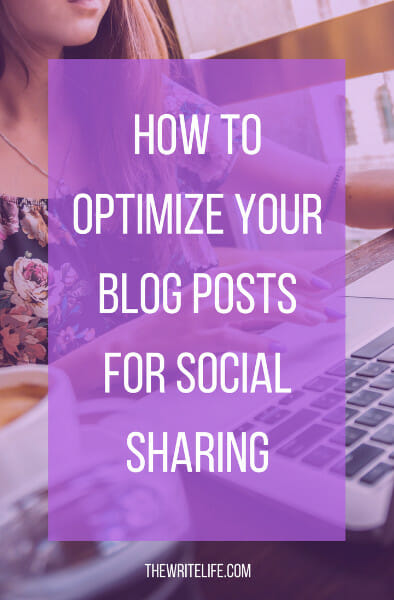
    This year, it’s also predicted that site owners will move away from the stock photo in favor of custom photography to stand out from the crowd. A great goal to start with is using custom photos for each blog post, with each one designed for social sharing.

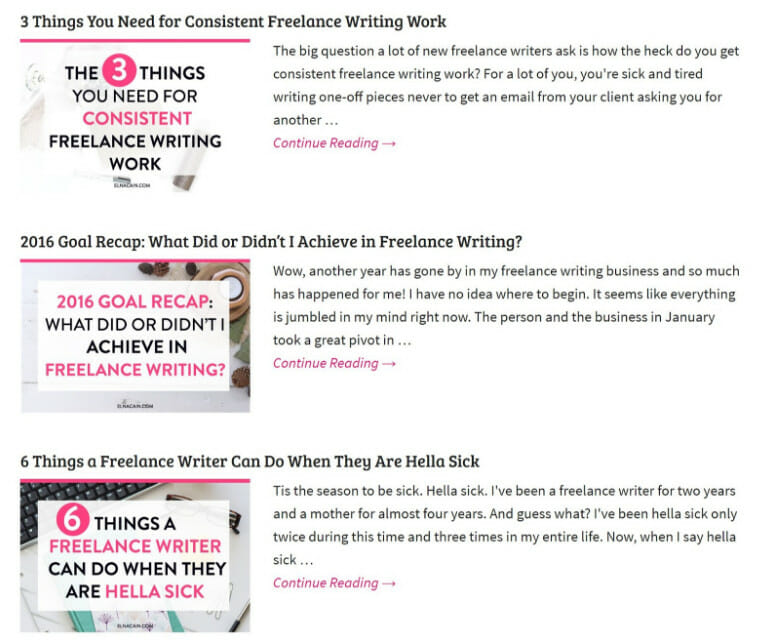
    Freelance writer Elna Cain’s blog is the perfect example of how to design images for social sharing. (Notice how the design is consistent with her branding, too!)

    2. Start a video series

    As long as you’re moving to a more visual blog, you might consider starting a scheduled video series. Video is hot.

    According to the statistics:

    • Facebook sees 8 billion video views per day.
    • Compared to text and images combined, social video gets 1,200 percent more shares.
    • Marketers who use video grow their revenue 49 percent faster than those who don’t.
    • By 2018, 79 percent of all internet traffic will come from video.

    Does that mean you have to swap your blog out for a vlog? Of course not.

    But seeing as Google favors videos (since they own YouTube) and it can improve SEO, incorporating video into your blogging strategy can help grow your traffic and engagement.

    If you don’t have one already, consider starting a YouTube channel and posting on relevant topics at least once a month. Another idea is to begin scheduling Facebook Live videos to engage your current fans.

    3. Write more niche content

    With a flood of online content hitting readers daily, it doesn’t pay to rehash old topics.

    To get noticed, you have to dig deep and write to a niche audience.

    blogging tips

    We’ve all read generic posts on beating writer’s block, haven’t we? Instead of writing about “Top 10 Ways to Beat Writer’s Block,” dig into one technique or tool. Talk about how to use yoga to beat writer’s block or how to teach yourself to lucid dream so you can brainstorm in your sleep.

    Be specific.

    Here are some ideas to help you come up with niche-focused ideas:

    • Look through lists you’ve written before. Recycle old ideas by focusing on a single list item.
    • Write about how a specific tool, app or technique can help solve a certain problem.
    • Tell true stories or highlight unique case studies.
    • Write timely pieces focusing on current news, trends, or developments in your industry.

    Be sure to keep a running list of ideas in Trello, on your phone or in a good old-fashioned notebook.

    4. Improve engagement

    Every blogger wants more followers, more comments, more newsletter subscribers, etc.

    Increasing engagement should be an ongoing goal of yours to grow your blog and increase profit (assuming you monetize your blog or want to in the future).

    The difference this year is that you’ll want to start measuring engagement if you aren’t doing so already. Things you can measure include:

    • Comments
    • Social shares
    • Social followers
    • Newsletter subscribers
    • Inbound links

    This year, measure it! If you want more comments on your blog, take a look at how many you’re averaging per post. Consider how much you want to average, when you’d like to achieve that goal, and how you’ll get there. For example, you might include questions at the end of every post and make a point to respond to every comment personally.

    Also think about how these smaller goals play into the overall goal of your blog. Are those comments turning people into leads and then into customers and boosting your profits?

    5. Set a work schedule

    As a blogger, it’s easy to get wrapped up in being online 24/7, but you have to take care of yourself as well as your blog. If you don’t, your blog will suffer.

    Make it a point to set boundaries this year so you can achieve work-life balance.

    That means setting a time that you’ll shut down your computer every night. It means taking a lunch break instead of eating in front of the computer. It means giving yourself permission to step away from the internet on the weekends and spend time with your family.

    This year, outline a work schedule, whether you blog full-time or are a hobby blogger. This will keep you from burning out so you’re more productive when you’re blogging.

    Remember when setting goals that they should be SMART: specific, measureable, achievable, realistic, and timely.

    It helps to write down your goals and share them with someone, whether it’s with a writing partner or your blog followers. Stay accountable by sharing your milestones and achievements with those same people.

    Start by sharing your 2018 blogging goals with us. Comment below with a specific goal you’d like to achieve by the end of 2018.

  • The 100 Best Websites for Writers in 2016

    The 100 Best Websites for Writers in 2016

    Editor’s note: Looking for our most updated list of best writing websites? Here’s our list for 2021.

    Internet overwhelm is real, guys. How many unread articles and blog posts do you have in your RSS reader? And what about those Facebook and Twitter feeds?

    How do we keep track of it all? As writers, we want to keep up with the latest industry news, advice and opportunities, but we don’t have time to sift through everything happening in the online world.

    That’s why we created this year’s list of the 100 Best Websites for Writers. Thanks to your suggestions, you’ve helped us curate hundreds of websites to bring you the best of the best. Many are tried-and-true favorites previously featured in our 2014 and 2015 lists, and we’re excited to have dozens of newcomers to showcase this year.

    No matter what you want to accomplish in 2016, we’re sure you’ll find quality inspiration and resources.

    We’ve broken this year’s list into seven categories: Blogging, entrepreneurship, creativity and craft, freelancing, marketing, publishing, and writing communities. All sites are listed in alphabetical order within their categories, and the numbers are for easy tracking (not ranking).

    And if you’re looking to keep up with these sites on a daily basis, here’s an easy way to do that: we’ve compiled a Twitter list of all the websites in this post. Click here to subscribe via Twitter.

    Warning: this list may inspire you to start your own website! If you want to start your own website or blog, here’s our step-by-step guide.

    Sit back and explore. Cheers to the amazing resources you’ve helped us collect!

    blogging

    1. Be a Freelance Blogger

    Sophie Lizard is here to teach you how to take your freelance blogging skills to pro level. Through her blog posts, free community and jobs board, you’ll be able to increase your blogging income and become an expert in your niche.

    Post you’ll like: The Batman vs. Superman Guide to Freelance Blogging

    2. Beyond Your Blog

    Are you working to grow your blog audience? Beyond Your Blog provides practical tips and resources for getting published on other blogs and and in digital publications, so you can tap into new groups of engaged fans.

    Post you’ll like:  8 Things to Avoid When Pitching a Website or Print Publication

    3. Boost Blog Traffic

    In the big blogosphere, it’s hard to stand out and let your voice be heard over the noise. Jon Morrow and the Boost Blog Traffic team offer a wealth of resources to increase traffic to your site and build community — without sacrificing quality content.

    Post you’ll like: The Ultimate Guide to Writing Irresistible Subheads

    4. Copyblogger

    Take your content marketing, SEO and community building skills to the next level with Copyblogger’s library of free ebooks, blog posts, forums and more. It’s a leading resource for professional blogging from the creators of the Rainmaker Platform for digital marketing.

    Post you’ll like: 10 Content Marketing Goals Worth Pursuing

    5. ProBlogger

    It’s a trustworthy blog about how to blog. Founder Darren Rowse and the ProBlogger team bring you all the latest news and tips to build a better blog. This site offers extensive resources on how to monetize your blog as well as a job board constantly updated with new opportunities.

    Post you’ll like: 10 Simple Hacks That Will Increase Your Blog Traffic

    6. Sark e-Media

    With practical and motivational articles and a free 30-day blogging challenge, Sarah and Kevin Arrow help bloggers gain confidence in their writing so they can get the recognition and reach they deserve.

    7. The Daily Post

    You’ve picked out a website name, a theme, and have your WordPress site all set up — now what? At The Daily Post, the WordPress team helps you navigate your growth as a professional writer, with daily writing prompts, interviews with successful bloggers, writing and photo challenges, and WordPress tips.

    Post you’ll like: Writing About Books, Movies, Music: Quick Tips

    creativityandcraft

    8. Aerogramme Writers’ Studio

    Aerogramme Writers’ Studio keeps you up to date on writing news and opportunities, including contests, calls for submission, and MFA programs. The blog also contains tons of articles on the art of writing.

    Post you’ll like: Who Is Your Boo Radley? Finding Characters Who Motivate You To Write

    9. Ann Kroeker

    Author and writing coach Ann Kroeker is on a mission to help writers reach their goals by maximizing curiosity, creativity and productivity. Her website is home to numerous blog posts, podcasts and resources for writers.

    Post you’ll like: Write in the Middle of Traveling

    10. A Writer’s Path

    Author Ryan Lanz’s website is a wealth of information for aspiring authors. His blog features frequent guest posts, and his Writer’s Toolbox is constantly updated with his favorite picks for websites, blogs, music, apps and people.

    11. Bane of Your Resistance

    Using research in the creative process and neuroscience, Rosanne Bane takes on the big issue of writing resistance in all its forms: writer’s block, procrastination, perfectionism and more. Her weekly posts offer science-backed fixes to common problems for writers.

    Post you’ll like: Momentum Beats Writer’s Block Every Day

    12. Brain Pickings

    Maria Popova created Brain Pickings to document her intellectual, creative and spiritual growth. It’s an exploration into the brilliant discoveries of different disciplines, and how we can “cross-pollinate” these ideas to move us forward in creative thinking.

    Post you’ll like: How to Save Your Soul: Willa Cather on Productivity vs. Creativity, Selling Out, and the Life-Changing Advice That Made Her a Writer

    13. C. S. Lakin’s Live Write Thrive

    Author, editor and writing coach C. S. Lakin loves helping writers get their manuscripts ready for publication. On Live Write Thrive, she writes about proper scene structure, character development, editing and crafting a fantastic story.

    Post you’ll like: 3 Things You Must Have in Your Novel’s First Paragraph

    14. Elizabeth Spann Craig

    Prolific mystery author Elizabeth Spann Craig blogs about all things relevant to a writer’s life, including public speaking, productivity, gaining visibility and connecting with the wider author community. Her weekly roundup of writing articles is also a reader favorite.

    Post you’ll like: Tracking Our Recurring Storylines

    15. Fiction University

    Janice Hardy understands that there’s no “right” way to write. So instead of giving advice on what writers should be doing, she explains how you can make industry rules work for you. With new articles and guest columns every day, you’ll gain valuable insight into the book-writing and publishing process.

    Post you’ll like: Why We Should Do Bad Things To Our Characters

    16. Ink and Quills

    With more than 10 years of studying the craft of writing under her belt, Kaitlin Hillerich created Ink and Quills to help other writers reach their novel-writing goals and tell beautiful stories. With blog posts, worksheets, ebooks and courses, there’s tons to explore.

    Post you’ll like: How to Create Life-like Characters in 6 Steps

    17. Inky Girl

    Inky Girl is the place for children’s book writers and illustrators. Debbie Ridpath Ohi shares original comics, interviews with industry experts, and advice on telling unique stories. Her series on writing picture books is a reader favorite.

    Post you’ll like: Why Picture Books Are Important

    18. KidLit411

    KidLit411 is the ultimate place for children’s writers and illustrators. Founders Elaine Kearns and Sylvia Liu curate the latest in the industry, including new blogs, conferences, awards, writing challenges, publishing resources. They also post weekly author and illustrator interviews and have a thriving facebook community.

    Post you’ll like: The Weekly 411

    19. Live Write Breathe

    Live with passion, write well, and remember to breathe. These are the core principles of author Janalyn Voigt’s site, where she reminds aspiring authors that only when we lead a passionate life can we properly fuel our writing and succeed.

    Post you’ll like: How to Make Time to Write a Novel

    20. Positive Writer

    In the pursuit of creating work that matters, all writers get stuck from time to time. Doubts can creep in, and it’s sometimes hard to get back on track. Bryan Hutchinson offers motivating blog posts to help you move beyond writing paralysis and finish the work you set out to create.

    Post you’ll like: The Audacity to Be a Writer

    21. ProWritingAid

    The ProWritingAid blog is all about transforming good writing into great writing. From grammar tips, writing techniques, and software recommendations, this blog is a great resource if you’re looking to polish your prose.

    Post you’ll like: 5 Tricks for Writing Fast Without Losing Quality

    22. Script

    For more than 15 years, Script has been the top place to go for inside information on writing for film and television. With how-to articles, interviews, podcasts, influencer columns, webinars, courses and resource directories, you’ll find everything you need to keep up with the industry.

    Post you’ll like: Choosing Projects: Which Screenplay Should I Write Next?

    23. Susan Dennard

    In her blog and newsletter, author Susan Dennard shares her secrets: from planning your novel and  maximizing productivity, to facing writing fears and getting published.

    Post you’ll like: Maintaining Passion for a Story

    24. The Write Practice

    The number one thing all successful writers have in common? Practice. At The Write Practice, Joe Bunting and his team help you develop your writing rhythm and grow into your voice and identity as a writer.

    Post you’ll like: 10 Secrets to Write Better Stories

    25. Witty Title Here

    Witty Title Here is the blog “For female writers who give a damn,” offering writing advice, inspiration, writer spotlights, and more — all with a feminist twist. This site also publishes reader-submitted pieces and is a great place for writers who are just starting out and finding their voice.  

    26. Write or Die

    Writer Mandy Wallace believes that when it comes to writing, don’t wait to become inspired or for luck to strike. Just “Show up, shut up, and write,” and sooner or later it will all come together. Wallace’s blog documents the writing lessons she’s learned and offers practical guides for upgrading your own writing.

    Post you’ll like: Where to Find Story Ideas So Good, They Practically Write Themselves

    27. Writers Helping Writers

    Authors Angela Ackerman and Becca Puglisi are dedicated to creating one-of-a-kind resources that writers will actually use. Their books and blog posts focus on helping writers become better storytellers, and their One Stop For Writers library is teeming with tools for planning, researching and writing your book.

    Post you’ll like: The Subtle Knife: Writing Characters Readers Trust But Shouldn’t

    28. Writers In The Storm

    Just like their characters during perilous times, writers must weather the storm of their profession — and shifting industry tides. Run by a group of authors, the Writers In The Storm blog provides inspiration and tips for writers during all stages of the process.

    Post you’ll like: Honey, I Broke the Writing Process

    29. Writer Unboxed

    Frustrated their analytical articles about books and movies were rejected, founders Therese Walsh and Kathleen Bolton decided to create Writer Unboxed in 2006 so they could freely publish their observations. It has since grown into a thriving community where writers of all levels can contribute their thoughts on the craft of writing.

    Post you’ll like: Creative Work is Performance. Assess Your Creative Health Now.

    30. Write to Done

    Write to Done is all about learning to write well. Founder Mary Jaksch brings the age-old advice to keep writing to a whole new level, noting that it’s not practice that makes you a better writer — it’s practice directed in a positive way.

    Post you’ll like: 201 Ways to Arouse Your Creativity  

    100best2016

    entrepreneurship

    31. Author Media

    A writer’s website should be robust enough to support their growing online platform, but also simple to use. The team at Author Media is made of web designers, coders, and social media managers who share tips, resources, and plug-ins for fantastic author websites.

    Post you’ll like: 7 Ways Author Websites Irritate Readers (And What to Do About It)

    32. High-Income Business Writing

    In the High-Income Business Writing podcast and blog, Ed Gandia brings you everything you need to know about building a successful career in commercial writing. With over a decade of experience, he lets you in on the strategies and secrets of various  industries so you can find great clients and command top fees.

    Post you’ll like: Why You Should Start a Newsletter (and How to Keep it From Being a Drag)

    33. Men with Pens

    In the world of business, content is king — and that means your content creation, blogging, and online marketing have to be on point. Men with Pens, led by James Chartrand, has over 1,000 blog posts to help with all your content marketing, website-writing and small-business needs.

    Post you’ll like: 7 Simple Ways to Write a List Post That Gets Read

    34. Paid to Exist

    Jonathan Mead at Paid to Exist believes you can and should get paid for doing the things you’re passionate about. His blog, training programs and resource “backpack” can help you create a career you love on your own terms.

    Post you’ll like: Why quitting your job won’t solve all your problems

    35. Penelope Trunk

    Penelope Trunk has founded four startups, and she knows a thing or two around building community. Read her blog for life advice, career advice, and everything inbetween.

    Post you’ll like: How to pick a career you’ll like

    36. Productive Flourishing

    Productive Flourishing is the place for “doers,” the people who are ready to use their creative talents to help themselves and the world around them. At Productive Flourishing, you’ll learn about the new world of work and how to thrive in it.

    Post you’ll like: Clarity, Commitment, and Community: The 3Cs of Successful Thought Leaders

    37. Riskology

    To be a great entrepreneur and make your mark in this world, you have to be able to own who you are and believe in yourself. The team at Riskology presents science-backed strategies for embracing who you are and going for your goals.

    Post you’ll like: Law of Equal Effort: How to Do Big Things Without Burning Out

    38. Seth Godin

    Seth Godin’s daily bits of wisdom on business, marketing and life help you approach your work in new ways. His posts never fail to  inspire an energy to “Go, make something happen.” No matter your industry, Godin’s blog is not to be overlooked.

    Post you’ll like: Pumpkin Seeds

    39. Side Hustle Nation

    At Side Hustle Nation, you’ll learn how to take your tiny entrepreneurial streak and propel yourself to full financial freedom. Nick Loper’s blog and podcast spotlight different types of side gigs, along with case studies to fuel your business savvy.

    Post you’ll like: 5 Steps to Turn a Hobby Into a Business

    40. The Creative Penn

    Author Joanna Penn has built a best-selling writing career, and she wants to help you do it, too. Her site has a wealth of resources on self-publishing and platform-building — from her articles and ebooks to her popular podcast library of author interviews.

    Post you’ll like: Social Media Tips for Writers with Frances Caballo

    41. The Identity

    At The Identity, Lis Dingjan and her team help entrepreneurs build beautiful websites, courses, applications and systems. Her blog is an archive of her thoughts about system development, creativity, entrepreneurship, marketing, and going for your goals.

    Post you’ll like: The Thing About Money

    42. Untamed Writing

    “Your life is YOUR life. You should be able to do whatever you want with it.” So says Karen Marston, founder of Untamed Writing, her internet home for helping people build a freelance writing career they love without having to sacrifice their freedom. Here you’ll find a full archive of blog posts, resources, and courses to develop your writing skills, fearlessly approach clients, and maintain a successful career.

    43. Writing Happiness

    You have a great online business and an active blog. Now it’s time to up the ante and create some digital products. Look no further than Marya Jan’s website for guidance on creating ebooks and online courses.

    Post you’ll like: How to make sure your ebook will sell before you write a single word

    100best2016pinterest - 1

    freelancing

    44. About Freelance Writing

    This site lives up to its name, with hundreds of practical posts on how to market your skills, price your projects, and deal with the nitty-gritty aspects of a freelance business. Around for more than  a decade, About Freelance Writing is a tried and true favorite for many writers.

    45. Comps & Calls

    On the first of each month, Cathy Bryant posts an extensive list of competitions, contests and calls for submission. She notes whether they’re paid or not, for quick skimming. This site is a great one-stop-shop for all recent writing opportunities.

    Post you’ll like: Comps and Calls for January 2016  

    46. Freelancer FAQs

    You have questions, they have answers. Team members and  guest contributors at Freelancer FAQs address all the things you’ve ever wanted to know about freelance life, including marketing, getting started, recommended resources, money management and more.

    Post you’ll like: How Does a Freelance Writer Stay Organized When They’re Too Busy?

    47. Freelancers Union

    You live to write, but remember that as a freelancer, you’re also an independent business owner. This means dealing with contracts, handling your own health insurance, figuring out taxes and more. The Freelancers Union is the major hub for everything having to do with living a great freelancer life.

    48. Freelance Writers Academy

    The founders of Freelance Writers Academy say enough is enough when it comes to low wages and content mills. In this community of freelancers helping freelancers, you’ll find valuable advice and resources for freelance business building as well as employment leads.

    Post you’ll like: 13 Worthwhile Hobbies That’ll Make You Better At Brainstorming Freelance Writing Topics

    49. Freelance Writing

    It’s been around since 1997 and is still going strong: Freelance Writing has an extensive archive of articles, tutorials, media and resources all geared to helping you build a successful career. Its jobs listings are updated daily, so you’re always in the know about new opportunities.

    Post you’ll like: 6 Freelance Writing Niches That Are Often Overlooked

    50. Freelance Writing Jobs

    With a job board updated daily and more than eight years of freelance writing and blogging tips, this site is a favorite for writers all over the world. It’s regularly updated with all the latest trends and resources freelancers should know about.

    Post you’ll like: How to Engage a Reader When you are Writing About a Boring Topic

    51. FundsforWriters

    Hope Clark believes writing can be a realistic career for all writers. Her weekly newsletter lists the best competitions, grants and other well-paying markets, and her platform has grown to include a blog and a bi-weekly paid newsletter with even more high-paying opportunities per issue.

    Post you’ll like: No Room for Snark

    52. LittleZotz Writing

    Lauren Tharp has found a way to write as a freelancer full time and is dedicated to helping other writers do the same. With bi-monthly newsletters and blog posts along with a brand new podcast, LittleZotz is a great source of practical tips for your freelance life.

    Post you’ll like: 12 Common Freelance Writer Mistakes

    53. Make a Living Writing

    At Make a Living Writing, Carol Tice is dedicated to helping writers move up from low-paying marketings and start earning more from their work. With her blog, ebooks, and paid community, you’ll find awesome advice, support and resources to grow as a freelance writer.

    Post you’ll like: How I Made 6 Figures as a Freelance Writer

    54. Productive Writers

    As a full-time freelance writer, John Soares loves what he does. But he’s also interested in getting the most out of life and not having to work around the clock. At Productive Writers, he shares strategies to help freelancers get high-paying gigs, finish them quickly and get back to life.

    Post you’ll like: 8 Simple Steps to Writing Faster

    55. The International Freelancer

    Freelancing isn’t the same everywhere in the world. Mridu Khullar Relph created The International Freelancer to provide targeted advice and resources to freelancers who work outside of the U.S. and U.K. This community is also a great source of support for U.S.-based writers looking to break into the global market.  

    Post you’ll like: The Nuts and Bolts of Turning a Story Idea Into a Query

    56. The Middle Finger Project

    Above all else in your freelance career, you want to build a business that feels good, is fun, and is totally you. Ash Ambirge provides an entertaining (and often NSFW) take on being fearless in your business ventures and dealing with the hard stuff in a bada** way.

    Post you’ll like: Business Lacking Direction? Start With the Money

    57. The Renegade Writer

    We often think that to be successful, we have to follow the rules and play the game. At the Renegade Writer, Linda Formichelli offers advice on breaking into the world of writing by breaking the rules. If you’re looking to build a freelance writing career on your own terms, this is the site for you.

    Post you’ll like: How to Work Less and Earn More as a Freelance Writer

    58. Winning Writers

    Winning Writers is a go-to source for information about contests for poets and writers. It sponsors four annual contests and keeps tabs on many other writing competitions. Subscription

    Subscribe for free to gain access to Winning Writers’ database of writing contests.

    marketing

    59. Build Book Buzz

    When it comes to book publicity and marketing, you can definitely DIY it. Author and public-relations star Sandra Beckwith provides articles, training programs and other resources that help take the guesswork out of book marketing.

    Post you’ll like: Put Your Fictional Characters on Social Media

    60. Giving Voice to Your Story

    We all have a story — a key message we want to share with the world. Through her blog and corresponding radio show, Dorit Sasson helps writers, entrepreneurs and thought leaders build a trusting relationship with their audience so they can share their message and reach new levels of success.

    Post you’ll like: How Blogging Connects Authors with their Target Readers

    61. Jessica Lawlor

    Don’t let low confidence get in the way of your marketing success. Join Jessica Lawlor and the #GetGutsy community to find inspiration and tips on how to step outside your comfort zone and go for your goals.

    Post you’ll like: A Reverse To-Do List: What What You Say NO to Matters More Than You Think

    62. Kikolani

    Founder Kristi Hines  brings you the latest strategies, trends and how-tos in digital marketing. Kikolani is a must-have resource for business and professional bloggers who want to make their brands stand out.

    63. Michael Hyatt / Full Focus

    Michael Hyatt is the bestselling author of Platform: Get Noticed in a Noisy World, and his blog will help you do just that. Read for tips and resources about personal development, productivity, leadership, influence and more.

    Post you’ll like: 5 Steps to Building a Platform When You Hate Selling Yourself

    64. Quicksprout

    Recognized as a top entrepreneur and influencer by The Wall Street Journal, Forbes, Entrepreneur, and even President Obama, Neil Patel is definitely a go-to guy for all things online marketing. He’s helped companies like Amazon and NBC increase their revenue, and his insanely useful content is sure to help your business as well.

    Post you’ll like: The Step-by-Step Guide to Creating an Audience Before Your Business Launches

    65. Shelley Hitz

    Shelley Hitz believes everyone has a message, and she’s on a mission to help you reach your target audience and build your author platform. With her blog posts, podcast, and Author Audience Academy, you’ll find tons of content on book writing, publishing, and marketing.

    Post you’ll like: How to Set Up Your Goodreads Author Profile (And Why You Should!)

    66. Social Triggers

    To be successful in business, you’ve got to be able to persuade. At Social Triggers, marketing expert Derek Halpern shares his best tips, strategies and scripts for growing your audience and making the sale. His techniques are data driven, using the latest finds in psychology and social behavior.

    Post you’ll like: How to Email Influential People — And Get Responses Fast

    67. The Story of Telling

    Bernadette Jiwa says the secret sauce to great marketing is building context and understanding between you and your audience. Read her blog if you see marketing as not just a department, but also part of a holistic — and successful — entrepreneurial experience.

    Post you’ll like: The Value of Unknowns

    publishing

    68. Author.Pub

    Getting published is hard, and it only gets more complicated with a rapidly growing and shifting industry. That’s where Author.Pub steps in: helping aspiring authors manage the overwhelm of the publishing and marketing process through blog posts, guides and directories of trusted names and companies in book publishing.

    Post you’ll like: What NOT to Say to a Literary Agent (or Editor)

    69. Bent on Books

    The Bent on Books blog is run by Jenny Bent and a team of literary agents. Every month, they share their agent “wishlist” — the types of books they are looking to represent — as well as advice on marketing, publishing, working with an agent and more.

    Post you’ll like: How to Fire Your Agent

    70. Better Novel Project

    Christine Frazier takes a scientific approach to writing a best-selling novel. She deconstructs popular books to pinpoint the common elements they share. These findings are then incorporated into the “master outline” for a better, research-backed novel.  Follow along for insights on plot, word counts and character development.

    Post you’ll like: How to Create a Remarkable Villain (Beyond the Cliches!)

    71. Blots & Plots

    Founder and author Jenny Bravo offers personal anecdotes and guidance for writers who want to take a leap into the publishing world. The blog itself reads like a story, so it’s best to start at the very beginning to watch Bravo’s own publishing process unfold.

    Post you’ll like: 5 Ways to Create Your Own Writing Space

    72. Goins, Writer

    Best-selling author Jeff Goins created his site to inspire others to awaken to their creative gifts and develop their true voices. Through his blog posts, podcasts, and newsletters you’ll get an inside peek into the life of a successful creative professional, as well as practical advice for pursuing your own art.

    Post you’ll like: The Secret to Effortless Writing

    73. Go Teen Writers

    Stephanie Morrill knows a love of writing often starts at a young age. That’s why she created Go Teen Writers: to provide encouragement, community and wisdom to aspiring teen writers who want to learn more about how to finish a novel and get it published.

    Post you’ll like: What Teen Writers Should Know About Pitching Their Book

    74. Guide to Literary Agents (Writer’s Digest)

    One of the most popular blogs in publishing, Chuck Sambuchino’s Guide to Literary Agents is the go-to place for all types of information on finding literary agents, sending query letters, building an author platform and marketing your book.

    Post you’ll like: 5 Things I Learned on Deadline

    75. Helping Writers Become Authors

    Consider K. M. Weiland your writing and publishing mentor. With hundreds of blog posts, instructional e-books, and an exclusive e-letter, her website is the perfect place to find the answers to all your burning questions. She also responds to every email she receives (really!) about writing, publishing and marketing fiction.

    Post you’ll like: My Writing Process: How I Use Scrivener to Outline My Novels

    76. How to Plan, Write and Develop a Book

    Through her blog posts, weekly writing exercises, and 12-week book development courses, Mary Carroll Moore is devoted to helping writers bring their novels to fruition so they can move forward in the publishing process.

    Post you’ll like: Where Do You Get Your Ideas? A Basic Primer of a Novelist’s Writing Process

    77. Indies Unlimited

    Indies Unlimited is an overwhelming source of writing, publishing, tools and news resources for independent authors. With thousands of blog posts and weekly features like Tuesday Tutorials and Thrifty Thursday, you’ll always be able to learn something new.

    Post you’ll like: Self-editing: A Helping Hand

    78. Jane Friedman

    Former publisher Jane Friedman explores the intersection of publishing, authorship, and the digital age. With more than 15 years in the industry, Friedman knows her stuff — and her blog is a wealth of information on how to embrace the “future of authorship.”

    Post you’ll like: 5 Observations on the Evolution of Author Business Models

    79. Jody Hedlund, Author

    Follow along on Jody Hedlund’s writing journey. Her blog is full of advice, encouragement, and inspiration about writing and surviving today’s challenging publishing industry.

    Post you’ll like: 5 Traits that Foster Publishing Success

    80. Lisa Romeo Writes

    Non-fiction and freelance writer Lisa Romeo blogs on various helpful topics, like how to reclaim your writing life, get through troublesome pieces and navigate the business of writing. Her biggest piece of advice? Write first, and read blogs second!

    Post you’ll like: Unfinished: When it Comes to Personal Stories, Aren’t They All?

    81. Literary Rambles

    At Literary Rambles, blog partners Casey McCormick and Natalie Aguirre interview and highlight children’s book authors, literary agents and agencies. Get an inside look at the world of children’s book publishing.

    Post you’ll like: Researching Literary Agents Part I

    82. Nail Your Novel

    On Nail Your Novel, bestselling ghostwriter and book doctor Roz Morris shares her best traditional and self-publishing tips as well as musings on the writing process. Be sure to check out her radio show “So You Want to Be a Writer?”

    Post you’ll like: 5 Things That Established Authors Would Tell New Writers

    83. Novel Publicity

    The team at Novel Publicity believes every story should be told, and have its own platform and loyal fans. With that core belief in mind, it provides guidance on writing, marketing and publishing. Posts cover everything from social media strategy and book design to finances and author blogging.

    84. Rachelle Gardner

    Rachelle Gardner’s website is one of the most popular literary-agent blogs. Her blog archive is a great resource for sound advice on how to find and partner with the right agent, hone your elevator pitch, write a query letter and more.

    Post you’ll like: What’s an Author-Agent Agreement?

    85. She’s Novel

    It took Kristen Kieffer two and a half years to finish her first draft — then she realized she had made every mistake in the book. She vowed not to let these personal lessons go to waste, so she created She’s Novel, a blog and resource hub that helps writers more-easily navigate the journey of crafting brilliant novels.

    86. Standoutbooks

    You’ve written your book. Now what? Standoutbooks has tons of articles, templates, tools and resource recommendations for getting your book published and marketed to the max. Be sure to grab your free Book Marketing Plan and Press Release templates.

    Post you’ll like: Understanding Cultural Trends Can Help You Write a Bestseller

    87. Terribleminds

    If you’re looking for the honest — and often hilariously vulgar — truth about writing, Chuck Wendig is your guy. He’s not afraid to say what we’re all really thinking, which makes Terribleminds the perfect place to gain some writing confidence and get back to creating.

    Post you’ll like: Writing Advice Is Bullshit

    88. The Book Deal

    Established editor and industry insider Alan Rinzler offers advice on traditional publishing, self-publishing, landing an agent, marketing and more.

    Post you’ll like: What 4 Top Agents Desire in a Memoir

    89. The Kill Zone

    At The Kill Zone, you get access to the minds of 11 top suspense writers and publishing professionals. Each day brings new blog posts and insights into publishing, marketing and the writing craft.

    Post you’ll like: 12 Tips for a Book Blog Tour

    90. The Passive Voice

    Navigating publisher and writing contracts? Want to brush up on your knowledge of intellectual property litigation? Attorney David Vandagriff offers his (sometimes snarky) musings on the legal side of the writing business.

    91. The World’s Greatest Book

    You have a fantastic manuscript, and now it’s time to make it into a beautiful book. Author, editor and graphic designer Dave Bricker offers straight talk on the book production and publishing business, with insights on book design, typography and marketing.

    Post you’ll like: Book Design Basics: Choosing a Book Font

    92. Writability

    YA writer and soon-to-be-published author Ava Jae has made Writability her internet home for five years, sharing vlogs, book reviews, writing tips and how-tos, and blog posts about her own journey to getting published.

    Post you’ll like: How to Turn an Idea into a Plot

    writingcommunities

    93. 1st 10 Pages

    First impressions count, and that rule still applies in the writing world. At 1st 10 Pages, writers can post the first 10 pages of their work, to be anonymously reviewed by established industry insiders. Submit the beginning of your novel or movie script and see if you’re hitting the mark.

    Post you’ll like: Before You Submit To That Contest

    94. Fiction Writers Group

    This Facebook group of nearly 10,000 traditional, self-published and indie authors has been around since 2009. It’s a popular source of community and camaraderie without slimy self-promotion. The community also publishes three anthologies a year.

    Check out their member guidelines here.

    95. Scribophile

    At Scribophile, you’re sure to get high quality feedback on your work. The community works on a “karma points” system, in which you spend points in order to submit your writing, and receive points when you provide exceptional critiques. Scribophile also hosts free writing contests and hosts an active forum.

    Learn more about Scribophile here.

    96. She Writes

    Over 27,000 writers of all levels of expertise have joined this buzzing community, founded by author Kamy Wicoff. At She Writes you can create your own profile, build your network, share your work, get expert advice and feedback and discuss all types of things in the forum.

    Post you’ll like: 5 Tips for Turning Your Career into a Novel

    97. Two Drops of Ink

    Two Drops of ink is a literary blog accepting submissions from writers of almost any genre. The editors also post book reviews and blog posts about writing and the publishing industry.

    Post you’ll like: Memory Lane: Memoir and Reverse Writing

    98. Wattpad

    At Wattpad, “Stories are made social.” Hailed as the world’s largest community of writers and readers, members are free to post and read original stories and engage in conversation with each other. This is a great platform to build buzz around your writing.

    Join the community here.

    99. Write On

    The Amazon Kindle platform has branched out, creating an ultimate online community for writers at any stage of the creative process. Here you can talk shop on everything having to do with writing and publishing, and you can submit your writing and ideas for reviews and feedback.

    Start on the writer’s forum.

    100. Yeah Write

    To spotlight smaller blogs, Yeah Write hosts weekly writing challenges for nonfiction, fiction and poetry, and microstories. The entire community gets to vote on the most impressive stories and discover new favorite writers.

    Check out the writing challenges of the week.

    What writing sites would you add to this list? Did we include all your favorites?

  • What’s on Your Wish List for The Writer’s Bundle 2016?

    What’s on Your Wish List for The Writer’s Bundle 2016?

    For the past two years, we’ve offered The Writer’s Bundle, an amazing package of writing resources for a limited-time low price.

    It’s been a great opportunity not only for us to share top-notch courses, guides and expert knowledge; but also for you to make a major investment in your writing and business skills for a considerable bargain.

    As we enter the new year, the TWL team is kicking around ideas for partnering with experts and creating more content to help you succeed as a writer.

    But as we complete our own brainstorming exercises, we’d love to know:

    • Which resources would you love to see in a 2016 version of The Writer’s Bundle? Which guides, courses, or programs are on your professional-development wish list?(Check out The Writer’s Bundle 2015 and 2014 to see what we’ve included in the past.)
    • Is there a particular skill or concept you’d like to learn about, but can’t find a resource that covers it? Let us know what you’re searching for — perhaps we can serve as a continuing education concierge in the comments.

    Share your thoughts in the comments so we can help you continue to create, connect and earn in 2016!

  • 6 Tricks for Writing Eye-Catching Headlines Your Editor Will Love

    6 Tricks for Writing Eye-Catching Headlines Your Editor Will Love

    When you’re pitching an article or writing a blog post, nothing is more important than your headline.

    Goldfish have longer attention spans than Internet users, so how can you expect your audience to stick around for 900 words if they’ve already checked out halfway through your title?

    If you want to keep readers locked to your content, try using these six psychological ploys that writers have been using for decades. Alone or in combination, they’ll help you create killer headlines.

    1. Ask a question

    When a person reads a question, one of two things happens.

    On one hand, they may realize that they don’t know the answer to the question:

    How Much of a Facebook Creep Are You Compared to Everyone Else?

    Human beings are chock-full of curiosity. Once we find out we don’t know something, we feel an urge to shore up that knowledge gap. That blue, underlined text is a tiny promise that instant gratification in the form of an answer is just a click away.

    On the other hand, they may think to themselves that they do know the answer:

    Ever wanted a Glow-In-The-Dark Toilet?

    Even if the answer is “no,” this tiny bit of interaction creates investment for the reader. A headline structured as a statement can glide through a reader’s mind without them forming an opinion, but a question forces a reader to personally engage an idea.

    That may seem like a small thing, but even the smallest degree of investment is crucial on the Internet. Remember: You are competing with cats jumping and missing their landings.

    2. Start with a number

    6 Old-School Rules You Should Break as a Freelance Writer

    Before we begin a task, we generally like to know how long it will take. This is why the Pomodoro Technique is so popular and why the DMV is so unpopular.

    When a headline begins with a number, it lets the reader know about how long it will take to read. Medium caters to this same psychological need by tagging each article with a length in minutes.

    If your audience is in a rush, use a number to let them know you won’t take up much of their time.

    3. Attach yourself to an established brand

    The parody site Clickhole demonstrates how effective this technique can be by regularly posting articles that are effectively lists of celebrity names devoid of any context whatsoever. These lists generate enough traffic that they’ve become a staple of the site.

    Some non-humorous examples include headlines like:

    36 Things Everyone Who Loves “Jurassic Park” Will Appreciate

    Should I Try the Matthew McConaughey Diet?

    By attaching your article to an established idea, product, or person, you can “piggyback” off the reader’s pre-existing interest. Of course, this only works if the reader is already a fan of whatever you are attaching your article to. Someone with no interest in Matthew McConaughey or Jurassic Park (what a sad person) would be far less likely to click on the above links.

    4. Begin with “How to”

    How To Get Clients as a Freelance Writer: 10 Brilliant Strategies

    This may just be the most powerful tool in the box. Everyone has problems, and everyone is scouring the Internet looking for solutions. As a writer, one of the most useful roles you can serve in the lives of other people is that of a problem solver.

    Starting with “how to” says, “Reader, I know you have a problem, and I sympathize with you. But the good news is that I know the solution to your problem, and even more: I’m going to show you how to resolve it in a series of clear steps.

    That’s a lot of muscle for just two words. “How to” communicates a promise of no-nonsense, valuable content that the reader can put into action in his or her life.

    5. Engage curiosity

    Are you ready to know the writing community’s best-kept secret for engaging a reader’s curiosity? Don’t write another blog post until you’ve mastered this simple trick!

    Ah, the neverending search for truth, treasure and secrets. Asking a question isn’t the only way to make a reader eager to continue reading. If you really want to hook a reader by the gray matter, use your headline to hint at secret knowledge you’ll reveal in your article:

    9 SEO Secrets Every Business Should Know

    Of course, in the age of the Internet, real secrets are few and far between. The combined knowledge of human experience is at our fingertips, after all. So what articles like the one above really do is dress up useful information in an alluring way. An article titled “Practical SEO Strategies for Businesses” might contain the exact same content as the link above, but the headline is far less engaging.

    Another way to do this is to tell a micro-story that sets up a reader’s expectations and promises that they will be surprised. This trick has been around since at least 1926:

    They Laughed When I Sat Down at the Piano, But When I Started to Play!

    6. Threaten

    This can be something of a shady trick, but it’s definitely effective and this list wouldn’t be complete without it.

    People don’t like the idea of losing something important to them. Deep down, we’re all scared to lose our health, our physical appearance, our children, etc… For everything a person can love, there is a fear that the object of our love will be taken away or suffer harm.

    As a result, headlines that tap into suspicion, paranoia and insecurity always garner a lot of attention:

    19 Signs You’re Dating a Loser

    The Shocking Truth About Alien Abductions (They’re More Real Than You Think)

    This technique is so effective and works so well across varying audiences that major news outlets have been using it for years in spite of the fact the world is safer now than it has ever been.

    What are your nifty tricks for penning a compelling headline? Share your favorites in the comments!

  • 14 Ways to Annoy Your Editor: How NOT to Pitch a Guest Post

    14 Ways to Annoy Your Editor: How NOT to Pitch a Guest Post

    I recently had a snafu with my submission to a website, where I’m sure I pissed off the editor, and they pissed me off a little, too.

    On my part, I had a pitch accepted and I submitted the finished guest post in a timely manner, or so I thought. I realized a few days later that I had attached the wrong version, a scrappy early draft. I quickly sent the correct version with my apologies. When I had not heard back three weeks later, I assumed they had scrapped it (deservedly) because of my mistake.

    Then, one day, I received their newsletter and my post was the headline! I was really excited until I realized they had posted the draft version. It was really bad, to the point of being unfinished, and I thought it reflected poorly on both them and me.

    I reached out immediately via email, and direct social media messaging to let them know the problem. There was only a general submissions email, and no way to get in touch with a human directly. After many attempts to reach someone, I finally promoted it the next day because I felt it my duty as a contributor, but it was painful. It has been almost a week, and I have not heard a peep from them.

    Since there are lots of things both bloggers and editors can do (and not do) to make life easier for each other, let’s take a look at both sides. This is the first piece, from an editor’s perspective, and the companion piece is from a contributor’s perspective.

    I reached out to many editors to find out what contributor/submission behaviors irritate them the most, and this is what I found!

    1. Lacking integrity

    If you submit your piece to a site, don’t submit it to 10 other sites at the same time. Editors are not amused when they promote your piece only to see it run on another online publication simultaneously, or a short time later. This may ensure that you are not invited back.

    Along these same lines, plagiarizing is completely unacceptable. One editor shared that she received a submission from a professional writer, that turned out to be completely plagiarized. It was locked in for a place in their editorial calendar, and they didn’t find out it was a copy until the last minute, so you can imagine the chaos it caused.

    2. Not promoting your work

    When you find out when your piece is going to be featured on a specific site, be sure to set aside time on that day to promote it. (For those of you saying “But they don’t tell me when they are going to run it!”, sit tight! We’ll cover that in my upcoming article about things that piss bloggers off.).

    Promotion includes things like sharing it on social media and in some cases, a teaser post. A teaser post should typically go up the same day as the piece, not a week later. If you are unsure of how and when you should promote your featured piece, ask the editor. Most will probably be more than happy to answer that question, since it will benefit them. You should also put the badge for the site (if they have one) in your sidebar, and/or on your “Featured Writing” page in a timely manner.

    One editor specifically disliked it when an author she worked with used the entire first half of her featured post, word for word, in her teaser post, giving readers little incentive to click over to the host site to read the full post. Check out 5 Tips For Writing A Traffic-Inducing Teaser Post for tips on how to do this correctly!

    You also want to be sure to brush up on your social media do’s and dont’s. For example, don’t start your tweet with @nameofsite. This is seen as a reply in the Twittersphere, and will only be seen in the feeds by that site and people following both of you.

    3. Being lazy

    This can relate to any communication with your host site. If, for example, you respond to your editor’s request for your social media links two weeks before it will be published with “I’m on a bus right now, but you can Google them yourself,” you might piss off your editor.

    4. Not following the host site

    It should go without saying that if you are submitting to a site, you should be following them on their social media platforms and subscribed to their newsletter. Surprisingly, this is often not the case.

    This etiquette can go a long way, though. In fact, one editor makes her first order of business, when reviewing a submission, to check and see if the author is already a fan of her site on Twitter and Facebook. If they’re not? Automatic disqualification.

    5. Not responding to comments

    When you are published on a site other than your own, most editors expect you to follow the comments once your post goes live and respond often, especially on the first few days it’s up.

    6. Not being assertive

    Be honest and upfront with your editors. Remember, they’re human and they make mistakes. If they’ve chosen a photo that rubs you the wrong way, or if they’ve written a promo that isn’t a good representation of you, please tell them. In many cases, they’ll change it.

    7. Being a bad sport

    This runs the gamut from complaining directly to editors to publicly calling out an editor for rejecting your piece(s) on social media. I’ve seen it, and it’s ugly. Passive aggressive behavior doesn’t gain you any points either.

    8. Not following directions

    Editors create submission guidelines for a reason, and not reading and following them is a huge pet peeve for editors.

    One editor who provided feedback is very clear about guidelines but often has submissions that don’t follow them. This results in a good bit of time spent doing the work the author should have done like fixing grammar, editing to meet word count requirements and hunting down bios. Similarly, be sure that you are not asking questions about submission guidelines when answers have already been clearly provided on the site.

    9. Not being accessible

    The main gripe of editors here was not that bloggers didn’t get back to them, but more that they can’t easily figure out how to reach people, because a correct email is not included with a submission.

    On a related note, it drives editors crazy when there is no email on your personal website. In many cases, editors will find something on a personal blog and want to proactively reach out to a blogger to ask about syndicating it. It’s frustrating when there is no email on your Contact page. Embedded contact forms are not ideal either, and generally create an extra “barrier” between the blogger and people who would like to reach out.

    10. Freaking out

    Whatever you do, don’t go nuts when there is a hitch with your submission. Remain calm and keep your arms and hands in the blogosphere at all times.

    Several editors noted their irritation with bloggers who contact them in a panic wanting to change something after the post goes live, or who want to include a photo when they didn’t submit anything initially. These are not emergency situations.

    Be thorough in your initial submission to avoid issues like this as much as possible. Nasty emails in the heat of the moment are not good for anyone. Take a deep breath and reach out calmly. Editors will usually accommodate, but a cyber freak-out or irate email may signal the end of your publishing with a specific site. For many editors, being featured is as much about the pleasure of working with someone as it is about the quality of their writing.

    11. Missing deadlines

    This can be having a pitch accepted but not delivering the entire piece by the deadline, or it may be that the article has been delivered, but the editor is left waiting for additional requested information, like social media links, a bio, etc.

    Having to be “chased” down, by your editor is probably a pretty good way to get crossed off the list of welcome contributors in the future.

    12. Not editing before submitting

    Some editors self-identify as “neurotic” about basics like spelling and proper punctuation, so you should be too. Horrible spelling and grammar can overshadow even the best submission.

    Most editors are going to proofread your work, but the less work they have to do, the better it will reflect on you.

    13. Pitching posts that aren’t a good fit

    Or in the wise words of one editor: “Submitting crap and hoping it works.”

    Reading and developing a clear understanding of the tone and content of a site is a must before submitting. Don’t say “You probably won’t like this but I figured I’d try anyway.” You might as well say “I don’t value your time at all.”

    Cold pitching also goes in this category. This would be where a blogger mass-submits something without knowing what the site is about and then is confused as to who they are even talking with when an editor responds.

    14. Being unresponsive to edits

    Difficulty communicating with an author during the editing process can cause editors to wring their hands. This can include not responding to edits in a timely fashion, continuing an endless back and forth of changes, or not being technically savvy enough to participate in editorial discussions or do basic Microsoft Word formatting.

    On the flip side, we received lots of feedback on the types of submission behaviors editors love to see (and do see!). Here are just a few. Bloggers who:

    • Promote not just their feature, but the site in general via social media
    • Write a great teaser post
    • Add the site’s badge to their personal blog
    • Share their post via social media and share other posts from the site the same week their post is featured
    • Submit a well-edited post on time (or ahead of deadline!)
    • Are open to editing suggestions and are supportive of the editor having the final say because they know their mission, standards, formatting and audience best
    • Have a pleasant attitude and a high level of professionalism

    Hopefully this helps some bloggers to sharpen their pencils around submitting work. I run a site about submitting work, and even I learned some things from this feedback to improve my submitting game. I hope you did too.

    If you’re an editor, do any of these behaviors sound familiar? Would you add any others to the list? If you’re a contributor, are any of these suggestions a surprise to you?

    This post originally appeared on Beyond Your Blog.

  • Find Online Writing Jobs in Unexpected Places (3 Sites)

    Find Online Writing Jobs in Unexpected Places (3 Sites)

    Ever considered looking on Craiglist or Fiverr for freelance writing gigs?

    These sites probably aren’t top of mind for most writers; we tend to think of them as offering low-paying opportunities, or worse, scams.

    But check out writer Kristen Lawrence’s story: she used Craigslist and Fiverr to make $2,000 a month on freelance writing gigs, she wrote on The Penny Hoarder.

    Shocking, right? On top of those earnings, Lawrence’s experience writing for clients she found on these platforms led to bigger and better jobs. So while writing an article for $5 isn’t sustainable in the long run, the relationship you make with that client could kick-start your freelancing career.

    Here’s what Lawrence had to say about finding online writing jobs via these two websites.

    How to find freelance writing jobs on Fiverr

    Fiverr works best for new writers who are looking to build a professional portfolio. These projects offer little pay, but if all the writing you’ve done is for your own blog, you’ll need to expand your list of clients before you can land bigger fish.

    “It might seem like drudgery to work so hard for such little pay, but you don’t have to stay on Fiverr forever,” Lawrence writes. “I had an account for a couple of months until I started getting more lucrative offers, and then I closed it. I have only been freelance writing since October 2014, so I’m thrilled to have better-paying opportunities coming my way so quickly.”

    Getting jobs on Fiverr is pretty straight forward. As long as your profile is complete and you sell your skills well, you should start seeing requests within a few days.

    What about Craigslist? You’ll find writing jobs there, too

    Through Craigslist, Lawrence found an editing job in Berlin that paid $15 per hour and a freelance writing job based in the States that paid $1,200 per month. One of the benefits of this platform, she says, is that you can look outside your own city for writing opportunities.

    “Look at the writing jobs in major cities, such as Los Angeles, New York City, Boston, Houston, Philadelphia, Miami, London and Berlin, to name a handful,” she writes. “I check the ‘writing/editing’ section under the ‘jobs’ area of major U.S. cities first, then make my way into Canada, and finally Europe and Australia.”

    Another place to find writing gigs: Thumbtack

    While Lawrence didn’t mention Thumbtack, it’s another platform you should know about if you’re trying to break into the freelance writing scene and find clients. Full disclosure: I work for Thumbtack HQ in San Francisco, so yes, I’m biased. But on top of working for their marketing team, I actually use Thumbtack as a professional writer and editor to make money on the side and have gotten a few well-paying jobs there.

    If you’re not familiar, Thumbtack introduces customers to local service providers, from massage therapists to house cleaners to photographers. As a professional, you’ll pay a small fee per introduction, compete against up to four other professionals for the job, and should expect to get hired about one out of 10 times you send a quote.

    Getting a job is pretty straightforward: Write a well-written message that includes your qualifications, personalized to the customer’s project. Have a completed profile with as many reviews as you can get. Have a good profile photo. Follow up. You know the drill.

    Since setting up my profile on Thumbtack, I’ve made $1,000 from clients who have hired me. And here’s the best part: I never would have found these types of jobs otherwise. I tend to do mostly blogging work, but through Thumbtack I was hired to edit a self-published urban suspense novel, write flowery product descriptions for a luxury watch brand and craft professional bios for executives at an electrical subcontracting firm. I wouldn’t even know where else to look for this type of work, yet through Thumbtack, the work found me.

    If you sign up for Thumbtack, you’ll find yourself weeding through quite a few folks looking for writers to contribute content for $25 a post, and don’t waste your money quoting on those jobs. But if you can learn to read between the lines — tip: focus on customers who provide a ton of information as opposed to simply filling out the forms — you will land some quality projects.

    Have you landed freelance writing work in unexpected places? How did you do it?

    Marian Schembari is a writer, blogger and community manager based in San Francisco.

  • Your Last Chance: The Writer’s Bundle Disappears Tonight

    Your Last Chance: The Writer’s Bundle Disappears Tonight

    Wow — We’ve been blown away by all the excitement around The Writer’s Bundle. It’s great to see so many of you taking advantage of this deal, and talking about it on Facebook and Twitter!

    Still on the fence? If you want to get your hands on this fabulous package of nine ebooks and courses, you’ll need to act quickly: The Writer’s Bundle disappears at 11:59 p.m. ET tonight.

    That’s right: This is your LAST CHANCE. Don’t say we didn’t warn you!

    These resources will help you write and self-publish a book, build a freelance writing business and supercharge your marketing efforts. If you bought them all separately, they’d cost nearly $1,100 — but you can get your hands on them today for $99 ONLY.

    Click here to get The Writer’s Bundle

    Questions? Check our FAQ. If your question isn’t answered there, feel free to get in touch at team@thewritelife.com.

    And if you’ve already downloaded The Writer’s Bundle, we can’t wait to hear what you learn through these resources!

  • An Unbelievable Offer for Writers: The Writer’s Bundle

    An Unbelievable Offer for Writers: The Writer’s Bundle

    Remember that amazing bundle sale we ran last year?

    Guess what… It’s BACK! And completely different from last year. We’ve packed it full of nine new resources that will help you make a living as a writer.

    Click here for more details on The Writer’s Bundle

    If you’ve been thinking about investing in a course or ebook to help you build your freelance business or self-publish your book, now’s your chance.

    We’ve bundled together nine ebooks and courses for writers into one impressive package. If you bought each of these tools separately, it would cost you nearly $1,100.

    But through The Writer’s Bundle, you can get them for only $99.

    Curious about making the most of Scrivener to write and format your book? Learn from the Scrivener Coach himself, Joseph Michael, in Learn Scrivener Fast.

    Want to give your ebook the best chance of success? Check out the step-by-step guidelines in Nick Loper’s Kindle Launch Plan.

    Querying agents and editors? You’ll definitely want Joel Friedlander’s Book Proposal and Manuscript Templates.

    The catch? The Writer’s Bundle 2015 is available for three days only.

    After 11:59 p.m. ET on Wednesday, March 11, 2015, it will be gone forever — so if you want to get your hands on this deal, you’d better act quickly!

    Click here for more details

    Resources for writers: The Writer's Bundle

    Here’s what’s in The Writer’s Bundle:

    • Kindle Launch Plan: $1,400 in 30 Days & an Amazon Bestseller, from Nick Loper (Course; retails for $99)
    • Content Strategy for Thought Leaders, from Sarah Peck (Course; retails for $300)
    • Book Proposal & Manuscript Template, from Joel Friedlander (Tools and ebook; retails for $27)
    • Learn Scrivener Fast, from Joseph Michael (Course; retails for $197)
    • Video Idiot Boot Camp, from Katie Davis (Course; retails for $297)
    • The Momentum Kickstarter Kit, from Charlie Gilkey (Tools and ebooks; retails for $47)
    • Authority, from Nathan Barry (Ebook; retails for $39)
    • Write for the Web, from James Chartrand (Ebook; retails for $23)
    • Turn Your Side Hustle Into a Full-Time Business, from Alexis Grant (Ebook; retails for $47)

    Interested? Grab your bundle before it’s too late!