About the creator: Darren Rowse is a full-time blogger and founder of Problogger and TwiTip. He started blogging as a hobby in 2002, founded Digital Photography School in 2003, and began Problogger in 2004 as a way to catalogue his experiences with blogging. Under Rowse, Problogger became one of the most popular sites for tips on blogging. He is also cofounder of one of the largest blog networks in the world, b5media.
Price: $19.99
Who It’s For: This ebook is for bloggers who are just starting out or considering building a new blog. It would also work for those who have already set up a blog but are struggling with their next steps, those want to develop their existing blogs further, or those who have hit a rut in their content management schemes.
What It Will Help You Do: Each day is complete with actionable and timed tasks that will help you plan out your blog development strategy. The specific and organized structure in this ebook makes it easier for you to keep going and accomplish your goals.
What’s Included: This ebook provides practical instructions to guide you in your first week of blog development. Chapter by chapter, it explains in great detail what you should accomplish per minute on each specific day.
What it does not include, though, are the technicalities of setting up a blog. Choosing your blogging platform, picking a template and creating a design are not part of the package, so make sure you have other resources to support you with these aspects.
The Best Part: The specific to-do lists, including an estimated duration for each task, allow you to gauge how long each project will take. This approximation allows you to have realistic expectations of how much time you need to invest in your blog development while also allowing you to manage your schedule.
What Would Make It Even Better: The ebook is fantastic on its own, but an accompanying app would make the program even better. The app could include a single platform for the blogger to practice all the exercises described in the book and have a publish straight-to-web feature. It could also include a timer to go along with the tasks listed in the book, as well as reminders and alarms.
There could even be a premium feature that would notify Problogger editors of each ebook owner’s activity (which could be identified by a serial number for each ebook purchased), so they could offer comments, advice and encouragement.
How It Changed My Life: I had always wanted to launch my own blog, but I worried about it taking up too much time from work, family and other responsibilities. However, the ebook’s time approximations per task really helped me — I was surprised to learn that the time commitment wasn’t as demanding as I had initially thought!
Our Recommendation: Problogger’s Guide to Your First Week of Blogging is a treasure trove of valuable, actionable plans to get your blog rolling through its first seven days online. The detailed descriptions of the type and amount of work needed to be done each day makes developing a blog realistic and achievable for new bloggers. Each day is already pre-planned for you, so all you need to do is act on the exercises.
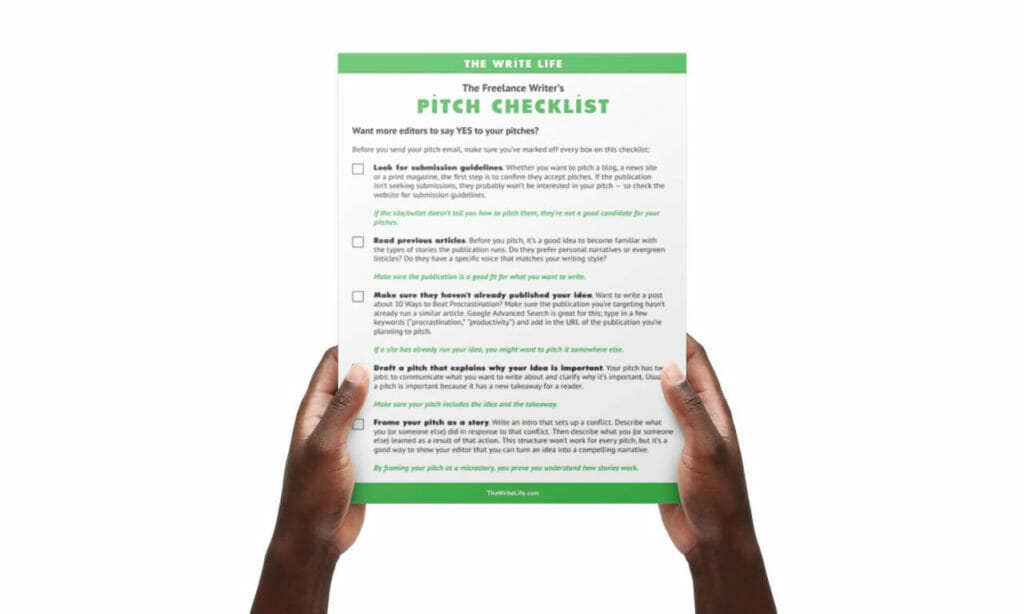
This post contains affiliate links. That means if you purchase through our links, you’re supporting The Write Life — and we thank you for that!
Have you used Problogger’s Guide to Your First Week of Blogging?
The name of this post made you click on it, didn’t it?
“Ultimate guide” has become an Internet buzzword over the past few years as people search for ways to bring in traffic, boost their site’s credibility and add quality content to their web sites. Anytime you see the words “ultimate guide,” you can bet there’s a ton of research behind the story, as well as a writer with very tired typing fingers.
You don’t have to be an expert in your chosen subject area to write an ultimate guide. But you do have to have an expert-level understanding of what makes a great ultimate guide to undertake this type of post. (Click to tweet this idea).
Here’s a primer on all you need to know and what you need to cover when writing your next ultimate guide.
Choose a topic
It can be hard to settle on an idea you like enough to write about. Ideally your topic should be something you are familiar enough with to write comfortably. At the same time, it also needs to be something others want to read about. If you’re an expert on making liverwurst from scratch, you may write a wonderful ultimate guide, but very few people are going to be interested enough to read it.
A great example of a guide that combines expertise with information people want to read is Yoast’s definitive guide for WordPress optimization. This combination of authority and a universally appealing topic should be your goal.
Keep in mind that your topic should be unique. There are hundreds of guides for search engine optimization, but fewer about niche areas of SEO, such as ecommerce sites. Pick something that will make your guide stand out among the many other competing voices.
Cover all of your bases…
Writing something called “the ultimate guide” can be a bit intimidating. How do you make sure you cover all of your bases? Here are some ideas to keep you on track:
Do keyword research to see what searches people are doing related to your topic.
Search Quora to see what questions people are asking about your topic.
Read other ultimate guides that have been written about your subject and note what’s missing.
Contact experts in the field to find out what they would like to see covered in an ultimate guide. Perhaps you can incorporate a few industry voices.
Find links you want to include, making sure you stick to high-quality sites that will expand more upon areas you don’t cover.
Create a detailed outline to ensure that you don’t forget anything.
… but don’t cover too many bases
Does that seem a bit confusing? You should always aim for thoroughness when making an ultimate guide, but don’t bite off more than you can chew. You have to keep your topic focused or else your guide will end up being 20,000 words long, and you’ll ramble off on so many tangents you’ll lose your audience.
For instance, when making a list of resource links in your ultimate guide, stay organized and stick closely to your topic. A good example of this balance between too much and not enough information is the Alternative Medicine Resource List maintained by 12 Keys. While the list includes a number of different subcategories, which is great for anyone researching alternative treatments, it’s not so overwhelming that people will get lost amid all the links.
Keep your content evergreen
As the name “ultimate guide” suggests, this is a post designed to stand the test of time. You want people to find your ultimate guide in search results for years, not just weeks. That means that it needs to be evergreen. Evergreen content, much like its namesake trees, never loses its luster. It is relevant and important months and even years after it’s published.
In order to make your post evergreen, avoid references to current pop culture and news. Also make sure you reference events by their date instead of saying something general like “next month” or “next year” — such comments are confusing to someone reading your guide three years from now. Finally, it is a good idea to intermittently go back and update your guide.
Promote your guide
Once you’ve finished writing your guide, it’s time to move on to promoting it. The first and most obvious step is to take to social media. Ultimate guides are highly shareable, and they get lots of momentum on the major social networks.
You don’t have to spend all your waking hours on Twitter to do this. Try out various ways to automate your presence on the days when you have other more pressing tasks, setting up your feed to promote your guide even when you can’t be doing it live.
Be proactive by packaging the guide in different formats to get it more play across the web. One approach is to to make an infographic out of your guide, and link the graphic back to your post. Infographics are a great way to drive traffic in from other sites. You could also repackage the guide as an ebook and give it out to anyone who subscribes to your newsletter. There are lots of creative ways to get more leverage from your guide.
With the right topic, outline, timeliness and promotion, your guide can become one of your most successful writing projects. Now go find that topic! Just remember, stay away from liverwurst.
No matter how good your book is, you need to consider your marketing strategy if you want it to actually sell. Even the best content in the world won’t sell if people don’t know it exists!
When I wrote a book several years ago, I didn’t realize how significant a role my marketing strategy would play in its success.
Through trial and error I learned which marketing strategies would work for my book. Some are fairly straightforward, and others require a little more effort. Hopefully they will help those of you contemplating a similar venture.
[twl_reusable_block post_id=41455]
The Basics
1. Create a website
We’re starting with the most basic element of all: your book needs a website. This can be anything from a landing page on your personal or business site to a full-scale website devoted to the book.
If you’re working within a tight budget, go DIY or find a designer through outsourcing portals such as Elance or oDesk. Better yet, look for someone in your circle of professional contacts who has experience with web design and barter your services.
In exchange for a few personal finance counseling sessions, a business colleague of mine created and launched a full-scale website for my book, including a home page, an “about us” section, an FAQ section, a blog, and a page where you could purchase the book.
2. Make the process user-friendly
Whether you offer direct sales for your book through your website or you include a link to where it can be purchased, make the process as user-friendly as possible for your customers.
If you offer direct sales, accept all forms of payment, including American Express and PayPal. You never want to miss out on a sale just because a customer isn’t able to use a certain payment method! If you don’t offer direct sales, include a link on your website to where the book can be bought (for me, it was Amazon).
Don’t make customers have to hunt.
3. Start a blog
Including a blog on your website can help add credibility to your book by further showcasing your talents as a writer and showing your audience that you are truly an expert in your field. Post well-written articles featuring advice that readers can’t find anywhere else.
Go the extra mile by including a high quality video or two. Videos highlighting certain points in your book can drive interest, and can also boost your SEO ranking.
4. Get involved with social media
Your next flow of customers could come from anywhere, so you have to investigate a wide swath of outlets to try and reach them. While I got positive results from my efforts on Facebook and Twitter, I also got a very solid response from people on StumbleUpon — a largely unknown social media website at the time. These days you might look to Pinterest, Instagram, or Google+ to build a following and generate sales.
Track your success with Google Analytics and use the data to adjust your strategy; if you’re seeing lots of traffic or purchases from a particular network, build on it. Be sure to follow and like other authors and industry leaders in your niche, and make sure you include social sharing buttons on your blog to encourage activity.
5. Change your email signature
This may seem like a minor point, but how many emails do you write or respond to every day?
Pick the low-hanging fruit: simply adding a quick note with a link to your book’s website at the end of each message gives you one more way to get the word out about your book.
Extra Credit
6. Partner with local businesses
Taking a physical copy of your book to local bookstores is the first step; see what it will take to get them to carry the book. However, with a little more imagination, you can connect with additional kinds of businesses.
If you’ve written a book about home improvement, see if your local hardware store might allow you to set up a small display. A gift shop at a local nature center may be willing to feature your book if it’s about something pertaining to that niche. Get in touch with larger nearby businesses in related industries and inquire about bulk sales. They might be able to use your book as a promotional giveaway during a conference or even as a gift for staff members.
Novel and innovative connections with community businesses may involve a bit of pavement pounding, but they just might boost your sales. (Click to tweet this idea.)
7. Target media opportunities
You could also contact local radio and TV stations and inquire about media appearances. Perhaps they’d be interested in interviewing you for a TV newscast segment on local authors, or maybe you could participate in a question-and-answer session on a radio talk show. Smaller media outlets are always looking for local stories, and that kind of exposure could be a boon to your business.
8. Entertain outside advice with caution
You’re likely to receive all kinds of advice when it comes to marketing your book. You’ll likely hear about all sorts of products and webinars “guaranteed” to make your book a best-seller.
With so many opinions and options, it’s important to remember the key item in the equation: your instincts. If you want to go with an offbeat marketing strategy, give it a try. After conducting some research, if your gut feeling tells you that a particular idea can work, go for it.
You may not be a marketing guru, but you are a human being, and you possess common sense insight as to what can and cannot attract a potential buyer to your book.
The fact that I wrote a book — whether it sold a million copies or not — played a large role in what allowed me to eventually work for myself. Did I experience a bit of luck? Maybe, maybe not. However, I did put my marketing strategy into place with a good amount of research, common sense, and hard work.
Pour all of your creative efforts into your writing, then go back to the well and stock up again when it comes time to market your book — you’re going to be glad you did.
What other ways have you successfully marketed a book?
As a writer, you must create and manage your personal brand. But how do you leverage that brand to earn a living?
The team behind Beacon, a startup launched in September that’s been called “Netflix for Journalism,” thinks they’ve cracked the code. Co-founders Dan Fletcher, Adrian Sanders and Dmitri Cherniak created the platform to help writers capitalize on the direct connections they’ve built with their readership through social media.
A monthly $5 fee gives subscribers site-wide access to content, which ranges from on-the-ground reporting of international affairs to satirical coverage of American news. The twist? Subscribers choose a favorite writer — and that writer gets 70 percent of each supporter’s subscription price.
We’re always keen to explore new ways to earn a living through writing, so we asked Sanders about the team’s goals for Beacon and how writers can get involved.
What are you hoping to accomplish with Beacon? Why should our readers visit the site?
Beacon is about returning the value of stories back to the readers and writers. We think great stories are worth paying for, but we also think readers should feel that their money is directly impacting the work they want to support.
The Write Life readers should be keen on Beacon because hopefully they’d be interested in applying to get started writing on Beacon. Anyone can apply and we’re adding new writers every week!
Can you tell us the story behind why you started the site?
We started Beacon because we were frustrated that the traditional model of making money on the published Web was nearly totally dependent on ad sales. It is mind-boggling that a writer can have 10,000 devoted readers, but an ad company gets to decide that’s not worth very much.
As ad sales oscillate towards properties that can move millions of pageviews (think funny cat lists on Buzzfeed), they become increasingly less concerned with small niche high-value stuff. And the reality is, no matter how great a reporter you are, you’ll never be able to generate one million pageviews a month from Yemen. It’s just not the right fit for display ads. We think Beacon is the right fit!
How are you monetizing Beacon? How’d you decide on your $5/month subscription price point?
The way Beacon works is very simple:
As a writer, you have a project page that helps you crowdfund a minimum number of readers who are willing to support your work. So you can launch a project and try to find 50 subscribers like Seth Robbins is doing now.
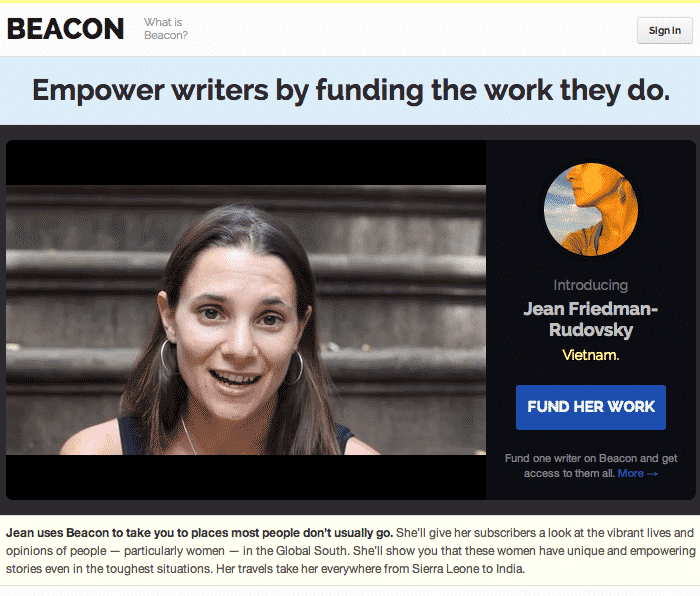
Once the project is successfully complete, you’re given a profile page (like Jean Friedman-Rudovsky’s) and anytime someone signs up to Beacon via your page, they become your personal subscribers. You earn 70 percent of their monthly subscription as long as they keep paying.
But your subscriber gets access to not just your work, but every story by every writer on Beacon — so they get to support you, and they get access to a lot of great stories.
We picked $5 because it seemed significant enough to help writers build real income from, but also competitive enough to woo readers. So far we’ve been happy with the results — we’ve grown more than 4x since launch in September 2013.
How do you add writers to your list, and what criteria do you look for? How do writers benefit from contributing?
Most of our writers come by referral from writers already on the platform. Recently, we launched Projects as a way for writers to launch onto Beacon with a good group of starting subscribers. It’s been going fantastic. We also accept applications to write on Beacon — anyone can apply.
Writers enjoy 70 percent of all subscription revenue from readers that subscribe via their project, and via their profile page after they launch. The other 30 percent gets put into a bonus pool that we divvy out to the most read stories each month. This month we’ll be distributing $5,000 in bonus money to the top 20 articles.
What was your strategy in not including editorial support for your writers? Have you heard feedback from your writers about that decision?
There’s two primary reasons for this — the first is that Beacon isn’t a publication, it’s a platform. We’re here to enable writers to write more of the stuff they want via the subscriptions from readers who love their work.
Adding editors in the traditional sense creates a layer of complexity and cost that we just can’t justify. Now, that doesn’t mean we think editors aren’t worthwhile (far from it) but if you’re going to innovate the model you need to rethink how all the processes are handled. Could writers bring their favorite editors onto Beacon in the future? Maybe with a revenue share model for the work they edit? Things like that get me excited because I know there’s a way to figure it out — it’s just a matter of time.
Have you learned anything about the writing community through this project that surprised you?
It’s not surprising, but it’s certainly interesting how the current situation in the industry has made people very open to trying new things. I think it’s amazing to see writers exploring their options right now when it comes to making a living.
What do you think of Beacon’s premise? Would you join Beacon as a subscriber or writer?
Facebook. Twitter. Instagram. Pinterest. G+. Your people don’t hang out on just one of these social media platforms, so you must infiltrate them all!
But balancing a full-time job, writing for your blog, and pitching guest posts takes time. And now you have to update statuses, tweet to connect, take impressive pictures and come up with witty hashtags?
Before you begin with the hair-pulling, consider this: you should focus your biz-building effort on whichever platform your audience prefers. (Click to tweet this idea.)
Let’s take a look at a few online A-Listers to see how this works.
[twl_reusable_block post_id=41455]
Noah Kagan
He has over 13,000 followers on Twitter. Let’s see what happened when he tweeted to sell his latest course:
Pitiful.
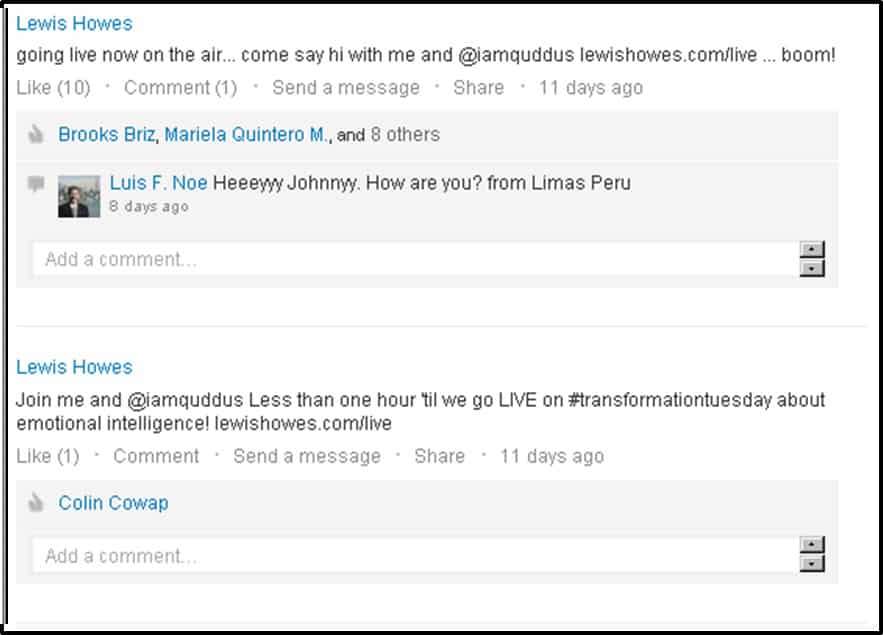
Lewis Howes
He built his business on the art of connecting on LinkedIn. What kind of engagement does he get? He’s shown as having 500+ connections and is likely to have more than double that.
Take a look:
Yikes.
Ramit Sethi
Ramit is known for his fanatical testing. He asked the same question on Facebook and on Twitter. Let’s compare the engagement of his audience:
Twitter:
Facebook:
Facebook is a winner for him, right? Perhaps that’s why he can be found liking and replying to comments there, and rarely on Twitter.
He’s focusing on what gets results and using his social media platforms in a way that works for his business.
Back to Noah Kagan
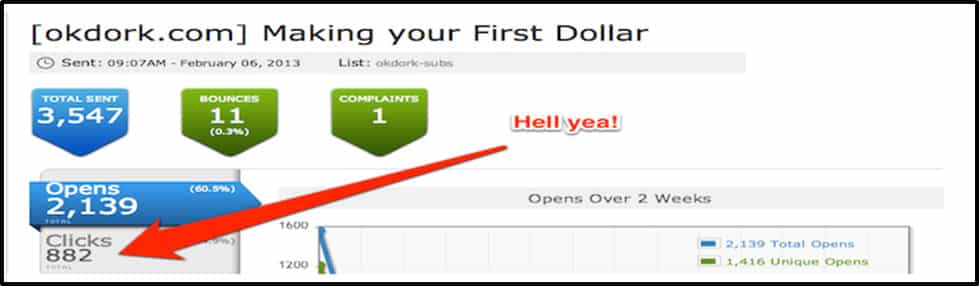
Let’s see what happens when he sends the same Twitter blast out to his email list instead — a list that is a quarter the size of his Twitter following.
Yeah, baby! There’s gold in that list (for Noah, at least).
What can you learn from this?
1. Stats do the talking
Take a look at your statistics from your social media efforts, email open/click through rates and discussion on your site. What works? What can you see that’s getting results?
Focus more on this. Build this up before moving onto anything else.
2. Know your audience
This one’s a given, right? And how exactly do you get to know them? You could ask them where they hang out. That’d be one way. The other way is to experiment. Get to at least 1000 followers and then start experimenting with one of the social media platforms.
Start with the obvious choice for your audience. If your business is design-based or visual, Pinterest would work. If your audience enjoys industry news, then tweet those links.
Over time, if the engagement doesn’t happen, tone it down on the first platform and start with another.
First you announce the start of your new social media account to your existing audience, and they sign up. Then you make sure the links are all over your website. Next, you mention it in guest posts and add it to every online signature you have. And over time, it builds.
Noah didn’t start his Twitter account with the followers he has today. It took years to build.
Over to you. What industry are you in and what gets the most engagement from your audience?
no
1
links
no
1
links
Etsy, the online marketplace for handmade goods, is known for its multitude of crafty creations. You can find handwoven scarves, crocheted hats, one-of-a-kind paintings — it’s a haven for anyone who loves custom-made goods, and anyone skilled enough to make and sell them.
While I’ve long-admired Etsy from afar and shopped there for personal gifts for my sisters and friends, as a writer, I never thought that I had anything to offer as a seller. But a chance encounter with an out-of-work architect who figured out a way to earn her living on the site opened my eyes to the opportunities for writers on Etsy — and there are a lot of them.
A surprise hit craft inspires a career change
Amy Stringer-Mowat started selling cutting boards in the shape of states on Etsy after she shared a few that she had made for her wedding. She soon found a huge demand for her invention, and began selling so many cutting boards that she had to enlist the help of her husband and others to fulfill the orders. Instead of looking for a new job in architecture, she settled into life as an entrepreneur and full-time Etsy-seller.
Amy’s story inspired me to take a closer look at how I, as a writer, could also figure out a way to earn some cash and build a business on the site.
Etsy includes more than just crafts
I quickly found a category called “paper goods,” which includes subcategories such as bookmarks, calendars, cards, and notebooks. These sounded closer to the kinds of items a writer could tackle. Further investigation revealed a “planner” category, and as soon as I saw the types of products listed there — digital guides, detailed calendars — I knew I had found my new virtual home.
Within two weeks, I created my “baby planner,” soon followed by a series of “money planners,” and I built my business from there. Over 200 sales later, my Etsy shop is one of my greatest sources of professional satisfaction. I make products with my words that help people, and people buy them – it’s hard to find better validation than that. (Click to tweet this idea).
Writers interested in supplementing their income with an Etsy shop should consider these three options.
1. Create products for fellow writers
Since you’re a writer, you already know what helps you write, and you can make things that do the same for others.
One of my favorite products currently listed is a novel-writing brainstorming template; there’s also a nonfiction version. Other shops offer inspiring quotes for writers in the form of artwork, such as a “just write one page” print, as well as beautiful notebooks that make you want to curl up and jot down all your ideas.
There’s also endless possibility here; almost every category listed, from home goods to bath and beauty, includes writing-related options. Bed sheets decorated with poetry, anyone?
3. Design digital products
Etsy recently changed its policy to allow for automatic downloads at purchase for buyers. That makes it easier than ever to create digital products and sell them on Etsy. Indeed, ebooks are a growing category on the site. Currently listed ebooks range from crafting-related instructions to instructional guides.
While the site wasn’t designed with writers in mind, Etsy can help us earn extra money – and that’s always a good thing.
Would you ever consider selling on Etsy? If you already have, please share your strategy and shop name below!
The New Year is upon us! And while lots of writers say they want to improve their craft or build their online platform in 2014, vague goals aren’t enough to really propel yourself forward.
Instead, push yourself to set specific deliverables, ones you can actually check off as you complete them. It can be difficult to hold yourself accountable for the abstract goal of becoming a better writer, but if you focus on executing a specific plan, you’ll have a lot more to show for 2014.
With that in mind, here are six meaningful goals you should consider setting for yourself this year:
1. Write and launch an ebook
Ebooks are a great way to build your brand, and they’re fun to create. But best of all, they can be incredibly lucrative, especially if you create something people actually want to buy.
While Kindle can be a strong means of distribution, especially if you need help reaching potential readers, don’t overlook the option of selling ebooks on your own website. Non-fiction, particularly how-to guides, sells well at a high price point, and when you sell on your own site, you keep all the profits. The downside of selling on your site is that you’ll have to hustle hard to help buyers find you.
Whether you’re looking to sell books, make a living as a freelance writer or build a business as a writing coach, you’ll need people who are willing to shell out dollars for your products or services. The question is, where will those people come from?
That’s why you want to start building an email list as soon as possible, and if you’ve already started, put solid effort into growing your list. Your subscribers will not only be your community, they’ll also be your community of buyers. Investing in an email list is like putting money into an interest-earning retirement account: the earlier you start, the more capital you’ll accumulate.
3. Publish guest posts on at least three popular blogs
Writing blog posts for other sites is one of the best ways to build your own network, including your email list. Not only will guest posts send traffic to your site (assuming you include a link to your site in your bio), they also serve as solid back-links, which will boost your own blog’s SEO.
But don’t just say you’ll guest blog more; instead, create a concrete goal to work toward. I like to set a schedule that keeps me on track to guest blog once a month or once every other month; this Problogger post explains that strategy in detail if you want to put it to use in 2014. (Click to tweet this idea).
Push yourself to pitch popular blogs, sites that get a good amount of traffic so you’ll see returns on your hard work. Use Google’s Page Rank checker to judge whether blogs are worth pitching, and shoot for blogs that have a PR of at least 4.
4. Learn how to optimize your content for search (SEO)
Writers often want to get more eyes on their work, and you’ll get far more readers for every piece you write if you optimize it for search engines.
So if you don’t understand SEO or how to apply it to your blog or freelance work, make an effort to learn the basics. It’s not as scary as it sounds! Even optimizing just the headlines on your blog posts will go a long way toward helping your site gain traction.
All freelancers have a client or two — or even three — at the bottom of the totem pole. They don’t pay us enough for our work, but we keep producing for them because we don’t want to lose the revenue.
Know what’s long overdue? Replacing that client. Because when you say goodbye to that low-baller, you’ll have time to take on a new client who’s willing to pay you what you’re worth.
Of course, this is easier said than done, especially if you’re worried about possibly losing that client if you increase your rates. If you’re not sure how to go about it, follow Tom Ewer’s step-by-step plan for making this game-changer happen.
6. Set aside blocks of time to write
When you write for a living, it’s all too easy to get distracted. Whether you find yourself spending too much time on social media or leaving your home desk to tidy up the house, turning your attention away from your screen means a serious drop in productivity.
So rather than multi-tasking, set aside blocks of time to focus solely on writing. Charlie Gilkey says you only need two hours at a time to do this well — so yes, it’s possible even if you work a day job or have kids to tend to.
The start of a new year is the perfect opportunity to rearrange your schedule so it includes these uber-productive blocks of time. And that means more hours to accomplish all the projects on your 2014 list!
Are any of these goals on your list for 2014? What are you hoping to accomplish?
Increasing your author visibility through different online channels allows you to meet readers, cultivate an audience, and increase your discoverability to sell more books. But finding your ideal social media channels is not the easiest thing to figure out and implement.
That’s why I’ve reached out to some experts for advice. I asked six different platform-heavy writers — three nonfiction, three fiction — for their best general advice in terms of using social media. Here’s what they had to say:
Do you have any general advice for writers looking to market themselves and their work via social media, promotion and platform?
“I think you really have to enjoy interacting on social networks or you won’t do it well or stay with it. You can’t force yourself to do it; you have to find the things you like and do those even if they aren’t the most popular. For one person it might be Twitter, for another LinkedIn, for another YouTube, for another podcasting, and another blogging.
Also, I think some authors are too afraid to ask people to buy their book. I spend hours (and hours and hours) of my time answering people’s questions without compensation, so when I have a new book out, I don’t hesitate to post about it. I believe I’ve earned the right to market my products.
On the other extreme, I see a lot of authors jump into Twitter and immediately start doing nothing but push their book. They haven’t earned the right to market their products, and all they do is turn people off.”
“I have gotten flack for saying this before, but I am sticking to my guns: do it well or don’t do it at all. There are billions of blogs and websites out there. On the Internet, if you build it, they will not automatically come. You have to give people a good reason to spend their precious time on your real estate.
Don’t blog or tweet or Facebook because you think you have to. Your reluctance will ooze from the screen. Don’t engage if you can’t keep it consistent, both in terms of timing and in terms of quality.
Figure out what you’re best at, then do that well and forget the other stuff. You should have some online presence, but you don’t have to jump into everything all at once, especially if you’re going to do it badly or irregularly.” (Like this idea? Click to tweet it).
“Stay true to your integrity. I can’t tell you how many times I have said no, even though it sounded like such a good platform-building opportunity.
Listen to your gut (which I call your “inner pilot light” — that wise part of you that really knows what’s best for you, your body, your relationships, and your business). Don’t let fear rule the show.
In the beginning, I said yes to everything because I was afraid I’d miss an opportunity, and I wound up quickly burned out, depleted. But you can’t lead or heal from a place of depletion. You must heal yourself first in order to change the world. That’s the one lesson I’d share with aspiring authors/visionaries/healers.
Don’t let platform building spiral you downwards. Fill yourself first. Learn to say no. Create healthy boundaries. Raise your vibration. Attract others who share this vibration. Avoid the temptation to get sucked into doing everything for everybody. You are enough doing exactly what you’re doing. Resist the urge to continually do more.”
“Whether fair or not, getting your good story into the hands of the public now depends in large part upon your reach, and your reach depends in large part upon your savvy with blogs and social media. That can be a scary thing.
Writers are notoriously withdrawn and even shy. The idea of having to ‘put yourself out there’ can be tantamount to having to tap dance in front of a firing squad. But it can be done. I promise that, and I offer myself as proof.”
“My biggest warning is that you can’t do it all. I’ve tried to approach platform building like organic farming. I’m cultivating what grows (my audience, hopefully), but I’m trying to do so without gimmicks and with integrity and respect for the writing itself. I hope that this is a sustainable method that will also bear fruit, so to speak, with a faithful and steadily, if slowly, growing audience.
I think a lot about limitations and possibilities. If I limit my time platform building, I open up time for family or exercise or working on a larger project. If I focus on the possibilities of platform building, I limit my time for those other things. I try to keep it all in balance rather than thinking that I can, or should, do it all.”
[twl_reusable_block post_id=41455]
If you could go back in time and do it all over again, what would you tell your younger self in terms of platform?
“I knocked myself out for a year doing my email newsletter every day and for one quarter doing my podcast twice a week — and in retrospect, I don’t think it was worth the effort. Weekly is enough. The benefit from publishing daily and podcasting twice a week was minimal.”
“This may sound like bad advice but: Blog less! I was killing myself trying to blog three times a week at Kidlit, then I added two extra blogs and tried doing those twice a week, too.
The result? I’d travel or freak out and let the blogs go to seed for a while, and that was altogether worse than blogging less frequently because dead blogs and silence are the ultimate online networking sins.
It’s very possible to have a platform with the ‘less is more’ philosophy, as long as you focus on the absolute quality of your efforts.”
“I would tell myself that helping others succeed would translate into the biggest personal success. I would tell myself to go ahead and build my wings on the way down, and not to stress over every little number, setback, or failure.”
“Oh, if only someone had told me to put a free opt-in in the upper right corner of OwningPink.com three years ago! After two years of great traffic, we had only 1,200 people on our newsletter list. (The sign-up was buried way down on the page and there was no free gift to entice people to fill it out.)
The minute someone told me to offer a free gift, we got 5,000 new sign-ups in a month! Free teleseminars and telesummits (I’m about to do my first) are another great way to grow your newsletter list quickly.”
“I would have definitely started building my platform earlier. My younger self was stubborn and ignorant. I was one of those people who thought I could buck the system. And yet everything I’ve been able to achieve to this point is the direct result of finally understanding the importance of platform.”
“My greatest success has been my blog. I’ve wasted time speaking without pay, especially when there is travel involved. I’ve also wasted time (and money) creating a website. Don’t get me wrong, I needed a website, but I should have been far more realistic about how much time it would take and what that time is worth.
In addition, I would have begun blogging and writing short essays from the start. Not only would I have gained readers (and perhaps a book contract) much earlier, but I also would have benefitted as a writer from blogging.
Blogging has improved the quality of my writing, and it also gives me a place to try out ideas. Most days, I write something, and two or three people comment on it and a few dozen share it through social media. But every so often, I write something and it provokes dozens of comments and hundreds of shares. I pay attention to that type of reaction because it means I should possibly write more about the same topic.”
Special thanks to those writers who chimed in with answers.
Don’t forget to comment to be in the running for Chuck’s book giveaway! You could win a free copy of his latest book, Create Your Writer Platform.(UPDATE: Marjorie won!)
The image of the novelist as a slightly eccentric individual who likes writing alone in a dark room and avoids interacting with anyone else — even their literary agent — is an image of the past. Modern day fiction writers cannot afford to be like Harper Lee and stop communicating with their audience!
Have you ever wondered how many authors get their books on the New York Times bestseller list? They do so by generating a buzz around their books and personas. People not only want to read their books but also know more about the author. For novelists, curiosity is the best way to keep readers coming back.
So how can authors communicate and engage with their readers? Here are a few tips:
Some social networking platforms are geared specifically towards writers and book lovers, such as Goodreads. For example, Jeffrey Archer uses this platform very well to give his fans a peek into his life, inspirations, hobbies and upcoming novels. Fans can comment, read exclusive content and even participate in Q&A sessions.
Social media can also be a great way for writers to get feedback on books that are in the pipeline. Authors can release rough excerpts from their books and receive immediate, honest feedback from readers.
2. Conduct online Q&A sessions
Social media platforms are excellent for talking to readers in real time. Writers can create events for their readers, such as Twitter chats or Google+ Hangouts, so that everyone shows up to the session at the same time and can ask questions spontaneously.
3. Be active on fan fiction forums
Many readers love reading and writing fan fiction. They come up with alternate endings, plotlines, and characters, and some fan fictions can even become as popular as the original book.
These forums also play host to readers’ questions and comments. J.K. Rowling always makes it a point to engage with her readers on such forums. In fact, she actively answers questions online from readers and even reads the fan fiction herself. This is a great way for writers to get new ideas, understand what readers are looking for and interact with their audience.
4. Blog
Writers cannot spend every waking hour working on their next novel or story. Blogging is an excellent way to write about other topics, battle writer’s block, and communicate with readers.
Neil Gaiman and Chuck Wendig are two of the many authors who blog as a way to interact directly with readers. They share writing tips and advice, describe current work, and update their audiences on new releases.
5. Share additional content
In addition to blog posts, writers can provide free and valuable content to readers in the form of videos, podcasts, audio clips, ebooks, images, and excerpts from upcoming books. The sky is the limit when it comes to brainstorming creative content that’s related to your work!
6. Host book signing and reading sessions
This is probably one of the most popular ways that writers engage with their readers, proving that not all connection is done online. There are tons of libraries, book shops, cafés, and other places to host readings in any city. Writers can meet their fans and readers face-to-face and engage with them in person. A great example of this is Chris Guillebeau’s DIY Book Tour to promote his two books.
These are just a few ways that writers can keep in touch with their fan base and interact with readers. New and exciting platforms are coming up almost every day; what will the next great reader engagement tool be?
What’s your favourite way to connect with your audience? As a reader, how do you most enjoy interacting with authors?
Guest posting is a fantastic way to get your writing in front of new audiences, network with other bloggers and build your portfolio.
But apart from writing damn good content (which, of course, is a given), how do you navigate the process of pitching, writing, and follow-up in a way that will get you on an editor’s good side?
(And you want to be on their good side, not only to boost your chances of this initial post being accepted, but to increase your likelihood of being asked to post again.)
As Assistant Editor of Brazen Life and Managing Editor of Career Attraction, I’ve seen some fantastic submissions and interactions with guest posters, and I’ve also witnessed plenty of situations that made me want to staple myself in the eyeball:
A writer once pitched a fantastic topic, then sent me an email saying simply, “Hey, I changed the content. Here you go!” and attached a totally different, unacceptable post for no apparent reason.
I’ve received countless iterations of this mass email: “Dear [editor name here], I came across your [site name here] and want to offer you a unique, high-quality post totally FREE!! All I ask is a few links back to my site in return. Here is my post, please tell me when it will be published!”
While I know none of you would commit any of these grievous mistakes, there are some blunders I’ve noticed even quality writers committing, and I’d like to give you a heads up from the other side of the submission process. Consider it an inside scoop to give you the upper hand on the competition.
Pitching Your Post
DON’T write us until you’ve checked our writer’s guidelines
Most sites have a “write for us” page that tells you exactly what topics the site is looking for, what style of writing it prefers and how to submit your pitches. Look for it and review it carefully before sending us anything. Only if you don’t see one anywhere is a cold pitch acceptable.
If you get a lenient editor, they may be nice enough to respond to a cold pitch with, “Please check out our guidelines here and get back to me,” but even then, you’ve already lost points for not doing your homework. Editors are busy and receive tons of pitches every day. Ones that indicate a writer took no time to get to know the site he’s pitching are likely to be deleted.
We want writers whose killer posts will rocks our worlds. We tend to lose confidence in your ability to produce them when you don’t follow our basic guidelines.
DO keep it brief, to the point and specific
A line about how much you like our site is a nice gesture; sucking up for a whole paragraph is not. (Did I mention we’re busy people?)
Give a quick intro of who you are and what credentials make you awesome, then give us the pitch. And by “pitch,” I mean a catchy, well thought-out title followed by a few bullet points discussing what your post will cover.
Give us something to work with. “I want to write a post on resume tips” doesn’t tell us anything about what the post will discuss or how well you’ll handle it. “I want to write a post on ‘10 Resume Mistakes You Need to Stop Making Now,’ including X, Y and Z” is more like it.
DON’T pitch us without first checking our site for your topic
We don’t expect you to have our site memorized; in fact, we understand that many writers pitch us solely because our sites would be good exposure, not because they’re diehard readers. And that’s okay. But that doesn’t excuse you from checking to make sure you’re not pitching an idea that’s already been done.
Most blogs have a “search” function you can use to see if the topic you’ve thought up has been covered already (especially recently). If a site doesn’t, try Googling “[site name]” plus “[your topic idea]”.
Your best bet, even after this recon? Pitch us several potential topics so we can choose the one that best fits our site. You don’t know what posts we may have scheduled for upcoming weeks, so giving us options makes it easier for us to say “yes” rather than “no, thank you.”
DO show us what you’ve got
Not to be mean, but we don’t know most of you from Adam (or Eve). While you can list out the reasons why we should let you write for us, it’s much better to show us exactly what we can expect to get in a guest post from you.
Instead of saying “I’ve been featured on these sites,” provide us with links to your work. Try to select posts that share a similar topic area or style as our blog so we can really see you’ve got the chops. I can’t tell you how many pitches I’ve been on the fence about until I saw the writer’s examples to give me a better feel for their abilities.
Writing Your Post
DON’T make it all about you
While personal stories and anecdotes are a great way to connect with your audience and can really make your post stand out, readers are ultimately reading your post to learn what it can do for them.
So if you’re writing about a personal experience and what you learned from it, tweak your language so that you’re sharing your personal experience, then telling the readers what they can learn from it. Make sure you to use “you” as much as possible to make them feel invested in the piece. Instead of saying, “One problem most writers face is writer’s block” (which in itself is a horrible sentence), say, “If you’ve ever faced writer’s block (and what writer hasn’t?), you know exactly how frustrating it can be.”
Always bring it back to the reader and address them directly whenever possible.
DON’T neglect your headline
Most readers subscribe to dozens of blogs, and the one thing that’s most likely to grab their attention — whether they’re skimming their Twitter stream, RSS feed or inbox — is a headline that forces them to stop and think, “Okay, I’ve gotta know what this is about.” It’s also good for guest poster brownie points, because it demonstrates to the editor that you know how to write for the web and you’ve got your creativity hat on.
An added bonus for you as a writer is that crafting a strong headline can help you hone your focus as you’re writing the post itself. “10 Ways to Be More Productive” could lead to a decent enough post. “10 Ways to Kick Your Day’s Ass” will not only snag a reader’s attention, but will likely lead to a much stronger post that will keep that attention once they start reading.
Even if your content is flawless, most blogs follow a stylesheet, which means an editor will have to tweak some of your formatting before they can publish your post. Anything you can do to save them extra work a) earns you brownie points out and b) demonstrates that you’re really dedicated to providing content catered to the site (which earns you more brownie points). Before writing, take a look at current posts on the site and mirror the way they’re laid out.
Does the site center their sub-headers or left-align them? Do they prefer to bold key phrases or italicize them? If they include hyperlinks to other posts on their site, pepper in a few for good measure. (BTW, adding liberal links to your own site probably won’t go over well, and they will likely be stripped from the post even if it’s accepted, so don’t bother.)
After You Submit
DO be patient with us
Some writer’s guidelines will say precisely how long you can expect to wait to hear back on your submission. Others won’t. Either way, bear in mind that we’re juggling many responsibilities, including submissions from our current roster of writers, so it will probably take a little time for us to review your post and respond to you.
If we don’t get back to you after a two weeks or so, it’s okay to send a polite “Just checking that you received my post” email. (Starting it off with “I know you’re busy” is always a nice touch.) But don’t get message-happy.
No news is simply that… no news. It doesn’t mean we’ve deleted your email altogether. It doesn’t mean we hated your post so much we’re secretly stringing you along to see how much we can torment you. Give us a little time and, if you followed all the guidelines you were supposed to, we will get back to you, even if it’s only a “Sorry, but this isn’t the right fit for our site at this time.”
DON’T take revision requests personally
We’re not asking you to rewrite a section or flesh out an idea because we’re living out a Devil Wears Prada power fantasy. We want your post to be the best it can be, both for our site and for your sake as a writer. So please (please!) don’t take it personally if we tell you it needs some work.
We may be making suggestions that will make the post better suited for our site’s audience, or we may have spotted some things you need to work on in your writing. Either way, if we’re asking you to revise, it means we want to be able to use the post. Please understand that any notes we send you are a good sign.
DO be a good participant once your post is live
Too many writers see guest posts as free PR, working their butts off to seal the deal with their pitch but disappearing once their post goes live. The writers who really stand out in an editor’s mind (and are more likely to be asked to post again) are those who take an active role in the conversation around their post when it’s published. (Click to tweet this idea).
Subscribe to the comments and be sure to respond, ask questions and spur the conversation onward. Share the post with your audience on Facebook and Twitter.
Editors like writers who produce great content, but they love writers who also help spread the word about that content. Hit-and-run guest posters feel a bit insincere (and also demonstrate a lack of interest in the promotion of their own writing, which is sad). Go the extra step, and don’t let the relationship end once the “publish” button is clicked.
Do you regularly guest post for other blogs (or oversee guest post submissions for one)? What other tips would you add?


 several years ago, I didn’t realize how significant a role my marketing strategy would play in its success.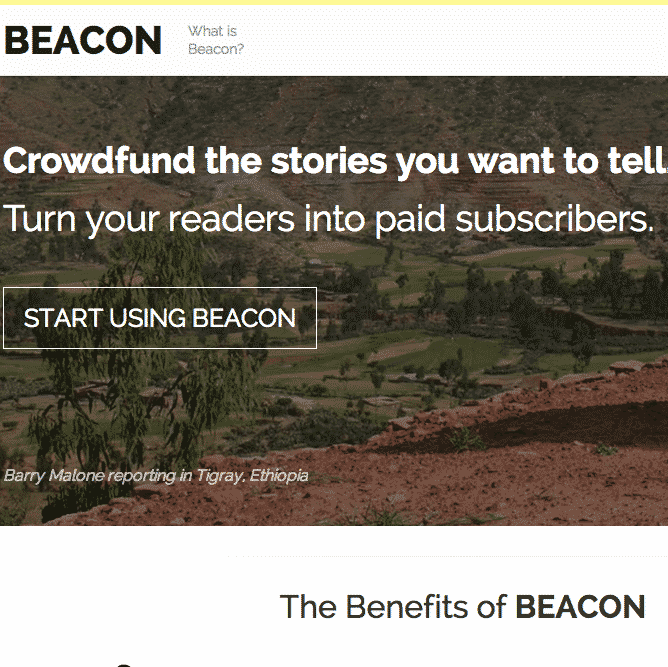







 , from Writer’s Digest Books.
 (UPDATE: Marjorie won!)