Blog

  • What is Symbolism

    What is Symbolism

    One of the most exciting things about consuming art, whether that art is a T.V. show, painting, or novel, is dissecting the layers of meaning within a given piece. There’s the literal things which happen in the novel, and then there’s the symbolic meaning—and the thing is, you probably already pick up on a lot of it without realizing.

    Artists rely on symbols to add depth and layers of meaning to their work, but this only works if the reader understands symbols to begin with. Luckily, in this article, we’re going to cover the basics of symbolism: we’ll talk about what symbolism is, discuss different types, talk about how to use it, and review some examples.

    Not only will this help you add meaning to your own work, but it’ll help you better understand the media you come across—look for these symbols the next time you’re watching T.V. or reading a book!

    What is symbolism?

    First things first: what is symbolism?

    A symbol imparts meaning beyond what is literally portrayed. For an easy example, think of a heart—not an anatomical heart, but a cutesy red Valentine’s-day situation. When you see one of those, you immediately associate a bunch of other stuff with it—Valentine’s Day, maybe, or the idea of love, or cute things, or sweet things.

    Or, you may say, you get angry, because you think all that stuff is stupid. But this doesn’t mean that you’re not getting the symbolism. If you weren’t getting the symbolic meaning, you would have an entirely neutral reaction, because you associate nothing with hearts. Since you see the heart and lovey-dovey stuff comes to mind, your reaction, angry or otherwise, has to do with how you’ve interpreted that symbolic meaning.

    Symbols create a kind of shorthand for artists and readers alike. If I show you a heart, you automatically apply a meaning to it based on your experience as a person in our society. If I then show you cutesy hearts only alongside gory or unseemly images, this will create a unique type of unease—I’m juxtaposing an image associated with simple, good feelings with images associated with bad feelings.

    See the layers?

    Different types of symbolism

    There are lots of ways artists can use symbols to build meaning and play with reader expectations. Let’s talk about a few of them. This list isn’t an all-encompassing guide, but instead a sort of starter pack for types of symbols used not only in writing, but in media generally.

    Metaphor

    A metaphor is when an author compares two things by saying that one of them is the other. This is different from a simile, where the author uses ‘like’ or ‘as.’ Metaphor is more direct, forcing the audience to consider what these two things (even if they seem unlike one another at first glance) have in common.

    Consider “all the world’s a stage” from Shakespeare’s As You Like It as an example. He presents the metaphor and then expands upon it in the monologue—this is a classic use of metaphor.

    Simile

    A simile is the comparison of two things using ‘like’ or ‘as.’ If we were to change “all the world’s a stage” to “all the world is like a stage,” we would be making it a simile. Simile is often used for aesthetic description—it gets across a clearer picture, if the author chooses her words correctly.

    In Normal People, for example, Sally Rooney, in one passage, describes the sky as “stretched taut and featureless like silk.” This evokes a strong image in the reader’s mind—you can imagine a piece of silk being pulled tight over the character’s heads. Additionally, ‘taut and featureless’ does some work in setting a mood here—this description precedes a very tense, uncomfortable dinner.

    Personification

    Personification is the attribution of person-like qualities to an object. Authors do this to add some texture and strength to their imagery, but personification specifically draws on a reader’s empathy. If something walks or talks or moves like a person, we subconsciously associate it with personhood, and this empathetic connection can be powerful.

    If you’re reading a good book with great descriptions, you might say the story “leapt off the page.” You’ve probably heard of lights or shadows “dancing,” or wind “howling.” These are all examples of personification.

    Allegory

    Allegory is a type of extended metaphor where the characters, setting, and plot all have a shared symbolic meaning which, when analyzed, gets across a message, which is generally moral in nature. 

    George Orwell’s Animal Farm is perhaps the most widely-known example. On the surface, it’s a novel about some very strange farm animals. If you pay attention to the clues Orwell plants throughout the story, it’s actually a moral argument against capitalism.

    Color Symbolism

    The meaning we attribute to colors impacts all kinds of visual media. Not only do writers use it to paint a picture in their readers’ minds, but anyone working in film uses it to impart visual meaning. People working in graphic design or marketing have to learn a ton about not only popular symbols, but also color theory, since colors have such powerful implied meanings.

    These meanings might change from culture to culture, so this is a pretty Western-centered list—if you’re from a culture where these colors have different meanings, you might see them used in different ways.

    Green

    Green often communicates prosperity. It signals abundance and brings to mind the green of prosperous crops or bustling forests. It might also point to rebirth, as in spring, jealousy or greed, or money.

    Red

    Red communicates passion or an intensity of feeling. Red is the color of blood, so it might evoke war, violence, or rage. It might also evoke powerful feelings of love, especially lust. It could also be used as a warning sign to herald upcoming danger. 

    Think of Melisandre in Game of Thrones, for example, who acts as a prophet for the Lord of Light. The Lord of Light demands violent sacrifices in the form of burning people alive, and Melisandre seduces powerful men to bend them to the Lord of Light’s will. She has red hair, she dresses in red, and the Lord of Light’s banner is red—this is all intentional.

    Black

    Black often signals death or the unknown. It might also be used to signal rebellion, strength, or authority—characters associated with black might be going against the status quo in some way or another.

    White

    White often signals life, rebirth, purity, or innocence. It also has strong medical associations and might be used to invoke a clinical, sterile environment—the blankness and starkness which white communicates can provide brightness, but also a lot of unease.

    Blue

    Blue reminds us of water, which makes us think of life, wisdom, freedom, or inspiration. If you’re into astrology, blue is meant to get across that ‘water sign’ aesthetic—things that are blue are meant to be intuitive, creative, and sensitive.

    Brown

    Brown reminds us of the earth. Brown might be associated with harvest, food, nourishment, and especially home and hearth. It’s a grounding color, so it also lends security, heart, and warmth wherever it shows up.

    How to use symbolism

    Now that you’ve got an idea of what symbols might look like out in the wild, let’s talk about how to apply them to your own work.

    Watch for symbols

    The first step is noticing which symbols are used, where they’re used, and how they’re used. This might sound like I’m assigning you a ton of research, but I’m really not—just pay attention to the colors, images, words, and phrases you see repeated in literature, shows, movies, and advertising.

    You might start noticing that red is used a lot in stores to communicate urgency—buy this now—or that in a lot of mainstream media, characters associated with darker color palettes are often considered by the text to be morally corrupt (a direct result of our society’s colorism). This will definitely ruin your life a little bit, but it will also make you much more aware of what you’re bringing to your own work.

    Use symbols intentionally for subversion

    Once you understand how symbols are usually used, you can use them in new, interesting ways. A lot of cliches associated with imagery are also overused similes and metaphors—to say that something is “cold as ice” doesn’t do anything new for a reader, who has heard it before, so it kind of means nothing.

    You want to reach for new associations and make comparisons that the reader hasn’t heard before. This is one of the ways you can work to create interesting, compelling artwork, and it starts with noticing these associations in real life for yourself.

    Add symbolism in revision

    Sometimes, a great idea for a story springs up around a metaphor, especially if you’re writing an allegory, which is pretty much all metaphor. In this case, you need to outline the terms of the metaphor up front and know what you’re doing as you go.

    Otherwise, worry about symbolism in revision. This is the kind of thing that can really bog you down in your first draft, where your chief goal ought to be literally just finishing the manuscript. Once you’re done, go through and see what kinds of symbols reappear in your work. If you were intentionally using symbols in draft one, how did you do, and how will your revisions change these symbols?

    Famous examples of symbolism

    Here’s a few examples of symbolism that you’ve probably read before:

    The green light in The Great Gatsby by F. Scott Fitzgerald

    The green light in The Great Gatsby symbolizes all of Jay Gatsby’s hopes and dreams—chiefly, it represents his desire for Daisy. Why green and not red? Gatsby’s drive for Daisy is inseparable from his drive for money, which he hopes will win her over.

    The “A” in The Scarlet Letter by Nathaniel Hawthorne

    The “A” in The Scarlet Letter means ‘adulterer,’ and it ostracizes Hester from the community. Throughout the novel, though, the ‘A’ changes its meaning—’aristocrat’ and ‘angel’ are also applicable.

    Out, out damned spot from Macbeth by Shakespeare

    Lady Macbeth tries to clean her hands in Macbeth during the “out, out, damned spot” monologue. This symbolizes her role in the violence to come—she can’t get the spot off her hands, just like she can’t rid herself of the bloodshed for which she is responsible. Try as she might, she can’t get the blood off her hands.

    Sauron from The Lord of the Rings by JRR Tolkein
    Sauron is a great example of how characters might be used as symbols within a story. Sauron is a dark wizard who aims to use the power of the Ring in his pursuit of world domination. He symbolizes the triumph of evil, and the entire plot of The Lord of the Rings grapples with this idea that the long, difficult journey and sacrifices of good people can save the world.

    New call-to-action
  • How to Write Female Book Characters

    How to Write Female Book Characters

    If you’ve spent any amount of time in online reading or writing circles, you’ve probably come across posts like this titled ‘X Times Men Didn’t Know How to Write Female Characters,’ each featuring screenshots of tragically sexist prose. Or maybe you, like me, were forged in the unforgiving fires of 2012-era Tumblr and have seen loads of posts like this or this.

    My point is, it’s not exactly news that badly-written women are an unfortunate feature in our media. While men often write the most egregiously poorly-written women, it’s not just men at fault here—people across the gender spectrum seem to struggle with writing compelling, three-dimensional women.

    If you don’t want your novel to end up screenshotted and added to the next article compiling grave, mildly-to-severely sexist authorial mistakes for the purpose of public shaming (which I do, in case it’s unclear, support), you’ll want to learn how to write women well. And luckily for you, that’s what we’re here to do today.

    In this article, we’ll talk about how to write compelling women, we’ll take a look at some common mistakes authors make when writing women, and we’ll look at some examples of well-written and not-so-well written women in movies, T.V., and books.

    How to write compelling women

    First things first, let’s talk about how to write female characters well.

    1. Women are people

    I’m going to get into detail about specific problems I see, but the bottom line and main takeaway is this: women are people, and female characters are characters. Writing a good female character means writing a good character.

    Female characters should be just as deep, interesting, and complex as male characters, and they shouldn’t be defined solely by being a woman (much in the way you wouldn’t define a male character by their identification as male).

    2. Give them complex motives

    What does your female character want, and why?

    You want to avoid ‘because she’s a woman, and women want that/behave like that/expect that’ as an answer. 

    Consider their upbringing and perspective. If this is a fantasy world, consider whether sexism plays a role in the way they interact with the world and how that character deals with it. How does this character see things? Once you have a solid idea of this, you can more accurately get at what this character wants and how they, as a person, will react to any given situation.

    3. Flesh out their interests and hobbies

    What’s your female character’s favorite movie, and why? What kind of food does she like? Where does she work, and does she like her job? Let her be a real person, and let her be a little weird. She should have anxieties, fears, dreams, and interests, and they should not all have to do with what men think of them.

    4. Honestly consider their relationships to other characters

    When writing relationships between any two characters, you’re looking at character A through the eyes of character B (and vice versa). You’re the author, so you already know what’s going to happen, and sometimes this makes it tricky to really piece out what information is literally there, in the text, and what you’ve got in your head.

    If you flesh out your female character like we talked about earlier, this is easier to do. You can tell, based on what kind of person she is, how she’s going to respond to other people. For example, if most people are at work, they won’t be flattered by strangers approaching them and hitting on them—they’ll feel uncomfortable, maybe even frightened.

    5. If the anatomy isn’t your own, research it

    This isn’t advice for female characters, strictly speaking, but it does often come up with specifically cis men writing cis women. If you’re writing about an anatomy that isn’t your own, research it a bit. It’ll be very silly if your book comes out and you let the whole world know that you have no idea what a tampon is or how it works—Google could have saved you.

    6. If the experience isn’t your own, get a second opinion

    Similarly, if you’re writing a perspective that isn’t your own, get a second opinion from that perspective. If you’re writing a trans woman, you’ll want to have trans women beta read your story and critique it so you can be sure that you’re offering a realistic, appropriate representation of a character in that demographic.

    Common mistakes when writing women

    So, what are some things to avoid when you’re writing women? I’ve compiled a list of tips, as well as some tropes to look out for as signs that you might need to rehash your approach to female characters.

    1. The lamp trope

    If you could replace the woman (or women) in your story with a lamp or sack of jewels without the story changing much, this suggests that the woman serves no purpose except to be rescued by the protagonist. This is objectification, and this woman is probably exceedingly one-dimensional. 

    2. One-dimensional women

    Writing women as vapid, vain harpies who care only about men and who hate every other woman is pretty overdone and generally insulting. Some women are vain, just like some men are vain, and some women are overly fixated on the opinions of men, just as men can fixate on the opinions of women, but as a character type, it’s often shallow, mean, and does more to point to the author’s internal sexism than to that specific character’s flaws.

    3. Fridging

    ‘Fridging’ is when a female character is introduced only to serve as a tragic backstory for the male protagonist. It’s usually his wife, and she almost always dies in some horribly brutal way which fuels his need for revenge. We get no sense of what the wife was like as a person, or she’s just vaguely perfectly feminine and lovely.

    Yes, people’s wives do die, and sure, I get that you want your male protagonist to have a compelling reason to be so brooding and tough. But inventing a woman to brutalize solely to enhance a male character’s Edge Factor isn’t the way to do it.

    4. Needless sexualization

    When men are described, we rarely get passages about how their jeans stretch over their butts or how their nipples show through their shirts. The purpose of introducing them isn’t to tell us how hot they are—it’s to tell us what they look like. However, it’s very normalized to introduce women in a way that clearly intends to show off how sexy the author wants us to think she is.

    Sometimes people argue that this is done because the male protagonist sees her that way. But the thing is, if the male protagonist is seeing her primarily as a sex object, that’s a serious character flaw which needs to be addressed, challenged, or otherwise explored unless you want your readers to think he’s deeply sexist. And it never is addressed! Weird.

    Examples of great (and not so great) women in fiction

    The Good

    1. Katniss Everdeen from The Hunger Games by Suzanne Collins

    Katniss is a wonderfully written teenager, at least in my opinion. Her relationships with her family are hugely important, her role as her family’s provider is instrumental to her character, and her motives are strong, complex, and not at all male-centric—she volunteers for the Hunger Games in the first place to save her sister, Prue.

    When it comes to romance, at least in the books, we never shake the lens of the Capitol. This is extremely deliberate, and it means that Katniss isn’t just a lovestruck teenager helplessly torn between two boys. She’s a kid fighting for her life while also being pressured to perform love for her family’s survival. Her feelings are being messed with, and this is incredibly compelling as a conflict.

    2. Shiv from Succession

    Women do not have to be good people to be good characters! Shiv from Succession is a solid example. She’s seriously abusive to her partner, Tom, she’s incredibly calculating, and she’s willing to throw anyone and anything under the bus in the name of getting in her father’s good graces.

    But this doesn’t come from her womanhood—it comes from her upbringing. All of the Roy siblings are impacted by their father’s abuse in their own way, and while hers is definitely influenced by her womanhood and by navigating the intense sexism of an ultra-conservative environment, they’re not just ‘because she’s a girl.’

    3. Amy from Gone Girl by Gillian Flynn

    Even if you haven’t read Gone Girl, you’ve probably heard of the ‘Cool Girl’ monologue. In Gone Girl, Amy’s playing with everyone’s expectations of who she is because of her womanhood—she’s able to deceive her husband, for example, because she knows how he perceives her based on his sexism and she knows how to use that against him. This makes her incredibly complicated as a character, and her manipulation adds a ton of nuance to her very strong choices.

    Again, not a perfect character—she’s not the pinnacle of feminism or divine femininity or anything. But she’s a woman written holistically, and that makes her interesting.

    The Not-So-Great

    1. Mikaela Banes in Transformers (dir. Michael Bay)

    This is maybe a tired example, but Mikaela Banes as played by Megan Fox is an example of the ‘Cool Girl’ ideal Amy rails against in Gone Girl. Mikaela’s versed in mechanics, a male-approved skill, but she owes all of her knowledge to her father. Thanks to a man, she knows about boy stuff. And she isn’t exactly presented by the camera as a respected auto mechanics expert—instead, we get leering shots of her bent over the hood of a car, encouraging the audience to stare at her body instead of listen to what she’s saying. She’s a character with the potential to be interesting—the bones are there—but the writing isn’t interested in exploring her character beyond how she serves as a love interest for our male protagonist.

    2. Anastasia Steele from Fifty Shades of Grey by E.L. James

    Anastasia Steele is the protagonist of Fifty Shades, and she’s written by a woman, but neither fact makes her a well-written female character. She’s incredibly naive—even by the end of the Fifty Shades trilogy, after she’s been exposed to tons of kink-related stuff (badly represented and explained kink, but still), she reacts like she’s never heard of sex before. It’s not a problem that she starts the series insecure, cloying, and naive, but it is a problem that she never grows, develops, or gains any agency in her relationship with Christian Grey.

    3. Christina from The Book of Henry

    In his essay “The Art of Storytelling and the Book of Henry,” Dan Olson explains how Christina functions as an example of the lamp trope. Christina is the step-daughter of the police commissioner Glenn, and they’re neighbors to the film’s protagonist, Henry. Henry sees Christina being abused by Glenn, and this is the impetus for his plan (and the film’s central plot) to kill Glenn. Olson explains that the film is, in concept, about a plan to save Christina, but in fact, Christina is really just an excuse—because the film isn’t interested with Christina as a character, she’s just a flat, one-dimensional excuse for Henry to make a plan to kill Glenn.

    New call-to-action
  • Your Complete Guide to Expository Writing in 5 Quick Steps

    Your Complete Guide to Expository Writing in 5 Quick Steps

    Depending on what you choose to do during your writing career, you might or might not need to know how expository writing works.

    This article will be your complete guide to expository writing so you can understand the basics and start writing your piece.

    For the most part, if you do any nonfiction writing, you will need to know what expository writing is and will have to practice it every now and then. It is writing that is entirely based on outlining facts. There’s little creativity and persuasion.

    You most likely did a lot of this type of writing throughout your school years, but you might end up doing it as a professional writer as well.

    Let’s dive in.

    article writing template

    What Is Expository Writing?

    The point of expository writing is to be factual and educational. Expository writing is not meant to be persuasive writing or have any type of storytelling elements.

    The goal is always to educate the reader and give them the facts so they can understand a topic.

    It is the difference between reading an academic book and a novel. One is for entertainment and one is for education. Sure, some written pieces can have a cross between the two, but strictly expository writing is only focused on the facts.

    Examples of expository writing include:

    • News articles
    • Instructions
    • Academic textbooks
    • Scientific reports
    • Academic essays
    • Magazine articles
    • Encyclopedia articles
    • Business writing
    • Most kinds of assignments in school

    When you are reading expository writing, you always know what the goal of the piece is and everything is presented in a way that makes sense.

    Every expository writing piece has a goal in mind. While it never has the goal to be persuasive writing, it can have the goal of informing the reader, giving them a timeline of events, filling the reader in on an interesting story they should know, or something else.

    Before you start writing, you will want to think about what you want the reader to walk away from your article now knowing about the subject you are writing about.

    Expository writing is always objective and does not contain anyone’s opinion inside the piece.

    What Is Not Expository Writing

    There are some types of writing that might feel like expository writing but in fact are not.

    Some might include advertisements, opinion pieces in a major magazine, blogs, social media posts, and more.

    Expository writing is not under any of the other writing categories such as persuasive writing, narrative writing, or descriptive writing.

    With every piece of writing, you need to figure out if it is trying to persuade you or not. If it is, it is not expository writing.

    Expository writing should not be persuasive or trying to guide you toward a certain conclusions in any way. It simply lays out the facts as they are and then lets you draw your own conclusions along the way.

    If you see the author include anything about themselves and their opinion, that is automatically a sign that it’s not expository writing.

    Your Complete Guide to Expository Writing And Tips For Success

    Let’s go over some ideas and tips for you to use to put our expository piece together.

    #1 – Pull out your main points and facts

    If you are creating an expository writing piece, you will want to gather your most important facts into one place.

    From there, you need to put them in the logical order to work through for the reader to follow and understand.

    The main goal for expository writing is to inform and educate the reader. With that in mind, you need to deeply think about how you can best do that and present the facts so they have all the information they need to create their own opinions.

    #2 – Double check your facts

    Just like with journalism, it is important to know that the fact you are using are accurate.

    There is a lot of slanted news and “facts” out there that you can come across while doing research for your writing. The best thing you can do is to double-check every single fact and the source you are pulling it from to make sure it is accurate.

    At the very least, deep dive into who did the research or compiled the facts that you are using in your piece. The last thing you want to do is to ruin your own reputation by citing facts that are not true.

    If you creating a piece that has expository writing, you are going to spend more time on the research and the organizing stage than in the writing stage.

    #3 – Decide how you are going to lay out your facts

    Once you have everything together, it is time to start figuring out how you are going to present the facts.

    While it is important that you outline your facts in a logical way, you can still present them in a variety of styles.

    You will need to figure out what your goal is by writing your piece. That will help you find the style you want to present your facts in. You could compare and contrast various facts, show problems and solutions (like you would see in something such as a case study), provide a timeline of events, and so on.

    Even if you are doing something technical like writing out business documentation, you should still have a goal in mind of why you are writing your piece in the first place.

    Who are you writing to? What do you want them to know by the end of reading your piece?

    #4 – Get feedback

    While you might think all of your writing is clear cut and objective, there is still a high chance that you will still have a slight personal slant in your work.

    Getting feedback from someone neutral on the topic can help a lot because they will help point out when you are being persuasive.

    It can help to get the opinion of multiple people on your written piece, but at least one can help a ton. You want to make sure you keep your writing factual and on point.

    #5 – Edit ruthlessly

    One thing that makes expository writing interesting is that it often cuts out the fluff. It is only focused on the essential parts that matter and the rest gets cut off.

    Before you turn in your final draft of your writing, you will want to make sure you go through it and cut out anything that can be cut.

    With each sentence, you should be asking yourself, “Is this essential information? If this was not in the piece, would it change the overall information?”

    Need Help With Your Next Article?

    You do not want to miss out on the article writing template. It walks you through all of the steps you need to take to make your next article a success.

    article writing template
  • How to Write True Crime In 4 Essential Steps

    How to Write True Crime In 4 Essential Steps

    Since more people than ever before are interested in true crime stories, you might have wondered how to write true crime and what it takes to be successful.

    Out of all the book genres in the world, true crime requires a lot of research and a committed writer who is ready to tell the story behind a gruesome or other type of crime.

    It is certainly not a genre for the faint of heart, but for many writers it is certainly worth it. It will take considerable amount of research skills and time dedicated to talking to people involved in the case, attending trials when you can, and understanding how cases are solved.

    If you have wondered about the true crime book genre, how to write true crime, and wondered what it takes for you to get your foot in the door, we will cover that and more.

    What Defines True Crime Writing

    True crime is an arm off of journalist-style writing. Meaning, it should be objective and focus as much on the facts as possible.

    Of course, not all true crime stories are about murder since there are many other types of crimes out there in the world that are done every day, but murders are the most well-known type of true crime story.

    This is not like crime fiction writing where you want to tell dramatic stories and have some shocking twists. It will be essential for you to stick to the facts as much as possible.

    Yes, there will be sometimes where you have to make assumptions on how dialogue went and what people talked about in specific scenarios, but you want to remain as close as possible to the facts as you see them.

    How True Crime Articles and Nonfiction Books Grip Readers

    People do have a morbid curiosity in general, but for many writers, they love to help try and solve a crime that has plagued an area. Or maybe the crime has already been solved but you are determined to put some of the pieces together.

    As a writer, you can also help bring light to forgotten crimes and help bring closure. Not every writer and written piece helps solve crimes, but every now and then that can be the case.

    As a writer, you will need to take your work seriously to help tell the story to the best of your ability.

    How to Write True Crime

    If you are ready to write true crime, let’s talk about how you can start to put together your first story.

    #1 – Research

    While you will spend a lot of time writing, you are going to be spending more time researching than you ever imagined. It is essential for you to get your facts right for true crime books.

    If you put something untrue in your books, people will now view the whole book with a skeptical lens, and possibly your future work as well.

    This means you not only will Google and research, but you will possibly need to interview people as well and attend trials, just to double-check your facts.

    Always keep in mind that you are writing about real people and real stories, so it is essential to do the best you can to tell the correct story. Not everyone will agree or like everything you say, that’s a given, but you need to get as close to the truth as you can.

    #2 – #1 -Figure out your goal

    Before you start formatting all of your research into a book, you will want to spend some time thinking about your goal for writing your book or article.

    Do you want people to understand the killer? Do you want the crime to speak to a larger crime trend? Do you want to warn others about what killers do so people can stay vigilant? Do you just to tell a story of one crime so people know the truth?

    Above all, you need to give people a reason to pick up your book. You should quickly be able to answer, “Why should someone read this book?”

    This will also help you focus what you are going to include in the overall book. It would be great if you could include everything, but you will often have to make hard choices about which facts and personal accounts go into your book.

    #3 – Decide how much of your own story will be in the book

    Some books, such as I’ll Be Gone In The Dark by Michelle McNamara, include personal stories from the author. Hers story is about how she became obsessed with this case and her journey of putting the clues together.

    Another example includes The Stranger Beside Me by Ann Rule, where she tells the story of her personal friendship with Ted Bundy while people are also trying to find a killer in her local area (spoilers: it’s him).

    It will be up to you as the author what you choose to include. Sometimes adding in your personal narrative makes the story stronger, and sometimes it makes it weaker.

    #4 – Put the story together

    Now is the time to commit and do the hard work of actually putting your story together.

    You might need to create one of those true crime type of boards you see in tv shows where you need to lay out everyone involved and all of the stories that tie everyone together.

    Know that you will probably have to go through a ton of drafts just to make sure you get everything right and accurate.

    Successful True Crime Writer Example

    While there are many, many successful true crime writers, Ann Rule was one of the most well-known.

    As the writer of 37 true crime books, Ann Rule knows a thing or two about publishing true crime books.

    She understood that it was a hard field to break into, but she said, “You can’t let the naysayers make think you can’t make it, because you can.”

    One of her top recommendations for true crime writers (besides writing often) is to attend as many of the trials as you can fit into your schedule. You will want to take the time to not only go over the facts, but deeply analyze everyone involved. Watch how the killer moves in his chair, watch how the jury reacts to certain facts, observe how witnesses talk.

    The trial can teach you so much about the whole crime.

    Mistakes True Crime Writers Make

    If you want to succeed as a true crime writer, you will need to make sure you know how to analyze and organize research.

    Some of the biggest mistakes true crime writers make it not double checking their facts or rushing through chapters just to get them done so they can move onto other parts.

    Many writers also let their own views interfere with their writing and taint how they present the facts because they are trying to persuade readers to go with their point of view.

    There are a few common mistakes true crime writers make.

    The first one, is becoming so obsessed with the case that it steals your sanity.

    Ready to Write Your Book?

    Ready to start writing your book and getting it ready for publication?

    You do not want to miss out on the nonfiction webinar with all of the tools you need to start putting your book together:

  • Top 10 Best Books on Public Speaking

    Top 10 Best Books on Public Speaking

    Speaking in front of a crowd is a responsibility that strikes fear in the hearts of many who have to do it, and with good reason. For writers (and for much of the general public) it can feel extremely daunting to put yourself in front of an ocean of watching eyes, standing under the spotlight. However, mastering the skill and confidence of public speaking can significantly boost your career, increasing your influence on a room and improving your value as an employee/team-member. As such, it is important to know how to speak confidently and effectively in front of a crowd.

    One of the best ways to learn how to do it is to first read the best books on public speaking, then go and practice to get feedback. 

    Despite what some may think and what some people do, public speaking is much more than getting up on a stage and reading from a bit of paper without making any mistakes. It is more than just a performance and a presentation, communicating effectively requires engaging the audience enough to earn their eyes, ears, and if you’re really good, their hearts.

    Whether you’re giving a maid-of-honor speech at a wedding, or a personal pitch in a job interview, public speaking skills are valuable for people from all walks of life, whether introverted, extroverted, talkative or shy. Public speaking (and overall communication) is an essential skill for modern-day business. 

    Fortunately, there are plenty of great resources you can look at in order to learn about the art of public speaking. And better still, I have done the leg work for you to track down the top ten public speaking books on the market to improve your skills. Enjoy!

    [sps_reusable_block post_id=43047]

    The Quick and Easy Way to Effective Public Speaking – Dale Carnegie

    This book is perfect for anyone looking to get into public speaking or improve their existing skills. Dale Carnegie published this book over half a century ago, but the lessons still ring true, especially for beginners and people who suffer from stage fright. Not only does it teach you methods to overcome that fear, but also to improve your conversational skills once you pluck up the courage to stand on stage. There is a reason his books are still being used 60 years later, because they are effective!

    Communication Skills Training – Ian Tuhovsky

    The subtitle of this book reads, “A Practical Guide to Improving Your Social Intelligence, Presentation, Persuasion and Public Speaking (Master Your Communication and Social Skills).” Unlike some of the others on this list, Ian Tuhovsky’s guide is much more than a book on public speaking and improving communication skills. He teaches the reader how to positively express anger and how to handle arguments. Essentially, it’s a guide on social intelligence and its importance to everyday life. Fortunately, a lot of these lessons can be valuable when it comes to public speaking in general.

    The Successful Speaker – Grant Baldwin

    This book is definitely unique and not everyone’s cup of tea, but it can be very effective at setting someone along the path to becoming a professional speaker. It can be difficult to know where or how to start along that path, but this book manages to pack a whole lot of information and advice into a quick and simple read. If you want to know how to scale your business and skills from scratch, this is the book for you.

    Exactly What to Say – Phil M Jones

    This guide is all about mastering your words and how you apply them, meaning speakers and writers alike can benefit. Phil M Jones believes that words have the power to open doors, and once you gain control over them, you can open these doors at will. For anyone looking to become more persuasive in writing or public speaking, this is a great book to study. If you are conducting public speaking for a very specific business purpose, this book has a lot to teach you.

    Unleash the Power of Storytelling – Rob Biesenbach

    When it comes to public speaking books, this is by far one of the most fun and entertaining to read – as well as being very helpful. It’s like Rob Biesenbach has invited you out for coffee and is talking you through the subject in detail, but with such friendly ease. He has so much knowledge to share and, like any good public speaker, you hang off his every word.

    TED Talks – Chris Anderson

    We have all seen a TED Talk or two in our years, and they are often viewed as the pinnacle of public speaking in many ways. The time of standing up on stage and spouting a non-stop monologue to your crowd is long gone. It’s now all about getting your information across in an entertaining and engaging way. Chris Anderson teaches you how to perfect your speaking and delivery in order to create a TED-Talk-worthy speech.

    Art of Public Speaking – Stephen Lucas

    This book really does what it says on the cover. Stephen Lucas takes all the fundamental skills you need to improve your public speaking and puts them in an easy-to-read and easy-to-understand format. To put it simply, by reading this book cover to cover and applying the lessons within, your public speaking will improve. There is a reason that most universities use this guide as a textbook for public speaking. Yes, it may feel very formal and pointed, like a textbook often does, but all the key information is there to bring about improvements. It is the best of the best in that respect.

    Speak with No Fear – Mike Acker

    As the name suggests, this book is all about dealing with the fear often associated with public speaking. If you suffer from nerves while on stage, or crippling fear that prevents you from getting up there in the first place, then this is the book for you! Mike Acker includes many personal anecdotes, encouragement for the reader, easy-to-understand tips, and more. He even breaks down his teachings into seven tried and tested strategies in order to improve your speaking and release the presenter within. You will feel the fear fall away with every turn of the page.

    Talk Like TED – Carmine Gallo

    This is often viewed among the very best books for public speaking, alongside TED Talks and Speak With No Fear. This offers a far more comprehensive look at the art of public speaking, moving beyond top tips and how-to guides, and delving more into a comprehensive review of the art itself. TED Talk presenters have mastered the art of public speaking in recent years convincing hundreds, and even hundreds-of-thousands, of people to lend their ears… but the real skill is keeping those ears. Carmine Gallo talks us through his extensive research into TED Talks and what makes them the pinnacle of public speaking. This includes the secrets behind the formula of the most effective TED Talks, and how we can apply those lessons to our own public speaking.

    Speak with Confidence – Mike Acker

    Have you ever stood up on stage, but the words refused to come out? Have you ever felt nervous standing up to speak in front of others? Do you feel uneasy about the idea of making yourself the center of attention? Are you ready to put all of that behind you?

    Then Speak with Confidence is the book for you!

    The Recap

    I went through dozens and dozens of books, articles, blogs, podcasts, and more in preparation for this article in order to ensure I recommended the best of the best. During this process, one book stood out against the others for all the right reasons, and that book was called Speak with Confidence.

    You may recognize the name Mike Acker and that’s because he has already appeared in this list. Don’t worry, you don’t have to scroll back far to find his Speak with No Fear – a book that many other lists consider to be the very best in the sector of public speaking. However, I believe that Mike’s latest work could go even further.

    Most public speaking books create a list of lessons they want you to learn and take you through them one by one, which is a great way of learning. Others describe the theory behind public speaking and talk you through some supporting anecdotes. What Mike Acker has done is create a three-part framework to teach you about every corner of public speaking – Determine Your Identity, Define the Message, and Develop New Skills. This book is all about finding your inner confidence, nurturing it, and maintaining it. Mike manages to define and teach the concept of confidence in such a helpful and relatable way that makes his information not only relevant, but also doable. For the unique take on public speaking education and the accessibility to speakers of all levels, I predict that Speak with Confidence will commonly be regarded as the best public speaking book within the next 12 months or so. 

    After many hours of reading and research, this is my top ten based on my final conclusions. However, the only thing that really matters is whether you find a book that resonates with you and you alone. After all, this is about improving your public speaking! So, let’s celebrate you taking positive steps toward your next goal!

    PS: Check out this article if you’re an author looking to book more speaking engagements for yourself.

    [sps_reusable_block post_id=43047]

    This post was written by Jazzmyn Villamanca, a guest writer.

  • Proven Writing Strategies: 12 Tips To Use Today

    Proven Writing Strategies: 12 Tips To Use Today

    Writing strategies are a fantastic way to provide a little structure to the subjective field of creative writing. Even famous authors use writing strategies, so it’s no wonder we should follow the example of those we respect. Let’s get straight into it! 

    Writing Strategies: Defined

    We can define writing strategies as a process creatives take to set a course of action that will help them meet their goals. As with health strategies, career strategies, and study strategies, what works for one person may not work for you, and vice versa.

    Below are twelve different writing strategies for you to try. See what works best for you—keep the tips that work and disregard those that don’t! 

    #1 – Read In Your Genre

    Reading in the genre you write is one of the best writing strategies out there. Not only does familiarizing yourself with your genre teach you about genre voice and tropes, but it also:

    • Shows you what plots work
    • Acts as a visual example of what sells
    • Portrays ideas you can use as inspiration 
    • Draws your attention to when to use (and break) writing rules 

    Read as many books in your genre as you can.

    #2 – Read Various Genres

    Along with reading in your genre, I’ve found that reading various genres helps me notice writing rules across not just the genre I write in but many others. How a writer uses a writing rule in romantic fiction will likely differ in a business book. Noting these differences gives depth of insight on various rules. 

    #3 – Take A Class

    Whether you enroll in a class at your community college, audit a class at a college nearby, sign up for an online program, or watch a free webinar, the more classes you can take on writing, the better.

    #4 – Memorize Writing Rules

    Show don’t tell, active versus passive, using one tense per book, employing the senses… When you understand these rules (and more) at a deep level, you will spot their proper and improper use in writing. This will help as you engage in edits later on.

    #5 – Understand Tense

    New writers often struggle to properly manage tense in their writing. One paragraph may include past and present tense, without them realizing it. The better grasp you have on tense, the more professional your writing will appear. 

    For example, consider the egg riddle that keeps people guessing: “I have 6 eggs, I broke 2, I fried 2, I ate 2. How many do I have left?” If you can spot two different tenses within the riddle, you’ll easily spot the answer. 

    #6 – Practice Voice

    Voice sets writers apart from each other, and each writer naturally has a unique writing style. Notice how you write emails, send texts, talk to your best friend, and then compare it to how others do. This is your unique voice. 

    Next, rather than impersonate the voices of other writers you respect, practice writing in your natural style. Continual, well-executed practice will help you become comfortable with your own unique writing voice. 

    #7 – Watch TV Shows 

    TV shows are a great way to continue your writing education on the weekend or after a long day at work. There are several aspects to pay attention to when binging your next series:

    • How do characters’ verbiage differ from each other 
    • What mannerisms make a character unique 
    • What is the tone of the show

    Then, consider these same questions about your own work-in-progress.

    #8 – Read A Script

    While a bit laborious, writing strategies that may bore you can result in tremendous benefits. Reading scripts shows the power of concise dialogue and the importance of cutting out every detail that doesn’t add to the story. 

    You can view some scripts online for free, make a purchase at Barnes & Noble, or search for your favorite movie and see if you can order it. Pay close attention to the dialogue and how many lines each character gets.

    #9 – Meet Your Daily Word Count Goal

    Since I began writing, my writing mentor stressed that many authors do not meet their deadlines. If you want to set yourself apart, set your writing deadline and meet it. This will help your marketing efforts run much more smoothly. 


    How do you meet your deadline? Start small by meeting your daily word count goals. Writing strategies matter, but no matter how great your strategy, if you can’t hit your deadlines…are they really that helpful? So just do your best to stay on track!

    #10 – Edit With Track Changes

    Editing can feel like chopping up your favorite piece of art. To encourage yourself to cut what needs cut and rephrase what needs changed, copy your manuscript and paste it into a separate document.

    Next, turn on Track Changes (in Microsoft Word). Of the above writing strategies, this one in particular will allow you to see your old and new version—in other words, your progress! Plus, if you find you liked the original better, you still have a copy in a separate document. 

    #11 – Print Off Your Work

    Reading my writing on a physical page helps typos stand out to me in ways that reading on a screen just doesn’t. Finding typos, and fixing them, is one area that sets good writers apart from great writers.

    Manuscripts can get long, so consider printing yours single-spaced, two-sided, and with smaller margins in order to fit more text on a single page.

    #12 – Mindset Matters 

    Of these eleven writing strategies, without a healthy mindset, you will likely progress slowly or not at all. Imposter syndrome, fear of failure, and something as simple as a busy schedule often keep wannabe writers from becoming successful writers.

    With a healthy mindset, you can go much further than you dreamed possible. View setbacks as opportunities for growth, writing block as an excuse to push forward, and success as something to be thankful for. When you have a healthy mindset, it’s much easier to have a healthy career.

    Writing Strategies To Use This Year

    Now that you have a list of twelve different writing strategies, it’s time to try them so you can determine which ones work best for you. It may take some time to find which writing strategies are best for you, so consider using the following template to get started:

    Month 1: Tip 1-3

    Read in your genre. Read various genres. Take a class. 

    Month 2: Tip 4-6

    Memorize writing rules. Understand tense. Practice voice.

    Month 3: Tip 7-9

    Watch TV shows. Read a script. Meet your daily word count goal.

    Month 4: Tip 10-12

    Edit with Track Changes on. Print off your work. Choose a healthy mindset. 

    Time To Get To Work

    Trying several strategies a month will help you familiarize yourself with them. Once you understand and are accustomed to using them, you can make a clear choice on which writing strategies work best for you. 

    While it may seem like a big time investment to spend four months dividing on which writing strategies you should use, consider the long-term benefits over your writing career. Take some time upfront, invest in choosing what’s best for you, and then commit to following through with it!

    TWL. CTA. Book Outline Template
  • What Is Freewriting? 6 Steps to Unlocking Your Creativity

    What Is Freewriting? 6 Steps to Unlocking Your Creativity

    If you have been lacking creativity in your writing and your work, freewriting might be a technique that gets you back on track.

    You might have wondered what is freewriting, how it works, and how you can use it to unlock new levels of creativity in your brain.

    The main idea behind freewriting is that you have all of this creativity hiding behind your conscious brain. Our conscious brains can be a mental bully, telling you that your ideas are silly or that what you have to say is not interesting, so freewriting is a technique that moves your conscious brain out of the way so you can tap into your inner creativity and flow.

    We so often want the writing to be perfect, we never focus on getting started. If you relate to that, freewriting might be perfect for you.

    We will go through all of the above so you can use this helpful practice to bring some creativity back to your writing.

    What is Freewriting?

    Freewriting was made popular by Julia Cameron in her book The Artist’s Way. It is also a great book for writers and creatives, so definitely add it to your reading list. However, many writers have mentioned using freewriting and it has been a popular practice for a long time.

    The idea behind freewriting is that you have all these smart, brilliant ideas and creative thoughts behind your conscious mind that is always getting in the way.

    Your mind can get in the way, stress you out, give you imposter syndrome, or think other self-limiting beliefs.

    When you freewrite, you let your thoughts flow. You tap into your subconscious by letting words flow out of you like a stream-of-consciousness and let whatever comes to you come out through your pen.

    Why Freewriting Helps Creativity

    As opposed to mind maps or brainstorming, where you are trying to format your thoughts into something useable, the point of freewriting is to not focus on structure or form and just let everything flow out of your brain at once.

    You sit down, set a timer, and keep writing no matter what, even if the words don’t make sense.

    For most of us writers, when we are expanding on our thoughts, we are also thinking about sentence structure, grammar, punctuation, and more.

    With freewriting, it might seem counterintuitive, but you want to forget all of the writing rules you know and just let the ideas flow out of you. It doesn’t matter if it’s just one word over and over or full, brilliant thoughts.

    You do not need to stay on a set topic or cover a particular theme, only do so if it feels right.

    Freewriting also helps so much for breaking past writer’s block. Simply putting words on a page again can help you break past whatever you are currently stuck with.

    If you are someone who struggles with not only writer’s block, but being overly self-critical or has anxiety about writing, freewriting can be a way to help you stop censoring yourself and to let the ideas flow.

    How to Freewrite

    The main way to practice freewriting is to start writing and keep writing, no matter what thoughts or ideas come to your mind. You just let them flow out of your mind and through your writing tools.

    Before you get started, you will want to block off at least 30 minutes in your calendar. You will also want to pick your tools of choice, whether it is paper or a computer.

    How to Practice Freewriting

    Let’s go over how you can start freewriting and start using this incredible practice.

    #1 – Pick your writing tools

    It will be up to you if you want to type for your freewriting exercise or if you want to write by hand.

    Writing by hand can be the preferred method because you are creating a kind of mind / body connection to the pen, but not everyone works like that.

    You could try both methods to see which one is better for getting you into a flow state.

    #2 – Start writing

    More than anything, you do not want to start overthinking your writing process. The goal of this is to start writing for a set amount of time and to not stop.

    You want to put pen to paper and start to just write about anything on your mind. Even if it’s “I don’t know what to write” just keep writing that over and over until some kind of different thought comes to you.

    You can even repeat the same word over and over if you can’t think of something to write, but you must not stop. The whole point is to keep letting the ideas flow and flow and flow for the set amount of time.

    #3 – Take a break

    After you write for five straight minutes, you should take a break. Read through everything you’ve written and think about it for a bit.

    Then, repeat the cycle of writing for five minutes and taking a break two more times.

    You might want to try a variety of times to see if some work better for you than others. For example, maybe you write for ten straight minutes instead of five.

    #4 – Do not be upset with that you write

    Keep in mind the first few freewriting sessions might be terrible. They might be frustrating, hard, and you might hate everything you write.

    It will take some time to break past that initial struggle and you can always throw your first few attempts away, but you need to keep going in order to see the benefit.

    #5 – Stick with it

    A lot of what you write at first is going to be logical thinking and “regular” thoughts such as things you have to do or the weather. The real magic comes when you keep going and start to break past those initial thoughts.

    Many people say they can’t see results until they start doing it for a few days or after a few weeks. The most important part is that you keep going and doing the practice.

    It can also help to keep your freewriting exercises because you might see similar themes and ideas when you look back on what you have written.

    Keep in mind, you can choose to burn or throw away your freewriting exercises if you are nervous about someone reading it and want the peace of mind of having it all to yourself. There is generally no right way or wrong way to do these things.

    You will see the best results if you do freewriting every day, but any time you do it is better than not doing it at all.

    #6 – Use freewriting for certain topics

    Once you get the habit and the general idea down, you can use freewriting to focus on certain topics or explore things you feel stuck with.

    If you are writing a book, this might be the time for you to freewrite what could happen in the next chapter.

    Having an idea might also help you get started if you truly get stuck with your freewriting, but do what works best for you.

    Once you get better at freewriting, you will love the freedom that comes with letting their thoughts completely flow without judgment.

    What to do next

    Looking for help when it comes to putting together an article template? You won’t want to miss this done-for-you template:

    article writing template
  • 7 Persuasive Writing Tips To Make Your Writing Stronger

    7 Persuasive Writing Tips To Make Your Writing Stronger

    Persuasive writing is the art of trying to convince others of your point of view using the written word. The goal of it is to persuade someone to do something or think a certain way.

    While it can use elements of creative and expository writing, it is almost in a category all on its own because the goals are different. If you are not trying to persuade someone, then it is not persuasive writing.

    If you have not written any persuasive writing in quite some time, you might be a little rusty on how to write it and what to include.

    Let’s talk about what persuasive writing is, what it is not, and give you seven persuasive writing tips to help you make a strong written piece.

    What Is Persuasive Writing?

    Persuasive writing is writing that tries to convince the reader of something, usually the writer’s opinion.

    It can use a wide variety of writing styles, but it must have the goal of persuading the reader to be considered persuasive writing.

    Persuasive writing can come in many forms, from ads to articles. It will often spend time throughout the piece acknowledging the other side’s arguments and combatting each of the opposing side’s arguments.

    Someone writing a persuasive writing piece should know exactly what they’re talking about. Sure, some types of persuasive writing will use made up facts or arguments that do not work logically.

    It is important to always double-check your facts when you are writing a persuasive writing piece.

    Examples of Persuasive Writing?

    Persuasive writing should be used anytime you need to convince someone of your argument.

    This could be in opinion pieces, on social media, in blogs, in advertisements, or more. It could even be as simple as trying to convince your family why they should go to a city you love for the annual trip.

    When you understand how to use it, you will also be able to see it all around you. It is in ads, movie trailers, on social media, and so on.

    No matter what you are using persuasive writing for, there are some elements you should be using each and every time, which we will dive into down below.

    One example of persuasive writing you can easily imagine is a review of a product. Go on Amazon and look at almost any review of any product. You will see persuasive writing pushing you to either buy or not buy that product.

    7 Persuasive Writing Tips

    Now that you know what persuasive writing is and when you should use it, let’s cover some ways you can make your writing more persuasive.

    #1 – Find your best argument

    The first thing you want to do is to find either your best argument you want to highlight or find the main angle of your writing.

    Lots of people try to be persuasive by bringing in every good point they have in their arsenal. That is the opposite of what you want to do.

    While it helps to have your main facts and supporting facts, throwing a thousand pieces of new information at someone is only going to overwhelm them instead of help your argument.

    It can help to lay out all of your main arguments and highlight your strongest ones that would persuade your reader. Only after you figure those out and present them to your reader can you dive into your supporting points.

    #2 – Know who you are writing to

    You cannot create persuasive writing if you do not know who your audience is.

    When you know who your audience is, you will be able to pick particular words and thoughts that will resonate with that audience.

    Depending on the platform you are using for your persuasive writing, you will need to narrow down who the people are you are writing to (or single person if it is something like a college paper).

    This helps you form your arguments because you understand who the reader is and what they care about.

    #3 – Keep them intrigued

    If you want to keep someone reading your argument, you will need to keep them invested enough to keep reading.

    You will need to meet the reader where they are at with their understanding of your topic. You do not want to start a persuasive writing piece with being mean and aggressive trying to prove your point.

    Instead, you will want to show that you understand their perspective on things, but guide them to understand your perspective and why you believe the things you do.

    It is important to do whatever you can to keep them reading. if you lose the reader and they are no longer interested in what you have to say, you have lost your persuasive writing point.

    #4 – Prove your point

    Now is the time to bring in all of the facts and experiences you can to prove your point.

    You have done enough work to walk them through your thoughts, facts, and perspective, but now is the time to hammer it home and highlight your best points.

    Ideally, you pick only a handful of main points as you do not want to overwhelm them. You want to keep your main points focused and on topic.

    Take the time to deep dive into each point you have and use supporting facts to back up what you are claiming.

    #5 – Overcome their objections

    Once you have laid out your arguments, the reader will often have objections in their mind about why you are not right. Maybe it is not always full-on objections, but they might have reservations at the very least.

    You will need to outline what these are and take a moment to overcome them. You do not need to dance around what they are, you can address them head-on.

    Address them head on and it will only make your writing that much stronger.

    #6 – Bring in emotional elements

    Whether you want to use storytelling or facts, you need to rile their emotions. This does not mean to manipulate or lie to them, but when you bring emotions into it, you are able to connect with them in a different way.

    Of course, you want to use facts to back up your main arguments, but this is not journalism, this is persuasive writing.

    Telling stories and writing ideas that spark their emotions is not always a bad thing. Humans love stories to connect to and understand things better.

    You do not want to go overboard with emotions, because then your writing will not seem grounded, but a few here and there is a good idea.

    #7 – Bring in social proof

    Social proof is essentially making sure that you show how the point you are arguing is working for other people.

    Few things will hammer home your argument quite like showing how other people feel or think about your topic. It is a great way to back up your argument with a real life example.

    This is why things like health supplement companies and gyms use “before and after” photos to showcase what people have done with their product or service.

    The social proof you bring into your argument needs to have that kind of impact.

    What To Do Next

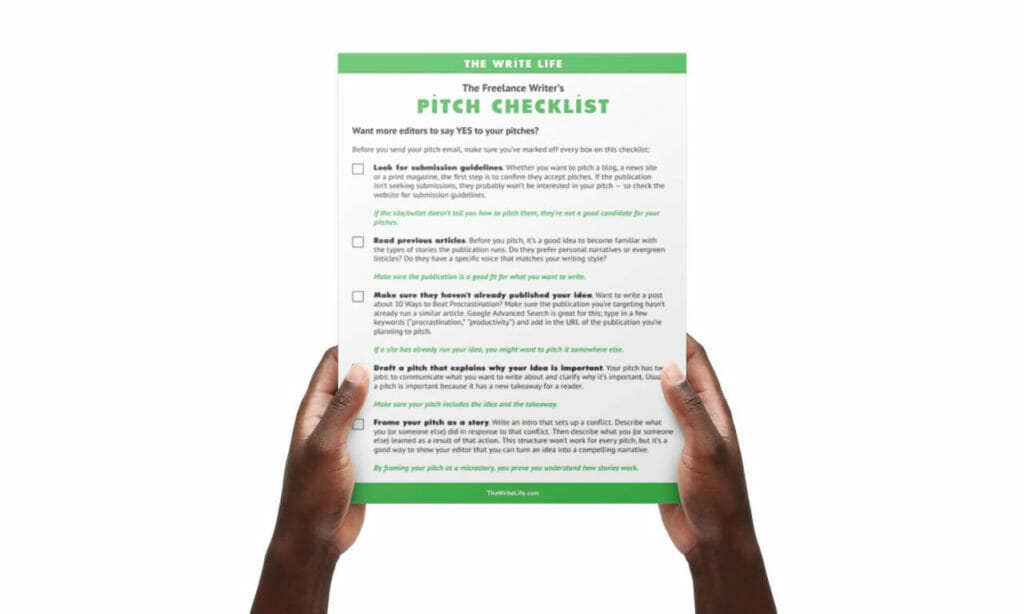
    Ready to put your persuasive writing to the test and start pitching? Get our pitch checklist so yours are a success:

  • How To Create A Blog Post Template (+ 5 Popular Templates)

    How To Create A Blog Post Template (+ 5 Popular Templates)

    If you are a blogger, you know how much time and sanity you can save by having a blog post template ready to go.

    Depending on the type of blogs and articles you create, you might have a wide variety of templates and designs, or you might just have a handful you cycle through. Either way, the sooner you can put them together, the better.

    For anyone who has writers on staff or even accepts guest posts, having templates ready to go to send people can save you so much time later on for formatting and editing the posts to fit into your website’s style.

    In this post, we’ll be going over some of the main types of blogs that people create and give you some tips for making a blog post template for each one of them.

    Why Create Blog Post Templates

    Having blog post templates on hand and ready to go can save you so much time as a blogger. They can also help make sure you don’t forget any part of a blog and you simply follow the template all the way until the blog is done.

    Blog post templates can also help you keep your blog brand consistent because all of your posts will be formatted and written in a cohesive way.

    If you end up outsourcing or hiring writers for your website, you will find so much time saved for everyone if you have blog post templates. That way, everyone can stay on the same page with how each blog is expected to look and flow together.

    Whether or not you have a team or it is just you writing them, you cannot go wrong with using a template to have on hand.

    What To Include In A Blog Template

    Naturally, it will depend on the type of template you are creating, but there are some fundamentals you will want to consider.

    Some things you might want to include:

    • Introduction formatting or rules. You might want to have it only be a certain amount of sentences or to include the main keyword.
    • Main keyword rules for each post. How often should they be included? Do you want to put them in a header? Do you have any other SEO needs?
    • Formatting rules throughout the post. You might want to include rules like inserting a call to action after the table of contents
    • Content rules. Depending on the type of content you are writing (we will dive into examples of different blog posts below), you might want to have different rules for how the information is structured and put together.

    Blog Post Template

    When it comes to blog post templates, you will want to make some basic ones based on what you want and write the most often.

    Although there are a lot of different kinds of blogs out there, lets cover five different options that are some of the most common so you can start to create your templates.

    #1 – Listicle Blog Template

    If you do not know, listicle blogs are exactly what they sound like: they are a general blog that has a whole list.

    It might be something like Top 10 products in your niche, 25 best books to read, 13 best coffee makers, and so on. You get the idea. They typically bring in a lot of traffic because people love lists and they rank well in Google.

    For this blog post, you will need to decide the heading size for each list. You’ll also need to decide how the numbers are outlined and if things like bullet points will be used.

    You should also explain why you put this list together. Maybe it’s to save the reader time or to give them tips that can help them level up a skill. No matter what it is, you should be incredibly clear on what they will receive by reading the list.

    For example, each item in the list could be labeled as 1., 2., and each of the titles will be Heading 2 sized.

    #2 – How-To Blog Template

    How-to blogs are where you take the time to explain a topic and give a deeper tutorial on the topic.

    You will first need to analyze the level of the person you are writing this article for. You might be aiming it at total beginners or it might be a blog post for experts.

    Determining that ahead of time will help you figure out the language you need to use in your blog post.

    Generally, you will want to start by introducing the topic and explaining to the reader what they’re going to learn by the end of the post.

    From there, you will want to go step by step through what you are explaining to make sure it flows in a cohesive way.

    #3 – Review Blog Template

    Whether you choose to review a single product, or compare a lot of different products together at the same time, you will still need some basic outlines of this post.

    Review posts are what they sound like: You spend the time reviewing a product or service and giving your feedback to the reader.

    You have most likely come across review posts when you are looking to buy something yourself and you want to make sure it is worth the money or meets the quality you want.

    In review blog post templates, you will want to start with an overview of what the review is about. From there, you can dive into the product itself and discuss each part of the product or service to give an overview of what people need to know.

    Once you go through all of the features and explain your thoughts, you will want to end it with a conclusion of some kind.

    #4 – Case Study Blog Template

    If you do not already publish case studies, you should. Depending on your blog topic, this is a great way to stand out and start to put your expertise together in a professional way.

    There is some overlap between how-to blog posts and case studies, but case studies provide an exactly real example.

    For example, if you were a copywriter, you could show exactly the before and after steps you did to help a client increase the email subscribers on their list.

    With case studies, it helps to get as detailed as possible with every single step you take along the way. This will require you to keep detailed records of everything you did so you can document it.

    For these templates, first you will want to start with what the case study is about. What were your thoughts, what were your ideas to solve it, how long did it take, and what will the reader understand by the end of the case study?

    From there, you will want to dive into the specific steps you took along the way and explain why you chose them.

    #5 – News

    This one is often pretty basic. You will want to follow journalist writing principles and include the main point of the news in the beginning of the blog post.

    However, you might want to set your own rules for word counts, the types of images to be used, and any other date-specific formatting rules since news is typically time based and not evergreen.

    What To Do Next

    Ready to send some pitches and grow your website?

  • How To Write A Screenplay: 3 Best Practices To Help You Write A Compelling Script

    How To Write A Screenplay: 3 Best Practices To Help You Write A Compelling Script

    If you’ve ever watched your favorite book transform into a feature film, you may have wondered how to write a screenplay. What do screen writers keep? How do they know what to cut out? And (perhaps controversial), what do they add that was not in the original story?

    If you grew up in the 90s or early 2000s, maybe you watched Harry Potter go from black words on white pages in the theater of your mind to record-breaking movies on screens around the world. This series was long, so how did Michael Goldenberg and Steve Kloves determine how to write a screenplay for the movies?

    Screenplays are an important aspect of books today. Whether you aspire to be like Delia Owens or Veronica Roth, it’s crucial to familiarize yourself with exactly how to write a screenplay. You never know, your novel may be the next one to hit the big screen! 

    What Is a Screenplay?

    A screenplay is a specific, written format for directors, actors, and crew members and acts as a guide when filming begins. While a novel is most often told in first or third person, dives deep into the senses, description, and specific movements of characters, a screenplay takes a different approach. 

    Screenplays are such a vital part of the filming process that oftentimes, actors are not even allowed a hard copy for their first read-through. Producers often use secure apps (such as Amber or other screenwriting software) to prevent actors for leaking the script. 

    The key aspects of a screenplay are what viewers will see and hear on the big screen, including:

    • Setting and brief description
    • Dialogue 
    • Locations 
    • Specific noises
    • Camera transitions and shots 

    Think of it this way: If you are a director and want an overview of your next big project, you need to know what locations you’ll need to film in, an idea of the shots you’ll take, and the lines of your actors. 

    When actors are requested for a role or want to learn more about a specific, upcoming movie, they need to read the screenplay (or script).

    Some screenplays you can find online and read to get a better understanding of the exact format. In fact, you can even find some (such as Hamilton) at your local Barnes & Noble. However, keep reading for a streamlined version of a screenplay’s format.

    Here’s How to Format a Screenplay

    Formatting a script correctly is imperative. Actors need to be clear on what lines they need to memorize and who says what. Videographers need to be aware of important shots. Directors need a 30,000-foot view of the movie they’re about to make. 

    The Nashville Film Institute (NFI) gives a great breakdown of what to include when wondering how to write a screenplay. Some of their advice is listed below.  

    Fade In

    No matter what movie you film or what book you are going to take from page to screen, your screenplay will begin with a “fade in.” If you have a voice over (V. O.) without visuals, this is where you will insert it.

    Scene Heading

    When writing your scene heading, be sure to use all caps and include the following aspects: General location, specific location, and what time of day the scene takes place. These details are vital for the cast, crew, and of course, the director, to be aware of.

    Action Lines Or Scene Descriptors 

    Your description should include:

    • Character description each time a new character is introduced
    • A brief description of the setting to set the visuals 
    • Important actions taken in the scene (such as “The bear ROARS.”)

    Here is a free version of the screenplay for the 2016 film, Lion

    Dialogue And Parenthetical 

    This is where you center, in all caps, the name of the character speaking, include a brief (parenthetical) description as necessary, and then write their exact dialogue. For example:

    JANE

    (happy)

    I can’t believe you made it.

    WILL

    (evasive)

    Well, here I am.

    Shots

    This step is very uncommon and only included if absolutely necessary. If it is imperative to include a specific shot in order to best communicate the scene, this is where screenwriters do so. 

    A Step-by-Step Guide for How to Write a Screenplay

    When you begin your first script, just like beginning a manuscript, ensuring your format is up to industry standard will help others take your work seriously.

    The NFI outlines a step by step guide on how to do so:

    • Use 12-point Courier Font
    • Left margin should be 1.5 inches
    • 1-inch right margin (between 0.5 inches and 1.25 inches), ragged
    • 1 inch top and bottom margins
    • Around 55 lines per page regardless of paper size. 
    • Dialogue speaker names (in all caps) 
    • Transitions are capitalized
    • Dialogue 1.5 inches from margin

    Now that you have a general idea of how to format your screenplay, it’s time to get writing. This is where you must think as a videographer or movie-goer instead of as a writer only. Ask yourself the following questions as your write your scenes:

    • Are there any crucial shots I need to communicate?
    • How will the story best come across on screen? 
    • What scenes will not add to the film version?
    • Who are my most important characters?
    • Which characters should I cut?
    • How do I best write dialogue?

    TIP: You may want to print these questions out and keep them nearby as you write your first screenplay. 

    The Transition from Writer to Screenwriter

    Don’t worry if writing a script feels awkward or uncomfortable in the beginning. Screenwriters type out every single aspect of what happens in a story. Why? Well, writers do not have the element of sound or visuals at their disposal so they must write in detail everything that their readers should know. 

    How to write a screenplay well is more-or-less dependent on what viewers will see and hear on the screen. Of course, dialogue is paramount to your script’s success, but the transition from writing novels to writing scripts will likely feel less awkward when it comes to dialogue. 

    Some key aspects to keep in mind are as follows: 

    • Include visuals, but leave the details to the crew
    • Include parenthetical tips, but leave the details to the director and actors 
    • Include crucial shots, but leave creative liberties to the director 
    • Include dialogue, and remember it needs to sound even better  verbalized than it does on the page
    • Include the most important scenes only
    • Cut any scene or character who does not add to the film adaptation 

    Learning how to write a screenplay will be a massive mental shift, but can also bring tremendous rewards. Many writers dream of one day seeing their novel on the big screen. Learning how to write a screenplay, and do it well, is one step closer to either making another author’s dreams come true, or even your own. 

    Refuse to let discouragement set in and instead, press on. Learning a new skill is hard but so rewarding! 

    Want more writing advice?

    Subscribe to get our latest content by email.

      We won’t send you spam. Unsubscribe at any time.