Tag: writing

  • How to Write True Crime In 4 Essential Steps

    How to Write True Crime In 4 Essential Steps

    Since more people than ever before are interested in true crime stories, you might have wondered how to write true crime and what it takes to be successful.

    Out of all the book genres in the world, true crime requires a lot of research and a committed writer who is ready to tell the story behind a gruesome or other type of crime.

    It is certainly not a genre for the faint of heart, but for many writers it is certainly worth it. It will take considerable amount of research skills and time dedicated to talking to people involved in the case, attending trials when you can, and understanding how cases are solved.

    If you have wondered about the true crime book genre, how to write true crime, and wondered what it takes for you to get your foot in the door, we will cover that and more.

    What Defines True Crime Writing

    True crime is an arm off of journalist-style writing. Meaning, it should be objective and focus as much on the facts as possible.

    Of course, not all true crime stories are about murder since there are many other types of crimes out there in the world that are done every day, but murders are the most well-known type of true crime story.

    This is not like crime fiction writing where you want to tell dramatic stories and have some shocking twists. It will be essential for you to stick to the facts as much as possible.

    Yes, there will be sometimes where you have to make assumptions on how dialogue went and what people talked about in specific scenarios, but you want to remain as close as possible to the facts as you see them.

    How True Crime Articles and Nonfiction Books Grip Readers

    People do have a morbid curiosity in general, but for many writers, they love to help try and solve a crime that has plagued an area. Or maybe the crime has already been solved but you are determined to put some of the pieces together.

    As a writer, you can also help bring light to forgotten crimes and help bring closure. Not every writer and written piece helps solve crimes, but every now and then that can be the case.

    As a writer, you will need to take your work seriously to help tell the story to the best of your ability.

    How to Write True Crime

    If you are ready to write true crime, let’s talk about how you can start to put together your first story.

    #1 – Research

    While you will spend a lot of time writing, you are going to be spending more time researching than you ever imagined. It is essential for you to get your facts right for true crime books.

    If you put something untrue in your books, people will now view the whole book with a skeptical lens, and possibly your future work as well.

    This means you not only will Google and research, but you will possibly need to interview people as well and attend trials, just to double-check your facts.

    Always keep in mind that you are writing about real people and real stories, so it is essential to do the best you can to tell the correct story. Not everyone will agree or like everything you say, that’s a given, but you need to get as close to the truth as you can.

    #2 – #1 -Figure out your goal

    Before you start formatting all of your research into a book, you will want to spend some time thinking about your goal for writing your book or article.

    Do you want people to understand the killer? Do you want the crime to speak to a larger crime trend? Do you want to warn others about what killers do so people can stay vigilant? Do you just to tell a story of one crime so people know the truth?

    Above all, you need to give people a reason to pick up your book. You should quickly be able to answer, “Why should someone read this book?”

    This will also help you focus what you are going to include in the overall book. It would be great if you could include everything, but you will often have to make hard choices about which facts and personal accounts go into your book.

    #3 – Decide how much of your own story will be in the book

    Some books, such as I’ll Be Gone In The Dark by Michelle McNamara, include personal stories from the author. Hers story is about how she became obsessed with this case and her journey of putting the clues together.

    Another example includes The Stranger Beside Me by Ann Rule, where she tells the story of her personal friendship with Ted Bundy while people are also trying to find a killer in her local area (spoilers: it’s him).

    It will be up to you as the author what you choose to include. Sometimes adding in your personal narrative makes the story stronger, and sometimes it makes it weaker.

    #4 – Put the story together

    Now is the time to commit and do the hard work of actually putting your story together.

    You might need to create one of those true crime type of boards you see in tv shows where you need to lay out everyone involved and all of the stories that tie everyone together.

    Know that you will probably have to go through a ton of drafts just to make sure you get everything right and accurate.

    Successful True Crime Writer Example

    While there are many, many successful true crime writers, Ann Rule was one of the most well-known.

    As the writer of 37 true crime books, Ann Rule knows a thing or two about publishing true crime books.

    She understood that it was a hard field to break into, but she said, “You can’t let the naysayers make think you can’t make it, because you can.”

    One of her top recommendations for true crime writers (besides writing often) is to attend as many of the trials as you can fit into your schedule. You will want to take the time to not only go over the facts, but deeply analyze everyone involved. Watch how the killer moves in his chair, watch how the jury reacts to certain facts, observe how witnesses talk.

    The trial can teach you so much about the whole crime.

    Mistakes True Crime Writers Make

    If you want to succeed as a true crime writer, you will need to make sure you know how to analyze and organize research.

    Some of the biggest mistakes true crime writers make it not double checking their facts or rushing through chapters just to get them done so they can move onto other parts.

    Many writers also let their own views interfere with their writing and taint how they present the facts because they are trying to persuade readers to go with their point of view.

    There are a few common mistakes true crime writers make.

    The first one, is becoming so obsessed with the case that it steals your sanity.

    Ready to Write Your Book?

    Ready to start writing your book and getting it ready for publication?

    You do not want to miss out on the nonfiction webinar with all of the tools you need to start putting your book together:
  • Proven Writing Strategies: 12 Tips To Use Today

    Proven Writing Strategies: 12 Tips To Use Today

    Writing strategies are a fantastic way to provide a little structure to the subjective field of creative writing. Even famous authors use writing strategies, so it’s no wonder we should follow the example of those we respect. Let’s get straight into it! 

    Writing Strategies: Defined

    We can define writing strategies as a process creatives take to set a course of action that will help them meet their goals. As with health strategies, career strategies, and study strategies, what works for one person may not work for you, and vice versa.

    Below are twelve different writing strategies for you to try. See what works best for you—keep the tips that work and disregard those that don’t! 

    #1 – Read In Your Genre

    Reading in the genre you write is one of the best writing strategies out there. Not only does familiarizing yourself with your genre teach you about genre voice and tropes, but it also:

    • Shows you what plots work
    • Acts as a visual example of what sells
    • Portrays ideas you can use as inspiration 
    • Draws your attention to when to use (and break) writing rules 

    Read as many books in your genre as you can.

    #2 – Read Various Genres

    Along with reading in your genre, I’ve found that reading various genres helps me notice writing rules across not just the genre I write in but many others. How a writer uses a writing rule in romantic fiction will likely differ in a business book. Noting these differences gives depth of insight on various rules. 

    #3 – Take A Class

    Whether you enroll in a class at your community college, audit a class at a college nearby, sign up for an online program, or watch a free webinar, the more classes you can take on writing, the better.

    #4 – Memorize Writing Rules

    Show don’t tell, active versus passive, using one tense per book, employing the senses… When you understand these rules (and more) at a deep level, you will spot their proper and improper use in writing. This will help as you engage in edits later on.

    #5 – Understand Tense

    New writers often struggle to properly manage tense in their writing. One paragraph may include past and present tense, without them realizing it. The better grasp you have on tense, the more professional your writing will appear. 

    For example, consider the egg riddle that keeps people guessing: “I have 6 eggs, I broke 2, I fried 2, I ate 2. How many do I have left?” If you can spot two different tenses within the riddle, you’ll easily spot the answer. 

    #6 – Practice Voice

    Voice sets writers apart from each other, and each writer naturally has a unique writing style. Notice how you write emails, send texts, talk to your best friend, and then compare it to how others do. This is your unique voice. 

    Next, rather than impersonate the voices of other writers you respect, practice writing in your natural style. Continual, well-executed practice will help you become comfortable with your own unique writing voice. 

    #7 – Watch TV Shows 

    TV shows are a great way to continue your writing education on the weekend or after a long day at work. There are several aspects to pay attention to when binging your next series:

    • How do characters’ verbiage differ from each other 
    • What mannerisms make a character unique 
    • What is the tone of the show

    Then, consider these same questions about your own work-in-progress.

    #8 – Read A Script

    While a bit laborious, writing strategies that may bore you can result in tremendous benefits. Reading scripts shows the power of concise dialogue and the importance of cutting out every detail that doesn’t add to the story. 

    You can view some scripts online for free, make a purchase at Barnes & Noble, or search for your favorite movie and see if you can order it. Pay close attention to the dialogue and how many lines each character gets.

    #9 – Meet Your Daily Word Count Goal

    Since I began writing, my writing mentor stressed that many authors do not meet their deadlines. If you want to set yourself apart, set your writing deadline and meet it. This will help your marketing efforts run much more smoothly. 


    How do you meet your deadline? Start small by meeting your daily word count goals. Writing strategies matter, but no matter how great your strategy, if you can’t hit your deadlines…are they really that helpful? So just do your best to stay on track!

    #10 – Edit With Track Changes

    Editing can feel like chopping up your favorite piece of art. To encourage yourself to cut what needs cut and rephrase what needs changed, copy your manuscript and paste it into a separate document.

    Next, turn on Track Changes (in Microsoft Word). Of the above writing strategies, this one in particular will allow you to see your old and new version—in other words, your progress! Plus, if you find you liked the original better, you still have a copy in a separate document. 

    #11 – Print Off Your Work

    Reading my writing on a physical page helps typos stand out to me in ways that reading on a screen just doesn’t. Finding typos, and fixing them, is one area that sets good writers apart from great writers.

    Manuscripts can get long, so consider printing yours single-spaced, two-sided, and with smaller margins in order to fit more text on a single page.

    #12 – Mindset Matters 

    Of these eleven writing strategies, without a healthy mindset, you will likely progress slowly or not at all. Imposter syndrome, fear of failure, and something as simple as a busy schedule often keep wannabe writers from becoming successful writers.

    With a healthy mindset, you can go much further than you dreamed possible. View setbacks as opportunities for growth, writing block as an excuse to push forward, and success as something to be thankful for. When you have a healthy mindset, it’s much easier to have a healthy career.

    Writing Strategies To Use This Year

    Now that you have a list of twelve different writing strategies, it’s time to try them so you can determine which ones work best for you. It may take some time to find which writing strategies are best for you, so consider using the following template to get started:

    Month 1: Tip 1-3

    Read in your genre. Read various genres. Take a class. 

    Month 2: Tip 4-6

    Memorize writing rules. Understand tense. Practice voice.

    Month 3: Tip 7-9

    Watch TV shows. Read a script. Meet your daily word count goal.

    Month 4: Tip 10-12

    Edit with Track Changes on. Print off your work. Choose a healthy mindset. 

    Time To Get To Work

    Trying several strategies a month will help you familiarize yourself with them. Once you understand and are accustomed to using them, you can make a clear choice on which writing strategies work best for you. 

    While it may seem like a big time investment to spend four months dividing on which writing strategies you should use, consider the long-term benefits over your writing career. Take some time upfront, invest in choosing what’s best for you, and then commit to following through with it!

    TWL. CTA. Book Outline Template
  • What Is Freewriting? 6 Steps to Unlocking Your Creativity

    What Is Freewriting? 6 Steps to Unlocking Your Creativity

    If you have been lacking creativity in your writing and your work, freewriting might be a technique that gets you back on track.

    You might have wondered what is freewriting, how it works, and how you can use it to unlock new levels of creativity in your brain.

    The main idea behind freewriting is that you have all of this creativity hiding behind your conscious brain. Our conscious brains can be a mental bully, telling you that your ideas are silly or that what you have to say is not interesting, so freewriting is a technique that moves your conscious brain out of the way so you can tap into your inner creativity and flow.

    We so often want the writing to be perfect, we never focus on getting started. If you relate to that, freewriting might be perfect for you.

    We will go through all of the above so you can use this helpful practice to bring some creativity back to your writing.

    What is Freewriting?

    Freewriting was made popular by Julia Cameron in her book The Artist’s Way. It is also a great book for writers and creatives, so definitely add it to your reading list. However, many writers have mentioned using freewriting and it has been a popular practice for a long time.

    The idea behind freewriting is that you have all these smart, brilliant ideas and creative thoughts behind your conscious mind that is always getting in the way.

    Your mind can get in the way, stress you out, give you imposter syndrome, or think other self-limiting beliefs.

    When you freewrite, you let your thoughts flow. You tap into your subconscious by letting words flow out of you like a stream-of-consciousness and let whatever comes to you come out through your pen.

    Why Freewriting Helps Creativity

    As opposed to mind maps or brainstorming, where you are trying to format your thoughts into something useable, the point of freewriting is to not focus on structure or form and just let everything flow out of your brain at once.

    You sit down, set a timer, and keep writing no matter what, even if the words don’t make sense.

    For most of us writers, when we are expanding on our thoughts, we are also thinking about sentence structure, grammar, punctuation, and more.

    With freewriting, it might seem counterintuitive, but you want to forget all of the writing rules you know and just let the ideas flow out of you. It doesn’t matter if it’s just one word over and over or full, brilliant thoughts.

    You do not need to stay on a set topic or cover a particular theme, only do so if it feels right.

    Freewriting also helps so much for breaking past writer’s block. Simply putting words on a page again can help you break past whatever you are currently stuck with.

    If you are someone who struggles with not only writer’s block, but being overly self-critical or has anxiety about writing, freewriting can be a way to help you stop censoring yourself and to let the ideas flow.

    How to Freewrite

    The main way to practice freewriting is to start writing and keep writing, no matter what thoughts or ideas come to your mind. You just let them flow out of your mind and through your writing tools.

    Before you get started, you will want to block off at least 30 minutes in your calendar. You will also want to pick your tools of choice, whether it is paper or a computer.

    How to Practice Freewriting

    Let’s go over how you can start freewriting and start using this incredible practice.

    #1 – Pick your writing tools

    It will be up to you if you want to type for your freewriting exercise or if you want to write by hand.

    Writing by hand can be the preferred method because you are creating a kind of mind / body connection to the pen, but not everyone works like that.

    You could try both methods to see which one is better for getting you into a flow state.

    #2 – Start writing

    More than anything, you do not want to start overthinking your writing process. The goal of this is to start writing for a set amount of time and to not stop.

    You want to put pen to paper and start to just write about anything on your mind. Even if it’s “I don’t know what to write” just keep writing that over and over until some kind of different thought comes to you.

    You can even repeat the same word over and over if you can’t think of something to write, but you must not stop. The whole point is to keep letting the ideas flow and flow and flow for the set amount of time.

    #3 – Take a break

    After you write for five straight minutes, you should take a break. Read through everything you’ve written and think about it for a bit.

    Then, repeat the cycle of writing for five minutes and taking a break two more times.

    You might want to try a variety of times to see if some work better for you than others. For example, maybe you write for ten straight minutes instead of five.

    #4 – Do not be upset with that you write

    Keep in mind the first few freewriting sessions might be terrible. They might be frustrating, hard, and you might hate everything you write.

    It will take some time to break past that initial struggle and you can always throw your first few attempts away, but you need to keep going in order to see the benefit.

    #5 – Stick with it

    A lot of what you write at first is going to be logical thinking and “regular” thoughts such as things you have to do or the weather. The real magic comes when you keep going and start to break past those initial thoughts.

    Many people say they can’t see results until they start doing it for a few days or after a few weeks. The most important part is that you keep going and doing the practice.

    It can also help to keep your freewriting exercises because you might see similar themes and ideas when you look back on what you have written.

    Keep in mind, you can choose to burn or throw away your freewriting exercises if you are nervous about someone reading it and want the peace of mind of having it all to yourself. There is generally no right way or wrong way to do these things.

    You will see the best results if you do freewriting every day, but any time you do it is better than not doing it at all.

    #6 – Use freewriting for certain topics

    Once you get the habit and the general idea down, you can use freewriting to focus on certain topics or explore things you feel stuck with.

    If you are writing a book, this might be the time for you to freewrite what could happen in the next chapter.

    Having an idea might also help you get started if you truly get stuck with your freewriting, but do what works best for you.

    Once you get better at freewriting, you will love the freedom that comes with letting their thoughts completely flow without judgment.

    What to do next

    Looking for help when it comes to putting together an article template? You won’t want to miss this done-for-you template:

    article writing template
  • 7 Persuasive Writing Tips To Make Your Writing Stronger

    7 Persuasive Writing Tips To Make Your Writing Stronger

    Persuasive writing is the art of trying to convince others of your point of view using the written word. The goal of it is to persuade someone to do something or think a certain way.

    While it can use elements of creative and expository writing, it is almost in a category all on its own because the goals are different. If you are not trying to persuade someone, then it is not persuasive writing.

    If you have not written any persuasive writing in quite some time, you might be a little rusty on how to write it and what to include.

    Let’s talk about what persuasive writing is, what it is not, and give you seven persuasive writing tips to help you make a strong written piece.

    What Is Persuasive Writing?

    Persuasive writing is writing that tries to convince the reader of something, usually the writer’s opinion.

    It can use a wide variety of writing styles, but it must have the goal of persuading the reader to be considered persuasive writing.

    Persuasive writing can come in many forms, from ads to articles. It will often spend time throughout the piece acknowledging the other side’s arguments and combatting each of the opposing side’s arguments.

    Someone writing a persuasive writing piece should know exactly what they’re talking about. Sure, some types of persuasive writing will use made up facts or arguments that do not work logically.

    It is important to always double-check your facts when you are writing a persuasive writing piece.

    Examples of Persuasive Writing?

    Persuasive writing should be used anytime you need to convince someone of your argument.

    This could be in opinion pieces, on social media, in blogs, in advertisements, or more. It could even be as simple as trying to convince your family why they should go to a city you love for the annual trip.

    When you understand how to use it, you will also be able to see it all around you. It is in ads, movie trailers, on social media, and so on.

    No matter what you are using persuasive writing for, there are some elements you should be using each and every time, which we will dive into down below.

    One example of persuasive writing you can easily imagine is a review of a product. Go on Amazon and look at almost any review of any product. You will see persuasive writing pushing you to either buy or not buy that product.

    7 Persuasive Writing Tips

    Now that you know what persuasive writing is and when you should use it, let’s cover some ways you can make your writing more persuasive.

    #1 – Find your best argument

    The first thing you want to do is to find either your best argument you want to highlight or find the main angle of your writing.

    Lots of people try to be persuasive by bringing in every good point they have in their arsenal. That is the opposite of what you want to do.

    While it helps to have your main facts and supporting facts, throwing a thousand pieces of new information at someone is only going to overwhelm them instead of help your argument.

    It can help to lay out all of your main arguments and highlight your strongest ones that would persuade your reader. Only after you figure those out and present them to your reader can you dive into your supporting points.

    #2 – Know who you are writing to

    You cannot create persuasive writing if you do not know who your audience is.

    When you know who your audience is, you will be able to pick particular words and thoughts that will resonate with that audience.

    Depending on the platform you are using for your persuasive writing, you will need to narrow down who the people are you are writing to (or single person if it is something like a college paper).

    This helps you form your arguments because you understand who the reader is and what they care about.

    #3 – Keep them intrigued

    If you want to keep someone reading your argument, you will need to keep them invested enough to keep reading.

    You will need to meet the reader where they are at with their understanding of your topic. You do not want to start a persuasive writing piece with being mean and aggressive trying to prove your point.

    Instead, you will want to show that you understand their perspective on things, but guide them to understand your perspective and why you believe the things you do.

    It is important to do whatever you can to keep them reading. if you lose the reader and they are no longer interested in what you have to say, you have lost your persuasive writing point.

    #4 – Prove your point

    Now is the time to bring in all of the facts and experiences you can to prove your point.

    You have done enough work to walk them through your thoughts, facts, and perspective, but now is the time to hammer it home and highlight your best points.

    Ideally, you pick only a handful of main points as you do not want to overwhelm them. You want to keep your main points focused and on topic.

    Take the time to deep dive into each point you have and use supporting facts to back up what you are claiming.

    #5 – Overcome their objections

    Once you have laid out your arguments, the reader will often have objections in their mind about why you are not right. Maybe it is not always full-on objections, but they might have reservations at the very least.

    You will need to outline what these are and take a moment to overcome them. You do not need to dance around what they are, you can address them head-on.

    Address them head on and it will only make your writing that much stronger.

    #6 – Bring in emotional elements

    Whether you want to use storytelling or facts, you need to rile their emotions. This does not mean to manipulate or lie to them, but when you bring emotions into it, you are able to connect with them in a different way.

    Of course, you want to use facts to back up your main arguments, but this is not journalism, this is persuasive writing.

    Telling stories and writing ideas that spark their emotions is not always a bad thing. Humans love stories to connect to and understand things better.

    You do not want to go overboard with emotions, because then your writing will not seem grounded, but a few here and there is a good idea.

    #7 – Bring in social proof

    Social proof is essentially making sure that you show how the point you are arguing is working for other people.

    Few things will hammer home your argument quite like showing how other people feel or think about your topic. It is a great way to back up your argument with a real life example.

    This is why things like health supplement companies and gyms use “before and after” photos to showcase what people have done with their product or service.

    The social proof you bring into your argument needs to have that kind of impact.

    What To Do Next

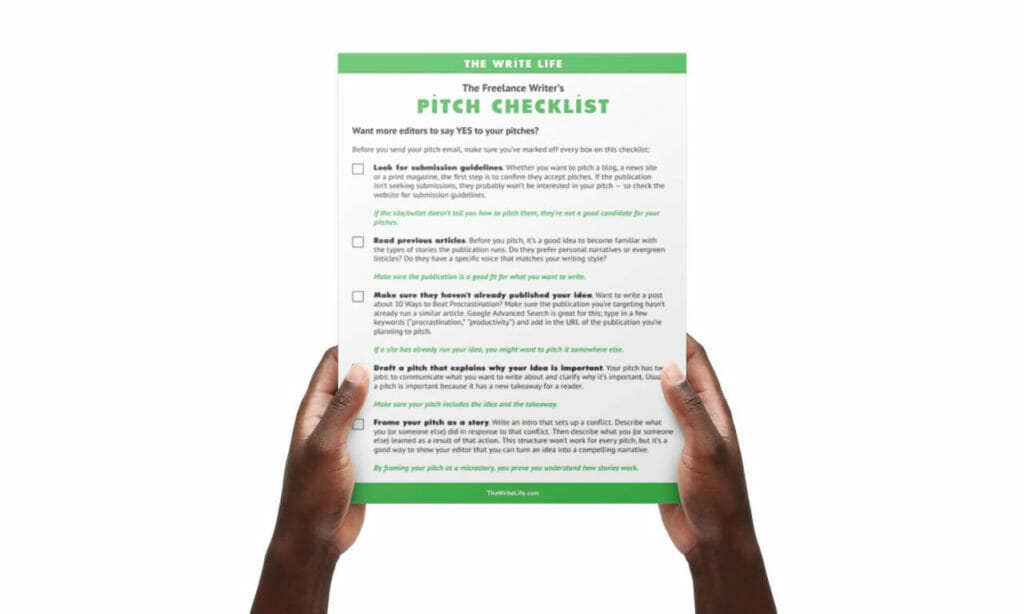
    Ready to put your persuasive writing to the test and start pitching? Get our pitch checklist so yours are a success:

  • Book Writing Process

    Book Writing Process

    Writing a book is an art form, and that means that there’s not one right way to do it—it’s going to look different for everyone, and as long as someone’s method works for them, it’s fine.

    That said, if you’re a new writer looking for advice, this can make a project as big as a novel feel daunting. How do you even start to tackle a project that might be a few hundred thousand words long before it’s over?

    If you’re a painter, you need to learn about different methods and techniques and try each to see which resonates with you—you learn how people have been doing it, because that gives you a foundation of information to work with. With that foundation, you’ll eventually gain the experience necessary to use what works for you and leave the rest.

    It’s the same with writing. While you’ll eventually reach a point where you’ve got a book writing process which works for you, you may need to try a few different methods before striking gold. In this article, I’ve got five methods for you to add to your toolkit—feel free to mess with them as you need to so they’re effective for your project’s needs.

    For each process, I’m going to talk about how it works, who it might be helpful for, and what sorts of tweaks you could make to give you an idea of how to customize these processes. But before we get into that, I want to talk about brainstorming and outlining.

    Brainstorming and Outlining

    Before you start actually writing your book, you’re going to want some idea of what the book is about. You’ll probably need to know: 

    – who the characters are

    – where the characters are

    – what the characters want (at least in the beginning)

    & what the book is About (what big themes or ideas you intend to explore).

    Some writers have this more or less all in their head before they sit down to write, but I recommend jotting it down. Here are a few ways you might brainstorm before you start getting into the meat of your novel:

    1. Mind Map

    Write a word in the center of a piece of paper related to your novel—it might be a character’s name, the setting, an idea, a theme, whatever. Draw two lines away from that word and write the first related thing that comes to mind, and do this until the page is full of characters, plot points, settings, phrases, and so on which correspond to your novel.

    2. Stream of Consciousness

    Set a timer for two, five, or ten minutes (whatever works for you) and write down literally whatever comes to mind. If you’re writing ‘I don’t know what to write and I think this brainstorming idea is terrible,’ that’s cool. Keep going until you’ve got enough to work with.

    How do you know you’ve got enough to work with?

    There’s not a hard rule, but basically, you’ve got enough to work with when you feel that the brainstorming process is done. You feel ready to start writing. You may need to revisit the brainstorming process while you’re writing to work out plot holes or sticky spots, and that’s fine! This is just to help you get started with a solid foundation.

    And once you’ve got that foundation, you’re ready to write your book, and that’s where these five processes come in.

    The Snowflake Method

    Randy Ingermanson’s Snowflake Method is built on the idea that “good fiction doesn’t just happen, it’s designed.”  The Snowflake Method forces you to start small and expand outwards until you’ve got a fully fledged novel. This process is outlined in detail on Ingermanson’s website, but we’ll go over a brief summary here.

    Steps 1-7: Synopses and Character Description

    You start with an elevator pitch for your novel. If you’re not sure how to write one, look up one-sentence novel descriptions to get a feel for how they should look—they’re basically a summary intended to sell the listener on the story.

    Steps 8-9: Outlining

    Here, Ingermanson instructs to use a spreadsheet to outline your novel. You’ll use one line for each scene. Then, you take this information and write out a narrative description—basically, you’re converting the spreadsheet to a word document and writing out how the book plays out. He says this step is optional.

    If you’re using software like Scrivener, there might be a feature built-in for you to list your scenes. Otherwise, Google Sheets is free.

    Step 10: Drafting

    Draft the novel! You might need to take breaks to edit the design documents you’ve been creating as things change, and that’s okay. Ingermanson explains that these design documents will have to be edited if you’re doing well—as your ideas develop and change, you’ll have to reflect those changes in the pitch, character synopses, and plot summary.

    The Snowflake Method is great because it offers structure for the process without enforcing structure on your book itself. You can use this process with whichever plot structure you like, and at the end of it, you’ve got the documentation you’ll need to sell this book to publishers or market this book on your own as an indie author.

    If you’re going to tweak this method, tweak the time frames—Ingermanson lists how long each step should take (which is hugely helpful for keeping creative momentum going), but if you need to take more or less time on a given step or if you need to take breaks between steps, no one’s stopping you.

    New call-to-action

    Discovery Draft

    A discovery draft is what a lot of writers might refer to as ‘pantsing.’ For this, you might or might not have much idea of what you’re going to write about—if you have anything written down, it’s probably just a premise or starting point: a character in an interesting setting, a specific fight, whatever.

    The idea of a discovery draft is that you sit down and draft the novel as quickly as possible, figuring out details about characters, plot, and all that as you go. Some discovery drafters will edit as they go—I recommend that you don’t, but do make notes or keep a separate document going with the changes that come to mind as you work.

    This allows for a lot of creative momentum, because you’re discovering the story as you go—it’s exciting. The downside is that because you might not know where you’re going, you may get stuck. If this happens, I recommend slapping down a note that says “GOT STUCK HERE” and jumping to the next scene. If you don’t know what the next scene is going to be, that’s also okay. You can pause and brainstorm to figure out what happens next, or just decide what would be the worst possible (and realistic) thing to happen to these characters at this time and go with that.

    You’ll end up with a first draft that’s also an outline and also a character sheet. Once you’ve finished this draft, go through and identify character arcs and plot arcs and determine how to hone them. Almost none of your discovery draft is likely to end up in the finished product, but that’s true of any first draft.

    Bullet Point Outline

    A bullet point outline is a great option if you’re looking for something super flexible, and it’s the foundation for many other methods you’ll see. Basically, this is the spreadsheet step in the Snowflake Method.

    On a piece of paper, in a word document, or on a spreadsheet—doesn’t matter—you’ll dedicate a line to each plot point.

    If you want a super detailed outline, you might write each beat as its own line. If you do this, I recommend organizing your outline so that each chapter has its own heading, just to keep everything streamlined and easy to refer to. You can use highlighters or different-colored fonts to color-code based on character, subplot, or whatever you desire.

    If you don’t want to get that detailed, you can write down the major plot points in your novel and forget the rest.

    As long as you have enough information to feel comfortable drafting, you’re good to go. A detailed outline can help save time in the drafting process, but a loose outline might make you feel a little more free to change things up as you draft—if you get lost along the way, skip along to the next beat, and figure out how to close that gap when you revise.

    Start at the End

    Have you heard of Sagging Middle Syndrome? It describes the phenomenon wherein you breeze through the setup of your novel, then stall out in the middle—around the middle of act two, it becomes impossible to reach the climax. Characters hang out doing unrelated shenanigans until the climax comes to rescue them (and the reader).

    This is a pretty natural thing to happen, especially in a first draft. If it’s a particularly tough struggle for you, try starting your novel at the end. Where do your characters end up? Who wins, and what happens as a result of that? Knowing how the story ends makes it easier to figure out how to get there.

    Another variant on this method is starting with the climax. If you’re the type of author to get an idea for a really cool climax before you think of anything else, just write that climax down. Yes, it’ll probably change dramatically as you rework it—this is inevitable.

    After you’ve written the end or the climax or whichever scene you’ve decided to start with, ask yourself the following questions:

    – who are these characters?

    – how did they get here?

    – who ultimately wins in this confrontation?

    You can keep working backward, or you can pause and switch to a bullet outline—whatever works for you.

    Storyboard Method

    If you’re a visual learner, this might be your ticket.

    Storyboards are commonly used for visual mediums like comic books, T.V., or movies, but you can use them for novels, too. Use index cards to draw out the scenes you want to have happen in your novel and tape them to a piece of posterboard, the floor, the refrigerator, or your bedroom wall. Instead of drawing the scenes, you could also write them out using short sentences or descriptions.

    Again, if you want to use color-coding or some other unique marker to pick out characters and subplots, go for it! If not, cool. This method is great because it allows you to literally see missing spots in your plot, and it allows you to literally pick up and move scenes and see what they’d look like in other parts of the story.

    Some writing software like Scrivener has features which allow you to do this, so if you’re looking for a way to do this that saves some space, you might find that useful.

    When you’ve got everything lined up the way you want it, take that information and put it into a word document. This will serve as a bare-bones first draft, which you can get straight into revising!

    New call-to-action
  • Purple Prose – What It Is And How to Avoid It

    Purple Prose – What It Is And How to Avoid It

    Although purple prose sounds pretty and like a way you would want your writing described, it’s actually not a good thing to have your writing described this way.

    If someone calls your writing purple prose, essentially they’re calling it flowery. Meaning, they think it’s too wordy, formal or trying too hard to be poetic.

    Although there are some genres and authors who think purple prose is a badge of honor as a writer, we’ll let you decide that for yourself.

    In this article, we’ll dive into what purple prose is, where it comes from in history, take a look at some examples, and ultimately go over how to avoid it as a writer.

    What is Purple Prose?

    Purple prose is writing that is too formal, poetic, or wordy. It’s when too many adjectives, adverbs, and metaphors are used to describe things.

    Generally, there is not a specific rule about what is or is not purple prose, it’s more of a, “You know it when you see it” kind of thing.

    It’s also subjective sometimes and not everyone agrees if some pieces are purple prose or not.

    With that in mind, it can be hard to define exactly what it is, but the novelist and poet Paul West had this to say about it:

    “It takes a certain amount of sass to speak up for prose that’s rich, succulent and full of novelty. Purple is immoral, undemocratic and insincere; at best artsy, at worst the exterminating angel of depravity.”

    Paul West from his article “In Defense of Purple Prose” in the New York Times

    Ultimately, writers don’t want to be too flowery and go on for too long. You’ll want to tighten up your sentences and make sure you keep your readers engaged.

    Where Does the Phrase Purple Prose Come From?

    The Roman poet Horace was the first to coin the phrase purple prose in his poem The Art of Poetry.

    Here is the translated version:

    Your opening shows great promise, and yet flashy purple patches; as when describing a sacred grove, or the altar of Diana, or a stream meandering through fields, or the river Rhine, or a rainbow; but this was not the place for them. If you can realistically render a cypress tree, would you include one when commissioned to paint a sailor in the midst of a shipwreck?

    From The Art of Poetry by Horace

    For context, at the time, purple dye was incredibly expensive and having any purple in your clothes was a sign of wealth. Many people who wanted to portray being wealthy would put purple fabric into their cheaper clothes to appear richer than they were, thus why it started to be thought of as flashy and gaudy.

    That’s why Horace drew a line between the purple fabric in society and the purple prose in writing. People then used it to describe any kind of writing that was simply trying too hard and was turning away readers.

    Purple prose is deeper than write on sentences, and instead it’s writing that’s flashy for the sake of being flashy, without giving meaning or depth to the writing.

    Once again, it’s up to you as the writer to include or exclude all the details you want, but you will want to avoid including so many metaphors you lose what you’re trying to say.

    Examples of Purple Prose

    As you read some of the examples below, see if you can figure out why they are defined as purple prose or not. You might even want to read them out loud for more of an understanding.

    Most of us have heard the line, “It’s was a dark and stormy night…” but not many people know it’s a commonly mocked piece of writing and a perfect example of purple prose.

    It was a dark and stormy night; the rain fell in torrents—except at occasional intervals, when it was checked by a violent gust of wind which swept up the streets (for it is in London that our scene lies), rattling along the housetops, and fiercely agitating the scanty flame of the lamps that struggled against the darkness.

    Edward Bulwer-Lytton’s novel Paul Clifford

    Another example from Jerome K. Jerome. This one might be a little more obvious as you can see it’s a whole sentence on its own as an example. As you read through it, see if it holds your attention or if your eyes start to glaze over at a certain point in the sentences.

    “The river—with the sunlight flashing from its dancing wavelets, gilding gold the grey-green beech-trunks, glinting through the dark, cool wood paths, chasing shadows o’er the shallows, flinging diamonds from the mill-wheels, throwing kisses to the lilies, wantoning with the weirs’ white waters, silvering moss-grown walls and bridges, brightening every tiny townlet, making sweet each lane and meadow, lying tangled in the rushes, peeping, laughing, from each inlet, gleaming gay on many a far sail, making soft the air with glory—is a golden fairy stream.”

    Jerome K. Jerome from Three Men in a Boat

    For a more modern example of purple prose, look to romance novels, particularly ones from the 70s and 80s where graphic scenes were described using metaphors and outlandish metaphors to describe things so their novels wouldn’t be so raunchy.

    How to Avoid Purple Prose

    Keep in mind if you’re just starting out as a writer, you’re bound to have a ton of mistakes. It’s the cost of entry to making it as a professional writer.

    If you’re trying to make your writing creative and poetic, it’s better to overdo it at the start as you learn how to write creatively and say what you want to say.

    With that in mind, you’re bound to create purple prose here and there, but as long as you make sure you’re going back in to edit it out and only keep in the strong parts of your sentences, you should be just fine.

    As always as a writer, you should constantly be editing your work and thinking about any extra parts you want to cut out. If you let too much fluffy language in your writing, it can not only turn off readers, but it can distract them from the main point you’re trying to say at that moment.

    You know how some authors write over people’s heads on purpose? Like they use language that is fancy so they can show off how smart they are? That is generally what you want to avoid as a writer, you always want to write directly to the people you want to read your book.

    One way to test out if your writing is too fluffy is to have test readers who will give you an honest opinion.

    There are also writing tools out there that can help show you where your writing could be stronger or weaker.

    You could also read your writing out loud to see how many breaths you need to take to finish a single sentence, which can be a sign of it being far too long and wordy.

    Get Your Fiction Handbook

    Looking for a guide to writing fiction? One that will give you the actionable step-by-step guide to getting your fiction book out in the world? This guide has everything you need:

  • Different Types of Characters in a Story

    Different Types of Characters in a Story

    When you’re writing, you have different tools and components at your disposal—plot, structure, character, theme, etc. You manipulate these things to make your work the best it can be, and having a good understanding of how all of these components work means you can move them around with intention.

    Characters are sort of like pawns. To know what to do with them, you need to know what they’re doing in your story—what purpose do they serve, and what are readers going to expect from them based on similar characters from other stories?

    In this article, we’re going to talk about the different types of characters in a story that you’ll encounter across mediums (T.V., movies, books, etc.). Not only will this make it easier for you to analyze the media you encounter, but it’ll help you more intentionally and thoughtfully craft your own work.

    Character Roles

    Let’s first talk about characters by the role they play in your story. This is the function they serve in terms of the story, and these terms are used across genres and mediums (a protagonist is called a protagonist whether you’re talking about a children’s adventure book or a grisly war movie).

    These roles often overlap—antagonists may start out as deuteragonists, for example, and in a series like Heroes of Olympus by Rick Riordan, characters who are protagonists in one installment may not get as much on-page time as they do in another. 

    Protagonist

    The protagonist is the main character of your story. They’re the ones driving the plot and undergoing the most change, usually. The story is about them, and the story’s main arc will be tied directly into their own internal character arc. A story told from multiple points of view may have multiple protagonists—if this is the case, each character should have similar weight.

    Examples: Luke Skywalker in Star Wars, Miles in Looking for Alaska by John Green

    Character Development Worksheet

    Antagonist

    The antagonist directly opposes the protagonist. We see this in superhero movies all the time: the antagonist wants to destroy the world while the protagonist wants to save it. They often need to be defeated by the protagonist in order for the plot to resolve. The antagonist’s chief job is to create problems for our main characters.

    Examples: Sauron in Lord of the Rings, Logan Roy in Succession, Nurse Ratched in One Flew Over the Cuckoo’s Nest by Ken Kesey

    Deuteragonist

    A deuteragonist is the character who is secondarily important to the protagonist. This is often the protagonist’s closest friend and companion. Because of their proximity to and influence over the protagonist, they play an enormous role in the plot, and they often undergo significant change themselves—conflict between the deuteragonist and the protagonist is a common subplot meant to steer the protagonist toward the inner change needed to succeed in the climax.

    Examples: Dr. Watson in The Adventures of Sherlock Holmes by Sir Arthur Conan Doyle, Sam Gamgee in Lord of the Rings

    Tertiary Characters

    Tertiary characters are the third most important characters in a story. These characters don’t often see a lot of character development, or at least not particularly complicated development—they mostly exist to flesh out the world and add texture and depth to the setting, as well as to deliver one or two pieces of information to the main cast. They might be townspeople, henchmen, or miscellaneous council members.

    Example: Pintel and Ragetti from Pirates of the Caribbean: the Curse of the Black Pearl

    To know how to name characters, click here.

    Character Archetypes of the Hero’s Journey

    An ‘archetype’ is sort of like the blueprint. An ‘archetypal mother,’ for example, would be the picture of a mother—not necessarily the perfect mother, but the perfect example of a mother. In The Hero’s Journey, Joseph Campbell outlines eight major character archetypes which pop up in fiction.

    The Hero

    The hero is usually the protagonist. This is the character who has to battle their internal struggles to overcome the antagonist and save the day in the end—the reader generally roots for them and wants them to win. They tend to be aligned with moral good.

    Examples: Marvel’s Captain America, Percy Jackson from The Lightning Thief by Rick Riordan

    The Mentor

    This character exists to offer advice and guidance to the hero. They don’t usually have much of an arc unto themselves, instead serving as a plot device—they show up when the hero needs a key piece of wisdom to help them on their internal journey. This character tends to be older, but that’s not necessarily a rule.

    Examples: Yoda from Star Wars, Gandalf from The Lord of the Rings

    The Ally

    The ally is the hero’s right hand man. This is usually the deuteragonist—this person wants to help the main character achieve their goals, and their interests are tightly aligned with the hero’s. If they become misaligned, this is the source of enormous conflict, as the ally and hero tend to depend on one another.

    Example: Nick Carroway from The Great Gatsby

    The Herald

    The herald isn’t always a character—this can be a person, but it could also be an object, like a message. The herald’s purpose is to herald, or signal, an upcoming change for the hero. This typically happens at the start of the story—a character’s living their regular life until the herald calls them to adventure.

    Examples: the letter from Hogwarts in Harry Potter, the summons from Fiona’s parents in Shrek 2

    The Trickster

    The Trickster is there for comic relief. Sometimes this is also the protagonist’s best friend (you see this a lot in buddy-cop movies), since having a sidekick who tags along to make wisecracks is an easy way to keep the mood light. They may also provide emotional support or serve some other function, but this character is the one you think of as ‘the funny one.’

    Examples: Donkey from Shrek, Jaskier from The Witcher 

    The Shapeshifter

    While most of the main characters undergo change in some form or fashion, the shapeshifter’s change is different—they cross the line between ally and enemy. Someone who starts out as an ally and is later found out to always have been an enemy is an example—so is a redeemed villain who always had a heart of gold.

    Examples: Zuko from Avatar: The Last Airbender, Rhea Jarrell in Succession

    The Guardian

    The guardian, also known as the threshold, is a character who stands between the hero and his destination. They warn the character about the danger ahead, either explicitly in the form of a verbal warning, or implicitly by their dangerous nature. The hero has to defeat, outsmart, or otherwise work around the guardian to proceed with the quest.

    Examples: Cerberus from The Lightning Thief by Rick Riordan, The Minotaur from The Lightning Thief by Rick Riordan

    The Shadow

    The shadow character is the antagonist, or the antagonistic force. This is the threat which looms over the story and which ultimately must be defeated by the hero. They also represent an opposite world view from that of our protagonist—usually this looks like a morally good protagonist who represents evil.

    Examples: Darth Vader from Star Wars, Gollum from The Lord of the Rings by J.R.R. Tolkien

    Character Tropes by Genre

    Character archetypes, as you can see by the examples listed above, span over many genres and mediums. Within specific genres, though, these archetypes take the shape of character tropes.

    Tropes are commonly used elements within a story—they’re building blocks to which a reader will instantly assign meaning based on their previous interactions with that trope.

    To know how to create believable worlds for your character, click here.

    Character Tropes in Sci/Fi Fantasy

    The Wizard

    The Wizard usually acts as a mentor figure. They tend to be older (sometimes centuries old or immortal), and they often have some supernatural abilities which give them transcendental knowledge which they can impart to the protagonist. They also tend to be loners and live in seclusion.

    Example: Gandalf from The Lord of the Rings

    The Chosen One

    The Chosen One is a trope where the main character is literally destined for the plot. They’re the only person who can, for some plot-provided reason, save the day. The Chosen One will often grapple with this enormous responsibility, and their decision to take on that responsibility or abandon it will make up their inner arc.

    Example: Harry Potter

    The Reluctant Hero

    The Reluctant Hero is one who doesn’t want to save the day. They want to go about their regular lives, but eventually, the plot demands that they take on the role of the hero.

    Example: Shrek

    The Dark Lord

    The Dark Lord is a very powerful wizard, sorcerer, or magician-type character who also usually serves as the story’s antagonist. They tend to represent evil, and they tend to have an all-powerful aura about them—Dark Lords often have armies, henchmen, and so on which must also be reckoned with during the quest.

    Example: Voldemort

    Character Tropes in Romance

    Secret Billionaire

    The Secret Billionaire knows that they’re a billionaire, but their love interest and the story’s secondary characters don’t. This means that the love interest falls in love with them purely for their personality and not for their money, which is what the Secret Billionaire is used to, and which is why the Secret Billionaire will resist the exposure of their wealth so hard.

    Girl-Next-Door

    The girl-next-door is a little naive, friendly, and helpful. They’re not supermodel beautiful or insanely talented in any particular regard—their strengths come from their down-to-earth goodness, patience, and sensibility. These are common protagonists in romance novels, since they function as great self-inserts for readers.

    Newbie

    The newbie trope, also known as the virgin trope, is where we have a character (most often a young woman) who is completely new to the world of romance, sex, and dating in general. When handled poorly, we get characters like Anna from Fifty Shades, whose naivety feels almost supernatural in nature and who is frequently infantilized for the purpose of fetishization.

    Character Tropes in Horror/Thriller

    The Scholar

    The scholar character is the one who does a ton of research—they might be a professor, lab assistant, or doctor—and provides the protagonist with this information at some key point in the story. In a supernatural horror, this information might be lore about the entity haunting the cast. In a realistic thriller, it might be a detective or police force sharing what they know with the protagonist.

    The Amateur Sleuth

    The amateur sleuth, commonly the protagonist, has no background in solving crime. They’re often an everyday person who becomes forced to investigate the mystery themselves when proper authorities aren’t an option, either because they refuse to take on the case or prove incompetent.

    The Lonely Monster

    The lonely monster is usually the antagonist. This character, as the name implies, lives alone, and if that loneliness is highlighted by the story, it might give them a sympathetic edge. This might be a ghost kicking around an old asylum, a monster hiding out in an abandoned warehouse—they still often need to be defeated by the heroes, but they might not feel great about it.

    Character Development Worksheet
  • Clarity of Writing: 9 Proven Techniques to Writing Well

    Clarity of Writing: 9 Proven Techniques to Writing Well

    While everyone will have their own definition of what good writing looks like, bad writing is more universally recognizable. 

    If you want to write well, it’s essential to write clearly. Anything else is an absolute disservice to your self-respect as a writer, not to mention the time and attention of your reader.

    Sometimes, writers fall into the trap of thinking that if they have an important enough message to share, or an entertaining story to tell, they can get by with not writing clearly. That’s simply not the case. You run a real risk of readers switching off from your work entirely if your writing is unclear.

    Let’s explore the concept of clarity of writing as well as nine techniques to attain it.

    What is clarity in writing?

    Clarity in writing is achieved when your intended meaning is expressed as efficiently as possible.

    To understand what clarity in writing looks like, it’s useful to consider its opposite. 

    When writing is unclear, it causes unnecessary mental effort for your reader. Having to decipher a sentence is not conducive to appreciating or absorbing it.

    So what are some of the main impediments to clarity in writing?

    1. Wordiness. Efficient writers are economical with their words. Saying more with less is a fundamental part of writing well.
    2. Unstructured text. If sentences, paragraphs, and sections or chapters lack a logical flow, your reader will lose focus. A clear structure is essential for effective writing.
    3. Inappropriate language. If you use jargon, metaphors, cultural references, or anything else outside of your intended reader’s expectation or understanding, you sacrifice writing clarity.
    4. Unfocused meaning. Clear writing can only flow from clear thinking. If you’re confused about the point you’re trying to make, or the way you want to express it, you don’t have a chance of writing clearly.

    In essence, anything that makes your writing easier to understand and more enjoyable to read is conducive to writing clarity.

    Anything that detracts from either objective is undesirable and should be eliminated.

    How to achieve clarity in writing – 9 proven techniques

    While understanding the concept of clarity in writing is an essential first step to achieving it, it’s not enough on its own.

    Instead, if you wish to write more clearly, you need to consciously work at it until it becomes instinctive. 

    Here are nine techniques to help you achieve greater clarity of writing.

    1 – Consistent practice

    For most writers, you stand a far better chance of achieving clarity when you write consistently. 

    If you write on an inconsistent basis, you’ll find the act of crafting a sentence to be laborious and unnatural. It’s like attempting exercise when you are out of shape. Even your best efforts will be far less graceful than someone who trains habitually.

    2 – Optimize your writing routine

    It’s not enough to write consistently – you also need to optimize your writing space and writing routine.

    To produce your best work, you need to find the best combination of conditions for yourself. This is a highly personalized process. One writer’s perfect routine would be another’s poison. Furthermore, your preferences will evolve, so don’t be afraid to experiment with aspects of your writing practice in search of greater clarity.

    Some of the factors to experiment with include:

    • The location where you write – at home or in public?
    • The tool you write with – a simple word processor or something with greater functionality? On a laptop, desktop, or by hand?
    • The time of day when you write – when are you at your most productive?
    • Do you write with music, white noise, background noise, or as much silence as possible?
    • Do you consume coffee while you write? Or even write drunk and edit sober?

    Answering these questions and creating a writing routine will make it a lot easier to do your best work.

    3 – Outline in as much detail as you need

    The extent to which you outline, as well as the type of outline you produce, has a direct impact on the clarity of your writing.

    Again, this is highly personal. Some writers find greater clarity by allowing their thoughts to flow freely while they craft. Others find this results in meandering and unfocused text and instead prefer a detailed plan before putting pen to paper.

    4 – Find a drafting and editing process that works for you

    Typically, most writers will benefit from the advice to write without judgment or hesitation during a first draft and to tighten up on the next round. If you try to achieve perfect clarity on your first attempt at a piece you run the risk of getting caught up in the process of evaluating rather than crafting.

    However, some writers report that a quick glance back over a paragraph or section before moving on can be beneficial. Find what works for you.

    5 – Clarity is contextual

    Clear writing for one readership is likely to look entirely different for another. 

    For example, if you’re writing for newcomers to a topic, too much jargon is likely to lead to confusion. However, for an expert readership, clarity will require using more advanced terminology, as anything less will seem oversimplified.

    Clarity is also partially dependent on genre and style. For example, readers familiar with literary techniques such as metaphor or an unreliable narrator will enjoy and appreciate them. Someone unversed in such techniques may well feel confused.

    6 – Read your writing out loud

    Different parts of your brain are used when reading something silently in your mind as opposed to reading it out loud. 

    Something that might seem clear on the page ends up being confusing when spoken. Similarly, your ear will often catch repetition or other impediments to clarity that aren’t apparent when reading silently to yourself. 

    7 – Use writing tools

    Writing apps and tools are no match for a talented human editor. However, they are capable of boosting your writing clarity. Simple, free tools such as Hemingway can easily identify areas of improvement. 

    For a more detailed analysis of your writing and ways in which it can be improved, consider investing in a paid tool such as ProWritingAid or Grammarly Premium.

    8 – Get the right feedback

    We all have blindspots as writers. Whether through ego, or oversight, we’re not as capable of objectively evaluating our own text as someone else is.

    However, remember that clarity is contextual. Ideally, your feedback will be from someone who fits the profile of your ideal reader. You can also join a writing critique group to improve your writing. 

    9 – Stay humble and embrace the journey 

    Perhaps the most important key to achieving clarity of writing is letting go of your ego and being willing to embrace growth.

    Even the best writers were not born that way. Achieving consistent clarity is the result of countless hours that we as readers are often not privy to.

    Having a sense of humor around your lack of clarity is essential. In ‘On Writing’ Stephen King shares his process of writing a rough draft and then revising it for greater clarity. You will notice that King can laugh at his weaknesses and not take them too seriously.

    That’s a Wrap

    Ultimately, achieving greater clarity of writing is down to three essential factors:

    1. Understanding what clear writing looks like and embracing the need to work towards it.
    2. Consistent and optimal writing practice to improve your level of skill and comfort.
    3. The right attitude to growing both as a reader and as a writer, and embracing feedback and criticism without getting hurt or frustrated.

    Fiction and nonfiction alike suffer when the writer’s intended meaning is distorted by wordiness, confusing sentence structure, inappropriate word choices, and other impediments.

    If something is worth writing, it’s worth writing well. Hopefully, by now, that’s clear!

    TWL. CTA. Book Outline Template
  • 6 Gratitude Books You Should Read

    6 Gratitude Books You Should Read

    The art of expressing genuine gratitude is more than learning to say please and thank you as a child. Gratitude is a mindset that translates into a lifestyle, and this type of living can completely transform your perspective on life. Gratitude books can help remind us of these lessons.

    Countless authors have come before us, paving the way to a life of gratitude by sharing their own stories, ups and downs, and what has helped them realize the importance of gratitude in their own lives.

    In this article, we discuss lessons learned from various writers and how we can live in gratitude more deeply through our own lives.

    Writing is a long journey with highs and lows, and gratitude for each day can help keep us going when the road feels long. No matter where you are in your process, drafting your first book, publishing your third novel, or just now getting an interest in writing, let’s pave the way with gratitude.

    With the power of gratitude in mind, let’s define exactly what a gratitude book is, and then get into some standout examples. 

    What Is A Gratitude Book?

    A gratitude book can take many different directions, but at its core it is a book written around the theme of gratitude. Books that focus on gratitude can still include other topics and encompass a variety of subgenres. 

    For instance, you could write a gratitude book but include life stories that contribute to this theme, making it a type of memoir. 

    You could also write a gratitude book but make it a type of daily reading, as you’ll see an example of below. The main variable to remember is that a gratitude book is centered around thankfulness. 

    When you read through the following examples, take note of the various ways these authors use gratitude books to communicate to their readers and notice the variety of ways this theme takes shape.

    TWL. CTA. Book Outline Template

    Gratitude, Oliver Sacks

    Oliver Sacks, a famous psychologist, combined philosophical thinking with his wisdom and research. As he neared the end of his life, with just months to live, he chose to use his time writing.

    Rather than write his memoir or even his autobiography, Oliver Sacks decided to write about feelings: The feeling of thankfulness for the successes he had experienced and the meaning he had found in life.

    Instead of spending his last weeks regretting the failures he may have felt, he meditated on what he felt gratitude for. This type of focus takes decisiveness, but its result impacted many. 

    365 Thank Yous, John Kralik

    John Kralik’s book is a memoir focused on the theme of gratitude. At 53 years old, John found himself at an all time low. His close, interpersonal relationships were failing, as was his work, and to top it all off, so was his health. 

    Rather than focus on what was falling apart around him, he chose to focus on what he had. John then decided to write 365 thank-you notes the following year. Instead of sitting down and typing out thank-you templates, John hand wrote his thank-yous to the many individuals who had impacted his life. 

    Over his year-long process, his life took a turn for the better. This memoir is an extraordinary example of how ordinary people can create far-reaching, positive outcomes with simple choices.

    Choosing Gratitude: Your Journey To Joy, Nancy DeMoss Wolgemuth

    If the opposite of happiness is sadness, the opposite of gratitude is ingratitude. Author Nancy DeMoss Wolgemuth speaks on this topic through her book, encouraging readers to live their lives based on gratitude. 

    She says, “Gratitude is a choice. By intentionally thanking God and others, bitterness and entitlement are replaced with joy and the humble realization of just how undeserving we really are.” Choosing gratitude is a choice that leads to a lifestyle that results in joy. 

    Thanks!: How The New Science Of Gratitude Can Make You Happier, Robert A. Emmons

    Robert A. Emmons wrote this study on the positive influence people experience when they choose to focus on gratitude. Written with a bent toward psychology, this gratitude book explains how habitual gratitude can impact people’s ability to handle stress, experience better interpersonal relationships, and more. 

    For a deeper study on the topic of gratitude, this book will pique your interest, open your eyes to a field of study in gratitude, and equip you to see a new way gratitude can influence your life. Robert explains how thinking through this mindset contributes to the following many areas of life, both short-term and long-term. 

    The Gifts of Imperfection, Brené Brown

    Brené Brown is well-known for her TEDx Talk on vulnerability, but in this book, she shows readers how vulnerability is actually a gift to express gratitude for. Imperfections allow us to connect with others at a deeper level, override the negatives of perfectionistic mindsets, and encourage more connection with those we encounter. 

    Noticing our flaws and accepting them as part of the unique mix that makes us interesting can powerfully reframe a perfectionist mindset.” Speaker, writer, and podcaster Brené Brown shares her knowledge yet again in her book. 

    Thanks a Thousand: A Gratitude Journey, A.J. Jacobs

    New York Times bestselling author, A.J. Jacobs, is a coffee drinker, likely just like you are. Rather than walk into his local coffee shop, purchase his cup of joe, and move on, he decided to look into the entire process involved in making his single cup of coffee.

    In fact, he did this in order to thank every single person involved in the behind-the-scenes process of making his coffee, all the way up to the barista who handed it to him. 

    This process took him on a journey around the world, changed his life, and taught him the secrets of gratitude. A.J. learned that there are countless individuals involved in our daily habits:

    • Farmers
    • Chemists
    • Artists
    • Presidents
    • Truckers
    • Mechanics
    • Biologists
    • Miners
    • Smugglers
    • Goatherds

    This gratitude book is his journey to expressing his thanks, face to face. 

    Start Your Gratitude Journey Today

    Reading through these examples may feel like a long-shot, full of days off to travel, money spent on plane tickets, or hours researching. The good news is, you don’t need to be the next Brené Brown to commit to gratitude today. 

    If you don’t find yourself with a year of travel time to spare thanking everyone involved in the process of creating your favorite drink, that’s okay. 

    You can purchase these journeys for the price of a few cups of coffee, but you can also start your own journey today. Begin simple so that you can stick with the process:

    • Start a gratitude journal in a favorite notebook, or on your phone or computer
    • Thank those you encounter at coffee shops, bus stops, and grocery stores 
    • Write fifty words every weekday, expressing what you’re grateful for
    • Place sticky notes around your office, articulating your thankfulness 

    Pick one of the above and try it out for a week or two. You’ll likely be surprised how quickly your mindset shifts!

    Next Steps

    Looking to start writing your own gratitude book? You’ll need a book outline template!

    Check out this one to get started:

    TWL. CTA. Book Outline Template
  • How to Publish on Medium… and Make Money from It

    How to Publish on Medium… and Make Money from It

    When it comes to writing online, there are endless options for publishing your work.

    However, for the most part you have two main options: to create your own website to publish your content, or to use a site that will host your writing for you.

    If you don’t want to do the extra work of setting up your own website, you can use Medium to get publishing right away.

    If you have been writing online for any length of time, you have probably stumbled across Medium.com as a publishing platform.

    [sps_reusable_block post_id=43047]

    If you’re a writer, you might want to know how to publish on Medium and how to get set up with an account. We will go over what Medium is, how it works, how to publish on their site, and how to monetize your writing on Medium.

    how to publish on medium

    What is Medium

    According to their website, Medium is “A place to write, read, and connect.” If you haven’t used it before, it is essentially a publishing platform with a social networking aspect built-in.

    As you publish, Medium helps send your articles out to people who are interested in the topics you write about. It also has a clean interface so you can publish easily without all of the complications of publishing on your own site.

    Just to note, Medium is not the first website to offer an easy-to-use blog. Before Medium there were sites like WordPress.com, Blogger, and Tumblr. However, Medium has a different overall look and different monetization features.

    Why publish on Medium

    A lot of people choose to start writing on Medium because it’s free and already has a lot of built-in traffic. With a traditional website, you often have to work hard to send people to your website. On Medium, when you publish with certain keywords or categories, people who are already on the site will naturally find your writing. 

    That can save you a lot of time from worrying about growth, SEO, or any of the other stresses that come with owning your own website.

    There is a built-in algorithm, similar to what you would find on social media sites, that tailors content to you so you can find interesting writers and posts to read. As you can imagine, when you publish on this site, it gives the same benefits to your content as well by showing it to people who would be interested in your work.

    It’s not easy to do, but there is also a chance for your articles to go viral across Medium. If they hit a certain number of readers, likes, and comments, there’s a chance for them to appear in front of more people or to be sent out in their newsletter.

    Medium also connects to your social media profiles, so you can automatically send out your articles through them. This also means you can connect with people who already follow you on social media. If you’ve done the hard work to build connections and get to know other people, they will have the chance to follow you on Medium as well.

    Keep in mind, you do not have to exclusively only post your content on Medium or on your own website, you can share it in both places if it makes sense for your publishing strategy. 

    How to get started with Medium

    To start writing on Medium, you will need to sign up for an account on their site. As mentioned before, it’s free to sign up but they do have a membership option. The membership allows you unlimited access to every story with a portion of your membership going to the writers you read the most. It starts at $5 per month or $50 for the year.

    Once you sign up, you’re ready to start writing. Signing up for an account also gives you the ability to comment on other people’s blogs, follow certain authors or publications, and generally network with other writers.

    The basics of publishing on Medium

    To publish on Medium, you simply need to add in a new post, write your text, and format it to look how you want it to – which is easy with their editing tools. It’s helpful to have a tool that is easy to edit and manage if you don’t have a lot of technology or coding skills.

    After you write your post, you can add in some tags or add it into certain publications. Then you simply need to publish the post and if you link your social media profiles, it will automatically send out to them as well.

    You can learn more about publishing on Medium and formatting your article in this article.

    Inside of Medium, you have the option to set up what they call a publication on top of writing your regular articles. Publications are often written by multiple authors around one particular topic. You can create your own publication or join one that already has readers (with permission from the publications’ editors).

    Publications allow writers to send out newsletters and they also receive their own stats page, so all the writers involved can keep track of how the publication is doing or where readers are coming from.

    Plan what to write about

    Ideally, before you start publishing on Medium, you should outline what you’re going to cover and make a basic content calendar.

    Once you decide what to write about, you’ll want to set up a publishing schedule. What can you fit inside your schedule and how often can you publish a post? Answering those questions will give you an idea of how often you should be publishing. You don’t want to set up a blog to only publish in it once every few months.

    Medium keeps track of your engagement and your overall metrics, so you can see which posts are gaining traction. That way, you can tailor your future content around what your audience already loves to read. Even with the best planning, it can be hard to figure out what readers will love to read from you, so analytics can help.

    How to make money on Medium

    Now let’s get to the real question that most people want to know: how can you make money on Medium? If you’re going to be putting in the hard work to come up with a niche, publish regularly, and stay on top of your content, you might as well make some cold hard cash while you do so.

    They have a whole page that breaks down the specifics, but we’ll give you a quick overview to get started.

    First, you’ll need to apply for the program and meet its eligibility requirements. As of the time of writing this article, to meet their criteria you need to publish a story, gain at least a hundred followers, and publish one every six months.

    One of the first ways you can get paid is by keeping and attracting readers to your work. The more people read and stay on your stories, the more you will get paid.

    From there, you can also make money based on how many people you can convince to join the Medium membership. As of the time of writing this, you earn half of their membership fee (after payment processing fees) for as long as they remain a member. That’s a good deal for a lot of creators out there to start making an income from their writing.

    Overall, Medium is a great site for writers to publish their content and reach a whole new audience.

    [sps_reusable_block post_id=43047]