Tag: blogging

  • 5 Ways to Start Living an Awesome Life Worth Writing About

    5 Ways to Start Living an Awesome Life Worth Writing About

    The best writing usually comes from personal experience. Doesn’t it? So then, how do you live an AWESOME life worth writing about?

    As a travel blogger, I constantly ask myself this question. And no matter what type of writing you do, I bet you’ve asked yourself the same thing.

    Here are five ways to live a life worth writing about.

    Read the rest of this post over at Positive Writer.


  • Advice for Bloggers: How to Pitch and Land Brand Partnerships

    Advice for Bloggers: How to Pitch and Land Brand Partnerships

    Anyone who maintains an engaging blog knows it’s no easy feat to gain exposure with the right people. But you may be overlooking one powerful tactic to reach the audience you’re looking for.

    Collaborating with your favorite brands can inspire fresh ideas and introduce your blog to new groups of potential readers. These collaborations offer advantages for both bloggers and companies, and you can use these selling points to land your dream partnerships.

    The advantages of collaborating with a brand

    By working together, bloggers and brands can tap into each other’s networks. You can reach not only fans of the brand, but also other bloggers who have partnered with the brand — expanding your audience and enhancing your network. By targeting brand loyalists who overlap with your audience, you’ll build your following and connect with more readers in your niche.

    At 9th & Elm, we recently collaborated with Kate Heimann from Wear In LA, a popular fashion blog. While we benefited from featuring our products on her blog by scooping up a new, engaged audience, Kate gained new readers and followers when we shared her posts and photos through our social media channels.

    Working with great companies will also help you establish credibility. When you have a positive track record of working with brands, other companies will be more inclined to partner with you in the future, boosting your ability to gain exposure with the audience you crave.

    How to successfully land a partnership with a brand

    You might see your favorite brands as out of reach, but there are plenty of ways to begin building relationships with them.

    Displaying your genuine interest on social media shows you’re in it for the right reason: to promote something you actually love. Liking their Facebook pages, leaving complimentary comments on their Instagram photos, or following them on Pinterest are great starting points.

    After you’ve connected through social media, send a note telling your favorite brands who you are and why you want to work with them. This process is similar to pitching guest posts to editors: You must make sure to grab their attention so your email doesn’t get lost in the sea of other inquiries.

    Most companies have a designated social media manager who handles posts and interactions within the community; this is the person to contact with collaboration ideas. If you can’t find the manager’s email address via a brand’s website, reach out to customer support to be directed to the proper channel or leave a message on the brand’s Facebook page asking for information about brand collaboration.

    When bloggers or social media professionals express interest in working with 9th & Elm, we encourage them to write us an email. Although we reached out to Kate after coming across her on Instagram and identifying with her style, this type of situation is rare.

    In fact, Kate reached out to us later with another collaboration idea, following the traditional model I’ll outline below. What made it easy for us to agree was that we had information about her social reach — I can’t encourage bloggers enough to prepare their numbers and expectations ahead of time to make that “yes” a no-brainer.

    What to include in your pitch email

    To help differentiate your proposal, here are a few important elements you should include:

    • Your reasons for wanting to work with the brand: Detail why you love the brand and how it relates to your blog content to show you’ve done your research.
    • Statistics about your blog and readership: These can include your average monthly views, number of followers, the length of time you’ve been blogging, etc.
    • Details about the potential collaboration process: Would you like to give each other social media shout-outs, feature products on your blog, offer giveaways, or do something else? Let the brand know exactly what you’d like to do. This piece is key — suggest an idea rather than expecting the brand to come up with one.
    • Expected results of the partnership: Explain where you will share the content, how many times you’ll post about the brand, and what that will mean for the company. Be as detailed as possible.

    Bringing up your own expectations is tricky, but it’s information that can make or break your proposal. Blogging is still a new platform for brands to wrap their heads around as a form of marketing that requires compensation. The key in bringing up “the money conversation” is to lay out exactly what kind of work the collaboration will entail (e.g., how many posts, how often, etc.), then set your price.

    Bloggers should approach this conversation with confidence and a strong sense of professionalism that shows they’re in it for a business relationship, not to gain free merchandise.

    Generally, it’s expected that a blogger will request compensation in one of two ways: product or a monetary compensation. While it’s common for well-known bloggers to receive both, it’s best for smaller bloggers to start with one. Once you’ve shown your value, you may propose a change in compensation.

    You have a lot to offer brands, and this proposal is your chance to explain exactly how you can help them.

    Nurture your relationship with a brand

    Like any type of relationship, you need to stay in touch. You could send regular emails notifying them of upcoming projects or new collaboration ideas, or engage with them on social media to stay top of mind.

    Taking an interest in the brand’s other projects, even if you’re not directly related or involved, also shows you value the relationship as more than a one-time business transaction.

    There’s something special about the collaboration between bloggers and the brands they love. Bloggers perceive and speak about a brand in creative ways the brand’s marketing team might not consider, and that can serve as a powerful way to reach new audiences.

    Enjoy the benefits of brand partnerships

    In the case of 9th & Elm, seeing our products through the scope of Kate’s personal style was a joy. We eagerly shared her photos on our social media platforms, and Kate did the same.

    Thanks to those posts, Kate earned 100 new followers. In addition, showcasing our brand as a sponsor helped boost her credibility with others and snagged her collaboration opportunities with several Etsy shop owners.

    On our side, we connected with a valuable media source who provided positive press, showcased new photos of our products, and offered a new avenue for marketing them.

    Partnering with a brand could give your blog the edge and exposure it needs to truly take off. Don’t let the size of brands intimidate you. If the opportunity makes sense, they’ll see the value in working with you.

    Bloggers, have you partnered with a brand? If not, is this something you’d like to try?

  • Will Moyer’s Writing for the Web: Review

    Will Moyer’s Writing for the Web: Review

    We review ebooks, courses and tools for writers, so you can make good decisions about how to invest in your writing career.

    Ebook: Writing For The Web

    About the creator: Will Moyer is a web designer and front-end developer who loves writing and clean design.

    Price: $4.99

    Who It’s For: Writers, bloggers and editors who want to streamline their content-creation and collaboration processes.

    If you’re already tech-savvy (e.g., you’ve explored a variety of writing tools and are comfortable with HTML), this book won’t add much to what you already know.

    However, if you’re frustrated with your existing writing tools and want to learn about your collaboration options beyond emailing Word docs back and forth, you’ll want to check it out.

    What It Will Help You Do: This is a logical, practical, no-nonsense look at a writer’s workflow and toolbox. The book helps you analyze your current tools and process and identify opportunities to make it easier, more comfortable, and more efficient.

    Will’s list of suggested plain text editors and collaboration tools for different writing preferences gives you the chance to find one that works for you, whatever your needs. (Want to switch back and forth between your Windows laptop and your iPad? Need to share your work with a client who only accepts Word docs? There’s an option for that.)

    The book also includes a gentle intro to HTML and CSS; while Will acknowledges that writers don’t need to know a lot about programming, they do need to understand enough to see how it affects their digital content’s presentation.

    The Best Part: Will’s conversational style makes the book easy to read; he clearly explains technical concepts and addresses concerns for the non-technical writer. His list of tools and explanation of how to link them together into a workflow is helpful to those interested in overhauling their writing processes. The resource links at the end are great as well.

    The book outlines a variety of options and leaves the choice in the reader’s hands — how will you create your own toolbox?

    What Would Make It Even Better: As Will freely admits, the book is just one guy’s opinion on writing workflow options. Having said that, it’s a pretty well-thought-out one.

    Our Recommendation: If you’re considering making a change to your workflow, this book will help you find and understand tools that can make you more efficient.

    This post contains affiliate links. That means if you purchase through our links, you’re supporting The Write Life — and we thank you for that!

  • The 100 Best Websites for Writers in 2015

    The 100 Best Websites for Writers in 2015

    Editor’s note: Looking for our most updated list of best writing websites? Here’s our list for 2021.

    Ready to improve your writing — and maybe even make a living as a writer — this year? Our 100 Best Websites for Writers list is back and better than ever.

    Thanks to your suggestions, this year’s list of writing websites includes both well-established favorites and bold newcomers. We struggled to whittle it down to just 100 — there are so many fantastic resources out there for writers! — and could probably create a second list of 100 based on all your recommendations. Thank you for taking the time to share your thoughts!

    We’ve broken the list into eight categories: blogging, creativity and craft, entrepreneurship, freelancing, literary agents, marketing, publishing, and writing communities. The writing sites are listed in alphabetical order within each category, and the numbers are included for easy tracking rather than as a ranking.

    If you want to start your own website or blog, here’s our step-by-step guide.

    Whether you’re keen to find better-paying freelance writing jobs or self-publish your NaNoWriMo project, build your email list or strengthen your SEO skills, these sites will help you reach your goals.

    Best websites for bloggers

    1. All Indie Writers

    Developing a successful writing career is hard work, and Jennifer Mattern, founder of All Indie Writers, tells it like it is. AIW is a helpful resource for freelance writers, indie publishers and bloggers; it features a job board, community forums and podcast episodes.

    Post you’ll like: 71 Tools and Tactics for Your Book Marketing Plan

    2. Be a Freelance Blogger

    Sophie Lizard and other fantastic writers behind Be a Freelance Blogger are making their second consecutive appearance on this list. They share useful resources, valuable tips and guest posting opportunities for bloggers looking to earn a living from writing. If you need advice that’s tailored to your specific situation, or if you’d like to connect with like-minded bloggers, check out the BAFB community — it’s completely free.

    Post you’ll like: How to Survive the Business Side of Blogging

    3. Boost Blog Traffic

    Since appearing on our list last year, Boost Blog Traffic has become an even bigger powerhouse in the blogging space. Jon Morrow and his team publish fantastic, in-depth content that will help aspiring — or even expert — writers get more eyes on their work.

    Post you’ll like: 63 Blogging Tools That Will Make You Insanely Productive

    4. Copyblogger

    Founded by Brian Clark in 1998, this epic content marketing and blogging resource is a one-stop shop for bloggers looking to increase traffic, build a large community, sell products and gain exposure. Spend a few hours digging through their archives and you’ll be amazed at the number of takeaways you can immediately apply to your copy and business. Sign up for a free My Copyblogger membership to access 15 ebooks covering everything from keyword research to crafting headlines.

    Post you’ll like: The Ultimate Copy Checklist: 51 Questions to Optimize Every Element of Your Copy

    5. Problogger

    Problogger is the go-to resource for online entrepreneurs and bloggers who want to make a living from their craft. Darren Rowse’s site is a wealth of resources, from its popular job board to workbooks, ebooks and programs to help make your blog a success.

    Post you’ll like: Can You Really Make Money Blogging?

    6. Sark e-media

    With the help of Sarah Arrow’s 30-day blogging challenge (it’s free!), you’ll focus on creating and publishing without waiting for “perfect.” Her advice is motivational and inspirational — it’s the kick-in-the-pants we all need when procrastinating on our writing.

    7. Smart Passive Income

    In the year since we mentioned Smart Passive Income on our 2014 list, creator Pat Flynn has given it a beautiful makeover. Along with the valuable blog posts that help you create a successful blog and business, you’ll find an extensive podcast library and a new series called Ask Pat.

    Post you’ll like: How to Grow Your Blog Audience by Building Relationships With Other Bloggers

    Creativity and Craft for writers

    8. AdviceToWriters

    Curated by Jon Winokur, this site collects quotes from past and present writers, in the form of a Quote of the Day post and daily email. If you’re in need of inspiration, motivation or new ideas, these daily bursts of creativity can give you just that.

    9. Aliventures 

    Author Ali Luke’s site is all about writing, blogging and life as a writer, including behind-the-scenes details. While she’s on maternity leave until later this spring, her vast archives include tons of advice about blogging, freelancing, writing ebooks and creating a loyal reader base.

    Post you’ll like: Finding Time — or Making Time — to Write

    10. Almost Fearless 

    Christine Gilbert is a videographer, storyteller and photographer who teaches courses and workshops on story-driven blogging. She’s working on a book about exploring the world and learning languages with her husband and two young children, and her storytelling advice glows with personality and life.

    Post you’ll like: I Disappear When I Write, But for My Kids I Can’t

    11. Brain Pickings

    Maria Popova believes that multiple points of creativity drive our ideas and stories, and she created Brain Pickings to aggregate diverse, interesting information. When we look for many different sources of inspiration, we can create more complex worlds for our characters and readers. 

    Post you’ll like: Famous Writers’ Sleep Habits vs. Literary Productivity, Visualized

    12. Christina Katz

    Christina Katz teaches writers to become successful at their craft through training and classes. From freelancers looking for a nudge to pitch new markets to new authors preparing to self-publish, many types of writers find helpful advice on this site.

    Post you’ll like: What Writers Don’t Realize About Platform

    13. Daily Writing Tips 

    If you need daily inspiration and writing tips, look no further than this site, which features articles on everything writing-related, including grammar, punctuation, spelling, usage and vocabulary.

    Post you’ll like: 7 Grammatical Errors That Aren’t

    14. Dani Shapiro

    Dani Shapiro’s site is unlike any other. Her words captivate your attention through each post. She shares her personal stories and experiences as a writer, author and storyteller. You’ll find plenty of creative inspiration here, and no doubt relate to her stories about looking inward.

    Post you’ll like: On Getting to Work

    15. Elizabeth Spann Craig

    Mystery author Elizabeth Spann Craig shares advice on writing, character development, productivity and other details around the writing life. She also compiles a weekly list of writing articles that many writers find immensely helpful.

    Post you’ll like: Multiple Projects at Once

    16. Erika Napoletano

    If you need a kick in the butt to overcome writer’s block or get unstuck with your writing business, you need to read this blog. Erika Napoletano offers advice that’s anything but ordinary (and usually NSFW [not safe for work]). You’ll cringe at being called out on chickening out as a writer, but you’ll laugh at the way she does it and feel motivated to step up your game.

    17. Fantasy Author’s Handbook

    Fantasy and science fiction author and editor Philip Athans shares his experience through witty, informative, entertaining and inspiring posts. Whether he’s decoding the legal page of a print book or analyzing word choice, his posts will make you think about your work in a different way. 

    Post you’ll like: Thoughts on the Difference Between Science Fiction and Fantasy

    18. Fiction University

    Instead of sharing advice about what writers should be doing, author Janice Hardy explains how to apply the industry’s advice to your work, including tips on how to plan, write, edit and publish a novel. She also pulls back the curtain on how other successful authors and writers manage their creative processes.

    Post you’ll like: The Inner Struggle: Guides for Using Inner Conflict That Make Sense

    19. Grammar Girl

    With Grammar Girl by your side, you can boost your writing and grammar confidence. Each article and podcast episode is an adventure into the world of the English language, and you’ll likely be able to find any advice you need in the archives or most popular tips categories.

    Post you’ll like: When to Use a Comma Before ‘Because’

    20. Inky Girl

    Inky Girl is all about books for children and young adults. Author and illustrator Debbie Ridpath Ohi creates comics that many writers can relate to, as well as interviews with experts and industry professionals. With her passion for telling stories in unique and interesting ways, you’ll never run out of inspiration.

    Post you’ll like: What Agents, Editors, and Art Directors Look for Online

    21. It Starts With 

    Sarah Peck combines her passion for technology, storytelling and creative design with her background in psychology to share a unique perspective on writing. If you’re looking to successfully mesh your multiple passions, better communicate your story and connect with your readers, it’s time to check out this blog.

    Post you’ll like: 17 Tips, Tricks and Habits I Use for Writing, Creation and Business-Building

    22. Jami Gold

    Paranormal author Jami Gold breaks down the challenges of writing, plotting and character development until they’re easy to understand and overcome. She also offers great worksheets for plot planning, story development, scene strengthening and more.

    Post you’ll like: What Drives a Story: Plot or Characters?

    23. KidLit411

    Keen to write or illustrate books for children? Author Elaine Kiely Kearns and author and illustrator Sylvia Liu compile tons of great advice on planning, creating and publishing your work from around the web. Their Facebook group is a great place to connect with other kidlit writers and even find a critique partner or group.

    Post you’ll like: The Weekly 411

    24. Positive Writer 

    Many writers struggle to carve out time to work. Bryan Hutchinson tackles this challenge head-on in posts on Positive Writer. He believes you should stop seeking approval from others, and offers advice on overcoming doubt and fears as a writer.

    Post you’ll like: Why No One Is Paying Attention to You (And How to Change It)

    25. Procrastiwriter

    It’s time to stop procrastinating and start writing! Written by Shanan Haislip, The Procrastiwriter will help you find the motivation you need to write more, hone your craft, and most importantly, make room for consistent writing.

    Post you’ll like: You Might Be a Writer…

    26. Romance University

    This site offers inspiring advice from a variety of industry professionals and established authors to help you create a successful writing process. While romance writers will find plenty of inspiration in the archives, even writers focused on other fiction genres can learn a lot about craft, marketing and self-publishing.

    27. Sterling Editing

    The Sterling Editing team is comprised of experienced writers, editors and literary agents striving to help writers create their best work. Their weekly “Written on the internet” posts share interesting publishing trends, editing tips and other writing advice from around the web.

    Post you’ll like: Written on the internet

    28. Susan Dennard

    Susan Dennard covers a wide variety of writing-related topics on her blog, with practical solutions and tips for all writers. She offers more great advice in her newsletter, which several TWL readers say are a must-read.

    Post you’ll like: The Writing Is All That Really Matters

    29. The Kill Zone 

    The Kill Zone focuses on writing and publishing fiction, with 11 top mystery and thriller writers posting advice every day of the week. Tune in for thoughtful, informative and entertaining articles on writing craft, marketing and industry trends, as well as “first page critiques” of submitted manuscripts.

    Post you’ll like: Getting Started With Scrivener

    30. The Write Practice

    To become a good writer, you have to practice — it’s as simple as that. The Write Practice, founded by Joe Bunting, offers daily writing prompts, creative writing lessons and a wealth of articles to help you overcome writer’s block.

    Post you’ll like: 10 Questions to Find Your Unique Writing Voice

    31. The Writer and the Critic

    The Writer and the Critic is a bimonthly podcast that discusses all things fiction, book reviews and general industry gossip. You’ll find ideas for blog posts, novels, characters and random storiese. In other words, hosts Kirstyn McDermott and Ian Mond help you find a little bit of everything for your writing.

    Post you’ll like: Episode 40: ‘Dust Devil on a Quiet Street’ and ‘We Are All Completely Besides Ourselves’

    32. The Writing Whisperer

    Shannon Hernandez spent 15 years as a teacher and now empowers other writers to find their voice in a noisy world. Whether you need memoir coaching, copywriting help, publishing advice or all of the above, her site is a full of high-quality information.

    Post you’ll like: 10 Things I Wish I Had Known Before Becoming a Published Author

    33. Write to Done

    Everyone can become a great writer if they direct their practice properly and apply themselves, says Write to Done’s Chief Editor, Mary Jaksch. The site features inspiring articles and how-to posts that will help you become the best writer you can be.

    Post you’ll like: Learn From the Greats: 7 Writing Habits of Amazing Writers

    34. Writers Helping Writers

    Formerly known as The Bookshelf Muse, Writers Helping Writers serves fiction writers of all types and offers tools to help with plot planning, self-editing and promoting your book. You’ll be especially excited about the collection of thesauruses for emotions, talents, skills, physical attributes and other important character traits.

    Post you’ll like: 5 Steps To Find Your Book’s Ideal Audience

    35. YA Confidential

    Young adult fiction has never been so popular, and YA Confidential is one of the best resources out there for writers for teens. Although the site has been on a hiatus for several months, you’ll still find gold in the archives related to writing for young adults, interviews with real teens and more.

    Post you’ll like: In Praise of Rejection

    Entrepreneurship for writers

    36. Alexis Grant

    Writers are not just creatives; they’re also business owners who also have to pay the bills. Along with great advice for freelancers and writers, Alexis Grant also offers several guides, ebooks and courses that help you manage the business side of writing. (Full disclosure: Alexis is Founder and Managing Editor of The Write Life.)

    Post you’ll like: Why You’re Failing to Make a Living as a Writer

    37. Create as Folk

    In the past year, Laura Simms has given Create as Folk an awesome makeover. You’ll find resources for quitting your job, following your passion and making a living doing what you love. She has also taken on guest contributors who share their own perspectives and journeys to creating meaningful work.

    Post you’ll like: Can You Combine All Your Passions Into One Business?

    38. Men with Pens

    Since 2006, James Chartrand’s Men with Pens has helped writers, bloggers and businesses create engaging copy and market their writing to thousands of readers. If you want to achieve better results with your writing and earn more money as a freelance writer, check out the extensive archives.

    Post you’ll like: Why Some People Make Money Writing and Others Never Will

    39. Productive Flourishing

    Productive Flourishing is one of the top websites for creativity, organization and productivity for all types of creatives and entrepreneurs. Founder Charlie Gilkey, who also works as a business coach, offers valuable advice and free planners that are sure to help you get past any creative slump.

    Post you’ll like: 5 Ways to Get Through the Creative Red Zone

    40. Seth Godin

    Bestselling author Seth Godin never ceases to amaze the world with his ideas, advice and aha moments about business. Study his writing to learn how to build a loyal audience, market to your readers and hone your craft.

    Post you’ll like: The Stories We Tell Ourselves

    41. Side Hustle Nation

    Many freelance writers start their careers as side gigs, and Side Hustle Nation is all about empowering your side ventures to propel you to financial freedom. The popular podcast offers interviews with many of the creative entrepreneurs on this list and covers topics related to self-publishing, winning over clients, passive income, recurring revenue and more.

    Post you’ll like: The Self-Publishing Platform That Outsold Amazon

    42. The Art of Non-Conformity

    “You don’t have to live your life the way others expect” is the gist of founder Chris Guillebeau’s advice on his blog and in his books. His approach to business and creativity is unconventional, as he would say, and will have you questioning how you, too, can challenge the status quo.

    Post you’ll like: How to Write a Dozen Novels and Hundreds of Stories

    43. The Creative Penn 

    The Creative Penn is the place to find advice on writing, self-publishing and marketing your new book. In addition to her self-publishing and platform-building advice, Joanna Penn shares how she makes a living as a full-time author and entrepreneur. Her podcast is also popular, offering interviews with dozens of successful writers.

    Post you’ll like: How To Edit Your Book And The Different Kinds Of Professional Editors With Natasa Lekic

    44. Untamed Writing

    “Karen Marston’s no-BS approach is practical, funny and gutsy,” a TWL reader told us. Her blog helps writers develop their skills, pitch new clients with confidence and do great work. Whether she’s challenging common assumptions (“Do you need a blog to become a freelance writer?”) or explaining copywriting concepts, Marston’s advice is anything but generic.

    45. Warrior Writers

    Kristen Lamb is an author and coach who helps writers connect with their readers. She shares advice on topics like writing craft, building a following on social media, navigating the publishing process and making a living as a writer.

    Post you’ll like: 5 Mistakes Killing Self-Published Authors

    Freelance writing

    46. About Freelance Writing 

    If you’re serious about making a living as a writer, this site will give you the information and resources you need. You’ll find a wealth of original articles about being a writer, marketing your craft, and the business of writing archives. The site has been around for more than a decade, and writers keep going back.

    47. Envato Studio and Tuts+

    Previously known as Freelance Switch, the Envato Studio and Tuts+ websites offer the same excellent content and resources for freelance writers, designers and developers. Their in-depth archives are a gold mine for anything freelancing-related, so you’re sure to find the solution to any problem you face.

    Post you’ll like: 5 Secrets to Freelancing Around Your Day Job

    48. Funds for Writers 

    If you’re serious about making a living as a freelance writer, you’ll be excited about C. Hope Clark’s goldmine of resources. She offers information on upcoming contests, freelance writing jobs, connections to publishers, and everything else you need to make money as a writer. Her most popular offering is her newsletter.

    49. Freelancers Union

    Freelancers are also business owners who worry about things like contracts, health insurance, saving for retirement and following up with clients who owe us money. Founded by Sara Horowitz in 2003, the Freelancers Union gives you access to a highly active community, valuable blog articles and local resource connections to tackle each of these challenges. 

    50. Leaving Work Behind

    While Leaving Work Behind has evolved over the past year,Tom Ewer’s blog still aims to help anyone interested in quitting the day job to build an online business. His honest, I’ve-been-there advice is specifically helpful for freelance bloggers, and the site boasts a tight-knit community. LWB is the place to be if you want to  make money as a freelancer.

    Post you’ll like: 15 Actionable Tips for Revamping Your Freelancer Website and Attracting More Clients

    51. LittleZotz Writing

    Freelance writer Lauren Tharp offers an impressive spread of resources for anyone looking to build a writing business. Her blog’s weekly posts, newsletters and two free ebooks help writers hone their skills, find clients and earn money from their work.

    Post you’ll like: What to Do When Writing Keeps You From Writing

    52. Make a Living Writing 

    Carol Tice is a successful freelance writer, and she shares her breadth of experience and knowledge on her blog. She suggests smart changes that will help you move beyond low-paying gigs and actually make a living from freelance writing. Carol also oversees the popular Freelance Writers Den community.

    Post you’ll like: How I Made 6 Figures as a Freelance Writer

    53. My Freelance Life 

    Williesha Morris discusses her entrepreneurial journey on My Freelance Life, helping other freelancers manage their worries and achieve financial success. She approaches freelance writing from a unique and captivating angle, while offering practical ideas.

    Post you’ll like: 12 Business and Blogging Lessons from My First Year

    54. Productive Writers

    John Soares has been a full-time freelance writer since 1994. On Productive Writers, he shares ideas for freelance writers about working  smarter, not harder — and landed higher-paying gigs. He focuses on earning a living without working around the clock. 

    Post you’ll like: When and How a Freelance Writer Should Hire Help

    55. Scratch

    Created by Jane Friedman and Manjula Martin, Scratch is a digital magazine for writers that features in-depth interviews, personal stories from other writers and ways to make a living as a writer. While much of the content is behind a paywall, its “Who Pays Writers?” resource, which is crowd-sourced from freelancers, is incredibly helpful for figuring out what you might earn from various publications.

    Post you’ll like: Who Pays Writers?

    56. The Freelancer

    Contently’s goal with The Freelancer is to help freelancers navigate what can be a confusing business. While it’s not solely focused on writing — photographers, designers and other freelancers will also value this information — the advice on negotiating rates, managing contracts and pitching clients is practical and actionable. Check out the weekly “Ask a Freelancer” column for answers to common questions, and the new Freelance Rates Database for pay information from various publications.

    Post you’ll like: Ask a Freelancer: How Do I Negotiate Higher Rates?

    57. The International Freelancer

    Living outside the U.S. sometimes means managing your freelance career differently than a stateside writer. Mridu Khullar Relph shares tips and strategies learned from her years of experience as a full-time journalist based in London, U.K., and New Delhi, India, making her blog an attractive destination for international writers.

    Post you’ll like: 4 Things You Must Do When Your Ideas Don’t Sell

    58. The Middle Finger Project

    Whether you like it or not, you’ll eventually have to deal with the business side of writing, and The Middle Finger Project is hell-bent on helping you. While creator Ash Ambirge originally focused on creative copywriting and marketing, the site has branched out to include tips for dealing with tough clients and getting paid what you deserve. At times the advice is NSFW (not safe for work), but it’s also fresh, entertaining and motivating. 

    Post you’ll like: Dear Friends: I Work From Home (And Yes It’s a Real Job)

    59. The Renegade Writer

    Linda Formichelli is a freelance writer who earns a living on her own terms. She’s written for publications like Inc., Redbook and Writer’s Digest and makes “a full-time income working part-time hours.” Her blog focuses on building a writing business that works for you, breaking the rules and overcoming your freelancing fears.

    Post you’ll like: Are You Missing Out On This Vital Freelancing Skill?

    60. Writers in Charge

    If you’re ready to start a career as a freelance writer, Writers in Charge is the site for you. Creator Bamidele Onibalusi shares resources to help you take control of your income, make more money and successfully navigate the freelance world.

    Post you’ll like: 110 Websites that Pay You to Contribute an Article, Instantly

    61. Writing Thoughts

    Freelance writer Laura Spencer doesn’t update her blog often, but each post offers gems of inspiration and information. With more than 24 years of writing experience — 13 of them as a freelancer — she shares proven advice on running a freelance business, soliciting feedback and working with clients.

    Post you’ll like: 21 Hard Decisions Freelance Writers Face

    Literary Agents

    62. Bent on Books

    The Bent Agency looks to turn new and aspiring authors into bestsellers. If you’re interested in traditional publishing, Jenny Bent’s blog could help you launch your publishing career and turn your dream of being a published author into reality.

    Post you’ll like: The 7 “Be”-Attitudes of Finding Your Agent

    63. Guide to Literary Agents (Writer’s Digest)

    One of the biggest blogs on publishing, Chuck Sambuchino’s Guide to Literary Agents blog is a must-read if you’re looking to land a literary agent to represent your new book. The site features posts by guest authors, including industry professionals and literary agents. It also includes resources on queries, book marketing, creating an author platform and more.

    Post you’ll like: How I Got My Literary Agent (Series)

    64. Literary Rambles

    Created in 2008 by Casey McCormick and Natalie Aguirre, Literary Rambles covers topics related to children’s books, literary agents and publishing. The interviews and comprehensive profiles of industry experts give writers a behind-the-scenes look at what it takes to write a novel and become a published author.

    Post you’ll like: The Key to Building an Audience, Selling More Books and Finding Success as an Author

    65. Nathan Bransford, Author

    As a published author and former literary agent, Nathan Bransford gives readers an insider’s look into what literary agents do, how to go about finding one, and tips for writing a good query letter. Whether you’re a newbie author or an experienced veteran, you’re sure to learn something new about the publishing industry. 

    Post you’ll like: How to Write a Query Letter

    66. Rachelle Gardner

    Rachelle Gardner’s blog is one of the most popular literary agent resources for a reason: she’s passionate about working with writers and stays updated on what’s happening on both sides of the desk. You’ll find advice about partnering with an agent who’s a good fit for you, what to include in your book proposal, writing a query letter, how book royalties work and more.

    Post you’ll like: Book Covers and My Experience With 99 Designs

    Marketing for writers

    67. Mirasee

    Running a successful writing career means embracing the business and marketing side of being a writer. With the help of Danny Iny’s site, you’ll tackle both with ease. His fantastic resources for guest blogging, advertising, SEO, branding, marketing and more are sure to give you an edge up when it comes to making sales. 

    Post you’ll like: 5 Proven Strategies to Encourage Clients to Pay More for Your Services (and Love It)

    68. Jessica Lawlor 

    Public relations professional and freelance writer Jessica Lawlor is all about getting gutsy: stepping outside your comfort zone to reach your goals and live a life that makes you truly happy. As the founder of the Get Gutsy blog and community, Jessica’s website and newsletter are filled with inspiration, ideas and action items to help you #GetGutsy and step outside your comfort zone.

    Post you’ll like: The 5 Things I Know For Sure About What It Means To Get Gutsy

    69. Kikolani 

    Kristi Hines is a blogging powerhouse, and her site documents her marketing strategies, guest blogging methods and social media tips for writers and professional bloggers. She also discusses the best digital tools for publishing, productivity and content marketing. 

    70. Michael Hyatt

    Marketing expert Michael Hyatt shares advice on everything from blogging to publishing, and his goal is “to help leaders leverage their influence” by managing their platforms. Read his blog for advice on productivity, goal setting, social media and traditional publishing.

    Post you’ll enjoy: Do You Make These 10 Mistakes When You Blog?

    71. Social Triggers

    Derek Halpern mixes psychology and social behavior to develop marketing and pricing ideas that will knock your socks off. His no-nonsense attitude will go a long way toward helping you make more sales, price products based on value and become a profitable freelancer.

    Post you’ll like: Struggling to Make More Sales? Follow These Two Simple Steps

    72. The Story of Telling

    Marketing does not come easily for many writers, but selling your work is all part of making a living as a writer. Bernadette Jiwa is a bestselling business author who shares how to create meaningful work, embrace marketing and tell your best story.

    Post you’ll like: Value Creation and Stories to Believe In

    73. Writing Happiness

    To sell books, novels and products, you have to build a readership of loyal followers, and that’s where Marya comes in. She’s in her fourth year of business and shares her personal experiences, tips and ideas for gaining blog subscribers who become buyers. 

    Post you’ll like: Make These 7 Blog Tweaks and Attract Your Perfect Reader Almost Instantly

    Publishing

    74. A Newbie’s Guide to Publishing

    Author Joe Konrath has published 24 novels and sold millions of books, giving him the experience to create a must-read blog. If you write mysteries, thrillers, horror or sci-fi, you’ll find a ton of helpful advice for writing, editing and publishing your novel.

    Post you’ll like: Agents Behaving Badly

    75. Better Novel Project 

    Have you ever wanted to deconstruct a popular novel to learn how authors create bestsellers? Christine Frazier explores common elements in popular novels, draws conclusions from her findings and creates a master outline for a “better novel.” She offers insights on plot analysis, creating excitement in your novels, word counts and character development.

    Post you’ll like: 6 Writing Rules That Even Bestselling Authors Break

    76. Blots & Plots

    Jenny Bravo, founder of Blots & Plots, focuses on writers and their stories. Through her personal anecdotes and writing advice, you’ll find encouraging ways to bring your story to life and publish your work. Readers love her #TATM series (These Are The Moments), where she details the journey of writing her novel. 

    Post you’ll like: How to Write a Novel With a Dual Timeline

    77. Dean Wesley Smith 

    A professional writer for more than 40 years, Dean Wesley Smith has published independently and traditionally. In addition to the valuable editing, craft and productivity advice in his blog posts, make sure to read the comments — they often offer even more helpful information.

    Post you’ll like: New World of Publishing: Failure Must Be an Option

    78. Diversity in YA

    Authors Malinda Lo and Cindy Pon founded Diversity in YA to celebrate young adult books about diverse characters and subject matter and “to bring attention to books and authors that might fall outside the mainstream.” Read their posts for conversational, nuanced takes on diversity in the publishing industry.

    Post you’ll like: Representing Diversity on 2014 YA Book Covers

    79. Goins, Writer

    Author Jeff Goins has written and published multiple books, and he’s on a mission to help writers tell better stories. Along with building his career as a successful writer, he’s established a community that helps answer questions like “What does it really take to get published?” and “How do successful writers make a living?” His free 31-day writing challenge is also popular.

    Post you’ll like: How to Get People to Care About What You Create

    80. Helping Writers Become Authors

    K.M. Weiland’s site features hundreds of posts about writing, publishing, marketing and other fiction-related topics. If you need help crafting a captivating story, exploring the psychology behind the inspiration, and following through till publication, this site is for you.

    Post you’ll like: What’s the Difference Between Your Story’s Theme and Its Message?

    81. How to Plan, Write and Develop a Book

    Mary Carroll Moore shares weekly tips and techniques on how to structure, create, write and sell your first manuscript — whether it’s a novel, memoir or nonfiction book. She also offers writing classes to help writers hone their craft and navigate the publishing process. 

    Post you’ll like: A Letter to Your Inner Critic: How to Stop the Invisible Sabotage to Your Creativity

    82. Indies Unlimited

    Created to help independent authors write, publish and promote their work, Indies Unlimited is run by a team of writers and publishing industry professionals. With a nearly overwhelming number of posts, tutorials, lists of low-cost books and writing prompts, there’s lots for writers to explore.

    Post you’ll like: How Indies Unlimited Works

    83. Jane Friedman 

    With more than 15 years of experience in publishing, including work with Writer’s Digest, Jane Friedman focuses on moving from writing as a hobby into creating a full-fledged digital publishing career. She shares tips on storytelling, writing techniques and finding your creative inspiration.

    Post you’ll like: How to Get Your Book Published

    84. Lisa Romeo Writes 

    While many TWL readers highlighted the wonderful Friday Fridge Clean Out features, Lisa Romeo also shares posts, interviews and writerly opinion pieces. She writes candidly about what it means to be a writer, from submissions and editing to getting published and dealing with rejection.

    Post you’ll like: Acceptance After Multiple Rejections: It Only Takes One Yes

    85. Live Write Thrive

    Author and editor C.S. Lakin’s blog provides valuable writing tips and editing advice for fiction writers. In addition to focusing on the craft of writing, Live Write Thrive helps writers with their publishing and marketing strategy. If you’re writing a novel in 2015, be sure to check out this site.

    Post you’ll like: 15 Tips for Aspiring Writers from 5 Successful Authors

    86. Novel Publicity 

    Regardless of whether you choose traditional or self-publishing, the Novel Publicity team’s blog offers helpful advice on craft, marketing and publishing. With posts offering writing tips, social media strategy, publishing techniques and more, you’re sure to learn something new each time you visit.

    Post you’ll like: Hey Authors: You’re Doing Twitter Wrong!

    87. Pub(lishing) Crawl

    Run by a group of authors and publishing industry professionals, this site shares advice on writing craft, publishing and marketing, as well as interviews with authors, illustrators and literary agents. The popular “Question of the Month” series is fun to follow as well.

    Post you’ll like: Writing Out of Order

    88. Steve Scott’s Site

    If you want practical ideas on how to sell your books on Amazon and make a living from your writing, you need to read Steve Scott’s blog. The successful Amazon Kindle publisher offers proven strategies and case studies of his publishing experiments to help other writers learn from his efforts. You’ll appreciate his transparent analysis and income reporting for the real numbers and results he shares. 

    Post you’ll like: Amazon Associates: The Best Way to Diversify Your Online Income?

    89. Terribleminds

    Although NSFW (not safe for work), Chuck Wendig’s blog is spot-on and funny. He writes about what it really means to be a writer, author and storyteller, without bothering to be politically correct. Having published both traditionally and on his own, he offers interesting, nuanced comments on publishing industry trends and debates.

    Post you’ll like: What the Hell’s Happening With Kindle Unlimited?

    90. The Book Deal 

    Alan Rinzler has worked in traditional publishing for more than 40 years. His blog is an in-depth look at how to write an attention-getting book proposal, land a literary agent, market your book and otherwise succeed in traditional publishing.

    Post you’ll like: How Authors Support Their Writing Dreams

    91. The Book Designer

    With a background in book design, advertising and layout, Joel Friedlander shares guidance on how to make sure your book looks its best. He touches upon marketing and writing, but readers flock for his advice on cover design and self-publishing, which is detailed and authoritative. Check out his Ebook Cover Design Awards for inspiration for your next ebook cover.

    Post you’ll like: 7 Email Marketing Secrets Every Fiction Writer Should Know

    92. The Passive Voice

    Stay up-to-date on the latest happenings in self- and indie publishing from the perspective of a lawyer who specializes in these topics. Before diving into the world of being a published author, David Vandagriff (aka Passive Guy) will help you arm yourself with the information you’ll need to succeed. 

    93. The Review Review

    If you’re interested in literary magazines, check out The Review Review. It assists writers to better target their submissions to literary magazines by interviewing representatives and analyzing past issues of various publications. The site also offers a classifieds section of magazines looking for submissions. 

    94. Warner Coaching

    Brooke Warner, a publisher and author, is dedicated to demystifying the business of book publishing. She works to give writers the confidence and information they need to publish well and self-promote with confidence. 

    Post you’ll like: Writing When No One Is Listening

    Writing Communities

    95. A Writer’s Bucket List 

    A Writer’s Bucket List is a place for writers who think outside the box, have a sense of humor and enjoy connecting with quirky, like-minded peers. Created by author Dana Sitar, the site features articles from writers in the community, as well as experts who share topics on blogging, freelancing and storytelling. 

    Post you’ll like: Be Picky, Get Paid to Promote Yourself, and Build Your Dream Career

    96. Fantasy Faction

    Fantasy Faction’s discussion forums are invaluable for inspiration and discussion of every aspect of good fantasy writing. They also feature interviews and industry news for fantasy fans.

    Post you’ll like: Fantasy Makes History Cool

    97. Kboards

    Kboards is a site devoted to all things Kindle and has become a powerhouse community for Kindle authors and publishers. This all-inclusive site will keep you updated on the latest Amazon Kindle news, KDP changes and how you can make a living selling ebooks.

    98. She Writes

    Founded by author Kamy Wicoff, She Writes is a community for people who write — yes, men are welcome! With more than 20,000 active members from around the world, you’re bound to find interesting discussions of writing craft, marketing strategies, publishing advice and more.

    99. Wattpad 

    Wattpad is a community of more than 35 million users writing, reading and sharing stories — all for free. Want to share a short story that’s tangential to your novel? Or tempt readers with an excerpt from your upcoming book? This might be the platform for you.

    100. Writer’s Carnival

    Writer’s Carnival draws many novelists wanting to receive useful critiques through prompts and challenges. Explore poetry, flash fiction, short stories and writing contests in this community for writers.

    Which sites do you regularly read and find helpful as a writer? Are there any other sites you think should be on this list?

  • Tracking Freelance Earnings: A New Monthly Column From Nicole Dieker

    Tracking Freelance Earnings: A New Monthly Column From Nicole Dieker

    Hi, writers! My name is Nicole and I’m a full-time blogger and copywriter. This year, we’re going to take a monthly look at how much money I earn as a freelancer.

    I first began full-time freelancing in May 2012, as an independent musician and singer-songwriter. In July 2012, I started posting my weekly freelance earnings to my Tumblr. I started publicly sharing my income because I wanted to start a conversation about how much musicians actually make. That first week I posted my income, for example, I played two shows but only earned $141. Not great, right?

    By the end of 2012, I was pretty certain I couldn’t make a livable wage just as a singer-songwriter. I decided to see if I could pick up a few writing jobs to earn extra cash between gigs. Like the great Carol Tice, who was also a songwriter in Los Angeles before she transitioned into writing, I quickly learned that I loved the freelance writing life — and that I could earn a lot more money as a writer than I ever could as a musician.

    Tracking my freelance writing income

    So I kept tracking my income, week by week, and watching the numbers get bigger and bigger. I wrote for content mills, then entry-level copy agencies, and then I started to build my own portfolio of writing clients.

    Now I have regular bylines on sites like The Penny Hoarder, The Billfold, Boing Boing and The Freelancer, and make most of my income as a professional blogger with the occasional copywriting job. (I still play about one gig a month as a musician, too — can’t give it up!)

    Every month, I’m going to check in with all of you at The Write Life with a report of my previous month’s freelance earnings. I’ll write about how much work I was able to bill for the month, how many pieces I wrote, and share a little bit about how the month went for me, finance-wise. Let me know what you’re interested in discussing, and I can write specific columns about sending and tracking invoices, making budgets on a variable income, and other financial aspects of the freelance life.

    I love writing about money, and I promise I will share all the important details with you — down to the penny.

    2014 Earnings and 2015 Goals

    Here’s what you need to know to start out: I just finished totaling up my 2014 numbers, as I recorded on The Billfold. In 2014, I earned $40,966.48 as a freelance writer and $2,492.54 as a musician, for a grand total of $43,059.02.

    At the beginning of 2014, I was making most of my money through 3-cents-a-word content sites. I really wanted to expand my portfolio (and my income), so I set myself the goal of pitching one new blog, publication or copywriting client every week. A lot of my pitches were successful, and I began building my portfolio and adding new clients to my roster.

    I also learned that this type of success starts to snowball: once you get a byline in a high-profile publication, other editors start contacting you to ask if you’re interested in working for them, too.

    By the end of 2014, I was earning most of my income writing articles for various publications and blogs. Instead of 3 cents a word, I often get between $150 and $300 a piece. I still do some copywriting work, too — as I wrote in one of my recent Ask A Freelancer columns, it’s important to diversify your income with different types of writing. I don’t know what the blog landscape will look like in 10 years, but I do know businesses will probably still need copywriters, so I want to make sure I stay active in both fields.

    This year, I want to see how far I can take my monthly earnings. I’m earning around $4,500 a month now, and I’d like to push it to at least $5,000 a month by summer 2015. If I average $5,000 per month over 2015, I’ll earn $60,000 for the year, which would be incredible.

    To get that extra $500 every month, I’ll need at least one more really solid client. Or, I could increase my income by re-negotiating rates with my current clients. I’ll also need to figure out how to re-allocate my time, since I already have a pretty heavy writing load: each week, I turn in around 20 individual articles to various publications.

    Will I earn that $60,000? Will I get that new client? Stick with this column, and we’ll find out what happens together. See you back here in early February!

    What subjects would you like to see Nicole cover in her monthly freelance earnings column? What are your biggest questions about freelancing and finance? Let us know!

  • Don’t Wait for Inspiration: 3 Surefire Ways to Beat Writer’s Block

    Don’t Wait for Inspiration: 3 Surefire Ways to Beat Writer’s Block

    Inspiration. It’s an attractive concept for writers, but there’s a big problem with waiting for the muse.

    What would happen if a professional sprinter stopped training for a competition because she was tired of her sport? If she made a habit of it, she’d lose her next event.

    What would happen if an engineer stopped working on a construction project because he didn’t feel excited about plans for the project? He’d lose his job.

    What happens to the writer who waits for inspiration to arrive? She might not write today, or tomorrow, or the day after that.

    Professional writers can’t afford to skip several days because they don’t have a good idea. They know writing is a demanding craft, and they go to great lengths to prevent having nothing to write about.

    Here are three ways you can avoid having to wait on inspiration and trick yourself into making major writing progress.

    1. Build a swipe file

    A swipe file is a great tool for writers. It’s a place for recording facts, figures, sentences and ideas about your work. If this information isn’t relevant to your current writing project, it will help you the next time you’re devoid of ideas. All you have to do is review your swipe file, pull out your notes and use them as a jumping off point into the unknown.

    If you’re a copywriter, clip the headlines, words and sales hooks of other, more talented copywriters into your file.

    If you’re a nonfiction writer, store articles and notes about your research in your file.

    If you’re a blogger, clip the most popular articles by bloggers in your niche and review these before you write your next post.

    If you’re a fiction writer, keep reflections about stories you read and ideas for future work in your swipe file.

    I use Evernote for my swipe file. Other digital options include OneNote and Simplenote, both of which are multi-platform tools. However, you don’t need a digital tool to keep a swipe file. Author Ryan Holiday, for example, uses a paper-based system for his research. In the end, the tool is less important than the process.

    2. Practice writing by keeping a journal

    Writing a journal will foster your creativity and give you space to develop ideas that you don’t have room for elsewhere. Journaling can help you turn thoughts and feelings into words and ideas.

    Because it’s private, you’re less likely to censor yourself. This brutal honesty will expand the boundaries of your writing and if you keep a journal for several years, older journal entries serve as markers for your progress.

    Virginia Woolf was fastidious about keeping a journal or diary. In an entry from 1924 in A Writer’s Diary, she describes how journal writing gave her more ideas for fiction and nonfiction.

    Why not write about it? Truthfully? As I think, the diary writing has greatly helped my style; loosened the ligatures.

    My life isn’t much like Woolf’s, but I learned a lot about the art of journal writing from her. Keeping a journal doesn’t mean recording a daily summary of one’s life. Rather, it’s a way to expose your thoughts and feelings. This self-reflective writing will help you dig deeper into your thought processes.

    At the very least, journal writing is another form of practice, and disciplined practice is essential if you want to become a better writer.

    3. Record your experiences in a sense diary

    Keeping a sense diary is a useful practice for creative writers. In it, record one sensual experience per day, like how a meal tasted or what a person’s voice sounded like. Take notice of the stickiness of sweet tea, the coarseness of an unvarnished floor and the pain behind your eyes when you’re tired.

    The world is your source material.

    Now, see if you can remix your sense diary to describe how a smell tastes or what a sound looks like. No matter what type of writer you are, invoking at least one of the five senses will add character and authenticity to your work.

    It’s common practice for creative writers to remix and play on our perceptions of the five senses. In 1962, Vladimir Nabokov, author of Lolita, told the BBC he could hear colors in different languages. He explained how he used this ability to great effect in his writing:

    The long ‘a’ of the English alphabet has for me the tint of weathered wood, but a French ‘a’ evokes polished ebony.

    Keep a sense diary in a paper notebook, in a password-protected file on your computer or by using one of the many journal apps available for smartphones. Day One for iOS is particularly popular, and it supports multimedia content, which is useful for adding context to your descriptions.

    Creative writers who get into the habit of keeping a sense diary will find it’s more natural to describe the clack of an old keyboard or the spot of blue ink on the inside of their index fingers if they’re in the habit of recording these observations anyway.

    Nonfiction writers can use a sense diary too. Legendary copywriter and ad-man David Ogilvy regularly drew on the five senses, and he famously wrote about the Rolls-Royce: “At 60 miles an hour, the loudest noise in this new Rolls-Royce comes from the electric clock.”

    Still feeling stuck?

    The American short story writer and author John Updike wasn’t one for waiting around for inspiration. Updike published his first work, a collection of poetry called The Carpentered Hen, in 1958. Throughout his life, he wrote for several hours day, and he published a book almost every year. He said:

    I’ve never believed that one should wait until one is inspired, because I think that the pleasures of not writing are so great that if you ever start indulging them, you’ll never write again.

    The pleasures of not writing are great; don’t succumb to them. Force yourself into the chair and update your swipe file, your journal or your sense diary. On difficult days, these methods will serve as prompts that help you write. And on good days, they will support your best work.

    [bctt tweet=”The pleasures of not writing are great; don’t succumb to them, says @BryanJCollins”]

    Somedays I consider it enough to simply write in a journal or make observations in my swipe file, while on other days I concentrate on reaching a target word count or finishing a project. If you’re unsure, remember this simple rule:

    Do the work.

    The first few sentences may not make much sense but, several sentences in, you’ll realize you’re not as tired or devoid of ideas as you thought; you were just procrastinating.

    Do you rely on moments of inspiration? What tricks do you use to overcome writer’s block?

  • How to Write for The Huffington Post and Earn Money for Your Work

    How to Write for The Huffington Post and Earn Money for Your Work

    Guest blogging is a long-term strategy. It can help you build your reputation and establish expertise in your niche, as well as lead to new work opportunities.

    However, where you guest post has a huge effect on your results. Sharing your thoughts on a blog with a lot of clout in your niche will make a much bigger difference to your reputation and traffic than guest-posting on your brother’s blog that only your parents read.

    For many writers, the ultimate guest-posting goal is a mainstream authority publication such as The Huffington Post. It’s not easy to become published on this site, but in my experience it’s certainly worth the effort: Not only did it add to my writing resume, but my first post as a Huffington Post blogger brought in $800 within a few days.

    That’s why I want to share with you how to write for The Huffington Post. Here’s a detailed look at my experience, plus advice from other HuffPo bloggers on how to pitch for the best results and how to make the most of your new byline.

    How to Write for The Huffington Post

    While joining the ranks of Huffington Post bloggers isn’t the easiest task, it is doable. Catherine Alford and others who have succeeded say they did the following:

    • Modeled their post after the style of one of the bloggers in the targeted section
    • Sent a short pitch, emphasizing the most interesting aspects of their idea
    • Sent a complete package, with pitch, author bio and head shot
    • Commented on The Huffington Post Facebook page until invited by an editor to write something
    • Developed a relationship with a current HuffPo blogger by commenting on posts and asked for help submitting a piece to an editor
    • Contacted the editor of the targeted section by email

    Huffington Post blogger Lisa Arends advocates reading posts daily in the section you would like to write for, and contributing “well-thought-out responses.” She says, “Keep this up for a while and you may get lucky and have an editor contact you with a blog idea.” If not, at least you’ve built a reputation for smart comments, which may help when you pitch an idea.

    If none of the above methods work, simply submit a well-written post using the form on The Huffington Post contact page. It asks for your “final or near-final draft,” which must be less than 1,000 words.

    My experience blogging on The Huffington Post

    My story is a little bit different; I was lucky enough to have some help. I had just published my book, 101 Weird Ways to Make Money, and my publisher’s publicist arranged for me to create an article and slideshow for The Huffington Post on weird jobs that can become businesses.

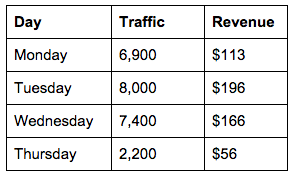
    In that article, I linked to my website, which had been seeing between 700 and 1,000 page views and earning between $12 and $30 daily through Google AdSense, with an average of $20 per day.

    Here’s the traffic and revenue I earned the day the article ran (Monday, August 15, 2011) and the following days:

    Huffington Post blog traffic

    After Thursday, the numbers resumed their normal range, though my traffic stayed slightly higher, with 1,200 to 1,500 daily page views. But revenue of $531, instead of the $80 I would normally have earned in four days, suggests the traffic from The Huffington Post link was worth at least $450. Not bad for one post!

    In addition, my website includes links to several of my other sites, so I’m sure I picked up another $50 worth of indirect traffic for those sites. And I linked to my book in the article and author bio, so I sold quite a few copies that week.

    All together, that article and slideshow on The Huffington Post was probably worth $800 in additional income within a few days. In addition, it helped me attract visitors to my sites and promote sales of my book for several months.

    It was a (very busy) year before I realized I had not just a post, but my own blog set up on The Huffington Post. I requested my password and started posting occasionally. The results were never as dramatic as that first post, but I did see increased traffic and book sales. And best of all, the editors never objected to my posts containing relevant links to my own websites.

    How to Earn Money by Writing for Free

    While The Huffington Post does not generally pay its bloggers, as my experience demonstrates, it’s still possible to earn cash by writing for free. Here are the strategies I used:

    Include specific, valuable links

    To start, be strategic when choosing links to include in your author bio. For example, if you’ve written a book or created a course, link to that. If you’re a freelance writer, you’ll want to link to your writer website or online portfolio. If you’ve monetized a website with affiliate products or pay-per-click advertising, link to it.

    In addition, if any of these links are relevant to your post’s content, include them on related anchor text in the body of your post. I’ll reiterate: the links must be relevant. If they’re not, the editors will likely remove them.

    Aim for the front page

    For these links to be valuable, a lot of people need to see and click them, which means you’ll need a lot of readers. I was a extremely lucky with my first post; it was featured on the front page of the HuffPost Small Business section, which brought in a ton of readers. Later posts never approached that level of traffic.

    With these results in mind, it can’t hurt to aim for this special treatment. Look at what’s being shared on your targeted section’s front page. Are the featured articles controversial or fun? Are they short or long? Do they have shocking titles?

    Many big names blog on The Huffington Post, so competition for better placement is tough. When former Secretary of Labor Robert Reich’s post is on the front page of the Politics section, yours isn’t likely to push his aside. On the other hand, he doesn’t write every day. If you’re working in a section with fewer big names, you might have an even better chance to get a good post featured. Study your targeted section to learn the famous bloggers in your niche and how often they post.

    Share your post as much as possible

    Promote your post to your own networks to direct as much traffic to it as possible, as you would with any guest post. Share it with your Facebook and Twitter followers, write a short blurb about it on your blog or email it to your newsletter subscribers.

    With a bit of luck, your HuffPo post might even go viral. Blogger Catherine Alford was lucky enough to see her recent post blow up:

    [It] went hugely viral with more than 220,000 likes and 43,000+ shares. That viral post also led to me getting interviewed on Huffington Post Live, which led to tons of emails and new readers. There’s no doubt that it’s beneficial to any writing career to be an author there.

    Whether or not your post goes viral, you’ll at least point a few new readers toward your site and offerings and add “Huffington Post Blogger” to your resume.

    If you’ve been published on The Huffington Post, how did you do it and what results did you see? If you haven’t, would you like see your byline there?

  • Guest Post Strategy: Should You Pitch the Editor Before You Write?

    Guest Post Strategy: Should You Pitch the Editor Before You Write?

    When planning your guest-posting or freelance-writing strategy, you already know to start by creating a list of blogs to pitch. You’ve read their guidelines and brainstormed great article ideas for each one.

    What’s next: do you query the editors with short outlines and start writing only after your proposals are approved? Or do you write the articles first, and then try to sell them?

    There’s no hard-and-fast rule about this situation — except that you must read each site’s guidelines before pitching! — so you’ll have to decide which way works best for you. However, having tried it both ways, here are eight compelling reasons to write your posts before pitching them.

    1. You already know you can write the article

    Recently, an editor approved my proposal for a post (not yet written) on how anyone can be a movie producer. I had done some research prior to pitching, but I soon discovered that investing in films as a producer had since become much more expensive and complicated — making the article unsuitable for that blog’s readers. There was no way around it: I had to tell the editor I couldn’t write the article.

    You don’t want to promise an article you can’t deliver, especially if you’re trying to land a new client or establish a new relationship with an editor. Of course, if you do enough research you’ll know you can complete an article — but at that point the work might be half done, so why not finish it? Using a template for your article can help ensure its structure stays on track.

    2. You know it will work for a client

    Sometimes you can propose and write a great article, but it isn’t quite right for your client’s blog or magazine, even if it seemed like it would be when you first pitched it. You might have to rework it in some way that’s unsatisfying or just drop it, whereas if you had written it first, you could have found the perfect outlet for that perfect article.

    Once an article is finished, it’s much easier to see if it will fit well in a particular publication. Knowing this before you pitch an editor saves you the time of querying outlets that won’t be the right fit.

    3. You can submit your work immediately

    Many blogs and magazines specify that they want a query, not the full article. But more than once, I’ve sold an article because I put it in the email anyway. Somewhere in my query I mention “the article is below if you’re interested,” and I make sure it follows everything else, including my signature.

    Yes, this violates a rule. But if an editor is interested, instead of contacting me to read more, she merely scrolls down. Otherwise, she can stop at my signature. How could that add more work or trouble to an editor’s life? Note that I’ve pasted the article into the body of my email; I’m not clogging her inbox with an unwanted attachment.

    In any case, if you don’t want to risk breaking the rules, having the article already written means you can send it as soon as a client expresses interest — before that interest wanes.

    4. You can pitch your post elsewhere

    What do you do when you spend the time to write a great article and the client you have in mind rejects it? Sell it to someone else!

    I recently sold an article several months after it was rejected by the editor of the blog for which I originally wrote it. I had to change a few lines, but I earned $35 more than the first client was paying.

    [bctt tweet=”Re-pitch your unsold articles to other clients, says @stevegillman”]

    Keep your unsold articles organized and regularly offer them to other clients. This is especially important if the article will go stale, like ones that mention news items or new products. If the article still doesn’t sell . . .

    5. You can use it on your own blog

    When your articles don’t sell you can always use them on your own blog or website. This works best if you write mainly in one niche. My specialty at the moment is personal finance, and I have several related websites. Sometimes I’m happy when my editors reject a few articles, because then I have content for my own sites (for which I seem to procrastinate otherwise).

    Interestingly, the rejected articles often get the best response from my readers, perhaps because they’re edgier. Nobody wanted to touch my article on making money as a “professional cuddler,” for example, but my newsletter readers and website visitors loved the piece.

    Of course, you’ll still want to get paid for your work. Consider monetizing your website with Google AdSense, promoting affiliate products, or selling your own books. My best “money site” only brings in about $200 per month now, but every little bit helps.

    6. You can add it to your portfolio

    When you can’t find the appropriate client for a good article, you at least have a solid addition to your portfolio. Post it on your blog or website and add the link to the clips you send in queries.

    7. It’s less stressful

    I can’t be the only one who gets a little stressed when facing deadlines for articles that I haven’t written on topics that may not be as interesting as I hoped.

    It’s so much more relaxing to have the work done when proposing articles. And it’s likely that the quality of your articles will be higher when you aren’t rushing to meet a deadline.

    8. The article is more likely to sell

    Try this experiment: write a description of an article, then write the article, and then write a new description based on the finished piece.

    How do your two descriptions compare? I doubt they’ll be the same, and I suspect the second one will be more interesting. Having a better description helps sell your article — because now you know exactly what you’re selling.

    In any case, writing your description after the article is done helps it more accurately reflect the finished product when you include it in a query, and that makes for a satisfied client.

    The bottom line

    To properly propose a piece for a client, you’re going to do some research and outline an article. If you’re putting that much work into it already, why not just finish a draft of the article?

    A finished post is more likely to sell, and in the case that it doesn’t, you have several more options. For your next guest post, why not try writing first?

    Do you write first or query first? Why do you use your preferred method?

  • 7 More Writing Blogs That Want Your Guest Posts

    7 More Writing Blogs That Want Your Guest Posts

    You’re a great writer. You’re writing excellent posts with nuanced arguments and sharing practical advice and personal experience on your own blog. There’s just one problem: only your sister is reading it.

    Blogging on your own site helps establish your voice and authority, your little corner of the internet. But attracting readers to your blog can be a challenge — where do you find them, and how do you convince them that you’re worth listening to?

    For many bloggers, guest posting is the answer. By sharing your expertise on another blog, you build relationships with other bloggers in your niche and connect with a broader audience — some of whom may be your future readers and customers.

    Danny Iny shared his advice on guest posting back in the early days of TWL, and since the online world changes quickly, we’ve created a new list. Here are seven more blogs to consider pitching when planning your guest posting strategy.

    1. Be a Freelance Blogger

    Created by Sophie Lizard, Be a Freelance Blogger helps writers earn more money by blogging for hire. Many posts focus on finding clients, figuring out how to set your rates and developing your blogging skills. They’re informative, but also entertaining for readers.

    Popular posts include:

    Submitting a guest post to Be a Freelance Blogger is a nine-step process, which sounds intimidating but isn’t actually that complicated. Start by getting to know the blog and its community by reading popular posts and sharing your thoughts in the comments. Brainstorm story ideas, then pitch them to Lauren, BAFB’s Community Manager (lauren@beafreelanceblogger.com). Once she gives you the green light, it’s time to write your first draft!

    For more information on guest posting on BAFB, check out our Guest Blogging Spotlight.

    2. Writer’s Relief

    Founded in 1994, Writer’s Relief helps writers submit their work to literary agents and editors. Their blog offers tips on craft, advice on querying and interviews with successful authors, and they accept guest posts on topics ranging from marketing to conferences to writing inspiration.

    Your submission must be original and unpublished, and should be a maximum of 600 words. Paste it in the body of an email to info@wrelief.com, include your bio and answer this question: “What major thing will readers learn from your article?”

    For more, follow their guidelines and learn from these popular posts:

    3. Writing Forward

    Calling all fiction, poetry and creative nonfiction writers! Writing Forward wants to share your advice on crafting great writing, and they’re open to submissions whether or not you’ve been published elsewhere.

    Popular posts on Writing Forward include:

    There’s no compensation for guest posts, but you’re free to include links to your own blog in your post and bio. Note that commercial or spammy backlinks will not be published.

    Interested? Check out Writing Forward’s guidelines and send a query in the body of your email to founder and editor Melissa Donovan at melissa@writingforward.com.

    4. Live Write Thrive

    Novelist and writing coach C.S. Lakin shares advice on storytelling, writing inspiration and promoting your book. She accepts guest posts related to her “Writing for Life” category and specifically looks for posts that will “encourage, help or instruct writers” to better their craft and share their work.

    Popular guest posts on LWT include:

    Review the guidelines and pitch your ideas through the site’s contact form before writing a post. Note that LWT only runs guest posts once a week and has a long lead time, so you’ll want to get in touch early if you have a specific time frame in mind.

    5. Funds For Writers

    C. Hope Clark runs Funds For Writers, a site dedicated to helping writers earn more money for their work. Each weekly newsletter features a note from Hope, news and opportunities in the writing world, and you guessed it — a guest post. FFW focuses on paying markets, grants, contests, writing jobs, publishers and agents; this is not the place to submit posts about writing craft or character development.

    Guest posts should share your best advice and success stories about building a writing business, breaking into a high-paying niche or unusual ways to earn an income through writing. Recent examples of guest newsletter posts include:

    • Take the Stress Out of Author Marketing
    • Work Smarter 2.0

    Since guest posts are shared in a newsletter, Hope is looking for tight, concise submissions: 600 words, max. Review the guidelines and send your ideas to Hope at hope@fundsforwriters.com.

    6. Writers Helping Writers

    Run by Angela Ackerman and Becca Puglisi, Writers Helping Writers is a resource for writers interested in craft, publishing and marketing. To be accepted, guest posts need to share fresh, practical information that helps writers develop their writing, connect with audiences and improve their promotion strategies.

    Guest posts that have done well include:

    Ready to submit your ideas? Check out their guidelines and submit your suggestions through this form.

    7. Pen & Muse

    Pen & Muse calls itself “a writer’s haven, for writers of all ages and genres.” A team of Muses, led by Kristen Jett and Jolene Haley, shares advice on the world of writing and publishing, including advice on marketing, branding, craft, self-publishing and more.

    Popular posts on the blog include:

    • When You Should and Shouldn’t Use a Pen Name
    • How To Outline Your Novel (Part One)
    • The Secret To Getting An Agent & Getting Your Work Published

    If you’re interested in submitting to Pen & Muse, make sure your work is original and unpublished. For inspiration, consider adding your voice to one of their featured series: How I Plot, What I learned from [Your Most Recently Published Book] or [Title of Your Last Manuscript], My Favorite Editing Trick, or Adding Depth To Your Characters.

    Read the rest of the guidelines, then submit your idea through the contact form on the same page. They’re scheduling up to three months in advance, so be sure to send your idea in early if you have a specific run date in mind.

    For more information on sites that accept guest posts, be sure to follow our series of Guest Blogging Spotlights.

    Now, what are you waiting for? Get pitching!

    Have you submitted a guest post on any of these sites?
    links
    links
    links

  • Feel Nervous About Submitting Your Writing? Why That’s a Good Thing

    Feel Nervous About Submitting Your Writing? Why That’s a Good Thing

    Does this story sound familiar?

    Whenever I submit something I’ve written for a client, I develop a nervous twitch. I wonder if the client is going to like what I’ve written, or if they’ll think it’s absolute garbage.

    No matter how much time and effort I’ve put into it, how much of my soul I’ve poured out onto the page, I wonder if this will be the time when someone sees me for the charlatan of a writer my self-condemning alter ego insists I am.

    “There, that’s the one,” he says. “That’s the one who’s going to finally tell you just how horrible a writer you really are!”

    This nervousness and anxiety, I’ve come to realize, is actually a good thing, if it’s properly harnessed. You just have to make sure you don’t allow that evil alter ego to speak too loudly, or to convince you that you’re a lousy writer. The trick is in finding the right balance and using your nervousness as motivation.

    Are you really that good?

    If you have no anxiety about your writing at all, you might fail to take constructive criticism seriously — and miss a chance to improve your craft. On the other hand, if you allow yourself to be convinced you cannot write, you might give up altogether.

    The nervousness and anxiety are what propel you to continue honing your skills. If you truly thought you already knew everything there was to know about writing, it wouldn’t be fun or challenging anymore, and there would be little reason to continue doing it. As long as you feel like you have more to learn, though, you will keep working to refine your skills and become an even better writer.

    Anxiety and writer’s block

    This feeling of anxiety isn’t the same as the “writing anxiety” that can block your writing and cripple you as a writer, although these are also often signs that you have a healthy regard for wanting to improve your writing. Writer’s block is a symptom of that same condition, but it isn’t the only symptom.

    No, the kind of anxiety I’m talking about develops after the writing is done. It’s the feeling that the work isn’t quite finished or isn’t quite good enough. You’ve probably felt this from time to time — if not every time you finish a project. The key is to not let this feeling stop you from submitting the work.

    Donald M. Murray describes this issue quite eloquently in his essay “The Maker’s Eye.” He rebukes the illusion that a written work can ever be finished, arguing that “a piece of writing is never finished. It is delivered to a deadline, torn out of the typewriter on demand, sent off with a sense of accomplishment and shame and pride and frustration.”

    Harness that anxiety!

    Use your anxiety to fuel your revisions. Allow yourself to detach from what you’ve written and read it as if you were a stranger to the piece. By becoming your reader, you can look for what the reader wants to find in your writing: information, a call to action, entertainment or a mixture of all of the above.

    Being anxious and slightly nervous about the quality of your work is a good sign that you are passionate about your writing. If you lack passion, you could find your writing career coming to an abrupt end.

    How do I know when enough revision is enough?

    You need to find the healthy balance between revising, rewriting, and realizing that the piece is due and it is time to turn it in. Take to heart all of the praise you’ve received for your writing, and realize that while what you have written may not be perfect, it is high-quality work that possesses all of the soul and heart you can pour into it.

    If you read it as a stranger and find within your words the information, call to action, entertainment, or whatever you wanted the reader to get out of it, hand it in! You’ll likely have another opportunity to revise it after your client or editor has a look and shares her comments.

    Not convinced? Here’s a perfect example: I revised this particular post several times before I took a deep breath and submitted it to the editors, and then revised it once more after their feedback!

    What if the client really does hate my work?

    It’s possible that one day, a client may not like what you’ve written. When that time does come, take it in stride. Not everyone has the same preferences; not everyone likes the same movies, so why would everyone like the same style of writing? Ask for their feedback on how to revise the work: do you need to work on better emulating the client’s voice, strengthening your self-editing skills, or creating clearer calls to action?

    Learn from your mistakes, and move on to make your writing even better.

    [bctt tweet=”Learn from your mistakes, and move on to make your writing even better, says @byrneswritenow”]

    A writer needs to have thick skin and be able to handle constructive criticism without taking it personally. As with any form of art, your skills and abilities should constantly be improving, and you should be able to take constructive feedback and use it to improve your art.

    You’re passionate about your writing — but recognize that with that passion comes some anxiety and nervousness. Just don’t let your nerves rule you — use them to motivate you to strengthen your skills.

    Do you ever feel anxious before submitting client work or pressing “publish” on a blog post? What do you do?