Tag: blogging

  • How to Turn Your Blog Into a Book (2024 Guide)

    How to Turn Your Blog Into a Book (2024 Guide)

    The idea of writing a whole book can be pretty daunting. Even if you’re a fairly experienced writer, you might think it’s beyond you.

    But if you’ve been blogging for a few months or years, you may have already written enough to fill a book. Turning your blog into a book is an increasingly popular option. (If you’re using WordPress, the Word Stats plugin is a simple way to check your cumulative word count.)

    Creating a book is straightforward and not especially expensive, with e-publishing and print-on-demand technology. Here are three reasons why bloggers do it — and why you might want to give it a try:

    1. Books reach a different audience

    Not everyone reads blogs. Maybe they’re not especially comfortable with technology, or they only have internet access while at work, or they simply prefer to read in other formats.

    And those who do read blogs might never have come across your personal corner of the busy blogosphere.

    Books can reach a different audience — potentially becoming a tool for promoting your blog, or even your writing services.

    2. Books have a certain credibility

    While it’s true that, today, anyone can publish a book (just as anyone can start a blog), books have a certain credibility.

    Being able to tell your audience that you’ve written a book, or including your book in your bio when you’re guest posting or speaking, can give you instant “expert” status in their eyes.

    Of course, if you’re going to look credible, it’s important to have a well-edited and well-produced book … which we’ll be getting to in a moment.

    3. Books give your content a new life

    If your blog’s been running for a while, there’s a good chance that most of your current readers missed out on your early content.

    While your archives, categories and search box can all help them find your earlier writing, you almost certainly have some brilliant posts going unread in your blog’s archives.

    By pulling together your blog content into a book, you can give it new life. Instead of skimming through your latest post in their inbox, your readers can curl up with their ereader or a hardcopy of your book and dig in.

    Is the blog-to-book journey starting to sound like one you want to take?

    I’ve bought quite a few books and ebooks in my time that started life as blog posts, and I’ve also been going through the blog-to-book process with my client and friend Barry Demp. He’s just published his new book The Quotable Coach: Daily Nuggets of Practical Wisdom — a compilation of posts from the past two years of his blog, The Quotable Coach.

    If you feel ready to self-publish, here are the three major steps that we recommend you follow:

    1. Compile and edit past blog posts

    Before your blog can become a book, you need to get all your posts into one place — probably a document on your computer, whether you choose to use Microsoft Word, Scrivener, Google Docs or another tool.

    You’ll need to go through and format your post titles in Heading 2, so that when you convert your document to an ebook, these can become chapter headings.

    You’ll almost certainly also want to do some editing: perhaps updating out-of-date references, fixing typos, or even adding or removing whole paragraphs.

    You may also find that you need to remove some posts. This could be posts that:

    • Were specific to a particular time, such as the 2012 Olympics or your New Year’s Resolutions for 2013.
    • Are much shorter than average — perhaps a post for a special promotion of your book.
    • Don’t match up to your usual standards; we found ourselves deleting several early posts that were written before we’d quite found our stride.

    2. Line up beta readers and reviewers

    However strong your editing skills are, you’ll want to have some extra eyes on your finished book. Ideally, this means hiring a paid editor — but if that’s not affordable, ask friends, family or colleagues to help out.

    These beta readers (like beta testers in the software world) could read just part of your book and let you know about any problems they spot — from typos and missing words to structural issues. Do try to give them as much advance notice as possible, and at least a couple of weeks to get feedback to you.

    Beta readers may well also be willing to review your book (though you’ll probably want to approach other individuals for reviews too). Reviews or testimonials are a hugely important selling tool, especially as you’re publishing your book yourself rather than with a major publisher.

    Again, give reviewers plenty of time, and stay in touch as your launch date approaches. Once your book is online and ready for reviews, send them the link (and brief instructions) so they can easily leave a review.

    3. Get a professional cover design

    If you’re going to invest in just one thing for your book, go for a great cover design. Like it or not, we all judge books by their covers — and if yours screams “amateur,” your book is unlikely to get a second glance.

    We went with 99designs to get a range of different options from many different designers at a great price. You might instead choose to work with an individual designer (especially if they’ve already done some work on, say, your website or logo). You may even be able to barter design for writing with an artistically-minded friend.

    If you really have no option but to create the cover yourself, keep it simple and classy: think “minimalist.” Use large fonts that can be easily read at thumbnail size, and stick with just one key image.

    So … how about it? Have you ever read a book that started life as a blog, and would you turn your blog into a book?


  • Pitching a Guest Post? 7 Ways to Stand Out in an Editor’s Inbox

    Pitching a Guest Post? 7 Ways to Stand Out in an Editor’s Inbox

    Editors receive hundreds of pitches each week. When so many of them sound exactly the same, they all start to blend together in the inbox. If you’re able to capture an editor’s attention, there’s a much greater chance you will actually get an assignment. That’s where creative pitching comes in.

    Creative pitching — using unusual, imaginative ways to pitch a piece — helps your query stand out in a sea of bland guest post requests. A creative pitch can be funny, visual or collegial, depending on the target audience. By engaging editors instead of boring them to death or, worse, using gimmicks like ALL CAPS or over-the-top claims (“this will be the most-read post you’ve ever put up!”), you help ensure your pitch won’t get buried in the inbox.

    While creative pitches won’t work for every site — don’t send them to serious outlets with very strict writer guidelines — they’re a great way to help you stand out. At the very least, you’ll have fun writing them! Here are seven ideas to spice up your next pitch.

    1. Play with odd or funny subject lines

    Pique the editor’s curiosity by using something truly surprising in your subject line. I have a friend who follows up to blogs she’d like to write for with subject lines like “Earth to [Blog Name], do you read me?” These follow-up emails almost always get a response!

    It can be as outrageous as you want, within reason. Swearing or being crass may not win you any points — unless you’re pitching a blogger who’s known for that kind of voice, like Ash Ambirge at TMF Project.

    Check the contributor guidelines first, since some blogs specify that pitches should have a certain subject line.

    2. Tell a joke in your email

    Jokes are a fun way to open a pitch because they can brighten an editor’s day and break up the monotony of sorting through their email. This approach is also a great way to show you’re a real person, not a robot or spammer.

    [bctt tweet=”Try using a joke to stand out when pitching a guest post, advises @adrienneerin”]

    I am not the funniest person in the world, but I enjoy a good dad joke or funny pun. You could try starting a the joke in the subject line and finishing it in the email body — at least it might get them to open the email, right?

    3. Use an image in your pitch

    By including an image, graph or chart you plan to use in your post, the editor can get a better feel for what you’ll write. This is especially helpful if you’re promoting an infographic or have the design skills to create nice visuals to accompany your piece.

    When I recently promoted a time-sensitive infographic about distracted driving (April was Distracted Driving Awareness Month), I found that including an image drastically increased the number of responses I received.

    4. Include a TL;DR summary

    TL;DR is internet parlance for “too long; didn’t read.” Many editors lack the time to read through an entire pitch. Adding a TL;DR summary that makes your pitch in one line might elicit a smile from editors who tire of long pitches when really they just want a short summary — and earn you a response.

    5. Offer a critique

    This strategy doesn’t mean you should tell someone their blog sucks. Rather, point out something that you think is missing and offer a solution.

    For example, maybe a blog you’d love to write for has outstanding information about running and racing, but there’s no information on cross-training. Mention that in your pitch and suggest a few cross-training posts you could write.

    6. Explore your common ground

    Do a  quick “background check” on the editor you’re pitching. Did you attend the same college? Have you written for any of the same blogs? Do you share an abiding passion for pug dogs? Open your pitch with a reference to your mutual interest and you’ll stand out from others in her inbox.

    7. Reference a recent post on the blog

    Bloggers hate getting pitches that are vague and show zero knowledge of their site. Demonstrate that you understand what they’re all about by referencing a recent story and why it worked. That establishes your bona fide interest in this specific site and helps you stand out from all the mass queries.

    I like to show that I am not just throwing out a million identical pitches; I’ve actually read, liked and followed this particular blog. For extra credit, I try to comment regularly on blogs I’d like to write for, and I’ve found that editors are far more likely to reply when I’m already a familiar name on their site.

    You might not win over every editor using these tactics, but you’ll make your pitch hard to ignore. Of course, once you’ve landed the assignment, writing a great guest post is up to you.

    How have you used a creative pitch to get an editor’s attention?

  • 7 Easy Things You Can Do Right Now to Get More Blog Traffic

    7 Easy Things You Can Do Right Now to Get More Blog Traffic

    This article is excerpted from Chuck’s book, Create Your Writer Platform.

    GIVEAWAY: Chuck is giving away a copy of his book, Create Your Writer Platform, to a random commenter. Comment within two weeks to enter! (Must live in US or Canada to win.) (Update: Williesha won!)

    So you’ve been blogging for a while, you post on a regular schedule for a budding readership, and you’re sharing valuable content. Now what?

    Once you have an established blog with consistent posts, it’s time to examine how to get maximum impact from your site. Make the most of the eyeballs that land on your blog to draw attention to your work. After all, the goal of blogging is to showcase your writing abilities and other services, right?

    Here are seven easy ways to make sure each of your posts gets as much exposure as possible.

    1. Don’t let readers get away easily

    Have links at the end of each post for related reading. If someone is reading your latest post called “How to Price Your Watercolor Paintings,” they obviously have some interest in the subject matter, so guide them to related content on your site to collect more page views.

    At the end of each post, point out and link to past posts on similar subject matter. The goal is to have a visitor bounce from post to post, ping-ponging around your site. The longer they stay and look around, the more they get to your know you, your ideas, your thoughts and your brand.

    Remember that it’s very tough to attract new readers. When one stops by, entice them to stay as long as possible.

    [bctt tweet=”It’s tough to attract new readers. Entice them to stick around, says @ChuckSambuchino”]

    2. Go back and optimize old posts

    When you’re several months in and are starting to get the hang of what works for your blog, you’re going to notice how messy and poor your old posts are. When you have blogging downtime, look through past posts and improve them.

    If there’s no image, add one. If there are no links at the end, include some. If you think a column could be even better with a simple sidebar, add it. There’s a good chance that your current posts have a newer, more visually pleasing format. Make sure to alter older posts to match this improved layout.

    3. While you’re at it, straight up recycle old posts

    It’s likely that some of your early blog writing is excellent, but virtually no eyes saw it because your site had little traffic. So feel free to recycle and reuse that content.

    One option is to repost the content at the top of your blog again. I’ve done this several times and called it a new series named “Blast From the Past.” You could also tweak an older column into a guest post for another site.

    [twl_reusable_block post_id=41455]

    4. Make your most popular posts easy to access

    If it’s possible and you have some impressive posts to share, think about listing your “greatest hits” down the side of your blog. That way, any new visitors can easily move through your best content and quickly see you’re an expert with great information.

    5. Invite quality guest content

    Why do you have to be the only one writing for your blog? Other writers who don’t have a blog of their own are looking for places to share their thoughts. Accept their quality posts with pleasure. It’s free content! You get to run it with hardly any work on your part, rather than composing another column of your own from scratch.

    Try to find a few recurring guest contributors who can consistently provide you with quality columns to run. The more content you have on the site, whether by you or others, the more you’ll turn up in Google search results and draw people to you.

    6. Speaking of Google, do yourself a huge favor and learn about SEO

    Go to Google right now and search for something — anything. Google will display the top 10 search results on the first page. But do you ever wonder why Google displays these 10 first rather than any of the thousands or millions of other results?

    The reason is called SEO: search engine optimization. Search engines such as Google are looking for different things when they report search results back to you. SEO is a vast topic, and plenty of it can get technical if you really want to dig deep, but here are three quick tips to getting more page views through search engines:

    a) Make sure you have a clear, straightforward headline rather than something generic or a pun. If your post is all about how to change a tire, simply call it “How to Change a Tire.” After all, isn’t that exactly what people will search for when they need help? If you title your post with a pun (“Tired Days Are Here Again!”), it’s no surprise that people won’t find it in a search. Consider which of these following two titles will get more hits: “Meet Mollie the Agent,” or “Literary Agent Interview: Mollie Glick of Foundry Literary.” Obviously the second one is a better choice because it contains more key terms people will use in their searches.

    b) Use keywords in your title, subheads and text. If people want to attend a writing event, imagine what they will search for when using Google: “writing conference,” “writing event,” “writing retreat,” “writer’s conference,” etc. The terms are all similar yet slightly different, so try to use as many as you can in your text. That way, Google will see you’re using a variety of relevant terms and process that your post is likely of value, moving it up in the results.

    c) Add images to your post. While they make a post look more pleasing to the eye, they also help with SEO.  For example, in a post on how to change a tire, titling the images How-to-Change-a-tire.jpg and Changing-a-tire-fast.jpg, adds more elements and words for Google to scan when it incorporates you into its results.

    7. Use numbers, subheads and bullet points

    Yes, you want your post to have great writing and provide value. But how you present said good material matters, too. People will have a greater impulsive desire to read your writing if you make it visually pleasing and present information in bite-sized, easy-to-process chunks.

    A quick, obvious tip is to use numbers. Everyone loves posts with numbers, such as “The 10 Best Quarterbacks of All Time” or “44 Crazy Facts About Disneyland.” If your post doesn’t have numbers, break up the text using subheads and bullet points to give people different places that they can jump to around the column. If your post is just one big block of text, then a reader who becomes disinterested will have no choice but to leave your site.

    Let us know in the comments: How do you help more readers see your blog posts?

    Don’t forget to comment to be in the running for Chuck’s book giveaway! You could win a free copy of his latest book, Create Your Writer Platform(Update: Williesha won!)

    Other TWL Guest Posts by Chuck Sambuchino:

    1. How Successful Authors Use Social Media to Sell More Books
    2. The One Big Reason Some Blogs Succeed, While Others Crash and Burn
    3. When Can You Call Yourself A Writer?
  • Cliches to Avoid: 4 Story Endings Your Readers Will Hate

    Cliches to Avoid: 4 Story Endings Your Readers Will Hate

    Writing a book is difficult, but crafting an ending that is both impactful and wraps the plot up beautifully is even more so.

    You worked hard to create a beginning that grabbed your readers, so make sure to write an ending that lives up to the rest of your story. Relying on clichés will only leave your readers feeling disappointed and dissatisfied.

    Stay away from these four cliché endings:

    1. The happily ever after

    What it is: All of the characters in your book live happily ever, with no hardships to bear. The hero defeats his foes and all of the plot twists are nicely tied up – perhaps a little unrealistically.

    Why to avoid it: Life doesn’t necessarily end happily ever after, which makes this type of ending feel disingenuous. You want your readers to feel enthralled with your book so that they’ll want to share it with friends, read more of your work or even re-read your story. Real life isn’t perfect, so make sure that your book stays in the realm of realism.

    2. The drawn-out dream

    What it is: The drawn-out dream ending involves the main character waking up safe and sound in their bed, realizing that the entire plot has just been a dream.

    Why to avoid it: This type of ending typically annoys readers, who feel that the author has copped out. A book should be emotional to everyone involved, and an author who uses this ending seems to betray readers’ trust and cheapen the emotions they’ve felt throughout the book.

    3. The guilty hero’s monologue

    What it is: When the hero finally defeats the bad guy or force, the reader is privy to her internal thoughts of regret or remorse. The monologue is supposed to show the character’s guilt at what she’s had to do and how it’s eating away at her. Even though the ending is happy, our hero must now live with the blood on her hands.

    Why to avoid it: In general, writers should strive to show, not tell, readers what is happening in the book. By strongarming readers into feeling specific, manufactured emotions, you are taking away their freedom to experience the story in a way that is reflective of their background and experiences. Readers may feel they are being led to specific conclusions, and few enjoy the feeling of an author holding their hand throughout a book — especially the ending.

    4. The lover’s life

    What it is: This is a special twist on the happily ever after ending, in which the main character falls in love, sometimes for an unexplained or random reason. It shows that true love makes the world go ‘round and that all that happened in the course of the story was worth it.

    Why to avoid it: Unrealistic endings tend to annoy readers. If a love interest is too sudden, it isn’t all that real. If it is unexplained, it leaves your characters lacking depth. The truth is that not everyone falls in love and lives happily ever after. The best endings are unique, somewhat realistic, and really make your readers think.

    Set the text aside, brainstorm some unique possibilities, and pick up your manuscript again when you have a more interesting picture of what could be.

    If you want to learn how to finish a story the right way, check out our guide here.

    What other cliché endings did we miss? What frustrates you at the end of a great story?    

  • The One Big Reason Some Blogs Succeed, While Others Crash and Burn

    The One Big Reason Some Blogs Succeed, While Others Crash and Burn

    This article is excerpted from Chuck’s book, Create Your Writer Platform.

    Most writers’ blogs forever linger in obscurity. These sites never receive a number of page views that would be considered noteworthy (1,000 a day, for instance) or help them sell thousands of books over time.

    If you’re just blogging for fun and don’t care about how many hits you get, that’s one thing. But if you’re using a blog as a means to build your writing network and platform, you’re probably curious about what you can do to attract a bigger readership — and I can tell you how to do just that.

    So what separates the small percentage of larger, successful blogs from the rest of the herd? This is a question I’ve studied for many years, both while building my own Guide to Literary Agents Blog, as well as when I’ve reviewed other writers’ sites.

    The answer is surprisingly simple: the one core element that virtually every successful blog provides. (Note that this key trait is not just relative to blogs; popular social media accounts provide this one thing, too.)

    What trait sets successful blogs apart from the rest?

    Stop for a moment and identify the first websites you visit upon waking in the morning. I’m willing to bet “My email account” and “Facebook” are the top overall responses.

    But why do you visit these websites day in and day out? Why do you spend so much time on them? The answer is so obvious that you might have never put your finger on it. These sites provide immense value to you.

    Email allows you to connect with anyone around the world instantaneously and for free. Stop for a moment and remember how mind-blowing that is. Facebook lets you share news, articles and images with all your friends and relatives around the world — again, for free. You’ve likely been using these sites for so long that you’ve forgotten just how amazing they are — and how tremendous the value is for either.

    And it’s this element — value — that separates the few big sites from the many others.

    Remember that at any given time, dozens (if not hundreds) of things and to-do’s and websites are competing for our attention. That means your blog must provide a darn good incentive to read it. This could mean pulling together hard-to-gather information, or making readers laugh, or informing us, or sharing advice that makes our lives better or easier. Any of these elements translates to value in a blog.

    [twl_reusable_block post_id=41455]

    Am I providing value?

    Let’s say I spend a Saturday with my daughter at a local Cincinnati park. I take great pictures of her on a beautiful sunny day as she swings and slides. Then I think this would make for a great blog column, and post the best pictures online with some silly jokes and comments about how cute she is. Now here comes the money question:

    Do you really give a damn?

    Do you really care about what I did last Saturday?

    In all likelihood, no, you don’t give a damn. You don’t care enough to pull your attention away from countless other (much better) things and glance at my new post. And that is perfectly understandable — because the column provided no true worth for you. In fact, the value was for me; I had a great opportunity to document a fun day with my girl.

    People have a hard time wrapping their head around the very simple fact that much of the blog content they create isn’t really helpful for others, but rather for themselves in some way or another.

    How to create value

    If I truly want to vie for others’ attention, I need to turn the spotlight off myself. The best way to do that is to create something that is of importance not to me, but to people I’ve never met. Note that once I decide to do this, my task immediately becomes more complicated (but that’s a good sign I’m on the right track).

    So while you wouldn’t read that picture-filled post I just created, would you read a different post I wrote called “5 Great Family-Friendly Parks in Cincinnati You Probably Didn’t Know Existed”? I’m guessing you would, because this post has instant and undeniable worth for you. It will make your life easier and better.

    A simple litmus test you can do when considering if a post has enough value to draw people in is to ask this question: Was the post easy to compose or not easy to compose? [bctt tweet=”The more value something provides, typically the more difficult it is to create.”]

    And that’s why most blogs linger in obscurity: because writers don’t spend the amount of time necessary to compose worthwhile content that will demand attention.

    Think about it. How long would it take me to create that original blog post with pictures of my daughter? Probably 20 minutes. But how much time would it take me to compose the second post? A lot longer.

    I’d have to visit the parks or talk to people who had. I’d need to collect images of the parks, and show you screenshots of where they are via Google Maps. And I’d have to write up the perks and boons of each. My guess is it would take me four to eight hours in total. It’s a lot more work, but the end result is much more worthwhile to readers.

    So the next time you go on a vacation to the Maine coast, don’t return and assume strangers will want to hear about how your trip went. Remember what Freakonomics taught us: Incentives make the world go round, so give readers a reason to take notice. If you write about the trip and call it “Our Crazy Vacation on the Coast,” I’m going to ignore it. But if you compose a post called “7 Fun Places to Visit in Portland, Maine,” then you just might catch my attention.

    We’d love to hear from you: How do you create true value in your blog posts?

    [twl_reusable_block post_id=41455]

    The giveaway for Chuck’s book Create Your Writer Platform is now over. Thanks for all your comments. Congrats to Nikki!

    Other TWL Guest Posts by Chuck Sambuchino:

    1. How Successful Authors Use Social Media to Sell More Books

    2. Tips for Pitching a Literary Agent at a Writers’ Conference

    3. When Can You Call Yourself A Writer?
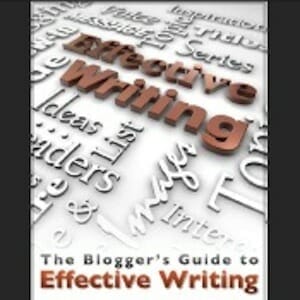
  • Ali Luke’s The Blogger’s Guide to Effective Writing: Review

    Ali Luke’s The Blogger’s Guide to Effective Writing: Review

    We review ebooks, courses and tools for writers, so you can make good decisions about how to invest in your writing career. Thanks to Ali Luke for sharing a review copy of this ebook.

    Ebook: The Blogger’s Guide to Effective Writing

    About the creator: Ali Luke is a professional writer of both fiction and nonfiction, including The Blogger’s Guide series, Publishing E-books for Dummies and the novel Lycopolis. She holds a Master’s degree in Creative Writing, and her work has been featured on ProBlogger, Men With Pens, Copyblogger and Write to Done.

    Price: $29

    Who It’s For: The Blogger’s Guide to Effective Writing is great for new bloggers. While it doesn’t explain the technical aspects of setting up a blog, it will walk you through the brainstorming, planning and writing side of blogging.

    The ebook would also be helpful for people who’ve been blogging for a while and are struggling to come up with new ideas or feeling stuck. Bloggers who want to shake up their writing style or refine their editing skills will also find this guide useful.

    What It Will Help You Do: The ebook promises to teach you to write well-structured, easy-to-read posts that draw readers in; to brainstorm many new ideas for posts; and to figure out what kind of content your audience wants. As Ali says, “Writing well is a learned skill, and blogging is no different. The purpose of this ebook is to help you understand what goes into great content, so that you can produce your own.”

    The ebook starts at the very beginning by working through a plan for a new blog. You’ll explore why you’re blogging and consider your ideal reader and audience as well as your call to action: what do you want readers to do after they read your posts?

    Ali walks you through the process of planning blog posts, from coming up with ideas to planning a good mix of different types of posts (lists, essays, how-to, reviews, etc.), and uses examples from prominent bloggers to explain the advantages and disadvantages of each type. She explains the writing process by focusing on each element of a post separately (title, introduction, middle and conclusion), again using examples from well-known blogs.

    Finally, the section on editing helps you polish your writing, from big-picture revisions to improve the flow, to the ruthless cutting of fluff words and phrases to strengthen your copy, to proofreading for silly mistakes.

    What’s Included: The ebook is 83 pages long and includes an appendix with links to lots of free material that supports and expands on points addressed in the book.

    In addition, the package includes seven bonus templates: one for each of the four post types the ebook explains, and three analyzing the structure of posts by popular bloggers Darren Rowse, Charlie Gilkey and Skelliewag.

    Finally, Ali includes two videos in which she reviews six posts by different bloggers, explaining each post’s strengths and weaknesses. The first video focuses on creative, narrative-style posts, while the second features structured, informative posts with calls to action. She analyzes each blog’s design, taglines, post headlines, writing style, word choice and more to help viewers understand ways they can strengthen their own blog posts.

    The Best Part: The section on developing your voice was especially interesting and thought-provoking for me. It helps you consider what sets you apart as a blogger and guides you to find your writing voice — including how to modulate it for guest posting so your content fits in well on the other blog.

    In addition, I found the editing section very helpful; I’ve printed out the list of questions on page 74 and hung it above my desk to help me revise and strengthen blog posts.

    What Would Make It Even Better: It’s hard to say anything could be improved in this ebook, especially with the addition of the bonus templates and videos. The only quasi-criticism I have is that a lot of the early chapters are fairly basic and more experienced bloggers will skim right past them. However, newer bloggers will appreciate the level of detail, and both groups benefit from the later chapters.

    How It Changed My Life: I didn’t anticipate that the ebook would help me as an editor, especially the section on finding your blogging voice. Since my work involves revising and tweaking to make each post the best it can be while maintaining its writer’s voice, it was helpful to reconsider how different elements reflect the writer’s quirks and natural style.

    Our Recommendation: While this ebook will be most helpful for new bloggers who want to make their work the best it can be from the beginning, even experienced bloggers will find interesting experiments and advice that will help reinvigorate their work, like new idea-generation options or strategies for improving headlines.

    This post contains affiliate links. That means if you purchase through our links, you’re supporting The Write Life — and we thank you for that!

  • How to Use Quora to Grow Your Blog

    How to Use Quora to Grow Your Blog

    Growing your blog can sometimes feel like a labor of love, with the emphasis on labor.

    It’s not uncommon for bloggers to have a shortage of quality ideas from time to time; coming up with all of that entertaining and challenging content is hard work. Building a community of engaged readers is also a daunting task — how do you convince an audience that your work is worthwhile?

    The way you address these situations can mean the difference between building a thriving and authoritative blog — or causing your readers to look elsewhere.

    One often-overlooked resource is Quora, a social media site that encourages users to ask and answer questions related to their experience and interests. Whether you’ve been struggling to find inspiration for your blog posts or you’re looking to stay on top of trending topics and conversations, Quora could be a great addition to your toolbox. Here’s a quick guide to help you maximize its potential to strengthen your blog.

    Find ideas for new posts

    After you’ve been blogging for a while, you might feel like you’ve covered just about every conceivable topic in your niche. How do you come up with new angles and fresh content?

    Digging through Quora’s archives of questions is sure to inspire an idea or two. When you register, which you can do with a Facebook, Google or Twitter account, choose topics related to your blog’s niche. The site will populate a feed of recent questions and answers tailored to your interests. Go deeper by diving into the comment threads; perhaps you’ll find a new development in your field or a new point of view to tackle in a future blog post.

    Test potential blog post ideas by asking questions

    Asking questions on Quora allows you to “field test” post ideas that you’ve been kicking around. The interest level and answers you receive will help you judge which ideas are worth fleshing out into full posts, and which aren’t a good use of your time.

    To amplify the number of responses you get, try sharing your questions on your Twitter or Facebook feeds using the built-in sharing buttons. Sharing will also promote your work and help you attract more followers.

    Answer questions to position yourself as an expert in your niche

    Running a successful blog relies as much on your communication skills as it does on your ability to appear knowledgeable and authoritative on your chosen topic. With so many other voices clamoring for attention, how can you do this effectively?

    When I want to provide new and relevant content about my blog’s niche — productivity — I browse through the many productivity questions that other people have asked. When I feel my experience is relevant and useful to another user, I respond to their question with my advice, and make a note to write a blog post on that topic.

    By answering questions on Quora (and, eventually, on your own blog) that relate to your area of expertise, you position yourself as an authority on your chosen topic. You’ll also have the opportunity to test your convictions and opinions against individuals who may share your passion, but not your point of view.

    Have you used Quora as a resource for blogging?

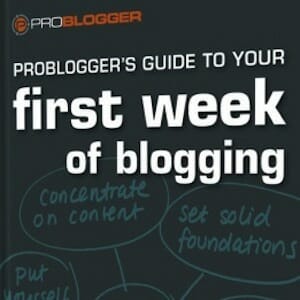
  • Problogger’s Guide to Your First Week of Blogging: Review

    Problogger’s Guide to Your First Week of Blogging: Review

    We review ebooks, courses and tools for writers, so you can make good decisions about how to invest in your writing career.

    Ebook: Problogger’s Guide to Your First Week of Blogging

    About the creator: Darren Rowse is a full-time blogger and founder of Problogger and TwiTip. He started blogging as a hobby in 2002, founded Digital Photography School in 2003, and began Problogger in 2004 as a way to catalogue his experiences with blogging. Under Rowse, Problogger became one of the most popular sites for tips on blogging. He is also cofounder of one of the largest blog networks in the world, b5media.

    Price: $19.99

    Who It’s For: This ebook is for bloggers who are just starting out or considering building a new blog. It would also work for those who have already set up a blog but are struggling with their next steps, those want to develop their existing blogs further, or those who have hit a rut in their content management schemes.

    What It Will Help You Do: Each day is complete with actionable and timed tasks that will help you plan out your blog development strategy. The specific and organized structure in this ebook makes it easier for you to keep going and accomplish your goals.

    What’s Included: This ebook provides practical instructions to guide you in your first week of blog development. Chapter by chapter, it explains in great detail what you should accomplish per minute on each specific day.

    What it does not include, though, are the technicalities of setting up a blog. Choosing your blogging platform, picking a template and creating a design are not part of the package, so make sure you have other resources to support you with these aspects.

    The Best Part: The specific to-do lists, including an estimated duration for each task, allow you to gauge how long each project will take. This approximation allows you to have realistic expectations of how much time you need to invest in your blog development while also allowing you to manage your schedule.

    What Would Make It Even Better: The ebook is fantastic on its own, but an accompanying app would make the program even better. The app could include a single platform for the blogger to practice all the exercises described in the book and have a publish straight-to-web feature. It could also include a timer to go along with the tasks listed in the book, as well as reminders and alarms.

    There could even be a premium feature that would notify Problogger editors of each ebook owner’s activity (which could be identified by a serial number for each ebook purchased), so they could offer comments, advice and encouragement.

    How It Changed My Life: I had always wanted to launch my own blog, but I worried about it taking up too much time from work, family and other responsibilities. However, the ebook’s time approximations per task really helped me — I was surprised to learn that the time commitment wasn’t as demanding as I had initially thought!

    Our Recommendation: Problogger’s Guide to Your First Week of Blogging is a treasure trove of valuable, actionable plans to get your blog rolling through its first seven days online. The detailed descriptions of the type and amount of work needed to be done each day makes developing a blog realistic and achievable for new bloggers. Each day is already pre-planned for you, so all you need to do is act on the exercises.

    This post contains affiliate links. That means if you purchase through our links, you’re supporting The Write Life — and we thank you for that!

    Have you used Problogger’s Guide to Your First Week of Blogging?

  • 5 Ways to Add Personality and Voice to Every Blog Post You Write

    5 Ways to Add Personality and Voice to Every Blog Post You Write

    “How do you do that? Your posts always make me smile. I look forward to them each week and actually search them out when I have a few spare minutes in my day.”

    You can’t write boring blog posts and get comments like that one. But how do you do it? How do you develop a voice that shines through every post you write?

    Here are a few tricks to help your posts sound more human and personable. You’ll soon convince your audience to read more of them!

    1. Speak to one person

    You sit down, ready to write, yet after minutes of staring at the screen, nothing comes to mind. You search through your favorite sites, check in with your RSS reader, and pull up your social media accounts to look for ideas.

    Suddenly you find a title that interests you, so you grab it, modify it and start writing. Yet when you’re finished, something is wrong: it’s just another boring post that doesn’t say anything new.

    The problem with this “grab and write” approach is you are writing for concept and keywords, not to develop personality. Personality comes when you’re committed to an idea and have something to say that will deeply impact a person’s life.

    Instead, think of one great customer you loved working with. Or if you’re still starting out, imagine a customer who would fall in love with what you do. Have them in mind? Now, write a post specifically for that ideal customer. Narrow it down as much as possible, and write as if they are sitting right across from you learning from you along the way. You’ll find you write differently, showcasing what this person needs to hear to become a paying client.

    2. Start with a story

    Stories sell. They connect us. They hold us riveted to our seats. They make us laugh and make us cry.

    Imagine yourself in a lush, green forest. It’s filled with the beautiful colors and smells of bright flowers, and has a small breeze that makes a walk down a trail the perfect way to spend a day.

    Can you see yourself on that trail? You can use this tactic in your posts by using words that evoke images:

    • Imagine

    • Visualize

    • Picture this

    • See this

    • Focus in on this idea

    When you start a post with these words, you automatically pull your reader in – and you can lead them down any trail you choose.

    3. Get personal

    Many of today’s most popular and well-loved blogs originated with one person, one voice. If your blog is all about you, let your personality shine through!

    Talk about what you believe in. Share what you do, what makes you vulnerable and why people should trust you above all others. It’s important for people to understand why you do what you do.

    • Where did you get your experience?

    • How do you give back to your community?

    • What are your beliefs?

    • What made you choose this idea to move forward with?

    While you may think of it as bragging or showcasing too much about you, your audience will beg to differ. They’ll see it as your story, and in order to build a relationship with you, they want to get to know you. Your story gives them all they need to know.

    4. Go into detail

    Every post you write should be a complete thought. It should have a beginning, a middle and an end. It should be able to stand alone, as it may be the only post someone ever reads.

    What concept do you want to share? Can you decrease it even further and make two, three or four posts from your concept? Can you make it more complete by narrowing your focus in further?

    Details matter, especially when you’re creating an entire blog theme around one concept. The more you can separate it out into truly unique concepts, the more you will touch the people reading your blog and looking to you for advice.

    5. Experiment

    Every day you sit down to write, there will be new ideas that are important to you. Don’t be afraid to try something new.

    Video is an ever-growing medium. Why not give it a try and show your personality in a new manner? Not only will video give you a new way of connecting with your audience, it will also allow you to build your brand vertically as well. You can host it on YouTube, post it to your blog, share it on Twitter and Facebook, and send it out in an email.

    Every day something new comes along. If you embrace technology, look for new ways to get your message across, you’ll be rewarded with an entirely new group of followers ready to build a deeper relationship with you.

    How do you develop your voice and show your personality in your posts?

  • The Most Lucrative Ways to Make Money Off Your Blog

    The Most Lucrative Ways to Make Money Off Your Blog

    Many bloggers begin writing as a passion project, creating a site dedicated to a topic they love and keeping up the content because they genuinely enjoy the writing and want to share their thoughts and experiences with whoever is able to find them online.

    For some of these bloggers, there comes a point where the following grows from a small circle of friends and family to a more substantial and widespread group. At this time, blogging has the potential to become a full time occupation.

    But making that leap from part-time passion project to full-time profession requires one very important component that can be challenging for many bloggers: monetization.

    Monetization refers to the process of making money from the traffic coming to your site. It can take many forms and can be achieved with varying degrees of success.

    If you’ve realized that your site has the potential to make you some money, whether a full time salary or just a bit of extra spending money, here are some of the most lucrative ways to monetize your blog:

    Display ads

    Though some experts have predicted that display advertising is going away, the hard facts continue to indicate that ads are a great way for blogs to make money. Usually, monetizing through display ads involves creating an account with an ad network such as Google AdSense or one of the other top ad networks available to bloggers.

    These networks essentially make a market for banner ads; they match accounts that can provide ad inventory (bloggers) with companies looking to promote their products or services (advertisers). Ad networks make money by taking a percentage of the overall revenue generated; AdSense, for example, takes 32% of the total revenue and sends the remaining 68% to the publisher or blogger.

    If you’re not quite sure how to set up an AdSense account, there are some easy-to-follow manuals out there that can have you up and running in no time.

    Monetizing through display advertising can be quite lucrative if you have a meaningful audience, but it certainly requires a significant amount of thought and work to set up properly. There’s a fine line to walk between placing ad units that will draw the eye (and click) of your visitors and creating a negative, frustrating experience for them.

    Start by placing a couple of ads on your site; the most commonly used are a 728×90 “leaderboard” and a 300×250 “medium rectangle”. From there, if you have the time and willingness, you can experiment with different implementations to find out which set-up will work best for you.

    In addition to the “plain vanilla” display ads that can be served via AdSense and other ad networks, there are some more creative ways to monetize your blog content. Monetizing via display advertising means much more than throwing a couple of rectangle ad units up on your site. To get the most from your blog traffic, explore the new, non-traditional opportunities that have become available in recent years.

    • InfoLinks: Whereas display ads are served in sections of the site specifically dedicated to advertising, there are services that allow you to turn the actual text on your site into ads. You’ve probably seen this in action before: a few words of text that appear to be a link, but that display an ad when the mouse hovers over them. InfoLinks also offers some other creative ad implementations, such as the one seen here:

      InfoLinks

    • Pop-ups: If you’re willing to show an ad that “pops up” over your site’s content, you can make some nice money in the process. However, too many pop-ups can be irritating and it’s best to limit these types of ads; for example, try serving them only on the fifth page that a visitor views on your site.

    • Search engines: If you have a search box on your site, there’s yet another opportunity to earn a bit of incremental revenue. Google has a Custom Search Engine program that will give you a high-quality search function while also giving you a share of any revenue generated from clicks on the search results page.

    • Sponsored content: An increasingly popular trend, offered by companies such as Outbrain and Taboola, involves putting links — often a linked title — to external content. Under these arrangement, the publisher gets compensated for each click made to an external site.

    The really lucrative opportunity in display advertising comes if you’re able to sell your ads directly, without using a network such as AdSense as a middleman. Not only will you get the full revenue, but you’ll have an opportunity to command premium rates if you offer access to a valuable audience.

    Selling ads directly is a major challenge; you’ll need to dedicate a significant amount of time and effort to get traction with potential advertisers, and there’s often a very long sales cycle. If you’re serious about it, however, the first step is to build a solid media kit for your website.

    Email

    If you don’t collect email addresses on your site — for example, to send out a weekly or monthly newsletter — you should start. (MailChimp is a great, user-friendly program to get you started.) Not only will collecting emails help you stay in touch with your readers and build loyalty, but it can introduce new opportunities for you to make some money in the process.

    Here are three ways to start making money from the email addresses you collect on your blog:

    • Show ads in your emails: Just like you can show ads on your site, it’s possible to run banner ads in your emails to subscribers. Companies such as LiveIntent have popped up to offer this service (think of them as the AdSense of email ads), which allows bloggers to monetize email messaging.

    • Set up a “co-registration” system: Co-reg is a monetization technique that happens once a user signs up for your newsletter, when they are presented with opportunities to also subscribe to similar content. For example, if you write a cooking blog, you may be able to present your new subscribers with an opportunity to also get on the mailing list for cookware companies. For each “lead” you generate for the co-reg partners, you’ll earn a bit of revenue. There are several co-reg companies out there, including Tiburon and Opt-Intelligence.

    • Email list rental: If you’re looking to get really aggressive in email monetization, you can experiment with renting out your email list to third parties who want to communicate with your user base. This generally requires a direct relationship — meaning it can be a bit more challenging to get set up — but can be very lucrative if executed properly. If you have a large and targeted audience, there may be partners who will pay well for an opportunity to advertise their products or services to them.

    Affiliate Marketing

    The term “affiliate marketing” often carries a negative connotation, as it’s perceived by some as a low-brow monetization technique. Moreover, many bloggers think this revenue opportunity isn’t applicable to their type of site.

    But there are definitely ways for bloggers to implement affiliate marketing campaigns on their sites in ways that can translate into meaningful earnings. The simplest of these involves setting up an Amazon Affiliate account; you’ll include links on your site to Amazon, and earn a cut of the proceeds every time someone clicks through that link and buys something. Here’s an example of a site for a popular podcast where fans of the show are able to support it by using the Amazon affiliate links on the site:

    Here’s where you as a blogger can differentiate yourself from most affiliate marketers: don’t hide the fact that your site has affiliate links. In fact, make darn sure everyone who visits your site knows.

    If you provide high-quality, free content to your audience, don’t be afraid to let them know how they can support you. (Click to tweet this idea.) Let them know that by clicking through the links on your site to purchase the items they’d buy at Amazon anyways, they can help you pay your bills and allow you to focus on producing more high-quality content that will be free to consume.

    If you have a large and loyal audience, a completely transparent form of affiliate marketing can be a lucrative way to make money. You might be pleasantly surprised by the response you get!

    Bottom line

    While some bloggers are hesitant to embrace monetization for fear of “selling out,” there’s really no need to fret! Making money from your blog allows you to continue to provide high-quality content to your readers for free, and keeps you motivated (and able) to continue to do what you do best.

    There are countless ways to monetize; the list above is just a start. But it represents the easiest way to get off the ground and start making a few bucks from your blog. Remember, the road to blog wealth starts with a single dollar!

    What strategies have you used to monetize your blog?