Tag: writing tips

  • 34 of the Best Books On Writing: Inspirational Reads

    34 of the Best Books On Writing: Inspirational Reads

    What’s the number one thing you can do to improve your writing? Read. A lot.

    Read anything and everything you can find, and you’ll become a better writer.

    Read your favorite genre, whether that’s historical fiction, creative nonfiction, or personal essays. Read books that are similar to what you like to write. And surround yourself with writer paraphernalia, including great books on writing.

    The titles below will help you with all aspects of your writing, from learning to write better to finding inspiration to figuring out where to pitch your ideas. We’ve even included some books about how to make money writing.

    Books on Becoming a Better Writer

    1. “On Writing” by Stephen King

    Part memoir, part guidebook, this Stephen King classic will appeal even to those who avoid his renowned horror-packed tales. In this book, King discusses how he came to be the writer we know today, plus he shares the basic tools of writing every writer needs.

    2. “Bird by Bird” by Anne Lamott

    Bird by Bird” is an essential part of any writer’s toolbox. In this work, Lamott shares herself and her craft with readers, including anecdotes that tie the pieces together into all-around great writing. If you need help finding your voice and passion, Lamott’s advice is sure to spark creativity.

    3. “Writer’s Market” edited by Robert Lee Brewer

    Writer’s Market” helps aspiring writers become published. Its listings contain hundreds of pages of suggested markets for nonfiction writers, as well as those who want to sell short stories, including details for how to pitch your work. Because this guide is updated regularly, you’ll always have the most up-to-date information about how to publish and get paid for your writing.

    4. “On Writing Well” by William Zinsser

    Although this classic book targets nonfiction writers, Zinsser discusses many forms of writing, from interviewing and telling stories about people to writing about travel. In addition to writing tips on consistency, voice, editing and more, he also includes the fundamentals of craft that can help you grow as a writer in any genre.

    5. “The Elements of Style” by William Strunk, Jr. and E.B. White

    For years, writing teachers have assigned “The Elements of Style” to their students to teach them about grammar, structural writing rules and the principles of composition. Brushing up on the basics from time to time is critical for continually developing your skills, and this book contains simple truths that every writer needs to know.

    6. “The Associated Press Stylebook” by the Associated Press

    AP Style is known by many as the “go-to” writing style for journalists and public relations pros. The Associated Press Stylebook contains more than 3,000 entries detailing rules on grammar, spelling, punctuation, capitalization, abbreviation and word and numeral usage to help you master news writing.

    (Heads up: This stylebook is updated annually, so always be sure you purchase and study the most recent version!

    7. “How to Write Bestselling Fiction” by Dean Koontz

    While many books on this list are aimed at nonfiction writers, this one is for those who dream up their own stories to tell. If anyone is qualified to tell people how to write bestselling fiction, its prolific author Dean Koontz, who’s sold more than 450 million copies of his books. This book was written in 1981 and is out of print, so if you buy it online, you’re paying for a collector’s item. But the book has timeless, valuable insights for writers who manage to snag a copy. (Consider checking your local library!). After four decades, it’s still one of the best books on writing fiction.

    8. “Writing Down the Bones” by Natalie Goldberg

    Goldberg’s insightful book examines the craft of writing including how to start brainstorming, the importance of learning how to listen, the vital role verbs play in writing, and even how to find an inspiring place to write. No matter the stage you’re at with writing, this inspiring read will give you the encouragement you need to keep going.

    9. “Plot & Structure” by James Scott Bell

    Written for fiction writers, this book tackles everything from story structure models and methods to a variety of techniques to help you craft great stories from start to finish. You’ll even find tips on how to create plot diagrams, plus the tools to overcome various plot problems that can arise.

    10. “Writing Short Stories” by Courttia Newland and Tania Hershman

    Broken into three comprehensive parts, this book examines the craft of short stories and teaches writers how to do it successfully. It explores the nature and history of this form, provides useful tips from noteworthy short story writers and how to look deeper into your characters. Plus, if you’re struggling with writer’s block, Newland and Hershman’s book can help you there, too.

    11. “I Should Be Writing: A Writer’s Workshop” by Mur Lafferty

    For writers who should be writing—erm, all of us—this book is like your personal writing workshop condensed into a flexibound journal. Lafferty shares writing exercises to help the strength of your writing blossom, plus writer’s prompts, tips on how to refine your creative process and hone your craft. Most of all, you’ll learn how to ignore your inner writing bully. 

    12. “Getting Into Character: Seven Secrets A Novelist Can Learn From Actors” by Brandilyn Collins

    Award-winning and best-selling novelist of 30 books Brandilyn Collins created this in-depth guide to help writers understand the psychology of your characters. That way, you’ll know how to express it in your stories and bring your characters to life. Because it draws on popular acting methods that’ve been used professionally for decades, reading this book will teach you techniques and concepts that’ll change the way you look at writing.

    13. “Self-Editing for Fiction Writers” by Renni Browne and Dave King

    When you can’t hire a professional editor to ensure your manuscript is print-ready, pick up this book to learn how to edit yourself into print. Written by two professional editors, “Self-Editing for Fiction Writers” teaches editing techniques like dialogue, exposition, point of view and more so you can turn your work-in-progress into published novels and short stories.

    A close-up photo of old books with a text overlay that says 34 Best Books On Writing

    Books on Overcoming the Struggles of Writing

    14. “The Writing Life” by Annie Dillard

    The Pulitzer Prize-winning author of “An American Childhood”  shares words of wisdom in this handy book where she discusses the difficulties of writing. She writes about how it’s sometimes necessary to destroy paragraphs, phrases and words to reform them as something even better. She also shares advice all writers need a reminder of, like this one: Be more diligent and less self-berating. 

    15. “The Artist’s Way” by Julia Cameron

    From time to time, every writer suffers from burnout or writer’s block, and Julia Cameron understands that. Her book focuses on the craft of writing and training yourself to be even more creative.

    She offers valuable techniques, like starting each morning with a free-writing exercise and exploring one subject you find fascinating per week. Her tips for gaining the self-confidence to reinvigorate your creative juices could be of help to any kind of writer.

    16. “Word Work: Surviving and Thriving as a Writer” by Bruce Holland Rogers

    Word Work is packed with practical advice to help you navigate core elements of the writing process. Whether you want to overcome procrastination, find happiness in writing and even conquer writer’s block, this roadmap is filled with useful exercises to help you achieve your goals. It also covers how to handle rejection and success.

    17. “A Writer’s Guide to Persistence” by Jordan Rosenfeld

    This book focuses on how to be a happy and successful writer throughout your career. It covers everything from finding joy as a writer to avoiding burnout to the all-important challenge of balancing writing with a busy life. It also discusses how to fine-tune your craft, get in touch with your creative flow, revise your work, find critiques, and learn how to be resilient.

    18. “War of Art: Break Through the Blocks and Win Your Inner Creative Battles” by Steven Pressfield

    Published in 2012, this book helps writers and creators of all kinds overcome the biggest obstacle of all: our inner naysayer. The Amazon description says this book is “tough love…for yourself,” so if something inside of you keeps you from your biggest accomplishments, this is the right book to pick up.

    PS If you’re a Steven Pressfield fan, be sure to check out selfpublishing’s podcast interview with the author!

    19. “Steal Like an Artist” by Austin Kleon

    Steal Like an Artist: 10 Things Nobody Told You About Being Creative” will help you understand that nothing is original. To discover your true artistic side and build a more creative life, read this book to be inspired by Kleon’s transformative principles about the power of embracing influence. Instead of writing what you know, this read will give you the courage to write what you want and be imaginative in your work.

    Books on Writing as an Art Form

    20. “The Writing Life: Writers on How They Think and Work” edited by Marie Arana

    This book contains columns from a decade of The Washington Post’s “Writing Life” column, with contributors as diverse as Jimmy Carter, Joyce Carol Oates and Carl Sagan. Each essay is paired with biographical information about each author, which helps readers learn more about these skilled contributors and their timeless ideas on the craft of writing.

    21. “The Paris Review Interviews”

    A notable magazine, The Paris Review offers 16 in-depth interviews with some of the leading names in the literature world, from novelists to playwrights and poets. If you want insight into how superstars like Ernest Hemingway, T.S. Eliot, Kurt Vonnegut, Toni Morrison and more penned their esteemed works, check out this book to learn from their revelations.

    22. “Art & Fear: Observations On The Perils (and Rewards) of Artmaking” by David Bayles & Ted Orlando

    This book reflects on the artistic side of being a writer. Making art is no easy feat, and Bayles and Orlando—both artists themselves—explore the challenges of making art and the various obstacles that can discourage people along the way. Originally published in 1994, “Art & Fear is now an underground classic, dishing out relatable, valuable advice about what it means to create.

    23. “The Sense of Style: The Thinking Person’s Guide to Writing in the 21st Century” by Steven Pinker

    Steven Pinker offers a new take on some of the classic writing manuals. Inside “The Sense of Style”, he analyzes examples of modern prose, pointing out fantastic writing styles from those he considers awful. To help you improve, Pinker also provides tips to spruce up lackluster work.

    24. “Zen in the Art of Writing” by Ray Bradbury

    Ray Bradbury, author of “Fahrenheit 451, put together this book of essays portraying his passion for the craft. It was published in the 90s, but this collection still offers wise advice for aspiring and practicing writers.

    25. “The Lonely Voice: A Study of the Short Story” by Frank O’Connor

    World-renowned Irish author Frank O’Connor takes on the short story in this favorite book on writing. Short stories are challenging, but O’Connor shares tips and tactics that can help any writer begin to feel more confident about mastering the art of the short story and crafting their own works. According to many readers and writers, this is one of the best books on writing short stories.

    26. “Consider This” by Chuck Palahniuk

    In this memoir-like read, Palahniuk reflects on the art of storytelling through advice he shares about what makes writing and sharing stories powerful. In between anecdotes and decades-worth of postcards from his time on the road, you’ll find a love story to the world of fiction paired with concrete examples of strong storytelling.

    27. “The Emotional Craft of Fiction” by Donald Maass

    Readers shouldn’t just read your story; they have to feel it as well—that’s what makes strong fiction, according to “The Emotional Craft of Fiction: How to Write the Story Beneath the Surface.” A former literary agent, Maass breaks down story elements to show you how to write fiction that creates an emotional experience for your readers.

    Books on Making Money Writing

    28. “Published. The Proven Path From Blank Page To 10,000 Copies Sold” by Chandler Bolt

    Published.” equips readers with the key to unlock the story that has been burning inside them, calling them to share their wisdom with the world. Then it shows authors how to scale their impact, influence, and income from their books.

    Attorney and self-published author Helen Sedwick uses her 30+ years of legal experience to help aspiring self-publishers navigate the business side of writing. This first-of-its-kind guidebook covers everything from business set up to spotting scams to helping keep writers at their desks and out of court.

    30. “How to Make a Living With Your Writing” by Joanna Penn

    Joanna Penn’s “How to Make a Living With Your Writing” and her companion workbook can help any writer examine their current writing situation and make a plan for the future. Penn discusses her multiple income streams and shares the breakdown of her six-figure writing income, which includes book sales, affiliate marketing commissions, a series of courses she offers and speaking fees.

    31. “Writer for Hire: 101 Secrets to Freelance Success” by Kelly James-Enger

    Divided into five sections James-Enger ’s book dives into critical topics, such as when it makes sense to ignore per-word rates, how to ask for more money, how to set goals and even how to fire troublesome clients. This book is a valuable read if you want to build a sustainable career as a full-time freelance writer.

    32. “Scratch: Writers, Money, and the Art of Making a Living” edited by Manjula Martin

    In her anthology, Martin includes a series of essays and interviews from well-known literary icons such as Roxanne Gay, Cheryl Strayed, Jennifer Weiner, and Jonathan Franzen where they discuss the intersection of writing and money.

    33. “Everybody Writes” by Ann Handley

    This content-creation book, “Everybody Writes: Your Go-To Guide to Creating Ridiculously Good Content, drives home the point that anyone with a website or social media channels is a writer.

    It focuses on how to craft quality writing that boosts business and helps find and retain customers. Plus, it includes writing tips, content help, grammar rules and much more. Despite the growing world of hashtags and abbreviations, writing matters more now than ever.

    34. The Breakout Novelist: How to Craft Novels That Stand Out and Sell” by Donald Maass

    This must-have reference for novel writers provides innovative and practical information about how to turn your writing into engaging and marketable fiction that stands out. With more than 70 exercises to help you evaluate your writing and lessons from Maass’ 30+ years in publishing, you’re sure to walk away with knowledge and strategies to become an author with a successful career.

    Want more writing advice?

    Subscribe to get our latest content by email.

      We won’t send you spam. Unsubscribe at any time.

      This post contains affiliate links. That means if you purchase through our links, you’re supporting The Write Life—and we thank you for that!

      This is an updated version of a story that was previously published. We update our posts as often as possible to ensure they’re useful for our readers.

      Photo via Andrii Kobryn/ Shutterstock
    • Mood Words: 4 Ways They Transform Writing For The Best

      Mood Words: 4 Ways They Transform Writing For The Best

      Mood words are a controversial part of today’s writing. Used well, they can take your prose to an entirely new level. Used poorly, they can put your writing in a time warp and negate your creative credibility. Sound confusing? That’s why, in this article, we break mood words down.

      What exactly are they? Why do they matter? How can you use them as a positive force to better communicate to your readers? It’s crucial to first start with a definition so we are all on the same page.

      Mood Words: What Are They And Why Do They Matter?

      Mood words are words that describe the inner feeling of a character or the outer tone of a scene. For a more textbook answer, these type of words are simply called adjectives. If you pick up a classic work of literature, you will likely see long sentences complete with many adjectives.

      For today’s writers, adjectives are a bit more out of style and strong nouns and verbs are stressed in importance. So how do you tread this line? Let’s dive in.

      What They Are:

      You can use mood words to describe a variety of topics: the weather, a character’s feeling, the tone you want to communicate in a particular scene, etc. Below is a short list of examples.

      • Angry
      • Bitter
      • Confused
      • Dedicated
      • Energetic
      • Flirty
      • Gregarious 
      • Healthy
      • Ingenious 
      • Jaded
      • Kind
      • Loving
      • Mean
      • Nervous
      • Opinionated
      • Polite
      • Quiet
      • Resourceful
      • Silly
      • Timely
      • Unique 
      • Volatile 
      • Wise

      Used in a sentence, these words can be interchanged to set an entirely different mood. For instance, look at the example below where I use mood words in two entirely different ways.

      • The couple seemed flirty, even though they had just had an energetic fight.
      • The wind came in short, flirty gusts, playing with her hair.

      With these examples in mind, let’s discuss a bit more why they matter.

      Why They Matter

      Mood words can quickly set the tone in your writing, but you should use them sparingly. Gone are the days of sitting in a library for hours, reading a novel while waiting for tea. 

      Today’s writing is all about grabbing readers’ attention and keeping their attention with short, punchy sentences.

      While in previous centuries mood words were combined to detail the feelings of characters, today they’re used to quickly set the tone.  Writers don’t have any spare moments when it comes to keeping the reader’s attention.

      At any moment, their reader could get a text, a phone call, or be jerked out of the fictional world with a social media notification. So how do you use mood words in today’s writing?

      How Mood Words Level Up Your Writing

      Because mood words are such a powerful way to communicate, let’s discuss six ways you can use them to take your writing to an entirely new level.

      #1 – Quickly Set The Tone

      With literally seconds to capture your readers, plunging them into the tone of the story is critical for your success. Look at how J.K. Rowling uses mood words to set the tone in her fifth Harry Potter book:

      “October extinguished itself in a rush of howling winds and driving rain and November arrived, cold as frozen iron.” 

      She uses rush to personify October, dragging you into the chill of the tone in just a few words. Instead of dragging on the scene and describing every detail, the word rush quickly sets the tone and allows her to move on.

      #2 – Speed Up The Scene

      If you want to slow a scene down, similar to how videographers use slow motion, you can elongate your sentences: add words, describe details, and so forth. In the same way, if you want to speed up your scene, use short, punchy mood words and sentences. Consider the following:

      Nervous, she dropped her notebook. Energetic wind blew her papers. 
      “Can I help?” The voice was quiet. 
      She looked around. No one. Confused, she stood frozen. 

      While this example uses many mood words such as energetic and frozen to get the point across, quickly. Look at your own writing to see how you can use a word or two to speed up your scene.  

      #3 – Leave Room For The Reader’s Imagination

      Mood words act as succinct descriptors. A room can be chaotic, a person can be bitter, and an ocean can be volatile. Look at the following two examples:

      #1: The waves crashed over the bow of the boat, sending spray over the occupants. They needed to reach land, but the waves continued to pound at the small fishing boat. 

      #2: The occupants clung to the fishing boat, stranded in the midst of the volatile sea.

      While it’s up to you, the writer, to choose how much description to use, never forget to leave room for what is often described as “the theater of the reader’s mind.” If you need to communicate a mood quickly and continue with the story, try using mood words to do so. 

      #4 – Define Characters

      Mood words are a greatly underestimated writing strategy to describe characters in just a word or two. For instance, think of how you could describe someone who is easily angered, has good moments and bad, and is larger than life: He was volatile, always waiting to erupt. 

      What about a timid, soft spoken child who likes to blend into his surroundings? Try the following: He stood against the wall, anything but gregarious. 

      And for one more example, what about a grandmotherly figure who has decades of wisdom and the personality to share it? What about this: She had a healthy wisdom that came out in quiet moments. 

      Mood words are a powerful way to describe a person, place, or even an idea, without going into long sentences of description. 

      Establish The Humanity In Your Writing With Mood

      Oftentimes, the best writing is the most relatable. What is more relatable than humanity itself? After all, regardless of our social status, jobs, who we know, or the goals we strive for, we are all human.

      When you decide to use mood words you open yourself up to taking an even deeper look at the humanity of your characters and the sensory details of your scene. Combine mood words with personification and you take your writing to an entirely new level:

      • The paint chipped away from the door, jaded by how many people had walked out. 
      • The wind chapped her hands, as if bitter she refused to wear gloves. 
      • Flowers pushed through the earth, showing a quiet disregard for the snow still on the ground. 

      Now that you see how powerfully mood words can influence writing, spend the next few weeks noting where writers do so. What fiction or nonfiction books use mood words in the first chapter? Page? Paragraph?

      Which authors use these types of descriptors to quickly portray the personality of their characters? 

      If you take notes in your books, make a practice of circling in pencil every time you spot mood words (you can always erase it later).

      And if you’re feeling really brave, try creating your own examples and leave one or two in the comments to inspire others. We’d love to see what you come up with!

      TWL. CTA. Book Outline Template
    • Your Complete Guide to Expository Writing in 5 Quick Steps

      Your Complete Guide to Expository Writing in 5 Quick Steps

      Depending on what you choose to do during your writing career, you might or might not need to know how expository writing works.

      This article will be your complete guide to expository writing so you can understand the basics and start writing your piece.

      For the most part, if you do any nonfiction writing, you will need to know what expository writing is and will have to practice it every now and then. It is writing that is entirely based on outlining facts. There’s little creativity and persuasion.

      You most likely did a lot of this type of writing throughout your school years, but you might end up doing it as a professional writer as well.

      Let’s dive in.

      article writing template

      What Is Expository Writing?

      The point of expository writing is to be factual and educational. Expository writing is not meant to be persuasive writing or have any type of storytelling elements.

      The goal is always to educate the reader and give them the facts so they can understand a topic.

      It is the difference between reading an academic book and a novel. One is for entertainment and one is for education. Sure, some written pieces can have a cross between the two, but strictly expository writing is only focused on the facts.

      Examples of expository writing include:

      • News articles
      • Instructions
      • Academic textbooks
      • Scientific reports
      • Academic essays
      • Magazine articles
      • Encyclopedia articles
      • Business writing
      • Most kinds of assignments in school

      When you are reading expository writing, you always know what the goal of the piece is and everything is presented in a way that makes sense.

      Every expository writing piece has a goal in mind. While it never has the goal to be persuasive writing, it can have the goal of informing the reader, giving them a timeline of events, filling the reader in on an interesting story they should know, or something else.

      Before you start writing, you will want to think about what you want the reader to walk away from your article now knowing about the subject you are writing about.

      Expository writing is always objective and does not contain anyone’s opinion inside the piece.

      What Is Not Expository Writing

      There are some types of writing that might feel like expository writing but in fact are not.

      Some might include advertisements, opinion pieces in a major magazine, blogs, social media posts, and more.

      Expository writing is not under any of the other writing categories such as persuasive writing, narrative writing, or descriptive writing.

      With every piece of writing, you need to figure out if it is trying to persuade you or not. If it is, it is not expository writing.

      Expository writing should not be persuasive or trying to guide you toward a certain conclusions in any way. It simply lays out the facts as they are and then lets you draw your own conclusions along the way.

      If you see the author include anything about themselves and their opinion, that is automatically a sign that it’s not expository writing.

      Your Complete Guide to Expository Writing And Tips For Success

      Let’s go over some ideas and tips for you to use to put our expository piece together.

      #1 – Pull out your main points and facts

      If you are creating an expository writing piece, you will want to gather your most important facts into one place.

      From there, you need to put them in the logical order to work through for the reader to follow and understand.

      The main goal for expository writing is to inform and educate the reader. With that in mind, you need to deeply think about how you can best do that and present the facts so they have all the information they need to create their own opinions.

      #2 – Double check your facts

      Just like with journalism, it is important to know that the fact you are using are accurate.

      There is a lot of slanted news and “facts” out there that you can come across while doing research for your writing. The best thing you can do is to double-check every single fact and the source you are pulling it from to make sure it is accurate.

      At the very least, deep dive into who did the research or compiled the facts that you are using in your piece. The last thing you want to do is to ruin your own reputation by citing facts that are not true.

      If you creating a piece that has expository writing, you are going to spend more time on the research and the organizing stage than in the writing stage.

      #3 – Decide how you are going to lay out your facts

      Once you have everything together, it is time to start figuring out how you are going to present the facts.

      While it is important that you outline your facts in a logical way, you can still present them in a variety of styles.

      You will need to figure out what your goal is by writing your piece. That will help you find the style you want to present your facts in. You could compare and contrast various facts, show problems and solutions (like you would see in something such as a case study), provide a timeline of events, and so on.

      Even if you are doing something technical like writing out business documentation, you should still have a goal in mind of why you are writing your piece in the first place.

      Who are you writing to? What do you want them to know by the end of reading your piece?

      #4 – Get feedback

      While you might think all of your writing is clear cut and objective, there is still a high chance that you will still have a slight personal slant in your work.

      Getting feedback from someone neutral on the topic can help a lot because they will help point out when you are being persuasive.

      It can help to get the opinion of multiple people on your written piece, but at least one can help a ton. You want to make sure you keep your writing factual and on point.

      #5 – Edit ruthlessly

      One thing that makes expository writing interesting is that it often cuts out the fluff. It is only focused on the essential parts that matter and the rest gets cut off.

      Before you turn in your final draft of your writing, you will want to make sure you go through it and cut out anything that can be cut.

      With each sentence, you should be asking yourself, “Is this essential information? If this was not in the piece, would it change the overall information?”

      Need Help With Your Next Article?

      You do not want to miss out on the article writing template. It walks you through all of the steps you need to take to make your next article a success.

      article writing template
    • 7 Tips From The Office Writers to Improve Your Writing

      7 Tips From The Office Writers to Improve Your Writing

      Few shows took comedy by storm more than The Office. It was a hilarious show that was an American version of The Office from the United Kingdom.

      Even years after it aired, it was still the most streamed TV show in 2020.

      Considering how popular the show was, how many actors became famous from it, and how many seasons there were, there is a lot writers can learn from the writers who worked on this show

      We’ll be going through the different writers in the show, dive into some of the tips from The Office writers, and talk about what writers can learn from them.

      Who Were The Writers for The Office?

      If you look at the writing credits for The Office on IMDB, you can see that there are over 50 writing credits for the series.

      The Office was also known for having some of their actors be involved in the writing process and also vice versa.

      Tips From The Office Writers

      Let’s take a look at some of the tips from the writers from The Office and talk about how you can use them to improve your own writing skills.

      Writing tips from Greg Daniels

      Greg Daniels has had a huge career and is one of the main producers of hit shows such as The Office, Parks and Recreation, and King of the Hill. He hasn’t done a lot of interviews, probably because he’s busy writing smash hits, but this was a good nugget from his Vox interview.

      In this quote, he had just been asked how he came up with ideas for Upload.

      I was walking around midtown Manhattan, past all those electronics stores next to Rockefeller Center. They were all advertising CD players, switching to digital from analog. I was trying think of a comedy sketch, so I was thinking, “What else could you digitize? What other things in life would it be ridiculous to digitize?” And I was like, well, the ultimate would be your own mind — where everybody’s digitizing and living in a hosted computer environment, or something.

      Greg Daniels

      The main takeaway from this quote is to draw inspiration from your day-to-day life. Take the time to explore your area and walk around without being nose-deep in your phone and scrolling.

      Look at your surroundings, question things, think of new angles for different things you observe.

      Most great writing (especially comedy writing) comes from simply observing life and writing about it.

      Another writing from Greg:

      “The show had such a different feel and I wanted it to have such a sincere feel to it. The enemy of that to me is the factory TV process which Hollywood is often guilty of —  and I would definitely say I don’t admire too much — because a lot of times in this factory process, the actors are kept apart from the writers. And they distrust each other. And it leads to a certain type of writing where the writers write actor-proof lines which are very joky. Because they don’t trust the actors to deliver them without a set-up and a punchline in the same speech. To me, what was so wonderful about The Office was that behavior was what was funny.”

      Greg Daniels

      If you’re just writing on your own and for your own blog or book, this quote might not apply to you. However, for writers who work on a team or with other people, it’s essential to bring everyone in to the process together.

      For example, if you’re working on website copy, not talking to other people on the marketing team is a problem.

      Writing tips from Mindy Kaling

      Mindy Kaling first had her rise to stardom through working as a writer, executive producer, director, and most notably, acting as the character Kelly Kapoor in The Office.

      Her advice on looking for a mentor:

      “If you have the opportunity to observe someone at work, you are getting mentoring out of them even if they are unaware or resistant. Make a list of the people you think would make the greatest mentor and try to get close.”

      Mindy Kaling

      Lots of writers like to seek out mentors, and you should start with the ones you admire most. Sure, it might be hard to get in touch with someone like John Grisham, but you can sometimes also learn from your favorite writers through the advice they give and the books they write.

      Mindy also has a checklist for characters that she follows:

      Characters are helpful and kind.

      No one is a moron.

      Characters are polite.

      Conflict should never come from a desire to be cruel or mean.

      Do not fear nuance. Comedy from avoiding conflict, not instigating it.

      Characters don’t have to be maxed out to be funny.

      This is a good idea for writers to have a checklist to follow when it comes to their writing. It helps keep you focused and on track.

      Writing tips from Michael Schur

      Michael Schur was not only a producer and writer for The Office, he also helped bring other great shows to life such as The Good Place, Brooklyn Nine-Nine, Master of None, and more.

      Needless to say, he knows what he’s doing when it comes to writing and bringing a story to life.

      “The visual metaphor that [Greg Daniels] gave us for the show at large was like a paved over, concrete, boring looking office parking lot with one little flower peeking up through a crack in the pavement.” 

      Michael Schur

      The lesson from this is to create a vision for your writing. If you don’t know your ultimate goal or outcome, you are going to make mistakes along the way that might take you off track.

      You always want a north star for what you’re creating to bring it to life.

      In this interview with Tim Ferris, which is worth a listen for anyone who wants to become a writer, he goes over his entire career and lessons he’s learned. Let’s look at another gem.

      “And of the many, many rules of creation or of writing that have been taught to me over the years by a number of very smart people, the best and most trustworthy is write what’s interesting.”

      B.J. Novak

      Now, writing what’s interesting is hard, but that’s the cost of making it as a creative writer. If people aren’t interested in what you’re writing about, you won’t get their attention.

      At the same time, that’s what all writing advice can be boiled down to.

      Writing tips from B.J. Novak

      B.J. Novak became famous for writing, producing, directing, and acting in The Office as the character Ryan Howard.

      “We would start with what we would call a Blue Sky period, which was my favorite part of every year. For two, three, or four weeks sometimes, if we had a long time, every single day in the writers room was just, ‘What if…?’”

      B.J. Novak

      While it’s great to have routines and processes for writing, there has to be time where you set aside to just think, daydream, and get creative.

      You need to take the time to think about your story, your writing, and start to think outside the box. How could you improve your writing and your focus?

      Next Steps

      Want to join a ton of other writers that can give you endless writing advice? You will want to check out The Den!

    • Clarity of Writing: 9 Proven Techniques to Writing Well

      Clarity of Writing: 9 Proven Techniques to Writing Well

      While everyone will have their own definition of what good writing looks like, bad writing is more universally recognizable. 

      If you want to write well, it’s essential to write clearly. Anything else is an absolute disservice to your self-respect as a writer, not to mention the time and attention of your reader.

      Sometimes, writers fall into the trap of thinking that if they have an important enough message to share, or an entertaining story to tell, they can get by with not writing clearly. That’s simply not the case. You run a real risk of readers switching off from your work entirely if your writing is unclear.

      Let’s explore the concept of clarity of writing as well as nine techniques to attain it.

      What is clarity in writing?

      Clarity in writing is achieved when your intended meaning is expressed as efficiently as possible.

      To understand what clarity in writing looks like, it’s useful to consider its opposite. 

      When writing is unclear, it causes unnecessary mental effort for your reader. Having to decipher a sentence is not conducive to appreciating or absorbing it.

      So what are some of the main impediments to clarity in writing?

      1. Wordiness. Efficient writers are economical with their words. Saying more with less is a fundamental part of writing well.
      2. Unstructured text. If sentences, paragraphs, and sections or chapters lack a logical flow, your reader will lose focus. A clear structure is essential for effective writing.
      3. Inappropriate language. If you use jargon, metaphors, cultural references, or anything else outside of your intended reader’s expectation or understanding, you sacrifice writing clarity.
      4. Unfocused meaning. Clear writing can only flow from clear thinking. If you’re confused about the point you’re trying to make, or the way you want to express it, you don’t have a chance of writing clearly.

      In essence, anything that makes your writing easier to understand and more enjoyable to read is conducive to writing clarity.

      Anything that detracts from either objective is undesirable and should be eliminated.

      How to achieve clarity in writing – 9 proven techniques

      While understanding the concept of clarity in writing is an essential first step to achieving it, it’s not enough on its own.

      Instead, if you wish to write more clearly, you need to consciously work at it until it becomes instinctive. 

      Here are nine techniques to help you achieve greater clarity of writing.

      1 – Consistent practice

      For most writers, you stand a far better chance of achieving clarity when you write consistently. 

      If you write on an inconsistent basis, you’ll find the act of crafting a sentence to be laborious and unnatural. It’s like attempting exercise when you are out of shape. Even your best efforts will be far less graceful than someone who trains habitually.

      2 – Optimize your writing routine

      It’s not enough to write consistently – you also need to optimize your writing space and writing routine.

      To produce your best work, you need to find the best combination of conditions for yourself. This is a highly personalized process. One writer’s perfect routine would be another’s poison. Furthermore, your preferences will evolve, so don’t be afraid to experiment with aspects of your writing practice in search of greater clarity.

      Some of the factors to experiment with include:

      • The location where you write – at home or in public?
      • The tool you write with – a simple word processor or something with greater functionality? On a laptop, desktop, or by hand?
      • The time of day when you write – when are you at your most productive?
      • Do you write with music, white noise, background noise, or as much silence as possible?
      • Do you consume coffee while you write? Or even write drunk and edit sober?

      Answering these questions and creating a writing routine will make it a lot easier to do your best work.

      3 – Outline in as much detail as you need

      The extent to which you outline, as well as the type of outline you produce, has a direct impact on the clarity of your writing.

      Again, this is highly personal. Some writers find greater clarity by allowing their thoughts to flow freely while they craft. Others find this results in meandering and unfocused text and instead prefer a detailed plan before putting pen to paper.

      4 – Find a drafting and editing process that works for you

      Typically, most writers will benefit from the advice to write without judgment or hesitation during a first draft and to tighten up on the next round. If you try to achieve perfect clarity on your first attempt at a piece you run the risk of getting caught up in the process of evaluating rather than crafting.

      However, some writers report that a quick glance back over a paragraph or section before moving on can be beneficial. Find what works for you.

      5 – Clarity is contextual

      Clear writing for one readership is likely to look entirely different for another. 

      For example, if you’re writing for newcomers to a topic, too much jargon is likely to lead to confusion. However, for an expert readership, clarity will require using more advanced terminology, as anything less will seem oversimplified.

      Clarity is also partially dependent on genre and style. For example, readers familiar with literary techniques such as metaphor or an unreliable narrator will enjoy and appreciate them. Someone unversed in such techniques may well feel confused.

      6 – Read your writing out loud

      Different parts of your brain are used when reading something silently in your mind as opposed to reading it out loud. 

      Something that might seem clear on the page ends up being confusing when spoken. Similarly, your ear will often catch repetition or other impediments to clarity that aren’t apparent when reading silently to yourself. 

      7 – Use writing tools

      Writing apps and tools are no match for a talented human editor. However, they are capable of boosting your writing clarity. Simple, free tools such as Hemingway can easily identify areas of improvement. 

      For a more detailed analysis of your writing and ways in which it can be improved, consider investing in a paid tool such as ProWritingAid or Grammarly Premium.

      8 – Get the right feedback

      We all have blindspots as writers. Whether through ego, or oversight, we’re not as capable of objectively evaluating our own text as someone else is.

      However, remember that clarity is contextual. Ideally, your feedback will be from someone who fits the profile of your ideal reader. You can also join a writing critique group to improve your writing. 

      9 – Stay humble and embrace the journey 

      Perhaps the most important key to achieving clarity of writing is letting go of your ego and being willing to embrace growth.

      Even the best writers were not born that way. Achieving consistent clarity is the result of countless hours that we as readers are often not privy to.

      Having a sense of humor around your lack of clarity is essential. In ‘On Writing’ Stephen King shares his process of writing a rough draft and then revising it for greater clarity. You will notice that King can laugh at his weaknesses and not take them too seriously.

      That’s a Wrap

      Ultimately, achieving greater clarity of writing is down to three essential factors:

      1. Understanding what clear writing looks like and embracing the need to work towards it.
      2. Consistent and optimal writing practice to improve your level of skill and comfort.
      3. The right attitude to growing both as a reader and as a writer, and embracing feedback and criticism without getting hurt or frustrated.

      Fiction and nonfiction alike suffer when the writer’s intended meaning is distorted by wordiness, confusing sentence structure, inappropriate word choices, and other impediments.

      If something is worth writing, it’s worth writing well. Hopefully, by now, that’s clear!

      TWL. CTA. Book Outline Template
    • Web Copywriting: 3 Steps to Write Successfully for the Web

      Web Copywriting: 3 Steps to Write Successfully for the Web

      Firstly – let’s crack the code of what web copywriting is…

      Web copywriting is any text that is written with the purpose of advertising and marketing on the internet. You are trying to sell something with your words, and sometimes this is referred to as “sales copy.”

      Can anyone be a copywriter? 

      Absolutely. It’s a great way of making an extra income, and it’s super easy to get the hang of (once you understand the art of it). 

      You may be thinking, “Yeah, I love to write, but I’ve never thought of building a career out of it!”

      I thought the same. 

      I had no confidence in my writing and didn’t know how to take it to the next level – let alone make money from it!

      But after implementing these three tips for successful copywriting, I saw my writing transform from being stale and lifeless, to totally binge-worthy. 

      In this guide, we’ll break down the game-changing tips to help you become a better web copywriter: Let’s have a quick look at them: 

      👀 Grab Your Audience’s Attention Instantly

      Every great piece of copy I’ve ever read, I knew it was great because I simply kept reading it!

      The average attention span is about 8 seconds. 

      Literally, that’s it. 

      So you have 8 seconds to hook your reader in which means you need a killer introduction, which gets straight to the point and answers the reader’s question. 

      Let’s take a look at an example:

      Say your article title is, How to Choose Between Etsy and Shopify When Wanting to Sell Products Online

      Your intro straight away should say something like,

      “Let’s get straight to the point, Shopify is slightly better than Etsy because it’s a lot more personal, flexible, and lets you easily scale up your store.”

      A common mistake writers can make is that they include unnecessary introductions of Shopify and Etsy, and by the time you know it, the reader has bounced off the page. 

      Your audience is already aware of how great both of these platforms are, hence why they’re now at the stage of just choosing between them to start selling products. 

      Try not to overload your audience with information they’re likely to have – keep it concise and to the point.

      🤝 Benefits Over Features

      The second rule is a MUST in any writing that is trying to convert sales. 

      Always write about benefits over features. 

      Another common mistake that most writers make is they will list all the factual pieces of information, rather than talking about how the product or service can serve them. 

      Truth be told, there’s one question on your reader’s mind when making a purchase decision, which is:

      “What’s in it for me?”

      The purchasing process is driven by emotions so talk about the experiences a customer will gain from it instead of stating technical points that hold little meaning for the reader. 

      Let’s take a real-life example:

      If someone’s looking to buy a vlogging camera, writing about the ‘’large sensor and optical image stabilisation’ might not cut it on its own – especially if the customer only cares about how good their YouTube vlogs will look!

      Always highlight the benefit of this large sensor by adding:

      “The large sensor makes this camera the best option on the market for vlogging in natural daylight – so you don’t have to worry about changing the settings before heading out!”

      Shine the light back on your reader, and explain why the camera is going to make their life a whole lot easier. 

      Listing endless features of the camera might not make sense to someone who’s not tech-savvy either.

      📞 Include Constant Call-To-Actions

      What is a call-to-action?

      A call-to-action (CTA) is anything on the page that prompts an immediate response from your reader. 

      It’s a way of pointing them in the right direction to finalise a purchase of a product of service.

      Call-to-action buttons are not always for monetary purposes – they’re also great at prompting your reader to share the article with others for more site traffic.

      They’re often seen in the form of buttons like these:

      Web copywriting is important and you need to keep the reader moving through the article, but it’s not that useful if your reader has no idea where to go next. That’s where a CTA comes in.

      You’ll rope in the reader with your majestic words, but you’ll have to tell them explicitly how to get their hands on this product or service with call-to-action buttons.

      Even if it’s just a number to ring, make it really obvious to the reader how they can go ahead with a purchase, or just learn more.

      There are also definitely things such as bad CTA writing! Make sure the CTA is obvious, direct, and ambiguous. 

      Writing for the Web: Summary

      And that’s a wrap!

      We’ve broken down the three steps for successful web copywriting. If I may add a bonus tip: don’t be afraid to bring your character through the copy because, when it feels like you’re speaking to a friend, it’s a lot more engaging for the audience!

      Let’s have a quick recap at what these tips are:

      • Grab Your Audience’s Attention Instantly – Keep your intro concise and to the point!
      • Write About Benefits Over Features – Avoid including a list of product features, instead discuss the value of it.
      • Include Constant Call-To-Actions – Let your reader know where to go next!

      Becoming an awesome copywriter doesn’t require you to be a pro, it’s all about implementing a good strategy and sticking to it. 

      Now that you have these top tips to refer back to, it’s time to take action! (See what I did there?)

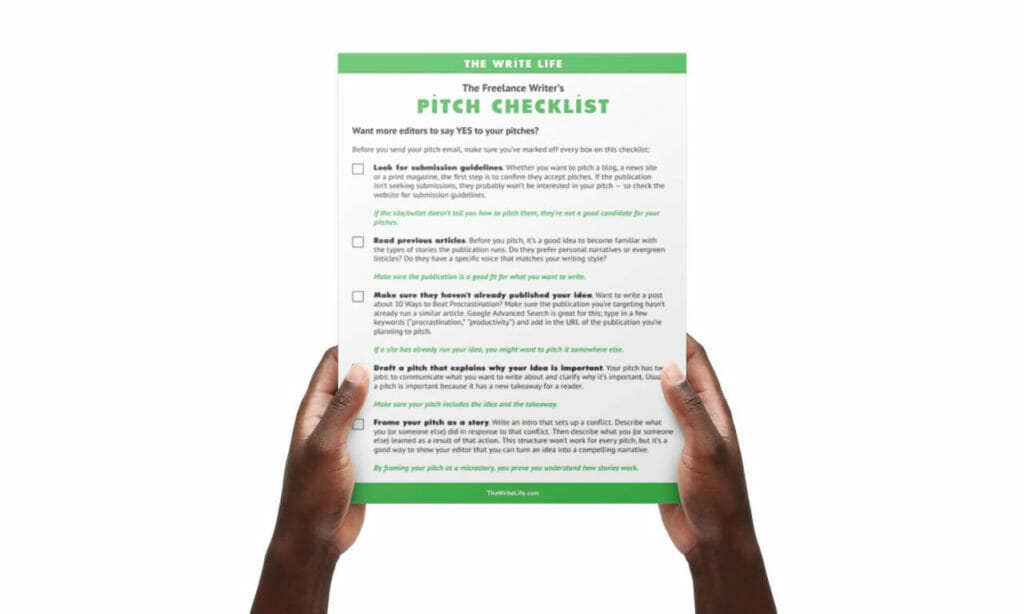
      Grab your pitch checklist, so you can land more web copywriting gigs.

      Now, all there’s left to say…Happy Writing! 😎

      Written by Zara Choudhry, Founder of AnonymouslyZara – a platform inspiring women through articles about faith, lifestyle, career tips and healthy relationships. 

    • 5 Nonfiction Writing Techniques That Will Captivate Readers

      5 Nonfiction Writing Techniques That Will Captivate Readers

      Do fiction and nonfiction writing have anything in common?

      After all, their goals are fundamentally different. One wants to entertain, the other one mainly educates.

      But take a look at Hunter S. Thompson’s work and you will know better. Thompson was a master at crafting tight, compelling fiction, and he used these very same fiction techniques to become one of the most highly acclaimed and fascinating nonfiction writers in history.

      [sps_reusable_block post_id=43045]

      How to write a nonfiction book using fiction techniques

      There’s no doubt: If you want to hook your audience, some story techniques come in extremely handy. It’s basic human psychology.

      Take a page from your favorite fiction writer and adopt these five nonfiction writing tips.

      1. Tell a memorable story

      Humans have been fascinated by stories since the dawn of time. At lunch, we tell our newest stories to our co-workers; at night, we tell fanciful tales to our kids and then consume suspense from our flatscreens.

      We remember stories much better than abstract rules, formulas or concepts. Your post or essay will be stronger and more relatable if you include little examples, experiences and comparisons.

      For example, instead of saying “Spinach is healthy,” you could tell a story about a runner who improved his performance by eating a lot of spinach. Just two or three additional sentences is often enough to help your words hit home for the reader.

      2. Bait your audience

      Great fiction grabs you right at the beginning and doesn’t let your attention go until the end. Why not do the same with your nonfiction?

      If your article is online, it’s in direct competition with thousands of other articles; your reader can choose from all of them instantly, and mostly for free. She could also just close her browser and go watch TV. In today’s multimedia world, attention is the number one commodity.

      Does your first sentence make the reader want to read the second? Does your second sentence evoke curiosity for the third? Here are a couple of options for beginnings that I found worked best for my blog:

      One strategy is beginning with a little personal or historical story. Take a look at the storytelling tips above and make sure to always keep the reader wondering what’s next. Before he knows it, he will be halfway through your article.

      You could also ask a question that moves your audience. If you write an article about how to save money, how about a start with “Isn’t it frustrating that at the end of any given month, there is no money left in your wallet?“ That’s how you put yourself in the reader’s shoes, to make her identify with you and your article.

      You could start with an interesting or funny thought, too. When you’re writing about the phases of the moon, why not begin the post like this: “Did you know that on the moon, you would only weigh 16.5 percent of your weight on Earth?”

      By using one of these strategies, you have a better chance of catching your reader’s attention — and keeping it.

      3. Use emotional language

      Bad nonfiction pieces are overly factual and prosaic. (Think of the last academic paper you read. Snooze!) They often employ a certain “code” of complex sentence structures and foreign words to make them seem more credible and expert-like.

      The antidote: use more imagery, more emotion and more personality. Metaphors are also an interesting way to add some spice. Instead of writing “double-digit percent fluctuations,” write, “a rollercoaster ride of ups and downs.”

      The less abstract your nouns, the better. Any noun of something you’re able to touch physically is better than something you can’t touch. Palpable words draw the reader into your text more effectively, so he experiences them instead of simply reading them.

      Certain words like ”confession” or “magic” are emotionally charged power words that hit your audience strongly. They make them feel your content. Power words can evoke vibrant emotions, and emotion will keep the reader’s eyes glued to every single word of yours.

      So read some Hemingway or Dickens, reconnect with the emotional side of your writing, and stir up your audience’s feelings!

      4. Say it simply

      Have you ever given up on an article or instruction manual because its wording frustrated you? If you have great content, don’t encrypt it. Provide even more value for your reader by cutting the content down into easily digestible bites.

      Look at any post on The Write Life: The content is top-notch, but it’s all packed into short sentences and easily understandable vocabulary. Ideas are broken down into detail. You see short paragraphs and a lot of white space. All the components of tight, simple writing are right before your eyes.

      Many great novels are written in a fairly simple style. They impress with story rather than with wording. Take any novel by Charles Bukowski: Do you think his prose would have the same effect if it used long-winded, multi-clause sentences and a jungle of technical terms? Rather than trying to make a sophisticated expression, Bukowski conveys emotion and character.

      Say it as simply as possible, but make sure your idea comes across.

      5. Surprise the reader

      Good fiction is full of surprising twists, but nonfiction often reads predictably, which is to say, dull.

      Do it better and include an unexpected twist or turn when you can. It will keep things interesting and fun for your audience. Why do we watch dramas and why do we like our gifts wrapped up? It’s for the kick of the surprise that awaits us.

      Keep readers on their toes by asking them a question and answering it in a way they wouldn’t have expected. For example, if you are writing an article about robots, you could ask: Which famous person drew early plans for a robot?

      (Answer: Leonardo da Vinci drew up plans for an armored humanoid machine in 1495.)

      You could also make a statement and follow it up with a point that seems like a contradiction. Don’t forget to explain and reconcile your points. A surprising joke or a provocative comparison can keep the reader interested as well, provided it fits your style and the format of your writing. Be imaginative, just like a fiction writer.

      Finally, how can you train yourself in the above techniques?

      One way helps for sure: read a lot of great fiction. The storytellers’ styles and strategies will spill over into your unconscious, and before you know it, you’ll be a master at helping every reader fall in love with your writing.

      What do you do to grab your reader’s interest? Share your secret weapons in the comments!

      This is an updated version of a story that was previously published. We update our posts as often as possible to ensure they’re useful for our readers.

      [sps_reusable_block post_id=43045]

      Photo via Dean Drobot / Shutterstock 

    • How to Unlearn Everything You Learned about Writing in School

      How to Unlearn Everything You Learned about Writing in School

      Writers, our industry has a problem: education.

      If you learned anything about writing in high school or college beyond grammar, you likely learned how to write a five-paragraph essay — the bane of my existence as an editor in digital media.

      Tired English educators so strongly imprint this structure on a student’s brain as the One and Only Correct Way to Write, it’s all I can do in my role to peel it off and start fresh to help a writer create something appropriate for an online audience.

      The format consists of these familiar parts (trigger warning for all of your late nights finishing that paper due for a 9 a.m. class.) outlined by the Guide to Grammar & Writing:

      1. An intro paragraph, including a hook and a thesis statement.
      2. Three body paragraphs, detailing one argument each.
      3. A conclusion that mirrors your introduction, including a restatement of the thesis.

      The endurance of this format, writes Steven Lynn in his textbook Rhetoric and Composition, “certainly owes something to its reassuring simplicity: ‘Just follow this neat blueprint; just get some materials and put them in place.’”

      That’s fine for the classroom. But educators need to do a way better job of teaching students that’s the only place this format belongs.

      Because they don’t, many new writers fall back on this juggernaut when they start writing for publication. Bad news from an editor: It makes you look like an amateur, or worse, a bad writer.

      A blog post is not a 5-paragraph essay

      The intro-body-conclusion format, according to Lynn, dates to the early days of rhetoric  — we’re talking Ancient Greece — and applies originally to speech writing. Centuries later, Dale Carnegie made the guidance famous with his oft-quoted, “Tell the audience what you’re going to say, say it; then tell them what you’ve said.”

      The age-old advice is important for a speech, because the audience doesn’t have your words in front of them. In writing, we call it redundant (or, we should).

      Readers can scan a piece of writing, go back to the beginning, jump to end, whatever they need to get the most value out of a piece. In blog posts and on web pages, in particular, this behavior is well-documented in studies like this one from UX research and consulting firm Nielsen Norman Group.

      It means repetition is a waste of space and unnecessarily taxing to the digital reader.

      What you didn’t learn about writing for digital media

      In a blog post or article published online, you don’t have to “tell the audience what you’re going to say” or “tell them what you’ve said.”

      Just “say it.”

      Give your readers the information they’re looking for — that you promised in the headline — in a format that helps them quickly digest and evaluate it.

      Here are a few basic ways to break up with the five-paragraph essay and write for a digital audience:

      Format for scanners

      Blog readers came to your site for an answer to a specific question. To serve that reader, organize your writing so it quickly lets them know you have that answer.

      The medium affords you the formatting to do that. A strong headline, clear sub-heads, bolded text, plenty of bullet points, tables and other visual cues let your reader scan the piece before reading it in full and learn exactly “what you’re going to say.”

      Use these cues to engage the reader, earn their trust and encourage them to stick around and enjoy the full piece.

      Write an inverted pyramid

      Because digital readers drop off throughout your piece, journalism’s “inverted pyramid” format fits blog posts well. It starts with the most important information and gradually whittles a story down to its most granular and least important details to ensure readers get the gist of a story even if they leave before finishing.

      But the format is kind of a bust for your most engaged readers. If a piece gets boring as they make their way down the page, what incentive do they have to keep reading?

      To keep readers engaged, place what Roy Peter Clark, a Poynter Institute senior scholar, describes in his book “Writing Tools” as “gold coins” throughout your story.

      “Reward the reader with high points, especially in the middle,” Clark writes.

      This lets you open with vital information, but also pique a reader’s interest throughout the piece to push them through to the end.

      Include a strong nut graf

      The “nut graf,” which, Chip Scanlan explains for Poynter, “delivers a promise of the story’s content and message,” plays a similar role to an essay’s thesis statement. It tells the reader your point.

      Unlike a thesis, however, the nut graf doesn’t summarize what you’re about to say. Instead, it tells the reader what’s in it for them. While the rest of your piece will share the what, who, when, where and how, the nut graf shares why they should care.

      Be concise

      “College [writing] taught me how to turn a one-sentence idea and inflate it into a one-page idea — which I had to quickly unlearn in the professional sphere,” communications consultant Tamara Murray told me in a tweet.

      Sound familiar?

      In professional writing, your readers don’t have minimum word-count requirements, and they don’t reward verbosity. Don’t waste their time with repetition or wordy sentences.

      Do your best instead to turn one-page ideas into one-sentence ideas — and watch how strong your writing becomes.

      Skip the conclusion

      Warning: You might have to contend with your editor on this one. Opinions vary. Mine is that conclusions are hard to write and not worth the effort.

      The Nielsen Norman Group data says less than 5% of readers will ever get to the bottom of your article. Why tear your hair out finding a creative way to “tell them what you’ve said”?

      If you follow my preceding advice, your intro and nut graf have given them the gist, and your formatting clearly outlines and summarizes the content. Let your reader move on.

      When you’re done sharing information, just stop writing.

      Photo via BlurryMe Shutterstock 

    • 5 Tips for Writing a Young Adult Fiction Book

      5 Tips for Writing a Young Adult Fiction Book

      Writing a fiction novel is the ultimate goal for many aspiring authors today.

      In doing so, you essentially create your own characters with unique backstories and evocative plots. It’s an intimate form of art that both heals and entertains.

      However, this is no easy feat, and with it comes much responsibility. The young adult fiction (YA) genre especially is a fragile one to enter. Readers are often enduring pivotal times in their lives, and the right words can quite literally save them. Authors should understand the power they have and how careful they need to be with it.

      While creating my YA book, I learned some valuable lessons about writing for this audience.

      At first, I thought I could wing the entire project, simply writing from my heart without considering my readers. But once I put pen to paper, I realized just how pivotal they were to my novel. They are, in fact, who I was writing my story for — who I was hoping to connect with and speak to.

      Here are six tips for writing a YA novel.

      [twl_reusable_block post_id=41455]

      1. Start with the scene you envision best

      When I first got the vision for my novel, one scene in particular stuck out to me. I knew it had to happen later in the book, but I just couldn’t get it out of my head. The passion burned within me; I had to write it down.

      From there, I was able to get a better sense of the rest of the book, including its tone, characters and plot. I worked my way out better than I would’ve been able to work my through.

      The YA genre is often one for experimenting. You don’t have to be so strict with your story; there’s no rule that states you must write from start to finish. Your writing process is entirely up to you. Write what you envision in that moment, and it will eventually come together the way it should.

      2. Take notes

      You never know when inspiration will strike, or when it will fizzle out. I often think up my best ideas while at the gym or driving, but sometimes, I forget them by the time I’m finished with my workout or at my destination.

      Whether it’s on your phone or in a particular notebook, always jot down your thoughts and ideas. Even if that means pausing the treadmill or pulling to the side of the road the first chance you get. The details you create when you aren’t actively brainstorming are often the most natural and fitting.

      I changed a major chunk of my novel’s plot while I was dancing around my apartment to emotional pop-punk music (no shame.) As silly as it sounds, you should always be working on your story. It should follow you throughout your day, and you should always be ready to jot down a few words — or possibly even an entire chapter.

      Your story will thank you.

      3. Create flawed characters

      Nobody’s perfect, and you don’t want your characters to be either. In the YA genre, your readers will want someone they can relate to. They’re still learning and growing, and they’ll look to your characters for comfort and reassurance that they aren’t alone in their struggles and shortcomings.

      However, be careful how you portray each person.

      If you’re covering a heavy topic (think Jay Asher’s “Thirteen Reasons Why” where depression and suicide is discussed), you are responsible for doing so with grace and respect. You’ll want to avoid feeding stigmas or encouraging poor behavior, and instead use your story to raise awareness and offer a sense of comfort and support through your characters.

      4. Draw from your experiences

      Don’t just write what you think; write what you know.

      This will help you create three-dimensional characters with real-life issues. For instance, my main character has obsessive-compulsive disorder, which I also have, and I’ve used many of my own experiences with the disorder to do her journey justice.

      However, be careful not to put too much of yourself into your characters. They are still their own people. I struggled with this at first, writing certain chapters as if they were a creative memoir. But reading it back, I realized they read more like a personal confession than an entertaining novel.

      If it fits, sure, don’t be afraid to include some details from your own life. But don’t force it. Your writing should be therapeutic, but it shouldn’t be a journal entry.

      5. Research

      Treat your novel like a creative research paper. Don’t assume you know everything. For example, if you’re writing about a character with a specific illness, reach out to a young adult with that illness to understand how it affects their day-to-day life.

      Additionally, don’t be afraid to scour forums or social media platforms. Hang out where your audience does; search relevant tags on Tumblr (for example, I searched #OCD to read about other people’s experiences with the disorder) or listen to young adults talk at your local coffee shop. Note their word choice/slang, topics of conversation, main concerns in life, etc. to create realistic dialogue.

      Am I telling you to spy on teenagers? Yes, yes I am. My favorite college professor once gave me this advice, and it’s changed my writing for the better. (Just don’t go around stalking anyone.)

      These tips are meant to guide you, not to dictate your entire writing process. Take all advice and criticism with a grain of salt. At the end of the day, this is your novel. Tell it the way you want — the way only you can.

      You never know who you’ll impact.

      Photo via LStockStudio / Shutterstock 

    • 4 Ways to Create (And Maintain) a Writing Habit

      4 Ways to Create (And Maintain) a Writing Habit

      When I wrote my first book in 2013, I was newly married and working a full-time job. While writing, that dream of every writer’s heart whispered to me every morning: What if this is what you could do to make a living?

      As I’d done for decades, I silenced that voice of hope with a quick and definitive, “Yeah, right. Nobody’s even going to read this thing.”

      However, I’d just read Steven Pressfield’s The War of Art. Spurred to fight Resistance, I wrote my 50,000-word book in six months by waking at 5 a.m. every weekday and writing for an hour — whether or not I felt like I had anything worthwhile to say.

      I accomplished that by changing my mind-set. What I had once approached as a pastime turned into an obligation. Where once I’d wait (far too long) for inspiration to strike, I found W. Somerset Maugham’s words to be true: “I write only when inspiration strikes. Fortunately it strikes every morning at nine o’clock sharp.”

      When I experienced the truth that a writing life is built upon writing—a novel concept, I know — everything changed.

      When my hobby became my habit, my identity changed to match my expectations.

      I no longer said, “I want to write.” I said, with confidence, “I am a writer.”

      It wouldn’t be until years later — after I’d become a full-time freelance editor, author, and ghostwriter — that I’d learn the four-step habit-building process I’d unintentionally worked through.

      And that education, ironically enough, would come through a book project I had the glad opportunity to assist with early on in its development.

      Atomic Habits (for writers)

      The subtitle for James Clear’s Atomic Habits, a New York Times bestseller, is An Easy & Proven Way to Build Good Habits & Break Bad Ones. Its tagline is “Tiny Changes, Remarkable Results.” Through many well-researched examples, Clear presents reason after reason why a 1 percent change for the better every day is more beneficial than striving for one defining moment, or, worse, stagnating.

      He also offers clear steps on the process of building better habits. Essentially, you need to discover your cue, craving, response, and reward. (Atomic Habits goes in-depth on each of these steps, and I recommend picking up the book for a fuller understanding.)

      How to create and maintain a writing habit

      To transpose his ideas to the writing world, let’s consider how each step could look in your writing life. Each quote below is from “How To Start New Habits That Actually Stick,” an excerpt of Atomic Habits.

      1. “The cue triggers your brain to initiate a behavior.”

      Your cue could be the place you write, the music you listen to, or the tools you use.

      My cue was just getting myself from my bed to my office chair in less than ten minutes every morning. If I could get myself in front of a keyboard before conscious thought (a.k.a. Resistance) entered my brain, I could convince myself, Well, I’m already here. Might as well write.

      Author and podcaster Sean McCabe automates lights in his office to change to a certain color when he’s scheduled time for himself to write.

      I highly recommend using one or all of these cues: writing in the same place, at the same time every day, while listening to the same kind of music. As you establish your writing habit through repetition, your body and mind start to correlate that place, that time, and that music with, Well, it must be time to write.

      Now, pause here to consider what your cue could be.

      2. “Cravings…are the motivational force behind every habit.”

      Clear notes, “What you crave is not the habit itself but the change in state it delivers.”

      In other words, I didn’t crave getting up at 5 a.m., at least not initially. I craved the sense of accomplishment from being a writer working toward a long-sought-after goal. To be honest, I also craved the moment I’d be able to tell friends and family, “I wrote a book.”

      Your craving may be the same, but it could also be to make money or a living through your words, or to earn respect for your opinions or skill.

      Now, ask yourself, “What change of state am I seeking as a result of my writing?”

      3. “The response is the actual habit you perform.”

      Writers ought to have only one response to their cues and cravings: writing!

      Of course, being a writer today requires far too many extracurricular activities, like promoting your list or pitching agents, but the habit you must perform without fail to become a writer and stay a writer is to write.

      Yet, I’m willing to bet, most of us struggle to do that consistently for a host of reasons.

      That’s why following Clear’s four stages of habit-making — which loop back upon themselves — is so helpful.

      4. “Rewards are the end goal of every habit.”

      Once your cue has led to your craving, your craving has led to your response, your response leads to your reward. You finally get to enjoy the fruits of your labors.

      These rewards can take a few forms.

      Maybe it’s the endorphin kick when you finally figure out your plot or when one of your characters surprises you on the page.

      Maybe it’s the realization that you’re doing what you’ve always said you’d do.

      Maybe it’s being able to talk about your work-in-progress because you finally have a work-in-progress.

      For me, my reward was Pavlovian. I used Scrivener’s word count goal feature to meet my daily word count goals. Every time I’d cross that number, Scrivener would give me a pleasant ding and a pop-up of congratulations.

      Eventually, I craved hearing that noise.

      For all of those early mornings, my habit loop wasn’t about writing a book and whatever rewards could come from publication. Rather, my habit loop was much simpler: I just wanted to hear that chime, signifying that I’d met my goal.

      And, by just getting 1 percent better every day, I eventually wrote a book, published it, and then turned that work into a career in writing.

      That whisper of fear I once had has been replaced with a daily shout of joy: This is what I get to do for a living. (And I have incredible clients to thank for that.)

      If you’re ready to transform your writing hobby into a writing habit, I hope you’ll experience the same kind of identity shift.

      You’re not going to write.

      You are a writer.

      This post contains affiliate links. That means if you purchase through our links, you’re supporting The Write Life — and we thank you for that!