Blog

  • Freelance Writing Rates: 5 Resources for Figuring Out How Much to Charge

    Freelance Writing Rates: 5 Resources for Figuring Out How Much to Charge

    Building your business as a freelance writer often means offering an array of services. Even within a niche like copywriting, for example, you could provide various services, writing About pages, sales pages, product descriptions, even Kickstarter copy.

    The problem is, it’s often difficult to figure out how much to charge for different services. How do you know what rate to set for something like writing a wedding toast, crafting an online dating profile or writing a press release for a corporate client?

    While you’ll find a lot of differing opinions on how to set your rates, it’s also helpful to compare your planned rates to those of other writers. Knowing what other people charge helps you determine whether you’re on the right track and prevents you from undervaluing your skills.

    Researching pay rates can be tricky, but here’s a list of useful resources on rates for different writing gigs, projects and publications.

    1. Writer’s Digest’s Writers’ Market

    While online access to Writer’s Market will set you back $39.99 a year and the book version is $23 on Amazon, Writer’s Digest shares Lynn Wasnak’s “What Should I Charge?”. The chapter’s handy chart lists rates for 150+ writing gigs, including both per-hour and per-project options.

    Where did this information come from? Wasnak compiled the chart from responses to a survey of 23 professional writing and editing organizations, such as American Independent Writers, National Writers Union and Writer’s Guild of America. The survey was conducted in 2010, so rates may have changed slightly since then, but they’re still a great starting point.

    2. Editorial Freelancers Association’s Editorial Rates

    EFA, a non-profit, volunteer-run organization, offers a membership directory, newsletter, job board and online education. Its members have also put together a list of rates for common writing- and editing-related tasks, such as PR writing, ghostwriting and fact-checking.

    The chart includes per-hour, per-page and per-word pay ranges, along with an estimated pace to give writers an idea of how long a project may take. For example, translators usually manage between 300 and 500 words per hour. The rates were last updated in 2012, and as the EFA notes, they “should only be used as a rough guideline.”

    3. Scratch Magazine’s Who Pays Writers

    Looking for an idea of potential payment before you pitch a magazine or online publication?

    Created by writer and Scratch cofounder Manjula Martin, Who Pays Writers is an incredible repository of information about which publications pay writers, how much they pay, and for what kind of work. Anyone can submit a rate, and it’s completely anonymous.

    You’ll likely find conflicting reports of different rates for the same publications; as Martin notes, different writers command different rates based on their levels of experience, relationship with the editor, background and qualifications, etc. Many entries include whether the writer had a contact at the outlet or it was a cold pitch.

    4. Write Jobs

    While Write Jobs is a job board, reviewing its postings can help you establish whether your planned rate is too low, too high or somewhere in the middle. Look for the “With Pay Rates” option in the top menu bar to see only jobs that include pay, then scroll down to review the options.

    Many of the freelance writing jobs are from anonymous companies or Craigslist, so take the rates here with a grain of salt; they’re likely toward the lower end of the spectrum. Definitely don’t price your services lower than these rates, and don’t be afraid to aim higher.

    5. Your favorite search engine

    Am I recommending you simply ask Google, “How much should I charge to write [insert project here]”? Yes!

    Many writers and editors share their rates upfront on their websites; James Chartrand suggests this is one mark of an experienced writer. Not only does this help master writers find their ideal clients — clients who know what they’re getting into and won’t try to negotiate the writer down — but it helps newbies figure out what to charge.

    For example, say you want to start helping authors create and polish query letters to submit to agents. Google serves up several results, including starting rates of $120 to write a query letter, or $25, $30 or $39.99 to critique one.

    This method is a bit more labor-intensive than the others, but it often yields good results. Try wording your search query a bit differently each time, and including words like “rate,” “charge” and “cost.”

    The bottom line

    Researching what other people charge doesn’t tell you exactly how to price your services — you’ll also have to consider your experience, qualifications and financial situation.

    However, it’s a good first step in the process of setting your rates. Knowing what other writers are earning for similar work also helps you identify what sets them apart — a certain skill or certification? A few guest posts on major blogs in your niche? — and include those elements in your business strategy.

    And then, once you’ve gained that experience or earned that recommendation, you can again turn to these resources for information to help you raise your rates.

    What’s your favorite source for freelance writing rate information?

  • Boost Your Author Platform: How to Host Your Own Radio Show

    Boost Your Author Platform: How to Host Your Own Radio Show

    GIVEAWAY: Dorit is offering a 45-minute slot on her radio show, “Giving Voice to Your Story” for one lucky reader to talk about his or her memoir! See below to enter and you could win a chance to be interviewed in February or April 2015.

    When we talk about author platform, many writers think about print media such as books and blog posts. Based on my own experience building my own author platform, an audio component such as an Internet radio show makes a great addition.

    A radio show adds a different dimension to your writing and generates interest in you and your book. When people read your website and guest posts, they are “reading your voice” and imagining what you sound like. On a radio show, your fans can hear and “feel” you much more directly than they can through an article.

    In addition, a radio show helps you build public speaking and media credits. If you’re looking to get on syndicated news, local radio and news channels and even national television, a radio show will help you share your personality with producers.

    Sound like something you might want to do? Here’s how to develop your own radio show.

    My experience as a radio show host

    My global radio show, “Giving Voice to Your Story,” went live in July 2013 as part of the Creating Calm Network Broadcast Group. I had already established myself as a blogger, but I wanted to create a more solid online platform and prepare for the release of my memoir, even though the publishing date was over a year and a half away.

    I connected online with non-fiction authors and memoirists I liked and to my surprise, many wholeheartedly wanted to be interviewed! It wasn’t long before I’d built a following. Within five months, I was able to bring on board noted authors such as Julia Cameron, author of The Artist’s Way, and Linda Gray Sexton, memoirist and daughter of the Pulitzer-prize-winning poet Anne Sexton.

    Since I launched my radio show, people have started recognizing me as an expert because I associate myself with expert authors.

    Planning your radio show

    As when writing an article, blog post or novel, the first thing you do is plan the subject matter of your radio show. Keep in mind that the topic should be something about which you are knowledgeable and feel passionate about, and one that potential book-buyers will be interested in.

    Your show might include chapter-by-chapter readings of your book, how-to tips or interviews.  In my experience, listeners are a lot less interested in stories than they are in the lessons they can learn from them. Talk about the life lessons you learned or share advice from your experience, and then allude to your book, which of course goes into more detail.

    On my blog as well as on my show, I talk about various craft issues related to memoir such as the voice of experience versus the voice of innocence, how to break the silence and write about challenging emotions or painful parts of life, or how to write about uncomfortable issues so that one’s memoir doesn’t read like a journal, but an actual story.

    I refer to specific scenes to talk about these issues. For example, I finally broke my silence to write about a bullying experience while serving in the Israel Defense Forces, and my next step is to broadcast a “break the silence” radio episode. I shared these insights on a recent LinkedIn discussion along with a previous link to the show and readers were not only grateful, but shared their thoughts behind the challenges. The comments quickly turned into a great discussion and helped create a supportive community.

    Aim for a show between 15 and 60 minutes long. You’ll want people to be able to listen to it in one sitting (or one trip), but you don’t want it to be so short that your listeners will resent the fact they bothered to tune in or download it. Consider adding music to open and close the program. Google “public domain music” or “royalty-free music” for download options.

    How often you choose to put out a new episode is up to you, but I feel the frequency of a radio show follows the same rules as blog posts: Release a new episode as often as you think you can commit to regularly and faithfully. The shorter the show, the more frequent you can be without overloading your audience.

    Interested in interviewing guests?

    You’d be surprised how happy agents are to book one of their authors as a guest on a radio show. You can also put a call out for guests on your social media channels. With self-promotion so necessary to book sales, authors are hungry to spread the word about their work.

    Whenever I finish a great memoir, I immediately connect with the author online and inquire if he or she is interested in being on my show. Almost 99% of the time, the answer is yes. This is how I’ve secured most of my guest appearances. The key is to start with your local community of authors and build your way up. After a while, you’ll build a following and you can quote your number of listeners when you’re approaching bigger-name authors.

    Essential equipment

    To broadcast your radio show, you’ll need a few things:

    • A computer or laptop with high-speed Internet connection. The beauty of hosting your own radio show is that you can do it from the comforts of your own home.
    • A headset with both headphones and microphone. The benefit to the headset is that you can adjust the distance of the mic from your mouth and it stays there.

    That’s it! Easy, right?

    Broadcasting a show

    Blog Talk Radio is the most popular venue for Internet radio and offers an easy start up. There are three tiers of monthly payments, with more benefits as you move up to the account types. There’s also a free account, but it only allows five listeners, so it’s not as useful.

    The main difference between the three packages ($39, $99 and $249) is the number of shows you can broadcast as well as more promotions. With the $249 package, you can live-stream from any website rather than just on Blog Talk Radio’s site.

    I’ve made the switch to Instant Teleseminar, which is user-friendly for both the listener and host. My recordings are immediately available after the show, so I can post them on my site for listeners to download.

    Get ready for your first show

    Here’s a handy checklist of how to prepare before and during the show:

    • Make sure you’re recording in a quiet place. Microphones pick up strange sounds that can easily distract listeners.
    • Write an outline or script for your show before recording. This cuts down on the “ums” and “ahs.”
    • If you’re doing a live recording (a show you’ve promoted with listeners tuning in live, rather than one recorded for later download) make sure you’re comfortable with your equipment and software. Practice beforehand so your first live show goes smoothly. Offer listeners a chance during the show to ask questions.

    Marketing and promoting your radio show

    Now that you’ve finished your first episode, you need a home base to fully capitalize on the marketing potential of your episodes. A blog or writer website is a good option and makes you easier to find. Make sure that your site has the link to your latest show prominently displayed along with your contact information.

    Since I’m part of a network, the show producers help promote all of the network’s shows. My show appears on its own home page and on the network’s social media channels.

    Promote your show on your own by creating tweets and Facebook posts highlighting different points in the radio show. For example, you could mention a lesson you learned in an unlikely situation, then link to your upcoming episode (or recording) for people to learn more.

    Make your latest episodes easy to find, and distribute recordings on established networks such as iTunes or Audible, which let you upload your recordings for wider distribution. Be sure to include your name and URL at the beginning and end of each recording, and consider crafting a short, catchy promo to share on your networks.

    Not ready to host your own show?

    Instead of going it alone, take on a cohost or two. You could either record together for a talk-show-like adventure, or host your own episodes as part of a group show. You’d see many of the same benefits, but without having to record a new episode quite as often.

    If hosting a radio show sounds too daunting, consider being a guest on a show. Choose one that speaks to you. One great way to get started is to check the daily listings over at Help a Reporter Out (HARO). I see requests for radio show guests almost daily. Subscribe to the daily digest to receive updates on all kinds of media requests. You can also set up a Google Alert for “radio show” and “guests wanted/needed” which you can receive up to several times a day straight to your inbox.

    Another option is to search for radio shows in your genres. You’ll find lots of them out there, so again, you’ll need to be choosy. Approach the host or producer and ask if he or she has slots for guests for future interviews. It never hurts to ask! As a guest, you’ll still have to prepare for the show, but you’ll be spreading the word about your book, building your brand and creating a following with less pressure than hosting your own show.

    Hosting your own radio show can be an effective way to round out your online presence while giving you one more way to engage and connect with your audience. Have fun and happy recording!

    Have you tried hosting a radio show? Would you consider adding one to your author platform?

    GIVEAWAY: Leave a comment below with the words “pick me!” to enter to win a 45-minute slot on “Giving Voice to Your Story.” To win, you must have written or be working on a memoir. Leave your comment by January 5, 2015, to enter.

    If you haven’t written a memoir but still want to comment, we’d love to hear your thoughts — just don’t include the words “pick me!” (UPDATE: Lori won!)

  • Amazon Associates: How to Use Affiliate Links to Earn More Money From Your Book

    Amazon Associates: How to Use Affiliate Links to Earn More Money From Your Book

    As a writer, yesterday I earned a commission of $1.60 for an “ultra-high-density external battery pack.”

    Yes, that sentence does make sense — if you know how to use the Amazon Associates Program to boost the revenue from your books.

    Here’s what happened: A visitor to one of my websites clicked a link to the Amazon sales page for my book, 101 Weird Ways to Make Money.

    After adding a copy to his cart, he continued shopping.

    The link to the book’s sales page includes my Amazon affiliate code, so not only did I earn a royalty from my publisher, but Amazon paid me a commission for the book as well as anything else the visitor bought within 24 hours, which in this case included that battery pack.

    If you haven’t taken advantage of Amazon’s Associates Program to earn royalties from your links to your books — and other products — you’ll want to get started.

    How Amazon Associates Works

    When you sign up for Amazon Associates, you’re paid 4 to 10 percent commission for sales you refer to Amazon using your affiliate links (the URLs that include your unique tracking code). The exact percentage depends on the types of products sold and your sales volume for the month.

    Of course, you can earn commissions by linking to any product on Amazon (more on that in a moment), but as an author your first goal is to squeeze more profit from your book sales. Every time you promote your books on your website or blog, make sure to use your affiliate links.

    Here’s an example for traditionally published authors. Suppose the cover price of your book is $19.95, and Amazon is currently charging $14.95 (their price often changes and its generally below list price). When a visitor clicks the link on your blog and buys a copy from Amazon, you’ll get at least 59 cents (4 percent) as a commission — in addition to whatever the royalty is from your publisher.

    Self-published? If your ebook sells for $5.99 in the Kindle store, you’re probably already earning a royalty of $4.19 (Amazon pays up to 70 percent), which is great. But why not also get an extra 24 cents by linking to your book with your affiliate code to earn a 4 percent commission? And if you sell enough books, you can do even better.

    For example, if you sell more than six items through your referral links in a month, your commission goes up to 6 percent. Notice I said “items,” because the people who buy your books will also buy other things while shopping on Amazon, and you earn a commission on those sales as long as they occur within 24 hours (or longer if the visitor adds an item to her shopping cart and returns to pay later).

    Some items have set rates, while others’ rates fluctuate based on volume. Here are some examples of the set rates from Amazon’s Advertising Fee Schedule:

    • Grocery products: 4 percent
    • Instant video products: 6 percent
    • Headphone products: 6 percent
    • Jewelry products: 10 percent
    • Game downloads: 10 percent

    How much money can you earn from Amazon Associates?

    I receive a royalty of $1.50 from my publisher for each book I sell, so if I also get a 77-cent affiliate commission (6 percent when Amazon sells my book for $12.95), that’s a 51 percent boost in revenue per book.

    I don’t sell 100 copies weekly like I did back when the book first came out, and most sales now aren’t through my links, so that extra revenue has dropped to less than 10 dollars each month.

    On the other hand, after replacing regular links with my affiliate links years ago, I haven’t had to spend one extra minute to keep making that extra money.

    Then there are those “other” sales. Once I started using this strategy, I was surprised to see that on top of the affiliate income for my books, I was making another $30 monthly in commissions for other items people bought after arriving at Amazon through my links. That too has dropped as sales have declined, but hey, every little bit helps.

    The payoff can be bigger than my experience indicates. “On average, I make a few hundred dollars each month from my affiliate account, because every time I link to my books from my website I use an Amazon Associates URL that’s got a tracking ID attached,” said Paul Jarvis in a post at Forbes. A few hundred dollars a month is a few thousand dollars a year — not a bad payoff for taking a few minutes to set things up the right way.

    Playing by Amazon’s affiliate rules

    Authors often think it’s against the rules to use affiliate links for their own books.

    Here’s the truth: It isn’t.

    What is against the rules is using your affiliate links when you buy things for yourself.

    It’s perfectly okay to make commissions on your books when other people buy them. This is true when you sell Kindle books, too.

    In response to the question, “Can I link to my Kindle book via the Amazon Associates program?” Amazon says:

    Yes, the Amazon Associates Program provides vendors specially formatted links to Amazon on their websites in exchange for advertising fees when their visitors follow the links and place an order. Anyone with a website may apply for our Associates Program, although we do have certain requirements that may prevent a site from participating.

    One of those “certain requirements” is that you live in an approved state, a list that fortunately includes all but five states. According to the Associates Program Operating Agreement, the only states where you can’t participate are Arkansas, Colorado, Maine, Missouri and Rhode Island.

    If you happen to live in one of those states you’re out of luck . . . almost. You still can sign up for the Books-a-Million affiliate program and send your readers to their website to buy your books. You’ll get a 5 percent commission on sales made within 30 days of the customer using your link to arrive at BooksAMillion.com.

    Read up on the rest of Amazon’s rules. You can’t use affiliate links in emails or PDFs, for example, and Amazon requires you to disclose on your site or blog that you are “a participant in the Amazon Services LLC Associates Program.” Getting your affiliate account closed means your extra income stream is gone, and it’s easy to make a mistake. In fact, I may have used my affiliate link in my newsletters once or twice before realizing this was against the rules.

    What does the law say about affiliate advertising?

    As an advertiser (which is essentially what you become), you also have to be aware of Federal Trade Commission (FTC) regulations. For example, the FTC Guidelines say you have to disclose the fact that you might receive payment when visitors use your links to buy something, and they provide these more specific suggestions:

    • Place the disclosure as close as possible to the triggering claim.
    • Preferably, design advertisements so that “scrolling” is not necessary in order to find a disclosure.
    • Necessary disclosures should not be relegated to “terms of use” and similar contractual agreements.

    A simple disclosure might look something like this:

    Disclosure: This website may be compensated for linking to other sites or for sales of products we link to.

    Some bloggers put a statement at the bottom of each page, while others just provide a link there to a disclosure page that has the more-detailed information. That has apparently been enough for website and blog owners to avoid trouble with the FTC so far, but it also appears that neither practice is in complete compliance with the regulations, so you may have to put that disclosure a bit closer to the links. (I’m not a lawyer, though, so you may want to speak with one to make sure you’re covered.)

    Of course, you could be very clear and label it “My affiliate link to my book,” or even say something like, “Do me a favor and use this link to check out my book, so I can make a commission if you buy it.” (Editor’s note: Since we published this post, it sounds like Amazon has started discouraging this type of wording.)

    How to make more money with Amazon Associates

    It’s possible to make even more affiliate income while promoting your books. One method is to share the sales pages on social media using your affiliate code.

    This is tricky because it is against Amazon’s rules to shorten your affiliate URLs and they may be too long for Twitter, or might be shortened automatically on Facebook.

    Fortunately, Amazon provides a way to share your book’s sales page on Twitter and Facebook while using your affiliate tracking code.

    Go to your book’s sales page while logged into your affiliate account, then use the “share” tab at the top to post to Twitter or Facebook. Here’s a simple tutorial that walks you through the process.

    Another way to get an Amazon-approved short link is to search for your book from your Associates home page. See the yellow “Get Link” button? Click the arrow next to it and choose “Shorten URL with amzn.to?”

    I discovered another creative way to boost your affiliate income in a Kindle publishers’ forum. “One thing I’ve done is post product links to the equipment that I or my fictional hero use in the books. Things like knives, optics, tents and such,” said one user.

    For example, he says he made an 8 percent commission on a rifle scope that costs over $2,000 — that’s more than $160 from one sale through his affiliate link!

    Letting your book’s characters sell things for you is a neat trick! Unfortunately, the consensus of Kindle forum users is that it’s against the rules to include affiliate links in Kindle books.

    Many authors get away with it and Amazon has not fully clarified the matter, but a safer strategy might be to have “character profile” pages on your website, with affiliate links to each character’s favorite products. You could then link to those profile pages at the end of your book, or link to a “more information” page on your site.

    Finally, your readers probably value your opinion, so why not have a list of your favorite books by other authors on your website or blog? Of course, you’ll link to all of their books using your Amazon Associates links.

    Will you join Amazon Associates?

    The program offers a way to boost your income from book sales. More than ever writers have to be marketers anyhow, so why not add affiliate marketing to your plan? You’ll at least make more money from your own books, and perhaps profit from recommending other books and products as well.

    Do you use affiliate links to promote your books?

    Photo via  Ollyy / Shutterstock 

  • Write Better and Faster: 6 Smart Ways to Increase Productivity and Creativity

    Write Better and Faster: 6 Smart Ways to Increase Productivity and Creativity

    We all get the same number of hours in the day, but some people seem to accomplish a superhuman number of goals in that time. What’s their secret?

    About a year and a half ago, I became obsessed with productivity. What made some people so productive and successful — especially in creative fields — and what was the actual science behind it?

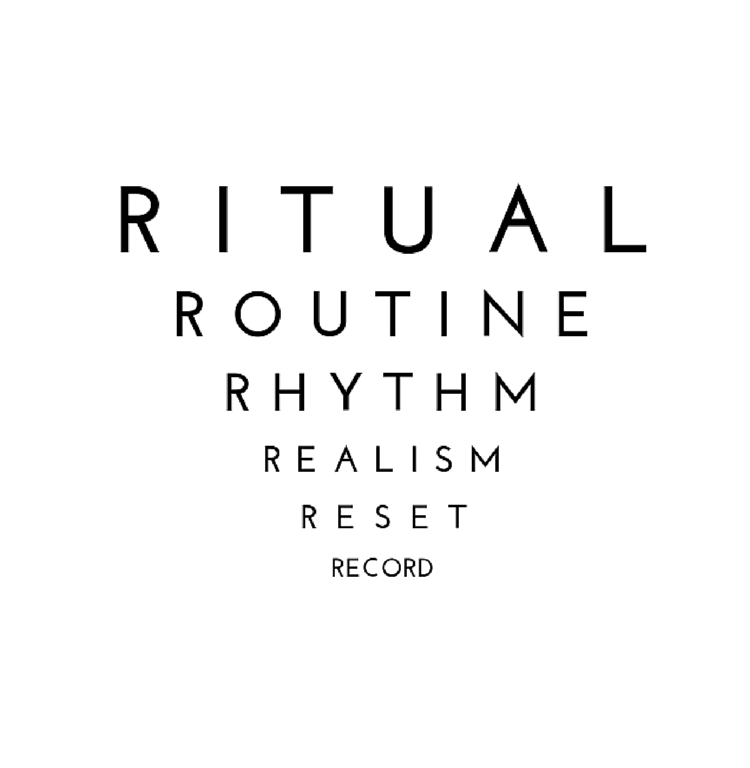
    After reading books on habit, willpower, rituals, routines and anything else that might increase my writing output, I set up what I like to call the Productivity Pyramid (though yes, I realize it’s really a triangle). It’s made up of six crucial elements.

    Increase productivity as a writer

    1. Ritual

    The top of our Pyramid is the most important. Rituals are habits that begin with a behavioral cue — a sort of trigger that tells the brain “Now it’s time to work!” Some authors have quite elaborate cues (such as reading the same poem before writing) and others have more simple ones (such as making a cup of tea). Either way, having a ritual helps the brain slip into its creative flow automatically.

    I cultivated my ritual years ago as a student who didn’t want to pay attention in class: writing in a spiral-bound notebook. Just sitting down with the lined paper and a pen tells my brain, “Oh! We’re writing stories now!” and I can use this ritual whenever I need to!

    Stuck in line at the DMV? No problem — out comes the notebook. Waiting for my order to finish at the coffee shop? Awesome — I can pull out my notebook and instantly get to work. Figure out what triggers you to prepare for creative work, and create your own ritual.

    2. Routine

    Routine is almost as important as ritual because, like ritual, it trains your brain to create on autopilot. This doesn’t mean your creative times are boring or redundant. Rather your brain gets used to drafting at X-hour everyday, and when that hour arrives, your imagination is ready to go!

    The other powerful component of routine is that it reduces the number of decisions you make in a day. You see, willpower is finite; the more we use, the less we have. Decisions deplete willpower, so if we can reduce the number of decisions we have to make in a day — if we can routinize certain aspects of our life — then we can save our decision-making for our writing.

    3. Rhythm

    Our creative energy shifts and changes throughout the day, just like our circadian rhythms. Figuring out at what point in the day you’re the most productive creatively — when your brain is really “on” — can dramatically improve your creative output.

    My whole life, I’ve thought of myself as an afternoon worker, since that was when I seemed to sit in the chair with my hands on the keyboard. I thought my creative energy was best a few hours after lunch.

    However, after using a productivity heat map, I discovered that I was actually a morning person! I sink into creative flow the deepest and for the longest time immediately after I roll out of bed in the morning. To make the most of my natural rhythm, I’ve set up a routine that starts with me awakening at 5 AM and writing for a few hours straight.

    Do you know your most productive times of day? Check out your own rhythm with these strategies.

    4. Realism

    This is a pretty straightforward step on the Pyramid, but if you really tap into it, it can be transformative. Why? Because many people set unrealistic goals, get frustrated when they don’t meet them, and then give up. (I am SO guilty of this!)

    One good day of writing doesn’t mean we’ll have that same amazing word count every day! However, if you set a truly achievable goal — especially a daily one — hitting it will help your confidence grow.

    I set a daily goal of 1000 words when I’m drafting a new novel. This goal is not only attainable, but it’s easily attainable. It doesn’t intimidate me or set me up for immediate failure. Yet, 1000 words a day leaves me an entire novel in just a few months. What’s your achievable, realistic daily goal?

    5. Reset

    It’s unavoidable: Our bodies need regular rest periods. Creatively speaking, our brains can only produce at peak performance for a certain amount of time — and then we have to reset.

    Both on a daily scale and on a more long-term weekly or monthly scale, breaks can be your new creative best friend. Have you ever noticed that some of the best aha! moments come when you’re not working?

    For example, I have my biggest creative breakthroughs while I’m driving on the highway or cooking dinner or walking my dogs — when I’m not actively thinking about my story, yet the ideas are still knocking around in my subconscious. I know other people who use meditation or binge read or take long hikes.

    Find a reset strategy that works for you, and enjoy your renewed energy and creativity when you return to your work.

    6. Record

    Creative endeavors (like novels) can be HUGE. “Write a book” is a daunting undertaking (and such a vague goal), so seeing daily progress can help keep you motivated to continue.

    To keep myself on track, I use a spreadsheet to note how many words I’ve written each day as well as record any other work I’ve done (e.g. revised two scenes or wrote a blog post). Then I tally up the total word count each day so that I can see how much my project is growing! The visual interpretation of my progress helps keep me motivated.

    Your tracking method can be as simple and private as an Excel spreadsheet, or you can make it a group endeavor by sharing a Google spreadsheet with a few fellow writers.

    The Productivity Pyramid has helped me write and revise to the maximum of my creative abilities while also traveling for author events, promoting my books and maintaining my writing blog and newsletter. I hope it can help you do the same!

    How do you increase your creative productivity?

  • Quitting Your Job to Freelance? How to Keep the Law on Your Side

    Quitting Your Job to Freelance? How to Keep the Law on Your Side

    You’ve been itching to go freelance and leave your job at EasyPub, Inc. You want to call your own shots, set your own hours and work from your own space.

    You have weighed the pros and cons, made a plan, and are ready to turn your side hustle into your full-time job. You have a couple of regular clients on board, with a few more waiting in the wings. You’ve cleaned out that weird little nook in the corner of your house and put in a nice desk and some office trappings so you don’t have to write with your laptop on your knees.

    You’ve given notice to your employer, EasyPub, updated your website, and given yourself a pump-up talk. You’re ready to dive into life as a full-time freelancer!

    Before you do, make sure you’ve planned ahead to get your legal ducks in a row — you don’t want the contract you signed with your employer to come back to bite you.

    If you know your obligations, you’ll be able to prepare to launch your freelance business while staying on the right side of the law. Here are the things you need to consider before you leave your day job.

    1. Your contractual obligations to your existing employer

    If you signed a contract at any time while you were working for the company, you need to check to see if you agreed to these specific provisions. Some companies put these provisions in their employees handbooks, so you’ll need to look at that, too.

    Non-compete clause

    A non-compete agreement prevents you from working in competition with your employer and must be limited in time (generally not more than two years) and geographic scope. Non-competes are enforceable in most, but not all states.

    If you have signed a non-compete, you must read it carefully to determine what you can and cannot do to make a living after you leave the company. For example, a non-compete might say that if you’re a copywriter for a marketing company in Chicago, you can’t work for any competitive company within a 25-mile radius for two years.

    Non-solicitation of customers agreement

    A non-solicitation of customers agreement is designed to prevent former employees from poaching the company’s customers for a limited period of time, usually a year. This is different from a non-compete and is becoming more common.

    If your job involved close interaction with customers, they have a relationship with you. The company doesn’t want to lose the customers when they lose you as an employee.

    As with the non-compete provision, non-solicitation provisions are enforceable in most states, but not all. You will not be able to work with the company’s customers after you leave your job if you signed an agreement with a non-solicitation provision in it. This provision could impact your projected income, if you were planning on continuing to write copy for Acme Corp. as a freelancer.

    Non-solicitation of employees clause

    If you’re leaving your job to start your own company and are planning to hire your own employees, you need to be aware of this provision. Many companies want to protect their workers from being taken by departing employees for a certain period of time, usually a year.

    Again, the company is trying to protect its relationships with contract language and the contract, if reasonable, is enforceable in most states.

    2. Your fiduciary obligations to your existing employer

    A fiduciary obligation is the duty to act in another person’s best interest and not in your own. It means you have to put that other person first — and in this case it’s your employer. When you’re making plans to leave your job, keep these two points in mind.

    Best efforts

    While you are still with EasyPub, you have the obligation to use your best efforts at your job — even while you’re planning to leave it. Don’t get distracted by the excitement of going out on your own and forget to give your all to your current employer before you leave.

    Duty of loyalty

    If you’re a high-level or skilled employee with the company, you owe a duty of loyalty while still employed. When you’re planning to leave your job, you may not take any action that competes with the company (like convincing a prospective customer to hold an assignment until you’re on your own), even if you haven’t signed a non-compete agreement.

    You always want to leave a job on good terms. Building and keeping good relationships with former employers will be useful as you develop your career and perhaps build your own company.

    [bctt tweet=”Leaving your job? Don’t take any action that competes with the company, says @KathrynGoldman”]

    3. Ownership of intellectual property and confidential information

    While working for EasyPub, you had access to the company’s information. Some of the information had to do with customers, some of it related to EasyPub’s business and some of it you created yourself.

    You have obligations to protect EasyPub’s confidential information and to respect its intellectual property even after you leave the company.

    Intellectual property

    Work you created while you were employed by EasyPub belongs to the company unless you have a written agreement that says otherwise.

    When you are making your plans to leave EasyPub, you should not create any work on the company’s time, or using the company’s equipment, materials or other resources.

    To be sure that what you create during this planning stage is yours and not the company’s, you should not use your company-issued laptop or other tools for your side hustle. Don’t use your company email address to do business for your new gig. Keep everything completely separate to protect yourself and your new business.

    Confidential information

    Most companies have provisions in their handbooks that require employees to return all company property, including all information in the employee’s possession, to prevent any disclosure of that information.

    To comply, search your computer, email (including sent and deleted email), any cloud storage services, phone, iPad, and anywhere and everywhere else you might have stored files or data owned by the company.

    Leaving a day job to go out on your own is an exciting time. Reduce the risk and calm your nerves by being thoughtful about how you do it.

    Kathryn is a lawyer, but she’s not your lawyer, so this article isn’t technically legal advice. For legal counsel specific to your situation, please speak with an attorney.

    How did you protect yourself as you prepared to leave a day job?

  • Horror Authors: How to Scare the Heck Out of Your Readers

    Horror Authors: How to Scare the Heck Out of Your Readers

    If you’re writing horror, dark fantasy, thrillers or anything else that requires suspense, a good jump-scare or anything that might terrorize your readers, you’ve probably already know that the written word can fill you with dread, and even startle you. Those feelings aren’t reserved for the movies.

    But how much study have you put into how your favorite horror authors have gone about scaring you with the written word?

    Movies rely on editing, music cues, performance, special visual and makeup effects . . . a whole parade of cinematic tools. But in prose all we have to work with are words, and our readers’ imaginations. The good news is that those are powerful tools.

    Though you may not have much control over any individual reader’s imagination, or his interpretation of your work, the ways you arrange words into sentences and sentences into paragraphs can activate your readers’ psyches in ways you may not have thought possible.

    It all comes down to breathing

    Even when reading silently, we tend to breathe along with what we’re reading as if we were reading it aloud. It’s impossible for us to turn certain parts of our brain off and when something causes us to start breathing differently, that forces us into different states. When you’re in a blind panic you tend to hyperventilate, breathing in quick, shallow gasps. When you’re nervous or anxious about something (the feeling of suspense), you tend to hold your breath, and breathe more slowly.

    The good news for horror and thriller authors is that these processes also work in reverse. If you can force that breathing state (or, more accurately, some smaller, less physically traumatic version of that state) in your readers, you’ll bring on the requisite psychological response.

    Evoking suspense and anxiety

    When you’re building suspense, evoking a feeling of impending doom or the terrifying fear of the unknown, get your reader to hold her breath. Stop her from taking her next breath for longer than normal. And though it may seem impossible to do this with words on a page, remember what I said about how we unconsciously breathe as though we’re reading aloud even when we aren’t.

    One of the reasons that sentences are finite is that the period at the end allows us a breath. Paragraphs give us a chance to take a deeper breath. So if you want your reader to slow her breathing and start feeling nervous, anxious or fearful, keep your sentences long, and your paragraphs even longer.

    Very near the beginning of Shirley Jackson’s classic The Haunting of Hill House, the protagonist, Eleanor, is on her way to meet her fellow paranormal investigators at a house that’s known to be haunted. Though excited about being a part of something potentially important, and getting away from her dreary life in the city, Eleanor is terrified of what she’ll find there, not just from ghosts but as a result of what we’d now refer to as social anxiety. The closer she gets to the house, the more anxious she is.

    Jackson conveys this anxiety with a single paragraph wherein Eleanor makes a stop in a small town along the way and has a cup of coffee. It’s an innocuous scene, but told in a tight POV, it’s incredibly nerve-wracking. This single paragraph consists of ten sentences. The first of those sentences is the shortest at 28 words. The last is the longest at 52 words.

    Think about the last time you read, much less wrote, a sentence that’s 52 words long.

    By the end of that monster paragraph, Shirley Jackson left her readers gasping for air, and helped solidify The Haunting of Hill House as one of the undisputed classics of the genre.

    Eliciting horror and panic

    On the flip side, eventually the monster, serial killer or villain finally reveals himself and the terror (a generalized, creepy dread) turns to horror (the visceral reaction to a traumatic event in progress).

    Now you want to do just the opposite: Force your readers to breathe too often. Get them hyperventilating. Do this with short sentences. Even shorter paragraphs.

    One-sentence paragraphs.

    In another classic haunted house tale, Hell House, author Richard Matheson evokes this feeling of panic in one scene of nine paragraphs, each with no more than two short sentences. Readers have been trained to take a full breath after each paragraph, so breaths are coming fast and furious through:

    She stopped with a gasp and looked at the Spanish table.

    The telephone was ringing.

    It can’t, she thought. It hasn’t worked in more than thirty years.

    She wouldn’t answer it. She knew who it was.

    It kept on ringing, the shrill sounds stabbing at her eardrums, at her brain.

    She mustn’t answer it. She wouldn’t.

    The telephone kept ringing.

    “No,” she said.

    Ringing. Ringing. Ringing. Ringing.

    I know — technically, that last paragraph has four sentences, but let’s consider that staccato stacking of “Ringing”s as one sentence with partial breaths between each word.

    Instead of a single ten-sentence-long paragraph, we have paragraphs of one or two sentences, with the longest sentence/paragraph clocking in at 14 words, or precisely half the length of Shirley Jackson’s shortest sentence.

    Following this scene, there are a couple of slightly longer paragraphs as the protagonist tries to take charge of the situation, but this is quickly dismissed by more staccato attacks on the senses. And, like The Haunting of Hill House, the ongoing success of Hell House is proof of its effectiveness.

    Putting this technique into practice

    This idea of controlling your readers’ breathing is not the be-all-end-all of “writing scary,” but with some practice it will work for you.

    And being aware of when to best use this strategy will also prevent you from overusing it, and move the majority of your prose somewhere into the readable, accessible, and comfortable center — until you want things to start getting scary again.

    Do you “write scary”? Have you tried this technique to control your reader’s breathing?

  • How to Write for The Huffington Post and Earn Money for Your Work

    How to Write for The Huffington Post and Earn Money for Your Work

    Guest blogging is a long-term strategy. It can help you build your reputation and establish expertise in your niche, as well as lead to new work opportunities.

    However, where you guest post has a huge effect on your results. Sharing your thoughts on a blog with a lot of clout in your niche will make a much bigger difference to your reputation and traffic than guest-posting on your brother’s blog that only your parents read.

    For many writers, the ultimate guest-posting goal is a mainstream authority publication such as The Huffington Post. It’s not easy to become published on this site, but in my experience it’s certainly worth the effort: Not only did it add to my writing resume, but my first post as a Huffington Post blogger brought in $800 within a few days.

    That’s why I want to share with you how to write for The Huffington Post. Here’s a detailed look at my experience, plus advice from other HuffPo bloggers on how to pitch for the best results and how to make the most of your new byline.

    How to Write for The Huffington Post

    While joining the ranks of Huffington Post bloggers isn’t the easiest task, it is doable. Catherine Alford and others who have succeeded say they did the following:

    • Modeled their post after the style of one of the bloggers in the targeted section
    • Sent a short pitch, emphasizing the most interesting aspects of their idea
    • Sent a complete package, with pitch, author bio and head shot
    • Commented on The Huffington Post Facebook page until invited by an editor to write something
    • Developed a relationship with a current HuffPo blogger by commenting on posts and asked for help submitting a piece to an editor
    • Contacted the editor of the targeted section by email

    Huffington Post blogger Lisa Arends advocates reading posts daily in the section you would like to write for, and contributing “well-thought-out responses.” She says, “Keep this up for a while and you may get lucky and have an editor contact you with a blog idea.” If not, at least you’ve built a reputation for smart comments, which may help when you pitch an idea.

    If none of the above methods work, simply submit a well-written post using the form on The Huffington Post contact page. It asks for your “final or near-final draft,” which must be less than 1,000 words.

    My experience blogging on The Huffington Post

    My story is a little bit different; I was lucky enough to have some help. I had just published my book, 101 Weird Ways to Make Money, and my publisher’s publicist arranged for me to create an article and slideshow for The Huffington Post on weird jobs that can become businesses.

    In that article, I linked to my website, which had been seeing between 700 and 1,000 page views and earning between $12 and $30 daily through Google AdSense, with an average of $20 per day.

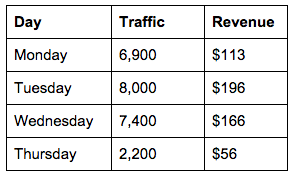
    Here’s the traffic and revenue I earned the day the article ran (Monday, August 15, 2011) and the following days:

    Huffington Post blog traffic

    After Thursday, the numbers resumed their normal range, though my traffic stayed slightly higher, with 1,200 to 1,500 daily page views. But revenue of $531, instead of the $80 I would normally have earned in four days, suggests the traffic from The Huffington Post link was worth at least $450. Not bad for one post!

    In addition, my website includes links to several of my other sites, so I’m sure I picked up another $50 worth of indirect traffic for those sites. And I linked to my book in the article and author bio, so I sold quite a few copies that week.

    All together, that article and slideshow on The Huffington Post was probably worth $800 in additional income within a few days. In addition, it helped me attract visitors to my sites and promote sales of my book for several months.

    It was a (very busy) year before I realized I had not just a post, but my own blog set up on The Huffington Post. I requested my password and started posting occasionally. The results were never as dramatic as that first post, but I did see increased traffic and book sales. And best of all, the editors never objected to my posts containing relevant links to my own websites.

    How to Earn Money by Writing for Free

    While The Huffington Post does not generally pay its bloggers, as my experience demonstrates, it’s still possible to earn cash by writing for free. Here are the strategies I used:

    Include specific, valuable links

    To start, be strategic when choosing links to include in your author bio. For example, if you’ve written a book or created a course, link to that. If you’re a freelance writer, you’ll want to link to your writer website or online portfolio. If you’ve monetized a website with affiliate products or pay-per-click advertising, link to it.

    In addition, if any of these links are relevant to your post’s content, include them on related anchor text in the body of your post. I’ll reiterate: the links must be relevant. If they’re not, the editors will likely remove them.

    Aim for the front page

    For these links to be valuable, a lot of people need to see and click them, which means you’ll need a lot of readers. I was a extremely lucky with my first post; it was featured on the front page of the HuffPost Small Business section, which brought in a ton of readers. Later posts never approached that level of traffic.

    With these results in mind, it can’t hurt to aim for this special treatment. Look at what’s being shared on your targeted section’s front page. Are the featured articles controversial or fun? Are they short or long? Do they have shocking titles?

    Many big names blog on The Huffington Post, so competition for better placement is tough. When former Secretary of Labor Robert Reich’s post is on the front page of the Politics section, yours isn’t likely to push his aside. On the other hand, he doesn’t write every day. If you’re working in a section with fewer big names, you might have an even better chance to get a good post featured. Study your targeted section to learn the famous bloggers in your niche and how often they post.

    Share your post as much as possible

    Promote your post to your own networks to direct as much traffic to it as possible, as you would with any guest post. Share it with your Facebook and Twitter followers, write a short blurb about it on your blog or email it to your newsletter subscribers.

    With a bit of luck, your HuffPo post might even go viral. Blogger Catherine Alford was lucky enough to see her recent post blow up:

    [It] went hugely viral with more than 220,000 likes and 43,000+ shares. That viral post also led to me getting interviewed on Huffington Post Live, which led to tons of emails and new readers. There’s no doubt that it’s beneficial to any writing career to be an author there.

    Whether or not your post goes viral, you’ll at least point a few new readers toward your site and offerings and add “Huffington Post Blogger” to your resume.

    If you’ve been published on The Huffington Post, how did you do it and what results did you see? If you haven’t, would you like see your byline there?

  • 7 Ways Freelancers Outside the U.S. Can Stand Out and Land More Writing Jobs

    7 Ways Freelancers Outside the U.S. Can Stand Out and Land More Writing Jobs

    Freelancing offers opportunities for writers around the world, but much of the information for writers online is U.S.-focused. When I started my career as a freelance writer and journalist over a decade ago from India, I followed the advice of the U.S.-based writers that had come before me and tried to emulate their strategies.

    I learned how to write great queries and pitches, I practiced brainstorming specific and targeted story ideas, and I found myself a few informal mentors who would answer questions and offer support. I downplayed the fact that I was in India.

    Despite all this, my career stagnated, and I didn’t know why.

    To shake things up, I started experimenting with my approach. Instead of hiding that I was based in New Delhi, India, I started positioning it as a unique advantage. Within a year, I had landed assignments from The New York Times, TIME, Global Post, Marie Claire, and Ms. Magazine.

    As a writer based outside of the U.S., I needed to use slightly different strategies than my peers in those countries. Here’s how to use what I learned to advance your own career as an international freelancer.

    1. Highlight who you are and what you’ve done

    Let me be clear: It’s essential that you focus on your prospect’s needs, be that a corporate client or an editor at a regional magazine. Figure out exactly what your client needs so you can create the perfect pitch.

    However, the problem with pitching from India, China, Costa Rica, Nigeria and other countries is that many editors won’t even look at your story ideas until you’ve convinced them of your professionalism. Perhaps they’ve been burned before, or they simply don’t trust someone they can’t easily reach should something go wrong.

    As an international writer, often you’re going to need to prove your capability more than an American writer would. Your credits, portfolio and experience can go a long way in opening these doors. When you’re writing a query or a Letter of Introduction, make sure to focus on who you are and why you’re the right person for the job.

    2. Ask if they’d like to chat over Skype or the phone

    One of the best things I ever did for my career as an international freelancer was getting on the phone.

    Living so far away from many of them, it was almost a given that I’d never meet my editors. However, being able to see someone, connect with them and have a laugh or two can help cement a relationship — and potentially lead to more work (or at least more email responses).

    So I did the next best thing: I asked if we could Skype or chat over the phone. Even if an editor doesn’t take you up on your offer, asking the question can make you seem accessible and not quite as remote as travel-wary editors might think.

    3. Don’t put your phone number or address on your website

    This is a bit of a controversial point, but in my experience, funny or unpronounceable regional names and unfamiliar area codes can scare off people who aren’t used to working internationally.

    If your clients are international editors at major magazines and newspapers and like the idea of finding people in remote places, you might not need to worry about this advice. However, if you write about health or are looking exclusively for small business clients, your specific location can be a deterrent.

    If your location has no relevance to your work, leave out the specifics. This advice might even hold true for writers living in remote parts of the U.S. or U.K.; you can be just as professional a writer living on a farm in Wisconsin as you would be in New York City.

    4. Have an awesome website and online presence

    Until a prospective client or editor hires you or agrees to talk to you over the phone, the only thing they have to judge you by is your website.

    Your website must shine. It needs to say, “Hey you, undecided over there in the corner, here are the 10 different ways in which I’m the perfect writer for you. Click that button and hire me right now.”

    Whether you have a static site or a blog, an active social media presence or a small one, make sure it reflects your professionalism and skill as a writer.

    5. Make sure you show up in Google searches

    In 2006, quite by accident, my website started showing up as the number one search result on Google for “freelance journalist India.” At the time, I didn’t realize the significance of this accomplishment, especially since I hadn’t been trying to optimize for keywords. What happened next forever changed the way I look at my website.

    Editors from high-profile media outlets, such as US Weekly, ABC News, Marie Claire, NPR, Cosmopolitan and more, found my website while searching for freelance journalists to cover stories in my region. I’ve been contacted by NYC literary agents, by government departments, even by a political campaign (I politely declined).

    The lesson? SEO is crucial. Make sure you show up in Google searches related to your city, country or region (and of course, that the search history is mostly positive). You never know when an overworked editor will need a writer familiar with your area.

    6. Focus on building a portfolio of online work

    At least initially, write for publications with online archives or clickable links.

    Early in my career, I neglected to focus enough on online publications. Even though I’d been published in some impressive publications and had over 100 bylines after my first year in the business, I had no proof: Much of my work was in local publications and wasn’t available online. I’d been published in 20+ countries, but editors had no way of verifying that.

    Make sure your work will be shared online, or find another way to share high-quality images of your work in your portfolio.

    7.  Add humor and personality to your communications

    Your emails, your website, your About page: all are opportunities to showcase that despite the differences in nationalities and location, you’re pretty much a person with the same needs, wants and desires as your editor.

    Your U.S.-based clients might often feel that they have nothing in common with you because you live in a place they’ve only ever seen on the news. Make yourself vulnerable, share a glimpse into your life and show them what you’re really like. Find something that helps you create a connection and a bond, like a shared hobby or interest.

    What do you do differently as a freelancer based outside the U.S.?

  • 5 Lessons From J-School That Will Make You a Better Writer

    5 Lessons From J-School That Will Make You a Better Writer

    Becoming a journalist was a long-held dream of mine, and majoring in journalism when I started college was a no-brainer.

    However, during my freshman year I realized reporting was not for me. While I considered switching to a new major, journalism taught me many lessons about both writing and life, and I’m glad I stuck with it. While I now focus more on marketing and PR and won’t be breaking the next presidential scandal, my experience in journalism school was invaluable in shaping me as a writer.

    Considering attending a journalism program? Here are the top things I learned in J-school.

    1.  The worst possible mistake is a factual error

    At Northwestern’s Medill School, the “Medill F” is infamous — it even has its own Twitter account. Anytime a journalism student makes a factual error, he or she automatically fails the assignment.

    Getting the facts straight is crucial. As a journalist (or marketer, communicator or advertiser), you’re only as good as your last story (or Tweet, blog post or press release). If you make mistakes when it comes to the facts, you’ll be sacrificing your reputation.

    The Medill F taught me to review and fact-check my work a extra time before submitting it. It might take a little longer, but consistently providing high-quality, accurate work makes clients happy — and more likely to refer me to their contacts.

    2. A strong knowledge of AP Style and grammar is invaluable

    In the journalism industry, adherence to Associated Press (AP) Style reaches religious levels, and the AP Stylebook is basically a journalist’s holy book. Because of this fervor, journalism school subjected me to class after class of grueling style and grammar training, but I wouldn’t take back one second.

    Think writing AM instead of a.m. won’t make a difference? Think again — unless you’re referencing the radio frequency. A firm knowledge of the rules of writing helps professional writers differentiate themselves from the amateurs and impress clients. Study, practice and hone your skills.

    While different clients will require you to follow different style guides (such as MLA, Chicago, APA or an in-house guide), understanding and sticking to their preferred guide demonstrates your attention to detail — and that helps you stand out as a writer to re-hire.

    3.  Journalists are people too, and people make mistakes

    Factual errors are considered unforgivable sins by some (see “Medill F”), but other journalistic errors are excusable at times. Once, I recorded a great interview on my camera — only to discover that its memory card was full. Another time, my dog actually ate my interview notes.

    While it may be horribly embarrassing to have to ask a source to repeat an interview, more often than not, people are understanding and accommodating. Messing up once in a while is not the end of the world and it doesn’t mean you’re a failure. (Just make sure you learn from your mistakes so you don’t repeat them!)

    4.  Journalism is not for the timid, awkward or fearful

    Journalists are notorious for being nosy, pushy and relentless, but this is how some of the best stories are told. As a measly freshman who’d get nervous interviewing his own mom, I learned quickly that the best stories take some nudging (and sometimes, a little bravado).

    For one project, I chronicled the start of the season for Northwestern’s successful women’s lacrosse team. I wanted footage of a certain early morning boxing workout, but video equipment was not officially allowed into the gym. Regardless, I went to the practice and confidently set up my equipment, though I was nervous. While the gym owner was displeased and clearly wished I wasn’t there, I explained I was capturing footage for a school project and would be out of the way within a few hours. He let me stay. At times, breaking the rules pays off.

    When a source is slow to respond or flat-out rude, persistence is the key to getting that dream interview. Be friendly and gracious, but follow up consistently to pursue the conversation or information you need.

    5.  The human connection is paramount

    Sometimes journalists (and freelance writers) spend hours crafting the perfect set of interview questions only to have them dashed minutes into the interview. Though it may feel like you just wasted your time, you’ve actually stumbled onto something more valuable.

    When you truly connect with someone you’re talking to and the conversation takes on a life of its own, that person becomes more than an interview source. After all, the point of journalism is to tell a story, and the best way to do so is to get lost in a conversation.

    During my junior year, I planned to do a story about senior citizens and the holiday season. I talked to my first sources during Thanksgiving break, and while we started talking about the holidays, the attack on Pearl Harbor came up because that too was toward the end of the year — and I quickly realized that year would be the 70th anniversary.

    Our conversation turned from the holidays to memories of Pearl Harbor and what life was like at the time, as well as what my sources learned from the event and how they thought times had changed. Had I stuck to my original plan, I would have missed an incredible opportunity to tell a great story.

    Have you attended or considered attending journalism school? What were your most important lessons? What do you wish you had learned?

  • Win a Professional Headshot Session! The Write Life Giveaway

    Win a Professional Headshot Session! The Write Life Giveaway

    As a writer in the digital age — when your photo follows you around the web and your personal brand affects how much you earn — it’s so important to have a headshot that projects a professional image.

    That’s why we’re giving one lucky reader a professional headshot session. Enter the contest here!

    When we sat down to brainstorm how to give back to our community, we identified professional photos as an area where a lot of writers fall short, either because they don’t have the money to pay a photographer or they don’t realize just how vital a professional headshot is to building a career as a writer.

    If you win The Write Life giveaway, you’ll get beautiful headshots to use on your blog, book jackets, social media and more — all on us.

    The Write Life Headshot Giveaway

    Because our readers live across the U.S. and around the world, the winner will have the freedom to choose a professional photographer in his or her area. We’ll cover up to $250 for your session.

    Click here to enter.

    And if you’re really keen to win, be sure to share your unique URL with a few friends — you’ll receive that URL after you enter. By telling your writer friends about the contest, you’ll earn additional entries and increase your chance of winning.

    We can’t wait to give one of our readers gorgeous new headshots to use around the web!