Blog

  • Guest Post Strategy: Should You Pitch the Editor Before You Write?

    Guest Post Strategy: Should You Pitch the Editor Before You Write?

    When planning your guest-posting or freelance-writing strategy, you already know to start by creating a list of blogs to pitch. You’ve read their guidelines and brainstormed great article ideas for each one.

    What’s next: do you query the editors with short outlines and start writing only after your proposals are approved? Or do you write the articles first, and then try to sell them?

    There’s no hard-and-fast rule about this situation — except that you must read each site’s guidelines before pitching! — so you’ll have to decide which way works best for you. However, having tried it both ways, here are eight compelling reasons to write your posts before pitching them.

    1. You already know you can write the article

    Recently, an editor approved my proposal for a post (not yet written) on how anyone can be a movie producer. I had done some research prior to pitching, but I soon discovered that investing in films as a producer had since become much more expensive and complicated — making the article unsuitable for that blog’s readers. There was no way around it: I had to tell the editor I couldn’t write the article.

    You don’t want to promise an article you can’t deliver, especially if you’re trying to land a new client or establish a new relationship with an editor. Of course, if you do enough research you’ll know you can complete an article — but at that point the work might be half done, so why not finish it? Using a template for your article can help ensure its structure stays on track.

    2. You know it will work for a client

    Sometimes you can propose and write a great article, but it isn’t quite right for your client’s blog or magazine, even if it seemed like it would be when you first pitched it. You might have to rework it in some way that’s unsatisfying or just drop it, whereas if you had written it first, you could have found the perfect outlet for that perfect article.

    Once an article is finished, it’s much easier to see if it will fit well in a particular publication. Knowing this before you pitch an editor saves you the time of querying outlets that won’t be the right fit.

    3. You can submit your work immediately

    Many blogs and magazines specify that they want a query, not the full article. But more than once, I’ve sold an article because I put it in the email anyway. Somewhere in my query I mention “the article is below if you’re interested,” and I make sure it follows everything else, including my signature.

    Yes, this violates a rule. But if an editor is interested, instead of contacting me to read more, she merely scrolls down. Otherwise, she can stop at my signature. How could that add more work or trouble to an editor’s life? Note that I’ve pasted the article into the body of my email; I’m not clogging her inbox with an unwanted attachment.

    In any case, if you don’t want to risk breaking the rules, having the article already written means you can send it as soon as a client expresses interest — before that interest wanes.

    4. You can pitch your post elsewhere

    What do you do when you spend the time to write a great article and the client you have in mind rejects it? Sell it to someone else!

    I recently sold an article several months after it was rejected by the editor of the blog for which I originally wrote it. I had to change a few lines, but I earned $35 more than the first client was paying.

    [bctt tweet=”Re-pitch your unsold articles to other clients, says @stevegillman”]

    Keep your unsold articles organized and regularly offer them to other clients. This is especially important if the article will go stale, like ones that mention news items or new products. If the article still doesn’t sell . . .

    5. You can use it on your own blog

    When your articles don’t sell you can always use them on your own blog or website. This works best if you write mainly in one niche. My specialty at the moment is personal finance, and I have several related websites. Sometimes I’m happy when my editors reject a few articles, because then I have content for my own sites (for which I seem to procrastinate otherwise).

    Interestingly, the rejected articles often get the best response from my readers, perhaps because they’re edgier. Nobody wanted to touch my article on making money as a “professional cuddler,” for example, but my newsletter readers and website visitors loved the piece.

    Of course, you’ll still want to get paid for your work. Consider monetizing your website with Google AdSense, promoting affiliate products, or selling your own books. My best “money site” only brings in about $200 per month now, but every little bit helps.

    6. You can add it to your portfolio

    When you can’t find the appropriate client for a good article, you at least have a solid addition to your portfolio. Post it on your blog or website and add the link to the clips you send in queries.

    7. It’s less stressful

    I can’t be the only one who gets a little stressed when facing deadlines for articles that I haven’t written on topics that may not be as interesting as I hoped.

    It’s so much more relaxing to have the work done when proposing articles. And it’s likely that the quality of your articles will be higher when you aren’t rushing to meet a deadline.

    8. The article is more likely to sell

    Try this experiment: write a description of an article, then write the article, and then write a new description based on the finished piece.

    How do your two descriptions compare? I doubt they’ll be the same, and I suspect the second one will be more interesting. Having a better description helps sell your article — because now you know exactly what you’re selling.

    In any case, writing your description after the article is done helps it more accurately reflect the finished product when you include it in a query, and that makes for a satisfied client.

    The bottom line

    To properly propose a piece for a client, you’re going to do some research and outline an article. If you’re putting that much work into it already, why not just finish a draft of the article?

    A finished post is more likely to sell, and in the case that it doesn’t, you have several more options. For your next guest post, why not try writing first?

    Do you write first or query first? Why do you use your preferred method?

  • Should You Self-Publish or Go Traditional? [Infographic]

    Should You Self-Publish or Go Traditional? [Infographic]

    You might be ready to publish your book, but how do you decide whether to self-publish or pursue traditional publishing?

    It’s not necessarily an easy choice for authors to make.

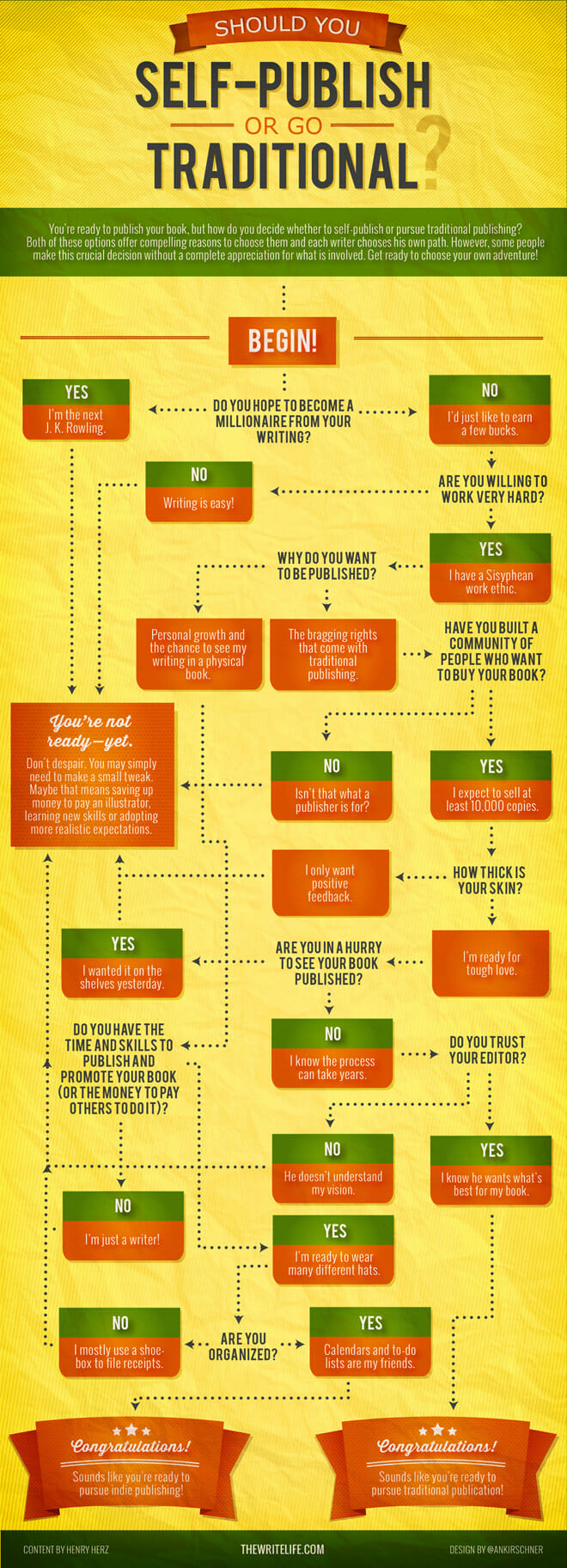
    To help you decide which path is right for you and your book, I created a “choose-your-own-adventure” questionnaire that breaks down the crucial elements of each option. The Write Life turned it into this infographic:

    Self-Publish or Traditional?


    Want to embed the flow chart on your own site? Copy and paste the code below:


    Looking for a more detailed explanation of each point? Here’s the full questionnaire.

    1. Do you hope to become a millionaire from your writing?

    If so, consider that for every J. K. Rowling, there are a million Henry Herzs. Who’s Henry Herz? Exactly. Go to 10.

    If not, very good. You have realistic expectations. Go to 2.

    2. Are you willing to work hard? Very hard?

    If not, you’ll need to change your attitude. Honing one’s writing craft and becoming traditionally published take a Sisyphusean work ethic. Go to 10.

    If so, very good. You have realistic expectations. Go to 3.

    3. Why do you want to be published?

    If you’re seeking the sense of accomplishment and bragging rights that accompany traditional publishing, good for you. Go to 4.

    If you’re seeking personal growth, career development, speaking opportunities or want to see your writing in a physical book, good for you. Go to 8.

    4. Have you built a community of people who want to buy your book?

    Before you publish your book, make sure there’s a market for it and start building your author platform. Is selling 10,000 or more copies a realistic prospect? If so, fantastic. Go to 5.

    If not, you should recognize that publishing is a business. Publishers won’t accept a project if they can’t reasonably expect to make a profit. Go to 10.

    5. Is your skin too thin to withstand a hail of criticism and a deluge of rejections?

    Does your critique group consist of your mom and your spouse because you only want to hear that your manuscript is fabulous? If so, go to 10.

    If not, you appreciate that it is precisely the tough love offered by critique groups, beta readers, agents and editors that strengthens a manuscript and sharpens yourwriting. Go to 6.

    6. Are you in a hurry to see your book traditionally published?

    By “hurry”, I mean less than 18 to 24 months — a common timeline for publication. If so, you may not be aware of all the steps performed by traditional publishers in preparing, printing, and promoting a book. Go to 10.

    If not, you have enough patience to be traditionally published. Go to 7.

    7. Are you willing to follow publishing industry standards and the guidance of a professional editor?

    If not, you must recognize editors have standards because they know from experience what works and what doesn’t. Your 3″ by 3″ 200-page dystopian picture book concept may be unique, but it probably won’t sell. Go to 10.

    If so, you trust editors’ professionalism. Congratulations — you’re ready to pursue traditional publication! Go to 11.

    8. Do you have the time and skills to publish, promote your book, fulfill orders and run a business?

    Or do you have the money to pay others to do so? If not, perhaps you didn’t realize that the indie publishing path means you must have both writing and publishing skills. In addition to your role as an author, you must be an illustrator, an editor, an art director, a salesperson and a businessperson. Go to 10.

    If so, impressive! Go to 9.

    9. Are you well-organized?

    Do you use calendars, spreadsheets, to-do lists and other tools to plan and keep track of your tasks, expenditures, sales and revenue?

    If not, please recognize that running a business by using a shoebox to file your receipts is a recipe for disaster. Go to 10.

    If so, you understand the benefits of being organized. Congratulations — you’re ready to indie publish! Go to 11.

    10. You’re not ready — yet

    If you’ve landed here, it means you’ve realized that you’re not yet ready for publication.

    Don’t despair — while you may not be ready now, you may simply need to make a small tweak. Maybe that means saving up money to pay an illustrator, learning new skills or adopting more realistic expectations.

    11. Indie versus traditional publishing

    Let’s wrap up with a quick comparison of the benefits of each path.

    The benefits of indie publishing include:

    • Publication is guaranteed: You know you’ll be published, since you’re the one making it happen.
    • Move at your own pace: Publish as quickly or as slowly as you’d like.
    • Full transparency and control: You make all decisions about creating, publishing and promoting your book, so you know what’s going on with every aspect of your project.
    • Set your own standards: You decide what your book will look like.

    The benefits of traditional publishing include:

    • The publisher pays expenses: Someone else picks up all the costs.
    • Your team brings expertise: Your editor and agent know their jobs well and make your book as strong as possible.
    • You’re only responsible for writing: The publisher doesn’t expect you to be a copy editor, art director or marketing guru.
    • Wider potential audience: The resources and connections of a traditional publisher often lead to wider exposure.

    The lesson? Your publishing decision should not be taken lightly.

    While self-publishing gives you all the control and all the profits, it also means you’re responsible for all the expenses and all the work.

    If you’ve published a book, how did you decide between self-publishing and traditional publishing? If you haven’t published yet, what are you considering?

  • Is a Coworking Space Better for Freelancers Than Working from Home?

    Is a Coworking Space Better for Freelancers Than Working from Home?

    You’ve heard all the lines. When you tell someone you’re a freelance writer, they smile and say, “That must be great. You can work from anywhere!” You usually end up answering questions about whether you work in your pajamas and slippers.

    But when you don’t have your own office — or even a dedicated cubicle — it can be tough to find a place where you can focus on your work. Home comes with distractions and imperfect work surfaces, especially if you live in a small apartment in a big city. Lugging your laptop from cafe to coffee shop doesn’t always work either. Sometimes, finding the right place to work can make you feel a little like Goldilocks.

    Many writers struggle to strike a balance between the freedom and discipline at their chosen workspace. Every time a new “flexible” workspace pops up in D.C., I find myself reflexively scrolling through the online photo gallery. I get wide-eyed at carefully staged workspaces, and crunch numbers to weigh the cost of a daily or monthly membership. I’m finding it hard to resist: coworking spaces are very attractive.

    Working from home: A short-lived dream?

    My workspace usually rotates between my couch, my kitchen table, the coffee shop and the public library. It would be lovely to have a dedicated space to work that’s not within the 300-square-foot apartment that I share with my beau.

    It seems that just a few years ago, we were so excited about jobs with flexible schedules that allowed us to use our various devices to work from home. We had big dreams of accomplishing load after load of laundry during daylight hours while juggling conference calls and deadlines. Now, the novelty has worn off.

    Fifty-three million Americans identify as freelancers, according to a 2014 survey commissioned by Freelancers Union. And now that working from home is passé, we’re starting to wear out our welcome — and our wallets — at coffee shops. Enter the coworking space, which promises fountains of productivity, endless coffee (and sometimes beer), camaraderie and perhaps even learning opportunities.

    What’s coworking all about?

    The dawn of coworking as a haven for the self-employed is frequently credited to Brad Neuberg, who launched a coworking space within a live/work loft in San Francisco in 2005.

    “What if a day at the office is actually good for you?” wondered Kiera Butler, who visited San Francisco’s popular Citizen Space in 2008 for a Mother Jones magazine article. She found her companions for the day to be much more friendly and interested in interacting across specialties than typical officemates.

    “Of course, coworking isn’t a new idea,” she wrote. “Chronically broke creative types have long gathered to work in collectives and retreats. But the current crop of coworking enthusiasts has updated the concept with an aesthetic that’s more Silicon Valley than salon.” By 2011, some 700 coworking spaces had been set up around the world.

    Affinity Lab was the first freelance-friendly space in D.C. Founded as an “entrepreneurial launch platform” in 2001, it has since expanded to accommodate its growing membership; at 5,000 square feet, the generously appointed space attracts more than just VC-dreaming entrepreneurs.

    But, in line with other shared workspaces in the city, it can get pricey for an independent worker seeking a desk of her own. Do the benefits outweigh the costs of paying for a workspace?

    So… how expensive is coworking?

    These new drop-in-friendly office spaces often come with hip perks — and a price tag to match. One office space in D.C. charges $850 per month for a private area where two people can work. Want windows? That’ll cost you extra. On the plus side, agreements there run month-to-month, so you can always change your mind if it ends up being too costly.

    D.C. might seem extra expensive, but that rate is about average around the country. While many dedicated office areas cost $1,000 per month or more, some spaces have common areas or “flex desks” where you can work alongside other freelancers, and that all-hours access tends to run $250-500 per month.

    Another expense to be aware of: membership fees. Some offices ask for an up-front payment of a few hundred dollars when you sign up. Others require an initial cleaning fee. Be sure to ask about those details before you commit.

    Is a coworking membership worth the cost?

    The resounding answer from the freelancers I consulted: yes.

    Jason Connell, a leadership consultant who spends his days writing at Affinity Lab, recalled spending much of his time alone when he first moved to D.C.. “One day, I was walking by the park, and I made eye contact with a dog,” he admitted. After realizing that he had been alone all day, he knew: “I needed to get out of my apartment.”

    He’s been a member at Affinity Lab for three years, at the “virtual” level that, for $325 per month, grants him access to unassigned desks and couches for as long as he wishes. “The work-life divide feels different — you see the same people and feel comfortable leaving stuff on your desk when you take a phone call,” he said. “I always felt like I was imposing on a coffee shop, even though I tipped well.”

    Connell’s feelings of isolation are common among independent workers who seek shared workspace. Clay Spinuzzi of the University of Texas studied coworking spaces in Austin over the course of two years. Most of his interviewees who had previously worked alone at home reported “self-motivation problems,” and feelings of isolation, he noted in his 2012 report “Working Alone, Together.”

    “Such problems are critical,” Spinuzzi recognized. “These professionals had to be highly motivated and focused because their livelihoods depended primarily or solely on their own initiative.”

    So when you have deadlines to meet, it’s worth the cost to get yourself to a productive place.

    Consider your preferred type of coworking environment

    Molly Singer, a nonprofit management consultant, worked from home for several years before joining Affinity Lab a few months ago. When she’s not visiting clients in their own offices, she’s at her dedicated desk at the coworking space. “It’s nice to have others in your orbit,” she said. “It’s kind of lonely at home.” Her space includes a file cabinet, bookshelf, and two small plants she keeps on the windowsill behind her chair. The small nook costs $895 each month — a solid financial commitment.

    But while she enjoys the company, spending 40 hours a week at a coworking space can take some getting used to. Singer admits she buys earplugs in bulk to wear when she’s working at her desk. “Around three or four in the afternoon, the whole volume can rise.” She slowly raised her hands as she looked from a conference room into the bustling open space.

    Jeff Garigliano, a ghostwriter for books and consulting firms, contrasts Affinity Lab against The Writers Room in New York City. He was a member there for several years and considered it to be “very serious. No conversations. No phones. Not even on vibrate.” A qualified writer (three professional references are required with each application) can join for six months with 24-hour access for $850 — a bargain for the New Yorker seeking serenity in order to put words on paper. “New York is such a sensory assault,” Garigliano said. “You need a clear separation from [home] to get any work done.”

    When he arrived in D.C., Garigliano would work in the lounge in his condo building. “The condo lounge was of course open to all, so you’d be on a conference call and someone would come in and turn on a soap opera,” he remembered. Coffee shops and their table-hogging guilt trips weren’t much better.

    Now, Garigliano is one of the earliest risers to descend upon the virtual membership desks at Affinity Lab each day. That routine keeps him away from the distractions he encounters at home. “The productivity gains are worth the cost,” he said. “Work hangs over my head at home, so there is a reward to compartmentalizing here.”

    Is a coworking space a good choice for you?

    Sometimes it takes more than just a desk and unlimited coffee to reach peak productivity. But when a writer knows what works for them, it’s worth staying on track — even with a price tag. As Singer put it, “I’m a person of routine. I need a desk and a schedule to help me keep that routine.”

    As for me, I haven’t plunked down my credit card for a long-term desk quite yet. I’ve tried a workspace in my neighborhood that’s designed for people who want to drop in and get busy for a few hours at wide tables in relatively quiet rooms. I’ll walk there when I’m feeling sluggish at home, or when a deadline looms.

    But more often than not, I’m still trying to blend myth with reality. I’m still trying to tell myself that I can write anywhere.

    Have you tried a coworking space? If not, are you curious about whether it might work for you?

  • 3 Common Writing Myths and How One Writer Challenged Them

    3 Common Writing Myths and How One Writer Challenged Them

    I was a child writer. As early as first or second grade, I spent most of my free time filling up notebooks with story ideas and character sketches. Somewhere in my closet are several picture book manuscripts I wrote during grade school. On my hard drive is a 160,000-word epic of adolescent angst from my last year of high school. I’ve got dozens of scripts and short stories left over from college.

    Fortunately, none of them were published — but it was a close call. During most of that time, I was actively sending out query letters to agents and publishers. I didn’t want to be a published writer when I grew up. I wanted to be one now.

    Looking back, I’m glad it didn’t work out. I’m much more savvy about the publishing industry these days, and I’d rather build up my career slowly than have to distance myself from my embarrassing early work. Besides, a lot of what I believed about writing was just plain wrong.

    The advice I read in how-to guides and on my favorite authors’ blogs wasn’t always what I needed to hear. Here are three false assumptions I’ve had to work hard to overcome:

    1. Writing requires a lot of time

    As a kid, I had the false impression that to be a “real” writer meant writing all the time. One of the reasons I wanted to be published while I was young was so that I wouldn’t be stuck in a day job, trying to finish up a manuscript after a full day’s work.

    Many of the writing guides I read suggested that the average book takes a year to write. But was that a year of full-time writing, or part-time? Would I have to get up at 5 a.m. to squeeze in my writing between other commitments? I squandered my college years, thinking that I couldn’t possibly be a full-time writer and a full-time student. I procrastinated on many of my manuscripts because I wanted to set aside a whole year to write them.

    I couldn’t have been more wrong. Not only was I unlikely to “find the time” all at once, but it flew in the face of how writing actually works for me. Even if I have a full day set aside to write, the most I’m likely to work on a given manuscript is a few hours. Having other commitments and responsibilities — even other writing gigs — can actually increase my productivity, because I can switch between multiple projects.

    Lesson 1: Writing isn’t a zero-sum game; you can fit it in between other gigs. Even full-time writers take on other projects to keep themselves busy.

    2. Creative writing classes are worthless

    As a kid, I remember hearing the same advice from several authors I respected: that you “can’t teach writing”, and the only way to be a better writer is to write. For some reason, that left me with the notion that studying writing wouldn’t get me anywhere — that it wouldn’t be worthwhile to take creative writing classes in college.

    I’d heard that writing seminars were particularly rough on fantasy/sci-fi writers, and that MFA programs were best suited to “literary” fiction. So instead of attending college as a creative writing major, I studied film and signed up for a few writing workshops on the side.

    What I failed to realize was that even if you can’t teach good writing, you can learn a lot from group critiques and by reading your work in front of others. The years when I had deadlines to meet for my fiction classes were the years I was most productive as a writer.

    Not only that, but writing classes and conferences can be key to networking with other writers and keeping tabs on the publishing industry. That’s how you’ll find out which magazines to submit to, which writers’ groups to join and which grants or residencies to apply for.

    Lesson 2: Writing workshops aren’t just about teaching people how to write. They’re also about feedback, deadlines, and making connections.

    3. Self-publishing is bad

    I grew up long before print-on-demand publishing, when “vanity presses” were the latest scam. I’d heard stories about writers who’d paid thousands of dollars to print copies of books that were now sitting unsold in their basements. As far as I was concerned, there was one simple rule: never pay to get published.

    That idea was pretty well-ingrained in my head by the time ebooks came along, and for a while I strongly resisted the urge to self-publish. The few success stories I read about seemed like outliers, and I wouldn’t feel like a “real” writer unless I got a traditional book deal.

    But soon it became obvious that the industry was changing, and an old-school publishing contract was no guarantee of success. Even if I did get one, I’d be expected to do most of the marketing myself, and I’d probably have to pay for a book tour out-of-pocket!

    By choosing the self-publishing route, I can release my books on my own terms, with very little up-front cost. Even if my first books don’t sell, I’ll be learning the process: how to format books for Kindle or print-on-demand; host Goodreads giveaways; run a crowdfunding campaign and more. Why not start learning while I have the chance?

    Lesson 3: Don’t let the stigma of self-publishing scare you off. Getting your books out into the world may be better than letting your manuscripts collect dust.

    What ideas about writing and publishing did you have growing up that may not be true any more? How did you learn to get past your early assumptions about writing?

  • About to Respond to a Negative Review of Your Book? Read This First

    About to Respond to a Negative Review of Your Book? Read This First

    Have you heard of Stephan J. Harper’s interactive iBook Venice Under Glass?

    If you have, it’s likely that you’ve heard more about the author than the book itself. After a not-so-stellar review of his book at TidBITS, an Apple news website, Harper went on a commenting rampage, picking apart the reviewer’s opinions piece by piece and rebutting nearly every other commenter on the review. It’s a rant of epic proportions.

    After reading through his comments, I can’t tell if he’s serious or if it’s a publicity stunt. Then again, considering the amount of time and effort he’s put into defending his work, it’s likely legitimate, although emotionally charged.

    The entire affair is an extreme example of the absolutely worst way to respond to a book review.

    The only way to respond to a bad book review

    Before publishing my book last year, a wise friend of mine who’s an experienced, published author gave me the best advice about bad reviews: never respond.

    I know how difficult this can be, especially for first-time authors.

    My first Amazon review included two stars and the words “very disappointing.” The reader had expected a different kind of book, so the review seemed unfair to me, as if the book wasn’t being judged on its own merit but on the reader’s desire for something else. One of my “favorite” GoodReads reviews of my book simply states, “Wasn’t great writing, but I really enjoyed the content.” And yet it was granted four stars.

    No writer ever wants to read those kinds of words, and sites like Amazon and GoodReads don’t make it any easier for our egos since they allow authors to reply to their own reviews.

    The one time I replied to a review — and a good review at that — was to correct a factual assumption I thought the reviewer had made. To me, the reviewer seemed to say that I had personally conducted interviews for the book. I simply responded that I’d only done research and quoted from already available interviews.

    The next day, the reviewer had deleted their review! I learned a hard lesson that day, and I hadn’t even responded to a bad review. While those less-than-stellar reviews still haunt me on some days (I’m writing about them here, after all), I know now what every successful writer understands: you can’t please everybody.

    [bctt tweet=”As a writer, you can’t please everybody, says @batwood”]

    Plus, trying to change someone’s mind who’s already decided against your perspective on life, or who despises your writing style, or who just doesn’t like the fact that you’re a fan of the Oxford comma, is like George Bernard Shaw’s famous illustration: “I learned long ago, never to wrestle with a pig. You get dirty, and besides, the pig likes it.”

    A majority of reviewers don’t understand the kind of inner devastation they cause an author when they quickly type and publish two lines of a poor review. What you’ve labored for months on, they’ve minimized in two minutes. From that perspective, it’s enough to make any author’s blood boil.

    And an angry author set loose online can be a dangerous thing. This is exactly why an author has to prevent their inner vitriol from spilling over.

    7 non-career-destroying ways to deal with bad book reviews

    1. Don’t read your reviews

    Yes, there are some authors who follow this rule, though I’d hazard a guess that it’s a hard one to stick to for first-time authors. Don’t worry, though — it’s only the first suggestion.

    2. Print out your bad reviews, then burn them

    It’s a symbolic gesture that releases your inner ire. Alternative disposal methods could include a paper shredder, compost for your garden or turning them into origami.

    3. Respond to your bad reviews . . . in a document that’s never made public

    You’re a writer, so you’re bound to write. Go ahead and give in to every last cutting remark you’d like to make, but ultimately keep those words to yourself.

    4. Talk about it with other writers

    Find a writer’s group, whether in real life or online. Every writer gets a bad review from time to time. When you share your bad reviews with other writers and hear their just-as-bad reviews, laughter inevitably erupts.

    5. Re-read your good reviews

    So long as you keep working at your craft, good reviews will come. Don’t allow one bad review to occupy your mind 90 percent of the time, while letting nine good reviews occupy the remaining 10 percent. (Also, don’t think about your reviews 100 percent of the time).

    6. Realize that writing is a journey, not a destination

    I know I just went cliché on you, but it’s true. Bad reviews bring growth to authors, and if you’re serious about a career in writing, you’ll work through and past any bad review. Don’t allow a bad review to stop you from taking another step.

    7. Start writing your next book

    The best way to get over a bad review is to start your next book. Sure, it may garner a bad review as well, but I’m willing to bet that it’ll be better than your last work. Plus, now you know how to better handle bad reviews.

    How do you deal with bad reviews? If you’re feeling brave, share your worst book review in the comments.

  • What Are Your Favorite Writing Websites?

    What Are Your Favorite Writing Websites?

    While there’s still time to make progress on your writing goals in 2014 (65 days!), for many, January will mean outlining priorities and kickstarting progress.

    That’s where our 100 Best Websites for Writers list comes in.

    We first published this list in early 2014, and now we’re updating and adding to it for 2015.

    Whether your goal for 2015 is to self-publish a novel or raise your freelance writing rates, up your guest posting game or find a writing partner-in-crime, we’ve got you covered with this list of websites for writers. We want to make sure we include valuable resources, and to do that, we need your help.

    What’s your favorite writing website? Which blogs do you visit for inspiration, information or writing-related entertainment? Which sites have earned bookmark status on your toolbar? Who do you want to nominate for our list?

    Let us know your favorite sites in the comments. We’re looking forward to sharing the list with you in January!

  • Write Every Day: How to Meet Your Daily Writing Goals

    Write Every Day: How to Meet Your Daily Writing Goals

    If you still have doubts about whether you should be writing every day, it’s time to kick them to the curb.

    Writer after established writer gives the same advice: to build your writing skills, you need to stretch them on a daily basis.

    Stephen King says you should write every day until you meet a predetermined word count. Of course, it doesn’t have to be 2,000 words, but you have to start somewhere.

    Author Bill O’Hanlon recommends starting by writing for 15 minutes a day. And this doesn’t mean spending 15 minutes staring at a blank screen or rewriting that first sentence for the 15th time. It means making a genuine effort to write, whether it’s starting the next chapter of your novel or simply freewriting.

    Whether you write to a particular word count goal or choose a time limit, you need to find a strategy that works for you. Just remember: it doesn’t matter which method you pick as long as you use it.

    Create a habit of writing every day

    While “just sit down and write” is common advice, creating a habit of writing every day can be challenging for different reasons. Some writers struggle to find time to write creatively between unpredictable schedules, full-time jobs or families.

    First, acknowledge your time or energy constraints — the size of your canvas, as James Clear calls it. Then, work within them to train yourself to write, using strategies like freewriting, creative rituals and eliminating all distractions.

    Make tomorrow’s first step simple

    Starting to write each day can be the hardest part, but you can set yourself up for success with a little preparation at the end of each day.

    One strategy is to stop writing mid-sentence at the end of every day. This way, the next day you won’t spend hours trying to figure out where to start; you simply finish that sentence and keep going.

    Take it a step further by copying that last sentence into a separate document at the end of each day. Spend some time writing out a few possible directions or a brief outline for tomorrow’s writing.

    The next day, work only from that new document. This way, you won’t be distracted by the possibility of editing yesterday’s work — you’ll be focused on creating today’s.

    Use technology to help you

    Blogger Buster Benson suggests writing 750 words each day. To help himself and others meet this goal, he built 750 Words.

    [bctt tweet=”Use technology to help you write daily. @Buster suggests writing 750 words each day. “]

    This simple tool provides a distraction-free writing environment and lets you know once you reach your daily goal. The writing you produce is totally private, and a subscription is $5 a month after a free 30-day trial.

    Sticking to a tighter budget? Try some of the many free apps and programs available to help your concentration and productivity.

    Try Seinfeld’s calendar system

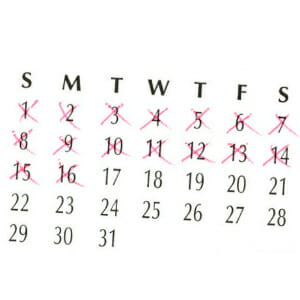
    Someone once asked Jerry Seinfeld for advice on becoming a great comedian. His reply was simple: buy a big wall calendar and hang it somewhere you’ll see it often.

    Every day you meet your writing goal, mark a big X in red marker over that day on the calendar.

    “After a few days you will have a chain. Just keep at it and the chain will grow longer every day. You’ll like seeing that chain, especially when you get a few weeks under your belt. Your only job is to not break the chain.”

    Easy, right? Just don’t break the chain.

    Use this technique to meet specific writing goals. For instance, if you’d like to write a ebook, track your writing specific to that project on your giant calendar — if it’s in addition other writing, just use another color of marker.

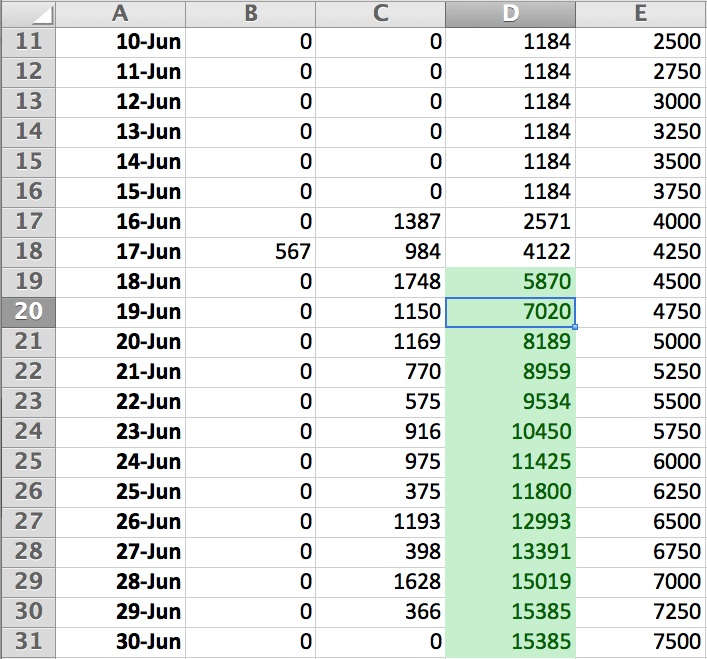
    Don’t have (or want to buy) a calendar? Writer Nora Bailey created an Excel spreadsheet formatted as calendar, with number of words written under specific days. When she meets her writing goal each day, the “total words” field automatically turns green.

    Image: Writing Calendar in Excel

    It’s deceptively simple to negotiate with yourself that you won’t be doing any writing today. You can say it’s late, you don’t feel like it or simply deny that you ever really wanted to start writing. The trick is in putting those excuses aside and putting pen to paper, fingers to keyboard.

    There’s no one strategy that helps all writers write every day. Experiment to find one that works well for you!

    Do you write every day? How do you make it a priority and maintain the habit?
    links
    no
    1

  • John Soares’ Find Your Freelance Writing Niches: Review

    John Soares’ Find Your Freelance Writing Niches: Review

    We review ebooks, courses and tools for writers, so you can make good decisions about how to invest in your writing career.

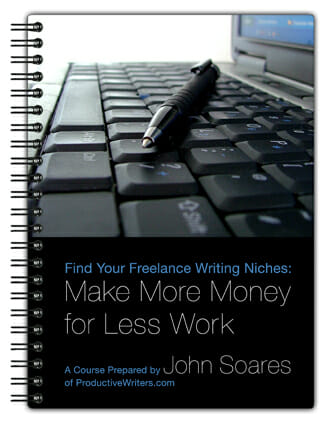
    Course: Find Your Freelance Writing Niches: Make More Money for Less Work

    About the creator: John Soares has been a full-time freelance writer since 1994. He is most known for ProductiveWriters.com, his main website for freelance writers, and his main niche is writing for higher education companies.

    Price: $20

    Who It’s For: New and seasoned freelance writers alike.

    What It Will Help You Do: The course explains why you should specialize, then guides you through the process of choosing niches that offer you the best chance of success.

    What’s Included: A three-part ebook and six exercises to help you implement what you learn.

    Part One (10 pages): Why You Should Specialize. This section examines all the advantages of being a specialist, plus looks at why most generalists don’t get paid as well as specialists do.

    Part Two (6 pages): How to Choose Your Niches. You get detailed guidance on how to mine your own experience and interests to find the niches likely to make you the most money.

    Part Three (9 pages): What to Do Now. This section helps you to develop a game plan to move forward once you’ve determined your niches.

    The Best Part: Doing the exercises forced me to go deeper and brainstorm some niche areas that I hadn’t considered before, like writing about parenting. I’ve got two toddlers and I’m not sure whom I consider an expert in parenting (therapists, pediatricians, etc.?), but I felt like I had to be one in order to write about it.

    I think it’s easy for writers to feel that way about subjects we’re interested in, but it doesn’t have to hold us back. I’ve started by writing (for free) for Liberating Working Moms and have some paid projects coming up talking about pregnancy, birth, infancy, etc. I think I limit myself more than anything!

    What Would Make It Even Better: There were a few instances where John said to “Google something” or go somewhere else for more information, but didn’t provide a link. A link as a starting point would be helpful, but I don’t like when I’m reading a book about how to do something and the author tells me to do more research; that’s why I’m here!

    He also refers to his “success resources page” quite a bit and tells the reader to go there for more information. Again, that’s why I bought this book.

    How It Changed My Life: As I alluded to above, I think the biggest growth I’ve had is in reevaluating my niches and the self-imposed limitations I’ve put on my writing subjects. Some of my niches were givens — for instance, my background is in personal finance, so it’s a natural fit.

    I also solidified several other niche options I hadn’t previously considered. Going forward, I plan to focus on finance, health and fitness, parenting and freelancing. Even though these are my “primary niches,” I’m not going to limit myself to only seeking out jobs in these areas. It is important to specialize, but it’s also important to stay open to learning new things and using different writing muscles.

    Our Recommendation: Overall, the course was a good read, priced right and would be great for a writer who feels lost when it comes to the niches he should focus on or which potential niches he should consider trying.

    This post contains affiliate links. That means if you purchase through our links, you’re supporting The Write Life — and we thank you for that!

  • Writing a Novel? 6 Visual Storytelling Techniques to Borrow From Film and TV

    Writing a Novel? 6 Visual Storytelling Techniques to Borrow From Film and TV

    Many of us were raised watching thousands of movies and television shows. The style, technique and methods used in film and TV are so familiar to us, we process them comfortably. To some degree, we now expect these elements to appear in the novels we read — if not consciously, then subconsciously.

    We know what makes a great, riveting scene in a movie, and what makes a boring one — at least viscerally. And though our tastes differ, certainly, for the most part we agree when a scene “works” or doesn’t. It either accomplishes what the writer or director has set out to do, or it flops.

    As writers, we can learn from this visual storytelling; what makes a great movie can also strengthen a novel or short story. Much of the technique filmmakers use can be adapted to fiction writing.

    Break up your scenes into segments

    Just as your novel comprises a string of scenes that flow together to tell your story, so do movies and television shows.

    However, as a novelist, you lay out your scenes much differently from the way a screenwriter or director does. Whereas you might see each of your scenes as integrated, encapsulated moments of time, a movie director sees each scene as a compilation of a number of segments or piecesa collection of camera shots that are subsequently edited and fit together to create that seamless “moment of time.” By thinking in terms of segments in creating each scene, writers can create a dynamic, visually powerful story.

    So how can novelists structure scenes with cinematic technique in a way that will supercharge their writing? Here are six steps that will help you structure your novel as if you were a filmmaker:

    1. Identify key moments

    Think through your scene and try to break it up into a number of key moments. First, you have the opening shot that establishes the scene and setting. Then, identify some key moments in which something important happens, like a complication or twist, then jot those down.

    Then write down the key moment in the scene  — the “high moment” — that reveals something important about the plot or characters. That should come right at or very near the end. You may have an additional moment following that is the reaction or repercussion of the high moment.

    2. Consider your POV

    Now you have a list of “camera shots.” Think of each segment on your list, then imagine where your “camera” needs to be to film this segment.

    Remember, you are in a character’s POV — either a first-person narrator telling and experiencing the story or a third-person character in that role. So consider where that character is physically as he sees and reacts to the key moments happening in your scene. You now have your “direction” so that you can write this scene dynamically. Come in close to see important details. Pull back to show a wider perspective and a greater consequence to an event.

    3. Add background noise

    Consider what sounds are important in this scene. They could be ordinary sounds that give ambiance for the setting, but also think of some sound or two that you can insert into the scene that will stand out and deepen the meaning for your character.

    Church bells ringing could remind a character of her wedding day as she heads to the courthouse to file divorce papers. Birds chirping happily in a tree next to a grieving character can sound like mocking and deepen the grief.

    4. Color your scenes

    Colors can be used for powerful effect. Different colors have strong psychological meaning, and filmmakers often use color very deliberately. Red implies power; pink, weakness. You can “tinge” your scenes with color and increase the visual power. Color can also add symbolism to an object or be a motif.

    Want to learn more? A great book to read is Patti Bellantoni’s If It’s Purple, Someone’s Gonna Die.

    5. Think about camera angles

    The angle of a “shot” also has powerful psychological effect. A camera looking up at a character implies he is important or arrogant or powerful or superior. A camera looking down implies someone who is weak or inferior or oppressed or unimportant.

    If your character is in a scene with others and feels superior, you might have him elevated or being seen from below to emphasize this. A woman being fired might be sitting in a chair with the boss standing over her. These little touches add visual power.

    6. Include texture and detail

    Consider adding texture. Too often, novelists put their characters in boring settings, without saying where they are, what time of year it is, or what the weather is like. We exist in a physical world, and movies showcase setting and scenery in great detail.

    Add texture to your scene by infusing it with weather and sensual details of the surrounding area. The feeling of the air in late fall in the middle of the night in Vermont as two characters walk through a park is texture the reader will “feel” if you bring it to life in your scene.

    Novelists who think like filmmakers can create stunningly visual stories that will linger long after the last page is read. Spend some time using a filmmaker’s eye to take your scenes to the next level, giving them dynamic imagery and sensory details as well as deliberately placing characters, colors and sounds in your scenes for targeted psychological effect.

    If we want to move readers emotionally by our stories, the best way is to bring our novel to life by using cinematic techniques.

    Have you tried using these cinematic techniques to bring your story to life? Can you think of a novel you’ve read that used colors or sounds in a significant symbolic way? Share in the comments!

  • What’s Your Writing Quest? Enter to Win a Copy of The Happiness of Pursuit

    What’s Your Writing Quest? Enter to Win a Copy of The Happiness of Pursuit

    What’s your big writing goal?

    We’re not talking about small, easily achievable, “write-a-blog-post”-type tasks from your to-do list. We mean a big goal — the one that exhilarates, energizes and even scares you a little bit. It’s the goal that seems almost unreachable,

    Working toward a big goal like this is a kind of quest. And undertaking a quest, explained Chris Guillebeau in a recent blog post, tends to challenge, change and benefit you:

    By the time I came to the end, I was a very different person. As I learned, this is a common feature of quests. You set out to accomplish something, and hopefully you do — but something else usually happens along the way, too.

    Whether it’s building your freelance business to the point where you can quit your job, or finally finishing and self-publishing your novel, you likely have one of these big goals on your radar, and we want to hear about it.

    What’s your writing quest? What big project are you pursuing?

    We asked a few writing friends about their quests. Here’s what they’re working on.

    Image: Jessica LawlorJessica Lawlor, founder of the Get Gutsy Blog

    I’m on a quest to help others get gutsy … and to step outside my own comfort zone in the process! I recently published an ebook about getting gutsy, and the next step in my quest is to launch a 30-day email course with tips, tools and inspiration for stepping outside your comfort zone to reach your goals and live a life that makes you truly happy.

    I’ve got the bare bones for the course developed, but now need to buckle down, get organized and begin the scary part — actually writing the content. After the course is complete, I plan to turn it into a book.

    This quest terrifies me, but I’ve always loved and lived by the saying, “If your dreams don’t scare you, they’re not big enough.” Here’s to the quest!

    Image: Peggy Frezon and KellyPeggy Frezon, author of dog books, including Heart to Heart, Hand in Paw

    wI’m on a quest to talk to people about their amazing and heartwarming animal tales, and share them, whether it’s on my new blog for Guideposts magazine, Pawprints on my Heart, or in my forthcoming book for Paraclete Press, Greetings at the Front Door (fall 2015).

    It’s easy for me to get inspired about pets, as my dogs Kelly and Ike are right here by my feet (or in my lap!) as I’m working. What’s sometimes more difficult is finding others who are willing to share how their pets have changed their lives. I’m constantly on the lookout for pet lovers who might open up to me with their stories! Each time I discover a new human-pet connection, I’m reminded of why I go to such great lengths to find them.

    Image: Alexis GrantAlexis Grant, founder of The Write Life

    I’m on a quest to rewrite my travel memoir and get it out to the world, whether that’s through traditional publishing or self-publishing.

    I’ve been working on this story — about backpacking through Africa on my own — since 2008, and I’m itching to get it done. I’ve just got to push through this last round of rewriting to get there!