Blog

  • 3 Ways to Train Your Brain to be More Creative

    3 Ways to Train Your Brain to be More Creative

    Whether you’re just getting started freelancing or are employed full-time, writing “on demand” can be terribly difficult.

    Does this sound like you sometimes?

    •  Waiting for inspiration that just isn’t coming

    •  Finally hitting your creative stride… only to realize you have a meeting in 15 minutes

    •  Barely making deadlines because you’re struggling to get into the creative zone when you most need to

    You’re not alone. Being able to turn the creativity spigot on and off is something all of us creative professionals struggle with at some point in our careers. It’s essential to find a way to harness creative energy and tap into it when you need it.

    I’m naturally more creative at night and I don’t know if that will ever totally change. However, a few big changes to my workflow have helped me tap into the creativity I need during normal business hours. Not only does this work better for my clients, it enables me to have a personal life instead of being holed up in my office working odd hours. Win-win.

    Here’s how you can start channeling your creativity when you need it most.

    1. Develop a (good) habit

    Get your brain and body in the habit of sitting down at a specific time to work and be creative. Working in the middle of the night wasn’t ideal for my life or for my clients, so I trained myself to develop a creative and focused mindset during certain times of the day.

    I started by blocking off two two-hour windows a day for creative writing. During each creative session, I silenced my phone, closed my email and social media channels, and focused solely on the task at hand. After about a week of sticking to this schedule, I realized that my brain started to “tune in” during these times. I no longer needed a warm-up (see tip #2) to get into the flow and I found that I was much more focused.

    Try blocking off one or two “creative sessions” during your day and keep at it for at least a week to develop a good, creative habit.

    2. Train your brain

    Sometimes your schedule just won’t allow you to stick to your dedicated creative time. So, take a cue from Pavlov and his dogs: develop a creative ritual to get ready to write.

    One option is to start with a “fun file” before diving into more serious, professional work. A fun file is whatever you want it to be — an ongoing story or a writing prompt response — but most importantly, it is a no pressure zone to get yourself into the creative mindset. Work on this fun file for five to 15 minutes before switching to your “real” work.

    Eventually your brain will start to associate the fun file with being a precursor to real work and you’ll be able to seamlessly glide into serious work straight from your fun file at any time of the day.

    3. Take the power away from “The Muse”

    I don’t know about you, but I’m not too keen on having to wait around for other people — inspirational muses included.

    A lot of creative folks get stuck on the idea that they need to feel inspired in order to produce creative work. I get it. When those ideas and words are just flowing out of your brain it can certainly feel like divine inspiration. But in reality, you’re discrediting yourself as a creative professional when you give too much power to the muse.

    Remind yourself that you are the one producing the great creative work. You are the one who worked hard to get here. The more consistently you work on creative projects, the less you’ll even think about that finicky muse. Get into the habit of creating on your own terms and you’ll never sit around waiting for inspiration again.

    How do you find inspiration and creativity when you need it most?
  • Inkshares is a Kickstarter for Books: Q&A With the Founder

    Inkshares is a Kickstarter for Books: Q&A With the Founder

    Publishing a book can be an intimidating journey. But what if you had a supportive audience on board already? What if your readers were so eager for a taste of your work, they backed it with their hard-earned cash in exchange for a peek inside the writing process?

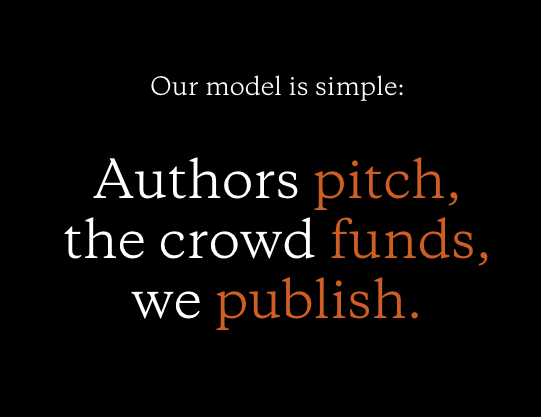
    Such is the premise behind new crowd-driven publisher Inkshares. In a sort of mashup of crowdfunding, editing and marketing, Inkshares created a new way to publish books — books an audience has already shown they want to read.

    Curious about this new player in the publishing industry, The Write Life Editor Heather spoke with Inkshares co-founder and Chief Legal Officer Adam Gomolin to learn more.

    You’ve described Inkshares as “crowdfunding meets publishing.” How does it work? How does it differ from other crowd-driven publishing companies?

    Great question. We are a “value-added” crowdfunder — we hear people refer to us as “Kickstarter meets Random House.”

    If you are successfully crowdfunded, we handle the rest: editorial through distribution. We pair you with a top editor or editorial team, and handle design, production, and distribution — including into actual brick-and-mortar stores. In that sense, we’re really a full-service publisher, just like any of the Big Five or indie publishers.

    And yes, there are other crowd-driven publishers: Unbound, Pubslush, Beacon, FG Press, Contributoria and Pentian, to name a few. There are a lot of interesting dynamics at work, and I contrasted Inkshares and Contributoria in a post on the Inkshares blog.

    Some are focused on specific types of content; Beacon is all about investigatory journalism, for instance. We don’t have a niche, because we think that one of the most important things is to build a neutral platform for literary crowdfunding. Many authors move across different genres and readers (i.e. backers) do as well. They may write (or we may read) longform on one day, a book on another.

    There are a lot of great companies in this space, with a lot of important differences between us. But I think that authors are a heterogeneous bunch, so ultimately they’ll match up with the right “new” or “crowd-driven” publishers.

    Say I’m an author with a manuscript I’d like to publish. What makes Inkshares my best option? How does it fit with my other options for self-publishing?

    I think you need to focus on what you want out of the process. The traditional publishing process is defined by its obstacles. The “slush pile” is a barrier few can get over, and getting an agent is equally difficult — and more costly in terms of time. That is really what so many new publishers are trying to provide an alternative to.

    Inkshares provides an editorial and production experience equivalent to that of legacy publishing. Daniel Wallace, bestselling author of Big Fish, is crowdfunding a children’s book titled The Cat’s Pajamas. We paired Daniel with Carol Goldenberg, a top children’s book designer who has won six Caldecotts, and Kim Keller, a top children’s book editor formerly of Houghton. So if that’s something an author wants — editorial, design, production, distribution — we’re a great fit. If you want to go it alone at a self-publisher like CreateSpace, more power to you.

    Crowdfunding is also a major component of Inkshares — you need to be willing to get out there and promote your work. There are reverberative effects (i.e. backers creating other backers) and virality that can drive runaway successes, but ultimately you can’t expect to put a proposal up, walk away, and have it magically fund.

    Image: Inkshares model

    What kinds of writing projects are published through Inkshares?

    We’re an omnivore — absent a dilemma. We focus on individual projects and authors. As we mature, there is the prospect of more of an imprint-style experience that would allow for backers to browse across a genre.

    Our users thus far are varied, and that diversity is important. Samuél Barrantes and Kris Calvin are great examples of aspiring debut authors who chose to go with us, rather than slugging it out in the traditional system. Leigh Cowart and David Forbes are young journalists, both immensely talented, and we’re in a great place to help them raise thousands of dollars to fund their endeavors. For Daniel Wallace, it’s different — he’s an established bestseller who went with us because this project didn’t fit with his traditional publisher.

    How does the funding process work?

    Crowdfunding for books is similar to “general” crowdfunding in the sense of a typical series of phases: you need to activate your primary social network (friends and family) to get to a critical mass, say 30 percent. There is a corresponding activation of your secondary social network that pushes you toward, and hopefully past, 50 percent. But I think the projects that succeed are the ones that connect with people: they go viral because people care about them and want them to succeed.

    Some of the backers who don’t know you personally get into your project because they want to be part of the social movement — some people really want to help get Samuél’s first novel off the ground, which is why we’ve seen $50, $100 and $200 donations. Others simply want to order it the way that they would pre-order it on Amazon. But in both those cases, it’s more about the backer’s interest (I want to be part of helping create this book, or I want to read this book) than their desire to support a friend or family member.

    What percentage of projects are completely funded? What strategies are writers using to promote their work and reach their funding goals?

    We have only had one project fail to meet its goal so far. It’s probably too early to assert trends, except to say that hard work pays off and people are excited to be in on the beginning of a work.

    It’s really a game of getting interested eyeballs on your work. One way is by targeting interested blogs, which David Forbes did well. Another is by getting high-powered retweets from major tweeters. But we’re also focused on reaching out to libraries and bookstores — dragging commerce to the crowdfunding stage.

    What happens if a project isn’t 100 percent funded — or if one is funded over 100 percent?

    We’re all or nothing. Projects that don’t get there don’t get funded. It’s important that we deliver the best copy of a work — that requires resources — not a diluted version that disappoints.

    If a project is funded over 100 percent, those funds go toward more copies of the work. We refer to it as “surplus.” Conceivably it could also go back to the author — a welcome quandary that we hope to be able to explore.

    Image: Inkshares Projects

    How do you match authors with editors and designers?

    We do it in a high-touch way. Matching the right editor with the right author is a really organic and important piece.

    Sometimes that will mean using our talented, in-house editorial crew (to which we are consistently making additions). But sometimes there is a niche topic we can’t cover as well as someone else, in which case we will use our network to contact and contract the best person.

    You’ve mentioned that Inkshares would like to offer backers equity in the books they support, giving them a share of any potential revenue. How would this work?

    Right now, you can’t go give out equity in a company — you can’t say, “I’ll share x amount of royalties in exchange for y amount of dollars.” Title III of the JOBS Act, which is presently being implemented by the SEC, is changing that.

    Once the SEC says we can do it, we’ll be exploring that idea more fully. It’s not for every book, but it is a great incentive to offer backers in certain circumstances.

    Where do you see Inkshares going in the next few years? What are your goals for the company?

    I’d like to see us put books on a couple different bestseller lists in the next year, sending a clear signal that we can create quality work on par with any publisher and across multiple genres. I’d also like to see a lot of pre-orders from bookstores and libraries — an indication that we can drag all that commercial activity upstream to the crowdfunding stage.

    And I’d like to see more people saying I want to “Inkshare” my book. We see that happening on Twitter already, but it would nice to be a verb. Maybe we’ll crowdfund a dictionary and put “Inkshares” in there. (Kidding.)

    Thanks for taking the time to share your thoughts, Adam!

    What do you think of Inkshares’ model? Would you publish your work through the platform, or back a work-in-progress there?

  • Ali Luke’s The Blogger’s Guide to Effective Writing: Review

    Ali Luke’s The Blogger’s Guide to Effective Writing: Review

    We review ebooks, courses and tools for writers, so you can make good decisions about how to invest in your writing career. Thanks to Ali Luke for sharing a review copy of this ebook.

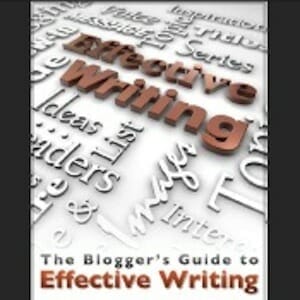
    Ebook: The Blogger’s Guide to Effective Writing

    About the creator: Ali Luke is a professional writer of both fiction and nonfiction, including The Blogger’s Guide series, Publishing E-books for Dummies and the novel Lycopolis. She holds a Master’s degree in Creative Writing, and her work has been featured on ProBlogger, Men With Pens, Copyblogger and Write to Done.

    Price: $29

    Who It’s For: The Blogger’s Guide to Effective Writing is great for new bloggers. While it doesn’t explain the technical aspects of setting up a blog, it will walk you through the brainstorming, planning and writing side of blogging.

    The ebook would also be helpful for people who’ve been blogging for a while and are struggling to come up with new ideas or feeling stuck. Bloggers who want to shake up their writing style or refine their editing skills will also find this guide useful.

    What It Will Help You Do: The ebook promises to teach you to write well-structured, easy-to-read posts that draw readers in; to brainstorm many new ideas for posts; and to figure out what kind of content your audience wants. As Ali says, “Writing well is a learned skill, and blogging is no different. The purpose of this ebook is to help you understand what goes into great content, so that you can produce your own.”

    The ebook starts at the very beginning by working through a plan for a new blog. You’ll explore why you’re blogging and consider your ideal reader and audience as well as your call to action: what do you want readers to do after they read your posts?

    Ali walks you through the process of planning blog posts, from coming up with ideas to planning a good mix of different types of posts (lists, essays, how-to, reviews, etc.), and uses examples from prominent bloggers to explain the advantages and disadvantages of each type. She explains the writing process by focusing on each element of a post separately (title, introduction, middle and conclusion), again using examples from well-known blogs.

    Finally, the section on editing helps you polish your writing, from big-picture revisions to improve the flow, to the ruthless cutting of fluff words and phrases to strengthen your copy, to proofreading for silly mistakes.

    What’s Included: The ebook is 83 pages long and includes an appendix with links to lots of free material that supports and expands on points addressed in the book.

    In addition, the package includes seven bonus templates: one for each of the four post types the ebook explains, and three analyzing the structure of posts by popular bloggers Darren Rowse, Charlie Gilkey and Skelliewag.

    Finally, Ali includes two videos in which she reviews six posts by different bloggers, explaining each post’s strengths and weaknesses. The first video focuses on creative, narrative-style posts, while the second features structured, informative posts with calls to action. She analyzes each blog’s design, taglines, post headlines, writing style, word choice and more to help viewers understand ways they can strengthen their own blog posts.

    The Best Part: The section on developing your voice was especially interesting and thought-provoking for me. It helps you consider what sets you apart as a blogger and guides you to find your writing voice — including how to modulate it for guest posting so your content fits in well on the other blog.

    In addition, I found the editing section very helpful; I’ve printed out the list of questions on page 74 and hung it above my desk to help me revise and strengthen blog posts.

    What Would Make It Even Better: It’s hard to say anything could be improved in this ebook, especially with the addition of the bonus templates and videos. The only quasi-criticism I have is that a lot of the early chapters are fairly basic and more experienced bloggers will skim right past them. However, newer bloggers will appreciate the level of detail, and both groups benefit from the later chapters.

    How It Changed My Life: I didn’t anticipate that the ebook would help me as an editor, especially the section on finding your blogging voice. Since my work involves revising and tweaking to make each post the best it can be while maintaining its writer’s voice, it was helpful to reconsider how different elements reflect the writer’s quirks and natural style.

    Our Recommendation: While this ebook will be most helpful for new bloggers who want to make their work the best it can be from the beginning, even experienced bloggers will find interesting experiments and advice that will help reinvigorate their work, like new idea-generation options or strategies for improving headlines.

    This post contains affiliate links. That means if you purchase through our links, you’re supporting The Write Life — and we thank you for that!

  • 5 Reasons You’re Not Ready to Self-Publish Your Book

    5 Reasons You’re Not Ready to Self-Publish Your Book

    GIVEAWAY: Nina is giving away a copy of her latest writing book, The Author Training Manual, to a random commenter. The book shares the processes successful authors have used to create business plans and proposals for their books and teaches you to view your ideas through the eyes of acquisitions editors and literary agents. 

    Comment within one week to enter! (Must live in US or Canada to win a hard copy; if the winner lives elsewhere, we’ll send you the ebook version.) Good luck! (UPDATE: Gargi won!)

    In the digital age, it’s easy to say, “I’m going to publish my book,” and just do it. There’s no need to wait. But are you certain now is the right time for you to become an author?

    If you plan to traditionally publish, agents and acquisitions editors evaluate whether you’re publication ready. They take specific elements into consideration to determine if you should publish now or later.

    If you plan to self-publish, you should consider those same elements and a few additional ones before you decide that it’s the right time to go from aspiring to published author.

    Here are five reasons you might want to wait to publish your book.

    1. You don’t have a strong platform

    A platform, in simple terms, is a built-in audience in a target market for your book. If you have not taken the time to build a platform, you won’t be able to help promote your book.

    Lack of platform is one of the primary reasons nonfiction authors get turned down by traditional publishers. You might have a good idea and write well, but without a platform you likely will be sent away to build one — at least by large and mid-sized publishers.

    Platform has historically been less important for novelists. Today, novelists set themselves apart from the pack by building a platform like their nonfiction counterparts. The same premise holds true no matter the genre: Platform provides the foundation for promotion. If you want to successfully sell your novel upon release, you need a built-in readership.

    Seth Godin, marketing guru, says writers need to start building a platform three years prior to publishing a book. Think about that…

    2. You don’t have the time or energy to promote your book or to create a sound promotion plan

    Publishers reject many aspiring authors because they don’t include promotion plans in their proposals, or those plan aren’t strong or realistic enough. Authors are expected to help sell their books. Publishers seek good business partners, ones who will produce the product — the book — and help make it successful. This means you must demonstrate that you have some business savvy and can and will promote your book.

    If you self-publish, this element is just as important — if not more so. You are on your own as an indie publisher, and you must handle all marketing and promotion. Your plan must be strong, and you must be willing to do what it takes to let your target audience know your book has been released — and that they need and want it.

    If you don’t have the time or energy to promote your book, if you don’t know how to create a book promotion plan or haven’t yet created one, or if you don’t want to help promote and sell your book, you might need to take a step back and wait until you do. Only then can you help your book succeed.

    3. You don’t have the credentials or expert status necessary to be seen as an authority on your subject

    If you write nonfiction, it’s possible that you aren’t an expert in the subject about which you plan to write. You can become one, though. Maybe you need to wait to publish your book while you take a course, get a degree or get certified. Or you could take the time to interview experts; journalists become experts on a topic by doing research and learning from thought leaders.

    Your personal or life experience might make you an expert; maybe you just need to take time to find someone with credentials to write a foreword for your book and verify that you have authority.

    4. You don’t have the funds to put together a professional-quality book

    If you plan to self-publish, you financially back your own project. You will have no venture-capital partner — a traditional publisher — to provide the funding for editing, proofing, indexing, design, ebook conversion, and other tasks. That begs this question: Do you have the funds you need to produce a book that meets the standards of the publishing industry?

    If you can’t afford editors, designers, proofreaders and the cost of all the other necessities, such as ISBN numbers, printed books for reviewers, copyright filing, and website design, you might need to wait until you save up the money. You could also wait until you run a crowdfunding campaign. Either way, you need to have the resources to get your new publishing company off the ground and keep it running. (Editor’s note: Using free tools and enlisting your network can help too!)

    5. You aren’t ready to play big

    In general, becoming an author requires that you show up and play big. You can’t hide behind your computer. You might think a pseudonym will keep you safe, but eventually someone will discover who you are.

    If you feel fearful of success, if you don’t want to be social on social networks, if you want to remain private, if you don’t want to become a speaker, you might need to take some time and rethink, regroup or work through these issues. Successful authors get out there and show themselves authentically and publically in many ways. That’s what helps them succeed.

    What do you think? Are you ready to become a published author right now or would it be smarter to wait?

    Don’t forget to comment to be in the running for Nina’s book giveaway! You could win a copy of her latest writing book, The Author Training Manual(UPDATE: Gargi won!)

  • 10 Free Ebooks to Motivate and Inspire Writing Adventures

    10 Free Ebooks to Motivate and Inspire Writing Adventures

    I started putting together this list of free ebooks for writers for my blog and intended to share an epic list of 100 free resources. Impressive and exciting, right? Shareable? Sure.

    But also — let’s be honest — kind of too overwhelming to be useful. And, admittedly, probably padded with some fluff, those ebooks about writing that everyone is always talking about and you’ve all heard of already.

    Instead, I pared the list down to these 10 that I think you should really check out. They’re written and published by my friends and colleagues you ought to learn more about, and they offer unique advice to guide you through different parts of the writing journey.

    Inspiration to Start Writing

    1. Releasing the Words: Writers on Writing, by Rhonda Kronyk and friends

    Authors and freelance writers share essays on how they tackle one of the scariest plights we face — writer’s block. (Look for my piece “Fear and the Divine Motivation to Write”!) Get it free in the DIY Writing Bookstore.

    2. Your Guide to Calling it Quits, by Kelly Gurnett (a.k.a. “Cordelia”)

    This guide from Kelly of Cordelia Calls it Quits is all about living intentionally — how to decide what to quit and tips to help you get started. Pick it up for the kick in the butt you need to live the life you want to live.

    3. The Anti-Meh Manifesto, by Career Meh

    This manifesto from the newly-launched Career Meh offers smart, actionable advice that gets results — for Millennials, by Millennials. Career Meh is “your cure for the common career” for go-getting young professionals.

    Self-Publishing Tips and Tricks

    4. After the Writing: A Short Guide on Navigating the Self-Publishing World, by Kylie Dunn

    dinkylune founder Kylie Dunn wrote this ebook to share some hard-won advice on the self-publishing process — the details she wishes she had known before publishing her first ebook. Get advice on ebook formatting, conversion, distribution, and more.

    5. Author 2.0 Blueprint, by Joanna Penn

    No one knows better than The Creative Penn founder Joanna Penn what an exciting time this is to be an author. But it can be hard to know where to begin if you’re just getting started. She created this blueprint to guide you with writing tips, how to self-publish, and how to market your self-published books.

    6. The Weekend Book Marketing Makeover, by Duolit Self-Publishing Team

    The ladies at Duolit understand that author-publishers are busy people with lives outside of writing. With the tips in this ebook, they’ll help you save time, build confidence, and have fun growing your fanbase in just 48 hours.

    Freelancing Guides and Advice

    7. 25 Types of Writing Gigs That Pay Well (and How to Find Them), by Francesca Nicasio

    Freelance writer Francesca Nicasio wrote this guide to help you find out what you should do to land lucrative writing gigs and get paid what you deserve. If you’re not sure where to start, or you’re tired of getting paid peanuts for your writing, grab this free ebook to find out where the lucrative gigs are and how to get them.

    8. LittleZotz Writing Adventures in Freelancing, by Lauren Tharp

    Lauren Tharp of LittleZotz Writing offers two free ebooks for freelance writers: LittleZotz Writing Adventures in Freelancing answers the question, “How can I become a successful freelance writer?” and The Freelance Writer’s ABCs is a comprehensive guide with 26 timeless lessons for freelance writers.

    9. How to Land Your First Paying Client, by The Write Life team

    Read real-life examples from writers and bloggers who make a living working with clients to learn how they broke the seal and got that first paying client. (Including my first-client story!) [Editor’s note: thanks for including our ebook, Dana!]

    10. ASK for Help. ASK for Referrals. ASK for Business., by Jennie Mustafa-Julock (a.k.a. Coach Jennie)

    Want to grow a strong solo biz? You’re going to have to ask for it! Learn three powerful tactics to get clients and get money in your bank account, from Coach Jennie, The Audacity Coach.

    Have you read any good, free books lately? Share them in the comments!

  • Freelancing with a Family: How to Balance Your Work and Your Kids

    Freelancing with a Family: How to Balance Your Work and Your Kids

    The freelance life can be crazy. There’s always a call to make, a contact to pursue, a pitch to send. It takes time and energy to manage everything without going nuts.

    Now imagine incorporating family, children and pregnancy into the mix — adding the needs and schedules of additional people into your freelance life. How do you embrace the constant stream of demands from your partner, children, self, work and friends without feeling pulled in a million directions?

    The Write Life Founder Alexis Grant recently wrote about the benefits of setting up a freelance writing career prior to having kids to allow for greater options once family and children arrive. As a pregnant freelancer with an older child, I can vouch that freelancing does provide greater flexibility than an office job.

    However, freelancing with a family definitely requires an additional set of rules and skills. Here are some of the strategies that have helped me manage:

    Make a plan

    Be crystal clear on your business and your goals. What comes first? What are the top three must-do items on your list?

    Setting your priorities allows you to organize your daily and weekly activities so that they support your long-term goals. At the end of each week, lay out what you want to accomplish the following week. At the end of every day, make your to-do list for the next day. Then, each morning, you need only open your to-do list and start working through it.

    Outlining your goals will also help you manage your time when emergencies arise. For many freelancers, family comes first: regardless of deadlines, when your family needs you, that’s where your attention goes.

    In this kind of situation, rather than scrambling around in triage mode, simply focus on the top items on your list. The rest can wait until you go back to your regular schedule.

    Figure out when you do your best work

    Maybe you’re the type who grabs available time when it appears and have trained yourself to work in small increments. Or perhaps, like me, you need long blocks of time to focus. Are you a morning person? Or do you work better at night when the kids are asleep?

    Find the time that works best for you, and block it off as writing time.

    Bestselling women’s fiction author and mother of four Catherine Mann divides her tasks into three types depending on the level of concentration she needs for each. “I edit when waiting in lines, and it’s easier to start and stop. I research while sitting with the family watching television. Fresh writing happens during the precious quiet hours alone.”

    Outline your schedule

    Lay out all your commitments in your calendar, including deadlines, time to write, meetings, school and anything else you want to do. You may choose to include both work and personal appointments.

    Zach Everson, a father of two-under-four who writes for AOL Travel and Gadling, suggests “blocking off family time like any other project. If a client asks for that time, the answer is always no. It’s non-negotiable.”

    Some prefer to schedule each minute of the day down to the last second. Others schedule only the most important or organize their time more generally. For example, my daughter Lila goes to school in the mornings, so that’s when I work on my book and write articles. In the afternoons, I focus on smaller work projects, social media and spend time with family.

    Always remember to leave extra room in your schedule for the unexpected. While you don’t want to make a habit of deviating from your plan, you want to be flexible enough to accommodate projects that run longer than planned or other life events that might arise. (Click to tweet this idea.)

    If possible, rely on a partner…

    In her book Lean In, Sheryl Sandberg advises that to create a successful work and home balance, you need a partner who is really a partner, someone who puts as much into your home life as you do. She may have been referring to C-suite executives, but her words apply to freelancers as well.

    While nothing in this world is perfect and equal, it’s crucial to have a conversation with your partner to assess the needs of the household. Who needs what and when? What is reasonable to expect from each person? Taking all variables into account, decide together who will take responsibility for what.

    … Or outsource so you can work efficiently

    What if you don’t have a partner? Or if it’s unrealistic to expect your partner to take on additional responsibilities? Sometimes, it simply makes more sense to hire the help you need.

    First, identify where you most need extra support. Perhaps formatting blog posts stymies you, or you resent the time it takes to schedule your social media updates. Next, decide which items on your to-do list must be done by you, and which you can hand to someone else. Finally, create a document that outlines how to accomplish each task; you’ll simply hand over processes for someone else to implement. Remember, also, you can hire someone to help you with household chores or babysit if that is more appropriate to your life.

    Jillian Tobias, a writer who runs her own social media strategy company, brings in a babysitter to care for her nine-month-old twins for a few hours every day. This arrangement allows her to concentrate on work without worrying about her mom role. As an added benefit, knowing she has limited time to meet deadlines forces Jillian to be hyper-focused and finish her work quickly and efficiently.

    Procrastination is your greatest enemy

    If you procrastinate away a day of writing time, it’s unlikely you’ll recover that time elsewhere. Instead, you’ll lose sleep, family time or time you set aside to complete other projects.

    It takes practice sticking to a schedule and trial and error to learn what works best for you. Ultimately, you have to be honest with yourself. If you’re wasting time, find ways to stop.

    Let go of the idea of doing it all

    There’s this misguided idea out there that parents must be perfect. Square meals. Proper bedtimes. Only educational activities. Oh, and please keep the house immaculate while writing impeccable prose.

    Professional blogger and writer Leigh Ann Dutton advises that you clear all guilt from your mind. “Guilt takes up precious real estate that could be better used moving projects forward or caring for your family.”

    If the house gets messy, if you end up wearing dirty clothes, if you order in — it’s ok.

    Celebrate your wins

    It’s easy to berate yourself for what you haven’t done and forget how much you’ve accomplished. Instead, take time at the end of every week to highlight what you finished and give yourself a huge pat on the back. Your to-do list will be waiting for you when you return on Monday.

    Life is too short to spend worrying or feeling frazzled because you can’t do it all or be everything to everyone. Instead, balance your time and life so you can not only complete the work most important to you, but you can spend satisfying, relaxing family time as well.

    Do you balance freelance work with family time? What’s your favorite strategy?

  • How to Use Quora to Grow Your Blog

    How to Use Quora to Grow Your Blog

    Growing your blog can sometimes feel like a labor of love, with the emphasis on labor.

    It’s not uncommon for bloggers to have a shortage of quality ideas from time to time; coming up with all of that entertaining and challenging content is hard work. Building a community of engaged readers is also a daunting task — how do you convince an audience that your work is worthwhile?

    The way you address these situations can mean the difference between building a thriving and authoritative blog — or causing your readers to look elsewhere.

    One often-overlooked resource is Quora, a social media site that encourages users to ask and answer questions related to their experience and interests. Whether you’ve been struggling to find inspiration for your blog posts or you’re looking to stay on top of trending topics and conversations, Quora could be a great addition to your toolbox. Here’s a quick guide to help you maximize its potential to strengthen your blog.

    Find ideas for new posts

    After you’ve been blogging for a while, you might feel like you’ve covered just about every conceivable topic in your niche. How do you come up with new angles and fresh content?

    Digging through Quora’s archives of questions is sure to inspire an idea or two. When you register, which you can do with a Facebook, Google or Twitter account, choose topics related to your blog’s niche. The site will populate a feed of recent questions and answers tailored to your interests. Go deeper by diving into the comment threads; perhaps you’ll find a new development in your field or a new point of view to tackle in a future blog post.

    Test potential blog post ideas by asking questions

    Asking questions on Quora allows you to “field test” post ideas that you’ve been kicking around. The interest level and answers you receive will help you judge which ideas are worth fleshing out into full posts, and which aren’t a good use of your time.

    To amplify the number of responses you get, try sharing your questions on your Twitter or Facebook feeds using the built-in sharing buttons. Sharing will also promote your work and help you attract more followers.

    Answer questions to position yourself as an expert in your niche

    Running a successful blog relies as much on your communication skills as it does on your ability to appear knowledgeable and authoritative on your chosen topic. With so many other voices clamoring for attention, how can you do this effectively?

    When I want to provide new and relevant content about my blog’s niche — productivity — I browse through the many productivity questions that other people have asked. When I feel my experience is relevant and useful to another user, I respond to their question with my advice, and make a note to write a blog post on that topic.

    By answering questions on Quora (and, eventually, on your own blog) that relate to your area of expertise, you position yourself as an authority on your chosen topic. You’ll also have the opportunity to test your convictions and opinions against individuals who may share your passion, but not your point of view.

    Have you used Quora as a resource for blogging?

  • Point of View: How Writers Can Master This Crucial Story Element

    Point of View: How Writers Can Master This Crucial Story Element

    Once you decide on the point of view for your book — whether first person or third, omniscient or limited — the hard part follows: staying consistent.

    Falling out of the selected point of view (POV) can abruptly interrupt the story. Readers no longer connect with the main character, and they have a hard time following the plot.

    Avoid these fatal flaws by maintaining a steady point of view.

    It’s best to be mindful of POV as you write, because fixing errors requires combing through each and every scene! It’s doable, just not very fun. And most literary agents won’t want to do it for you.

    Here are six tips to ensure you keep a steady POV in your story:

    1. Only include setting elements your POV character would notice

    When your POV character first walks into a room, they’re not going to notice every detail — the color of the curtains, the shape of the table, the type of tile on the floor. While you want to describe the setting accurately, you have to keep POV in mind. Maybe all your character will notice is the delicious aroma of food cooking in the kitchen.

    One of literary agents’ pet peeves is when writers go beyond what is necessary in setting the scene. Be natural in introducing pertinent details, or even have another character who has been in the room awhile point it out.

    2. Don’t let characters describe themselves

    Your character likely isn’t going to realize what facial expressions they’re making as another character relays the day’s gossip. And they’re probably not going to notice the food in their teeth unless someone else comments on it or looks at them funny. Be mindful of how you describe characters: What would they really have noticed?

    3. Don’t include anything your POV character wouldn’t have known at that time

    Unless they’re a fortune teller.

    But this rule applies to your POV character’s knowledge of facts, not just future events. Would they really know the specific brand of clothing a friend was wearing? If so, how they knew that should be apparent to the reader as well.

    4. Make sure the characters’ judgments are based on signs noticeable to the reader

    If one character believes another is a two-faced liar, this judgment should also be apparent to the reader. All the signs the character saw to reach that decision, the reader should have seen, too.

    5. Don’t jump from head to head

    Each chapter or section should be in a single character’s point of view. When the POV switches, make sure it’s obvious in the first sentence.

    6. Eliminate every “he thought” and “she saw”

    These attributions are jarring when readers already feel that they’re in the POV character’s thoughts. People don’t think using phrases like “I’m seeing this” or “I’m thinking that.” Those are phrases we use to express to someone outside of our mind what we’ve thought or experienced. In using these phrases, you ban readers from your character’s head.

    A major red flag pops up when these attributions refer to other characters, since your POV character wouldn’t be able to know what another character was looking at or thinking about.

    Readers want to get lost in a story. They want to think and feel right along with the main character. When you tell a story from a character’s point of view you have the privilege of writing from inside that character’s head. The bottom line is for you to get inside your main character — to think like him, to see like her — and to tell the story as if you were living it.

    If point of view still seems an overwhelming skill to master, get help from other writers by putting together a writing group or even hiring an editor. The more aware of point of view you are, the easier it will be to catch yourself from falling out of it.

    How do you ensure a consistent POV in your writing?

  • How Writers Can Use Meditation to Build Focus and Productivity

    How Writers Can Use Meditation to Build Focus and Productivity

    When you think of meditation, what comes to mind? A yoga studio? Cheesy new age music?

    How about increased productivity and better writing?

    It’s true: meditation is scientifically proven to improve concentration, which can help you keep writing.

    Willpower: your secret weapon

    You sit down at your desk, ready to start writing. Perhaps you’ve even armed yourself with some fancy new apps to help you concentrate or keep you organized. Nothing can stop you now!

    Or can it? You blocked Facebook on your computer, but can you cheat with your smart phone? Perhaps you should grab a snack before you start writing or brew another cup of coffee. Before you know it, you’ve lost an hour of your day. Again.

    While tools and apps are helpful, in the end, willpower is what matters — and it’s the very thing many of us seem to lack.

    That’s because willpower is a finite resource. The more you spend keeping your hand out of the candy dish or staying calm on the phone with the cable company, the less you have left over to help you hit your writing goals, says Dr. Kelly McGonigal. The Stanford University psychologist released a book, The Willpower Instinct, based on her popular course “The Science of Willpower.”

    But can you actually increase your baseline supply of willpower? The answer is yes, and meditation is one of the best and easiest ways to do it.

    Meet your prefrontal cortex: home of the willpower you need to be productive

    The prefrontal cortex is the part of your brain right behind your forehead — the area you smack when you do something silly. As it turns out, there may be a good reason for this: the prefrontal cortex controls executive function, otherwise known as the power to connect your actions with their future consequences. That includes resisting temptation and working toward a previously-defined goal — like finishing that first draft.

    In short, the prefrontal cortex makes sure you’re doing the right thing, even when the right thing is hard to do.

    How does meditation fit into all this? Here’s the thing: meditation actually increases the gray matter in your prefrontal cortex. That’s right, meditation will strengthen your self-control, just like regular exercise will strengthen your heart.

    Think you’re “bad” at meditation because your mind always wanders? That’s okay. In fact, it’s more than okay. As Dr. Kelly McGonigal writes, “being ‘bad’ at meditation is exactly what makes the practice effective.” The act of reining your focus back in gives your prefrontal cortex the workout it needs.

    Here’s a challenge worth accepting: take just five minutes each day to meditate before you start writing. Record your progress toward your writing goals over the course of a week, including how many times you succumbed to tiny distractions like checking email or Facebook.

    New to meditation? Here are five easy steps to get you started:

    1.   Get comfortable. Find a position you can maintain for five minutes without getting sore or losing circulation.

    2.   Set a timer for five minutes and close your eyes.

    3.   Bring your attention to your breath. Say the words “inhale” and “exhale” in your mind as you take each breath.

    4.   As other thoughts begin to invade (and they will), calmly return to thinking about your breath. The key is to remain objective as you notice the distraction and refocus.

    5.   If you get tired of saying “inhale” and “exhale” to yourself over and over, try focusing on your breathing through what yogis call the three-part breath: first, fill your belly and lower abdomen with air. Then, on the next breath, fill your chest as well. Focus on the sensation of your ribs expanding. Finally, feel your collarbone and shoulders lift as your whole torso fills with the third breath. Repeat to your heart’s content.

    Ready to try a longer practice? Try the guided meditation exercise available as an mp3 on McGonigal’s website.

    You may feel discouraged if — or, more realistically, when — you still find yourself distracted and off-task despite your daily meditation. Try to take the long view. After all, you wouldn’t expect overnight success if you decided to lose 10 pounds and train for a 5k after not having exercised all winter. Your brain, like the rest of your body, needs time to get into shape.

    Daily meditation won’t work miracles, but it will hone your focus and willpower, which is exactly what you need to hit your word count goals.

    Do you meditate? How do you find it affects your writing?

  • Problogger’s Guide to Your First Week of Blogging: Review

    Problogger’s Guide to Your First Week of Blogging: Review

    We review ebooks, courses and tools for writers, so you can make good decisions about how to invest in your writing career.

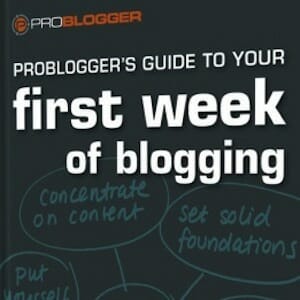
    Ebook: Problogger’s Guide to Your First Week of Blogging

    About the creator: Darren Rowse is a full-time blogger and founder of Problogger and TwiTip. He started blogging as a hobby in 2002, founded Digital Photography School in 2003, and began Problogger in 2004 as a way to catalogue his experiences with blogging. Under Rowse, Problogger became one of the most popular sites for tips on blogging. He is also cofounder of one of the largest blog networks in the world, b5media.

    Price: $19.99

    Who It’s For: This ebook is for bloggers who are just starting out or considering building a new blog. It would also work for those who have already set up a blog but are struggling with their next steps, those want to develop their existing blogs further, or those who have hit a rut in their content management schemes.

    What It Will Help You Do: Each day is complete with actionable and timed tasks that will help you plan out your blog development strategy. The specific and organized structure in this ebook makes it easier for you to keep going and accomplish your goals.

    What’s Included: This ebook provides practical instructions to guide you in your first week of blog development. Chapter by chapter, it explains in great detail what you should accomplish per minute on each specific day.

    What it does not include, though, are the technicalities of setting up a blog. Choosing your blogging platform, picking a template and creating a design are not part of the package, so make sure you have other resources to support you with these aspects.

    The Best Part: The specific to-do lists, including an estimated duration for each task, allow you to gauge how long each project will take. This approximation allows you to have realistic expectations of how much time you need to invest in your blog development while also allowing you to manage your schedule.

    What Would Make It Even Better: The ebook is fantastic on its own, but an accompanying app would make the program even better. The app could include a single platform for the blogger to practice all the exercises described in the book and have a publish straight-to-web feature. It could also include a timer to go along with the tasks listed in the book, as well as reminders and alarms.

    There could even be a premium feature that would notify Problogger editors of each ebook owner’s activity (which could be identified by a serial number for each ebook purchased), so they could offer comments, advice and encouragement.

    How It Changed My Life: I had always wanted to launch my own blog, but I worried about it taking up too much time from work, family and other responsibilities. However, the ebook’s time approximations per task really helped me — I was surprised to learn that the time commitment wasn’t as demanding as I had initially thought!

    Our Recommendation: Problogger’s Guide to Your First Week of Blogging is a treasure trove of valuable, actionable plans to get your blog rolling through its first seven days online. The detailed descriptions of the type and amount of work needed to be done each day makes developing a blog realistic and achievable for new bloggers. Each day is already pre-planned for you, so all you need to do is act on the exercises.

    This post contains affiliate links. That means if you purchase through our links, you’re supporting The Write Life — and we thank you for that!

    Have you used Problogger’s Guide to Your First Week of Blogging?