Blog

  • Our Top 10 Best Poetry Books of All Time

    Our Top 10 Best Poetry Books of All Time

    Poetry is a timeless art that captures the beauty of language, incorporates the art of storytelling, and impacts us on an emotional level. But with so much poetry out there in the world, where do you start? This post explores some of the best poetry books and poems—both fiction and non-fiction. 
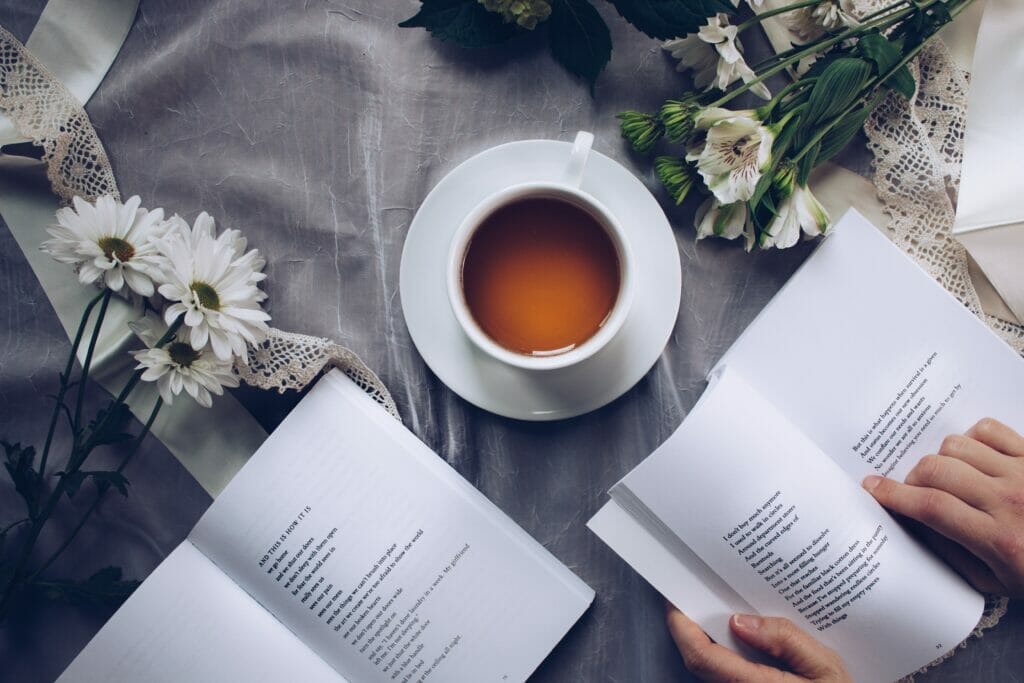
    Overhead shot of a styled table with lace, flowers, tea, and two poetry books. The books are open and there are hands on one of the books as the person reads.

    Best Poetry Books and Poems (According to The Write Life)

    In times of loss, love, and everything in between, turning to the world of carefully poetic words to help make sense of emotions can be powerful. To this day, we can reflect on the experiences of these great poets and learn from them to understand our own personal thoughts. 

    Choosing favorites is always subjective, but in our search for the best poetry books and poems we tried to find something to suit most every occasion.

    Leaves of Grass by Walt Whitman

    Walt Whitman’s Leaves of Grass is a celebration of life, democracy, and the beauty of the natural world. Originally published in 1855, the collection underwent several revisions throughout Whitman’s life.  With its free verse and unapologetic embrace of individualism, Leaves of Grass broke away from traditional poetic conventions and set a new standard for American poetry.

    And Still I Rise by Maya Angelou

    Published in 1978, And Still I Rise is a collection of 32 short poems that are divided into three main sections. Speaking on concepts from love and dreams, to longing and living in the American South, Angelou uses this poetry book to invite readers into her trials growing up while acknowledging the many oppressions faced by Black people throughout time.  The poems are in first-person lyrics, which helps to make the poems intimate and engaging. The variation in line lengths also gives the poems unpredictability as they reflect the events of Angelou’s life. 

    The Iliad and The Odyssey by Homer

    Dating back to ancient Greece, Homer’s epics The Iliad and The Odyssey stand as monumental works of poetry. These epic poems are filled with heroic tales, gripping narratives, and complex characters. The Iliad portrays the Trojan War, while The Odyssey follows the arduous journey of Odysseus. These classics remain fundamental in shaping Western literature and continue to inspire countless works to this day.

    Selected Poems by John Keats

    John Keats’ most celebrated pieces of work can be found in his book, Selected Poems, including “Ode on a Grecian Urn.” The book was first published in 1947 and contains poems published during Keats’ lifetime. With themes of beauty, hardships, grief, and love being explored in this book, the collection covers a range of emotions, engaging the reader in many ways and making it a top favorite for us. 

    Divine Comedy by Dante Alighieri

    As a long narrative poem, Dante’s Divine Comedy takes readers on a guided tour through Hell, Purgatory, and Paradise. This epic poem, written in the 14th century, explores themes of sin, redemption, and the complexities of human existence. Through vivid imagery, profound symbolism, and remarkable storytelling, Dante’s masterpiece remains an unparalleled exploration of the human soul while blending both reason and faith to explain social chaos. The series of illustrations and diagrams made the book engaging while playing a part in explaining some of the classic literature. 

    The Waste Land by T.S. Eliot

    T.S. Eliot’s The Waste Land stands as a landmark in modernist poetry. Published in 1922, this influential work captures the disillusionment and despair felt by many after World War I. Through its fragmented structure, intertextual references, and multilingual lines, Eliot skillfully depicts a post-war landscape plagued by spiritual emptiness and societal decay.

    Here is a snippet of one of the poems from his book: 

    After the torchlight red on sweaty faces
    After the frosty silence in the gardens
    After the agony in stony places
    The shouting and the crying
    Prison and palace and reverberation
    Of thunder of spring over distant mountains
    He who was living is now dead
    We who were living are now dying
    With a little patience

    The Waste Land Part V – What the Thunder said

    The Collected Poems by Sylvia Plath

    Sylvia Plath’s The Collected Poems offers a poignant glimpse into the troubled yet brilliant mind of the poet. Published posthumously in 1981, Plath’s poems explore themes of identity, feminism, and mental anguish. Her raw and confessional style, as showcased in works like “Daddy” and “Lady Lazarus,” continues to captivate readers and inspire generations of poets.

    The Love Poems of Rumi and The Essential Rumi by Rumi

    Jalal ad-Din Muhammad Rumi, the 13th-century Persian poet, wrote verses that transcend time and cultural boundaries. In The Love Poems of Rumi, readers are transported to a world of mystical love, spirituality, and divine union. Rumi’s poetry speaks to the depths of the human soul, offering profound insights and a profound connection to religion. 

    Another poetry book we highly recommend reading by Rumi is The Essential Rumi. Exploring themes of silence, separation, emptiness and loss, the book has been known to help readers understand and heal through some of the most difficult emotions to encounter. 

    The Raven and Other Poems by Edgar Allan Poe

    Edgar Allan Poe, a pioneer in the modern detective story, crafts his dark and haunting tales through poetry. The Raven and Other Poems showcases Poe’s mastery of rhythm, rhyme, and imagery.  With works like “The Raven,” “Annabel Lee,” and “The Bells,” Poe delves into themes of grief, madness, and the fragility of the mind, making this book known for its very spooky and chilling verses. 

    Set Me on Fire: A Poem for Every Feeling by Ella Risbridger

    Published in 2019, Set Me On Fire is a contemporary take on classic poems, which introduces refreshing perspectives, voices from around the world, and themes that were dared to be explored in earlier centuries.  Discussing concepts of trauma, rage, and happiness, this poetry book anthology is ideal for anyone looking to understand any emotion they may be going through.

    Summary | The Best Poetry Books

    We’ve unveiled the best poetry books (in our opinion), but there are many other wonderful poets and poems out there to discover.

    [sps_reusable_block post_id=43050]
  • How to Find Remote Writing Jobs (5 Sites to Look)

    How to Find Remote Writing Jobs (5 Sites to Look)

    One of the biggest perks of becoming a freelance writer is you can do your job from anywhere, whether it’s cozy on the couch, on a beach somewhere tropical, or at a desk with three monitors…the choice is yours! 

    Remote writing jobs offer a ton of flexibility so you can choose how and where you spend your time working. But the real question is, which type of remote writing job is best for you and where do you find them? 

    [sps_reusable_block post_id=43047]

    Types of Remote Writing Job 

    Remote writing jobs are positions that involves not being tied to a particular location. Due to how independent writing can be, it’s common to find remote work in this industry. 

    Here are a few different types of remote writing jobs: 

    Freelance Writing

    Finding freelance writing work refers to working independently on a contract basis. You accept projects from clients and get paid upon completion. 

    One advantage of freelance writing is you can choose how much you work with each client, as well as how many projects you take on at a time. Freelancers can also work on behalf of staffing agencies who help match writers to clients. 

    SEO Content Writing 

    SEO refers to search engine optimization, which is the practice of using specific keywords in your content to in order to rank on search engines such as Google. When this happens, your article or blog post displays in search results when someone inputs a relevant query.  

    Blog Writing 

    Blogging is great for SEO, which is my many businesses have a blog section on their website. However, businesses often lack a full blogging staff and rely instead on freelancers to create the bulk of their blog posts. Blog writers are needed in B2B and B2C industries so there are a lot of opportunities out there!

    Social Media Writing 

    Social media writing refers to any piece of writing that is for social media platforms (either directly or indirectly). This includes captions, LinkedIn articles, replies to comments, or anything else that build and engage with an audience online. 

    Scriptwriting

    Want to combine your love of writing and theater? Scriptwriting may just be for you. Whether it’s creating scripts for production companies, YouTube videos, a speech, or a screenplay, scriptwriters are always in demand. 

    Copywriting 

    Many people confuse copywriting and content writing so let’s set the record straight: copywriting means to produce pieces of writing that promote a brand and establish it whereas content writing engages an audience in forms like blog posts.

    Examples of copywriting include sales pages, marketing campaigns, and sales emails. 

    Email Marketing

    Any business owner will tell you that email marketing is crucial to their business. And email marketing is a great way to combine copywriting with marketing strategy. Whether you specialize in a particular email automation software, you help businesses plan and execute customer journeys, or you stick to writing emails, there’s a lot a freelancer can do in this space.

    Ghostwriting

    Another type of writing that has taken TikTok by storm is ghostwriting. This is essentially writing something without getting credit. Ghostwriters are in huge demand in the book world, the music world, and the corporate world (to name a few). Many people hire ghostwriters to write or co-write for them so they can save time and effort (and probably end up with a better product). 

    Book Writing 

    Writing a book is no small task, but the reward is certainly worth it (whether you’re writing for yourself or others). You can immerse yourself into a whole new story and, by writing remotely, you can get inspiration from any corner of the world. Not bad! You can then submit your book to publishers and get it out there for as many people to read as possible. 

    Where to Find Remote Writing Jobs

    There are more ways than ever to find remote writing jobs, and the demand from clients and companies continues to increase. Here are a few of the online platforms where writers go to find work (full time, part time, freelance, and everything in between). 

    LinkedIn 

    LinkedIn is no doubt the biggest social network site for you to put your CV on. Prospective clients are always looking for writers, freelancers, employees, and hard-working candidates on this platform. 

    The great thing about LinkedIn is that it works both ways. You can apply for the jobs that are posted on there, and clients can also reach out to you directly. This is a smart platform to network on, so be sure to create an optimized profile to let potential employers know what your skills, experience, and expertise are! 

    Freelancer.com

    Freelancer.com is a popular marketplace helping freelance designers, writers, bloggers, and developers find work and connect with clients. With over 10,000 active jobs and 50 million registered freelancers, there’s a lot of opportunity to find freelancing jobs. 

    Freelance Platforms Such as Upwork and Fiverr 

    If you’re looking to build your portfolio, freelancer bidding sites are a go-to for new writers. Fiverr and Upwork are some of the biggest marketplaces and once you have a profile, you can use the filters to search for jobs. It’s good to note that these platforms are best for entry-level work and can sometimes offer low pay so be sure to know what your rates are ahead of time! 

    ProBlogger Job Board 

    ProBlogger helps match writers to blogging opportunities, as well as helping writers boost their writing profiles. The job board lists hundreds of jobs at a time and covers a variety in niches including copywriting, ghostwriting, and editing. 

    Indeed Job Board

    Indeed is a great place to search for remote writing jobs, especially if you’re interested in being employed by one company. A lot of companies are distributed and open to hiring remote workers. Another nice perk is Indeed tracks your job search progress, making the job hunt a bit easier. 

    The Benefits of Remote Writing 

    Aside from the obvious of being able to work from anywhere, there are many advantages of remote writing jobs.  Here are a few benefits.

    Increase Productivity and Outcomes

    While writers based in the office must endure daily in-person meetings and distracting personal conversations, remote workers can attend the same meetings virtually but without the commute or interruptions. Remote writing jobs lets you complete your daily tasks at a faster rate for this reason. 

    Save Time and Money

    Working remotely takes away the need to commute, which means you’re minimizing the amount of money and time spent on traveling or fuel. Not to mention you’ll no longer be paying a fortune on meals, work clothes, and car maintenance! You can also focus on utilizing your mornings more wisely before you set up for work. 

    Prioritize Your Physical and Mental Health 

    Working from home has proven to reduce a person’s stress levels because you feel more in control of your day. Whether it’s worrying less about rushing into work or no longer feeling sluggish when sitting at your office desk,  there are many ways taking remote writing jobs can help improve your well-being.  

    Customize Your Workspace

    Forget the fluorescent lighting and small desk space, remote working means you can create a fresher, more inviting work area for yourself to boost productivity. Place your desk in front of optimal sunlight, light a candle, or even hang your favorite decorations to add elements of your personality. 

    We’ve covered all you need to know to hit the ground running finding remote writing jobs! If you’ve made your decision on which type of remote writing work you want to take on, then check out the job boards and platforms we’ve listed to find that perfect job match. Good luck and happy writing!

    [sps_reusable_block post_id=43047]

  • Testimonials for Writers: 3 Ways They Help and Why They’re so Powerful

    Testimonials for Writers: 3 Ways They Help and Why They’re so Powerful

    Testimonials for writers are a crucial factor in creating a word of mouth buzz that can boost your book sales or service referrals.

    Whether you want to put more books into the hands of readers or offer writing services, great testimonials can be a positive influence on your goals. 

    While you’ve likely heard of endorsements, and maybe even have some, testimonials are a bit different.

    In this article, we’ll talk about the different facets of testimonials for writers. If you’re ready for a career boost, read on!

    What Are Testimonials for Writers?

    Testimonials for writers are a third-party review of you and your work. While they’re often shared through a written statement, testimonials can take various forms such as:

    • Short video statements 
    • Quotes posted on website
    • Social media posts 
    • Interviews

    How Testimonials Help Writers

    Whether you ask clients to write up a brief endorsement, share about their experience on social media, or engage in an interview, testimonials are foundational for building credibility. 

    If testimonials for writers are such a crucial factor, how do they actually contribute to your ongoing success? There are many ways testimonials help, but below are the top three reasons you should start collecting them today.

    Personalize Your Audience

    Consider the following situation: You launched your book a year ago and have some traction. You wish you had more reviews, but you’re happy with your growing platform and newfound traffic to your author website. 

    What if when potential readers come to your site, testimonials greeted them on your home page? As soon as your site loads, they see real readers who love your book and want to share how much they enjoyed it. In this way, testimonials personalize your audience.


    Create Authentic Hype

    With so many marketing resources today, almost anyone can create a good deal of buzz around their product or service. However, testimonials for writers take this buzz to an authentic level. Yes, people have used the word authentic so much that it’s a buzz word all on it’s own, but this is because individuals appreciate authentic reviews. 

    The more testimonials you have from readers with names and lives, the more authentic your hype will be. What usually makes you want to purchase a new book more: The author tweeting how awesome their book is, or a reader telling you they couldn’t put it down?

    Provide Resources

    Particularly if you offer paid services such as editing or marketing, potential clients want to know you’ve been vetted and are worth the price point. Testimonials, for writers in particular, are a helpful way to provide the credibility future clients need.

    If individuals can see a list of clients you’ve helped, look them up, and perhaps even reach out to them for a referral, they will feel much safer hiring you.

    How To Get Testimonials

    If testimonials for writers are this important, the next question to answer is how to get them. Your first testimonials will likely be the most difficult, but don’t worry. With a few well-crafted sentences you’ll be well on your way. 

    Offer the possibility to current clients 

    Many clients are focused on their project and getting it done well. Leaving testimonials for writers is simply not top of mind. When I’ve asked for testimonials, I’ve found offering the possibility to a client is all they need to write a review. Most clients are happy to help but don’t realize how much power their few sentences wield. 

    Ask for testimonials from previous clients 

    If you have worked for clients in the past but didn’t realize the value in testimonials for writers, a simple email can help you. Write up a brief template thanking the client for working with you. Ask them to write a sentence or two of review if they enjoyed the collaboration and are comfortable. 

    Write a draft to send to clients 

    If you work with bigger name clients who may not have time to craft their own testimonial, you can treat testimonials similarly to blurbs. Write a sentence or two describing how you imagine the client felt about their experience working with you. 

    Then follow a few steps: Email them asking for a testimonial. Include that you wrote an outline to make it easier for them. Allow them to edit as they see fit.

    Tip: You can legitimize testimonials by including first and last names if possible, or first name and last initial. Asking for clients to include where they work or what they are known for is also a helpful way to add detail that builds rapport. 

    Examples from Real Writer Websites

    What about writers who have done this well? Let’s start with the bestselling author of Atomic Habits, James Clear. When you visit the book page on his website you immediately see a sentence or two of testimonials from other professionals.

    Clear highlights Mark Manson’s testimonial, another bestselling author. He also includes one from Arianna Huffington, Founder of Huffington Post and Thrive Global. 

    Elizabeth Gilbert’s Big Magic has inspired creatives in innumerable ways. Despite the massive success of her book, she too includes a testimonial on her book page. 

    If you’re not a bestselling author yet or offer services, testimonials are still tremendously helpful in your success. The freelancer behind Hear Ye Writing includes numerous testimonials on her website.  

    Testimonials For Writers: Parting Tips 

    While there is no right or wrong way to include testimonials, there are a few steps you can take to help them stand out. Testimonials that include the following will help legitimate both your testimonials and your product or service: 

    • First and last name of client
    • The client’s credibility 
    • Where they work 

    Consider the following testimonial examples: 

    Example one: “I loved working with Jane Smith. Her turnaround time was impeccable and her quality was just what I was looking for.” 

    Example two: “I loved working with Jane. Her turnaround time was impeccable and her quality was just what I was looking for.” —John Smith, CEO of Fake Business Name and author of Book Title

    Do you see how adding these three small factors levels up the testimonial? Always be sure to ask clients if they are comfortable for you to include their name and credentials prior to posting. 

    Additionally, if you write a template testimonial for past clients, receive the okay before publishing it live on your website. 

    For Those Starting From Scratch 

    If you’re just getting started and haven’t worked with clients before, there is still a place for you. Testimonials for writers can apply to unpaid coaching services, feedback, beta reading, and more. When posting these type of testimonials, be clear about what you offered. 

    For instance, if someone from your writing community asks you to beta read their book, consider asking for a testimonial. Use the template below to inspire your request: 

    “I’m a new writer and asked [your name] to beta read my book. He was more than happy to provide great feedback. I’m thankful for his insight on my manuscript!”  

    It can feel intimidating to start out, but take your first step boldly. The first request is usually the most difficult. It only gets easier! 

    Want more writing advice?

    Subscribe to get our latest content by email.

      We won’t send you spam. Unsubscribe at any time.

    • How To Use Storytelling In Writing In 4 Essential Steps

      How To Use Storytelling In Writing In 4 Essential Steps

      You might have heard how important storytelling is when it comes to content and writing in general.

      No matter what type of writing you are doing, learning how to use storytelling to your advantage can help your work stand out and draw in readers.

      If you don’t know how to use storytelling in writing, thankfully there are some tips you can use to bring your writing to life, even if you are not doing creative writing.

      Throughout this article we will break down the fundamentals of storytelling, why all writers should learn the essentials, and then dive into some tactical things you can use in your writing.

      What Is Storytelling?

      Storytelling is the art of using a story to convey a message and to draw readers in and give them a reason to be emotionally involved in your writing.

      Storytelling is the social and cultural activity of sharing stories, sometimes with improvisation, theatrics or embellishment. Every culture has its own stories or narratives, which are shared as a means of entertainment, education, cultural preservation or instilling moral values.

      From Wikipedia

      Once you know the core elements of storytelling, you can start to use those tactics in everything you write to make it more engaging and interesting.

      Most of us think of fiction writing when it comes to storytelling, but you can use it in almost any kind of writing. Even if you do not write fiction, it can be good to practice storytelling as a way to draw more attention to your writing and level up as a writer in general.

      Why Is Storytelling Important?

      For the most part, humans remember and become more attached to stories than almost anything else. There is a reason we love reading books, watching movies, and telling stories at social gatherings. It is because we love that stories do to us.

      For example, we can hear statistics and data about events in the world, but we connect to it and remember things more when storytelling is involved. It is why you can remember stories you heard and can repeat them better than you can recall facts you learned in school.

      When we talk to people in our lives, we share stories and it is how we relate to each other.

      If you want to be a writer, no matter what writing niche you pick, knowing how to use storytelling to your advantage can help grow your career in ways you never planned.

      title card for how to use storytelling in writing

      Why Storytelling Matters In Blogging

      If you want your blog to stand out and start to hook readers, you will need to use elements of storytelling to grab attention.

      It is one of the best ways to build a following and create content that people want to share. Not enough blogs utilize storytelling in their posts, so it is a great tool to use to stand out between so many competitors.

      Including a story is also a way for your reader to really understand and visualize what you are trying to say and understand your message in a way that they would not otherwise.

      Benefits of Using Storytelling

      Storytelling is a great way to grab people’s attention and keep it hooked.

      There is something uniquely human about the love of stories and our desire to always keep them in our lives, even if it is

      You will often find that you can increase engagement as well when you use stories. People love to comment and engage on particular stories.

      Think about the creator behind Humans Of New York who simply walked around New York (and eventually then multiple places in the world) where he would ask people to share their stories. It captivated people around the world and garnered a lot of attention.

      Storytelling gives people a reason to share content, too, as it is more interesting than a blog that is just about a particular topic.

      How to Use Storytelling In Writing

      Now that we have covered the basics of why storytelling matters and what it is, now is the time to dive into the tactical things you can use to start bringing more stories into your writing.

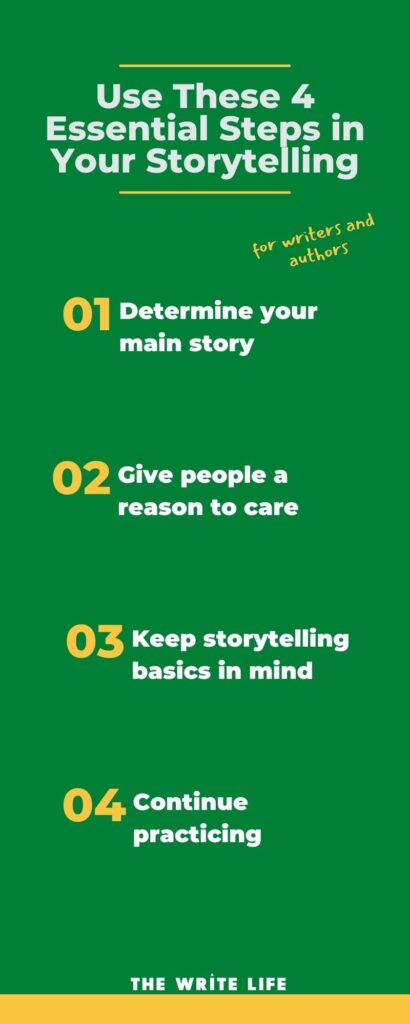
      Determine your main story

      In almost any story, there is a beginning, a middle, and an end. If you want to use storytelling in your writing, you need at least those three main points of your story outlined so you know what to include.

      That makes it incredibly simplified, but it is the best place to start if you are new to telling stories.

      Give people a reason to care

      First, you will need to think about who you are telling the story, the purpose of the story in the first place, and how those two go together.

      Sure, you can write a story for the sake of sharing a story, but often you will have a particular reason to share a certain story and a certain person you want to read it.

      This is especially true if you are blogging or doing any kind of writing for marketing or branding purposes.

      It might seem tedious to spend the amount of time thinking about the reader and what they need out of your writing, but it will be worth it.

      Keep some of these storytelling basics in mind

      There are some things you will and will not want to include in your writing.

      For example, take out cold, boring language. This is particularly common with businesses that use storytelling, where they rely on a ton of jargon and business-speak and avoid getting into the flow of telling a story.

      You will also want to highlight sensations and the senses when it comes to writing a story, since that is what makes them so visual. You will want to talk about how things smell, taste, look, feel, sound, and so on. It can draw them in and help them put themselves in a position to feel the story.

      Write the story as if you were telling it to someone you were with. That is a great way to write a story in a natural way.

      Continue practicing

      One of the main things you need to keep in mind if you want to use storytelling in writing is you will need to practice over and over in order to be an effective storyteller.

      Vertical graphic that says Use these 4 essential steps in your storytelling. 1) determine your story 2) give people a reason to care 3) keep storytelling basics in mind 4) continue practicing
    • Celebrating Black Authors: 8 Authors to Add to Your TBR List

      Celebrating Black Authors: 8 Authors to Add to Your TBR List

      Consciously immersing ourselves in African-American literature is important for so many reasons. And celebrating Black authors by intentionally choosing their books to read and study allows for wider discourse, education, and understanding. 

      As progressive as our society seems, widespread systemic racism persists, which is why we want to shine a light on ways we can support underrepresented perspectives and stories in our industry. Whether it’s adding a new TBR to your book club list, discovering organizations to join, or finding authors to promote online, we hope this article can be a jumping off point.

      The Importance of Celebrating Black Authors

      The voices of Black storytellers have long been marginalized, especially when it comes to mainstream media and publishing outlets. Less than 15% of books published each year are from BIPOC authors, and an even smaller percentage of Black authors contribute to this statistic.

      In addition to better supporting the author community and increasing our empathy and perspective, here are two more reasons celebrating Black authors is important.

      1. It expands our worldview and enhances our understanding

      By diversifying our literature we expose our minds and hearts to stories and experiences that we may never come across otherwise. Reading widely and seeking underrepresented voices allows us to engage with different worldviews and histories, adding depth and richness to our lives.

      For non-Black readers, learning about what it means to be Black from Black authors is especially important for beginning to do the work of breaking down stereotypes, biases, and inequality. 

      2. It educates us on the larger story outside of our lived experience 

      People who are not Black may only be somewhat aware of what it means to be Black from news coverage of protests and rallies. However, the Black experience is so much deeper and wider, which is why reading books written by Black authors is so critical to being informed and aware.

      8 Black Authors to Add to Your TBR List

      From non-fiction and fiction literature you’ll discover themes of joy, entertainment, relief, culture, and escapism, and much more.  Here are some suggestions to get you started.

      James Baldwin 

      James Baldwin was an iconic American author who turned his personal battles into best-elling literature, becoming one the most celebrated authors in the world. Baldwin wrote stories about his life experiences, which included growing up during the Great Depression, being the eldest of nine children, his complex relationship with his step-father, and an identity crisis. 

      Book recommendations:

      Ralph Ellison

      Ralph Ellison was born in Oklahoma and raised by a single mother who worked a variety of jobs to make ends meet. Ellison began writing The Invisible Man, which focused on a Black civil rights worker who became alienated due to the racism he faced when moving to New York.  It won the National Book Award a year after being published and was an international bestseller.

      Ellison’s novel still remains a key literature reference to help people understand marginalized groups in American society. 

      Book recommendation:

      Maya Angelou

      Poet, author, and activist Maya Angelou was a pioneer for change for Black women in America. Inspired by Langston Hughes and Paul Lawerence Dunbar, Angelou used her words to talk about the strength of Black women and the need for social justice. Publishing seven autobiographies over her career, Angelou often spoke on her personal tales of trauma, racism, and finding strength within. 

      Angelou was recognised by many organizations nationally and internationally for her creative contributions to literature and received various awards and honorary degrees in her lifetime. 

      Book recommendation:

      W.E.B Du Bois 

      Sociologist, activist, and author W.E.B Du Bois was one of the most well-known and influential authors in the 20th century. As someone who grew up as part of the Black elite, he didn’t notice the issues of racial injustice until he attended university in Tennessee. His experience there inspired his work to put an end to racism. 

      Book recommendation:

      Alex Haley 

      Focusing on telling the struggles of African Americans and their experiences throughout time, Alex Haley broke into the industry with a job at a well-known magazine company. He produced a series of interviews with prominent African Americans, which allowed him to meet Malcolm X and write his story. 

      Haley’s bestselling novel Roots depicts his ancestors’ journey to freedom from slavery. His novel became a global sensation when it was turned into a television series. 

      Book recommendations:

      Zora Neale Hurston 

      During the Harlem Renaissance in 1925, Zora Neale Hurston made her way to New York where she would become a prominent Black female writer. Her most famous novel, Their Eyes Were Watching God, focused on the traditions and culture of African Americans through poetry. 

      Book recommendation:

      Toni Morrison 

      Storytelling through folktales and literature was a big part of Toni Morrison’s childhood and, after teaching at Texas Southern University, she became a fiction editor and author.

      Morrison’s first book, The Bluest Eye, told the tale of a young Black girl longing to have blue eyes. Her stories center around the Black American experience in an unjust society. 

      Book recommendation:

      Shonda Rhimes

      Famously known for her creative production of Grey’s Anatomy and Princess Diaries 2, Rhimes has released her fair share of books over the years, including her powerful memoir Years of Yes and bestselling novel, Queen Charlotte.

      Rhimes is notable for her television screenwriting but her books have a central theme of uplifting the Black community and shining light on stories that often fade into the background. 

      Book recommendations:

      Organizations and Grants Supporting and Celebrating Black Authors

      There’s an array of organizations and grants that work to support upcoming Black authors in the writing and publishing industry. It’s an opportunity for new talent to explore their options and receive guidance along the way! 

      BWOC Literary Support Program

      The BWOC’s support program offers stipends for writers to be used in contests, retreats, fellowships and writing supply expenses. Applications are ongoing and will be reviewed every three weeks. Applicants must be US-based. Find details and guidelines here.

      The Eleanor Taylor Bland Crime Fiction Award

      This award is an annual grant of $2,000 for an upcoming writer of color. By writing a powerful crime fiction piece, applicants can win an opportunity to enhance their literary skills and develop their careers. Find more information by visiting their website.

      Teaching Fellowship for Black Writers 

      GrubStreet’s Teaching Fellowship for Black Writers provides professional support to two Black writers each year by giving them the chance to work with instructors and teach classes. The fellowship gives a compensation of $25,000, an artistic mentorship and access to their writer’s community. Learn more and read the guidelines here. 

      Earnest J. Gaines Award for Literary Excellence

      For Black writers based in the US, this is an amazing chance to accomplish professional development and put them ahead in the industry. This grant is designed to help minority ethnic groups level in their creative field once they submit a piece of work to the organization. You can find more information by visiting their website here. 

      Sustainable Arts Foundation

      The Sustainable Arts Foundation offers $5,000 to writers with children. Fifty percent of all applicants who are awarded the grants are Black writers and the grant focuses on young adult fiction stories, illustrated children’s books, creative nonfiction, graphic novels, and poetry. All requirements are stated on their website here. 

      Summary | Celebrating Black Authors

      Literature by Black authors tackles the complex issues faced by the community and helps to spread awareness on what’s happening in the world around us. There’s still a long way to go when it comes to elevating the Black experience but by purchasing and reading books written by Black authors and supporting programs that give aid and guidance to emerging talent, we can play a part in bringing about change. 

      101 Creative Writing Prompts
      That Will Get You Excited to Write

      Grab it for free 👇

        We’ll also send you our newsletter, which offers advice on freelancing and publishing.
        You can unsubscribe at any time.

      • Which Citation Style Reigns Supreme? Endnotes vs Footnotes

        Which Citation Style Reigns Supreme? Endnotes vs Footnotes

        There’s often confusion with endnotes vs footnotes, and when to use one instead of the other. They kind of look the same but they serve different functions.

        What is a Footnote? 

        A footnote is an in-text citation found in the footer of the page.

        You’ll know it’s a footnote when you see a superscript number (a small, raised number) next to a word or chart, which links to a short citation at the bottom of the page.  The footnote will contain additional context or information.

        What is an Endnote?

        An endnote is an in-text citation found at the end of the chapter or document. 

        Similar to a footnote, an endnote gives the reader more information about a topic. However, their location at the end of a chapter allows for them to contain more content than a footnote as there is more space than at the bottom of the page. 

        Endnotes vs Footnotes: Which to Use When

        Endnotes and footnotes are citations, and they both provide additional information to readers without interrupting the flow of words.

        In general, citations are required when writing an academic paper or research study. They’re also expected for essays, certain non-fiction books, and journal articles.

        Which citation you go with often depends on the style you’re writing to so take a moment to check the style requirements and become familiar with their prefered citation method.

        If you aren’t using many citations and they’re short, then footnotes are fine. If you have longer citations and require additional space, then endnotes may serve you better.

        In general, the use of footnotes in most academic writing is now considered a bit outdated and has been replaced by endnotes, which are much easier to place in your paper, even with the advent of word processing programs. However, some disciplines, such as law and history, still predominantly utilize footnotes.

        USC Libraries Research Guides

        The format you use depends on what you’re writing (books, articles, essays, etc. have different requirements) and what style you’re using. However, citations contain similar elements: 

        • A superscript number within the body of text, which corresponding number contains additional information
        • A page number or reference, which tells you the source of the information within the text 

        Here’s an example of a citation: 

        1. Carolyn Kay, Art and the German Bourgeoisie: Alfred Lichtwark and Modern Painting in Hamburg, 1886-1914 (Toronto: University of Toronto Press, 2002), 100.

        Novels that Use Citations

        Many non-fiction works use citation, but did you know some fiction work use them too? In these cases, authors utilize footnotes or endnotes to introduce readers to a new world with additional commentary. Citations can also add understanding to a character or a subject, making the story even more interesting. 

        Here’s a few examples of novels that utilize citations: 

        The Mezzanine by Nicholson Baker (2020)

        This short novel uses footnotes to tell the unspoken thoughts of a man on his lunch break. The author adds footnotes to give us an insight into the narrator’s mind, drawing out his frustrations, thoughts, and expressions. 

        Crazy Rich Asians by Kevin Kwan (2013)

        The satirical novel that made us fall in love and laugh at the same time also used excessive footnotes, which acted as witty interjections. Being a novel centered on the money-powered families of East Asia, the footnotes offer a mix of gossip and affirmations for the reader to refer to throughout. 

        Jonathan Strange & Mr Norrell by Susanna Clarke (2004)

        In this novel, footnotes are used to determine which characters get to take up the majority of the body text, and which ones simply reside at the bottom of the page. This is one way authors can use footnotes to place importance (or lack of) on certain characters or objects.

        Summary: Endnotes vs Footnotes

        Endnotes and footnotes serve to add information and context for readers to help deepen their understanding on a topic. While footnotes are shorter and sit within the page footer, endnotes are typically longer and are found at the end of a chapter or section.  When it comes to endnotes vs footnotes, which do you prefer?

        Want more writing advice?

        Subscribe to get our latest content by email.

          We won’t send you spam. Unsubscribe at any time.

        • Writing a Narrative Poem: Everything You Need to Know (A Step by Step Guide)

          Writing a Narrative Poem: Everything You Need to Know (A Step by Step Guide)

          When we think of poetry, the first thing that usually comes to people’s mind is rhymes (a close second: the other assumption that all poems are short!). 

          But of course, this doesn’t capture the entire poetry genre. 

          Narrative poetry is one of the most unique forms of literature because of their ability to capture plot, characters, and dialogue all in one poem—often with very little rhyming, if any. 

          This is a step-by-step guide to writing a narrative poem, including what they are, how to write an epic narriative poem, and some awesome examples to inspire you. 

          What is a Narrative Poem? 

          A narrative poem is a form of poetry, which involves telling a story. The poet will use various elements of storytelling to create a plot, introduce characters, and set a certain scene–while using elements of poetry like rhyme, form and other devices. 

          We find narrative poems to be the oldest form of poetry, dating all the way back to 2000 B.C. It has successfully stood the test of time because of the engaging and entertaining way that poetic rhymes and verses have been able to tell the intended story. 

          More contemporary narrative poems tend to rely less on rhymes but still incorporate elements like non-linear story structure, characterization, and emotive language. 

          The Difference Between Lyric Poems and Narrative Poems

          A common misconception is that narrative poetry and lyric poetry are the same but this isn’t the case. 

          The main difference is the poem’s sense of time. Narrative poems capture the flow of time by having an order of events and an “A causes B” pattern. The sense of time is easy to follow. On the other hand, lyric poems discuss a particular moment in the past with the purpose of bringing emotions out of the readers. 

          In short, narrative poems focus on a sequence of events, whereas lyric poems magnify and speak about one specific event in time. 

          What are the Different Types of Narrative Poetry? 

          • Ballad

          Ballad is a form of narrative poetry, which was loved throughout the 19th century. Athough originating in Europe, ballads have certainly made their mark across the world. Ballads were narrative poems set to music, often accompanied by dances and large crowds.  

          Victorian-era poets admired this form of poetry and used it to both tell a story and entertain a big audience. However, their popularity hasn’t translated as well into the modern 21st century era and we see less of this form nowadays. 

          • Idyll 

          Idyll poems are a form of narrative poetry, which describe and evoke rural life. This type of poetry focuses on moments within small communities and villages either describing a single person’s day of work or doing some sort of labor. 

          Idyll poems date back to the early 17th century as a way of depicting the life of farmers, laborers, and rural life in general. 

          A great example is Idylls of the King by Alfred Lord Tenyson (1859) which details the story of King Arthur’s nights in a 12-poem cycle: 

          I found Him in the shining of the stars,
          I mark’d Him in the flowering of His fields,
          But in His ways with men I find Him not.
          I waged His wars, and now I pass and die.
          O me! for why is all around us here
          As if some lesser god had made the world,
          But had not force to shape it as he would,
          Till the High God behold it from beyond,
          And enter it, and make it beautiful?

          • Epic Poems 

          Epic poems are long narrative poems concerning stories of heroism and any type of extraordinary people who changed history. 

          These poems were used to tell the stories of kings, knights and successors to evoke national identity and morality.

          Examples of these poems include, The Aeneid and The Odyssey, The Epic of Gilgamesh, and The Mahabharata. 

          How to Get Started Writing a Narrative Poem

          Narrative poetry is a form of artistic expression, combining the power of storytelling with the beauty of poetic language. Here are some essential tips and techniques to help you bring your stories to life.

          Find Your Inspiration

          Every great narrative poem begins with a spark of inspiration. Look for ideas in your surroundings, personal experiences, historical events, or even mythology. Allow yourself to be curious and open to new perspectives. 

          Inspiration can come from unexpected places, so be receptive to the world around you, think of something great that has happened to you (or someone close to you) or even create a world that is completely fictional!

          Develop Your Plot

          Every great narrative poem has a  well-structured plot. Start by outlining the key events, characters, and conflicts in your story and set the beginning, middle, and end of your poem, and consider how each part intertwines. 

          Remember, you don’t need to go into too much detail by explaining the scene or introducing characters as this isn’t a novel. Keep it straight to the point yet engaging for your reader.  

          Choose a Narrative Voice

          The tone and narrative voice of your poem are crucial in setting the mood and capturing the reader’s attention. 

          Do you want your poem to be narrated in a humorous tone? Or maybe even a mysterious one? Choose a narrative poem that aligns with the perspective of who is telling the story and, to make it even more personal, you can even use a first-person voice. 

          Utilize Imagery and Sensory Detail

          The aim with any compelling narrative poem is to create a vivid and rich picture in the mind of readers. You want them to transport themselves to the setting, visualize the events and feel the story unfold. 

          Make use of sensory details to enhance the experience and think about the various descriptive words you can use to bring the narration to life. 

          Focus on Figurative Language

          Figurative language brings depth and richness to your narrative poem. Incorporate metaphors, similes, personification, and other literary devices to infuse your writing with a touch of elegance and lyrical beauty. 

          Figurative language helps readers connect with the emotions and ideas conveyed in your poem, evoking a more profound and lasting impact.

          Experiment with Structure and Form

          We’ve looked at the different forms of narrative poems, so feel free to put them to use! You can opt for something more traditional like a ballad or epic, or perhaps choose a more contemporary form. 

          Experiment with line breaks, stanza lengths, rhyme schemes, or even free verse and let the structure and form of your poem enhance the overall storytelling experience.

          Summary 

          Narrative poems are a beautiful piece of literature that allow you to blend the art of storytelling with the power of poetry. 

          By seeking inspiration, focusing on figurative speech, utilizing sensory descriptions, and developing an engaging plot, you can conjure up a compelling narrative poem that tells your story perfectly. 

          Grab your pen, let your imagination soar, and embark on the thrilling adventure of crafting narrative poetry!

          Want more writing advice?

          Subscribe to get our latest content by email.

            We won’t send you spam. Unsubscribe at any time.

          • Carpal Tunnel Mouse: 5 Of The Best Options

            Carpal Tunnel Mouse: 5 Of The Best Options

            If you are someone with carpal tunnel, you know how important it is to have a carpal tunnel mouse that can support your wrist so it does not hurt during your writing sessions is important, and there are so many out there to choose from.

            You might not know there are different types of accessories you can buy to make sure you are in less pain throughout your day, which is this article explains options out there in detail to help you make an informed decision.

            While it might be frustrating to have pain while you write, it doesn’t have to stop you from bringing your ideas to life.

            What Kind Of Mouse is Good for Carpal Tunnel?

            If you are suffering with carpal tunnel, there are a few things you can do to find a mouse that can help support your writing.

            According to OrthoInfo,

            Carpal tunnel syndrome is a common condition that causes numbness, tingling, and pain in the hand and forearm. The condition occurs when one of the major nerves to the hand—the median nerve—is squeezed or compressed as it travels through the wrist.

            OrthoInfo

            Anyone who is diagnosed with carpal tunnel needs to take is seriously because it is something that becomes worse over time if it is not dealt with.

            A mouse will not necessarily fix your problem, but it will help manage it.

            Can Using a Mouse Cause Carpal Tunnel Syndrome?

            There is some research to support that modern computers and mouses can be associated with carpal tunnel syndrome.

            Computer mouse use has become an integral part of office work in the past decade. Intensive mouse use has been associated with increased risk of upper extremity musculoskeletal disorders, including carpal tunnel syndrome. Sustained, elevated fluid pressure in the carpal tunnel may play a role in the pathophysiology of carpal tunnel syndrome.

            From: Effects of computer mouse design and task on carpal tunnel pressure by P J Keir, J M Back, and D Rempel

            Do Carpal Tunnel Mouses Work?

            Carpal tunnel mouses can certainly help prevent more issues throughout time. Carpal tunnel gets worse when you do not make adjustments to how you use your hands and can end up damaging your nerves worse.

            So, with that in mind, carpal tunnel mouses can be a way to help on your journey to becoming a professional writer.

            Carpal Tunnel Mouse

            Let’s take a look at some different options out there so you can find the right fit for you.

            Logitech MX Vertical Wireless Mouse

            The Logitech MX mouse is rechargeable and wireless so you can keep it where you need it while you work, which can be key to reducing muscle and nerve strain.

            This mouse keeps your hand in a neutral handshake position so you do not need to turn it as much as you would with a traditional mouse.

            It has a high-precision sensor so you only need to move your hand 4x less times than other mouses out there, which can help reduce strain over hours.

            One unique feature about this mouse is that you can use it across three computers using Logitech FLOW. That can help you use only one mouse throughout your day, which can help a lot with certain technical needs.

            You will get four months of use from a single charge (and three hours of use if you charge it for one minute), which can help a lot with making sure your mouse is available at all times.

            Perixx PERIMICE-713 Wireless Ergonomic Vertical Mouse

            The Perixx PERIMICE-713 mouse is a great option for those with carpal tunnel syndrome not only because i its design, but because it also has six buttons on the mouse you can customize for your own needs.

            That can help you move your hands less throughout your day and as you use your computer.

            It has up to 10 meters of distance so you can sit at a comfortable distance from your monitor for optimal posture.

            iClever WM101 Ergonomic Mouse

            The iClever WM101 mouse has a comfortable style, which also includes a thumb rest with four different resolutions, depending on how much or how little mobility you have.

            The four resolution adjustments include: 1000DPI, 1600DPI, 2000DPI and 2400DPI. If you do not know, those are different mouse sensitivity settings.

            It also has two buttons for “backward” and “forward” so you can browse with ease and not need to move your wrist nearly as much to click around.

            Using a wireless 2.4GHz connection, you can stay connected up to 49 feet, which helps when it comes to setting up your desk and posture how you prefer.

            For those with extra sound sensitivity, the buttons are also built to be more quiet so you do not just hear endless clicking as you browse on your computer. That can also help for people who need to be on the quieter side, such as those with newborns.

            DeLUX Wireless Ergonomic Mouse

            The DeLUX Wireless ergonomic mouse has a unique design with a removable palm pad as well that is built for extra comfort and support as you work.

            It has a frosted texture, which helps improve grip but also keeps dust and sweat off of the mouse, keeping it in better quality for longer.

            This mouse has a high of 4000DPI sensitivity, which would allow you to barely move your hand in order to move your mouse around your screen.

            The battery inside this mouse can also last for a whole week (assuming you work 8 hours per day) for each charge, making sure you have less charging to worry about each day.

            eirix Ergonomic Vertical Wireless Mouse

            The eirix ergonomic mouse has fun lighting, which can be an extra perk on top of the extra help and care it gives to dealing with carpal tunnel.

            The palm rest has some built-in anti-sweat materials so it stays comfortable and easy to use, even though hours of use. On the bottom it also has a smooth surface to help reduce drag, giving your joints a comfortable experience.

            The DPI settings come in four modes: 800, 1200, 1600, and 3200. You can switch between them by simply clicking a button, which makes computer use even easier.

            Need More Writing Help?

            Freelance Writer’s Pitch Checklist
            Grab it for free 👇

            Convince more editors to say YES to your pitches!

              We’ll also send you our weekly newsletter, which offers helpful advice for freelancing and publishing. You can unsubscribe at any time.

            • The Writers Strike: The 2007 Revolution That Changed Hollywood History

              The Writers Strike: The 2007 Revolution That Changed Hollywood History

              In an uncanny parallel to the Writers Strike 2007, the entertainment industry finds itself once again engulfed in turmoil as writers take to the picket lines.

              The current Writers Strike, which is interrupting American film, television, and digital media, is focused on streaming media residuals and artificial intelligence.

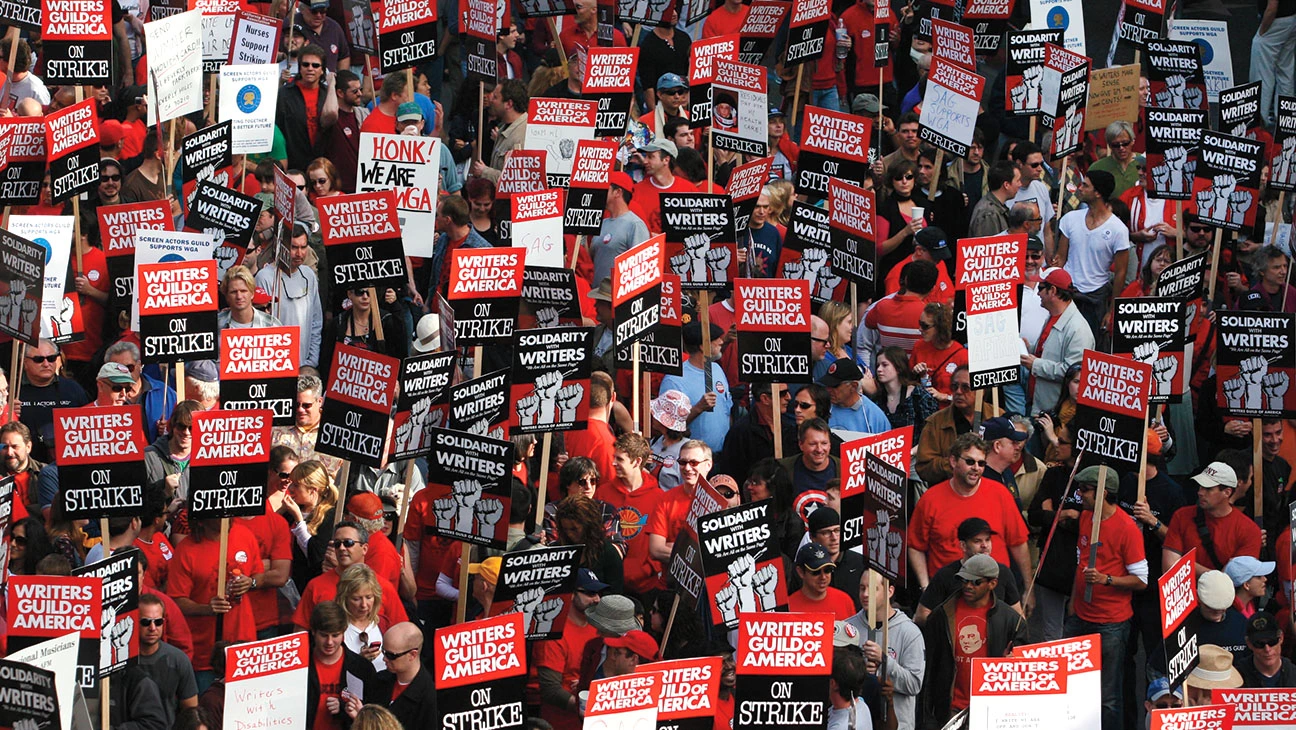
              As scribes barricade themselves with placards demanding fair compensation and creative autonomy, the echoes of the past resound, stirring up unresolved tensions between the Writers Guild of America labor union and the Alliance of Motion Picture and Television Producers.

              This article looks back at the infamous writers strike 2007 and explores how it’s relevant to the writing community and media consumers today.

              The Writers Strike: The 2007 Revolution That Changed Hollywood History

              The 2007 Writers Guild of America Strike

              On November 5 2007, screenwriters from the Writers Guild of America (WGA), a collective union of American writers, took to the streets of Los Angeles to protest against television corporations, including: 

              • CBS
              • MGM
              • Lionsgate
              • The Weinstein Company
              • The Walt Disney Company
              • NBC Universal
              • Starz
              • Sony Pictures 
              • Paramount Pictures
              • Warner Bros 
              • News Corporation

              But why? 

              For decades before the strike, WGA had been protesting against a recurring issue with the distribution of money in the business. 

              In 1985, writers went on strike over the home video market, where distribution companies argued that the delivery and manufacturing of these home videos were expensive, meaning writers were left short changed for their work. 

              The pattern continued as new forms of media were released, which led to the 100-day Hollywood Writers Strike 2007. 

              The strike sought to increase the funding for writers, which was proven to be significantly lower than the profits of these large studios. Screenwriters felt as if their work was seen as inferior in the grand scheme of production, though the effects on TV shows and movies during this protest was yet to prove otherwise! 

              What Happened During the Two Month Strike? 

              Writers across America conducted a powerful walkout, which proved to shake the entertainment industry more than anyone expected. With over 60 television shows shutting down and millions of dollars lost for the networks, the local economy certainly took a hit. 

              During the strike, consumers and television lovers everywhere had to go without their favorite shows, while networks aired back-to-back reruns. 

              Writers continued protesting for a larger share of the profits being made from distribution networks. Some notable faces amongst the protest crowds included, Ben Stiller, Lisa Kudrow, Matthew Perry, plus many actors from the cast of Grey’s Anatomy and CSI. 

              “The [writers’] deal is ridiculously unfair and anything that anybody can do to call attention to that is good at this stage. It’s miraculously unfair what’s going on, so it’s a no-brainer, you just come out and support it.”

              Matthew Perry in 2007

              As the strike persisted, popular late night shows like Saturday Night Live were paused for months. As a result, unscripted reality shows emerged because producers weren’t able to get their hands on scripts by professional writers. 

              It’s evident how significant of a role writers played in the overall production, engagement, and distribution of the shows and films that were driving the Los Angeles entertainment economy. Without them, the industry lost millions, hugely-sponsored award ceremonies went downhill, blockbusters were delayed, and new shows didn’t make it past their first season. 

              How was the Writers Strike 2007 Resolved?

              While it felt like the entertainment industry was a fire that couldn’t be put out at this point, on February 12 2008, the members of the WGA eventually voted by a margin of more than 90% go back to work. 

              What did they achieve?

              The WGA earned a larger piece of the digital revenues from the productions they scripted. 

              What were the Long-Term Effects of the Writers Strike 2007? 

              Although this proves how needed and how successful the strike turned out in terms of giving writers their residual payment terms, they had to return to industries that were inevitably changed. 

              Reality TV Shows Gained Momentum

              By the time writers had made their way back to work, reality shows like Deal or No Deal were having their moment and topping the ratings each week.

              This meant that scripted TV shows were drying out because of the lack of new episodes throughout the duration of the strike. 

              Death of the Newbie Writers

              While you may think that the lack of scriptwriters would create opportunities to younger, less-experienced writers looking to get their foot in the door, it was actually the opposite that took place. 

              Writers who had moved up the ranks in the entertainment sector were being brought back down a level to fill the shoes of the writers on strike. Although they had to take a pay cut, producers were more keen to keep “seasoned” writers in the business, meaning the pathway for newbies was cut off. 

              There were a few writers who jumped at the chance to squeeze their way in through the gaps, including the likes of Nick Bernadone who worked alongside Tina Fey and on numerous hit Netflix shows.

              The Birth of Streaming Services

              Do you know what else happened in 2007? The Netflix uproar. 

              One of the effects of the strike was it being somewhat of a base for the massive growth we were about to see in streaming services, such as Hulu and Netflix. 

              It became clear to the industry that a power shift was about to take place when the WGA refused to sign a contract that didn’t include “new media residuals.” This meant that writers wanted to be paid from the shows they scripted that ended up on platforms like Netflix, even though they weren’t originally made for Netflix. 

              How I Met Your Mother is a great example of this. The scriptwriters of this popular show were compensated for the work they did even once it started streaming on Netflix, which skyrocketed its views. 

              While it may have initially seemed like reality TV was about to blow every other show out of the water, the growth of streaming services turned this all around, giving writers their moment back.

              Are We Still Seeing These Issues in the Industry?

              Although the 100 day strike has passed us by over 15 years ago, are these issues still a dark cloud over Hollywood? 

              At the end of 2022, reports of a writers strike occurring began to loom across the Internet as members of the WGA spoke about their dissatisfaction with current contracts. 

              While we move away from the original forms of distribution from 2007, like DVD residuals, writers are now reflecting on their “next to nothing” pay rates for shows on streaming services. 

              The rules are a little different for streaming platforms than traditional cable. Viewers are turning to mini-series with hour-long episodes, which require less writers from the beginning and leaving little room for new writers to make their mark. 

              So, the question is, are we back in the same boat as we were in 2007? 

              In terms of reality TV shows and blockbuster films, not so much. In regards to the influx of viral series on Netflix that seem to be marginalizing (or completely cutting out) dozens of writers, most likely. 

              Overall, there needs to be a significant change in pre-episode compensation for writers to shorten the gap between working and earning and to allow them to pay their bills and make a sustainable living from what they love most—being a writer! 

              Want more writing advice?

              Subscribe to get our latest content by email.

                We won’t send you spam. Unsubscribe at any time.

              • Affect vs Effect: How to Choose the Right Word for Your Writing

                Affect vs Effect: How to Choose the Right Word for Your Writing

                Ever sat down to write a piece of text and found yourself stuck on whether to use effect or affect? You’re not the only one!

                In fact, learning the difference between affect vs effect is one of the most common questions people have, which is understandable seeing as they can both be verbs and nouns, and their meanings can overlap—triple threat! 

                Here’s how to remember affect vs effect 

                • Affect is a verb (an action word)
                • Effect is a noun (an object word)

                How to use affect:

                Affect refers to a change being produced or an act taking place.

                For example, “the hot weather affected the plants.” This implies that there has been a change in the plants because of the heat. 

                Another way you can use the verb affect is if you’re referring to the idea of moving the feelings of something or someone.

                For example, “The performance deeply affected her,” meaning feelings and thoughts had been altered. 

                When you want to imply some sort of chance or to describe an action taking place, you’ll want to use the word affect.

                How to use effect:

                You’ll most likely see effect used as a noun to talk about the consequence or result of something.

                An example of this would be, “Her low mood was an effect of her failed driving test.” 

                Used in this way, effect tells us the end result of something, whereas affect is talking about an action and an influence that something had on something else. 

                Affect vs Effect in a Sentence 

                Daisy pushes Stanley into the puddle. 

                Daisy has affected where Stanley was standing (because there has been a change).

                Stanley being wet is the effect of Daisy pushing him (falling into the puddle was the result of being pushed). 

                Examples of When to Use Affect vs Effect

                • What effect did the loss have on the team?
                • Did her words have any effect on you?
                • The second cup of coffee had no effect on her
                • A surprising effect of winning the award was that her sister was jealous 
                • How will remote working affect our working hours?
                • If I take this class it will negatively affect my grade in my other classes
                • The weather today will affect my journey into work
                • You know smoking cigarettes will affect your skin as you get older, right? 

                Using Effect and Affect in Sentences 

                • Scary movies can affect my sleep | Scary movies don’t have an effect on me
                • My mom’s opinion has affected my decision to go to college | My mom’s opinion has had an effect on whether I should pursue college
                • The car incident has affected my ability to drive alone | The car incident has had an effect on my ability to drive alone 

                Here are additional examples of how to use affect and effect in your writing.

                Common Mistakes People Make With the Affect vs Effect

                You’ll see both affect and effect show up in more formal settings, especially in politics and on the news. It can get tricky to know which word to use when writing on your own. Let’s clear up some common misconceptions.

                Is it Effect Change or Affect Change?

                The right phrase here is “effect change,” because you’re saying you want to cause change.

                You want there to be change as a result and remember, effect = result. 

                For example, “As your new leader, I promise to effect change in the system,” which translates to “I want to bring about change.”

                Is it Into Affect or Into Effect? 

                The correct phrase in this instance is “into effect,” as we’re using the term as a noun to refer to something officially beginning.

                For example, “These new rules will go into effect on Monday morning.” 

                Is it Take Affect or Take Effect?

                This is another phrase that often people get confused about. The right wording is “take effect,” as we’re referring to something beginning to apply. 

                For example, “The new medication will begin to take effect within three hours.”

                Essentially, the consequences of the medication will show soon.

                In Summary: Effect vs Affect

                Here’s an affect vs effect trick I like to use to remember which word I want to use:

                • Effect = results
                • Affect = change

                When we use the word affect, we’re referring to something producing a change or influencing something.

                For example, the weather will affect the traffic.

                When we use the word effect, we’re talking about the result of the change.

                For example, the effects of the weather have made the traffic heavier.

                This is certainly a case of practice makes perfect so be sure to let us know how you get on with perfecting the difference. If you need further help with this topic, check out more info on affect vs. effect here.

                We hope this guide was helpful!

                101 Creative Writing Prompts
                That Will Get You Excited to Write

                Grab it for free 👇

                  We’ll also send you our newsletter, which offers advice on freelancing and publishing.
                  You can unsubscribe at any time.