Blog

  • Quick Social Media Tips for Writers: Build a Writing Brand That Rocks (Part 2)

    Quick Social Media Tips for Writers: Build a Writing Brand That Rocks (Part 2)

    As CEO of your personal brand — yep, you’re not just a writer anymore — you’re in charge of finding new assignments, writing, editing your work, promoting your pieces and seeking out opportunities to continually develop a strong personal brand that sets you up for future success.

    If you’re feeling overwhelmed by all the possibilities, we get it. Social media tools can feel daunting, but there are quick things you can do every day to slowly grow a brand that rocks.

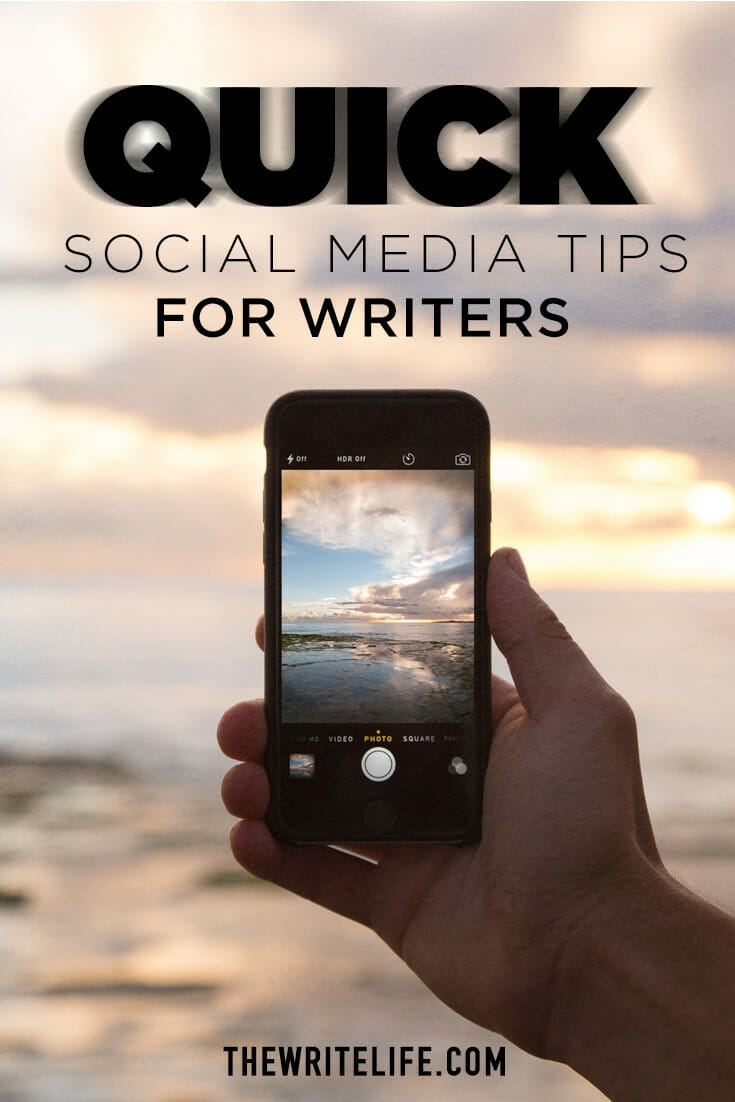
    Hop over to Part One for tips on using Facebook and Twitter to develop your platform. Then, meet us back here for Part Two on LinkedIn, Instagram, Pinterest and Snapchat.
    socialmediatipsforwriters

    LinkedIn

    If you thought LinkedIn was just another career site to repurpose your resume, think again. LinkedIn has emerged as a publishing powerhouse over the past few years. Time to dust off your profile!

    Publish a post on LinkedIn

    It’s a game-changer: LinkedIn now allows users to publish long-form content on the site.

    If you don’t have your own website or blog, use LinkedIn to write content and share your expertise. If you do have your own blog, republish some of your posts on LinkedIn, sharing a link back to the original post on your site.

    LinkedIn shares your post on your profile as well as on the main news feed, allowing your words to be viewed by those who follow you and the greater LinkedIn community.

    Update your profile with documents, images and presentations

    Gone are the days of copy and pasting resume bullets into LinkedIn and calling it a day. LinkedIn is fancy now!

    Now you can add all kinds of media to different positions listed, including presentations, videos, documents and photos. Set yourself apart by making your LinkedIn profile an interesting and visual place to get to know you and your work.

    One of the best ways to optimize your LinkedIn profile is to check out this Freelance Writers Den program. They have numerous case studies on how freelance writers are using LinkedIn to get INBOUND leads and land clients.

    LINKEDIN-MARKETING-FOR-FREELANCE-WRITERS

    Instagram

    Who doesn’t love scrolling through Instagram? It’s meant to be a beautiful place for creativity, inspiration and eye candy. And it can also help you build a strong writing brand and community.

    You get one link

    Instagram is notorious for only giving users one link in their profile and not allowing clickable URLs within a post. The truth of the matter is that Instagram doesn’t really want to be a place that sends traffic to your website; instead, it wants to be the place you build your brand and community through compelling images.

    However, you do get one link, so use it wisely. Your link appears underneath your bio on your main profile. Most people include their website’s homepage in this space, but don’t be afraid to change the link every so often when you have something specific (an article, blog post, etc.) you want to give a little extra love.

    To draw attention to that link, post a relevant image, write a clever caption and then include somewhere in the post the phrase “Link in profile” so folks know to click over to your Instagram homepage if they want more details.

    Use Insta-stories

    The best way to get your content discovered on Instagram is by using their stories and reels features. Just like Snapchat (which we’ll cover in a minute), Instagram allows you to create short-form stories called Insta-stories.

    What are Insta-stories?

    They are typically made in 15-second increments of video but can be strung together for as long as you want to record. They can also be photos, music, or text, depending on what you want to post. The trick is that they expire in 24 hours, creating a border-line addictive need for your audience to know what you’re up to.

    What are Reels?

    Reels are similar to Insta-stories in that they are short-form content, but they are slightly different in that they can last for longer than 24 hours on the platform. They are currently limited to 60 seconds of video, but you can overlay the video with plenty of other features.

    If you’re asking yourself, “What would I ever use an Insta-story or Reel to do?” let me challenge you to get creative!

    Writers and bestselling authors are using Insta-stories and Reels to show behind the scenes of their days and lifestyles, like Donald Miller. They are using it for podcast and speaking clips and promotion of upcoming events, like Jon Acuff. And they are even using it for audiobook previews, like Rob Bell.

    There are plenty of other ways to utilize these powerful aspects of the Instagram platform, including promotional giveaways, announcements, and more. The possibilities are endless if you think creatively.

    Use relevant hashtags

    Another great way to get your content discovered on Instagram is by using relevant hashtags.

    Hashtags are super useful, but can also quickly muck up a post if you use too many or don’t place them properly. If you only plan to use a few hashtags and they make sense within the text of your caption, sprinkle them there.

    If there are other hashtags you’d like to use that don’t fit in the post itself, add them in the comments section. This way, when others comment on your post, the hashtags comment is hidden, but they still lead others to find your post.

    More is not always better! Don’t pepper your post with dozens of hashtags, although Instagram does allow up to 30 hashtags on a given post. Consider using between five and 10 relevant hashtags on a given Instagram post.

    Some favorite and popular hashtags for writers, according to Iconosquare? Try #writing #amwriting #writingcommunity #instawriting and #writinglife.

    Pinterest

    Pinterest may be best known for tasty recipes and some serious closet inspiration, but it’s also a great place to display your portfolio — and find additional writing inspiration and resources.

    Create a living resume or portfolio

    Looking for another beautiful and creative way to showcase your work? Turn your writing portfolio into a Pinterest board.

    Pin articles and blog posts you’ve written, as well as any type of press you’ve received. Let this living resume Pinterest board be a place where you truly shine. (Here’s mine!)

    Build your board over time rather than pinning everything at once to give your followers a chance to see the content in their feed as you pin. As you’re pinning archived content, consider posting three to five pins a day; once you’re up to date, pin new articles and posts are they’re published.

    Find inspiration and be a resource to other writers

    You know all those awesome articles and resources you find and want to save for to read later? Before you know it, you’ve got 25 tabs open in your online browser.

    Nope? Just me?

    Pin those articles to a Pinterest board about writing, marketing, entrepreneurship or whatever it is you’re hoping to build your brand and expertise in. This type of board not only keeps you organized, but also positions you as a resource for others who may be interested in similar topics.

    While you’re at it, find other inspirational writing boards to follow to build relationships with other writers and find new content to pin.

    Make your writing pinnable

    Pinterest can serve as a great source of referral traffic to your website if you put processes in place to make your writing Pinterest-friendly.

    You may not have much control over the images selected to go with your post on external websites, but for your own blog or site, use a free tool like Canva or PicMonkey to create fun graphics. These visual cues will entice viewers to repin your pin and click out of Pinterest to read your content.

    Snapchat

    If you’ve been ignoring Snapchat because you think it’s just for teens, grab your phone, download the app and prepare to be amazed. With 100 million daily users, Snapchat is nothing to sneeze at.

    Create (or simply watch) a Snapchat story

    Flex your creativity in a new way by creating a Snapchat story. Perhaps one of the app’s best features, Snapchat stories allow users to create a narrative through photo and video.

    Within a story, a Snapchatter can write text, draw pictures, insert emojis, and add filters to mark their location, time, weather, speed and more. Speed videos up, slow ‘em down, put them in reverse; Snapchat allows you to share stories in a unique, fun and unfiltered way.

    Consider documenting a day in your writing life using Snapchat. Don’t be afraid to flip the camera and turn it on yourself; Snapchat audiences love to see the person behind the phone. Talk to the camera about your latest writing project or what inspires you to write.

    Remember: Snap stories disappear after 24 hours, so you have a limited window of time to share your message.

    If you’re not ready to create your own story yet, watch stories of those you follow, or enjoy one from any of the “Live” stories featured that day.

    Conclusion

    If you’re neglecting social media as a writer, you’re doing yourself a disservice. You’ve invested so much time in creating great written content, don’t click publish and hope people magically find it. With social media, you can now get your written content in front of more eyeballs than ever!

    You don’t have to use every social platform available. If you try, you’ll burn yourself out. But you can choose 1 or 2 that appeal to your audience, where your readers are already hanging out, and go for it!

    What do you think? What is your favorite social media site? If you have any social media tips for writers, leave a comment and let us know!

    This is an updated version of a story that was previously published in 2016. We update our posts as often as possible to ensure they’re useful for our readers.


  • Quick Social Media Tips for Writers: Build a Writing Brand That Rocks (Part 1)

    Quick Social Media Tips for Writers: Build a Writing Brand That Rocks (Part 1)

    It’s no secret that we’re expected to do much more these days than simply write.

    Congratulations! You are now the CEO of your personal brand.

    In addition to writing, it’s also your job to create a strong online platform to share your work, reach new readers and discover opportunities.

    One of the most effective ways to build your personal brand is through social media. And these quick social media tips will help you confidently navigate those murky waters and build a writing brand that rocks.

    Just like the writing world is always changing, the social media world moves at a ridiculously fast pace. It’s easy to get overwhelmed or even lost by all of the possibilities.

    If the thought of adding another social media site to your already long list of things to do as a writer leaves you feeling frazzled, take a deep breath and settle in.

    We’ve rounded up some quick tips and ideas for using Facebook and Twitter to develop your platform. Stay tuned for Part Two detailing how to build your personal brand using LinkedIn, Instagram, Pinterest and Snapchat!

    socialmediatipsforwriters

    Facebook

    While Facebook may be the place Aunt Sally comments on all of your photos and status updates (Thanks, Aunt Sally), it’s also emerged as a bustling social network to build community and meet fellow writers.

    Join and participate in relevant Facebook groups for writers

    One of the best ways to use Facebook as a writer is by joining relevant groups and communities. Participating in Facebook groups is a great way to meet and network with fellow writers, share resources, gather inspiration and even find new assignments and writing projects.

    I highly recommend joining the Freelance to Freedom Project community and of course, our Write Life community.

    Looking for more Facebook groups for writers? We’ve rounded up 16 of them for you!

    Use Facebook to help find inspiration and sources

    Your Facebook experience can be as pleasant and interesting as you choose to make it. By unfollowing people who no longer interest you and instead following publications and brands you love, your Facebook newsfeed can become a hotbed for writing inspiration.

    Similarly, your Facebook network can help out when you’re in a bind. On deadline and need a last-minute source to interview or a quick quote for a piece? Facebook to the rescue!

    Consider posting your sourcing needs in one of the active Facebook groups you’re part of and be amazed at the speed in which you’ll discover potential sources or interviewees.

    Let your personal network in on what you’re doing

    We tend to associate Facebook with being the social media site we use to share personal photos and stories and to keep in touch with family and friends. However, you never know when your personal life and professional life may have some crossover.

    When I quit my job to take my business full time, I began sharing my “Becoming CEO” blog posts on my personal Facebook page. I left the privacy setting for those specific posts open to the public and was amazed at the reach of the posts and the number of people who weren’t my friends who began “following” my personal page.

    Several interesting business opportunities have popped up after choosing to share my professional life with my personal network.

    Twitter

    This fast-paced social media site is the place to share your work, commiserate with fellow writers in real time and find inspiration for future writing projects.

    Schedule your tweets ahead of time

    An easy way to stay active on Twitter without spending all day online is to pre-schedule your tweets using a social media tool like Hootsuite, Buffer or Edgar.

    Every time you craft a new tweet promoting a blog post or article you’ve written, create two or three different versions of that tweet and save them to a spreadsheet or Word document. Before you know it, you’ll have a master list of all the tweets you’ve written to promote your work.

    One day each week, sit down with that document and schedule out at least three tweets a day for the next week. Be sure to share both your new content, as well as re-sharing older evergreen content; consider the fact that Twitter moves at a fast clip and just because you tweeted a post three months ago doesn’t mean your following necessarily saw it then.

    Make friends and share the love using a “Notice Me” list

    Promoting your own work on Twitter is important, but so is being an active part of the Twitter community. In between those tweets sharing your latest blog post or article, be sure to interact with those you follow and share their work, as well.

    My favorite way to find great content to share is by monitoring my “Notice Me” list. It’s a curated list of bloggers, writers and entrepreneurs I admire who create great content and who I’d like to make part of my network.

    I add these folks to a private Twitter list and check that feed regularly to find interesting content to share and people to chat with on Twitter. Twitter moves quickly and can be daunting, so curating a list of the people you actually want to hear from can help you save time and be more effective.

    Share your writing progress with your community on a regular basis

    If you’re not interested in live broadcasting your writing sessions (Let’s be honest: No one needs to see my signature PJs-and-messy-hair writing look), consider Periscoping weekly or monthly to update your community on your latest projects and progress.

    The good news? Periscope is connected to Twitter, so when you start a broadcast, it sends a tweet to your followers that you’re live, giving your video more reach.

    Periscope broadcasts don’t need to be super long to be effective; jumping on for five or 10 minutes is a great way to give your network a visual peek behind the scenes of you and your latest projects.

    Stay tuned for Part Two on LinkedIn, Instagram, Pinterest and Snapchat!

    Chime in! What’s your favorite social media site? Do you have any social media tips for writers looking to develop a personal brand online?

    This is an updated version of a story that was previously published in 2016. We update our posts as often as possible to ensure they’re useful for our readers.



  • 5 Marketing Strategies for Writers Who Hate Promoting Their Own Work

    5 Marketing Strategies for Writers Who Hate Promoting Their Own Work

    In a long-ago golden age, all a writer had to do was write; he churned out pages, presented them to an editor, and let others worry about promotion and advertising.

    Those days are long gone.

    Today, writers must be their own most ardent advocate, marketer and promoter. Self-promotion is as integral to writing success as any tool in the writing toolbox. In this post, we’ll look at five marketing strategies that will help you gain more exposure as a writer.

    We all know the importance of self-promotion, yet many of us are horrible at it. We’re conscientious in every other aspect of our craft. We outline, we carve out time to write, we edit and do everything else we can for our work to stand out. Except self-promote.

    For some fortunate writers, self-promotion is as natural as breathing. For others (especially introverts like me) it’s a daunting task, but one that must be done, and done well.

    The challenges of self-promotion

    Nature

    In her book Quiet: The Power of Introverts in a World That Can’t Stop Talking, Susan Cain writes,

    To advance our careers, we’re expected to promote ourselves unabashedly. The authors whose books get published – once accepted as a reclusive breed – are now vetted by publicists to make sure they’re talk-show ready.”

    If you’re a natural introvert, it’s probably not in your nature to draw attention to yourself. Sure, you’re able to take the spotlight when you absolutely have to, and you’re probably good at it when you do, but you’re much more comfortable working behind the scenes.

    Nurture

    Some of us are raised not to stand out, so we struggle to post that Facebook update about the great review we just got or tweet about our book being on sale.

    I’m Jamaican, and contrary to what our reputation might be, Jamaicans are actually a fairly conservative people. Usain Bolt notwithstanding, we’re not raised to toot our own horns — it’s one of the byproducts of the Quaker influence on the island. Those of us who’ve grown up trying to fit a reserved ideal often have a hard time sharing and promoting our work.

    Plain old fear of rejection

    No one wants to put themselves out there and hear only crickets. We all, in some way, want the approval of others, so when we share our work and get a negative response — or worse, no response — it’s painful. So, we think, why do it all?

    Worry about competition

    Indie publishing has opened the door for many writers, and the competition to make yourself heard is intense. It’s hard and often discouraging work to differentiate yourself from all the other voices clamoring for attention. When you try, sometimes it leads to…

    Burnout

    Marketing and self-promotion is hard work even if you enjoy doing it. For those of us who don’t, just the thought of it can raise our stress levels, so we put it off. Then, when the time we’ve grudgingly carved out comes around, the task is so utterly unenjoyable that we burn out quickly and do the bare minimum.

    So how can we make self-promotion easier?

    1. Create realistic self-promotion goals

    If you’re a serious writer, you’re no stranger to creating goals. From finishing a chapter to hitting a specific word count, setting realistic goals is second nature. So what makes our marketing goals different? I’ve spoken with writers just beginning their promotion efforts whose goals included:

    • Add 100 Twitter followers in a week
    • Increase sales 4 percent in a month
    • Build and promote a Facebook fan page and get 50 likes per day

    Strictly speaking, none of these goals are impossible, but for first steps, they’re pretty lofty. Instead, set more attainable goals, such as:

    • Tweet your book/article/reviews twice per day
    • Submit your book to three review sites per week

    Once you achieve these goals, set the bar higher for the next round. Achieving modest goals gives us the confidence to attempt harder ones while avoiding the burnout we feel when our goals are overwhelming. (Click to tweet this idea.)

    2. Keep what’s working, drop what’s not

    Most social media platforms allow you to measure your engagement with your audience. Marketing and social media expert Gary Vaynerchuk writes in his book Jab, Jab, Jab, Right Hook,

    Ignoring the deep analytics available for your Facebook fan page (and other platforms soon) is the equivalent of stepping into the ring without even having watched a video of your opponent during a fight.”

    Even if you’re just beginning your promotion efforts, getting familiar with those tools will give you a huge leg up, allowing you to fine-tune your efforts. Is Instagram not working for you? Drop it. Is Twitter driving sales? Tweet more often.

    Whatever the case, concentrating on the platforms that work for you is not only smart, but will keep you motivated as you reach more and more readers.

    3. Don’t reinvent the wheel

    Chances are your social media feeds are full of people giving great advice about self-promotion, so you don’t have to come up with a plan from scratch. Research how the experts are doing it, then use their tried and true techniques to jump-start your own marketing efforts.

    4. Use available tools to your advantage

    It’s strange, but sending a tweet or posting a Facebook update about my work in real time is intimidating. It’s much simpler to write my promotional tweets and set them to go out in advance.

    To do this, I use Tweetdeck and Buffer. In addition to being solutions for my real-time phobia, they save time, as I can set my tweets and updates and forget them.

    5. Shift your focus

    In my 9-to-5 career, I’m a Director of a department for a NYC consulting firm, and I constantly present on behalf of my clients. I’ve spoken before senators, commissioners, council members and community groups (often hostile ones), and I’m never flustered. Why?

    Because I treat what I do like the business that it is. My career, as important as it is, isn’t held as close to my heart as my writing.

    Shifting your focus to seeing your books as commodities to be sold as opposed to the work you hold so near and dear to your heart may help to remove the personal aspect from the equation, thus making promotion easier.

    How do you feel about self-promotion? What marketing strategies work for you? Tell us below in the comments.

    Need to learn how to do social media better as a writer and author? Check out this free training that we’re offering with Self-Publishing School.

    This post contains affiliate links. That means if you purchase through our links, you’re supporting The Write Life and we thank you for that!

    This is an updated version of a story that was previously published. We update our posts as often as possible to ensure they’re useful for our readers.
  • Freelance Writers Den Review. Is it Worth It? Our Honest Take

    Freelance Writers Den Review. Is it Worth It? Our Honest Take

    Editor’s note: The Freelance Writers Den only opens for enrollment a few times each year. If you want to be notified when it opens, your best bet is to join the waiting list. Enjoy this Freelance Writers Den Review!

    Freelance Writers Den Review

    I’ll be honest: a huge part of the reason I became a writer was to avoid networking.

    I’m an introvert and also one of those kids who, when tasked with group projects, made everyone else in the group give me their stuff so I could do it all myself. “Teamwork” and “collaboration” don’t have prominent places in my vocabulary.

    But as I quickly learned (and as you know if you’ve spent more than two seconds trying to freelance), this is not a business where you can go it alone. Finding a writing community, or at least some reliable industry resources you can turn to, is a critical step to creating the kind of freelance career you’re dreaming of. And fortunately, there’s an option that doesn’t require leaving the house—or even putting on pants.

    Here’s a breakdown of what I’ll cover in this review:

    What is the Freelance Writers Den?

    Taking place entirely online, the Freelance Writers Den is the perfect place to find a resource-packed writing community, especially for socio-phobes like me.

    But since its 1,100+ members come from all over the world, it’s also helpful for bona fide extroverts, even if they do already have access to a real-life writing circle. Even the richest local writing community can’t compete with global!

    The Den was founded in 2011 by Carol Tice, the “Den Mother” and mind behind the Make a Living Writing blog. She’s been a successful freelancer for more than 15 years and today earns six figures doing it. She wanted to help other freelancers find real financial success as efficiently as possible—and also to stop the influx of one-off how on earth do I do this? emails she had in her inbox.

    Membership to the Freelance Writers Den comes with a host of useful tools, content, and learning opportunities, which we’ll dive into below. It costs $40 per month with no obligation—which isn’t crazy expensive, but isn’t nothing, either.

    So what do you get for your price of entry?

    Freelance Writers Den Review: "The forums are an amazing way for a work-from-home writer to interface with other real, live people" Writer Jamie Cattanach

    What features & benefits do you get as a Writers Den member?

    For most of us, freelancing isn’t exactly a get-rich-quick scheme—so when we pony up for a writing resource, we want to know we’re getting our money’s worth.

    Here’s what the $40-per-month Freelance Writers Den Membership gets you.

    Online community forums

    Ever sit down to write a story (or pen a pitch, or start a blog, or—you get it) and wish you had a friendly fellow freelancer whose shoulder you could tap to ask for advice, or even just commiserate?

    The Freelance Writers Den forums are the next-best thing: an active, affable group of writers convening to swap tips, ask and answer questions, and share both challenges and success stories.

    Unlike even the most active real-life writers’ group, the Den’s forums are open for your musings 24/7, and they’re organized into helpful and relevant categories. Moderators and fellow members chime in with answers and help within hours. The collective wisdom of the group is tremendous.

    Whether you’re looking to amp up your marketing skills or ask a specific writing question—or maybe you’re just looking to meet more writers in your position. Either way, there’s a board for it, and a writer (or ten) on the other end waiting to connect.

    Live and recorded resources

    The Freelance Writers Den is first and foremost a community, and the ability to connect with other freelancers working to meet their goals is invaluable on a fundamental level.

    But there’s also a whole lot of expertise to be mined from that community, and it’s available in the form of more than 300 hours of evergreen resources—as well as an actively-updated calendar of live events.

    • Bootcamps are essentially four-week-long ecourses, and your Writers Den membership gives you instant access to over two dozen of them. They’re designed to help you get to the next step in your writing career no matter where you are on your journey, from finding your first-ever paid gig to breaking into business writing or building a better writer website and LinkedIn page. Each bootcamp comes complete with videos and engaging homework assignments, and the ones offered live on a monthly basis feature real-time Q-and-A calls to help you make the most of the effort you’re putting into the course. They’re also augmented by discussions in the forums so you can connect with other writers diving into the same topics, and get feedback from the experts dishing the details. (In other words, it’s nothing like being yelled at by a Drill Instructor.)
    • Webinars and Podcasts are also offered by industry influencers on a regular basis, including a helpful “Ask the Editor” series which gives you an insider view of what, exactly, editors are looking for. You’ll also learn to overcome fear, increase productivity, and figure out the business end…not to mention, of course, honing the craft itself.
    • The Resource Library is where all this content lives once their livestream has passed, and it’s packed with over 300 hours of content. So even if you can’t make the scheduled events, you’ve still got plenty of helpful goodies to wade through.

    Direct Referrals for Jobs / Gigs

    Finding gigs is one of the hardest parts of freelancing, hands down. Finding good gigs is even harder.

    That fact is why I really appreciate the Den’s built-in referral system. Writers are helping other writers find gigs with an attitude of abundance. And you won’t find anything that pays less than $75 per post.

    There’s no shortage of opportunities to scope out. You’ll find both remote and on-site listings for copywriters, editors, content marketers and more, and along with regular old freelance gigs, there are also part-time, contract, and retainer positions.

    That’s really just the start of what’s available; as the helpful Orientation Guide puts it, the Den has “a lot of nooks and crannies.” Fortunately, you can easily keep tabs on it all with once-weekly newsletters that come out every Monday, getting you ready to tackle your week with strength and success.

    What do I like about the Freelance Writers Den?

    I’ve been making a living as a freelancer for a while now, and only just learned about this resource. Which parts made me say, “Man, I wish I’d known about this earlier?”

    Well, I’ll admit it: I’m not really the ecourse type. I’m midway through my third full year of freelancing, and I’ve yet to find one I’m willing to drop money on. (Of course, I was lucky enough to learn a lot of my freelancing skills through friendships with other writers, giving me a jump-start that not everyone gets. There’s that networking thing again!)

    But I know plenty of writers adore ecourses—and I have to say, a Den membership seems like a great way to access them. It offers both an active, rotating calendar of live events as well as scores of pre-recorded bootcamps, podcasts, and webinars, and you get into all of it for just $40 per month. That’s way less than the fees I usually see advertised on private ecourses.

    What I do love about the Freelance Writers Den: the job board and the forums.

    • The gigs posted on the job board are authentic, high-quality, and easy to filter, and I saw a few that hadn’t already crossed my radar via the grapevine or my newsletters. It’s nice to know they’ve been pre-screened for non-crappiness, so I don’t have to be quite as critical as I usually am while I’m clicking through. No freelancer has time to work for peanuts, and we have even less time to scrounge around on the internet trying to figure out where the well-paid jobs are. So for me, the Den’s job board is easily worth the price of entry all on its own.
    • The forums are an amazing way for a work-from-home writer to interface with other real, live people—who actually understand the unique challenges we face as freelancers and can help us find the resources, opportunities, and advice we need. I especially love the board dedicated to feedback and critiques, which allows you to get some gentle constructive criticism from other writers before you ship off your piece to an editor or potential client. Hey, better to hear it from a peer than a paying customer—or to have it derail your pitch!

    What do I not-so-like about the Freelance Writers Den?

    Don’t get me wrong, there’s a lot to love about this community. The recorded content could keep you busy for months, and with a vibrant group of writers ready to chat in real time, you’ve got other minds to bounce those new tips and tricks off of.

    But no platform is perfect—and if I had to pick a part of the Writers Den that could use improvement, I’d say the user interface could be a little bit more intuitive. Those “nooks and crannies” Tice mentions are well-described; it’s easy to get lost back here! And while the main parts of the site are helpfully listed as links in the site header, I constantly feel like I might be missing something as I click around.

    Rumor has it their team plans to address this in coming months.

    Ready to sign up for the Freelance Writers Den?

    So what’s the catch? Well, the Freelance Writers Den only opens its digital doors to the public twice a year.

    If you want to be notified the next time it’s open for enrollment,  your best bet is to join the waiting list.

    This is an updated version of a story that was previously published. We update our posts as often as possible to ensure they’re useful for our readers.
    This post contains affiliate links. That means if you purchase through our links, you’re supporting The Write Life — and we thank you for that!

    Photo via apichon_tee/ Shutterstock 

  • Writing Romance: Avoid These 5 Mistakes When Crafting Relationships

    Writing Romance: Avoid These 5 Mistakes When Crafting Relationships

    I’ll be the first to admit that there’s a serious problem with romantic relationships in literature nowadays.

    And worse, this issue seems to be overlooked by the large majority of writers — until it’s too late, that is.

    The problem: The unrealistic and unhealthy portrayal of romantic relationships.

    There. I said it. And now people can take notice because yes, there is a serious lack of realism when it comes to the romantic relationships in books.

    Authors are writing relationships that are meant to be exciting and intense, but their execution of those couples can be flawed in sometimes very harmful, although unintentional ways.

    There’s nothing wrong with writing romance. In fact, adding a romantic relationship to your book can help you write a good story. The dynamic of love can:

    • Up the stakes
    • Make readers more emotionally invested in the characters
    • Create contrast in emotions, adding to the coveted “roller coaster” of emotions
    • Give your readers another reason to root for your main character

    [sps_reusable_block post_id=43047]

    Pitfalls to watch out for when writing romance

    All of these powerful elements can make your book a lot better, but only if you can create a relationship that isn’t problematic for the readers.

    Which means you’ll want to avoid these mistakes many writers might not even realize they’re making when it comes to the romantic relationships in their stories.

    Here are a few traps to avoid when writing romance.

    Writing Romance.2

    1. Glamorizing abuse

    This might be the biggest, most overlooked issue in books. Way too many authors are writing abusive relationships and passing them off as romantic, particularly in the young adult genre, though this can be seen in all types of books.

    If you’re not sure what this looks like, it’s when writers portray abuse as love.

    They write about a person being overly jealous and verbally abusive to their partner and have the main character justify it by narrating that the other person “just can’t live with the thought of losing” them. So the main character is written as seeing this abuse as true love.

    This romanticization of abuse is simply harmful to anyone reading it. Young people might turn to books when it comes to learning about romance. If they don’t have a healthy relationship to learn from in real life, they might think the relationships in books is how it’s supposed to be.

    Therefore, they accept abuse and pass it off as the person just “caring about them too much” because that’s what they’ve seen in their favorite books.

    In order to avoid these types of mistakes, make sure your relationships are written consensually. Think about how you’d feel and act given the situation you’re putting your characters in.

    A general rule is, if you’d be appalled by someone being treated that way in real life, it’s not right.

    2. Instant romances

    Think about the romantic relationships you’ve been in or have seen around you. How often do you hear two people locking eyes across a restaurant and falling madly and immediately in love with one another?

    Not often. Because it’s not realistic, and that’s not the way love works.

    For those of you unfamiliar with this term, it’s just as it sounds. An instant romance is when two people meet and are in “love” and in a committed relationship instantly. Or within a very, very short amount of time, which is not remotely accurate.

    However, there are many novelists who write romances this way with the intention of creating an intense moment, but it sends a very harmful message to young readers and  takes away from the realism in your book.

    You can write intensity without making your characters be “in love” right off the bat.

    Relationships take time. You have to get to know one another first, build the chemistry and allow that spark to ignite before you can begin that romantic journey.

    Why should your book characters be any different?

    If you want the relationship to be realistic and keep your readers fully immersed in it, you have to give it the appropriate amount of time to grow and evolve.

    3. Making a single person passive in the relationship

    Relationships aren’t about one person seizing control of the other and making all the choices.

    Both people should be equally as active in the ongoings of the partnership. Because it’s just that — a partnership.

    This makes it a little concerning when writers make a single person who just goes with the flow and doesn’t really care about much. This person doesn’t initiate anything, make any choices for the sake of the relationship and when going gets tough, they sit back and let the other person do everything.

    This is both unrealistic and just plain boring. It doesn’t add anything interesting to the dynamic of the relationship and readers won’t root for them.

    Make sure you’re writing a romantic relationship between two people, not between a person and a passive robot.

    4. Writing relationships without commonalities

    If two people are in a relationship, they should have things in common. They don’t need to both like the same food, movies, books and activities, but they should have similarities at their core.

    If you have two characters who are moral opposites and don’t share the same values, your readers are going to question why they’re together in the first place.

    And if you can’t really answer why they’re together other than the fact that they need to be for plot reasons, you’ll have to do some adjusting. Characters can’t just be involved for the sake of conflict in a story.

    If those two people need to be in a relationship for your plot to work, then you need to put just as much effort into their dynamic as a couple as you do for the entire plot.

    Otherwise, the story plot won’t matter because readers won’t care about the relationship.

    5. Never allowing for vulnerability

    For your characters to bond on a deep enough level for love to be in the air, some vulnerability needs to happen. They need to open up to each other and express more emotions than lust and longing.

    How else will they be able to grow closer? Allowing for moments of vulnerability shows their weaknesses. Not only will this be important for crafting a stronger emotional connection between characters, it’ll also help your readers connect with them more.

    Here are a few ways you can create some vulnerability:

    • Have one character get injured
    • Create conflict involving something one is particularly sensitive about
    • Make a character break down from the stress of your plot
    • Have them share secrets

    Even strong, tough characters need moments of vulnerability and weakness. Not only does this make the relationship stronger, your readers will also like the character a lot more because they’ll be able to relate. Two birds, one stone.

    6. Creating inappropriate and harmful age differences

    Many writers get this wrong and it can be far more harmful than you realize. In middle school (or early high school, I can’t remember exactly), I read a series in which there was a 17-year-old student who wound up romantically (and sexually) involved with her 27-year-old superior, physical trainer, and guard. This may not seem like a big deal to a young teen reading the book—it may even seem exciting to them.

    But it’s very harmful and can send the wrong messages to impressionable readers.

    Not only does the age difference impact the dynamic, but it also effects the reader’s perception of a healthy or appropriate dynamic. We all know fiction is fiction, however, it’s important not to play a part in encouraging inappropriate dynamics within ages.

    Self-published author Hannah Lee Kidder suggests these tips for maintaining commonalities in relationships while keeping them healthy and appropriate:

    • Is the age difference legal (SUPER important – and no, an excuse about your world not having “legal ages” doesn’t cut it, sorry but not sorry)?
    • When they go out or spend time together, can only 1 of them drink alcohol (legally)?
    • Is one of their brains fully developed and the other isn’t (Example: both between 21 and 25 OR between 18 and 20 OR both over 25)?

    These rules also ring true for real-life relationships, which is why we want to bridge this gap (so readers are not learning inappropriate and unhealthy dynamics, much like the “glamorizing of abuse” tip above). Ultimately, this is your choice, but remember that (especially if you’re writing young adult) your audience can be impressionable and take queues from what they read. There are always options to create the plot and character development / dynamics you want without perpetuating harmful perceptions.

    Next Steps 

    Adding romantic relationships to your novel can up the stakes, add a layer of interest and give your audience all the lovey-dovey feels, but in order to have those effects take hold, you’ll need to write them correctly.

    And writing them correctly means avoiding these mistakes that can take your fictional relationship from realistically impactful to harmfully impactful.

    [sps_reusable_block post_id=43047]

    What have you found works for you when writing romance in fiction?

    This is an updated version of a story that was previously published. We update our posts as often as possible to ensure they’re useful for our readers.

  • How to Write a Picture Book: Bring Magical Stories to Life

    How to Write a Picture Book: Bring Magical Stories to Life

    If you want to write a picture book, this post will help!

    How do you win a marathon? You run really fast for 26.2 miles without stopping.

    Like winning a marathon, writing is easy to describe, but hard to execute.

    Writing a good book is a magical art that blends creating interesting characters, placing them in intriguing settings, and weaving an engaging plot with page-turning action and authentic dialogue. Easy, right? Not so much.

    And if writing well wasn’t difficult enough, writing picture books puts additional limits on the author. These children’s books are shorter than adult books, so there’s much less time for story arc or character development. The author is further constrained by the audience’s age; most kids won’t understand adult vocabulary, scenarios or themes.

    Think you’re ready to try your hand at this creative project?

    write-picture-book

    Here are a few tips for how to write a children’s book:

    What exactly is a children’s picture book?

    Picture books are typically, but not always, 32 pages. They are published in larger trim sizes (e.g. 8.5” x 11”) and can contain anywhere from zero to 1,000 words. Fiction picture book word counts under 500 are most common.

    Picture books are anomalous in that they can be written at a reading level higher than the age of the intended audience. That’s because picture books, unlike easy readers through YA, are often read to a child by an adult.

    That said, truly timeless picture books, like “Where the Wild Things Are” or “A Sick Day for Amos McGee” can be enjoyed by kids of any age.

    As the name suggests, these books have pictures on every page. Illustrations help tell the story, describe the setting, set the mood, and convey information about the characters. They provide visual appeal to young readers, and help the author tell a story in fewer words.

    Ironically, in traditional publishing, an artist illustrates a picture book after the manuscript is accepted by a publisher. So it’s common for a picture book author and illustrator to never meet or even speak with each other!

    If you self-publish, however, you’ll have the ability to pick an illustrator who will work directly with you and execute your specific vision for the project. This is a great option for anyone, but even more so when it’s kids writing a book for other kids. They know what kind of books they like and what other kids their age will like. See Me And My Afro and BFF’s: Grace and Isabella for examples.

    twl-free-copy-of-published-v2

    Elements to include when you write a picture book

    While there’s no formulaic prescription for writing a picture book, certain crucial elements should be considered: plot type, genre, setting, theme, appealing main character, point of view and tense, word choice, love/friendship, re-readability, and satisfying ending.

    Let’s dive into each one.

    Plot type

    Which picture book plot type is best for your story?

    Often called a sausage story, a “series of events” is just that, a string of small episodes, as in “If You Give a Mouse a Cookie”. “Discovery” plot types begin with the character laboring under a misunderstanding. Eventually, they discover something and reverse their situation or outlook, as in “Green Eggs and Ham”.

    “Wish fulfillment” plot types have a deserving main character wish for something and subsequently receive it, as in “Cinderella”. Contrast that with “purpose achieved” plots, where the main character has to struggle to attain a goal, as in Swimmy.

    If you want to learn how to write an incredible children’s book (& publish it to sell!), click here to watch this free training by Self-Publishing School, taught by a bestselling children’s book author!

    Genre

    Choose your story’s type of fiction, such as fairy tale, fantasy, historical fiction, horror, humor, mystery, mythology, poetry or science fiction. In my own writing, I don’t pick the genre first. I devise story concepts, then see what genre fits best, but some writers prefer to plan their genre before outlining their story.

    In some cases, the choice of setting (Alpha Centauri = science fiction) or main character (Abraham Lincoln = historical fiction) dictates the genre. And yes, you can write horror, but it should be mild and humorous — more like “There Was an Old Monster” than “The Call of Cthulhu”.

    Setting

    Picture books generally occur within a single setting. What is the best time and place for the story to occur — on a farm (“Click Clack Moo: Cows That Type”), in a medieval castle, aboard a pirate ship in the Caribbean, or on a spaceship orbiting Mars?

    Theme

    What positive message will the story convey?

    Examples include: beauty is in the eye of the beholder (“Shrek”), do unto others (“How the Rhino Got His Skin”), look before you leap (Curious George), and so on.

    Main character

    Is the main character interesting or endearing enough that the readers care about what happens to him/her? Can readers easily imagine themselves within the story?

    Main characters in picture books are usually the same age as the readers, typically either kids or animals.

    Rarely are they adults or inanimate objects, but there are exceptions: “The Day the Crayons Quit” features crayon characters. Here are some suggestions for naming fictional characters.

    Point of view and tense

    Which point of view and tense are most effective for this story: first-person present tense, second-person future tense, third-person past tense? Once that choice is made, be consistent

    Word choice

    It’s far more powerful to show than to tell. Anton Chekhov said, “Don’t tell me the moon is shining; show me the glint of light on broken glass.”

    The low word count of picture books requires the author to be scrupulous in their word selection. Don’t dilute the impact of your writing with weak words, and self-edit wisely.

    Consider “the sun had nearly set” with “the sun kissed the horizon.” Characters should act, not get ready to act. Use strong, descriptive verbs. Contrast “Josh started to get up” with “Josh vaulted up.”

    Love/friendship

    Does the story feature love or friendship that resonates at an emotional level? Is there a strong bond between characters (“Frog and Toad”) or an enduring message (“The Little Engine That Could”)? Will readers laugh (“Flap Your Wings“) or have a catch in their throats (“The Fantastic Flying Books of Mr. Morris Lessmore”)?

    Love and friendship help form a bond between the reader and the story.

    Satisfying ending

    Is there an unexpected twist (“The Monster at the End of This Book”) or satisfying payoff (“I Want My Hat Back”) at the conclusion of the story?

    A satisfying ending is the unexpected surprise that completes the child’s reading experience. It is the cherry on top of a good story.

    The Ultimate Test of a Well-Written Picture Book

    We’re making up a word here, but bear with us. The word is re-readability. Re-readability can’t be added to the recipe like any other ingredient. Rather, it is the result of considering all of the above elements.

    Is the tapestry you’ve woven rich enough to warrant multiple readings? The ultimate proof that you’ve written an engaging and entertaining story is that kids read it over and over.

    While at first glance it may not seem like it, a great deal of thought goes into the few words that comprise a picture book. Every single word counts. Shakespeare was right when he said, “brevity is the soul of wit.” And as far as we know, he never even wrote a picture book.

    For another helpful angle on this topic, check out Self-Publishing School’s article on How to Write a Children’s Book.

    twl-free-copy-of-published-v2

    Have you written or want to write a picture book? Comment below and let us know.

    This is an updated version of a story that was previously published. We update our posts as often as possible to ensure they’re useful for our readers.
    This post contains affiliate links. That means if you purchase through our links, you’re supporting The Write Life — and we thank you for that!

  • How Much Does It Cost to Self-Publish a Book? 4 Authors Share Their Actual Costs

    How Much Does It Cost to Self-Publish a Book? 4 Authors Share Their Actual Costs

    You want to self-publish your book, but budgeting for the process is more challenging than it looks. The numbers you hear from experts regarding the costs of self-publishing are all over the board.

    Do authors really manage to release quality books without paying for professional editing, design, marketing and other services? Or will you have to dig into your savings and fork over thousands of dollars to make sure you release a great book? How much does it cost to publish a book?

    To assuage these common concerns, we spoke with several top self-published authors about what they spent to release one of their books. They’ve shared real numbers, as well as why they chose to invest in certain services, to help you decide how best to allocate your investment during every stage of self-publishing.

    Ready to learn what it really costs to self-publish a book? Here is the Table of Contents:

    1. Editing
    2. Cover Design
    3. Illustrations / Graphics
    4. Formatting
    5. Printing
    6. Sales & Distribution
    7. Launching
    8. Total Cost

    And if you’re still trying to figure out which book to write and publish first, this assessment will help.

    twl-free-copy-of-published-v2

    We interviewed these authors about the cost of self-publishing

    Hope Clark: In addition to her freelance writing expertise and two traditionally-published mystery series, C. Hope Clark is the author of the self-published non-fiction book “The Shy Writer Reborn.”

    Catherine Ryan Howard: Catherine is the author of two travel memoirs, “Mousetrapped” and “Backpacked,” as well a guide to self-publishing, “Self-Printed.” She blogs about self-publishing and more on her website.

    Joanna Penn: Since she quit her corporate job and published her first book about the experience, Joanna Penn has been a self-publishing powerhouse. She’s built a career as an author-entrepreneur, sharing resources for other authors at The Creative Penn and self-publishing New York Times and USA Today best-selling thriller novels as author J.F. Penn.

    Dana Sitar: And there’s me. I share resources, tips and tools for writers through my website and newsletter, and I’ve self-published two collections of essays, a variety of info-products and the Amazon Bestselling ebook: A Writer’s Bucket List.”

    How did we do it? Here’s the breakdown of how much it cost to publish a book for Hope’s nonfiction book “The Shy Writer Reborn; Catherine’s second memoir “Backpacked;” Joanna’s first novel, “Pentecost;” and my ebook “A Writer’s Bucket List.” All dollar amounts are listed in USD.

    How much does book editing cost?

    Editing — which includes developmental editing, content editing, copyediting and proofreading — can make the difference between a good book and great one. For a quality, impactful book, you need more than a proofread or spell-check of a first draft.

    Beta readers and/or experienced developmental and content editors will help ensure your book shares your message or story coherently, and a strong copyeditor will help you make every sentence pop off the page.

    To keep costs of self-publishing low, think outside the box to find the right editor and reach into your network. Make the most of your money, effort and time by working with a genre-specific editor who understands your voice and brand. Not all editors are created equal!

    Hope:

    I used beta readers from my critique group and authors I knew. I had one author dislike the book, suggesting I write it in the format used by Writer’s Digest books (she published with Writer’s Digest Books), and [I] just rescinded my request because I did not want [that look].

    Catherine:

    It was nonfiction so I felt developmental editing wasn’t worth it (the events really happened, so I thought I was safe enough relaying real events while leaving out the boring bits!) and then I hired a copyeditor. She went through it line by line and then she did a proofread afterwards. I also asked a couple of friends to proofread it.

    Approximate cost: $600

    Joanna:

    Even avid readers of fiction don’t know how to structure a book, so for the first book,  [it’s a good idea to use a] structural editor. I also rewrote later on with feedback from more editors after publication. For “Pentecost,” I used five editors [multiple structural editors, a line-editor and a copyeditor], so that cost the most of all the books.

    [On the sixth book in the ARKANE series, now the process is:] get to a good second draft myself, then send to my editor for structural and line edits, two passes by the editor, rewrites, then send to the proofreader before publication.

    Cost: $1,500 per book for one editor and one proofreader

    Dana:

    I first shared the book with beta readers from the community of my former website, Writer’s Bucket List, for structural feedback.

    For proofreading and copyediting, I hired new writers who would benefit from the editing experience and offered pay plus a mention at the blog and in the book.

    Cost: $60

    how-much-does-it-cost-to-self-publish-a-book

    How much does book cover design cost?

    To develop an author brand, you want your cover to not only sell your book but to make readers immediately think of you. Book cover design is a unique craft — it takes more than InDesign skills and knowledge of fonts and colors to create a cover that achieves your goals.

    As if that wasn’t enough, you also want your cover to stand out and be legible in crowded pages of tiny thumbnail images. It’s a tall order!

    Look for quality designers who are just getting started in their careers and develop a relationship early on (the top recommended designers are usually booked quite far in advance!) 

    Hope:

    I hired a book cover designer (who happened to be my web designer) to design two covers: ebook and print.

    Cost: $250

    Catherine:

    I used Andrew Brown of Design for Writers, who I had used before. I was one of Andrew’s first clients, so I always get a good deal from him. His prices now are, I think, around [$299] for ebook only and [$499] for the ebook “front” cover and a print cover as well.

    Joanna:

    This is my other big expense [after editing]. I met Joel Friedlander of The Book Designer and paid him as a pro for book cover design for my first book, but he’s since passed away. I met Derek Murphy at CreativIndie when he was starting out and developed a relationship because of my platform [at TheCreativePenn.com].

    Dana:

    I DIYed! I had a big learning curve to overcome, and I went through three iterations of the PDF cover before landing on one I was comfortable with. Then I changed it again later when I published the Kindle edition (with great feedback from the Ebook Cover Design Awards).

    I design all my covers in Photoshop, which I owned previously, so I don’t consider it a publishing cost.

    Costs of self-publishing: adding illustrations, photography and graphics

    While it’s easy to disregard these additions to save money and time, custom images on your cover or throughout your book add a unique touch that gets readers talking. Forging a relationship with an artist is also a cool way to give your brand its own flair throughout your career.

    We’ve recommended 99designs in the past for affordable, quality cover design, but Joanna points out that the site is also a great resource for custom illustrations!

    Dana:

    I hired a cartoonist friend to do illustrations for the book, and it’s one of the best decisions I made! The illustrations have always gotten great feedback from reviewers.

    Cost: I paid her $50 down and share 10% of direct sales (about $1 per book).

    Costs of self-publishing: inner layout, formatting and ebook conversion

    Second to cover design, a conventionally formatted book interior (print or ebook) is your key to avoiding a sloppy DIY look.

    Many small details (that you might not think of) will red-flag your book as amateurish and sully the reader’s experience, so you want to do your research (or hire a pro who’s already done theirs) on the standards of book interior design.

    To DIY typesetting for print, try one of the free templates from CreateSpace, or a paid option from Book Design Templates.

    Hope:

    I did the print layout myself after much research and study of formatting guides. I queried my Facebook fans when I reached one impasse, and they fixed me right up.

    As for ebook [conversion], I turned that over to BookBaby. I bartered advertising for publication/preparation of my ebook.

    Typical cost for ebook publishing package: $299

    Catherine:

    I did [inner layout] myself, using Microsoft Word and the templates you can download from CreateSpace. If you have a straightforward interior layout, I think this is a good place to save some money by doing the work yourself.

    I did [conversion] myself for this book, but I’ve since started using eBookPartnership.com.

    Cost for standard ebook conversion: From $299

    Joanna:

    I format ebooks on Scrivener. I hate [print] formatting, so I pay for that.

    Cost: $150 for print formatter for full-length book; $40-45 one-time for Scrivener software (available for both Mac and Windows)

    Dana:

    I did these myself. It was another learning curve, as this was the first book I’d published with illustrations and the first I published in fixed (PDF) format.

    I designed the PDF version in OpenOffice Writer and converted directly to PDF. I also did the layout for the Kindle edition through OpenOffice, which creates an MS Word .doc. To sell the ebook at Amazon, I just uploaded that doc through KDP.

    Cost: Free

    How much does it cost to print a book?

    Even in a digital age, readers will still ask for a print copy of your book. Print-on-demand services make it possible for you to offer this without the expense or headache of managing and storing a print run. If you do speaking gigs or host author events, you’ll also want the option to keep print copies in stock for back-of-room sales.

    Across the board, we all use, have used, or plan to use Amazon’s CreateSpace for print-on-demand books. But if you’ve wondered how much it costs to publish a book on Amazon, know choosing this route saves you money because you only print books as readers buy them. You’ll pay manufacturing and shipping costs if you want to approve a proof before listing the book for sale, which is highly recommended.

    If you do want to order a print run of your books — which isn’t recommended unless you have a proven distribution method — you’ll also pay manufacturing and shipping costs to receive them.

    Publishing through CreateSpace is free, and they’ll keep between 20% and 60% of book sales, depending on the sales channel.

    Joanna also recommends IngramSpark for non-Amazon print-on-demand sales.

    Costs of self-publishing: Sales and distribution 

    How much does it cost to publish a book on Amazon or similar marketplaces? Well, self-publishing an ebook comes with the benefit of not needing to seek bookstores to stock your book. Selling your ebook through online retailers is relatively simple.

    Most popular ebook distributors (e.g. Amazon, B&N, Smashwords, etc.) charge no upfront costs to publish but keep a percentage of book sales. Publishers Weekly put together a great breakdown of royalty rates, pros and cons for each platform.

    Hope:

    I used Kindle Direct Publishing to sell through Amazon. For other ebook outlets, I used BookBaby. For print I used Amazon and Barnes & Noble. No costs.

    Catherine:

    KDP and Smashwords, so all free.

    Joanna:

    I upload directly to ebook stores [e.g. Amazon, iBooks, NOOK, Kobo] as well as use Smashwords for smaller markets. I was selling direct through selz.com until the EU VAT tax laws came in January 1, 2015.

    Dana:

    I used E-junkie for direct distribution of the PDF edition and payments via PayPal. I published the Kindle edition to sell on Amazon using KDP. Later, I made the PDF edition a freebie to email subscribers, so I used MailChimp to distribute it.

    Cost: $5 per month for E-junkie

    Costs of self-publishing: Launch and marketing 

    As a self-published author, your relationships are your greatest assets. In addition to tapping into your network for self-publishing services, you can also rely on your community to buy and promote your books.

    Building and nurturing these relationships shouldn’t come with direct costs, but as you try to publish a book, this is where you need to budget a huge portion of your (non-writing) time as an author.

    Hope:

    I used Facebook, my newsletters with FundsforWriters.com, Twitter and a lot of guest blog posting. I feature [the book] at conferences and speaking engagements.

    Also, I keep swag for all my books. Usually rack cards or postcards, business cards and stickers. I have a sticker for each of my books so people can immediately see what’s in the envelope when it comes in the mail.

    I use VistaPrint for postcards and rackcards, and I use Moo.com for business cards and the stickers. Moo is more expensive, but the quality is astounding.

    Catherine:

    I didn’t spend any money on [marketing]. I used my blog, Twitter account and Facebook page, and Goodreads for running giveaways [of print books].

    Joanna:

    I do all the marketing/launch [myself] and collaborate with other authors. I pay for BookBub and other email list advertising after launch once the book has good reviews. This is usually the most effective paid advertising for fiction authors in particular.

    Cost: BookBub advertising varies by genre and list price.

    Dana:

    My strongest launch effort was my Launch Team. Beyond that, all promotion has cost is my time and effort: I guest blog, run social media promotions, do ebook giveaways, host online events and more to engage readers and get my name out there.

    What about miscellaneous costs for book publishing?

    Indirect costs of self-publishing like travel, promotional swag, contest fees, audiobook recording and website hosting can help sell books as well as promote your entire business or brand, so consider these items part of your marketing budget.

    Hope:

    [When traveling to promote a book], I do not travel outside my state without being compensated for room, board, travel and an honorarium. I make appearances in conjunction with personal travel as well.

    I did submit “Shy” to the EPIC awards for ebooks, and it made finalist in the nonfiction category in early 2014. But keep in mind that I use this book for back-of-the-room sales to have a tool when I speak. It’s one of several tools I have, so it’s difficult to define individual expenses.

    Catherine:

    My domain name costs $18 a year (my blog is free on WordPress.com). I do regularly have travel costs to events but they’re offset by the speaking fees.

    For my first book, “Mousetrapped,” I had a bookstore launch but I’d never do it again. I had to buy the stock, print flyers [and] invites, buy an outfit to wear… and while it was fun, I didn’t make any money I wouldn’t have made without it.

    I since avoid stock at all costs — if I’m holding a physical edition of my book, I’ve lost money.

    The totals: How much does it cost to publish a book?

    It’s tough to nail down a final cost because of the number of indirect and one-time expenditures. With that in mind, here are approximate costs for one book from each of our authors:

    Hope:

    $250 for cover design

    Greatest cost: cover design

    Saves by: building relationships for bartering, tapping her network

    DIYs: print layout, marketing, sales and distribution

    Catherine:

    $1,250 (less bartering for cover design) for ebook conversion, cover design and editing

    Greatest cost: ebook conversion

    Saves by: promoting online, limiting print stock, building relationships for bartering

    DIYs: formatting, marketing, sales and distribution

    Joanna:

    $1,650 for editing and print formatting, bartering for cover design, plus BookBub ad fees

    Greatest cost: editing

    Saves by: building relationships for bartering

    DIYs: marketing, ebook formatting and conversion, sales and distribution

    Dana:

    $150 for editing and illustrations, plus $5 per month for distribution

    Greatest cost: illustrations

    Saves by: bartering for editing and illustrations

    DIYs: cover design, formatting and conversion, marketing, sales and distribution

    Key takeaways for keeping costs low

    • Look into your network to see how you can trade or barter services, experience, influence or exposure to offset the costs of self-publishing services.
    • Editors and cover designers you hire should know your voice and understand your genre — these aren’t one-size-fits-all services!
    • All stages and costs of self-publishing differ significantly from nonfiction to fiction.
    • Expect the greatest portion of your budget to go toward editing and cover design.
    • Very little (or none) of your budget should go toward paid advertising, other promotional services or print runs of the book.
    • To save money without sacrificing quality, you can DIY formatting and conversion with a little research and practice, if you’re willing to put in the time. Here’s a guide to formatting and converting an ebook for Kindle.
    • You’ll make a number of one-time investments early on, like purchasing software for word processing and design or taking courses in self-publishing and marketing.

    Your first self-publishing project will likely be the biggest hit to your wallet — and the greatest investment in your writing career.

    Are you ready to pay the costs to self-publish your book?

    Stop fretting about those costs, and start planning. Self-publishing is all about innovation and creativity. Now that you’ve created a product or work of art (or both!), flip the switch and use your creativity on the business side of things.

    Successful self-publishers are ambitious entrepreneurs who learn to wear several hats and display a variety of talents. To understand and cover the costs of self-publishing your book, dig into your network, do your research and plan ahead how you’ll allocate your time and money.

    To expedite that research and self-publish your book, check out Chandler Bolt’s bestselling book, Published. The Proven Path from Blank Page to 10,000 Copies Sold. It has over 1,000 5-star reviews.

    How much did it cost you to publish a book, and how do these numbers compare to your experience? If you’ve yet to self-publish, what do you think your greatest expense will be?

    twl-free-copy-of-published-v2

    This is an updated version of a story that was previously published in 2015. We update our posts as often as possible to ensure they’re useful for our readers.

    Photo via fizkes / Shutterstock 

  • Vivid Verbs: What They Are and How to Use Them

    Vivid Verbs: What They Are and How to Use Them

    Vivid verbs show (vividly) rather than tell.

    These verbs help show what’s happening mentally or physically to a character.

    They paint a picture in your reader’s mind. 

    What is a vivid verb?

    A vivid verb is a descriptive verb, which allows you to create interest and even excitement in your writing.

    A captivating story

    Have you ever read a book that stayed with you? One that you carry with you in your thoughts and it helps you interpret the world a bit better?

    For me this book was Don’t Call Me SugarBaby! written by Dorothy Joan Harris and published in 1991. It’s based on the true story of her friend’s daughter who developed childhood onset diabetes.

    Although my life hadn’t been touched by the disorder, I found the book compelling and heart-wrenching. The story allowed me to gain perspective on what it might be like to experience this life-altering condition, and the many changes and challenges it presents.

    I’ve always been an avid reader and yet not many books stayed with me like this one. What made the difference? This story painted a vivid picture in my mind. Even though I was young, it allowed me to feel and visualize the main character’s fear and confusion over her symptoms, her panic and helplessness as she experienced low blood sugar, and her hope and determination as she learned what was wrong and discovered how to manage her health.

    There are many ways to learn about this topic (and any other topic), but there’s something about storytelling that stays with us. And vivid verbs are the secret sauce for bringing stories to life.

    Vivid verbs show (vividly) rather than tell. These verbs help show what's happening mentally or physically to a character. They paint a picture in your reader's mind. 

What exactly is a vivid verb? It's a descriptive verb, which allows you to create interest and even excitement.

    Two examples of vivid verbs

    What makes a sentence interesting is subjective. However, there are many common verbs that English-speakers are used to using so they’re not as powerful. 

    When choosing verbs, go for the ones that best describe what your subject is doing or feeling. Are they looking or staring? Are they walking or gliding? Are they finding or discovering?

    Here are two examples of how you can spice up your writing with vivid verbs.

    Example 1

    Penelope ate her lunch.

    This is great information, we know what’s happening! But, do we care?

    Let’s try again.

    Racing to her seat, Penelope scarfed down her peanut butter and pickle sandwich.

    Wow, what is happening here? What’s the rush Penelope? Where are you off to today? Is peanut butter and pickles a good combination? I have questions. I’d better keep reading.

    Example 2

    The cat meowed.

    Again, this is an informative sentence. But can we paint a more vivid picture for our readers?

    The scraggly cat brushed against the stranger’s legs, looked up and let out a hungry meow.

    This adds a bit more color. Now you can hear what type of meow this was. Is the cat lost? Why is he so hungry? Is this stranger going to give him something to eat? With a few improvements, we’re on our way to using vivid verbs.

    I hope this brief tutorial helps you better understand how to strenghten your sentences by choosing vivid verbs. Simple, but not always easy.

    More writing tips